04
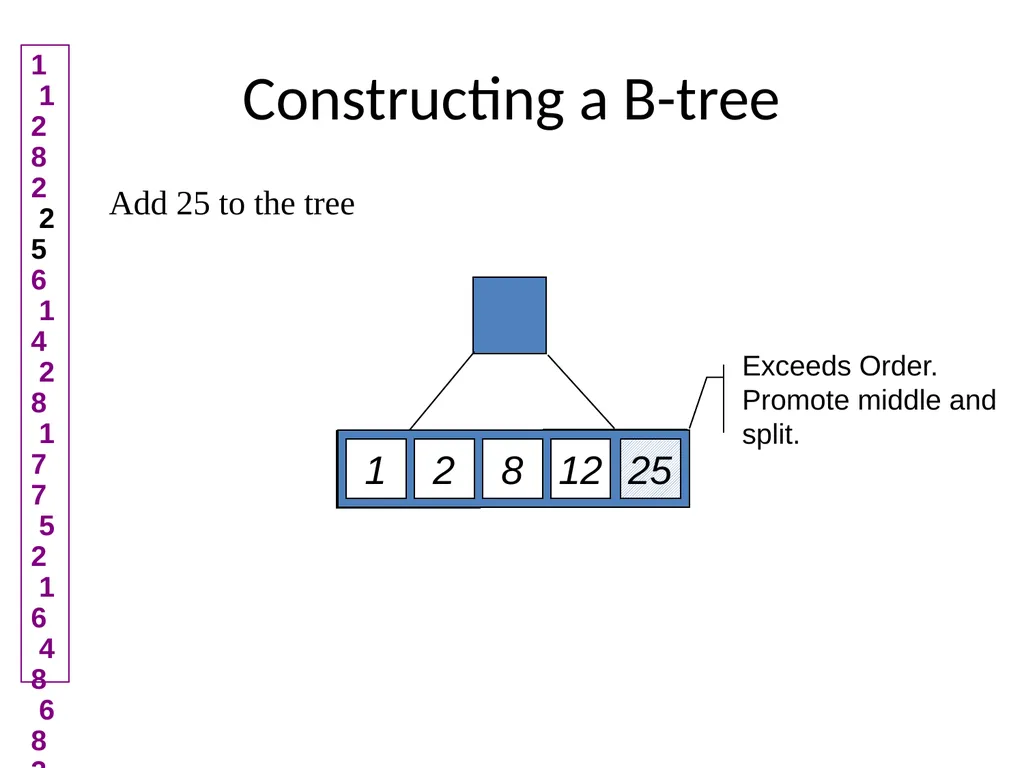
Constructing a B-tree Add 25 to the tree 1 12 8 2 25 6 14 28 17 7 52 16 48 68 3 26 29 53 55 45 12 8 1 2 25 Exceeds Order. Promote middle and split.<br>
05
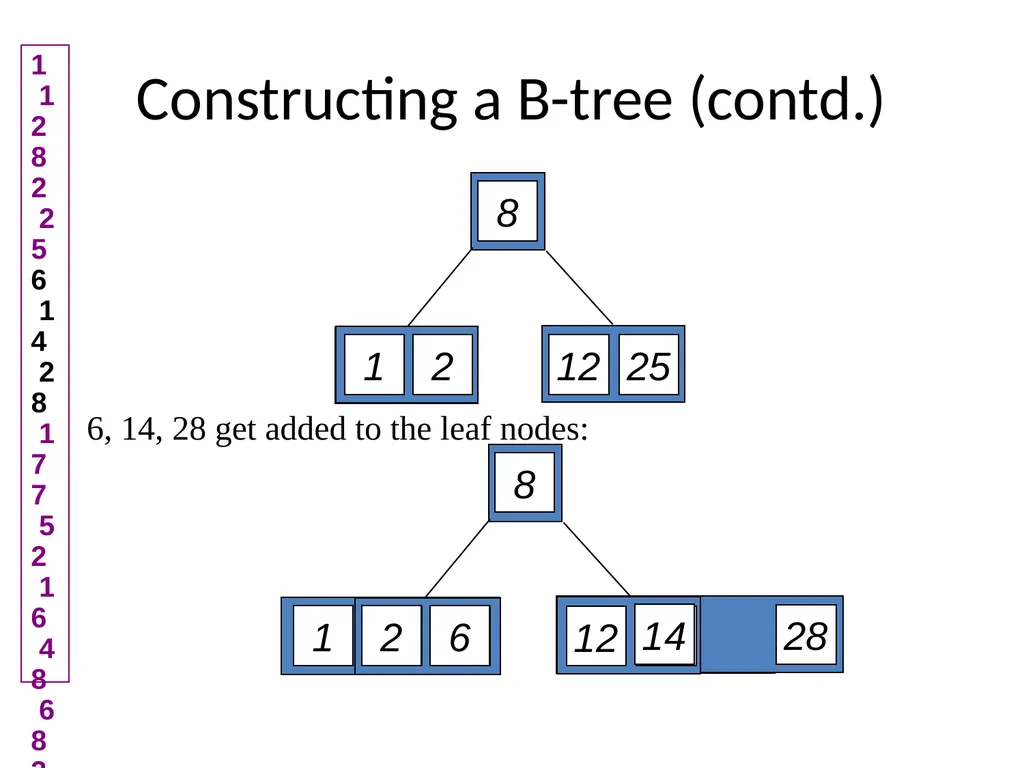
Constructing a B-tree (contd.) 6, 14, 28 get added to the leaf nodes: 1 12 8 2 25 6 14 28 17 7 52 16 48 68 3 26 29 53 55 45 12 8 1 2 25 12 8 1 2 25 6 1 2 28 14<br>
06
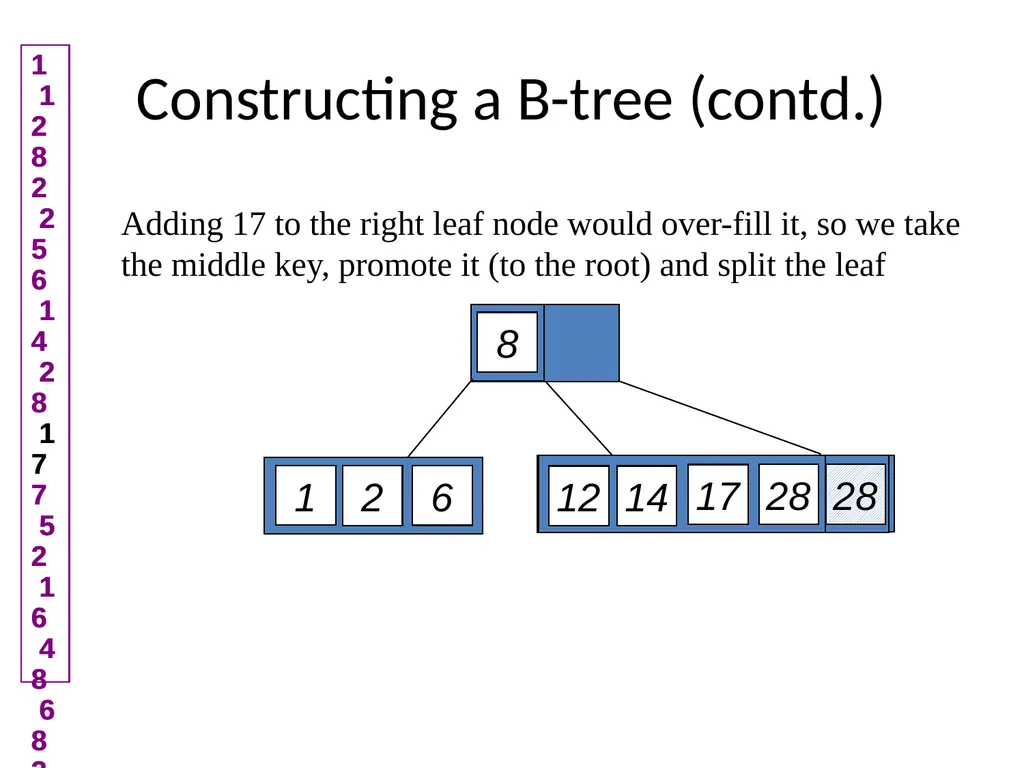
Constructing a B-tree (contd.) Adding 17 to the right leaf node would over-fill it, so we take the middle key, promote it (to the root) and split the leaf 1 12 8 2 25 6 14 28 17 7 52 16 48 68 3 26 29 53 55 45 1 12 8 2 25 6 14 28 17 7 52 16 48 68 3 26 29 53 55 45 12 8 2 25 6 1 2 28 14 28 17<br>
07
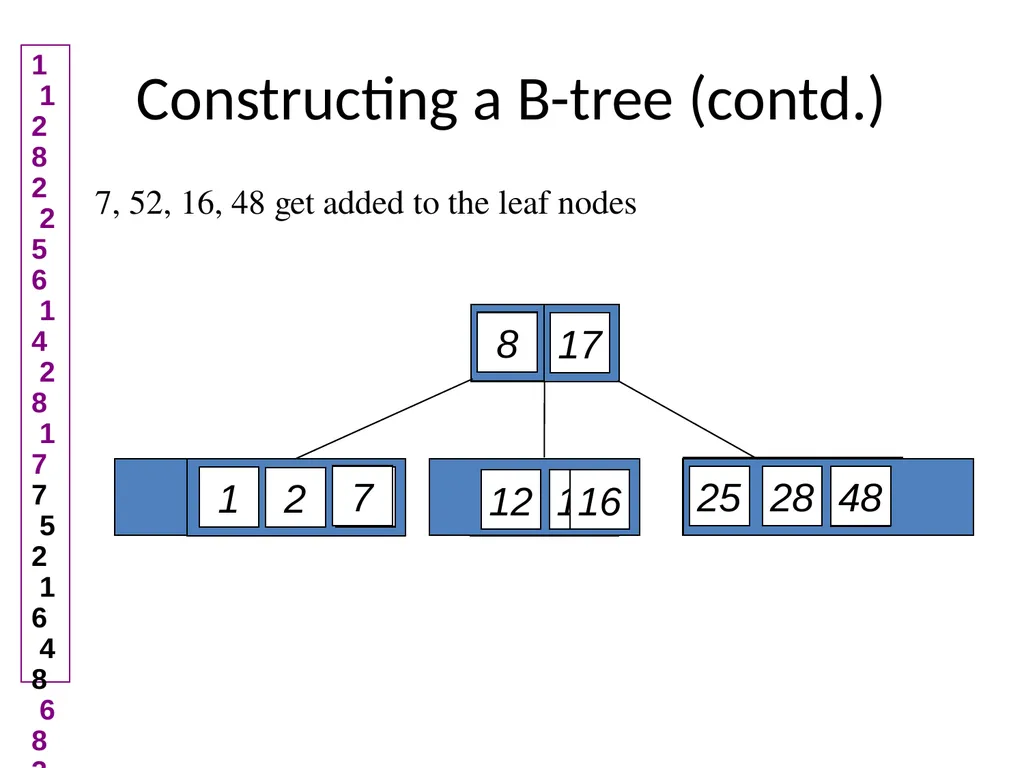
Constructing a B-tree (contd.) 7, 52, 16, 48 get added to the leaf nodes 1 12 8 2 25 6 14 28 17 7 52 16 48 68 3 26 29 53 55 45 12 8 25 6 1 2 28 14 17 7 52 16 48<br>
08
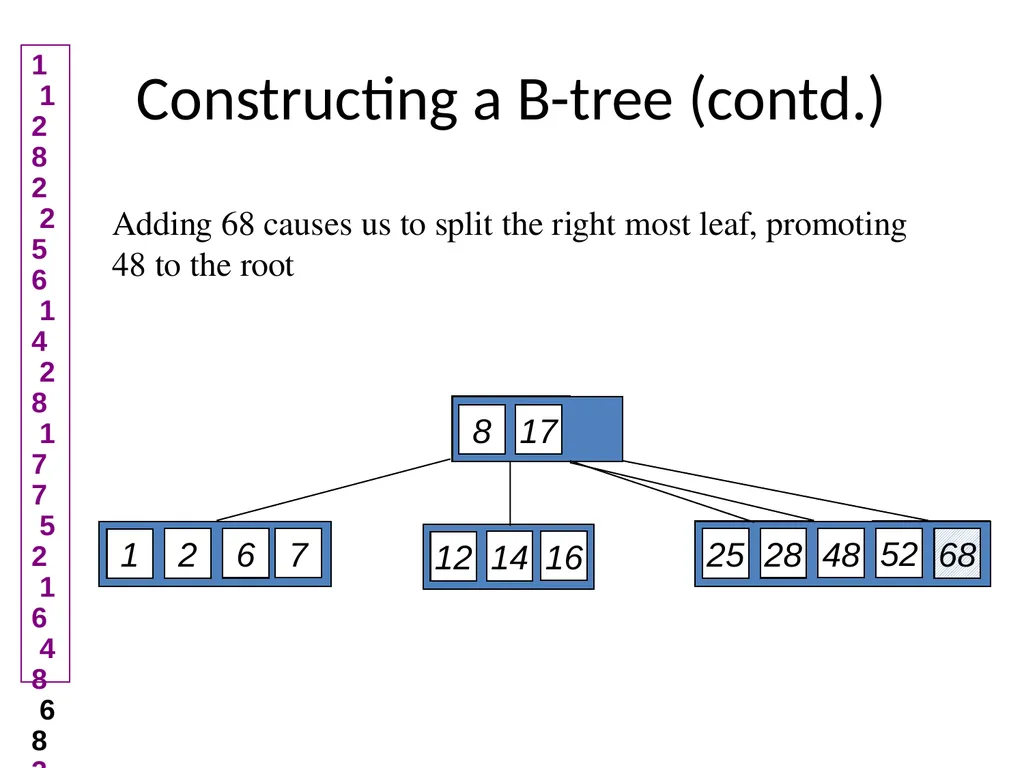
Constructing a B-tree (contd.) Adding 68 causes us to split the right most leaf, promoting 48 to the root 1 12 8 2 25 6 14 28 17 7 52 16 48 68 3 26 29 53 55 45 8 17 7 6 2 1 16 14 12 52 48 28 25 68<br>
09
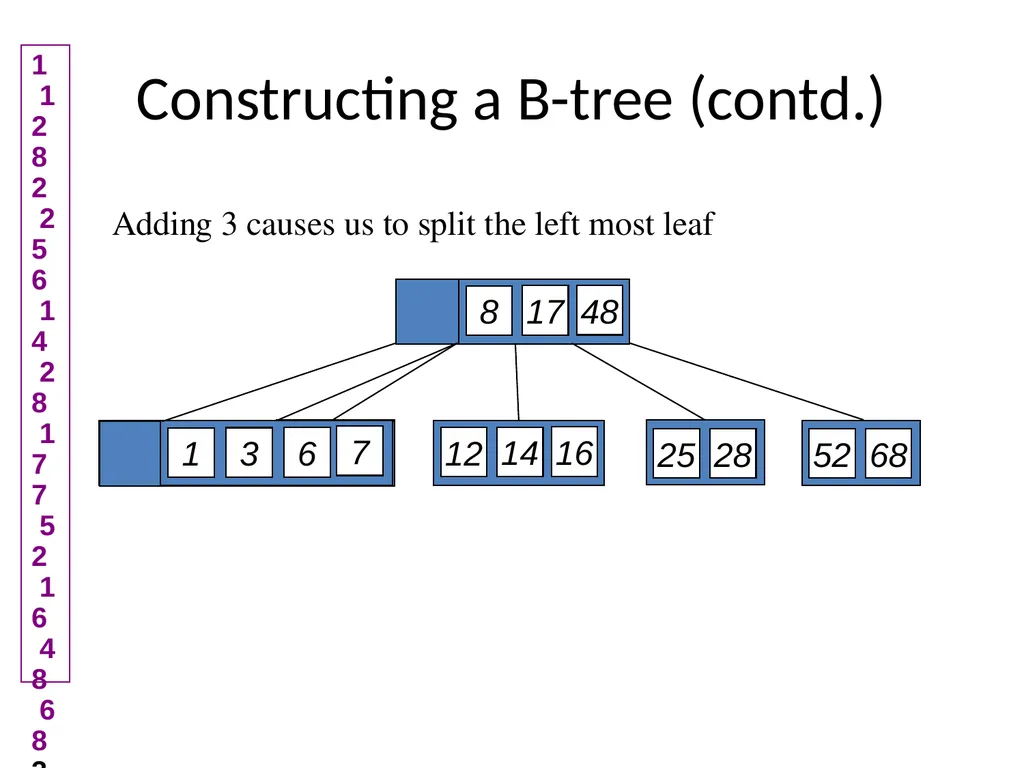
Constructing a B-tree (contd.) Adding 3 causes us to split the left most leaf 1 12 8 2 25 6 14 28 17 7 52 16 48 68 3 26 29 53 55 45 48 17 8 7 6 2 1 16 14 12 25 28 52 68 3 7<br>
10
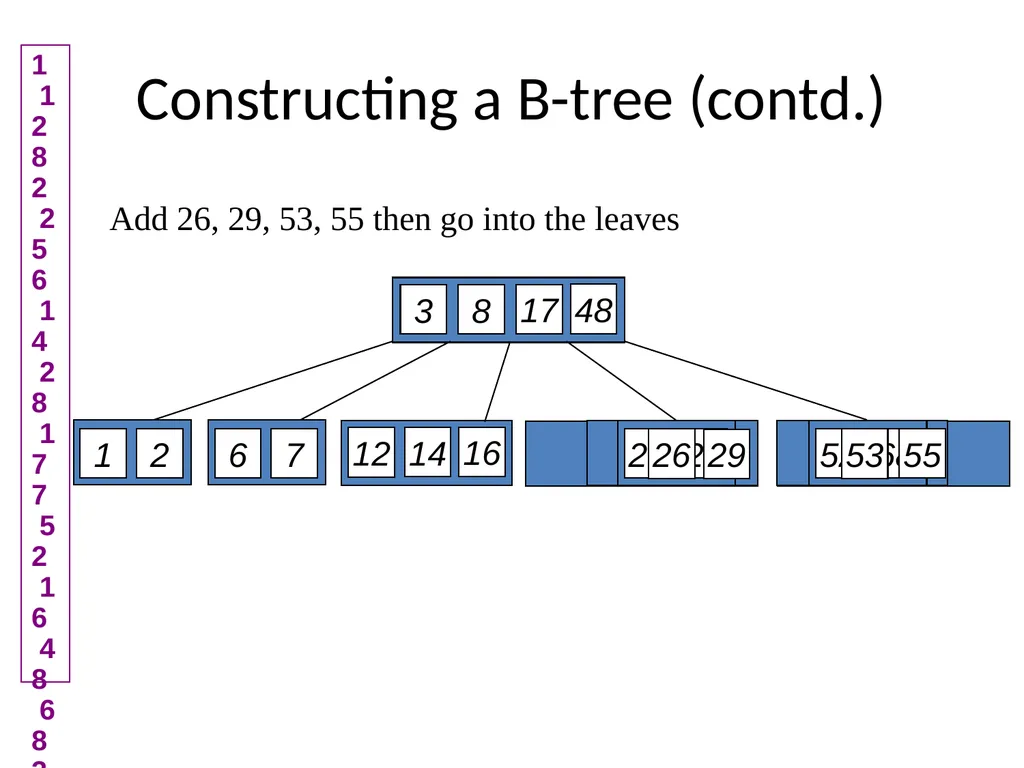
Constructing a B-tree (contd.) 1 12 8 2 25 6 14 28 17 7 52 16 48 68 3 26 29 53 55 45 Add 26, 29, 53, 55 then go into the leaves 48 17 8 3 1 2 6 7 52 68 25 28 16 14 12 26 29 53 55<br>
11
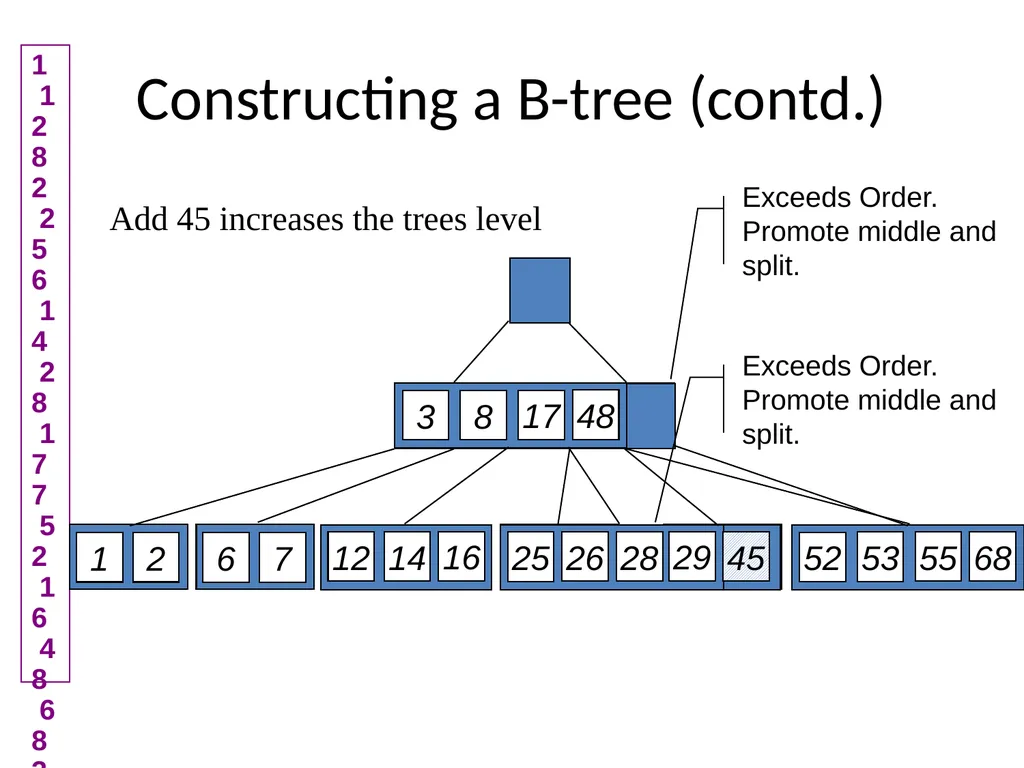
Constructing a B-tree (contd.) Add 45 increases the trees level 1 12 8 2 25 6 14 28 17 7 52 16 48 68 3 26 29 53 55 45 48 17 8 3 29 28 26 25 68 55 53 52 16 14 12 6 7 1 2 45 Exceeds Order. Promote middle and split. Exceeds Order. Promote middle and split.<br>
12
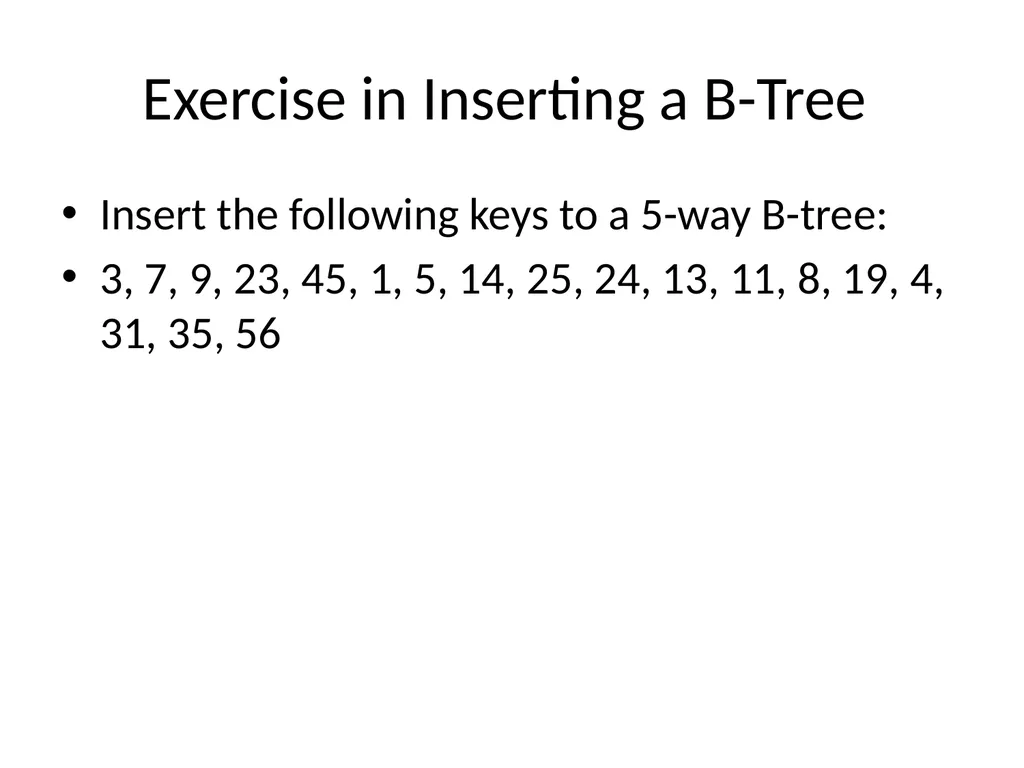
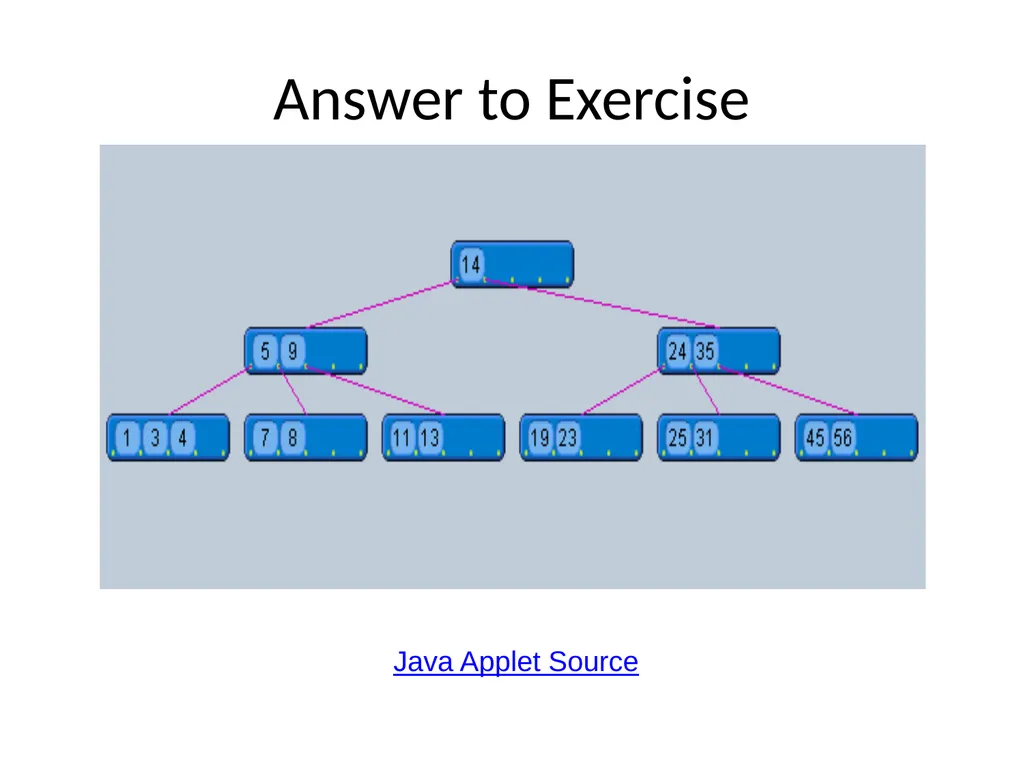
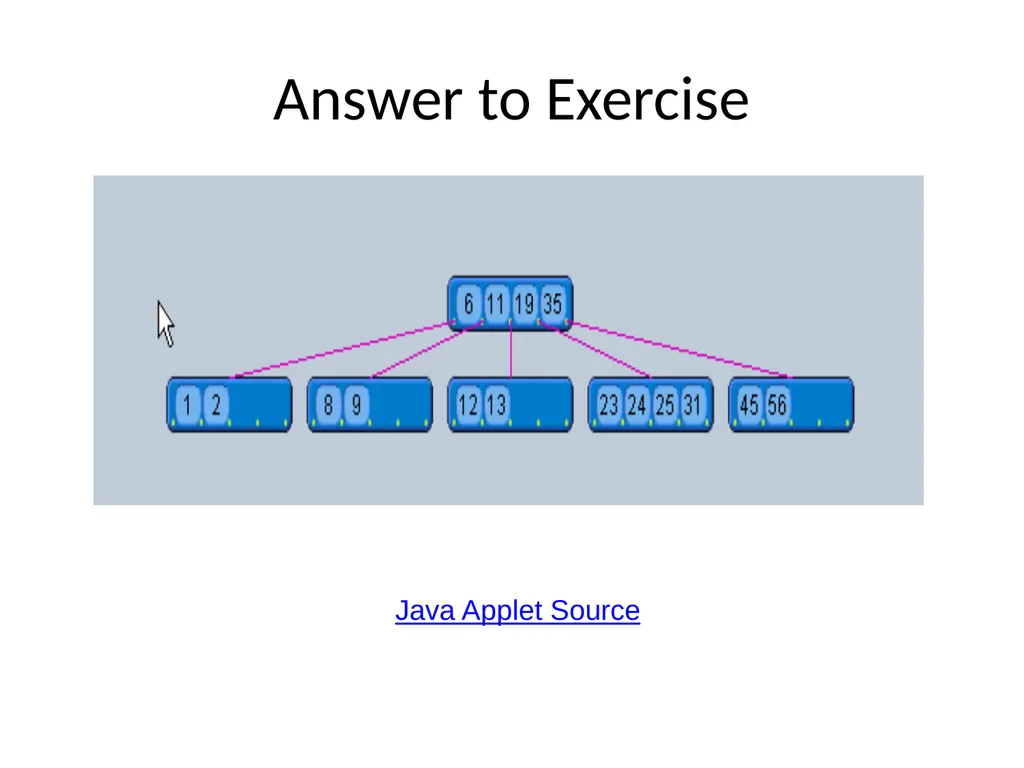
Exercise in Inserting a B-Tree Insert the following keys to a 5-way B-tree:
3, 7, 9, 23, 45, 1, 5, 14, 25, 24, 13, 11, 8, 19, 4, 31, 35, 56<br>
13
Answer to Exercise Java Applet Source<br>
14
Delete from a B-tree During insertion, the key always goes into a leaf. For deletion we wish to remove from a leaf. There are three possible ways we can do this:
1 - If the key is already in a leaf node, and removing it doesn’t cause that leaf node to have too few keys, then simply remove the key to be deleted.
2 - If the key is not in a leaf then it is guaranteed (by the nature of a B-tree) that its predecessor or successor will be in a leaf -- in this case can we delete the key and promote the predecessor or successor key to the non-leaf deleted key’s position.<br>
15
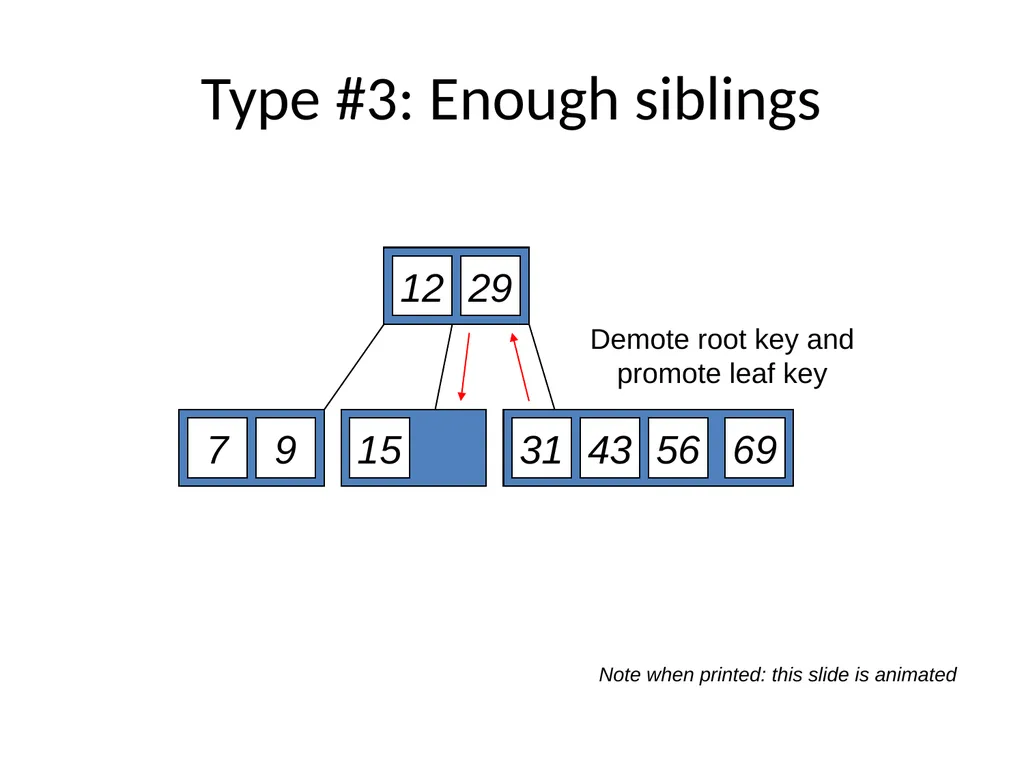
Removal from a B-tree (2) If (1) or (2) lead to a leaf node containing less than the minimum number of keys then we have to look at the siblings immediately adjacent to the leaf in question:
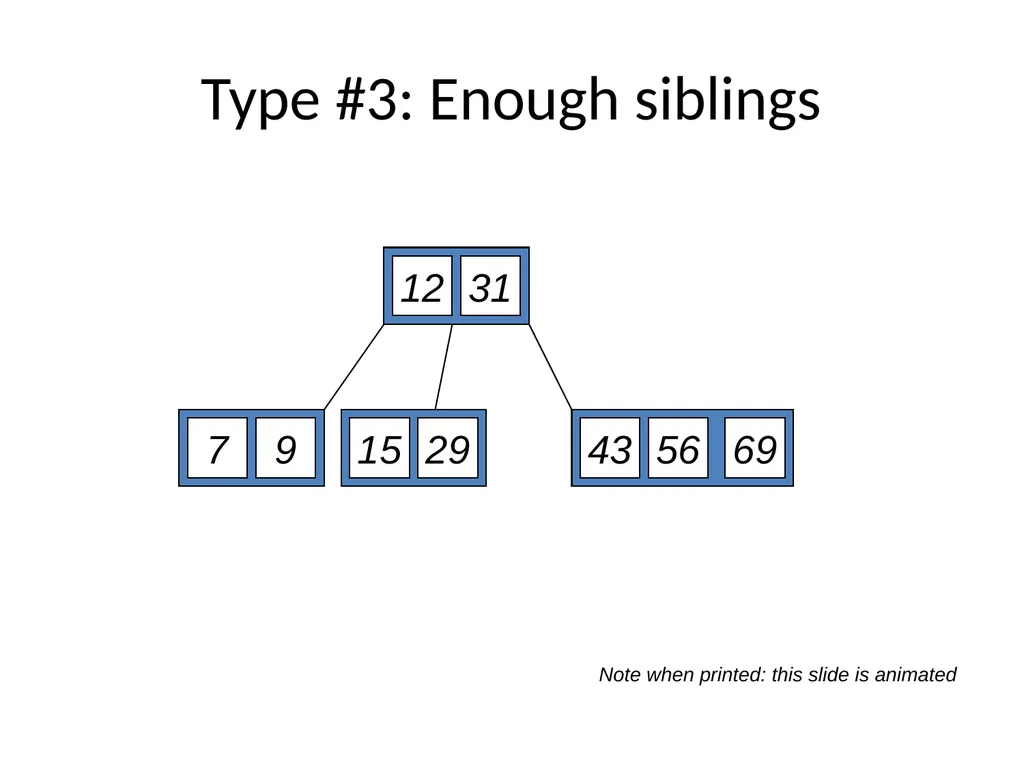
3: if one of them has more than the min’ number of keys then we can promote one of its keys to the parent and take the parent key into our lacking leaf
4: if neither of them has more than the min’ number of keys then the lacking leaf and one of its neighbours can be combined with their shared parent (the opposite of promoting a key) and the new leaf will have the correct number of keys; if this step leave the parent with too few keys then we repeat the process up to the root itself, if required<br>
16
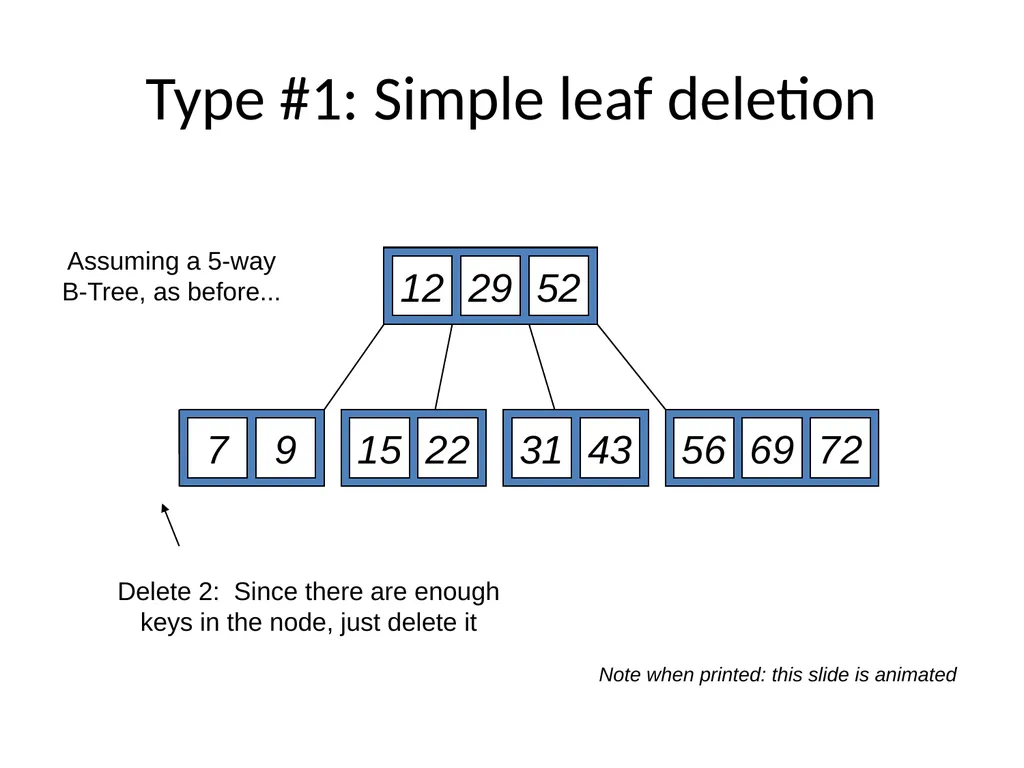
Type #1: Simple leaf deletion Delete 2: Since there are enough
keys in the node, just delete it Assuming a 5-way
B-Tree, as before... Note when printed: this slide is animated<br>
17
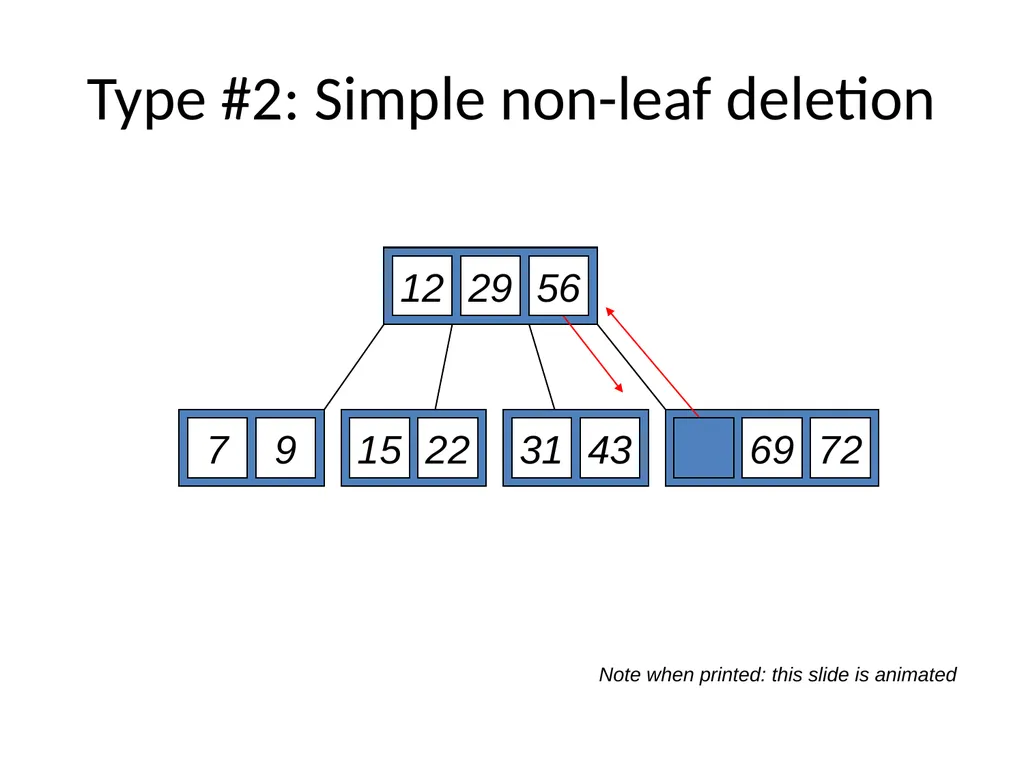
Type #2: Simple non-leaf deletion Delete 52 Borrow the predecessor
or (in this case) successor 56 Note when printed: this slide is animated<br>
18
Type #4: Too few keys in node and its siblings Delete 72 Too few keys! Note when printed: this slide is animated<br>
19
Type #4: Too few keys in node and its siblings Note when printed: this slide is animated<br>
20
Type #3: Enough siblings Delete 22 Note when printed: this slide is animated<br>
21
Type #3: Enough siblings 12 29 7 9 15 31 Note when printed: this slide is animated<br>
22
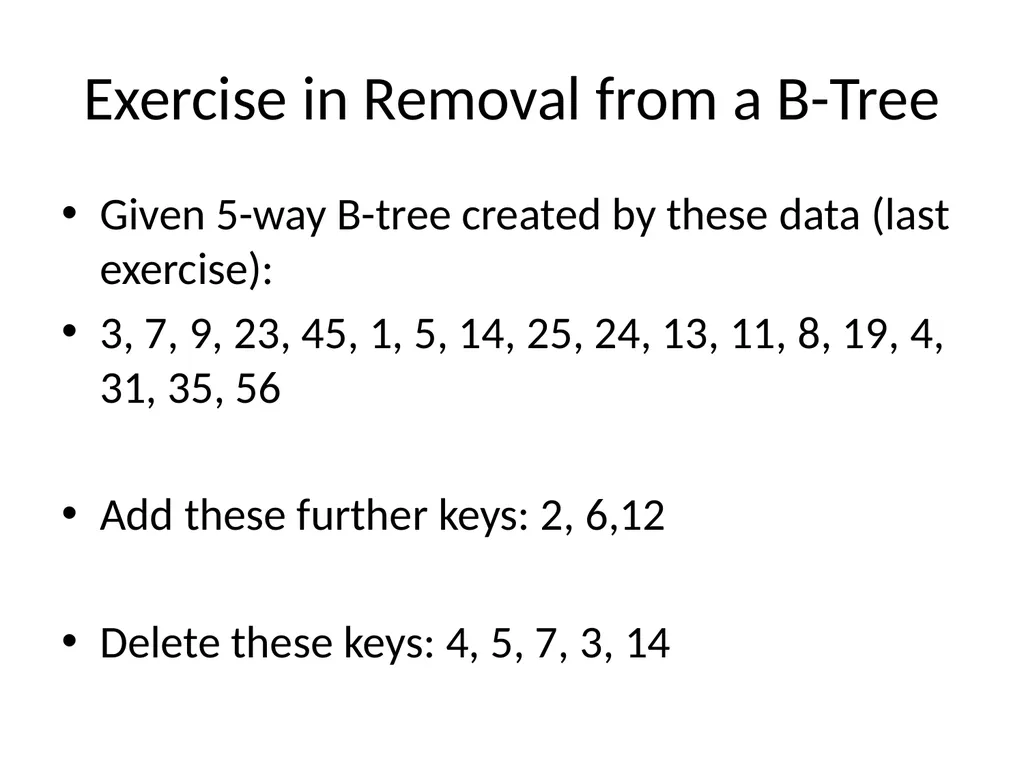
Exercise in Removal from a B-Tree Given 5-way B-tree created by these data (last exercise):
3, 7, 9, 23, 45, 1, 5, 14, 25, 24, 13, 11, 8, 19, 4, 31, 35, 56
Add these further keys: 2, 6,12
Delete these keys: 4, 5, 7, 3, 14<br>
23
Answer to Exercise Java Applet Source<br>