
Bacteriology Dr. Oruba Sterilization And








Description: Bacteriology Dr. Oruba Sterilization And Disinfectants 2 Control of microbial growth: Sterilization and disinfectants Terminology Sepsis: microbial contamination. Asepsis: absence of significant contamination. Aseptic surgery techniques
Related Topics
Download Presentation
"Bacteriology Dr. Oruba Sterilization And" is the property of its rightful owner. Permission is granted to download and print the materials on this website for personal, non-commercial use only, and to display it on your personal computer provided you do not modify the materials and that you retain all copyright notices contained in the materials. By downloading content from our website, you accept the terms of this agreement.
Presentation Transcript
slide1. Bacteriology
Dr. Oruba Sterilization
And
Disinfectants<br>
slide2. 2 Control of microbial growth: Sterilization and disinfectants<br>
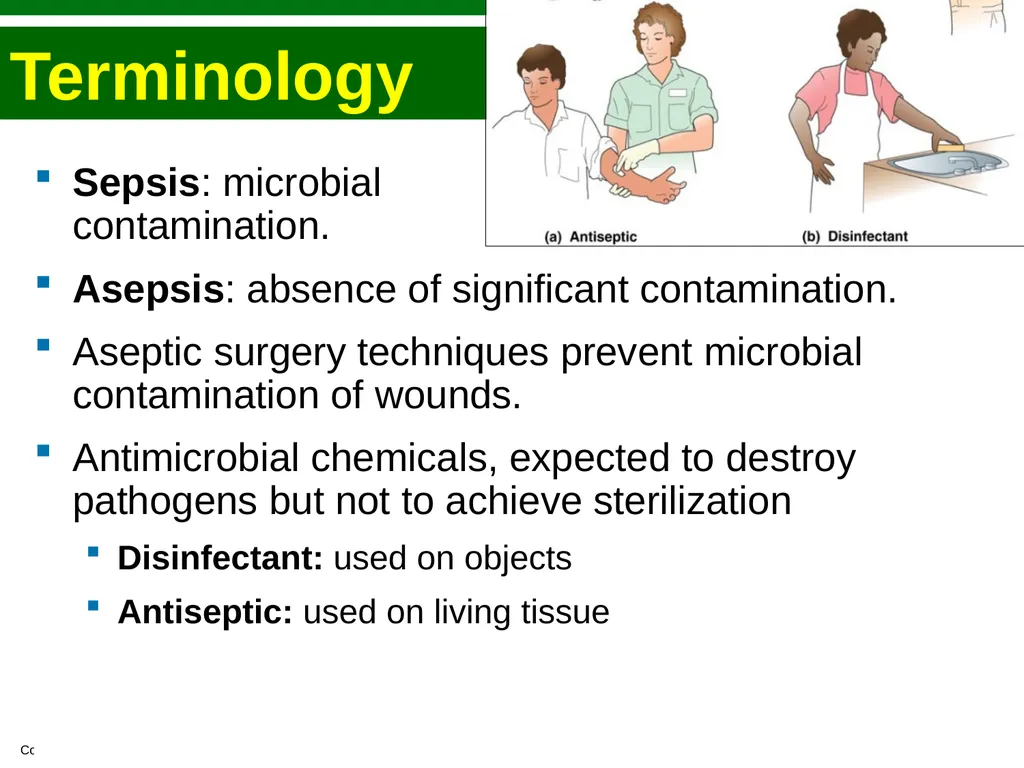
slide3. Terminology Sepsis: microbial contamination.
Asepsis: absence of significant contamination.
Aseptic surgery techniques prevent microbial contamination of wounds.
Antimicrobial chemicals, expected to destroy pathogens but not to achieve sterilization
Disinfectant: used on objects
Antiseptic: used on living tissue<br>
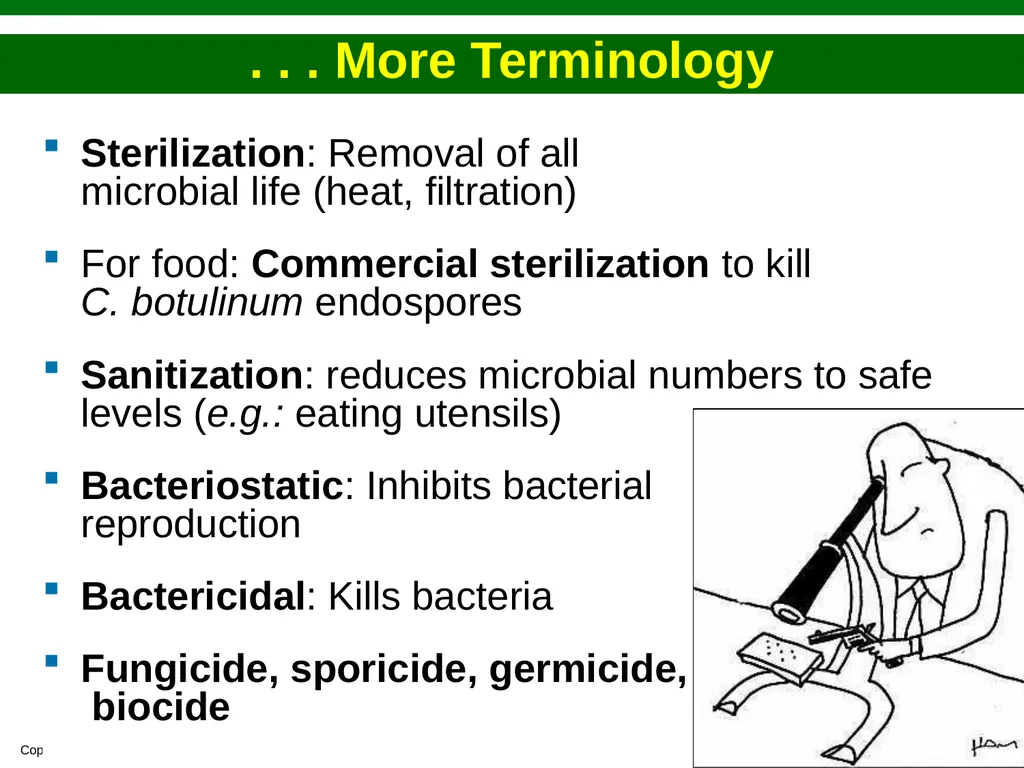
slide4. . . . More Terminology Sterilization: Removal of all microbial life (heat, filtration)
For food: Commercial sterilization to kill C. botulinum endospores
Sanitization: reduces microbial numbers to safe levels (e.g.: eating utensils)
Bacteriostatic: Inhibits bacterial reproduction
Bactericidal: Kills bacteria
Fungicide, sporicide, germicide, biocide<br>
slide5. Sterilization: is the killing of all organisms whether in the spore form or the vegetative form, mainly by using physical methods. Disinfection: is the process of getting rid of the most of the
pathogenic microorganisms whether in the spore form or the
vegetative form, by using mainly chemical methods.<br>
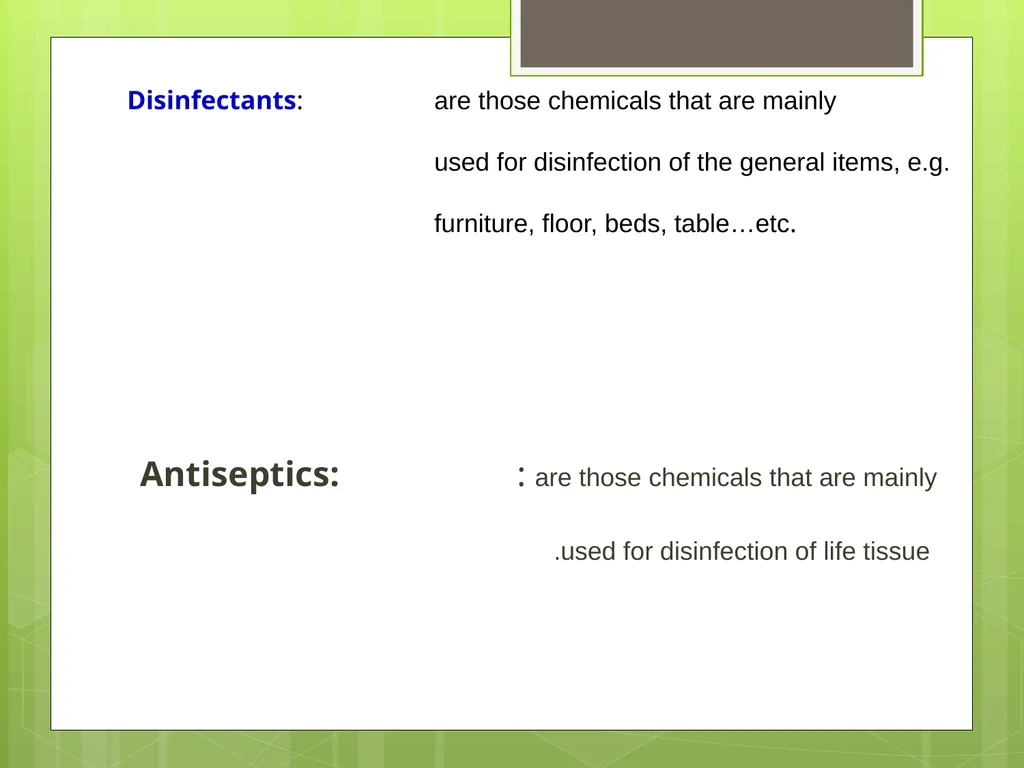
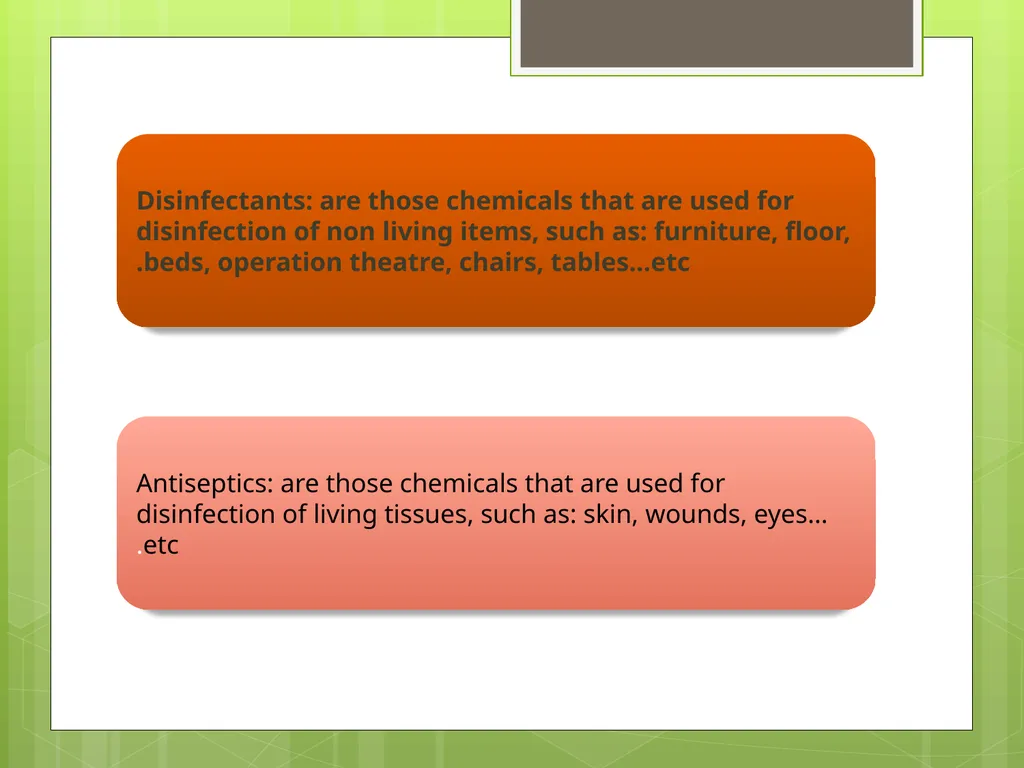
slide6. Disinfectants: are those chemicals that are mainly used for disinfection of the general items, e.g. furniture, floor, beds, table…etc. Antiseptics: : are those chemicals that are mainly
used for disinfection of life tissue.<br>
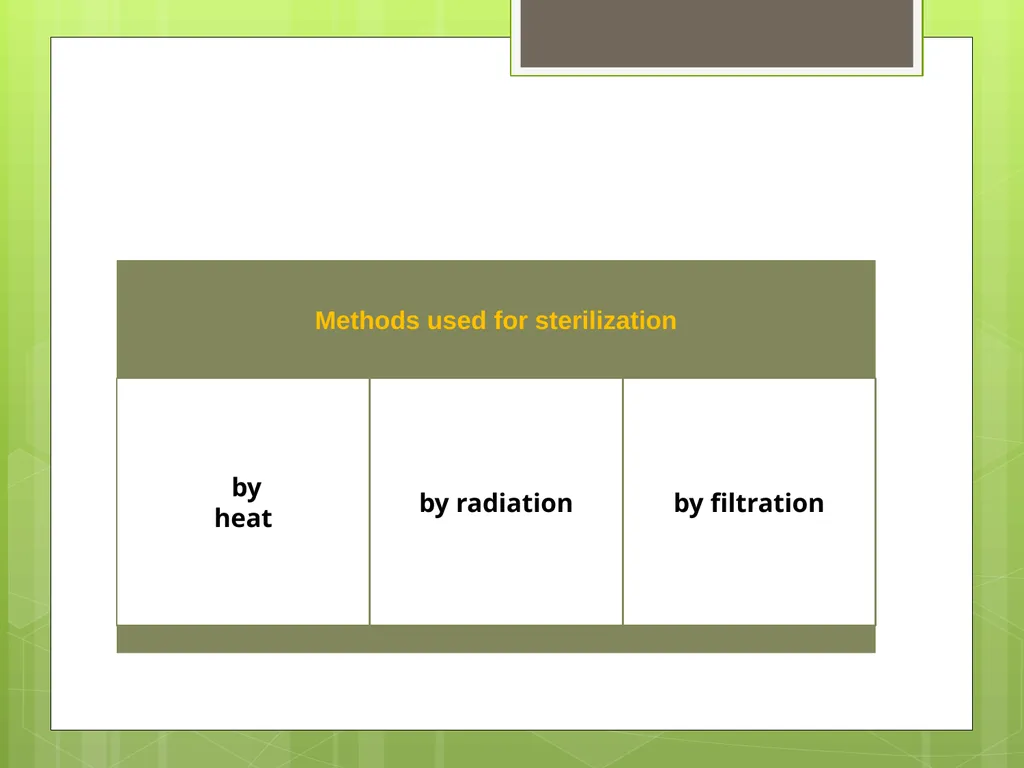
slide8. Sterilization by heat: it is of two types: Moist heat Dry heat<br>
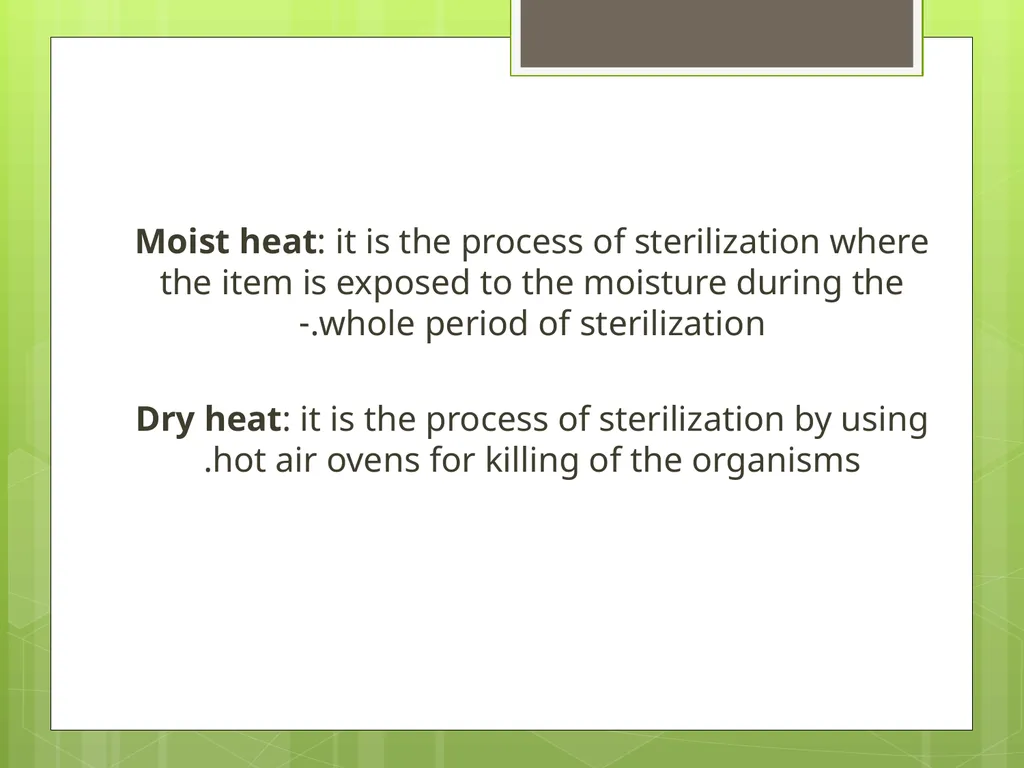
slide9. Moist heat: it is the process of sterilization where the item is exposed to the moisture during the whole period of sterilization.-
Dry heat: it is the process of sterilization by using hot air ovens for killing of the organisms.<br>
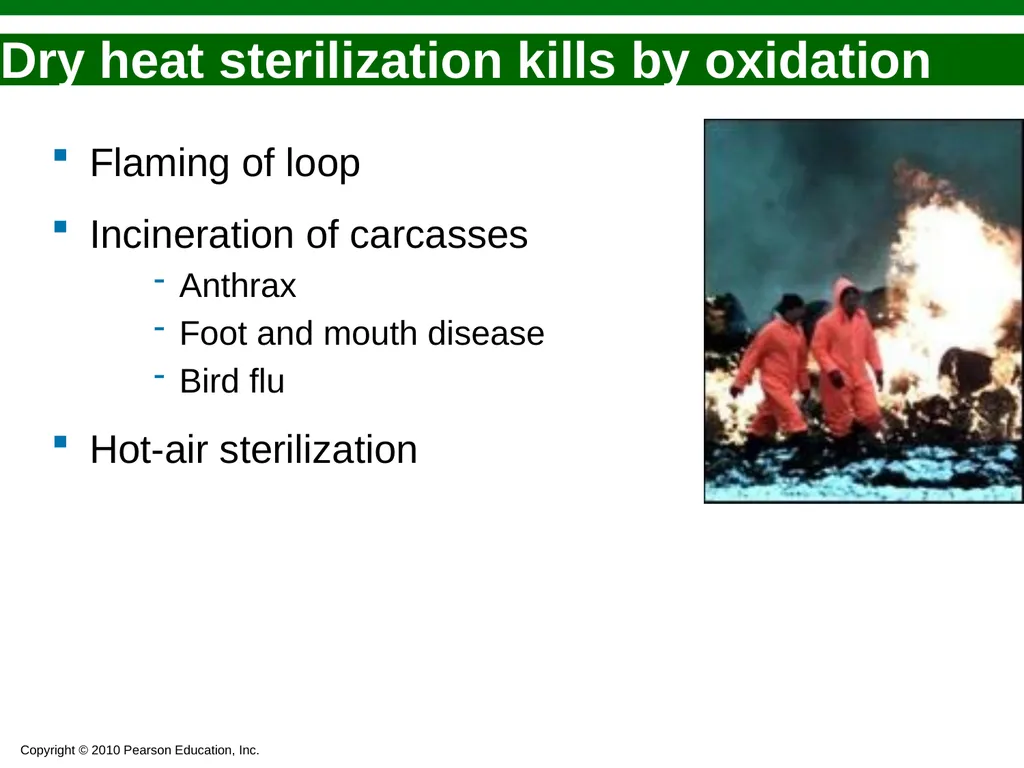
slide10. Dry heat sterilization kills by oxidation Flaming of loop
Incineration of carcasses
Anthrax
Foot and mouth disease
Bird flu
Hot-air sterilization<br>
slide11. Relationship between time and temperature:
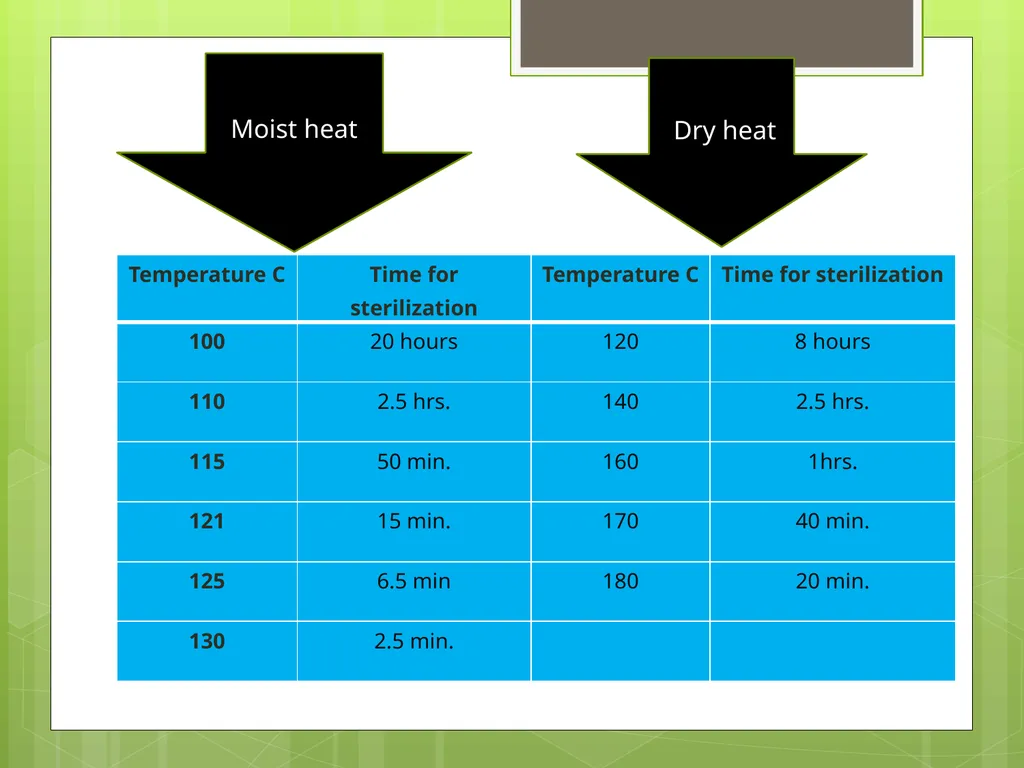
it is a reciprocal relationship where as the temperature increase the time for sterilization decreases, and vice versa, as the table below shows that: A<br>
slide12. Moist heat Dry heat<br>
slide13. The number of the microorganisms present; this means that the higher the number of the microorganisms contaminating the object, the lower will be the efficiency of sterilization, and this means the longer time is needed.
The presence or absence of the spores: since the spores are more resistant to environmental conditions than the vegetative forms, this means that higher efficiency for sterilization is required, in other words longer time is needed, since some of the spores resist boiling several hours.(see the above table). B C<br>
slide14. Type of the species and strain of the microorganisms:
some of the species is considered more resistant to increased temperature than others, but the all vegetative form will be killed by boiling. But if the microorganisms are of type spore forming, this will be different and should follow the above table. D<br>
slide15. The chemical nature of the suspension
The presence of organic compounds such as; proteins, gelatin, sugars, starch, nucleic acid, oils, fats… etc. these will reduce the efficiency of sterilization and longer time will be needed.
Presence of organic or inorganic disinfectants will increase the efficiency of sterilization and therefore shorter time is needed.
Increase or decrease the pH will increase the efficiency of sterilization.
It is found that, spores formed in nature are more resistant to sterilization than those formed in the laboratories in the culture media. E<br>
slide16. Sterilization by moist heat *Those organism should be always in continuous contact with the moisture during the whole period of sterilization.
Sterilization by using temperature less than 100 C which include pasteurization.
Sterilization by using temperature at 100 C which include sterilization by steaming.
* Sterilization by using temperature higher than 100 C which include autoclave, where the most appropriate conditions are at temperature 121, atmospheric pressure 15, time 15 min.
Tyndalization: this process of sterilization where an intermittent boiling is used in order to kill the vegetative form and the germinating spores.<br>
slide17. Sterilization by radiation This method of sterilization is used for sterilization of specimens that could not be sterilized by the other methods, such as: syringe, blood collection sets, urine collection sets, and all other types of medical needle and canulas.<br>
slide18. Radiation<br>
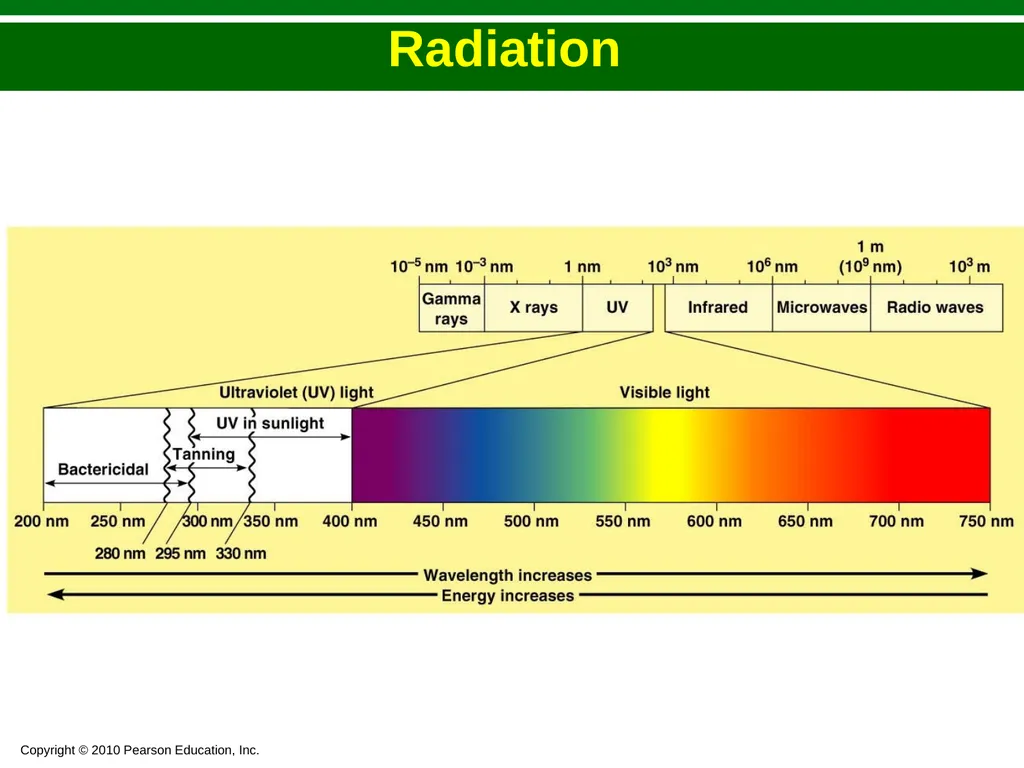
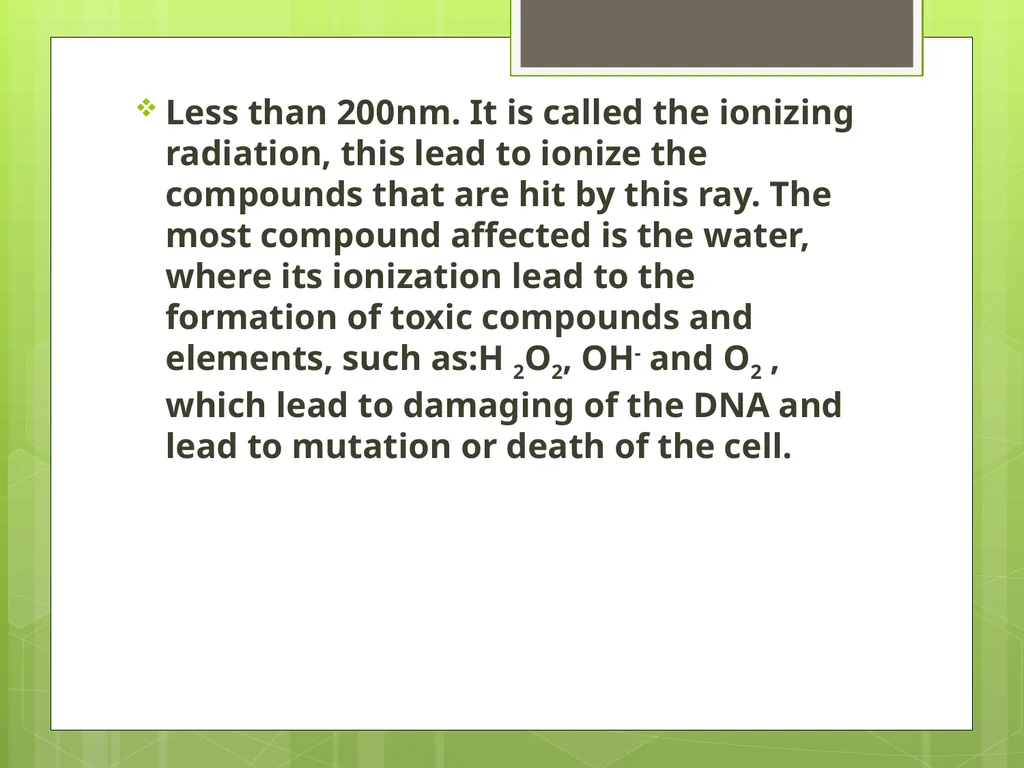
slide19. Less than 200nm. It is called the ionizing radiation, this lead to ionize the compounds that are hit by this ray. The most compound affected is the water, where its ionization lead to the formation of toxic compounds and elements, such as:H 2O2, OH- and O2 , which lead to damaging of the DNA and lead to mutation or death of the cell.<br>
slide20. Between 180-320nm. It is called the ultra violet rays, and this is absorbed by purines and pyridamines of the DNA which lead to its disintegration, and may also lead to mutation or death of the cell.
Between 400-750nm. It is called the visible rays, at this range all the biological reactions occur, such as its absorption by different types of chlorophyll for photosynthesis by plants and microorganisms.
From 750nm and longer wave length up to 1200nm. It is called infrared ray: this type of rays has a low energy and it is converted to heat when it hits the objects.<br>
slide21. Sterilization by filtration This type of sterilization is used to sterilize liquids, which are sensitive to heat, and also in case of small volumes for economic purposes.
The most important, and commonly, filters are:
a) Centered glass filters
b) Cellulose membrane filters (Millipore filters).<br>
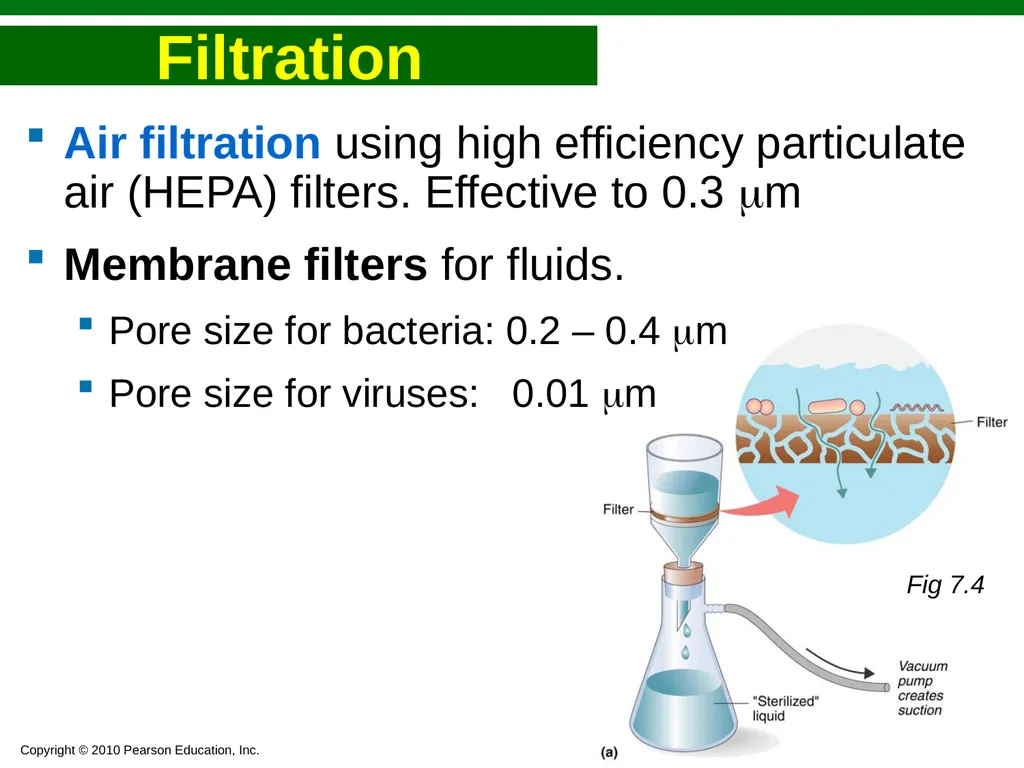
slide22. Filtration Air filtration using high efficiency particulate air (HEPA) filters. Effective to 0.3 m
Membrane filters for fluids.
Pore size for bacteria: 0.2 – 0.4 m
Pore size for viruses: 0.01 m Fig 7.4<br>
slide24. The nature of action of both is by:
Denaturation of the protein of the cells leading to killing of the organisms, such as : by using the acids and phenol.
Causing very high oxidation, such as using the halogens.
Lipid solvents, such as the several organic solvents<br>
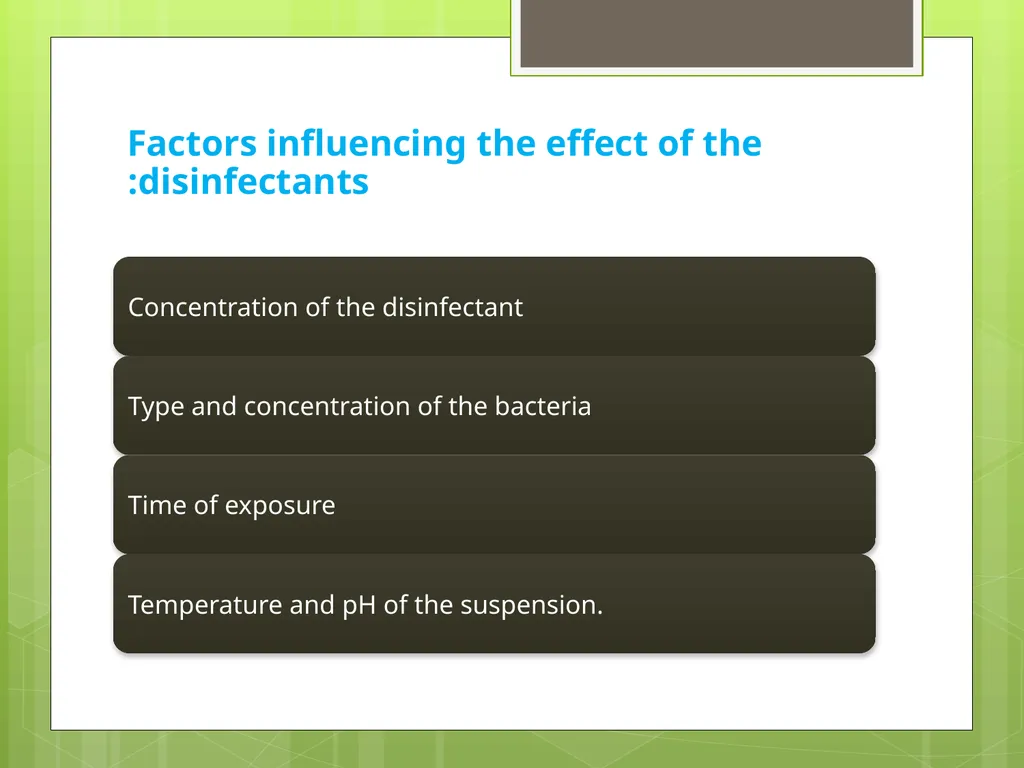
slide25. Factors influencing the effect of the disinfectants:<br>
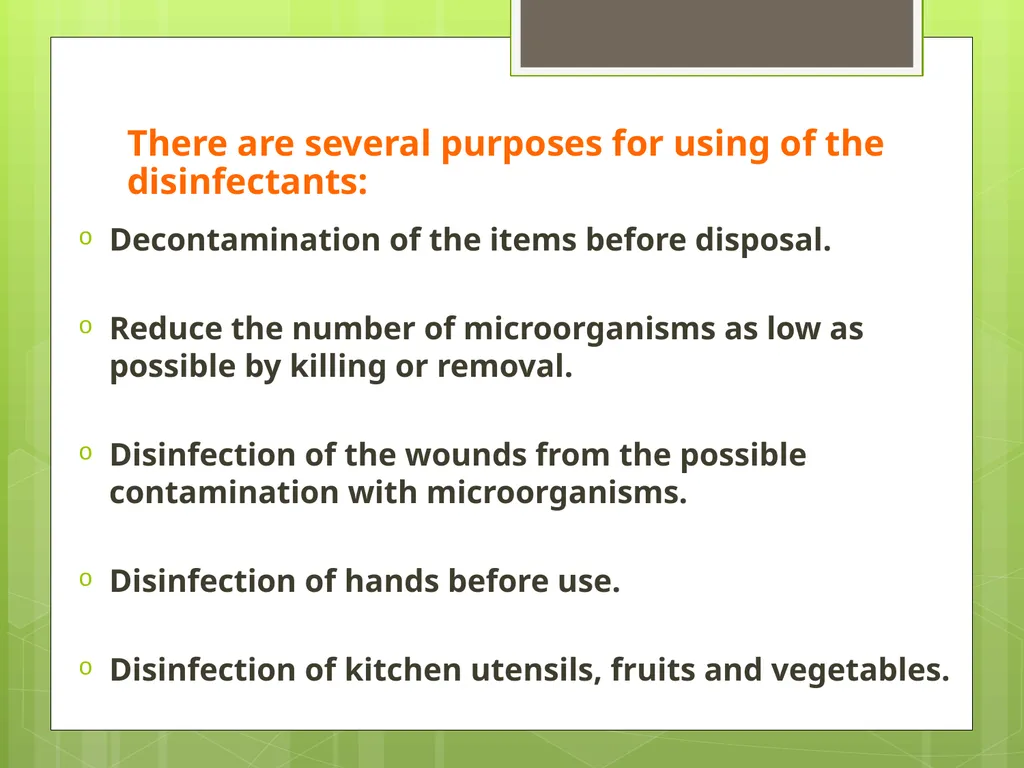
slide26. There are several purposes for using of the disinfectants: Decontamination of the items before disposal.
Reduce the number of microorganisms as low as possible by killing or removal.
Disinfection of the wounds from the possible contamination with microorganisms.
Disinfection of hands before use.
Disinfection of kitchen utensils, fruits and vegetables.<br>
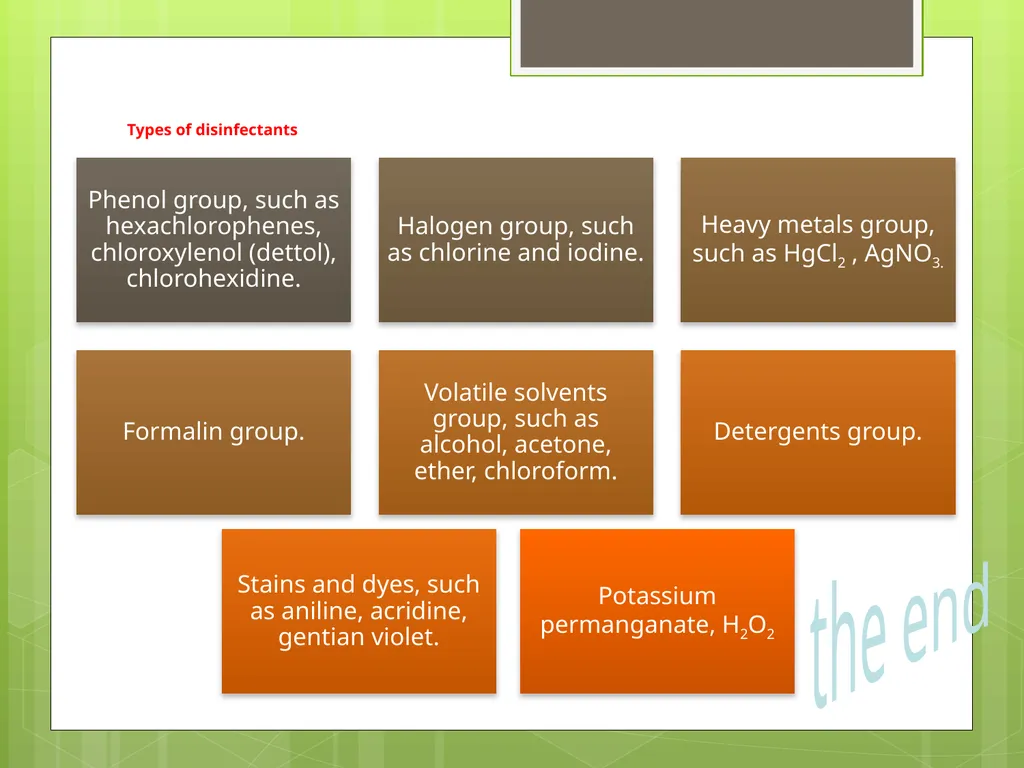
slide27. Types of disinfectants the end<br>
slide28. References:
1- Jawetz, Melnick, & Adelberg’s.( 2013). Medical Microbiology (Twenty-Sixth Edition).
2- Kenneth Todar. (2008).Todar’s Online Textbook of Bacteriology ,University of Wisconsin. 28<br>
slide29. Thank you Thank
you<br>
And
Disinfectants<br>
slide2. 2 Control of microbial growth: Sterilization and disinfectants<br>
slide3. Terminology Sepsis: microbial contamination.
Asepsis: absence of significant contamination.
Aseptic surgery techniques prevent microbial contamination of wounds.
Antimicrobial chemicals, expected to destroy pathogens but not to achieve sterilization
Disinfectant: used on objects
Antiseptic: used on living tissue<br>
slide4. . . . More Terminology Sterilization: Removal of all microbial life (heat, filtration)
For food: Commercial sterilization to kill C. botulinum endospores
Sanitization: reduces microbial numbers to safe levels (e.g.: eating utensils)
Bacteriostatic: Inhibits bacterial reproduction
Bactericidal: Kills bacteria
Fungicide, sporicide, germicide, biocide<br>
slide5. Sterilization: is the killing of all organisms whether in the spore form or the vegetative form, mainly by using physical methods. Disinfection: is the process of getting rid of the most of the
pathogenic microorganisms whether in the spore form or the
vegetative form, by using mainly chemical methods.<br>
slide6. Disinfectants: are those chemicals that are mainly used for disinfection of the general items, e.g. furniture, floor, beds, table…etc. Antiseptics: : are those chemicals that are mainly
used for disinfection of life tissue.<br>
slide8. Sterilization by heat: it is of two types: Moist heat Dry heat<br>
slide9. Moist heat: it is the process of sterilization where the item is exposed to the moisture during the whole period of sterilization.-
Dry heat: it is the process of sterilization by using hot air ovens for killing of the organisms.<br>
slide10. Dry heat sterilization kills by oxidation Flaming of loop
Incineration of carcasses
Anthrax
Foot and mouth disease
Bird flu
Hot-air sterilization<br>
slide11. Relationship between time and temperature:
it is a reciprocal relationship where as the temperature increase the time for sterilization decreases, and vice versa, as the table below shows that: A<br>
slide12. Moist heat Dry heat<br>
slide13. The number of the microorganisms present; this means that the higher the number of the microorganisms contaminating the object, the lower will be the efficiency of sterilization, and this means the longer time is needed.
The presence or absence of the spores: since the spores are more resistant to environmental conditions than the vegetative forms, this means that higher efficiency for sterilization is required, in other words longer time is needed, since some of the spores resist boiling several hours.(see the above table). B C<br>
slide14. Type of the species and strain of the microorganisms:
some of the species is considered more resistant to increased temperature than others, but the all vegetative form will be killed by boiling. But if the microorganisms are of type spore forming, this will be different and should follow the above table. D<br>
slide15. The chemical nature of the suspension
The presence of organic compounds such as; proteins, gelatin, sugars, starch, nucleic acid, oils, fats… etc. these will reduce the efficiency of sterilization and longer time will be needed.
Presence of organic or inorganic disinfectants will increase the efficiency of sterilization and therefore shorter time is needed.
Increase or decrease the pH will increase the efficiency of sterilization.
It is found that, spores formed in nature are more resistant to sterilization than those formed in the laboratories in the culture media. E<br>
slide16. Sterilization by moist heat *Those organism should be always in continuous contact with the moisture during the whole period of sterilization.
Sterilization by using temperature less than 100 C which include pasteurization.
Sterilization by using temperature at 100 C which include sterilization by steaming.
* Sterilization by using temperature higher than 100 C which include autoclave, where the most appropriate conditions are at temperature 121, atmospheric pressure 15, time 15 min.
Tyndalization: this process of sterilization where an intermittent boiling is used in order to kill the vegetative form and the germinating spores.<br>
slide17. Sterilization by radiation This method of sterilization is used for sterilization of specimens that could not be sterilized by the other methods, such as: syringe, blood collection sets, urine collection sets, and all other types of medical needle and canulas.<br>
slide18. Radiation<br>
slide19. Less than 200nm. It is called the ionizing radiation, this lead to ionize the compounds that are hit by this ray. The most compound affected is the water, where its ionization lead to the formation of toxic compounds and elements, such as:H 2O2, OH- and O2 , which lead to damaging of the DNA and lead to mutation or death of the cell.<br>
slide20. Between 180-320nm. It is called the ultra violet rays, and this is absorbed by purines and pyridamines of the DNA which lead to its disintegration, and may also lead to mutation or death of the cell.
Between 400-750nm. It is called the visible rays, at this range all the biological reactions occur, such as its absorption by different types of chlorophyll for photosynthesis by plants and microorganisms.
From 750nm and longer wave length up to 1200nm. It is called infrared ray: this type of rays has a low energy and it is converted to heat when it hits the objects.<br>
slide21. Sterilization by filtration This type of sterilization is used to sterilize liquids, which are sensitive to heat, and also in case of small volumes for economic purposes.
The most important, and commonly, filters are:
a) Centered glass filters
b) Cellulose membrane filters (Millipore filters).<br>
slide22. Filtration Air filtration using high efficiency particulate air (HEPA) filters. Effective to 0.3 m
Membrane filters for fluids.
Pore size for bacteria: 0.2 – 0.4 m
Pore size for viruses: 0.01 m Fig 7.4<br>
slide24. The nature of action of both is by:
Denaturation of the protein of the cells leading to killing of the organisms, such as : by using the acids and phenol.
Causing very high oxidation, such as using the halogens.
Lipid solvents, such as the several organic solvents<br>
slide25. Factors influencing the effect of the disinfectants:<br>
slide26. There are several purposes for using of the disinfectants: Decontamination of the items before disposal.
Reduce the number of microorganisms as low as possible by killing or removal.
Disinfection of the wounds from the possible contamination with microorganisms.
Disinfection of hands before use.
Disinfection of kitchen utensils, fruits and vegetables.<br>
slide27. Types of disinfectants the end<br>
slide28. References:
1- Jawetz, Melnick, & Adelberg’s.( 2013). Medical Microbiology (Twenty-Sixth Edition).
2- Kenneth Todar. (2008).Todar’s Online Textbook of Bacteriology ,University of Wisconsin. 28<br>
slide29. Thank you Thank
you<br>