
(BCA(603-N)) Introduction to E-commerce Content

Description: (BCA(603-N)) Introduction to E-commerce Content Introduction of E-Commerce Types of E-Commerce Advantages of E-Commerce Disadvantages of E-Commerce Trade Cycle Scope of E-Commerce Supply Chain Porters Model E commerce Strategic inputs E
Related Topics
Download Presentation
"(BCA(603-N)) Introduction to E-commerce Content" is the property of its rightful owner. Permission is granted to download and print the materials on this website for personal, non-commercial use only, and to display it on your personal computer provided you do not modify the materials and that you retain all copyright notices contained in the materials. By downloading content from our website, you accept the terms of this agreement.
Presentation Transcript
slide1. (BCA(603-N))
Introduction to E-commerce<br>
slide2. Content Introduction of E-Commerce
Types of E-Commerce
Advantages of E-Commerce
Disadvantages of E-Commerce
Trade Cycle
Scope of E-Commerce
Supply Chain
Porter’s Model
E commerce Strategic inputs
E commerce evaluation<br>
slide3. E-Commerce E-commerce was first introduced in the 1960’s via an electronic data interchange (EDI) on value-added
networks (VANs).
E-commerce or electronic commerce is a process of buying and selling of goods and services while increasing the speed of delivery.<br>
slide4. Types of E-commerce There are mainly four types of E - commerce.
1) Business-to- Business (B2B)
2) Business-to-Consumer (B2C)
3) Consumer-to-Consumer (C2C)
4) Consumer-to-Business (C2B)<br>
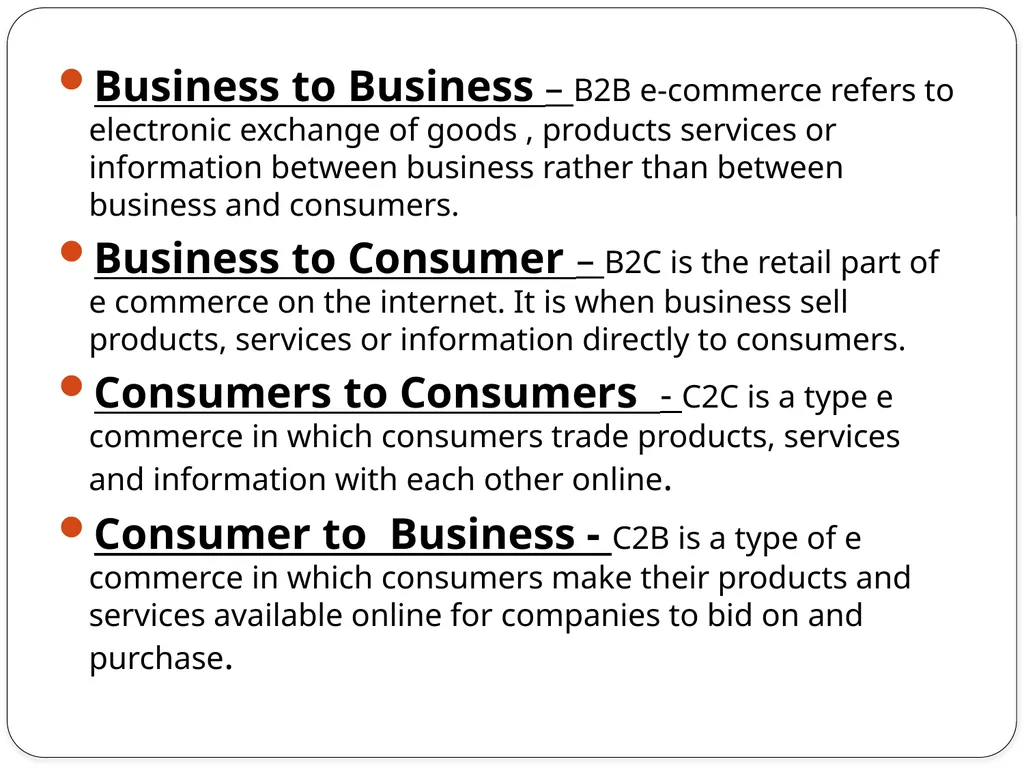
slide5. Business to Business – B2B e-commerce refers to electronic exchange of goods , products services or information between business rather than between business and consumers.
Business to Consumer – B2C is the retail part of e commerce on the internet. It is when business sell products, services or information directly to consumers.
Consumers to Consumers - C2C is a type e commerce in which consumers trade products, services and information with each other online.
Consumer to Business - C2B is a type of e commerce in which consumers make their products and services available online for companies to bid on and purchase.<br>
slide6. Advantages of E-commerce Availability
Speed of access
Wide availability
International reach
Lower cost
Personalization and Product recommendation.<br>
slide7. Disadvantages Of E-commerce Limited customer services
Not being able to touch or see
Wait time
Security<br>
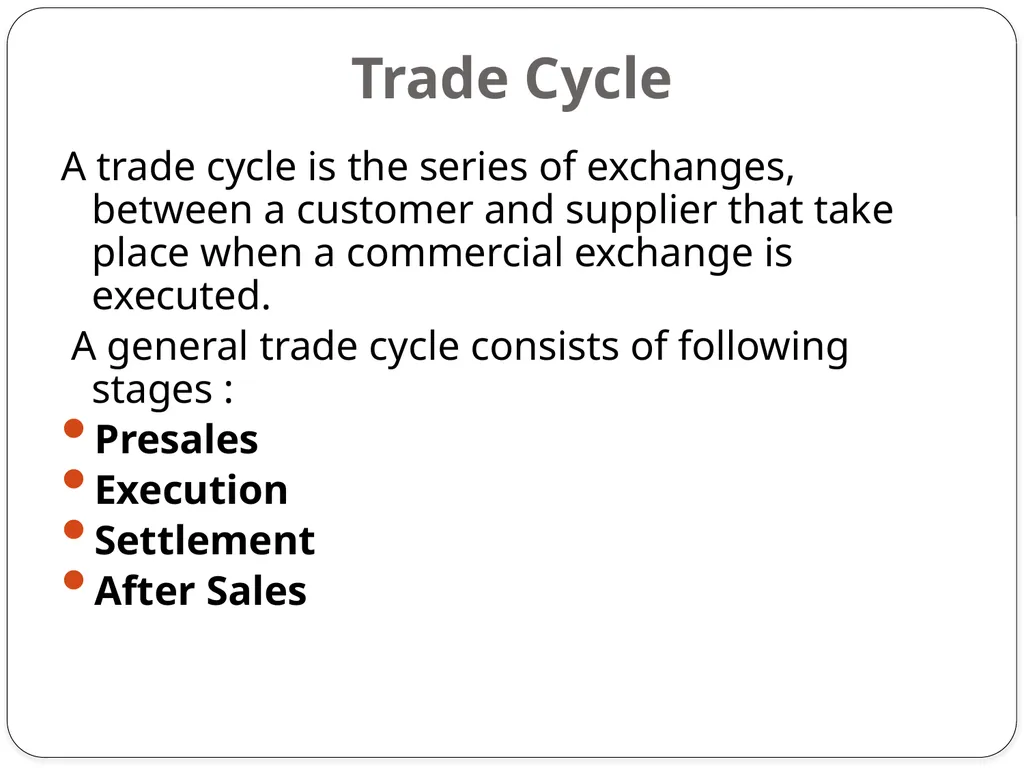
slide8. Trade Cycle A trade cycle is the series of exchanges, between a customer and supplier that take place when a commercial exchange is executed.
A general trade cycle consists of following stages :
Presales
Execution
Settlement
After Sales<br>
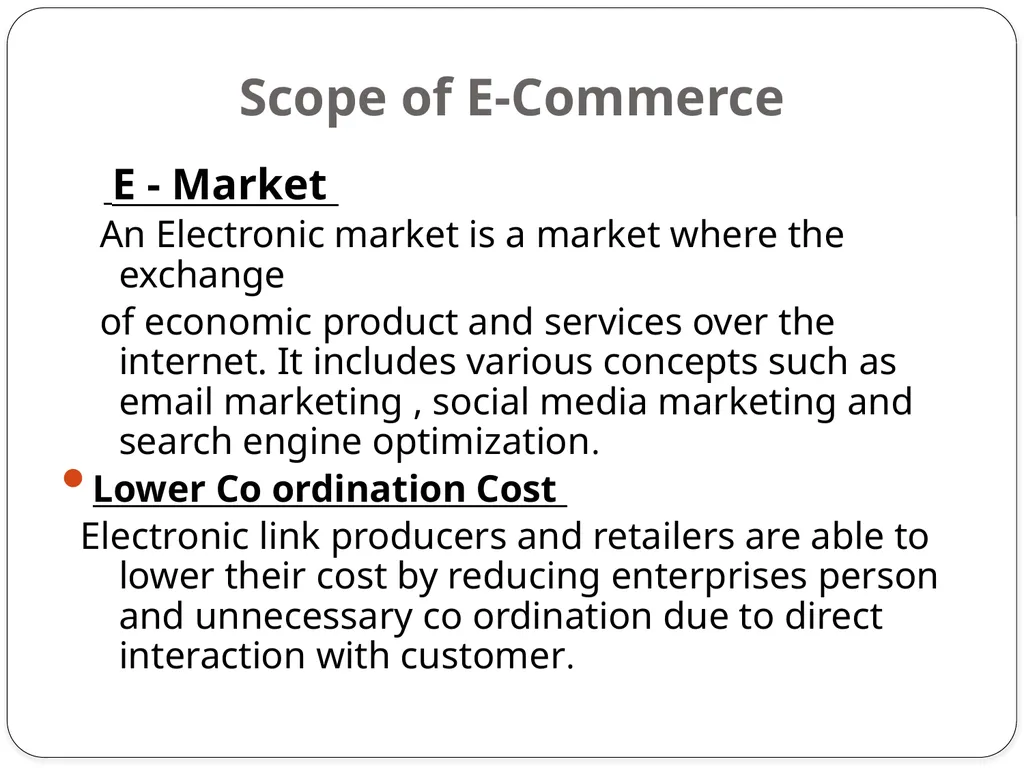
slide9. Scope of E-Commerce E - Market
An Electronic market is a market where the exchange
of economic product and services over the internet. It includes various concepts such as email marketing , social media marketing and search engine optimization.
Lower Co ordination Cost
Electronic link producers and retailers are able to lower their cost by reducing enterprises person and unnecessary co ordination due to direct interaction with customer.<br>
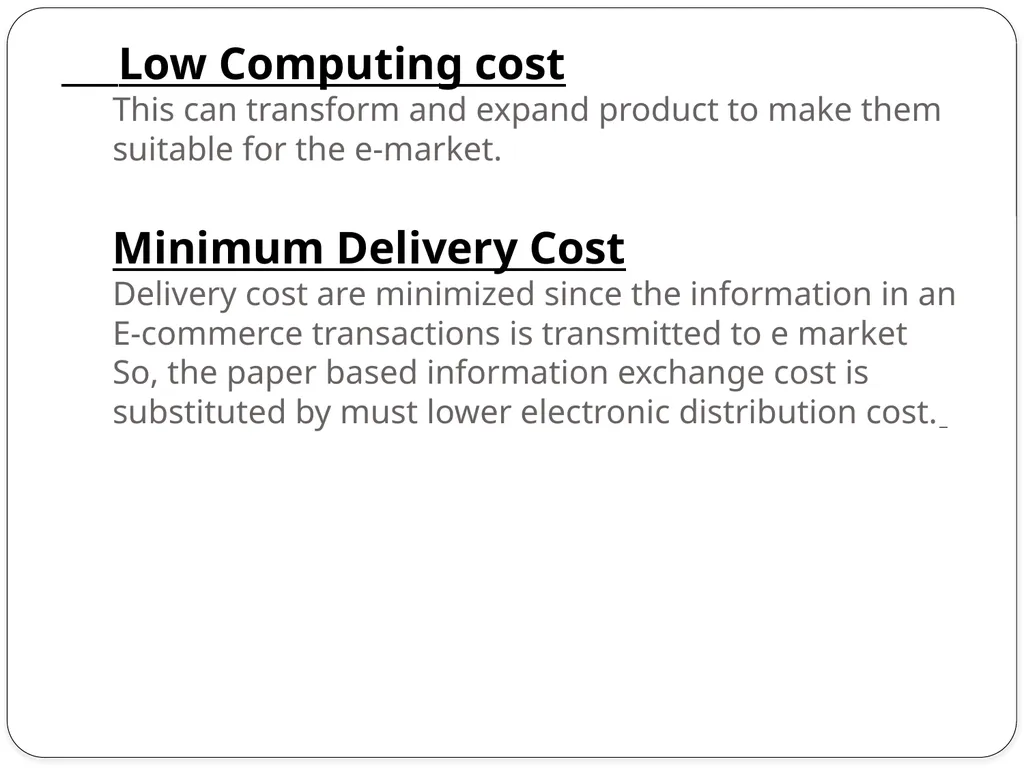
slide10. Low Computing cost This can transform and expand product to make them suitable for the e-market. Minimum Delivery Cost Delivery cost are minimized since the information in an E-commerce transactions is transmitted to e market So, the paper based information exchange cost is substituted by must lower electronic distribution cost.<br>
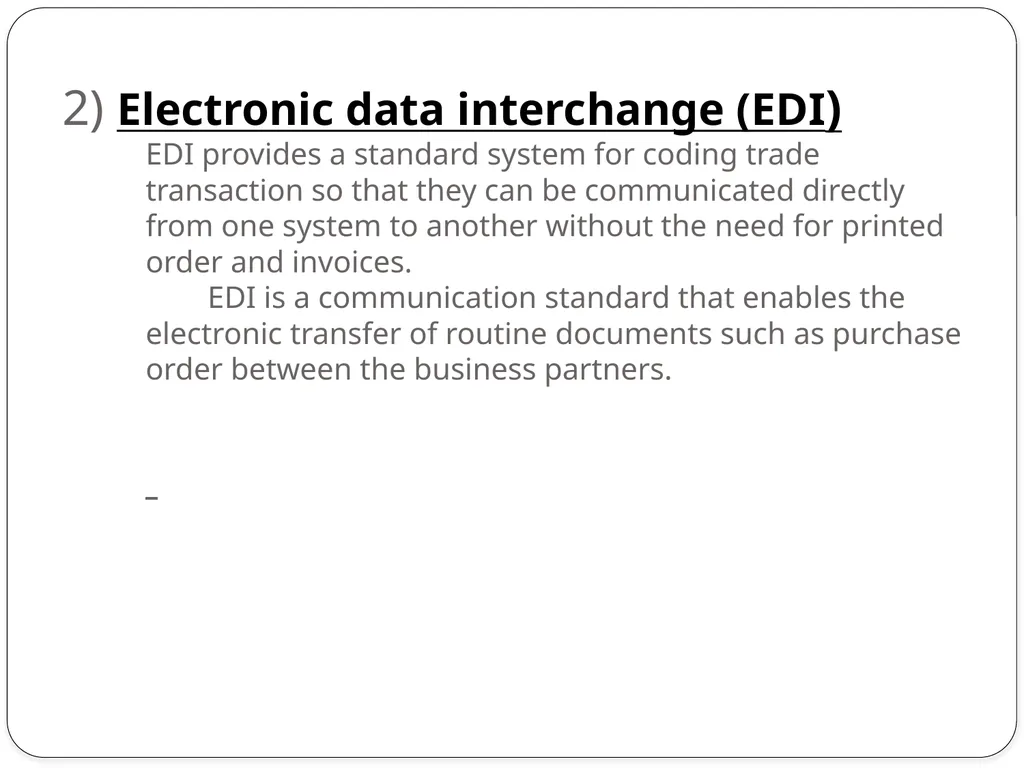
slide11. 2) Electronic data interchange (EDI) EDI provides a standard system for coding trade transaction so that they can be communicated directly from one system to another without the need for printed order and invoices. EDI is a communication standard that enables the electronic transfer of routine documents such as purchase order between the business partners.<br>
slide12. 3) Internet Commerce Internet Commerce means the use of the global internet for purchase of services including service and support often sales. Internet commerce bring some new technology and new capability to business.<br>
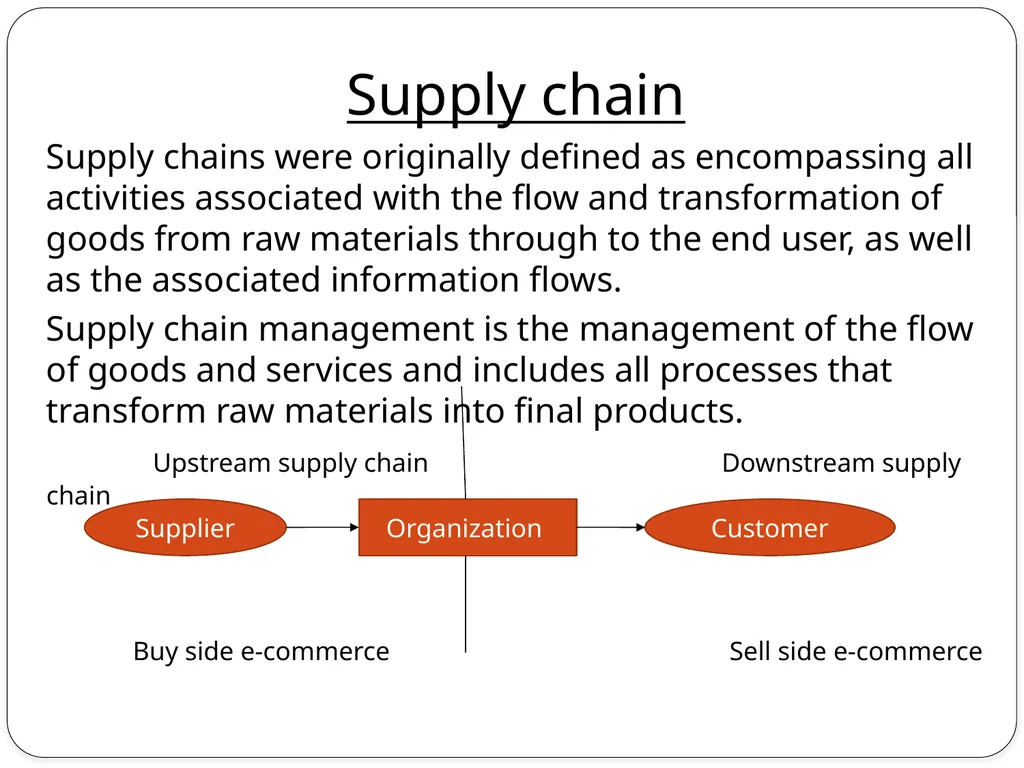
slide13. Supply chain
Supply chains were originally defined as encompassing all activities associated with the flow and transformation of goods from raw materials through to the end user, as well as the associated information flows.
Supply chain management is the management of the flow of goods and services and includes all processes that transform raw materials into final products.
Upstream supply chain Downstream supply chain
Buy side e-commerce Sell side e-commerce Organization Supplier Customer<br>
slide14. Benefits of Supply Chain The benefits of supply chain in e-commerce is defined as-
Order Taking
Order Fulfilment
Electronic Payment
Managing the risk
Inventories can be minimized<br>
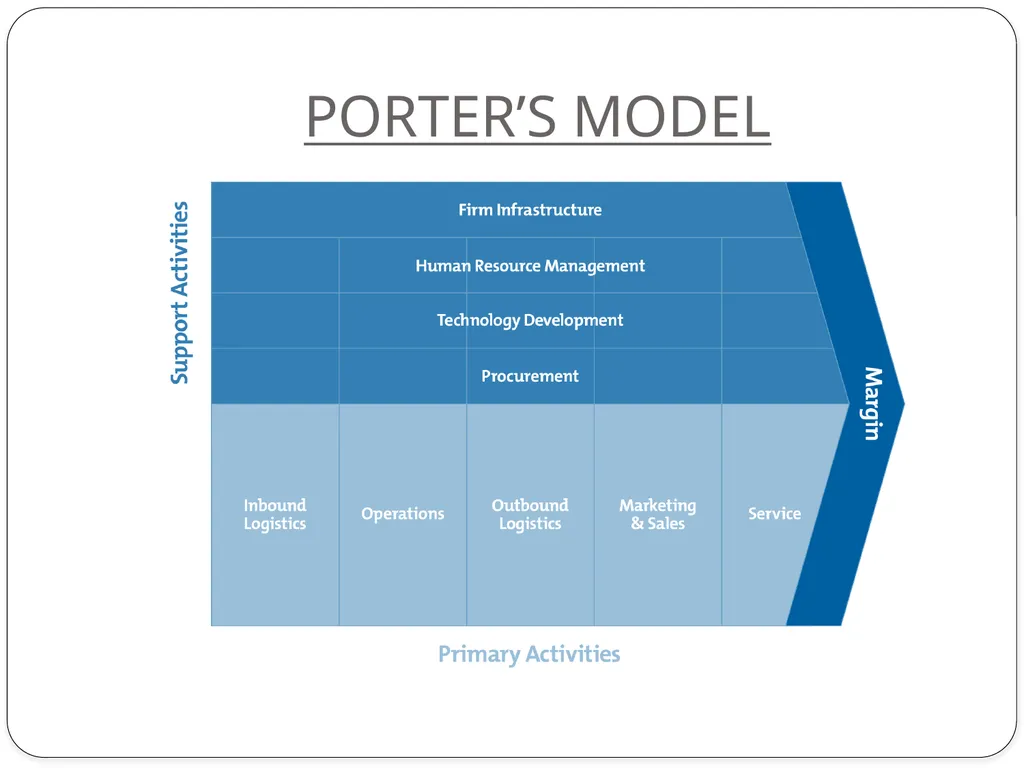
slide15. Porter’s value chain model
Porter’s value chain model describes the flow of values from producer to customer . This model also may clear that there are many points of intermediate person along value chain within and between the companies .
There are two broad categories of porter’s value chain model:-
Primary activity
Support activity<br>
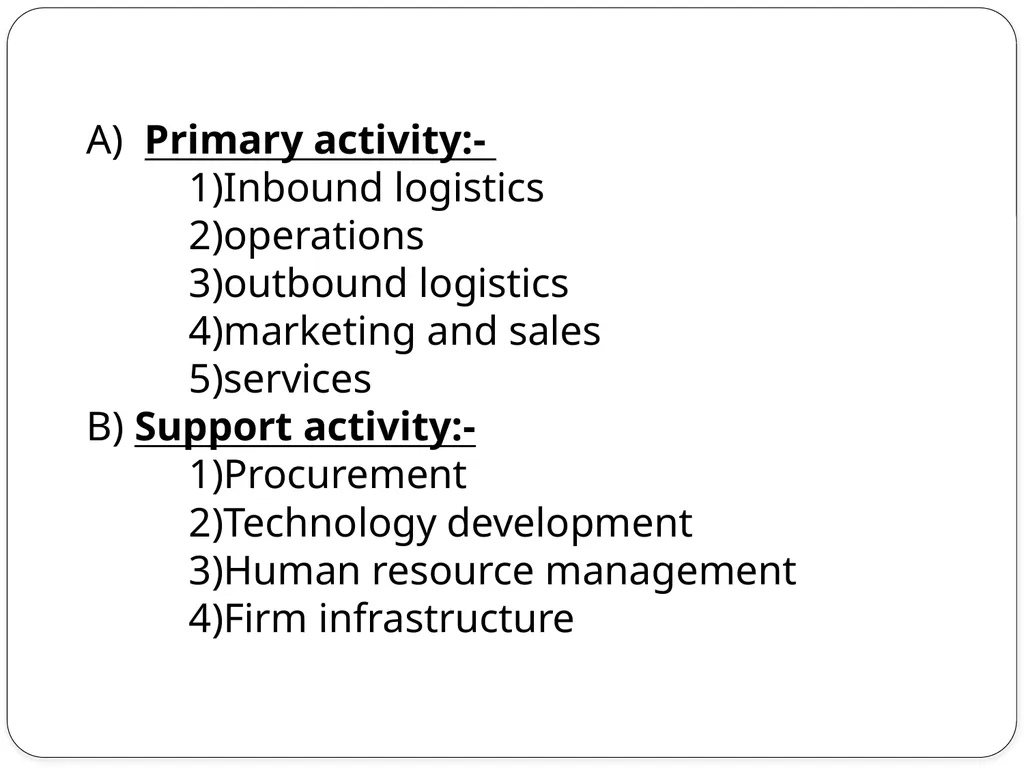
slide16. A) Primary activity:-
1)Inbound logistics
2)operations
3)outbound logistics
4)marketing and sales
5)services
B) Support activity:-
1)Procurement
2)Technology development
3)Human resource management
4)Firm infrastructure<br>
slide17. PORTER’S MODEL<br>
slide18. E-Commerce Strategic Inputs Inputs to e-commerce business strategy are –
Technology
Business Environment
Business Capability
Technology –
An e-commerce business strategy are –
EDI
E-Market
Internet e-commerce<br>
slide19. 2. Business Environment- All business operate with in an external environment they can influence that environment.
The business environment in e- commerce strategy are –
Culture
Economy
Labour
Analysis of an environment is not an easy task some organisation will carrying out a study generating will carrying out a study generating data which are applicable for business strategy.<br>
slide20. 3. Business Capability The organization need to be sure that it can make a success of new sales channel and also that its production capacity can respond in a timely manner to the demand of an electronic sales channel.
The following are business capability of e-commerce-
Into activity
Cost savings
Better Customer services
Opportunities for new business
A team line business process<br>
slide21. E-commerce Evaluation All the information of the information system should be properly check after implementation and this is particular important for a system that is used by the person outside the company.
The evaluation process is completed in three levels-
Improved it.
Revised it.
Update it.<br>
slide22. Thank you !!!<br>
Introduction to E-commerce<br>
slide2. Content Introduction of E-Commerce
Types of E-Commerce
Advantages of E-Commerce
Disadvantages of E-Commerce
Trade Cycle
Scope of E-Commerce
Supply Chain
Porter’s Model
E commerce Strategic inputs
E commerce evaluation<br>
slide3. E-Commerce E-commerce was first introduced in the 1960’s via an electronic data interchange (EDI) on value-added
networks (VANs).
E-commerce or electronic commerce is a process of buying and selling of goods and services while increasing the speed of delivery.<br>
slide4. Types of E-commerce There are mainly four types of E - commerce.
1) Business-to- Business (B2B)
2) Business-to-Consumer (B2C)
3) Consumer-to-Consumer (C2C)
4) Consumer-to-Business (C2B)<br>
slide5. Business to Business – B2B e-commerce refers to electronic exchange of goods , products services or information between business rather than between business and consumers.
Business to Consumer – B2C is the retail part of e commerce on the internet. It is when business sell products, services or information directly to consumers.
Consumers to Consumers - C2C is a type e commerce in which consumers trade products, services and information with each other online.
Consumer to Business - C2B is a type of e commerce in which consumers make their products and services available online for companies to bid on and purchase.<br>
slide6. Advantages of E-commerce Availability
Speed of access
Wide availability
International reach
Lower cost
Personalization and Product recommendation.<br>
slide7. Disadvantages Of E-commerce Limited customer services
Not being able to touch or see
Wait time
Security<br>
slide8. Trade Cycle A trade cycle is the series of exchanges, between a customer and supplier that take place when a commercial exchange is executed.
A general trade cycle consists of following stages :
Presales
Execution
Settlement
After Sales<br>
slide9. Scope of E-Commerce E - Market
An Electronic market is a market where the exchange
of economic product and services over the internet. It includes various concepts such as email marketing , social media marketing and search engine optimization.
Lower Co ordination Cost
Electronic link producers and retailers are able to lower their cost by reducing enterprises person and unnecessary co ordination due to direct interaction with customer.<br>
slide10. Low Computing cost This can transform and expand product to make them suitable for the e-market. Minimum Delivery Cost Delivery cost are minimized since the information in an E-commerce transactions is transmitted to e market So, the paper based information exchange cost is substituted by must lower electronic distribution cost.<br>
slide11. 2) Electronic data interchange (EDI) EDI provides a standard system for coding trade transaction so that they can be communicated directly from one system to another without the need for printed order and invoices. EDI is a communication standard that enables the electronic transfer of routine documents such as purchase order between the business partners.<br>
slide12. 3) Internet Commerce Internet Commerce means the use of the global internet for purchase of services including service and support often sales. Internet commerce bring some new technology and new capability to business.<br>
slide13. Supply chain
Supply chains were originally defined as encompassing all activities associated with the flow and transformation of goods from raw materials through to the end user, as well as the associated information flows.
Supply chain management is the management of the flow of goods and services and includes all processes that transform raw materials into final products.
Upstream supply chain Downstream supply chain
Buy side e-commerce Sell side e-commerce Organization Supplier Customer<br>
slide14. Benefits of Supply Chain The benefits of supply chain in e-commerce is defined as-
Order Taking
Order Fulfilment
Electronic Payment
Managing the risk
Inventories can be minimized<br>
slide15. Porter’s value chain model
Porter’s value chain model describes the flow of values from producer to customer . This model also may clear that there are many points of intermediate person along value chain within and between the companies .
There are two broad categories of porter’s value chain model:-
Primary activity
Support activity<br>
slide16. A) Primary activity:-
1)Inbound logistics
2)operations
3)outbound logistics
4)marketing and sales
5)services
B) Support activity:-
1)Procurement
2)Technology development
3)Human resource management
4)Firm infrastructure<br>
slide17. PORTER’S MODEL<br>
slide18. E-Commerce Strategic Inputs Inputs to e-commerce business strategy are –
Technology
Business Environment
Business Capability
Technology –
An e-commerce business strategy are –
EDI
E-Market
Internet e-commerce<br>
slide19. 2. Business Environment- All business operate with in an external environment they can influence that environment.
The business environment in e- commerce strategy are –
Culture
Economy
Labour
Analysis of an environment is not an easy task some organisation will carrying out a study generating will carrying out a study generating data which are applicable for business strategy.<br>
slide20. 3. Business Capability The organization need to be sure that it can make a success of new sales channel and also that its production capacity can respond in a timely manner to the demand of an electronic sales channel.
The following are business capability of e-commerce-
Into activity
Cost savings
Better Customer services
Opportunities for new business
A team line business process<br>
slide21. E-commerce Evaluation All the information of the information system should be properly check after implementation and this is particular important for a system that is used by the person outside the company.
The evaluation process is completed in three levels-
Improved it.
Revised it.
Update it.<br>
slide22. Thank you !!!<br>