
Benign Prostatic Hyperplasia The Prostate Gland
T
Published · 37 slides · 0 views

1 / 1



Description
Benign Prostatic Hyperplasia The Prostate Gland Male sex gland Size of a walnut Helps control urine flow Produces fluid component of semen Produces Prostate Specific Antigen (PSA) Four Areas of the Prostate Transition Zone Peripheral Zone
Related Topics
Share
Embed code
Download this presentation From Below
"Benign Prostatic Hyperplasia The Prostate Gland" is the property of its rightful owner. Permission is granted to download and print the materials on this website for personal, non-commercial use only, and to display it on your personal computer provided you do not modify the materials and that you retain all copyright notices contained in the materials. By downloading content from our website, you accept the terms of this agreement.
Presentation Transcript
01
Benign Prostatic Hyperplasia<br>
02
The Prostate Gland Male sex gland
Size of a walnut
Helps control urine flow
Produces fluid component of semen
Produces Prostate Specific Antigen (PSA)<br>
Size of a walnut
Helps control urine flow
Produces fluid component of semen
Produces Prostate Specific Antigen (PSA)<br>
03
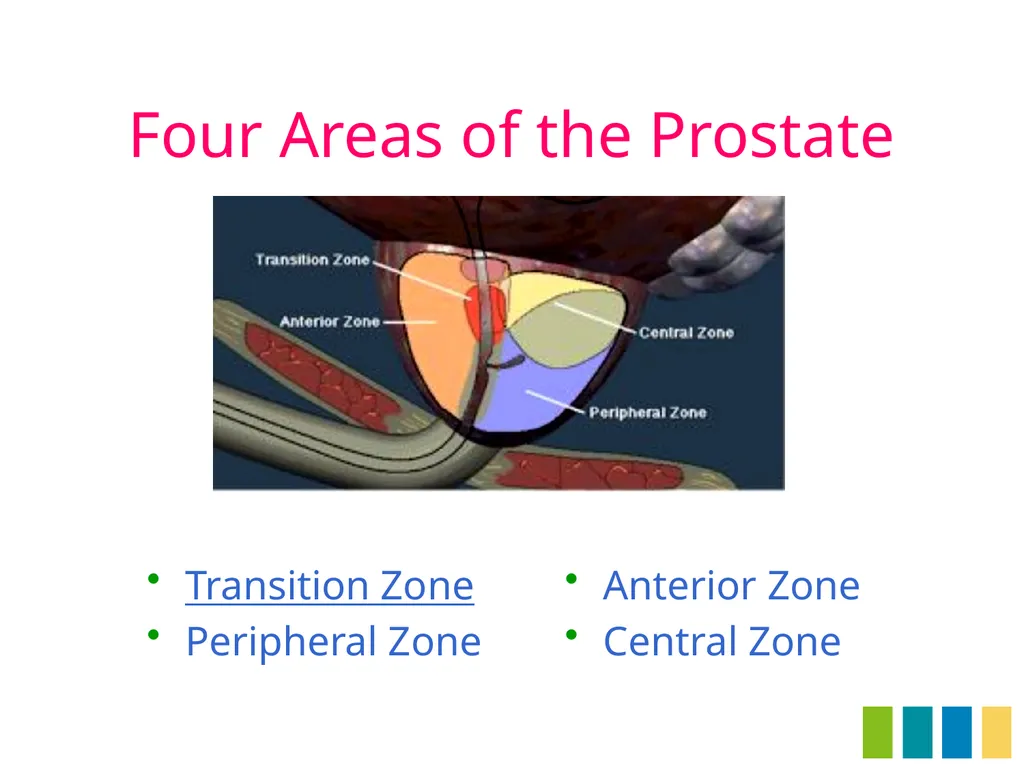
Four Areas of the Prostate Transition Zone
Peripheral Zone Anterior Zone
Central Zone<br>
Peripheral Zone Anterior Zone
Central Zone<br>
04
BPH Generalised disease of the prostate due to hormonal derangement which leads to enlargement of the gland to cause compression of the urethra leading to symptoms<br>
05
Causes of BPH BPH is part of the natural aging process (increase in androgen receptor)
Microscopic disease started after the age of 30
20% in 40 yo men. And 50% in over 50 yo.
Over age of 85, over 90% experience symptoms due to BPH
Obesity
Dihydrotestosterone (DHT) play a role
BPH cannot be prevented
BPH can be treated n n n n n<br>
Microscopic disease started after the age of 30
20% in 40 yo men. And 50% in over 50 yo.
Over age of 85, over 90% experience symptoms due to BPH
Obesity
Dihydrotestosterone (DHT) play a role
BPH cannot be prevented
BPH can be treated n n n n n<br>
06
common symptoms Decrease in the urinary stream
Dribbling or leaking after urination
Intermittency Hesitancy
Pain or burning during urination
Feeling that the bladder never completely empties n n n n n n<br>
Dribbling or leaking after urination
Intermittency Hesitancy
Pain or burning during urination
Feeling that the bladder never completely empties n n n n n n<br>
07
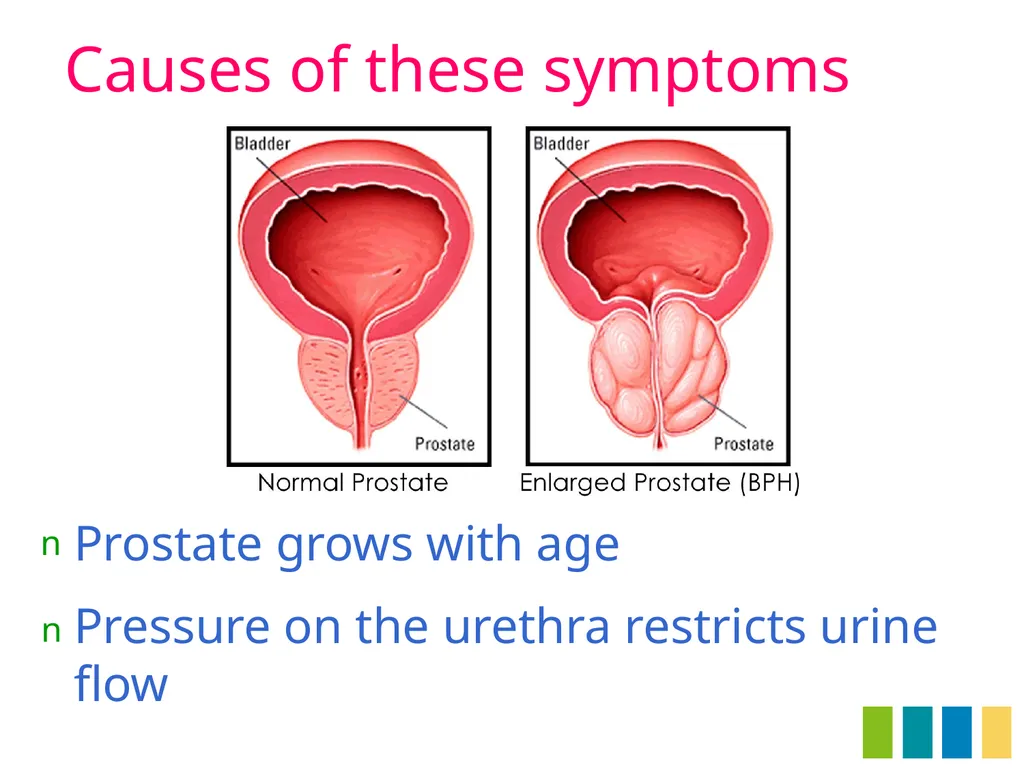
Causes of these symptoms Prostate grows with age
Pressure on the urethra restricts urine flow n n<br>
Pressure on the urethra restricts urine flow n n<br>
08
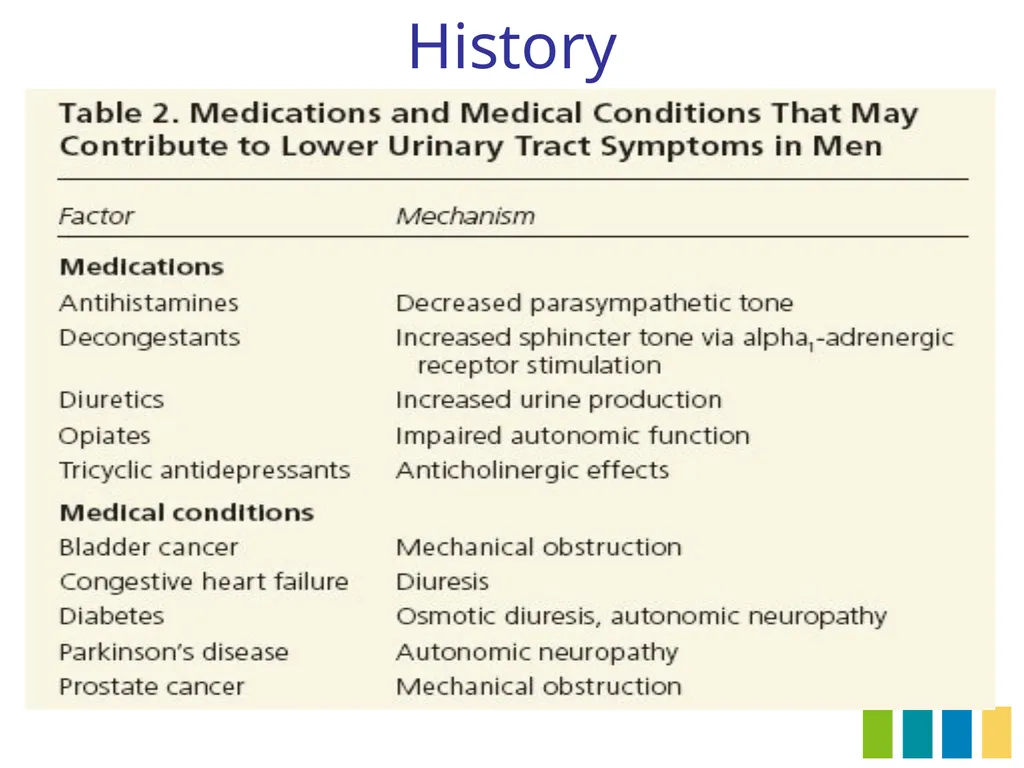
History<br>
09
Diagnosis of BPH Medical history
Physical examination
Prostate exam (cytoscopy)
Urinalysis
Uroflowmetry
PSA blood test (level;3-10ng/ml)
Transrectal ultrasound of prostate
Cystometry n n n n n n n n<br>
Physical examination
Prostate exam (cytoscopy)
Urinalysis
Uroflowmetry
PSA blood test (level;3-10ng/ml)
Transrectal ultrasound of prostate
Cystometry n n n n n n n n<br>
10
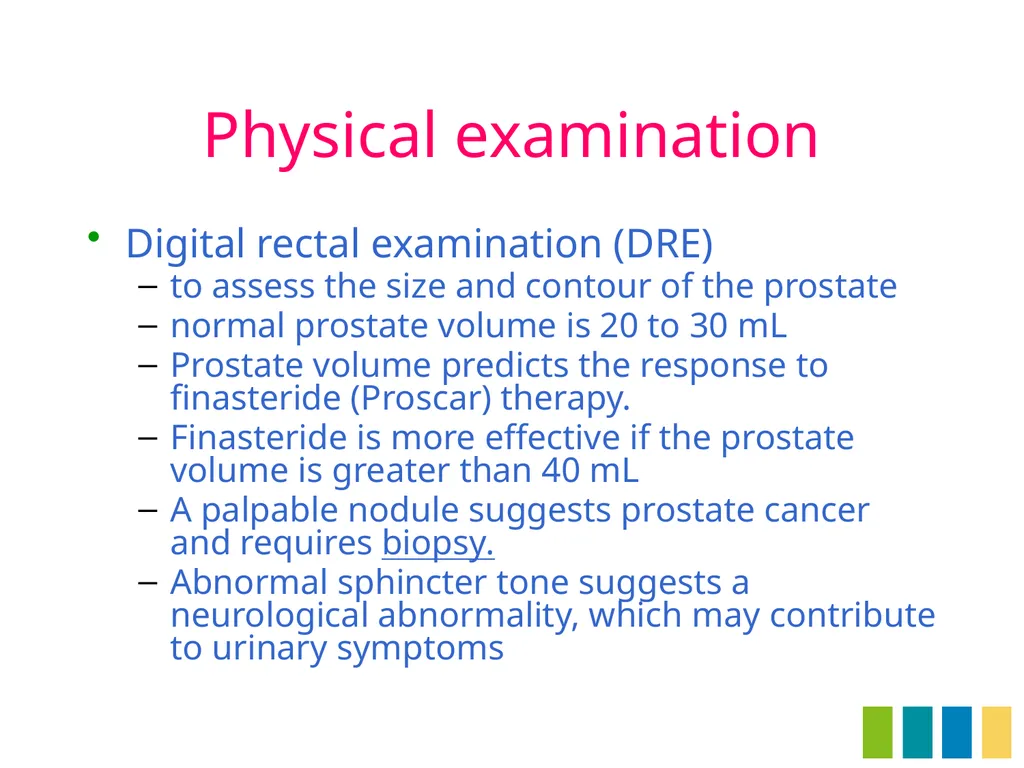
Physical examination Digital rectal examination (DRE)
to assess the size and contour of the prostate
normal prostate volume is 20 to 30 mL
Prostate volume predicts the response to finasteride (Proscar) therapy.
Finasteride is more effective if the prostate volume is greater than 40 mL
A palpable nodule suggests prostate cancer and requires biopsy.
Abnormal sphincter tone suggests a neurological abnormality, which may contribute to urinary symptoms<br>
to assess the size and contour of the prostate
normal prostate volume is 20 to 30 mL
Prostate volume predicts the response to finasteride (Proscar) therapy.
Finasteride is more effective if the prostate volume is greater than 40 mL
A palpable nodule suggests prostate cancer and requires biopsy.
Abnormal sphincter tone suggests a neurological abnormality, which may contribute to urinary symptoms<br>
11
Specialist investigations Uroflowmetry
max flow rate and volume of residual urine after voiding – low flow rate indicates need for (transurethral resection of the prostate)TURP
Young men peak flow should be 25 ml/s, while less than 12 ml/s suggests outflow obstruction.
Bladder pressure studies
pressure measurement during filling and emptying (cystometry) gives information on over/under activity of detrusor muscle and obstruction of bladder outlet.<br>
max flow rate and volume of residual urine after voiding – low flow rate indicates need for (transurethral resection of the prostate)TURP
Young men peak flow should be 25 ml/s, while less than 12 ml/s suggests outflow obstruction.
Bladder pressure studies
pressure measurement during filling and emptying (cystometry) gives information on over/under activity of detrusor muscle and obstruction of bladder outlet.<br>
12
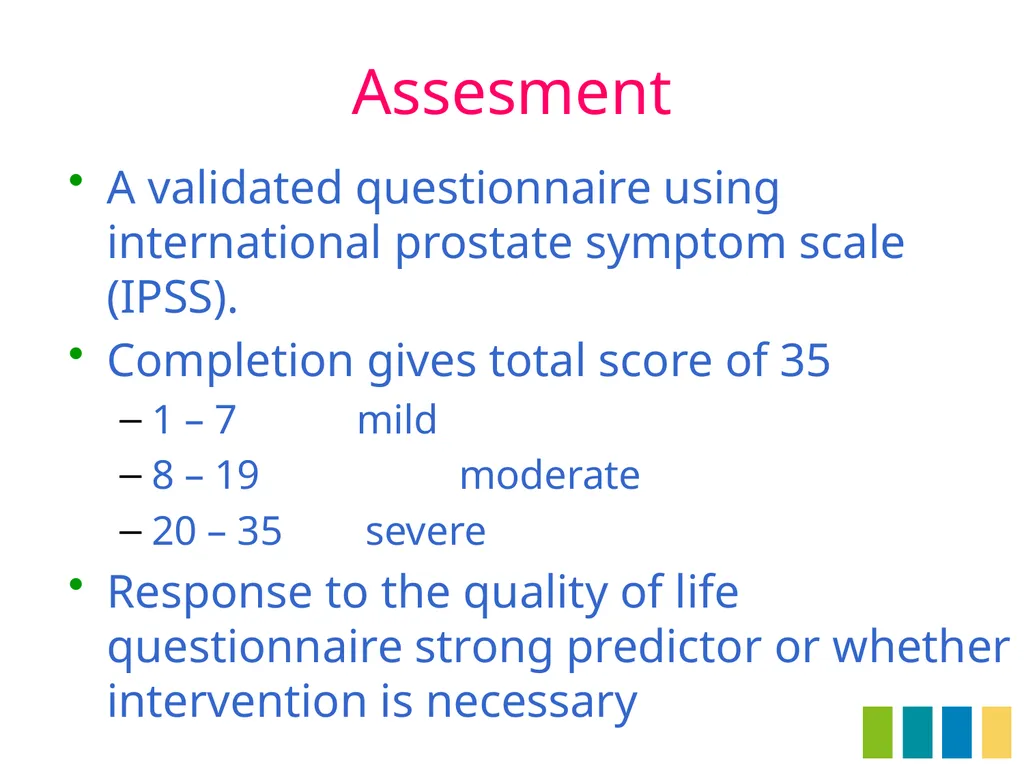
Assesment A validated questionnaire using international prostate symptom scale (IPSS).
Completion gives total score of 35
1 – 7 mild
8 – 19 moderate
20 – 35 severe
Response to the quality of life questionnaire strong predictor or whether intervention is necessary<br>
Completion gives total score of 35
1 – 7 mild
8 – 19 moderate
20 – 35 severe
Response to the quality of life questionnaire strong predictor or whether intervention is necessary<br>
13
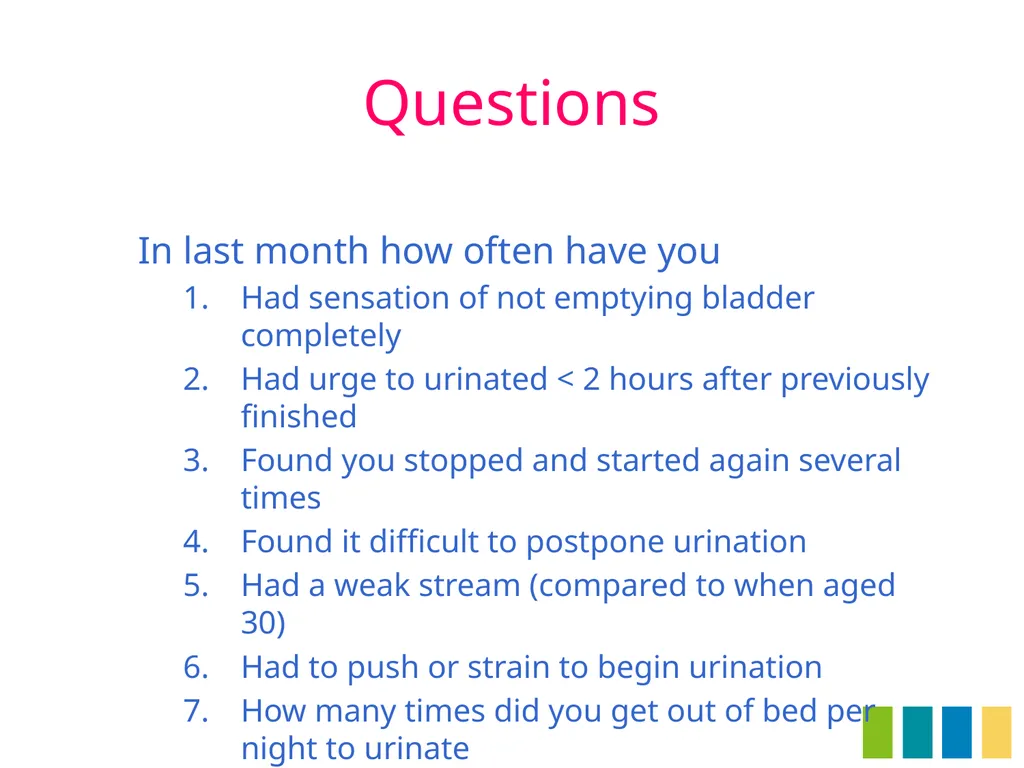
Questions In last month how often have you
Had sensation of not emptying bladder completely
Had urge to urinated < 2 hours after previously finished
Found you stopped and started again several times
Found it difficult to postpone urination
Had a weak stream (compared to when aged 30)
Had to push or strain to begin urination
How many times did you get out of bed per night to urinate<br>
Had sensation of not emptying bladder completely
Had urge to urinated < 2 hours after previously finished
Found you stopped and started again several times
Found it difficult to postpone urination
Had a weak stream (compared to when aged 30)
Had to push or strain to begin urination
How many times did you get out of bed per night to urinate<br>
14
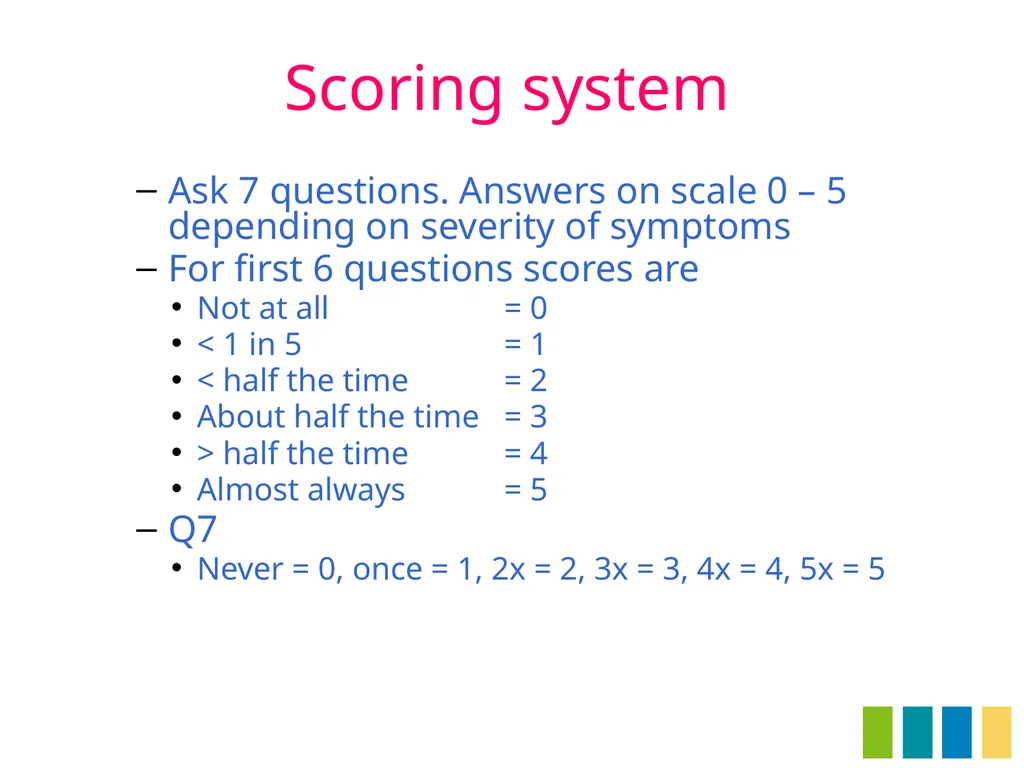
Scoring system Ask 7 questions. Answers on scale 0 – 5 depending on severity of symptoms
For first 6 questions scores are
Not at all = 0
< 1 in 5 = 1
< half the time = 2
About half the time = 3
> half the time = 4
Almost always = 5
Q7
Never = 0, once = 1, 2x = 2, 3x = 3, 4x = 4, 5x = 5<br>
For first 6 questions scores are
Not at all = 0
< 1 in 5 = 1
< half the time = 2
About half the time = 3
> half the time = 4
Almost always = 5
Q7
Never = 0, once = 1, 2x = 2, 3x = 3, 4x = 4, 5x = 5<br>
15
When should BPH be treated BPH needs to be treated ONLY IF:
The symptoms are severe enough to bother patient and affect the quality of life
Renal insufficiency
Frequent urinary tract infections n n n<br>
The symptoms are severe enough to bother patient and affect the quality of life
Renal insufficiency
Frequent urinary tract infections n n n<br>
16
Enlarged prostate Lifestyle modification
Medication
Phytotherapy
Heat therapies
Surgical approaches treatment options n n n n n<br>
Medication
Phytotherapy
Heat therapies
Surgical approaches treatment options n n n n n<br>
17
Management Lifestyle modification
Reduce fluid intake
Stop diuretics if possible
Avoid xs night time fluid intake/caffeine /alcohol
Empty bladder before long trips/meetings<br>
Reduce fluid intake
Stop diuretics if possible
Avoid xs night time fluid intake/caffeine /alcohol
Empty bladder before long trips/meetings<br>
18
medications First line of defense against bothersome urinary symptoms
Manage the condition - don’t fix it
Two major types:
(Alpha-1-blocker) - relax the prostate and provide a larger urethral opening (prazosin,terazosin,tamsulosin,alfazusin, indoramin) Shrink the prostate gland (5-alpha reductase inhibitor) (finasteride, & dutasteride) n n n n n<br>
Manage the condition - don’t fix it
Two major types:
(Alpha-1-blocker) - relax the prostate and provide a larger urethral opening (prazosin,terazosin,tamsulosin,alfazusin, indoramin) Shrink the prostate gland (5-alpha reductase inhibitor) (finasteride, & dutasteride) n n n n n<br>
19
Benefits
Convenient
No loss of work
time
Minimal risk Disadvantages
Expensive
Not all are covered
Drug Interactions
Must be taken every day medication n n n n n n n<br>
Convenient
No loss of work
time
Minimal risk Disadvantages
Expensive
Not all are covered
Drug Interactions
Must be taken every day medication n n n n n n n<br>
20
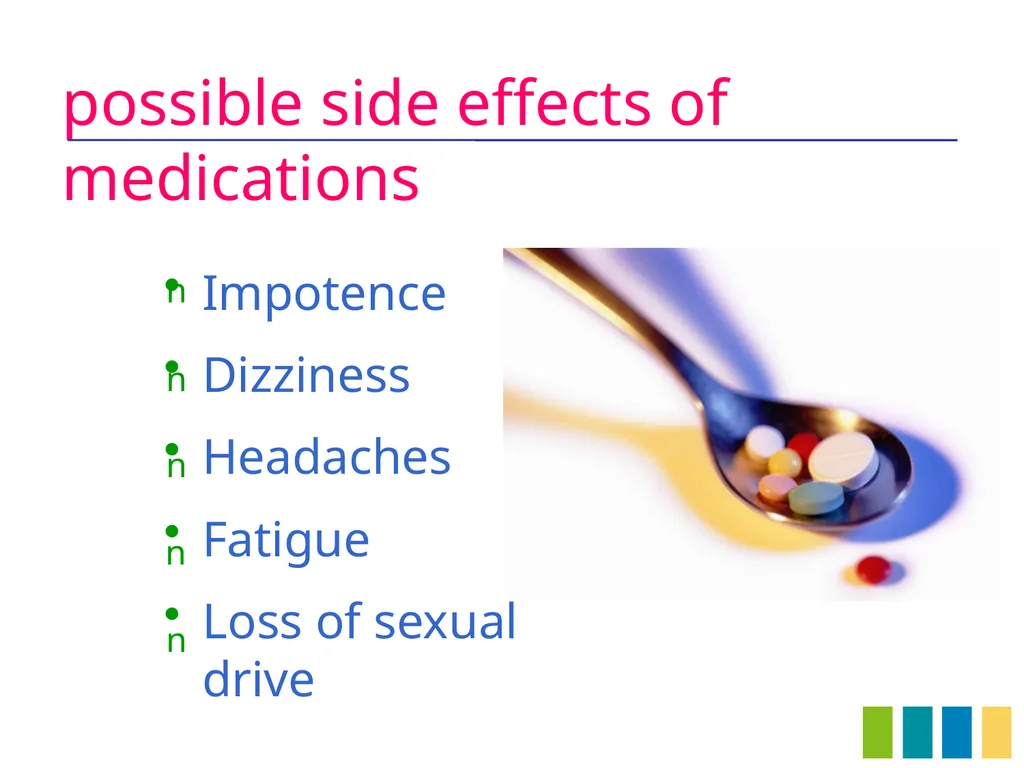
possible side effects of medications Impotence
Dizziness
Headaches
Fatigue
Loss of sexual drive n n n n n<br>
Dizziness
Headaches
Fatigue
Loss of sexual drive n n n n n<br>
21
medications Therapeutic management
The principal treatment options are α-adrenoceptor blocking drugs, 5α-reductase inhibitors and combination therapy.
Phytotherapy is also used in the management of BPH, although the benefits remain unproven.
α-Adrenoceptor blocking drugs: In the prostate, α1-receptors predominate and mediate the contraction of the gland's smooth muscle.
At least three subtypes of this receptor exist (α1A, α1B and α1D). The α1A is thought to be the dominant receptor in the prostate<br>
The principal treatment options are α-adrenoceptor blocking drugs, 5α-reductase inhibitors and combination therapy.
Phytotherapy is also used in the management of BPH, although the benefits remain unproven.
α-Adrenoceptor blocking drugs: In the prostate, α1-receptors predominate and mediate the contraction of the gland's smooth muscle.
At least three subtypes of this receptor exist (α1A, α1B and α1D). The α1A is thought to be the dominant receptor in the prostate<br>
22
medications In general, all the agents are considered to produce similar clinical improvements of LUTSs and urinary flow.
Benefits can be seen usually within the first few days of therapy and can be maintained in the long-term.
α-Adrenoceptor antagonists also have a comparable side-effect profile, which includes postural hypotension, dizziness, fatigue, headache, drowsiness, nasal congestion and ejaculatory dysfunction.<br>
Benefits can be seen usually within the first few days of therapy and can be maintained in the long-term.
α-Adrenoceptor antagonists also have a comparable side-effect profile, which includes postural hypotension, dizziness, fatigue, headache, drowsiness, nasal congestion and ejaculatory dysfunction.<br>
23
medications Prazosin: was the first α1-blocker used to relieve the symptoms of BPH but it lacks relative selectivity for α1A receptors and has been associated with many adverse affects such as drowsiness, weakness, headache and postural hypotension (especially after the first dose).
Terazosin: Efficacy is dose dependent and dose titration is necessary, as terazosin can cause postural hypotension.
Adverse effects, although generally mild, occur more frequently than with other α1-adrenoceptor antagonists, resulting in up to a fourfold increase in treatment discontinuation.<br>
Terazosin: Efficacy is dose dependent and dose titration is necessary, as terazosin can cause postural hypotension.
Adverse effects, although generally mild, occur more frequently than with other α1-adrenoceptor antagonists, resulting in up to a fourfold increase in treatment discontinuation.<br>
24
medications Doxazosin: has a long half-life of about 22h, which allows for once-daily dosing.
When starting treatment, dose titration is recommended to limit postural hypotension.
Indoramin: is readily absorbed from the gastro-intestinal tract and undergoes extensive first-pass hepatic metabolism.
Its hypotensive effect may be increased by diuretics and other anti-hypertensive agents.
Alcohol has been reported to increase the bioavailability and sedative effects of indoramin.<br>
When starting treatment, dose titration is recommended to limit postural hypotension.
Indoramin: is readily absorbed from the gastro-intestinal tract and undergoes extensive first-pass hepatic metabolism.
Its hypotensive effect may be increased by diuretics and other anti-hypertensive agents.
Alcohol has been reported to increase the bioavailability and sedative effects of indoramin.<br>
25
medications Tamsulosin: is a selective inhibitor of the α 1A adrenoceptor.
It has an elimination half-life of about 13h and is available as a prolonged release formulation that allows once-daily dosing.
There is no requirement to titrate the dose upward when initiating treatment
Alfuzosin: displays a higher selectivity for the prostate compared with tamsulosin or doxazosin.
It has a half-life of 5h, but it is available as a once-daily formulation.
Alfuzosin has the least effect on ejaculatory function.
should not be co-administered with potent inhibitors of cytochrome P450 3A4 such as itraconazole, ketoconazole and ritonavir, since this can lead to a several fold increase to exposure in alfuzosin.<br>
It has an elimination half-life of about 13h and is available as a prolonged release formulation that allows once-daily dosing.
There is no requirement to titrate the dose upward when initiating treatment
Alfuzosin: displays a higher selectivity for the prostate compared with tamsulosin or doxazosin.
It has a half-life of 5h, but it is available as a once-daily formulation.
Alfuzosin has the least effect on ejaculatory function.
should not be co-administered with potent inhibitors of cytochrome P450 3A4 such as itraconazole, ketoconazole and ritonavir, since this can lead to a several fold increase to exposure in alfuzosin.<br>
26
medications 5-alpha-Reductase inhibitors
The primary androgen responsible for the development and progression of BPH is DHT.
There are two isoenzymes of 5α-reductase: type 1 is found in liver, skin and hair; type 2 is predominant in genital tissue, including the prostate.
5α-Reductase inhibitors downregulate prostate growth by blocking the conversion of testosterone to the more potent DHT.
Finasteride and Dutasteride: both have been shown to reduce prostate volume, to improve symptom scores and flow rates, and reduce the incidence of complications such as acute urinary retention (AUR) and the need for surgical intervention to treat BPH.<br>
The primary androgen responsible for the development and progression of BPH is DHT.
There are two isoenzymes of 5α-reductase: type 1 is found in liver, skin and hair; type 2 is predominant in genital tissue, including the prostate.
5α-Reductase inhibitors downregulate prostate growth by blocking the conversion of testosterone to the more potent DHT.
Finasteride and Dutasteride: both have been shown to reduce prostate volume, to improve symptom scores and flow rates, and reduce the incidence of complications such as acute urinary retention (AUR) and the need for surgical intervention to treat BPH.<br>
27
medications Finasteride is a type 2, 5α-reductase inhibitor that can reduce prostate size by about 30%, improve symptom scores and increase urinary flow.
Those most likely to benefit are men with a prostate larger than 40mL.
Side effects include decreased libido, impotence, reduced ejaculatory volume and, less commonly, gynaecomastia and breast tenderness.<br>
Those most likely to benefit are men with a prostate larger than 40mL.
Side effects include decreased libido, impotence, reduced ejaculatory volume and, less commonly, gynaecomastia and breast tenderness.<br>
28
medications Dutasteride inhibits both type 1 and type 2 isoenzymes of 5α-reductase.
This double inhibition can reduce serum dihydotestosterone levels by about 90%.
Dutasteride decreases prostate volume by up to 26% and reduces the risk of progression to serious complications of BPH.<br>
This double inhibition can reduce serum dihydotestosterone levels by about 90%.
Dutasteride decreases prostate volume by up to 26% and reduces the risk of progression to serious complications of BPH.<br>
29
medications Phytotherapy
A number of plant extracts are reputed to be effective in the management of symptoms of BPH. They include saw palmetto berry (Serenoa repens), African plum tree (Pygeum africanum), stinging nettle (Urtica dioica) and rye grass pollen.
Their mechanism of action remains unclear but may exert an anti-inflammatory effect by inhibition of prostanoid formation and perhaps produce some degree of inhibition of 5α-reductase.<br>
A number of plant extracts are reputed to be effective in the management of symptoms of BPH. They include saw palmetto berry (Serenoa repens), African plum tree (Pygeum africanum), stinging nettle (Urtica dioica) and rye grass pollen.
Their mechanism of action remains unclear but may exert an anti-inflammatory effect by inhibition of prostanoid formation and perhaps produce some degree of inhibition of 5α-reductase.<br>
30
Destroy prostate tissue with heat
Tissue is left in the body and is expelled over time (sloughing)
Transurethral Microwave Therapy (TUMT)
Transurethral Needle Ablation (TUNA®)
Interstitial Laser Coagulation (ILC)
Water Induced Thermotherapy (WIT) heat therapies n n n n n n<br>
Tissue is left in the body and is expelled over time (sloughing)
Transurethral Microwave Therapy (TUMT)
Transurethral Needle Ablation (TUNA®)
Interstitial Laser Coagulation (ILC)
Water Induced Thermotherapy (WIT) heat therapies n n n n n n<br>
31
heat therapies Benefits
Office treatments
Local anesthesia
Minimally invasive
Reduced risk of complications as compared to invasive surgical “TURP” Disadvantages
Some symptoms will persist for up to 3 months
Cannot predict who will respond
May require prolonged catheterization n n n n n n n<br>
Office treatments
Local anesthesia
Minimally invasive
Reduced risk of complications as compared to invasive surgical “TURP” Disadvantages
Some symptoms will persist for up to 3 months
Cannot predict who will respond
May require prolonged catheterization n n n n n n n<br>
32
possible side effects of Urinary Tract Infection
Impotence
Incontinence heat therapies n n n<br>
Impotence
Incontinence heat therapies n n n<br>
33
surgical treatment<br>
34
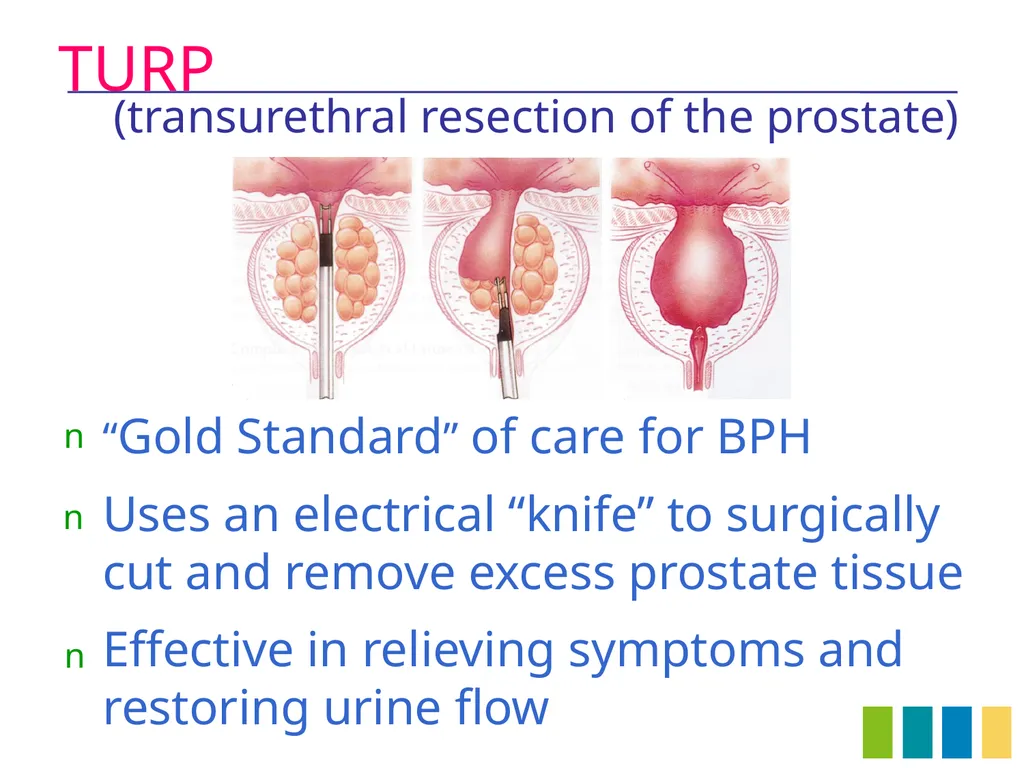
TURP “Gold Standard” of care for BPH
Uses an electrical “knife” to surgically cut and remove excess prostate tissue
Effective in relieving symptoms and restoring urine flow (transurethral resection of the prostate) n n n<br>
Uses an electrical “knife” to surgically cut and remove excess prostate tissue
Effective in relieving symptoms and restoring urine flow (transurethral resection of the prostate) n n n<br>
35
the “gold standard”- TURP Benefits
Widely available
Effective
Long lasting Disadvantages
Greater risk of side effects and complications
1-4 days hospital stay
1-3 days catheter
4-6 week recovery n n n n n n n<br>
Widely available
Effective
Long lasting Disadvantages
Greater risk of side effects and complications
1-4 days hospital stay
1-3 days catheter
4-6 week recovery n n n n n n n<br>
36
possible side effects of Impotence
Incontinence
Bleeding
UTI
Electrolyte imbalance (TUR Syndrome)
May result in ICU (Intensive Care Unit) TURP n n n n n n<br>
Incontinence
Bleeding
UTI
Electrolyte imbalance (TUR Syndrome)
May result in ICU (Intensive Care Unit) TURP n n n n n n<br>
37
Open prostectomy Involve surgical removal of an enlarged prostate and done under general or spinal anaesthesia.
Infrequently used, and restricted to very enlarged prostate glands, and for individuals with bladder stone where TURP is not possible.
Required longer hospital stay & associated with higher incidence of bleeding and other complications.<br>
Infrequently used, and restricted to very enlarged prostate glands, and for individuals with bladder stone where TURP is not possible.
Required longer hospital stay & associated with higher incidence of bleeding and other complications.<br>