
Biological basis of behavior *The physical



Description: Biological basis of behavior The physical structure of the body plays an important role in the behavior of an individual. The most important physical structure for psychologists is the nervous system. The nervous system carries orders
Related Topics
Download Presentation
"Biological basis of behavior *The physical" is the property of its rightful owner. Permission is granted to download and print the materials on this website for personal, non-commercial use only, and to display it on your personal computer provided you do not modify the materials and that you retain all copyright notices contained in the materials. By downloading content from our website, you accept the terms of this agreement.
Presentation Transcript
slide1. Biological basis of behavior<br>
slide2. *The physical structure of the body plays an important role in the behavior of an individual.
*The most important physical structure for psychologists is the nervous system.
*The nervous system carries orders from the brain and spinal cord to various glands and muscles, it also carries signals from stimuli receptors to the spinal cord and brain<br>
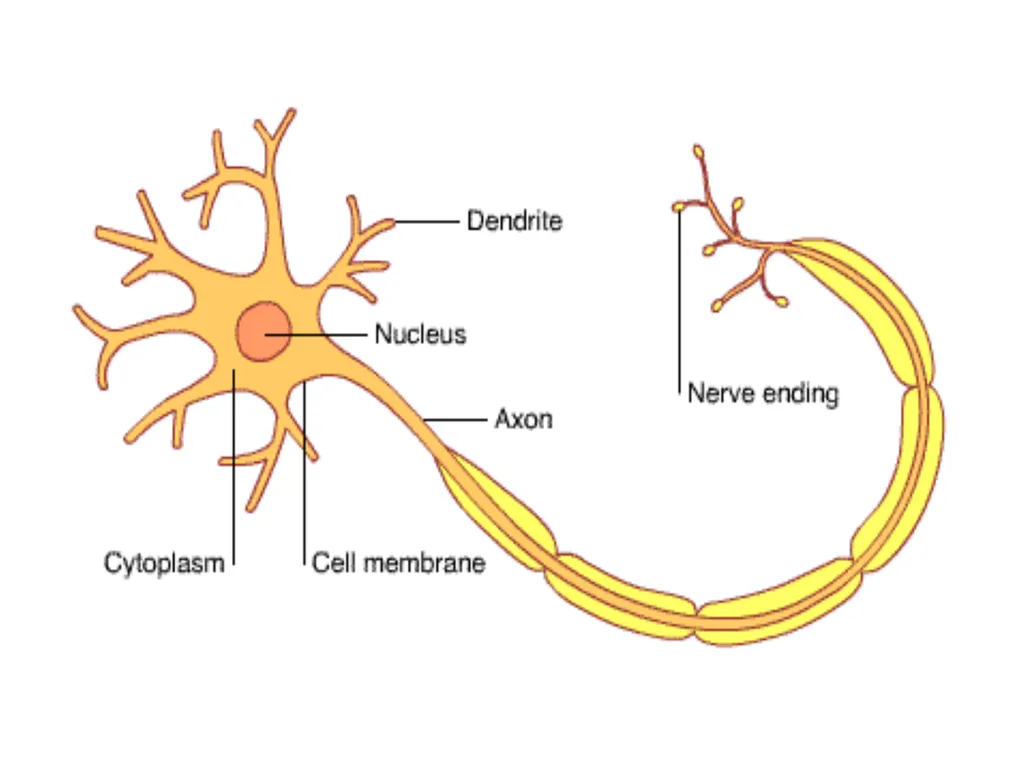
slide3. Neurons *The base of the nervous system is the neuron. -*Neurons are cells that are specialized for communicating information.
*They are the basic tissue and element of the nervous system.
*Neurons have a basic structure of:
• One cell body • One axon • One or more dendrites<br>
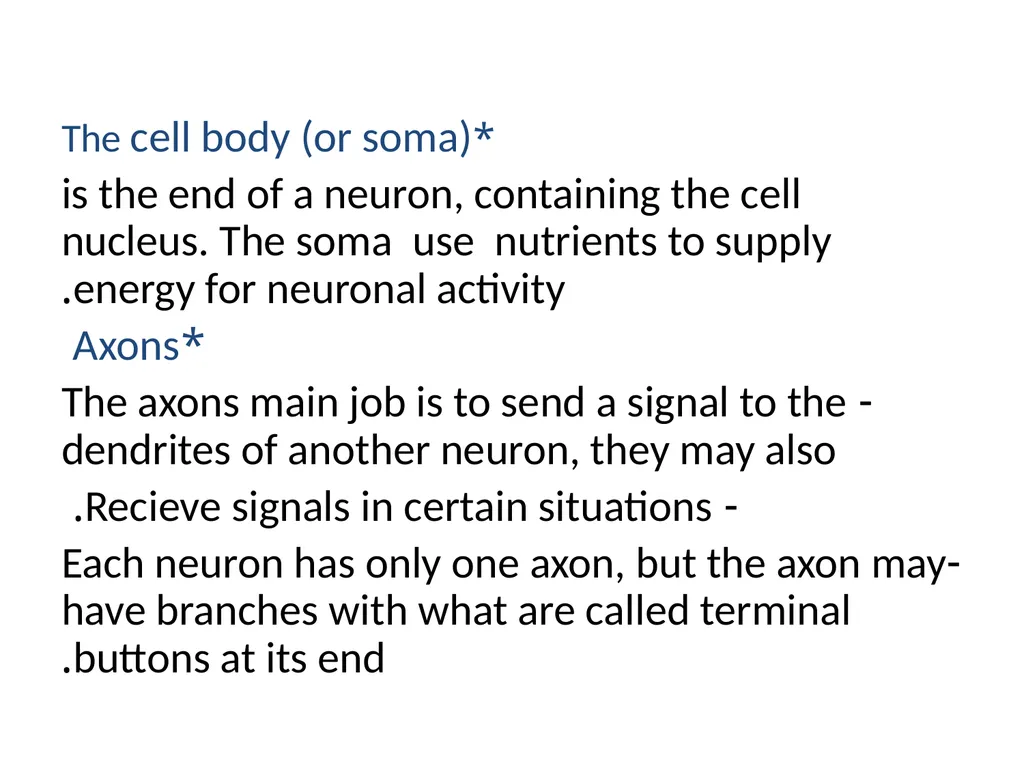
slide5. *The cell body (or soma)
is the end of a neuron, containing the cell nucleus. The soma use nutrients to supply energy for neuronal activity.
*Axons
- The axons main job is to send a signal to the dendrites of another neuron, they may also
- Recieve signals in certain situations.
-Each neuron has only one axon, but the axon may have branches with what are called terminal buttons at its end.<br>
slide6. *Dendrites are organelles that
- sense the neurotransmitter secreted by the axon of another neuron.
-Most neurons have more than one dendrite.
-Dendrites and axons do not directly touch each other; there is a gap, called synaps.<br>
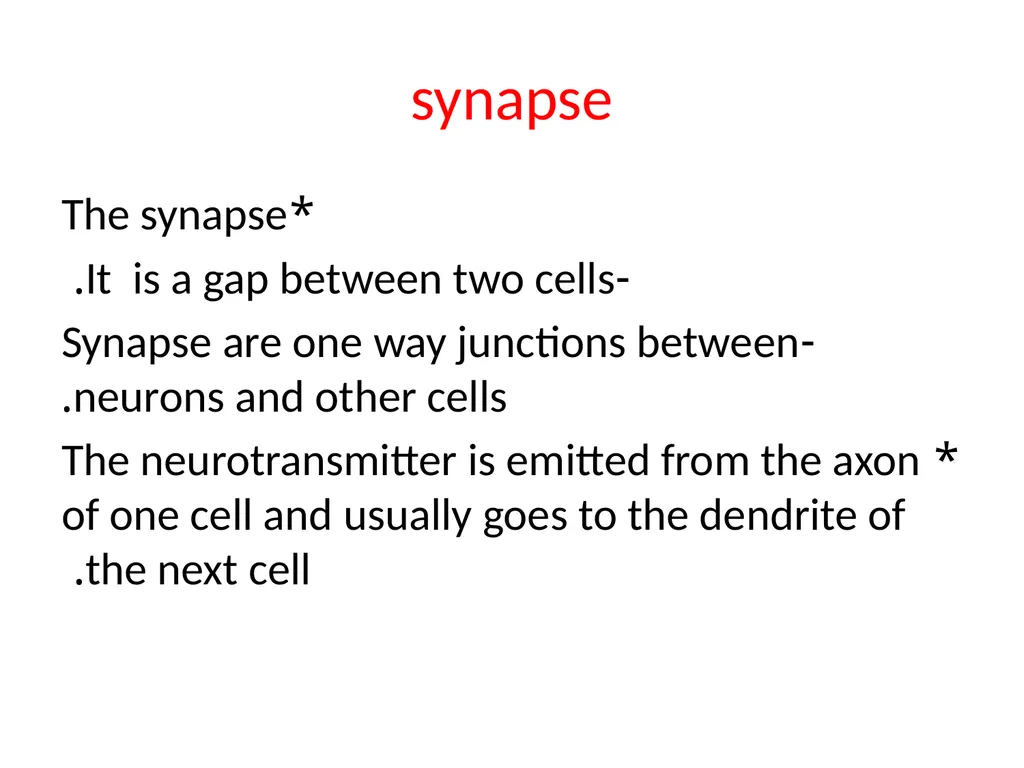
slide7. synapse *The synapse
-It is a gap between two cells.
-Synapse are one way junctions between neurons and other cells.
* The neurotransmitter is emitted from the axon of one cell and usually goes to the dendrite of the next cell.<br>
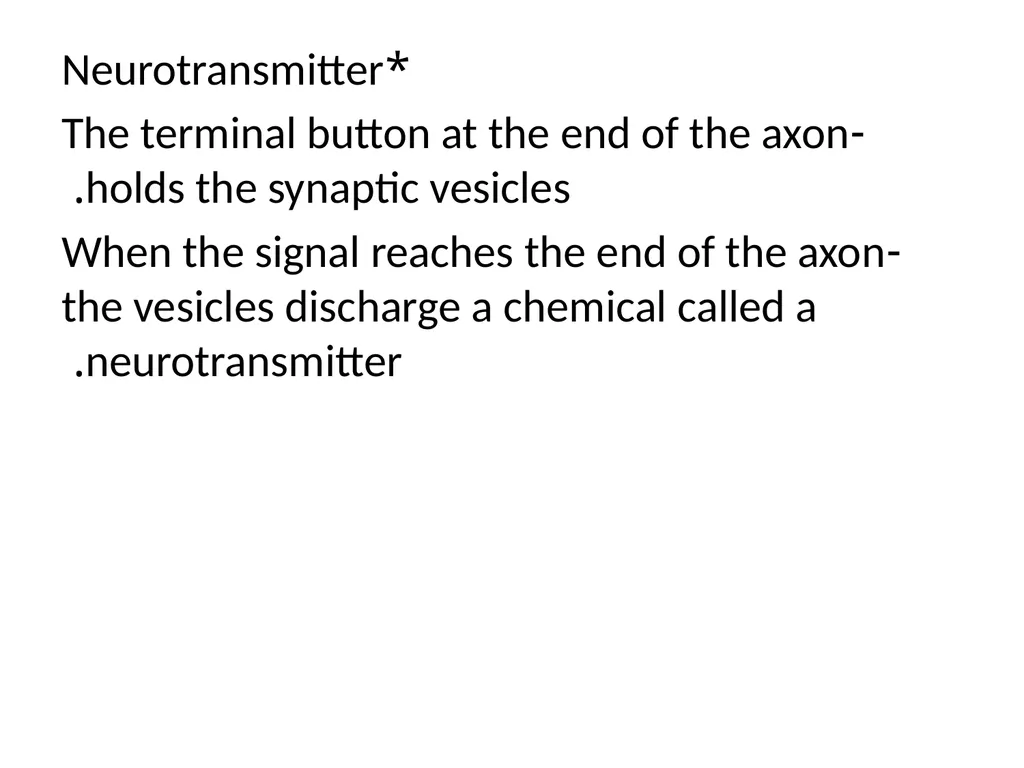
slide8. *Neurotransmitter
-The terminal button at the end of the axon holds the synaptic vesicles.
-When the signal reaches the end of the axon the vesicles discharge a chemical called a neurotransmitter.<br>
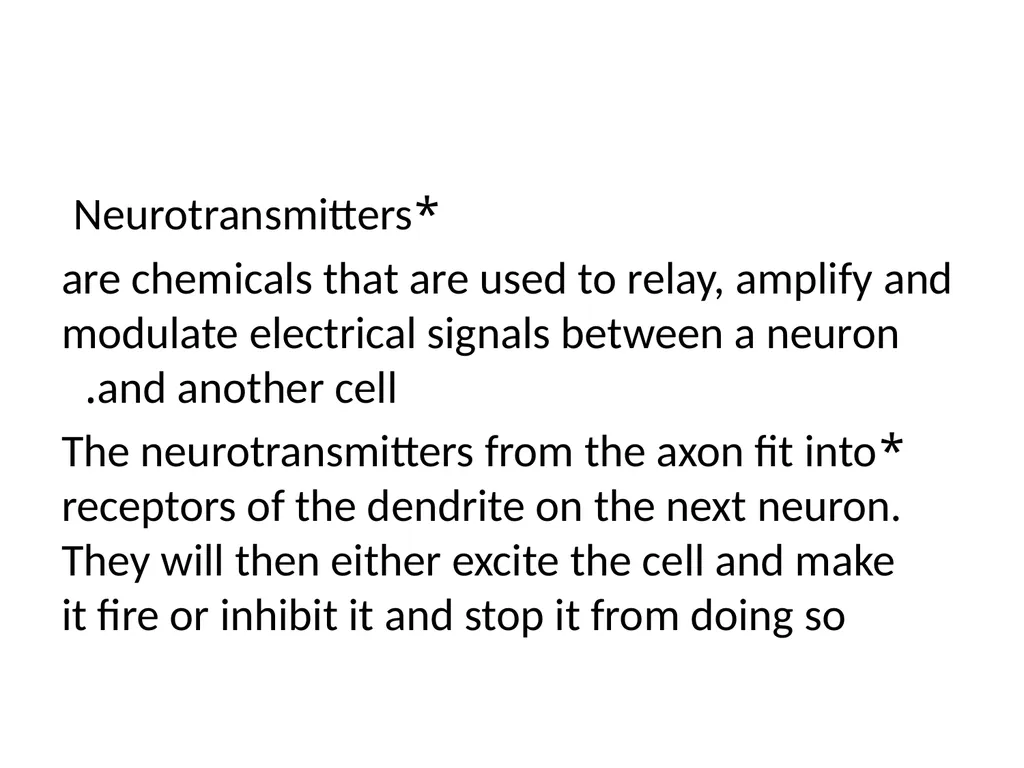
slide9. *Neurotransmitters
are chemicals that are used to relay, amplify and modulate electrical signals between a neuron and another cell.
*The neurotransmitters from the axon fit into receptors of the dendrite on the next neuron. They will then either excite the cell and make it fire or inhibit it and stop it from doing so<br>
slide10. Some of these neurotransmitters **Dopamine, is involved in motivation and
emotion, and is linked to schizophrenia.
**Serotonin, is involved in mood, sleep, and aggression, and is linked to depression.<br>
slide11. **Acetylcholine, is involved in memory, and is linked to Alzheimer's disease.
**Endorphins, neurotransmitters released by vigorous exercise, are the body's natural pain relievers<br>
slide12. **GABA (gamma- aminobutyric acid)
The major inhibitory neurotransmitter in the
brain.
* A lack of GABA can lead to involuntary motor actions, including tremors and seizures. *Alcohol stimulates the release of GABA, which inhibits the nervous system and makes us feel drunk.
*Low levels of GABA can produce anxiety.<br>
slide13. Organization of the nervous system<br>
slide14. *The neurons can all be placed in one of two systems :
A. central nervous system
B. peripheral nervous system.<br>
slide15. The Central nervous system
*The central nervous system has a main role in the control of behavior.
It contains 1. brain and 2.the spinal cord
*Both the brain and spinal cord receive signals from the afferent neurons and send signals to muscles and glands through efferent neurons.<br>
slide16. 2.The peripheral nervous system
Any part of the nervous system that is not part of the central nervous system is part of the peripheral nervous system.
The nerves in the peripheral nervous system A. Somatic system connect the central nervous system to sensory organs (such as the eye and ear) and muscles, while the
B. The autonomic system connect other organs of the body, blood vessels and glands
is split up into<br>
slide17. Structure and function of the brain<br>
slide18. The brain is split up into three major layers,
the hindbrain.
the midbrain.
the forebrain.<br>
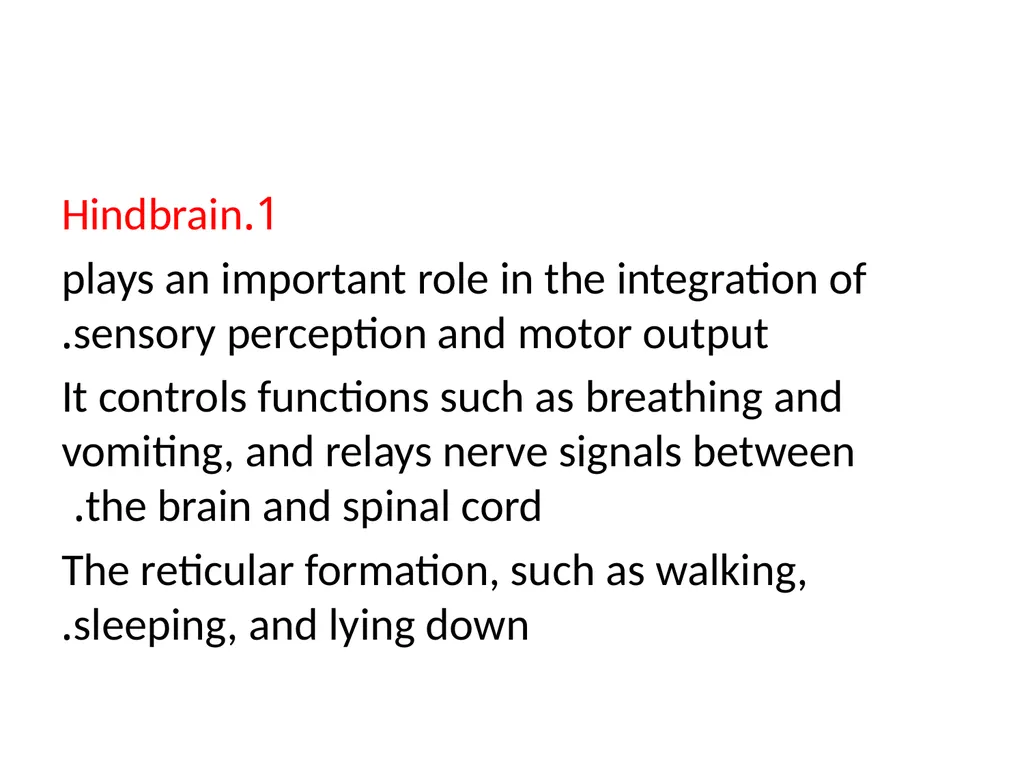
slide19. 1.Hindbrain
plays an important role in the integration of sensory perception and motor output.
It controls functions such as breathing and vomiting, and relays nerve signals between the brain and spinal cord.
The reticular formation, such as walking, sleeping, and lying down.<br>
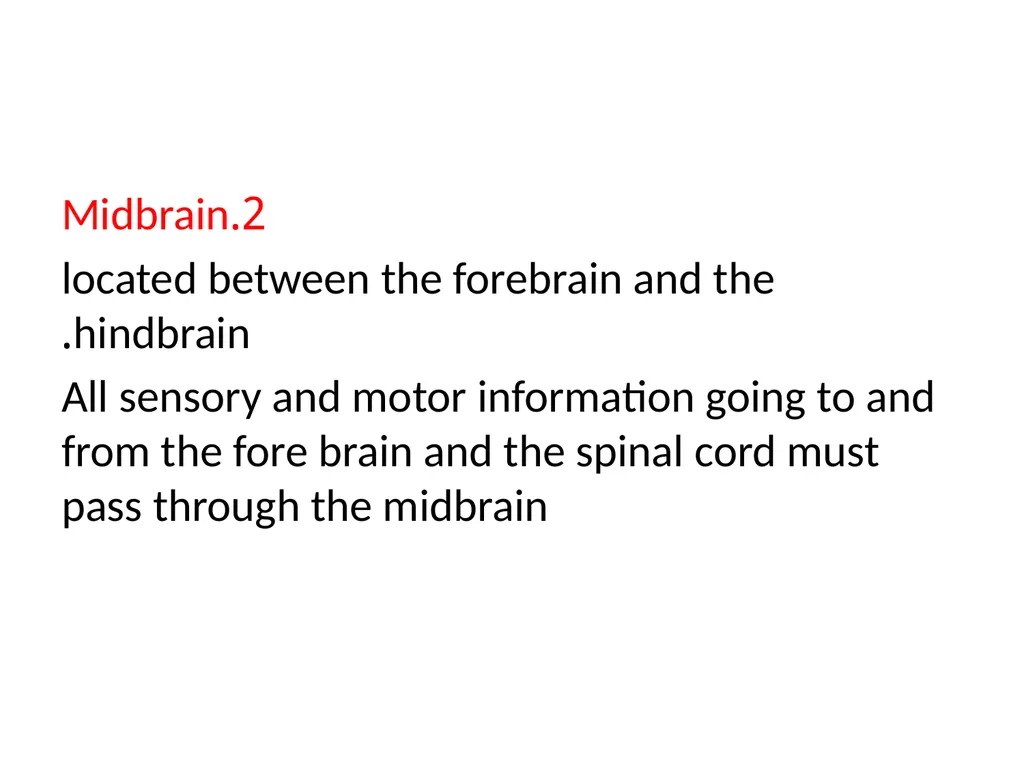
slide20. 2.Midbrain
located between the forebrain and the hindbrain.
All sensory and motor information going to and from the fore brain and the spinal cord must pass through the midbrain<br>
slide21. 3.Forebrain
contains the most complex neural network in the CNS<br>
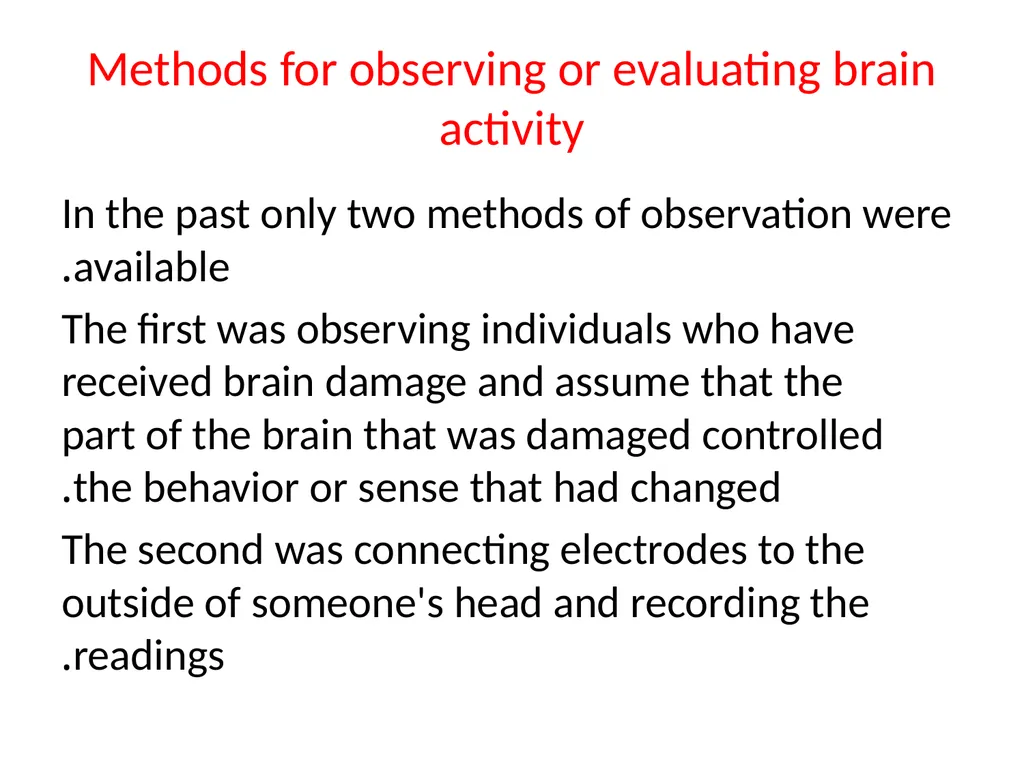
slide22. Methods for observing or evaluating brain activity In the past only two methods of observation were available.
The first was observing individuals who have received brain damage and assume that the part of the brain that was damaged controlled the behavior or sense that had changed.
The second was connecting electrodes to the outside of someone's head and recording the readings.<br>
slide23. Newer methods include computed tomography (CT scan) , magnetic resonance imaging (MRI) and others.<br>
slide2. *The physical structure of the body plays an important role in the behavior of an individual.
*The most important physical structure for psychologists is the nervous system.
*The nervous system carries orders from the brain and spinal cord to various glands and muscles, it also carries signals from stimuli receptors to the spinal cord and brain<br>
slide3. Neurons *The base of the nervous system is the neuron. -*Neurons are cells that are specialized for communicating information.
*They are the basic tissue and element of the nervous system.
*Neurons have a basic structure of:
• One cell body • One axon • One or more dendrites<br>
slide5. *The cell body (or soma)
is the end of a neuron, containing the cell nucleus. The soma use nutrients to supply energy for neuronal activity.
*Axons
- The axons main job is to send a signal to the dendrites of another neuron, they may also
- Recieve signals in certain situations.
-Each neuron has only one axon, but the axon may have branches with what are called terminal buttons at its end.<br>
slide6. *Dendrites are organelles that
- sense the neurotransmitter secreted by the axon of another neuron.
-Most neurons have more than one dendrite.
-Dendrites and axons do not directly touch each other; there is a gap, called synaps.<br>
slide7. synapse *The synapse
-It is a gap between two cells.
-Synapse are one way junctions between neurons and other cells.
* The neurotransmitter is emitted from the axon of one cell and usually goes to the dendrite of the next cell.<br>
slide8. *Neurotransmitter
-The terminal button at the end of the axon holds the synaptic vesicles.
-When the signal reaches the end of the axon the vesicles discharge a chemical called a neurotransmitter.<br>
slide9. *Neurotransmitters
are chemicals that are used to relay, amplify and modulate electrical signals between a neuron and another cell.
*The neurotransmitters from the axon fit into receptors of the dendrite on the next neuron. They will then either excite the cell and make it fire or inhibit it and stop it from doing so<br>
slide10. Some of these neurotransmitters **Dopamine, is involved in motivation and
emotion, and is linked to schizophrenia.
**Serotonin, is involved in mood, sleep, and aggression, and is linked to depression.<br>
slide11. **Acetylcholine, is involved in memory, and is linked to Alzheimer's disease.
**Endorphins, neurotransmitters released by vigorous exercise, are the body's natural pain relievers<br>
slide12. **GABA (gamma- aminobutyric acid)
The major inhibitory neurotransmitter in the
brain.
* A lack of GABA can lead to involuntary motor actions, including tremors and seizures. *Alcohol stimulates the release of GABA, which inhibits the nervous system and makes us feel drunk.
*Low levels of GABA can produce anxiety.<br>
slide13. Organization of the nervous system<br>
slide14. *The neurons can all be placed in one of two systems :
A. central nervous system
B. peripheral nervous system.<br>
slide15. The Central nervous system
*The central nervous system has a main role in the control of behavior.
It contains 1. brain and 2.the spinal cord
*Both the brain and spinal cord receive signals from the afferent neurons and send signals to muscles and glands through efferent neurons.<br>
slide16. 2.The peripheral nervous system
Any part of the nervous system that is not part of the central nervous system is part of the peripheral nervous system.
The nerves in the peripheral nervous system A. Somatic system connect the central nervous system to sensory organs (such as the eye and ear) and muscles, while the
B. The autonomic system connect other organs of the body, blood vessels and glands
is split up into<br>
slide17. Structure and function of the brain<br>
slide18. The brain is split up into three major layers,
the hindbrain.
the midbrain.
the forebrain.<br>
slide19. 1.Hindbrain
plays an important role in the integration of sensory perception and motor output.
It controls functions such as breathing and vomiting, and relays nerve signals between the brain and spinal cord.
The reticular formation, such as walking, sleeping, and lying down.<br>
slide20. 2.Midbrain
located between the forebrain and the hindbrain.
All sensory and motor information going to and from the fore brain and the spinal cord must pass through the midbrain<br>
slide21. 3.Forebrain
contains the most complex neural network in the CNS<br>
slide22. Methods for observing or evaluating brain activity In the past only two methods of observation were available.
The first was observing individuals who have received brain damage and assume that the part of the brain that was damaged controlled the behavior or sense that had changed.
The second was connecting electrodes to the outside of someone's head and recording the readings.<br>
slide23. Newer methods include computed tomography (CT scan) , magnetic resonance imaging (MRI) and others.<br>