
BIOREACTOR (B.Sc, 6th sem(HC) /BOT-HE-6016)) RAHUL
DP
Published · 21 slides · 0 views

1 / 1

Description
BIOREACTOR (B.Sc, 6th sem(HC) BOT-HE-6016)) RAHUL MALAKAR ASSISTANT PROFESSOR DEPT. OF BOTANY, MANGALDAI COLLEGE Bioreactor Definition: A bioreactor is a type of fermentation vessel that is used for the production of various chemicals and
Related Topics
Share
Embed code
Download this presentation From Below
"BIOREACTOR (B.Sc, 6th sem(HC) /BOT-HE-6016)) RAHUL" is the property of its rightful owner. Permission is granted to download and print the materials on this website for personal, non-commercial use only, and to display it on your personal computer provided you do not modify the materials and that you retain all copyright notices contained in the materials. By downloading content from our website, you accept the terms of this agreement.
Presentation Transcript
01
BIOREACTOR
(B.Sc, 6th sem(HC) /BOT-HE-6016)) RAHUL MALAKAR
ASSISTANT PROFESSOR
DEPT. OF BOTANY,
MANGALDAI COLLEGE<br>
ASSISTANT PROFESSOR
DEPT. OF BOTANY,
MANGALDAI COLLEGE<br>
02
Bioreactor Definition:
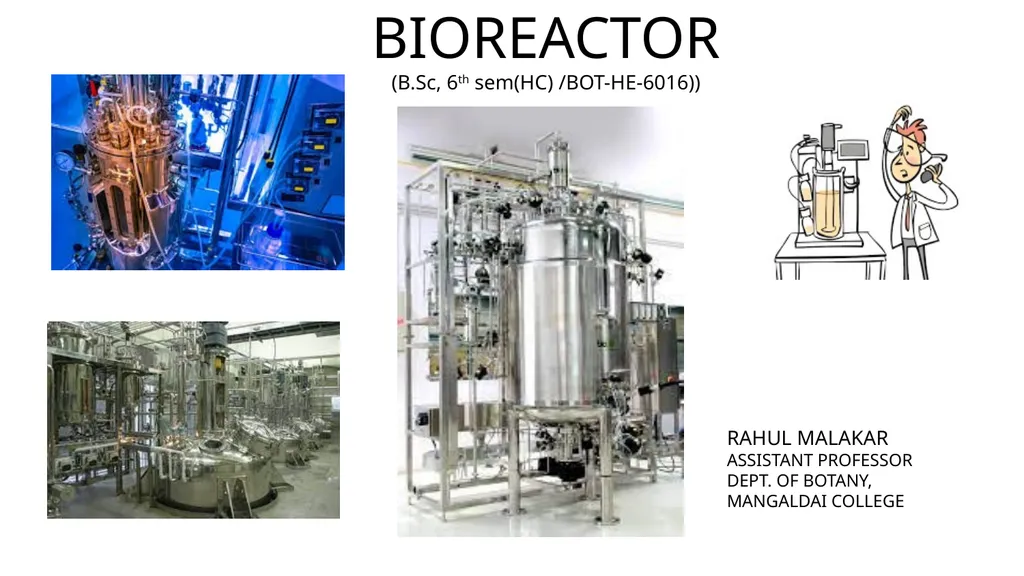
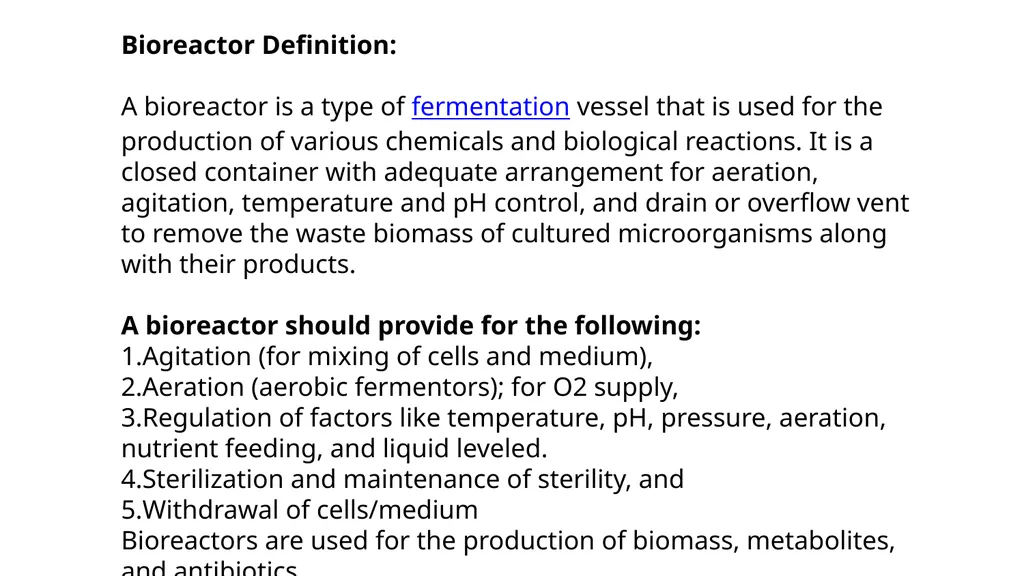
A bioreactor is a type of fermentation vessel that is used for the production of various chemicals and biological reactions. It is a closed container with adequate arrangement for aeration, agitation, temperature and pH control, and drain or overflow vent to remove the waste biomass of cultured microorganisms along with their products.
A bioreactor should provide for the following:
Agitation (for mixing of cells and medium),
Aeration (aerobic fermentors); for O2 supply,
Regulation of factors like temperature, pH, pressure, aeration, nutrient feeding, and liquid leveled.
Sterilization and maintenance of sterility, and
Withdrawal of cells/medium
Bioreactors are used for the production of biomass, metabolites, and antibiotics.<br>
03
Bioreactor Principle:
The bioreactor is the heart of any biochemical process as it provides an environment for microorganisms to obtain optimal growth and produce metabolites for the biotransformation and bioconversion of substrates into desirable products.
The reactors can be engineered or manufactured based on the growth requirements of the organisms used.
Reactors are machines that can be made to transform biological-based materials into desirable products.
They can be used for the production of various enzymes and other bio-catalysis processes.<br>
04
Characteristics of Ideal Bioreactor:
The ideal Bioreactor should be simple, easy to use and provide proper environmental conditions.
Keep the temperature constant and homogeneous.
Minimize nutrient concentration gradients.
Prevent sedimentation and flocculation.
Keep the culture pure without contamination.
Maintain an aseptic environment.
Maximize performance and production.
Minimize spending and production costs.
It should Minimize the time.
The bioreactor must be designed to prevent the entry of contaminating organisms and to contain the desired organisms.
Bioreactors must resist corrosion, and sterilization pressure and meet the demands of the cultivation of different types of microorganisms.
A good Bioreactor must Control temperature, agitation, pH, and dissolved oxygen of the culture medium necessary to optimize the multiplication of microorganisms.<br>
05
Bioreactor Design:
The design and mode of operation of a bioreactor are based on the production of an organism, optimum conditions required for desired product formation, product value, and its scale of production.
A good bioreactor design will help to improve productivity and provide higher quality products at lower prices.
A bioreactor is a device that consists of various features such as an agitator system, an oxygen delivery system, a foam control system, and a variety of other systems such as temperature & pH control system, sampling ports, cleaning, and sterilization system, and lines for charging & emptying the reactor.<br>
06
The material used for the construction of a bioreactor must have the following important properties:
It should not be corrosive.
It should not add any toxic substances to the fermentation media.
It should tolerate the steam sterilization process.
It should be able to tolerate high pressure and resist pH changes.
The sizes of the bioreactor vary widely depending on the application.
Some bioreactors are designed for small scale fermenters and some for large scale industrial applications from the microbial cell (few mm3) to shake flask (100-1000 ml) to the laboratory-scale fermenter (1 – 50 L) to pilot level (0.3 – 10 m3) to plant scale (2 – 500 m3) for large volume).<br>
07
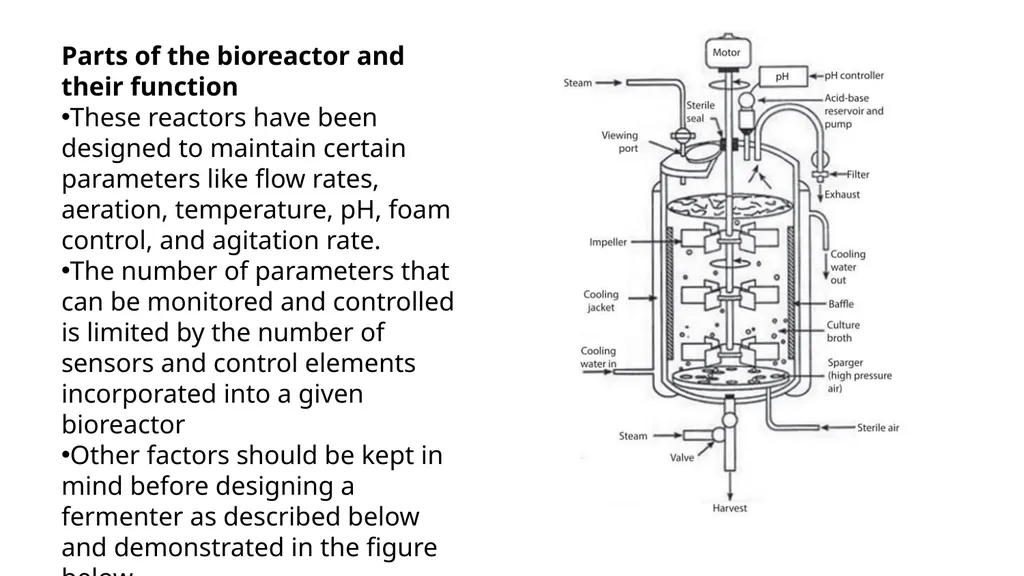
Parts of the bioreactor and their function
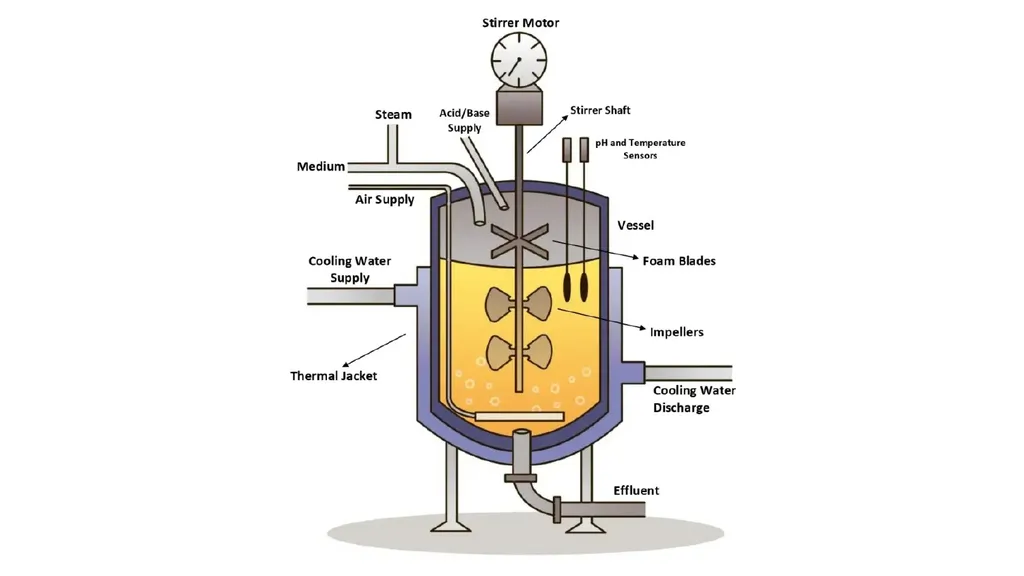
These reactors have been designed to maintain certain parameters like flow rates, aeration, temperature, pH, foam control, and agitation rate.
The number of parameters that can be monitored and controlled is limited by the number of sensors and control elements incorporated into a given bioreactor
Other factors should be kept in mind before designing a fermenter as described below and demonstrated in the figure below.<br>
08
1. Fermenter Vessel
A fermenter is a large cylinder closed at the top and bottom connected with various pipes and valves.
The vessel is designed in such a way that it allows to work under controlled conditions.
Glass and stainless steels are two types of fermenter vessels used.
The glass vessel is usually used in small-scale industries. It is non-toxic and corrosion-proof.
Stainless steel vessel is used in large scale industries. It can resist pressure and corrosion.
2. Heating and Cooling Apparatus
The fermentor vessel’s exterior is fitted with a cooling jacket that seals the vessel and provides cooling water.
Thermostatically controlled baths or internal coils are generally used to provide heat while silicone jackets are used to remove excess heat.
A cooling jacket is necessary for sterilization of the nutrient medium and removal of the heat generated during fermentation in the fermentor.<br>
09
3. Aeration System
An aeration system is one of the very important parts of a fermentor.
It is important to choose a good aeration system to ensure proper aeration and oxygen availability throughout the culture.
It contains two separate aeration devices (sparger and impeller) to ensure proper aeration in a fermentor.
The stirring accomplishes two things:
It helps to mix the gas bubbles through the liquid culture medium and
It helps to mix the microbial cells through the liquid culture medium which ensures the uniform access of microbial cells to the nutrients.
4. Sealing Assembly
The sealing assembly is used for the sealing of the stirrer shaft to offer proper agitation.
There are three types of sealing assembly in the fermenter:
Packed gland seal
Mechanical seal
Magnetic drives<br>
10
5. Baffles
The baffles are incorporated into fermenters to prevent a vortex improve aeration in the fermenters.
It consists of metal strips attached radially to the wall.
6. Impeller
Impellers are used to provide uniform suspension of microbial cells in different nutrient mediums.
They are made up of impeller blades attached to a motor on the lid.
Impeller blades play an important role in reducing the size of air bubbles and distribute them uniformly into the fermentation media.
Variable impellers are used in the fermenters and are classified as follows.
Disc turbines
Variable pitch open turbine<br>
11
7. Sparger
A sparger is a system used for introducing sterile air to a fermentation vessel. It helps in providing proper aeration to the vessel.
The sparger pipes contain small holes of about 5-10 mm, through which pressurized air is released.
Three types of sparger are used
Porous sparger
Nozzle sparger
Combined sparger–agitator
8. Feed Ports
They are used to add nutrients and acid/alkali to the fermentor.
Feed ports are tubes made up of silicone.
In-situ sterilization is performed before the removal or addition of the products.
9. Foam-Control
The level of foam in the vessel must be minimized to avoid contamination, this is an important aspect of the fermentor.
Foam is controlled by two units, foam sensing, and a control unit.
A foam-controlling device is mounted on top of the fermentor, with an inlet into the fermentor.<br>
12
10. Valves
Valves are used in the fermentor to control the movement of liquid in the vessel.
There are around five types of valves are used, that is,
globe valve,
butterfly valve,
a ball valve, and
diaphragm valve.
A safety valve is built-in in the air and pipe layout to operate under pressure
11. Controlling Devices for Environmental Factors
A variety of devices are utilized to control environmental elements like temperature, oxygen concentration, pH, cell mass, essential nutrient levels, and product concentration.
12. Use of Computer in Fermenter
For an efficient process, monitoring, and data collecting, fermentors are generally coupled with modern automated and semi-automated computers and databases.<br>
13
Types of bioreactor
The fermentor (bioreactor) types used extensively in industries are
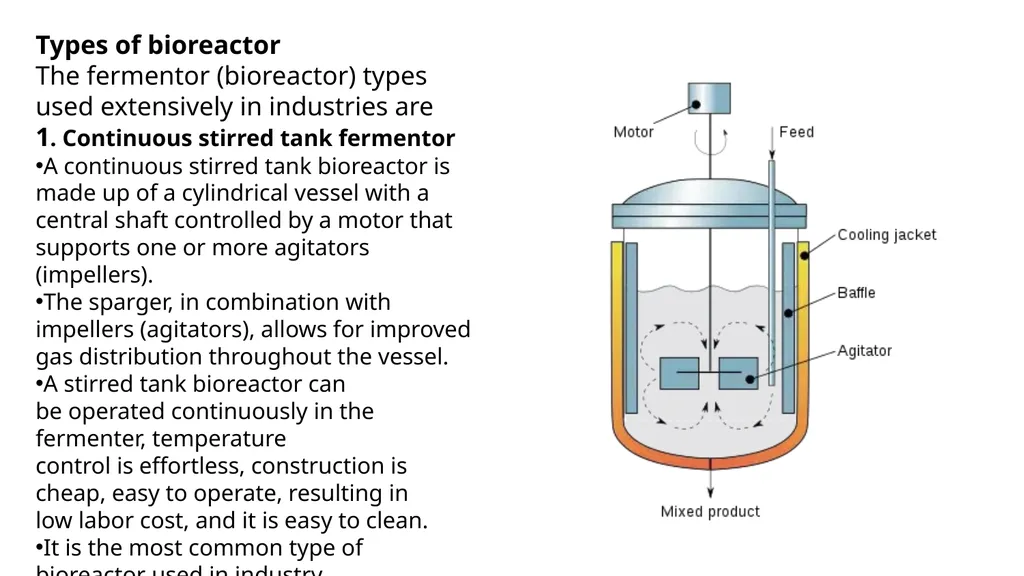
1. Continuous stirred tank fermentor
A continuous stirred tank bioreactor is made up of a cylindrical vessel with a central shaft controlled by a motor that supports one or more agitators (impellers).
The sparger, in combination with impellers (agitators), allows for improved gas distribution throughout the vessel.
A stirred tank bioreactor can be operated continuously in the fermenter, temperature control is effortless, construction is cheap, easy to operate, resulting in low labor cost, and it is easy to clean.
It is the most common type of bioreactor used in industry.<br>
14
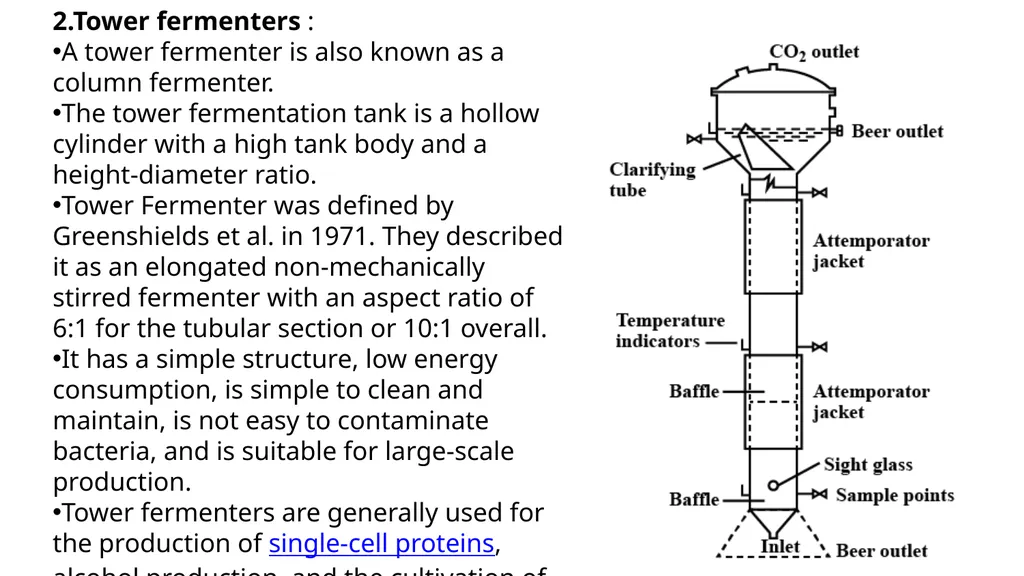
2.Tower fermenters :
A tower fermenter is also known as a column fermenter.
The tower fermentation tank is a hollow cylinder with a high tank body and a height-diameter ratio.
Tower Fermenter was defined by Greenshields et al. in 1971. They described it as an elongated non-mechanically stirred fermenter with an aspect ratio of 6:1 for the tubular section or 10:1 overall.
It has a simple structure, low energy consumption, is simple to clean and maintain, is not easy to contaminate bacteria, and is suitable for large-scale production.
Tower fermenters are generally used for the production of single-cell proteins, alcohol production, and the cultivation of plant cells.<br>
15
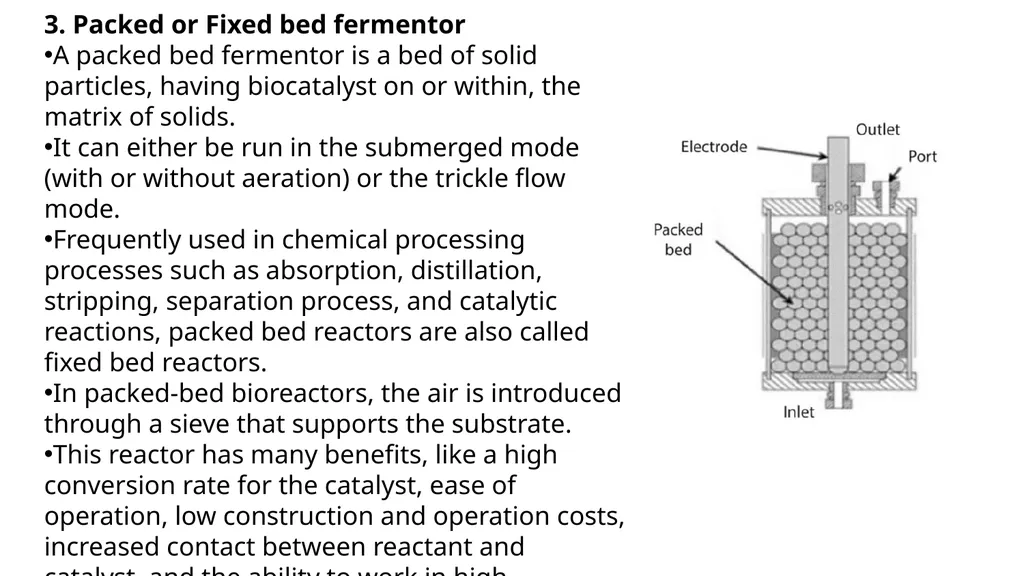
3. Packed or Fixed bed fermentor
A packed bed fermentor is a bed of solid particles, having biocatalyst on or within, the matrix of solids.
It can either be run in the submerged mode (with or without aeration) or the trickle flow mode.
Frequently used in chemical processing processes such as absorption, distillation, stripping, separation process, and catalytic reactions, packed bed reactors are also called fixed bed reactors.
In packed-bed bioreactors, the air is introduced through a sieve that supports the substrate.
This reactor has many benefits, like a high conversion rate for the catalyst, ease of operation, low construction and operation costs, increased contact between reactant and catalyst, and the ability to work in high temperatures and pressures.<br>
16
4. Fluidized-bed fermentor
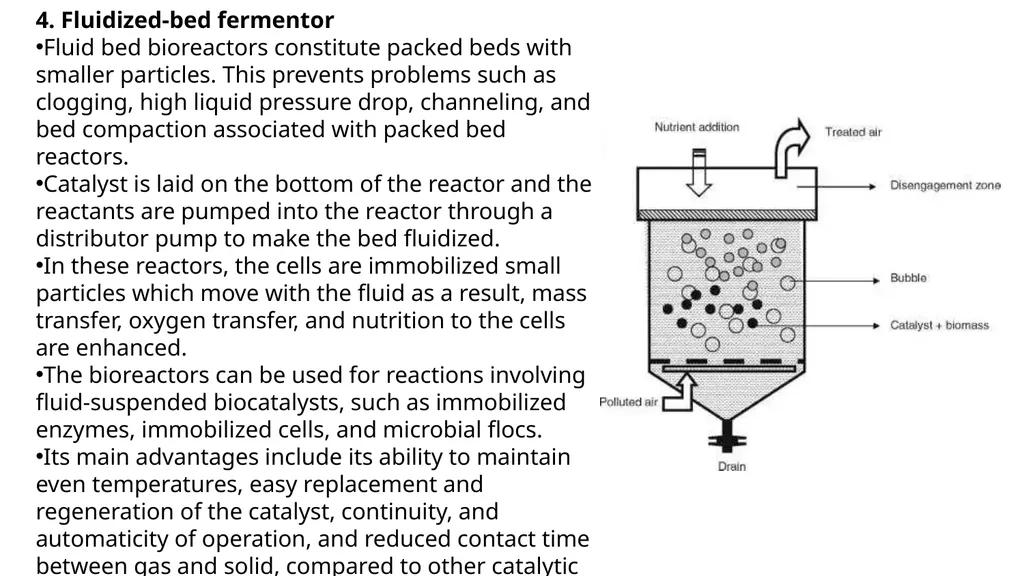
Fluid bed bioreactors constitute packed beds with smaller particles. This prevents problems such as clogging, high liquid pressure drop, channeling, and bed compaction associated with packed bed reactors.
Catalyst is laid on the bottom of the reactor and the reactants are pumped into the reactor through a distributor pump to make the bed fluidized.
In these reactors, the cells are immobilized small particles which move with the fluid as a result, mass transfer, oxygen transfer, and nutrition to the cells are enhanced.
The bioreactors can be used for reactions involving fluid-suspended biocatalysts, such as immobilized enzymes, immobilized cells, and microbial flocs.
Its main advantages include its ability to maintain even temperatures, easy replacement and regeneration of the catalyst, continuity, and automaticity of operation, and reduced contact time between gas and solid, compared to other catalytic reactors.<br>
17
5. Airlift bioreactor
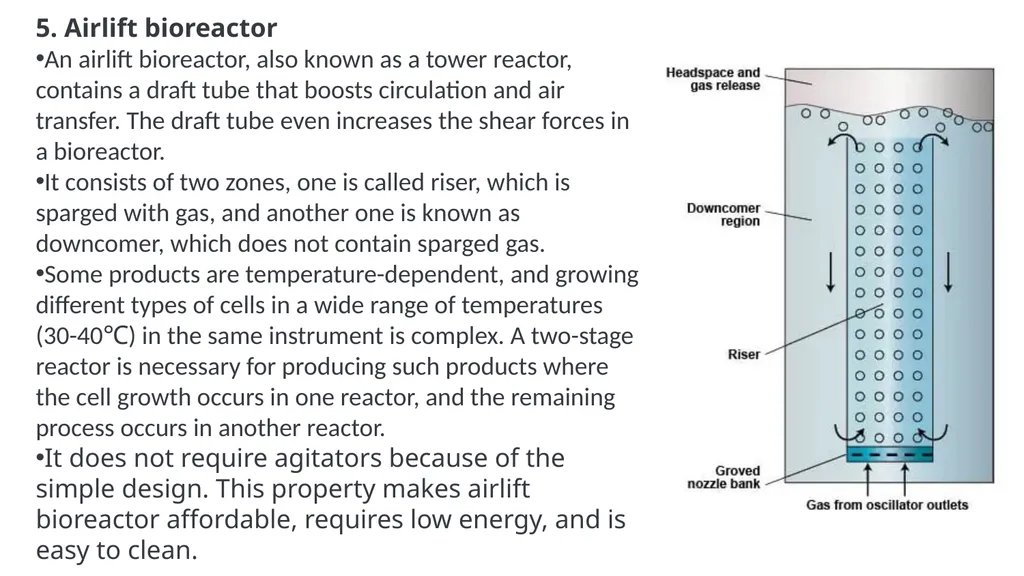
An airlift bioreactor, also known as a tower reactor, contains a draft tube that boosts circulation and air transfer. The draft tube even increases the shear forces in a bioreactor.
It consists of two zones, one is called riser, which is sparged with gas, and another one is known as downcomer, which does not contain sparged gas.
Some products are temperature-dependent, and growing different types of cells in a wide range of temperatures (30-40℃) in the same instrument is complex. A two-stage reactor is necessary for producing such products where the cell growth occurs in one reactor, and the remaining process occurs in another reactor.
It does not require agitators because of the simple design. This property makes airlift bioreactor affordable, requires low energy, and is easy to clean.<br>
18
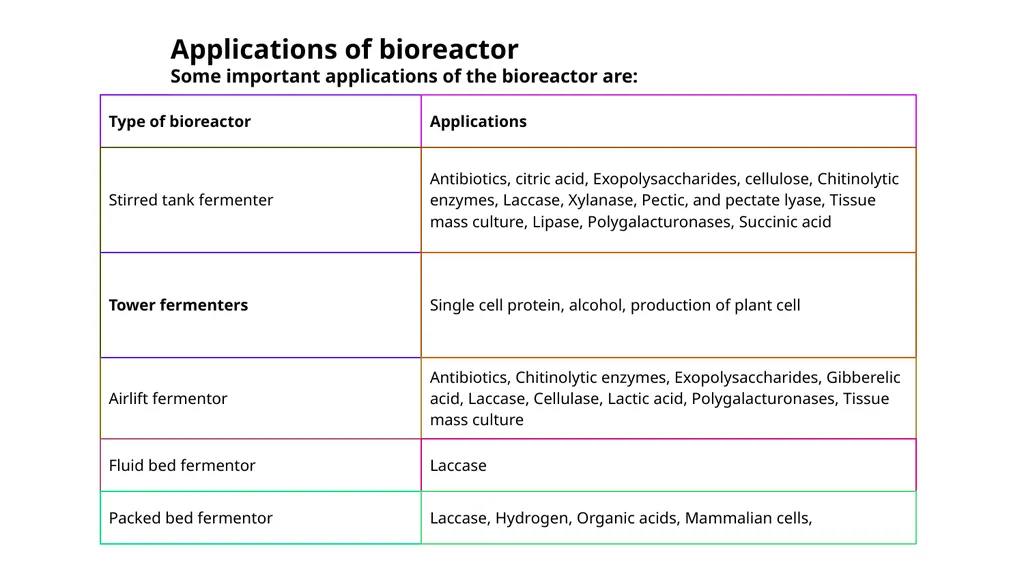
Applications of bioreactor
Some important applications of the bioreactor are:<br>
Some important applications of the bioreactor are:<br>
19
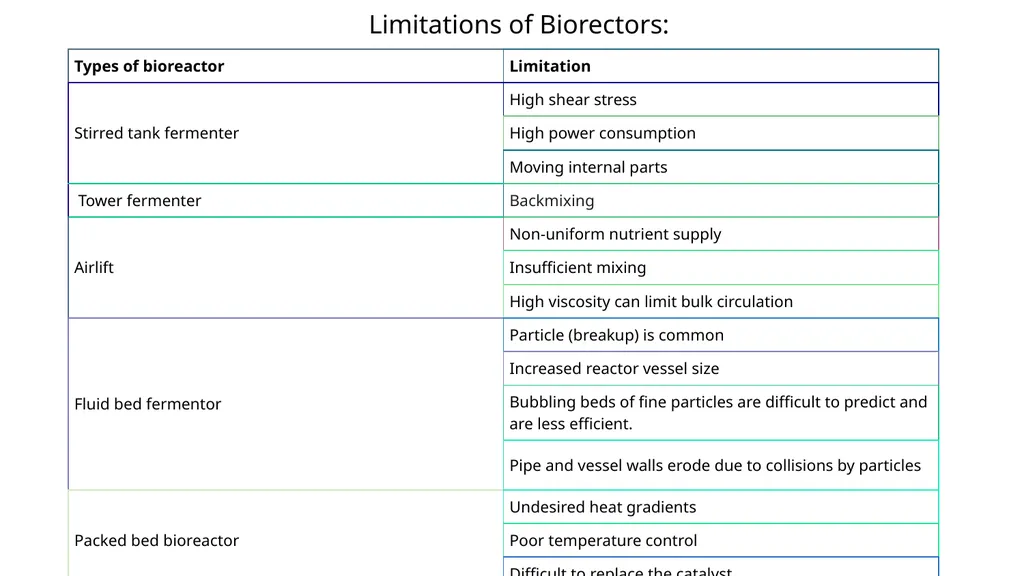
Limitations of Biorectors:<br>
20
THANK YOU<br>