Bivalirudin Plus a High-dose Infusion Versus Heparin Monotherapy in Patients with STEMI Undergoing Primary PCI The BRIGHT-4 Trial Gregg W. Stone MD On behalf of Yaling Han and the BRIGHT-4 investigators Disclosure Statement of Financial
"Bivalirudin Plus a High-dose Infusion Versus" is the property of its rightful owner. Permission is granted to
download and print the materials on this website for personal, non-commercial use only, and to display it
on your personal computer provided you do not modify the materials and that you retain all copyright
notices contained in the materials. By downloading content from our website, you accept the terms of this
agreement.
Presentation Transcript
01
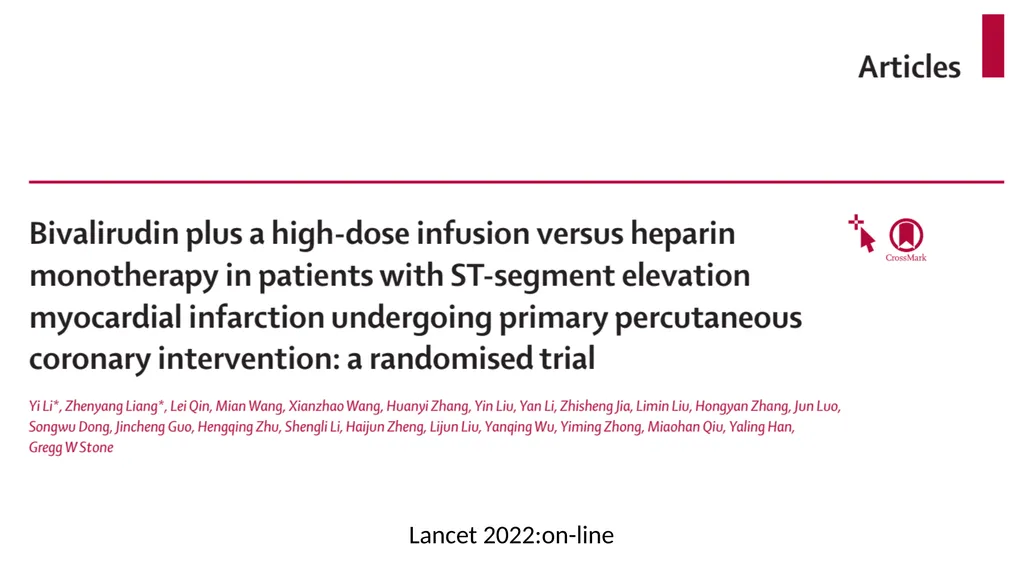
Bivalirudin Plus a High-dose Infusion Versus Heparin Monotherapy in Patients with STEMI Undergoing Primary PCI The BRIGHT-4 Trial Gregg W. Stone MD On behalf of Yaling Han and the BRIGHT-4 investigators<br>
02
Disclosure Statement of Financial Interest Dr. Gregg W. Stone
Specific to this topic: None
General (within 36 months): Speaker honoraria from Medtronic, Pulnovo, Infraredx, Abiomed, Abbott; consultant to Valfix, TherOx, Robocath, HeartFlow, Ablative Solutions, Vectorious, Miracor, Neovasc, Abiomed, Ancora, Elucid Bio, Occlutech, CorFlow, Apollo Therapeutics, Impulse Dynamics, Cardiomech, Gore, Amgen, Adona Medical, Millennia Biopharma; equity/options from Ancora, Cagent, Applied Therapeutics, Biostar family of funds, SpectraWave, Orchestra Biomed, Aria, Cardiac Success, Valfix, Xenter.<br>
03
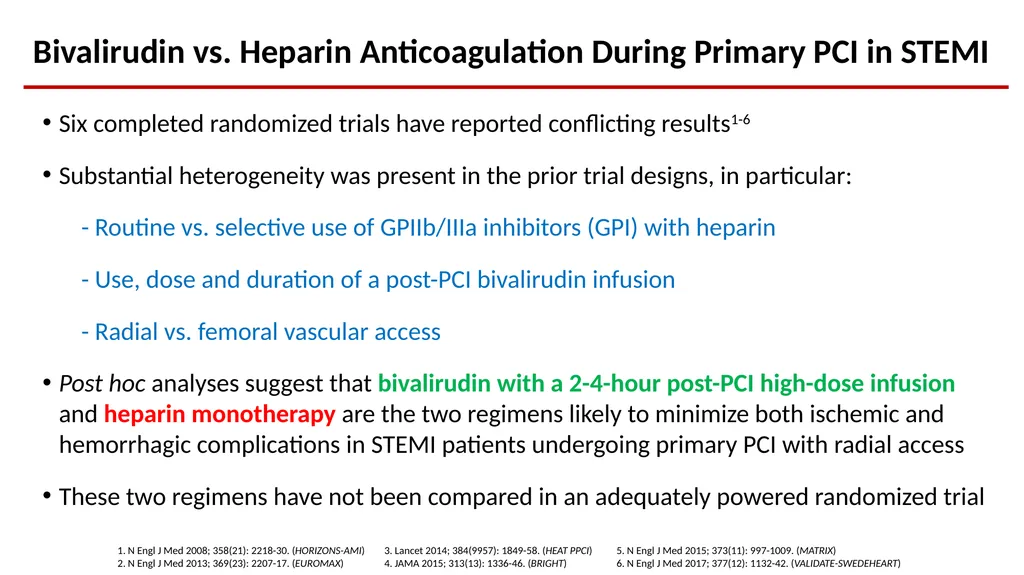
Bivalirudin vs. Heparin Anticoagulation During Primary PCI in STEMI Six completed randomized trials have reported conflicting results1-6
Substantial heterogeneity was present in the prior trial designs, in particular:
- Routine vs. selective use of GPIIb/IIIa inhibitors (GPI) with heparin
- Use, dose and duration of a post-PCI bivalirudin infusion
- Radial vs. femoral vascular access
Post hoc analyses suggest that bivalirudin with a 2-4-hour post-PCI high-dose infusion and heparin monotherapy are the two regimens likely to minimize both ischemic and hemorrhagic complications in STEMI patients undergoing primary PCI with radial access
These two regimens have not been compared in an adequately powered randomized trial<br>
04
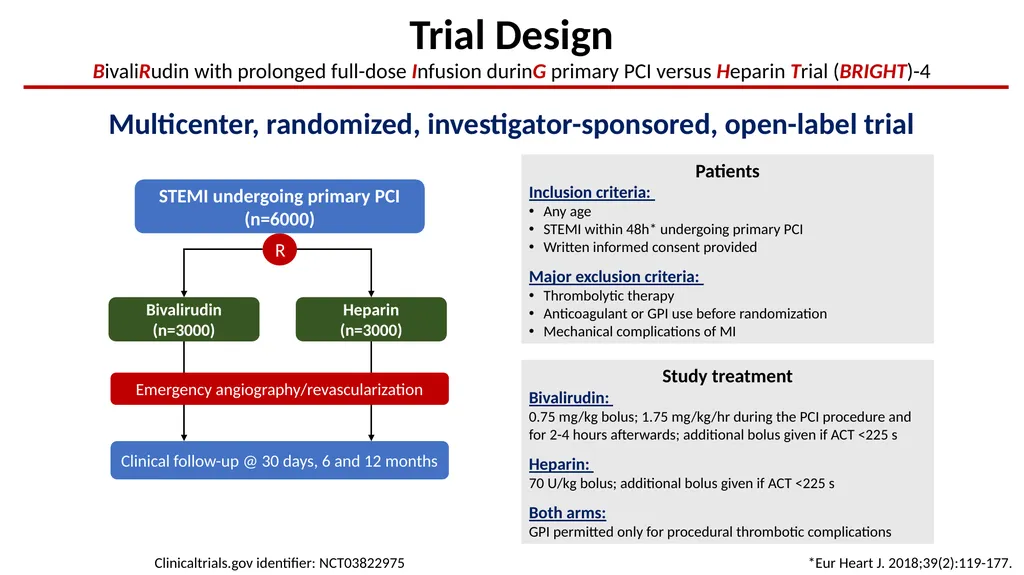
Trial Design BivaliRudin with prolonged full-dose Infusion durinG primary PCI versus Heparin Trial (BRIGHT)-4 Multicenter, randomized, investigator-sponsored, open-label trial STEMI undergoing primary PCI
(n=6000) Clinicaltrials.gov identifier: NCT03822975 R Bivalirudin
(n=3000) Heparin
(n=3000) Clinical follow-up @ 30 days, 6 and 12 months Emergency angiography/revascularization Patients
Inclusion criteria:
Any age
STEMI within 48h* undergoing primary PCI
Written informed consent provided
Major exclusion criteria:
Thrombolytic therapy
Anticoagulant or GPI use before randomization
Mechanical complications of MI Study treatment
Bivalirudin:
0.75 mg/kg bolus; 1.75 mg/kg/hr during the PCI procedure and for 2-4 hours afterwards; additional bolus given if ACT <225 s
Heparin:
70 U/kg bolus; additional bolus given if ACT <225 s
Both arms:
GPI permitted only for procedural thrombotic complications *Eur Heart J. 2018;39(2):119-177.<br>
05
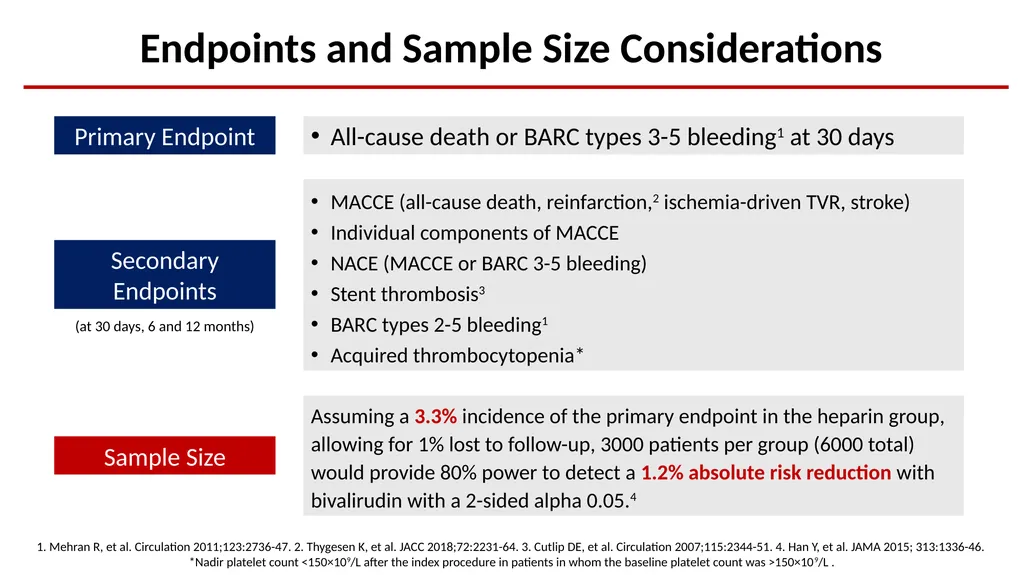
Endpoints and Sample Size Considerations Primary Endpoint Secondary Endpoints All-cause death or BARC types 3-5 bleeding1 at 30 days MACCE (all-cause death, reinfarction,2 ischemia-driven TVR, stroke)
Individual components of MACCE
NACE (MACCE or BARC 3-5 bleeding)
Stent thrombosis3
BARC types 2-5 bleeding1
Acquired thrombocytopenia* (at 30 days, 6 and 12 months) Assuming a 3.3% incidence of the primary endpoint in the heparin group, allowing for 1% lost to follow-up, 3000 patients per group (6000 total) would provide 80% power to detect a 1.2% absolute risk reduction with bivalirudin with a 2-sided alpha 0.05.4 Sample Size 1. Mehran R, et al. Circulation 2011;123:2736-47. 2. Thygesen K, et al. JACC 2018;72:2231-64. 3. Cutlip DE, et al. Circulation 2007;115:2344-51. 4. Han Y, et al. JAMA 2015; 313:1336-46.
*Nadir platelet count <150×109/L after the index procedure in patients in whom the baseline platelet count was >150×109/L .<br>
06
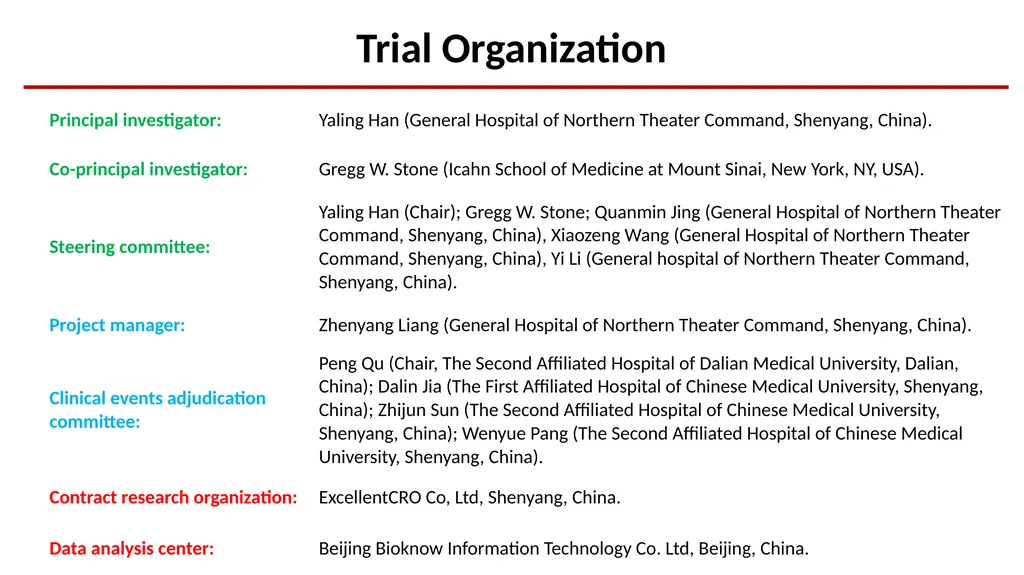
Trial Organization<br>
07
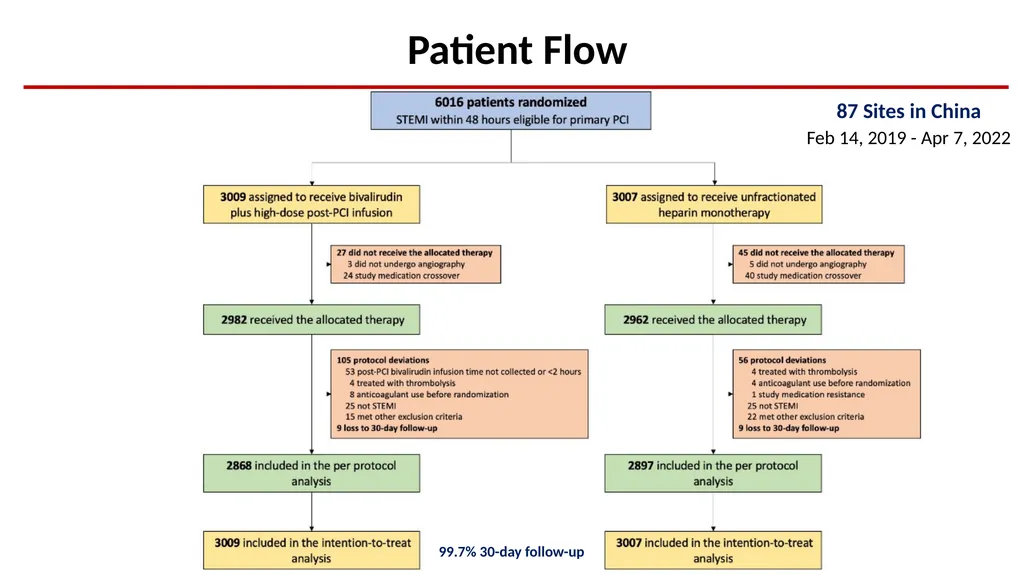
Patient Flow 99.7% 30-day follow-up<br>
08
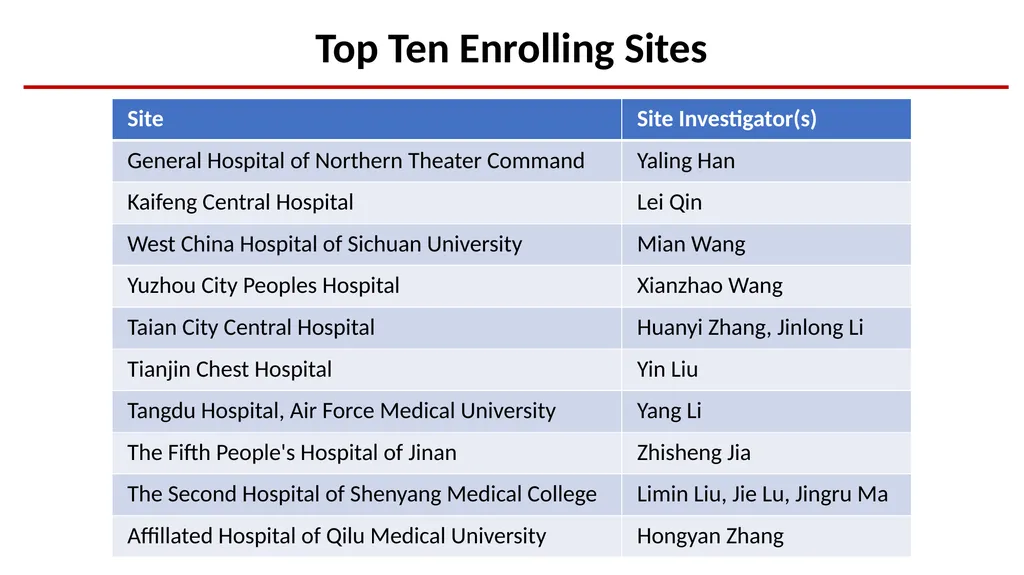
Top Ten Enrolling Sites<br>
09
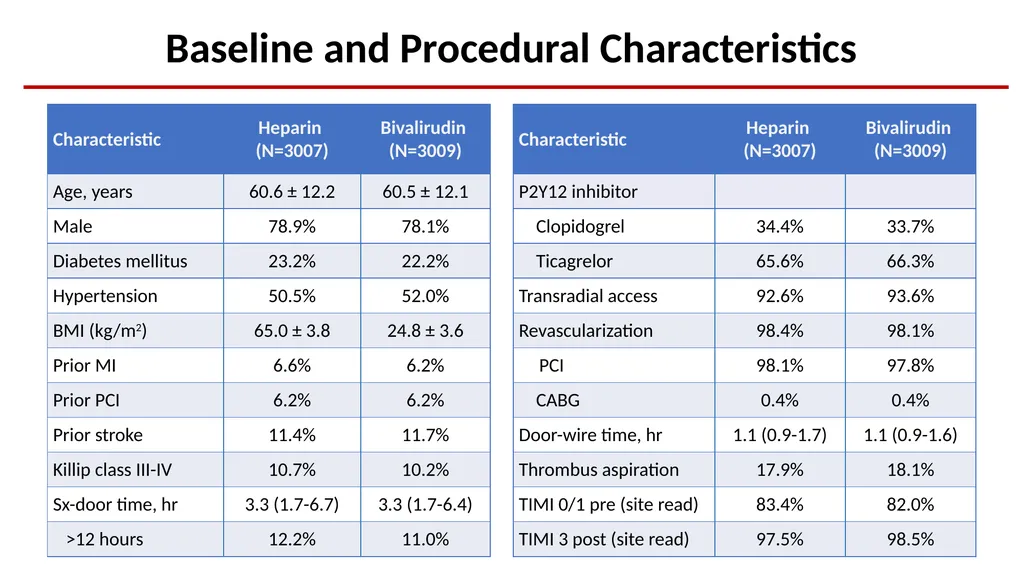
Baseline and Procedural Characteristics<br>
10
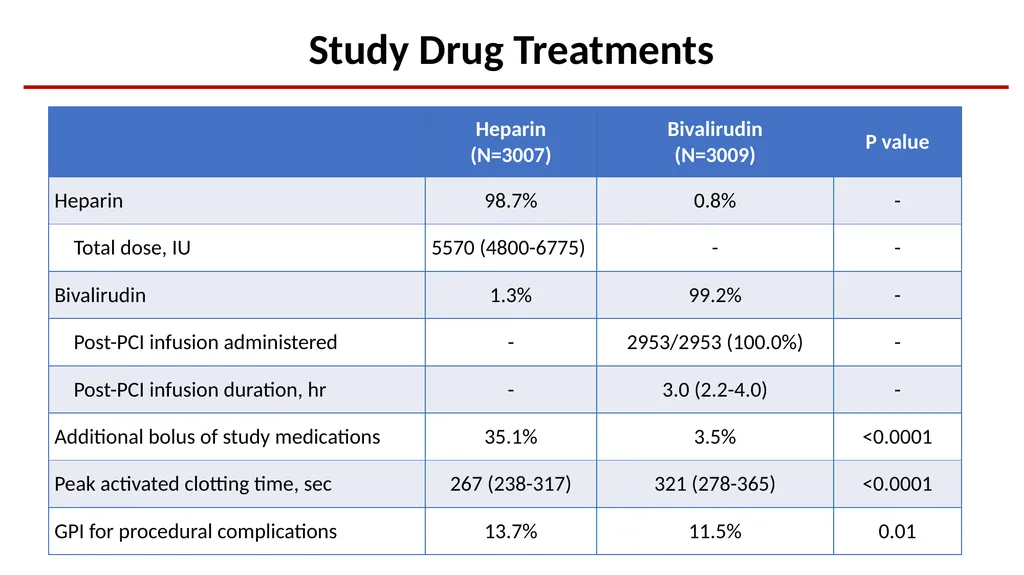
Study Drug Treatments<br>
11
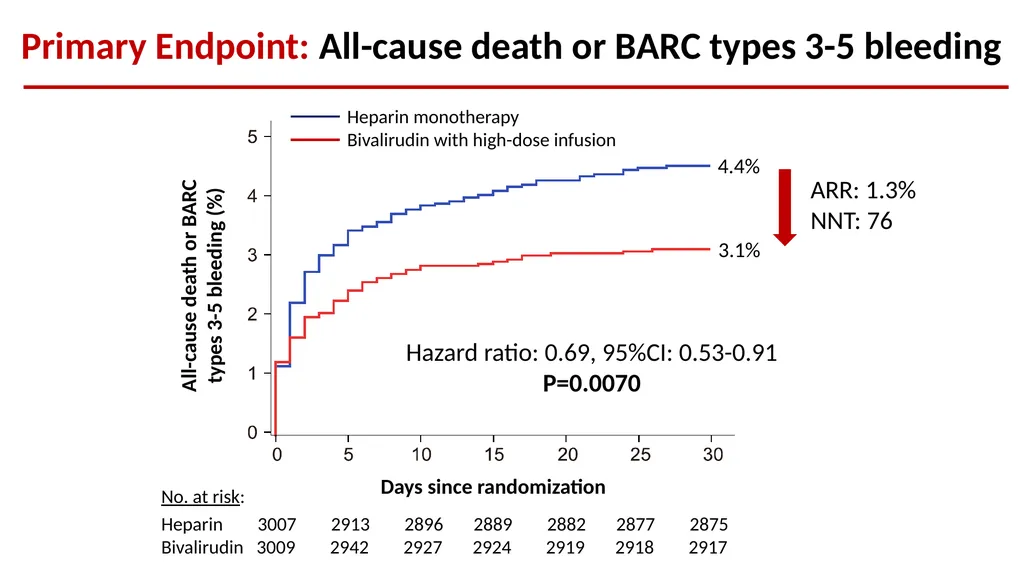
Primary Endpoint: All-cause death or BARC types 3-5 bleeding Hazard ratio: 0.69, 95%CI: 0.53-0.91
P=0.0070 All-cause death or BARC
types 3-5 bleeding (%) Days since randomization No. at risk: Heparin 3007 2913 2896 2889 2882 2877 2875
Bivalirudin 3009 2942 2927 2924 2919 2918 2917<br>
12
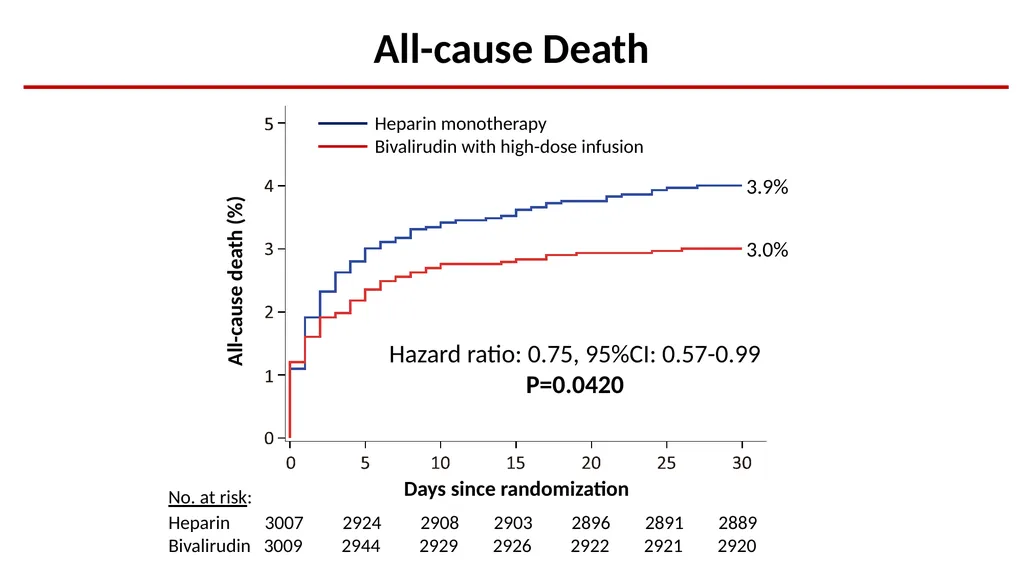
All-cause Death Hazard ratio: 0.75, 95%CI: 0.57-0.99
P=0.0420 3.9% 3.0% All-cause death (%) Days since randomization No. at risk: Heparin 3007 2924 2908 2903 2896 2891 2889
Bivalirudin 3009 2944 2929 2926 2922 2921 2920<br>
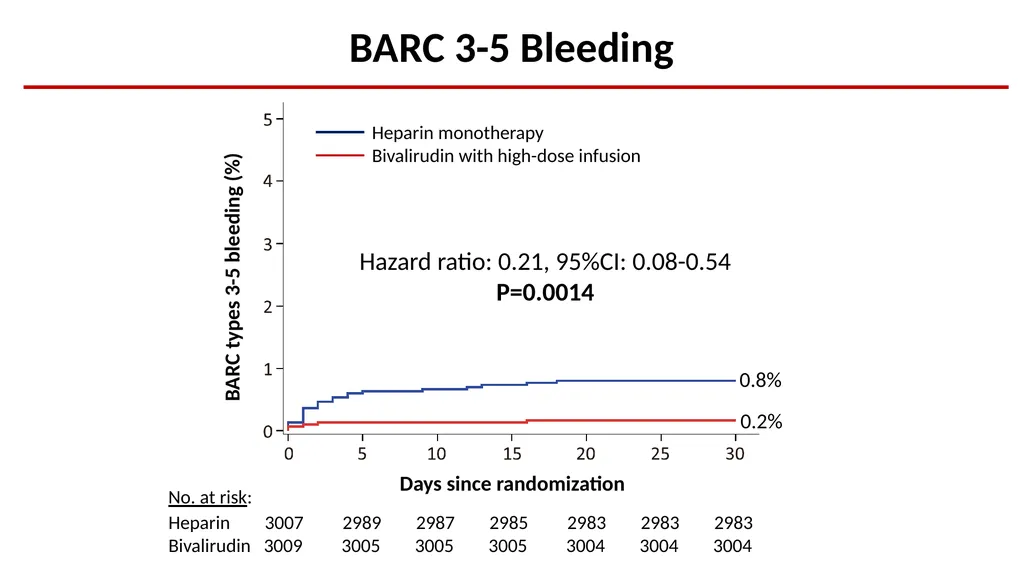
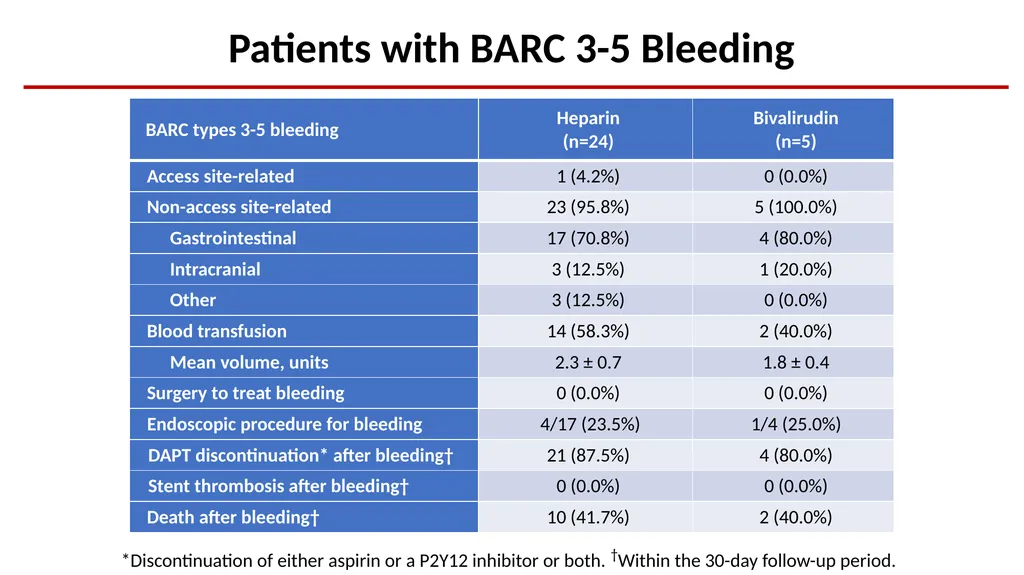
Patients with BARC 3-5 Bleeding *Discontinuation of either aspirin or a P2Y12 inhibitor or both. †Within the 30-day follow-up period.<br>
15
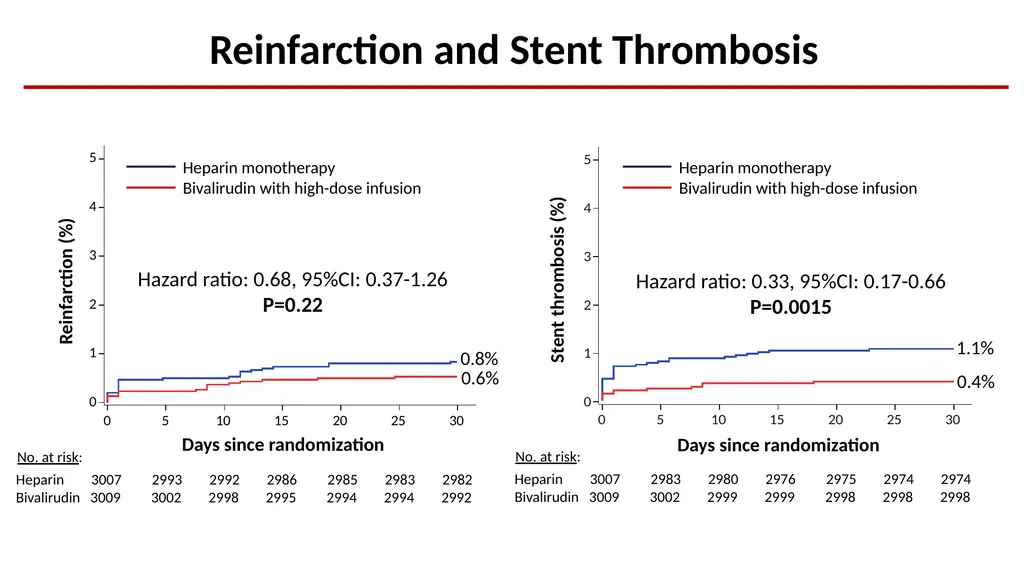
Reinfarction and Stent Thrombosis Hazard ratio: 0.68, 95%CI: 0.37-1.26
P=0.22 Hazard ratio: 0.33, 95%CI: 0.17-0.66
P=0.0015 0.8% 0.6% 1.1% 0.4% Days since randomization No. at risk: Heparin 3007 2993 2992 2986 2985 2983 2982
Bivalirudin 3009 3002 2998 2995 2994 2994 2992 Reinfarction (%) Days since randomization No. at risk: Heparin 3007 2983 2980 2976 2975 2974 2974
Bivalirudin 3009 3002 2999 2999 2998 2998 2998 Stent thrombosis (%)<br>
16
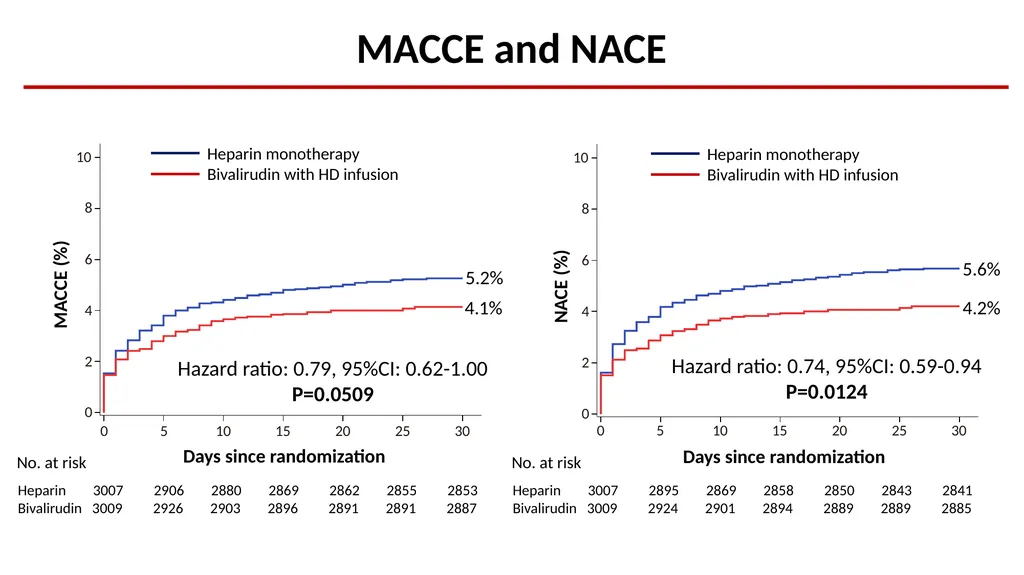
MACCE and NACE Hazard ratio: 0.79, 95%CI: 0.62-1.00
P=0.0509 Hazard ratio: 0.74, 95%CI: 0.59-0.94
P=0.0124 5.2% 4.1% 5.6% 4.2% Days since randomization No. at risk Heparin 3007 2895 2869 2858 2850 2843 2841
Bivalirudin 3009 2924 2901 2894 2889 2889 2885 NACE (%) No. at risk Heparin 3007 2906 2880 2869 2862 2855 2853
Bivalirudin 3009 2926 2903 2896 2891 2891 2887 MACCE (%) Days since randomization<br>
17
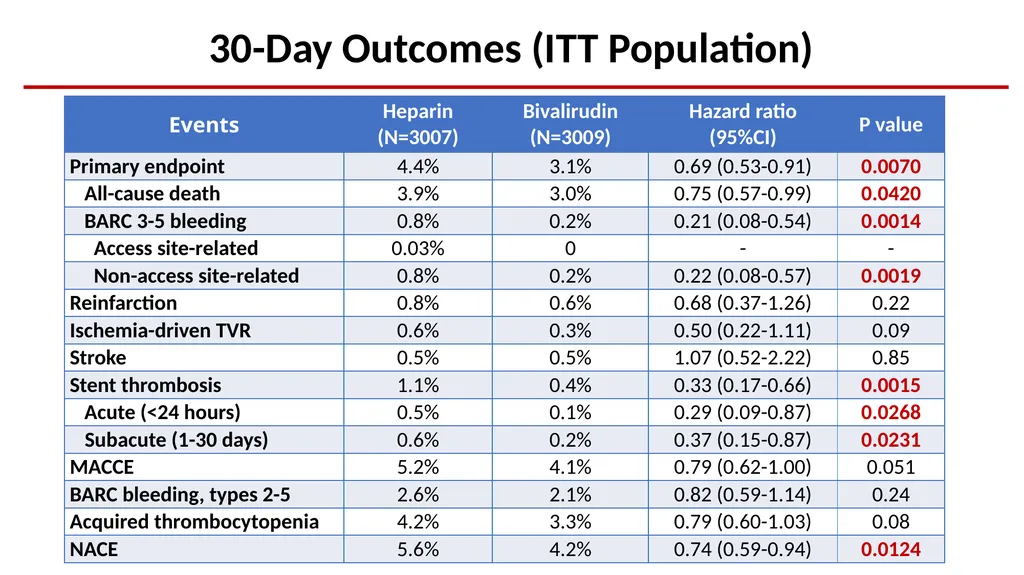
30-Day Outcomes (ITT Population)<br>
18
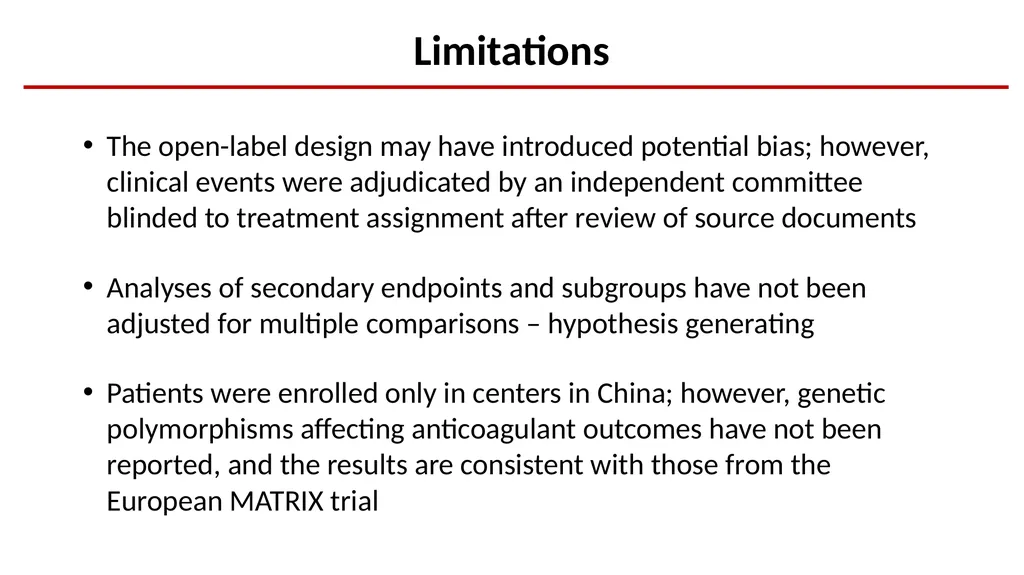
Limitations The open-label design may have introduced potential bias; however, clinical events were adjudicated by an independent committee blinded to treatment assignment after review of source documents
Analyses of secondary endpoints and subgroups have not been adjusted for multiple comparisons – hypothesis generating
Patients were enrolled only in centers in China; however, genetic polymorphisms affecting anticoagulant outcomes have not been reported, and the results are consistent with those from the European MATRIX trial<br>
19
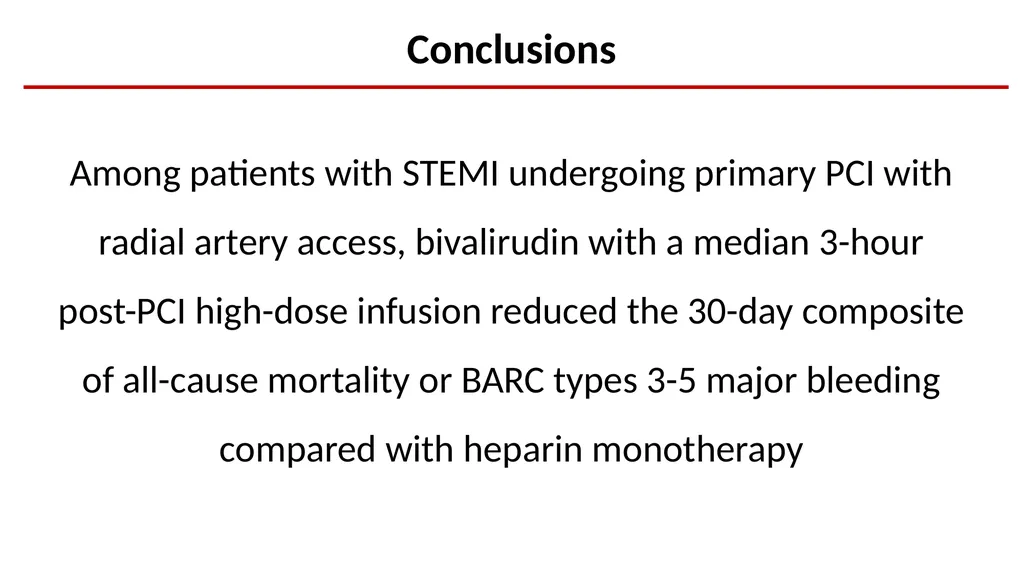
Conclusions Among patients with STEMI undergoing primary PCI with radial artery access, bivalirudin with a median 3-hour post-PCI high-dose infusion reduced the 30-day composite of all-cause mortality or BARC types 3-5 major bleeding compared with heparin monotherapy<br>