BMCs QI Hub is your resource for all things quality improvement. Visit bucme.orgBMCQIHUB or email QIHubbmc.org for access to professional coaching, educational tools, support, mentorship, and much more! Psychology of Change: People
"BMC’s QI Hub is your resource for all things" is the property of its rightful owner. Permission is granted to
download and print the materials on this website for personal, non-commercial use only, and to display it
on your personal computer provided you do not modify the materials and that you retain all copyright
notices contained in the materials. By downloading content from our website, you accept the terms of this
agreement.
Presentation Transcript
01
BMC’s QI Hub is your resource for all things quality improvement.
Visit bucme.org/BMCQIHUB or email QIHub@bmc.org for access to professional coaching, educational tools, support, mentorship, and much more!<br>
02
Psychology of Change: People Styles Leading Change Collaborative 2021 - 2022
Block 5 – 2.7.22<br>
03
Objectives Review some tenets of Psychology of Change
Understand People Styles at Work<br>
04
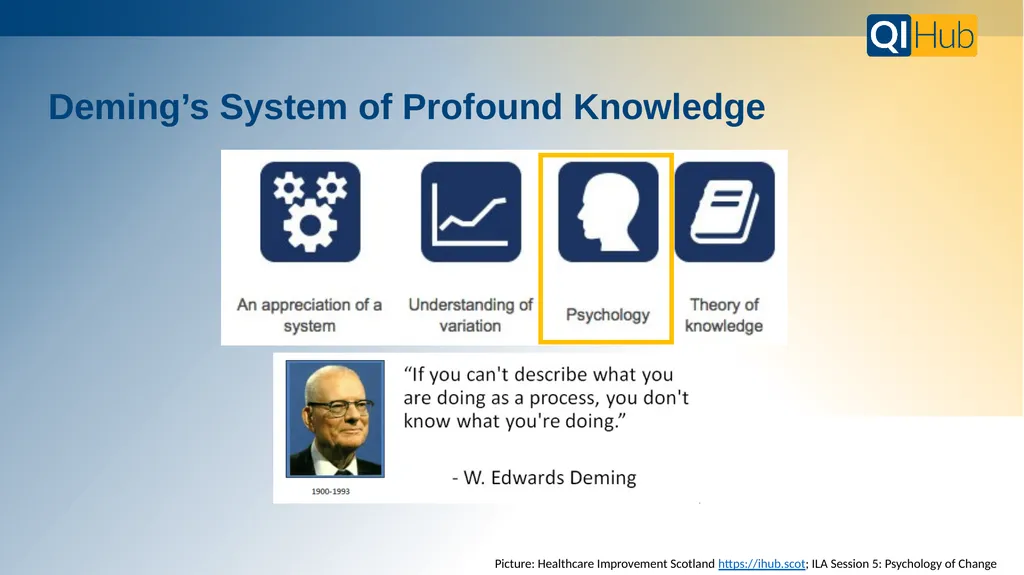
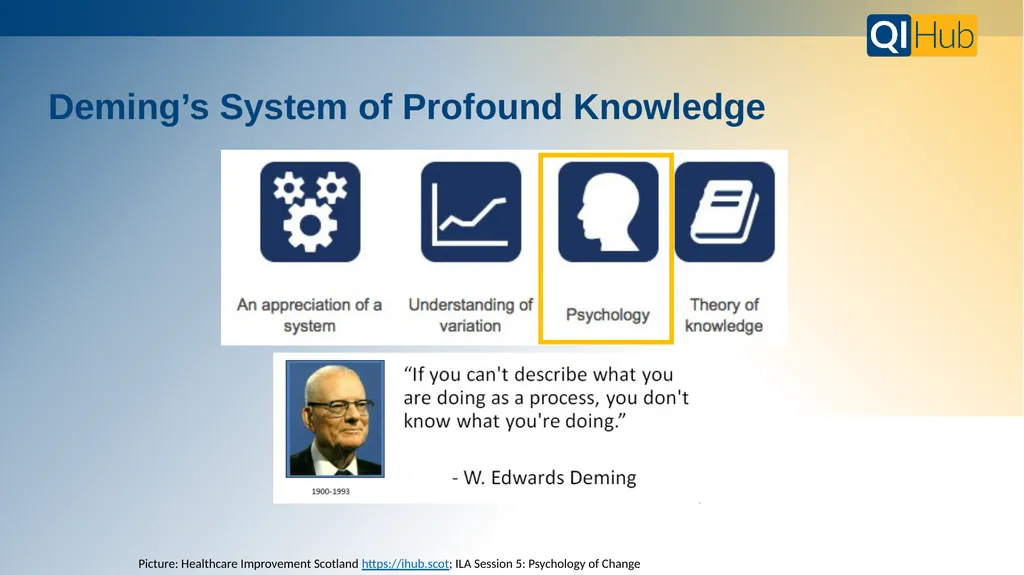
Deming’s System of Profound Knowledge Picture: Healthcare Improvement Scotland https://ihub.scot; ILA Session 5: Psychology of Change<br>
05
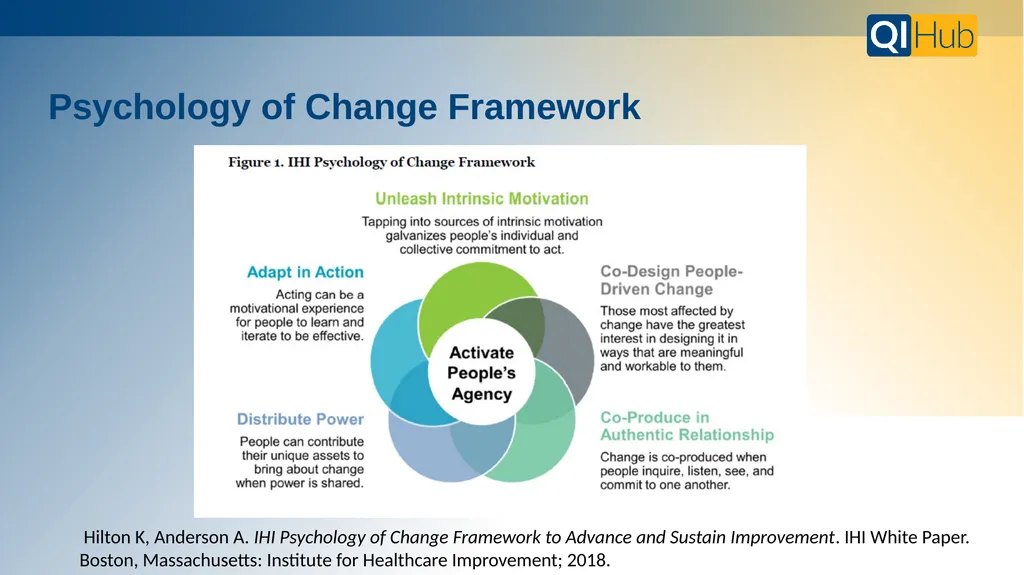
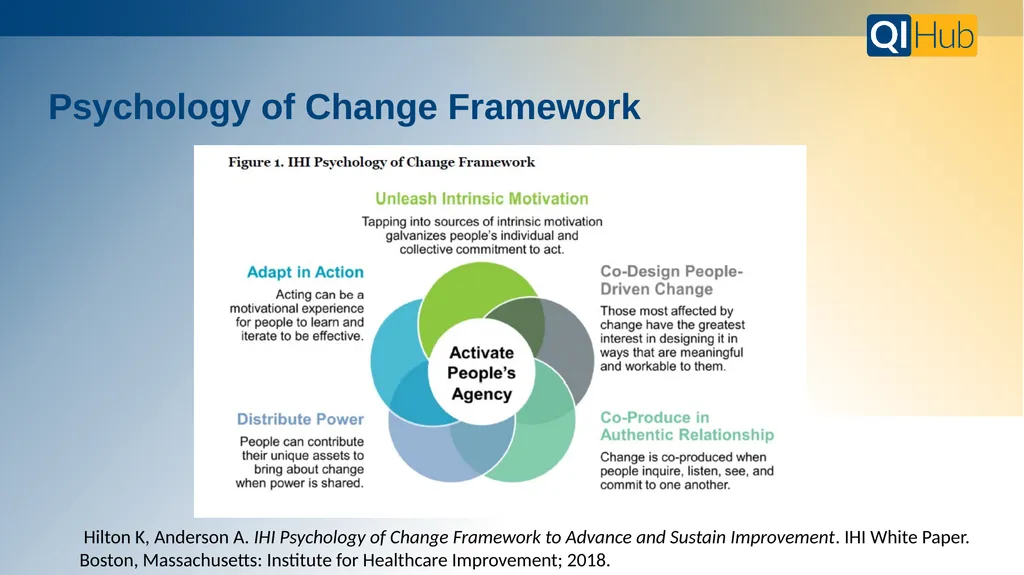
Psychology of Change Framework Hilton K, Anderson A. IHI Psychology of Change Framework to Advance and Sustain Improvement. IHI White Paper. Boston, Massachusetts: Institute for Healthcare Improvement; 2018.<br>
06
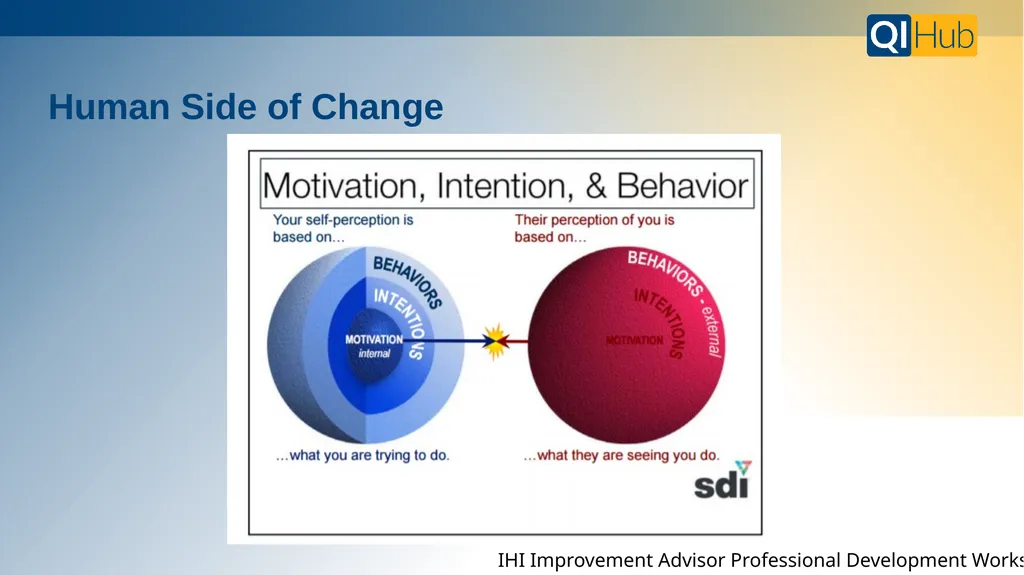
Human Side of Change IHI Improvement Advisor Professional Development Workshop<br>
07
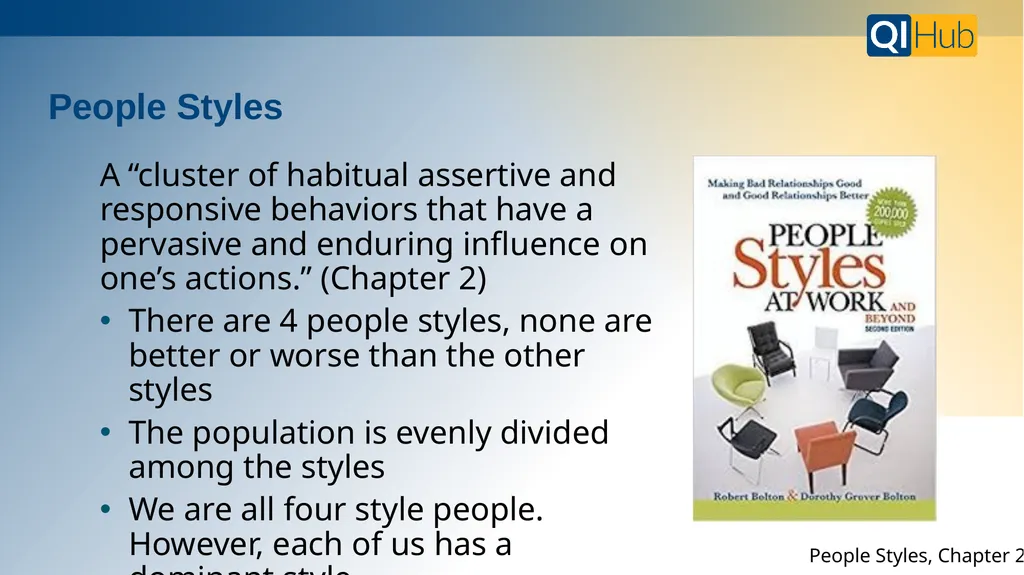
People Styles A “cluster of habitual assertive and responsive behaviors that have a pervasive and enduring influence on one’s actions.” (Chapter 2)
There are 4 people styles, none are better or worse than the other styles
The population is evenly divided among the styles
We are all four style people. However, each of us has a dominant style. People Styles, Chapter 2<br>
08
People Styles – Self Assessment Take a few minutes to quickly go through and fill out the self-assessment.
Read each numbered item from the standpoint of the way you think other people see you.
Each numbered item has a pair of statements. Pick the statement that you think most accurately expresses how other people see you.
With comparative statements, think of being compared to half the population.<br>
09
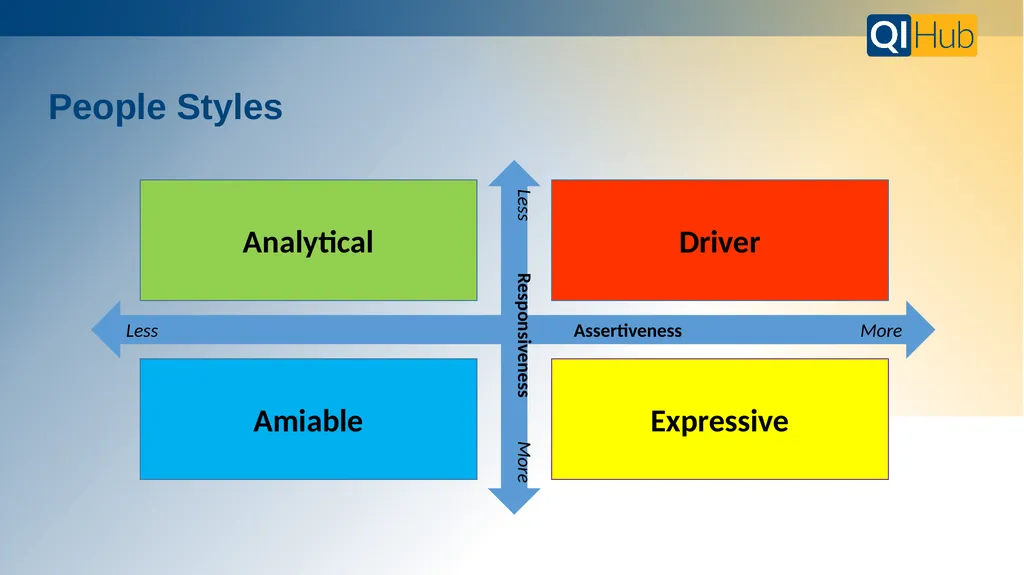
People Styles Two Keys to Understanding People
Assertiveness
The degree to which one’s behavior is typically seen by others as being forceful or directive
There is a continuum from being more or less assertive
Responsiveness
The degree to which one is seen by others as showing their own emotions or demonstrating awareness of the feelings of others
There is a continuum from being more or less responsive
Where you fall on the continuum of both determines your dominant style People Styles, Chapter 4<br>
10
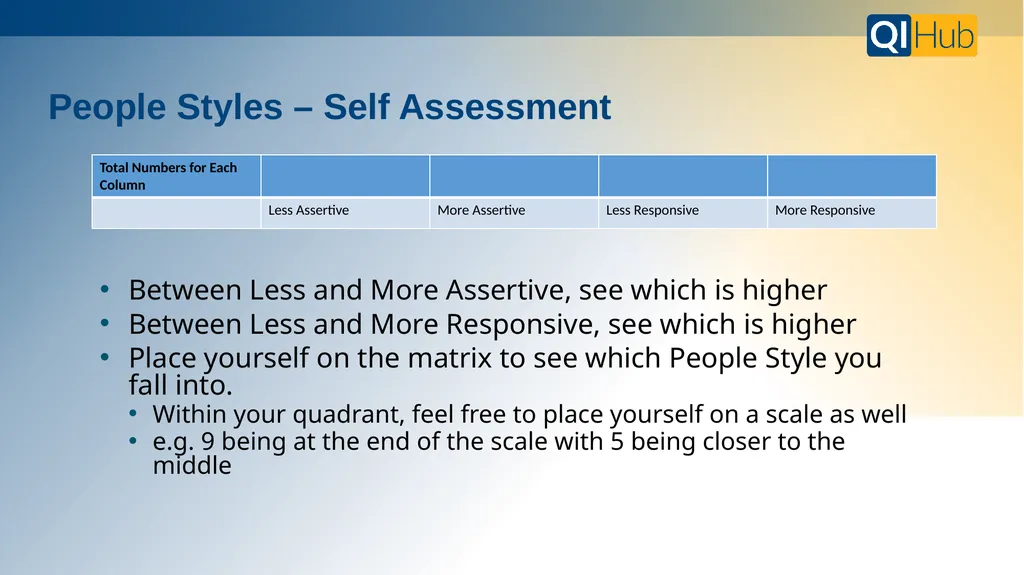
People Styles – Self Assessment Between Less and More Assertive, see which is higher
Between Less and More Responsive, see which is higher
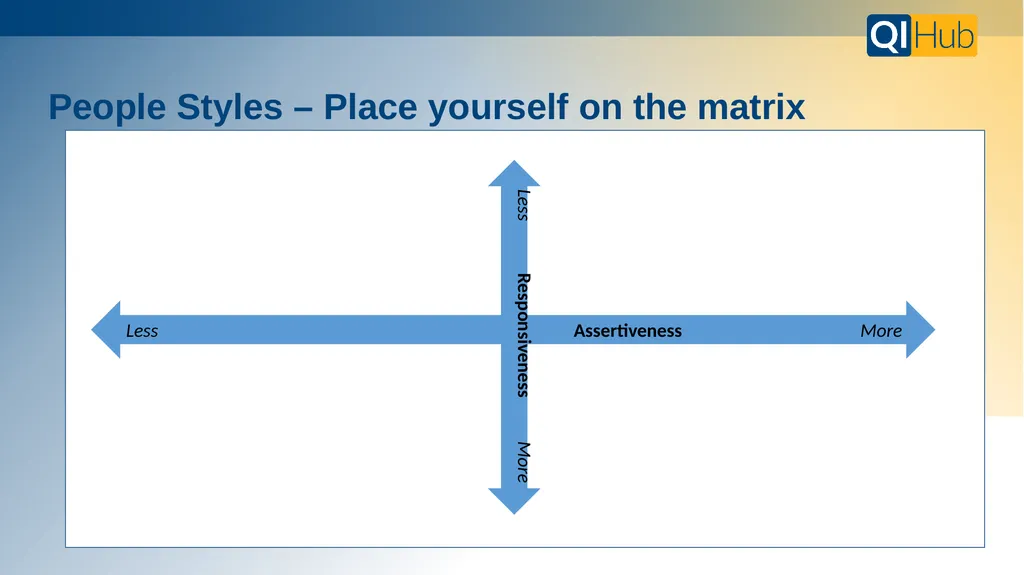
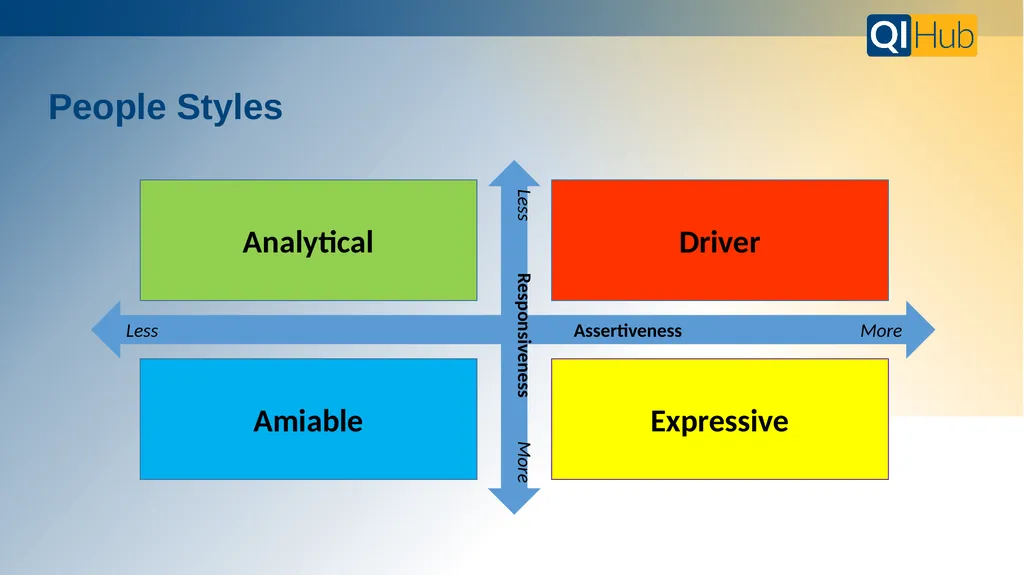
Place yourself on the matrix to see which People Style you fall into.
Within your quadrant, feel free to place yourself on a scale as well
e.g. 9 being at the end of the scale with 5 being closer to the middle<br>
11
People Styles – Place yourself on the matrix Analytical Expressive Driver Amiable Less Assertiveness More Less Responsiveness More<br>
12
People Styles<br>
13
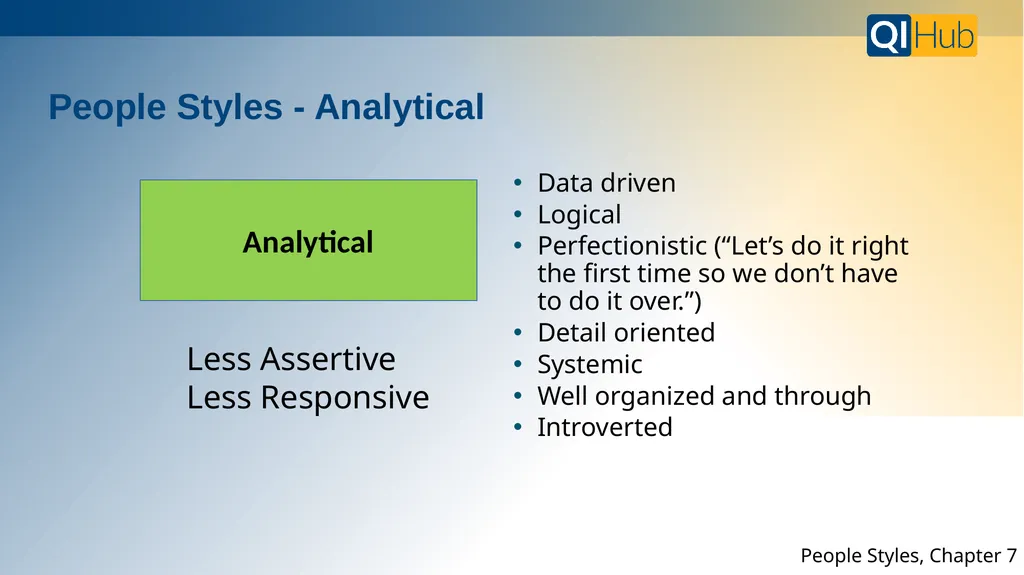
People Styles - Analytical Data driven
Logical
Perfectionistic (“Let’s do it right the first time so we don’t have to do it over.”)
Detail oriented
Systemic
Well organized and through
Introverted Analytical People Styles, Chapter 7 Less Assertive
Less Responsive<br>
14
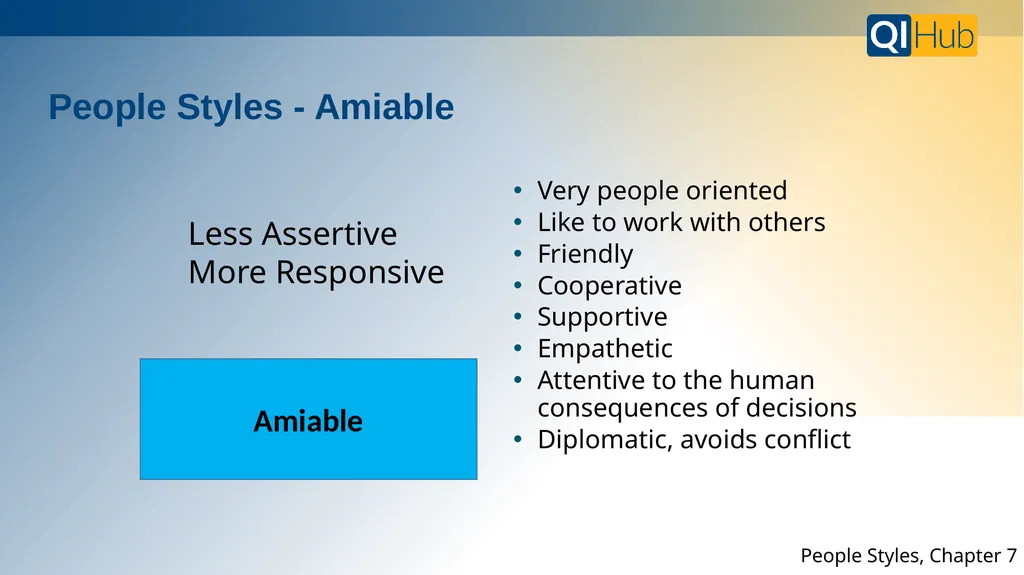
People Styles - Amiable Very people oriented
Like to work with others
Friendly
Cooperative
Supportive
Empathetic
Attentive to the human consequences of decisions
Diplomatic, avoids conflict Amiable People Styles, Chapter 7 Less Assertive
More Responsive<br>
15
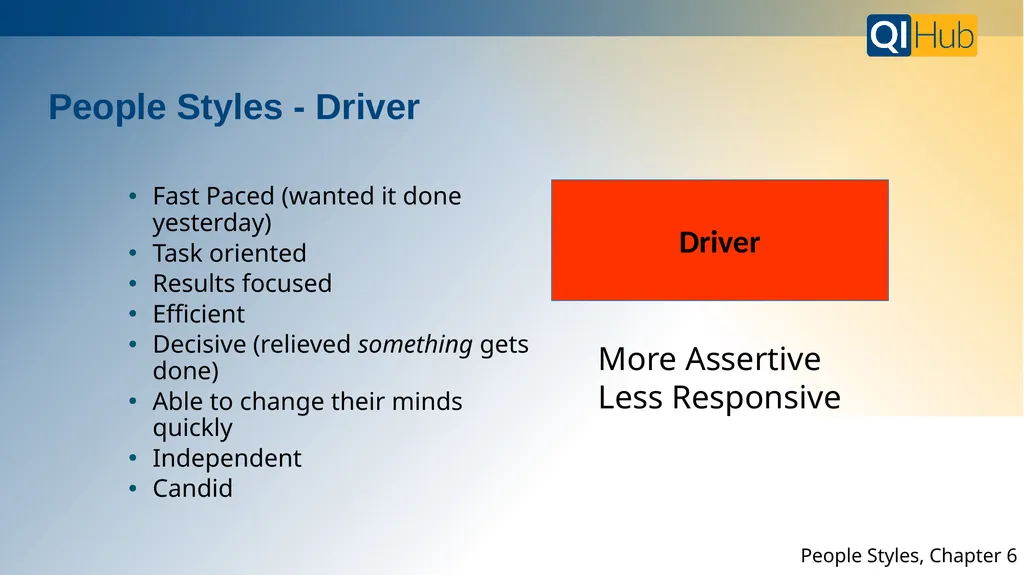
People Styles - Driver Driver People Styles, Chapter 6 Fast Paced (wanted it done yesterday)
Task oriented
Results focused
Efficient
Decisive (relieved something gets done)
Able to change their minds quickly
Independent
Candid More Assertive
Less Responsive<br>
16
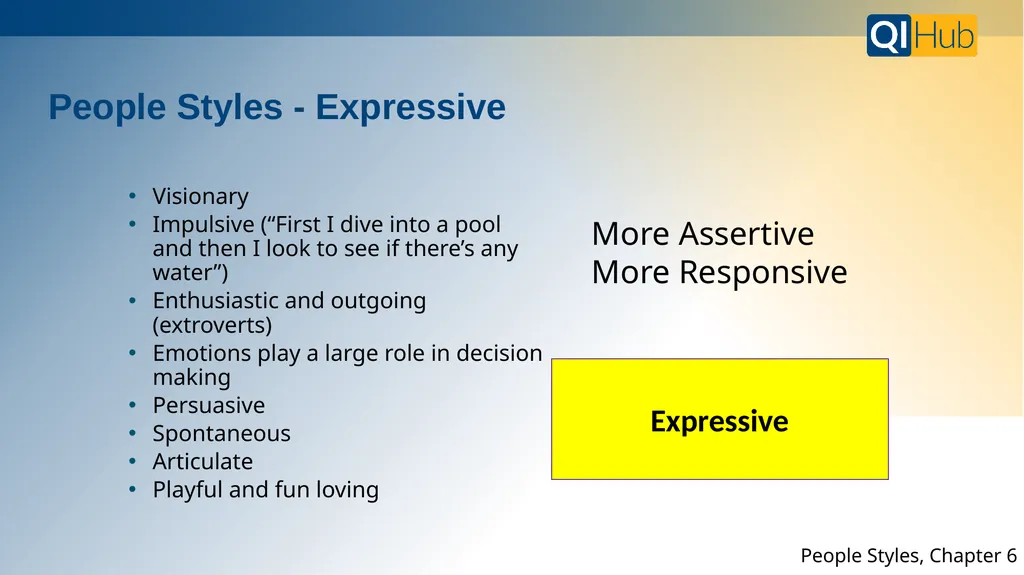
People Styles - Expressive Expressive People Styles, Chapter 6 Visionary
Impulsive (“First I dive into a pool and then I look to see if there’s any water”)
Enthusiastic and outgoing (extroverts)
Emotions play a large role in decision making
Persuasive
Spontaneous
Articulate
Playful and fun loving More Assertive
More Responsive<br>
17
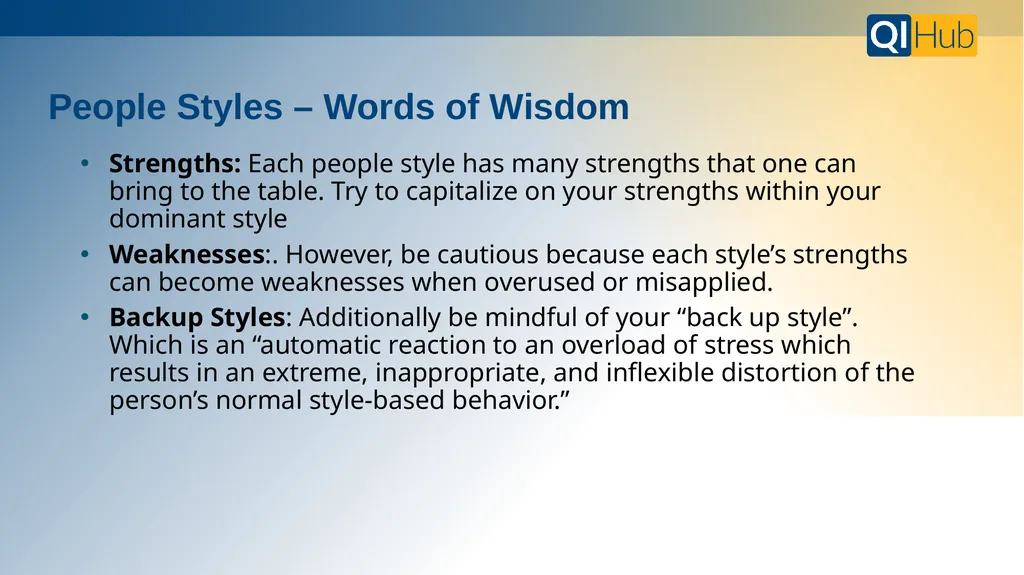
People Styles – Words of Wisdom Strengths: Each people style has many strengths that one can bring to the table. Try to capitalize on your strengths within your dominant style
Weaknesses:. However, be cautious because each style’s strengths can become weaknesses when overused or misapplied.
Backup Styles: Additionally be mindful of your “back up style”. Which is an “automatic reaction to an overload of stress which results in an extreme, inappropriate, and inflexible distortion of the person’s normal style-based behavior.”<br>
18
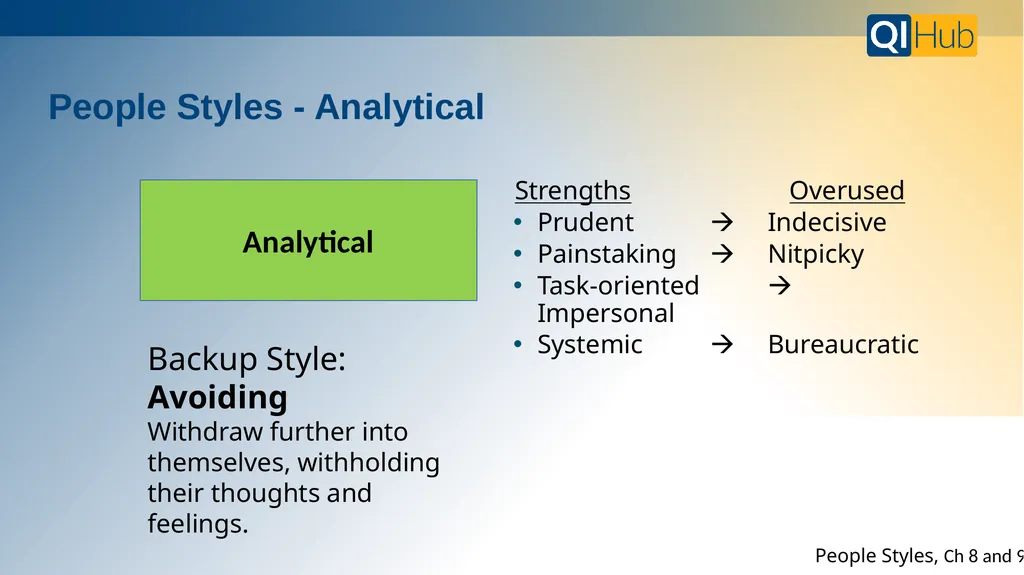
People Styles - Analytical Strengths Overused
Prudent Indecisive
Painstaking Nitpicky
Task-oriented Impersonal
Systemic Bureaucratic Analytical People Styles, Ch 8 and 9 Backup Style: Avoiding
Withdraw further into themselves, withholding their thoughts and feelings.<br>
19
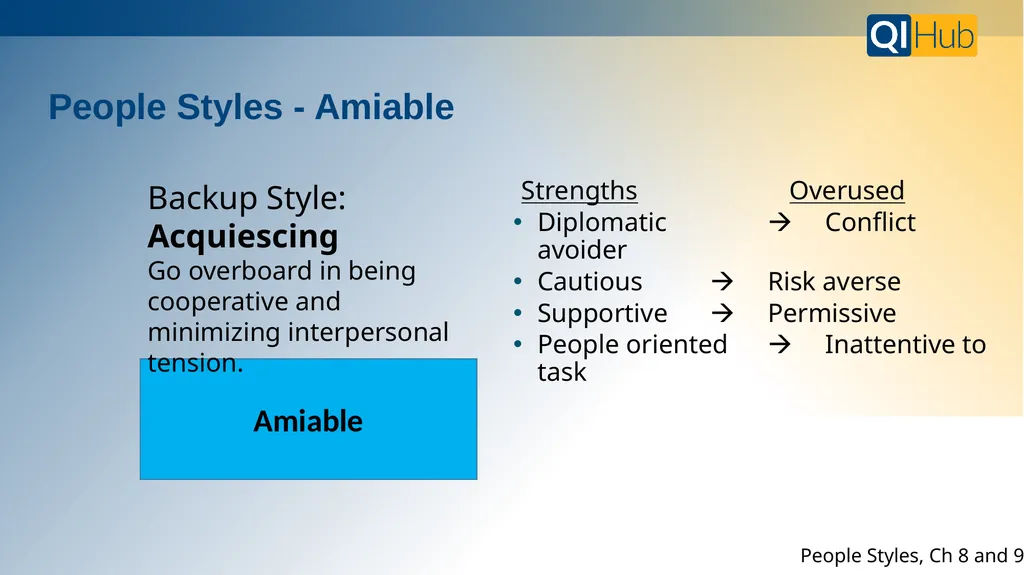
People Styles - Amiable Strengths Overused
Diplomatic Conflict avoider
Cautious Risk averse
Supportive Permissive
People oriented Inattentive to task Amiable People Styles, Ch 8 and 9 Backup Style: Acquiescing
Go overboard in being cooperative and minimizing interpersonal tension.<br>
20
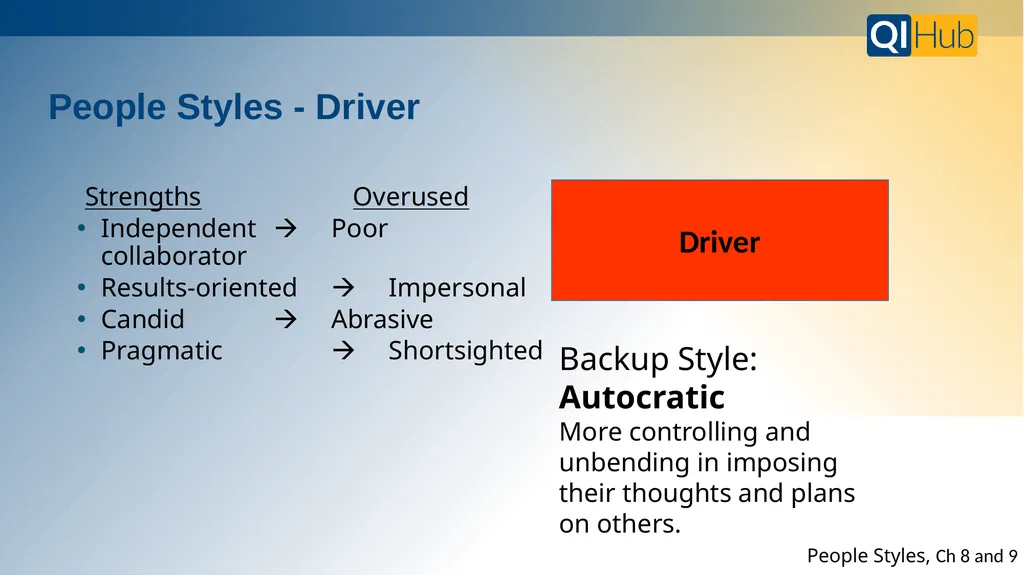
People Styles - Driver Driver People Styles, Ch 8 and 9 Strengths Overused
Independent Poor collaborator
Results-oriented Impersonal
Candid Abrasive
Pragmatic Shortsighted Backup Style: Autocratic
More controlling and unbending in imposing their thoughts and plans on others.<br>
21
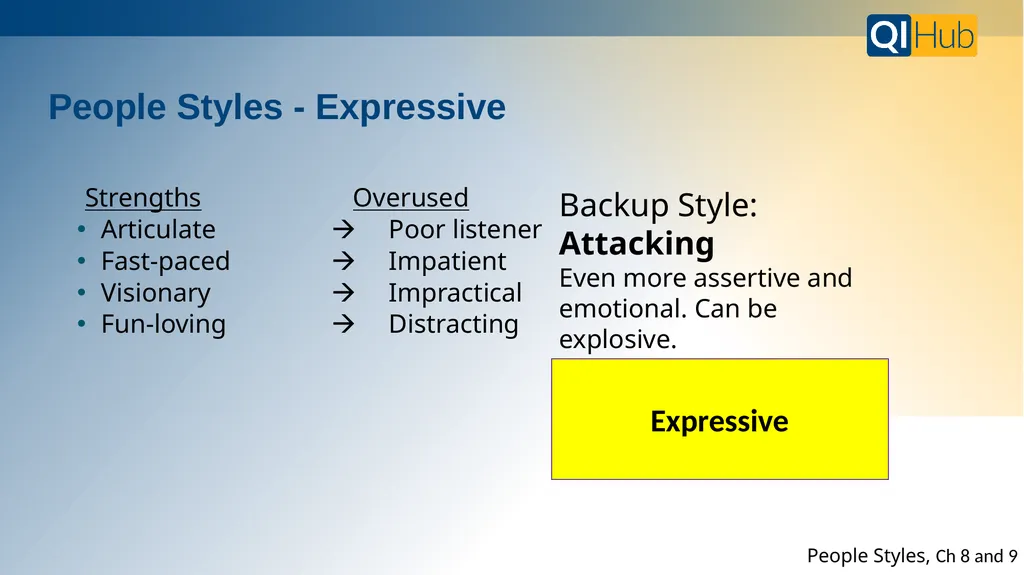
People Styles - Expressive Expressive People Styles, Ch 8 and 9 Strengths Overused
Articulate Poor listener
Fast-paced Impatient
Visionary Impractical
Fun-loving Distracting Backup Style: Attacking
Even more assertive and emotional. Can be explosive.<br>
22
People Styles<br>
23
Psychology of Change Framework Hilton K, Anderson A. IHI Psychology of Change Framework to Advance and Sustain Improvement. IHI White Paper. Boston, Massachusetts: Institute for Healthcare Improvement; 2018.<br>
24
Deming’s System of Profound Knowledge Picture: Healthcare Improvement Scotland https://ihub.scot; ILA Session 5: Psychology of Change<br>