Bringing a selection index into the CIMMYT-Maize programs Giovanny Eduardo Covarrubias-Pazaran Breeding scheme optimization lead Approach What we know about the selection method in genetic gain Understand the selection procedure in an
Related Topics
Share
Embed code
Download this presentation From Below
"Bringing a selection index into the CIMMYT-Maize" is the property of its rightful owner. Permission is granted to
download and print the materials on this website for personal, non-commercial use only, and to display it
on your personal computer provided you do not modify the materials and that you retain all copyright
notices contained in the materials. By downloading content from our website, you accept the terms of this
agreement.
Presentation Transcript
01
Bringing a selection index into the CIMMYT-Maize programs Giovanny Eduardo Covarrubias-Pazaran
Breeding scheme optimization lead<br>
02
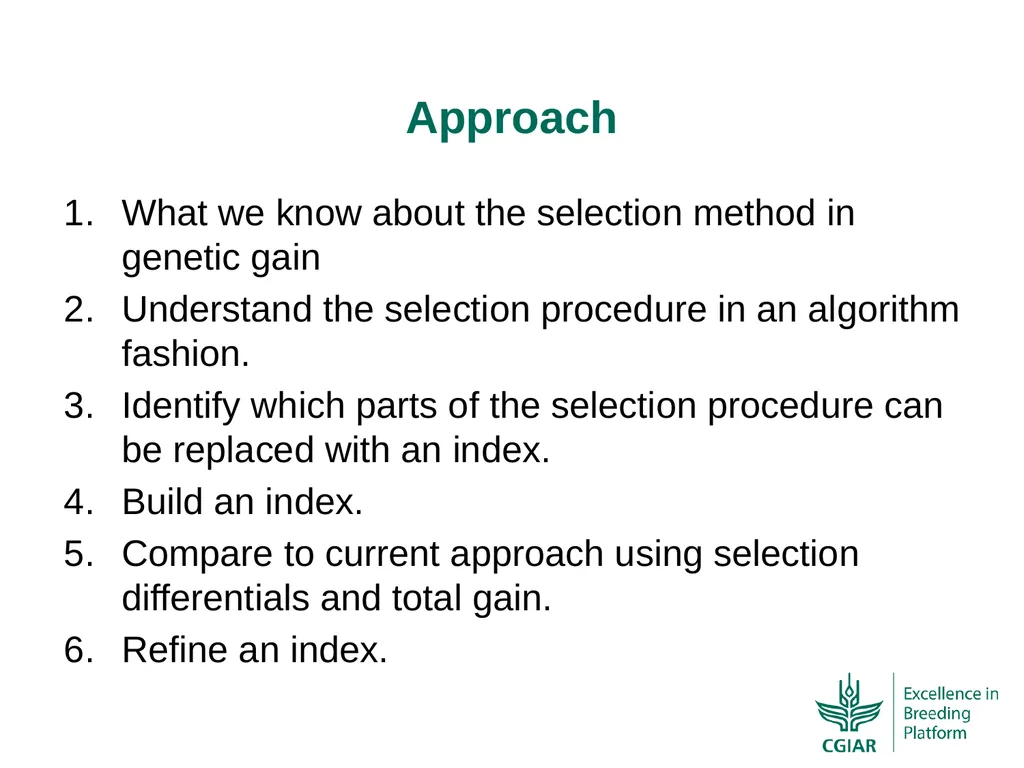
Approach What we know about the selection method in genetic gain
Understand the selection procedure in an algorithm fashion.
Identify which parts of the selection procedure can be replaced with an index.
Build an index.
Compare to current approach using selection differentials and total gain.
Refine an index.<br>
03
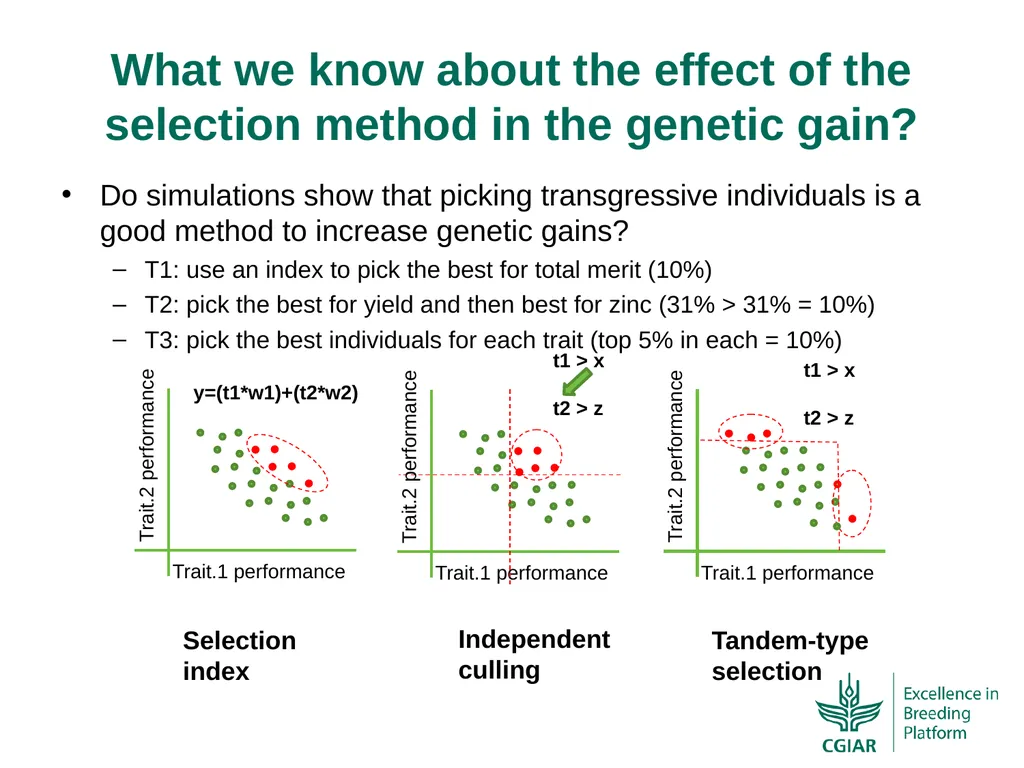
Trait.1 performance What we know about the effect of the selection method in the genetic gain? Do simulations show that picking transgressive individuals is a good method to increase genetic gains?
T1: use an index to pick the best for total merit (10%)
T2: pick the best for yield and then best for zinc (31% > 31% = 10%)
T3: pick the best individuals for each trait (top 5% in each = 10%) Trait.2 performance Trait.1 performance Trait.2 performance Trait.1 performance Trait.2 performance Independent
culling Selection
index Tandem-type
selection y=(t1*w1)+(t2*w2) t1 > x
t2 > z t1 > x
t2 > z<br>
04
The best parents are not the extreme value individuals with lack of performance in other traits Trait.1 performance Trait.2 performance Trait.1 performance Trait.2 performance Independent culling Selection index Trait.1 performance Trait.2 performance Tandem-type selection Trait 1 Trait 2 Total merit 70% 50% 66% 38% 57% 53% y=(t1*w1)+(t2*w2) t1 > x
t2 > z t1 > x
t2 > z<br>
05
Selection step S3 to S4 using an index vs current method<br>
06
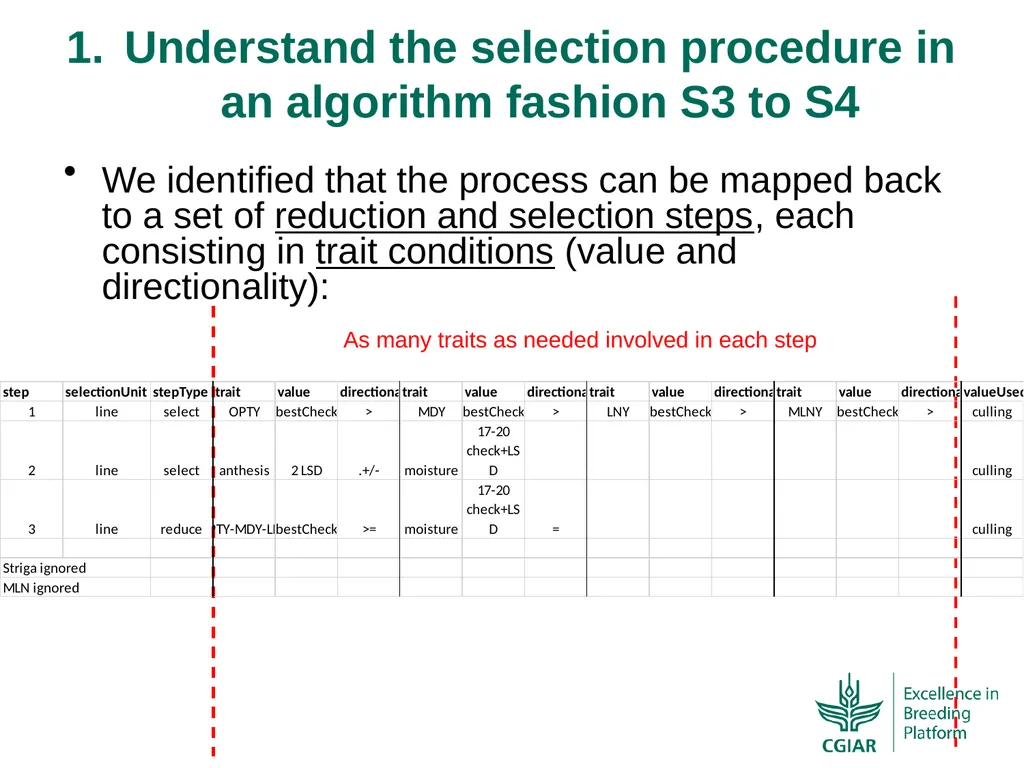
Understand the selection procedure in an algorithm fashion S3 to S4 We identified that the process can be mapped back to a set of reduction and selection steps, each consisting in trait conditions (value and directionality): As many traits as needed involved in each step<br>
07
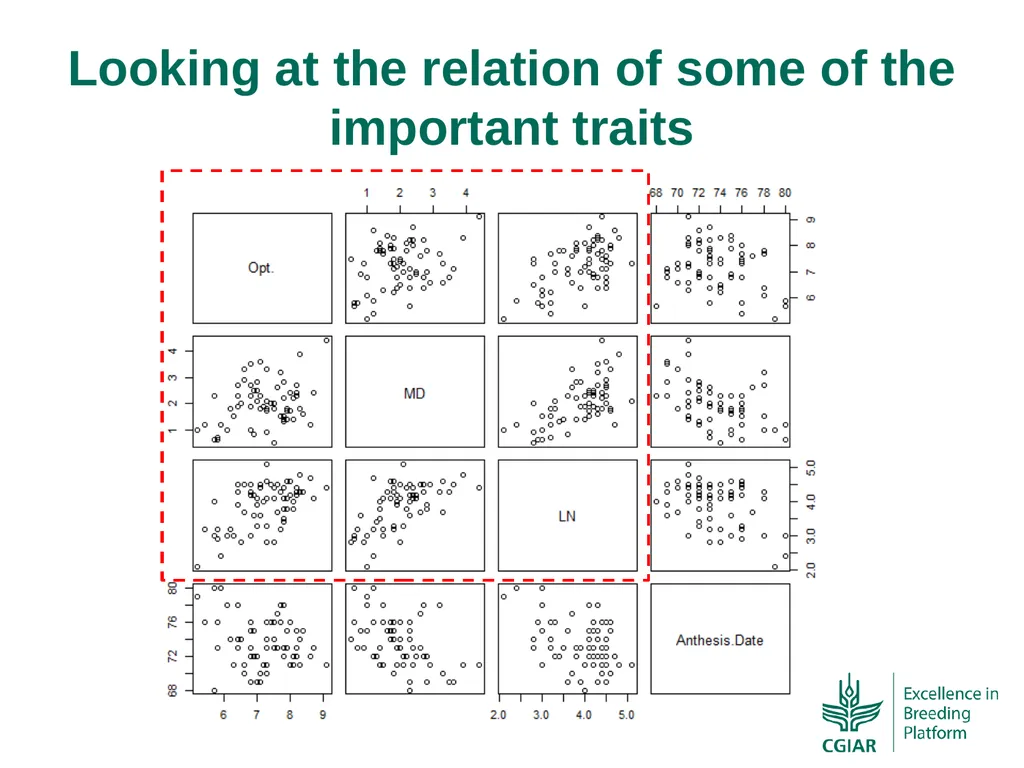
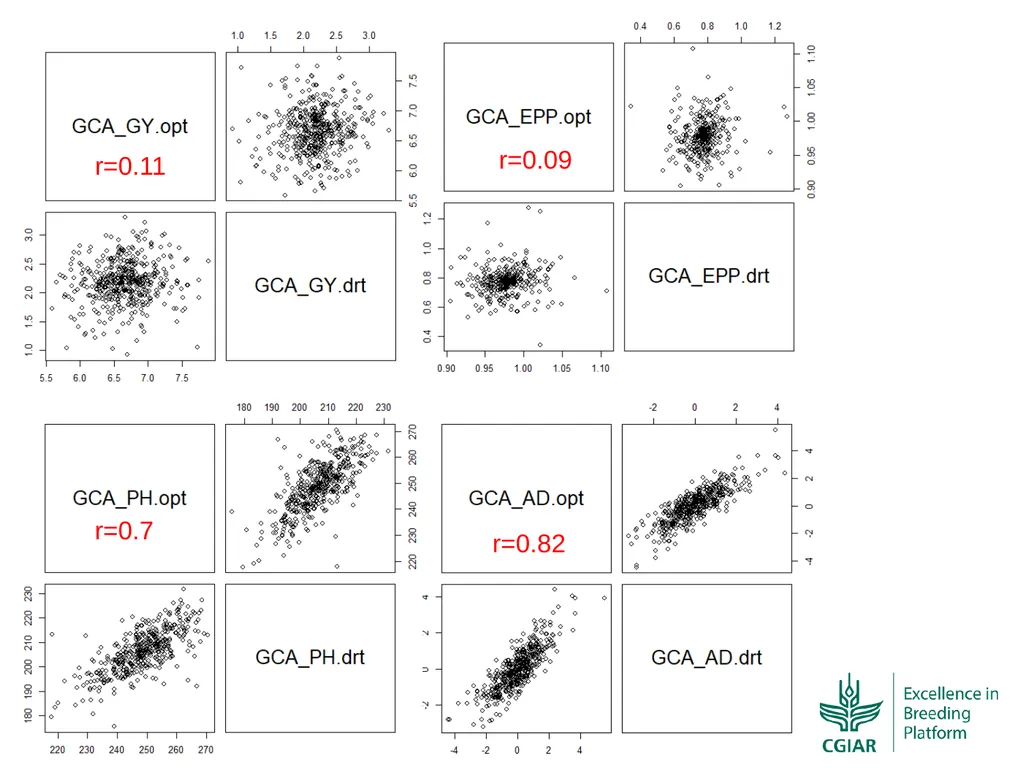
Looking at the relation of some of the important traits<br>
08
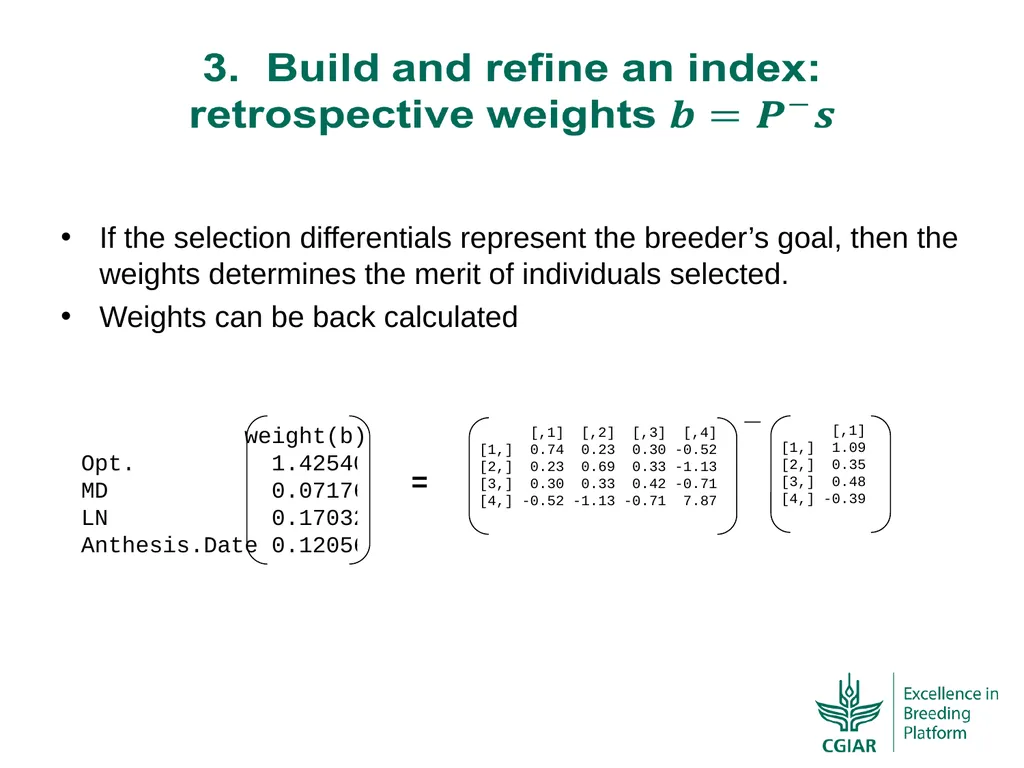
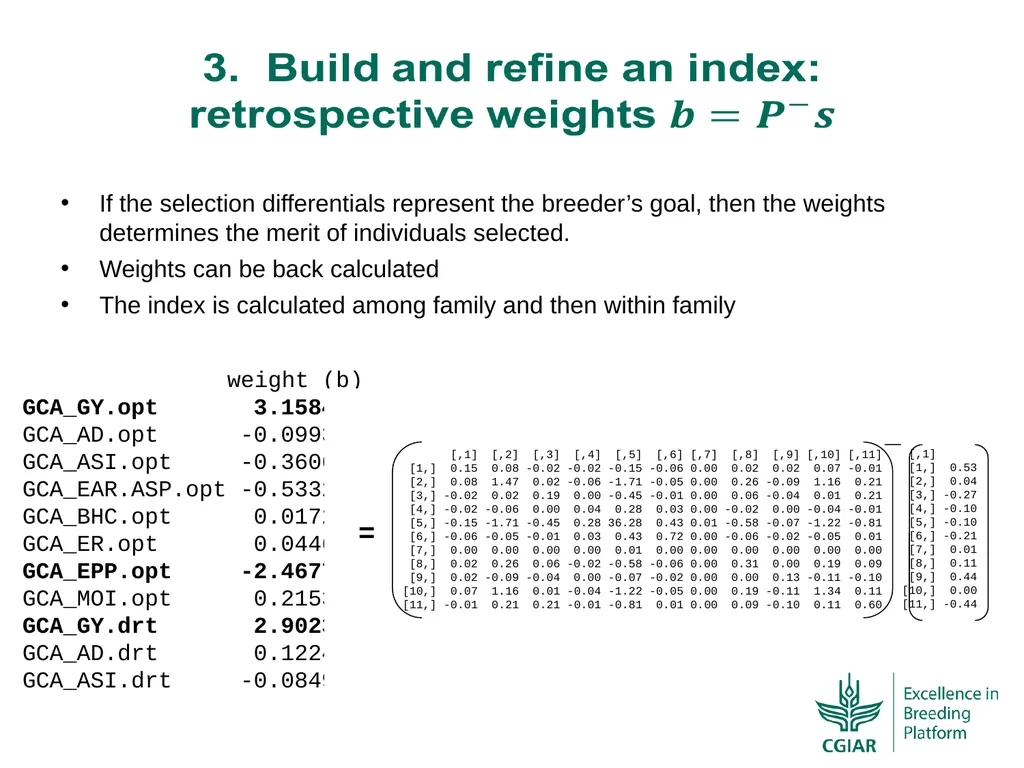
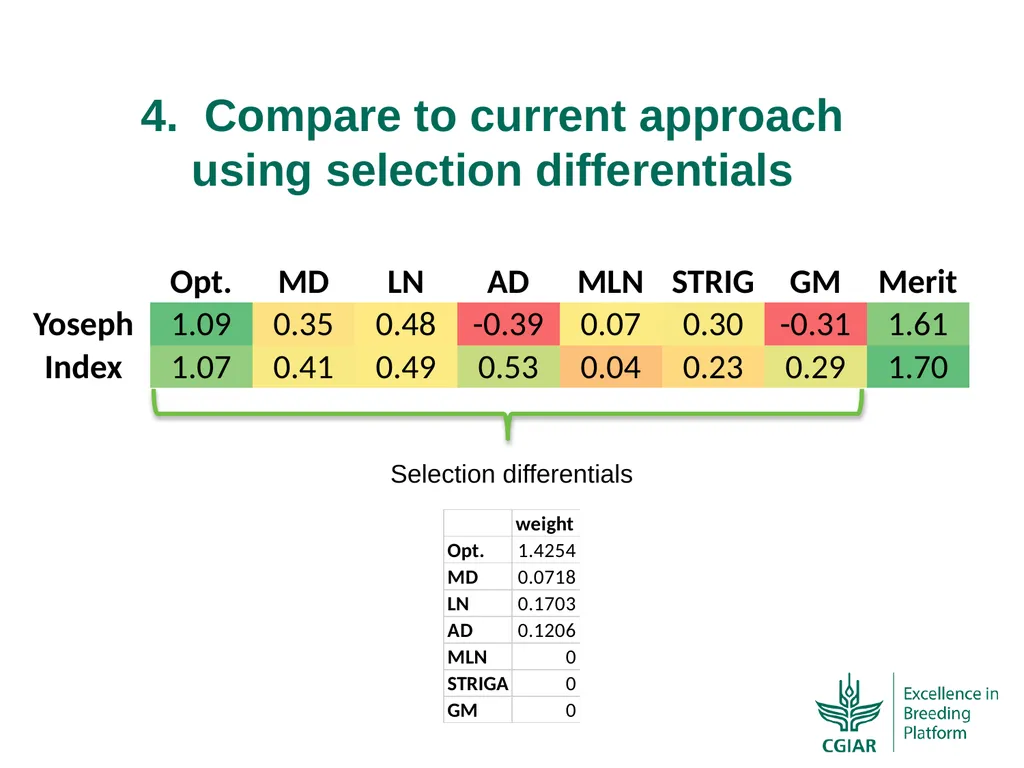
If the selection differentials represent the breeder’s goal, then the weights determines the merit of individuals selected.
Weights can be back calculated weight(b)
Opt. 1.4254025
MD 0.0717673
LN 0.1703238
Anthesis.Date 0.1205678 [,1] [,2] [,3] [,4]
[1,] 0.74 0.23 0.30 -0.52
[2,] 0.23 0.69 0.33 -1.13
[3,] 0.30 0.33 0.42 -0.71
[4,] -0.52 -1.13 -0.71 7.87 [,1]
[1,] 1.09
[2,] 0.35
[3,] 0.48
[4,] -0.39 = _<br>
09
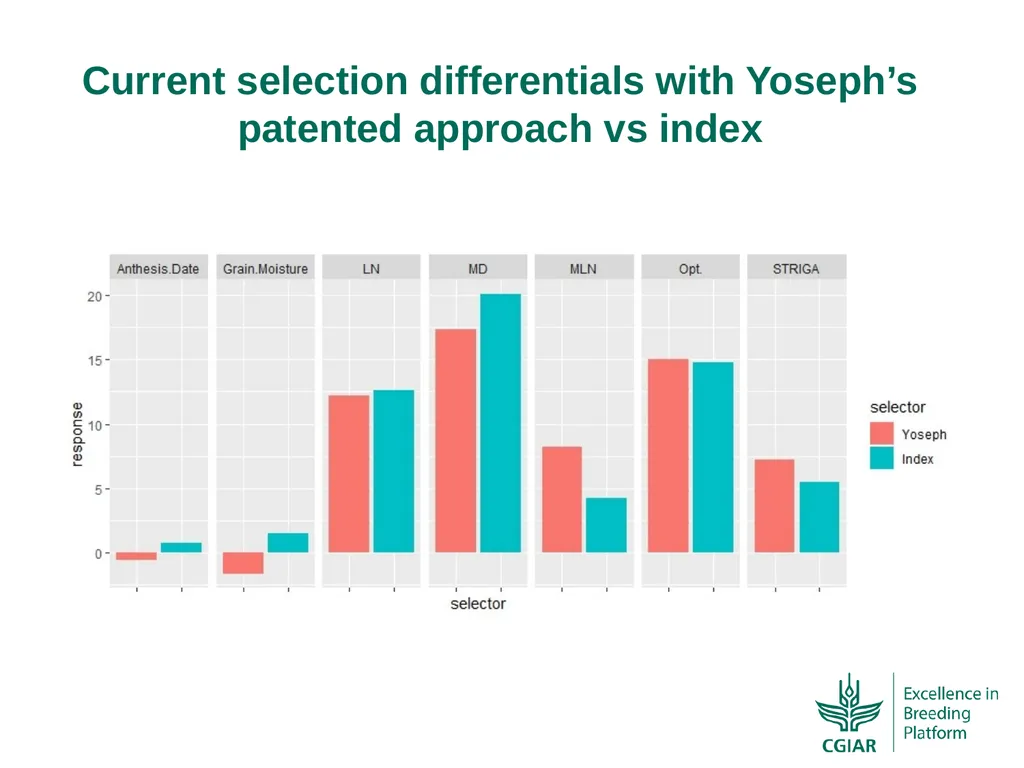
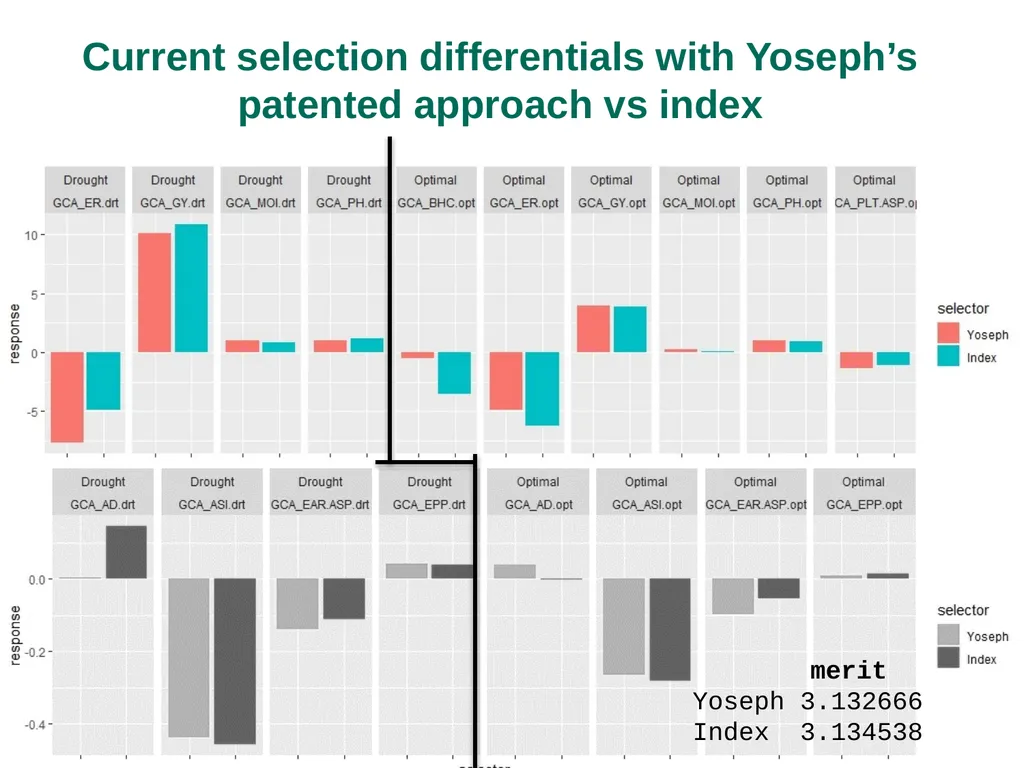
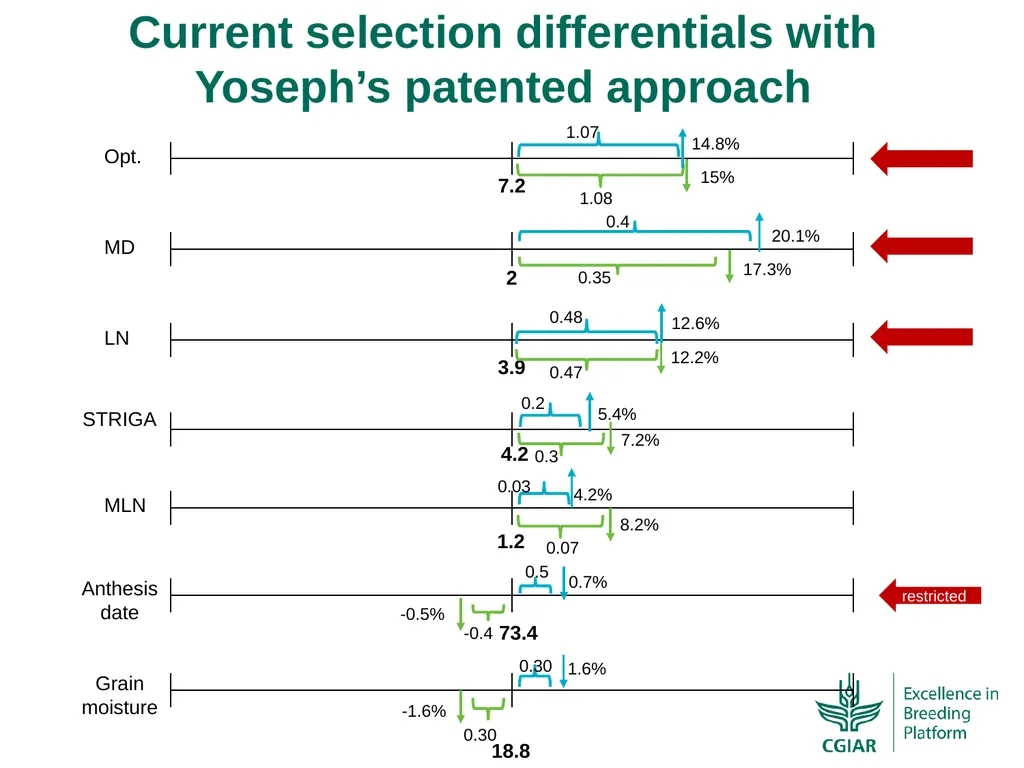
Current selection differentials with Yoseph’s patented approach vs index<br>
10
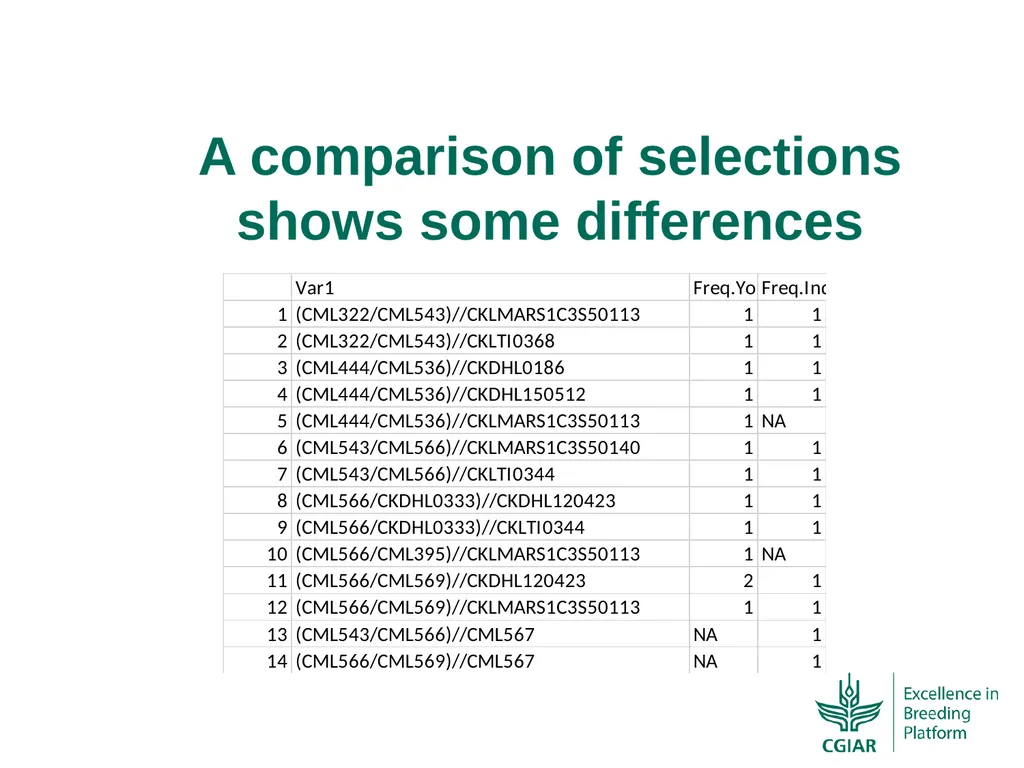
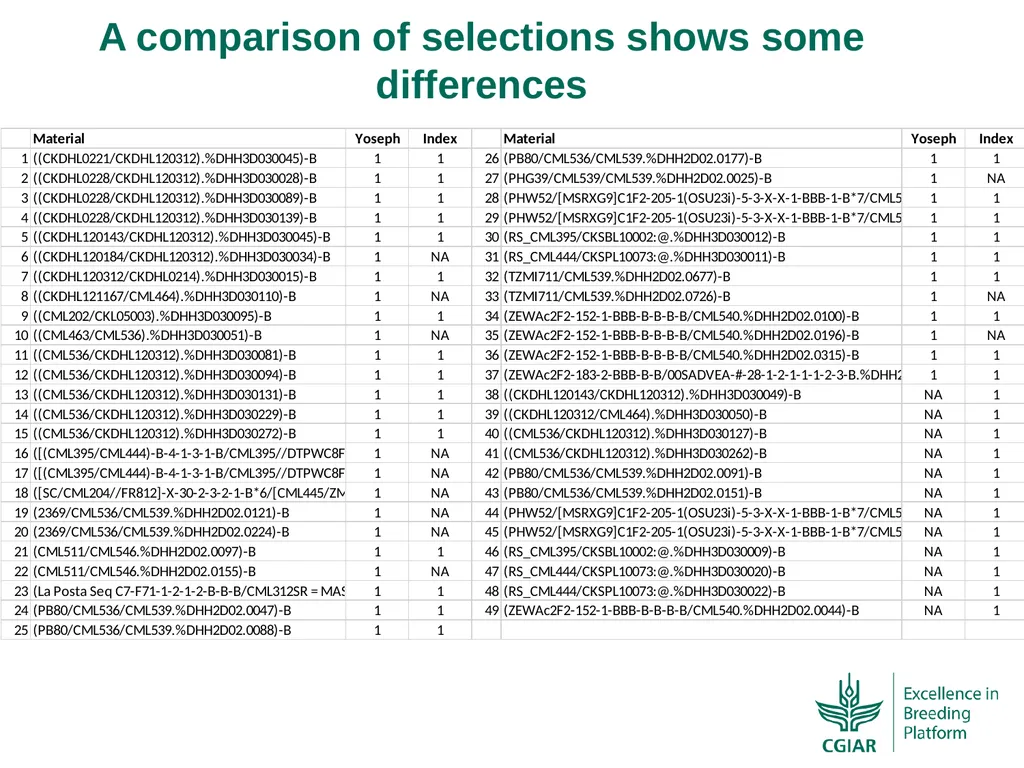
A comparison of selections shows some differences<br>
11
Recycling step using an index vs current method<br>
Current selection differentials with Yoseph’s patented approach vs index merit
Yoseph 3.132666
Index 3.134538<br>
15
A comparison of selections shows some differences<br>
16
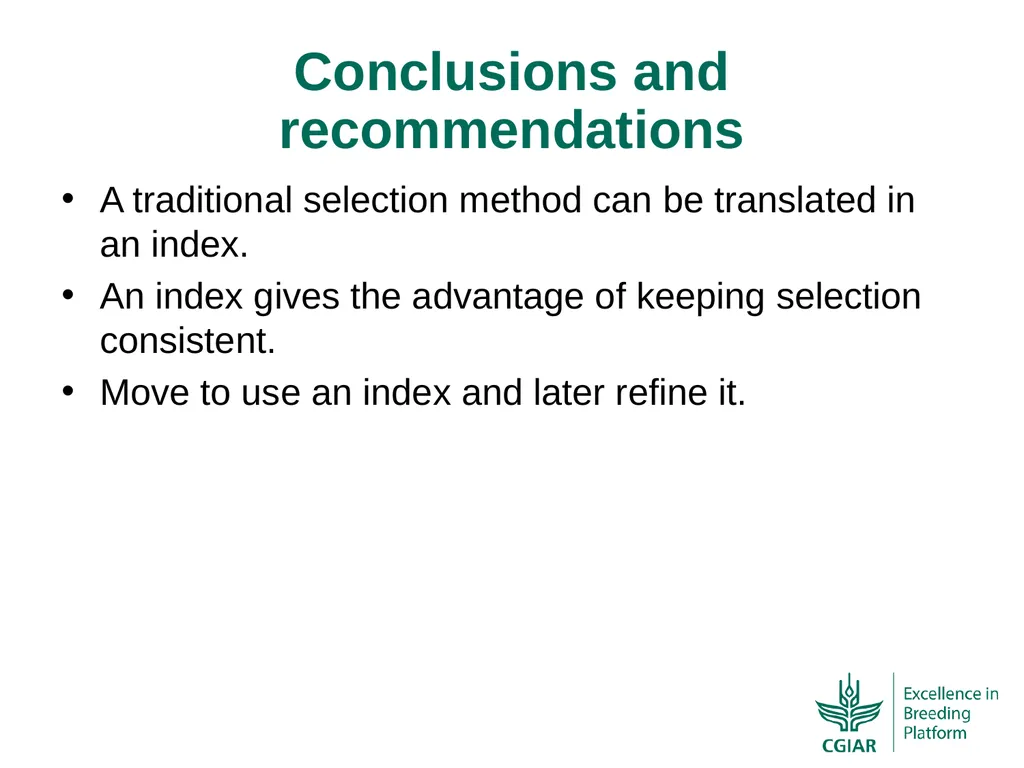
Conclusions and recommendations A traditional selection method can be translated in an index.
An index gives the advantage of keeping selection consistent.
Move to use an index and later refine it.<br>
17
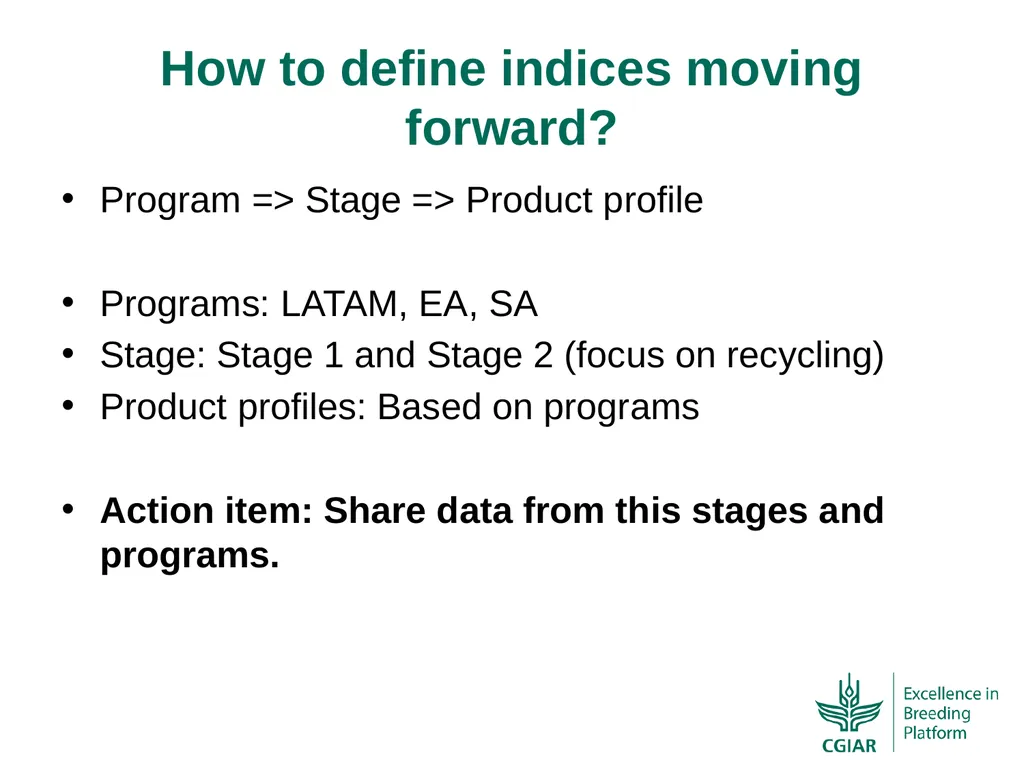
How to define indices moving forward? Program => Stage => Product profile
Programs: LATAM, EA, SA
Stage: Stage 1 and Stage 2 (focus on recycling)
Product profiles: Based on programs
Action item: Share data from this stages and programs.<br>
18
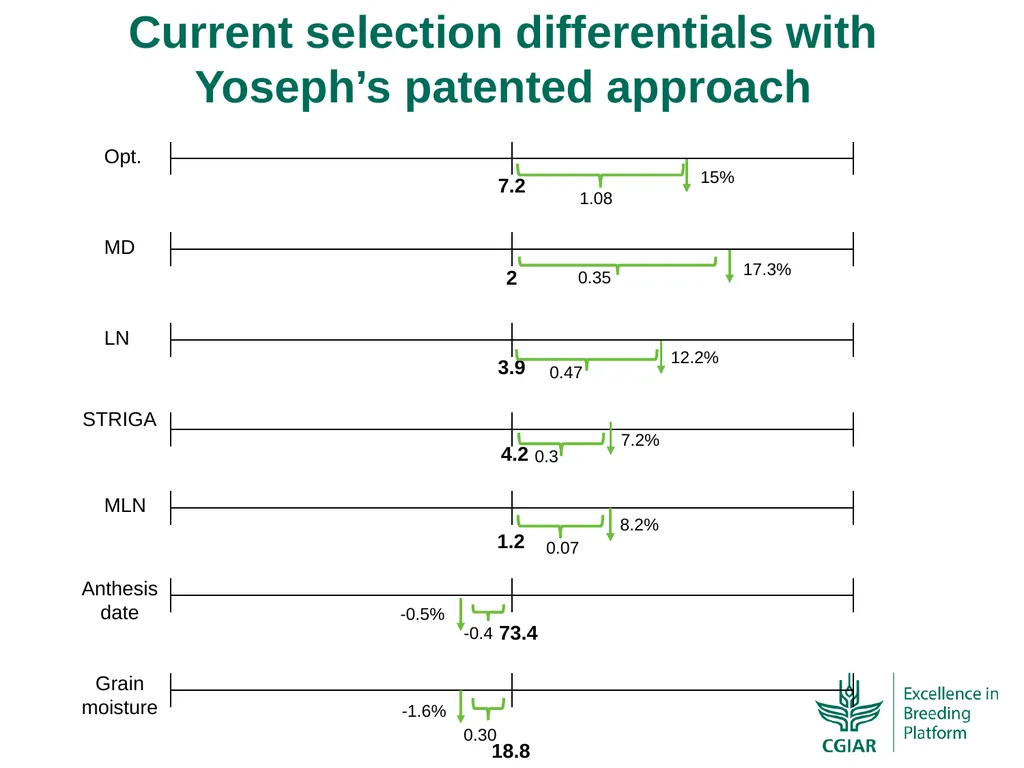
Opt. MD LN STRIGA MLN Anthesis date Grain moisture 7.2 2 3.9 4.2 1.2 73.4 18.8 15% 17.3% 12.2% 7.2% 8.2% -0.5% -1.6% 1.08 0.35 0.47 0.3 0.07 -0.4 0.30 Current selection differentials with Yoseph’s patented approach<br>