Budgeting for Clinical Trials Objectives Describe processes for development negotiation of budgets Identify the different costs associated with budget development 2 Lifecycle of a Clinical Trial 3 LSUHSC CTO Budgeting Workflow 4 SSSCC CTO
"Budgeting for Clinical Trials Objectives Describe" is the property of its rightful owner. Permission is granted to
download and print the materials on this website for personal, non-commercial use only, and to display it
on your personal computer provided you do not modify the materials and that you retain all copyright
notices contained in the materials. By downloading content from our website, you accept the terms of this
agreement.
Presentation Transcript
01
Budgeting for Clinical Trials<br>
02
Objectives Describe processes for development & negotiation of budgets
Identify the different costs associated with budget development 2<br>
03
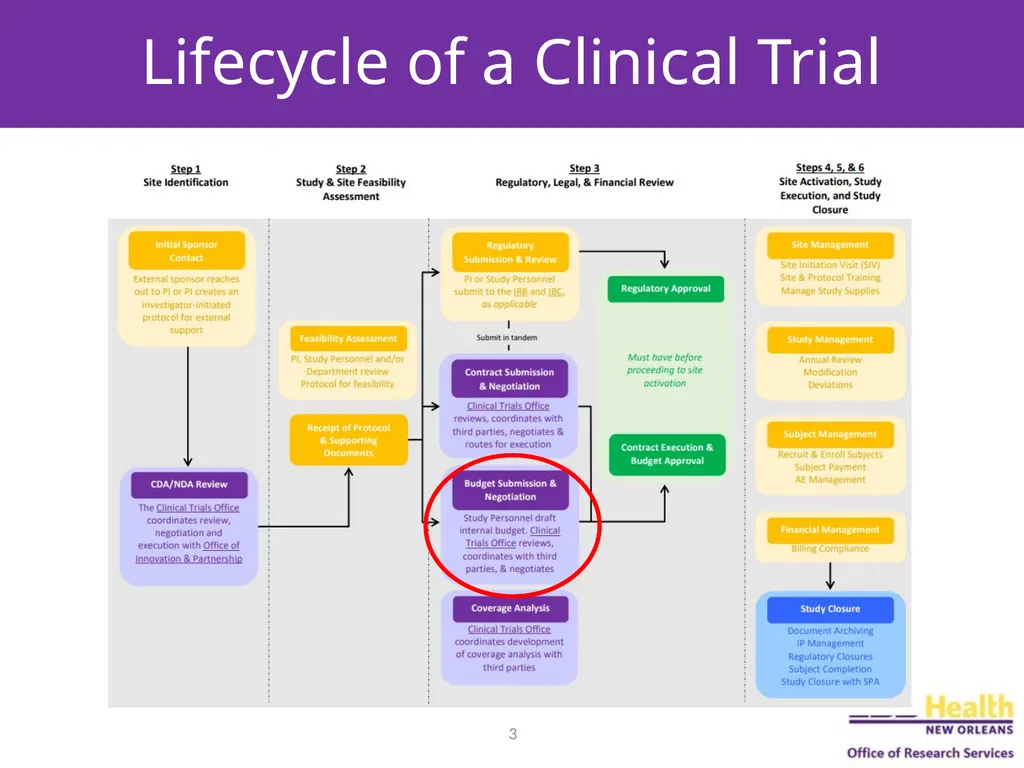
Lifecycle of a Clinical Trial 3<br>
04
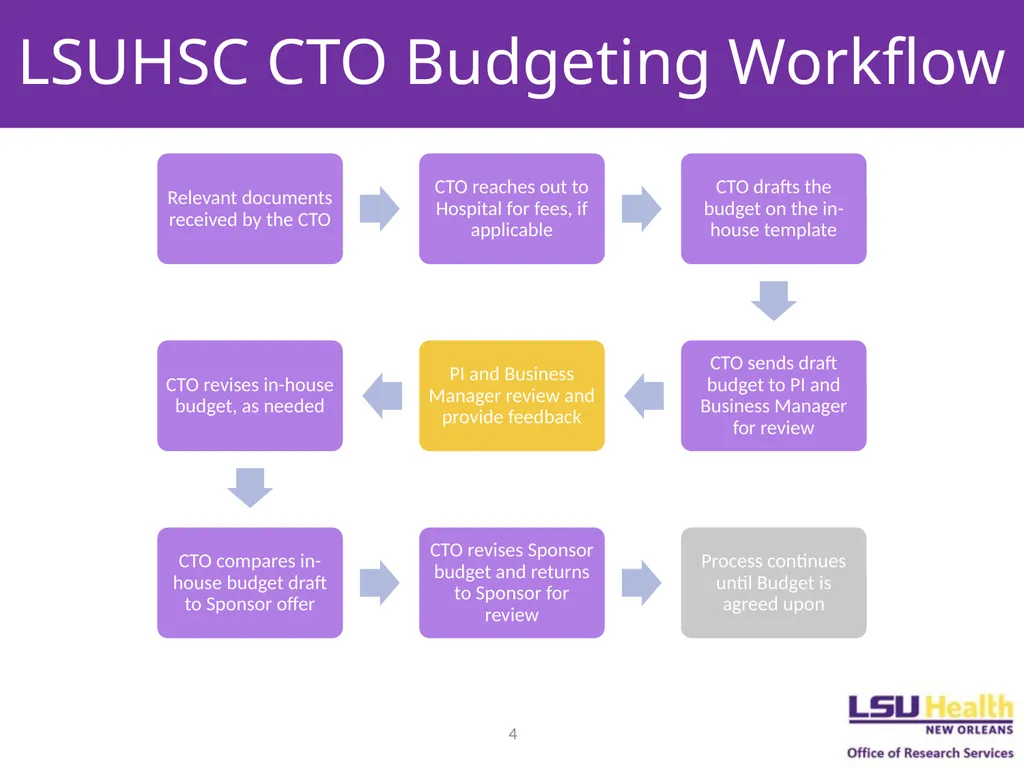
LSUHSC CTO Budgeting Workflow 4<br>
05
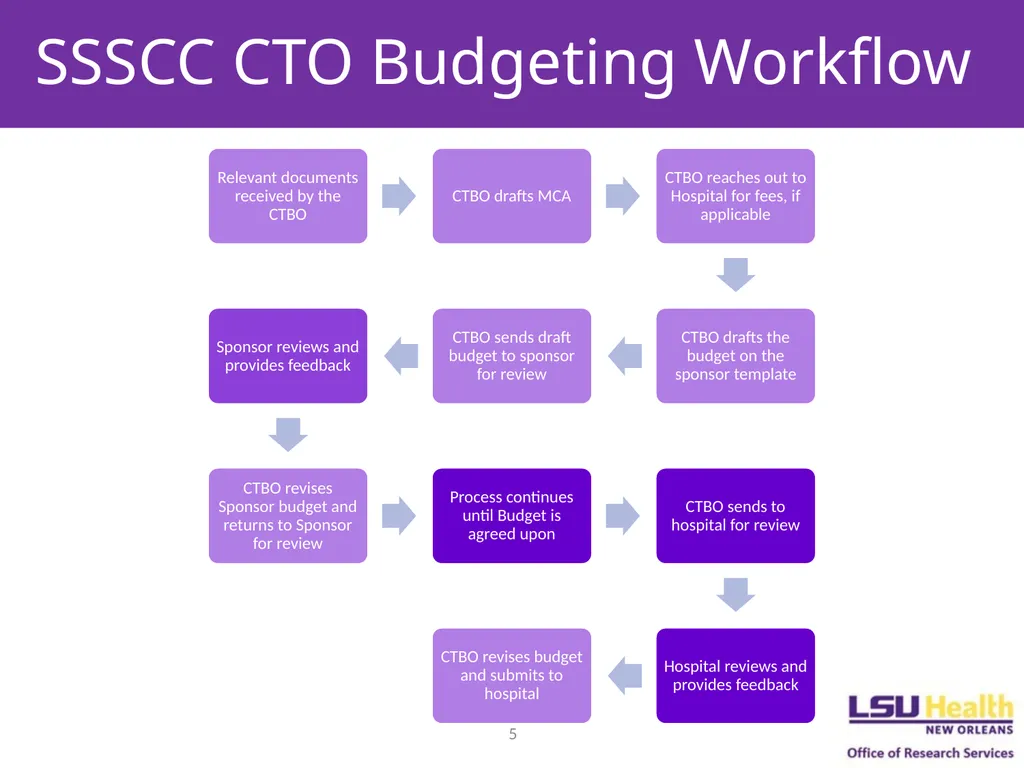
SSSCC CTO Budgeting Workflow 5<br>
06
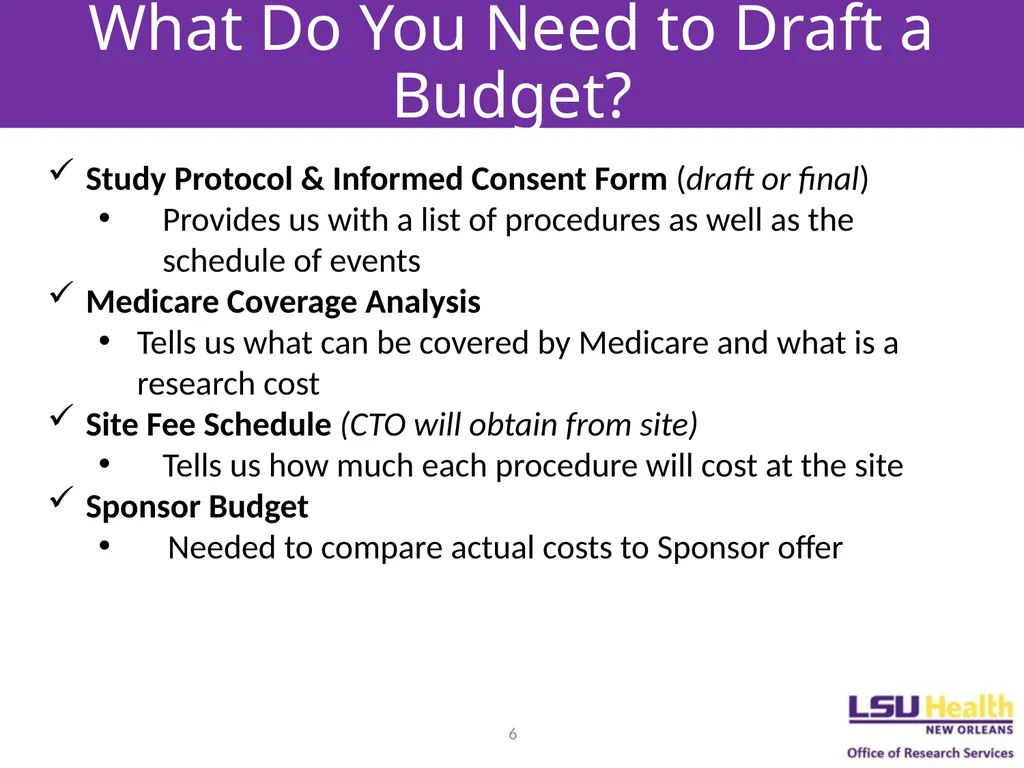
What Do You Need to Draft a Budget? 6 Study Protocol & Informed Consent Form (draft or final)
Provides us with a list of procedures as well as the schedule of events
Medicare Coverage Analysis
Tells us what can be covered by Medicare and what is a research cost
Site Fee Schedule (CTO will obtain from site)
Tells us how much each procedure will cost at the site
Sponsor Budget
Needed to compare actual costs to Sponsor offer<br>
07
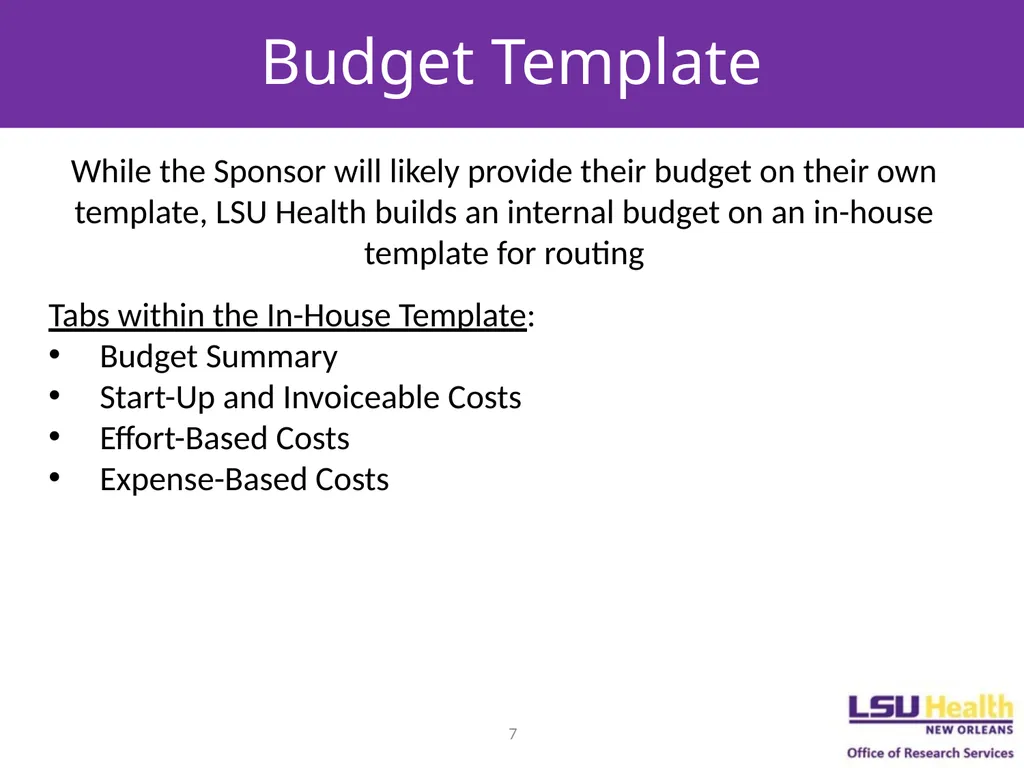
Budget Template 7 While the Sponsor will likely provide their budget on their own template, LSU Health builds an internal budget on an in-house template for routing Tabs within the In-House Template:
Budget Summary
Start-Up and Invoiceable Costs
Effort-Based Costs
Expense-Based Costs<br>
08
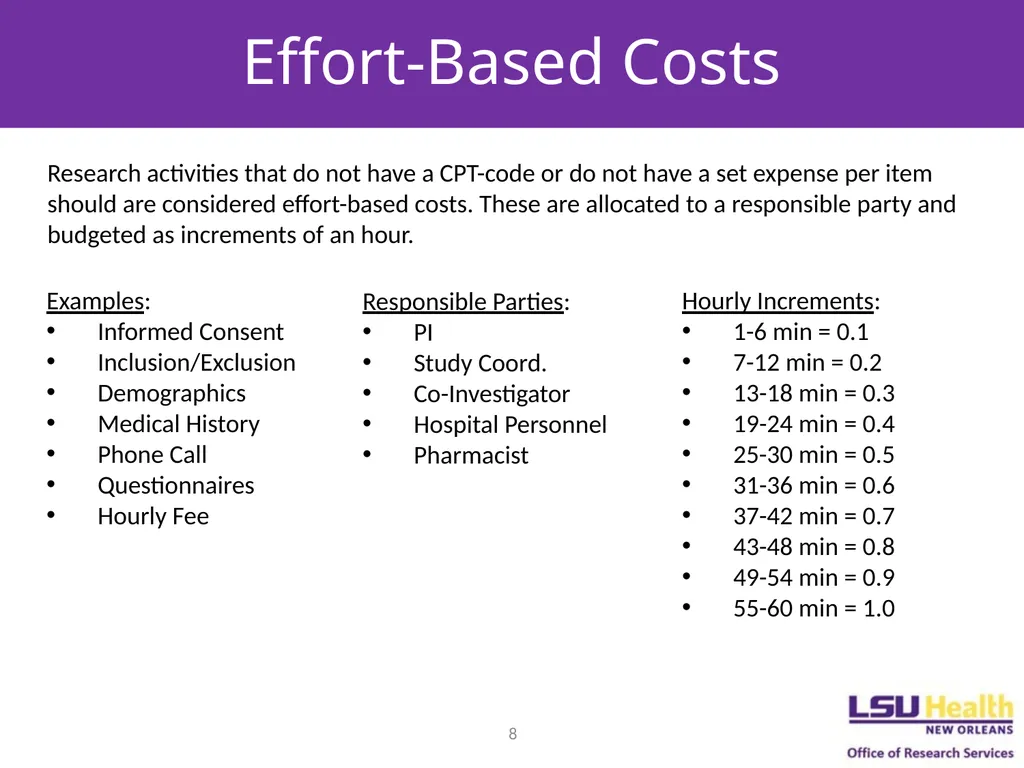
Effort-Based Costs 8 Research activities that do not have a CPT-code or do not have a set expense per item should are considered effort-based costs. These are allocated to a responsible party and budgeted as increments of an hour. Examples:
Informed Consent
Inclusion/Exclusion
Demographics
Medical History
Phone Call
Questionnaires
Hourly Fee Responsible Parties:
PI
Study Coord.
Co-Investigator
Hospital Personnel
Pharmacist Hourly Increments:
1-6 min = 0.1
7-12 min = 0.2
13-18 min = 0.3
19-24 min = 0.4
25-30 min = 0.5
31-36 min = 0.6
37-42 min = 0.7
43-48 min = 0.8
49-54 min = 0.9
55-60 min = 1.0<br>
09
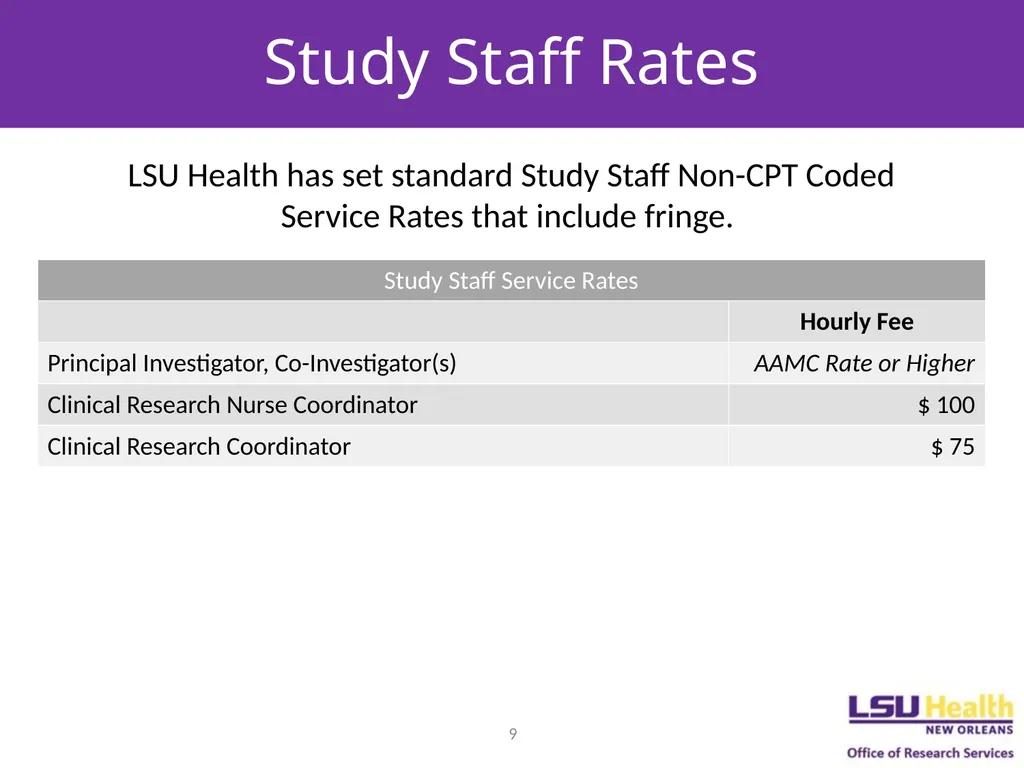
Study Staff Rates 9 LSU Health has set standard Study Staff Non-CPT Coded Service Rates that include fringe.<br>
10
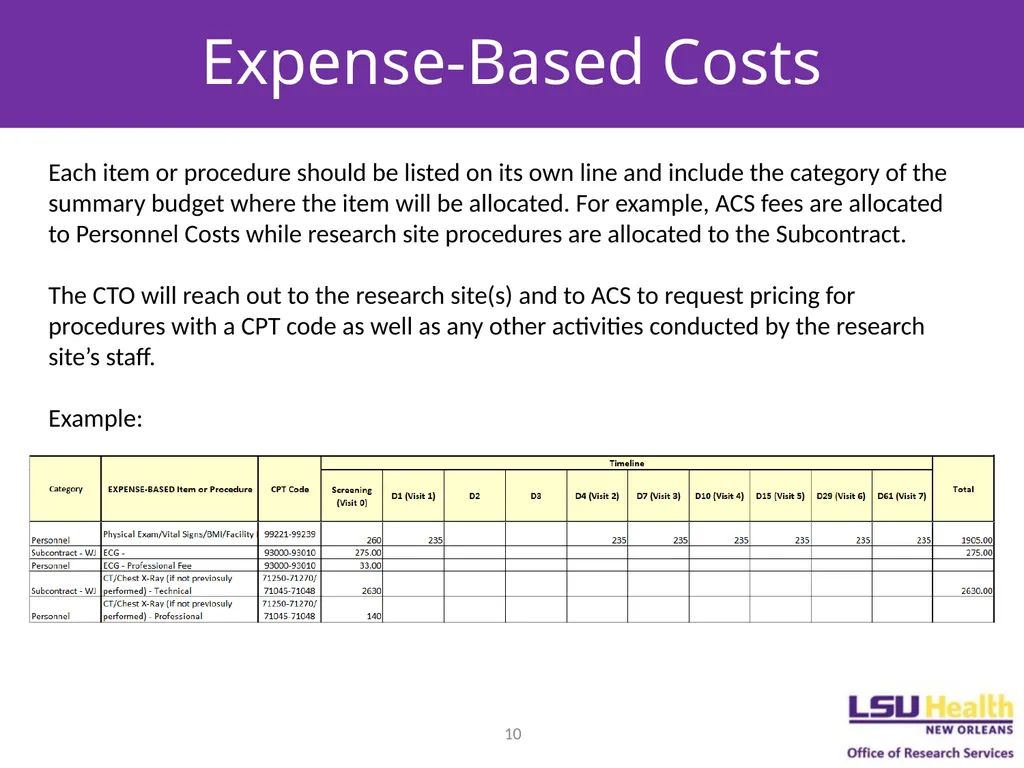
Expense-Based Costs 10 Each item or procedure should be listed on its own line and include the category of the summary budget where the item will be allocated. For example, ACS fees are allocated to Personnel Costs while research site procedures are allocated to the Subcontract.
The CTO will reach out to the research site(s) and to ACS to request pricing for procedures with a CPT code as well as any other activities conducted by the research site’s staff.
Example:<br>
11
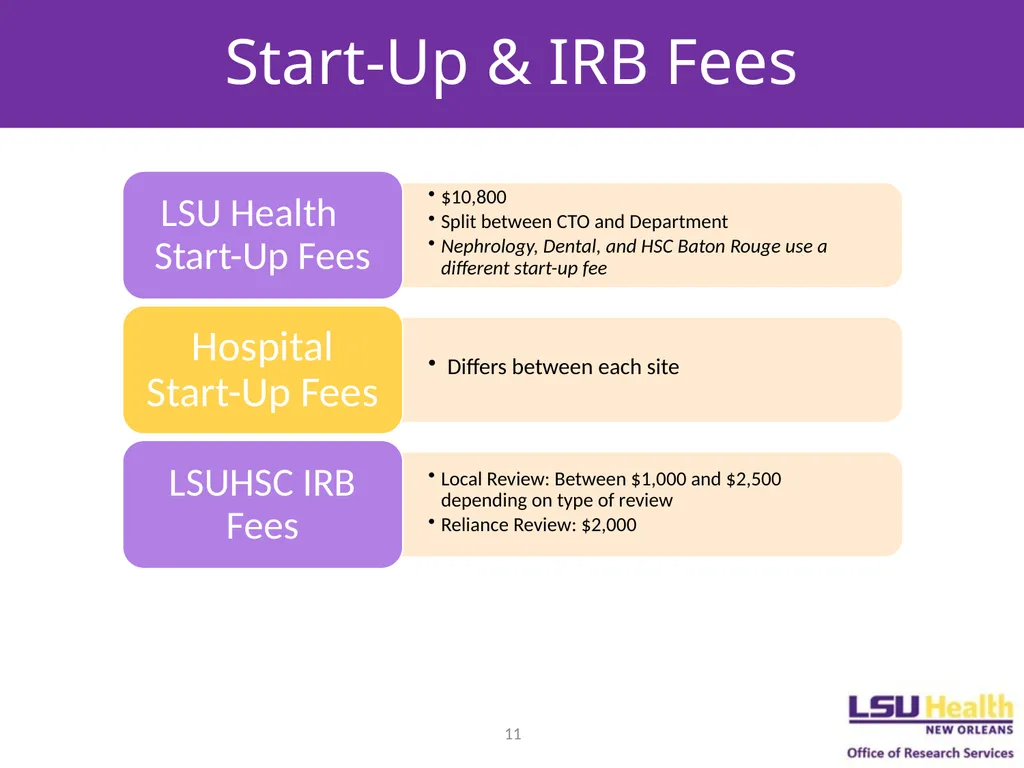
Start-Up & IRB Fees 11<br>
12
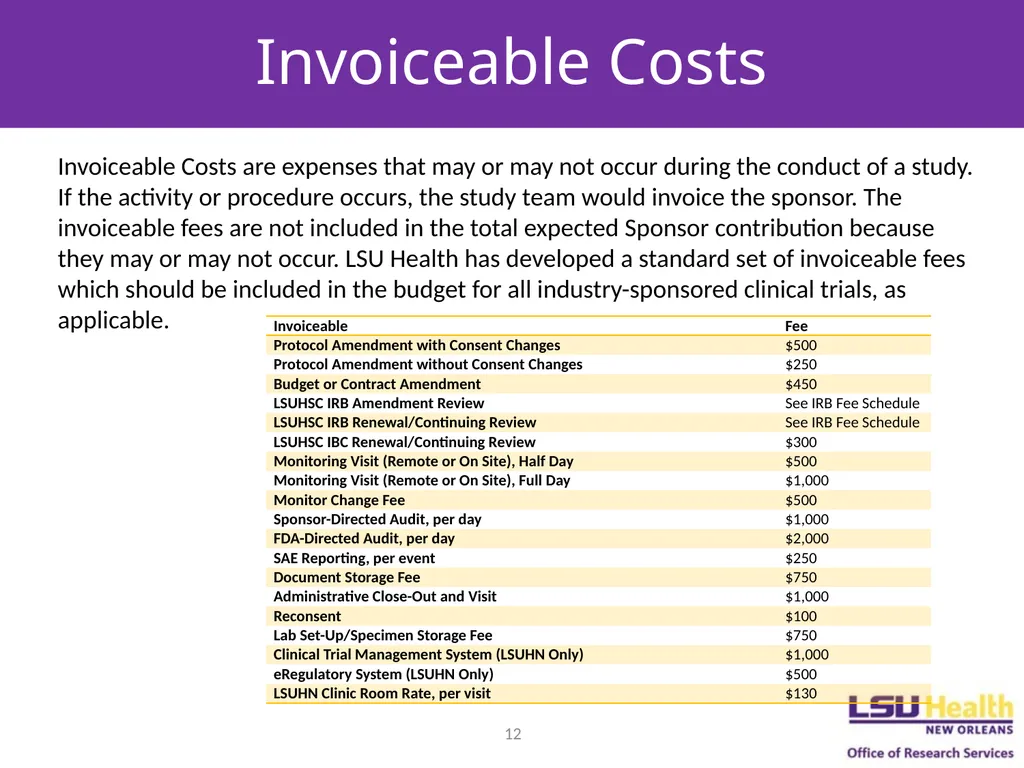
Invoiceable Costs 12 Invoiceable Costs are expenses that may or may not occur during the conduct of a study. If the activity or procedure occurs, the study team would invoice the sponsor. The invoiceable fees are not included in the total expected Sponsor contribution because they may or may not occur. LSU Health has developed a standard set of invoiceable fees which should be included in the budget for all industry-sponsored clinical trials, as applicable.<br>
13
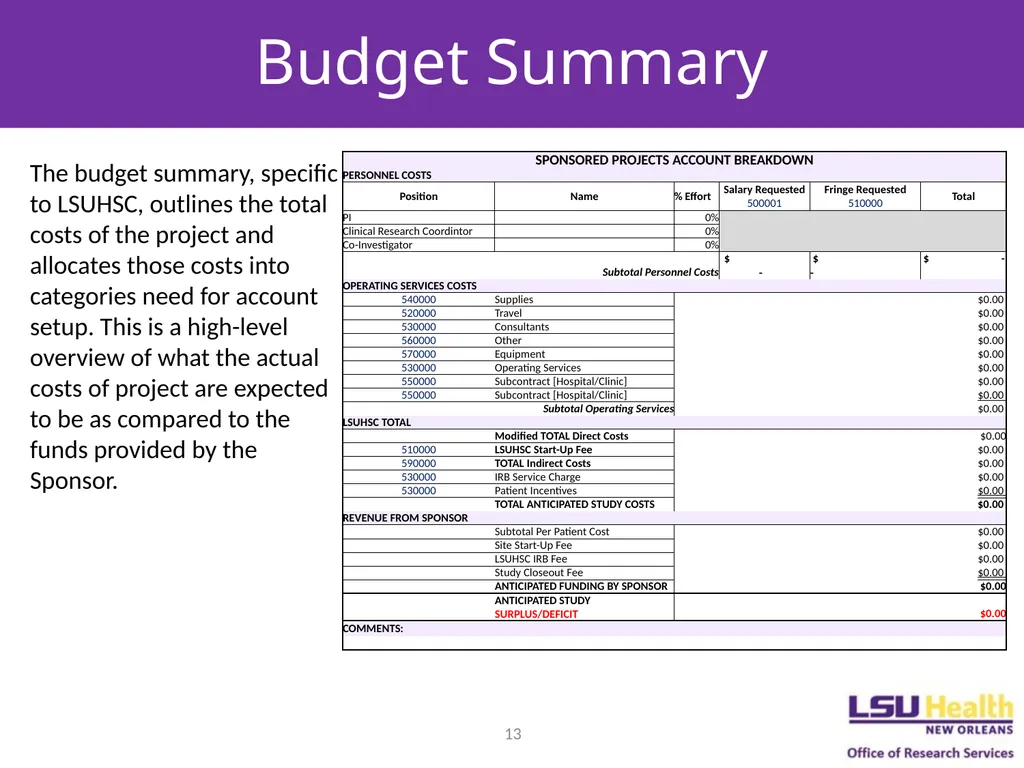
Budget Summary 13 The budget summary, specific to LSUHSC, outlines the total costs of the project and allocates those costs into categories need for account setup. This is a high-level overview of what the actual costs of project are expected to be as compared to the funds provided by the Sponsor.<br>
14
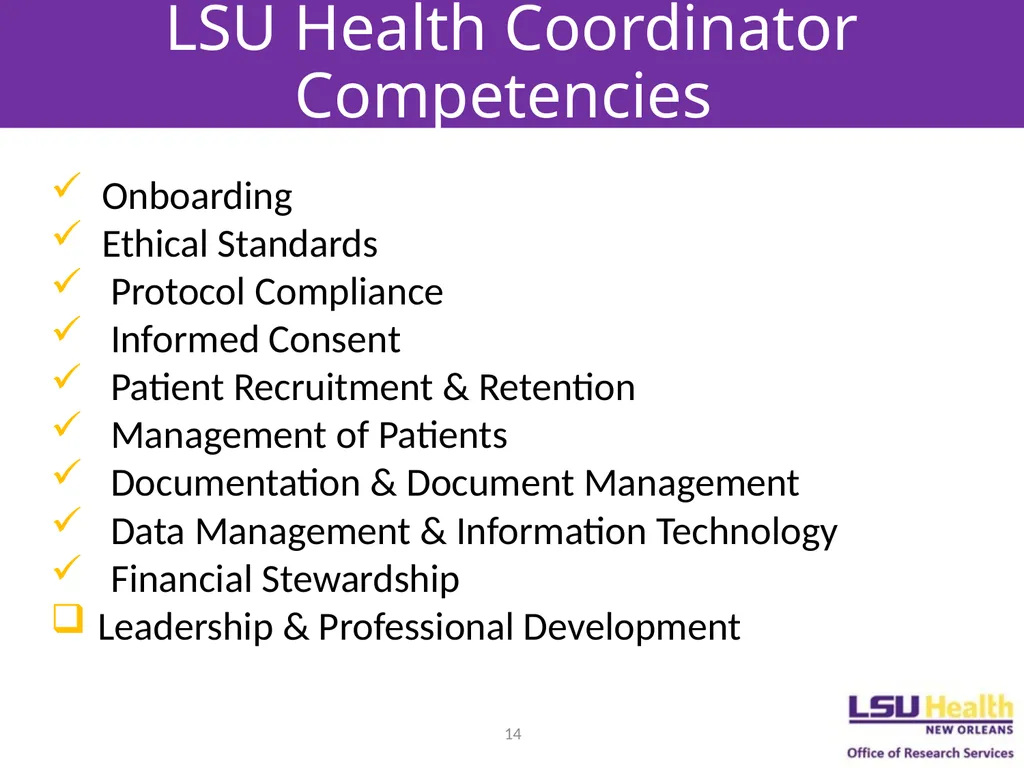
LSU Health Coordinator Competencies 14 Onboarding
Ethical Standards
Protocol Compliance
Informed Consent
Patient Recruitment & Retention
Management of Patients
Documentation & Document Management
Data Management & Information Technology
Financial Stewardship
Leadership & Professional Development<br>