Building Relationships that are Happy, Healthy and
Description: Building Relationships that are Happy, Healthy and Satisfying A strong, healthy relationship can be one of the best supports in your life. Good relationships improve all aspects of your life, strengthening your health, your mind, and your
Related Topics
Download Presentation
"Building Relationships that are Happy, Healthy and" is the property of its rightful owner. Permission is granted to download and print the materials on this website for personal, non-commercial use only, and to display it on your personal computer provided you do not modify the materials and that you retain all copyright notices contained in the materials. By downloading content from our website, you accept the terms of this agreement.
Presentation Transcript
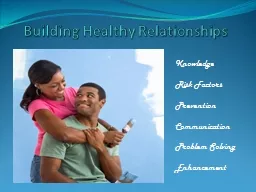
slide1. Building Relationships that are Happy, Healthy and Satisfying<br>
slide2. A strong, healthy relationship can be one of the best supports in your life.
Good relationships improve all aspects of your life, strengthening your health, your mind, and your connections with others.<br>
slide3. How Confident Are You? Feeling good about yourself and how you look can boost your self-confidence.
Wear the clothes you want – that you feel comfortable in.<br>
slide4. Wear make up if you want to.
Choose nice perfume or body spray, deodorant, shampoo.<br>
slide5. Be generous with compliments.
Be interested in your friends.<br>
slide6. Be good at something.
Only answer questions you want to about your disability.<br>
slide7. Respect the opinions of others.
Be assertive and think about getting what you want.
Be proud of who you are.
Make and be involved in decisions that affect your life.<br>
slide8. Learn about and manage your condition as you get older.
Personal care - Intimate personal care is anecessary part of some disabled people’s lives.
Many young people feel self-conscious about the way they look as their bodies grow and change and may begin to feel shy of others seeing their body. This is perfectly normal.
You need to feel happy and comfortable with who helps with personal care and have confidence in them.<br>
slide9. Developing Sexual Relationships Being friends, making each other laugh and knowing you can trust each other are all very important aspects of a loving relationship.
Sex is usually a small part of this wider picture.
Sexual desires and behaviour are normal and exciting<br>
slide10. Establishing a Relationship<br>
slide11. Everyone’s relationship is unique, and people come together for many different reasons. But there are some things that good relationships have in common.
Knowing the basic principles of healthy relationships helps keep them meaningful, fulfilling and exciting in both happy times and sad.<br>
slide12. What makes a healthy love relationship?<br>
slide13. Staying Involved With Each Other Some relationships get stuck in peaceful coexistence, but without truly relating to each other and working together.
While it may seem stable on the surface, lack of involvement and communication increases distance.
When you need to talk about something important, the connection and understanding may no longer be there.<br>
slide14. Getting Through Conflict. Some couples talk things out quietly, while others may raise their voices and passionately disagree.
The key in a strong relationship, though, is not to be fearful of conflict.
You need to be safe to express things that bother you without fear of retaliation, and be able to resolve conflict without humiliation, degradation or insisting on being right.<br>
slide15. Keeping Outside Relationships and Interests Alive. No one person can meet all of our needs, and expecting too much from someone can put a lot of unhealthy pressure on a relationship.
Having friends and outside interests not only strengthens your social network, but brings new insights and stimulation to the relationship, too.<br>
slide16. Communicating. Honest, direct communication is a key part of any relationship. When both people feel comfortable expressing their needs, fears, and desires, trust and bonds are strengthened.
Nonverbal cues—body language like eye contact, leaning forward or away, or touching someone’s arm—are critical to communication.<br>
slide17. As a person with a disability, both you and your partner will need to communicate your needs and desires very clearly in the relationship.
Sex doesn't just mean sexual intercourse or having an orgasm.
Cuddling and kissing your partner can also be satisfying and pleasurable for you both.
You need to think responsibly about using contraception and safer sex and what methods will work best for you and your partner. You need to discuss what you will use and be happy that you both agree.<br>
slide18. Sometimes relationships don’t work out. It might be that you don’t feel attracted to each other any more, or it might be that one person wants to move on so ends the relationship.
When relationships which have been intimate end it can be very upsetting, frustrating and unsettling.
This is another part of growing up and learning about how relationships work. Usually, your friends and family are particularly valuable and good people to talk to if this happens.<br>
slide19. If you do not have a partner that’s also perfectly normal!!
Many young people do not feel ready to be in a relationship with a girlfriend or boyfriend until they are older. This means they still go out with friends and have a great time, but they also get time to learn about themselves and who they want to be.<br>
slide22. Setting Boundaries in Relationships<br>
slide23. Emotional boundaries are crucial in helping us to enjoy healthy relationship and avoid unhealthy or dysfunctional relationships.
emotional boundaries are and how to tell the difference between a healthy and an unhealthy relationship.<br>
slide24. Personal boundaries are the limits we set in relationships that allow us to protect our selves from being manipulated by, or enmeshed with, emotionally needy others.
Such boundaries come from having a good sense of our own self-worth.<br>
slide25. Healthy intact boundaries are flexible, they allow us to get close to others when it is appropriate and to maintain our distance when we might be harmed by getting too close.
Good boundaries protect us from becoming engulfed in abusive relationships and pave the way to achieving true intimacy the flipside of independence, as we grow to interdependence the relationship of two mature individuals. They help us take care of ourselves and if we can receive it, to respect the selves of others.<br>
slide26. The following are some ways in which unhealthy boundaries may show themselves in our relationships, along with some remedies:<br>
slide27. Lack of a Sense of Identity If we can't imagine who we would be without our relationship, we are unable to find fulfilment within ourselves, we look for such fulfilment in others and are willing to do anything it takes to make the relationship work.<br>
slide28. The more rational alternative is to find out who we are and what makes us unique.
We will come to realize that our value and worth as a person is not necessarily dependent on having a significant other in our life, that we can function well as an independent person in our own right. When we move into accepting ourselves for who we really are warts and all, we will be able to accept others for who they are.<br>
slide29. Settling for Second Best We may cling to the irrational belief that things are good enough as they are, we feel a measure of security in the relationship, that change is a difficult and fearful prospect, or that we don't deserve any better, our life has always been a sacrifice of the self, and that this is as good as it's likely to get.
In the process, however, we give up the chance to be the person we were meant to be and to explore our sense of personal fulfilment in life.
We give up not only our own life dreams but our sense of worth in order to maintain the security of a relationship.<br>
slide30. A healthy relationship is one in which boundaries are not only strong, but flexible enough, to allow us to flourish with our own uniqueness, but are also known to and respected by each other.<br>
slide31. Over-Responsibility and Guilt We may feel responsible or be made to feel responsible for the failure or unhappiness of others.
Thereby depriving them of one of the most important features of an independent, healthy and mature life, the ability to make our own life choices, accepting the responsibility for and the consequences of our/their decisions.<br>
slide32. A healthier response is to show our partners respect by allowing them to succeed or fail on their own terms.
You, of course, may choose to support your partner's fulfilment of life goals but it is unhealthy to rescue them from all of life's consequences.<br>
slide33. The Difference Between Love and Rescue They get a warm, caring, sharing feeling from helping their partner, a feeling they call love. But this may actually encourage their partner to become needy and helpless enabling the negative behaviour to continue.
An imbalance can then occur in the relationship in which one partner becomes the rescuer or enabler and the other plays the role of the helpless victim.<br>
slide34. Sympathy and compassion are worthy qualities, but they can be confused with love, especially when boundaries have become distorted or are virtually non existent.
Healthy boundaries lead to respect for the other and equality in a relationship, an appreciation for the aliveness and strength of the other person, and a mutual flow of feelings between the two partners, all features of mature love.<br>
slide35. Fantasy vs. Reality They may portray to others the myth that they have the perfect relationship and they may believe, to themselves, that someday all of their relationship problems will somehow be solved.
They ignore the abuse, manipulation, imbalance and control in the relationship.<br>
slide36. Healthy boundaries allow us to test reality rather than rely on fantasy.
When problems are present, good emotional boundaries allow us to define the problems and to communicate with our partner in finding solutions.
They encourage a healthy self-image, trust, consistency, stability and productive communication.<br>
slide37. Sexual Abuse<br>
slide38. Sexual abuse refers to any action that pressures or coerces someone to do something sexually they don't want to do.
It can also refer to behavior that impacts a person's ability to control their sexual activity or the circumstances in which sexual activity occurs, including oral sex, rape or restricting access to birth control and condoms.<br>
slide39. Sexual Abuse Involves Unwanted kissing or touching unwanted rough or violent sexual activity.
Rape or attempted rape.
Refusing to use condoms or restricting someone’s access to birth control.
Keeping someone from protecting themselves from sexually transmitted infections (STIs).
Sexual contact with someone who is very drunk, drugged, unconscious or otherwise unable to give a clear and informed “yes” or “no.”
Threatening someone into unwanted sexual activity.
Repeatedly pressuring someone to have sex or perform sexual acts.
Repeatedly using sexual insults toward someone.<br>
slide40. Keep in Mind Everyone has the right to decide what they do or don’t want to do sexually. Not all sexual assaults are violent “attacks.”
Most victims of sexual assault know the assailant.
Both men and women can be victims of sexual abuse.
Both men and women can be perpetrators of sexual abuse.
Sexual abuse can occur between two people who have been sexual with each other before, including people who are married or dating.<br>
slide41. What to Do If you have been sexually assaulted, first get to a safe place away from the attacker.
You may be scared, angry and confused, but remember the abuse was in no way your fault.<br>
slide42. Contact Someone You Trust. Many people feel fear, guilt, anger, shame and/or shock after they have been sexually assaulted.
Having someone there to support you as you deal with these emotions can make a big difference. It may be helpful to speak with a counselor, someone at a sexual assault hotline or a support group.<br>
slide43. Report What Happened to the Police. If you do decide to report what happened, you will have a stronger case if you do not alter or destroy any evidence.
This means don’t shower, wash your hair or body, comb your hair or change your clothes, even if that is hard to do. If you are nervous about going to the police station, it may help to bring a friend with you.
There may also be sexual assault advocates in your area who can assist you and answer your questions.
Guyana Help and Shelter or Hope for All<br>
slide44. Go to an Emergency Room or Health Clinic. It is very important for you to seek health care as soon as you can after being assaulted.
You will be treated for any injuries and offered medications to help prevent pregnancy and STIs.<br>
slide45. The end……thank you The end<br>
slide2. A strong, healthy relationship can be one of the best supports in your life.
Good relationships improve all aspects of your life, strengthening your health, your mind, and your connections with others.<br>
slide3. How Confident Are You? Feeling good about yourself and how you look can boost your self-confidence.
Wear the clothes you want – that you feel comfortable in.<br>
slide4. Wear make up if you want to.
Choose nice perfume or body spray, deodorant, shampoo.<br>
slide5. Be generous with compliments.
Be interested in your friends.<br>
slide6. Be good at something.
Only answer questions you want to about your disability.<br>
slide7. Respect the opinions of others.
Be assertive and think about getting what you want.
Be proud of who you are.
Make and be involved in decisions that affect your life.<br>
slide8. Learn about and manage your condition as you get older.
Personal care - Intimate personal care is anecessary part of some disabled people’s lives.
Many young people feel self-conscious about the way they look as their bodies grow and change and may begin to feel shy of others seeing their body. This is perfectly normal.
You need to feel happy and comfortable with who helps with personal care and have confidence in them.<br>
slide9. Developing Sexual Relationships Being friends, making each other laugh and knowing you can trust each other are all very important aspects of a loving relationship.
Sex is usually a small part of this wider picture.
Sexual desires and behaviour are normal and exciting<br>
slide10. Establishing a Relationship<br>
slide11. Everyone’s relationship is unique, and people come together for many different reasons. But there are some things that good relationships have in common.
Knowing the basic principles of healthy relationships helps keep them meaningful, fulfilling and exciting in both happy times and sad.<br>
slide12. What makes a healthy love relationship?<br>
slide13. Staying Involved With Each Other Some relationships get stuck in peaceful coexistence, but without truly relating to each other and working together.
While it may seem stable on the surface, lack of involvement and communication increases distance.
When you need to talk about something important, the connection and understanding may no longer be there.<br>
slide14. Getting Through Conflict. Some couples talk things out quietly, while others may raise their voices and passionately disagree.
The key in a strong relationship, though, is not to be fearful of conflict.
You need to be safe to express things that bother you without fear of retaliation, and be able to resolve conflict without humiliation, degradation or insisting on being right.<br>
slide15. Keeping Outside Relationships and Interests Alive. No one person can meet all of our needs, and expecting too much from someone can put a lot of unhealthy pressure on a relationship.
Having friends and outside interests not only strengthens your social network, but brings new insights and stimulation to the relationship, too.<br>
slide16. Communicating. Honest, direct communication is a key part of any relationship. When both people feel comfortable expressing their needs, fears, and desires, trust and bonds are strengthened.
Nonverbal cues—body language like eye contact, leaning forward or away, or touching someone’s arm—are critical to communication.<br>
slide17. As a person with a disability, both you and your partner will need to communicate your needs and desires very clearly in the relationship.
Sex doesn't just mean sexual intercourse or having an orgasm.
Cuddling and kissing your partner can also be satisfying and pleasurable for you both.
You need to think responsibly about using contraception and safer sex and what methods will work best for you and your partner. You need to discuss what you will use and be happy that you both agree.<br>
slide18. Sometimes relationships don’t work out. It might be that you don’t feel attracted to each other any more, or it might be that one person wants to move on so ends the relationship.
When relationships which have been intimate end it can be very upsetting, frustrating and unsettling.
This is another part of growing up and learning about how relationships work. Usually, your friends and family are particularly valuable and good people to talk to if this happens.<br>
slide19. If you do not have a partner that’s also perfectly normal!!
Many young people do not feel ready to be in a relationship with a girlfriend or boyfriend until they are older. This means they still go out with friends and have a great time, but they also get time to learn about themselves and who they want to be.<br>
slide22. Setting Boundaries in Relationships<br>
slide23. Emotional boundaries are crucial in helping us to enjoy healthy relationship and avoid unhealthy or dysfunctional relationships.
emotional boundaries are and how to tell the difference between a healthy and an unhealthy relationship.<br>
slide24. Personal boundaries are the limits we set in relationships that allow us to protect our selves from being manipulated by, or enmeshed with, emotionally needy others.
Such boundaries come from having a good sense of our own self-worth.<br>
slide25. Healthy intact boundaries are flexible, they allow us to get close to others when it is appropriate and to maintain our distance when we might be harmed by getting too close.
Good boundaries protect us from becoming engulfed in abusive relationships and pave the way to achieving true intimacy the flipside of independence, as we grow to interdependence the relationship of two mature individuals. They help us take care of ourselves and if we can receive it, to respect the selves of others.<br>
slide26. The following are some ways in which unhealthy boundaries may show themselves in our relationships, along with some remedies:<br>
slide27. Lack of a Sense of Identity If we can't imagine who we would be without our relationship, we are unable to find fulfilment within ourselves, we look for such fulfilment in others and are willing to do anything it takes to make the relationship work.<br>
slide28. The more rational alternative is to find out who we are and what makes us unique.
We will come to realize that our value and worth as a person is not necessarily dependent on having a significant other in our life, that we can function well as an independent person in our own right. When we move into accepting ourselves for who we really are warts and all, we will be able to accept others for who they are.<br>
slide29. Settling for Second Best We may cling to the irrational belief that things are good enough as they are, we feel a measure of security in the relationship, that change is a difficult and fearful prospect, or that we don't deserve any better, our life has always been a sacrifice of the self, and that this is as good as it's likely to get.
In the process, however, we give up the chance to be the person we were meant to be and to explore our sense of personal fulfilment in life.
We give up not only our own life dreams but our sense of worth in order to maintain the security of a relationship.<br>
slide30. A healthy relationship is one in which boundaries are not only strong, but flexible enough, to allow us to flourish with our own uniqueness, but are also known to and respected by each other.<br>
slide31. Over-Responsibility and Guilt We may feel responsible or be made to feel responsible for the failure or unhappiness of others.
Thereby depriving them of one of the most important features of an independent, healthy and mature life, the ability to make our own life choices, accepting the responsibility for and the consequences of our/their decisions.<br>
slide32. A healthier response is to show our partners respect by allowing them to succeed or fail on their own terms.
You, of course, may choose to support your partner's fulfilment of life goals but it is unhealthy to rescue them from all of life's consequences.<br>
slide33. The Difference Between Love and Rescue They get a warm, caring, sharing feeling from helping their partner, a feeling they call love. But this may actually encourage their partner to become needy and helpless enabling the negative behaviour to continue.
An imbalance can then occur in the relationship in which one partner becomes the rescuer or enabler and the other plays the role of the helpless victim.<br>
slide34. Sympathy and compassion are worthy qualities, but they can be confused with love, especially when boundaries have become distorted or are virtually non existent.
Healthy boundaries lead to respect for the other and equality in a relationship, an appreciation for the aliveness and strength of the other person, and a mutual flow of feelings between the two partners, all features of mature love.<br>
slide35. Fantasy vs. Reality They may portray to others the myth that they have the perfect relationship and they may believe, to themselves, that someday all of their relationship problems will somehow be solved.
They ignore the abuse, manipulation, imbalance and control in the relationship.<br>
slide36. Healthy boundaries allow us to test reality rather than rely on fantasy.
When problems are present, good emotional boundaries allow us to define the problems and to communicate with our partner in finding solutions.
They encourage a healthy self-image, trust, consistency, stability and productive communication.<br>
slide37. Sexual Abuse<br>
slide38. Sexual abuse refers to any action that pressures or coerces someone to do something sexually they don't want to do.
It can also refer to behavior that impacts a person's ability to control their sexual activity or the circumstances in which sexual activity occurs, including oral sex, rape or restricting access to birth control and condoms.<br>
slide39. Sexual Abuse Involves Unwanted kissing or touching unwanted rough or violent sexual activity.
Rape or attempted rape.
Refusing to use condoms or restricting someone’s access to birth control.
Keeping someone from protecting themselves from sexually transmitted infections (STIs).
Sexual contact with someone who is very drunk, drugged, unconscious or otherwise unable to give a clear and informed “yes” or “no.”
Threatening someone into unwanted sexual activity.
Repeatedly pressuring someone to have sex or perform sexual acts.
Repeatedly using sexual insults toward someone.<br>
slide40. Keep in Mind Everyone has the right to decide what they do or don’t want to do sexually. Not all sexual assaults are violent “attacks.”
Most victims of sexual assault know the assailant.
Both men and women can be victims of sexual abuse.
Both men and women can be perpetrators of sexual abuse.
Sexual abuse can occur between two people who have been sexual with each other before, including people who are married or dating.<br>
slide41. What to Do If you have been sexually assaulted, first get to a safe place away from the attacker.
You may be scared, angry and confused, but remember the abuse was in no way your fault.<br>
slide42. Contact Someone You Trust. Many people feel fear, guilt, anger, shame and/or shock after they have been sexually assaulted.
Having someone there to support you as you deal with these emotions can make a big difference. It may be helpful to speak with a counselor, someone at a sexual assault hotline or a support group.<br>
slide43. Report What Happened to the Police. If you do decide to report what happened, you will have a stronger case if you do not alter or destroy any evidence.
This means don’t shower, wash your hair or body, comb your hair or change your clothes, even if that is hard to do. If you are nervous about going to the police station, it may help to bring a friend with you.
There may also be sexual assault advocates in your area who can assist you and answer your questions.
Guyana Help and Shelter or Hope for All<br>
slide44. Go to an Emergency Room or Health Clinic. It is very important for you to seek health care as soon as you can after being assaulted.
You will be treated for any injuries and offered medications to help prevent pregnancy and STIs.<br>
slide45. The end……thank you The end<br>