04
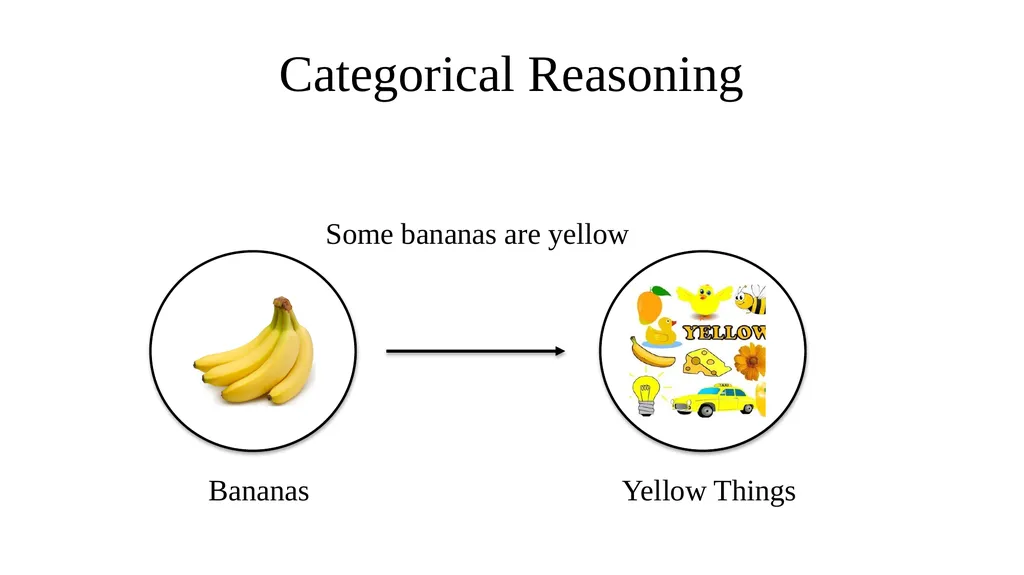
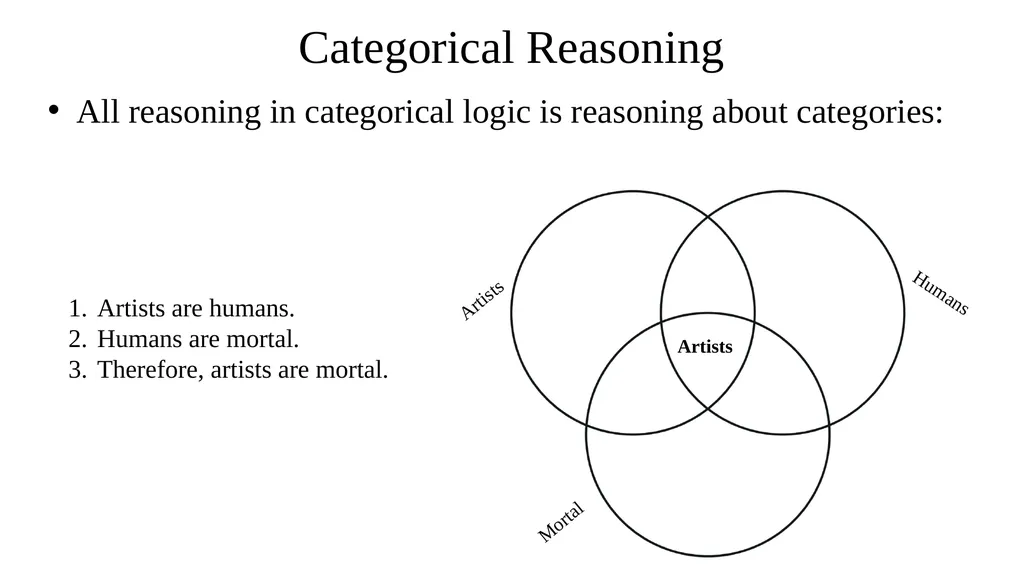
Categorical Reasoning All reasoning in categorical logic is reasoning about categories: Artists are humans.
Humans are mortal.
Therefore, artists are mortal. Artists Artists Humans Mortal<br>
05
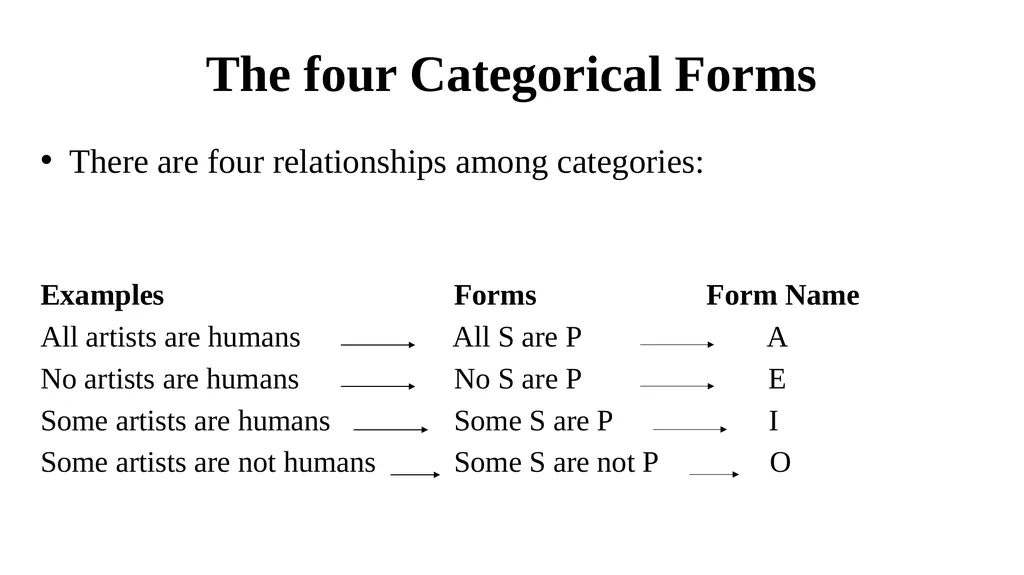
The four Categorical Forms There are four relationships among categories:
Examples Forms Form Name
All artists are humans All S are P A
No artists are humans No S are P E
Some artists are humans Some S are P I
Some artists are not humans Some S are not P O<br>
06
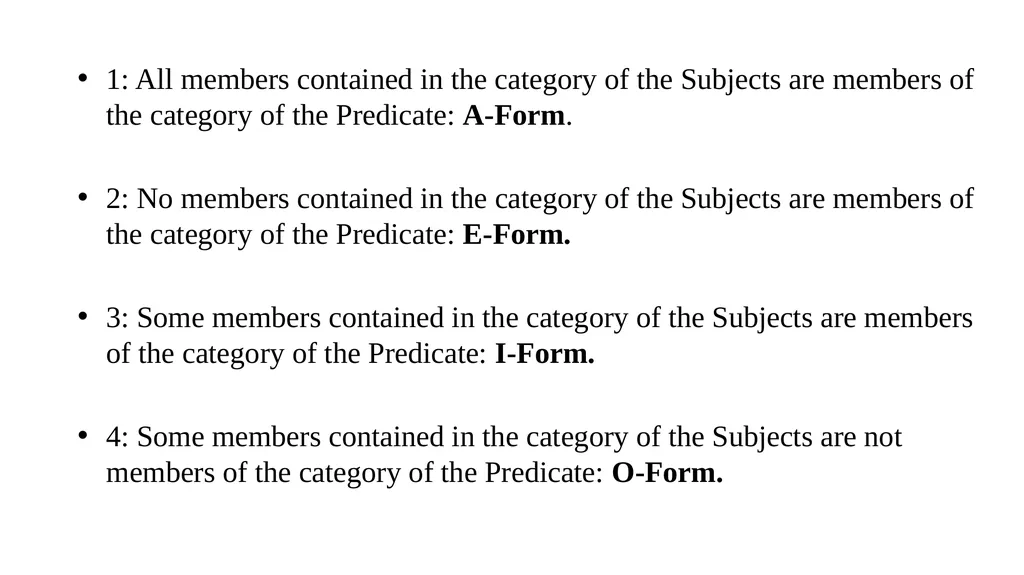
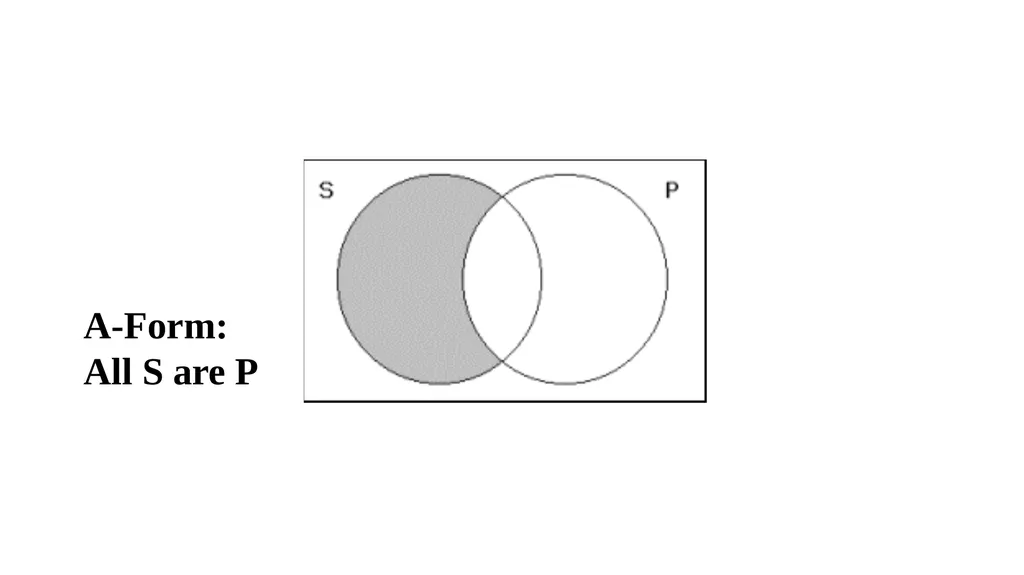
1: All members contained in the category of the Subjects are members of the category of the Predicate: A-Form.
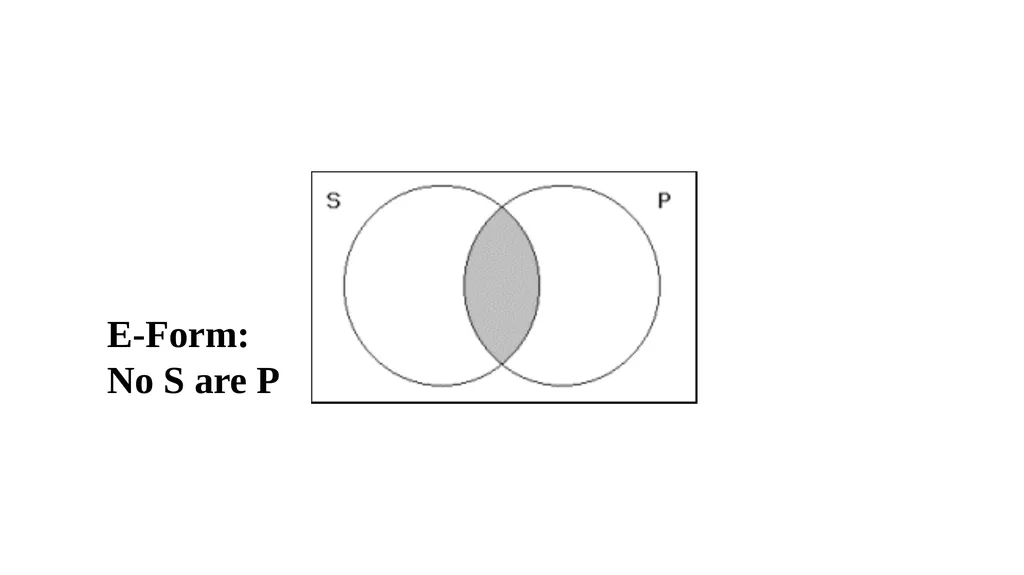
2: No members contained in the category of the Subjects are members of the category of the Predicate: E-Form.
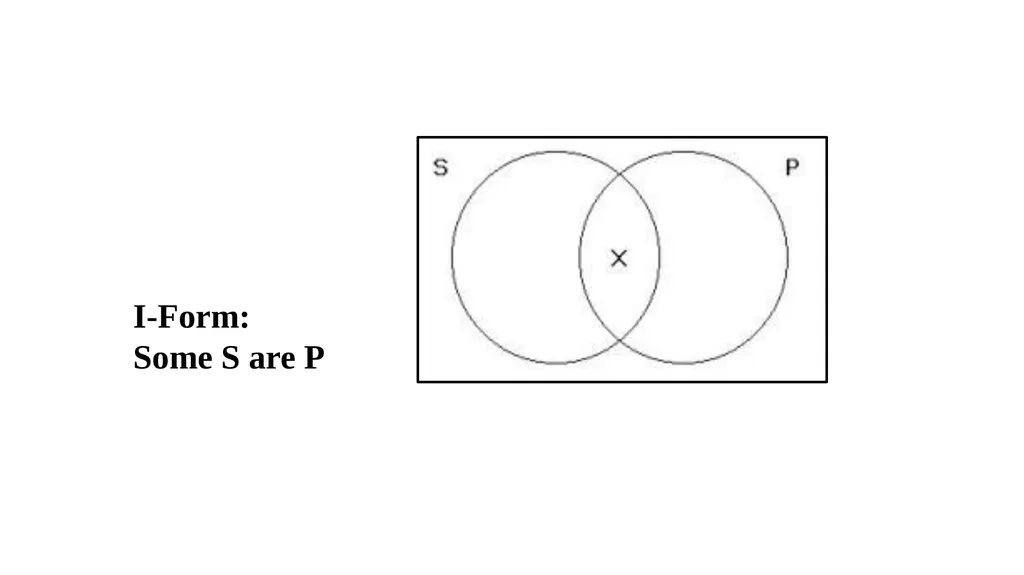
3: Some members contained in the category of the Subjects are members of the category of the Predicate: I-Form.
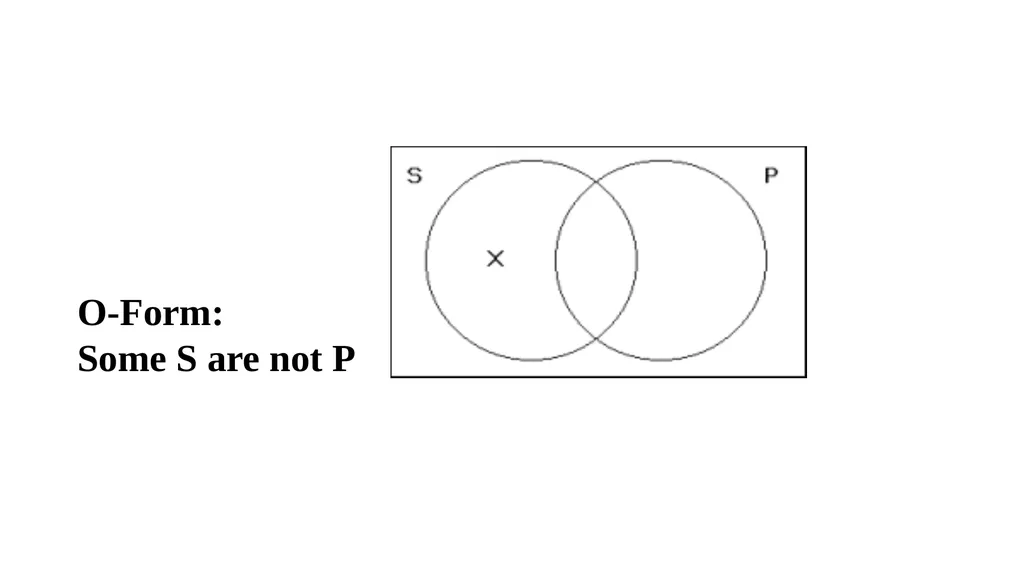
4: Some members contained in the category of the Subjects are not members of the category of the Predicate: O-Form.<br>
07
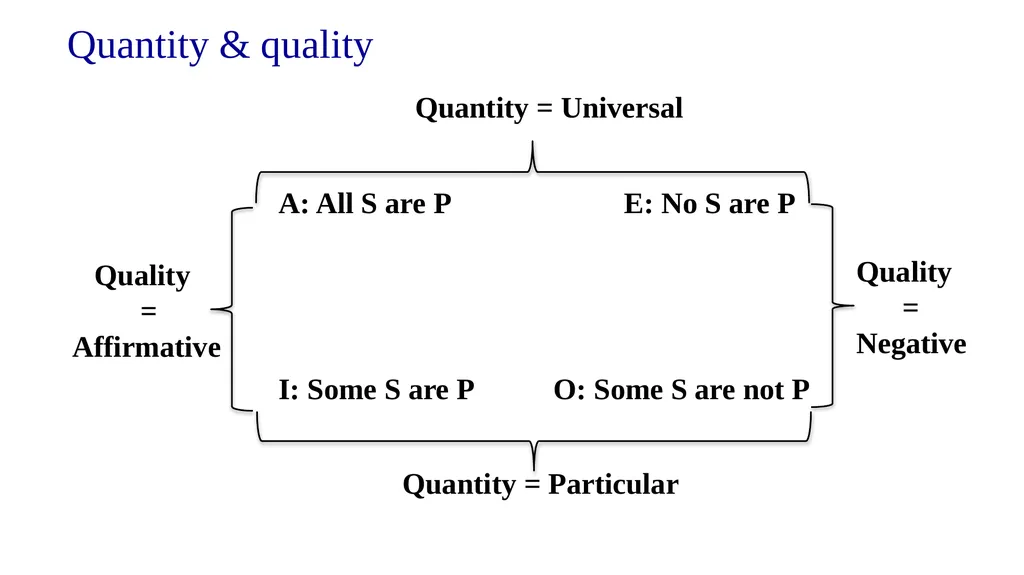
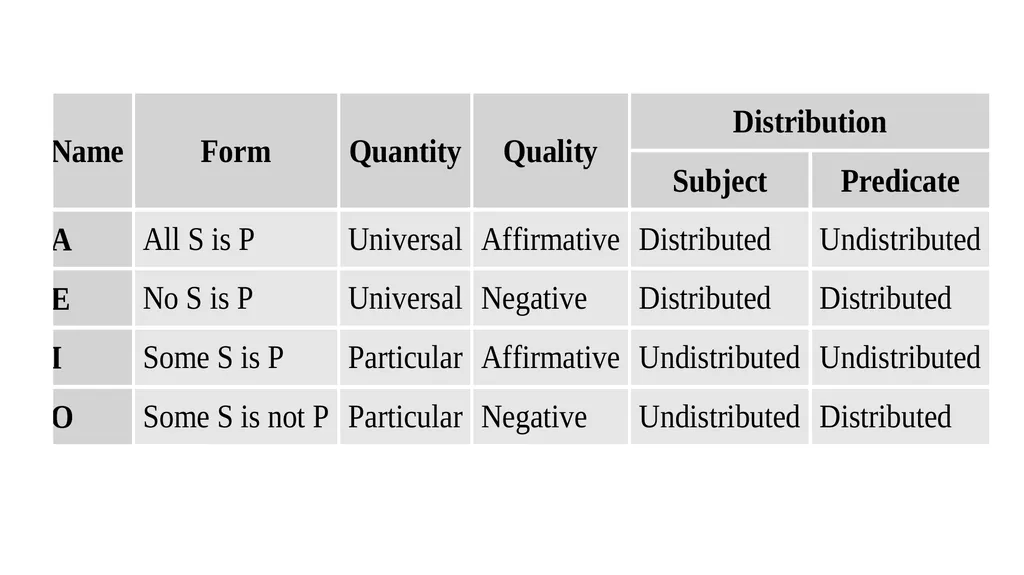
Quantity & quality Quantity = Universal
A: All S are P E: No S are P
I: Some S are P O: Some S are not P
Quantity = Particular Quality
=
Affirmative Quality
=
Negative<br>
08
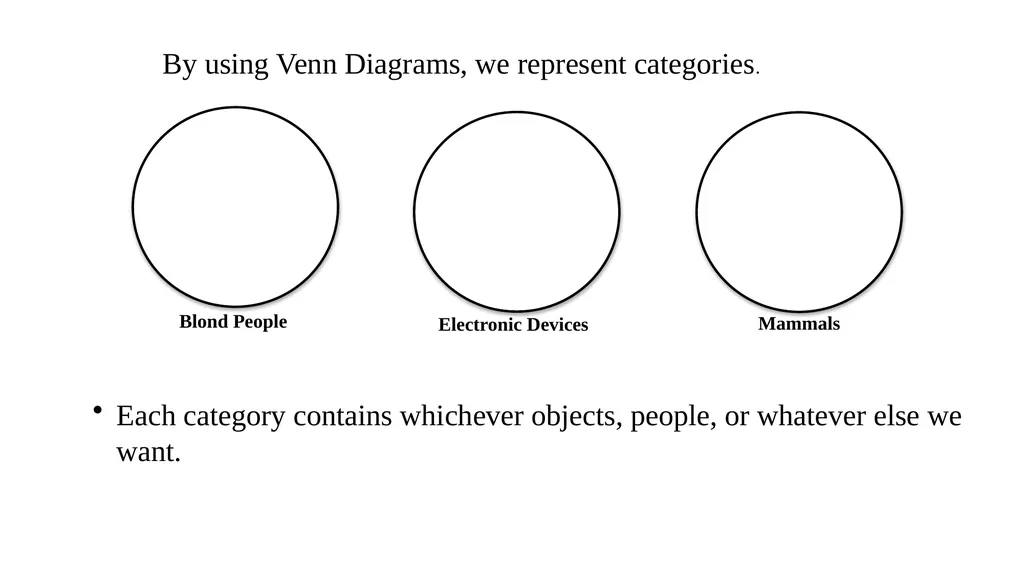
By using Venn Diagrams, we represent categories. Each category contains whichever objects, people, or whatever else we want. Blond People Electronic Devices Mammals<br>
09
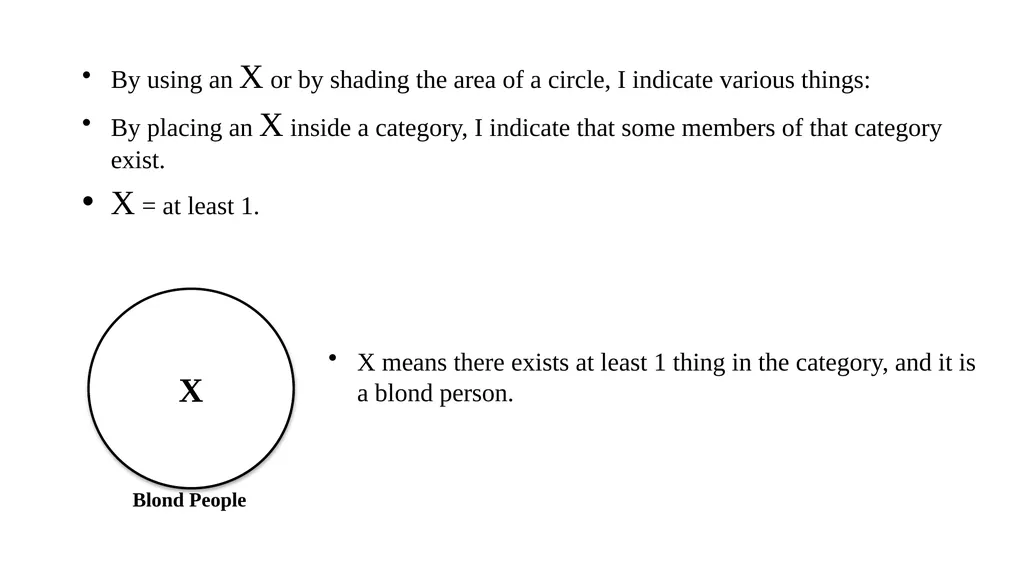
By using an X or by shading the area of a circle, I indicate various things:
By placing an X inside a category, I indicate that some members of that category exist.
X = at least 1. X Blond People X means there exists at least 1 thing in the category, and it is a blond person.<br>
10
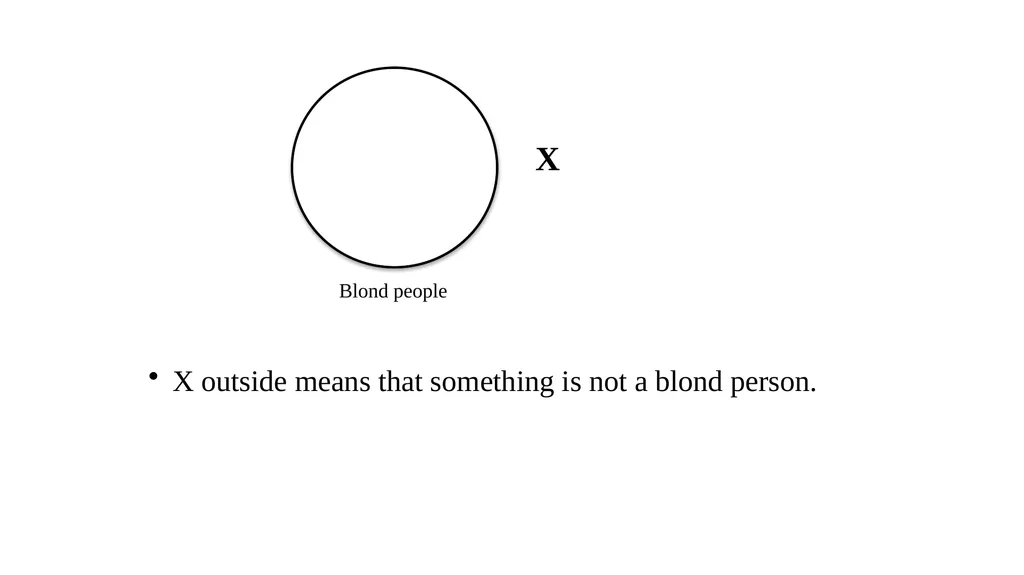
X Blond people X outside means that something is not a blond person.<br>
11
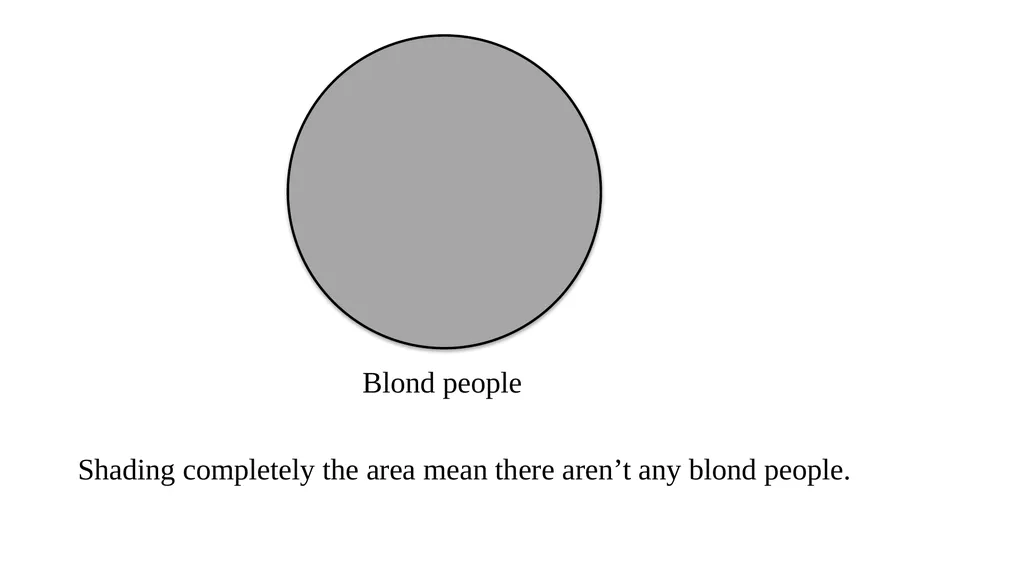
Blond people Shading completely the area mean there aren’t any blond people.<br>
12
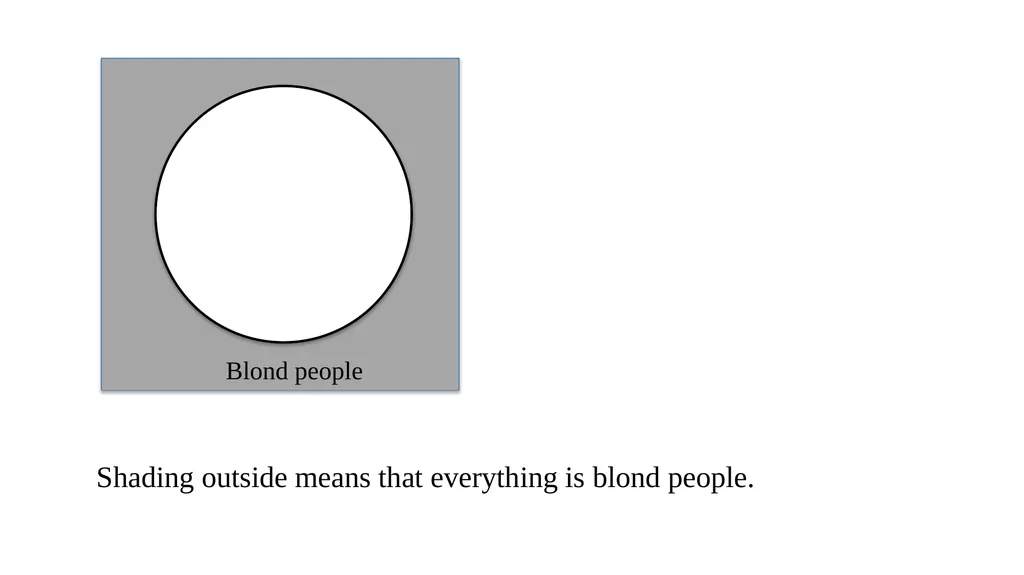
Blond people Shading outside means that everything is blond people.<br>
13
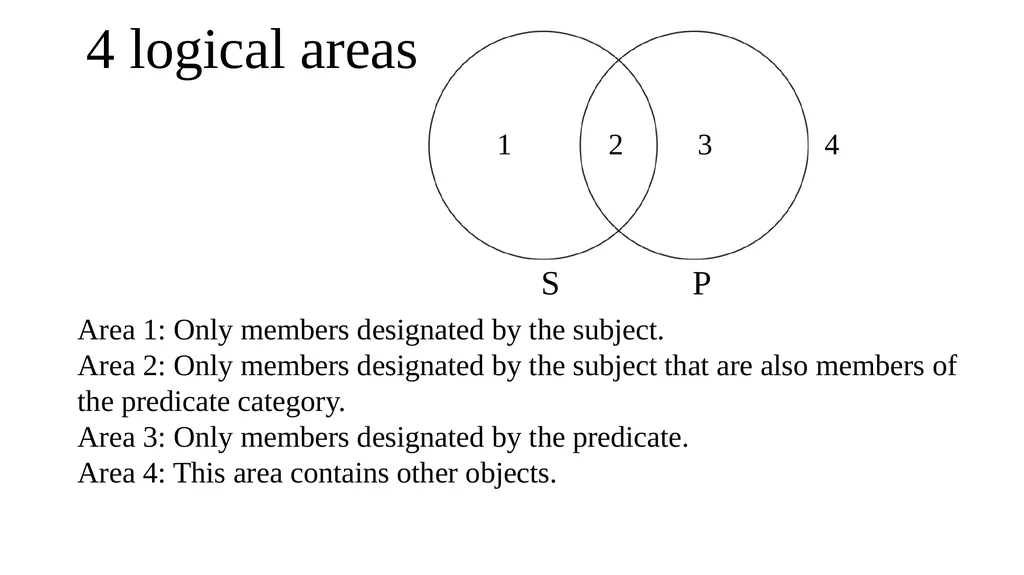
4 logical areas 1 2 3 4 Area 1: Only members designated by the subject.
Area 2: Only members designated by the subject that are also members of the predicate category.
Area 3: Only members designated by the predicate.
Area 4: This area contains other objects. S P<br>
14
USING VENN DIAGRAMS TO REPRESENT THE 4 CATEGORICAL FORMS<br>
15
A-Form:
All S are P<br>
16
E-Form:
No S are P<br>
17
I-Form:
Some S are P<br>
18
O-Form:
Some S are not P<br>
20
A proposition may refer to classes in different ways: to all members or some members.
The proposition “All senators are citizens” refers to all senators, but not to all citizens: All senators are citizens, but not all citizens are senators!
Distribution is concerned with to how many members of a class are referred to.<br>
21
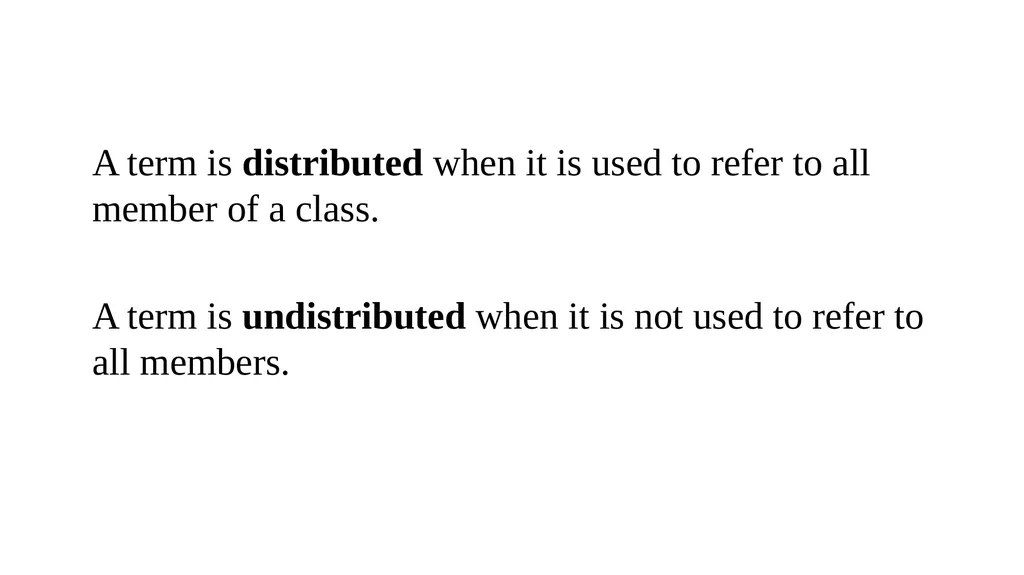
A term is distributed when it is used to refer to all member of a class.
A term is undistributed when it is not used to refer to all members.<br>
22
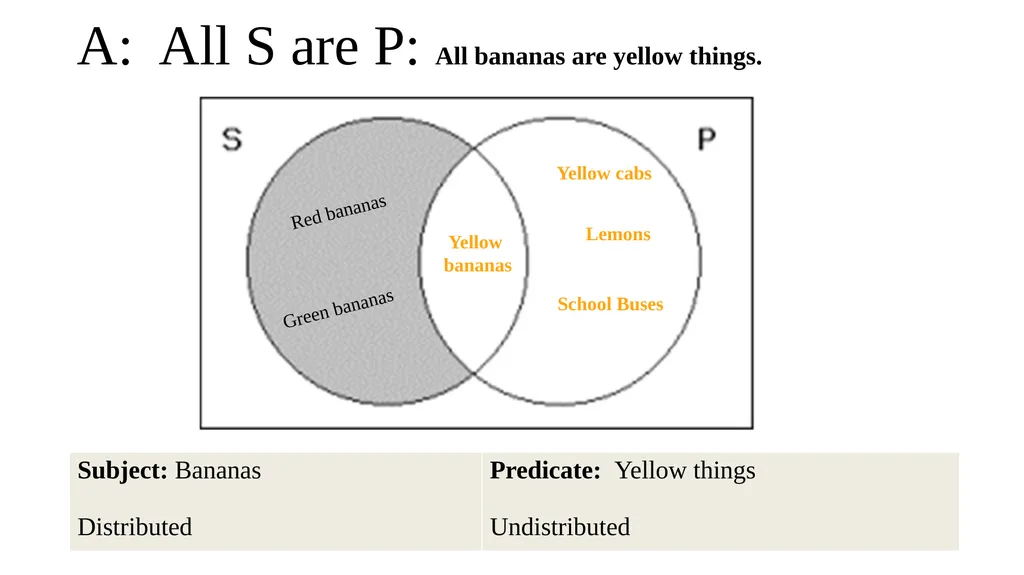
A: All S are P: All bananas are yellow things. Red bananas Green bananas Yellow cabs Lemons School Buses Yellow
bananas<br>
23
E: No S are P: No bananas are yellow things. Red bananas Green bananas Yellow cabs Lemons School Buses<br>
24
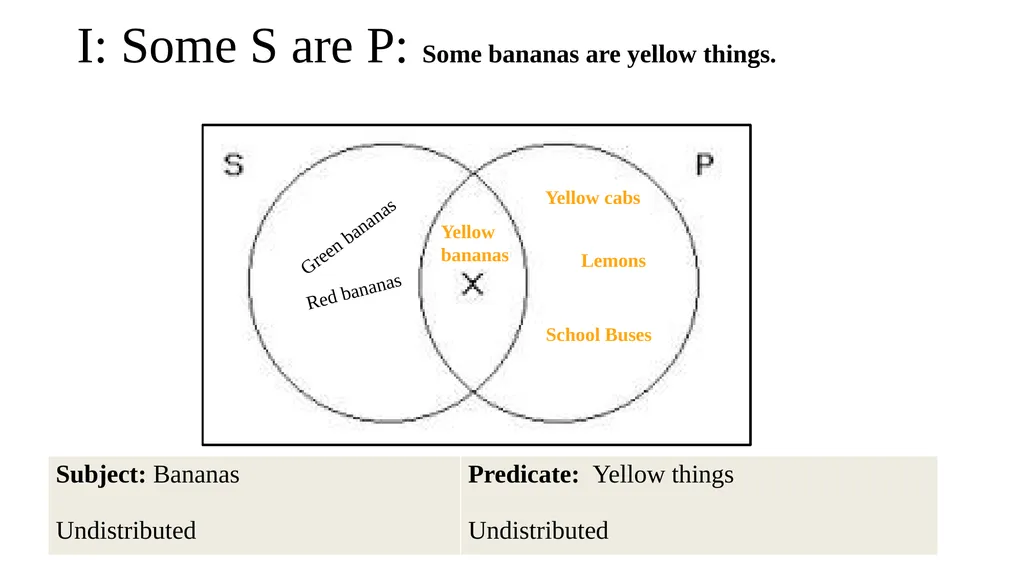
I: Some S are P: Some bananas are yellow things. Green bananas Red bananas Yellow cabs Lemons School Buses Yellow
bananas<br>
25
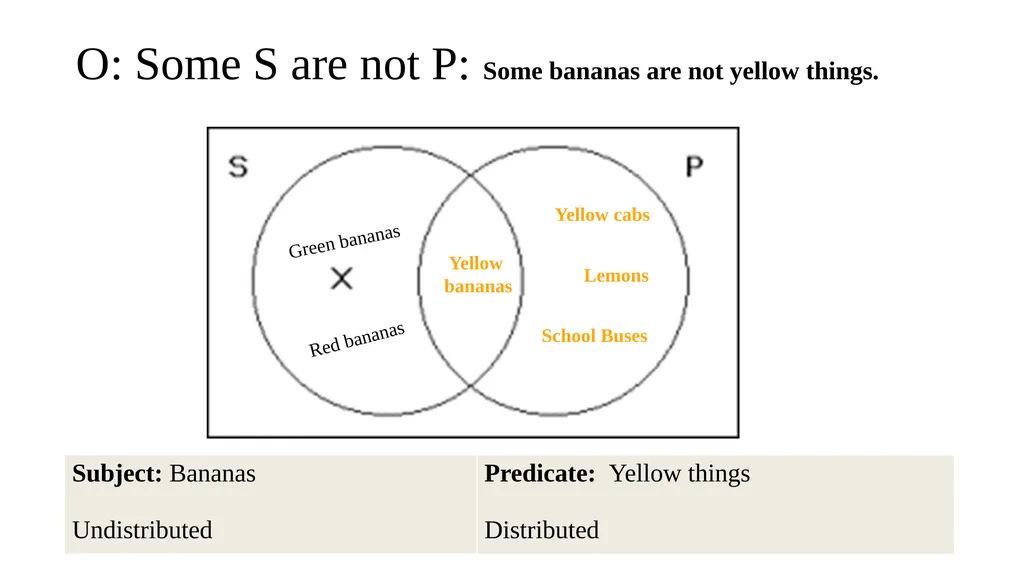
O: Some S are not P: Some bananas are not yellow things. Green bananas Red bananas Yellow cabs Lemons School Buses Yellow
bananas<br>
27
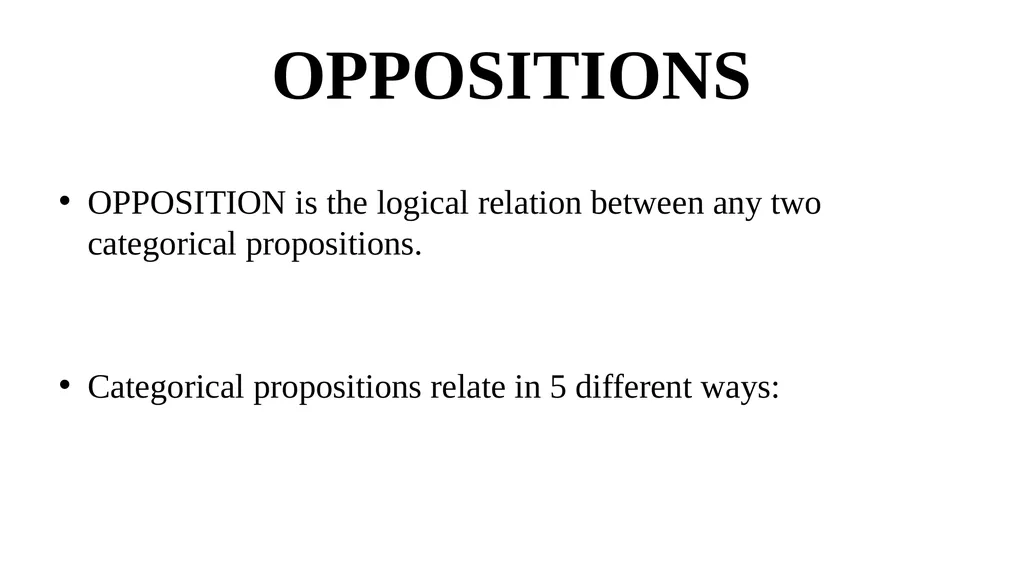
OPPOSITIONS OPPOSITION is the logical relation between any two categorical propositions.
Categorical propositions relate in 5 different ways:<br>
28
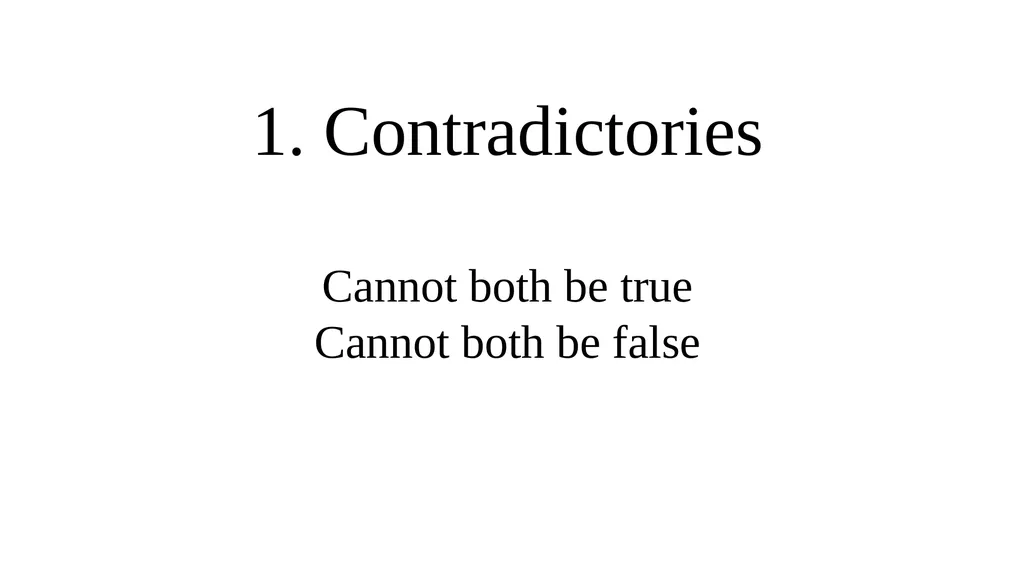
1. Contradictories��Cannot both be true�Cannot both be false<br>
29
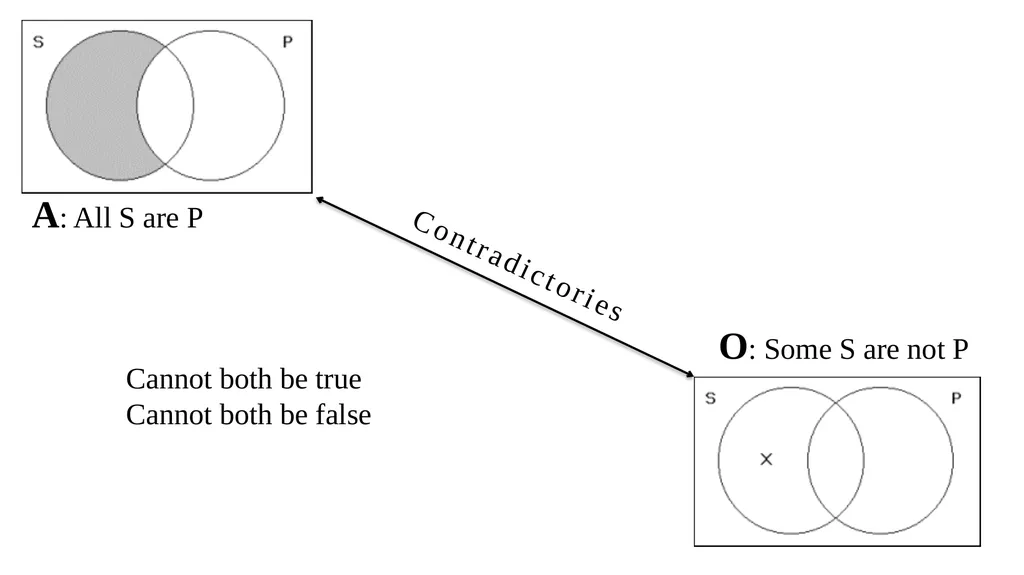
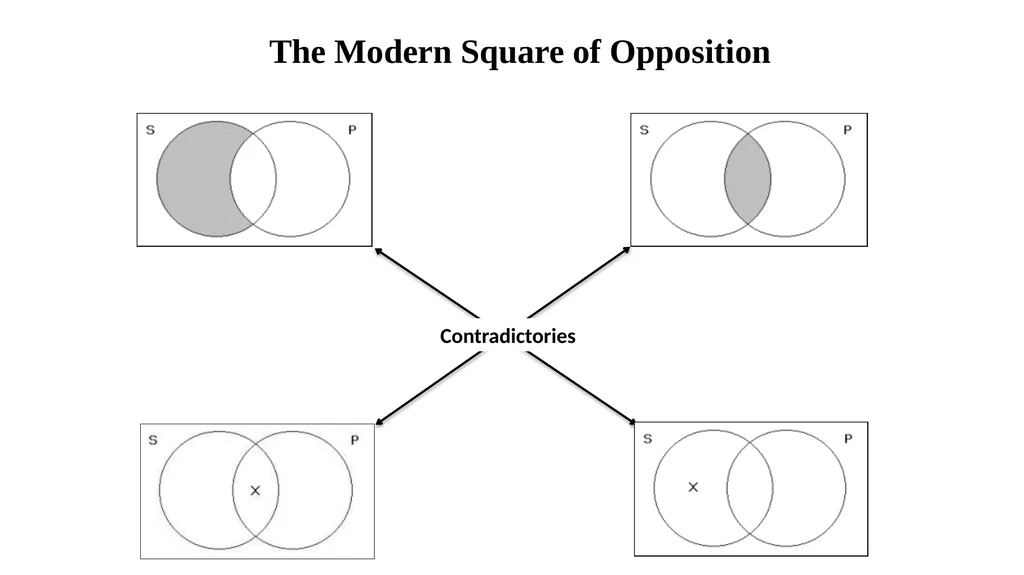
A: All S are P Contradictories O: Some S are not P Cannot both be true
Cannot both be false<br>
30
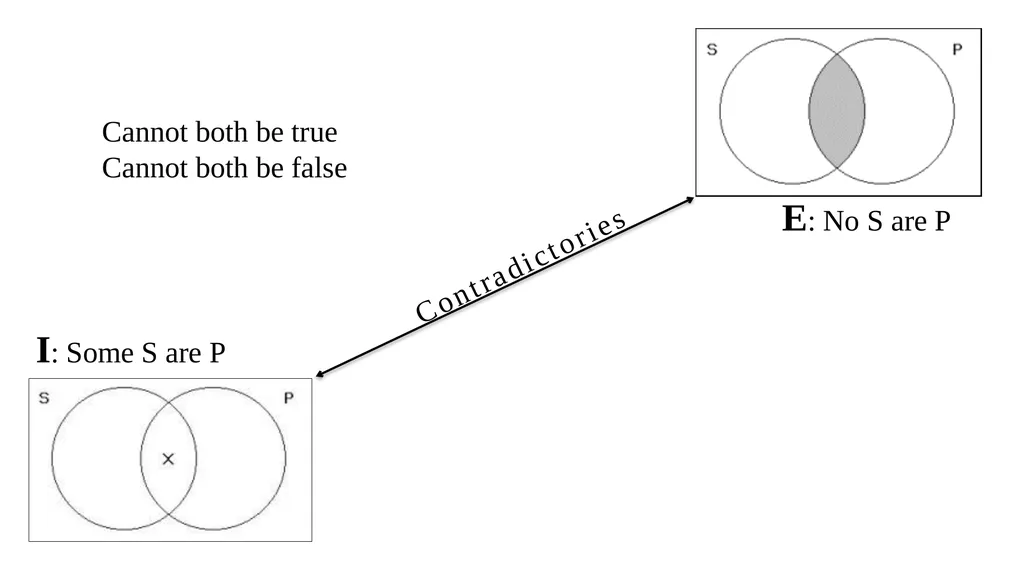
Contradictories I: Some S are P E: No S are P Cannot both be true
Cannot both be false<br>
31
2. Contraries��Cannot both be true�May both be false<br>
32
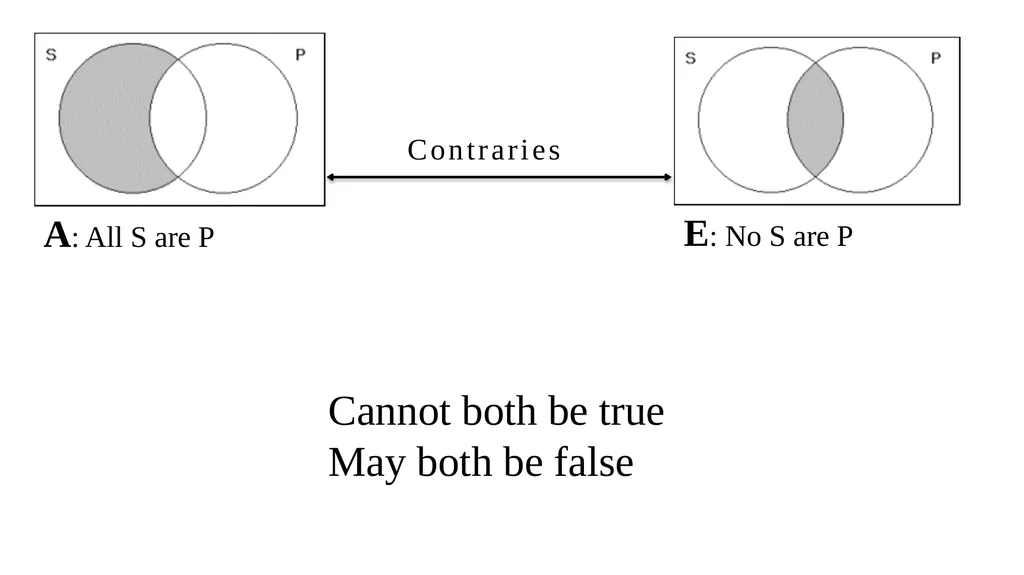
Contraries Cannot both be true
May both be false A: All S are P E: No S are P<br>
33
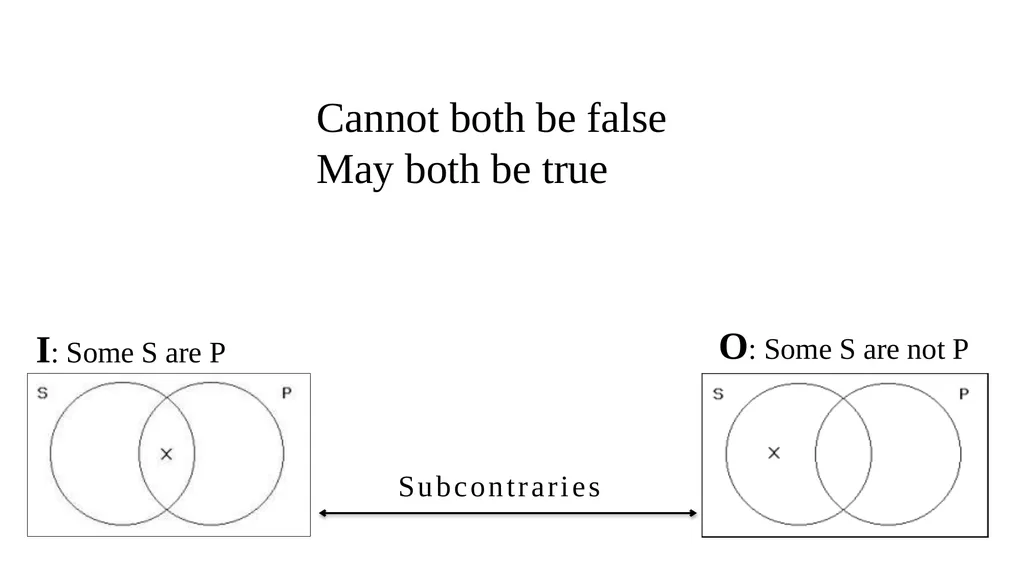
I: Some S are P Subcontraries O: Some S are not P Cannot both be false
May both be true<br>
34
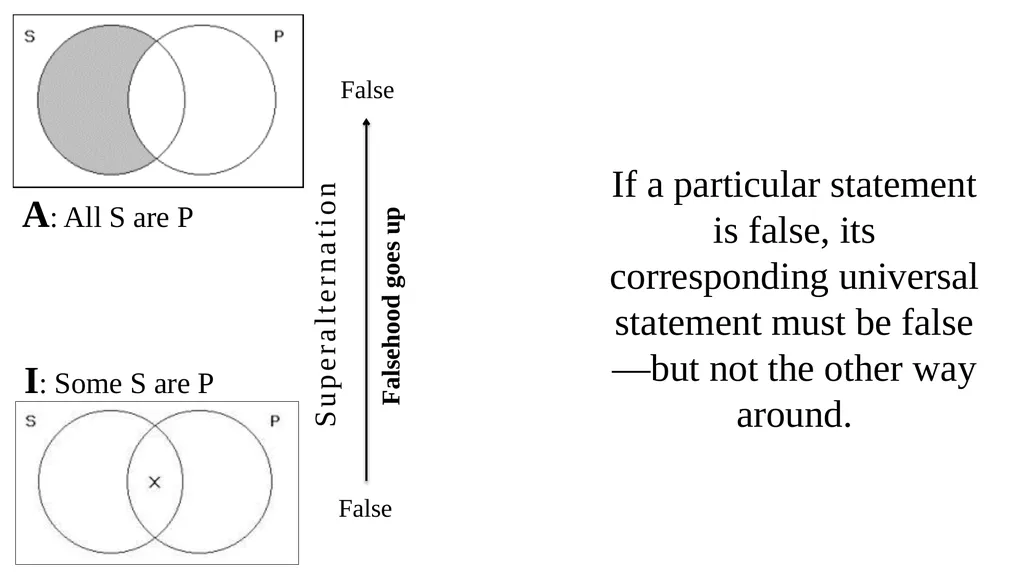
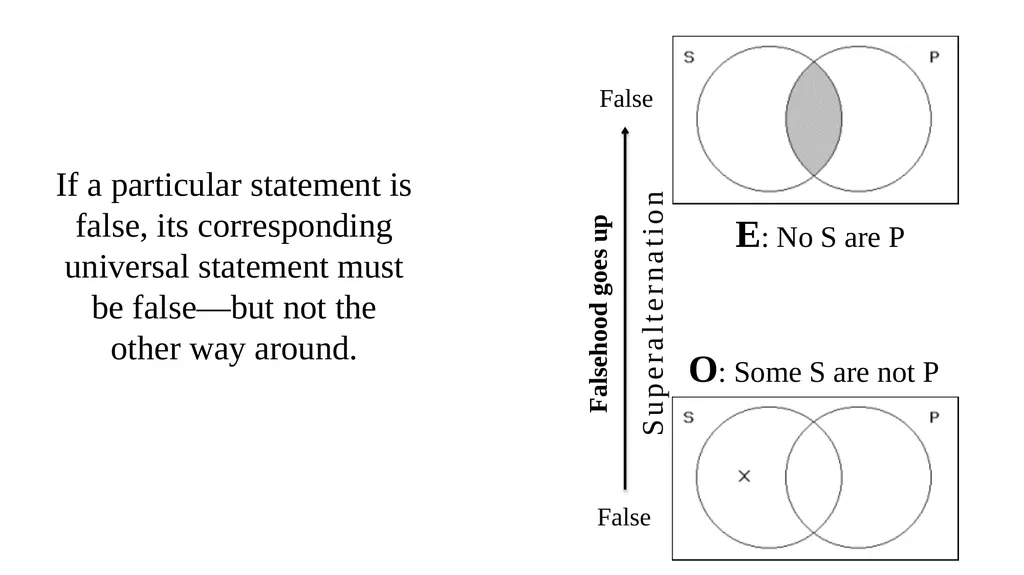
4. Superalternation��Super-alternation is the logical relation between a particular proposition (I or O) and its corresponding universal proposition (A or E). Accordingly, the falsity of a particular subaltern proposition (I or O) logically entails the falsity of its corresponding superaltern (A or E). ��If a particular statement is false, its corresponding universal statement must be false—but not the other way around.<br>
35
A: All S are P I: Some S are P If a particular statement is false, its corresponding universal statement must be false—but not the other way around. Superalternation False False Falsehood goes up<br>
36
E: No S are P O: Some S are not P If a particular statement is false, its corresponding universal statement must be false—but not the other way around. Superalternation False False Falsehood goes up<br>
37
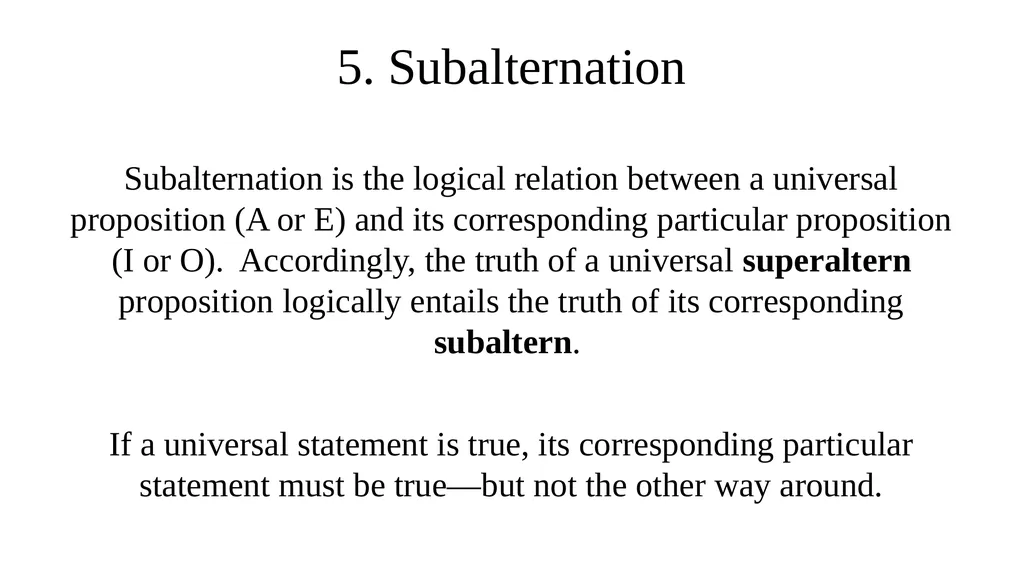
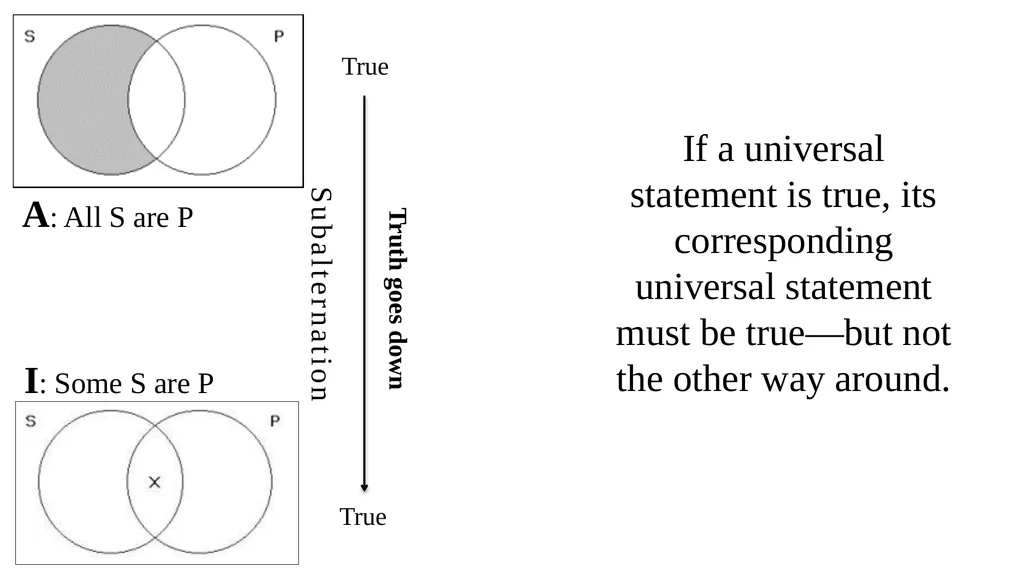
5. Subalternation��Subalternation is the logical relation between a universal proposition (A or E) and its corresponding particular proposition (I or O). Accordingly, the truth of a universal superaltern proposition logically entails the truth of its corresponding subaltern. ��If a universal statement is true, its corresponding particular statement must be true—but not the other way around.<br>
38
A: All S are P I: Some S are P If a universal statement is true, its corresponding universal statement must be true—but not the other way around. Subalternation True True Truth goes down<br>
39
THE TRADITIONAL SQUARE OF OPPOSITION<br>
40
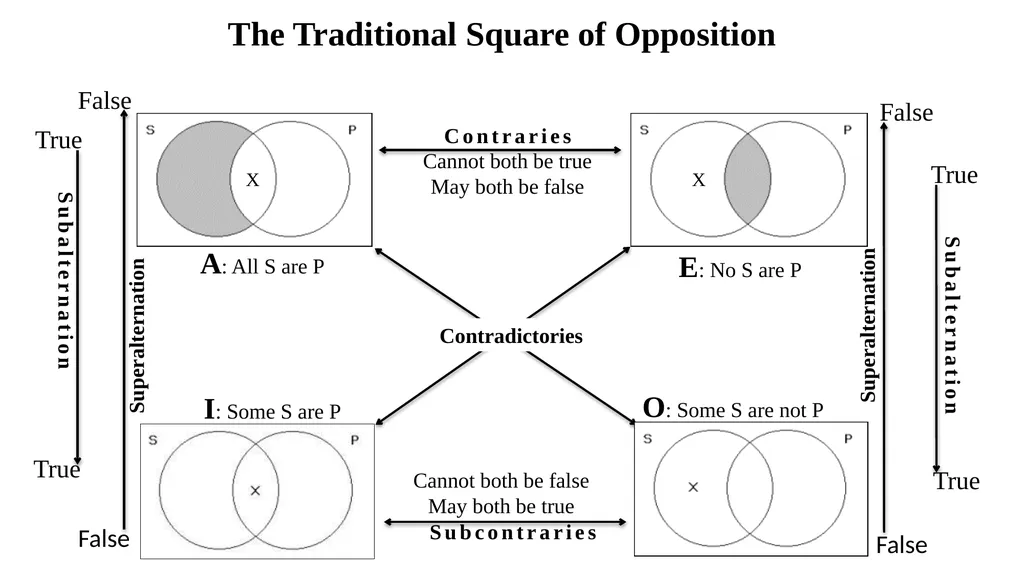
A: All S are P E: No S are P I: Some S are P O: Some S are not P X X Subalternation Superalternation False False True True Subalternation Superalternation False True True False Contraries Cannot both be true
May both be false Subcontraries Cannot both be false
May both be true The Traditional Square of Opposition Contradictories<br>
41
THE MODERN SQUARE OF OPPOSITION<br>
42
The traditional square of opposition enables us to determine a number of relations among the four categorical forms.
But these relations depend on whether we make what is called an existential assumption or existential import.
An existential assumption (or import) means assuming that the entities indicated by the subject are in existence.
A-form asserts that all members in the category of the subject are members of the category of the predicate. In other words, if the subject is “Martians” and the predicate “blond,” then A-form says, “All Martians are blond.”<br>
43
For modern logicians, the traditional square is limited.
We need to make assertions of things that don’t exist.
All dinosaurs
Martians
Triangles
We may rescue the traditional interpretation by using the square only for entities in existence.<br>
44
And what about this statement: “All shoplifters are prosecuted.”
Curiously, if there are no shoplifters, the proposition is true! In other words, statements like this require that the class of the subject be empty.
Consequently, we must not make that assumption. The modern interpretation preserves the relationships of the contradictories.<br>
45
Contradictories The Modern Square of Opposition<br>