
CAUSE & EFFECT DIAGRAM EDUCATIONAL QUALITY
Description: CAUSE EFFECT DIAGRAM EDUCATIONAL QUALITY IMPROVEMENT A Cause-and-Effect Diagram, also known as a Fishbone Diagram or an Ishikawa Diagram, is a visual tool used in Continuous Quality Improvement (CQI) to identify and analyze the possible
Related Topics
Download Presentation
"CAUSE & EFFECT DIAGRAM EDUCATIONAL QUALITY" is the property of its rightful owner. Permission is granted to download and print the materials on this website for personal, non-commercial use only, and to display it on your personal computer provided you do not modify the materials and that you retain all copyright notices contained in the materials. By downloading content from our website, you accept the terms of this agreement.
Presentation Transcript
slide1. CAUSE & EFFECT DIAGRAM EDUCATIONAL QUALITY IMPROVEMENT A Cause-and-Effect Diagram, also known as a Fishbone Diagram or an Ishikawa Diagram, is a visual tool used in Continuous Quality Improvement (CQI) to identify and analyze the possible causes of a specific issue or problem. The diagram helps teams 1. brainstorm and categorize potential causes to better understand the root causes of a problem, and 2. produce change ideas to directly address the causes.<br>
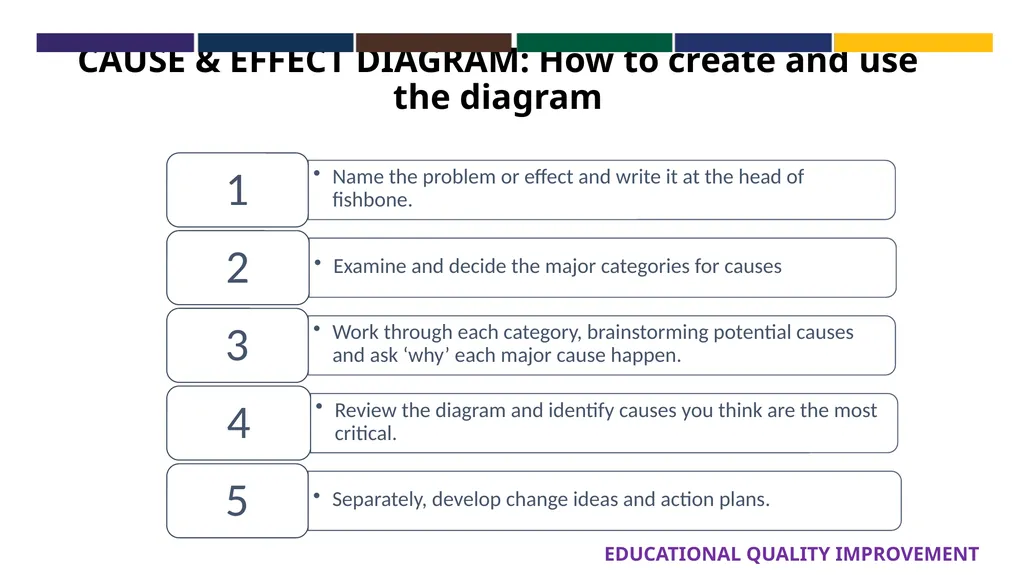
slide2. CAUSE & EFFECT DIAGRAM: How to create and use the diagram EDUCATIONAL QUALITY IMPROVEMENT<br>
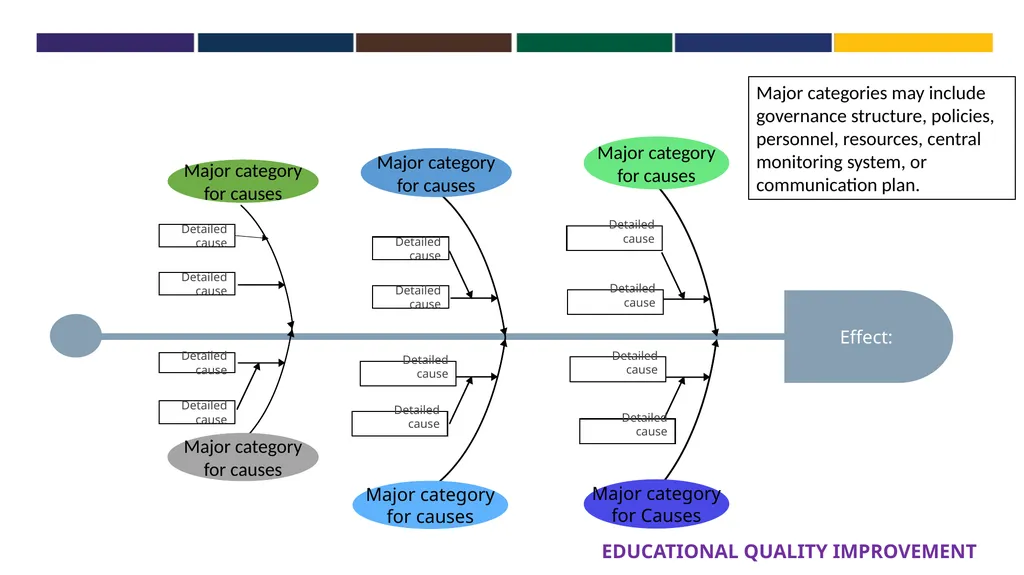
slide3. EDUCATIONAL QUALITY IMPROVEMENT Detailed cause Detailed cause Detailed cause Detailed cause Detailed cause Major categories may include governance structure, policies, personnel, resources, central monitoring system, or communication plan.<br>
slide2. CAUSE & EFFECT DIAGRAM: How to create and use the diagram EDUCATIONAL QUALITY IMPROVEMENT<br>
slide3. EDUCATIONAL QUALITY IMPROVEMENT Detailed cause Detailed cause Detailed cause Detailed cause Detailed cause Major categories may include governance structure, policies, personnel, resources, central monitoring system, or communication plan.<br>