CBD Presentation A Decade for Biodiversity: Implementation of the Strategic Plan for Biodiversity and other Aichi-Nagoya Outcomes GEF Expanded Constituency Workshop 4 to 6 September 2012 Abidjan, Côte dIvoire Life in harmony, into the
"CBD Presentation A Decade for Biodiversity:" is the property of its rightful owner. Permission is granted to
download and print the materials on this website for personal, non-commercial use only, and to display it
on your personal computer provided you do not modify the materials and that you retain all copyright
notices contained in the materials. By downloading content from our website, you accept the terms of this
agreement.
Presentation Transcript
01
CBD Presentation A Decade for Biodiversity: Implementation of the Strategic Plan for Biodiversity and other Aichi-Nagoya Outcomes GEF Expanded Constituency Workshop
4 to 6 September 2012
Abidjan, Côte d’Ivoire<br>
02
Life in harmony,
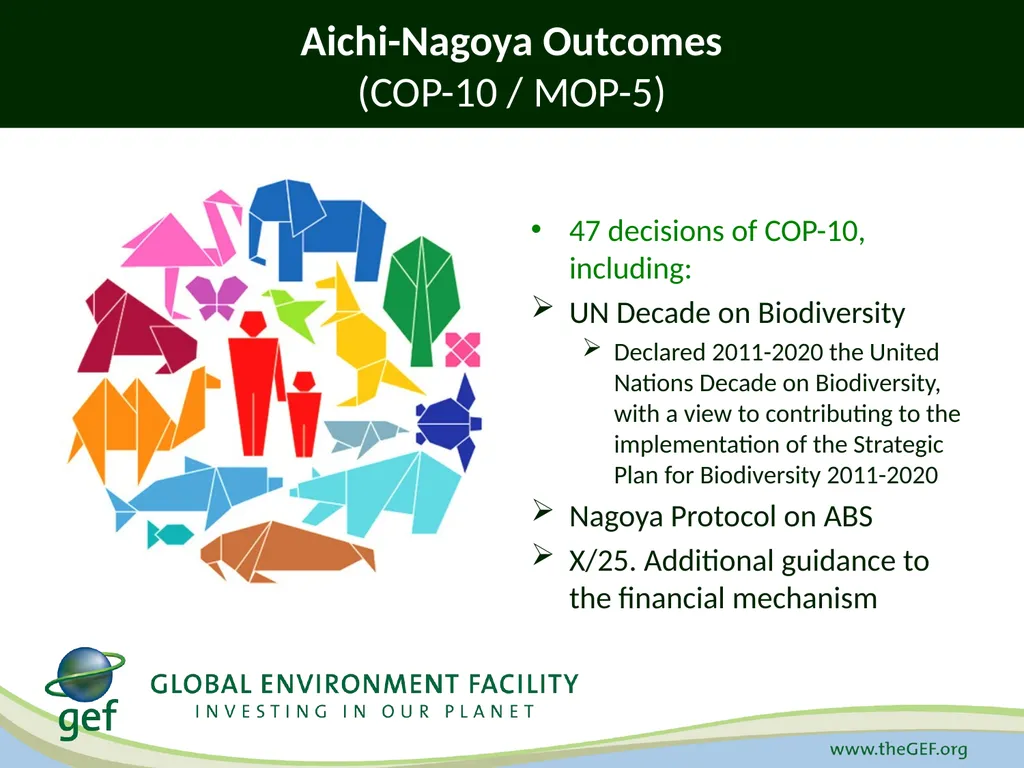
into the future 47 decisions of COP-10, including:
UN Decade on Biodiversity
Declared 2011-2020 the United Nations Decade on Biodiversity, with a view to contributing to the implementation of the Strategic Plan for Biodiversity 2011-2020
Nagoya Protocol on ABS
X/25. Additional guidance to the financial mechanism Aichi-Nagoya Outcomes
(COP-10 / MOP-5)<br>
03
Strategic Plan for Biodiversity 2011-2020 Vision: Living in harmony with nature. By 2050, biodiversity is valued, conserved, restored and wisely used, maintaining ecosystem services, sustaining a healthy planet and delivering benefits essential for all people.”
Mission Take effective and urgent action to halt the loss of biodiversity in order to ensure that by 2020 ecosystems are resilient and continue to provide essential services, thereby securing the planet’s variety of life, and contributing to human well-being, and poverty eradication
20 Aichi Biodiversity Targets
Implementation mechanisms<br>
04
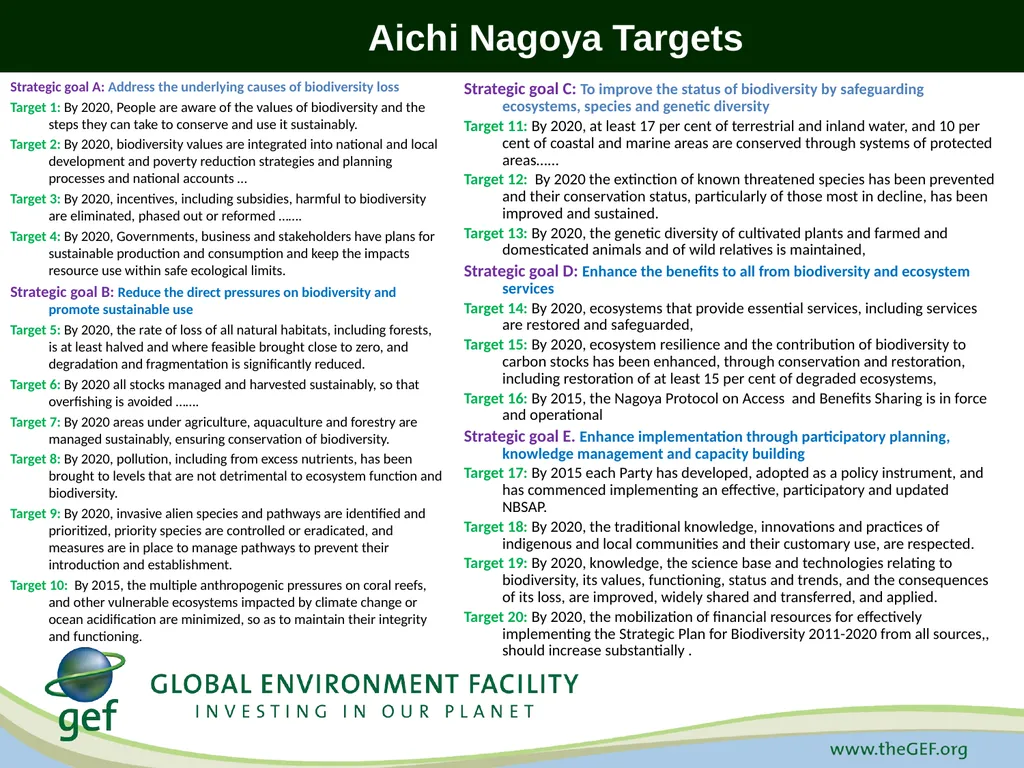
Aichi Nagoya Targets Strategic goal A: Address the underlying causes of biodiversity loss
Target 1: By 2020, People are aware of the values of biodiversity and the steps they can take to conserve and use it sustainably.
Target 2: By 2020, biodiversity values are integrated into national and local development and poverty reduction strategies and planning processes and national accounts …
Target 3: By 2020, incentives, including subsidies, harmful to biodiversity are eliminated, phased out or reformed …….
Target 4: By 2020, Governments, business and stakeholders have plans for sustainable production and consumption and keep the impacts resource use within safe ecological limits.
Strategic goal B: Reduce the direct pressures on biodiversity and promote sustainable use
Target 5: By 2020, the rate of loss of all natural habitats, including forests, is at least halved and where feasible brought close to zero, and degradation and fragmentation is significantly reduced.
Target 6: By 2020 all stocks managed and harvested sustainably, so that overfishing is avoided …….
Target 7: By 2020 areas under agriculture, aquaculture and forestry are managed sustainably, ensuring conservation of biodiversity.
Target 8: By 2020, pollution, including from excess nutrients, has been brought to levels that are not detrimental to ecosystem function and biodiversity.
Target 9: By 2020, invasive alien species and pathways are identified and prioritized, priority species are controlled or eradicated, and measures are in place to manage pathways to prevent their introduction and establishment.
Target 10: By 2015, the multiple anthropogenic pressures on coral reefs, and other vulnerable ecosystems impacted by climate change or ocean acidification are minimized, so as to maintain their integrity and functioning. Strategic goal C: To improve the status of biodiversity by safeguarding ecosystems, species and genetic diversity
Target 11: By 2020, at least 17 per cent of terrestrial and inland water, and 10 per cent of coastal and marine areas are conserved through systems of protected areas…...
Target 12: By 2020 the extinction of known threatened species has been prevented and their conservation status, particularly of those most in decline, has been improved and sustained.
Target 13: By 2020, the genetic diversity of cultivated plants and farmed and domesticated animals and of wild relatives is maintained,
Strategic goal D: Enhance the benefits to all from biodiversity and ecosystem services
Target 14: By 2020, ecosystems that provide essential services, including services are restored and safeguarded,
Target 15: By 2020, ecosystem resilience and the contribution of biodiversity to carbon stocks has been enhanced, through conservation and restoration, including restoration of at least 15 per cent of degraded ecosystems,
Target 16: By 2015, the Nagoya Protocol on Access and Benefits Sharing is in force and operational
Strategic goal E. Enhance implementation through participatory planning, knowledge management and capacity building
Target 17: By 2015 each Party has developed, adopted as a policy instrument, and has commenced implementing an effective, participatory and updated NBSAP.
Target 18: By 2020, the traditional knowledge, innovations and practices of indigenous and local communities and their customary use, are respected.
Target 19: By 2020, knowledge, the science base and technologies relating to biodiversity, its values, functioning, status and trends, and the consequences of its loss, are improved, widely shared and transferred, and applied.
Target 20: By 2020, the mobilization of financial resources for effectively implementing the Strategic Plan for Biodiversity 2011-2020 from all sources,, should increase substantially .<br>
05
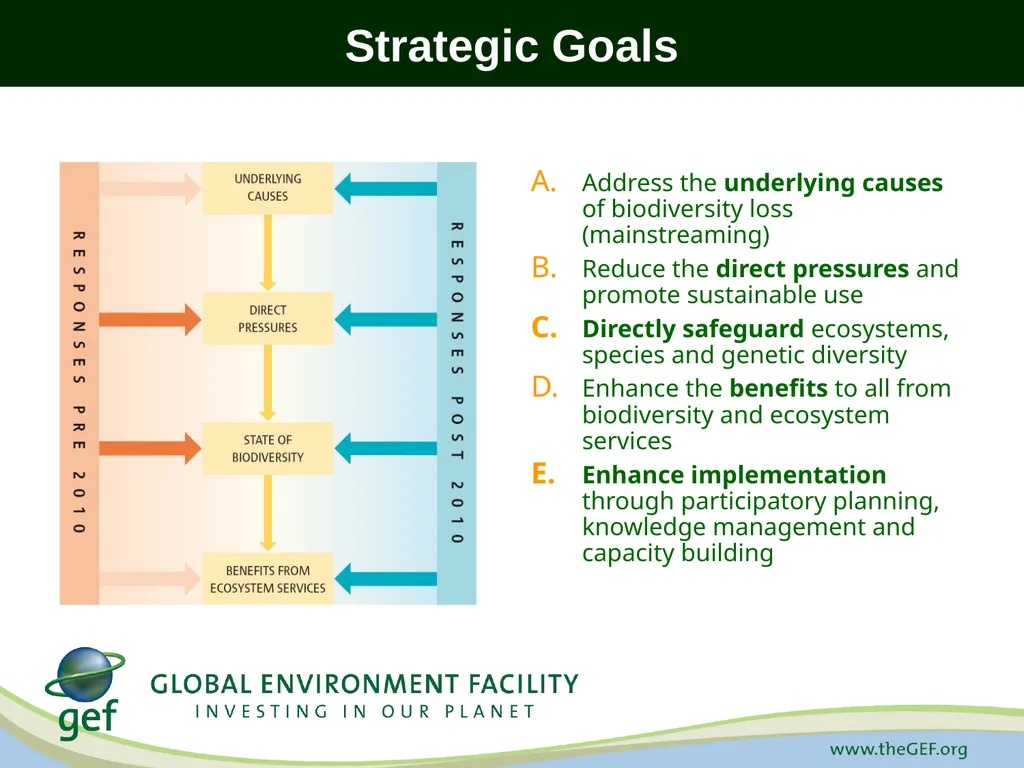
Strategic Goals Address the underlying causes of biodiversity loss (mainstreaming)
Reduce the direct pressures and promote sustainable use
Directly safeguard ecosystems, species and genetic diversity
Enhance the benefits to all from biodiversity and ecosystem services
Enhance implementation through participatory planning, knowledge management and capacity building<br>
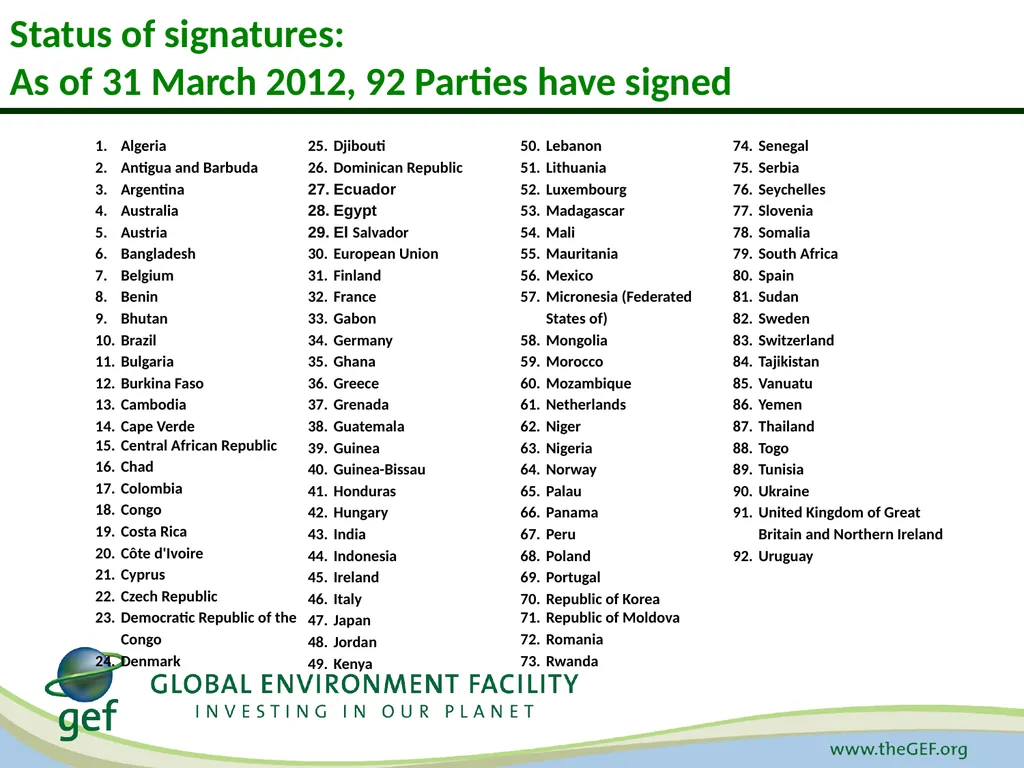
Status of signatures:
As of 31 March 2012, 92 Parties have signed Algeria
Antigua and Barbuda
Argentina
Australia
Austria
Bangladesh
Belgium
Benin
Bhutan
Brazil
Bulgaria
Burkina Faso
Cambodia
Cape Verde
Central African Republic
Chad
Colombia
Congo
Costa Rica
Côte d'Ivoire
Cyprus
Czech Republic
Democratic Republic of the Congo
Denmark
Djibouti
Dominican Republic
Ecuador
Egypt
El Salvador
European Union
Finland
France
Gabon
Germany
Ghana
Greece
Grenada
Guatemala
Guinea
Guinea-Bissau
Honduras
Hungary
India
Indonesia
Ireland
Italy
Japan
Jordan
Kenya
Lebanon
Lithuania
Luxembourg
Madagascar
Mali
Mauritania
Mexico
Micronesia (Federated States of)
Mongolia
Morocco
Mozambique
Netherlands
Niger
Nigeria
Norway
Palau
Panama
Peru
Poland
Portugal
Republic of Korea
Republic of Moldova
Romania
Rwanda
Senegal
Serbia
Seychelles
Slovenia
Somalia
South Africa
Spain
Sudan
Sweden
Switzerland
Tajikistan
Vanuatu
Yemen
Thailand
Togo
Tunisia
Ukraine
United Kingdom of Great Britain and Northern Ireland
Uruguay<br>
08
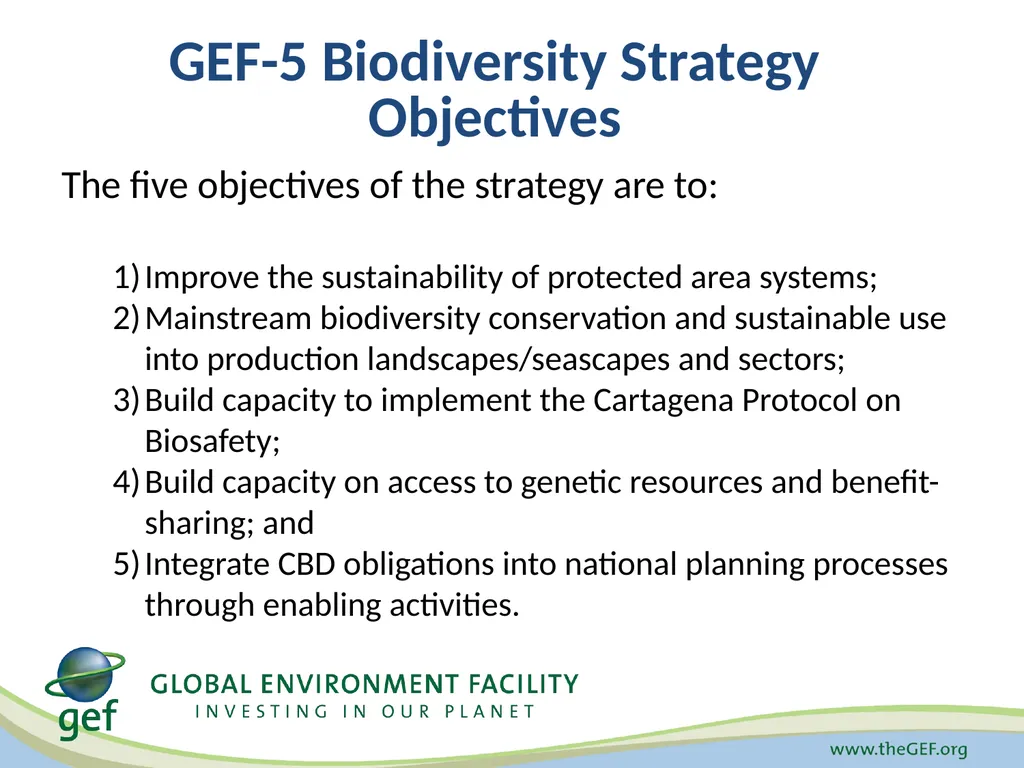
GEF-5 Biodiversity Strategy Objectives The five objectives of the strategy are to:
Improve the sustainability of protected area systems;
Mainstream biodiversity conservation and sustainable use into production landscapes/seascapes and sectors;
Build capacity to implement the Cartagena Protocol on Biosafety;
Build capacity on access to genetic resources and benefit-sharing; and
Integrate CBD obligations into national planning processes through enabling activities.<br>
09
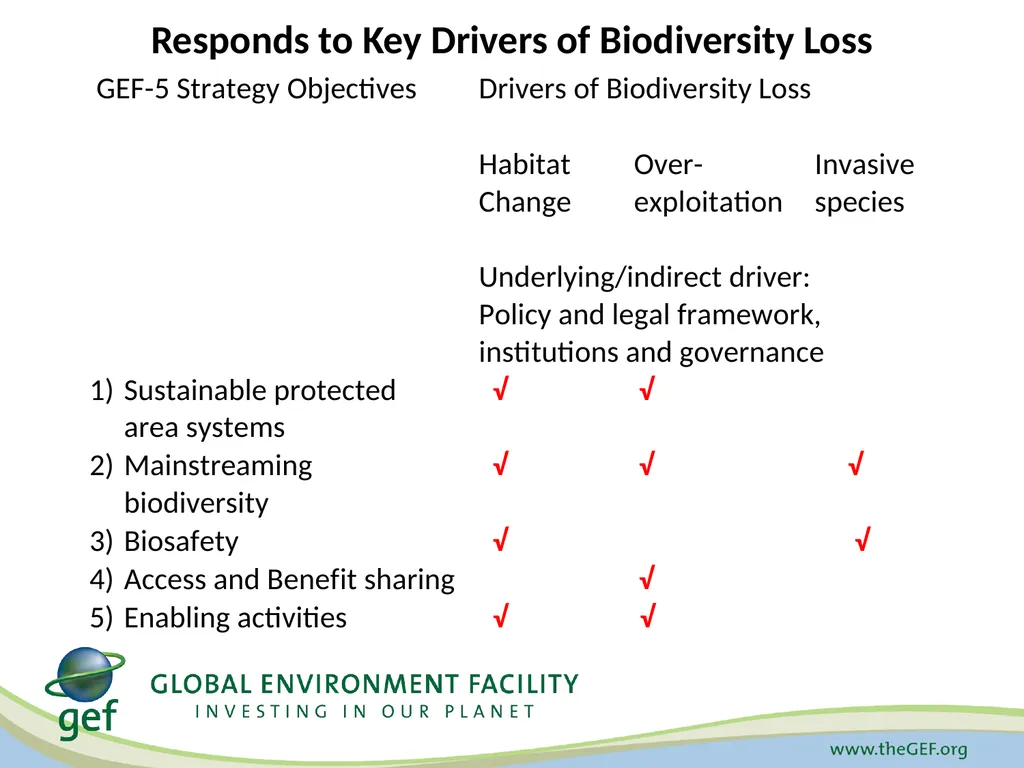
Responds to Key Drivers of Biodiversity Loss<br>
10
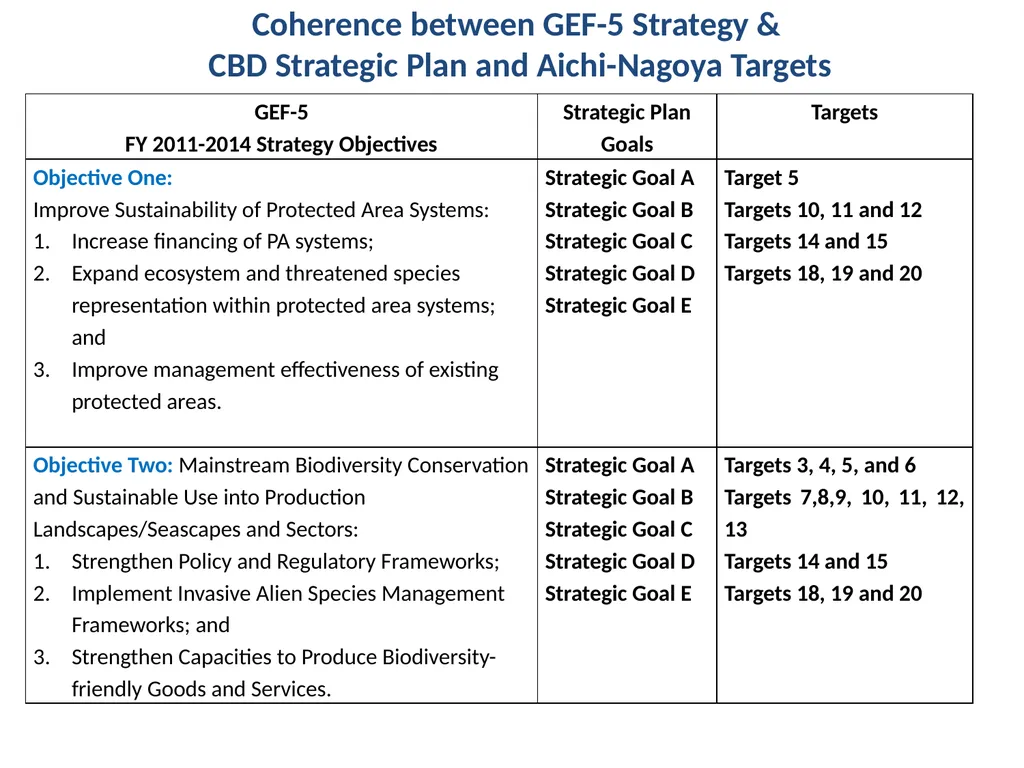
Coherence between GEF-5 Strategy & CBD Strategic Plan and Aichi-Nagoya Targets<br>
11
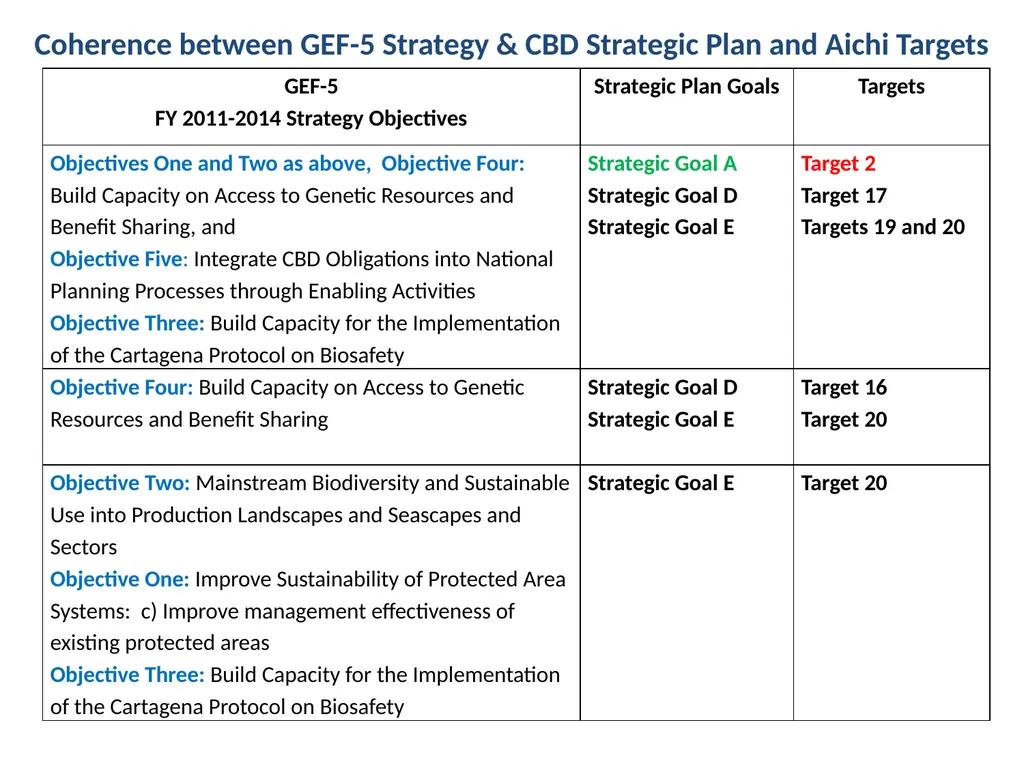
Coherence between GEF-5 Strategy & CBD Strategic Plan and Aichi Targets<br>