04
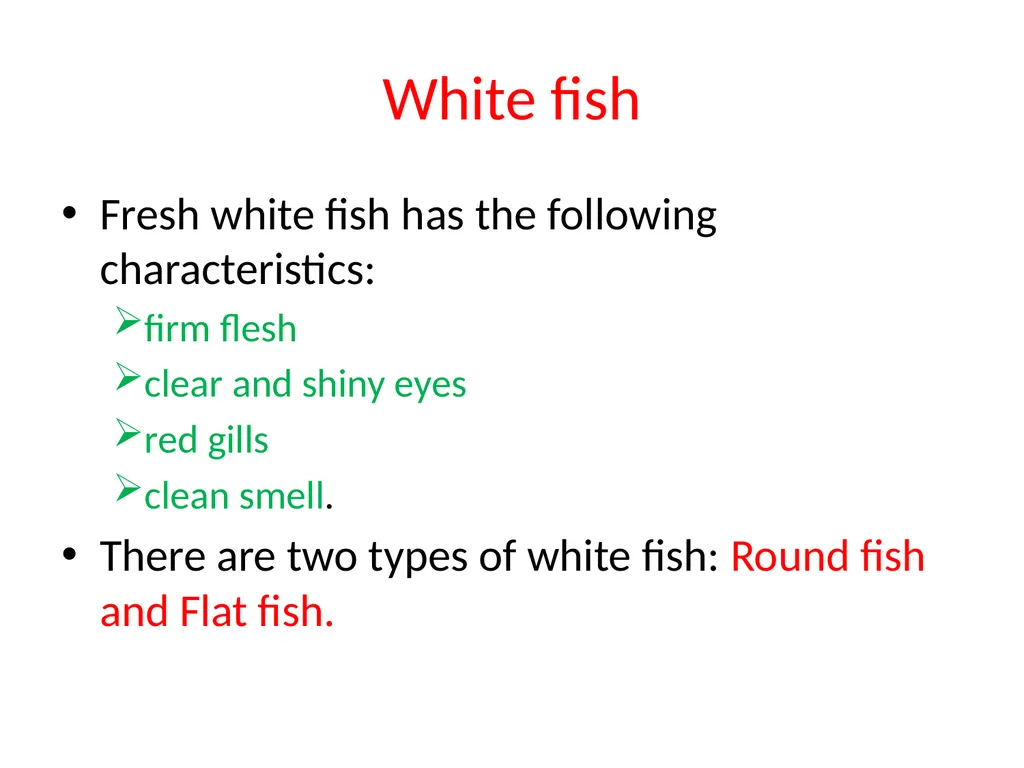
White fish Fresh white fish has the following characteristics:
firm flesh
clear and shiny eyes
red gills
clean smell.
There are two types of white fish: Round fish and Flat fish.<br>
05
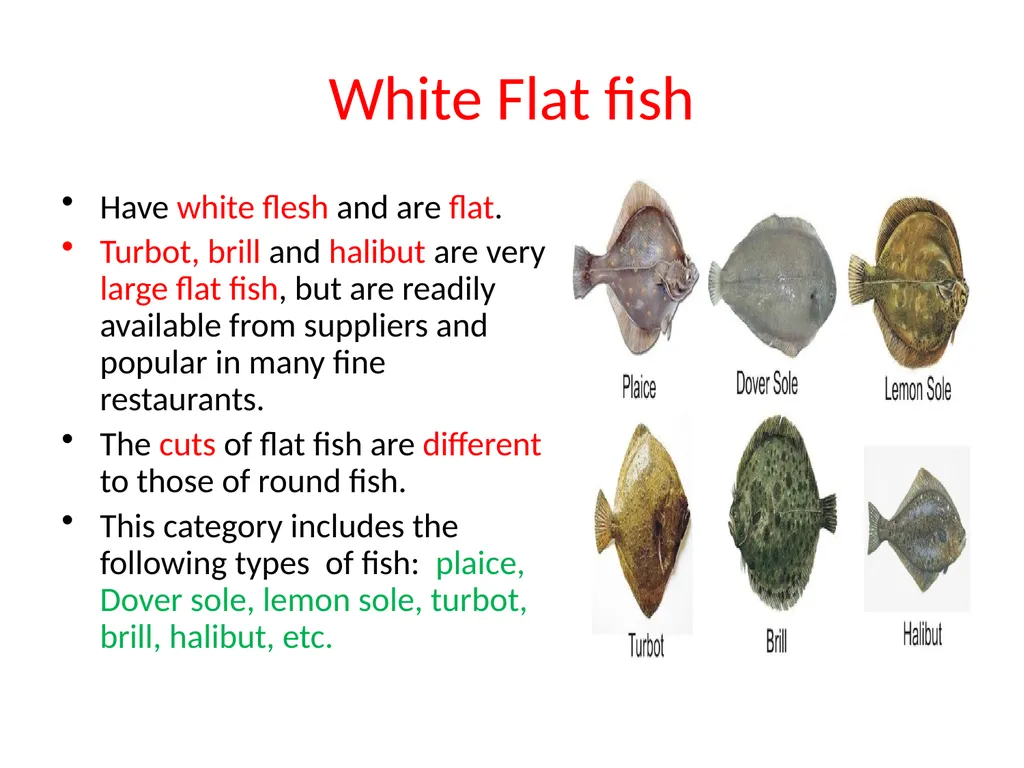
White Flat fish Have white flesh and are flat.
Turbot, brill and halibut are very large flat fish, but are readily available from suppliers and popular in many fine restaurants.
The cuts of flat fish are different to those of round fish.
This category includes the following types of fish: plaice, Dover sole, lemon sole, turbot, brill, halibut, etc.<br>
06
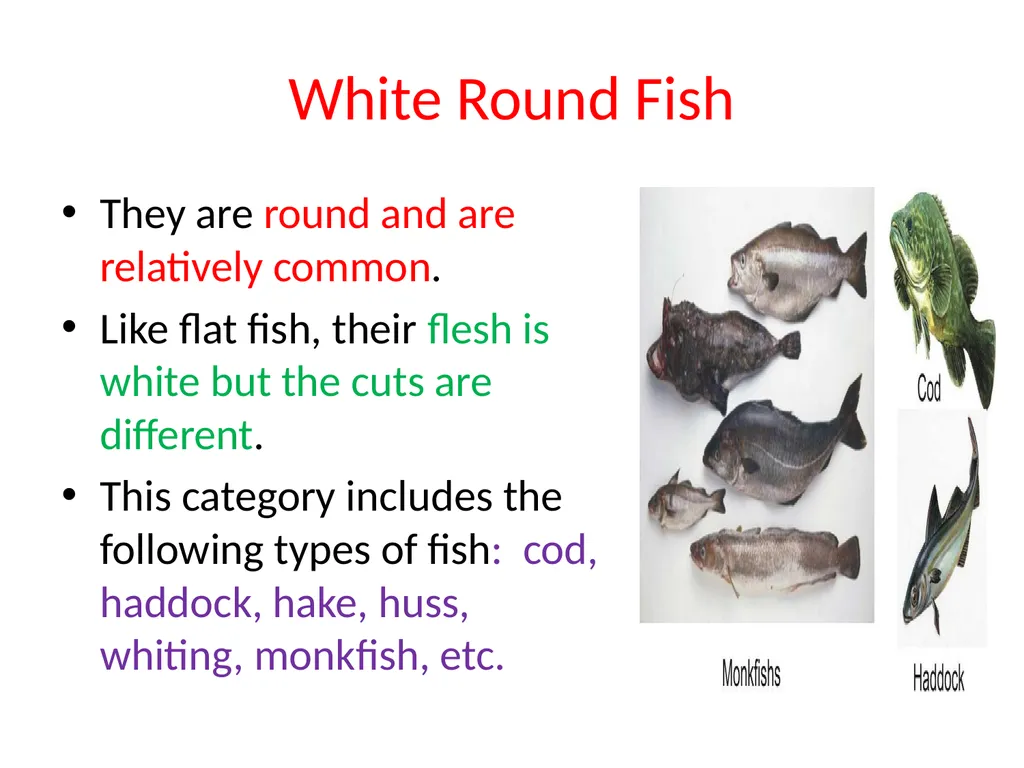
White Round Fish They are round and are relatively common.
Like flat fish, their flesh is white but the cuts are different.
This category includes the following types of fish: cod, haddock, hake, huss, whiting, monkfish, etc.<br>
07
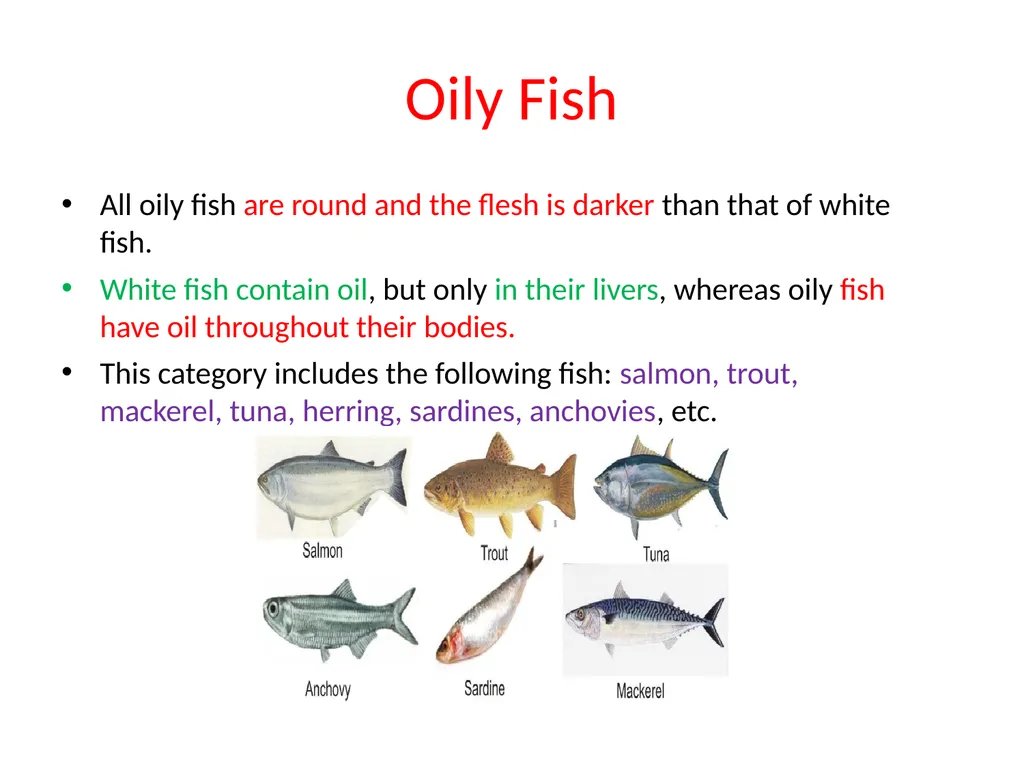
Oily Fish All oily fish are round and the flesh is darker than that of white fish.
White fish contain oil, but only in their livers, whereas oily fish have oil throughout their bodies.
This category includes the following fish: salmon, trout, mackerel, tuna, herring, sardines, anchovies, etc.<br>
08
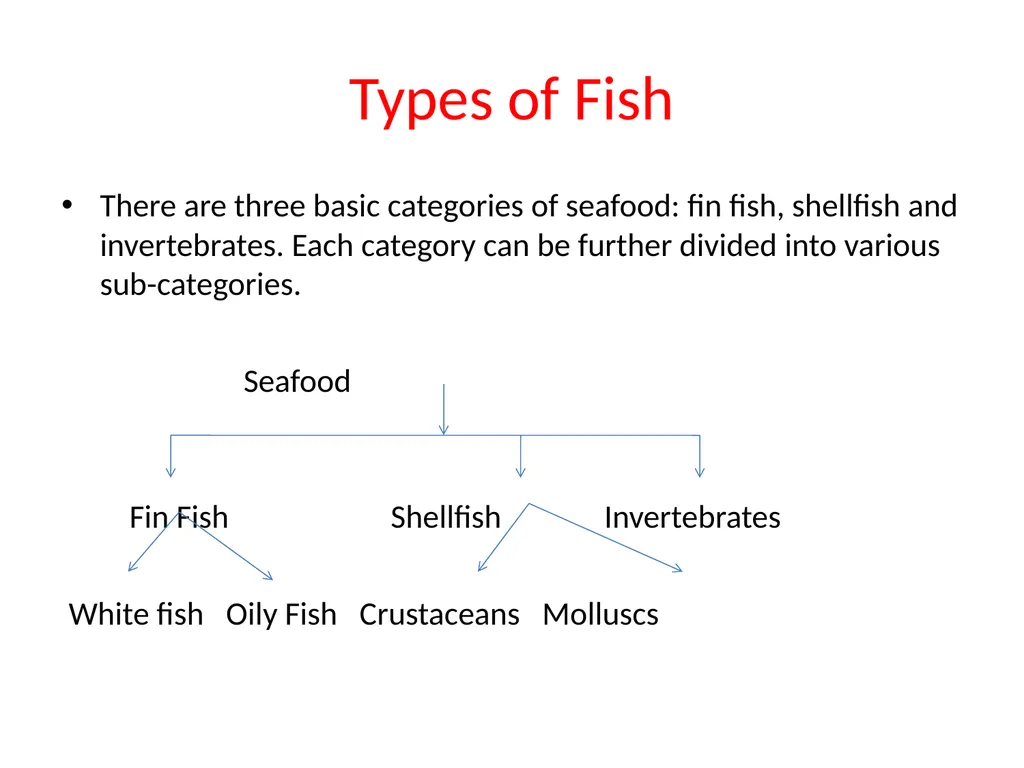
Shell Fish Shellfish are aquatic invertebrates used as food.
The main difference between fish and shellfish is their skeleton.
Shellfish have an external skeleton or shell.
There are two main categories of shellfish, crustaceans and molluscs.<br>
09
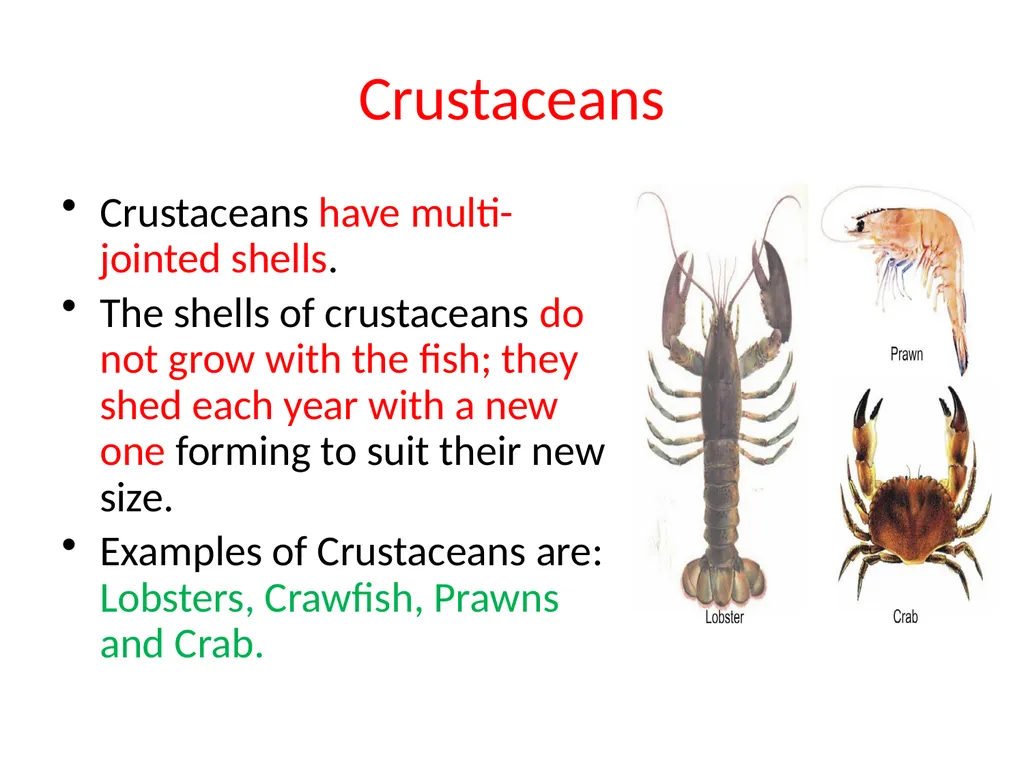
Crustaceans Crustaceans have multi- jointed shells.
The shells of crustaceans do not grow with the fish; they shed each year with a new one forming to suit their new size.
Examples of Crustaceans are: Lobsters, Crawfish, Prawns and Crab.<br>
10
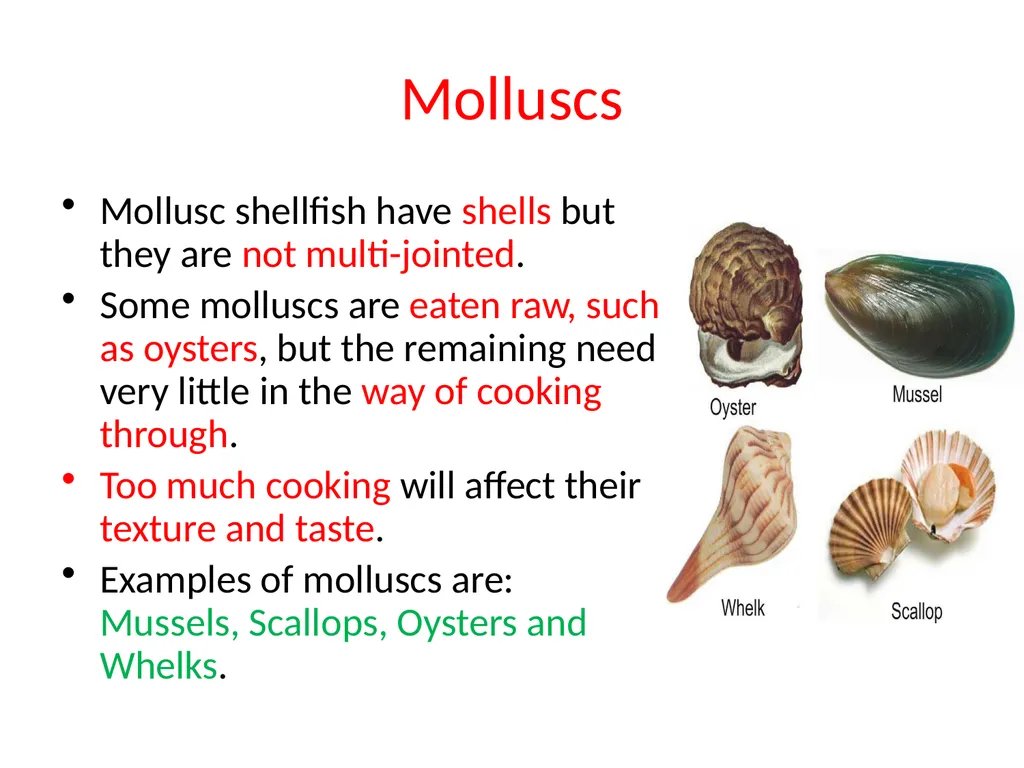
Molluscs Mollusc shellfish have shells but they are not multi-jointed.
Some molluscs are eaten raw, such as oysters, but the remaining need very little in the way of cooking through.
Too much cooking will affect their texture and taste.
Examples of molluscs are: Mussels, Scallops, Oysters and Whelks.<br>
11
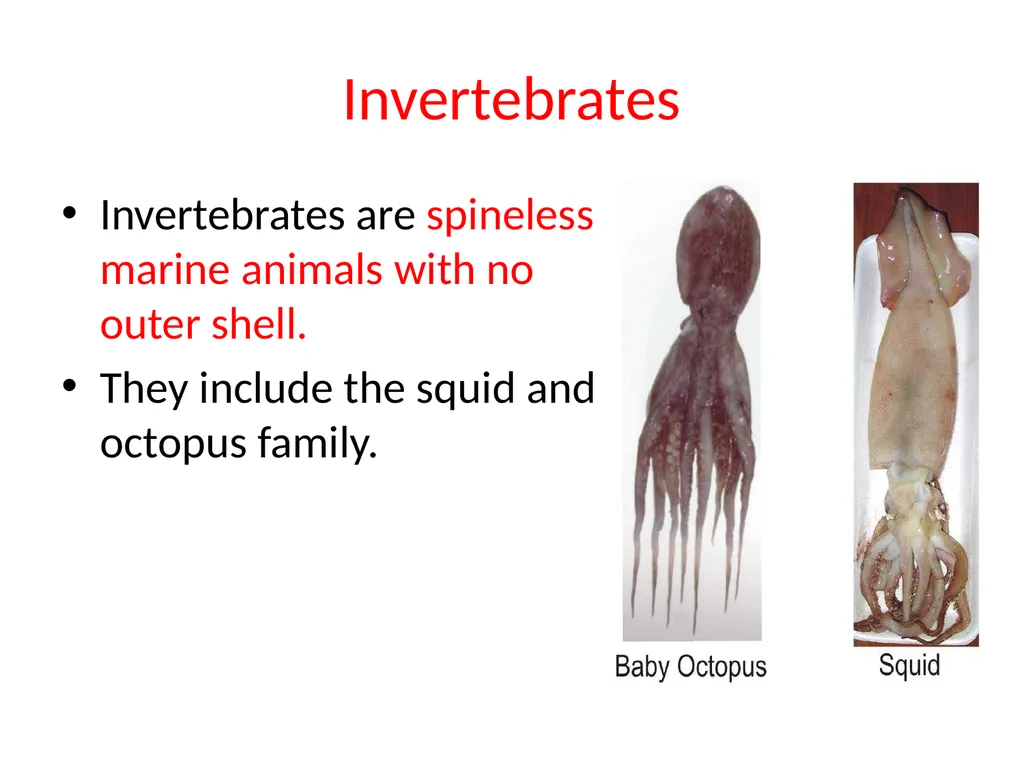
Invertebrates Invertebrates are spineless marine animals with no outer shell.
They include the squid and octopus family.<br>
12
Cuts of Fish Fillets- Deboned long flat pieces of fish without skin
Paupiette- The fillet of fish is laid flat on the table, stuffing is spread on it, and then it is rolled up, tied with a string, to the keep the shape.
Supreme- Large fillets of fish cut on a slant of a large round or flat fish.
Goujons and Goujonettes- Strips approx 8cm long by 1cm wide cut from fillets of fish. Goujonettes are cut smaller and are mainly used as a garnish.
Meuniere- Pan-frying of fish, finished with butter noisette, chopped parsley and lemon juice.<br>
13
Contd…. Trancon- It is a thick piece of fish 4- 5cm thick, cut on the bone from a flat fish like the turbot. It is a fish cutlet or steak with bone.
Darne- A piece of fish cut across and through the bone of a large , whole round fish such which is 2-3cm thick.
Mignon- Fillet of fish folded as a cornet (triangular fold as for piping bag).
Fish Farce- Puree of fish, bound with whole egg panada and cream<br>
14
Cooking of Fish It is important to cook fin fish thoroughly, but not to overcook it. Proper cooking: develops the flavor, softens the small amount of connective tissue present in fish, and makes the protein easier to digest.
Two cooking methods can toughen fin fish and destroy the natural moisture and flavor:
cooking at too high a temperature, and
cooking for a too long time.
Some common methods of cooking fin fish include:
Grilling, Shallow frying, Deep frying, Steaming, Poaching, Baking, Microwaving<br>
15
Handling of Fish A clean working environment is essential in the prevention of contamination when working with fish.
Be sure to wash hands thoroughly before and after handling raw fish.
The work area, cutting boards, and utensils must be thoroughly cleaned with hot soapy water after being exposed and should not be used for other foods until properly cleaned. This will prevent cross contamination of bacteria from the fish to other foods.<br>
16
Contd… When working with other foods at the same time as preparing and cooking fish, be sure to use different utensils for each food.
Do not use the same platter for cooked fish as was used for the raw meat, unless it has been properly washed and dried before using.
If any preparation of the fish is done on a cutting board, it should be thoroughly scrubbed with hot soapy water after each use and periodically cleaned with a bleach solution consisting of 1 tablespoon of bleach per gallon of water.<br>
17
Thank you…!!!! For your kind co-operation
Ch-7 and the entire course is completed
Are you happy???
Once again Betam Amasaganallu!!!
Melkam Bal(Fasika)-Enjoy with
Wait for a minute for Acid Test<br>
18
Acid Test-Question Write about your teacher<br>