
Chain of transmission Objectives Review basic




Description: Chain of transmission Objectives Review basic concepts of the outbreak transmission dynamics Use examples to discuss the links in the chain of transmission for specific pathologies Content Transmission dynamics Disease transmission
Related Topics
Download Presentation
"Chain of transmission Objectives Review basic" is the property of its rightful owner. Permission is granted to download and print the materials on this website for personal, non-commercial use only, and to display it on your personal computer provided you do not modify the materials and that you retain all copyright notices contained in the materials. By downloading content from our website, you accept the terms of this agreement.
Presentation Transcript
slide1. Chain of transmission<br>
slide2. Objectives Review basic concepts of the outbreak transmission dynamics Use examples to discuss the links in the chain of transmission for specific pathologies<br>
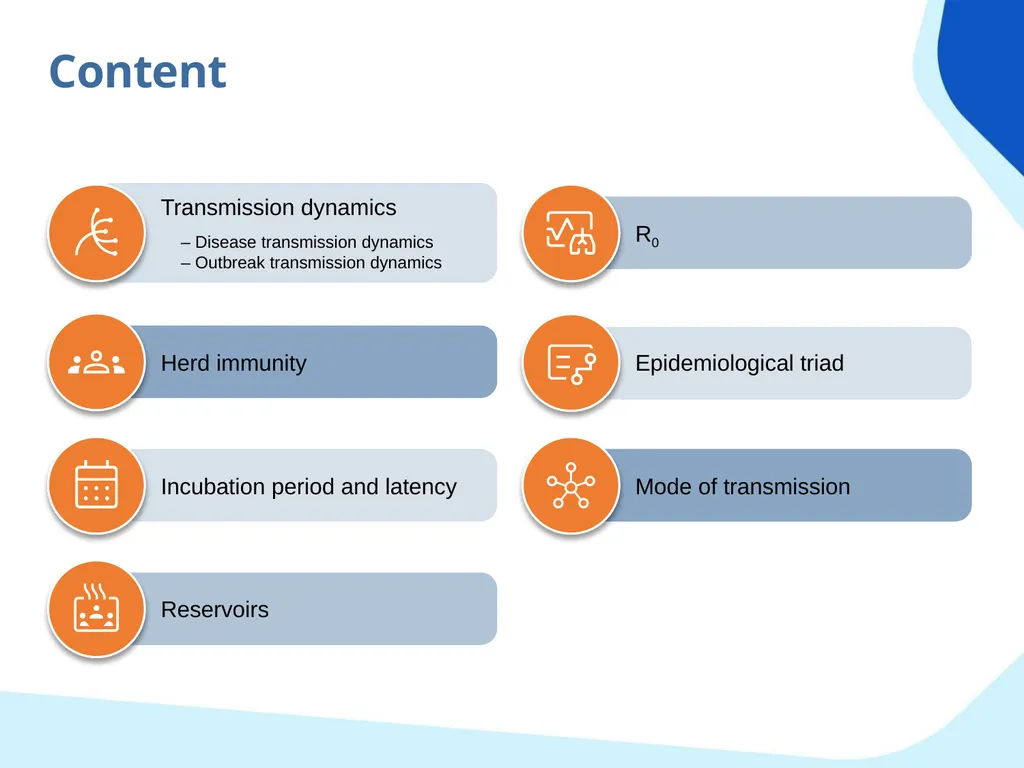
slide3. Content Transmission dynamics
– Disease transmission dynamics
– Outbreak transmission dynamics R0 Herd immunity Incubation period and latency Reservoirs Epidemiological triad Mode of transmission<br>
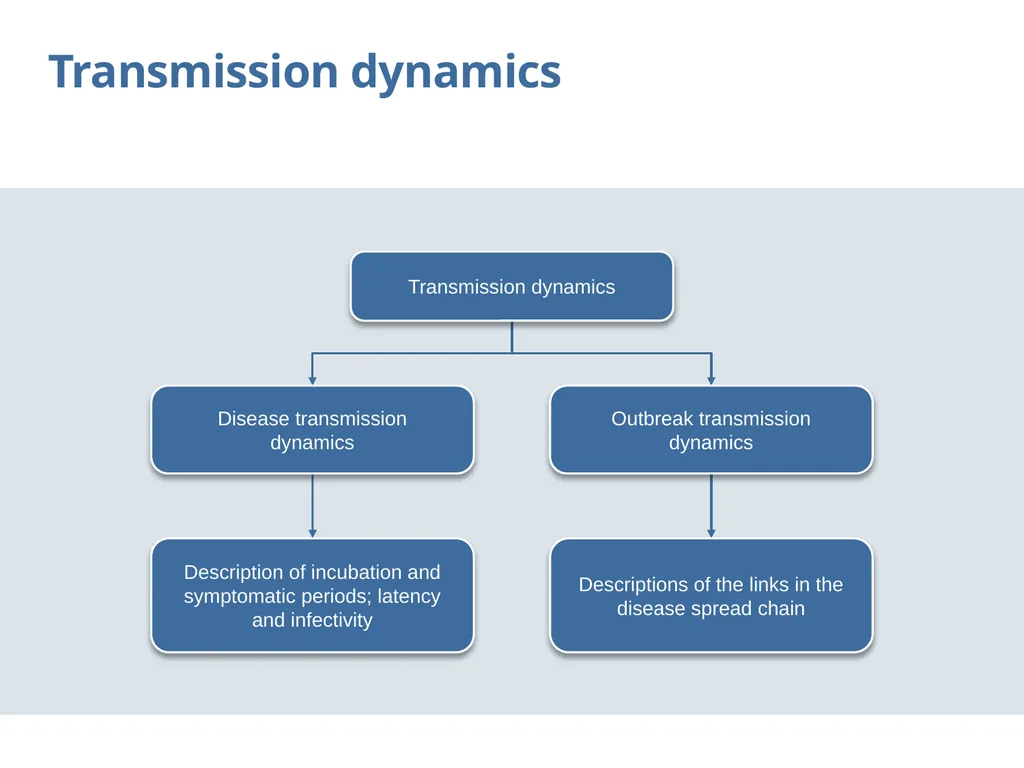
slide4. Transmission dynamics Transmission dynamics Outbreak transmission
dynamics Disease transmission
dynamics Descriptions of the links in the disease spread chain Description of incubation and symptomatic periods; latency and infectivity<br>
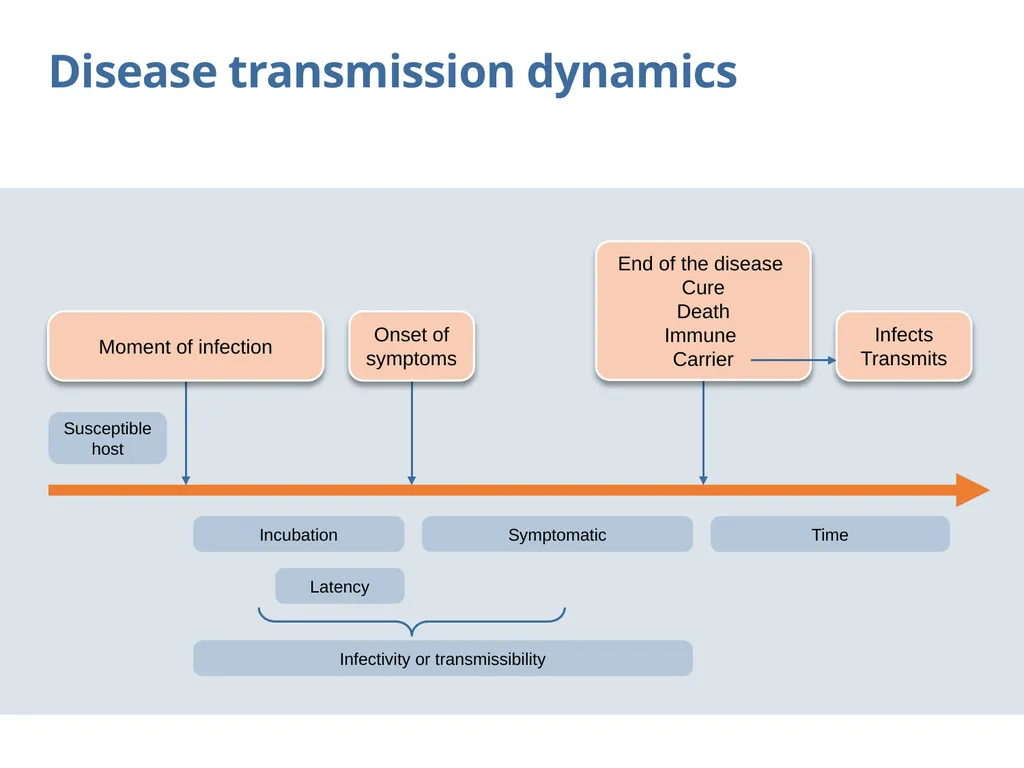
slide5. Disease transmission dynamics Susceptible host Incubation Symptomatic Time Latency Infectivity or transmissibility Moment of infection Onset of symptoms End of the disease
Cure
Death
Immune
Carrier Infects
Transmits<br>
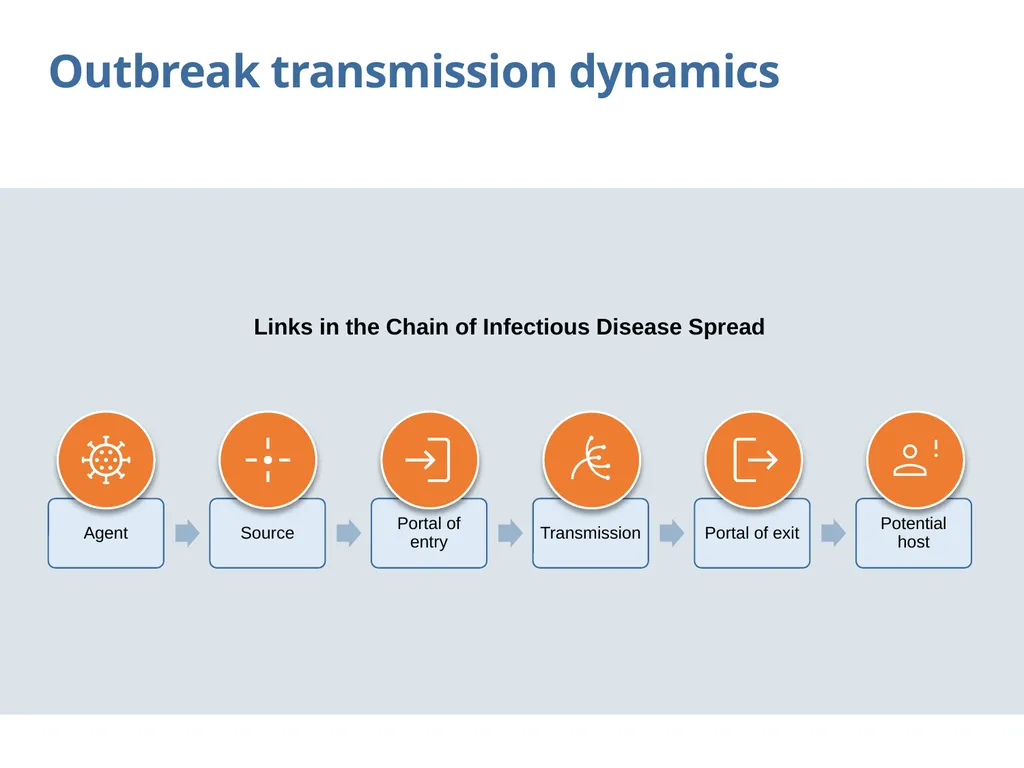
slide6. Outbreak transmission dynamics Links in the Chain of Infectious Disease Spread<br>
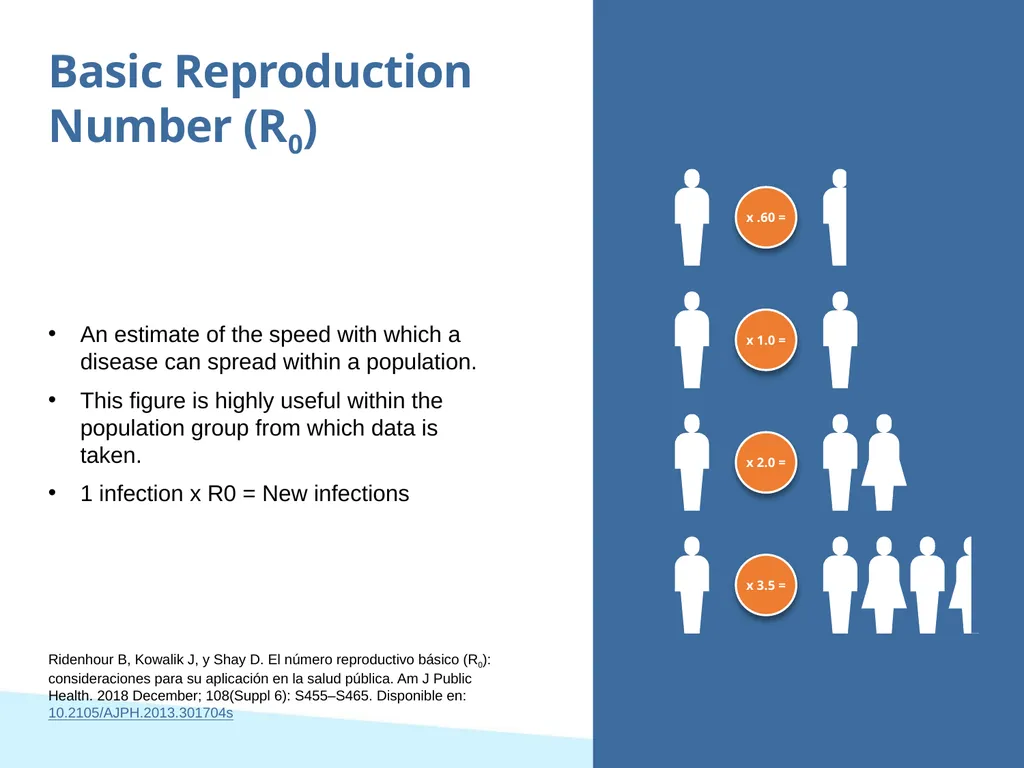
slide7. Basic Reproduction Number (R0) An estimate of the speed with which a disease can spread within a population.
This figure is highly useful within the population group from which data is taken.
1 infection x R0 = New infections x .60 = x 1.0 = x 2.0 = x 3.5 = Ridenhour B, Kowalik J, y Shay D. El número reproductivo básico (R0): consideraciones para su aplicación en la salud pública. Am J Public Health. 2018 December; 108(Suppl 6): S455–S465. Disponible en: 10.2105/AJPH.2013.301704s<br>
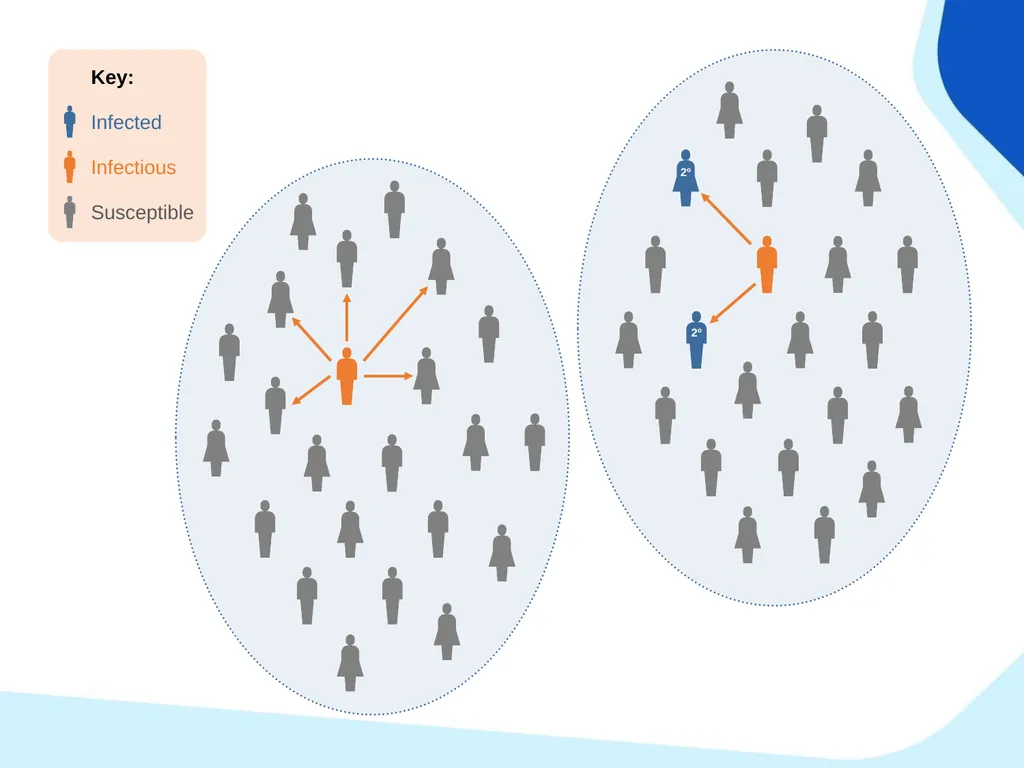
slide8. 2º 2º Infected Infectious Susceptible Key:<br>
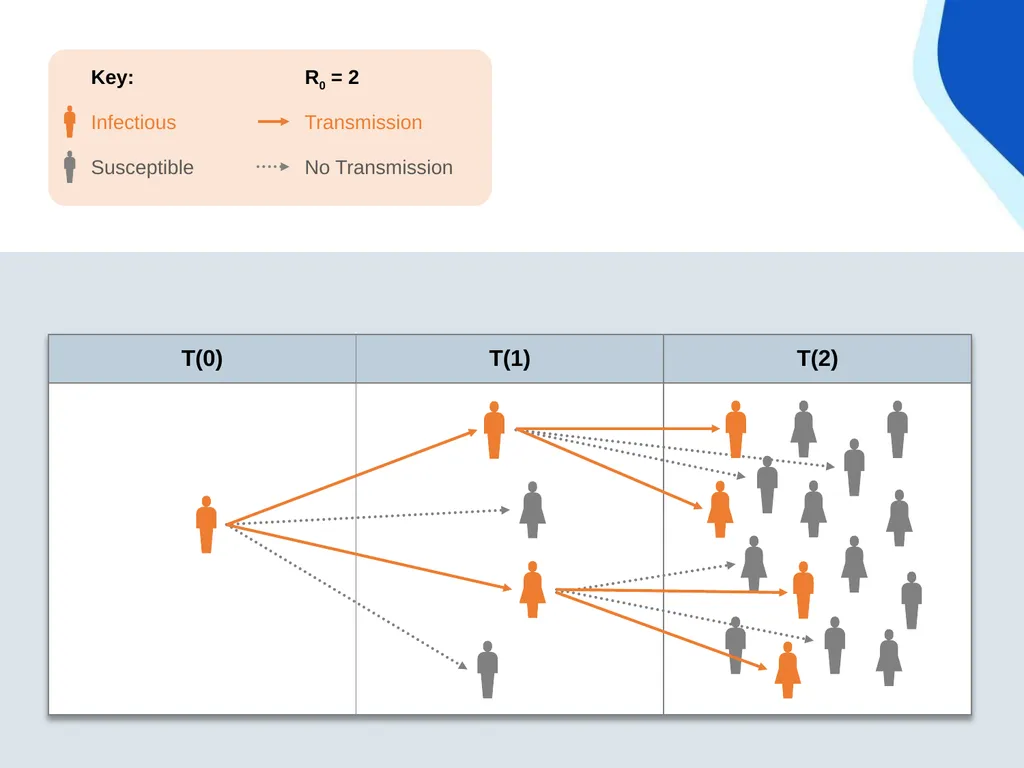
slide9. Infectious Susceptible Key: Transmission No Transmission R0 = 2<br>
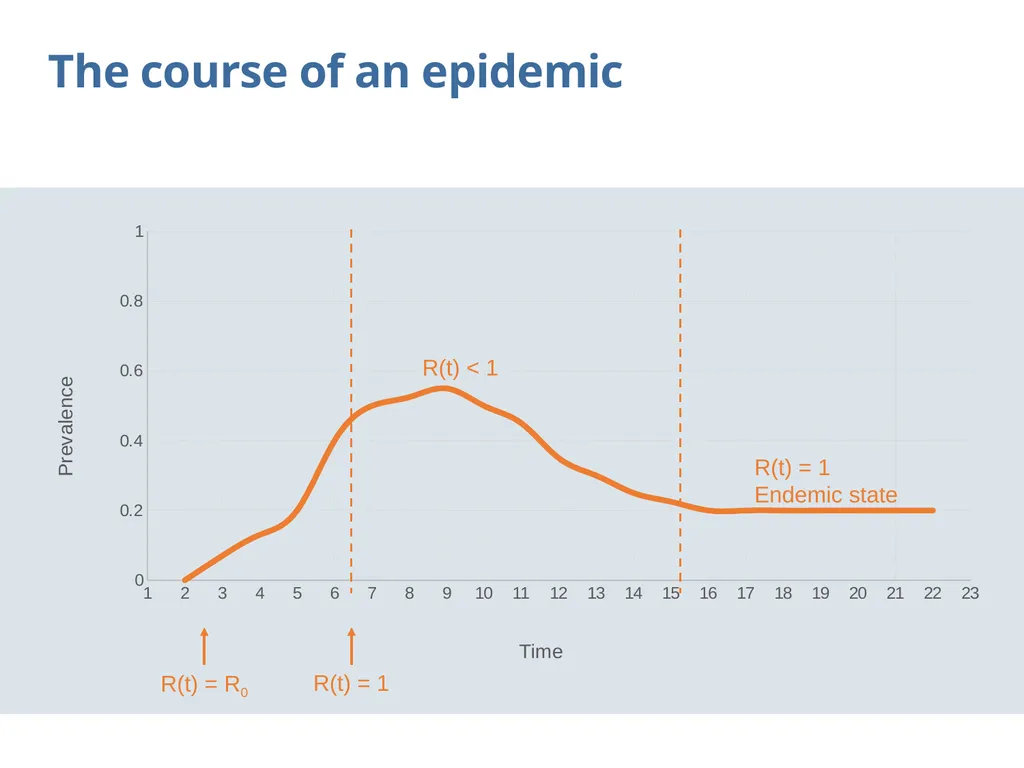
slide10. The course of an epidemic R(t) = R0 R(t) = 1 R(t) < 1 R(t) = 1
Endemic state<br>
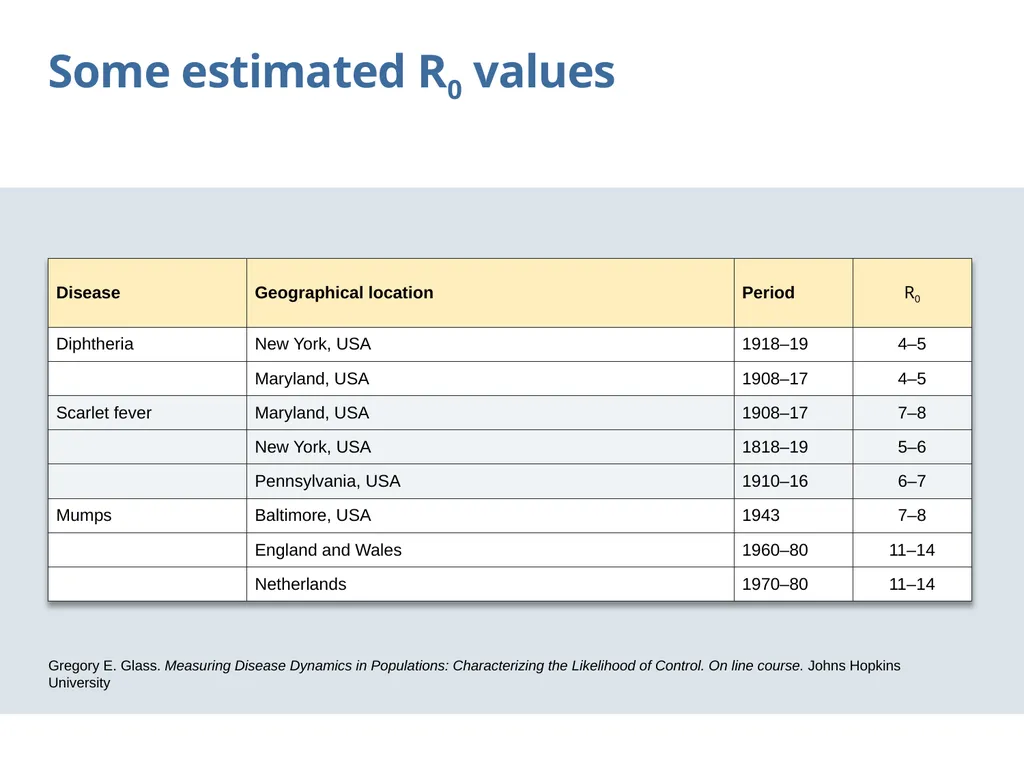
slide11. Some estimated R0 values Gregory E. Glass. Measuring Disease Dynamics in Populations: Characterizing the Likelihood of Control. On line course. Johns Hopkins University<br>
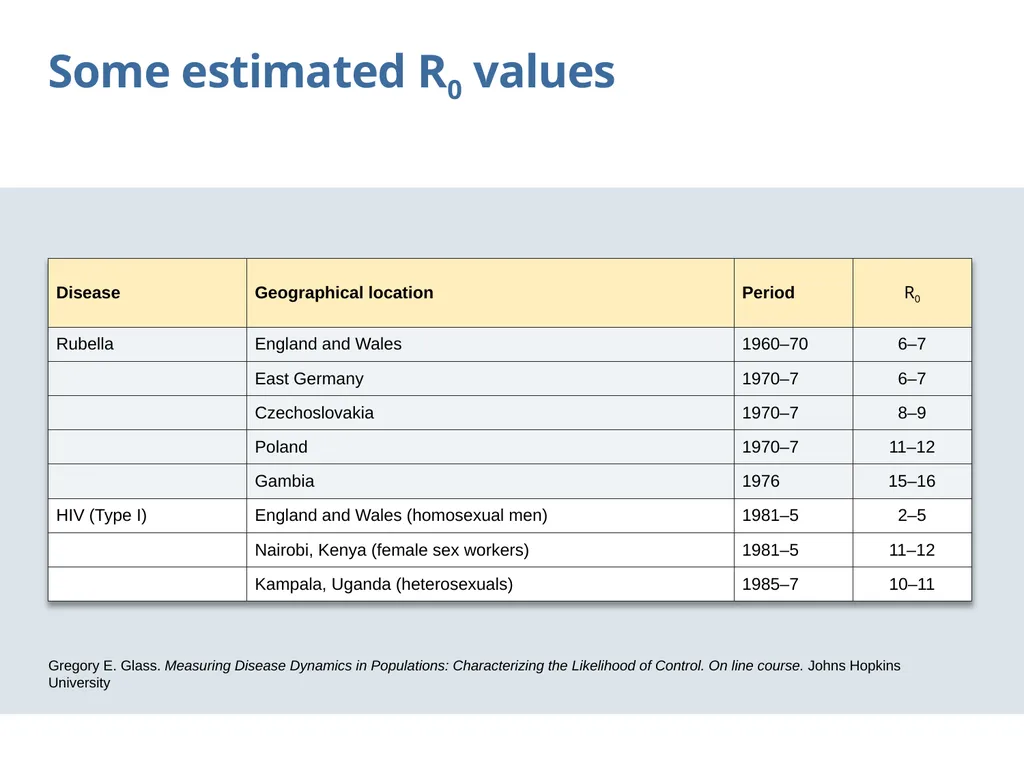
slide12. Gregory E. Glass. Measuring Disease Dynamics in Populations: Characterizing the Likelihood of Control. On line course. Johns Hopkins University Some estimated R0 values<br>
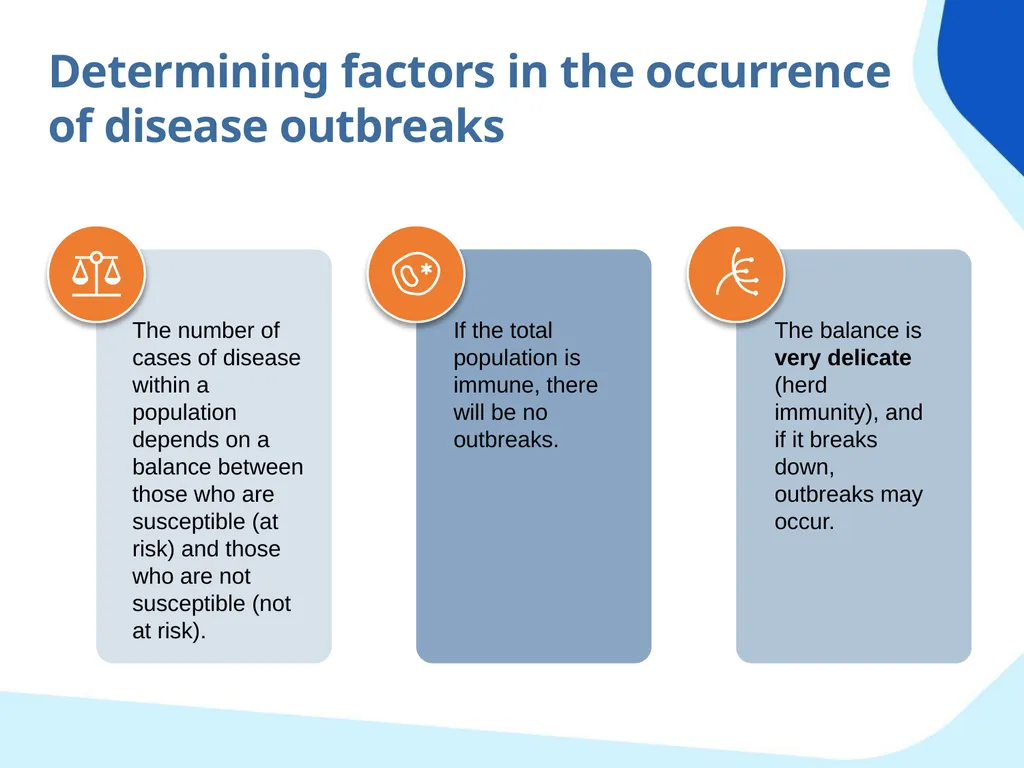
slide13. Determining factors in the occurrence of disease outbreaks The number of cases of disease within a population depends on a balance between those who are susceptible (at risk) and those who are not susceptible (not at risk). If the total population is immune, there will be no outbreaks. The balance is very delicate (herd immunity), and if it breaks down, outbreaks may occur.<br>
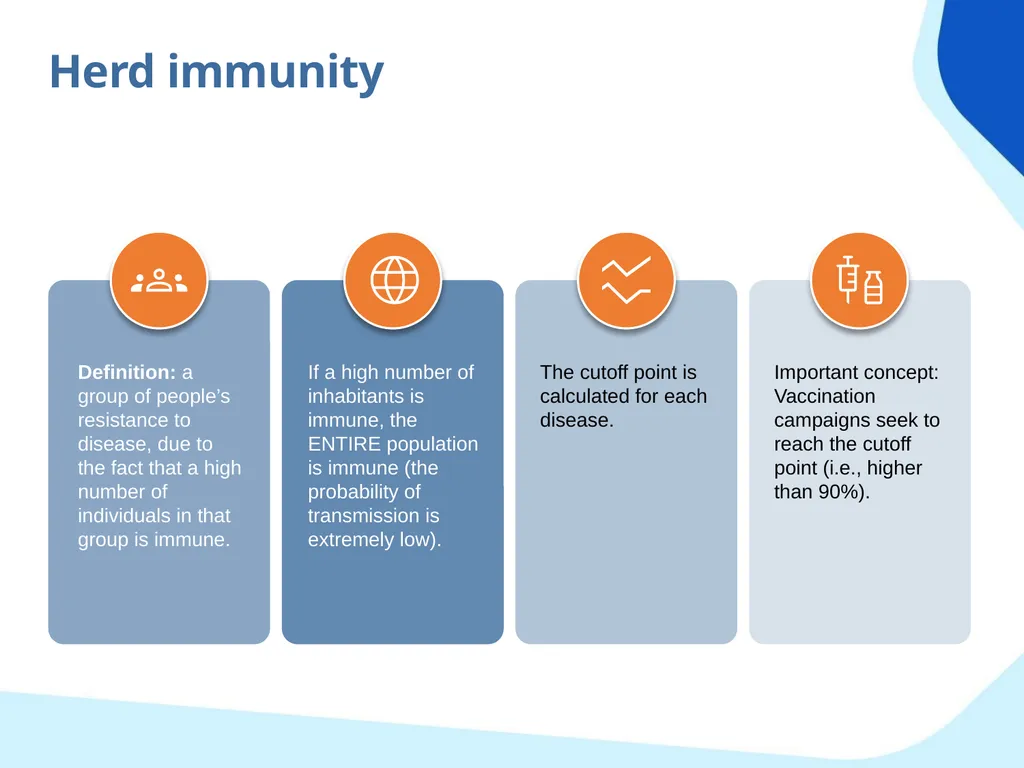
slide14. Herd immunity The cutoff point is calculated for each disease. If a high number of inhabitants is immune, the ENTIRE population is immune (the probability of transmission is extremely low). Important concept: Vaccination campaigns seek to reach the cutoff point (i.e., higher than 90%). Definition: a group of people’s resistance to disease, due to the fact that a high number of individuals in that group is immune.<br>
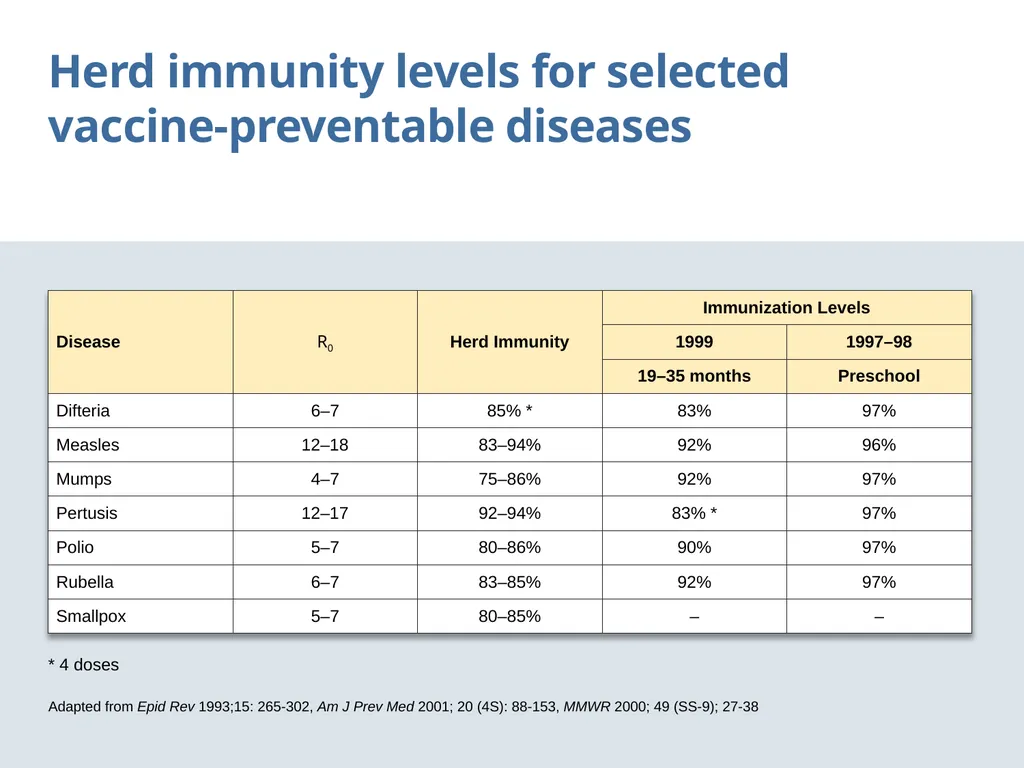
slide15. Herd immunity levels for selected vaccine-preventable diseases Adapted from Epid Rev 1993;15: 265-302, Am J Prev Med 2001; 20 (4S): 88-153, MMWR 2000; 49 (SS-9); 27-38 * 4 doses<br>
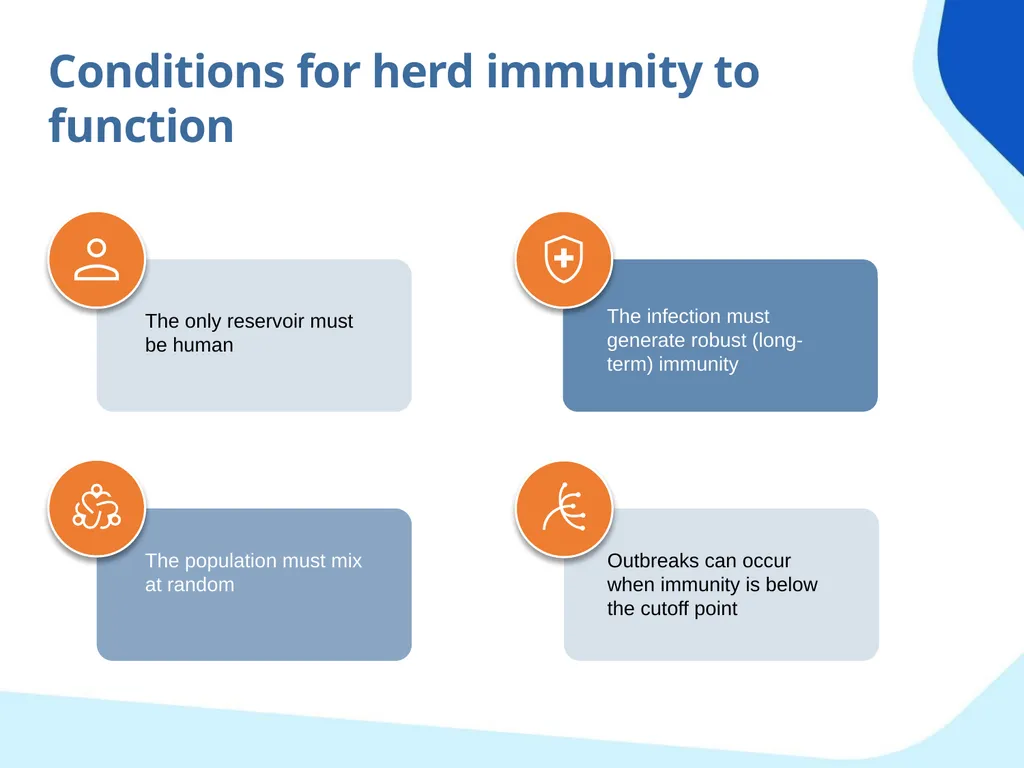
slide16. Conditions for herd immunity to function The only reservoir must be human The infection must generate robust (long-term) immunity Outbreaks can occur when immunity is below the cutoff point The population must mix at random<br>
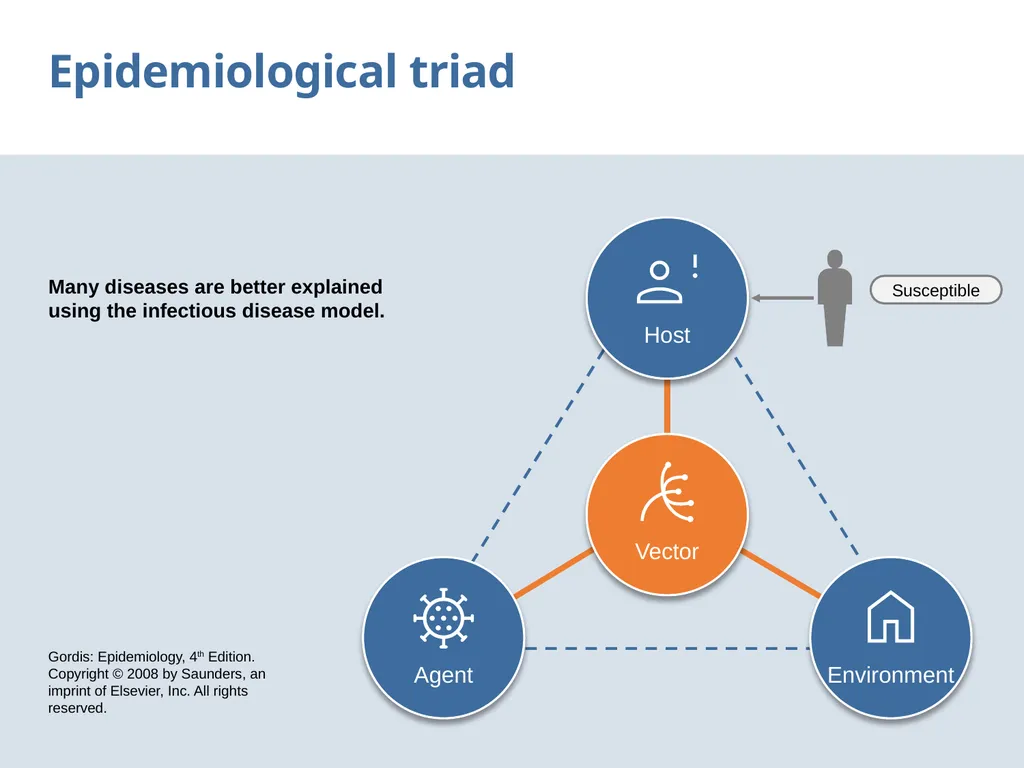
slide17. Epidemiological triad Gordis: Epidemiology, 4th Edition.
Copyright © 2008 by Saunders, an imprint of Elsevier, Inc. All rights reserved. Susceptible Environment Agent Vector Host Many diseases are better explained using the infectious disease model.<br>
slide18. Agent Every element that acts as a determining cause and is capable of disrupting the health-disease balance.
It might be:
– Biological (bacteria, virus)
– Chemical (toxins)
– Physical (radiation, toxic gases)<br>
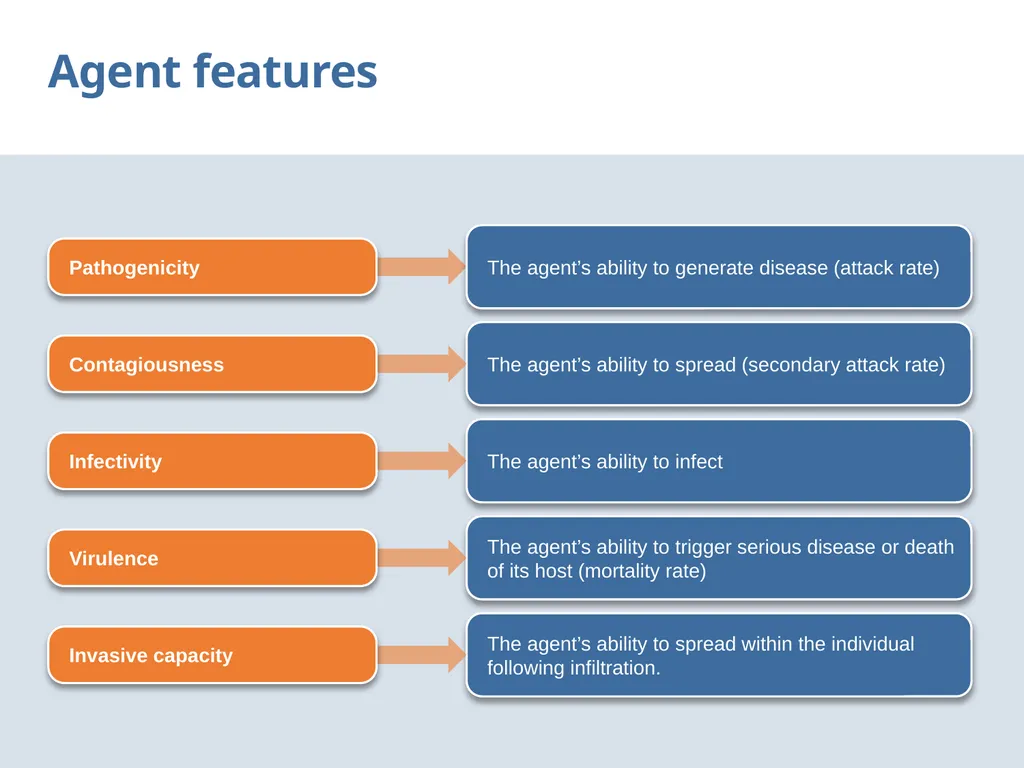
slide19. Agent features The agent’s ability to generate disease (attack rate) The agent’s ability to spread (secondary attack rate) The agent’s ability to infect The agent’s ability to trigger serious disease or death of its host (mortality rate) The agent’s ability to spread within the individual following infiltration. Pathogenicity Contagiousness Infectivity Virulence Invasive capacity<br>
slide20. Host The organism impacted by the agent<br>
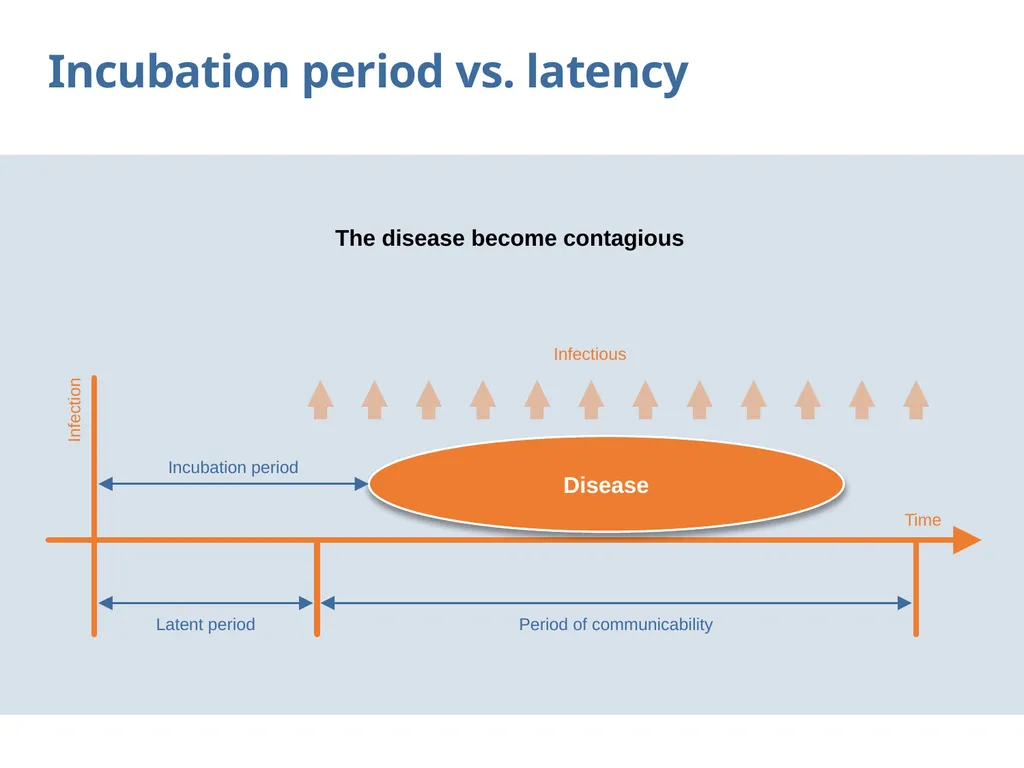
slide21. Incubation period vs. latency The disease become contagious Infection Infectious Disease Time Incubation period Latent period Period of communicability<br>
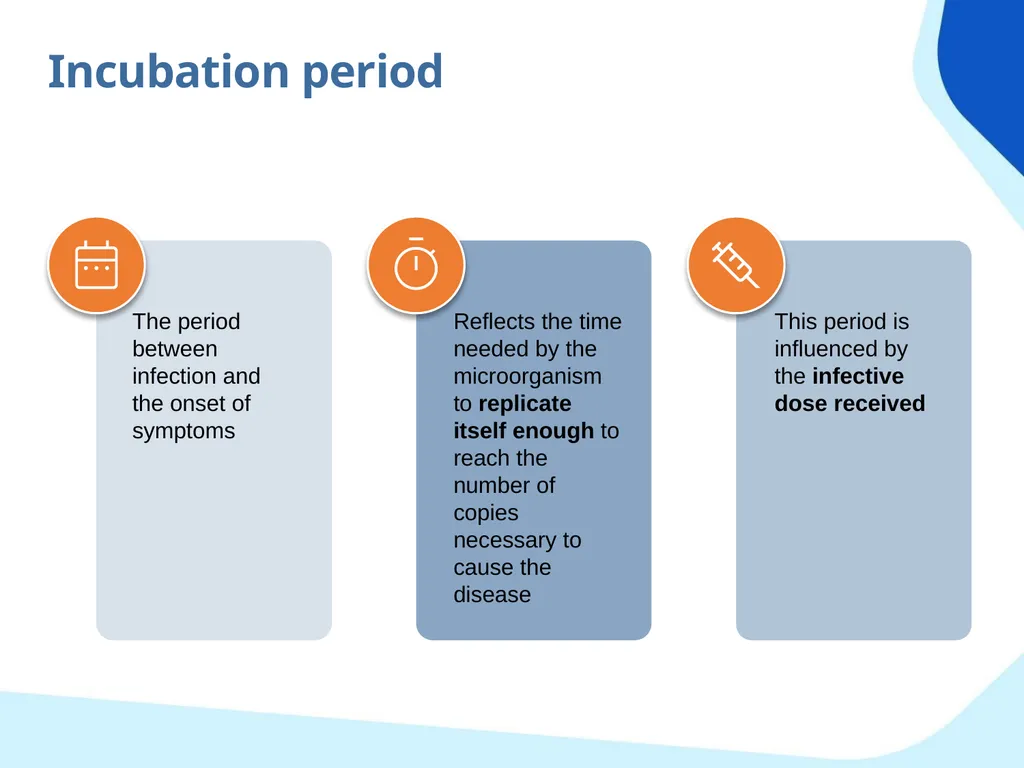
slide22. Incubation period The period between infection and the onset of symptoms Reflects the time needed by the microorganism to replicate itself enough to reach the number of copies necessary to cause the disease This period is influenced by the infective dose received<br>
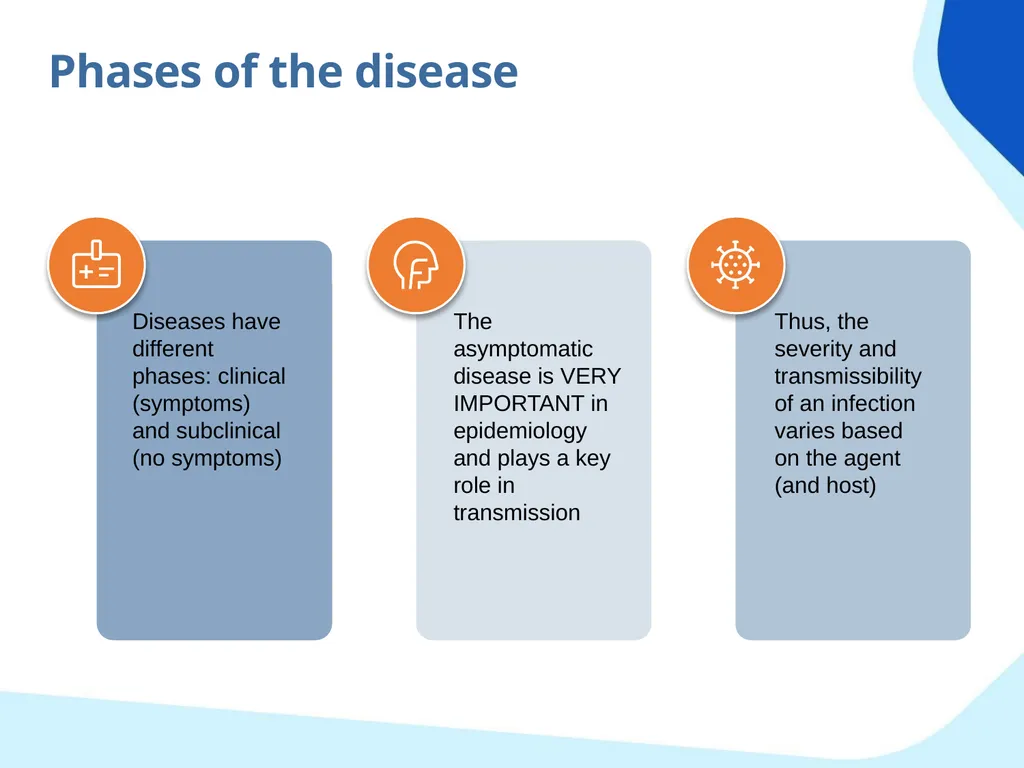
slide23. Phases of the disease Diseases have different phases: clinical (symptoms) and subclinical (no symptoms) The asymptomatic disease is VERY IMPORTANT in epidemiology and plays a key role in transmission Thus, the severity and transmissibility of an infection varies based on the agent (and host)<br>
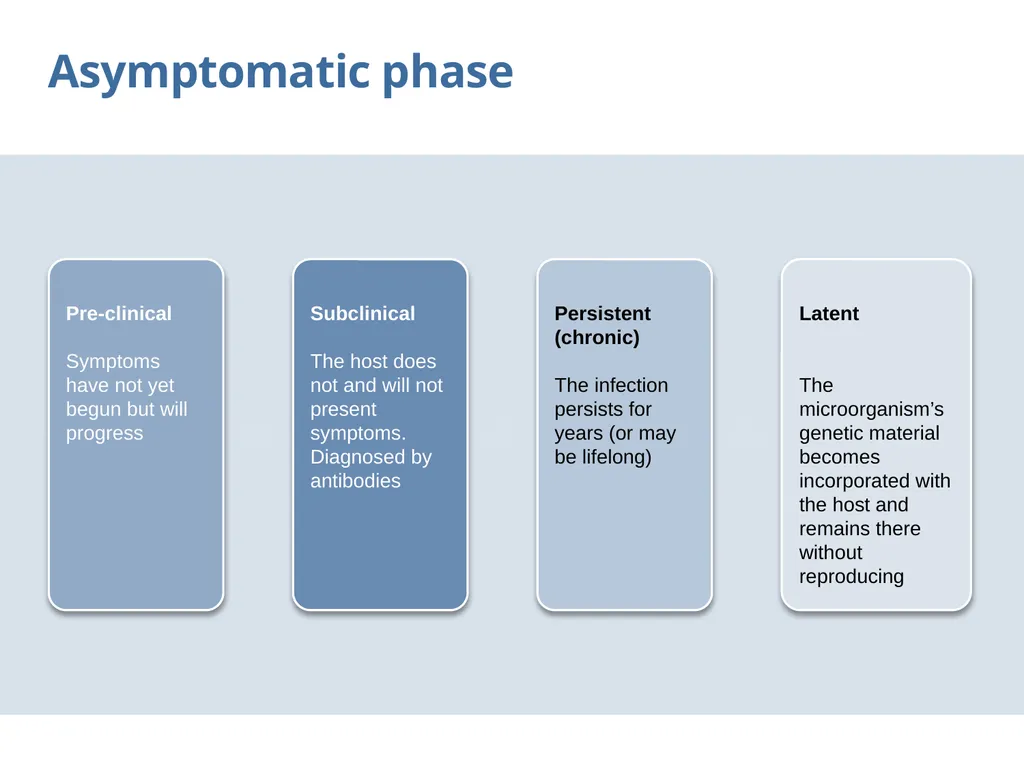
slide24. Asymptomatic phase<br>
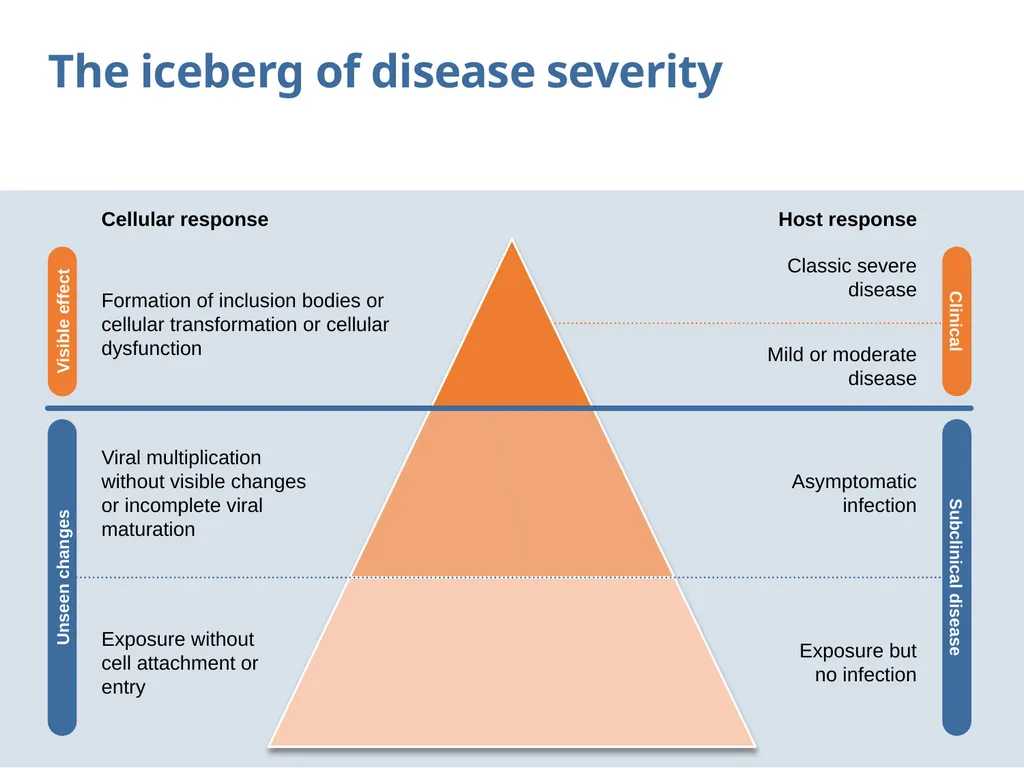
slide25. The iceberg of disease severity Cellular response Formation of inclusion bodies or cellular transformation or cellular dysfunction Viral multiplication without visible changes or incomplete viral maturation Exposure without cell attachment or entry Host response Classic severe disease Mild or moderate disease Exposure but no infection Asymptomatic infection Visible effect Unseen changes Clinical Subclinical disease<br>
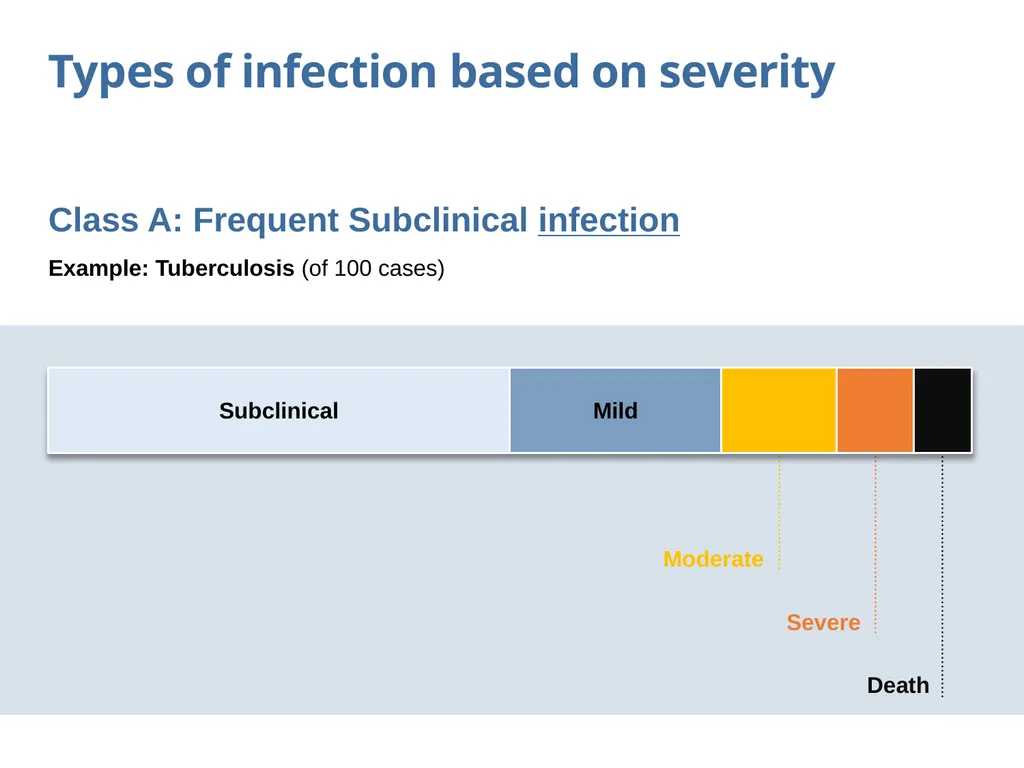
slide26. Types of infection based on severity Class A: Frequent Subclinical infection Example: Tuberculosis (of 100 cases) Death Severe Moderate Subclinical Mild<br>
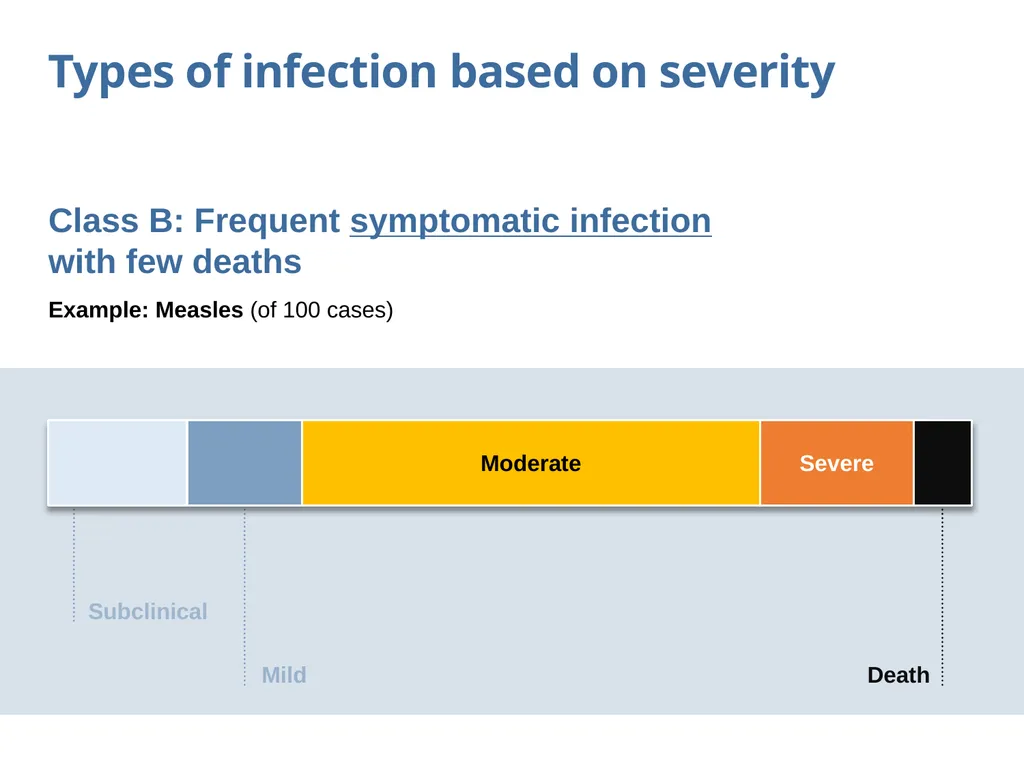
slide27. Types of infection based on severity Class B: Frequent symptomatic infection with few deaths Example: Measles (of 100 cases) Subclinical Mild Death Moderate Severe<br>
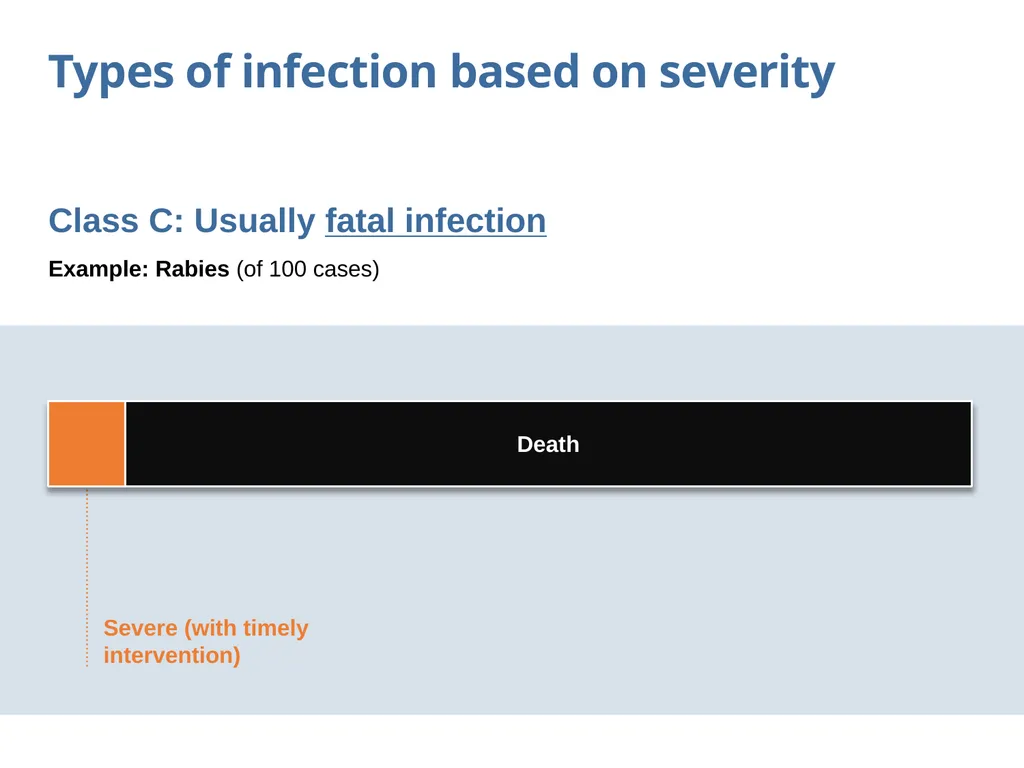
slide28. Types of infection based on severity Class C: Usually fatal infection Severe (with timely intervention) Example: Rabies (of 100 cases) Death<br>
slide29. Factors that impact the severity of a disease This is related to:
– The microorganism’s virulence
– The host organ where it multiplies
– The host’s immune response<br>
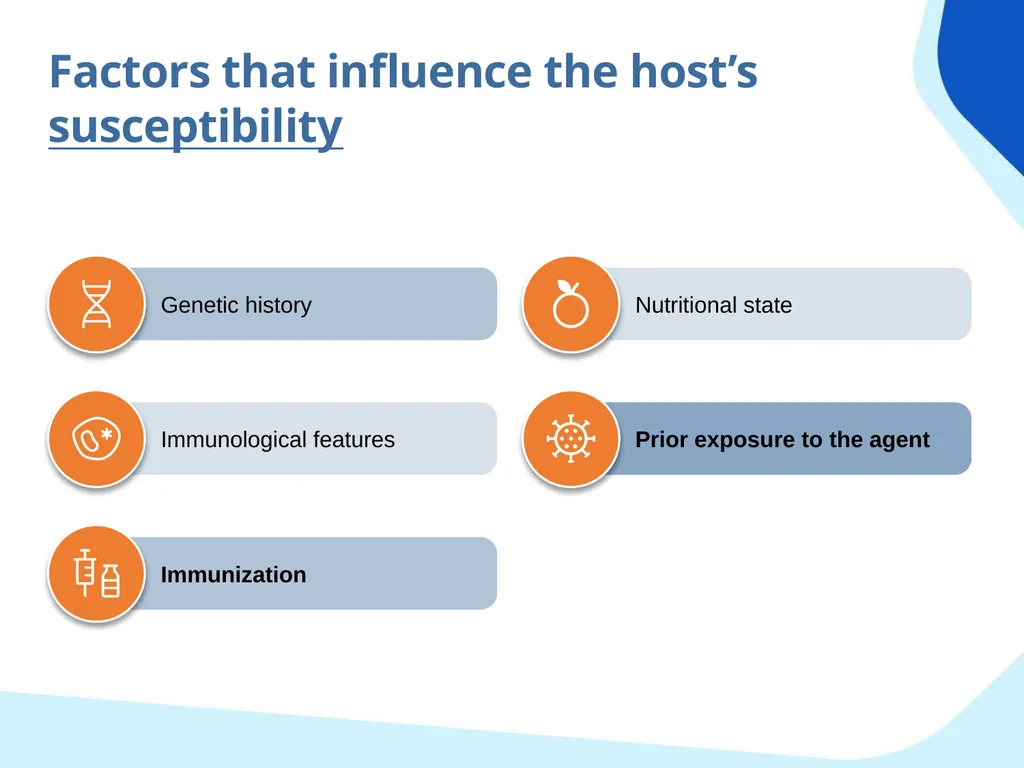
slide30. Factors that influence the host’s susceptibility Genetic history Nutritional state Immunological features Immunization Prior exposure to the agent<br>
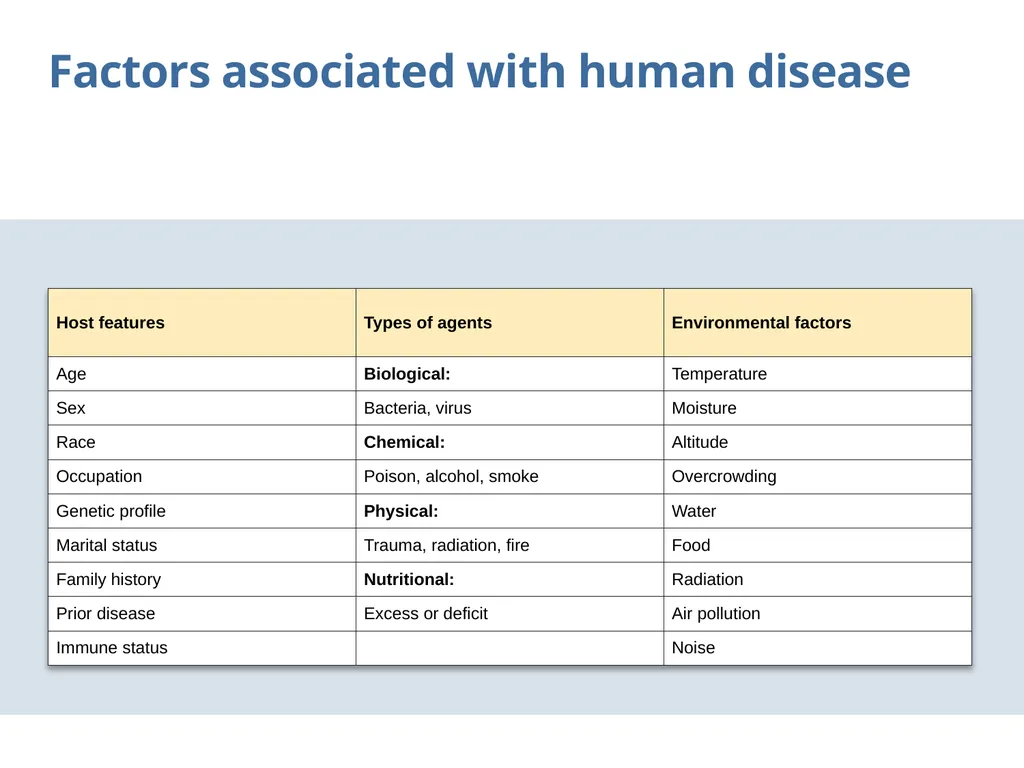
slide31. Factors associated with human disease<br>
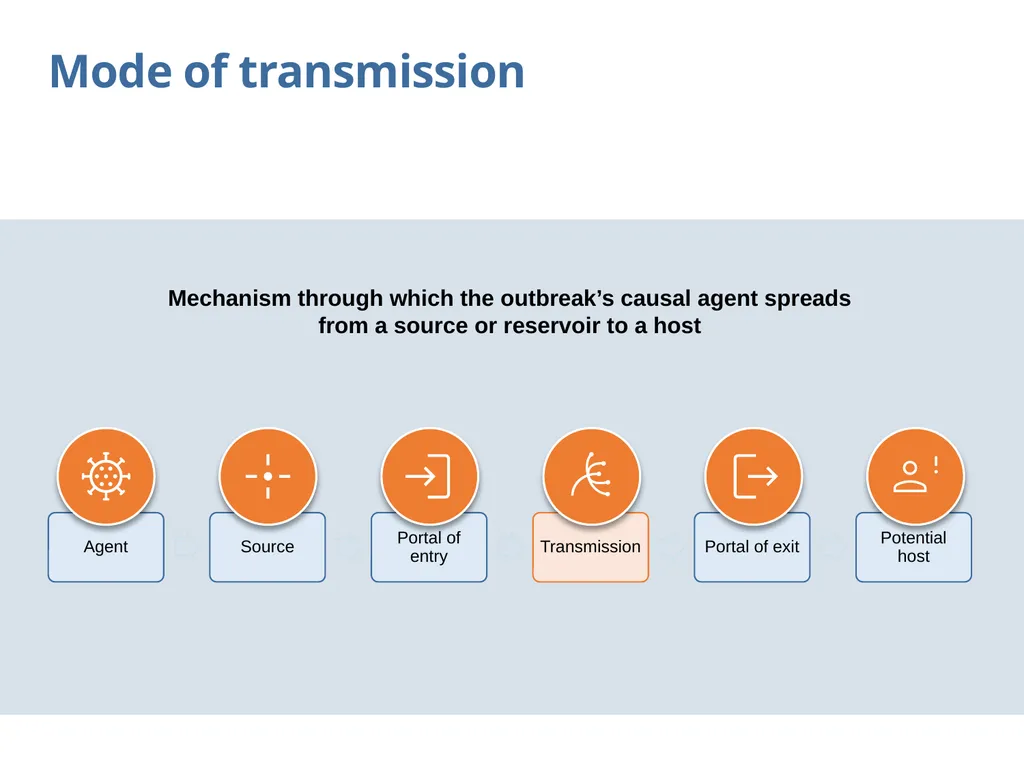
slide32. Mode of transmission Mechanism through which the outbreak’s causal agent spreads from a source or reservoir to a host<br>
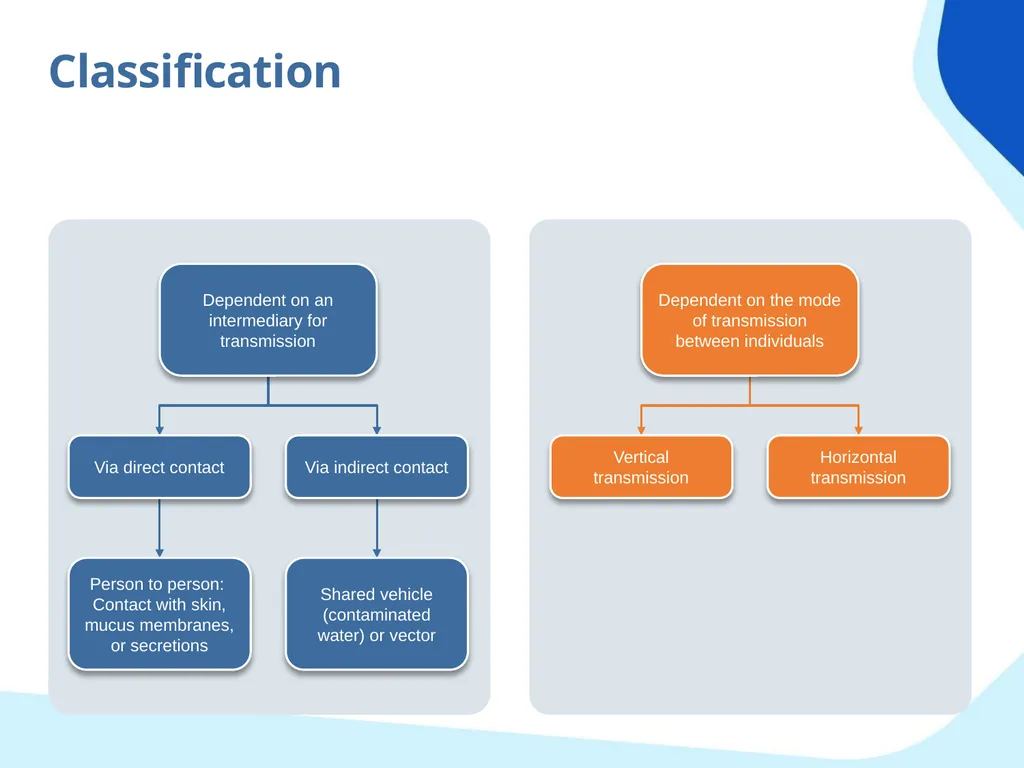
slide33. Classification Vertical transmission Horizontal transmission Dependent on the mode of transmission between individuals Via direct contact Via indirect contact Person to person:
Contact with skin, mucus membranes, or secretions Shared vehicle (contaminated water) or vector Dependent on an intermediary for transmission<br>
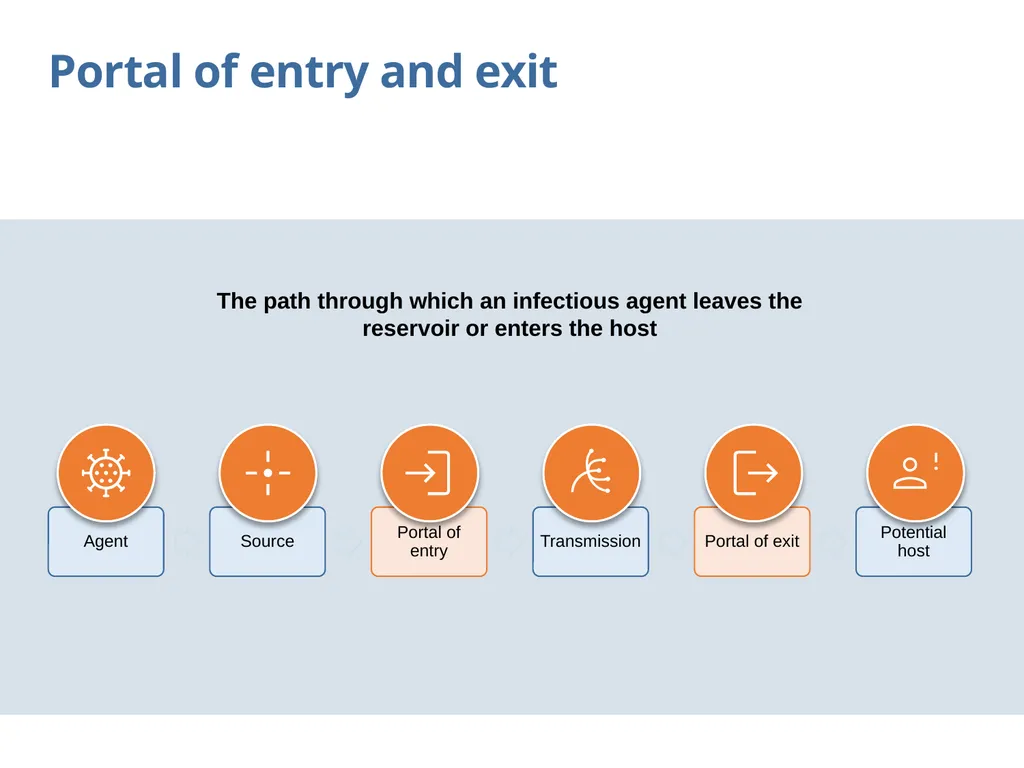
slide34. Portal of entry and exit The path through which an infectious agent leaves the reservoir or enters the host<br>
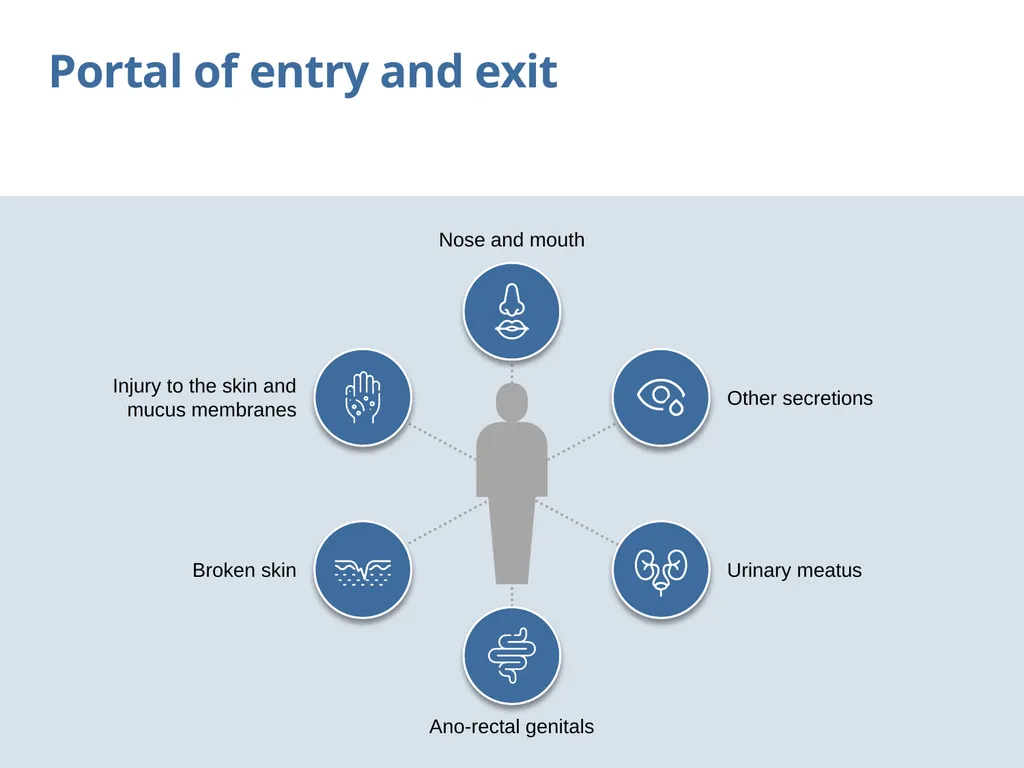
slide35. Portal of entry and exit Nose and mouth Ano-rectal genitals Other secretions Urinary meatus Injury to the skin and mucus membranes Broken skin<br>
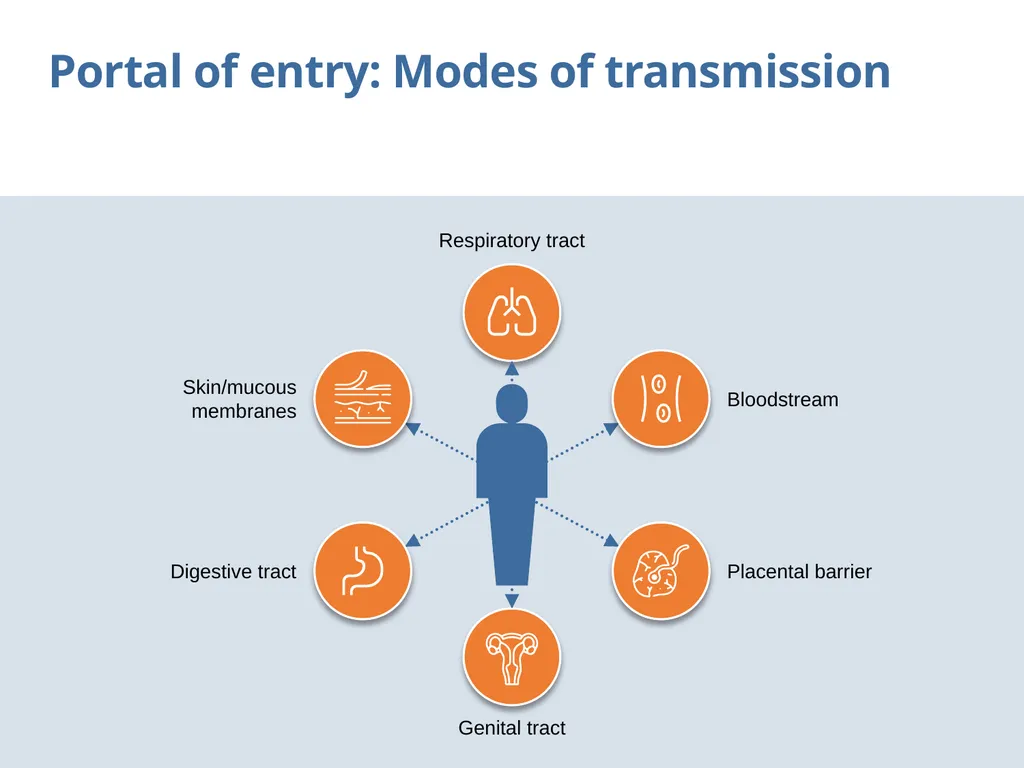
slide36. Portal of entry: Modes of transmission Respiratory tract Genital tract Bloodstream Placental barrier Skin/mucous membranes Digestive tract<br>
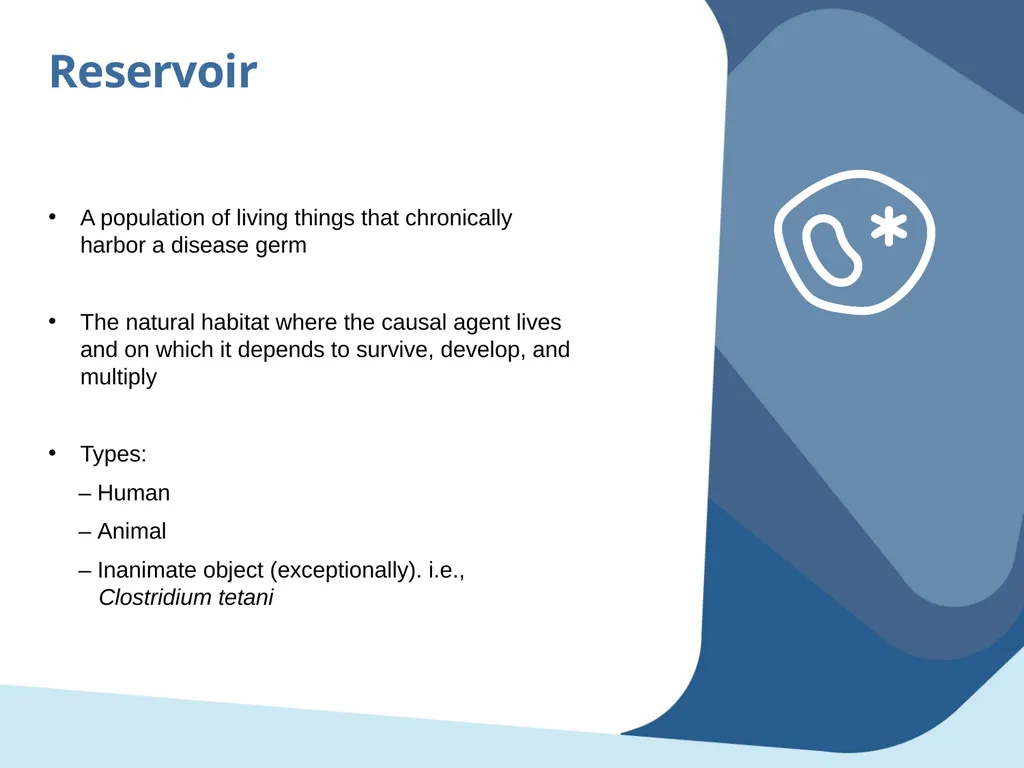
slide37. Reservoir A population of living things that chronically harbor a disease germ
The natural habitat where the causal agent lives and on which it depends to survive, develop, and multiply
Types:
– Human
– Animal
– Inanimate object (exceptionally). i.e., Clostridium tetani<br>
slide38. Human reservoir:
state of the carrier The subject harbors the microorganism but is not infected
Serological studies will be negative
There are no signs of clinical disease
The reservoir may infect, but to a lesser degree
This state may last for weeks, months, or years<br>
slide39. Diseases with a human reservoir HIV/AIDS Dengue Hepatitis A, B, C virus Others Measles<br>
slide40. Animal reservoir The importance of animal reservoirs during an outbreak will depend on their level of contact with humans.
Animal reservoirs for the same agent may vary depending on the geographical area.
Zoonosis: diseases transmitted from animals to humans
– Leptospirosis
– Rabies
– Hantavirus<br>
slide41. Mixed reservoir Either humans or animals may be a source of contagion:
– Influenza
– Yellow fever<br>
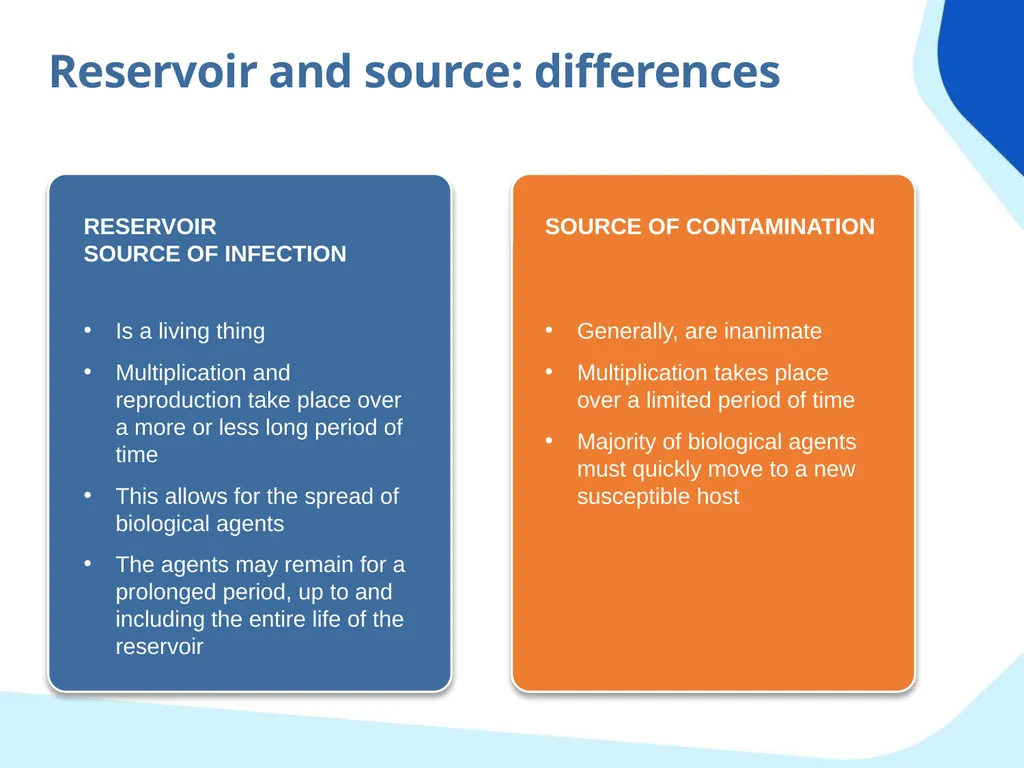
slide42. Reservoir and source: differences RESERVOIR
SOURCE OF INFECTION Is a living thing
Multiplication and reproduction take place over a more or less long period of time
This allows for the spread of biological agents
The agents may remain for a prolonged period, up to and including the entire life of the reservoir SOURCE OF CONTAMINATION Generally, are inanimate
Multiplication takes place over a limited period of time
Majority of biological agents must quickly move to a new susceptible host<br>
slide43. © Pan American Health Organization, 2023
Property of the Pan American Health Organization. Reproduced with permission pursuant to the Creative Commons Attribution-NonCommercial-NoDerivs 3.0 IGO license (CC BY-NC-ND 3.0 IGO).
In any use of this work, there should be no suggestion that the Pan American Health Organization (PAHO) endorses any specific organization, product, or service. Use of the PAHO logo, in a way that is not already incorporated in the work or consistent with the Creative Commons license CC BY-NC-ND 3.0 IGO, is strictly prohibited. Any use of this work that is inconsistent with or not permitted under the Creative Commons license BY-NC-ND 3.0 IGO requires the express written consent of PAHO.
Further, all reasonable precautions have been taken by PAHO and the GS/OAS to verify the information contained in this publication. However, the published material is being distributed without warranty of any kind, either expressed or implied. The responsibility for the interpretation and use of the material lies with the reader. In no event shall PAHO and/or the OAS or GS/OAS be liable for damages arising from its use<br>
slide2. Objectives Review basic concepts of the outbreak transmission dynamics Use examples to discuss the links in the chain of transmission for specific pathologies<br>
slide3. Content Transmission dynamics
– Disease transmission dynamics
– Outbreak transmission dynamics R0 Herd immunity Incubation period and latency Reservoirs Epidemiological triad Mode of transmission<br>
slide4. Transmission dynamics Transmission dynamics Outbreak transmission
dynamics Disease transmission
dynamics Descriptions of the links in the disease spread chain Description of incubation and symptomatic periods; latency and infectivity<br>
slide5. Disease transmission dynamics Susceptible host Incubation Symptomatic Time Latency Infectivity or transmissibility Moment of infection Onset of symptoms End of the disease
Cure
Death
Immune
Carrier Infects
Transmits<br>
slide6. Outbreak transmission dynamics Links in the Chain of Infectious Disease Spread<br>
slide7. Basic Reproduction Number (R0) An estimate of the speed with which a disease can spread within a population.
This figure is highly useful within the population group from which data is taken.
1 infection x R0 = New infections x .60 = x 1.0 = x 2.0 = x 3.5 = Ridenhour B, Kowalik J, y Shay D. El número reproductivo básico (R0): consideraciones para su aplicación en la salud pública. Am J Public Health. 2018 December; 108(Suppl 6): S455–S465. Disponible en: 10.2105/AJPH.2013.301704s<br>
slide8. 2º 2º Infected Infectious Susceptible Key:<br>
slide9. Infectious Susceptible Key: Transmission No Transmission R0 = 2<br>
slide10. The course of an epidemic R(t) = R0 R(t) = 1 R(t) < 1 R(t) = 1
Endemic state<br>
slide11. Some estimated R0 values Gregory E. Glass. Measuring Disease Dynamics in Populations: Characterizing the Likelihood of Control. On line course. Johns Hopkins University<br>
slide12. Gregory E. Glass. Measuring Disease Dynamics in Populations: Characterizing the Likelihood of Control. On line course. Johns Hopkins University Some estimated R0 values<br>
slide13. Determining factors in the occurrence of disease outbreaks The number of cases of disease within a population depends on a balance between those who are susceptible (at risk) and those who are not susceptible (not at risk). If the total population is immune, there will be no outbreaks. The balance is very delicate (herd immunity), and if it breaks down, outbreaks may occur.<br>
slide14. Herd immunity The cutoff point is calculated for each disease. If a high number of inhabitants is immune, the ENTIRE population is immune (the probability of transmission is extremely low). Important concept: Vaccination campaigns seek to reach the cutoff point (i.e., higher than 90%). Definition: a group of people’s resistance to disease, due to the fact that a high number of individuals in that group is immune.<br>
slide15. Herd immunity levels for selected vaccine-preventable diseases Adapted from Epid Rev 1993;15: 265-302, Am J Prev Med 2001; 20 (4S): 88-153, MMWR 2000; 49 (SS-9); 27-38 * 4 doses<br>
slide16. Conditions for herd immunity to function The only reservoir must be human The infection must generate robust (long-term) immunity Outbreaks can occur when immunity is below the cutoff point The population must mix at random<br>
slide17. Epidemiological triad Gordis: Epidemiology, 4th Edition.
Copyright © 2008 by Saunders, an imprint of Elsevier, Inc. All rights reserved. Susceptible Environment Agent Vector Host Many diseases are better explained using the infectious disease model.<br>
slide18. Agent Every element that acts as a determining cause and is capable of disrupting the health-disease balance.
It might be:
– Biological (bacteria, virus)
– Chemical (toxins)
– Physical (radiation, toxic gases)<br>
slide19. Agent features The agent’s ability to generate disease (attack rate) The agent’s ability to spread (secondary attack rate) The agent’s ability to infect The agent’s ability to trigger serious disease or death of its host (mortality rate) The agent’s ability to spread within the individual following infiltration. Pathogenicity Contagiousness Infectivity Virulence Invasive capacity<br>
slide20. Host The organism impacted by the agent<br>
slide21. Incubation period vs. latency The disease become contagious Infection Infectious Disease Time Incubation period Latent period Period of communicability<br>
slide22. Incubation period The period between infection and the onset of symptoms Reflects the time needed by the microorganism to replicate itself enough to reach the number of copies necessary to cause the disease This period is influenced by the infective dose received<br>
slide23. Phases of the disease Diseases have different phases: clinical (symptoms) and subclinical (no symptoms) The asymptomatic disease is VERY IMPORTANT in epidemiology and plays a key role in transmission Thus, the severity and transmissibility of an infection varies based on the agent (and host)<br>
slide24. Asymptomatic phase<br>
slide25. The iceberg of disease severity Cellular response Formation of inclusion bodies or cellular transformation or cellular dysfunction Viral multiplication without visible changes or incomplete viral maturation Exposure without cell attachment or entry Host response Classic severe disease Mild or moderate disease Exposure but no infection Asymptomatic infection Visible effect Unseen changes Clinical Subclinical disease<br>
slide26. Types of infection based on severity Class A: Frequent Subclinical infection Example: Tuberculosis (of 100 cases) Death Severe Moderate Subclinical Mild<br>
slide27. Types of infection based on severity Class B: Frequent symptomatic infection with few deaths Example: Measles (of 100 cases) Subclinical Mild Death Moderate Severe<br>
slide28. Types of infection based on severity Class C: Usually fatal infection Severe (with timely intervention) Example: Rabies (of 100 cases) Death<br>
slide29. Factors that impact the severity of a disease This is related to:
– The microorganism’s virulence
– The host organ where it multiplies
– The host’s immune response<br>
slide30. Factors that influence the host’s susceptibility Genetic history Nutritional state Immunological features Immunization Prior exposure to the agent<br>
slide31. Factors associated with human disease<br>
slide32. Mode of transmission Mechanism through which the outbreak’s causal agent spreads from a source or reservoir to a host<br>
slide33. Classification Vertical transmission Horizontal transmission Dependent on the mode of transmission between individuals Via direct contact Via indirect contact Person to person:
Contact with skin, mucus membranes, or secretions Shared vehicle (contaminated water) or vector Dependent on an intermediary for transmission<br>
slide34. Portal of entry and exit The path through which an infectious agent leaves the reservoir or enters the host<br>
slide35. Portal of entry and exit Nose and mouth Ano-rectal genitals Other secretions Urinary meatus Injury to the skin and mucus membranes Broken skin<br>
slide36. Portal of entry: Modes of transmission Respiratory tract Genital tract Bloodstream Placental barrier Skin/mucous membranes Digestive tract<br>
slide37. Reservoir A population of living things that chronically harbor a disease germ
The natural habitat where the causal agent lives and on which it depends to survive, develop, and multiply
Types:
– Human
– Animal
– Inanimate object (exceptionally). i.e., Clostridium tetani<br>
slide38. Human reservoir:
state of the carrier The subject harbors the microorganism but is not infected
Serological studies will be negative
There are no signs of clinical disease
The reservoir may infect, but to a lesser degree
This state may last for weeks, months, or years<br>
slide39. Diseases with a human reservoir HIV/AIDS Dengue Hepatitis A, B, C virus Others Measles<br>
slide40. Animal reservoir The importance of animal reservoirs during an outbreak will depend on their level of contact with humans.
Animal reservoirs for the same agent may vary depending on the geographical area.
Zoonosis: diseases transmitted from animals to humans
– Leptospirosis
– Rabies
– Hantavirus<br>
slide41. Mixed reservoir Either humans or animals may be a source of contagion:
– Influenza
– Yellow fever<br>
slide42. Reservoir and source: differences RESERVOIR
SOURCE OF INFECTION Is a living thing
Multiplication and reproduction take place over a more or less long period of time
This allows for the spread of biological agents
The agents may remain for a prolonged period, up to and including the entire life of the reservoir SOURCE OF CONTAMINATION Generally, are inanimate
Multiplication takes place over a limited period of time
Majority of biological agents must quickly move to a new susceptible host<br>
slide43. © Pan American Health Organization, 2023
Property of the Pan American Health Organization. Reproduced with permission pursuant to the Creative Commons Attribution-NonCommercial-NoDerivs 3.0 IGO license (CC BY-NC-ND 3.0 IGO).
In any use of this work, there should be no suggestion that the Pan American Health Organization (PAHO) endorses any specific organization, product, or service. Use of the PAHO logo, in a way that is not already incorporated in the work or consistent with the Creative Commons license CC BY-NC-ND 3.0 IGO, is strictly prohibited. Any use of this work that is inconsistent with or not permitted under the Creative Commons license BY-NC-ND 3.0 IGO requires the express written consent of PAHO.
Further, all reasonable precautions have been taken by PAHO and the GS/OAS to verify the information contained in this publication. However, the published material is being distributed without warranty of any kind, either expressed or implied. The responsibility for the interpretation and use of the material lies with the reader. In no event shall PAHO and/or the OAS or GS/OAS be liable for damages arising from its use<br>