04
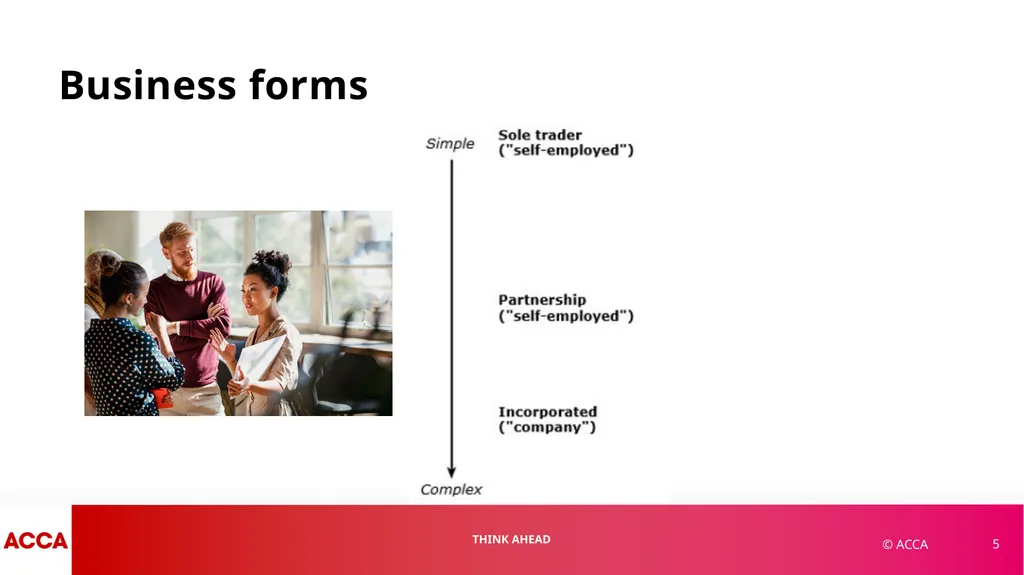
Business forms . 5<br>
05
Activity 1 Make a list of all the businesses that you have had dealings with over the past week.
Which of these were likely to be sole traders? 6<br>
06
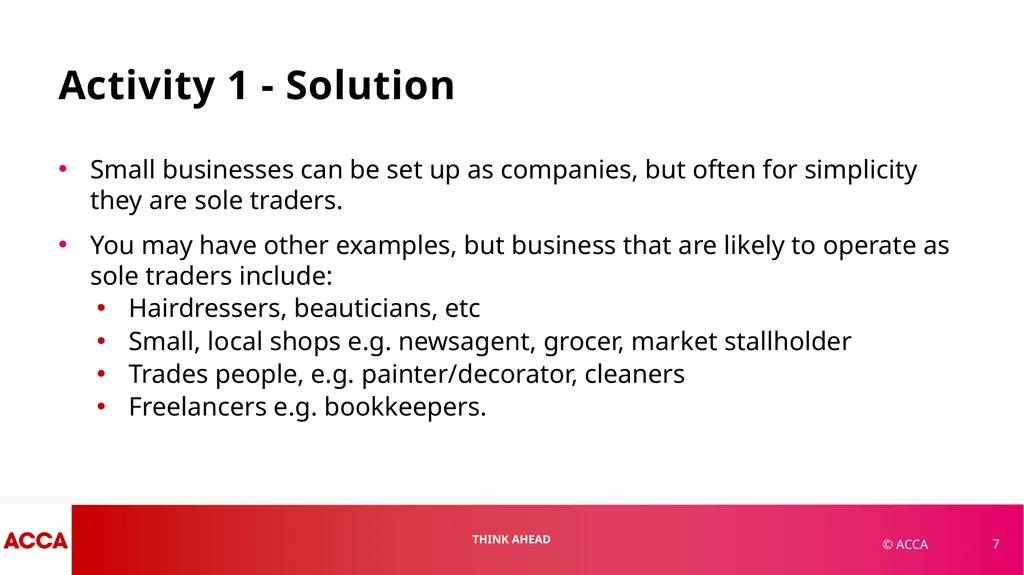
Activity 1 - Solution Small businesses can be set up as companies, but often for simplicity they are sole traders.
You may have other examples, but business that are likely to operate as sole traders include:
Hairdressers, beauticians, etc
Small, local shops e.g. newsagent, grocer, market stallholder
Trades people, e.g. painter/decorator, cleaners
Freelancers e.g. bookkeepers. 7<br>
07
Definitions Bookkeeping is the act of recording financial transactions and summarising those transactions
Accounting is the preparation of financial information into financial statements, based on the data prepared by the bookkeeper. 8<br>
08
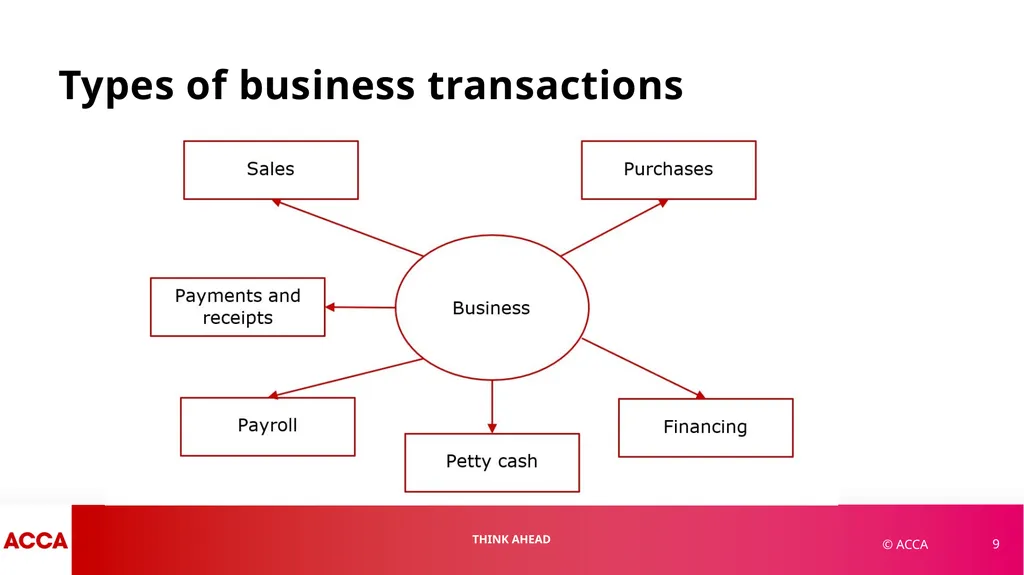
Types of business transactions . 9<br>
09
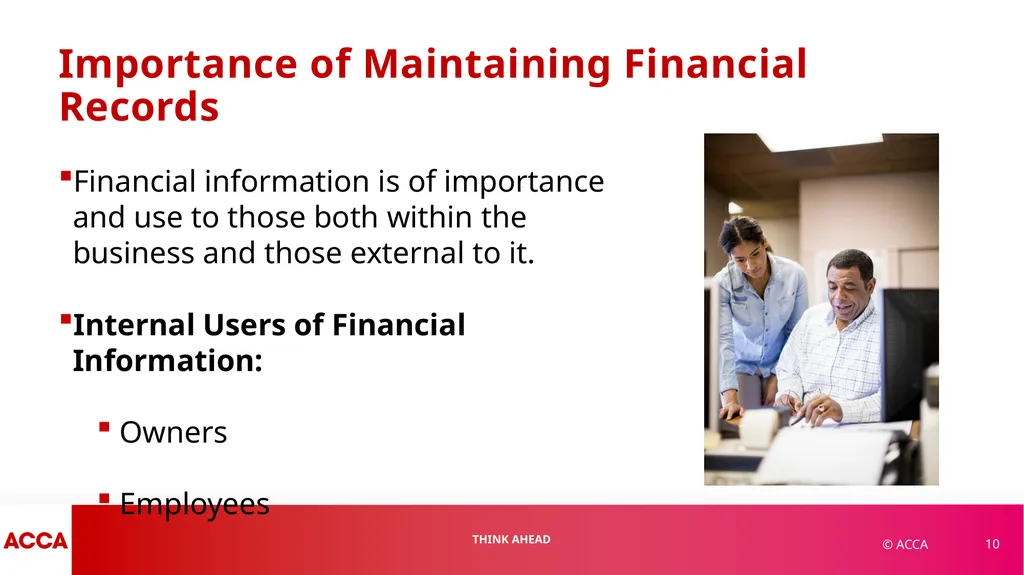
Importance of Maintaining Financial Records 10 Financial information is of importance and use to those both within the business and those external to it.
Internal Users of Financial Information:
Owners
Employees<br>
10
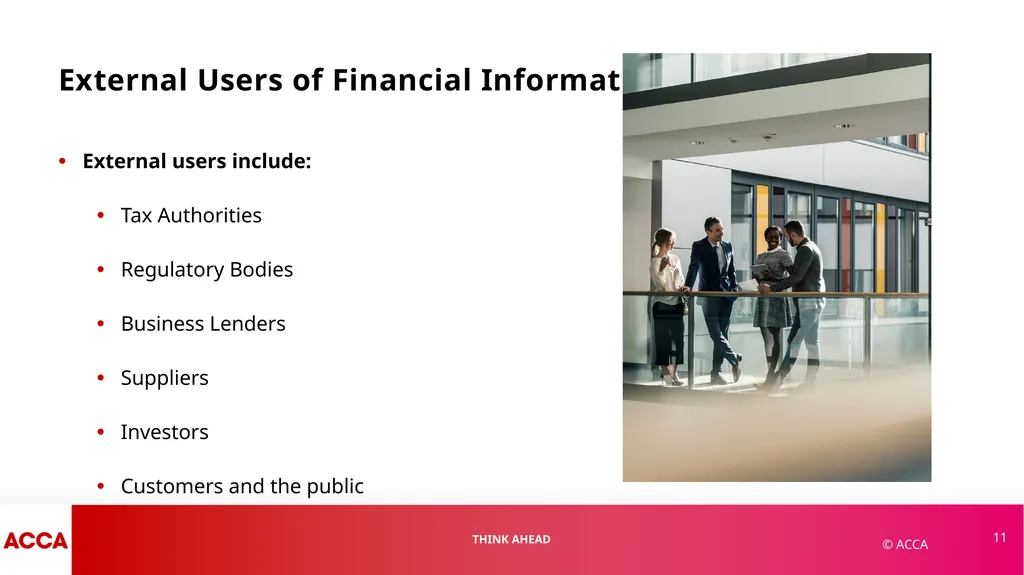
External Users of Financial Information 11 External users include:
Tax Authorities
Regulatory Bodies
Business Lenders
Suppliers
Investors
Customers and the public<br>
11
Document Retention Document retention is keeping paper or digital documents and business information for a specific period.
A document retention policy manages documents and records from creation to destruction.<br>
12
Document Retention Business documents are kept for a specific number of periods to:
Comply with legislation.
Each country has legislation that requires a business to keep financial documents for a specific period.
Data protection laws limits the amount of time that a business can keep personal information.
Retrieve historical documents.
Information from the past can be referred to, such as emails containing critical information.
Some information is required permanently. Such information is stored as ‘Master Files’.<br>
13
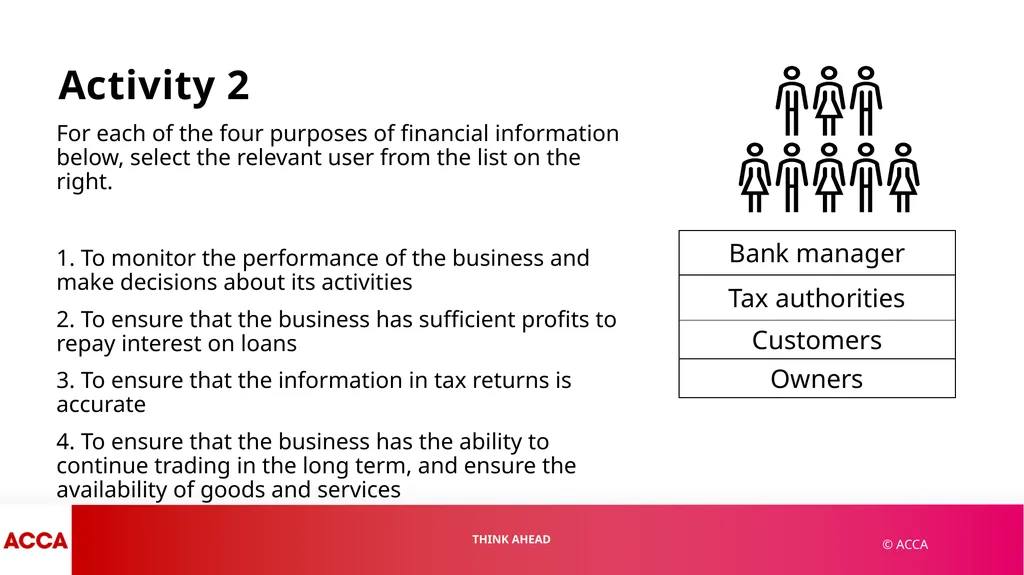
Activity 2 For each of the four purposes of financial information below, select the relevant user from the list on the right.
1. To monitor the performance of the business and make decisions about its activities
2. To ensure that the business has sufficient profits to repay interest on loans
3. To ensure that the information in tax returns is accurate
4. To ensure that the business has the ability to continue trading in the long term, and ensure the availability of goods and services<br>
14
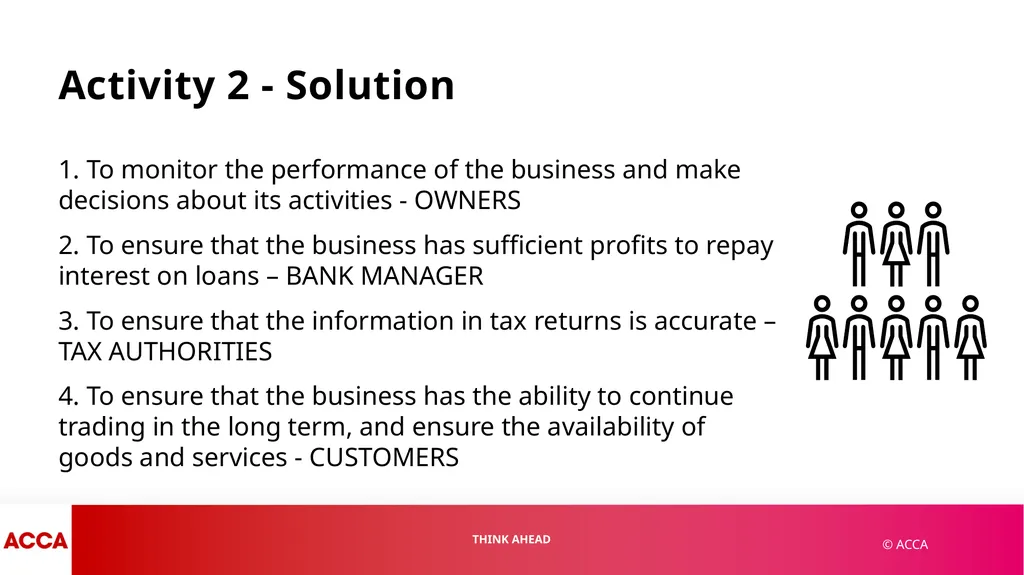
Activity 2 - Solution 1. To monitor the performance of the business and make decisions about its activities - OWNERS
2. To ensure that the business has sufficient profits to repay interest on loans – BANK MANAGER
3. To ensure that the information in tax returns is accurate – TAX AUTHORITIES
4. To ensure that the business has the ability to continue trading in the long term, and ensure the availability of goods and services - CUSTOMERS<br>
15
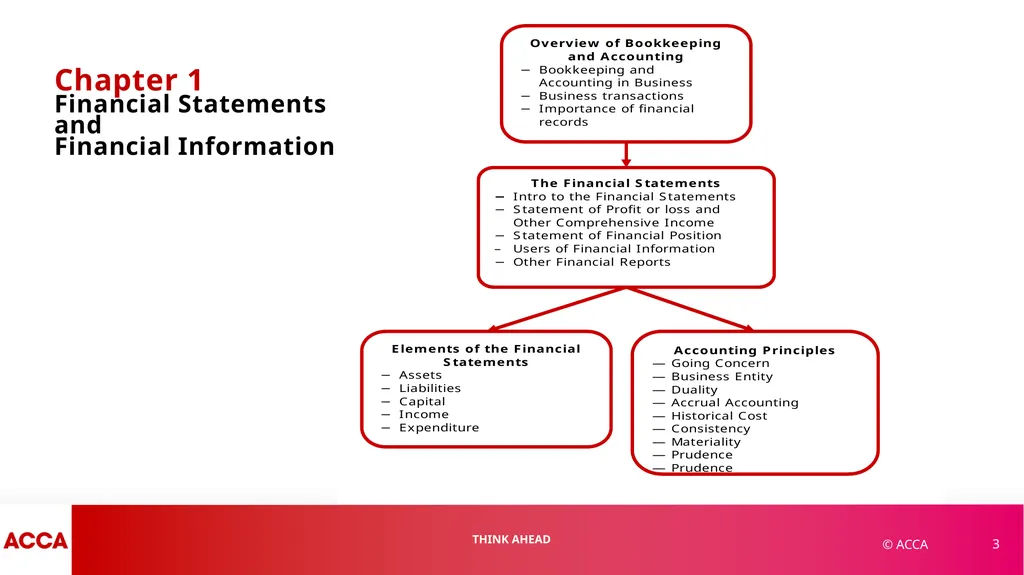
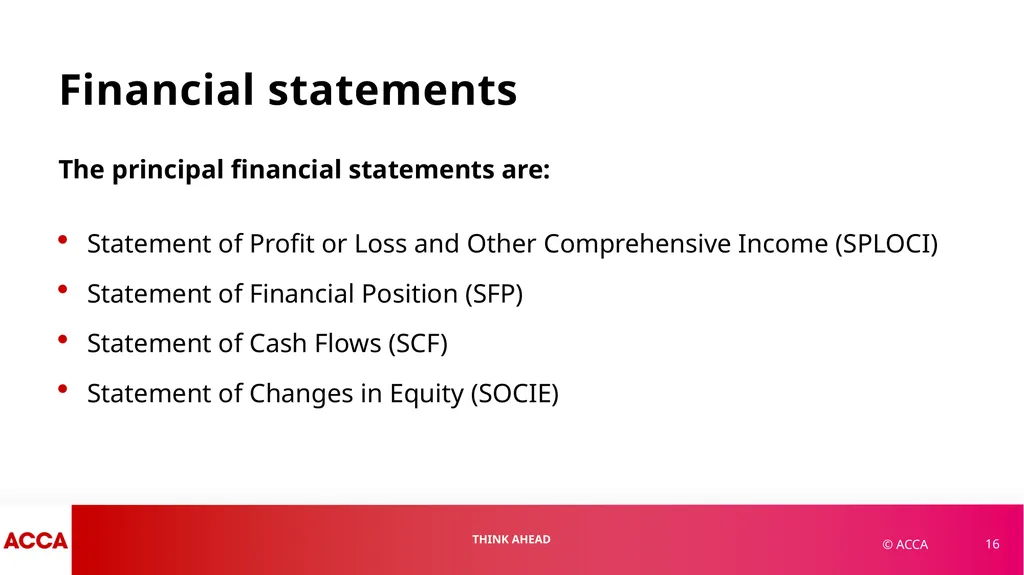
Financial statements The principal financial statements are:
Statement of Profit or Loss and Other Comprehensive Income (SPLOCI)
Statement of Financial Position (SFP)
Statement of Cash Flows (SCF)
Statement of Changes in Equity (SOCIE) 16<br>
16
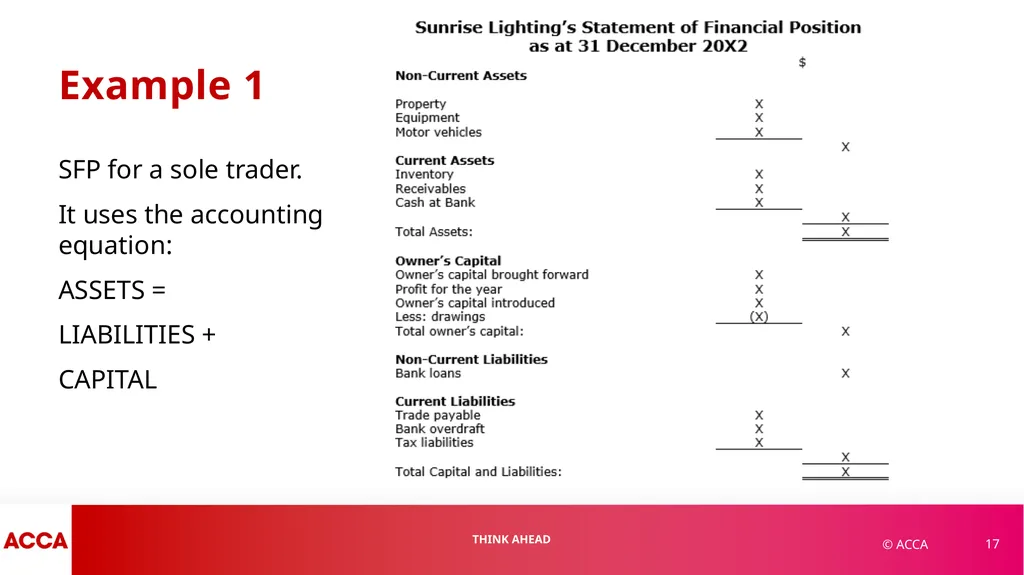
Example 1 SFP for a sole trader.
It uses the accounting equation:
ASSETS =
LIABILITIES +
CAPITAL 17<br>
17
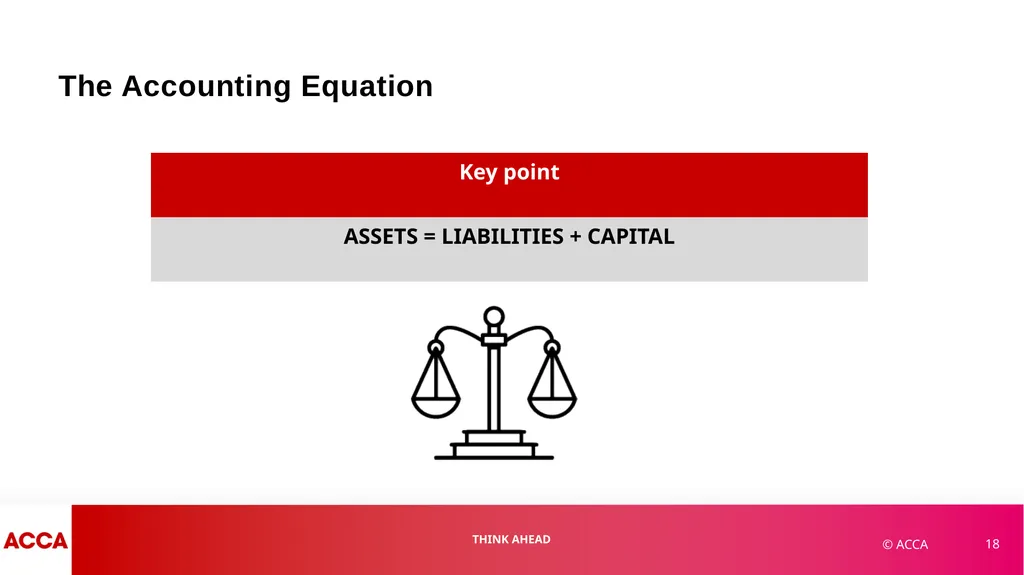
The Accounting Equation . 18<br>
18
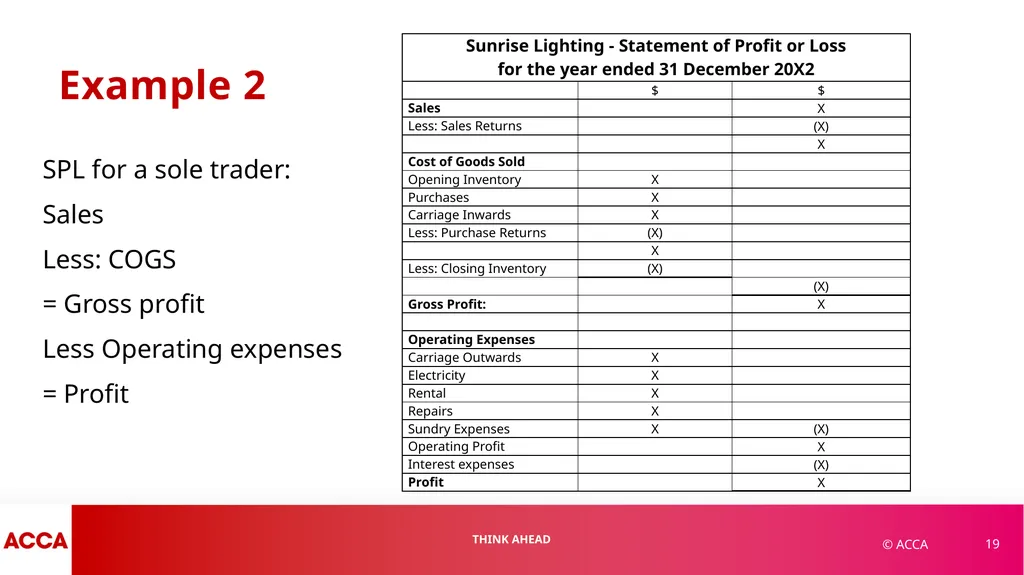
Example 2 SPL for a sole trader:
Sales
Less: COGS
= Gross profit
Less Operating expenses
= Profit 19<br>
19
Income and expenses . 20 Income is a business’s received economic benefit in cash or assets from sales (revenue) or other sources.
Income is increases in assets, or decreases in liabilities, that result in an increase in equity, other than those relating to contributions from holders of equity claims.
Expenses are decreases in assets, or increases in liabilities, that result in decreases in equity, other than those relating to holders of equity claims.
An expense is the day-to-day running costs incurred by the business.<br>
20
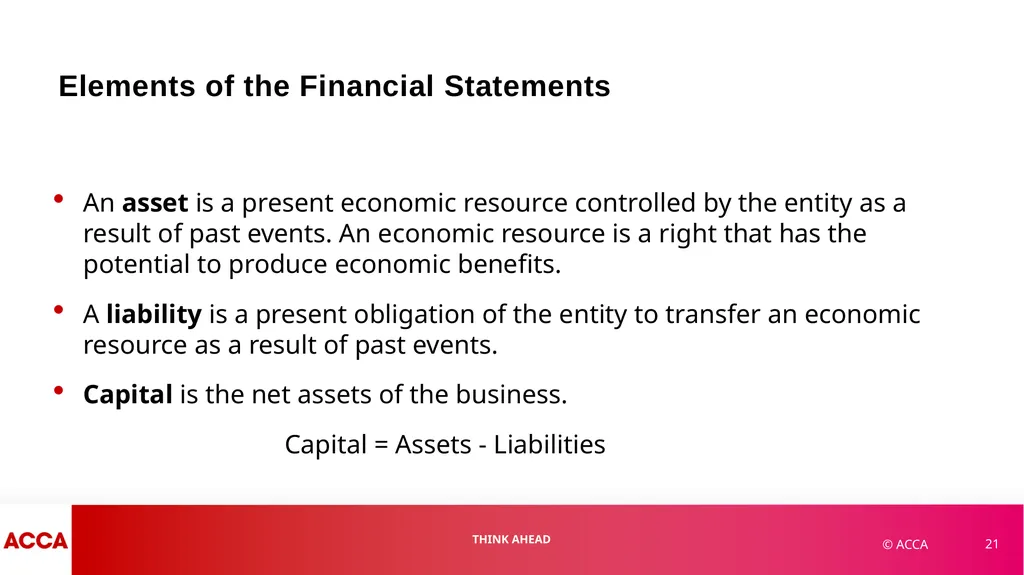
Elements of the Financial Statements . 21 An asset is a present economic resource controlled by the entity as a result of past events. An economic resource is a right that has the potential to produce economic benefits.
A liability is a present obligation of the entity to transfer an economic resource as a result of past events.
Capital is the net assets of the business.
Capital = Assets - Liabilities<br>
21
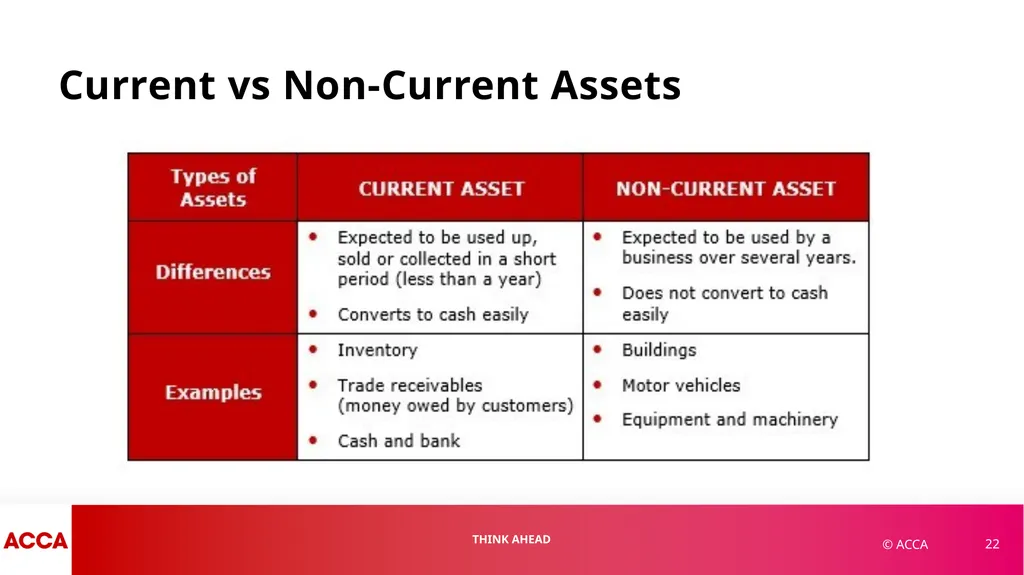
Current vs Non-Current Assets . 22<br>
22
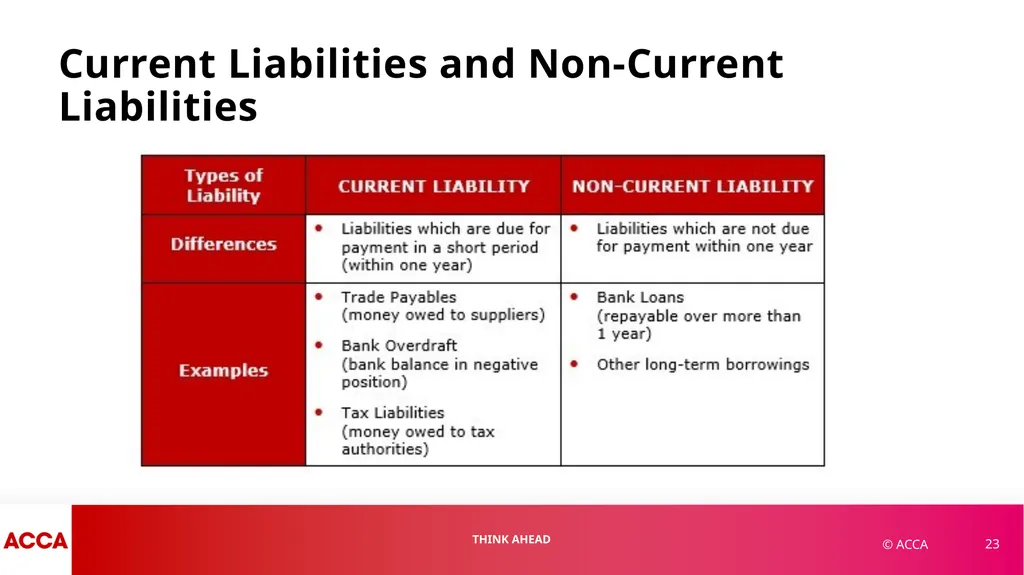
Current Liabilities and Non-Current Liabilities . 23<br>
23
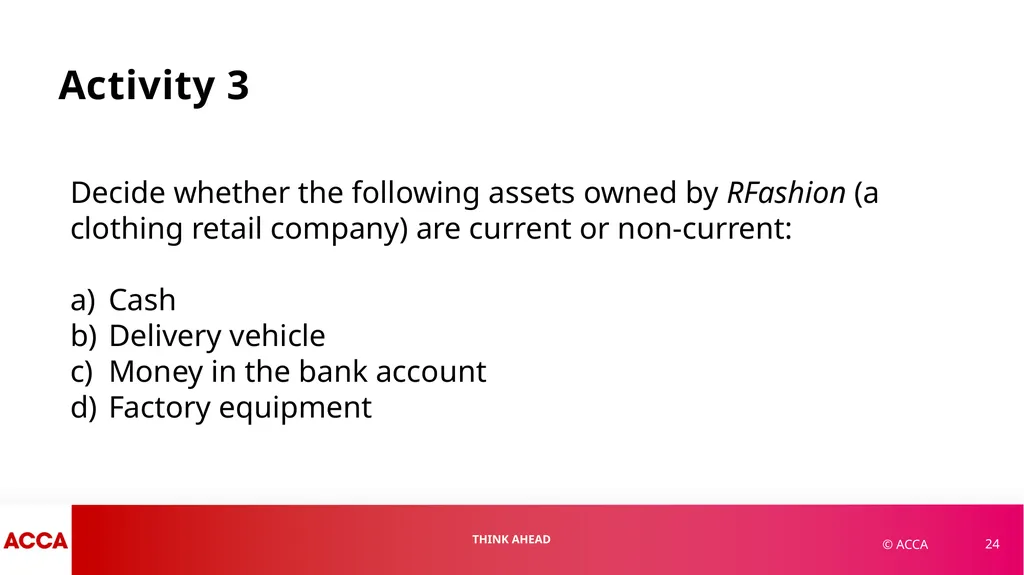
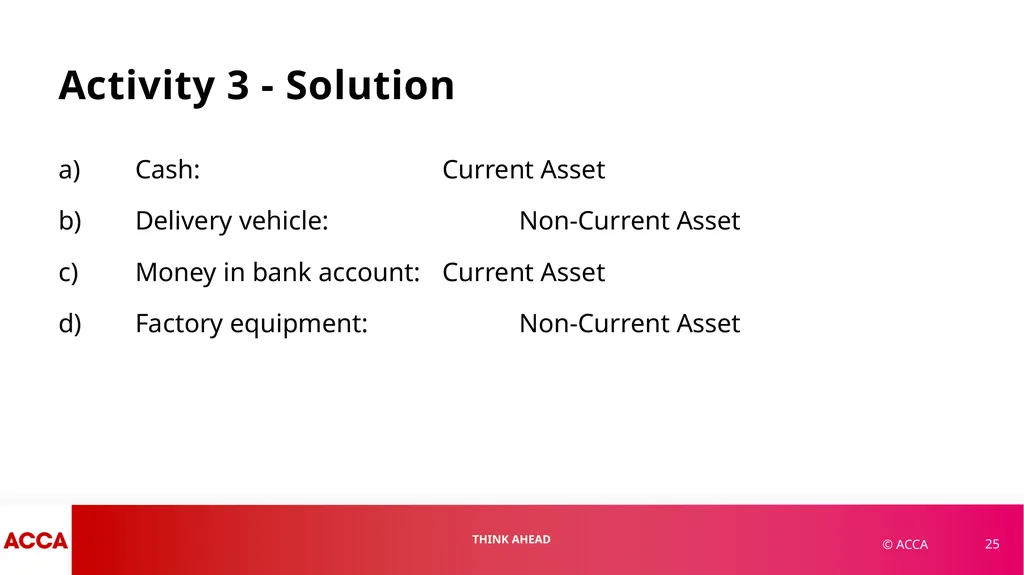
Activity 3 0 24 Decide whether the following assets owned by RFashion (a clothing retail company) are current or non-current:
a) Cash
b) Delivery vehicle
c) Money in the bank account
d) Factory equipment<br>
24
Activity 3 - Solution a) Cash: Current Asset
b) Delivery vehicle: Non-Current Asset
c) Money in bank account: Current Asset
d) Factory equipment: Non-Current Asset 25<br>
25
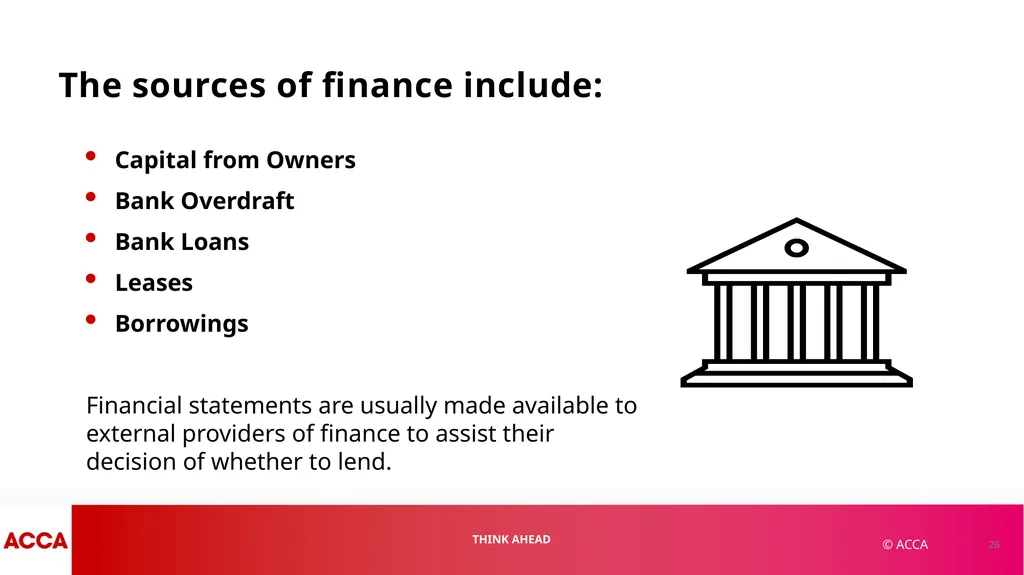
0 26 Capital from Owners
Bank Overdraft
Bank Loans
Leases
Borrowings
Financial statements are usually made available to external providers of finance to assist their decision of whether to lend. The sources of finance include:<br>
27
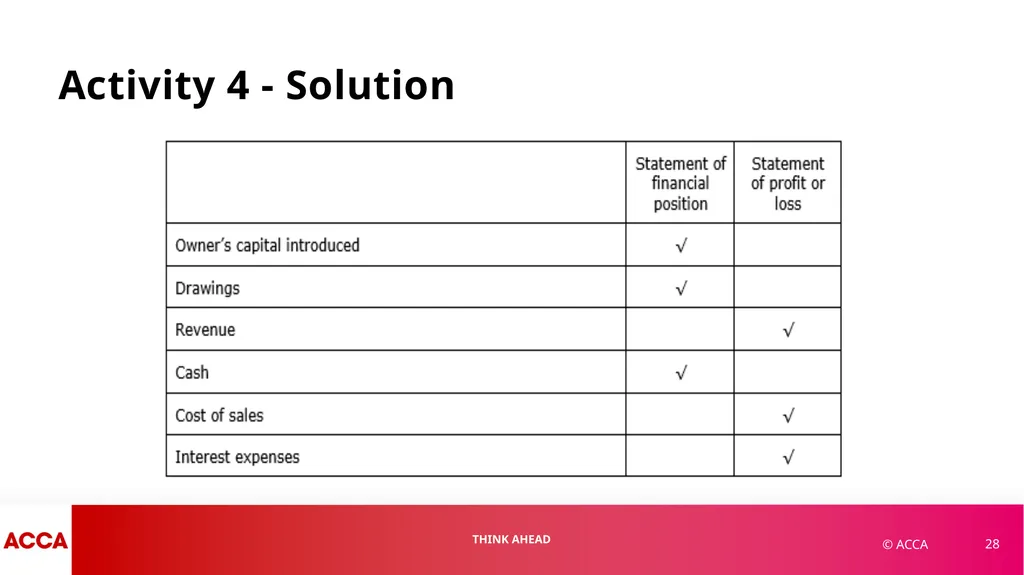
Activity 4 - Solution 00 28<br>
28
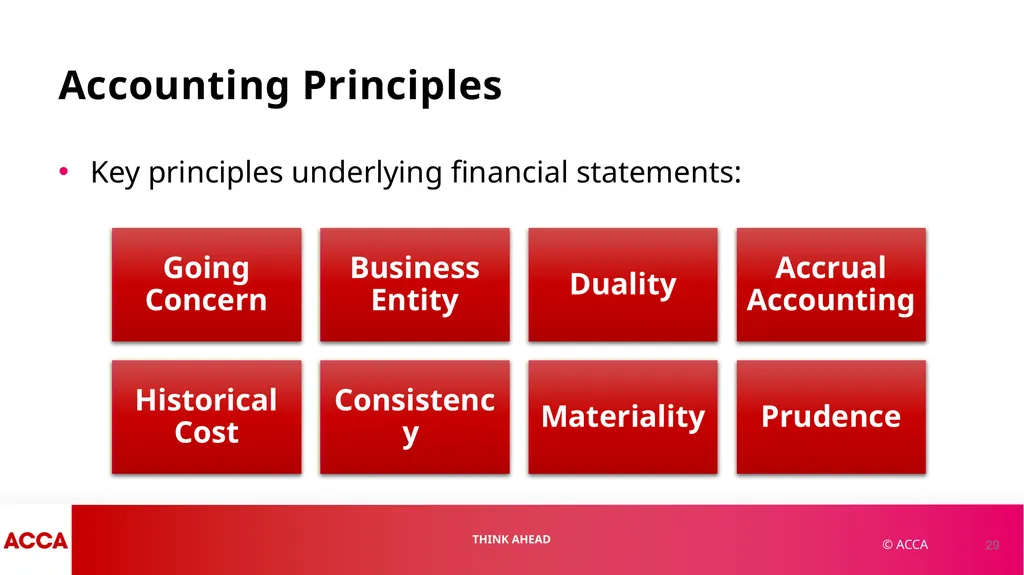
Accounting Principles Key principles underlying financial statements: 29<br>
29
Activity . 30 Chapter Quiz
Chapter 1 Financial Statements and Financial Information
Question 1 to 5<br>
30
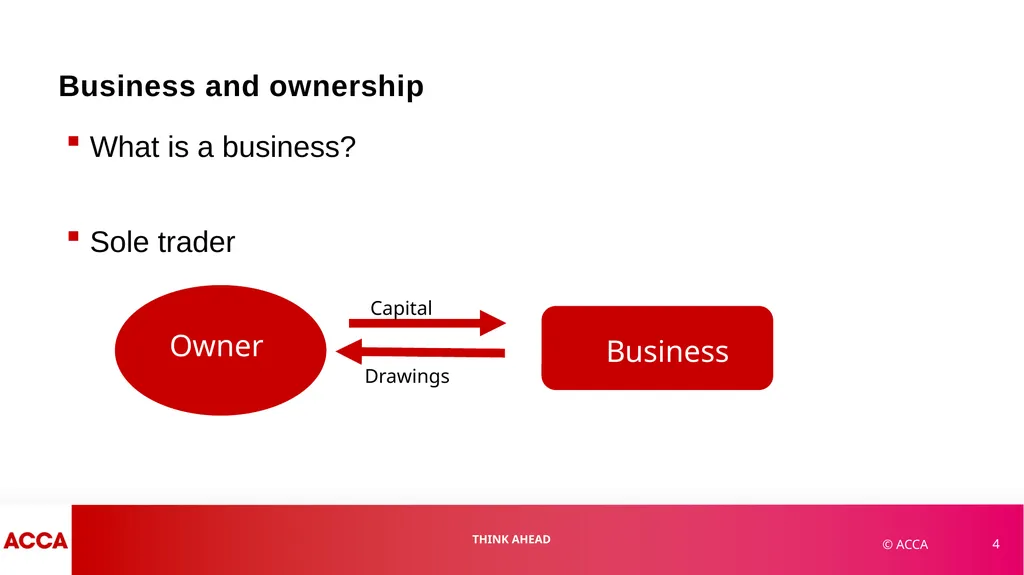
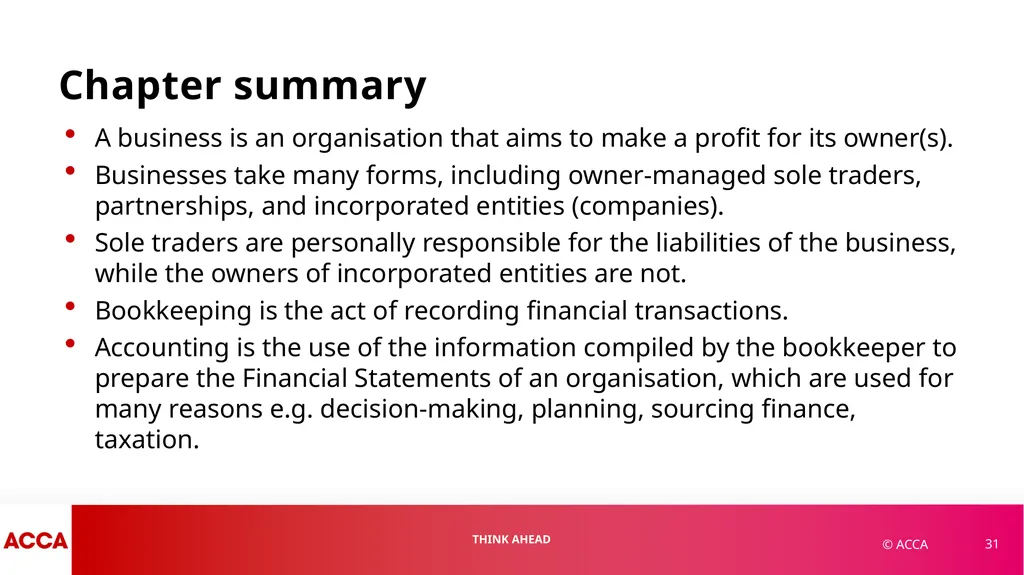
Chapter summary . 31 A business is an organisation that aims to make a profit for its owner(s).
Businesses take many forms, including owner-managed sole traders, partnerships, and incorporated entities (companies).
Sole traders are personally responsible for the liabilities of the business, while the owners of incorporated entities are not.
Bookkeeping is the act of recording financial transactions.
Accounting is the use of the information compiled by the bookkeeper to prepare the Financial Statements of an organisation, which are used for many reasons e.g. decision-making, planning, sourcing finance, taxation.<br>
31
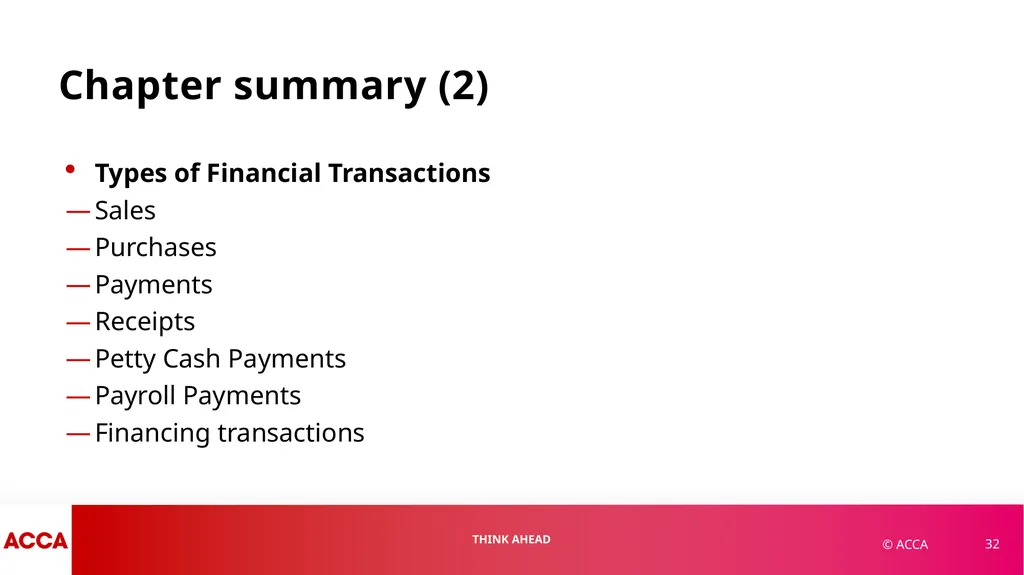
Chapter summary (2) . 32 Types of Financial Transactions
Sales
Purchases
Payments
Receipts
Petty Cash Payments
Payroll Payments
Financing transactions<br>
32
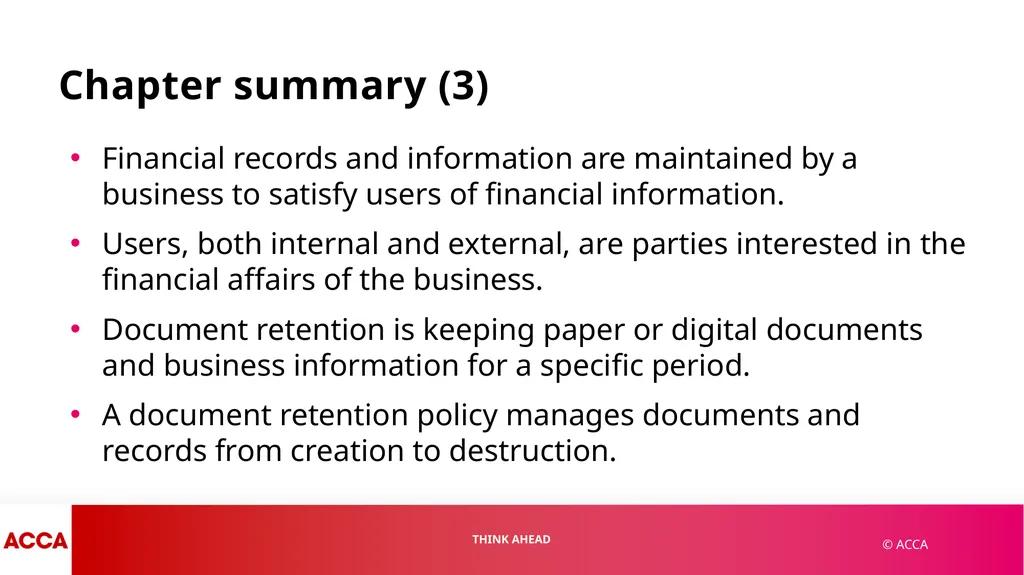
Chapter summary (3) Financial records and information are maintained by a business to satisfy users of financial information.
Users, both internal and external, are parties interested in the financial affairs of the business.
Document retention is keeping paper or digital documents and business information for a specific period.
A document retention policy manages documents and records from creation to destruction.<br>
33
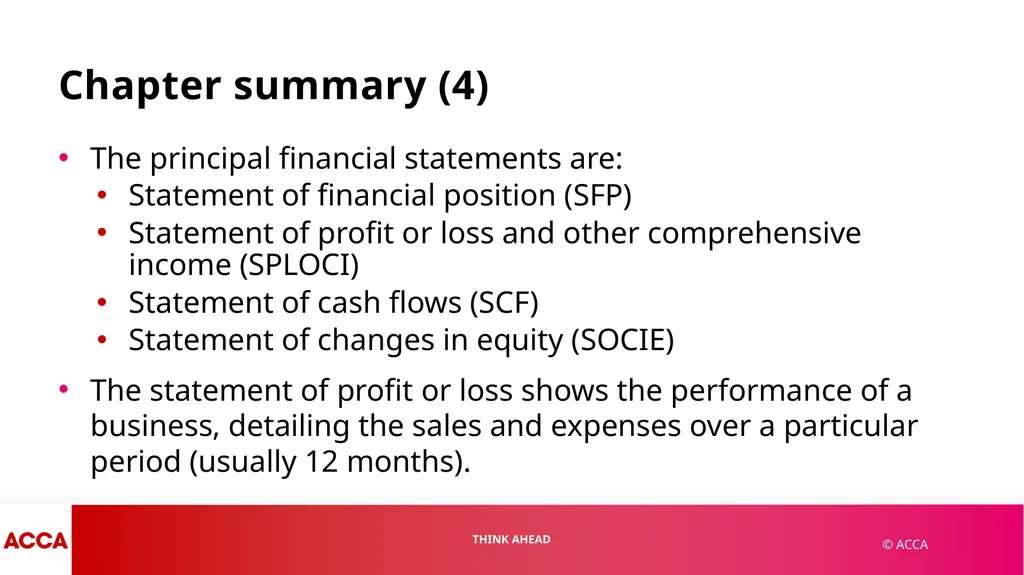
Chapter summary (4) The principal financial statements are:
Statement of financial position (SFP)
Statement of profit or loss and other comprehensive income (SPLOCI)
Statement of cash flows (SCF)
Statement of changes in equity (SOCIE)
The statement of profit or loss shows the performance of a business, detailing the sales and expenses over a particular period (usually 12 months).<br>
34
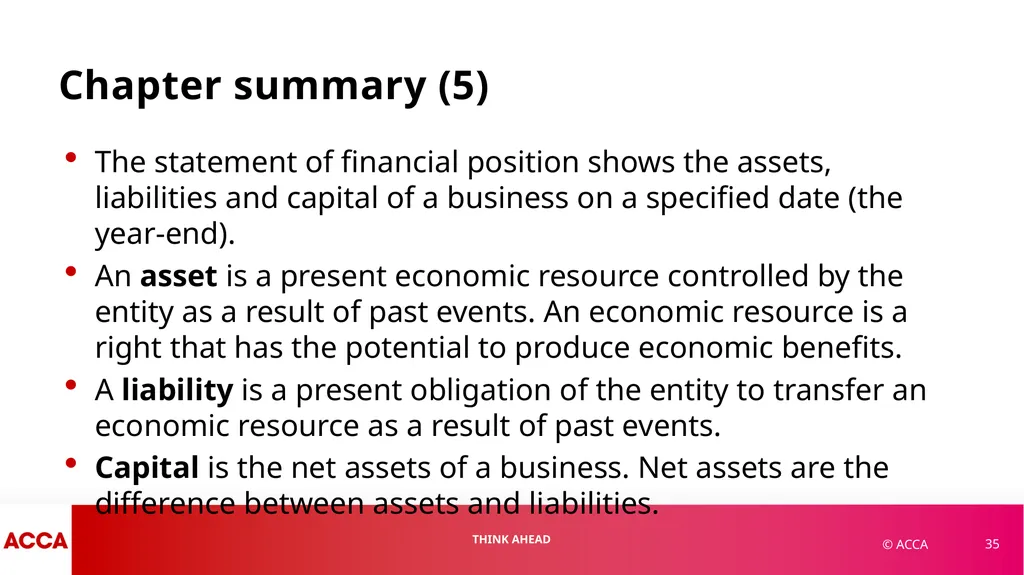
Chapter summary (5) . 35 The statement of financial position shows the assets, liabilities and capital of a business on a specified date (the year-end).
An asset is a present economic resource controlled by the entity as a result of past events. An economic resource is a right that has the potential to produce economic benefits.
A liability is a present obligation of the entity to transfer an economic resource as a result of past events.
Capital is the net assets of a business. Net assets are the difference between assets and liabilities.<br>
35
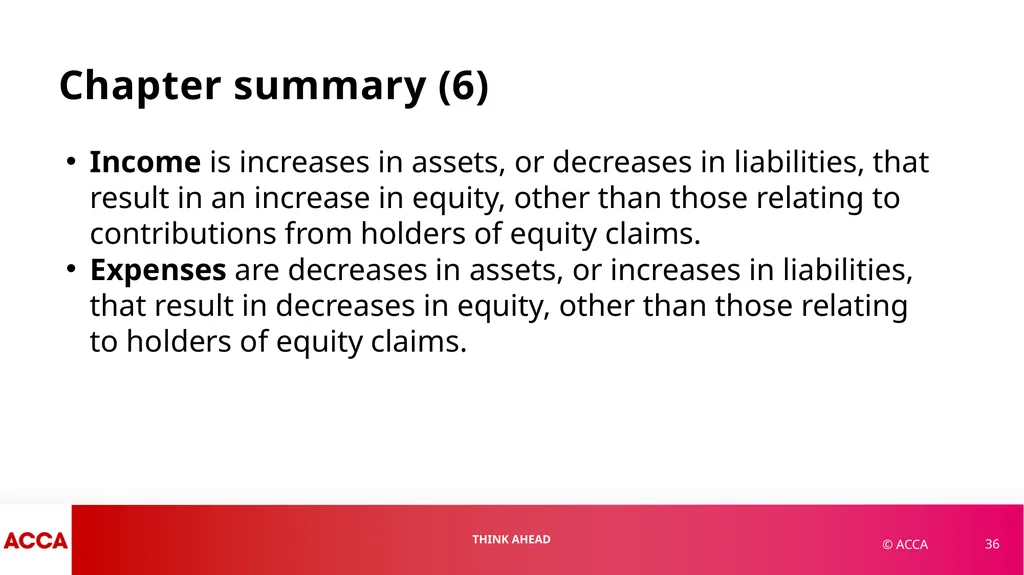
Chapter summary (6) . 36 Income is increases in assets, or decreases in liabilities, that result in an increase in equity, other than those relating to contributions from holders of equity claims.
Expenses are decreases in assets, or increases in liabilities, that result in decreases in equity, other than those relating to holders of equity claims.<br>
36
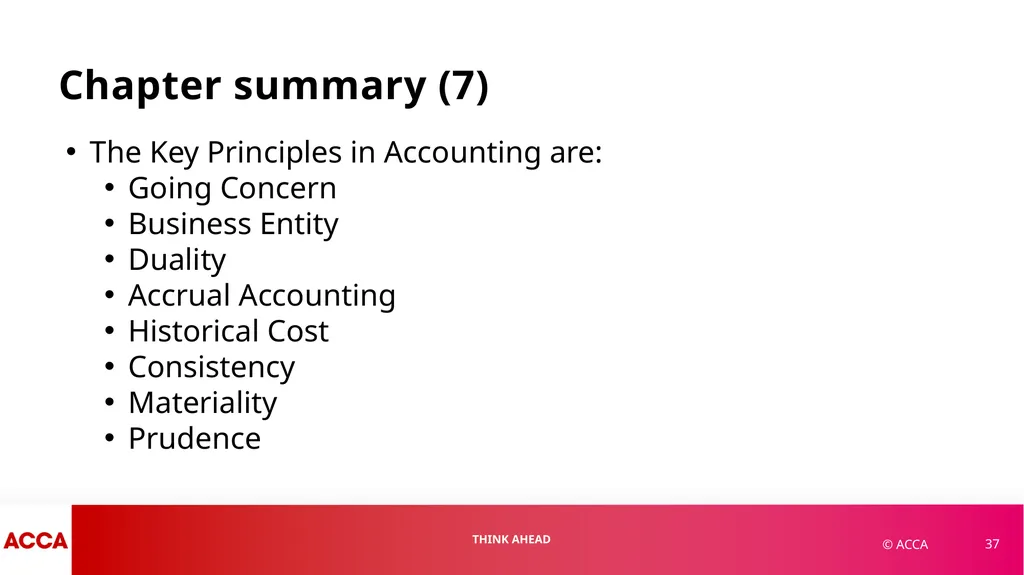
Chapter summary (7) . 37 The Key Principles in Accounting are:
Going Concern
Business Entity
Duality
Accrual Accounting
Historical Cost
Consistency
Materiality
Prudence<br>