
Chapter 11 Marketing Process and Consumer
Description: Chapter 11 Marketing Process and Consumer Behavior: Selected topics Prepared By Mostafa Kamel What is Marketing Prepared By Mostafa Kamel What is Marketing Marketing: is an organizational function and a set of processes for creating,
Related Topics
Download Presentation
"Chapter 11 Marketing Process and Consumer" is the property of its rightful owner. Permission is granted to download and print the materials on this website for personal, non-commercial use only, and to display it on your personal computer provided you do not modify the materials and that you retain all copyright notices contained in the materials. By downloading content from our website, you accept the terms of this agreement.
Presentation Transcript
slide1. Chapter 11 Marketing Process and Consumer Behavior: Selected topics Prepared By Mostafa Kamel<br>
slide2. What is Marketing Prepared By Mostafa Kamel<br>
slide3. What is Marketing Marketing: is an organizational function and a set of processes for creating, communicating, and delivering value to customers and for managing customer relationships in ways that benefit the organization and its stakeholders.” Prepared By Mostafa Kamel<br>
slide4. Delivering Value – Value and Benefits Prepared By Mostafa Kamel<br>
slide5. Delivering Value – Value and Utility Utility is the Ability of a product to satisfy a human want or need.
Marketing strives to provide four kinds of utility:
Form utility. Designing products with features that customers want.
Time utility. Providing products when customers will want them.
Place utility. Providing products where customers will want them.
Possession utility. Marketing creates a possession utility by transferring product ownership to customers by
Setting selling prices,
Setting terms for customer credit payments
Providing ownership documents. Prepared By Mostafa Kamel<br>
slide6. Goods, Services, and Ideas Marketing apply to:
Consumer Goods physical products purchased by consumers for personal use. (Medicine, car, food)
Industrial Goods physical products purchased by companies to produce other products (Raw materials, Machines)
Services products having nonphysical features or activity that can be purchased. (information, expertise)
Marketers also promote ideas such as
Ads warn us against copyright infringement and piracy.
Advantages of avoiding fast foods. Prepared By Mostafa Kamel<br>
slide7. Relationship Marketing and Customer Relationship Management Relationship Marketing: is a marketing strategy that emphasizes building lasting relationships with customers and suppliers.
Stronger relationships can result in:
Greater long-term satisfaction.
Greater customer loyalty.
Greater customer retention.
Customer Relationship Management (CRM): is an organized methods that a firm uses to build better information connections with clients, so that stronger company-client relationships are developed. Prepared By Mostafa Kamel<br>
slide8. Strategy: The Marketing Mix Prepared By Mostafa Kamel<br>
slide9. In planning and implementing strategies, marketing managers develop the four basic components (often called the “Four Ps”) of the marketing mix: Product, Pricing, Place, and Promotion. Prepared By Mostafa Kamel<br>
slide10. Product Product :is a good, service, or idea that is Marketed to fill consumers’ needs and wants.
Product Differentiation creation of a product feature or product image that differs enough from existing products to attract customers Prepared By Mostafa Kamel<br>
slide11. Price Pricing process of determining the best price at which to sell a product.
Successful pricing means finding a profitable middle ground between Costs and competitor’s prices. Prepared By Mostafa Kamel<br>
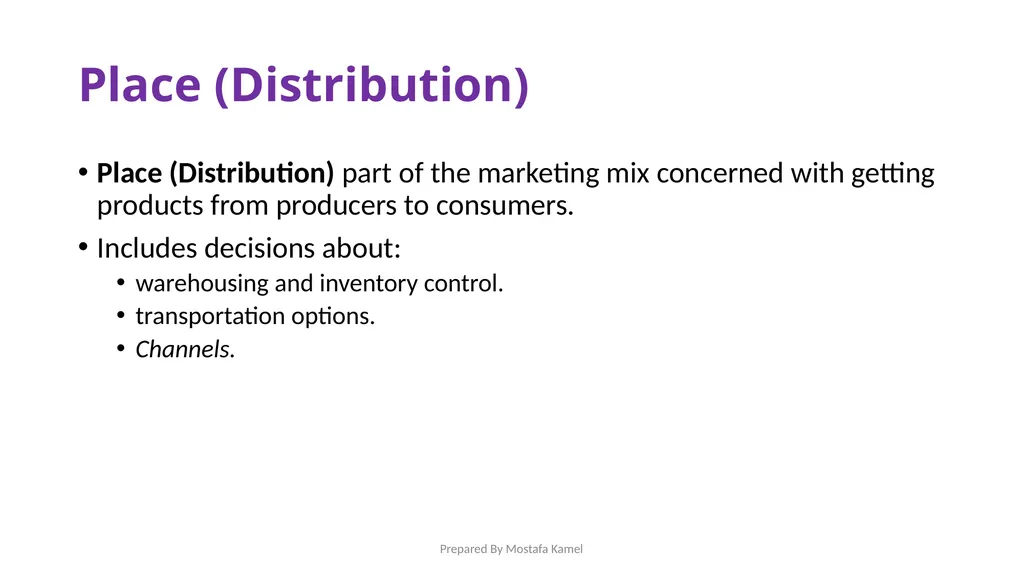
slide12. Place (Distribution) Place (Distribution) part of the marketing mix concerned with getting products from producers to consumers.
Includes decisions about:
warehousing and inventory control.
transportation options.
Channels. Prepared By Mostafa Kamel<br>
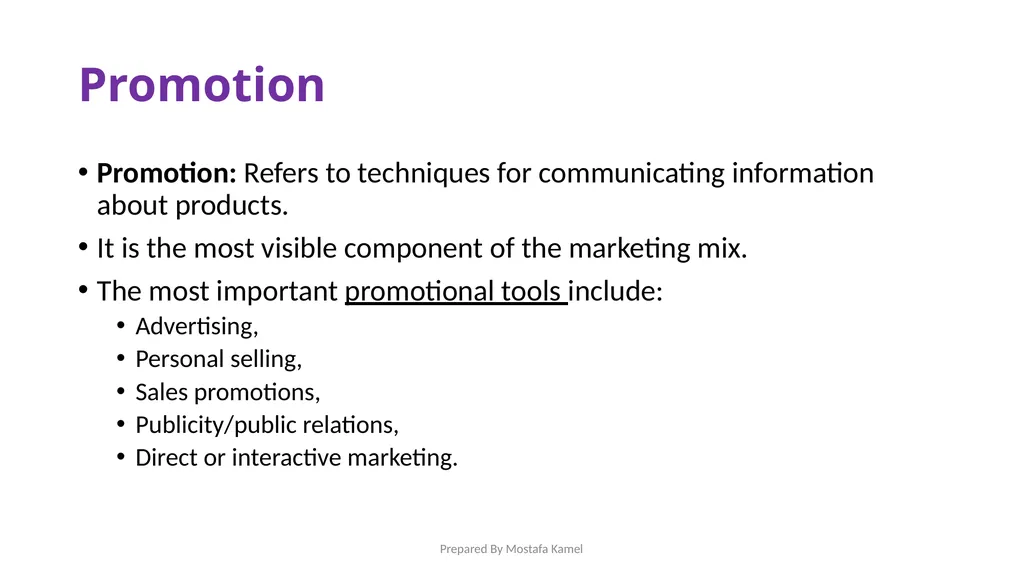
slide13. Promotion Promotion: Refers to techniques for communicating information about products.
It is the most visible component of the marketing mix.
The most important promotional tools include:
Advertising,
Personal selling,
Sales promotions,
Publicity/public relations,
Direct or interactive marketing. Prepared By Mostafa Kamel<br>
slide14. Blending It All Together: Integrated Strategy Integrated Marketing Strategy: Strategy that blends (Mixes) together the Four Ps of marketing to ensure their compatibility with one another and with the company’s non-marketing activities as well Prepared By Mostafa Kamel<br>
slide15. Target Marketing and Market Segmentation Prepared By Mostafa Kamel<br>
slide16. Target Market group of people who have Similar wants and needs and can be expected to show interest in the same products.
Target marketing requires market segmentation.
Market Segmentation process of dividing a market into categories of customer types, or “segments”.
Product Positioning process of fixing, adapting, and communicating the nature of a product Prepared By Mostafa Kamel<br>
slide17. Identifying Market Segments Most important five variables for identifying market segments:
Geographic Variables geographic units that may be considered in developing a segmentation strategy. (East – West – middle east)
Demographic Variables characteristics of populations that may be considered in developing a segmentation strategy. (Age – income – Gender)
Geo-Demographic Variables combination of geographic and demographic traits used in developing a segmentation strategy.
Psychographic Variables consumer characteristics, such as lifestyles, opinions, interests, and attitudes that may be considered in developing a segmentation strategy.
Behavioral Variables behavioral patterns displayed by groups of consumers and that are used in developing a segmentation strategy (Heavy users – specific purposes) Prepared By Mostafa Kamel<br>
slide18. Understanding Consumer Behavior Prepared By Mostafa Kamel<br>
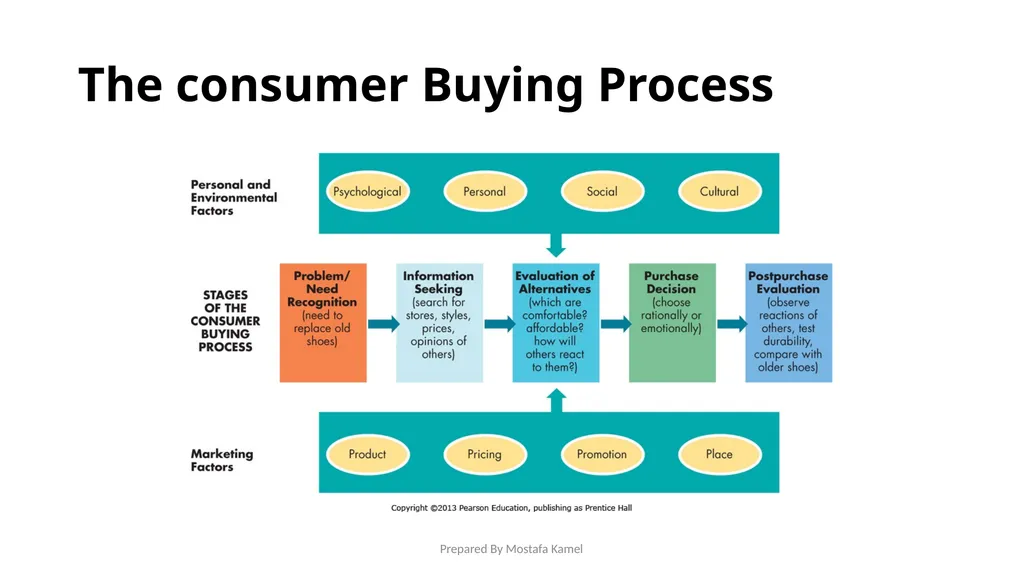
slide19. Consumer Behavior Consumer Behavior: is study of the decision process by which people buy and consume products. Prepared By Mostafa Kamel<br>
slide20. The consumer Buying Process Prepared By Mostafa Kamel<br>
slide21. Developing New Products Prepared By Mostafa Kamel<br>
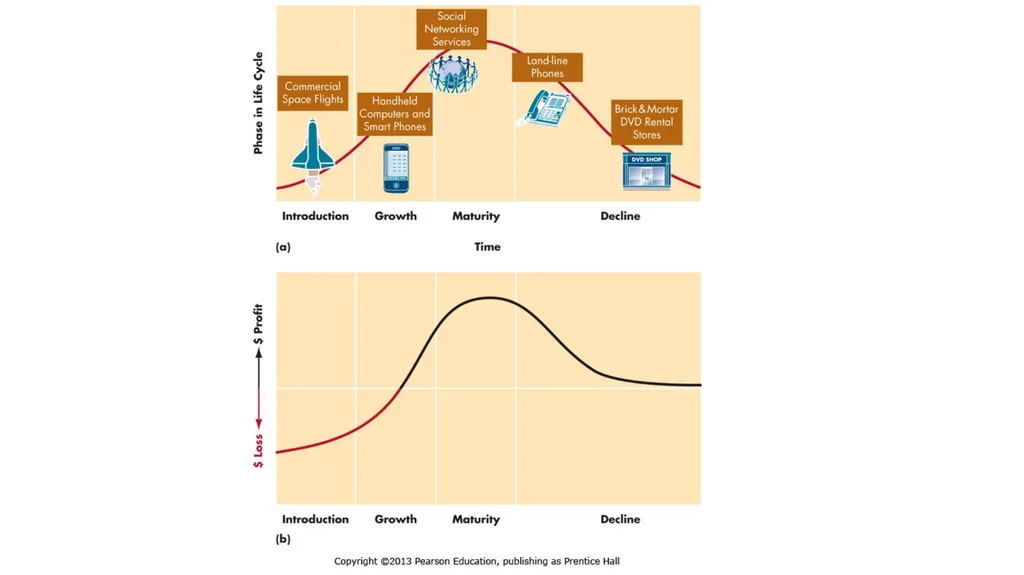
slide22. Product life cycle When a product reaches the market, it enters the product life cycle.
Product life cycle (PLC): is a series of stages through which it passes during its commercial life. Prepared By Mostafa Kamel<br>
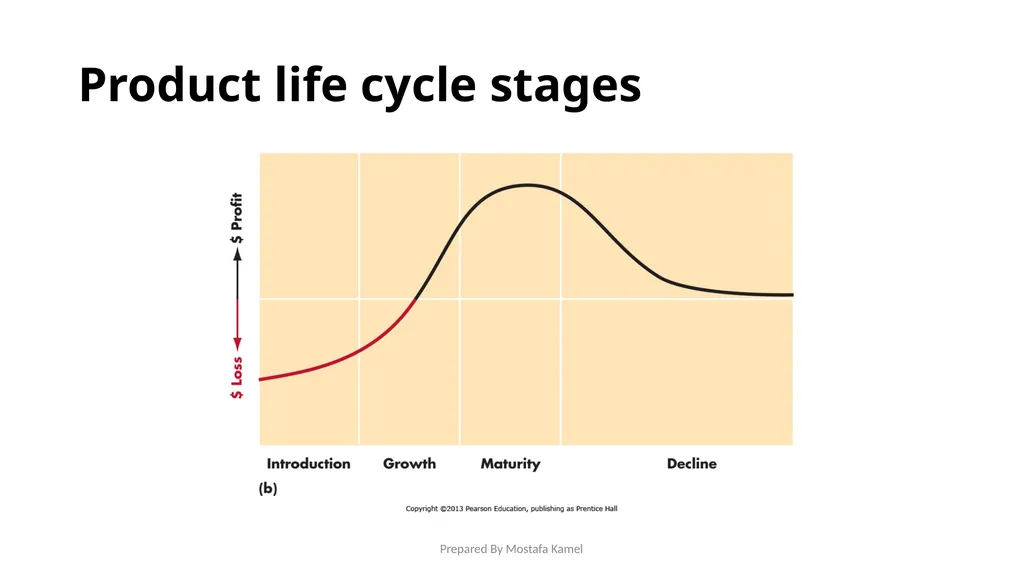
slide23. Product life cycle stages Prepared By Mostafa Kamel<br>
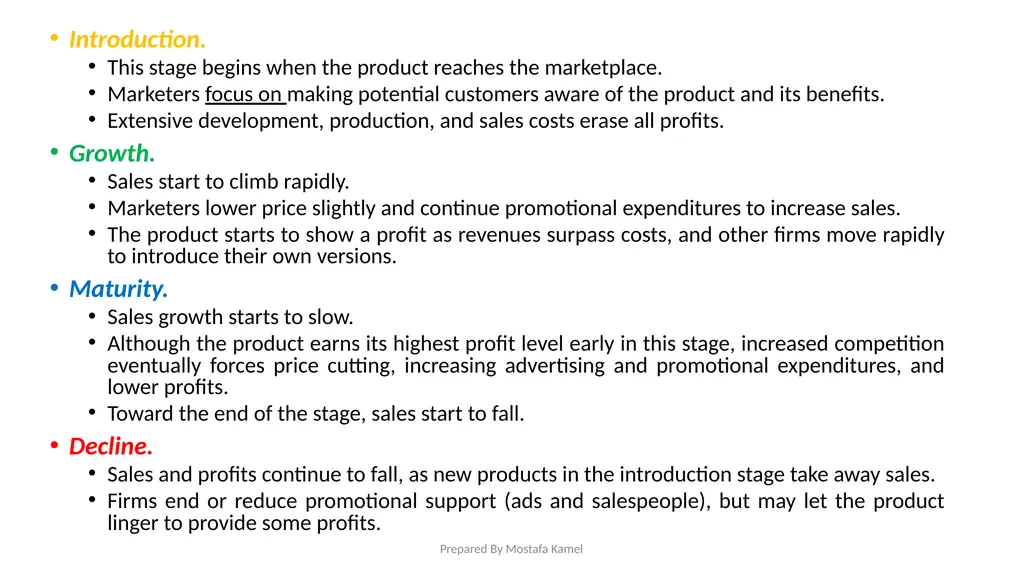
slide24. Introduction.
This stage begins when the product reaches the marketplace.
Marketers focus on making potential customers aware of the product and its benefits.
Extensive development, production, and sales costs erase all profits.
Growth.
Sales start to climb rapidly.
Marketers lower price slightly and continue promotional expenditures to increase sales.
The product starts to show a profit as revenues surpass costs, and other firms move rapidly to introduce their own versions.
Maturity.
Sales growth starts to slow.
Although the product earns its highest profit level early in this stage, increased competition eventually forces price cutting, increasing advertising and promotional expenditures, and lower profits.
Toward the end of the stage, sales start to fall.
Decline.
Sales and profits continue to fall, as new products in the introduction stage take away sales.
Firms end or reduce promotional support (ads and salespeople), but may let the product linger to provide some profits. Prepared By Mostafa Kamel<br>
slide2. What is Marketing Prepared By Mostafa Kamel<br>
slide3. What is Marketing Marketing: is an organizational function and a set of processes for creating, communicating, and delivering value to customers and for managing customer relationships in ways that benefit the organization and its stakeholders.” Prepared By Mostafa Kamel<br>
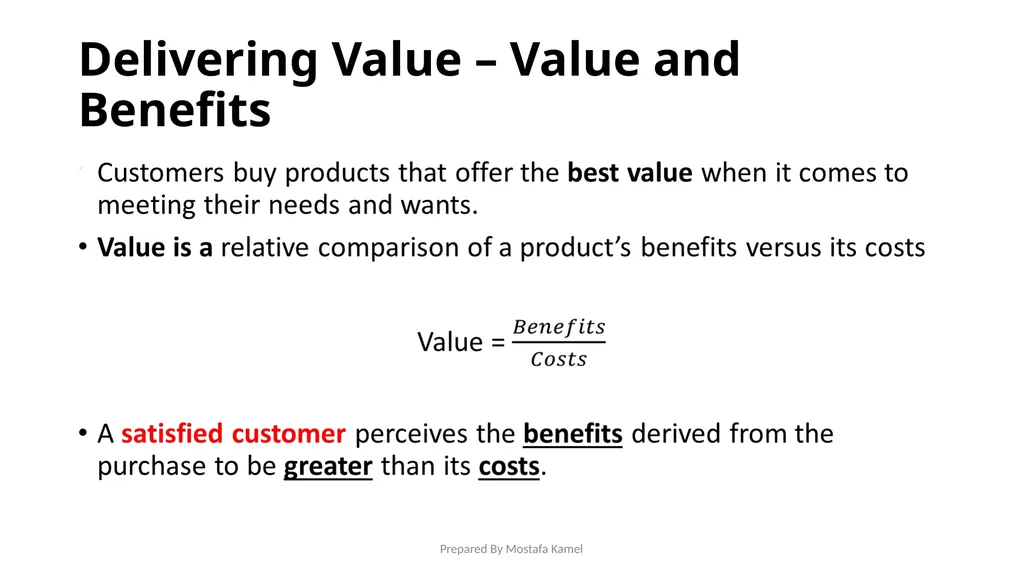
slide4. Delivering Value – Value and Benefits Prepared By Mostafa Kamel<br>
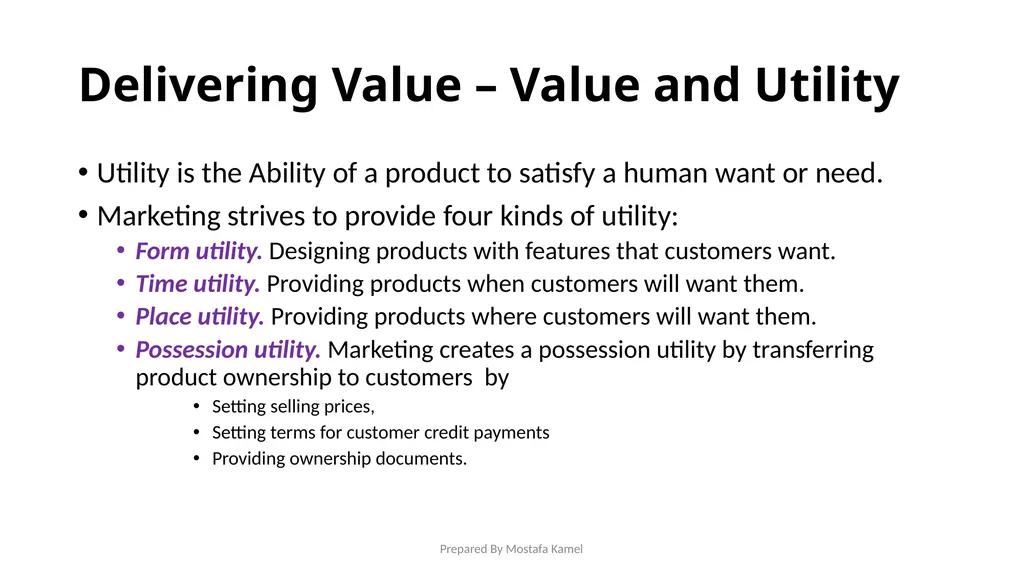
slide5. Delivering Value – Value and Utility Utility is the Ability of a product to satisfy a human want or need.
Marketing strives to provide four kinds of utility:
Form utility. Designing products with features that customers want.
Time utility. Providing products when customers will want them.
Place utility. Providing products where customers will want them.
Possession utility. Marketing creates a possession utility by transferring product ownership to customers by
Setting selling prices,
Setting terms for customer credit payments
Providing ownership documents. Prepared By Mostafa Kamel<br>
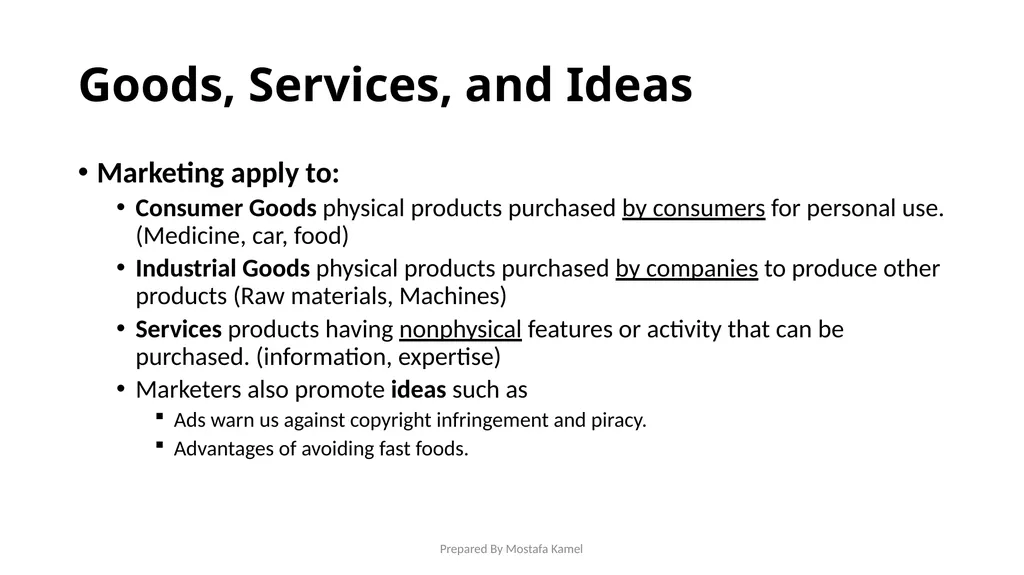
slide6. Goods, Services, and Ideas Marketing apply to:
Consumer Goods physical products purchased by consumers for personal use. (Medicine, car, food)
Industrial Goods physical products purchased by companies to produce other products (Raw materials, Machines)
Services products having nonphysical features or activity that can be purchased. (information, expertise)
Marketers also promote ideas such as
Ads warn us against copyright infringement and piracy.
Advantages of avoiding fast foods. Prepared By Mostafa Kamel<br>
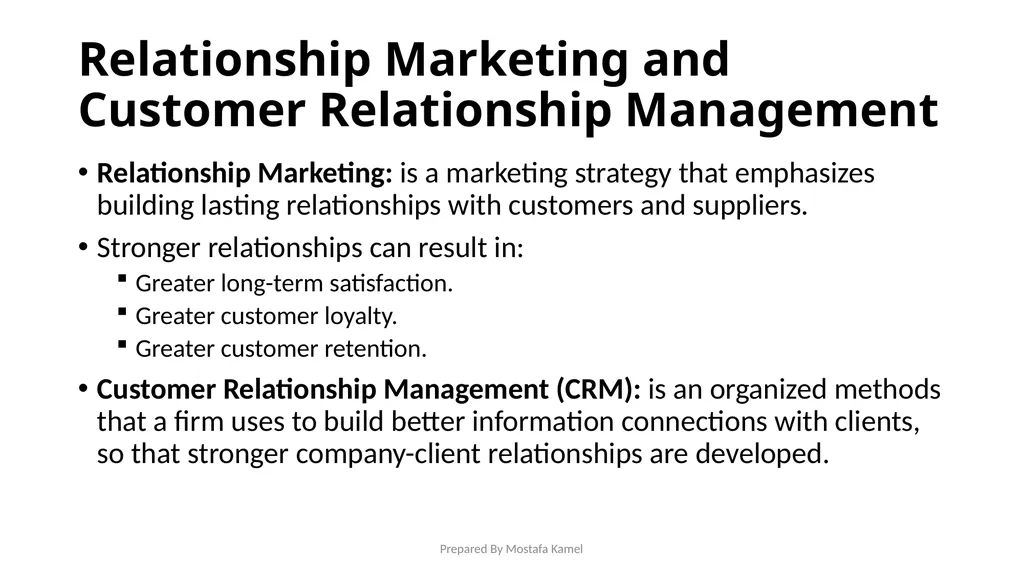
slide7. Relationship Marketing and Customer Relationship Management Relationship Marketing: is a marketing strategy that emphasizes building lasting relationships with customers and suppliers.
Stronger relationships can result in:
Greater long-term satisfaction.
Greater customer loyalty.
Greater customer retention.
Customer Relationship Management (CRM): is an organized methods that a firm uses to build better information connections with clients, so that stronger company-client relationships are developed. Prepared By Mostafa Kamel<br>
slide8. Strategy: The Marketing Mix Prepared By Mostafa Kamel<br>
slide9. In planning and implementing strategies, marketing managers develop the four basic components (often called the “Four Ps”) of the marketing mix: Product, Pricing, Place, and Promotion. Prepared By Mostafa Kamel<br>
slide10. Product Product :is a good, service, or idea that is Marketed to fill consumers’ needs and wants.
Product Differentiation creation of a product feature or product image that differs enough from existing products to attract customers Prepared By Mostafa Kamel<br>
slide11. Price Pricing process of determining the best price at which to sell a product.
Successful pricing means finding a profitable middle ground between Costs and competitor’s prices. Prepared By Mostafa Kamel<br>
slide12. Place (Distribution) Place (Distribution) part of the marketing mix concerned with getting products from producers to consumers.
Includes decisions about:
warehousing and inventory control.
transportation options.
Channels. Prepared By Mostafa Kamel<br>
slide13. Promotion Promotion: Refers to techniques for communicating information about products.
It is the most visible component of the marketing mix.
The most important promotional tools include:
Advertising,
Personal selling,
Sales promotions,
Publicity/public relations,
Direct or interactive marketing. Prepared By Mostafa Kamel<br>
slide14. Blending It All Together: Integrated Strategy Integrated Marketing Strategy: Strategy that blends (Mixes) together the Four Ps of marketing to ensure their compatibility with one another and with the company’s non-marketing activities as well Prepared By Mostafa Kamel<br>
slide15. Target Marketing and Market Segmentation Prepared By Mostafa Kamel<br>
slide16. Target Market group of people who have Similar wants and needs and can be expected to show interest in the same products.
Target marketing requires market segmentation.
Market Segmentation process of dividing a market into categories of customer types, or “segments”.
Product Positioning process of fixing, adapting, and communicating the nature of a product Prepared By Mostafa Kamel<br>
slide17. Identifying Market Segments Most important five variables for identifying market segments:
Geographic Variables geographic units that may be considered in developing a segmentation strategy. (East – West – middle east)
Demographic Variables characteristics of populations that may be considered in developing a segmentation strategy. (Age – income – Gender)
Geo-Demographic Variables combination of geographic and demographic traits used in developing a segmentation strategy.
Psychographic Variables consumer characteristics, such as lifestyles, opinions, interests, and attitudes that may be considered in developing a segmentation strategy.
Behavioral Variables behavioral patterns displayed by groups of consumers and that are used in developing a segmentation strategy (Heavy users – specific purposes) Prepared By Mostafa Kamel<br>
slide18. Understanding Consumer Behavior Prepared By Mostafa Kamel<br>
slide19. Consumer Behavior Consumer Behavior: is study of the decision process by which people buy and consume products. Prepared By Mostafa Kamel<br>
slide20. The consumer Buying Process Prepared By Mostafa Kamel<br>
slide21. Developing New Products Prepared By Mostafa Kamel<br>
slide22. Product life cycle When a product reaches the market, it enters the product life cycle.
Product life cycle (PLC): is a series of stages through which it passes during its commercial life. Prepared By Mostafa Kamel<br>
slide23. Product life cycle stages Prepared By Mostafa Kamel<br>
slide24. Introduction.
This stage begins when the product reaches the marketplace.
Marketers focus on making potential customers aware of the product and its benefits.
Extensive development, production, and sales costs erase all profits.
Growth.
Sales start to climb rapidly.
Marketers lower price slightly and continue promotional expenditures to increase sales.
The product starts to show a profit as revenues surpass costs, and other firms move rapidly to introduce their own versions.
Maturity.
Sales growth starts to slow.
Although the product earns its highest profit level early in this stage, increased competition eventually forces price cutting, increasing advertising and promotional expenditures, and lower profits.
Toward the end of the stage, sales start to fall.
Decline.
Sales and profits continue to fall, as new products in the introduction stage take away sales.
Firms end or reduce promotional support (ads and salespeople), but may let the product linger to provide some profits. Prepared By Mostafa Kamel<br>