
Chapter 13 Humanistic Psychotherapy Humanism Carl



Description: Chapter 13 Humanistic Psychotherapy Humanism Carl Rogers was a leading figure Abraham Maslow was another Humanism was a reaction against Freuds approach Assumed that human nature wasnt so bad (e.g., id-driven) Overlapping terms for
Related Topics
Download Presentation
"Chapter 13 Humanistic Psychotherapy Humanism Carl" is the property of its rightful owner. Permission is granted to download and print the materials on this website for personal, non-commercial use only, and to display it on your personal computer provided you do not modify the materials and that you retain all copyright notices contained in the materials. By downloading content from our website, you accept the terms of this agreement.
Presentation Transcript
slide1. Chapter 13 Humanistic Psychotherapy<br>
slide2. Humanism Carl Rogers was a leading figure
Abraham Maslow was another
Humanism was a reaction against Freud’s approach
Assumed that human nature wasn’t so bad (e.g., id-driven)
Overlapping terms for humanism include “nondirective,” “client-centered,” and “person-centered”<br>
slide3. Humanistic Concepts: Clinical Implications People have an inborn tendency toward self-actualization
People also have a need for positive regard—warmth, acceptance, “prizing”
Sometimes, people are forced to sacrifice self-actualization in order to obtain positive regard from important others (e.g., parents)<br>
slide4. Goal of Humanistic Psychotherapy Primary goal of humanistic psychotherapy is to foster self-actualization
Problems stem from stifled self-actualization or growth
Therapist’s task is to create a climate in which the client can resume their natural growth toward psychological wellness<br>
slide5. Goal of Humanistic Therapy (cont.) In humanistic therapy, there are no conditions of worth on the client
Clients’ real selves can match their ideal selves
This match is known as congruence, and is the root of psychological wellness
Mismatch between real and ideal selves is known as incongruence, and is the root of psychopathology<br>
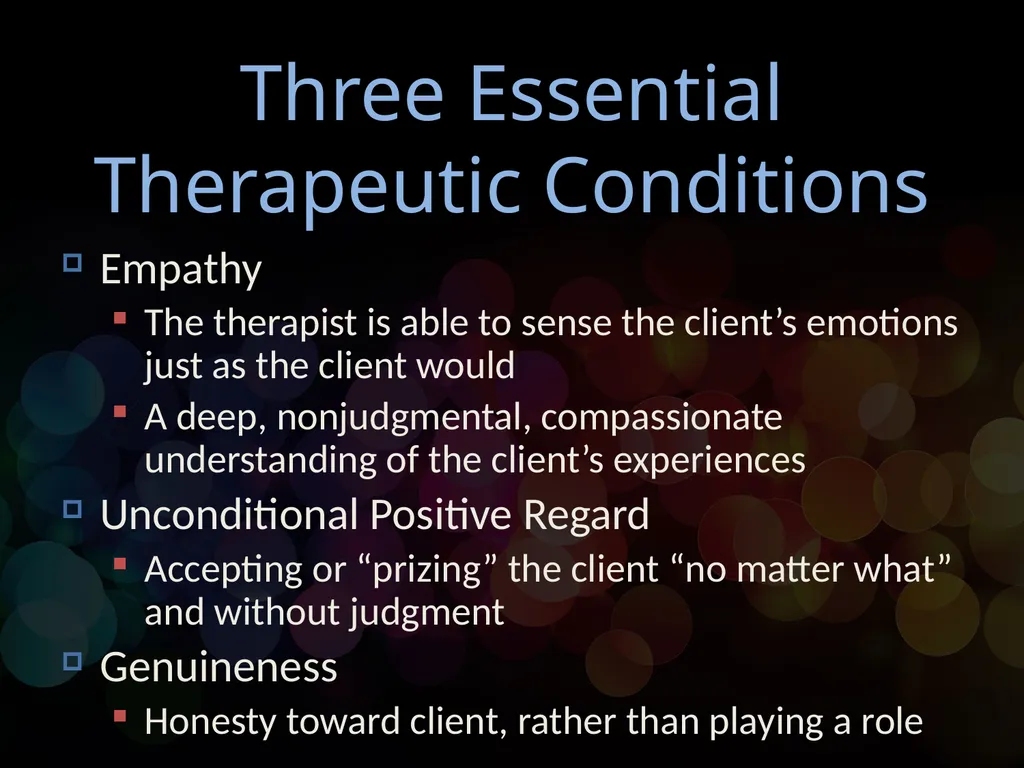
slide6. Three Essential Therapeutic Conditions Empathy
The therapist is able to sense the client’s emotions just as the client would
A deep, nonjudgmental, compassionate understanding of the client’s experiences
Unconditional Positive Regard
Accepting or “prizing” the client “no matter what” and without judgment
Genuineness
Honesty toward client, rather than playing a role<br>
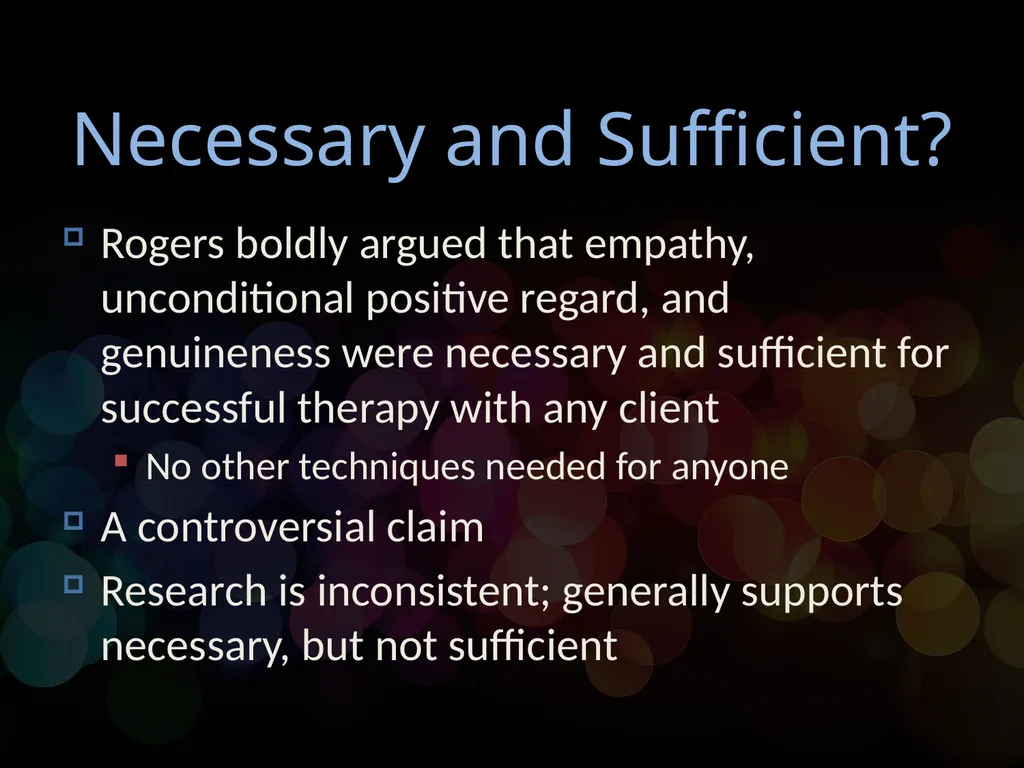
slide7. Necessary and Sufficient? Rogers boldly argued that empathy, unconditional positive regard, and genuineness were necessary and sufficient for successful therapy with any client
No other techniques needed for anyone
A controversial claim
Research is inconsistent; generally supports necessary, but not sufficient<br>
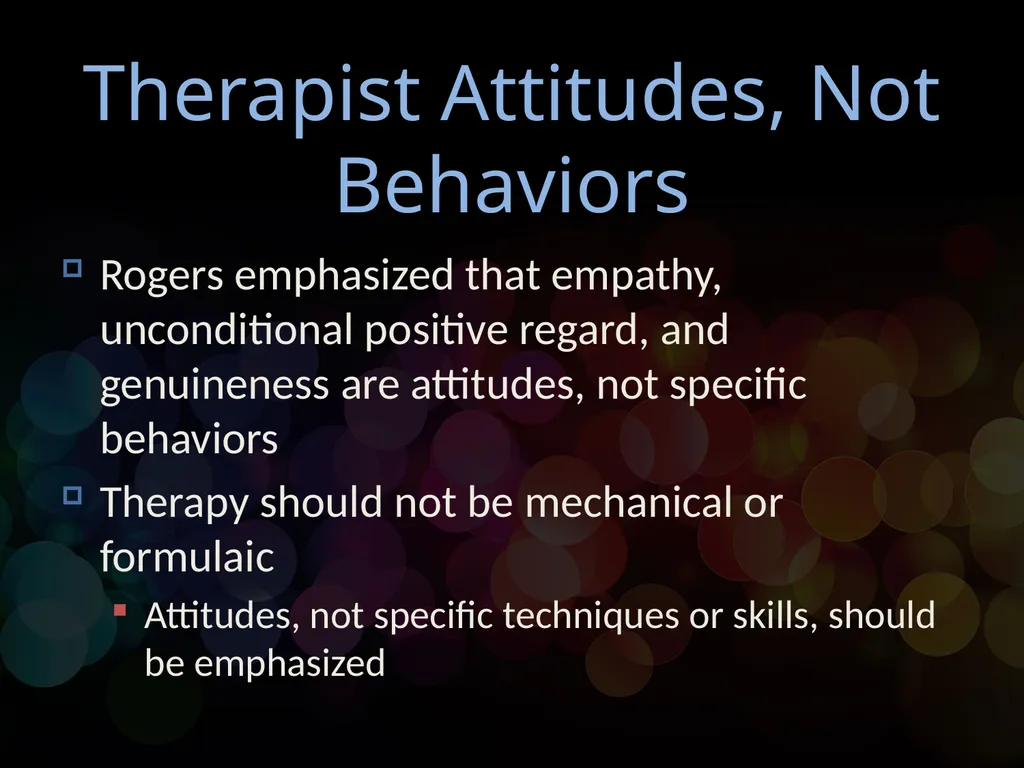
slide8. Therapist Attitudes, Not Behaviors Rogers emphasized that empathy, unconditional positive regard, and genuineness are attitudes, not specific behaviors
Therapy should not be mechanical or formulaic
Attitudes, not specific techniques or skills, should be emphasized<br>
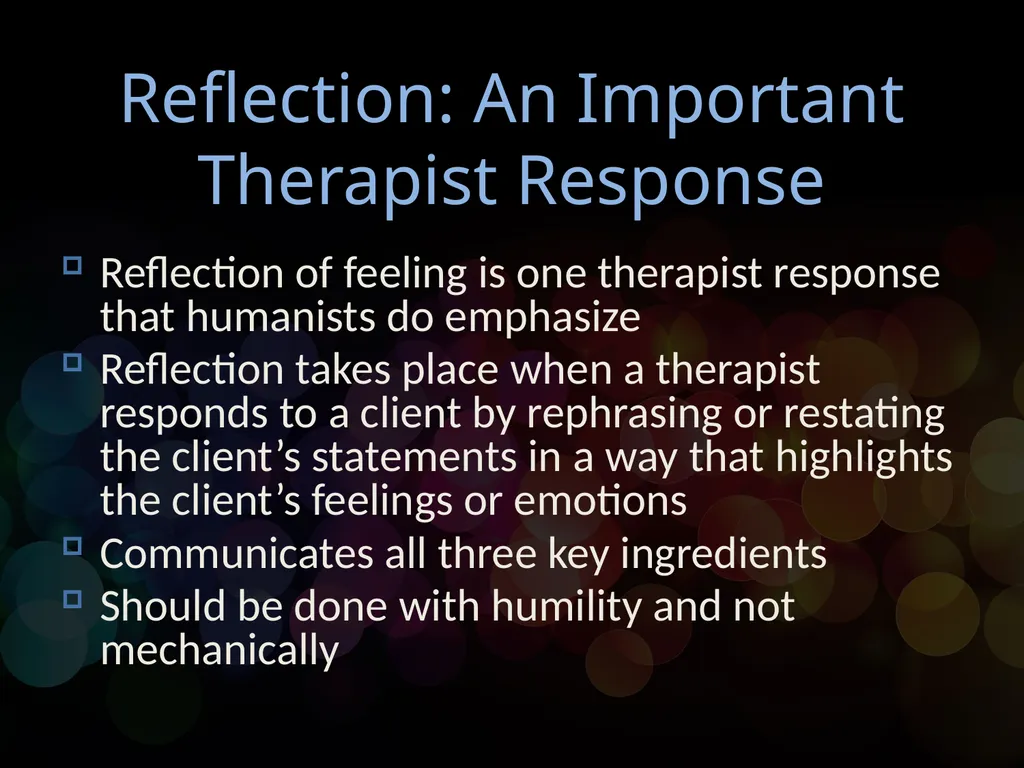
slide9. Reflection: An Important Therapist Response Reflection of feeling is one therapist response that humanists do emphasize
Reflection takes place when a therapist responds to a client by rephrasing or restating the client’s statements in a way that highlights the client’s feelings or emotions
Communicates all three key ingredients
Should be done with humility and not mechanically<br>
slide10. Alternatives to Humanism Historical alternatives
Existential psychotherapy
Rollo May, Victor Frankl, Irvin Yalom
Address anxiety of inescapable solitude of life
Gestalt therapy
Fritz Perls
Holistic approach to enhancing current experience (“the now”); often uses role-plays<br>
slide11. Motivational Interviewing Contemporary variation of humanistic therapy
William Miller—leading figure
Address clients’ ambivalence or uncertainty about making major changes
Help clients see the discrepancy between their behavior and their own values
Elicit motivation to change from client; don’t impose it on client
Much empirical data supporting its efficacy with many problems
Consistent with positive psychology movement<br>
slide12. Motivational Interviewing (cont.) Central principles of MI
Expressing empathy
Developing the discrepancy
Avoiding argumentation
Rolling with resistance
Identifying “sustain talk” and “change talk”
Supporting self-efficacy<br>
slide13. Positive Interventions and Strength-Based Counseling Positive psychology
Emerged in 1990s
Martin Seligman
Emphasizes human strengths
Bolster strengths to prevent and treat psychological problems
Therapies: positive interventions, strength-based counseling<br>
slide14. Other Contemporary Alternatives How Clients Make Therapy Work: The Process of Active Self-Healing
Arthur Bohart and Karen Tallman
Therapist’s role is a collaborator
Goes against symptom-focused, manualized approaches to therapy<br>
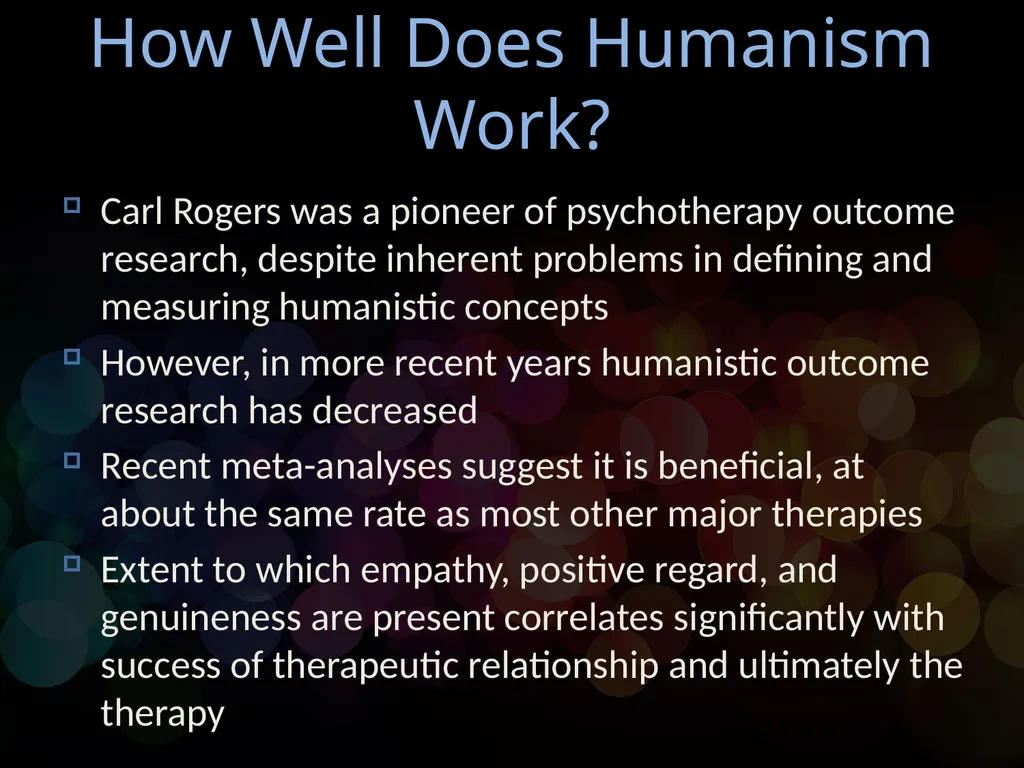
slide15. How Well Does Humanism Work? Carl Rogers was a pioneer of psychotherapy outcome research, despite inherent problems in defining and measuring humanistic concepts
However, in more recent years humanistic outcome research has decreased
Recent meta-analyses suggest it is beneficial, at about the same rate as most other major therapies
Extent to which empathy, positive regard, and genuineness are present correlates significantly with success of therapeutic relationship and ultimately the therapy<br>
slide2. Humanism Carl Rogers was a leading figure
Abraham Maslow was another
Humanism was a reaction against Freud’s approach
Assumed that human nature wasn’t so bad (e.g., id-driven)
Overlapping terms for humanism include “nondirective,” “client-centered,” and “person-centered”<br>
slide3. Humanistic Concepts: Clinical Implications People have an inborn tendency toward self-actualization
People also have a need for positive regard—warmth, acceptance, “prizing”
Sometimes, people are forced to sacrifice self-actualization in order to obtain positive regard from important others (e.g., parents)<br>
slide4. Goal of Humanistic Psychotherapy Primary goal of humanistic psychotherapy is to foster self-actualization
Problems stem from stifled self-actualization or growth
Therapist’s task is to create a climate in which the client can resume their natural growth toward psychological wellness<br>
slide5. Goal of Humanistic Therapy (cont.) In humanistic therapy, there are no conditions of worth on the client
Clients’ real selves can match their ideal selves
This match is known as congruence, and is the root of psychological wellness
Mismatch between real and ideal selves is known as incongruence, and is the root of psychopathology<br>
slide6. Three Essential Therapeutic Conditions Empathy
The therapist is able to sense the client’s emotions just as the client would
A deep, nonjudgmental, compassionate understanding of the client’s experiences
Unconditional Positive Regard
Accepting or “prizing” the client “no matter what” and without judgment
Genuineness
Honesty toward client, rather than playing a role<br>
slide7. Necessary and Sufficient? Rogers boldly argued that empathy, unconditional positive regard, and genuineness were necessary and sufficient for successful therapy with any client
No other techniques needed for anyone
A controversial claim
Research is inconsistent; generally supports necessary, but not sufficient<br>
slide8. Therapist Attitudes, Not Behaviors Rogers emphasized that empathy, unconditional positive regard, and genuineness are attitudes, not specific behaviors
Therapy should not be mechanical or formulaic
Attitudes, not specific techniques or skills, should be emphasized<br>
slide9. Reflection: An Important Therapist Response Reflection of feeling is one therapist response that humanists do emphasize
Reflection takes place when a therapist responds to a client by rephrasing or restating the client’s statements in a way that highlights the client’s feelings or emotions
Communicates all three key ingredients
Should be done with humility and not mechanically<br>
slide10. Alternatives to Humanism Historical alternatives
Existential psychotherapy
Rollo May, Victor Frankl, Irvin Yalom
Address anxiety of inescapable solitude of life
Gestalt therapy
Fritz Perls
Holistic approach to enhancing current experience (“the now”); often uses role-plays<br>
slide11. Motivational Interviewing Contemporary variation of humanistic therapy
William Miller—leading figure
Address clients’ ambivalence or uncertainty about making major changes
Help clients see the discrepancy between their behavior and their own values
Elicit motivation to change from client; don’t impose it on client
Much empirical data supporting its efficacy with many problems
Consistent with positive psychology movement<br>
slide12. Motivational Interviewing (cont.) Central principles of MI
Expressing empathy
Developing the discrepancy
Avoiding argumentation
Rolling with resistance
Identifying “sustain talk” and “change talk”
Supporting self-efficacy<br>
slide13. Positive Interventions and Strength-Based Counseling Positive psychology
Emerged in 1990s
Martin Seligman
Emphasizes human strengths
Bolster strengths to prevent and treat psychological problems
Therapies: positive interventions, strength-based counseling<br>
slide14. Other Contemporary Alternatives How Clients Make Therapy Work: The Process of Active Self-Healing
Arthur Bohart and Karen Tallman
Therapist’s role is a collaborator
Goes against symptom-focused, manualized approaches to therapy<br>
slide15. How Well Does Humanism Work? Carl Rogers was a pioneer of psychotherapy outcome research, despite inherent problems in defining and measuring humanistic concepts
However, in more recent years humanistic outcome research has decreased
Recent meta-analyses suggest it is beneficial, at about the same rate as most other major therapies
Extent to which empathy, positive regard, and genuineness are present correlates significantly with success of therapeutic relationship and ultimately the therapy<br>