Chapter 2 International Market Entry Strategies Introduction Trade barriers are falling around the world Companies need to have a strategy to enter world markets. Foreign market entry strategies vary in: Degree of risk they present, The
Related Topics
Share
Embed code
Download this presentation From Below
"Chapter 2 International Market Entry Strategies" is the property of its rightful owner. Permission is granted to
download and print the materials on this website for personal, non-commercial use only, and to display it
on your personal computer provided you do not modify the materials and that you retain all copyright
notices contained in the materials. By downloading content from our website, you accept the terms of this
agreement.
Presentation Transcript
01
Chapter 2 International Market Entry Strategies<br>
02
Introduction Trade barriers are falling around the world
Companies need to have a strategy to enter world markets.<br>
03
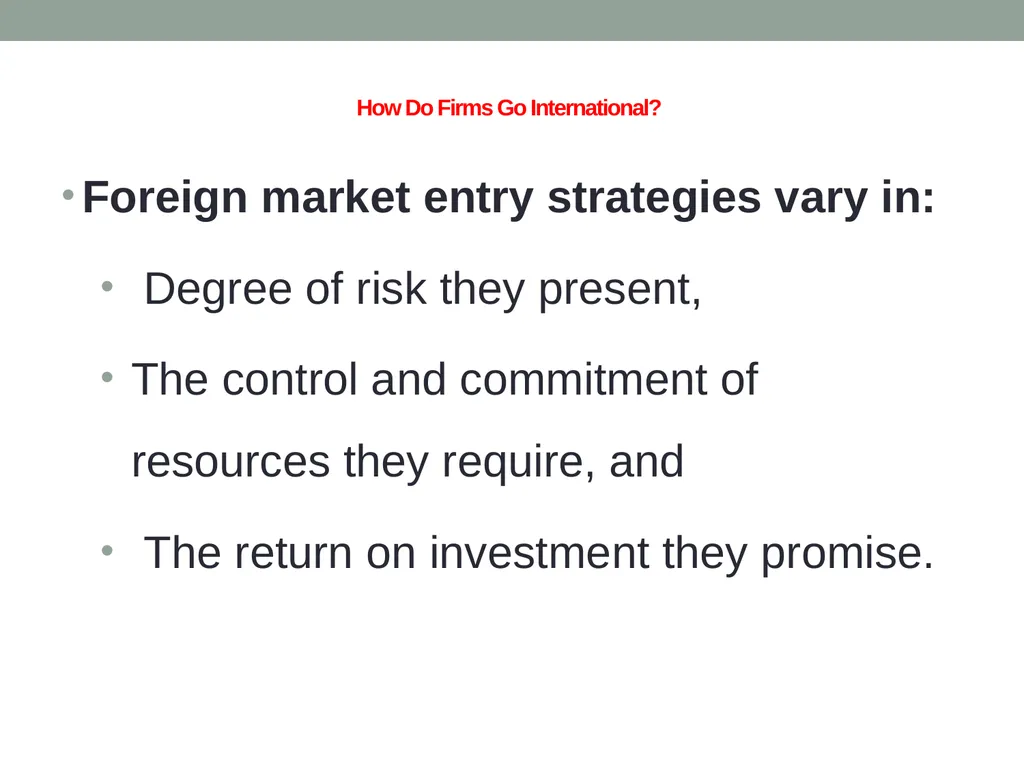
Foreign market entry strategies vary in:
Degree of risk they present,
The control and commitment of resources they require, and
The return on investment they promise. How Do Firms Go International?<br>
04
Which strategy should be used? It depends on:
Vision
Attitude toward risk
How much investment capital is available
How much control is desired<br>
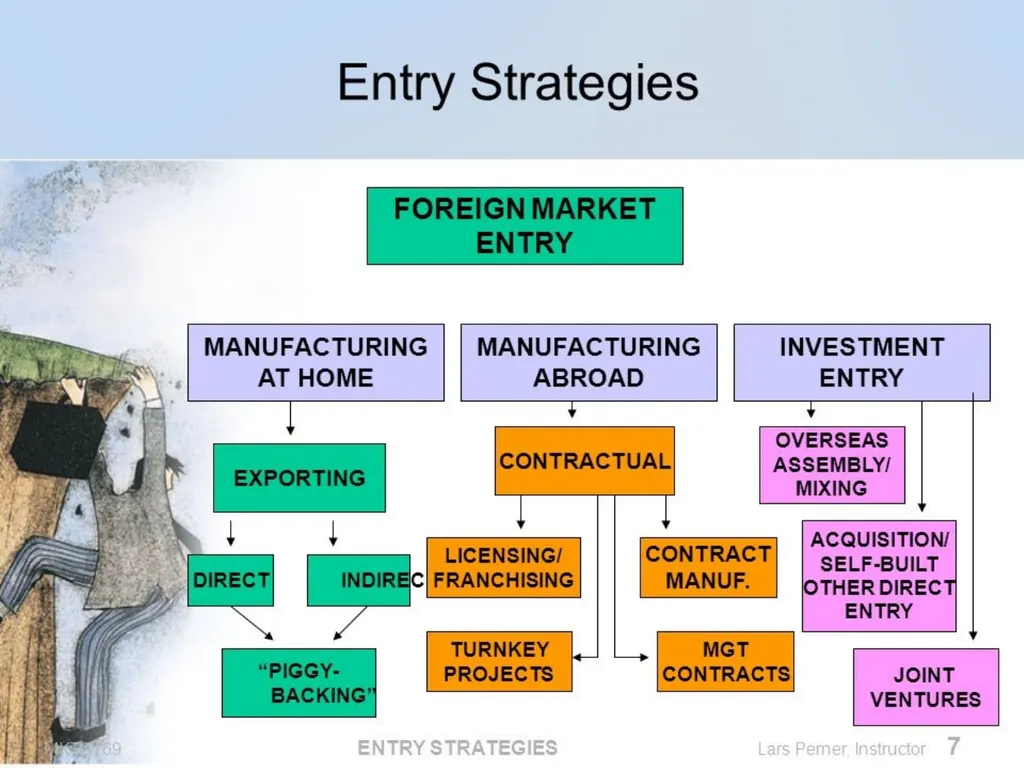
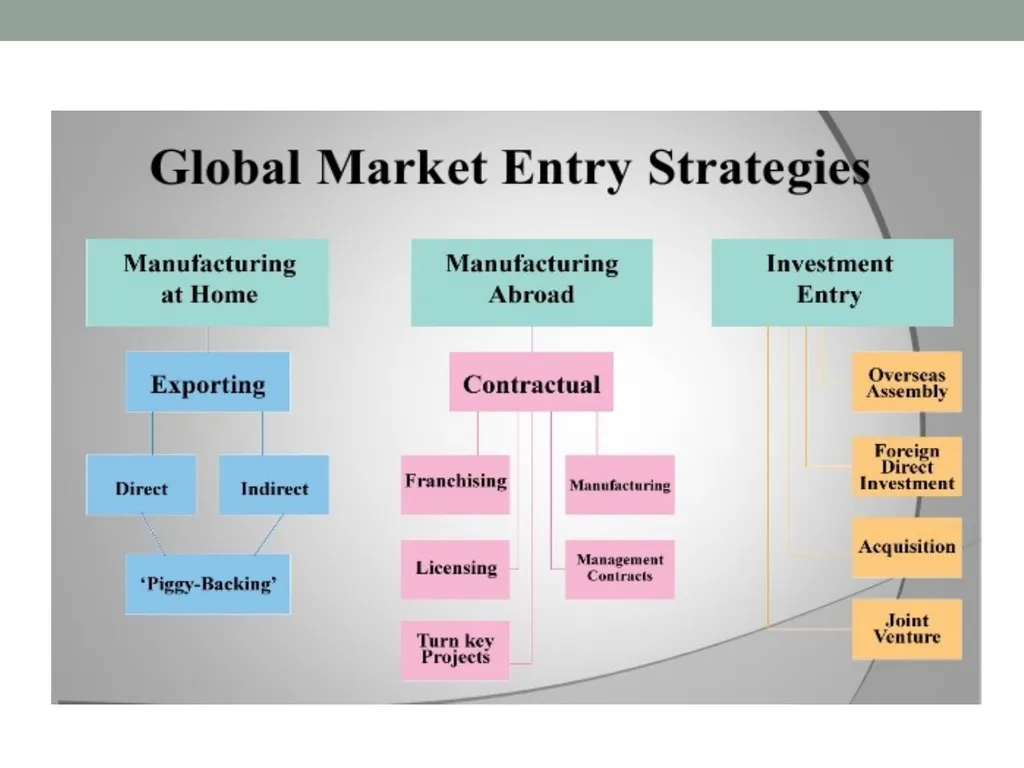
1. Export and import Exporting : Shipment of goods or services out of the port of a country , to a foreign buyer.
Importing : Process of buying goods from a foreign supplier and entering them into the a different country.<br>
07
Government controls over international trade Restrictions on imports generally take two forms: tariffs ,and quantitative restrictions (Quota).
A. Tariffs: Import taxes imposed on goods entering the customs zone of a nation.
Tariffs restrict or discourage imports by making imported goods more expensive than domestic goods.
Tariffs vary widely from country to country and from product to product within countries.<br>
08
Why do governments impose tariffs? 1. Tariffs provide a significant source of government revenues.
2. Protection of domestic industry.
3. Political reasons: Countries wishing to punish or influence the behavior of another country for human rights violations, for example, will sometimes restrict imports from “misbehaving” country.<br>
09
Government controls over international trade B. Non-tariff Barriers:
All barriers to importing or exporting other than tariffs ,ex. Quota.
Quota: restriction imposed by law on the numbers or quantities of goods or of a particular type of good.<br>
10
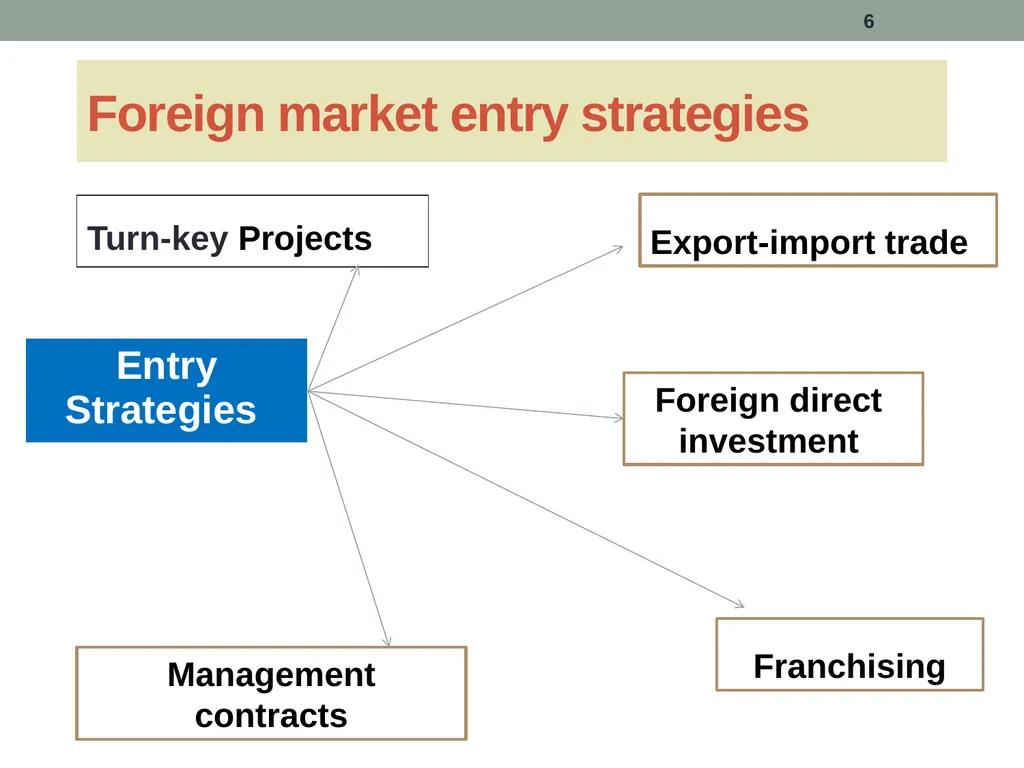
2. Foreign Direct Investment (FDI) Foreign direct investment (FDI) happens when a firm invests directly in new facilities to produce and/or market in a foreign country.
Example :
Starbuck purchases an existing UK firm, “British Coffee,” to sell coffee, tea and desserts in the UK.<br>
11
Indirect investments Direct investments are when companies make physical investments and purchases in buildings, factories, machines, and other equipment outside of their home country.
Indirect investments are when companies or financial institutions purchase shares in companies on a foreign stock exchange.
No managerial involvement = portfolio investment (Indirect Investment).<br>
12
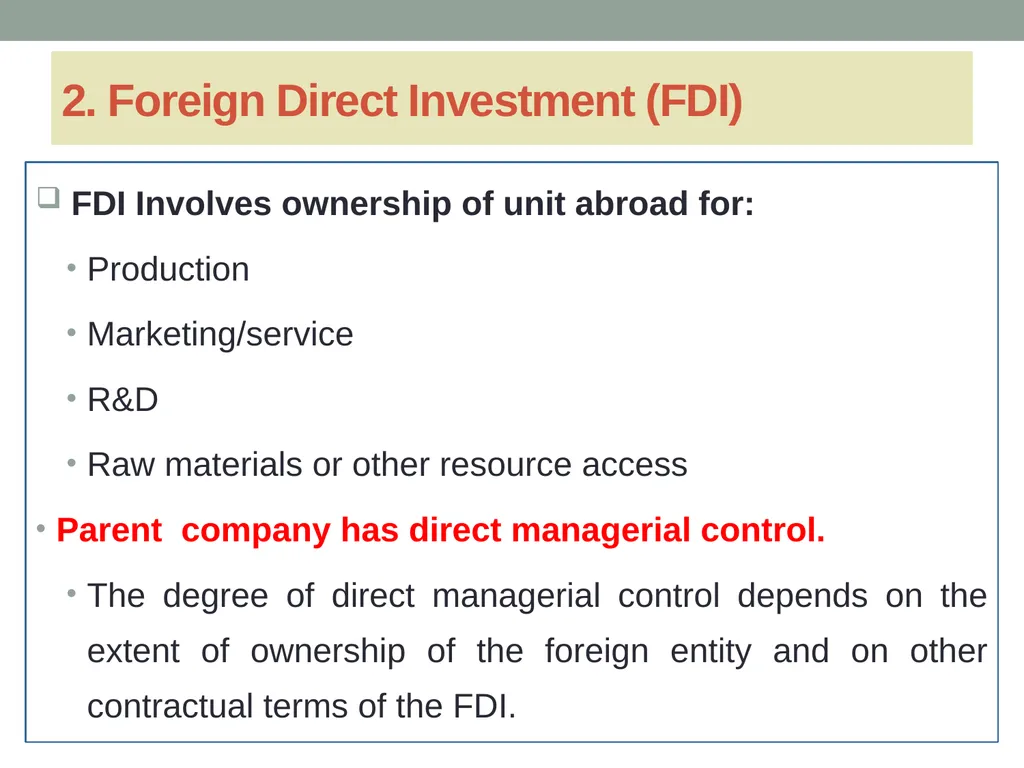
2. Foreign Direct Investment (FDI) FDI Involves ownership of unit abroad for:
Production
Marketing/service
R&D
Raw materials or other resource access
Parent company has direct managerial control.
The degree of direct managerial control depends on the extent of ownership of the foreign entity and on other contractual terms of the FDI.<br>
13
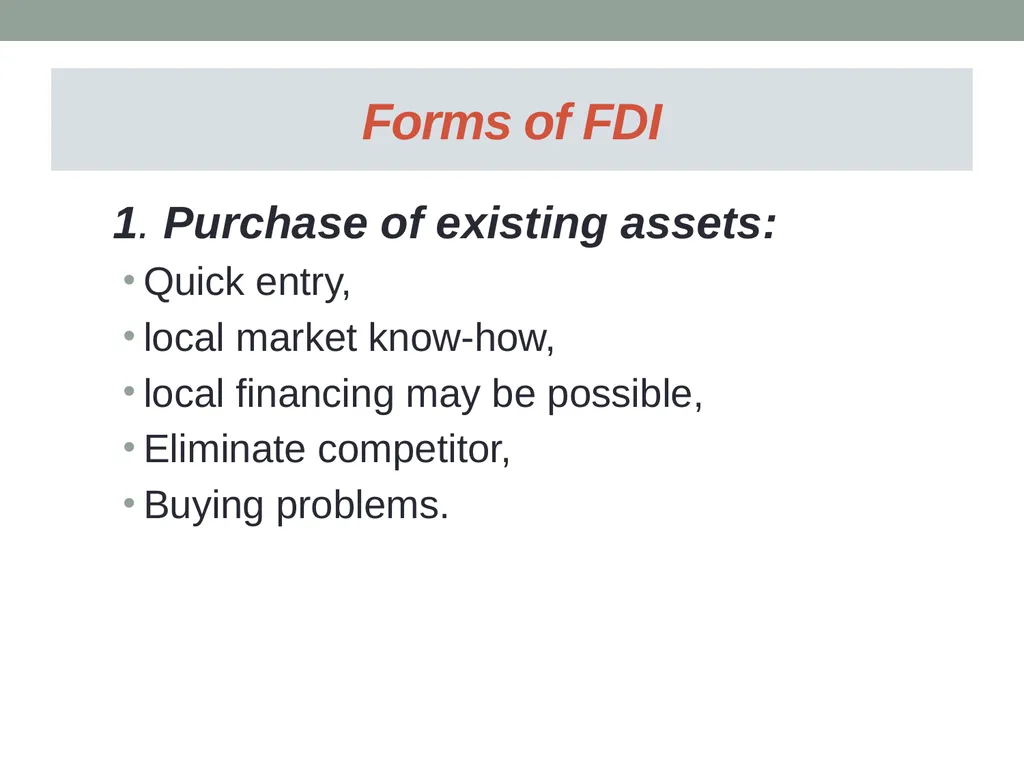
Forms of FDI 1. Purchase of existing assets:
Quick entry,
local market know-how,
local financing may be possible,
Eliminate competitor,
Buying problems.<br>
14
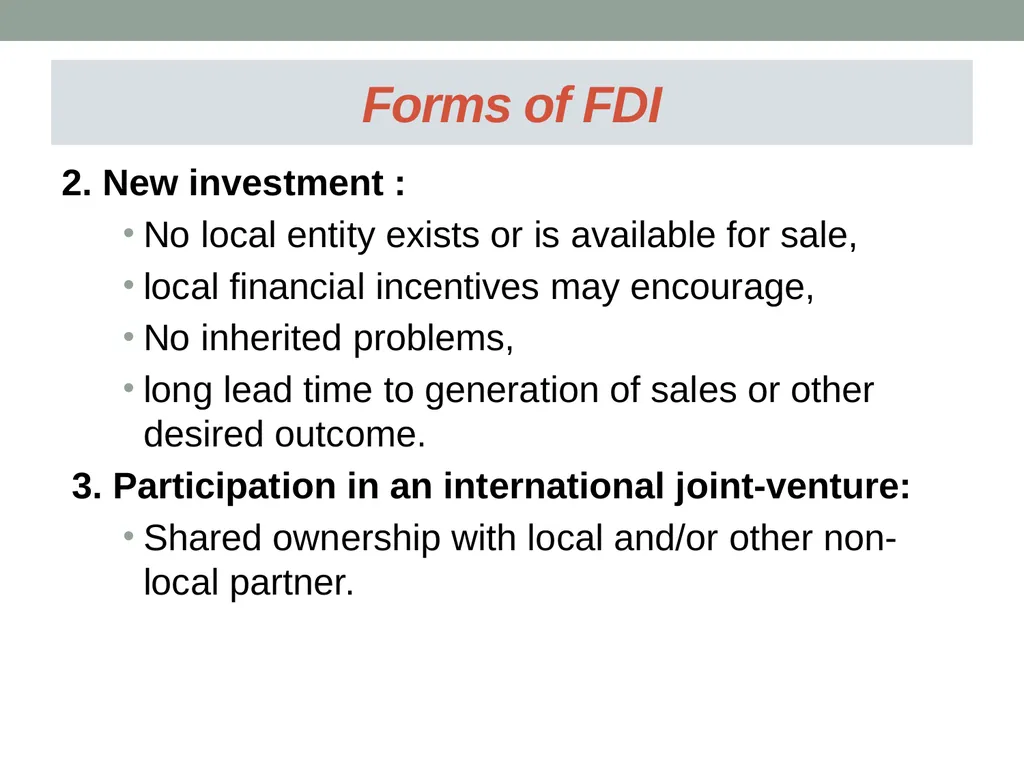
2. New investment :
No local entity exists or is available for sale,
local financial incentives may encourage,
No inherited problems,
long lead time to generation of sales or other desired outcome.
3. Participation in an international joint-venture:
Shared ownership with local and/or other non-local partner. Forms of FDI<br>
15
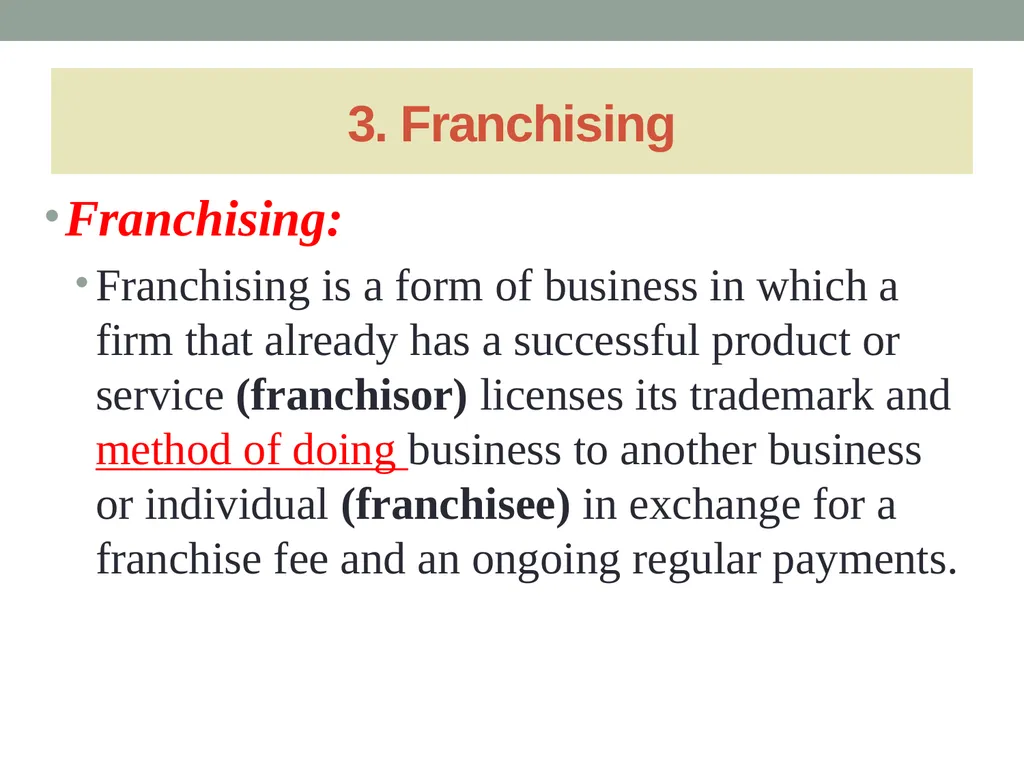
3. Franchising Franchising:
Franchising is a form of business in which a firm that already has a successful product or service (franchisor) licenses its trademark and method of doing business to another business or individual (franchisee) in exchange for a franchise fee and an ongoing regular payments.<br>
16
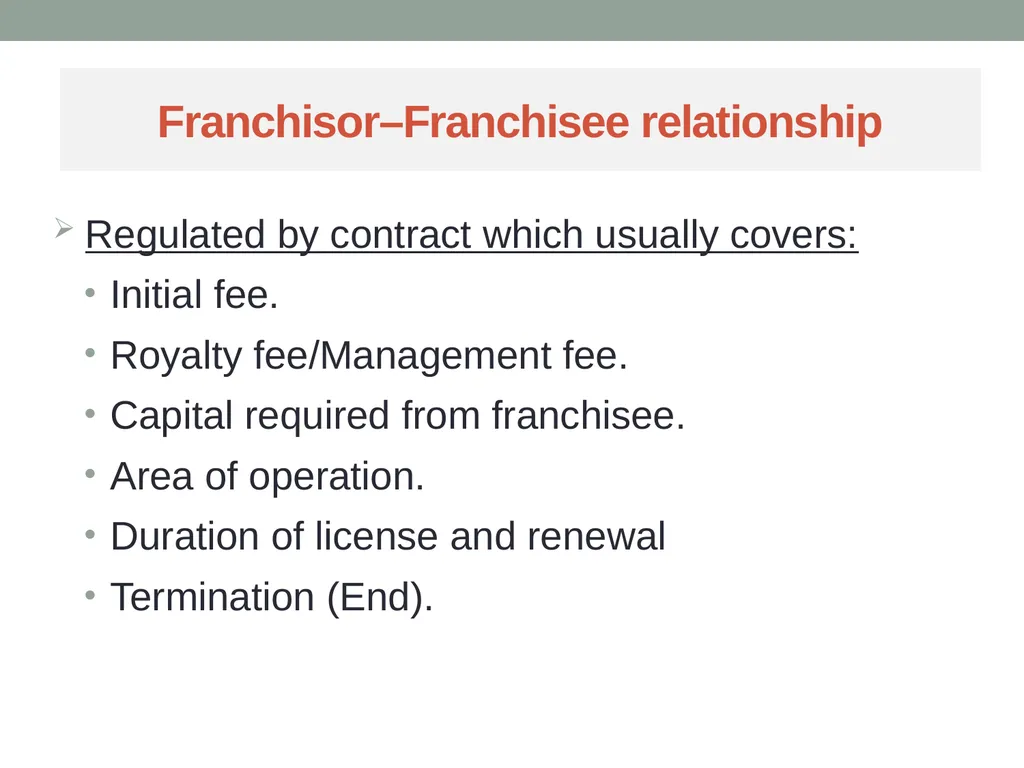
Franchisor–Franchisee relationship Regulated by contract which usually covers:
Initial fee.
Royalty fee/Management fee.
Capital required from franchisee.
Area of operation.
Duration of license and renewal
Termination (End).<br>
17
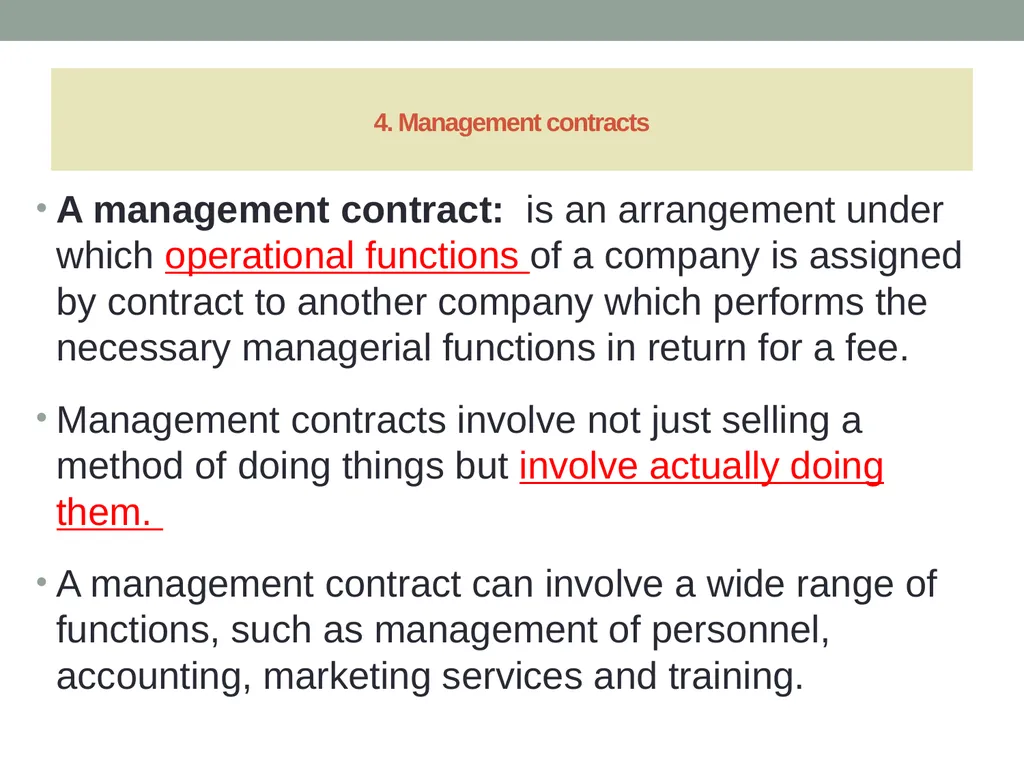
4. Management contracts A management contract: is an arrangement under which operational functions of a company is assigned by contract to another company which performs the necessary managerial functions in return for a fee.
Management contracts involve not just selling a method of doing things but involve actually doing them.
A management contract can involve a wide range of functions, such as management of personnel, accounting, marketing services and training.<br>
18
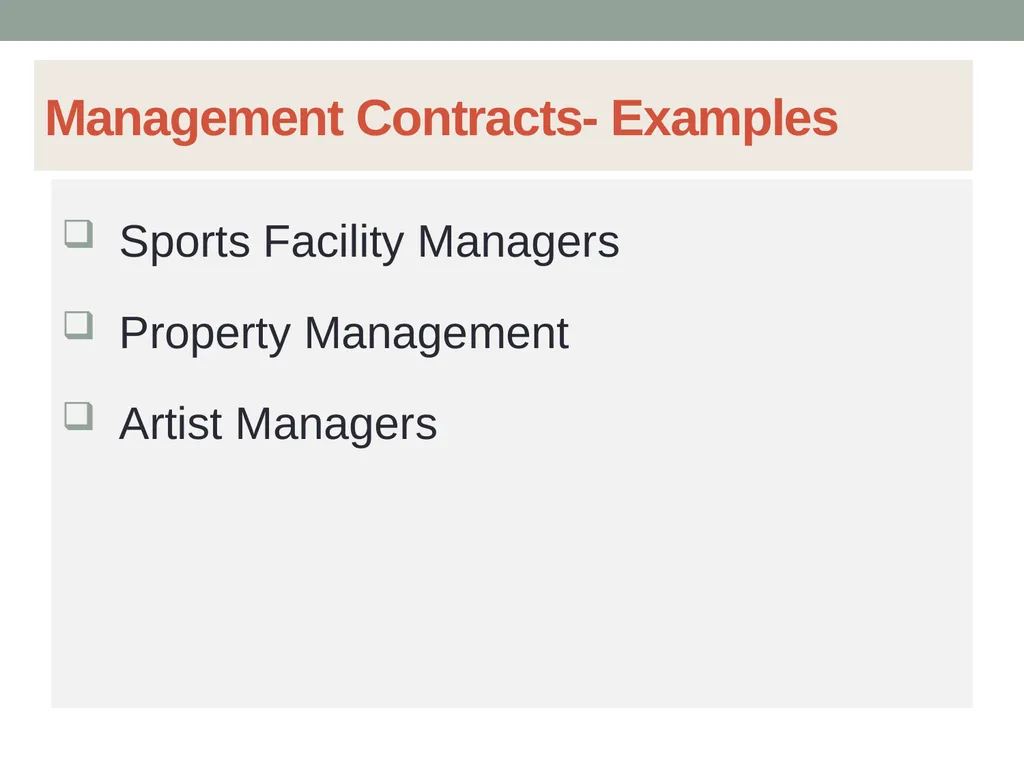
Management Contracts- Examples Sports Facility Managers
Property Management
Artist Managers<br>
19
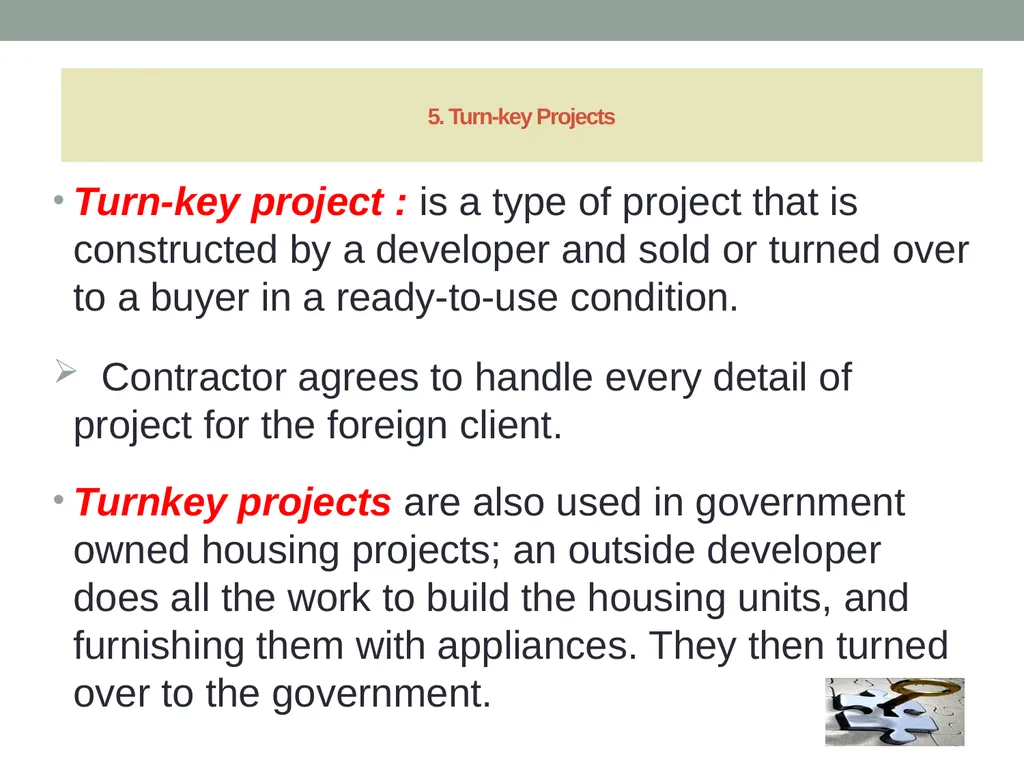
5. Turn-key Projects Turn-key project : is a type of project that is constructed by a developer and sold or turned over to a buyer in a ready-to-use condition.
Contractor agrees to handle every detail of project for the foreign client.
Turnkey projects are also used in government owned housing projects; an outside developer does all the work to build the housing units, and furnishing them with appliances. They then turned over to the government.<br>
20
6. Contract Manufacturing Contract Manufacturing:
A firm producing goods under the brand name of a different firm.
In the computer and electronics fields, thousands of products are manufactured by contract manufacturers.
These products are ordered by and branded with the OEM's "original design manufacturer“ name, which sells them to its customers.<br>