Chapter 2 Theoretical Approaches to Change and Transformation Julie Hodges and Roger Gill Learning outcomes Explain the complex nature of change in organizations Discuss the theoretical perspectives relating to the types of change that
"Chapter 2 Theoretical Approaches to Change and" is the property of its rightful owner. Permission is granted to
download and print the materials on this website for personal, non-commercial use only, and to display it
on your personal computer provided you do not modify the materials and that you retain all copyright
notices contained in the materials. By downloading content from our website, you accept the terms of this
agreement.
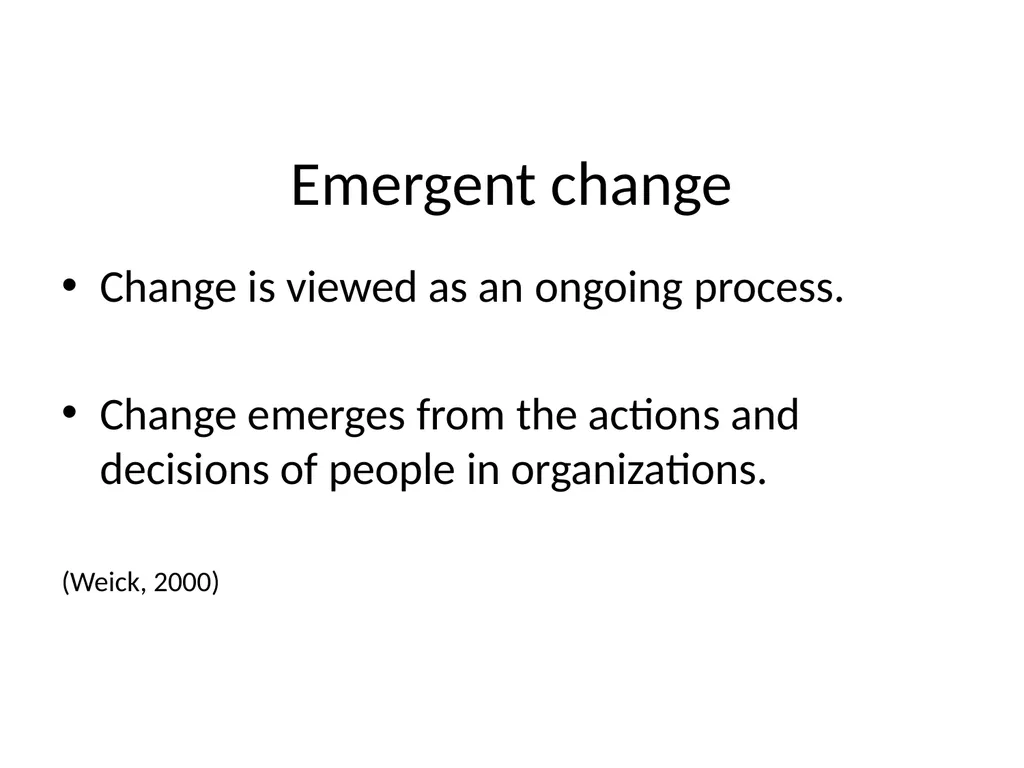
Emergent change Change is viewed as an ongoing process.
Change emerges from the actions and decisions of people in organizations.
(Weick, 2000)<br>
23
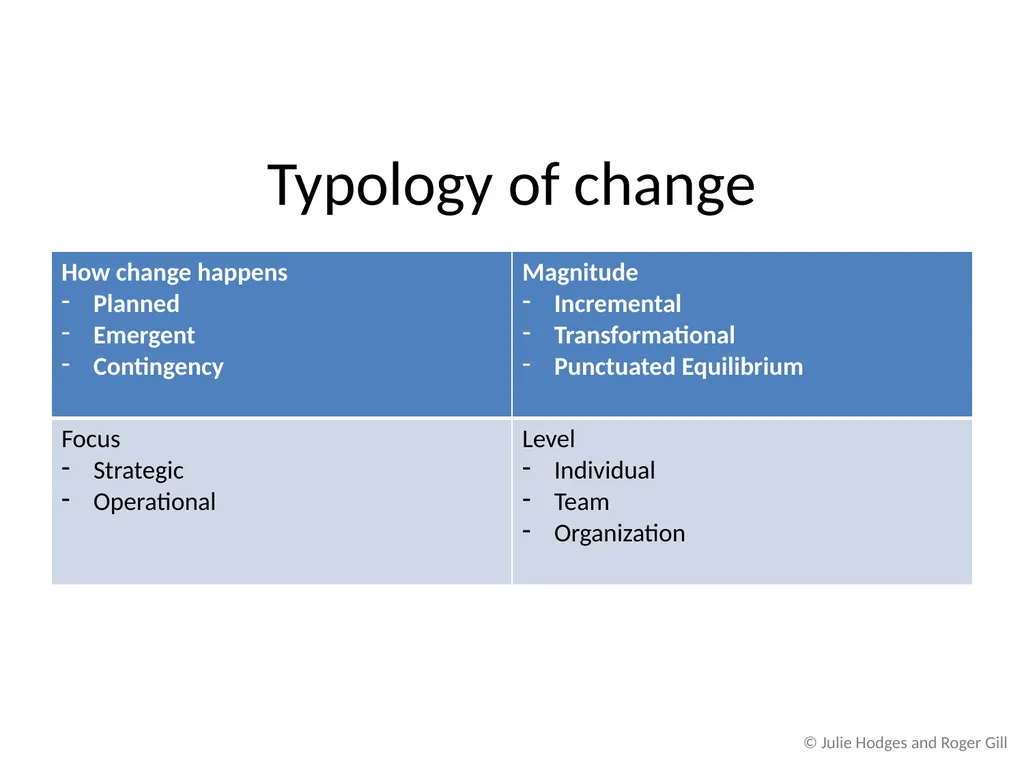
Typology of change<br>
24
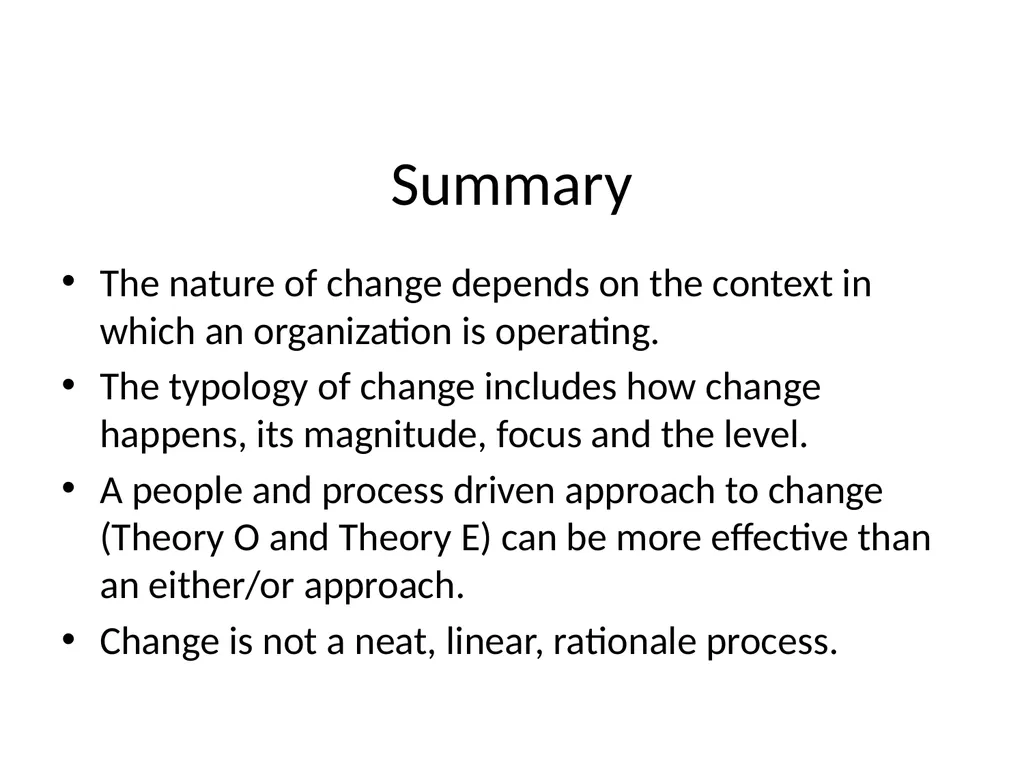
Summary The nature of change depends on the context in which an organization is operating.
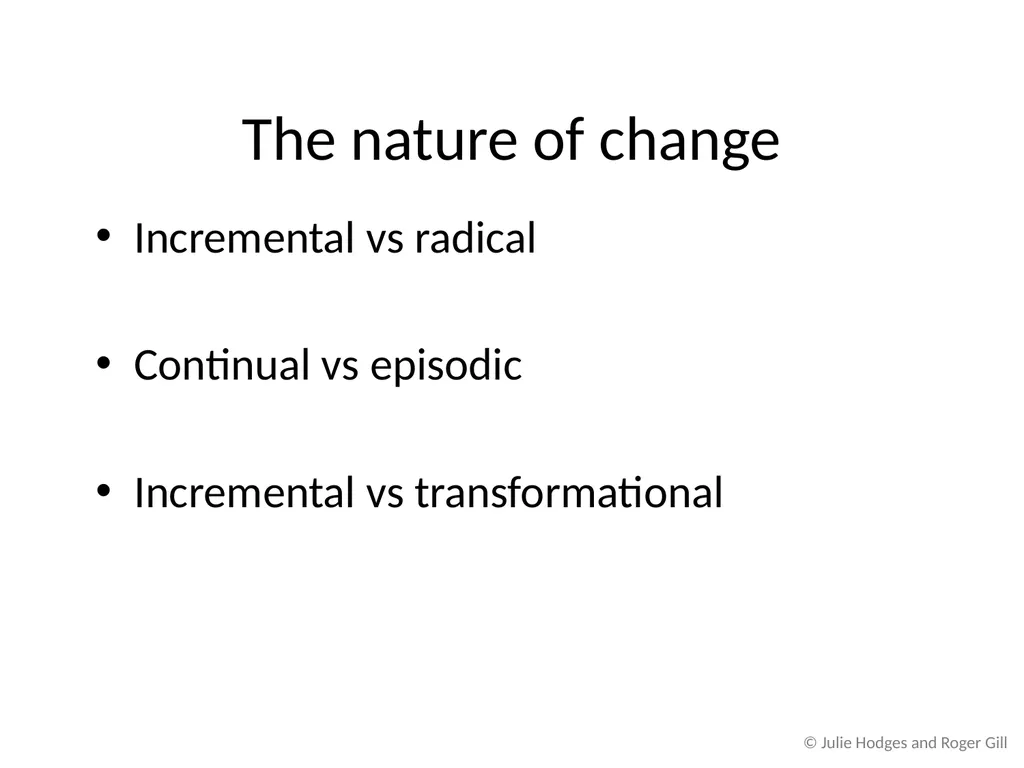
The typology of change includes how change happens, its magnitude, focus and the level.
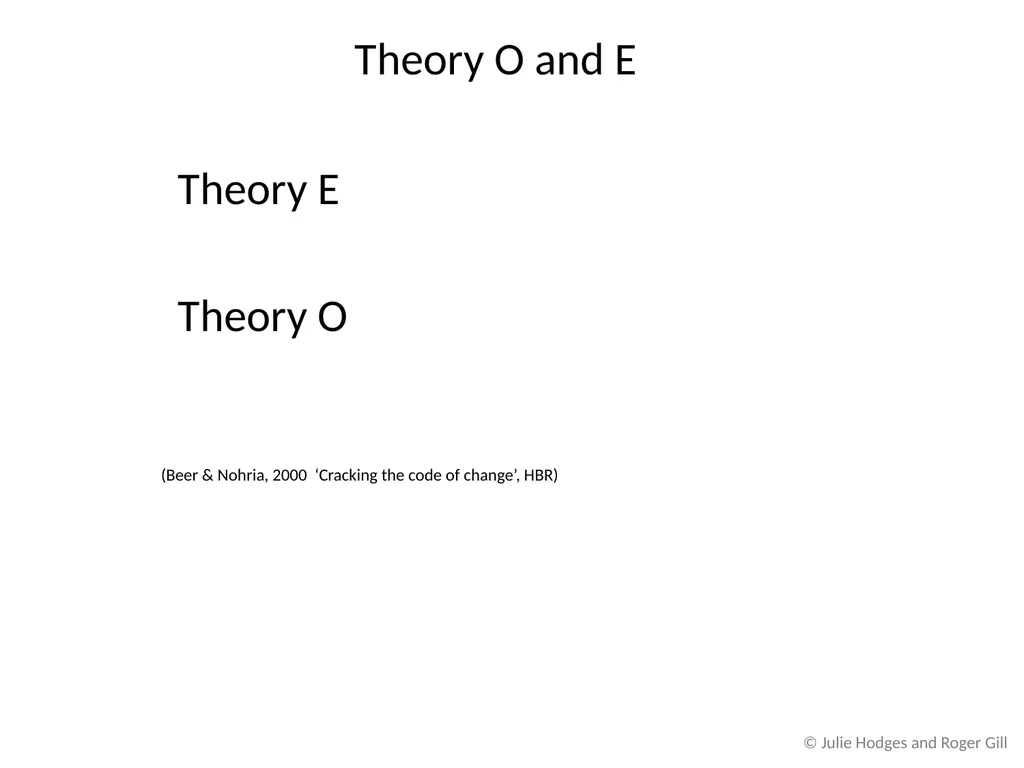
A people and process driven approach to change (Theory O and Theory E) can be more effective than an either/or approach.
Change is not a neat, linear, rationale process.<br>
25
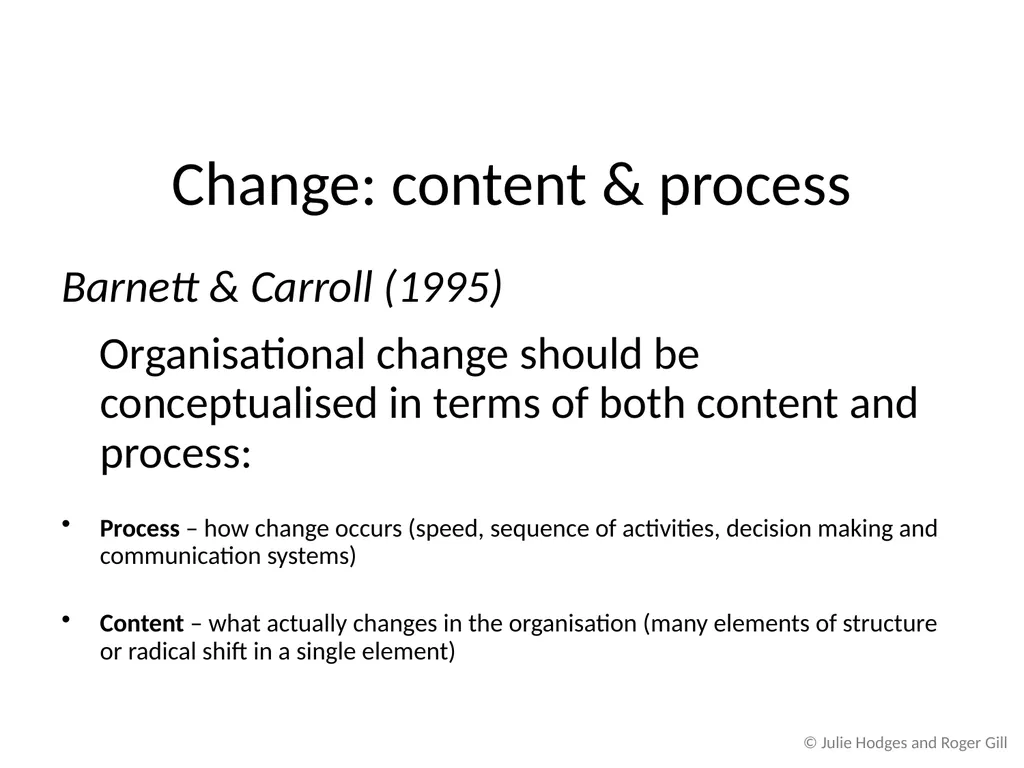
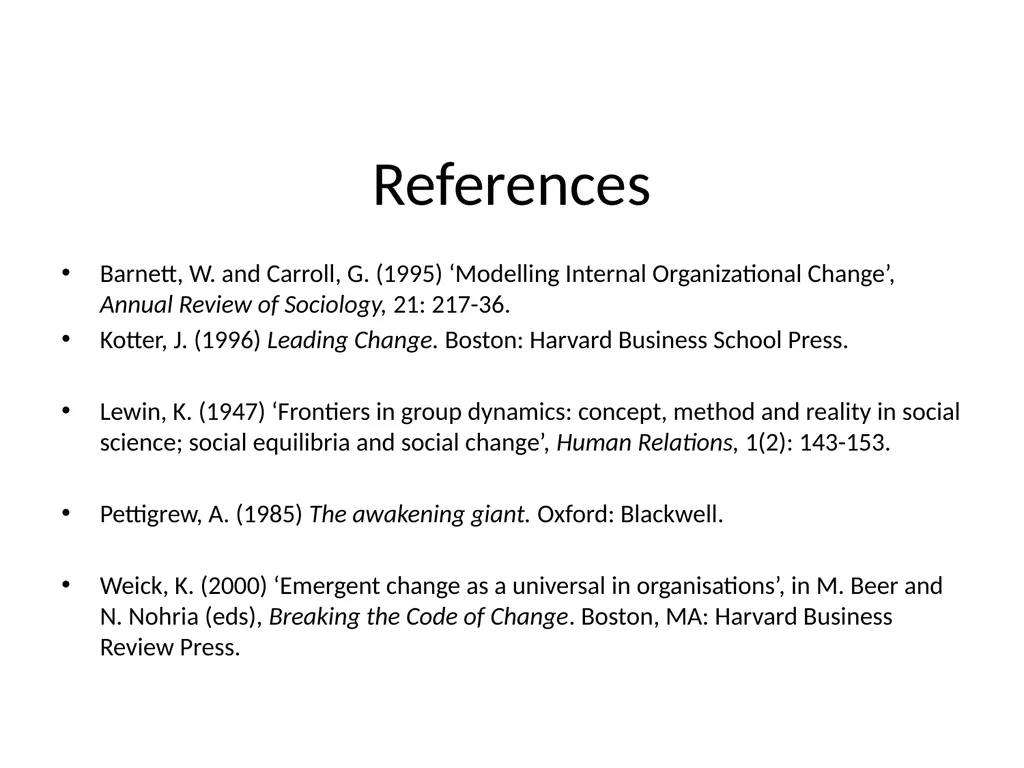
References Barnett, W. and Carroll, G. (1995) ‘Modelling Internal Organizational Change’, Annual Review of Sociology, 21: 217-36.
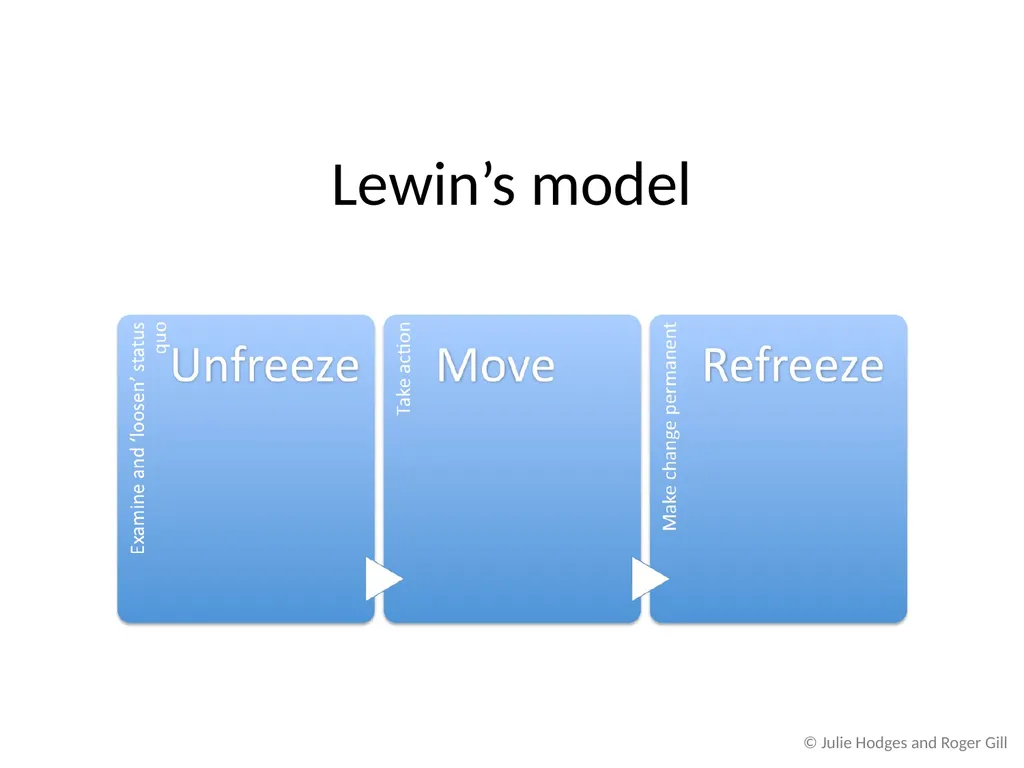
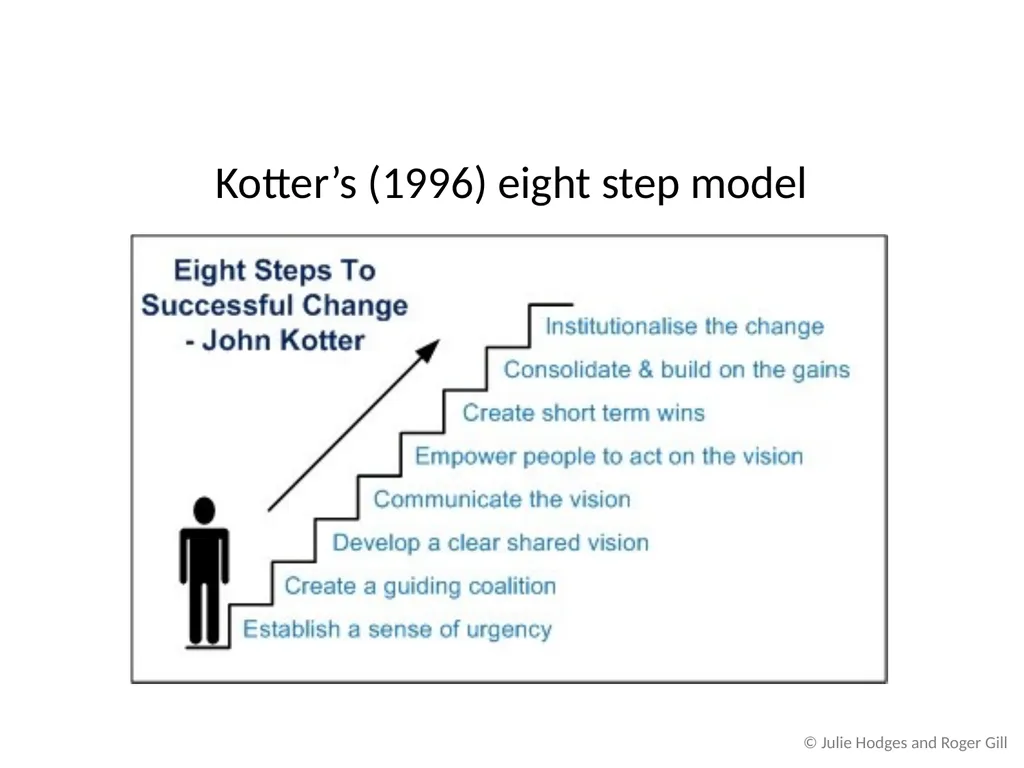
Kotter, J. (1996) Leading Change. Boston: Harvard Business School Press.
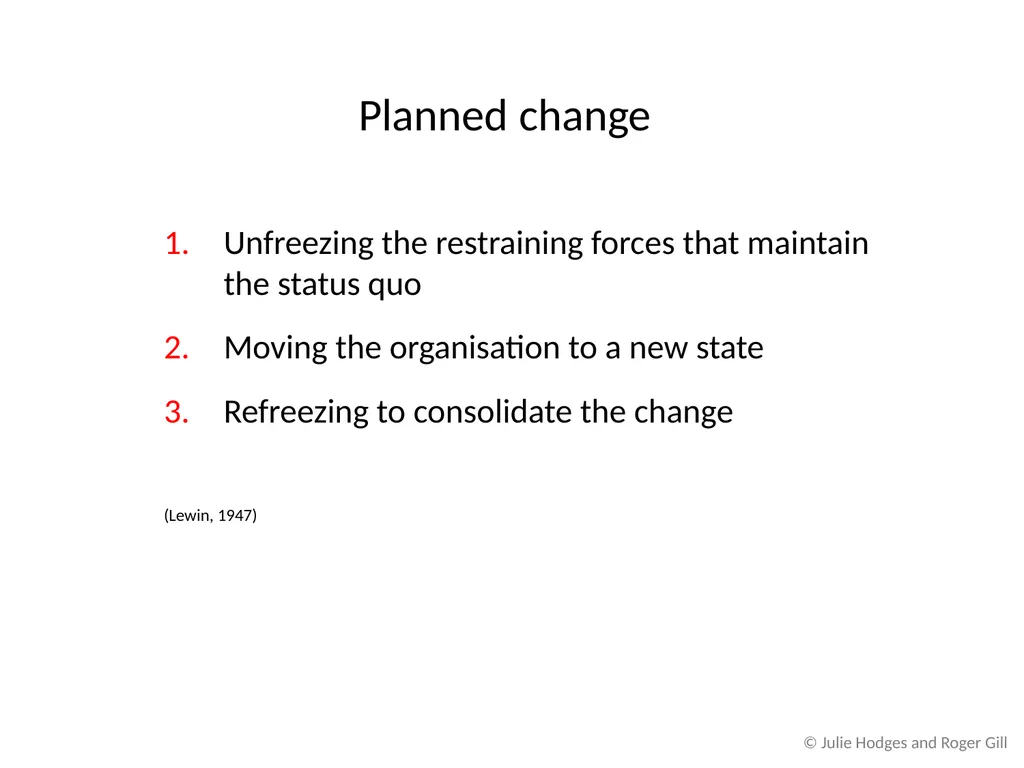
Lewin, K. (1947) ‘Frontiers in group dynamics: concept, method and reality in social science; social equilibria and social change’, Human Relations, 1(2): 143-153.
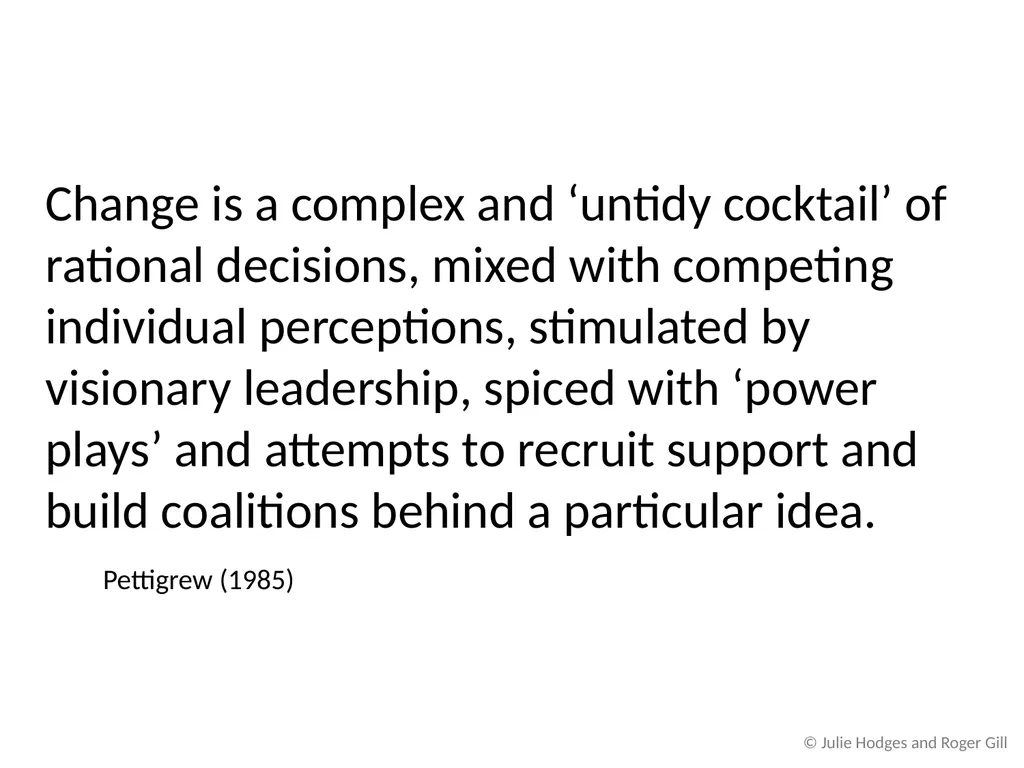
Pettigrew, A. (1985) The awakening giant. Oxford: Blackwell.
Weick, K. (2000) ‘Emergent change as a universal in organisations’, in M. Beer and N. Nohria (eds), Breaking the Code of Change. Boston, MA: Harvard Business Review Press.<br>