Chapter 5 Gases CO, CO2, SO2, O2, O3, . Affecting our life on earth, affecting our Environment We live immersed in a gaseous solution, AIR The 3 states of matter: (a) One mole of N2(l) has a volume of approximately 35 mL and density of
"Chapter 5 Gases CO, CO2, SO2, O2, O3, …. Affecting" is the property of its rightful owner. Permission is granted to
download and print the materials on this website for personal, non-commercial use only, and to display it
on your personal computer provided you do not modify the materials and that you retain all copyright
notices contained in the materials. By downloading content from our website, you accept the terms of this
agreement.
Presentation Transcript
01
Chapter 5
Gases
CO, CO2, SO2, O2, O3, ….
Affecting our life on earth, affecting our Environment We live immersed in a gaseous solution,
“AIR”<br>
02
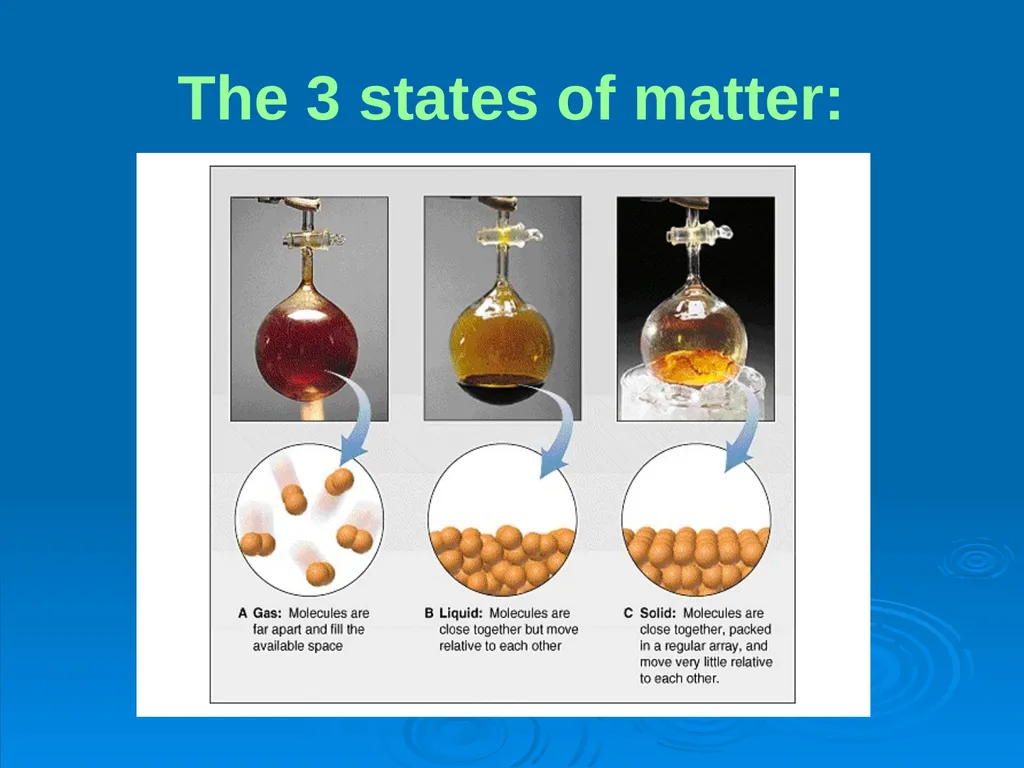
The 3 states of matter:<br>
03
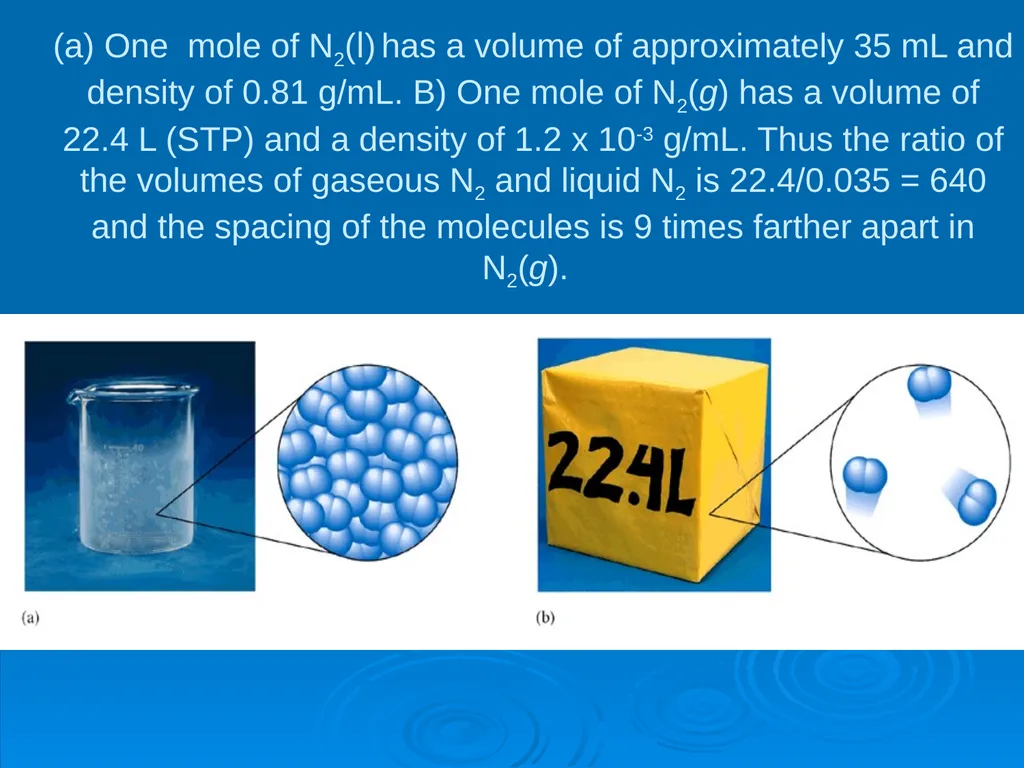
(a) One mole of N2(l) has a volume of approximately 35 mL and density of 0.81 g/mL. B) One mole of N2(g) has a volume of 22.4 L (STP) and a density of 1.2 x 10⁻³ g/mL. Thus the ratio of the volumes of gaseous N2 and liquid N2 is 22.4/0.035 = 640 and the spacing of the molecules is 9 times farther apart in N2(g).<br>
04
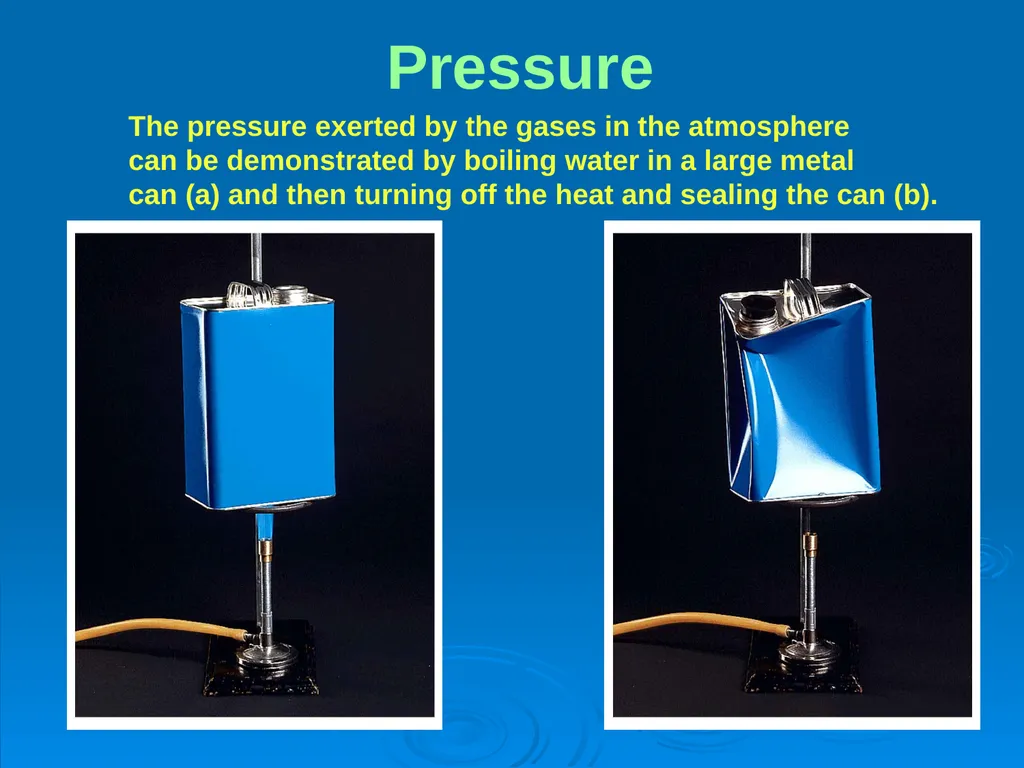
Pressure The pressure exerted by the gases in the atmosphere
can be demonstrated by boiling water in a large metal
can (a) and then turning off the heat and sealing the can (b).<br>
05
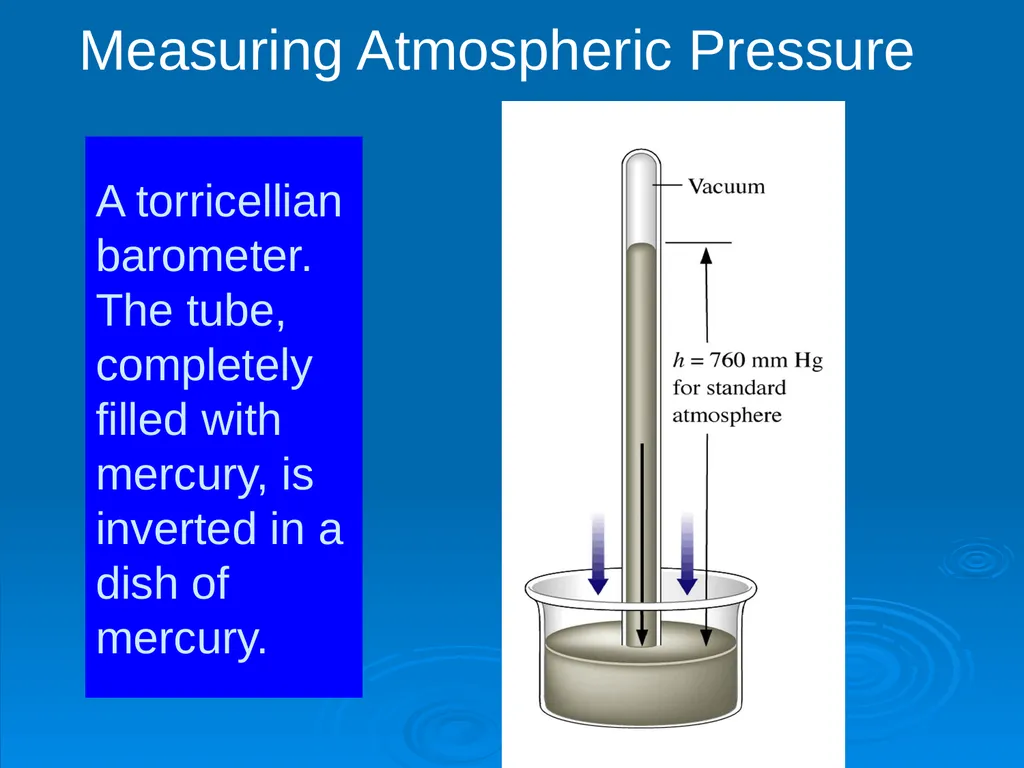
A torricellian barometer. The tube, completely filled with mercury, is inverted in a dish of mercury. Measuring Atmospheric Pressure<br>
06
Atmospheric Pressure P = F/A [Pressure is force exerted per unit
area]
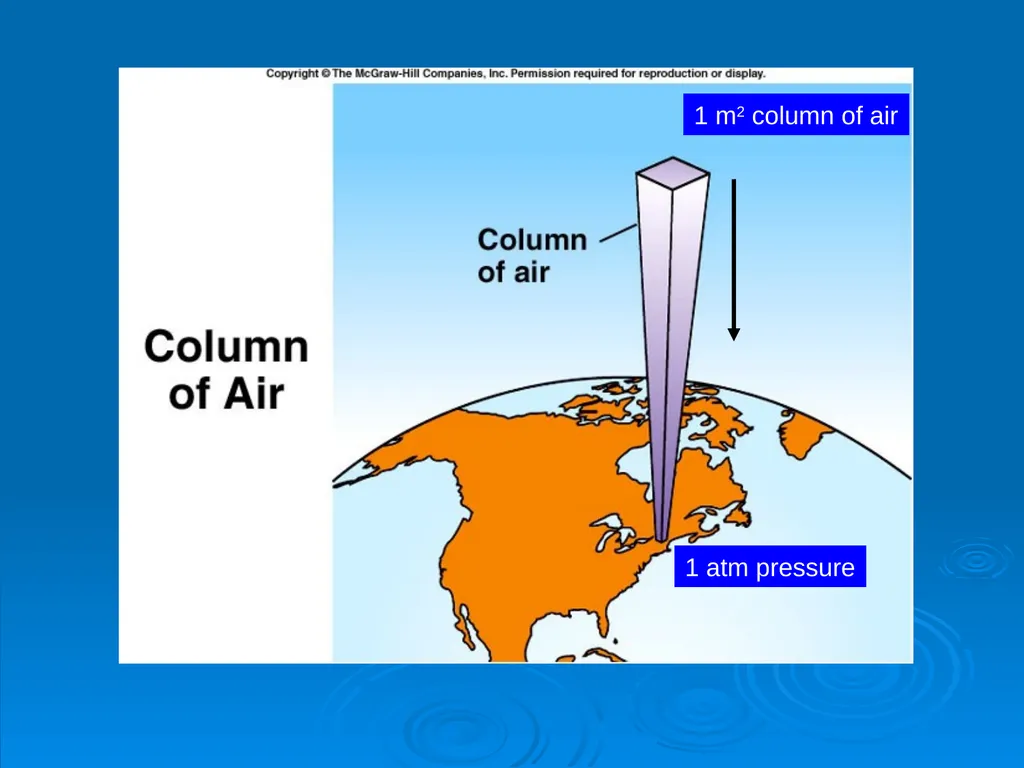
The mass of air pulled by gravity exerts a force on the earth’s atmosphere—this causes atmospheric pressure
A column of air 1 m2 in cross section exerts a force of 105 N. The pressure
exerted by air in this case is 100 kPa.<br>
07
1 m2 column of air 1 atm pressure<br>
08
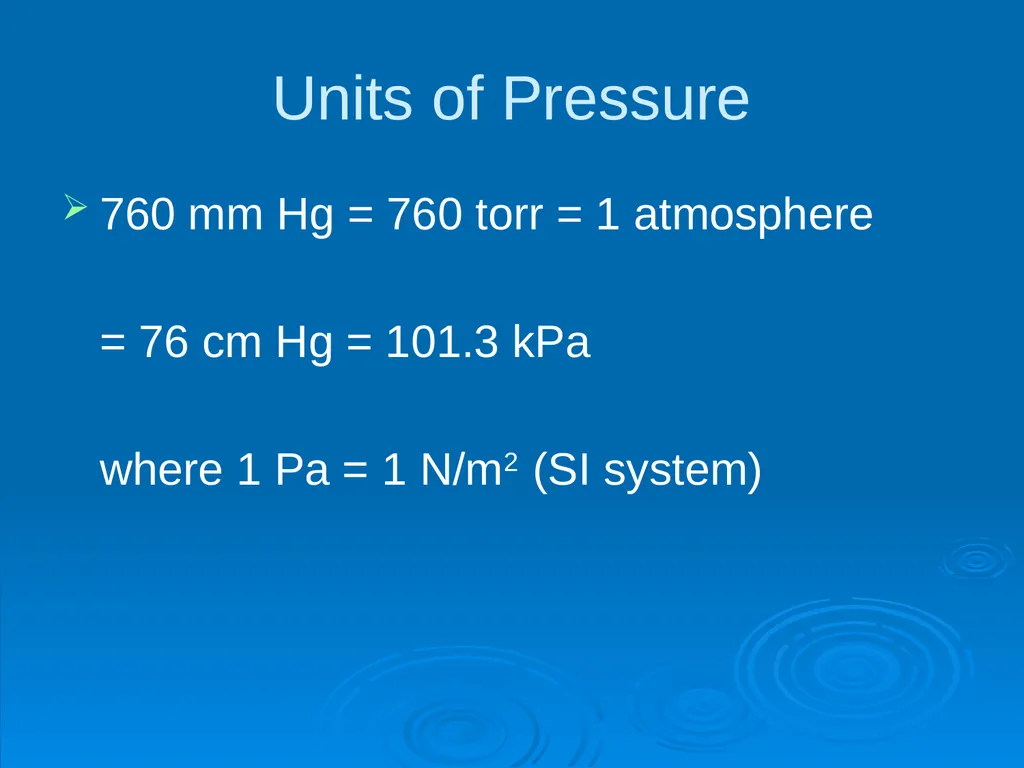
Units of Pressure 760 mm Hg = 760 torr = 1 atmosphere
= 76 cm Hg = 101.3 kPa
where 1 Pa = 1 N/m2 (SI system)<br>
09
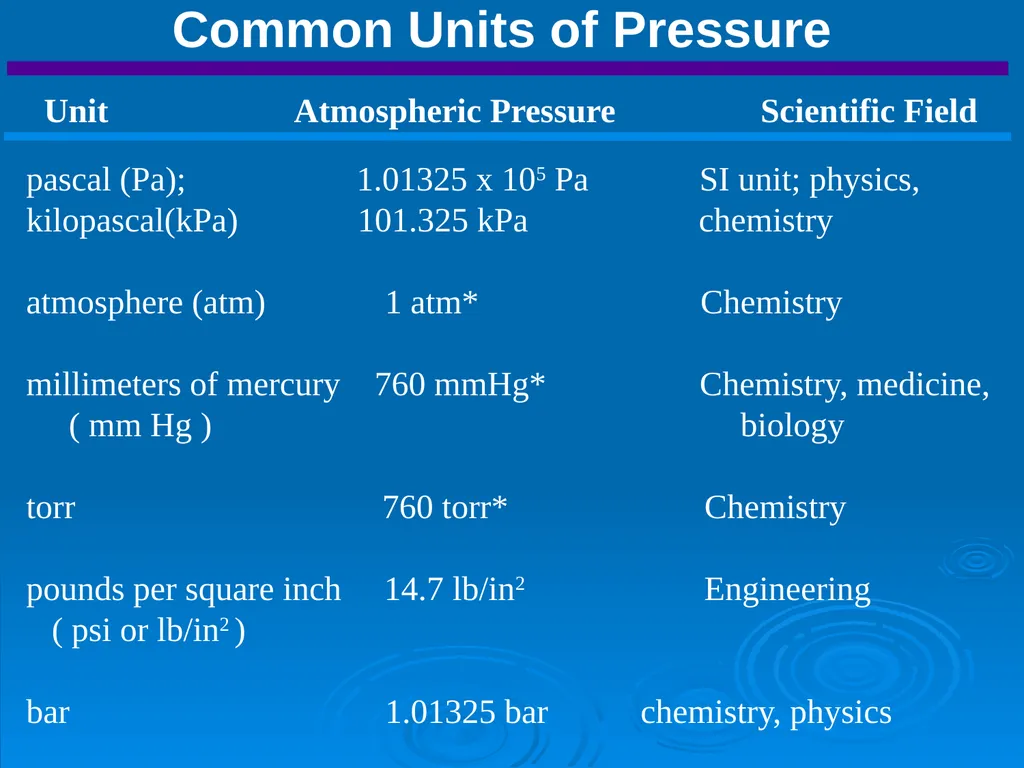
Common Units of Pressure Unit Atmospheric Pressure Scientific Field pascal (Pa); 1.01325 x 10⁵ Pa SI unit; physics,
kilopascal(kPa) 101.325 kPa chemistry
atmosphere (atm) 1 atm* Chemistry
millimeters of mercury 760 mmHg* Chemistry, medicine,
( mm Hg ) biology
torr 760 torr* Chemistry
pounds per square inch 14.7 lb/in2 Engineering
( psi or lb/in2 )
bar 1.01325 bar chemistry, physics<br>
10
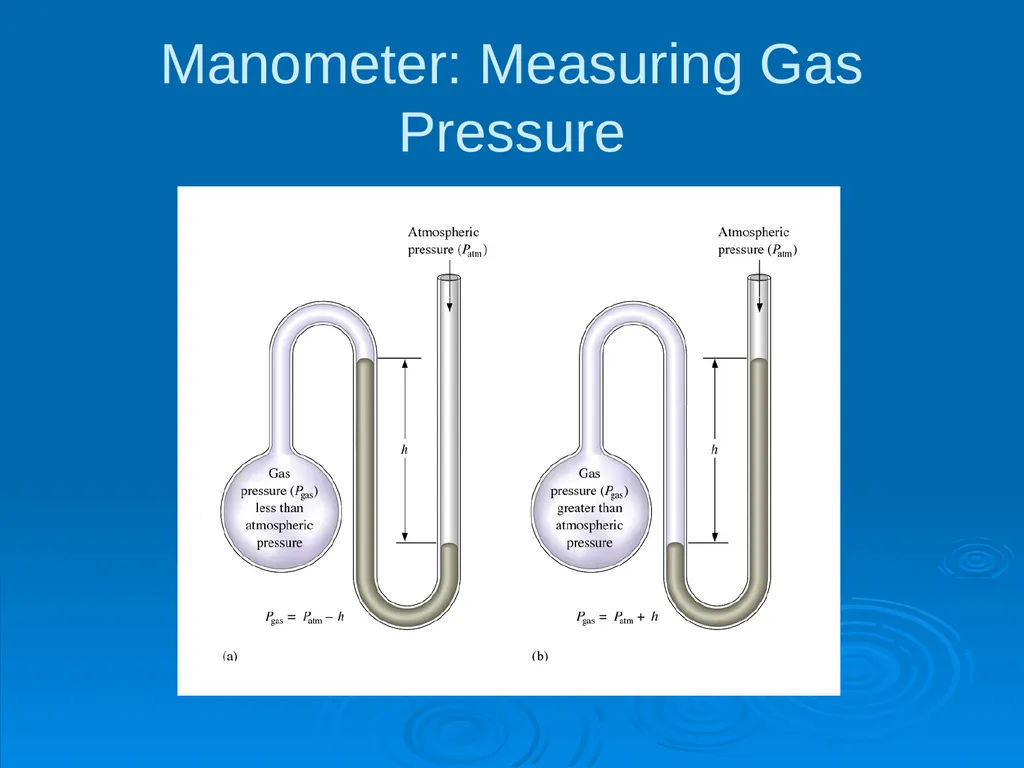
Manometer: Measuring Gas Pressure<br>
11
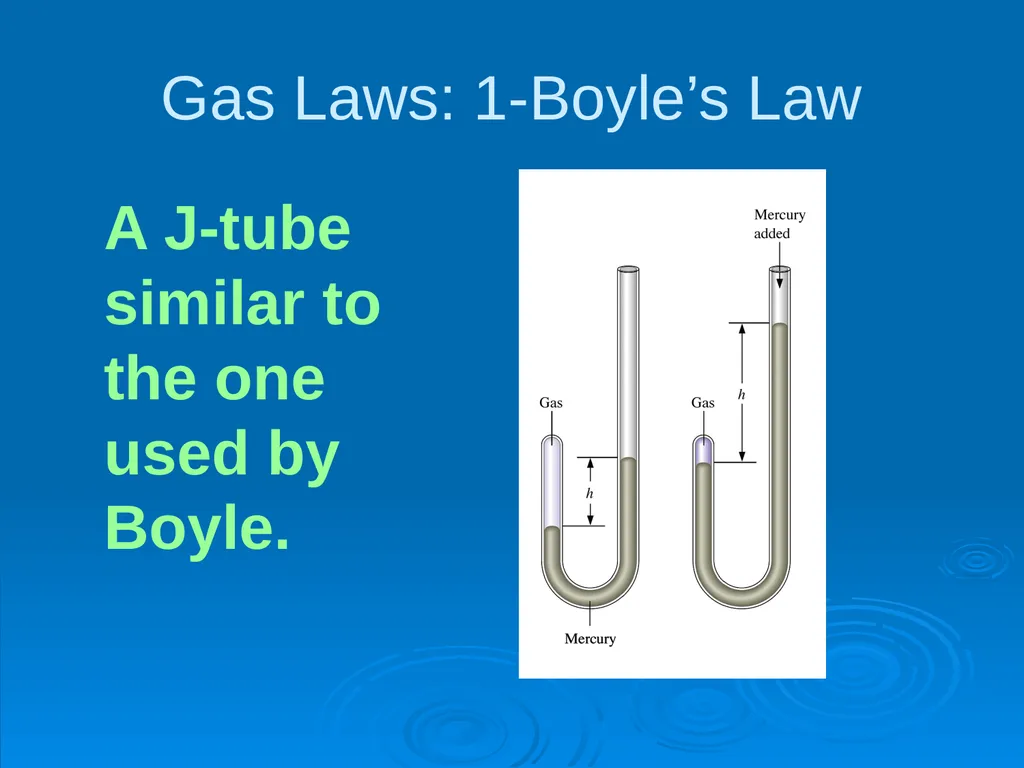
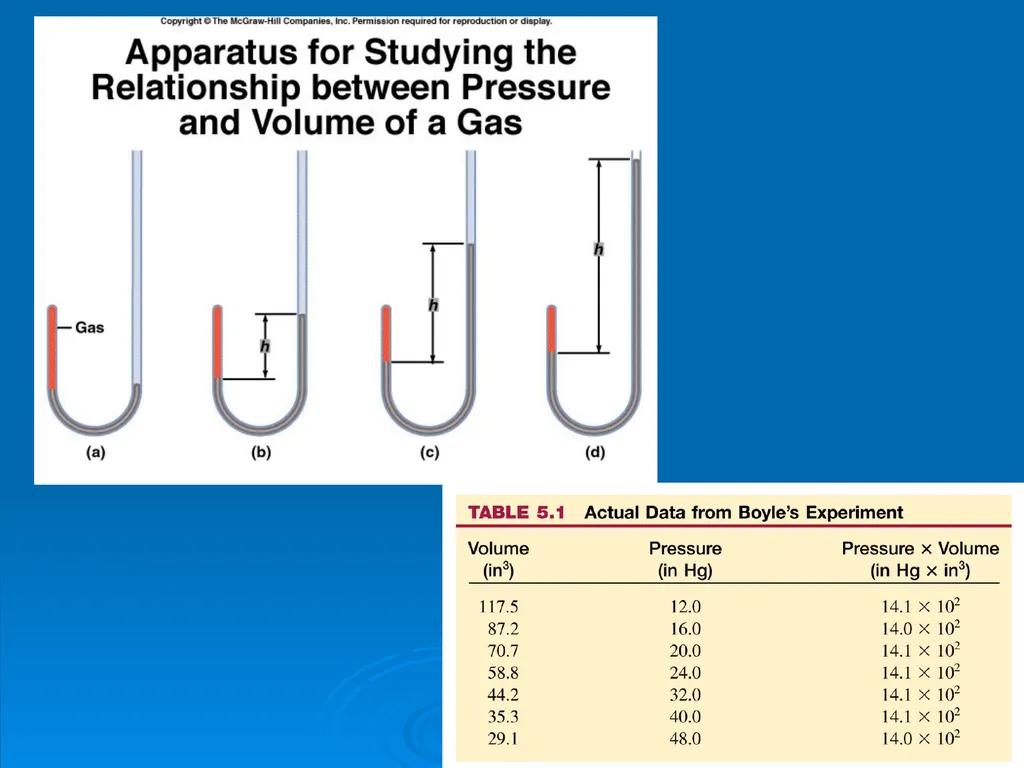
Gas Laws: 1-Boyle’s Law A J-tube similar to the one used by Boyle.<br>
12
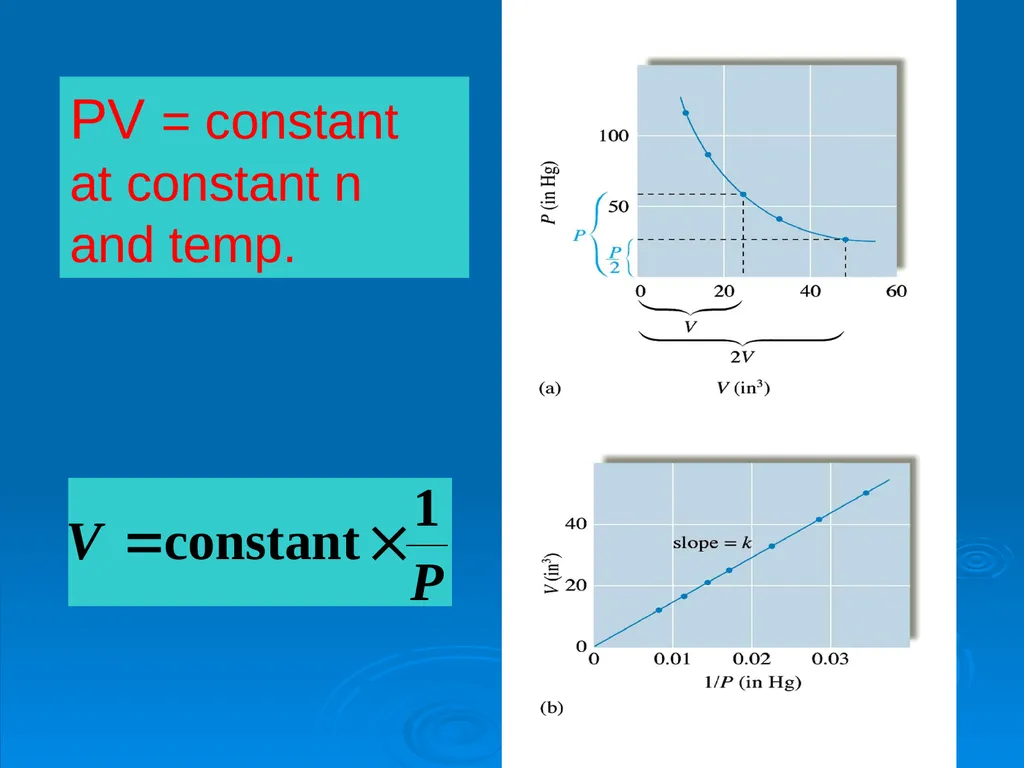
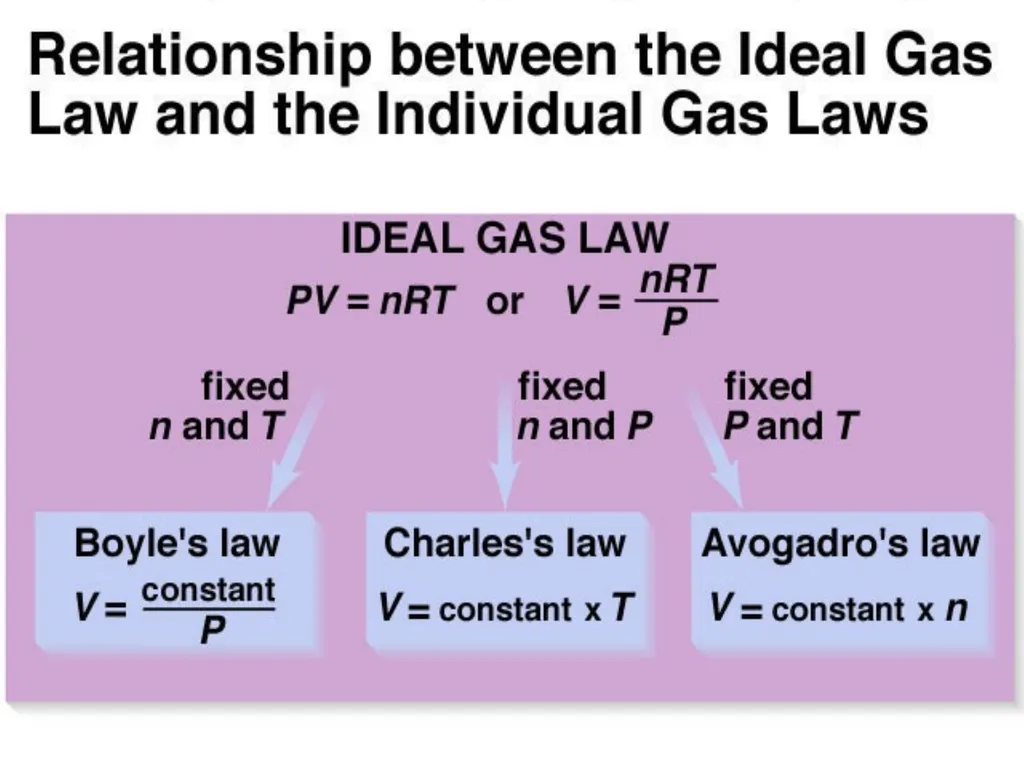
PV = constant
at constant n and temp.<br>
13
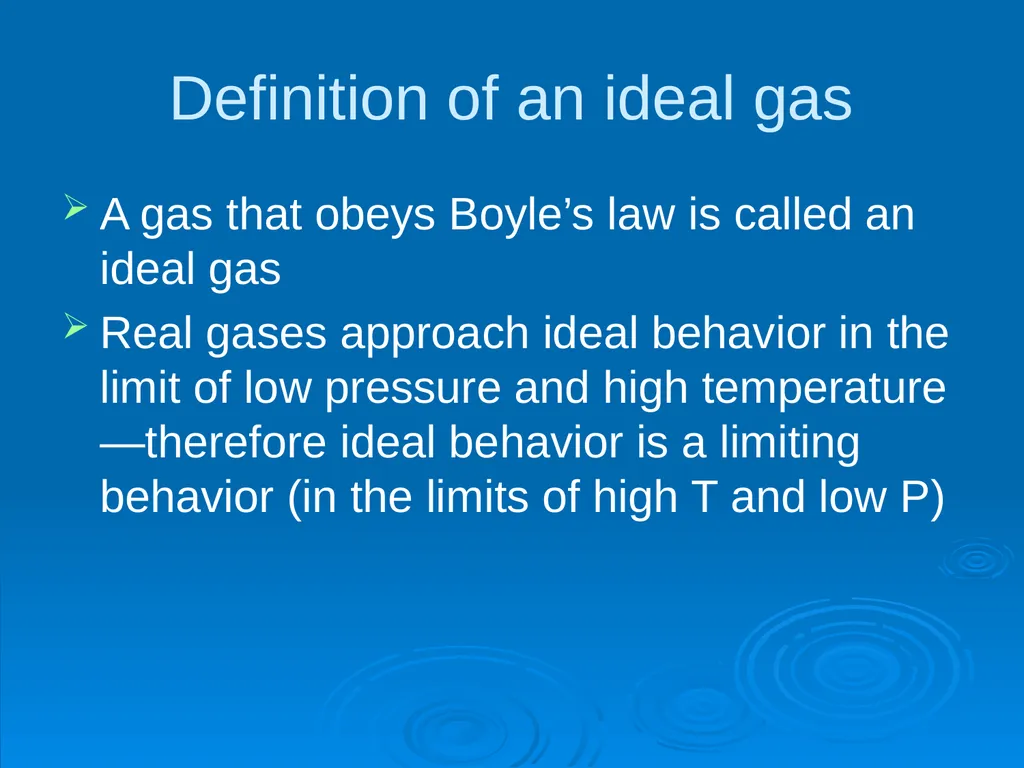
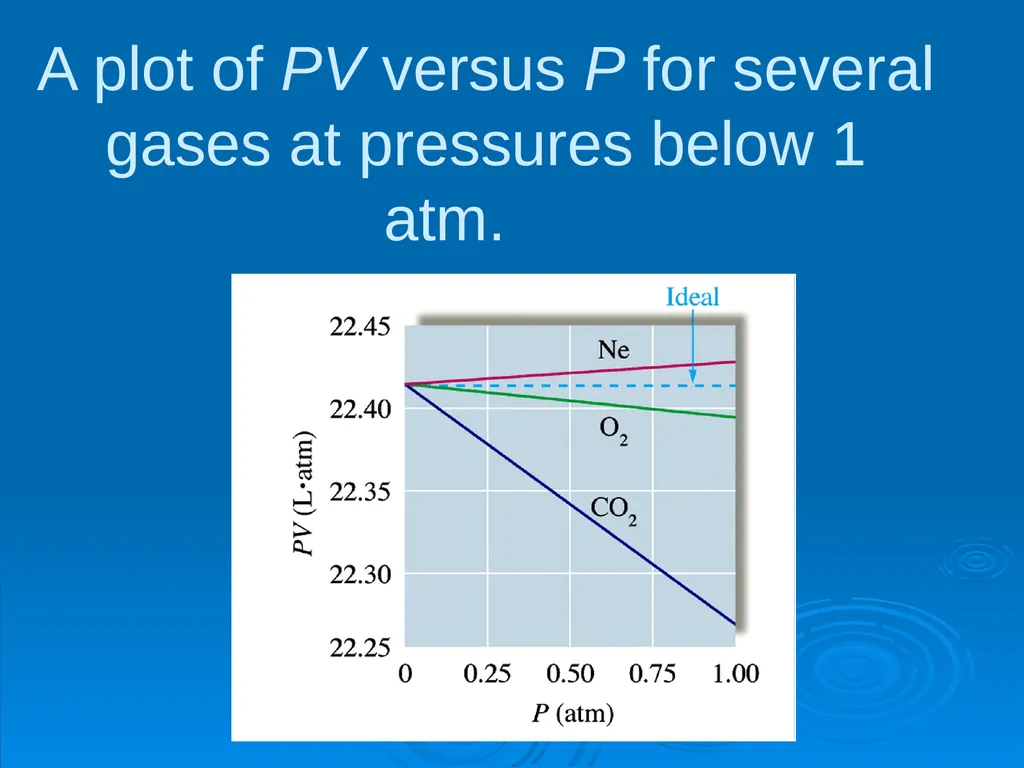
Definition of an ideal gas A gas that obeys Boyle’s law is called an ideal gas
Real gases approach ideal behavior in the limit of low pressure and high temperature—therefore ideal behavior is a limiting behavior (in the limits of high T and low P)<br>
14
A plot of PV versus P for several gases at pressures below 1 atm.<br>
15
Charles Law (Jacques Charles 1746-1823) When you heat a hot air balloon it expands.
Charles’s Law: the volume of a fixed quantity of gas at constant pressure increases as the temperature increases.
Mathematically:<br>
16
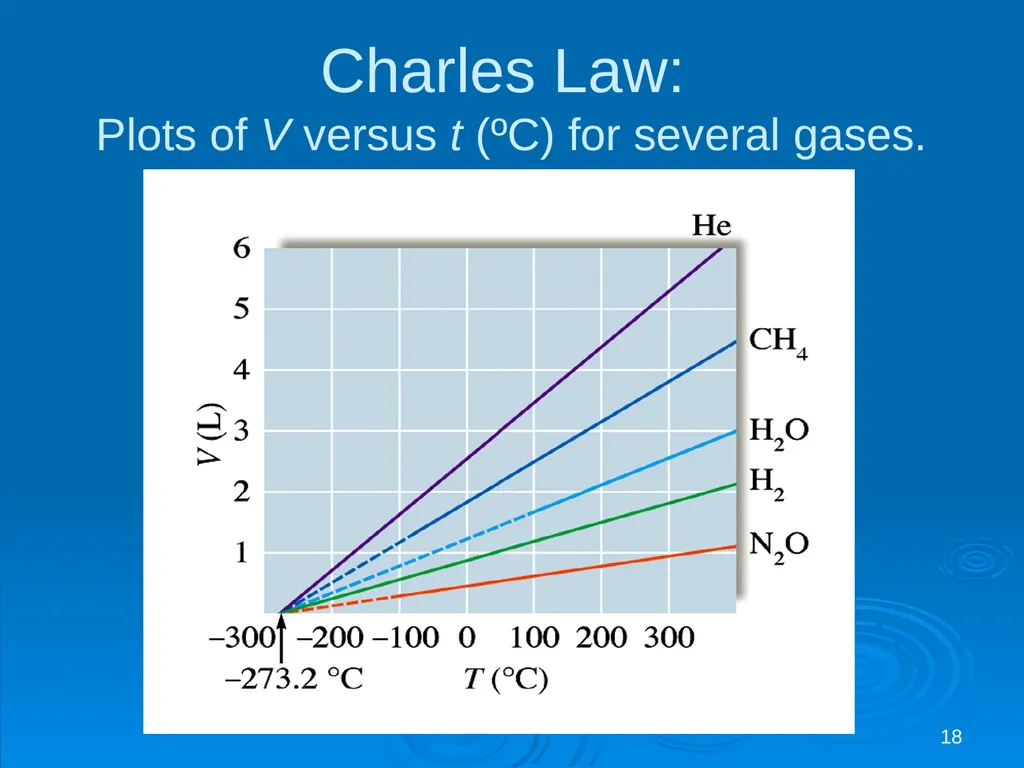
18 Charles Law: Plots of V versus t (ºC) for several gases.<br>
17
Plots of V versus T on the Kelvin scale. K = oC + 273.15 273.15 oC = 0K
Absolute Zero Below which V
is negative
physically impossible V=bT(K) 0.000001 K has been produced but not 0 Kelvin<br>
18
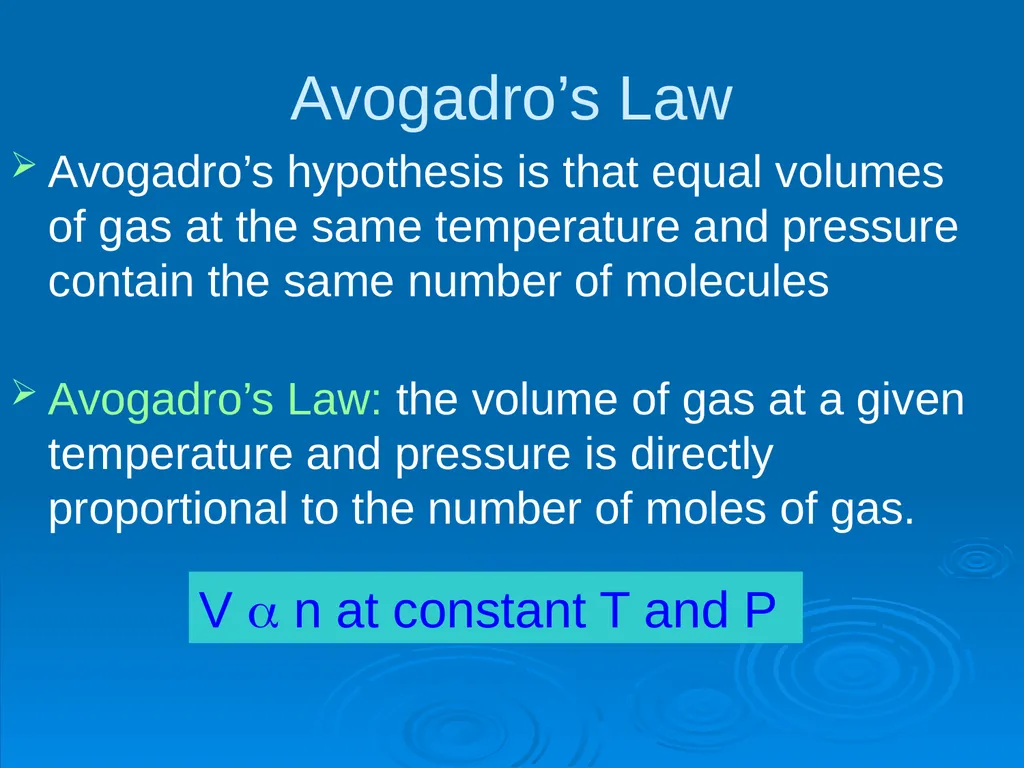
Avogadro’s Law Avogadro’s hypothesis is that equal volumes of gas at the same temperature and pressure contain the same number of molecules
Avogadro’s Law: the volume of gas at a given temperature and pressure is directly proportional to the number of moles of gas. V n at constant T and P<br>
19
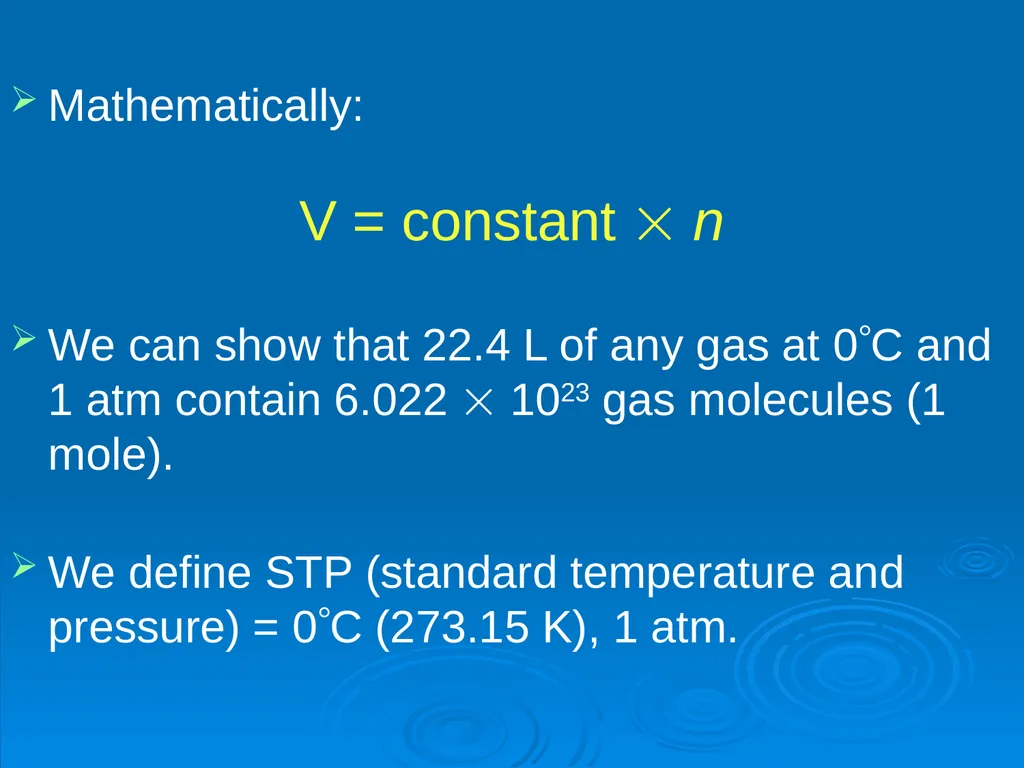
Mathematically:
V = constant n
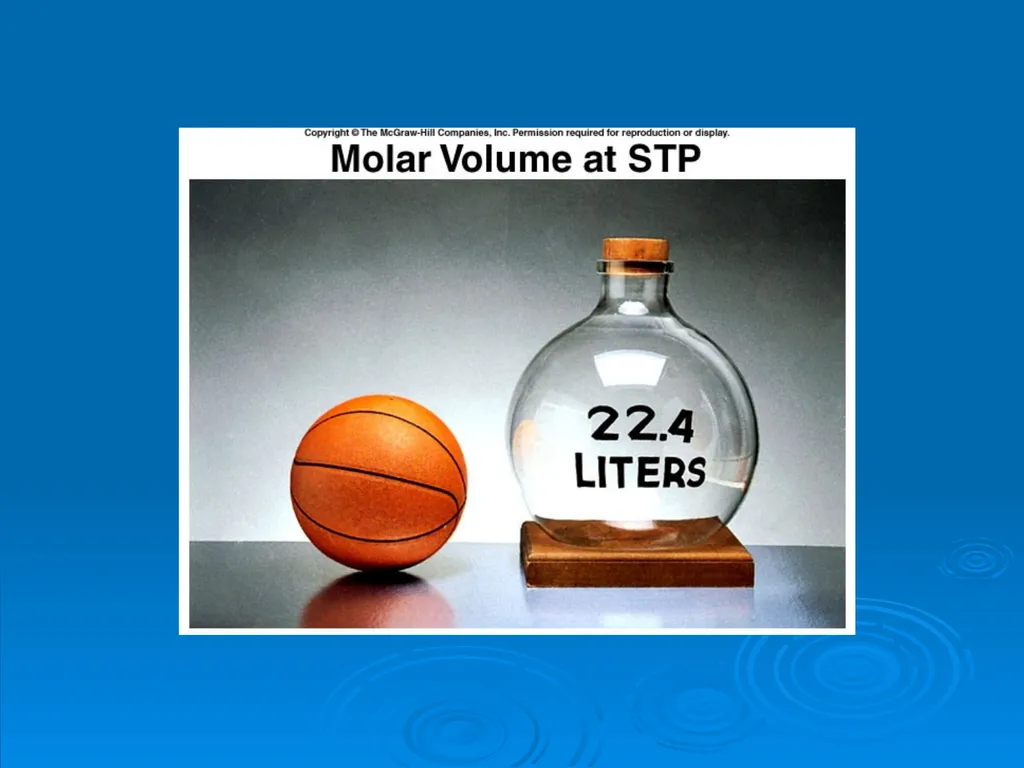
We can show that 22.4 L of any gas at 0C and 1 atm contain 6.022 1023 gas molecules (1 mole).
We define STP (standard temperature and pressure) = 0C (273.15 K), 1 atm.<br>
20
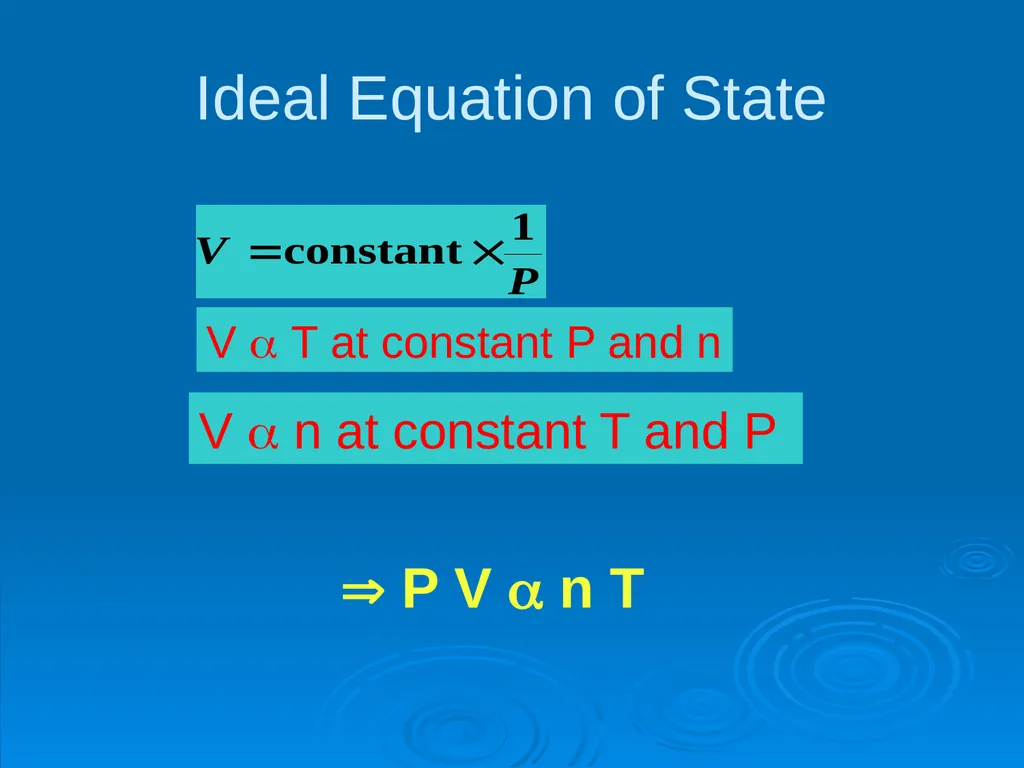
Ideal Equation of State V n at constant T and P V T at constant P and n P V n T<br>
21
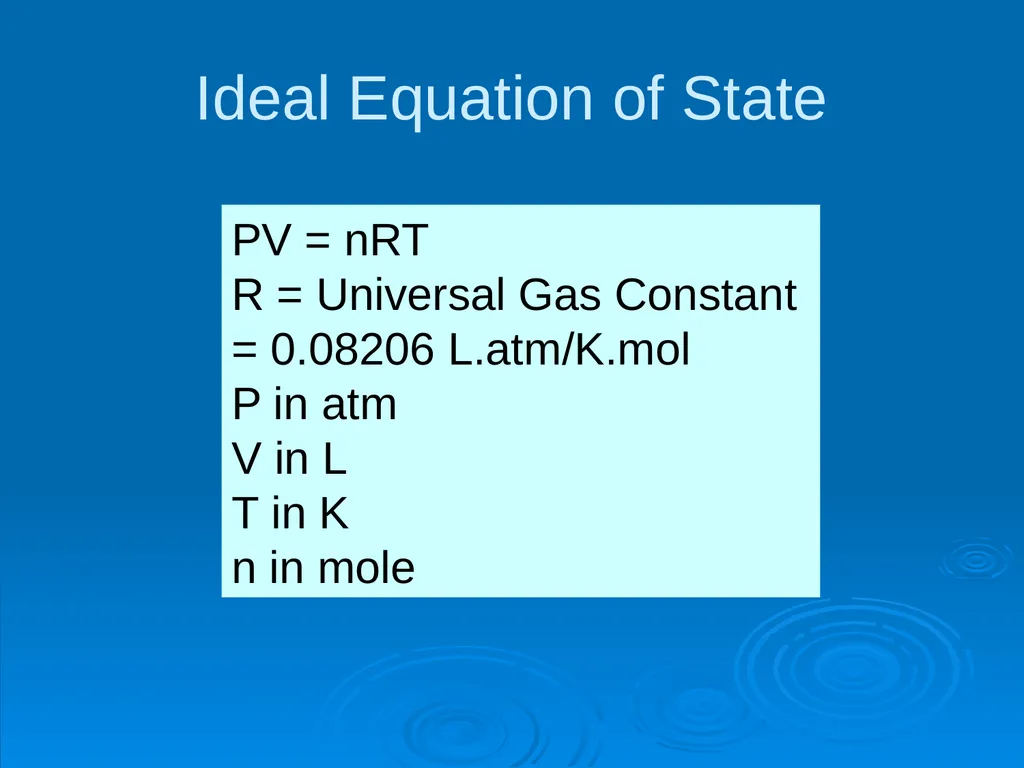
Ideal Equation of State PV = nRT
R = Universal Gas Constant
= 0.08206 L.atm/K.mol
P in atm
V in L
T in K
n in mole<br>