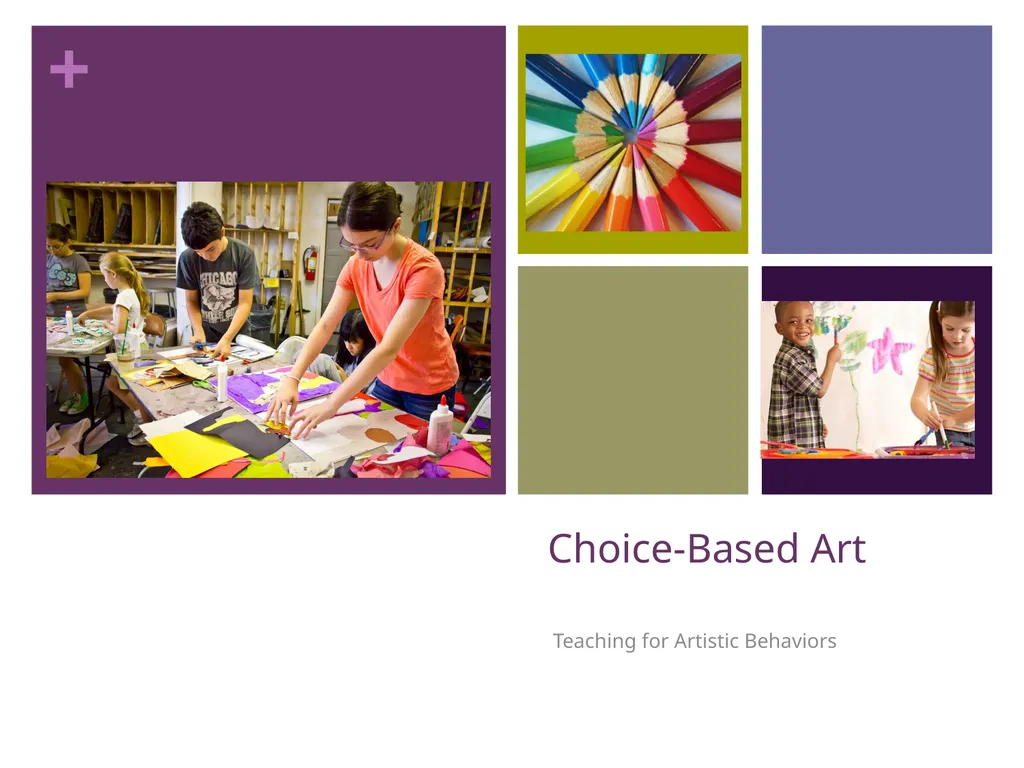
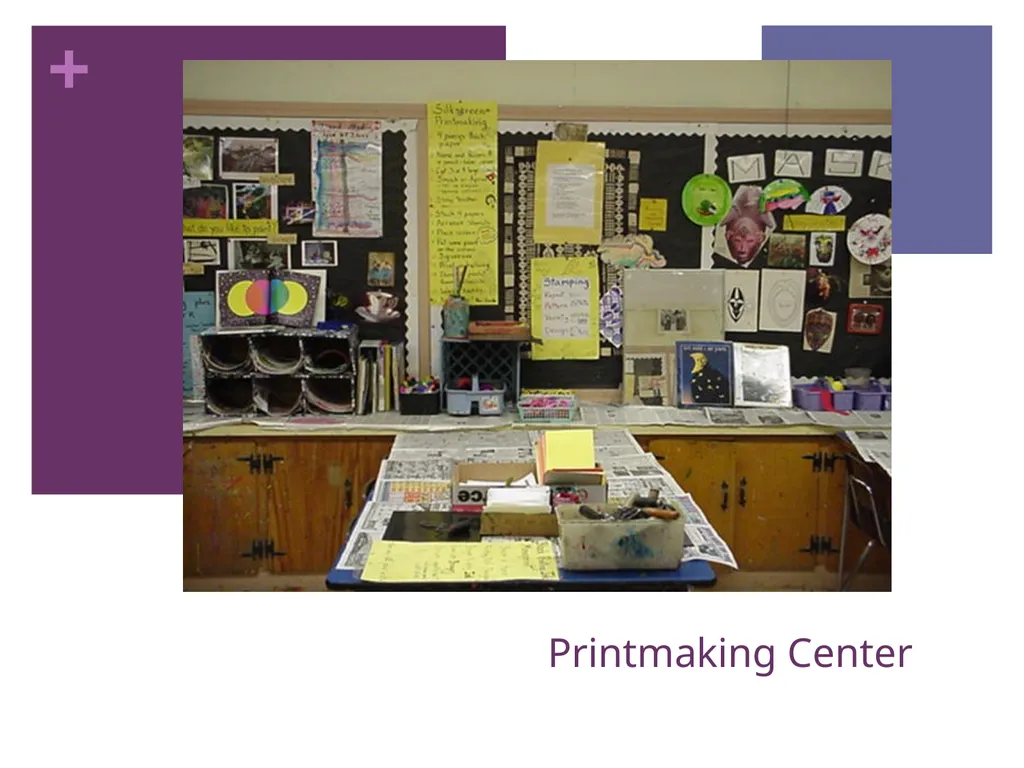
Choice-Based Art Teaching for Artistic Behaviors What is Choice-Based Learning? Each classroom is set up with different centers such as drawing, printmaking, sculpture, clay, etc Students are given a demo of a new technique, artist and
"Choice-Based Art Teaching for Artistic Behaviors" is the property of its rightful owner. Permission is granted to
download and print the materials on this website for personal, non-commercial use only, and to display it
on your personal computer provided you do not modify the materials and that you retain all copyright
notices contained in the materials. By downloading content from our website, you accept the terms of this
agreement.
Presentation Transcript
01
Choice-Based Art Teaching for Artistic Behaviors<br>
02
What is Choice-Based Learning? Each classroom is set up with different “centers” such as drawing, printmaking, sculpture, clay, etc
Students are given a demo of a new technique, artist and material every class, or every few classes
After the demo, students choose a center in which medium to work in and what to make that day
Teacher lessons take a back seat to the student’s interests
Students are treated like artists and learn to behave like artists<br>
03
The Four contexts of Choice-Based Learning: PERSONAL CONTEXT −−
Choice−based art education regards students as artists and offers students real choices for responding to their own ideas and interests through art making.
PEDAGOGICAL CONTEXT −−
Choice−based art education supports multiple modes of learning and teaching.
CLASSROOM CONTEXT −−
Choice−based art education provides resources and opportunities to construct knowledge and meaning in the process of making art.
ASSESSMENT −−
Choice−based art education utilizes multiple forms of assessment to support student and teacher growth<br>
04
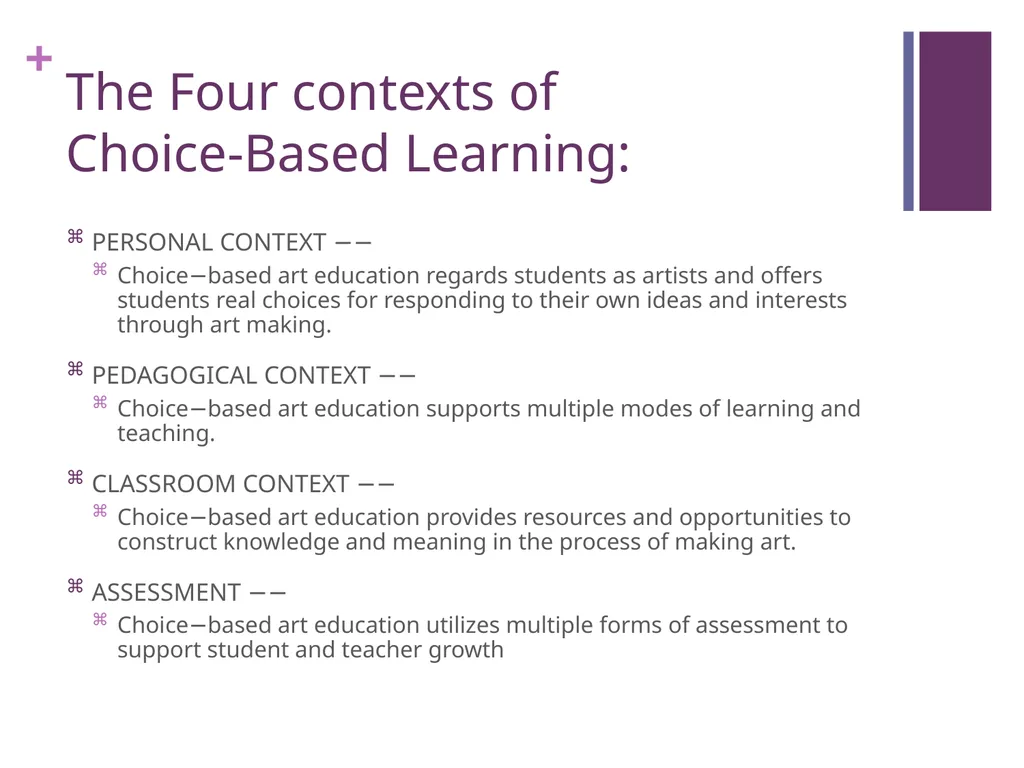
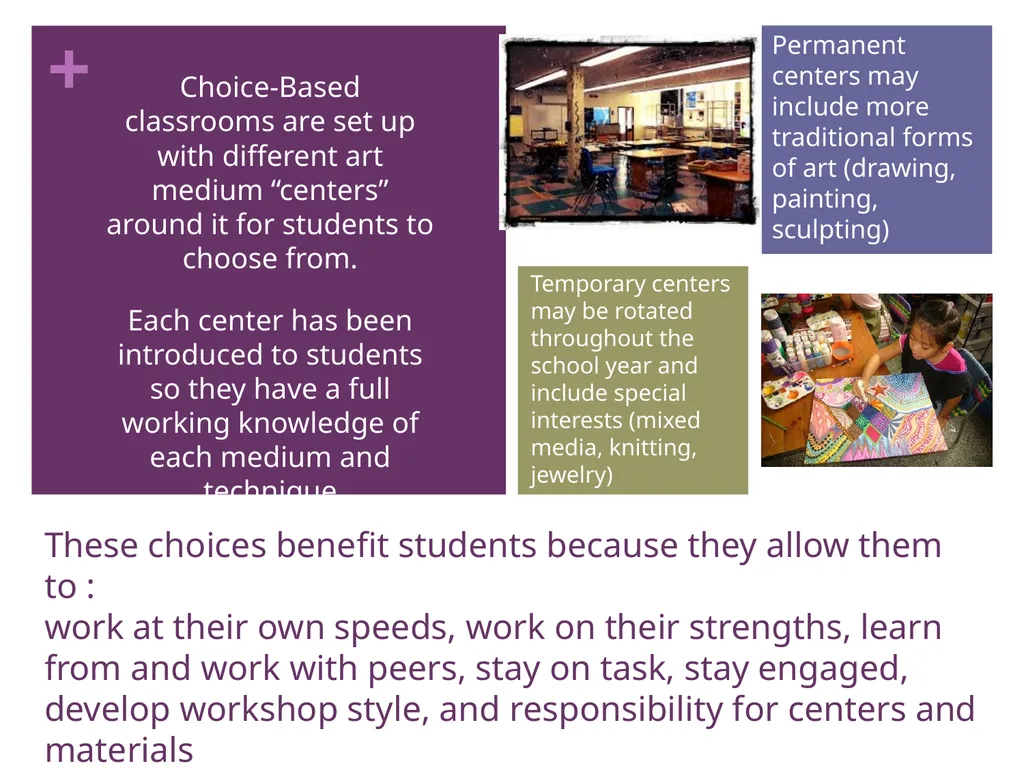
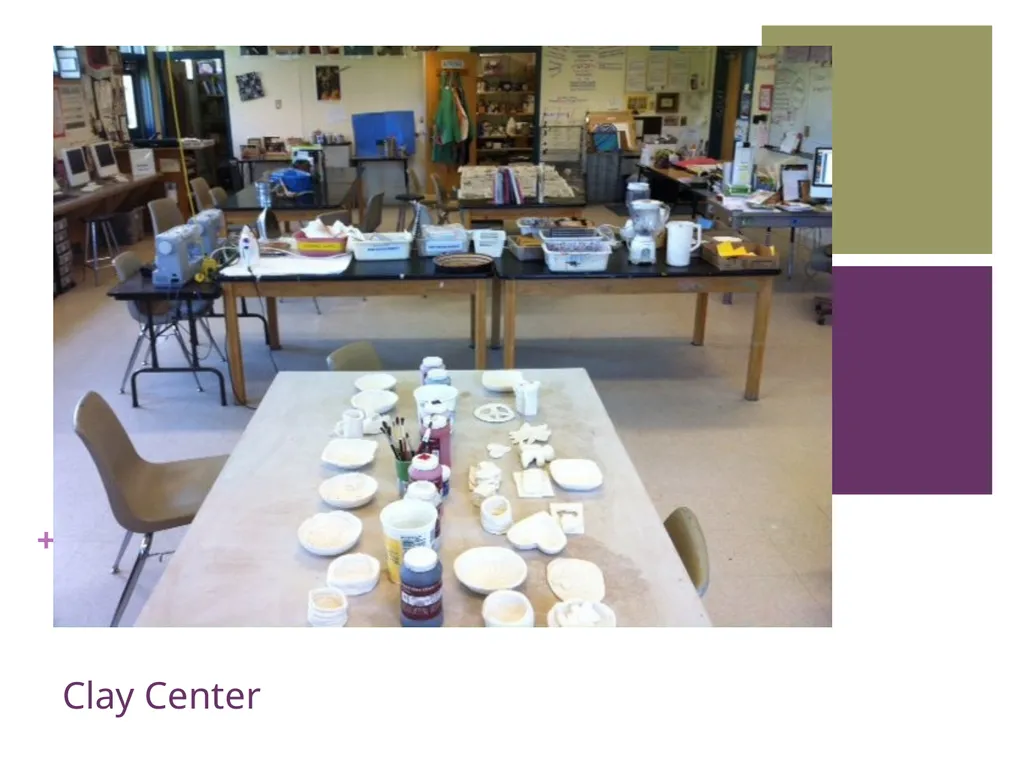
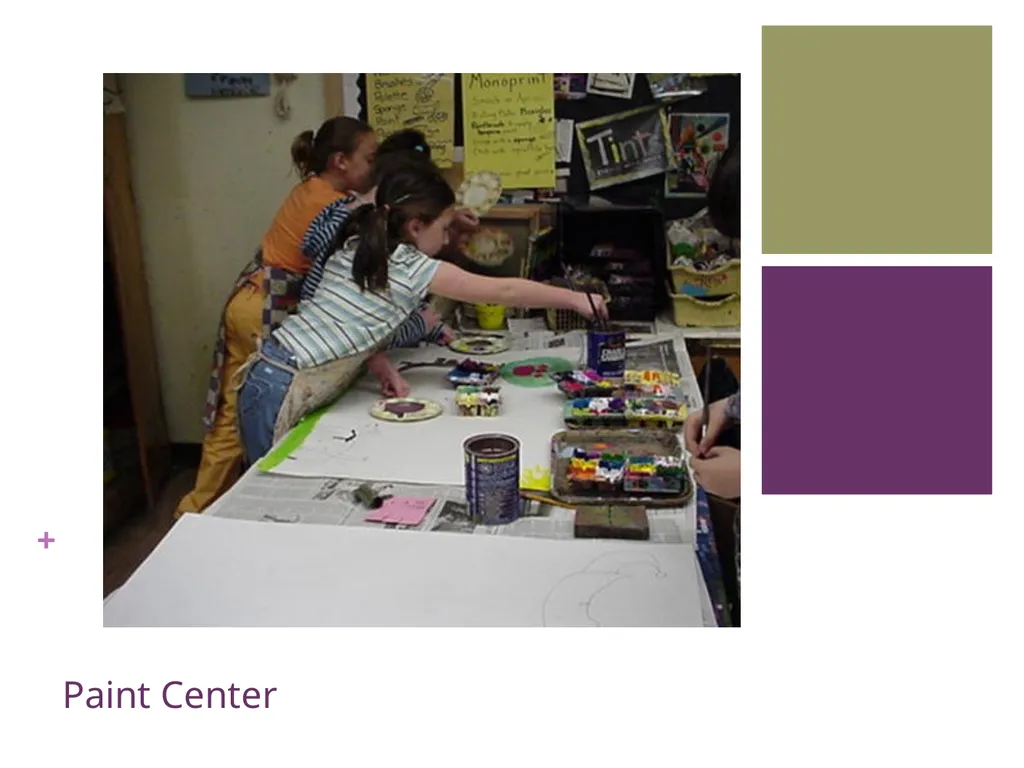
These choices benefit students because they allow them to : work at their own speeds, work on their strengths, learn from and work with peers, stay on task, stay engaged, develop workshop style, and responsibility for centers and materials Choice-Based classrooms are set up with different art medium “centers” around it for students to choose from.
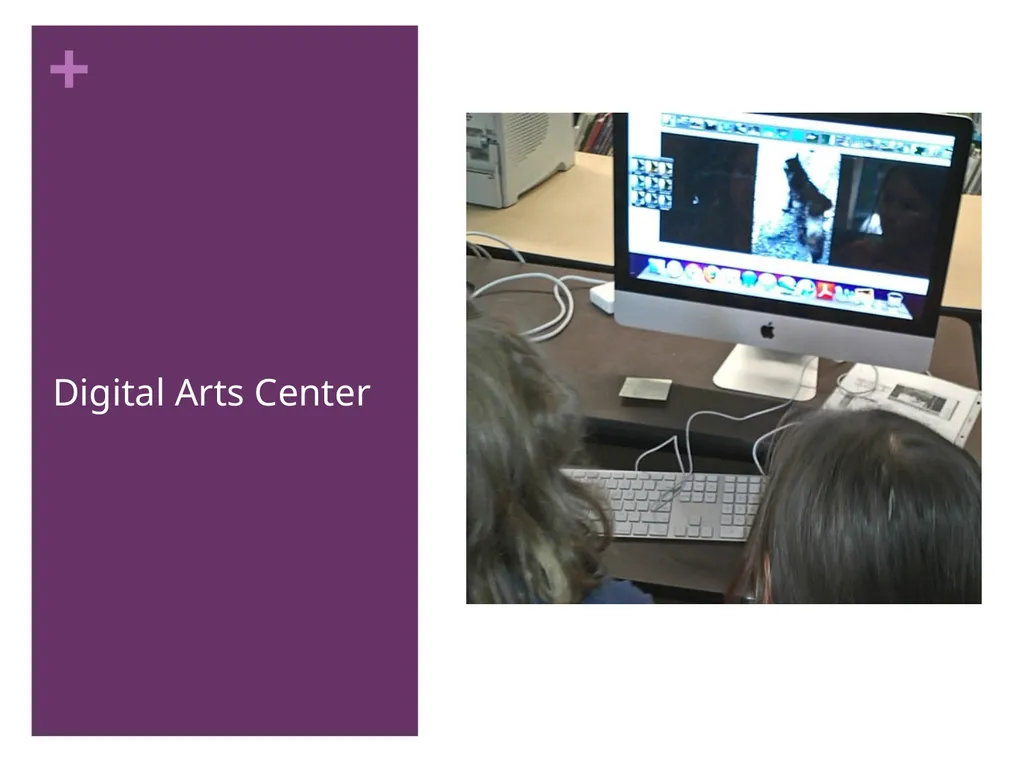
Each center has been introduced to students so they have a full working knowledge of each medium and technique Permanent centers may include more traditional forms of art (drawing, painting, sculpting) Temporary centers may be rotated throughout the school year and include special interests (mixed media, knitting, jewelry)<br>
05
Teachers Can: Have more one on one time with each student to determine strengths and weaknesses
Provide more in depth instruction
Provide scaffolding one layer build another layer, building skills, building off of skills for struggling students
Get to know their students
Individual instructions for students
Provide more time for creating, a unique studio space, a wide range of materials, group and individual instruction for students<br>
06
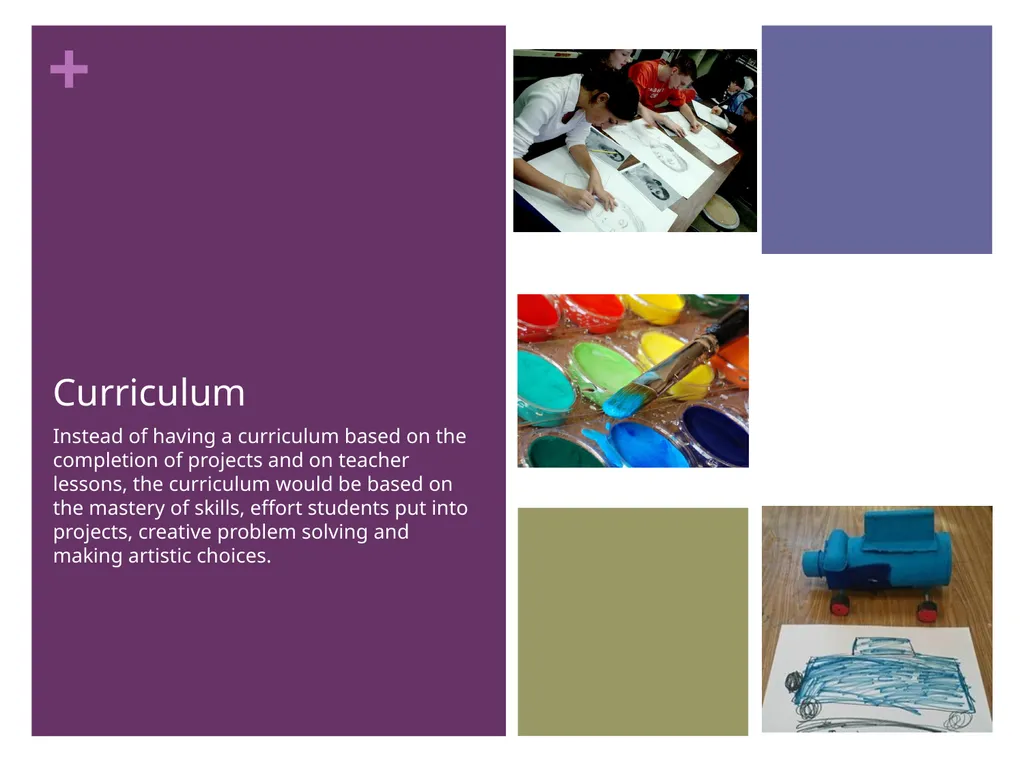
Curriculum Instead of having a curriculum based on the completion of projects and on teacher lessons, the curriculum would be based on the mastery of skills, effort students put into projects, creative problem solving and making artistic choices.<br>
07
Meeting State and National Standards Rubrics that are negotiated between students and teachers establish the criteria for work throughout the year. Criteria should be generalized to fit all centers and affirm all levels of ability.
Rubrics become class standards for overall performance and provide a basis for student achievement. Daily/ Weekly demos, self assessments, and many other classroom tools and techniques can help teachers meet standards in Choice Based Art Education.
Such as: Teachers train students to perform self−assessment through introduction and modeling of various assessment tools, such as journals, artist statements, sharing sessions, and presentations.
Students use information gained in self−assessments to build confidence and measure their progress. Teachers use information gained in self−assessments to redirect individualized and group instruction and to develop new curricula.<br>
08
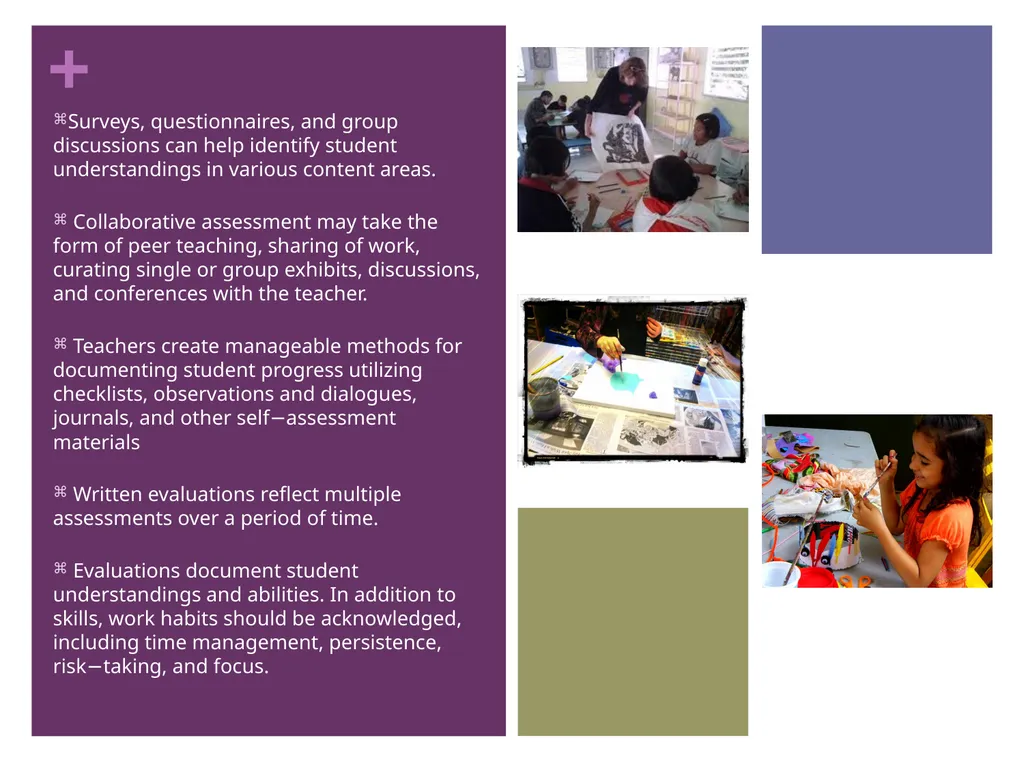
Surveys, questionnaires, and group discussions can help identify student understandings in various content areas.
Collaborative assessment may take the form of peer teaching, sharing of work, curating single or group exhibits, discussions, and conferences with the teacher.
Teachers create manageable methods for documenting student progress utilizing checklists, observations and dialogues, journals, and other self−assessment materials
Written evaluations reflect multiple assessments over a period of time.
Evaluations document student understandings and abilities. In addition to skills, work habits should be acknowledged, including time management, persistence, risk−taking, and focus.<br>
09
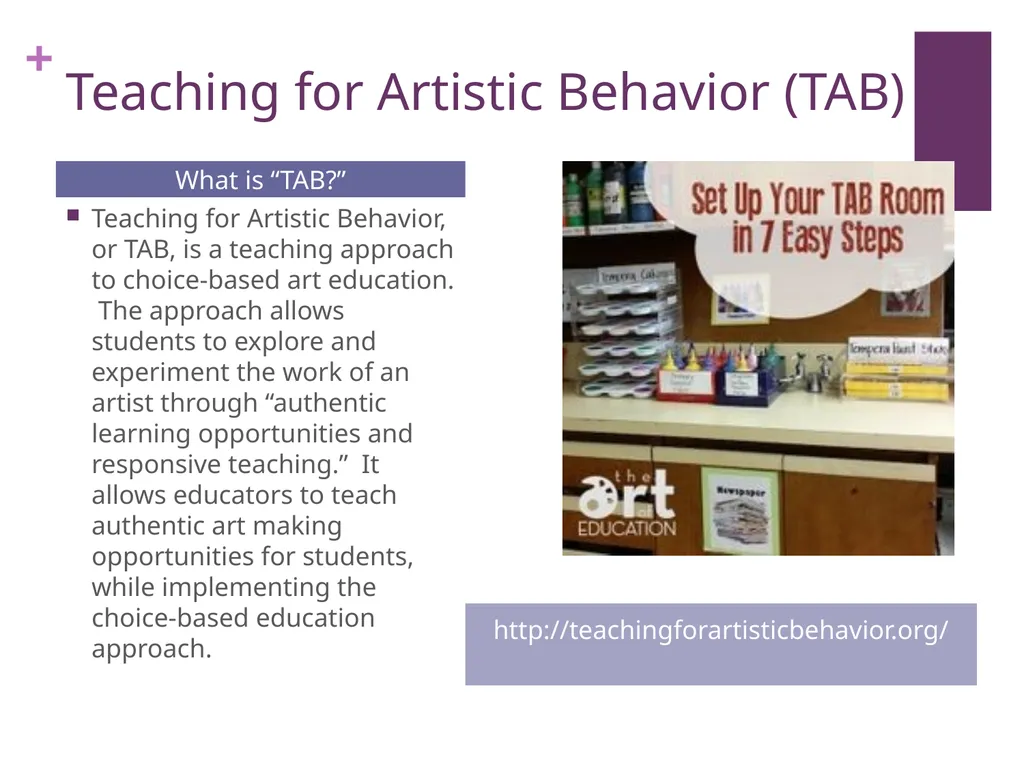
Teaching for Artistic Behavior (TAB) Teaching for Artistic Behavior, or TAB, is a teaching approach to choice-based art education. The approach allows students to explore and experiment the work of an artist through “authentic learning opportunities and responsive teaching.” It allows educators to teach authentic art making opportunities for students, while implementing the choice-based education approach. What is “TAB?” http://teachingforartisticbehavior.org/<br>