Civil registration systems IN THE PACIFIC; a CRITICAL foundation for functional population registers Utilization of administrative databases in census programmes Gloria mathenge CIVIL REGISTRATION, legal identity HUMAN DEVELOPMENT As
"Civil registration systems IN THE PACIFIC; a" is the property of its rightful owner. Permission is granted to
download and print the materials on this website for personal, non-commercial use only, and to display it
on your personal computer provided you do not modify the materials and that you retain all copyright
notices contained in the materials. By downloading content from our website, you accept the terms of this
agreement.
Presentation Transcript
01
Civil registration systems IN THE PACIFIC; a CRITICAL foundation for functional population registers Utilization of administrative databases in census programmes
Gloria mathenge<br>
02
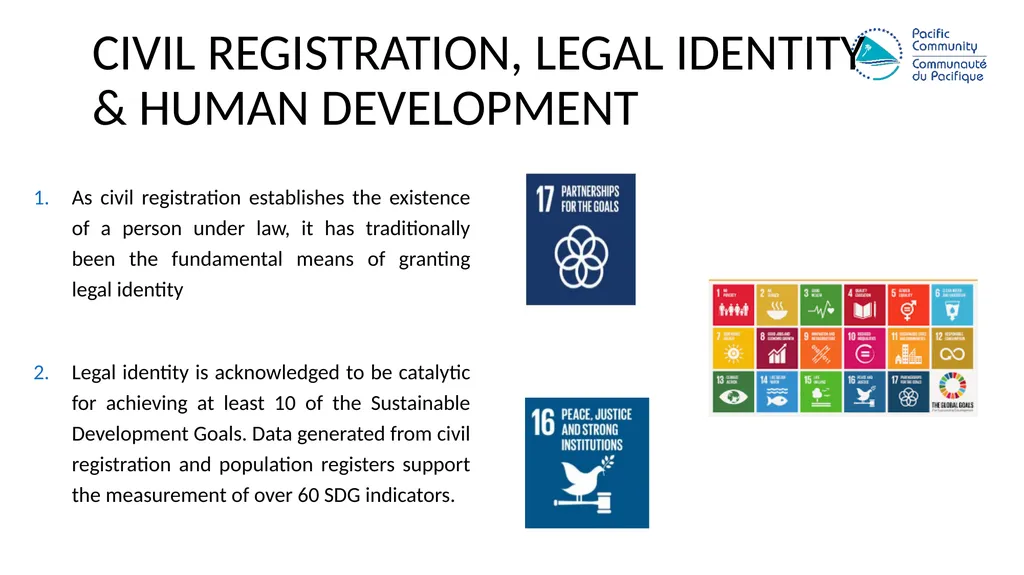
CIVIL REGISTRATION, legal identity & HUMAN DEVELOPMENT As civil registration establishes the existence of a person under law, it has traditionally been the fundamental means of granting legal identity
Legal identity is acknowledged to be catalytic for achieving at least 10 of the Sustainable Development Goals. Data generated from civil registration and population registers support the measurement of over 60 SDG indicators.<br>
03
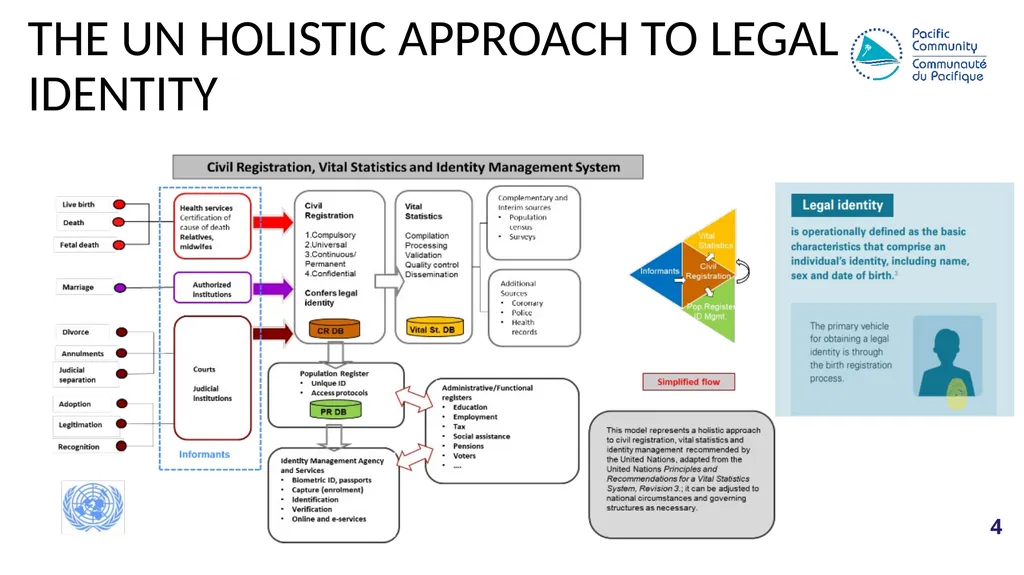
the uN holistic approach to legal identity 4<br>
04
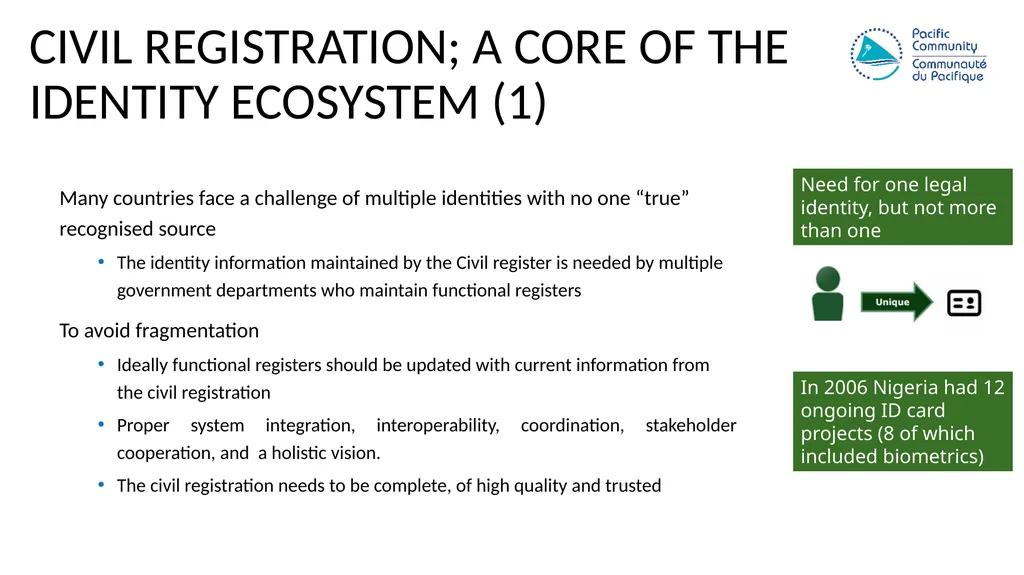
Civil registration; A core of the identity ecosystem (1) Many countries face a challenge of multiple identities with no one “true” recognised source
The identity information maintained by the Civil register is needed by multiple government departments who maintain functional registers
To avoid fragmentation
Ideally functional registers should be updated with current information from the civil registration
Proper system integration, interoperability, coordination, stakeholder cooperation, and a holistic vision.
The civil registration needs to be complete, of high quality and trusted Need for one legal identity, but not more than one In 2006 Nigeria had 12 ongoing ID card projects (8 of which included biometrics)<br>
05
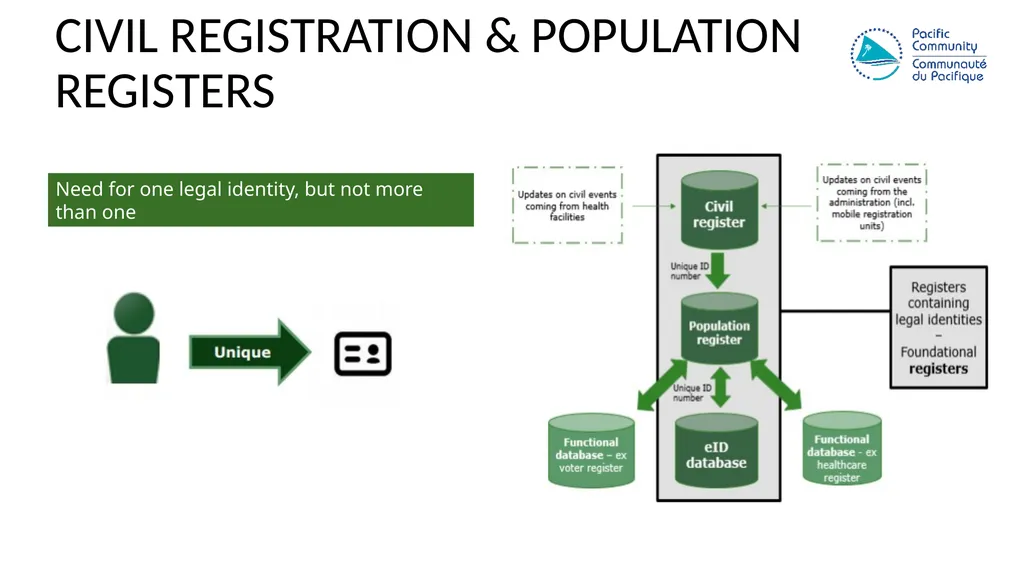
Civil registration & Population registers Need for one legal identity, but not more than one<br>
06
pathways TO complete the id ecosystem Civil registration is the ideal foundation for establishment of the Population register and the National ID system
ID programs implemented before a robust civil registration system is in place could be used as a starting point to complete the civil register. However the country must make sure that the platform is scalable and incorporable to the future civil registry.
A complete and functional civil registration system will always be needed to keep the registers up to date<br>
07
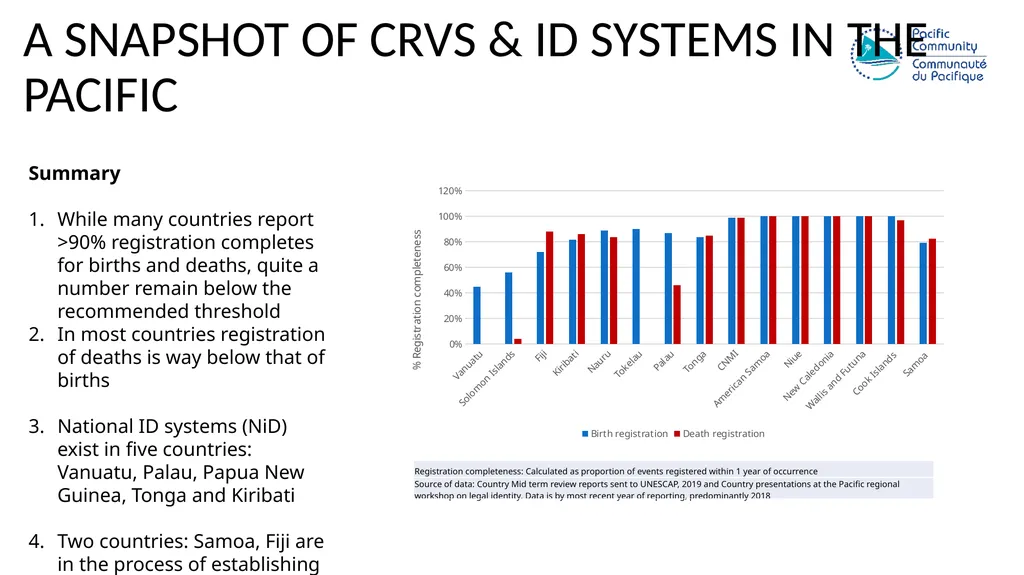
A Snapshot OF crVS & ID SYSTEMS IN THE PACIFIC Summary
While many countries report >90% registration completes for births and deaths, quite a number remain below the recommended threshold
In most countries registration of deaths is way below that of births
National ID systems (NiD) exist in five countries: Vanuatu, Palau, Papua New Guinea, Tonga and Kiribati
Two countries: Samoa, Fiji are in the process of establishing NiD systems<br>
08
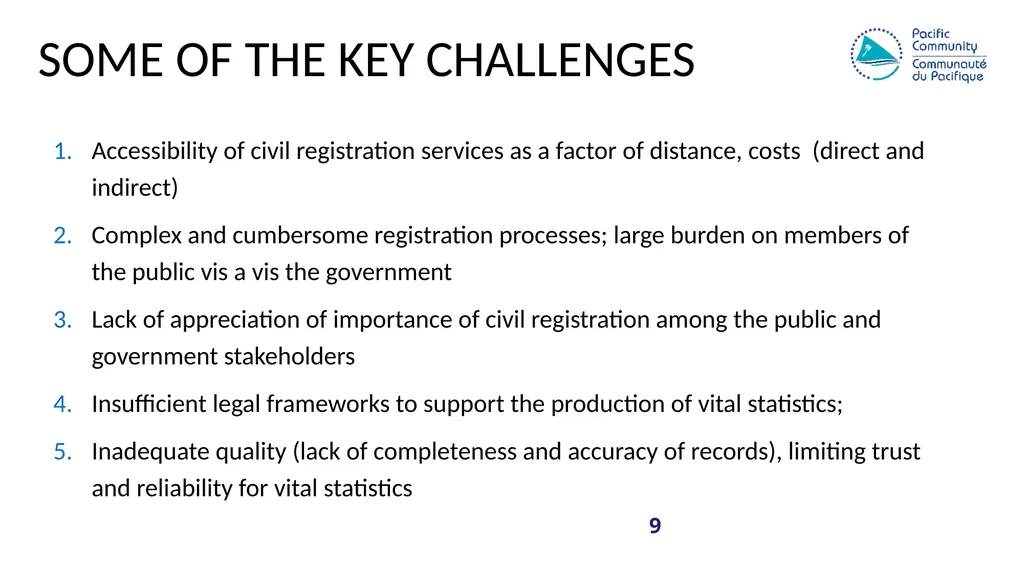
Some of the KEY CHALLENGES 9 Accessibility of civil registration services as a factor of distance, costs (direct and indirect)
Complex and cumbersome registration processes; large burden on members of the public vis a vis the government
Lack of appreciation of importance of civil registration among the public and government stakeholders
Insufficient legal frameworks to support the production of vital statistics;
Inadequate quality (lack of completeness and accuracy of records), limiting trust and reliability for vital statistics<br>
09
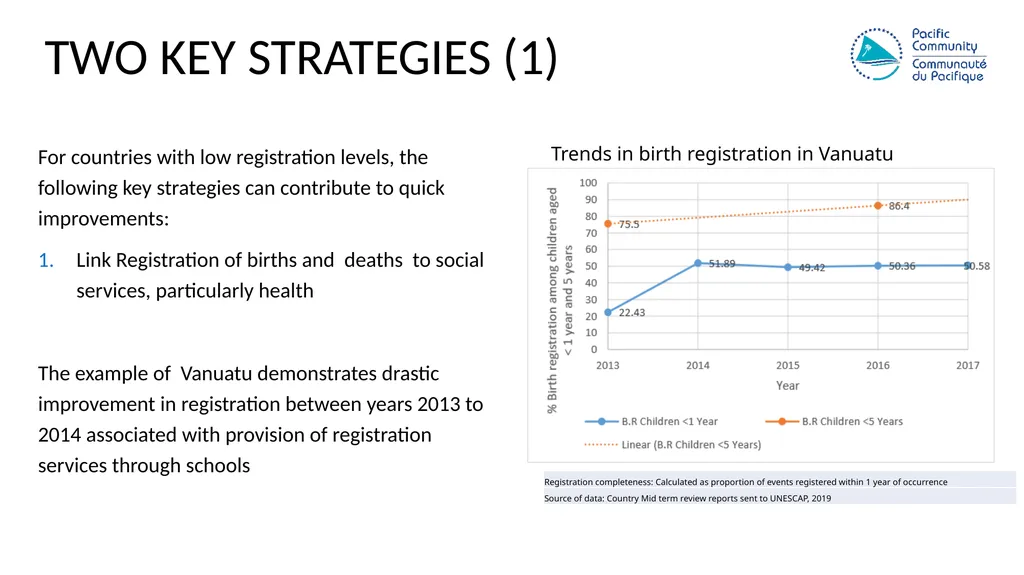
TWO Key strategies (1) For countries with low registration levels, the following key strategies can contribute to quick improvements:
Link Registration of births and deaths to social services, particularly health
The example of Vanuatu demonstrates drastic improvement in registration between years 2013 to 2014 associated with provision of registration services through schools Trends in birth registration in Vanuatu<br>
10
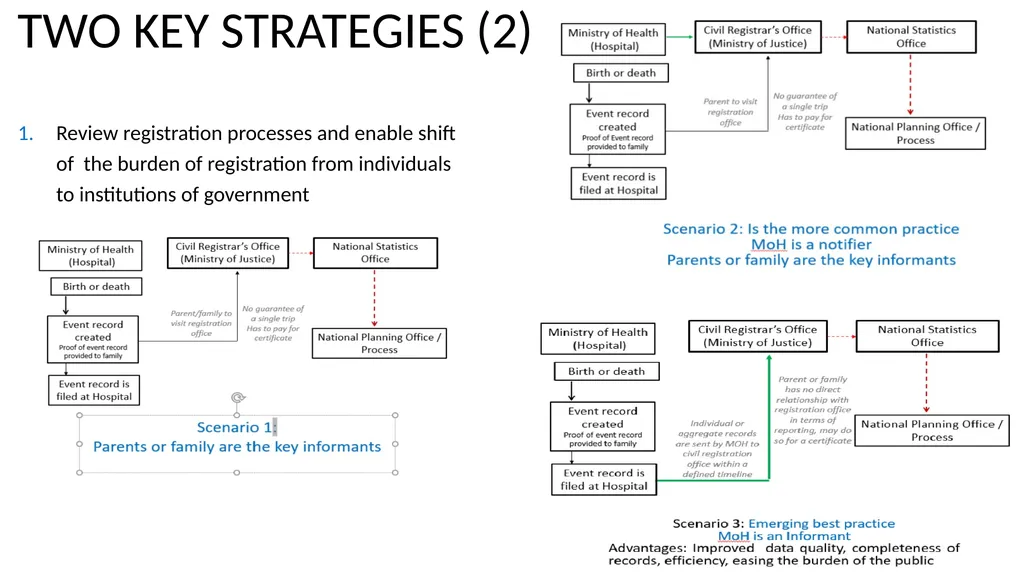
TWO Key strategies (2) Review registration processes and enable shift of the burden of registration from individuals to institutions of government<br>
11
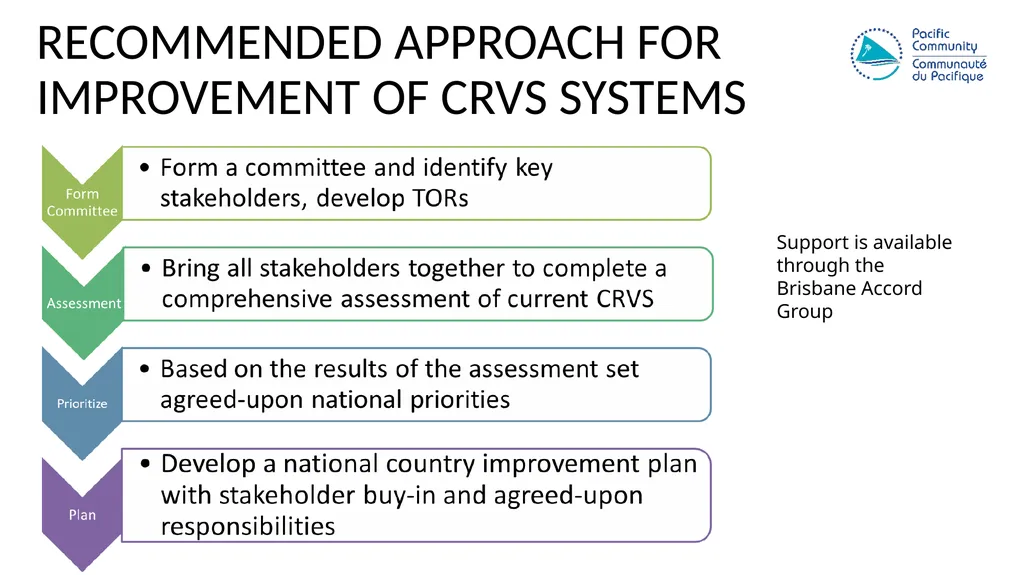
recommended approach FOR IMPROVEMENT OF CRVS SYSTEMS Support is available through the Brisbane Accord Group<br>
12
SUMMARY OF KEY MESSAGES Complete and high quality civil registration systems are needed to grant legal rights, and support the realisation and monitoring of the sustainable development agenda
Well functioning civil registration systems are the foundation for population registers and are the primary basis through which population registers are kept up-to-date
While progress has been made, some Pacific countries need to make a lot of progress in order to realise civil registration systems that can support functional population registers
Key strategies include linking civil registration services with crucial services such as health and shifting the burden of registration from the public to government
It is recommended that all countries establish national coordination mechanisms, conduct assessments and develop national action plans for improvement<br>