Classifying RDM training content and resources
Description: Classifying RDM training content and resources Sarah Jones DCC, University of Glasgow The DCC lifecycle model http:www.dcc.ac.ukresourcescuration-lifecycle-model Managing Research Data resources Five disciplinary training projects in
Related Topics
Download Presentation
"Classifying RDM training content and resources" is the property of its rightful owner. Permission is granted to download and print the materials on this website for personal, non-commercial use only, and to display it on your personal computer provided you do not modify the materials and that you retain all copyright notices contained in the materials. By downloading content from our website, you accept the terms of this agreement.
Presentation Transcript
slide1. Classifying RDM training content and resources Sarah Jones
DCC, University of Glasgow<br>
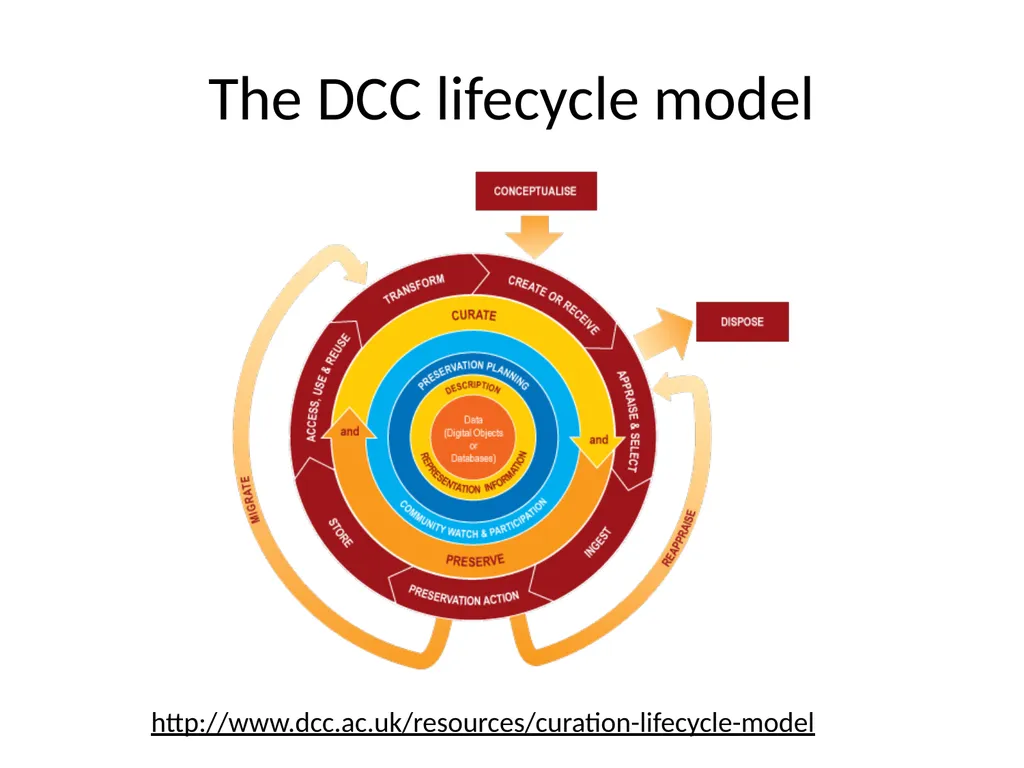
slide2. The DCC lifecycle model http://www.dcc.ac.uk/resources/curation-lifecycle-model<br>
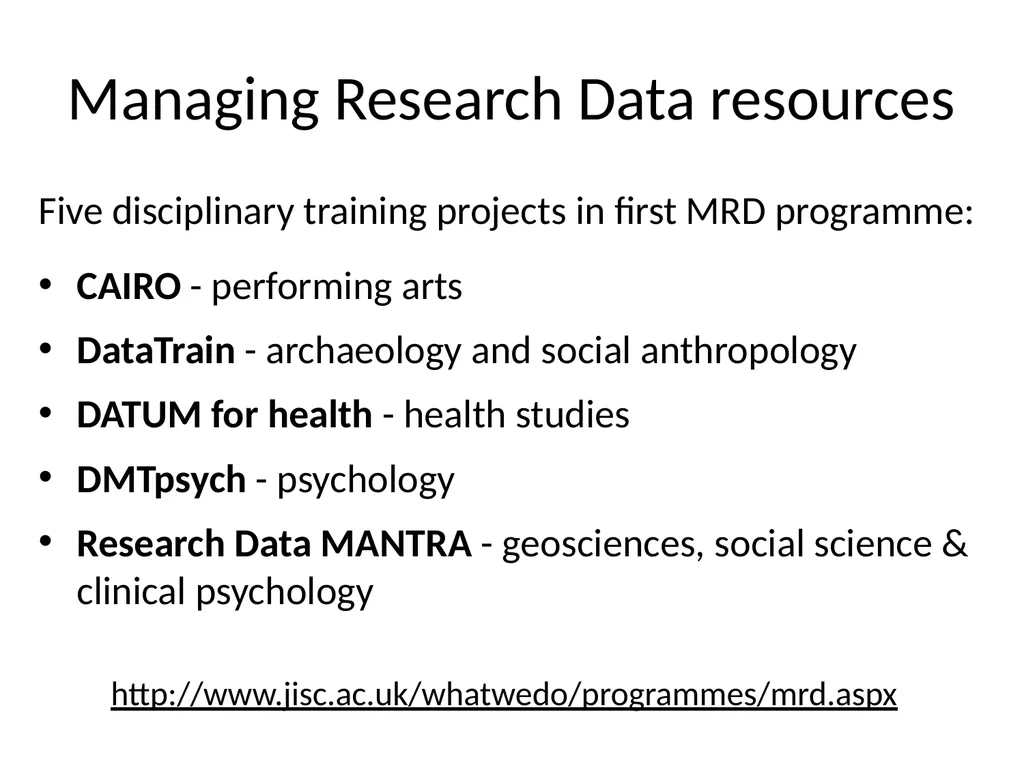
slide3. Managing Research Data resources Five disciplinary training projects in first MRD programme:
CAIRO - performing arts
DataTrain - archaeology and social anthropology
DATUM for health - health studies
DMTpsych - psychology
Research Data MANTRA - geosciences, social science & clinical psychology http://www.jisc.ac.uk/whatwedo/programmes/mrd.aspx<br>
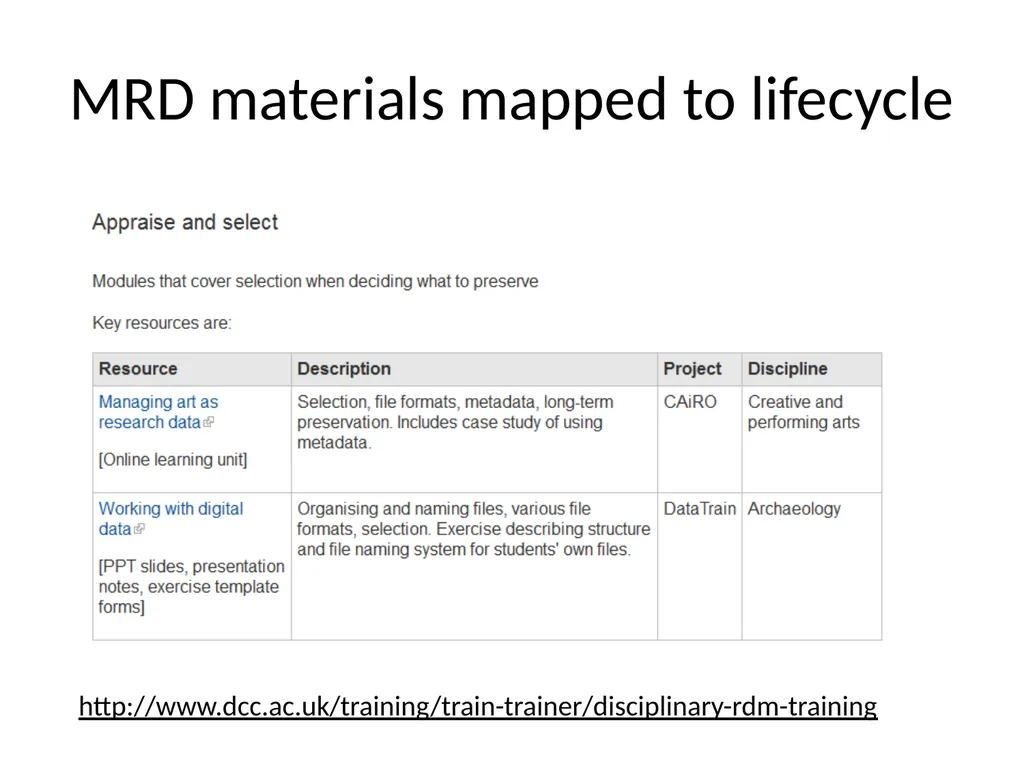
slide4. MRD materials mapped to lifecycle http://www.dcc.ac.uk/training/train-trainer/disciplinary-rdm-training<br>

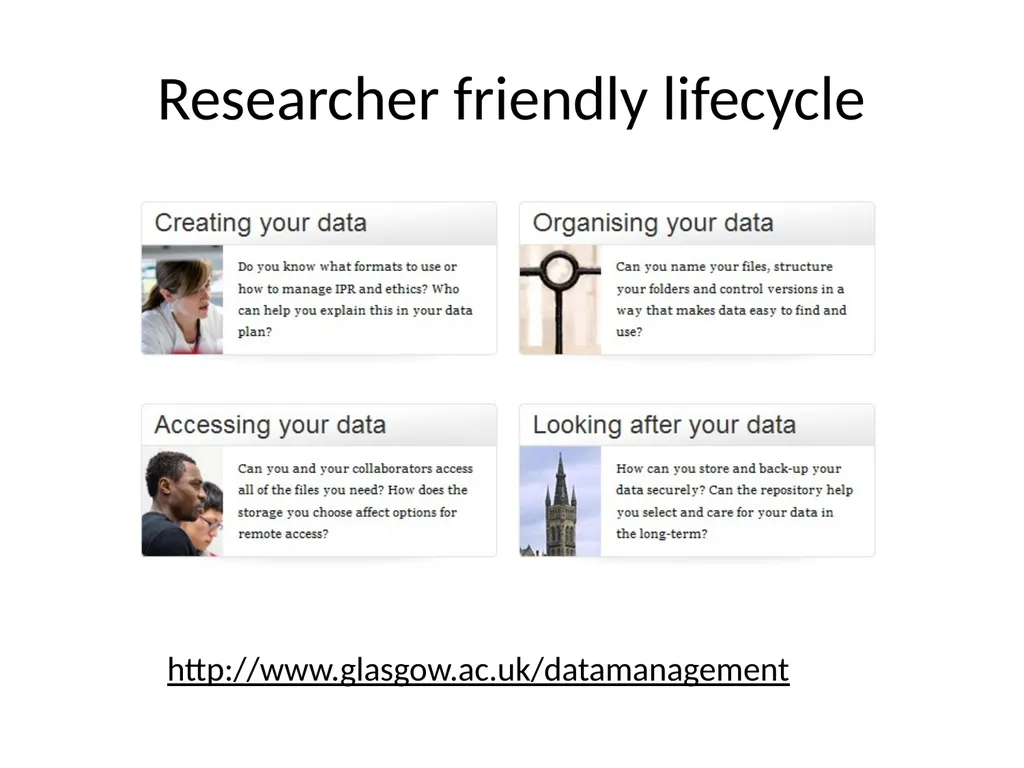
slide5. Researcher friendly lifecycle http://www.glasgow.ac.uk/datamanagement<br>
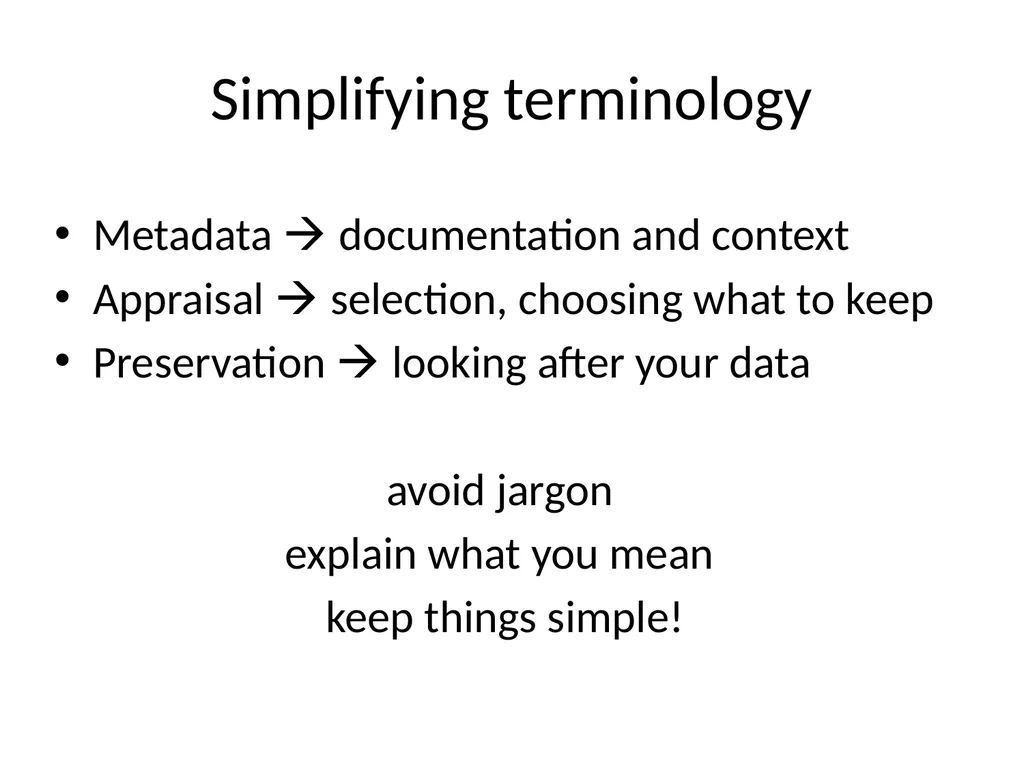
slide6. Simplifying terminology Metadata ïƒ documentation and context
Appraisal ïƒ selection, choosing what to keep
Preservation ïƒ looking after your data
avoid jargon
explain what you mean
keep things simple!<br>
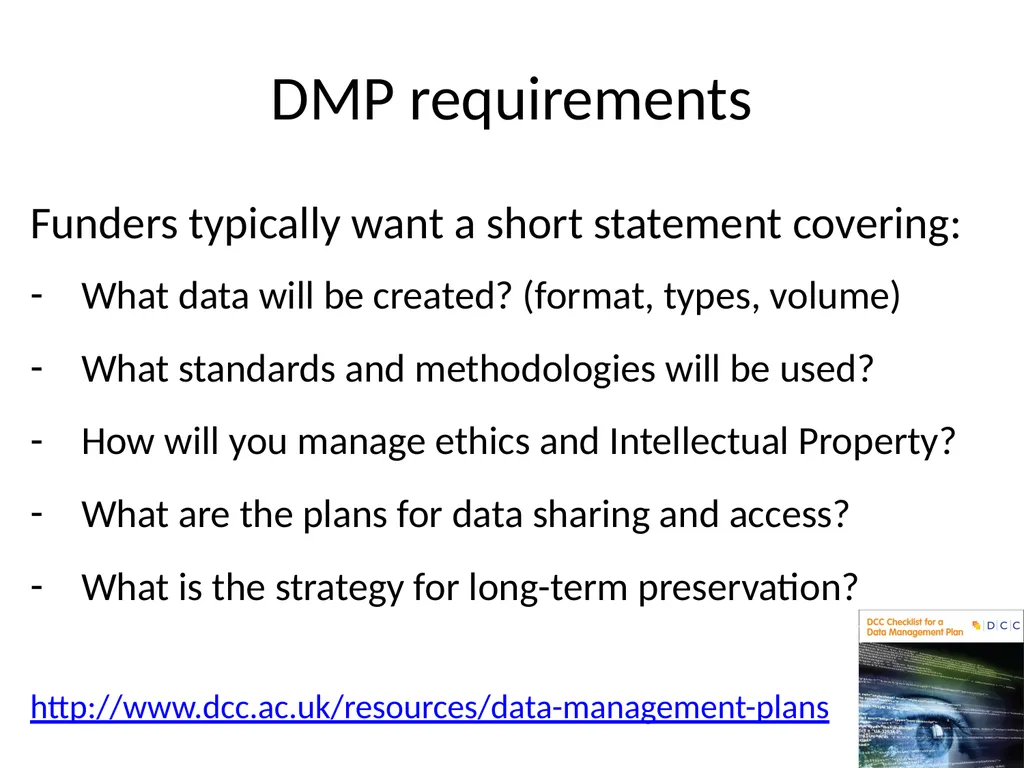
slide7. DMP requirements Funders typically want a short statement covering:
What data will be created? (format, types, volume)
What standards and methodologies will be used?
How will you manage ethics and Intellectual Property?
What are the plans for data sharing and access?
What is the strategy for long-term preservation? http://www.dcc.ac.uk/resources/data-management-plans<br>
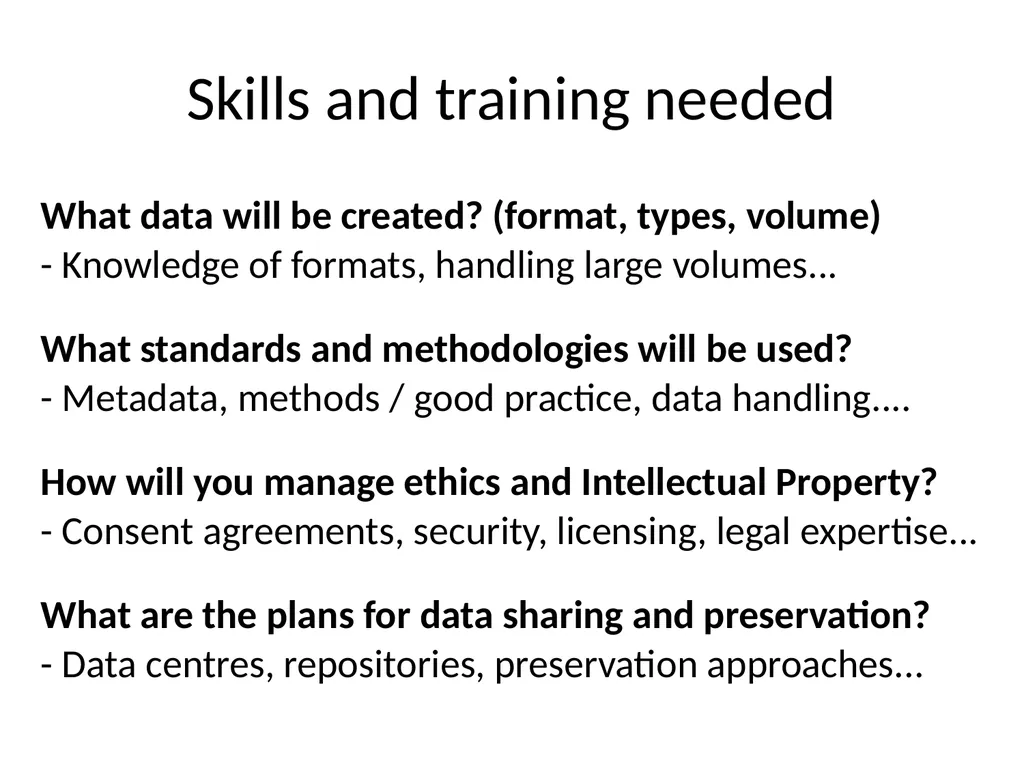
slide8. Skills and training needed What data will be created? (format, types, volume)
- Knowledge of formats, handling large volumes...
What standards and methodologies will be used?
- Metadata, methods / good practice, data handling....
How will you manage ethics and Intellectual Property?
- Consent agreements, security, licensing, legal expertise...
What are the plans for data sharing and preservation?
- Data centres, repositories, preservation approaches...<br>
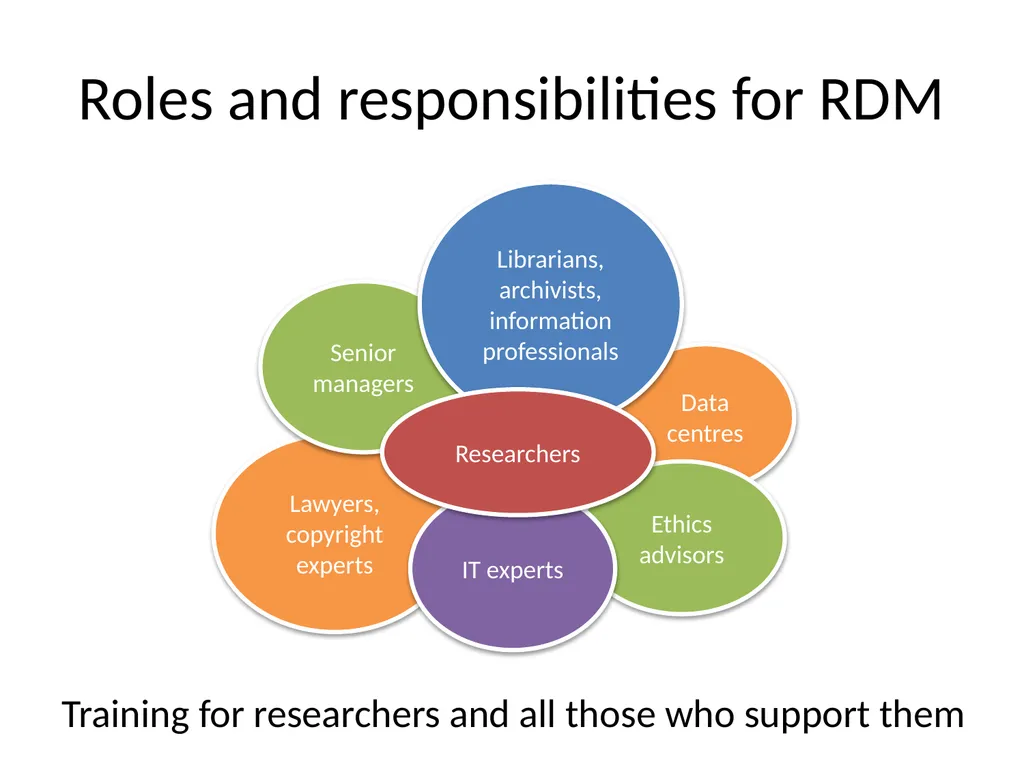
slide9. Roles and responsibilities for RDM Training for researchers and all those who support them<br>
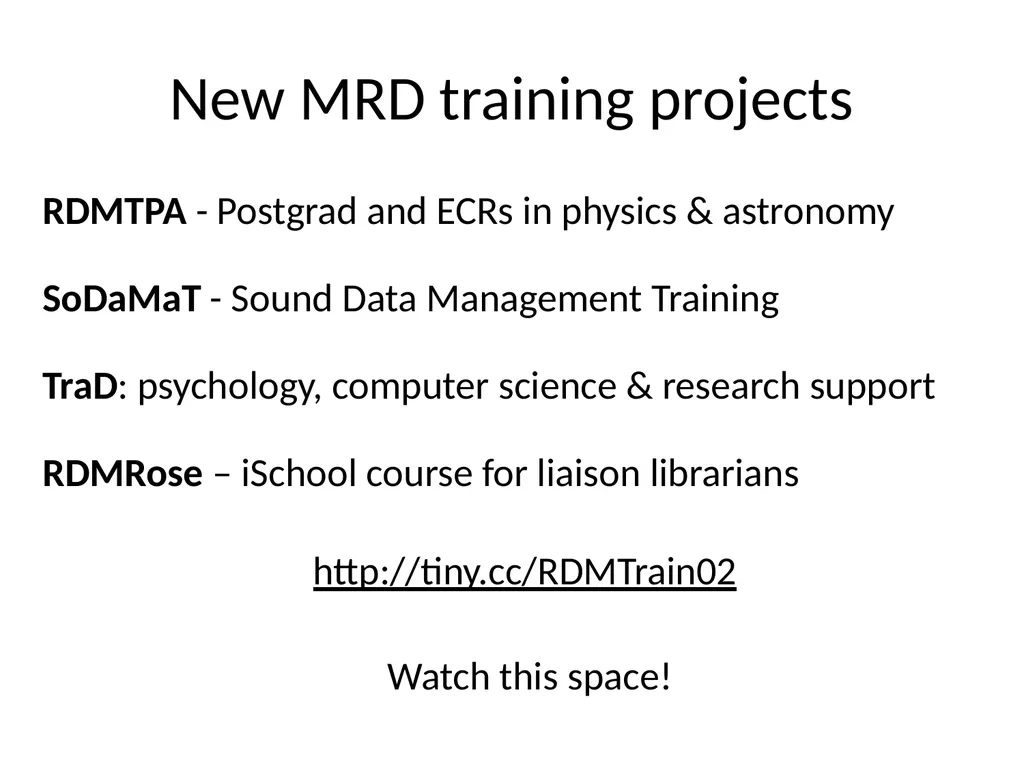
slide10. New MRD training projects RDMTPA - Postgrad and ECRs in physics & astronomy
SoDaMaT - Sound Data Management Training
TraD: psychology, computer science & research support
RDMRose – iSchool course for liaison librarians
http://tiny.cc/RDMTrain02
Watch this space!<br>
slide11. Thanks - any questions? For DCC guidance, tools and case studies see:
www.dcc.ac.uk/resources<br>
DCC, University of Glasgow<br>
slide2. The DCC lifecycle model http://www.dcc.ac.uk/resources/curation-lifecycle-model<br>
slide3. Managing Research Data resources Five disciplinary training projects in first MRD programme:
CAIRO - performing arts
DataTrain - archaeology and social anthropology
DATUM for health - health studies
DMTpsych - psychology
Research Data MANTRA - geosciences, social science & clinical psychology http://www.jisc.ac.uk/whatwedo/programmes/mrd.aspx<br>
slide4. MRD materials mapped to lifecycle http://www.dcc.ac.uk/training/train-trainer/disciplinary-rdm-training<br>
slide5. Researcher friendly lifecycle http://www.glasgow.ac.uk/datamanagement<br>
slide6. Simplifying terminology Metadata ïƒ documentation and context
Appraisal ïƒ selection, choosing what to keep
Preservation ïƒ looking after your data
avoid jargon
explain what you mean
keep things simple!<br>
slide7. DMP requirements Funders typically want a short statement covering:
What data will be created? (format, types, volume)
What standards and methodologies will be used?
How will you manage ethics and Intellectual Property?
What are the plans for data sharing and access?
What is the strategy for long-term preservation? http://www.dcc.ac.uk/resources/data-management-plans<br>
slide8. Skills and training needed What data will be created? (format, types, volume)
- Knowledge of formats, handling large volumes...
What standards and methodologies will be used?
- Metadata, methods / good practice, data handling....
How will you manage ethics and Intellectual Property?
- Consent agreements, security, licensing, legal expertise...
What are the plans for data sharing and preservation?
- Data centres, repositories, preservation approaches...<br>
slide9. Roles and responsibilities for RDM Training for researchers and all those who support them<br>
slide10. New MRD training projects RDMTPA - Postgrad and ECRs in physics & astronomy
SoDaMaT - Sound Data Management Training
TraD: psychology, computer science & research support
RDMRose – iSchool course for liaison librarians
http://tiny.cc/RDMTrain02
Watch this space!<br>
slide11. Thanks - any questions? For DCC guidance, tools and case studies see:
www.dcc.ac.uk/resources<br>