Clinical Engineering Device Integration (CEDI) Highly Integrated Clinical Engineering for Highly Integrated Healthcare Jennifer L Jackson, MBA, CCE June 1, 2013 Clinical Engineering Symposium, presented by ACCE AAMI 2013, Long Beach, CA
Related Topics
Share
Embed code
Download this presentation From Below
"Clinical Engineering & Device Integration (CEDI)" is the property of its rightful owner. Permission is granted to
download and print the materials on this website for personal, non-commercial use only, and to display it
on your personal computer provided you do not modify the materials and that you retain all copyright
notices contained in the materials. By downloading content from our website, you accept the terms of this
agreement.
Presentation Transcript
01
Clinical Engineering & Device Integration (CEDI) Highly Integrated Clinical Engineering for Highly Integrated Healthcare Jennifer L Jackson, MBA, CCE
June 1, 2013
Clinical Engineering Symposium, presented by ACCE
AAMI 2013, Long Beach, CA<br>
02
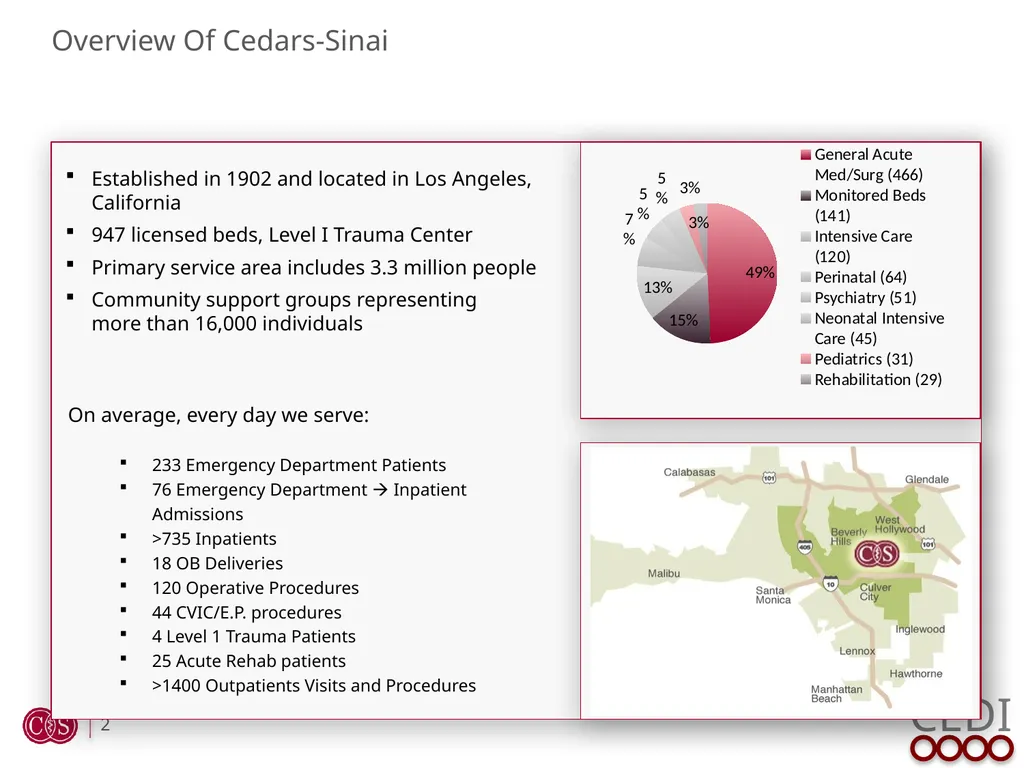
Overview Of Cedars-Sinai 2 Established in 1902 and located in Los Angeles, California
947 licensed beds, Level I Trauma Center
Primary service area includes 3.3 million people
Community support groups representing more than 16,000 individuals On average, every day we serve:
233 Emergency Department Patients
76 Emergency Department Inpatient Admissions
>735 Inpatients
18 OB Deliveries
120 Operative Procedures
44 CVIC/E.P. procedures
4 Level 1 Trauma Patients
25 Acute Rehab patients
>1400 Outpatients Visits and Procedures<br>
03
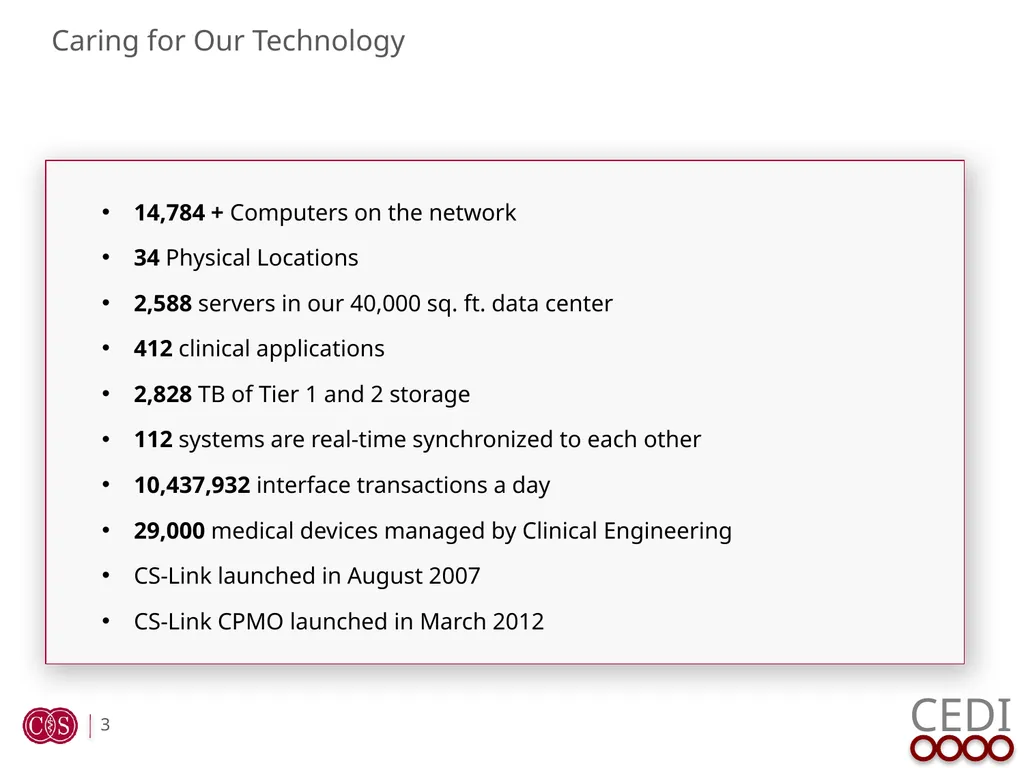
Caring for Our Technology 3 14,784 + Computers on the network
34 Physical Locations
2,588 servers in our 40,000 sq. ft. data center
412 clinical applications
2,828 TB of Tier 1 and 2 storage
112 systems are real-time synchronized to each other
10,437,932 interface transactions a day
29,000 medical devices managed by Clinical Engineering
CS-Link launched in August 2007
CS-Link CPMO launched in March 2012<br>
04
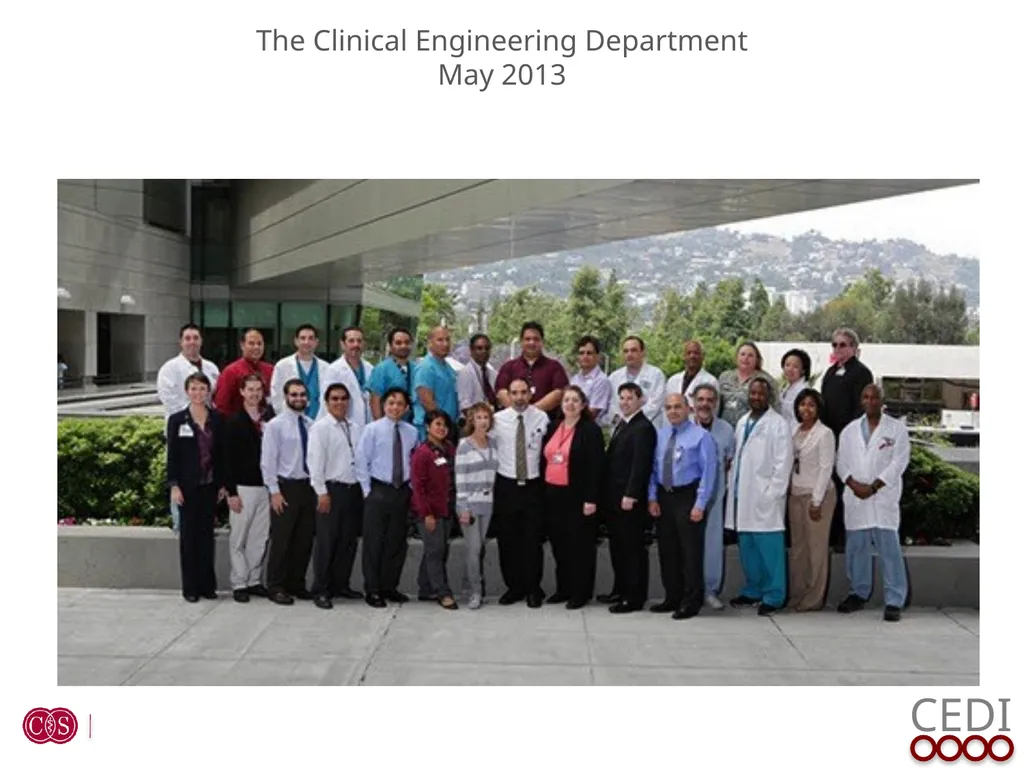
The Clinical Engineering Department May 2013<br>
05
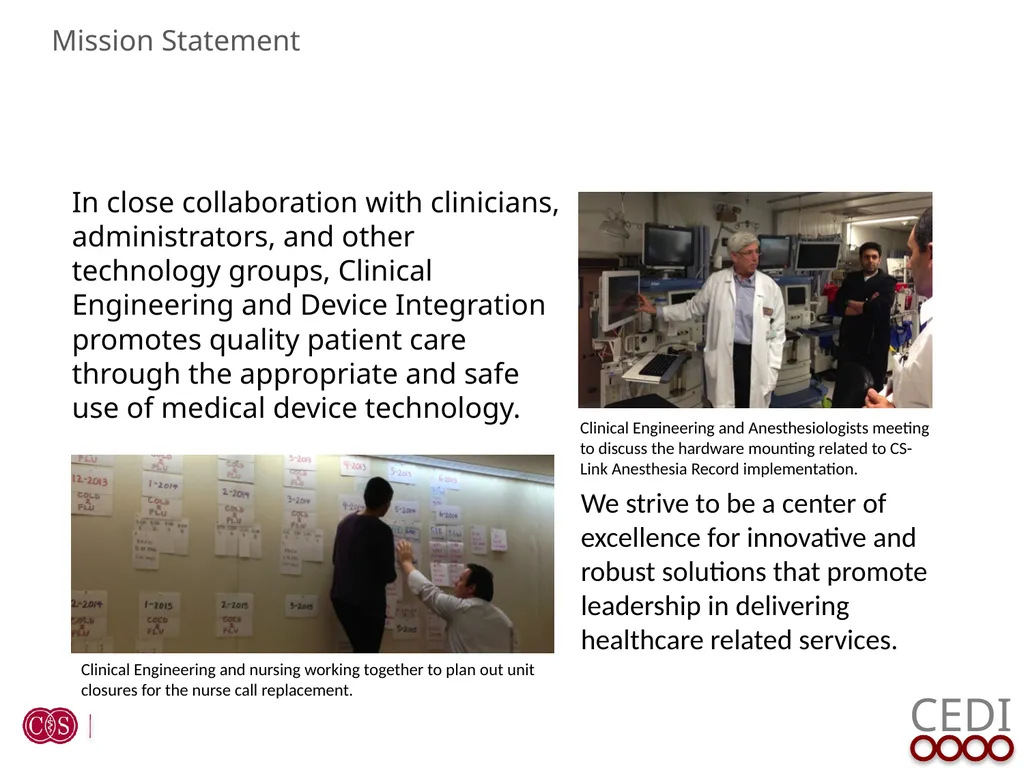
In close collaboration with clinicians, administrators, and other technology groups, Clinical Engineering and Device Integration promotes quality patient care through the appropriate and safe use of medical device technology. Mission Statement Clinical Engineering and Anesthesiologists meeting to discuss the hardware mounting related to CS-Link Anesthesia Record implementation. Clinical Engineering and nursing working together to plan out unit closures for the nurse call replacement. We strive to be a center of excellence for innovative and robust solutions that promote leadership in delivering healthcare related services.<br>
06
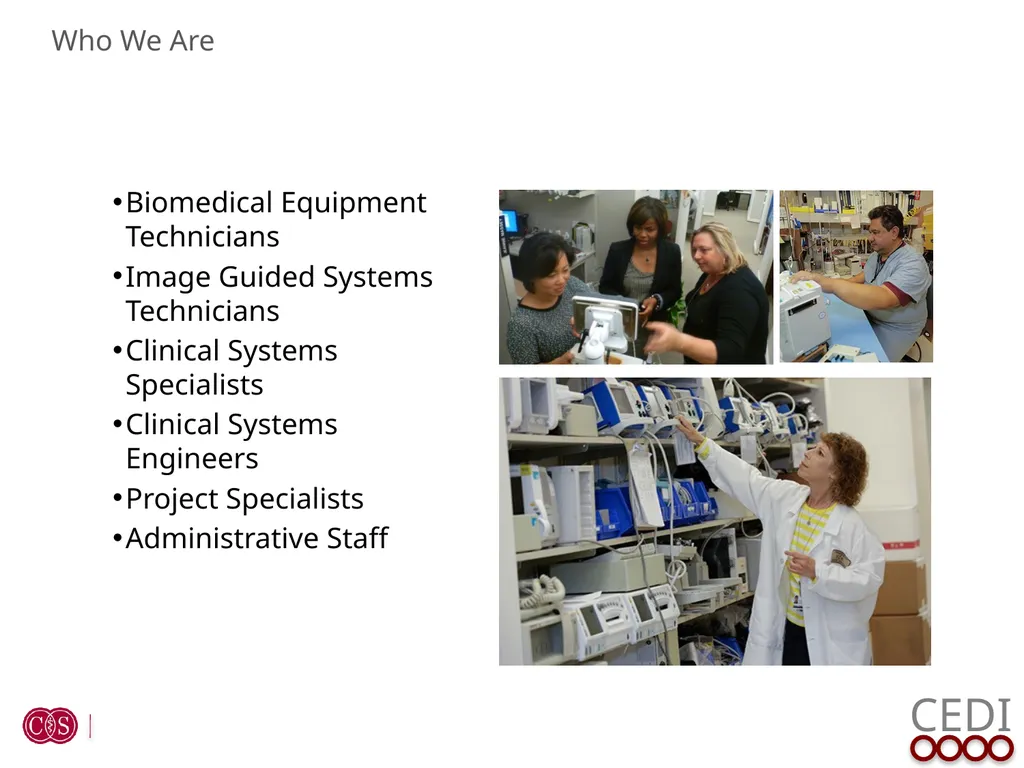
Who We Are Biomedical Equipment Technicians
Image Guided Systems Technicians
Clinical Systems Specialists
Clinical Systems Engineers
Project Specialists
Administrative Staff<br>
07
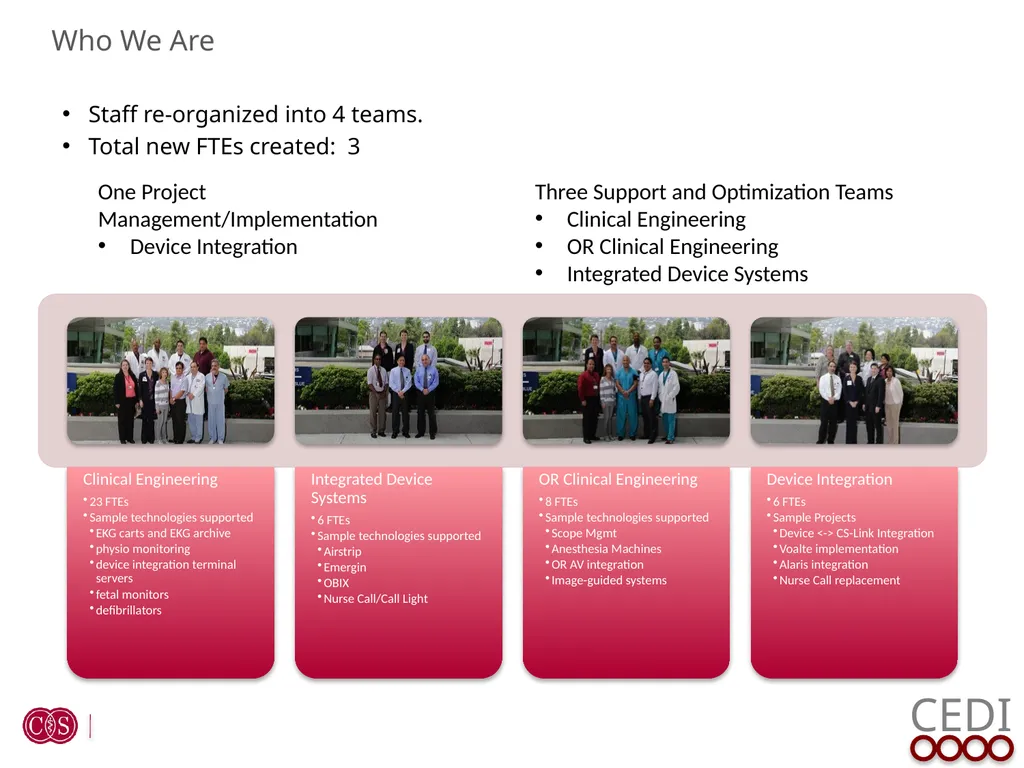
Who We Are Staff re-organized into 4 teams.
Total new FTEs created: 3 One Project Management/Implementation
Device Integration Three Support and Optimization Teams
Clinical Engineering
OR Clinical Engineering
Integrated Device Systems<br>
08
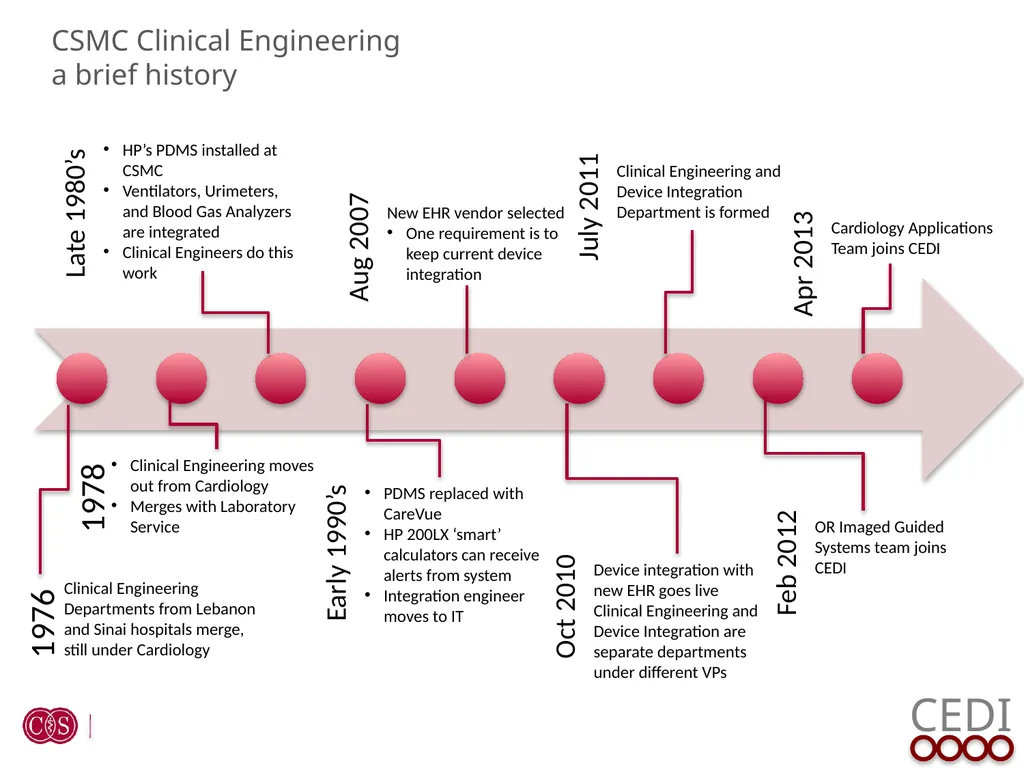
CSMC Clinical Engineering a brief history<br>
09
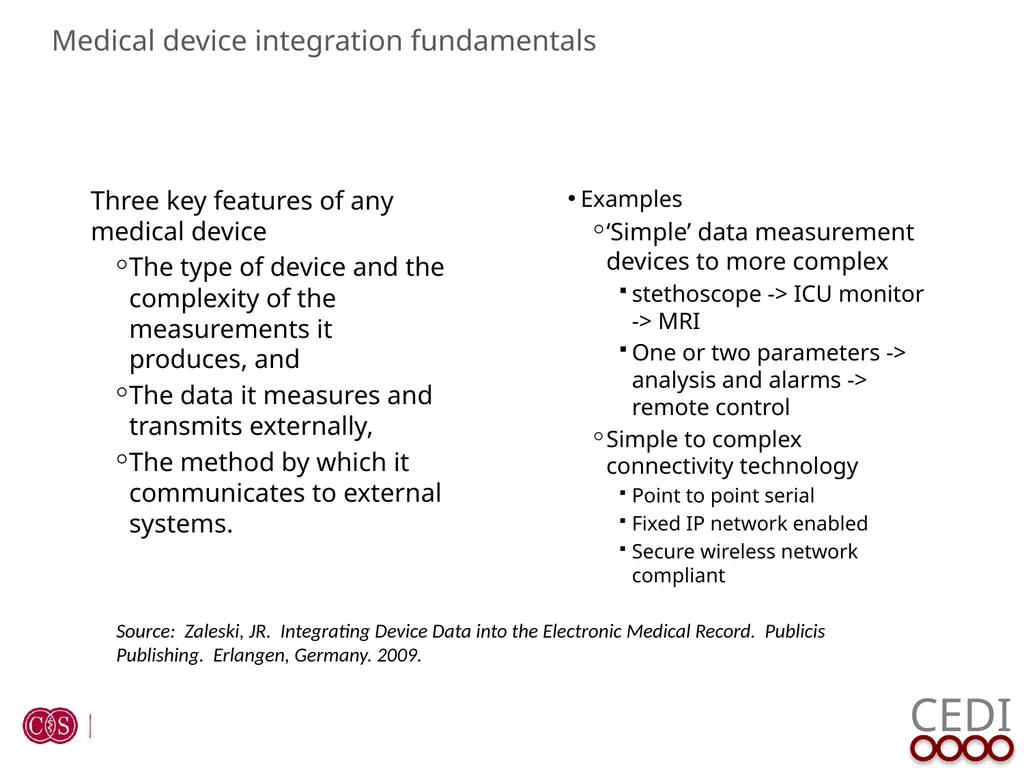
Medical device integration fundamentals Three key features of any medical device
The type of device and the complexity of the measurements it produces, and
The data it measures and transmits externally,
The method by which it communicates to external systems. Examples
‘Simple’ data measurement devices to more complex
stethoscope -> ICU monitor -> MRI
One or two parameters -> analysis and alarms -> remote control
Simple to complex connectivity technology
Point to point serial
Fixed IP network enabled
Secure wireless network compliant Source: Zaleski, JR. Integrating Device Data into the Electronic Medical Record. Publicis Publishing. Erlangen, Germany. 2009.<br>
10
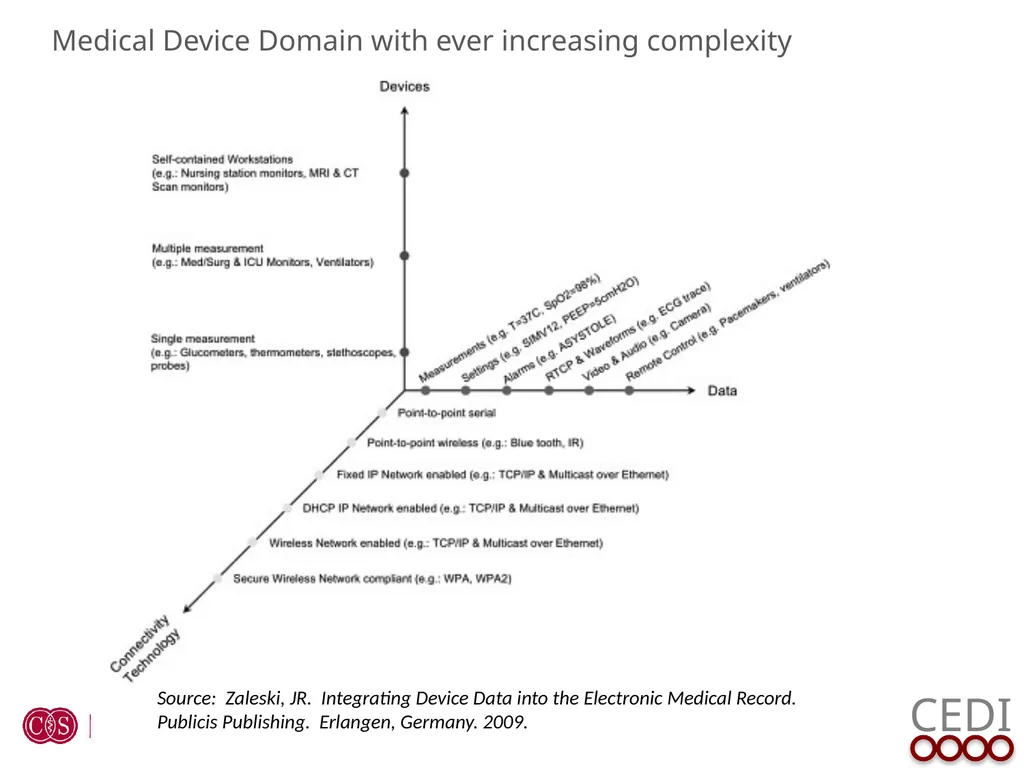
Medical Device Domain with ever increasing complexity Source: Zaleski, JR. Integrating Device Data into the Electronic Medical Record. Publicis Publishing. Erlangen, Germany. 2009.<br>
11
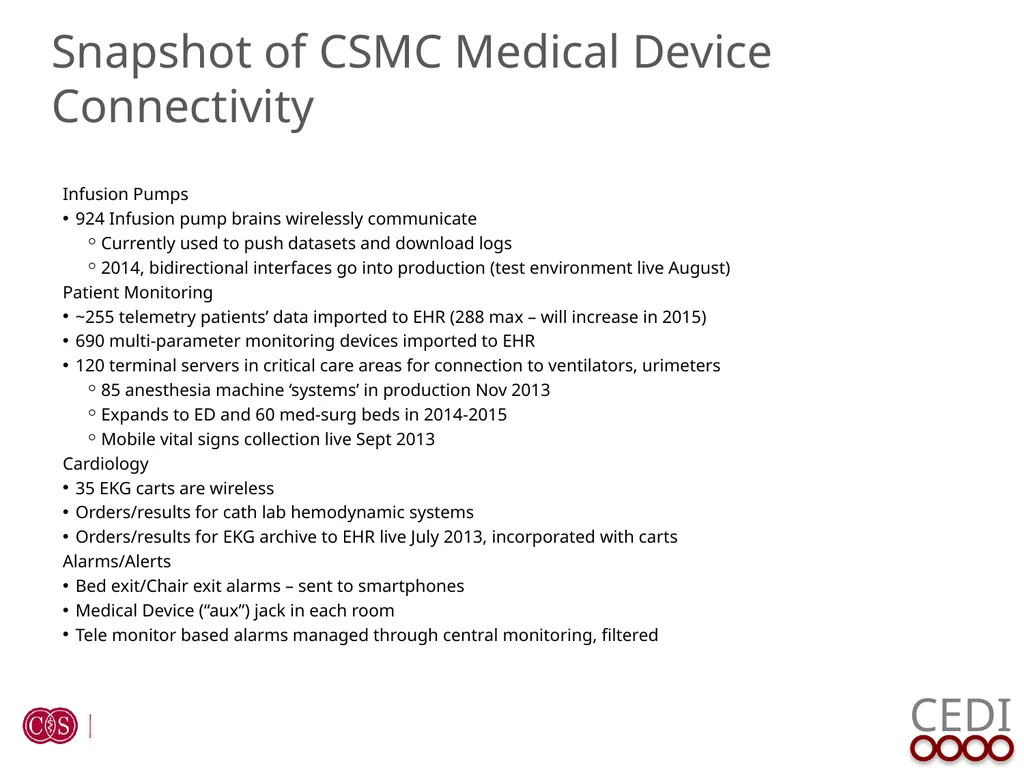
Snapshot of CSMC Medical Device Connectivity Infusion Pumps
924 Infusion pump brains wirelessly communicate
Currently used to push datasets and download logs
2014, bidirectional interfaces go into production (test environment live August)
Patient Monitoring
~255 telemetry patients’ data imported to EHR (288 max – will increase in 2015)
690 multi-parameter monitoring devices imported to EHR
120 terminal servers in critical care areas for connection to ventilators, urimeters
85 anesthesia machine ‘systems’ in production Nov 2013
Expands to ED and 60 med-surg beds in 2014-2015
Mobile vital signs collection live Sept 2013
Cardiology
35 EKG carts are wireless
Orders/results for cath lab hemodynamic systems
Orders/results for EKG archive to EHR live July 2013, incorporated with carts
Alarms/Alerts
Bed exit/Chair exit alarms – sent to smartphones
Medical Device (“aux”) jack in each room
Tele monitor based alarms managed through central monitoring, filtered<br>
12
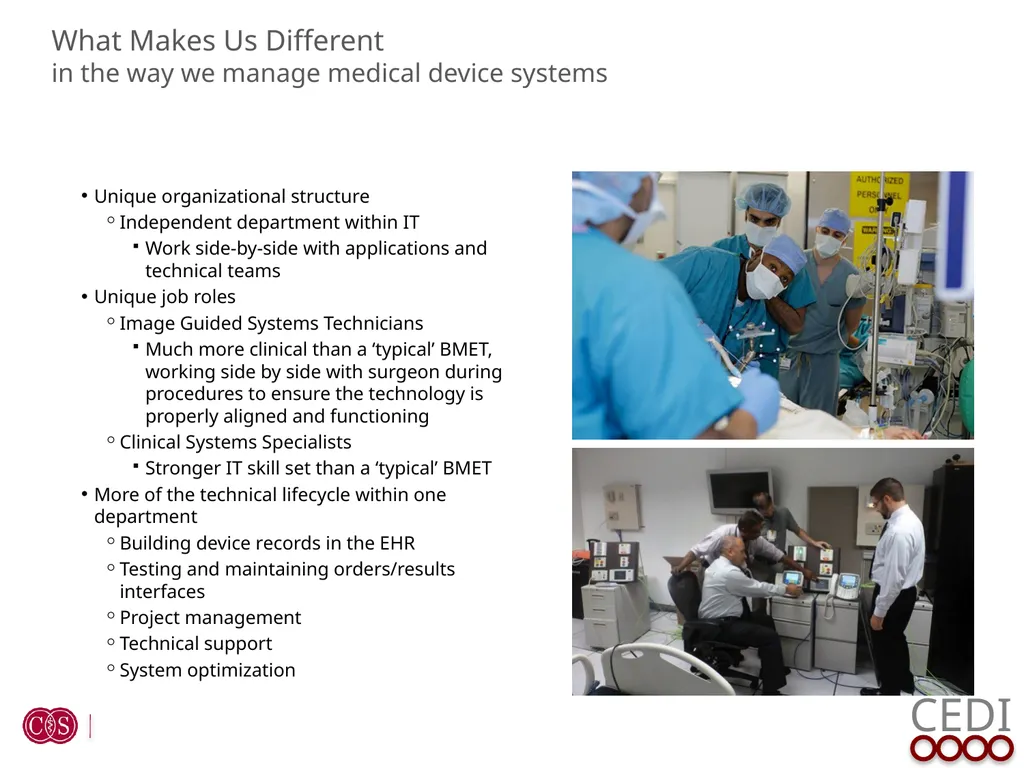
What Makes Us Different in the way we manage medical device systems Unique organizational structure
Independent department within IT
Work side-by-side with applications and technical teams
Unique job roles
Image Guided Systems Technicians
Much more clinical than a ‘typical’ BMET, working side by side with surgeon during procedures to ensure the technology is properly aligned and functioning
Clinical Systems Specialists
Stronger IT skill set than a ‘typical’ BMET
More of the technical lifecycle within one department
Building device records in the EHR
Testing and maintaining orders/results interfaces
Project management
Technical support
System optimization<br>
13
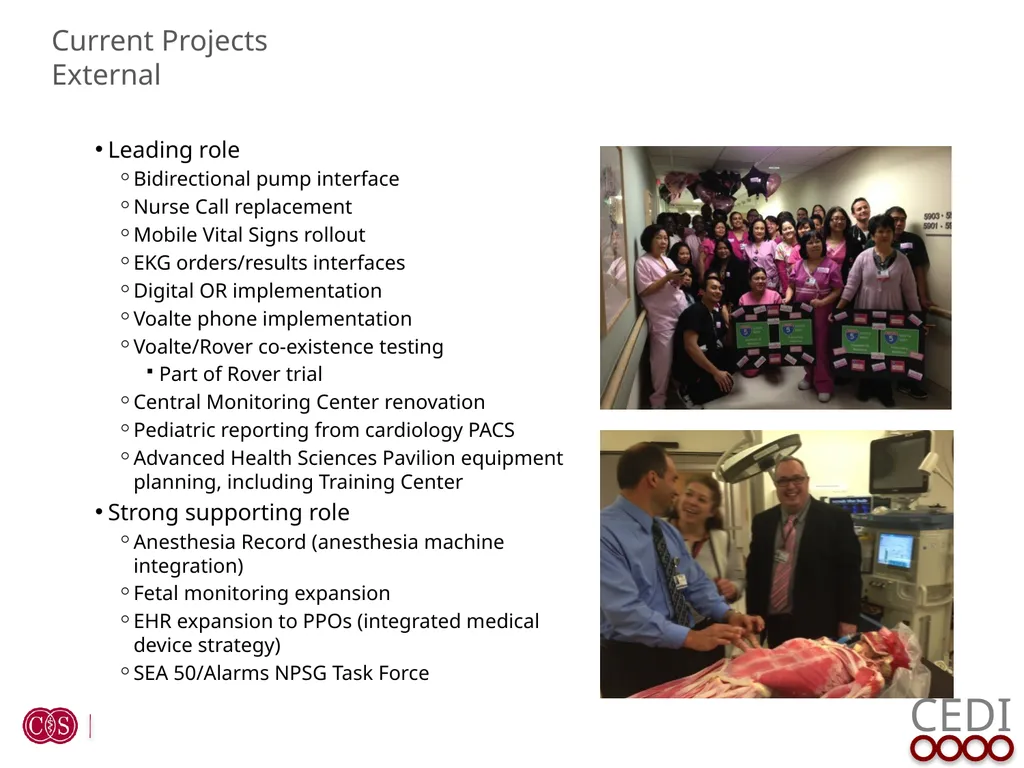
Current Projects External Leading role
Bidirectional pump interface
Nurse Call replacement
Mobile Vital Signs rollout
EKG orders/results interfaces
Digital OR implementation
Voalte phone implementation
Voalte/Rover co-existence testing
Part of Rover trial
Central Monitoring Center renovation
Pediatric reporting from cardiology PACS
Advanced Health Sciences Pavilion equipment planning, including Training Center
Strong supporting role
Anesthesia Record (anesthesia machine integration)
Fetal monitoring expansion
EHR expansion to PPOs (integrated medical device strategy)
SEA 50/Alarms NPSG Task Force<br>
14
Current Projects Internal Equipment Management Committee
Reviewing and revising equipment management policies
Overseeing equipment audit
Training plans/Career paths
Developed career paths for BMET, CSE, CSS, and DBA job families
Corresponding training plans
Recruit/retain the best staff
Total Cost of Ownership/Cost of Service
Bring all service contracts into CEDI
Identify opportunities for improvement
Prepare for Robot Wars 2013!<br>
15
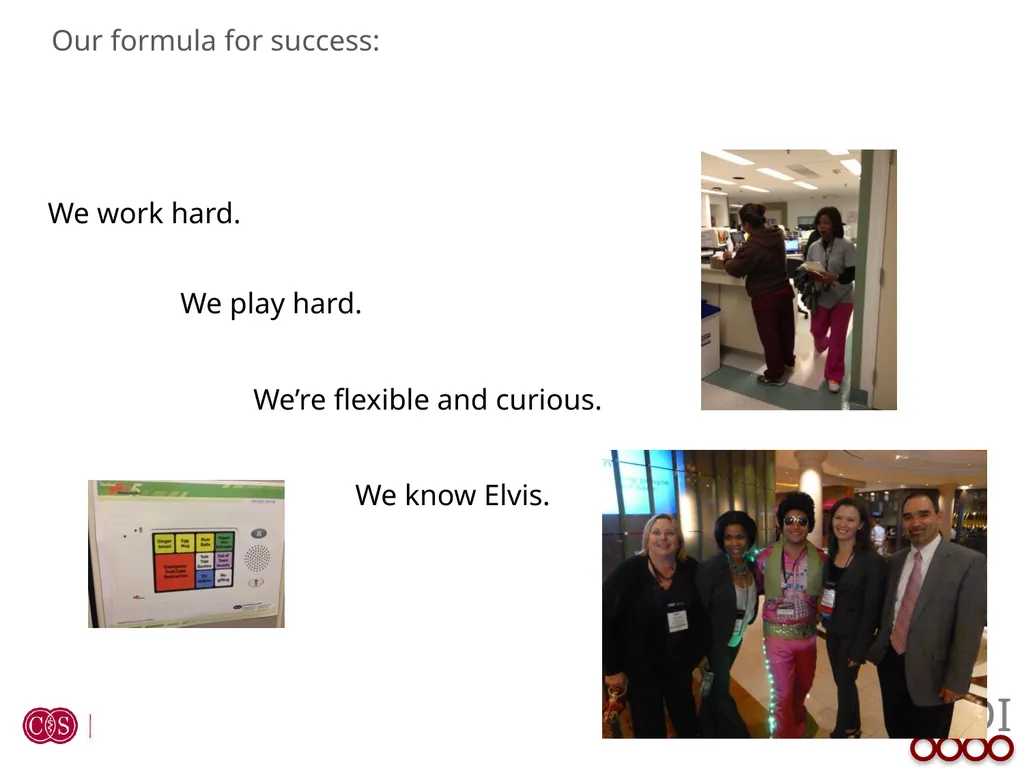
Our formula for success: We work hard. We play hard. We’re flexible and curious. We know Elvis.<br>