
Clinical Psychology: Future Training, Funding,
FD
Published · 26 slides · 0 views

1 / 1





Description
Clinical Psychology: Future Training, Funding, Leadership Management Professor Tony Lavender, Salomons Centre for Applied Psychology, Canterbury Christ Church University Association of Clinical Psychology Inaugural Conference: Edinburgh
Related Topics
Share
Embed code
Download this presentation From Below
"Clinical Psychology: Future Training, Funding," is the property of its rightful owner. Permission is granted to download and print the materials on this website for personal, non-commercial use only, and to display it on your personal computer provided you do not modify the materials and that you retain all copyright notices contained in the materials. By downloading content from our website, you accept the terms of this agreement.
Presentation Transcript
01
Clinical Psychology: Future Training, Funding, Leadership & Management Professor Tony Lavender, Salomons Centre for Applied Psychology, Canterbury Christ Church University Association of Clinical Psychology
Inaugural Conference: Edinburgh Thursday 28 March 2019<br>
Inaugural Conference: Edinburgh Thursday 28 March 2019<br>
02
Clinical Psychology: Future Training, Funding, Leadership & Management NHS Background: Financial Context.
Threats to CP Training Funding: History, Issues, Response and Progress.
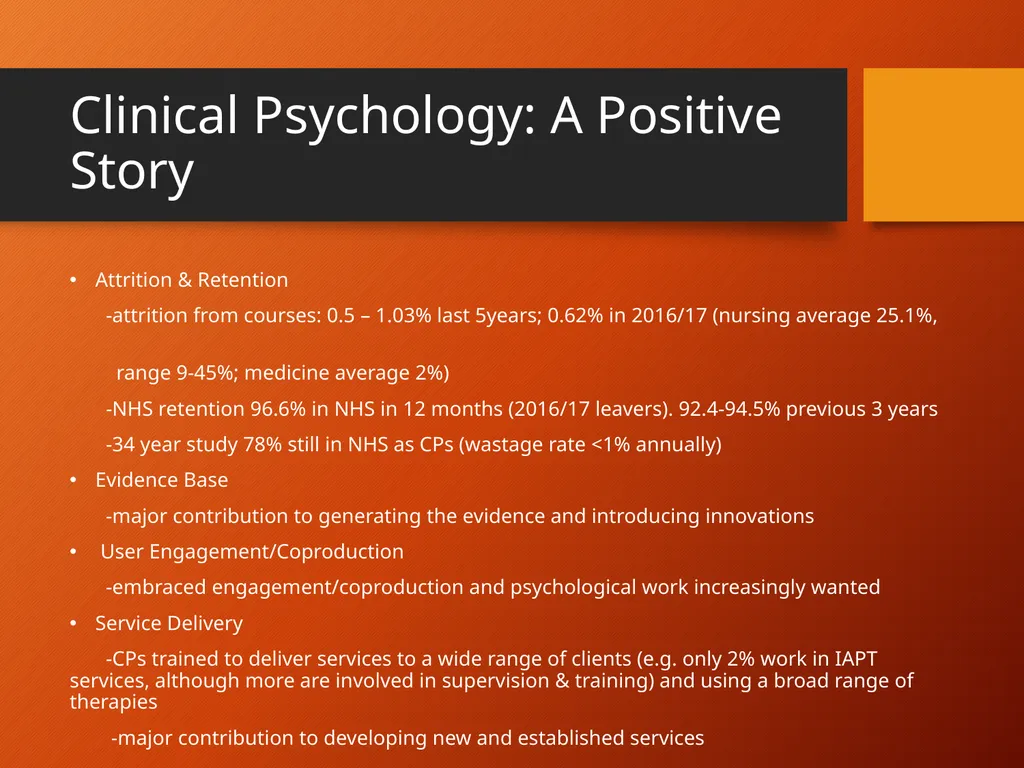
Clinical Psychology: A Positive Story
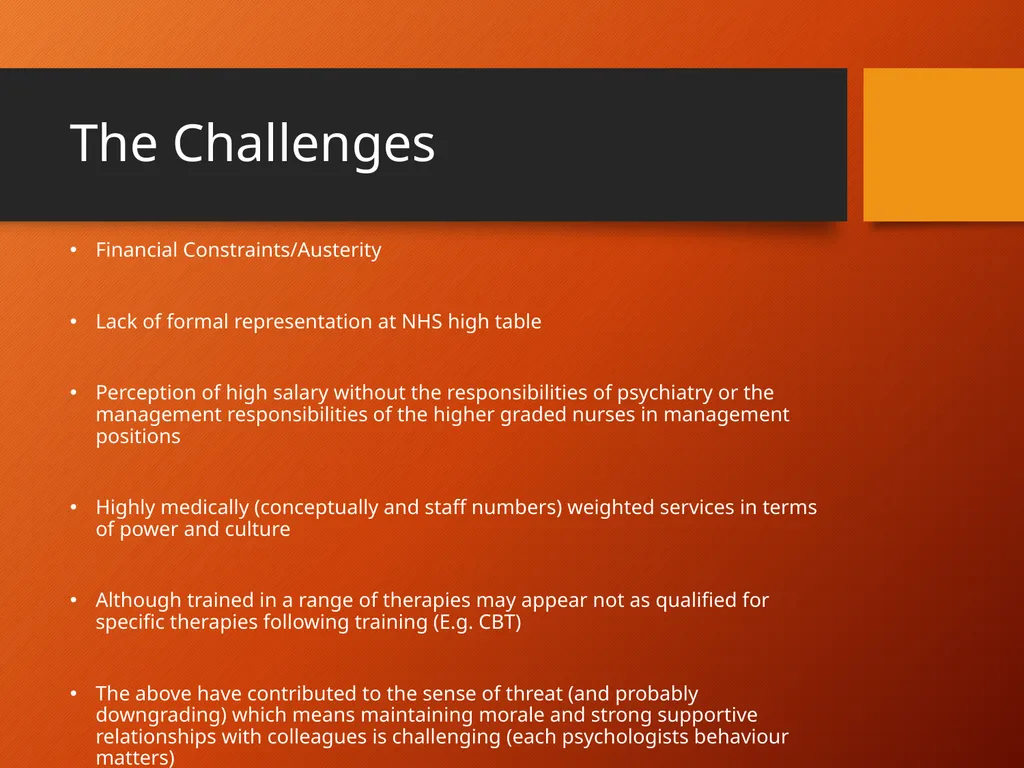
The Challenges
Leadership & Management in the Profession
The Future<br>
Threats to CP Training Funding: History, Issues, Response and Progress.
Clinical Psychology: A Positive Story
The Challenges
Leadership & Management in the Profession
The Future<br>
03
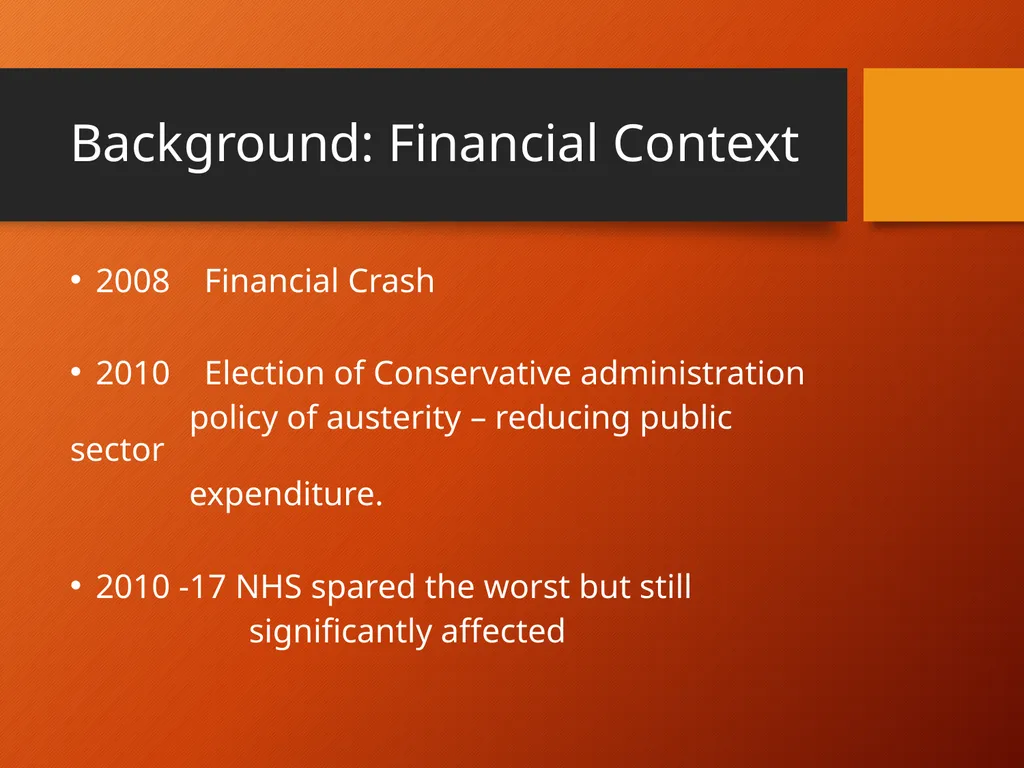
Background: Financial Context 2008 Financial Crash
2010 Election of Conservative administration
policy of austerity – reducing public sector
expenditure.
2010 -17 NHS spared the worst but still
significantly affected<br>
2010 Election of Conservative administration
policy of austerity – reducing public sector
expenditure.
2010 -17 NHS spared the worst but still
significantly affected<br>
04
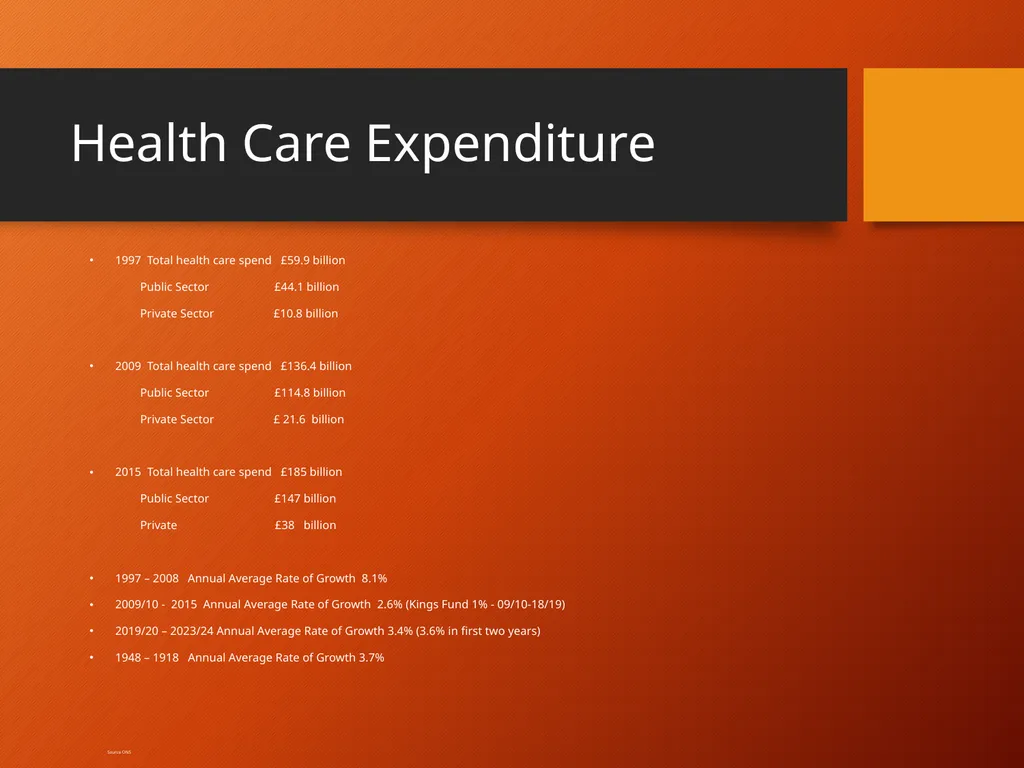
Health Care Expenditure 1997 Total health care spend £59.9 billion
Public Sector £44.1 billion
Private Sector £10.8 billion
2009 Total health care spend £136.4 billion
Public Sector £114.8 billion
Private Sector £ 21.6 billion
2015 Total health care spend £185 billion
Public Sector £147 billion
Private £38 billion
1997 – 2008 Annual Average Rate of Growth 8.1%
2009/10 - 2015 Annual Average Rate of Growth 2.6% (Kings Fund 1% - 09/10-18/19)
2019/20 – 2023/24 Annual Average Rate of Growth 3.4% (3.6% in first two years)
1948 – 1918 Annual Average Rate of Growth 3.7%
Source ONS<br>
Public Sector £44.1 billion
Private Sector £10.8 billion
2009 Total health care spend £136.4 billion
Public Sector £114.8 billion
Private Sector £ 21.6 billion
2015 Total health care spend £185 billion
Public Sector £147 billion
Private £38 billion
1997 – 2008 Annual Average Rate of Growth 8.1%
2009/10 - 2015 Annual Average Rate of Growth 2.6% (Kings Fund 1% - 09/10-18/19)
2019/20 – 2023/24 Annual Average Rate of Growth 3.4% (3.6% in first two years)
1948 – 1918 Annual Average Rate of Growth 3.7%
Source ONS<br>
05
Background: Changes to funding of nurse and AHP training Council of Deans
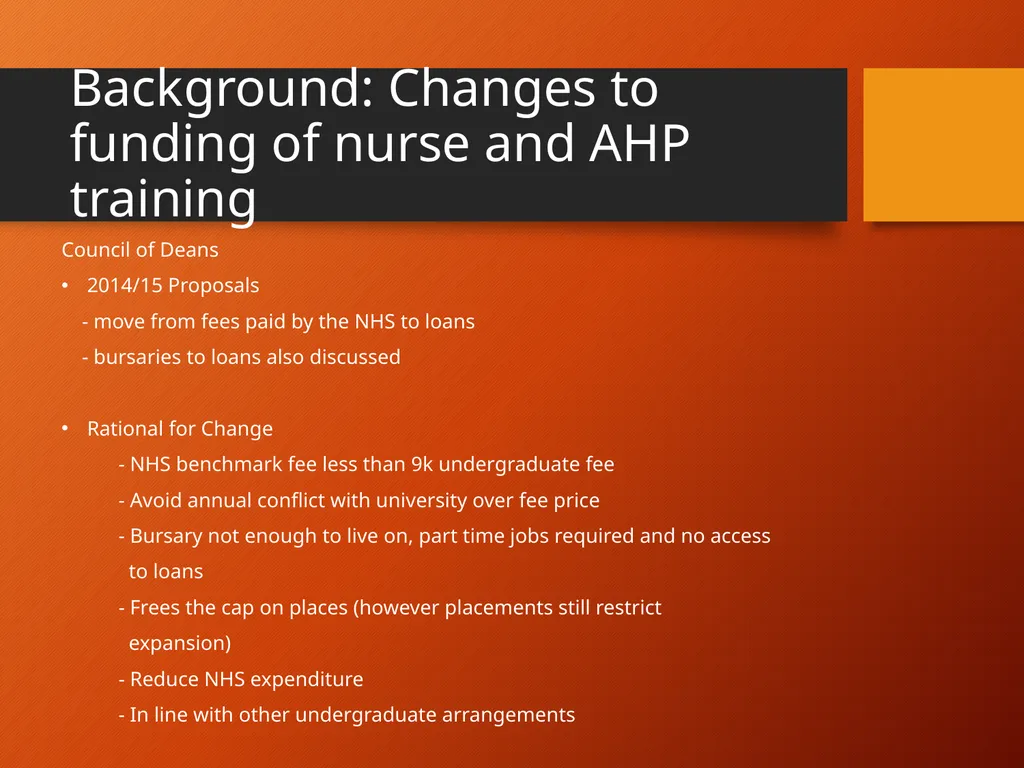
2014/15 Proposals
- move from fees paid by the NHS to loans
- bursaries to loans also discussed
Rational for Change
- NHS benchmark fee less than 9k undergraduate fee
- Avoid annual conflict with university over fee price
- Bursary not enough to live on, part time jobs required and no access
to loans
- Frees the cap on places (however placements still restrict
expansion)
- Reduce NHS expenditure
- In line with other undergraduate arrangements<br>
2014/15 Proposals
- move from fees paid by the NHS to loans
- bursaries to loans also discussed
Rational for Change
- NHS benchmark fee less than 9k undergraduate fee
- Avoid annual conflict with university over fee price
- Bursary not enough to live on, part time jobs required and no access
to loans
- Frees the cap on places (however placements still restrict
expansion)
- Reduce NHS expenditure
- In line with other undergraduate arrangements<br>
06
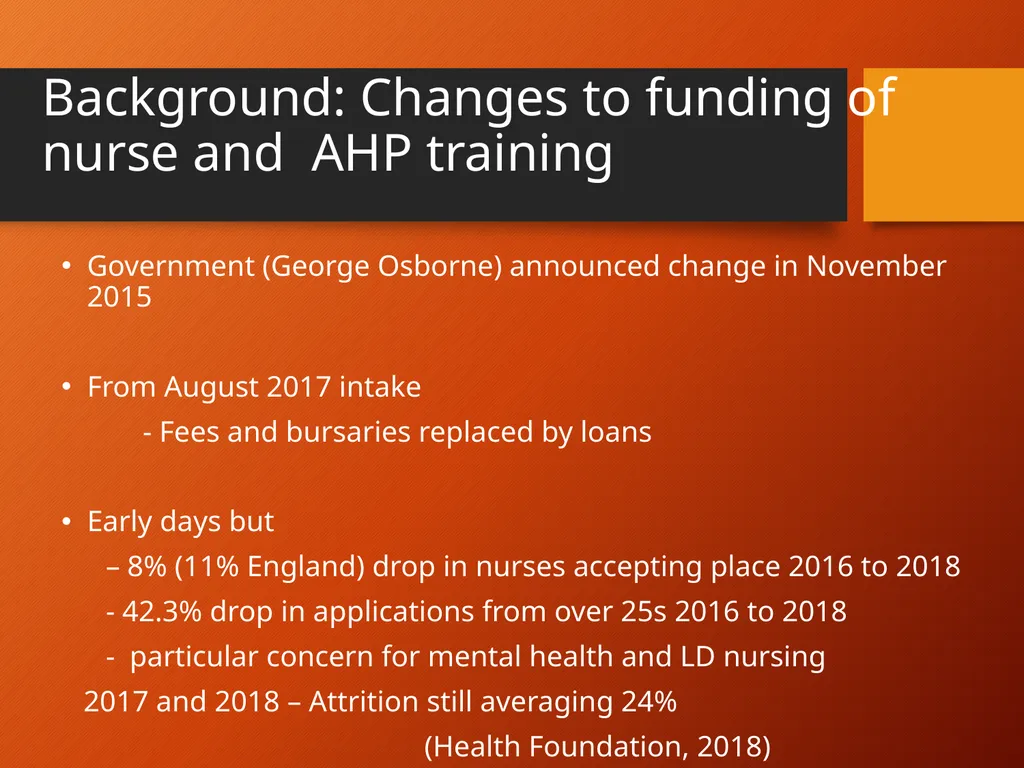
Background: Changes to funding of nurse and AHP training Government (George Osborne) announced change in November 2015
From August 2017 intake
- Fees and bursaries replaced by loans
Early days but
– 8% (11% England) drop in nurses accepting place 2016 to 2018
- 42.3% drop in applications from over 25s 2016 to 2018
- particular concern for mental health and LD nursing
2017 and 2018 – Attrition still averaging 24%
(Health Foundation, 2018)<br>
From August 2017 intake
- Fees and bursaries replaced by loans
Early days but
– 8% (11% England) drop in nurses accepting place 2016 to 2018
- 42.3% drop in applications from over 25s 2016 to 2018
- particular concern for mental health and LD nursing
2017 and 2018 – Attrition still averaging 24%
(Health Foundation, 2018)<br>
07
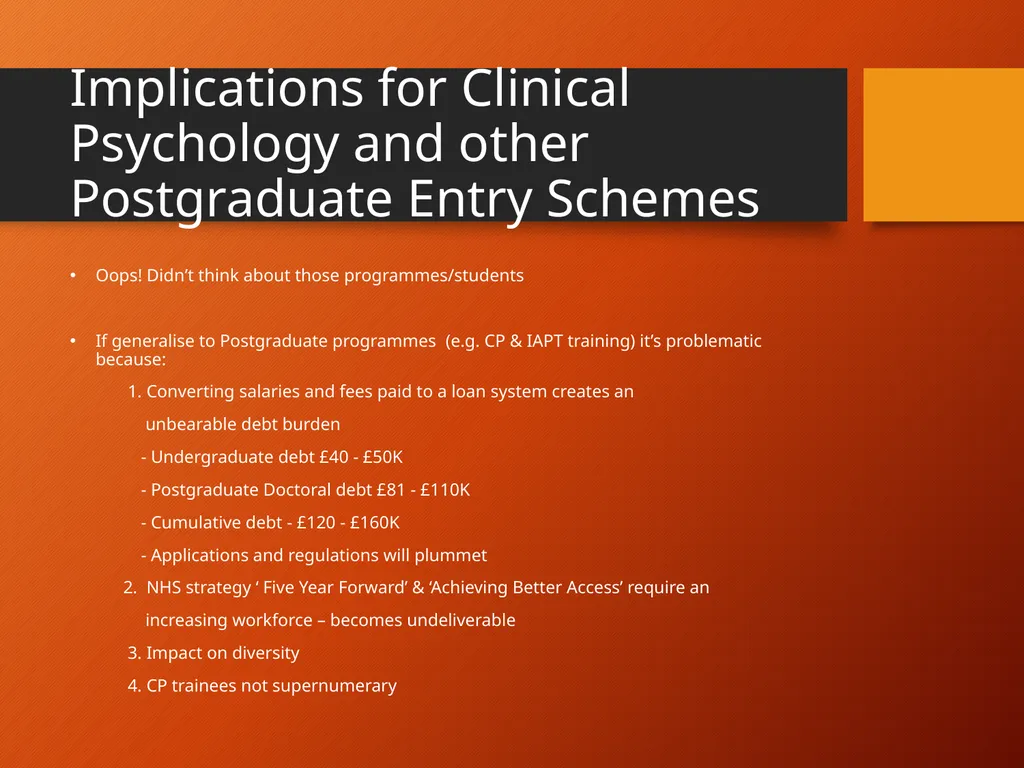
Implications for Clinical Psychology and other Postgraduate Entry Schemes Oops! Didn’t think about those programmes/students
If generalise to Postgraduate programmes (e.g. CP & IAPT training) it’s problematic because:
1. Converting salaries and fees paid to a loan system creates an
unbearable debt burden
- Undergraduate debt £40 - £50K
- Postgraduate Doctoral debt £81 - £110K
- Cumulative debt - £120 - £160K
- Applications and regulations will plummet
2. NHS strategy ‘ Five Year Forward’ & ‘Achieving Better Access’ require an
increasing workforce – becomes undeliverable
3. Impact on diversity
4. CP trainees not supernumerary<br>
If generalise to Postgraduate programmes (e.g. CP & IAPT training) it’s problematic because:
1. Converting salaries and fees paid to a loan system creates an
unbearable debt burden
- Undergraduate debt £40 - £50K
- Postgraduate Doctoral debt £81 - £110K
- Cumulative debt - £120 - £160K
- Applications and regulations will plummet
2. NHS strategy ‘ Five Year Forward’ & ‘Achieving Better Access’ require an
increasing workforce – becomes undeliverable
3. Impact on diversity
4. CP trainees not supernumerary<br>
08
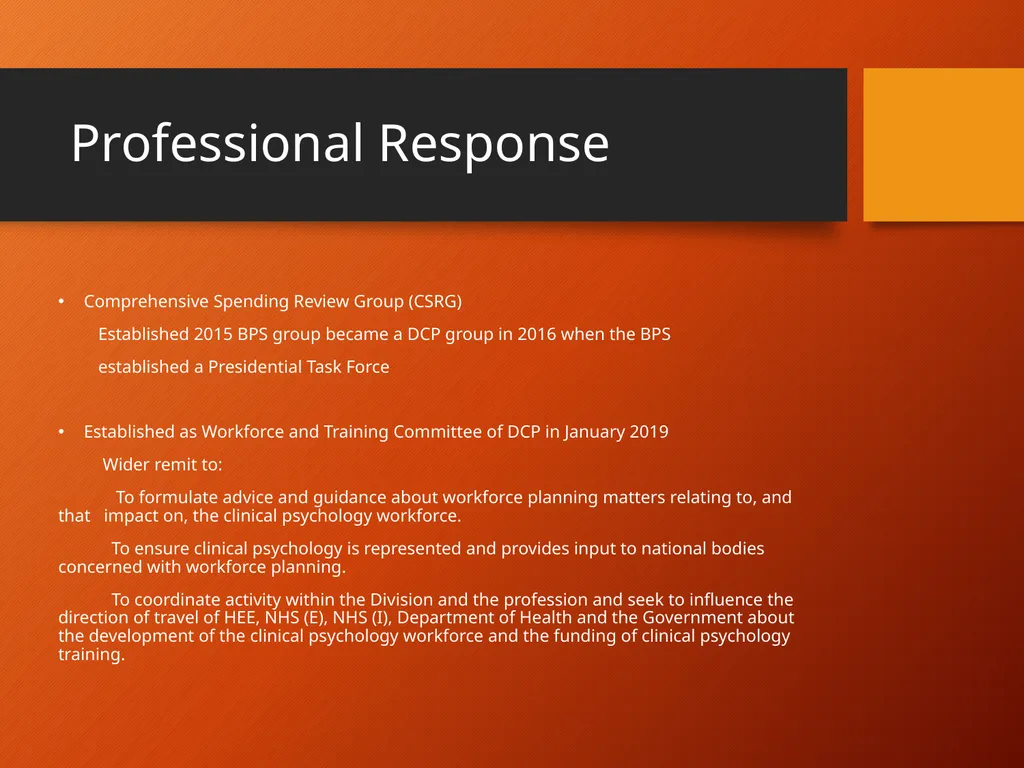
Professional Response Comprehensive Spending Review Group (CSRG)
Established 2015 BPS group became a DCP group in 2016 when the BPS
established a Presidential Task Force
Established as Workforce and Training Committee of DCP in January 2019
Wider remit to:
To formulate advice and guidance about workforce planning matters relating to, and that impact on, the clinical psychology workforce.
To ensure clinical psychology is represented and provides input to national bodies concerned with workforce planning.
To coordinate activity within the Division and the profession and seek to influence the direction of travel of HEE, NHS (E), NHS (I), Department of Health and the Government about the development of the clinical psychology workforce and the funding of clinical psychology training.<br>
Established 2015 BPS group became a DCP group in 2016 when the BPS
established a Presidential Task Force
Established as Workforce and Training Committee of DCP in January 2019
Wider remit to:
To formulate advice and guidance about workforce planning matters relating to, and that impact on, the clinical psychology workforce.
To ensure clinical psychology is represented and provides input to national bodies concerned with workforce planning.
To coordinate activity within the Division and the profession and seek to influence the direction of travel of HEE, NHS (E), NHS (I), Department of Health and the Government about the development of the clinical psychology workforce and the funding of clinical psychology training.<br>
09
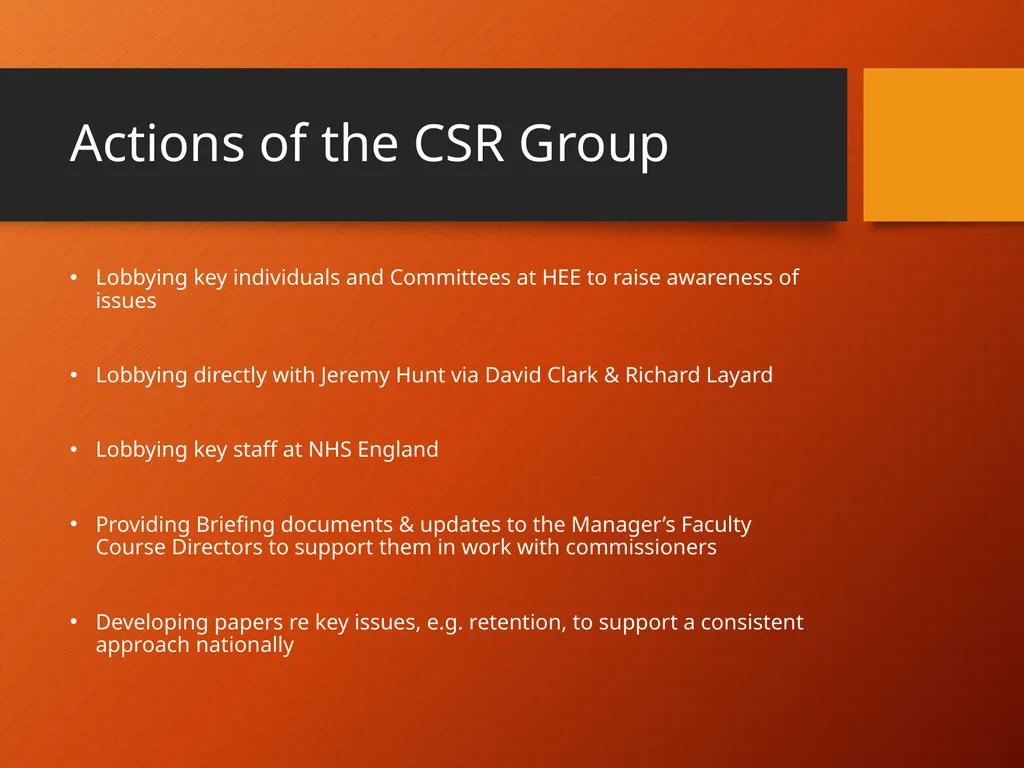
Actions of the CSR Group Lobbying key individuals and Committees at HEE to raise awareness of issues
Lobbying directly with Jeremy Hunt via David Clark & Richard Layard
Lobbying key staff at NHS England
Providing Briefing documents & updates to the Manager’s Faculty Course Directors to support them in work with commissioners
Developing papers re key issues, e.g. retention, to support a consistent approach nationally<br>
Lobbying directly with Jeremy Hunt via David Clark & Richard Layard
Lobbying key staff at NHS England
Providing Briefing documents & updates to the Manager’s Faculty Course Directors to support them in work with commissioners
Developing papers re key issues, e.g. retention, to support a consistent approach nationally<br>
10
Outcomes So Far Immediate threat to 2017 and 2018 entry was addressed and fee & salary maintained
Just before Christmas it became clear that 2019 entry fee and salary will be maintained
Proposals discussed at HEE (Group’s aim is to maintain current arrangements):
-Fees don’t seem to be under an immediate threat
-Salary options reviewed at HEE:
1. As we are, fees and salary from HEE, good reasons to maintain
2. First year 90/10 (HEE/CCGs/Provider Trusts)
Second year 70/30 (HEE/CCGs /Provider Trusts)
Third year 50/50 (HEE/CCGs/Provider Trusts)<br>
Just before Christmas it became clear that 2019 entry fee and salary will be maintained
Proposals discussed at HEE (Group’s aim is to maintain current arrangements):
-Fees don’t seem to be under an immediate threat
-Salary options reviewed at HEE:
1. As we are, fees and salary from HEE, good reasons to maintain
2. First year 90/10 (HEE/CCGs/Provider Trusts)
Second year 70/30 (HEE/CCGs /Provider Trusts)
Third year 50/50 (HEE/CCGs/Provider Trusts)<br>
11
Clinical Psychology: A Positive Story Attrition & Retention
-attrition from courses: 0.5 – 1.03% last 5years; 0.62% in 2016/17 (nursing average 25.1%,
range 9-45%; medicine average 2%)
-NHS retention 96.6% in NHS in 12 months (2016/17 leavers). 92.4-94.5% previous 3 years
-34 year study 78% still in NHS as CPs (wastage rate <1% annually)
Evidence Base
-major contribution to generating the evidence and introducing innovations
User Engagement/Coproduction
-embraced engagement/coproduction and psychological work increasingly wanted
Service Delivery
-CPs trained to deliver services to a wide range of clients (e.g. only 2% work in IAPT services, although more are involved in supervision & training) and using a broad range of therapies
-major contribution to developing new and established services<br>
-attrition from courses: 0.5 – 1.03% last 5years; 0.62% in 2016/17 (nursing average 25.1%,
range 9-45%; medicine average 2%)
-NHS retention 96.6% in NHS in 12 months (2016/17 leavers). 92.4-94.5% previous 3 years
-34 year study 78% still in NHS as CPs (wastage rate <1% annually)
Evidence Base
-major contribution to generating the evidence and introducing innovations
User Engagement/Coproduction
-embraced engagement/coproduction and psychological work increasingly wanted
Service Delivery
-CPs trained to deliver services to a wide range of clients (e.g. only 2% work in IAPT services, although more are involved in supervision & training) and using a broad range of therapies
-major contribution to developing new and established services<br>
12
The Challenges Financial Constraints/Austerity
Lack of formal representation at NHS high table
Perception of high salary without the responsibilities of psychiatry or the management responsibilities of the higher graded nurses in management positions
Highly medically (conceptually and staff numbers) weighted services in terms of power and culture
Although trained in a range of therapies may appear not as qualified for specific therapies following training (E.g. CBT)
The above have contributed to the sense of threat (and probably downgrading) which means maintaining morale and strong supportive relationships with colleagues is challenging (each psychologists behaviour matters)<br>
Lack of formal representation at NHS high table
Perception of high salary without the responsibilities of psychiatry or the management responsibilities of the higher graded nurses in management positions
Highly medically (conceptually and staff numbers) weighted services in terms of power and culture
Although trained in a range of therapies may appear not as qualified for specific therapies following training (E.g. CBT)
The above have contributed to the sense of threat (and probably downgrading) which means maintaining morale and strong supportive relationships with colleagues is challenging (each psychologists behaviour matters)<br>
13
What next? Collaboration: Psychology Professions Network Aims to maximise benefits of all psychological professions in NHS funded healthcare
Includes full range of psychological professions (CPs, CBT therapists, cild psychotherapists, PWPs, counsellors and art, drama and play therapists, etc.
A stronger voice to policy makers, workforce planners and commissioners
Networks established in North West, South East and developing in the Midlands and North East (Sheffield based developments?)
Products include:
‘Delivering the Expansion in the Psychological Professions’ workforce implications for delivering Stepping Forward (MH Workforce Plan)
Negotiating for HEE psychology lead nationally<br>
Includes full range of psychological professions (CPs, CBT therapists, cild psychotherapists, PWPs, counsellors and art, drama and play therapists, etc.
A stronger voice to policy makers, workforce planners and commissioners
Networks established in North West, South East and developing in the Midlands and North East (Sheffield based developments?)
Products include:
‘Delivering the Expansion in the Psychological Professions’ workforce implications for delivering Stepping Forward (MH Workforce Plan)
Negotiating for HEE psychology lead nationally<br>
14
What Next? Collaboration:
ACP, DCP, BPS,PPN,UNITE We could tear ourselves apart
Need to find ways of working together
Strength and influence in cooperation and finding common agendas
Dealing with disputes and disagreements professionally
Managing the perceptions of policy makers and the public<br>
Need to find ways of working together
Strength and influence in cooperation and finding common agendas
Dealing with disputes and disagreements professionally
Managing the perceptions of policy makers and the public<br>
15
What Next: Leadership and Management An understanding and a useful model
Training/development issues
- prequalification
- postqualification
Taking management and leadership opportunities<br>
Training/development issues
- prequalification
- postqualification
Taking management and leadership opportunities<br>
16
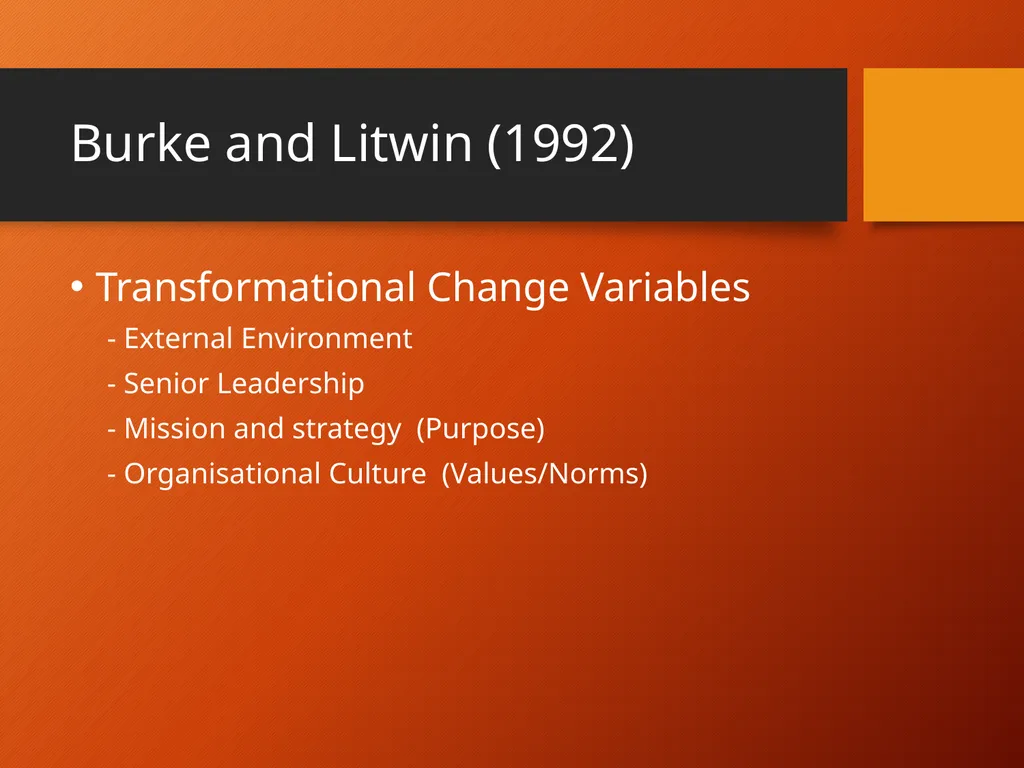
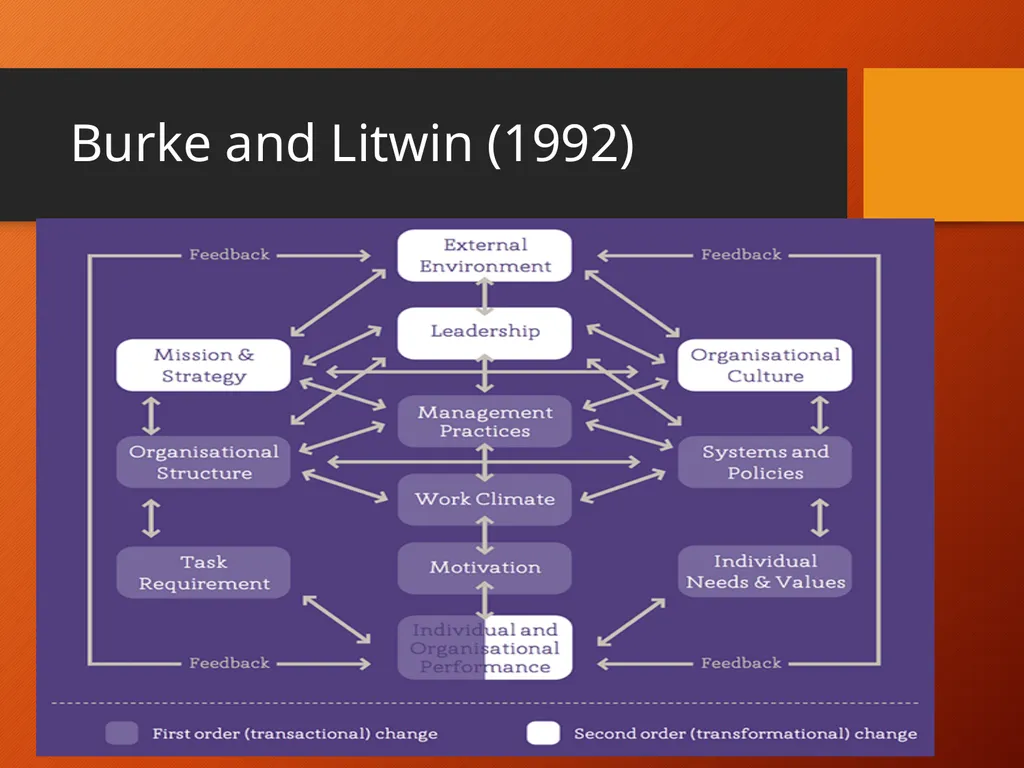
Burke and Litwin (1992) Transformational Change Variables
- External Environment
- Senior Leadership
- Mission and strategy (Purpose)
- Organisational Culture (Values/Norms)<br>
- External Environment
- Senior Leadership
- Mission and strategy (Purpose)
- Organisational Culture (Values/Norms)<br>
17
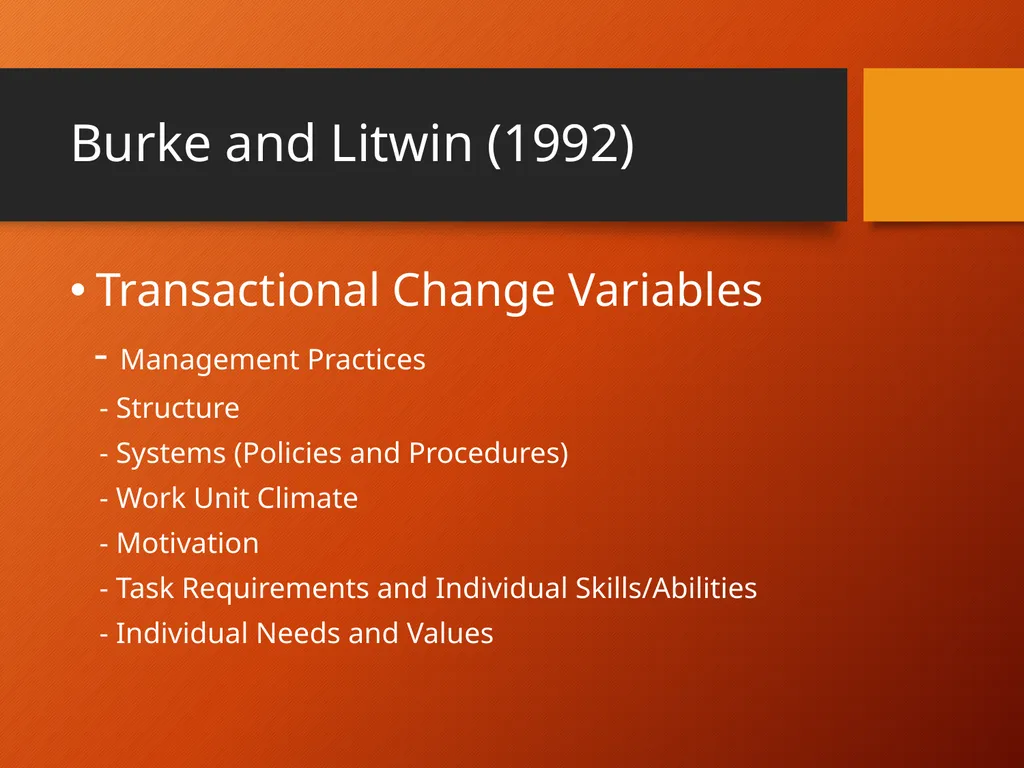
Burke and Litwin (1992) Transactional Change Variables
- Management Practices
- Structure
- Systems (Policies and Procedures)
- Work Unit Climate
- Motivation
- Task Requirements and Individual Skills/Abilities
- Individual Needs and Values<br>
- Management Practices
- Structure
- Systems (Policies and Procedures)
- Work Unit Climate
- Motivation
- Task Requirements and Individual Skills/Abilities
- Individual Needs and Values<br>
18
Burke and Litwin (1992)<br>
19
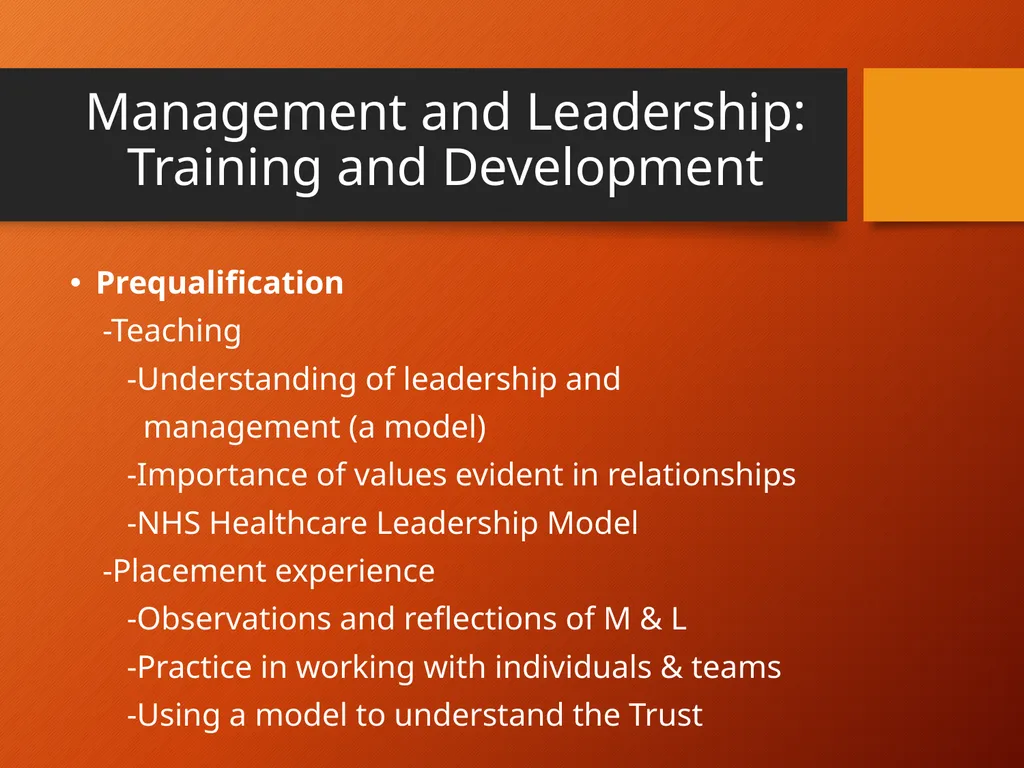
Management and Leadership: Training and Development Prequalification
-Teaching
-Understanding of leadership and
management (a model)
-Importance of values evident in relationships
-NHS Healthcare Leadership Model
-Placement experience
-Observations and reflections of M & L
-Practice in working with individuals & teams
-Using a model to understand the Trust<br>
-Teaching
-Understanding of leadership and
management (a model)
-Importance of values evident in relationships
-NHS Healthcare Leadership Model
-Placement experience
-Observations and reflections of M & L
-Practice in working with individuals & teams
-Using a model to understand the Trust<br>
20
Postqualification
-Taking opportunities to manage and lead within discipline and across disciplines
-Encouraging and supporting others to do so
-Taking on the complexity
-Influencing the psychological trajectory of services
-Confidence and resilience from training and ability Management and Leadership: Training and Development<br>
-Taking opportunities to manage and lead within discipline and across disciplines
-Encouraging and supporting others to do so
-Taking on the complexity
-Influencing the psychological trajectory of services
-Confidence and resilience from training and ability Management and Leadership: Training and Development<br>
21
Postqualification Methods
-Programmes/Courses single or multi disciplinary
-Mentoring, reflecting on and developing practice
-Self development
Postqualification Content
-Organisational models and change
-Current NHS Leadership Model
-Management processes - meetings, appraisals, performance management, grievance, etc. Management and Leadership: Training and Development<br>
-Programmes/Courses single or multi disciplinary
-Mentoring, reflecting on and developing practice
-Self development
Postqualification Content
-Organisational models and change
-Current NHS Leadership Model
-Management processes - meetings, appraisals, performance management, grievance, etc. Management and Leadership: Training and Development<br>
22
The Future Lead, think and work strategically:
-more important with fewer numbers every CP matters,
-campaign for Chief Psychological Advisor (HEE and NHS England/Improvement),
-secure more senior leadership and management positions in Trusts, HEE,
-secure positons in Integrated Care Systems & service commissioning,
-take positions in policy and workforce influencing positions (HEE, NHSE/I)
-lead & contribute to networks promoting psychological services (e.g. Psychology Professions Network)
-leadership and management training separate or with other professions?<br>
-more important with fewer numbers every CP matters,
-campaign for Chief Psychological Advisor (HEE and NHS England/Improvement),
-secure more senior leadership and management positions in Trusts, HEE,
-secure positons in Integrated Care Systems & service commissioning,
-take positions in policy and workforce influencing positions (HEE, NHSE/I)
-lead & contribute to networks promoting psychological services (e.g. Psychology Professions Network)
-leadership and management training separate or with other professions?<br>
23
The Future Develop a co-produced vision for psychologically based services nationally and locally that takes account of the NHS Plan.
Formulation is key to providing a psychological alternative to diagnosis.
Value your work. The scientific and values base. Demonstrate utility to service users, providers, commissioners and policy makers.
Humility and doubt is a good thing but not if overdone. Optimism and resilience are essential.<br>
Formulation is key to providing a psychological alternative to diagnosis.
Value your work. The scientific and values base. Demonstrate utility to service users, providers, commissioners and policy makers.
Humility and doubt is a good thing but not if overdone. Optimism and resilience are essential.<br>
24
The End Thank you for listening
Questions<br>
Questions<br>
25
LEADERSHIP<br>
26
AIMS FOR THIS PART OF THE WORKSHOP For participants to develop:
A knowledge of theories and models of leadership
An awareness of the professional context and how this applies to issues of leadership for clinical psychologists at all levels
Skills in leadership utilising the Burke and Litwin model<br>
A knowledge of theories and models of leadership
An awareness of the professional context and how this applies to issues of leadership for clinical psychologists at all levels
Skills in leadership utilising the Burke and Litwin model<br>
27
A Framework for Leadership Leadership in Clinical Psychology
Training
Leadership in Clinical Psychology
Leadership in the NHS
Leadership Models and Theories You as a ‘Leader’/
Influencer<br>
Training
Leadership in Clinical Psychology
Leadership in the NHS
Leadership Models and Theories You as a ‘Leader’/
Influencer<br>
28
DEFINITIONS “Most definitions of leadership reflect the assumptions that it involves a process whereby intentional influence is exerted over other people to guide, structure, and facilitate activities and relationships in a group or organisation. The numerous definitions of leadership appear to have little else in common.’
Yukl, 2010<br>
Yukl, 2010<br>
29
THE LEADER I wanna be the leader
I wanna be the leader
Can I be the leader?
Can I? I can?
Promise? Promise?
Yippee I'm the leader
I'm the leader
OK what shall we do?
Roger McGough<br>
Roger McGough<br>
30
A Brief History of Leadership “Great man” notion of heroic leaders
Trait theories
Behaviourist theories
Situational leadership
Relational leadership<br>
Trait theories
Behaviourist theories
Situational leadership
Relational leadership<br>
31
TRANSACTIONAL AND TRANSFORMATIONAL LEADERSHIP<br>
32
Models from the business-management literature 1 Leading Change – The Eight Stage Process
Establishing a sense of urgency
Creating the guiding Coalition
Developing a vision and Strategy
Communicating the change vision
Empowering employees for broad-based action
Generating short term wins
Consolidating gains and producing more change
Anchoring new approaches in the culture
John Kotter (2002)<br>
Establishing a sense of urgency
Creating the guiding Coalition
Developing a vision and Strategy
Communicating the change vision
Empowering employees for broad-based action
Generating short term wins
Consolidating gains and producing more change
Anchoring new approaches in the culture
John Kotter (2002)<br>
33
Models from the business-management literature 2 Leadership Plain and Simple
FUTURE
ENGAGE
DELIVER
- Steve Radcliffe (2012)<br>
FUTURE
ENGAGE
DELIVER
- Steve Radcliffe (2012)<br>
34
OR…. What
How
Who….<br>
How
Who….<br>
35
Leading through relationships Dispersed leadership
Engaging leadership
Secure based leadership
Compassionate leadership<br>
Engaging leadership
Secure based leadership
Compassionate leadership<br>
36
DISPERSED LEADERSHIP Less formalised model of leadership
The leaders’ role is dissociated from the organisational hierarchy.
Individuals at all levels in the organisation and in all roles (not simply those with an overt management dimension) can exert leadership influence over their colleagues
“Leadership” is regarded as a process of sense-making and direction-giving
Leader as emergent rather than predefined<br>
The leaders’ role is dissociated from the organisational hierarchy.
Individuals at all levels in the organisation and in all roles (not simply those with an overt management dimension) can exert leadership influence over their colleagues
“Leadership” is regarded as a process of sense-making and direction-giving
Leader as emergent rather than predefined<br>
37
The NHS Bit https://www.kingsfund.org.uk/audio-video/how-does-nhs-in-england-work<br>
38
NHS Healthcare Leadership Model<br>
39
The healthcare leadership model Consists of nine leadership dimensions
Each dimension is graded on a four part scale, indicating an increase in ‘complexity and sophistication’: essential, proficient, strong, exemplary
The level at which people perform can vary between dimensions
All dimensions are important to leadership roles
The model can be applied to factors such as appraisals, recruitment, training, and personal development plans
Gives examples of what it is and what it is not<br>
Each dimension is graded on a four part scale, indicating an increase in ‘complexity and sophistication’: essential, proficient, strong, exemplary
The level at which people perform can vary between dimensions
All dimensions are important to leadership roles
The model can be applied to factors such as appraisals, recruitment, training, and personal development plans
Gives examples of what it is and what it is not<br>
40
Developing People – Improving Care A national framework for action on improvement and leadership development in NHS funded services
Condition 1: Leaders equipped to develop high quality local health and care systems in partnership 3
Condition 2: Compassionate, inclusive and effective leaders at all levels
Condition 3: Knowledge of improvement methods and how to use them at all levels
Condition 4: Support systems for learning at local, regional and national levels
Condition 5: Enabling, supportive and aligned regulation and oversight<br>
Condition 1: Leaders equipped to develop high quality local health and care systems in partnership 3
Condition 2: Compassionate, inclusive and effective leaders at all levels
Condition 3: Knowledge of improvement methods and how to use them at all levels
Condition 4: Support systems for learning at local, regional and national levels
Condition 5: Enabling, supportive and aligned regulation and oversight<br>
41
Professional Context for Clinical Psychology and Clinical Psychologists<br>
42
Drivers New Way of Working - leadership at every level.
DCP - Leading psychological services (2007) and Clinical Psychology Leadership Development Framework (2010)
Training – accreditation criteria changed in 2014
Turning point in our profession?<br>
DCP - Leading psychological services (2007) and Clinical Psychology Leadership Development Framework (2010)
Training – accreditation criteria changed in 2014
Turning point in our profession?<br>
43
Clinical Psychology Leadership Development Framework (2010) What skills do I have as a pre-qualified clinical psychologist?
Clinical
Professional
Strategic<br>
Clinical
Professional
Strategic<br>
44
Clinical ■ Formulation skills from more than one psychological model to inform interventions.
■ Awareness/building/maintenance of interpersonal
relationships.
■ An understanding of the emotional impact of change (including resistance).
■ Self-reflection/helping others self reflect.
■ Emotional Intelligence/resilience.
■ Able to lead on complex psychometric testing.
■ Comprehensive psychological assessment including risk.<br>
■ Awareness/building/maintenance of interpersonal
relationships.
■ An understanding of the emotional impact of change (including resistance).
■ Self-reflection/helping others self reflect.
■ Emotional Intelligence/resilience.
■ Able to lead on complex psychometric testing.
■ Comprehensive psychological assessment including risk.<br>
45
Professional ■ Skills in coordinating research teams (supervisors, governance officers, collaborators).
■ Experience training of other professionals within the team.
■ Understanding of diversity values ethics and integrity.<br>
■ Experience training of other professionals within the team.
■ Understanding of diversity values ethics and integrity.<br>
46
Strategic ■ Critiquing the literature and guidelines regarding therapeutic interventions used in service.
■ Ability to use evidence, data collection, outcomes and audit to constructively critique current service practice.<br>
■ Ability to use evidence, data collection, outcomes and audit to constructively critique current service practice.<br>
47
The Training Context<br>
48
Committee for Training in Clinical Psychology Revised accreditation criteria for doctoral programmes was implemented in October 2014.
This is in line the with revised Standards of Proficiency for CPs from HCPC in 2015
Leadership was emphasised in a new way…<br>
This is in line the with revised Standards of Proficiency for CPs from HCPC in 2015
Leadership was emphasised in a new way…<br>
49
Required learning outcome 7 By the end of Programme, trainees will have developed:
The skills, knowledge and values to work in a range of indirect ways to improve psychological aspects of health and healthcare. This includes leadership skills and competencies in consultancy, supervision, teaching and training, working collaboratively and
influencing psychological mindedness and practices of teams.<br>
The skills, knowledge and values to work in a range of indirect ways to improve psychological aspects of health and healthcare. This includes leadership skills and competencies in consultancy, supervision, teaching and training, working collaboratively and
influencing psychological mindedness and practices of teams.<br>
50
Leeds: Learning Objective 10 Organisational and systemic influence and leadership The PICT should be able to demonstrate knowledge of the organisational context and develop the leadership skills to work collaboratively with other professionals and colleagues to influence practice, facilitate problem solving and decision making.
ELEMENTS
The PICT should be able to:
Demonstrate an awareness of the legislative and national planning contexts for service delivery and clinical practice and an understanding of the organisation in which the placement is based
Work with service users and carers to facilitate their involvement in service planning and delivery
Indirectly influence service delivery through working effectively in multidisciplinary and cross-professional teams and consultancy
Demonstrate leadership qualities e.g. being aware of and working with interpersonal processes, proactivity, influencing the psychological mindedness of teams and organisations, contributing to and fostering collaborative working practices within teams
Recognise malpractice or unethical practice in systems and organisations and know how to respond to this; be familiar with ‘whistleblowing’ policies and issues.<br>
ELEMENTS
The PICT should be able to:
Demonstrate an awareness of the legislative and national planning contexts for service delivery and clinical practice and an understanding of the organisation in which the placement is based
Work with service users and carers to facilitate their involvement in service planning and delivery
Indirectly influence service delivery through working effectively in multidisciplinary and cross-professional teams and consultancy
Demonstrate leadership qualities e.g. being aware of and working with interpersonal processes, proactivity, influencing the psychological mindedness of teams and organisations, contributing to and fostering collaborative working practices within teams
Recognise malpractice or unethical practice in systems and organisations and know how to respond to this; be familiar with ‘whistleblowing’ policies and issues.<br>
51
Some examples from training.. Experiences have come from a wide variety of settings including CAMHS, Child Health, Adult CMHT/APTS, Clinical Health, Neurology, People with a Learning Disability, Forensic, Older People Services. To include:
Teaching/training
Consultancy
Reflective Practice/Psychosocial meetings
Evaluation
Pilot clinic/intervention as service development
Lead joint working, lead joint assessments
Co-facilitating groups
Chairing meetings
Supervision of others
Formulation with complexity, in teams, etc,<br>
Teaching/training
Consultancy
Reflective Practice/Psychosocial meetings
Evaluation
Pilot clinic/intervention as service development
Lead joint working, lead joint assessments
Co-facilitating groups
Chairing meetings
Supervision of others
Formulation with complexity, in teams, etc,<br>
52
A Leadership Model<br>
53
The Future Training needs to continue to change and adapt. Issues:
-coproduction and needs of service users centre stage, (respect, compassion and collaboration, NICE, competence framework forthcoming 2018),
-therapy formal accreditation during training,
-level of leadership & management training and aspirations,
-NHS organisation and policy keep current,
.Interaction with media and use of social media.<br>
-coproduction and needs of service users centre stage, (respect, compassion and collaboration, NICE, competence framework forthcoming 2018),
-therapy formal accreditation during training,
-level of leadership & management training and aspirations,
-NHS organisation and policy keep current,
.Interaction with media and use of social media.<br>