
Closing the gap? A systematic review on the
Description: Closing the gap? A systematic review on the effects of women in the C-suite on gender equality in labor market outcomes Yonjin Suh BADM 504 Introduction and Background Increase in interest in DEI practices and outcomes of firms Still
Related Topics
Download Presentation
"Closing the gap? A systematic review on the" is the property of its rightful owner. Permission is granted to download and print the materials on this website for personal, non-commercial use only, and to display it on your personal computer provided you do not modify the materials and that you retain all copyright notices contained in the materials. By downloading content from our website, you accept the terms of this agreement.
Presentation Transcript
slide1. Closing the gap?
A systematic review on the effects of women in the C-suite on gender equality in labor market outcomes Yonjin Suh
BADM 504<br>
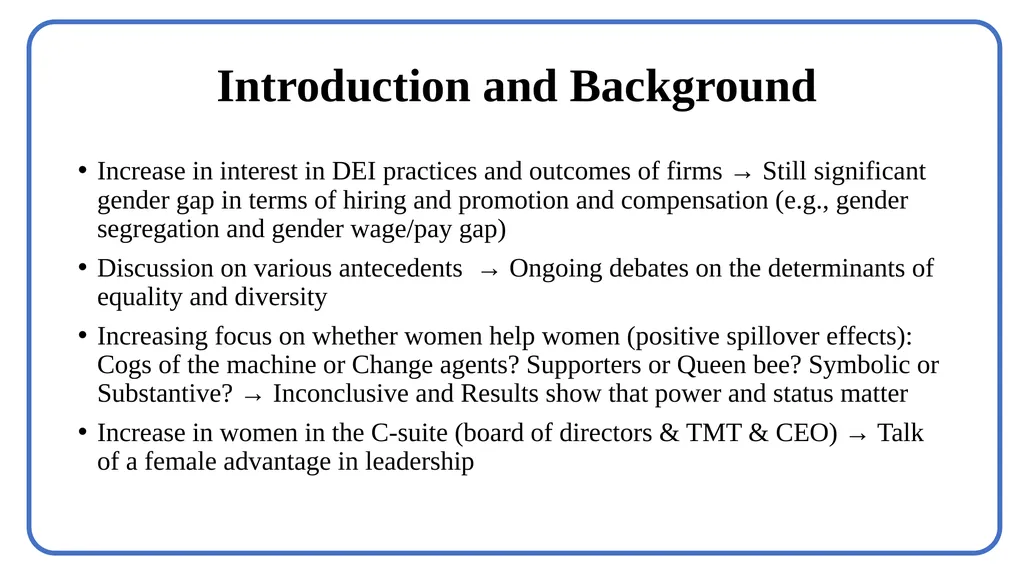
slide2. Introduction and Background Increase in interest in DEI practices and outcomes of firms → Still significant gender gap in terms of hiring and promotion and compensation (e.g., gender segregation and gender wage/pay gap)
Discussion on various antecedents → Ongoing debates on the determinants of equality and diversity
Increasing focus on whether women help women (positive spillover effects): Cogs of the machine or Change agents? Supporters or Queen bee? Symbolic or Substantive? → Inconclusive and Results show that power and status matter
Increase in women in the C-suite (board of directors & TMT & CEO) → Talk of a female advantage in leadership<br>
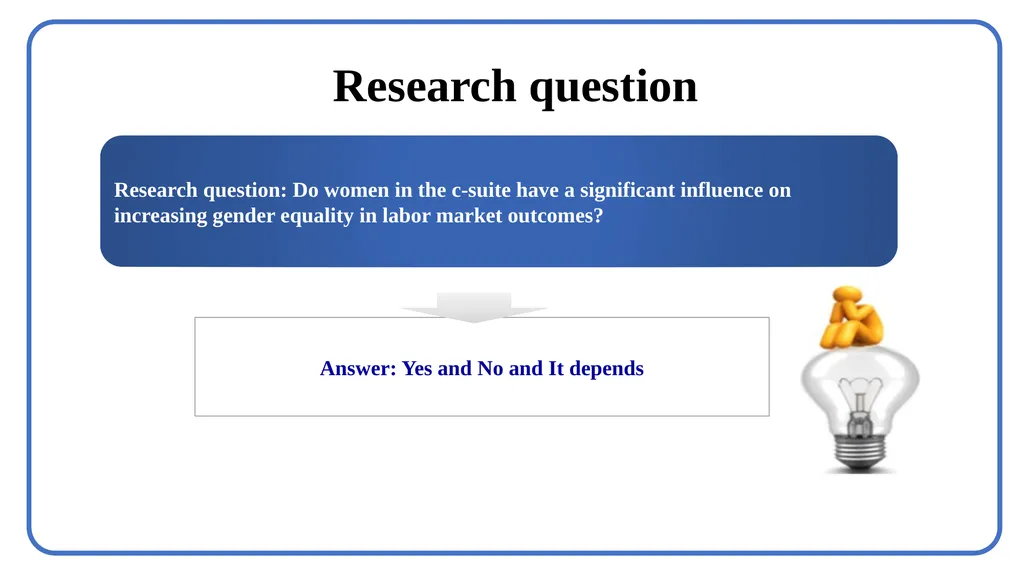
slide3. Research question Answer: Yes and No and It depends Research question: Do women in the c-suite have a significant influence on increasing gender equality in labor market outcomes?<br>
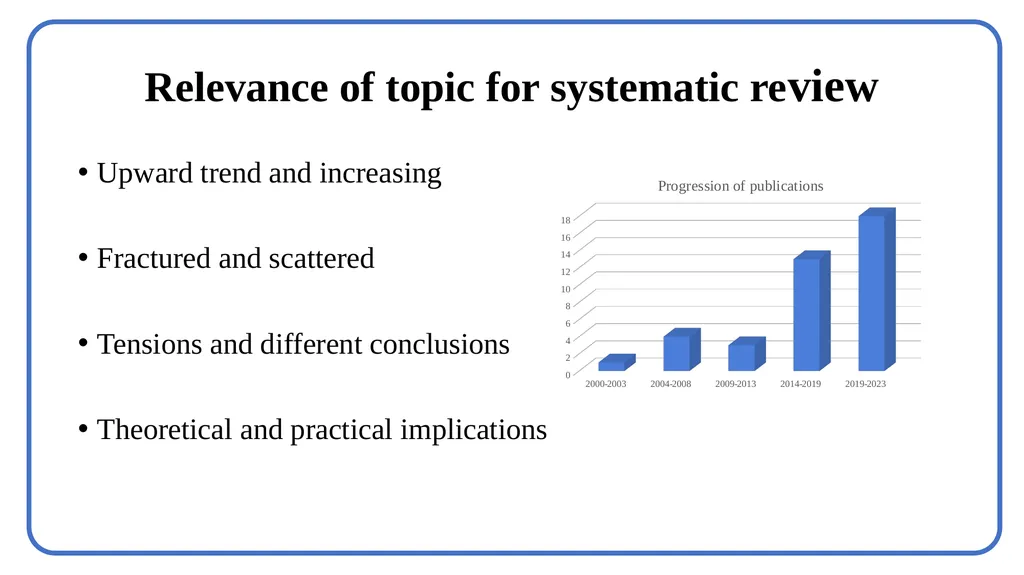
slide4. Relevance of topic for systematic review Upward trend and increasing
Fractured and scattered
Tensions and different conclusions
Theoretical and practical implications<br>
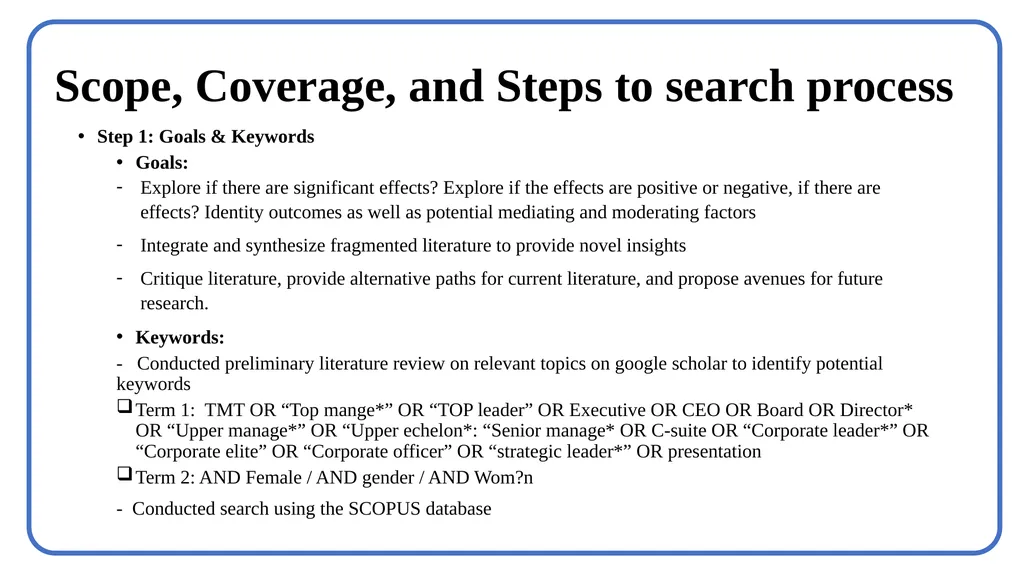
slide5. Scope, Coverage, and Steps to search process Step 1: Goals & Keywords
Goals:
Explore if there are significant effects? Explore if the effects are positive or negative, if there are effects? Identity outcomes as well as potential mediating and moderating factors
Integrate and synthesize fragmented literature to provide novel insights
Critique literature, provide alternative paths for current literature, and propose avenues for future research.
Keywords:
- Conducted preliminary literature review on relevant topics on google scholar to identify potential keywords
Term 1: TMT OR “Top mange*” OR “TOP leader” OR Executive OR CEO OR Board OR Director* OR “Upper manage*” OR “Upper echelon*: “Senior manage* OR C-suite OR “Corporate leader*” OR “Corporate elite” OR “Corporate officer” OR “strategic leader*” OR presentation
Term 2: AND Female / AND gender / AND Wom?n
- Conducted search using the SCOPUS database<br>
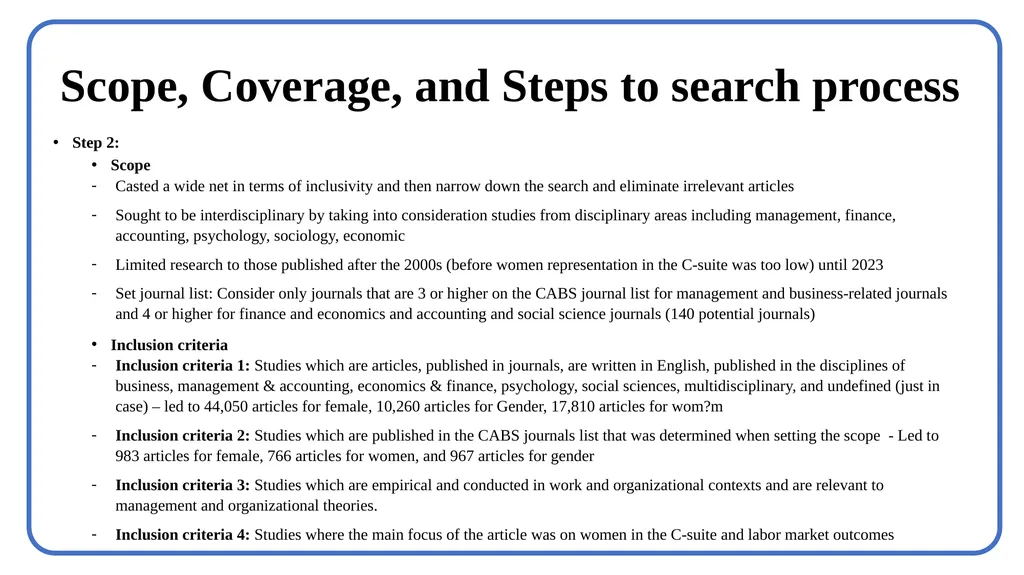
slide6. Scope, Coverage, and Steps to search process Step 2:
Scope
Casted a wide net in terms of inclusivity and then narrow down the search and eliminate irrelevant articles
Sought to be interdisciplinary by taking into consideration studies from disciplinary areas including management, finance, accounting, psychology, sociology, economic
Limited research to those published after the 2000s (before women representation in the C-suite was too low) until 2023
Set journal list: Consider only journals that are 3 or higher on the CABS journal list for management and business-related journals and 4 or higher for finance and economics and accounting and social science journals (140 potential journals)
Inclusion criteria
Inclusion criteria 1: Studies which are articles, published in journals, are written in English, published in the disciplines of business, management & accounting, economics & finance, psychology, social sciences, multidisciplinary, and undefined (just in case) – led to 44,050 articles for female, 10,260 articles for Gender, 17,810 articles for wom?m
Inclusion criteria 2: Studies which are published in the CABS journals list that was determined when setting the scope - Led to 983 articles for female, 766 articles for women, and 967 articles for gender
Inclusion criteria 3: Studies which are empirical and conducted in work and organizational contexts and are relevant to management and organizational theories.
Inclusion criteria 4: Studies where the main focus of the article was on women in the C-suite and labor market outcomes<br>
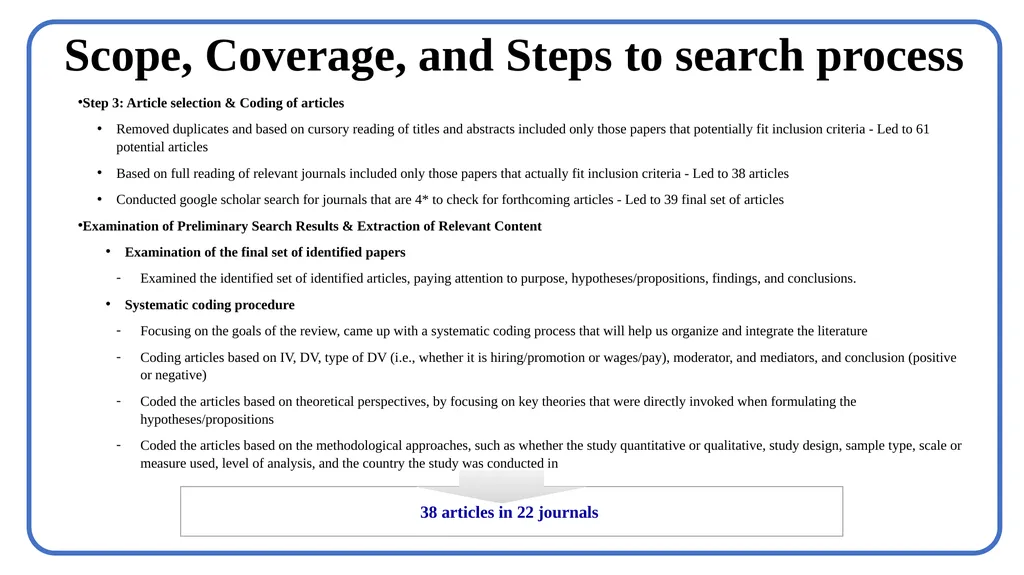
slide7. Scope, Coverage, and Steps to search process Step 3: Article selection & Coding of articles
Removed duplicates and based on cursory reading of titles and abstracts included only those papers that potentially fit inclusion criteria - Led to 61 potential articles
Based on full reading of relevant journals included only those papers that actually fit inclusion criteria - Led to 38 articles
Conducted google scholar search for journals that are 4* to check for forthcoming articles - Led to 39 final set of articles
Examination of Preliminary Search Results & Extraction of Relevant Content
Examination of the final set of identified papers
Examined the identified set of identified articles, paying attention to purpose, hypotheses/propositions, findings, and conclusions.
Systematic coding procedure
Focusing on the goals of the review, came up with a systematic coding process that will help us organize and integrate the literature
Coding articles based on IV, DV, type of DV (i.e., whether it is hiring/promotion or wages/pay), moderator, and mediators, and conclusion (positive or negative)
Coded the articles based on theoretical perspectives, by focusing on key theories that were directly invoked when formulating the hypotheses/propositions
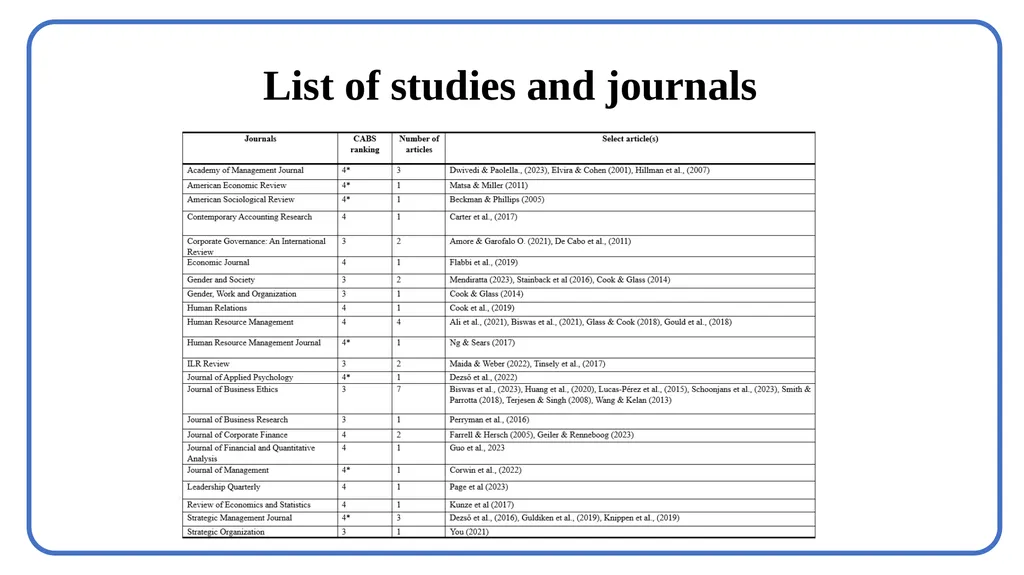
Coded the articles based on the methodological approaches, such as whether the study quantitative or qualitative, study design, sample type, scale or measure used, level of analysis, and the country the study was conducted in 38 articles in 22 journals<br>
slide8. List of studies and journals<br>
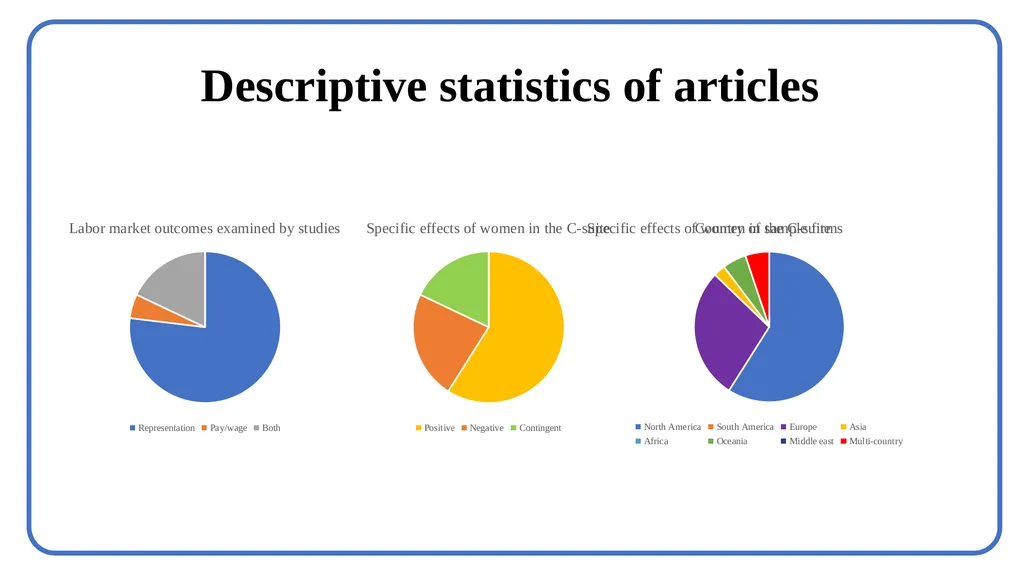
slide9. Descriptive statistics of articles<br>
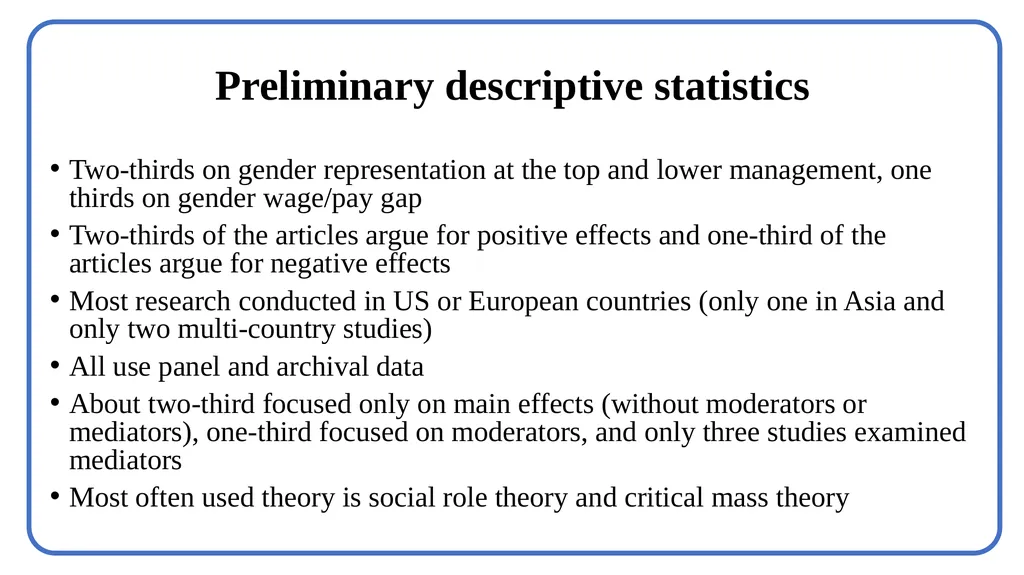
slide10. Preliminary descriptive statistics Two-thirds on gender representation at the top and lower management, one thirds on gender wage/pay gap
Two-thirds of the articles argue for positive effects and one-third of the articles argue for negative effects
Most research conducted in US or European countries (only one in Asia and only two multi-country studies)
All use panel and archival data
About two-third focused only on main effects (without moderators or mediators), one-third focused on moderators, and only three studies examined mediators
Most often used theory is social role theory and critical mass theory<br>
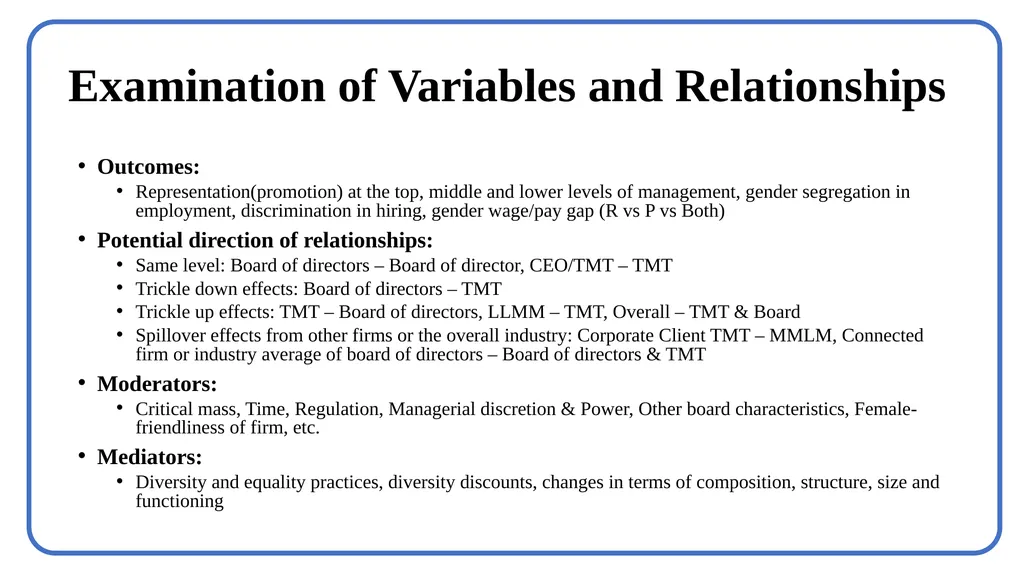
slide11. Examination of Variables and Relationships Outcomes:
Representation(promotion) at the top, middle and lower levels of management, gender segregation in employment, discrimination in hiring, gender wage/pay gap (R vs P vs Both)
Potential direction of relationships:
Same level: Board of directors – Board of director, CEO/TMT – TMT
Trickle down effects: Board of directors – TMT
Trickle up effects: TMT – Board of directors, LLMM – TMT, Overall – TMT & Board
Spillover effects from other firms or the overall industry: Corporate Client TMT – MMLM, Connected firm or industry average of board of directors – Board of directors & TMT
Moderators:
Critical mass, Time, Regulation, Managerial discretion & Power, Other board characteristics, Female-friendliness of firm, etc.
Mediators:
Diversity and equality practices, diversity discounts, changes in terms of composition, structure, size and functioning<br>
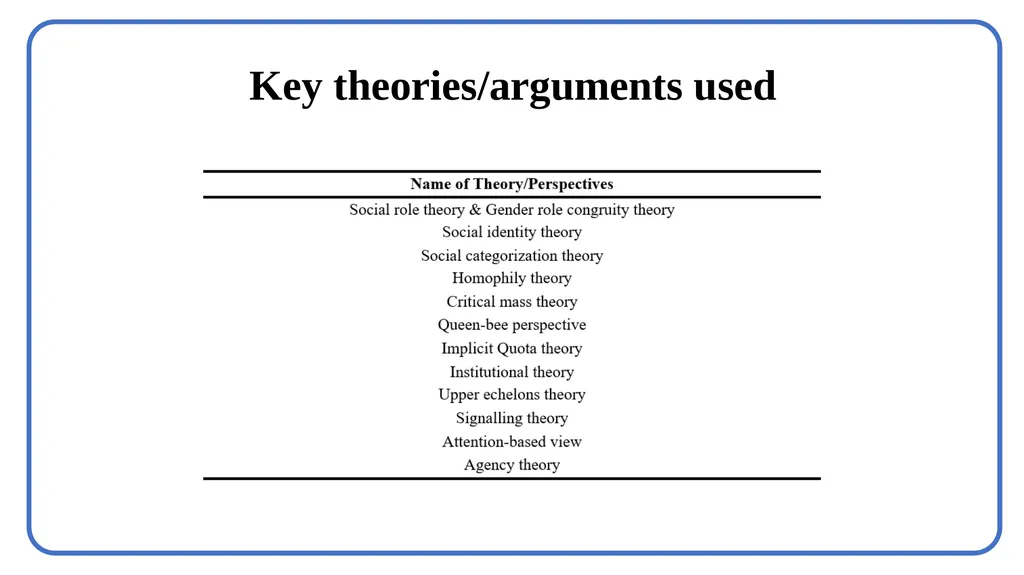
slide12. Key theories/arguments used<br>
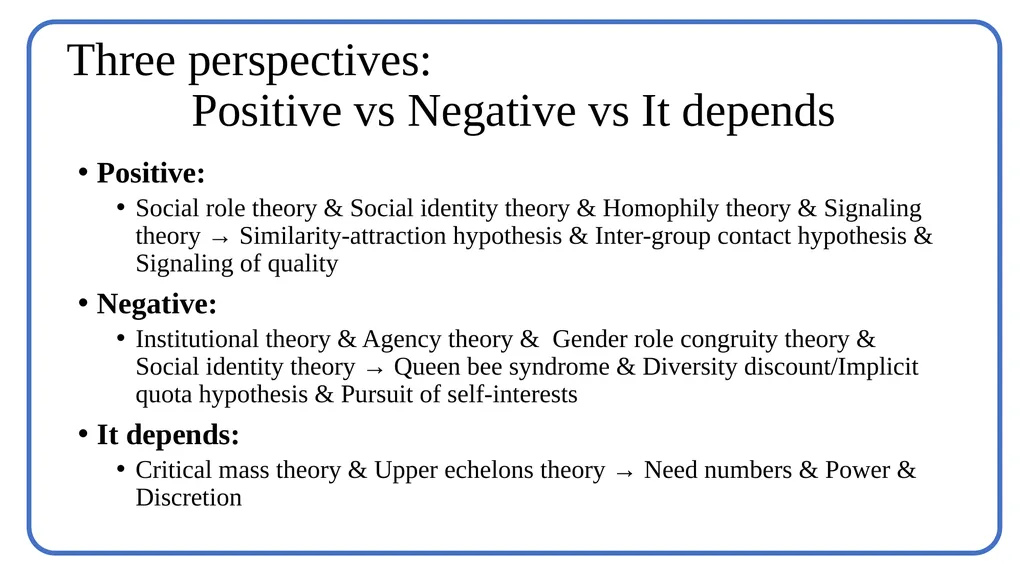
slide13. Three perspectives: Positive vs Negative vs It depends Positive:
Social role theory & Social identity theory & Homophily theory & Signaling theory → Similarity-attraction hypothesis & Inter-group contact hypothesis & Signaling of quality
Negative:
Institutional theory & Agency theory & Gender role congruity theory & Social identity theory → Queen bee syndrome & Diversity discount/Implicit quota hypothesis & Pursuit of self-interests
It depends:
Critical mass theory & Upper echelons theory → Need numbers & Power & Discretion<br>
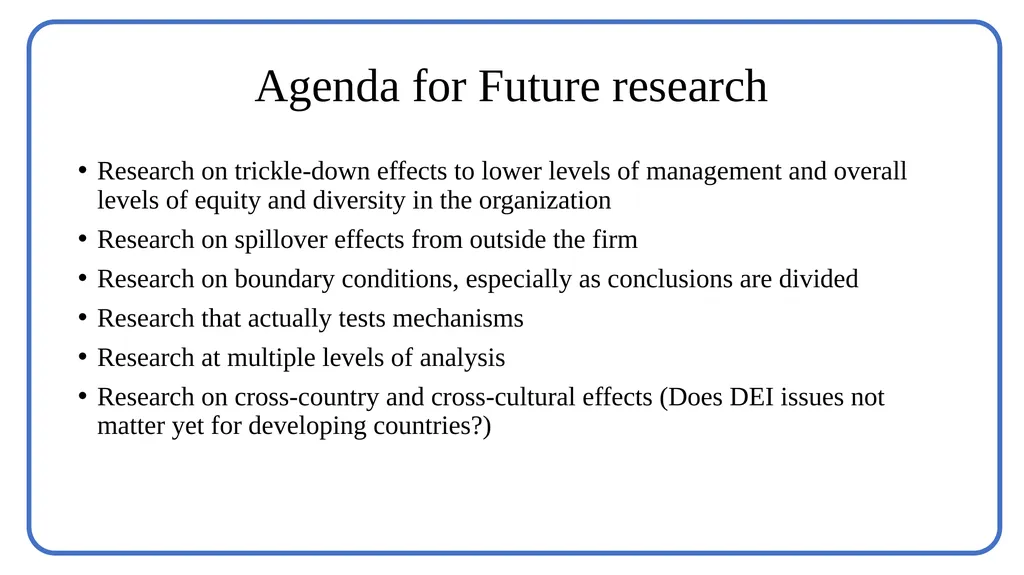
slide14. Agenda for Future research Research on trickle-down effects to lower levels of management and overall levels of equity and diversity in the organization
Research on spillover effects from outside the firm
Research on boundary conditions, especially as conclusions are divided
Research that actually tests mechanisms
Research at multiple levels of analysis
Research on cross-country and cross-cultural effects (Does DEI issues not matter yet for developing countries?)<br>
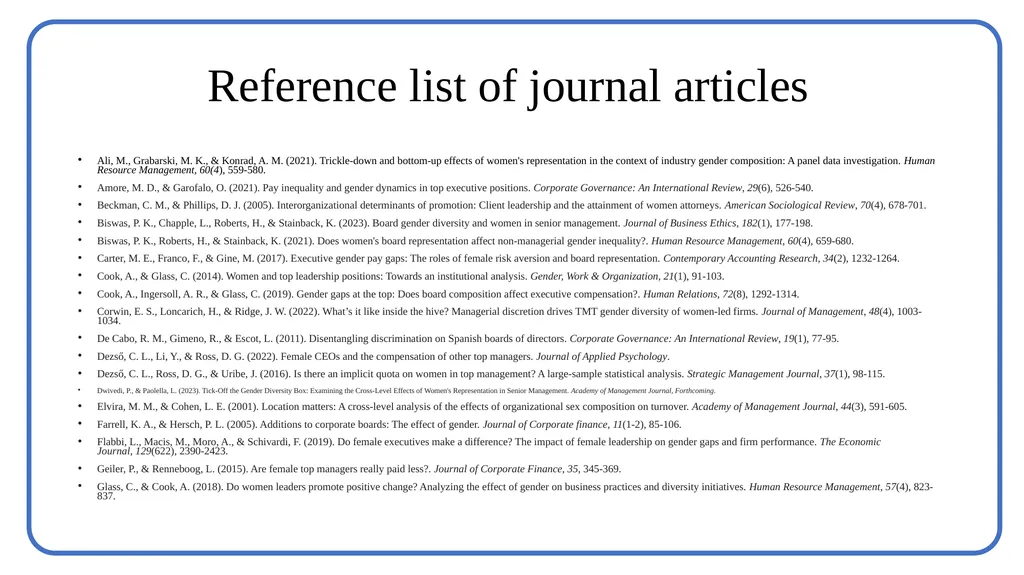
slide15. Reference list of journal articles Ali, M., Grabarski, M. K., & Konrad, A. M. (2021). Trickle‐down and bottom‐up effects of women's representation in the context of industry gender composition: A panel data investigation. Human Resource Management, 60(4), 559-580.
Amore, M. D., & Garofalo, O. (2021). Pay inequality and gender dynamics in top executive positions. Corporate Governance: An International Review, 29(6), 526-540.
Beckman, C. M., & Phillips, D. J. (2005). Interorganizational determinants of promotion: Client leadership and the attainment of women attorneys. American Sociological Review, 70(4), 678-701.
Biswas, P. K., Chapple, L., Roberts, H., & Stainback, K. (2023). Board gender diversity and women in senior management. Journal of Business Ethics, 182(1), 177-198.
Biswas, P. K., Roberts, H., & Stainback, K. (2021). Does women's board representation affect non‐managerial gender inequality?. Human Resource Management, 60(4), 659-680.
Carter, M. E., Franco, F., & Gine, M. (2017). Executive gender pay gaps: The roles of female risk aversion and board representation. Contemporary Accounting Research, 34(2), 1232-1264.
Cook, A., & Glass, C. (2014). Women and top leadership positions: Towards an institutional analysis. Gender, Work & Organization, 21(1), 91-103.
Cook, A., Ingersoll, A. R., & Glass, C. (2019). Gender gaps at the top: Does board composition affect executive compensation?. Human Relations, 72(8), 1292-1314.
Corwin, E. S., Loncarich, H., & Ridge, J. W. (2022). What’s it like inside the hive? Managerial discretion drives TMT gender diversity of women-led firms. Journal of Management, 48(4), 1003-1034.
De Cabo, R. M., Gimeno, R., & Escot, L. (2011). Disentangling discrimination on Spanish boards of directors. Corporate Governance: An International Review, 19(1), 77-95.
Dezső, C. L., Li, Y., & Ross, D. G. (2022). Female CEOs and the compensation of other top managers. Journal of Applied Psychology.
Dezső, C. L., Ross, D. G., & Uribe, J. (2016). Is there an implicit quota on women in top management? A large‐sample statistical analysis. Strategic Management Journal, 37(1), 98-115.
Dwivedi, P., & Paolella, L. (2023). Tick-Off the Gender Diversity Box: Examining the Cross-Level Effects of Women's Representation in Senior Management. Academy of Management Journal, Forthcoming.
Elvira, M. M., & Cohen, L. E. (2001). Location matters: A cross-level analysis of the effects of organizational sex composition on turnover. Academy of Management Journal, 44(3), 591-605.
Farrell, K. A., & Hersch, P. L. (2005). Additions to corporate boards: The effect of gender. Journal of Corporate finance, 11(1-2), 85-106.
Flabbi, L., Macis, M., Moro, A., & Schivardi, F. (2019). Do female executives make a difference? The impact of female leadership on gender gaps and firm performance. The Economic Journal, 129(622), 2390-2423.
Geiler, P., & Renneboog, L. (2015). Are female top managers really paid less?. Journal of Corporate Finance, 35, 345-369.
Glass, C., & Cook, A. (2018). Do women leaders promote positive change? Analyzing the effect of gender on business practices and diversity initiatives. Human Resource Management, 57(4), 823-837.<br>
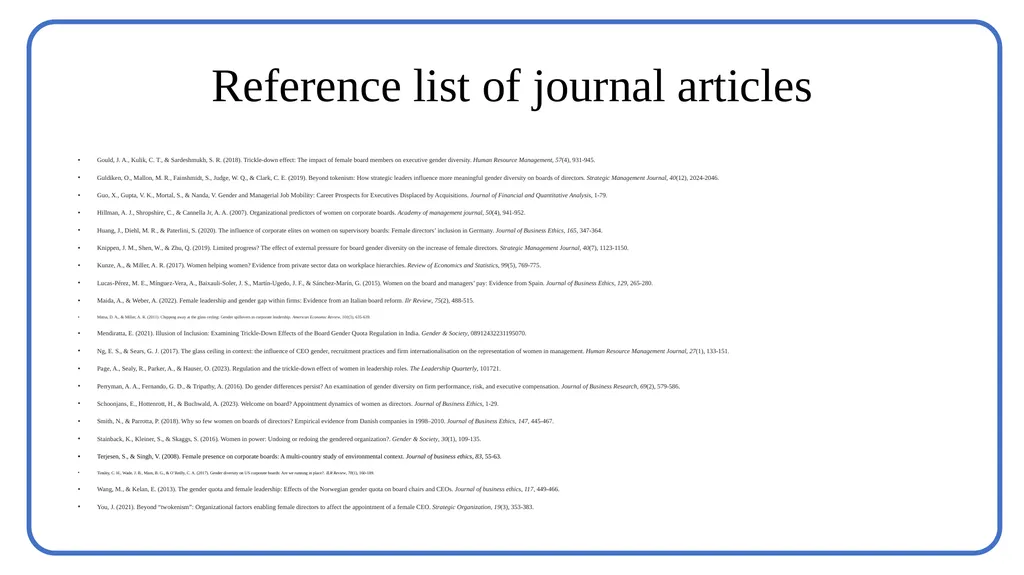
slide16. Reference list of journal articles Gould, J. A., Kulik, C. T., & Sardeshmukh, S. R. (2018). Trickle‐down effect: The impact of female board members on executive gender diversity. Human Resource Management, 57(4), 931-945.
Guldiken, O., Mallon, M. R., Fainshmidt, S., Judge, W. Q., & Clark, C. E. (2019). Beyond tokenism: How strategic leaders influence more meaningful gender diversity on boards of directors. Strategic Management Journal, 40(12), 2024-2046.
Guo, X., Gupta, V. K., Mortal, S., & Nanda, V. Gender and Managerial Job Mobility: Career Prospects for Executives Displaced by Acquisitions. Journal of Financial and Quantitative Analysis, 1-79.
Hillman, A. J., Shropshire, C., & Cannella Jr, A. A. (2007). Organizational predictors of women on corporate boards. Academy of management journal, 50(4), 941-952.
Huang, J., Diehl, M. R., & Paterlini, S. (2020). The influence of corporate elites on women on supervisory boards: Female directors’ inclusion in Germany. Journal of Business Ethics, 165, 347-364.
Knippen, J. M., Shen, W., & Zhu, Q. (2019). Limited progress? The effect of external pressure for board gender diversity on the increase of female directors. Strategic Management Journal, 40(7), 1123-1150.
Kunze, A., & Miller, A. R. (2017). Women helping women? Evidence from private sector data on workplace hierarchies. Review of Economics and Statistics, 99(5), 769-775.
Lucas-Pérez, M. E., Mínguez-Vera, A., Baixauli-Soler, J. S., Martín-Ugedo, J. F., & Sánchez-Marín, G. (2015). Women on the board and managers’ pay: Evidence from Spain. Journal of Business Ethics, 129, 265-280.
Maida, A., & Weber, A. (2022). Female leadership and gender gap within firms: Evidence from an Italian board reform. Ilr Review, 75(2), 488-515.
Matsa, D. A., & Miller, A. R. (2011). Chipping away at the glass ceiling: Gender spillovers in corporate leadership. American Economic Review, 101(3), 635-639.
Mendiratta, E. (2021). Illusion of Inclusion: Examining Trickle-Down Effects of the Board Gender Quota Regulation in India. Gender & Society, 08912432231195070.
Ng, E. S., & Sears, G. J. (2017). The glass ceiling in context: the influence of CEO gender, recruitment practices and firm internationalisation on the representation of women in management. Human Resource Management Journal, 27(1), 133-151.
Page, A., Sealy, R., Parker, A., & Hauser, O. (2023). Regulation and the trickle-down effect of women in leadership roles. The Leadership Quarterly, 101721.
Perryman, A. A., Fernando, G. D., & Tripathy, A. (2016). Do gender differences persist? An examination of gender diversity on firm performance, risk, and executive compensation. Journal of Business Research, 69(2), 579-586.
Schoonjans, E., Hottenrott, H., & Buchwald, A. (2023). Welcome on board? Appointment dynamics of women as directors. Journal of Business Ethics, 1-29.
Smith, N., & Parrotta, P. (2018). Why so few women on boards of directors? Empirical evidence from Danish companies in 1998–2010. Journal of Business Ethics, 147, 445-467.
Stainback, K., Kleiner, S., & Skaggs, S. (2016). Women in power: Undoing or redoing the gendered organization?. Gender & Society, 30(1), 109-135.
Terjesen, S., & Singh, V. (2008). Female presence on corporate boards: A multi-country study of environmental context. Journal of business ethics, 83, 55-63.
Tinsley, C. H., Wade, J. B., Main, B. G., & O’Reilly, C. A. (2017). Gender diversity on US corporate boards: Are we running in place?. ILR Review, 70(1), 160-189.
Wang, M., & Kelan, E. (2013). The gender quota and female leadership: Effects of the Norwegian gender quota on board chairs and CEOs. Journal of business ethics, 117, 449-466.
You, J. (2021). Beyond “twokenism”: Organizational factors enabling female directors to affect the appointment of a female CEO. Strategic Organization, 19(3), 353-383.<br>
slide17. Thank you.<br>
BADM 504<br>
slide2. Introduction and Background Increase in interest in DEI practices and outcomes of firms → Still significant gender gap in terms of hiring and promotion and compensation (e.g., gender segregation and gender wage/pay gap)
Discussion on various antecedents → Ongoing debates on the determinants of equality and diversity
Increasing focus on whether women help women (positive spillover effects): Cogs of the machine or Change agents? Supporters or Queen bee? Symbolic or Substantive? → Inconclusive and Results show that power and status matter
Increase in women in the C-suite (board of directors & TMT & CEO) → Talk of a female advantage in leadership<br>
slide3. Research question Answer: Yes and No and It depends Research question: Do women in the c-suite have a significant influence on increasing gender equality in labor market outcomes?<br>
slide4. Relevance of topic for systematic review Upward trend and increasing
Fractured and scattered
Tensions and different conclusions
Theoretical and practical implications<br>
slide5. Scope, Coverage, and Steps to search process Step 1: Goals & Keywords
Goals:
Explore if there are significant effects? Explore if the effects are positive or negative, if there are effects? Identity outcomes as well as potential mediating and moderating factors
Integrate and synthesize fragmented literature to provide novel insights
Critique literature, provide alternative paths for current literature, and propose avenues for future research.
Keywords:
- Conducted preliminary literature review on relevant topics on google scholar to identify potential keywords
Term 1: TMT OR “Top mange*” OR “TOP leader” OR Executive OR CEO OR Board OR Director* OR “Upper manage*” OR “Upper echelon*: “Senior manage* OR C-suite OR “Corporate leader*” OR “Corporate elite” OR “Corporate officer” OR “strategic leader*” OR presentation
Term 2: AND Female / AND gender / AND Wom?n
- Conducted search using the SCOPUS database<br>
slide6. Scope, Coverage, and Steps to search process Step 2:
Scope
Casted a wide net in terms of inclusivity and then narrow down the search and eliminate irrelevant articles
Sought to be interdisciplinary by taking into consideration studies from disciplinary areas including management, finance, accounting, psychology, sociology, economic
Limited research to those published after the 2000s (before women representation in the C-suite was too low) until 2023
Set journal list: Consider only journals that are 3 or higher on the CABS journal list for management and business-related journals and 4 or higher for finance and economics and accounting and social science journals (140 potential journals)
Inclusion criteria
Inclusion criteria 1: Studies which are articles, published in journals, are written in English, published in the disciplines of business, management & accounting, economics & finance, psychology, social sciences, multidisciplinary, and undefined (just in case) – led to 44,050 articles for female, 10,260 articles for Gender, 17,810 articles for wom?m
Inclusion criteria 2: Studies which are published in the CABS journals list that was determined when setting the scope - Led to 983 articles for female, 766 articles for women, and 967 articles for gender
Inclusion criteria 3: Studies which are empirical and conducted in work and organizational contexts and are relevant to management and organizational theories.
Inclusion criteria 4: Studies where the main focus of the article was on women in the C-suite and labor market outcomes<br>
slide7. Scope, Coverage, and Steps to search process Step 3: Article selection & Coding of articles
Removed duplicates and based on cursory reading of titles and abstracts included only those papers that potentially fit inclusion criteria - Led to 61 potential articles
Based on full reading of relevant journals included only those papers that actually fit inclusion criteria - Led to 38 articles
Conducted google scholar search for journals that are 4* to check for forthcoming articles - Led to 39 final set of articles
Examination of Preliminary Search Results & Extraction of Relevant Content
Examination of the final set of identified papers
Examined the identified set of identified articles, paying attention to purpose, hypotheses/propositions, findings, and conclusions.
Systematic coding procedure
Focusing on the goals of the review, came up with a systematic coding process that will help us organize and integrate the literature
Coding articles based on IV, DV, type of DV (i.e., whether it is hiring/promotion or wages/pay), moderator, and mediators, and conclusion (positive or negative)
Coded the articles based on theoretical perspectives, by focusing on key theories that were directly invoked when formulating the hypotheses/propositions
Coded the articles based on the methodological approaches, such as whether the study quantitative or qualitative, study design, sample type, scale or measure used, level of analysis, and the country the study was conducted in 38 articles in 22 journals<br>
slide8. List of studies and journals<br>
slide9. Descriptive statistics of articles<br>
slide10. Preliminary descriptive statistics Two-thirds on gender representation at the top and lower management, one thirds on gender wage/pay gap
Two-thirds of the articles argue for positive effects and one-third of the articles argue for negative effects
Most research conducted in US or European countries (only one in Asia and only two multi-country studies)
All use panel and archival data
About two-third focused only on main effects (without moderators or mediators), one-third focused on moderators, and only three studies examined mediators
Most often used theory is social role theory and critical mass theory<br>
slide11. Examination of Variables and Relationships Outcomes:
Representation(promotion) at the top, middle and lower levels of management, gender segregation in employment, discrimination in hiring, gender wage/pay gap (R vs P vs Both)
Potential direction of relationships:
Same level: Board of directors – Board of director, CEO/TMT – TMT
Trickle down effects: Board of directors – TMT
Trickle up effects: TMT – Board of directors, LLMM – TMT, Overall – TMT & Board
Spillover effects from other firms or the overall industry: Corporate Client TMT – MMLM, Connected firm or industry average of board of directors – Board of directors & TMT
Moderators:
Critical mass, Time, Regulation, Managerial discretion & Power, Other board characteristics, Female-friendliness of firm, etc.
Mediators:
Diversity and equality practices, diversity discounts, changes in terms of composition, structure, size and functioning<br>
slide12. Key theories/arguments used<br>
slide13. Three perspectives: Positive vs Negative vs It depends Positive:
Social role theory & Social identity theory & Homophily theory & Signaling theory → Similarity-attraction hypothesis & Inter-group contact hypothesis & Signaling of quality
Negative:
Institutional theory & Agency theory & Gender role congruity theory & Social identity theory → Queen bee syndrome & Diversity discount/Implicit quota hypothesis & Pursuit of self-interests
It depends:
Critical mass theory & Upper echelons theory → Need numbers & Power & Discretion<br>
slide14. Agenda for Future research Research on trickle-down effects to lower levels of management and overall levels of equity and diversity in the organization
Research on spillover effects from outside the firm
Research on boundary conditions, especially as conclusions are divided
Research that actually tests mechanisms
Research at multiple levels of analysis
Research on cross-country and cross-cultural effects (Does DEI issues not matter yet for developing countries?)<br>
slide15. Reference list of journal articles Ali, M., Grabarski, M. K., & Konrad, A. M. (2021). Trickle‐down and bottom‐up effects of women's representation in the context of industry gender composition: A panel data investigation. Human Resource Management, 60(4), 559-580.
Amore, M. D., & Garofalo, O. (2021). Pay inequality and gender dynamics in top executive positions. Corporate Governance: An International Review, 29(6), 526-540.
Beckman, C. M., & Phillips, D. J. (2005). Interorganizational determinants of promotion: Client leadership and the attainment of women attorneys. American Sociological Review, 70(4), 678-701.
Biswas, P. K., Chapple, L., Roberts, H., & Stainback, K. (2023). Board gender diversity and women in senior management. Journal of Business Ethics, 182(1), 177-198.
Biswas, P. K., Roberts, H., & Stainback, K. (2021). Does women's board representation affect non‐managerial gender inequality?. Human Resource Management, 60(4), 659-680.
Carter, M. E., Franco, F., & Gine, M. (2017). Executive gender pay gaps: The roles of female risk aversion and board representation. Contemporary Accounting Research, 34(2), 1232-1264.
Cook, A., & Glass, C. (2014). Women and top leadership positions: Towards an institutional analysis. Gender, Work & Organization, 21(1), 91-103.
Cook, A., Ingersoll, A. R., & Glass, C. (2019). Gender gaps at the top: Does board composition affect executive compensation?. Human Relations, 72(8), 1292-1314.
Corwin, E. S., Loncarich, H., & Ridge, J. W. (2022). What’s it like inside the hive? Managerial discretion drives TMT gender diversity of women-led firms. Journal of Management, 48(4), 1003-1034.
De Cabo, R. M., Gimeno, R., & Escot, L. (2011). Disentangling discrimination on Spanish boards of directors. Corporate Governance: An International Review, 19(1), 77-95.
Dezső, C. L., Li, Y., & Ross, D. G. (2022). Female CEOs and the compensation of other top managers. Journal of Applied Psychology.
Dezső, C. L., Ross, D. G., & Uribe, J. (2016). Is there an implicit quota on women in top management? A large‐sample statistical analysis. Strategic Management Journal, 37(1), 98-115.
Dwivedi, P., & Paolella, L. (2023). Tick-Off the Gender Diversity Box: Examining the Cross-Level Effects of Women's Representation in Senior Management. Academy of Management Journal, Forthcoming.
Elvira, M. M., & Cohen, L. E. (2001). Location matters: A cross-level analysis of the effects of organizational sex composition on turnover. Academy of Management Journal, 44(3), 591-605.
Farrell, K. A., & Hersch, P. L. (2005). Additions to corporate boards: The effect of gender. Journal of Corporate finance, 11(1-2), 85-106.
Flabbi, L., Macis, M., Moro, A., & Schivardi, F. (2019). Do female executives make a difference? The impact of female leadership on gender gaps and firm performance. The Economic Journal, 129(622), 2390-2423.
Geiler, P., & Renneboog, L. (2015). Are female top managers really paid less?. Journal of Corporate Finance, 35, 345-369.
Glass, C., & Cook, A. (2018). Do women leaders promote positive change? Analyzing the effect of gender on business practices and diversity initiatives. Human Resource Management, 57(4), 823-837.<br>
slide16. Reference list of journal articles Gould, J. A., Kulik, C. T., & Sardeshmukh, S. R. (2018). Trickle‐down effect: The impact of female board members on executive gender diversity. Human Resource Management, 57(4), 931-945.
Guldiken, O., Mallon, M. R., Fainshmidt, S., Judge, W. Q., & Clark, C. E. (2019). Beyond tokenism: How strategic leaders influence more meaningful gender diversity on boards of directors. Strategic Management Journal, 40(12), 2024-2046.
Guo, X., Gupta, V. K., Mortal, S., & Nanda, V. Gender and Managerial Job Mobility: Career Prospects for Executives Displaced by Acquisitions. Journal of Financial and Quantitative Analysis, 1-79.
Hillman, A. J., Shropshire, C., & Cannella Jr, A. A. (2007). Organizational predictors of women on corporate boards. Academy of management journal, 50(4), 941-952.
Huang, J., Diehl, M. R., & Paterlini, S. (2020). The influence of corporate elites on women on supervisory boards: Female directors’ inclusion in Germany. Journal of Business Ethics, 165, 347-364.
Knippen, J. M., Shen, W., & Zhu, Q. (2019). Limited progress? The effect of external pressure for board gender diversity on the increase of female directors. Strategic Management Journal, 40(7), 1123-1150.
Kunze, A., & Miller, A. R. (2017). Women helping women? Evidence from private sector data on workplace hierarchies. Review of Economics and Statistics, 99(5), 769-775.
Lucas-Pérez, M. E., Mínguez-Vera, A., Baixauli-Soler, J. S., Martín-Ugedo, J. F., & Sánchez-Marín, G. (2015). Women on the board and managers’ pay: Evidence from Spain. Journal of Business Ethics, 129, 265-280.
Maida, A., & Weber, A. (2022). Female leadership and gender gap within firms: Evidence from an Italian board reform. Ilr Review, 75(2), 488-515.
Matsa, D. A., & Miller, A. R. (2011). Chipping away at the glass ceiling: Gender spillovers in corporate leadership. American Economic Review, 101(3), 635-639.
Mendiratta, E. (2021). Illusion of Inclusion: Examining Trickle-Down Effects of the Board Gender Quota Regulation in India. Gender & Society, 08912432231195070.
Ng, E. S., & Sears, G. J. (2017). The glass ceiling in context: the influence of CEO gender, recruitment practices and firm internationalisation on the representation of women in management. Human Resource Management Journal, 27(1), 133-151.
Page, A., Sealy, R., Parker, A., & Hauser, O. (2023). Regulation and the trickle-down effect of women in leadership roles. The Leadership Quarterly, 101721.
Perryman, A. A., Fernando, G. D., & Tripathy, A. (2016). Do gender differences persist? An examination of gender diversity on firm performance, risk, and executive compensation. Journal of Business Research, 69(2), 579-586.
Schoonjans, E., Hottenrott, H., & Buchwald, A. (2023). Welcome on board? Appointment dynamics of women as directors. Journal of Business Ethics, 1-29.
Smith, N., & Parrotta, P. (2018). Why so few women on boards of directors? Empirical evidence from Danish companies in 1998–2010. Journal of Business Ethics, 147, 445-467.
Stainback, K., Kleiner, S., & Skaggs, S. (2016). Women in power: Undoing or redoing the gendered organization?. Gender & Society, 30(1), 109-135.
Terjesen, S., & Singh, V. (2008). Female presence on corporate boards: A multi-country study of environmental context. Journal of business ethics, 83, 55-63.
Tinsley, C. H., Wade, J. B., Main, B. G., & O’Reilly, C. A. (2017). Gender diversity on US corporate boards: Are we running in place?. ILR Review, 70(1), 160-189.
Wang, M., & Kelan, E. (2013). The gender quota and female leadership: Effects of the Norwegian gender quota on board chairs and CEOs. Journal of business ethics, 117, 449-466.
You, J. (2021). Beyond “twokenism”: Organizational factors enabling female directors to affect the appointment of a female CEO. Strategic Organization, 19(3), 353-383.<br>
slide17. Thank you.<br>