Cloud Computing SE489: DevOps Engineering 1 Outline Cloud Computing Virtualization the underlined technology 2 Cloud Computing 3 What is Cloud Computing? Computing as a utility Utility services e.g. water, electricity, gas, etc. Consumers
"Cloud Computing SE489: DevOps Engineering 1" is the property of its rightful owner. Permission is granted to
download and print the materials on this website for personal, non-commercial use only, and to display it
on your personal computer provided you do not modify the materials and that you retain all copyright
notices contained in the materials. By downloading content from our website, you accept the terms of this
agreement.
Presentation Transcript
01
Cloud Computing SE489: DevOps Engineering 1<br>
02
Outline Cloud Computing
Virtualization – the underlined technology 2<br>
03
Cloud Computing 3<br>
04
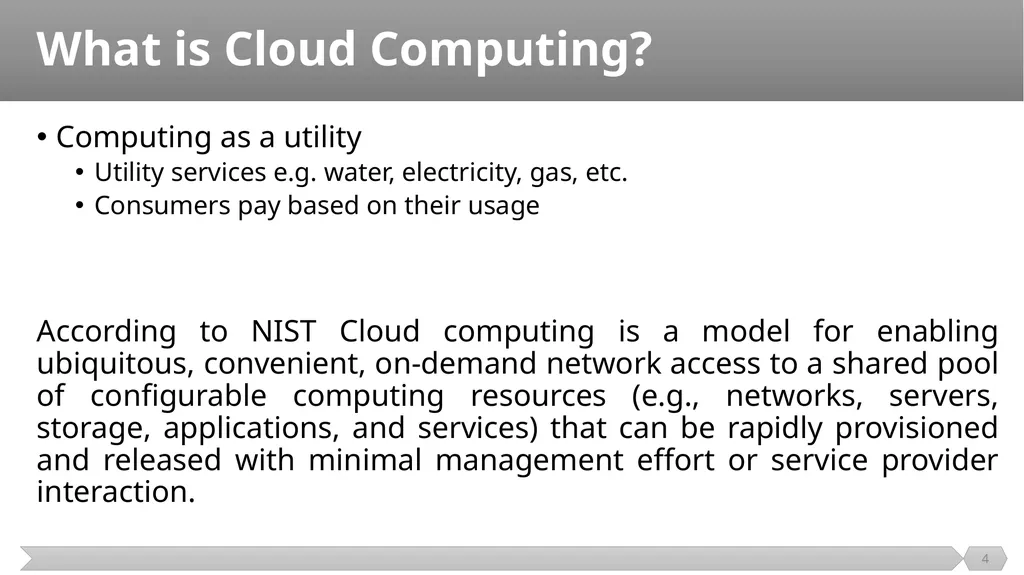
What is Cloud Computing? Computing as a utility
Utility services e.g. water, electricity, gas, etc.
Consumers pay based on their usage
According to NIST Cloud computing is a model for enabling ubiquitous, convenient, on-demand network access to a shared pool of configurable computing resources (e.g., networks, servers, storage, applications, and services) that can be rapidly provisioned and released with minimal management effort or service provider interaction. 4<br>
05
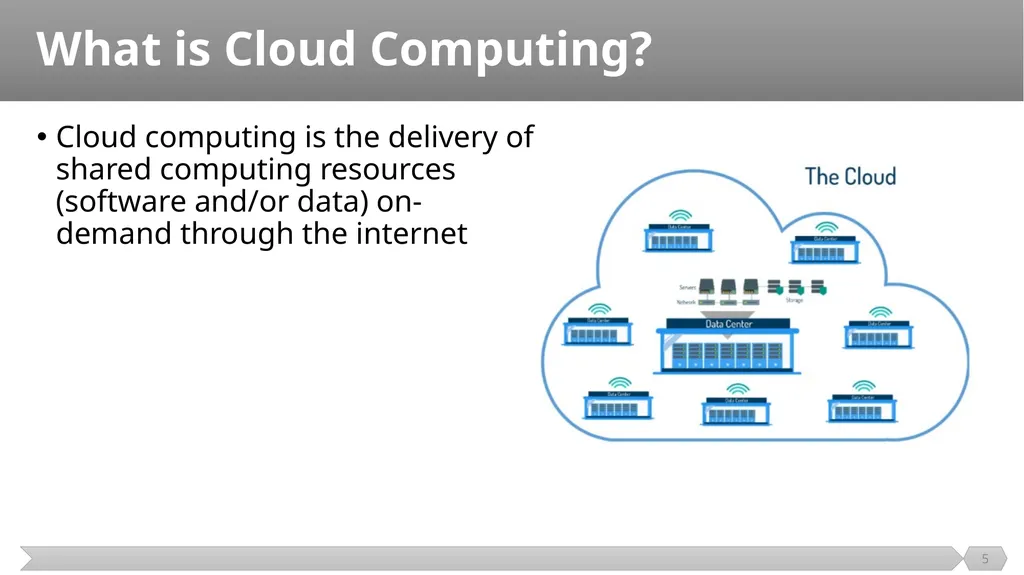
What is Cloud Computing? Cloud computing is the delivery of shared computing resources (software and/or data) on-demand through the internet 5<br>
06
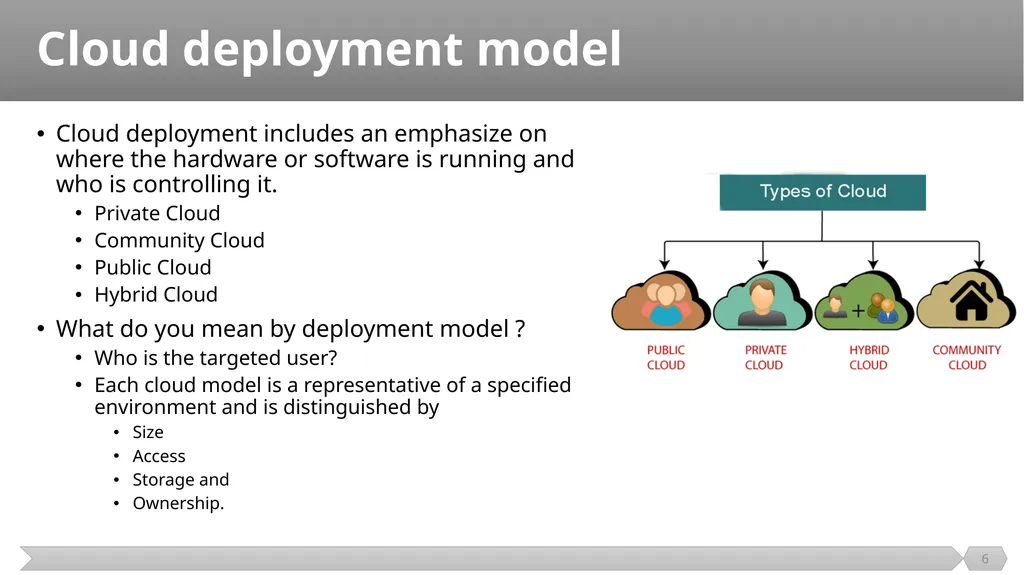
Cloud deployment model Cloud deployment includes an emphasize on where the hardware or software is running and who is controlling it.
Private Cloud
Community Cloud
Public Cloud
Hybrid Cloud
What do you mean by deployment model ?
Who is the targeted user?
Each cloud model is a representative of a specified environment and is distinguished by
Size
Access
Storage and
Ownership. 6<br>
07
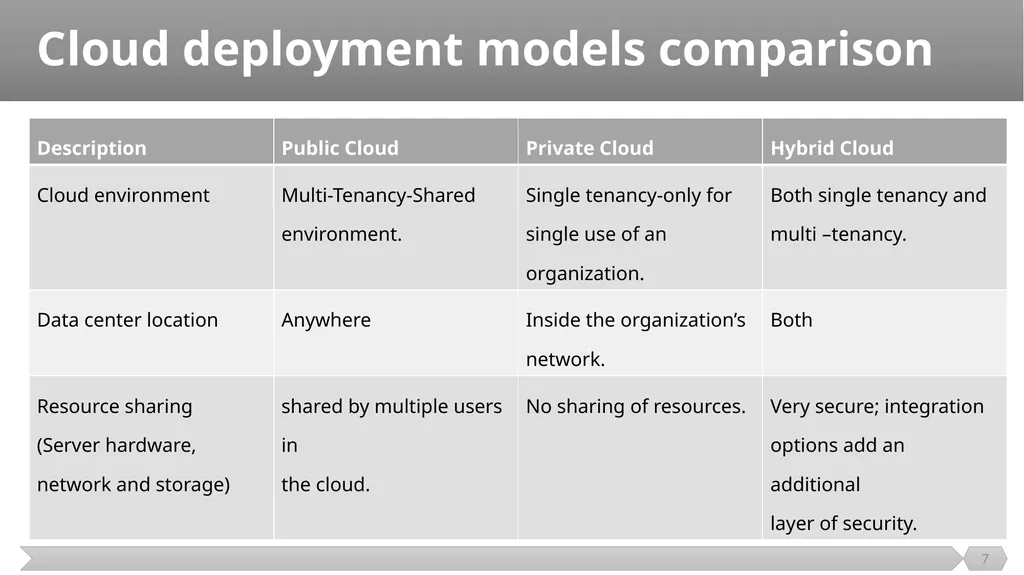
Cloud deployment models comparison 7<br>
08
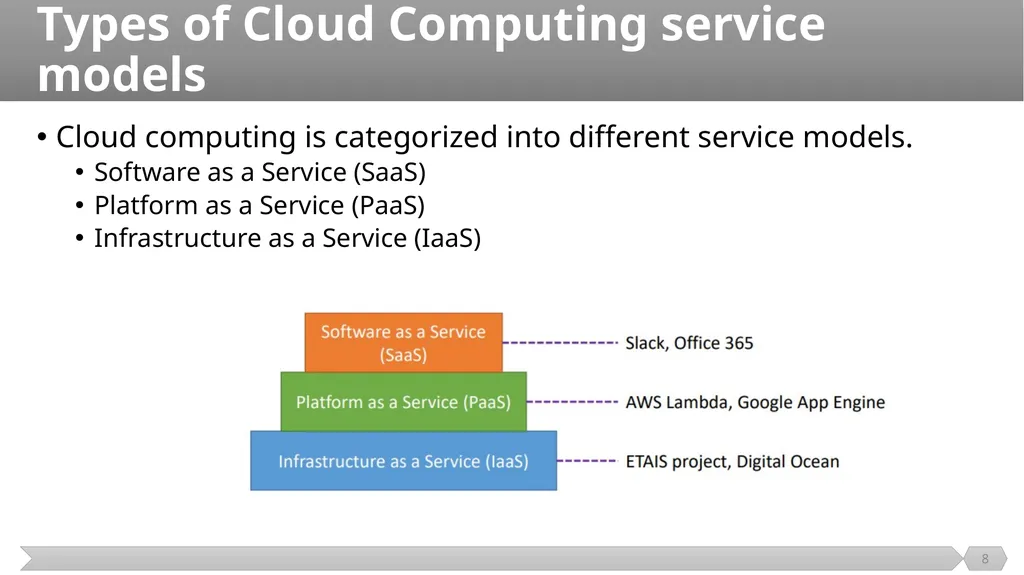
Types of Cloud Computing service models Cloud computing is categorized into different service models.
Software as a Service (SaaS)
Platform as a Service (PaaS)
Infrastructure as a Service (IaaS) 8<br>
09
Virtualization – the underlined technology 48<br>
10
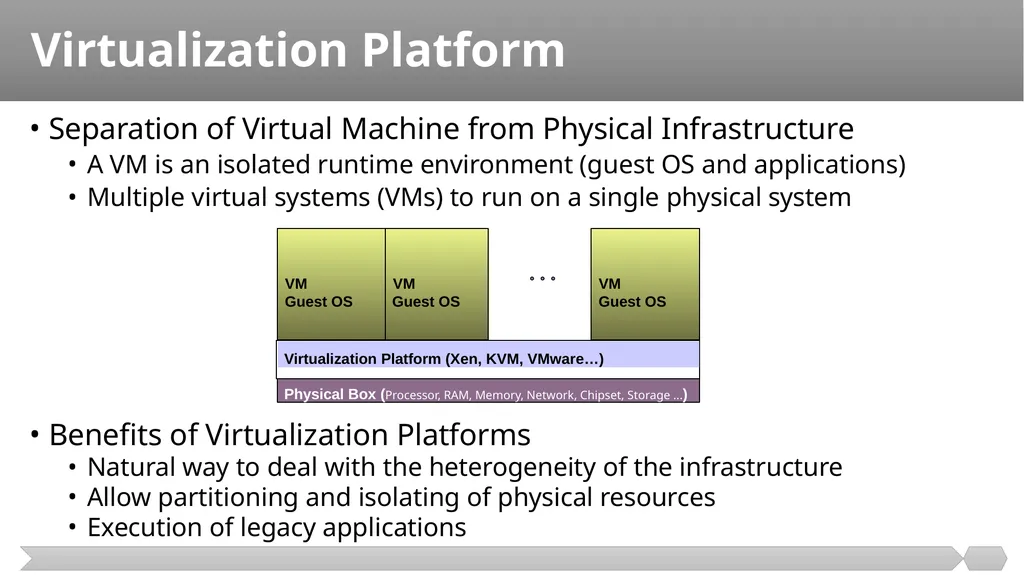
Virtualization Platform Separation of Virtual Machine from Physical Infrastructure
A VM is an isolated runtime environment (guest OS and applications)
Multiple virtual systems (VMs) to run on a single physical system Physical Box (Processor, RAM, Memory, Network, Chipset, Storage ...) Virtualization Platform (Xen, KVM, VMware…) Applications Applications Applications VM
Guest OS VM
Guest OS VM
Guest OS Benefits of Virtualization Platforms
Natural way to deal with the heterogeneity of the infrastructure
Allow partitioning and isolating of physical resources
Execution of legacy applications<br>
11
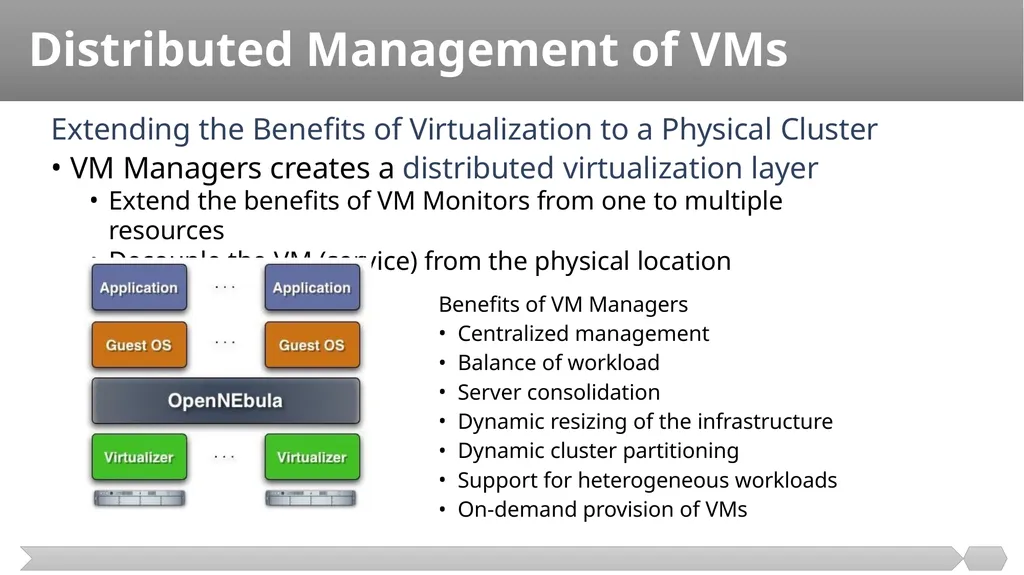
Distributed Management of VMs Extending the Benefits of Virtualization to a Physical Cluster
VM Managers creates a distributed virtualization layer
Extend the benefits of VM Monitors from one to multiple resources
Decouple the VM (service) from the physical location
Benefits of VM Managers
Centralized management
Balance of workload
Server consolidation
Dynamic resizing of the infrastructure
Dynamic cluster partitioning
Support for heterogeneous workloads
On-demand provision of VMs<br>
12
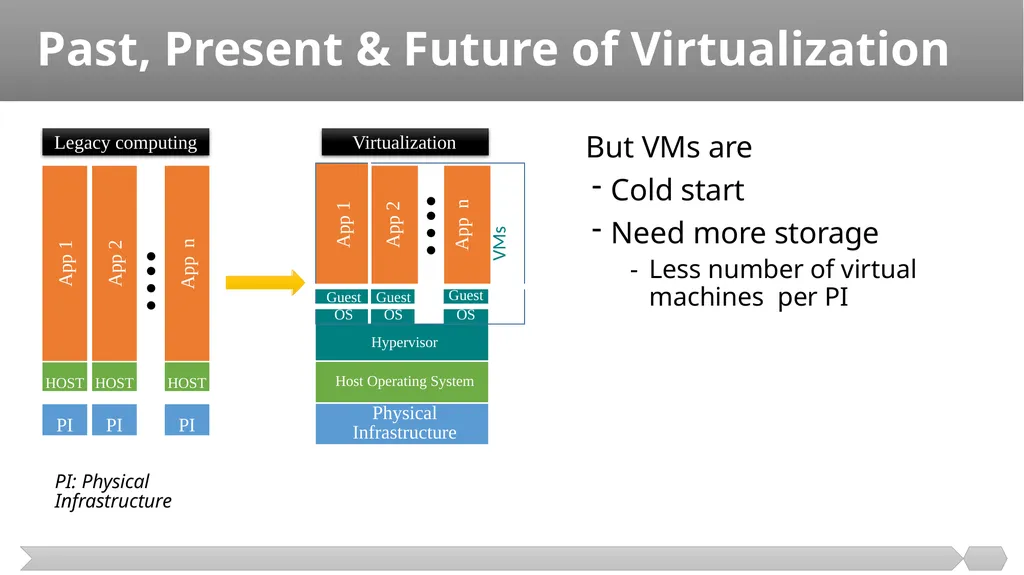
But VMs are Cold start
Need more storage
- Less number of virtual machines per PI PI HOST App 1 PI HOST App 2 PI HOST App n …. Legacy computing …. Virtualization PI: Physical Infrastructure Past, Present & Future of Virtualization<br>
13
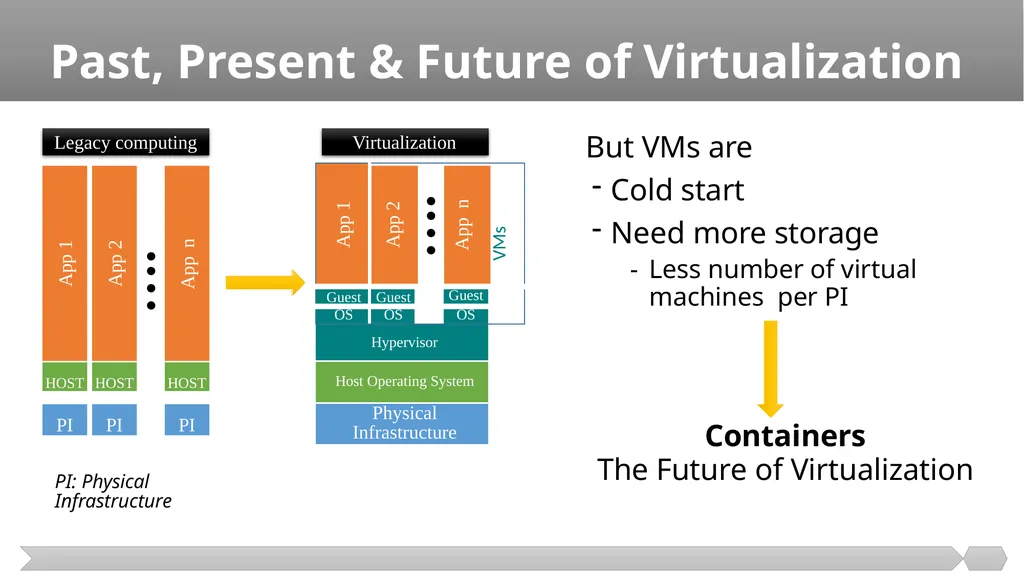
PI HOST App 1 PI HOST App 2 PI HOST App n …. Legacy computing …. Virtualization Containers
The Future of Virtualization Past, Present & Future of Virtualization PI: Physical Infrastructure But VMs are Cold start
Need more storage
- Less number of virtual machines per PI<br>
14
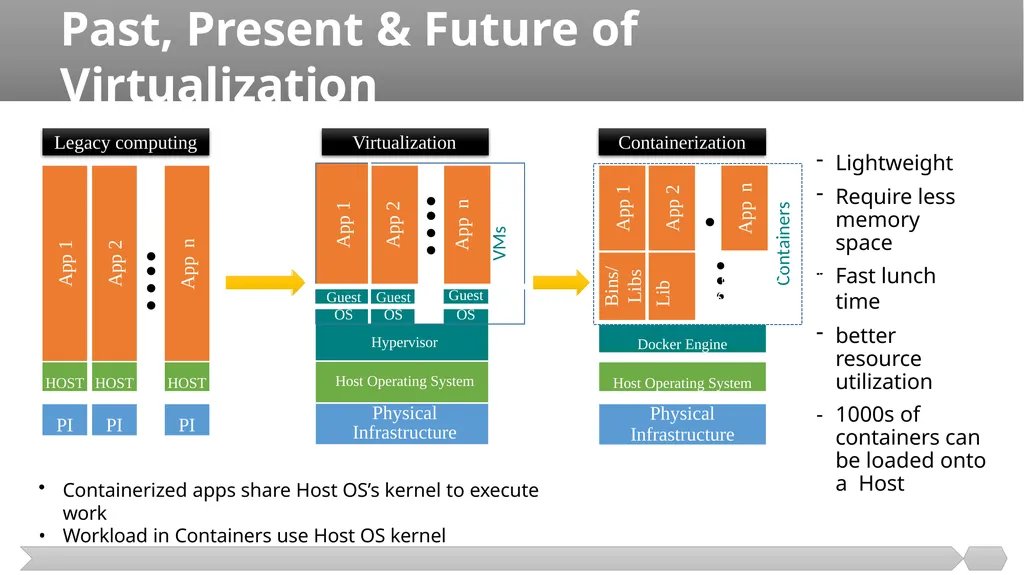
Past, Present & Future of Virtualization Lightweight
Require less memory space
Fast lunch time
better resource utilization
- 1000s of containers can be loaded onto a Host PI HOST App 1 PI HOST App 2 PI HOST App n …. Legacy computing …. Virtualization Physical
Infrastructure Host Operating System App 1 App 2 .
App n Containerization Docker Engine Containers Bins/
Libs
Lib…s Bins/
Bins/ Libs Containerized apps share Host OS’s kernel to execute work
Workload in Containers use Host OS kernel<br>
15
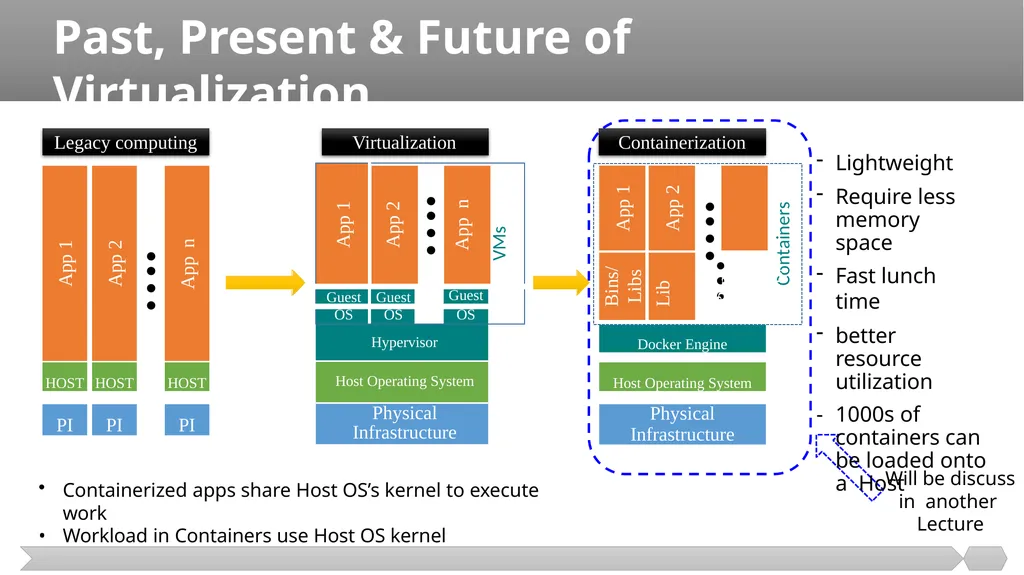
Past, Present & Future of Virtualization PI HOST App 1 PI HOST App 2 PI HOST App n …. Legacy computing …. Virtualization Physical
Infrastructure Host Operating System App 1 App 2 Containerization Docker Engine Containers Bins/
Libs
Lib…s Bins/
Bins/ Libs Will be discuss in another Lecture Containerized apps share Host OS’s kernel to execute work
Workload in Containers use Host OS kernel Lightweight
Require less memory space
Fast lunch time
better resource utilization
- 1000s of containers can be loaded onto a Host ….<br>