05
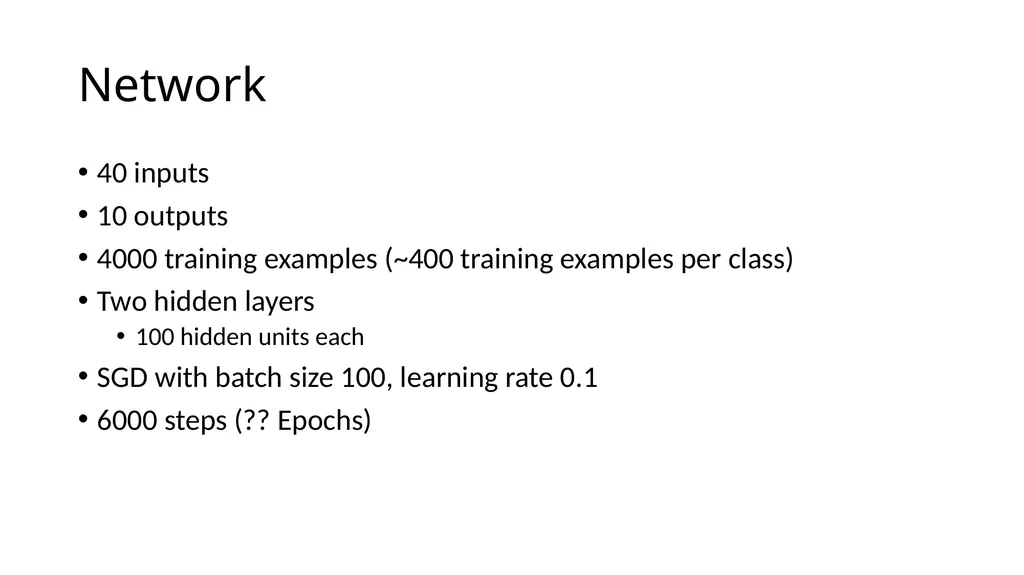
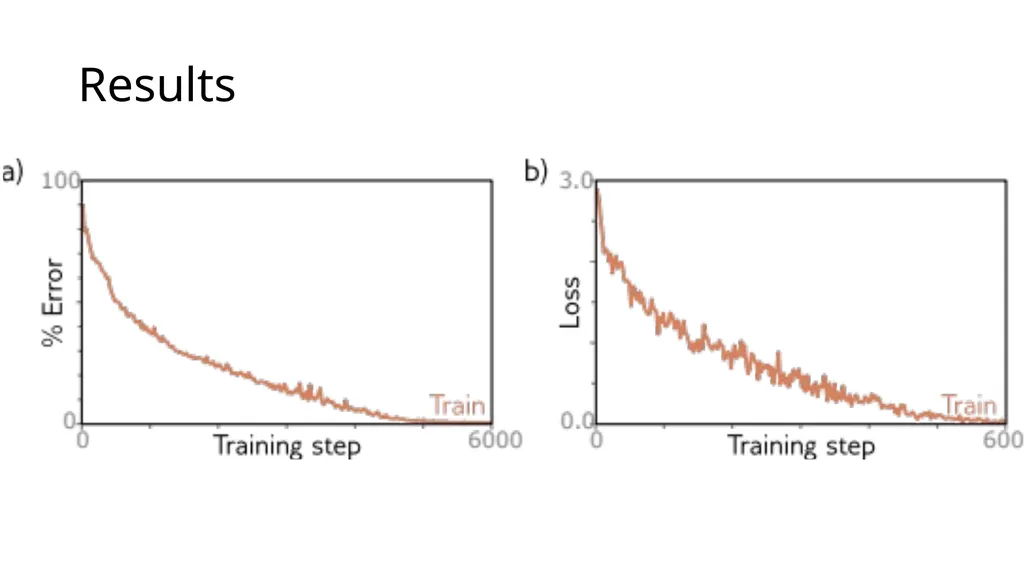
Network 40 inputs
10 outputs
4000 training examples (~400 training examples per class)
Two hidden layers
100 hidden units each
SGD with batch size 100, learning rate 0.1
6000 steps (?? Epochs)<br>
07
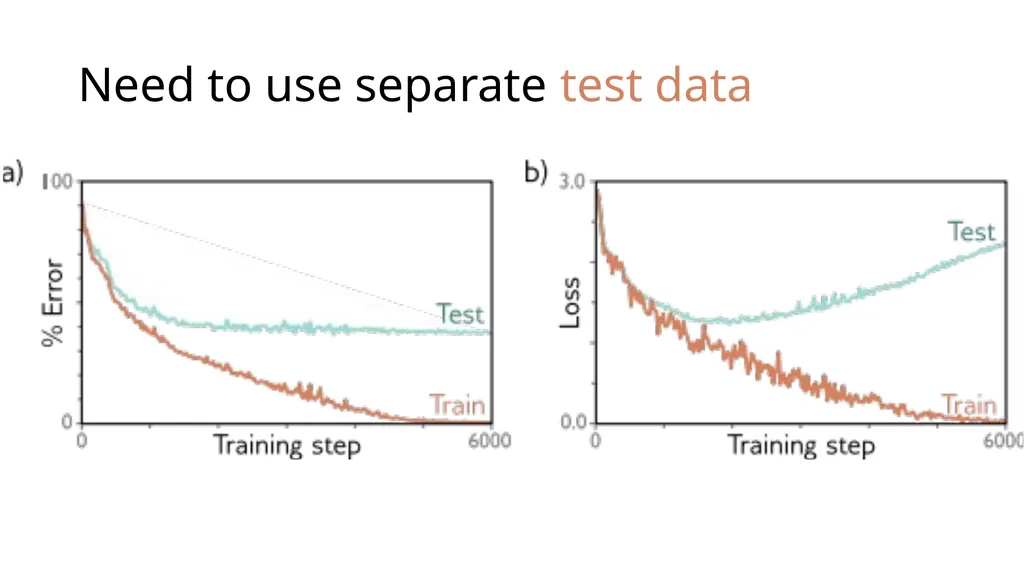
Need to use separate test data<br>
08
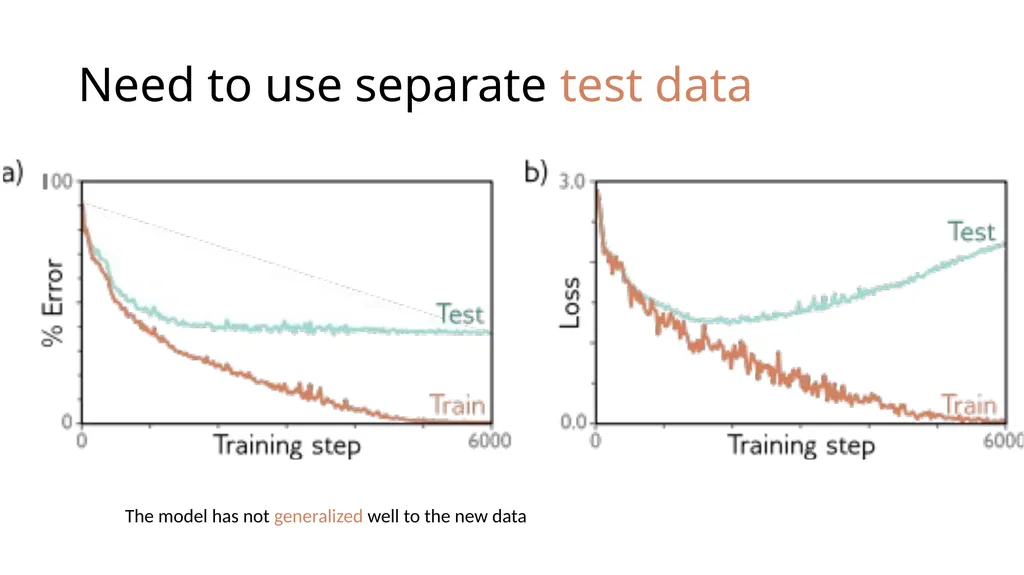
Need to use separate test data The model has not generalized well to the new data<br>
09
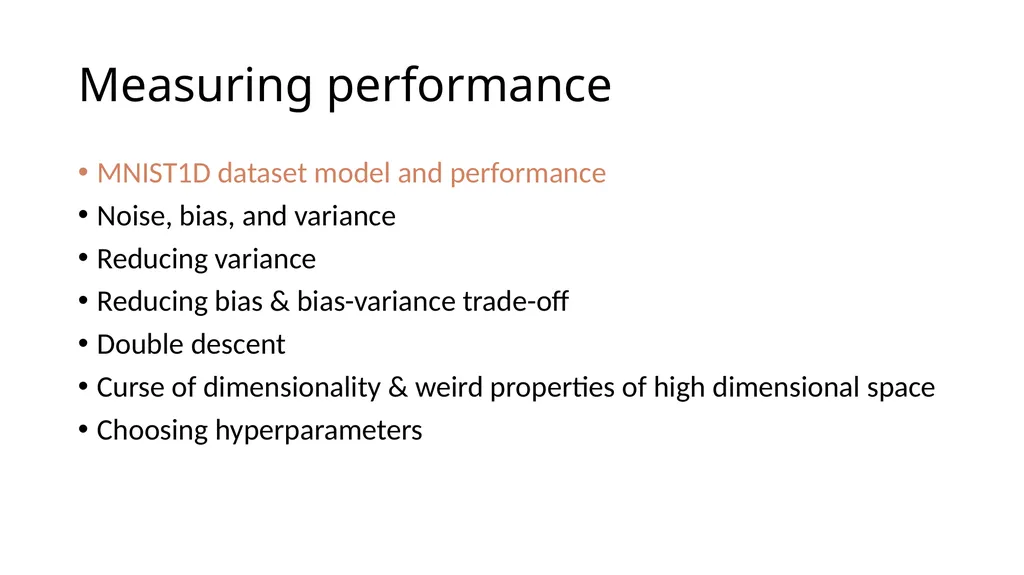
Measuring performance MNIST1D dataset model and performance
Noise, bias, and variance
Reducing variance
Reducing bias & bias-variance trade-off
Double descent
Curse of dimensionality & weird properties of high dimensional space
Choosing hyperparameters<br>
10
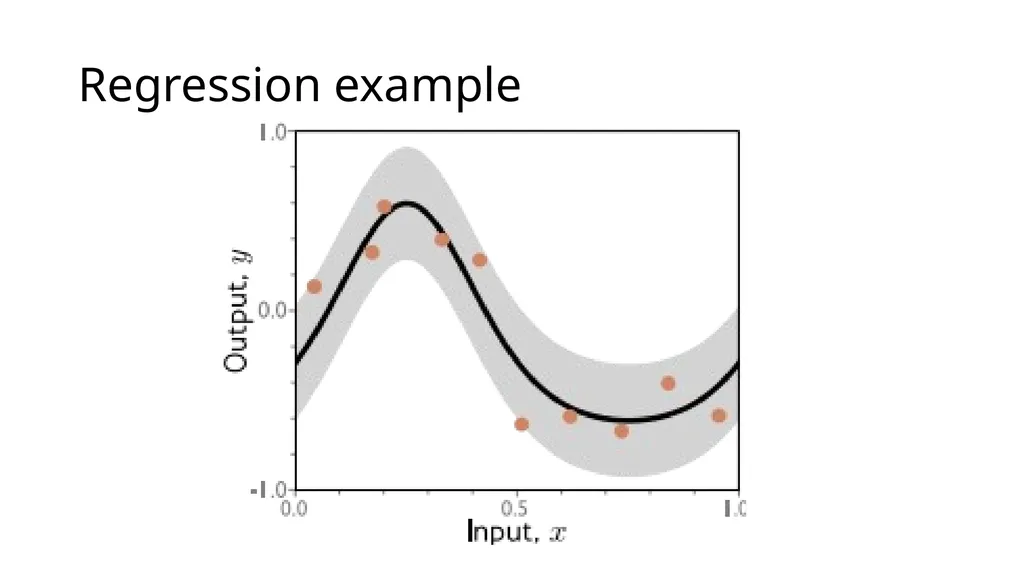
Regression example<br>
11
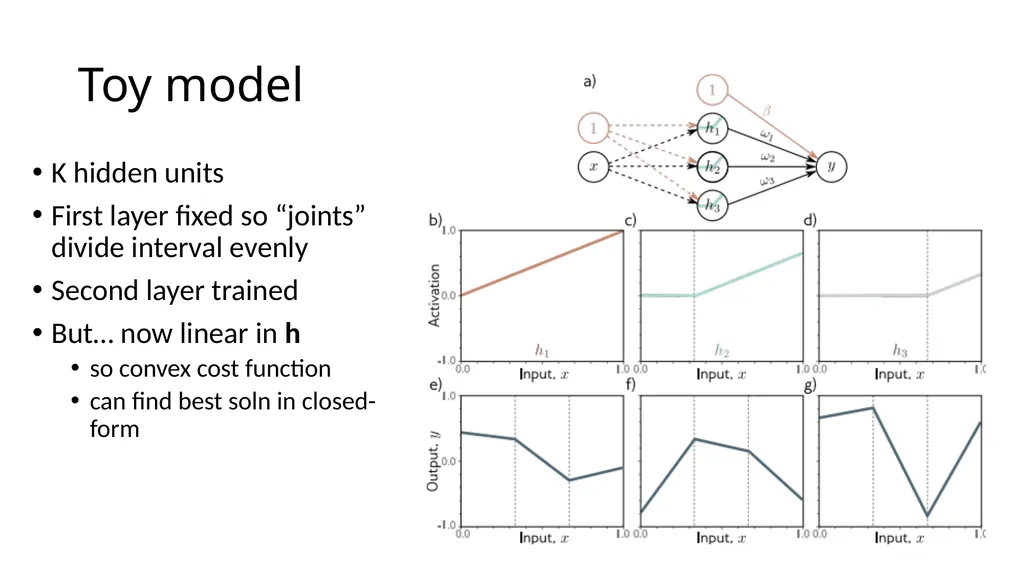
Toy model K hidden units
First layer fixed so “joints” divide interval evenly
Second layer trained
But… now linear in h
so convex cost function
can find best soln in closed-form<br>
12
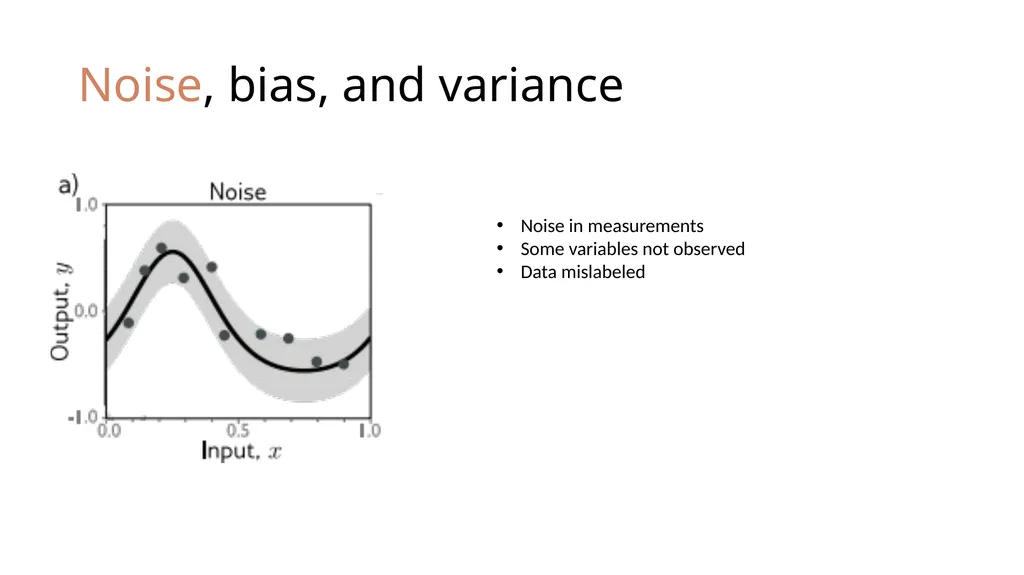
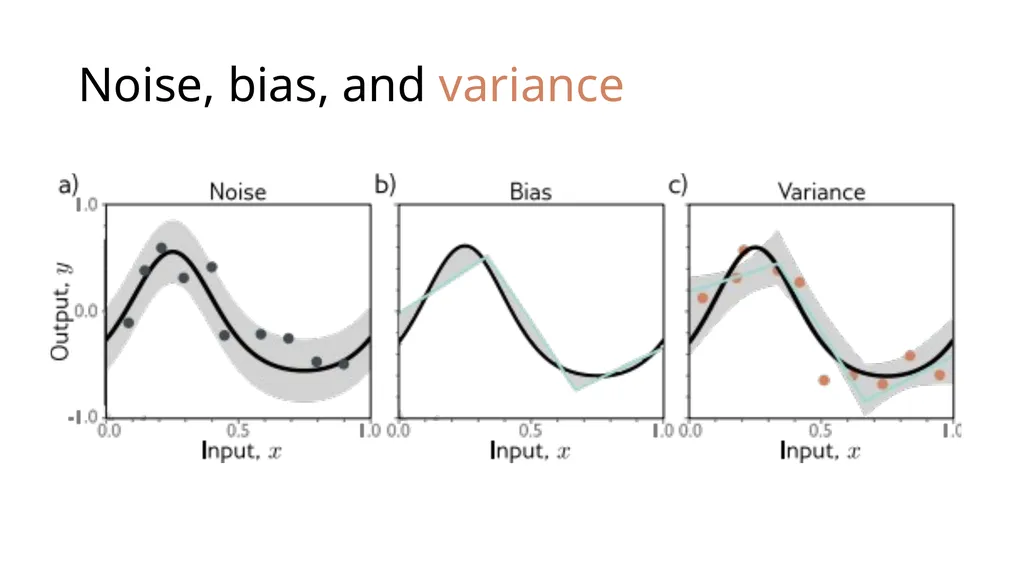
Noise, bias, and variance Noise in measurements
Some variables not observed
Data mislabeled<br>
13
Noise, bias, and variance<br>
14
Noise, bias, and variance<br>
15
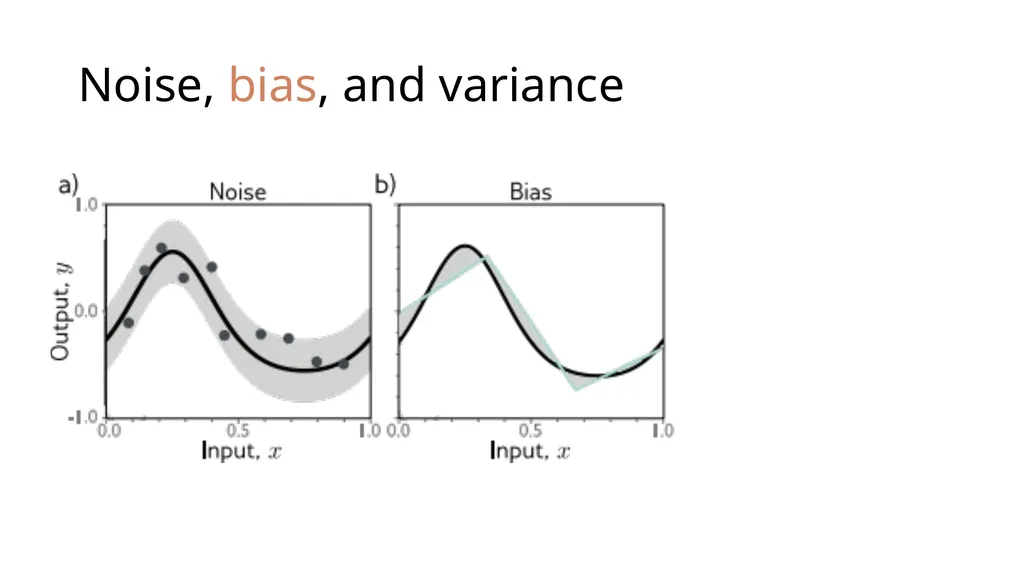
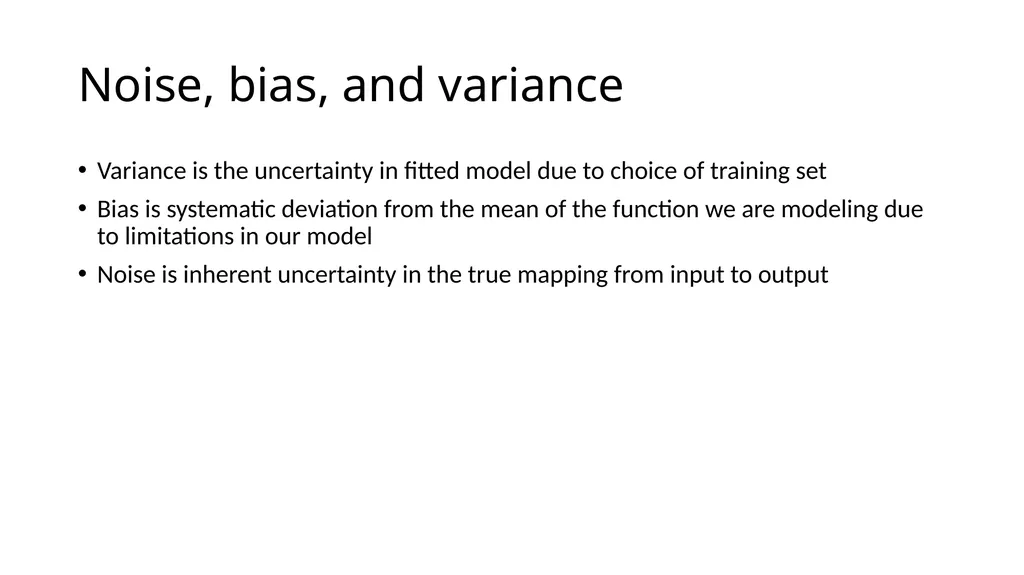
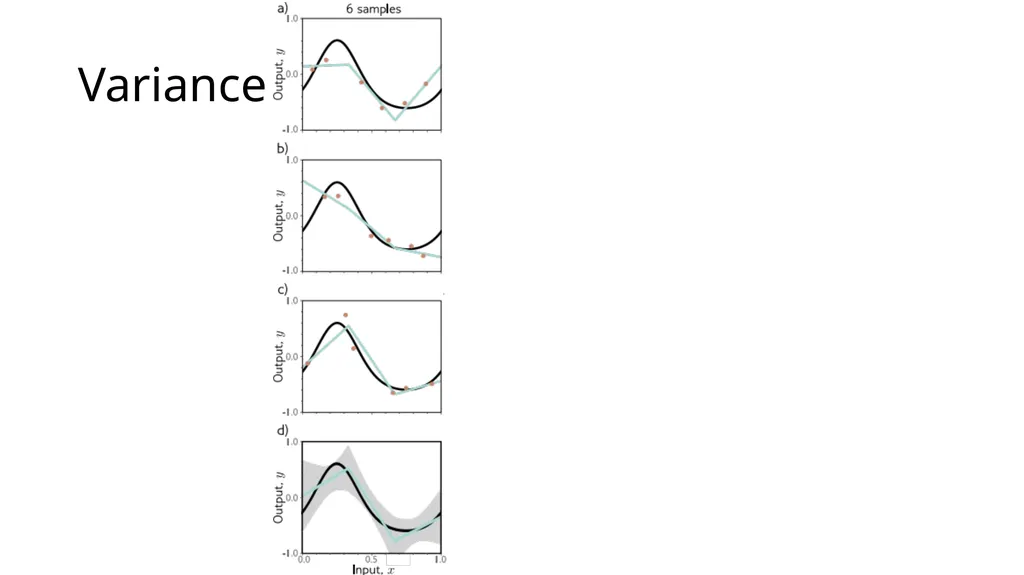
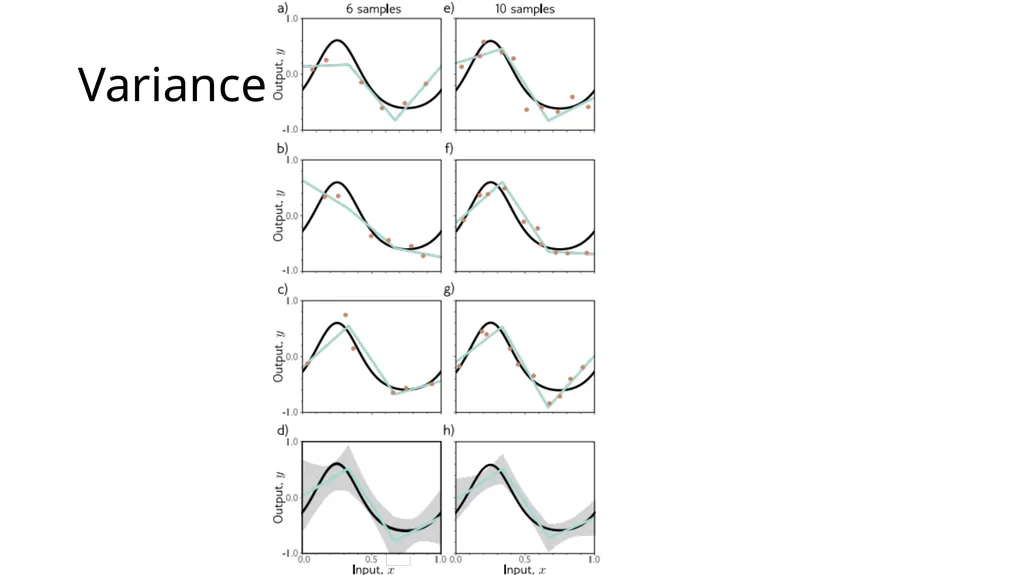
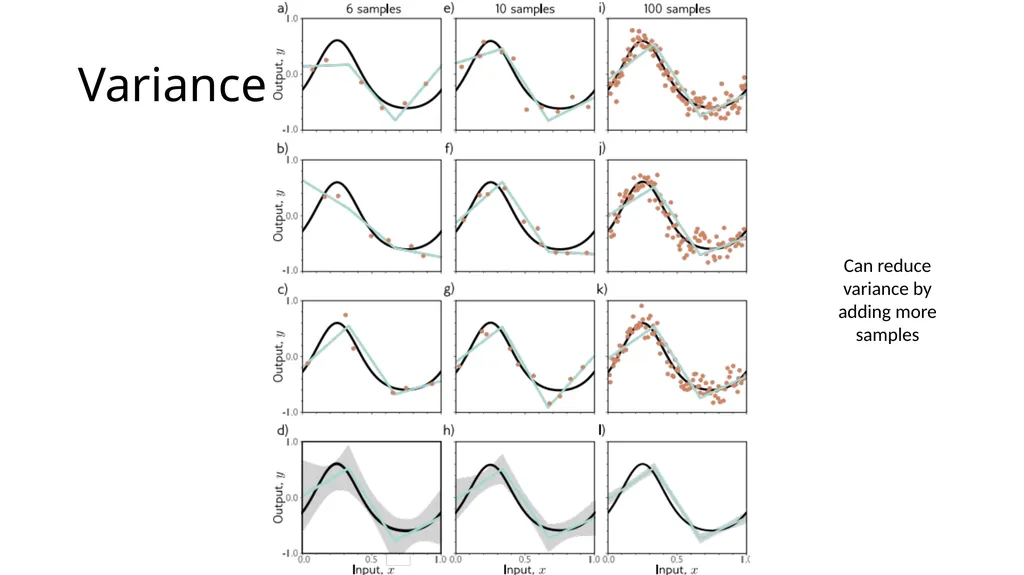
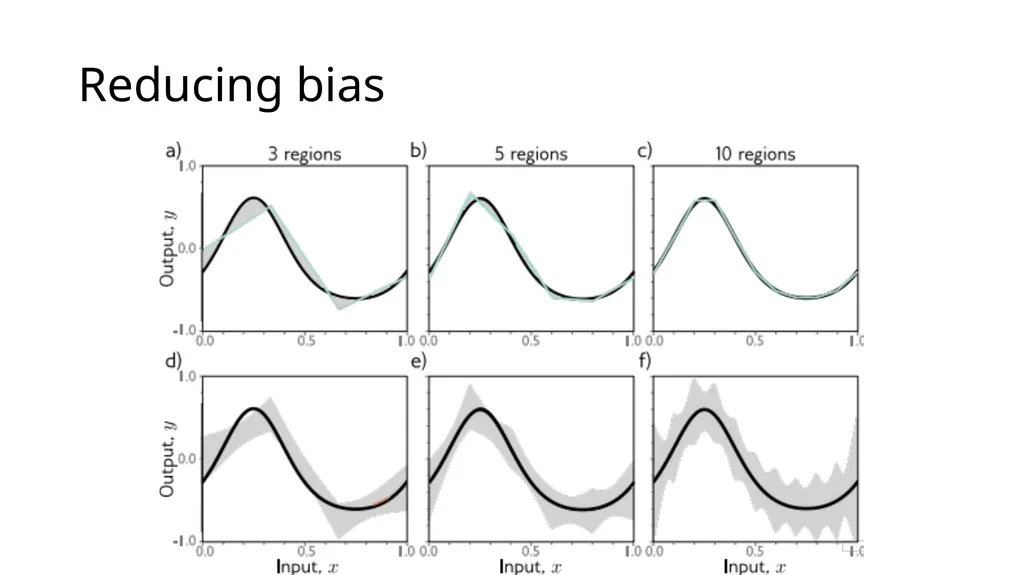
Noise, bias, and variance Variance is the uncertainty in fitted model due to choice of training set
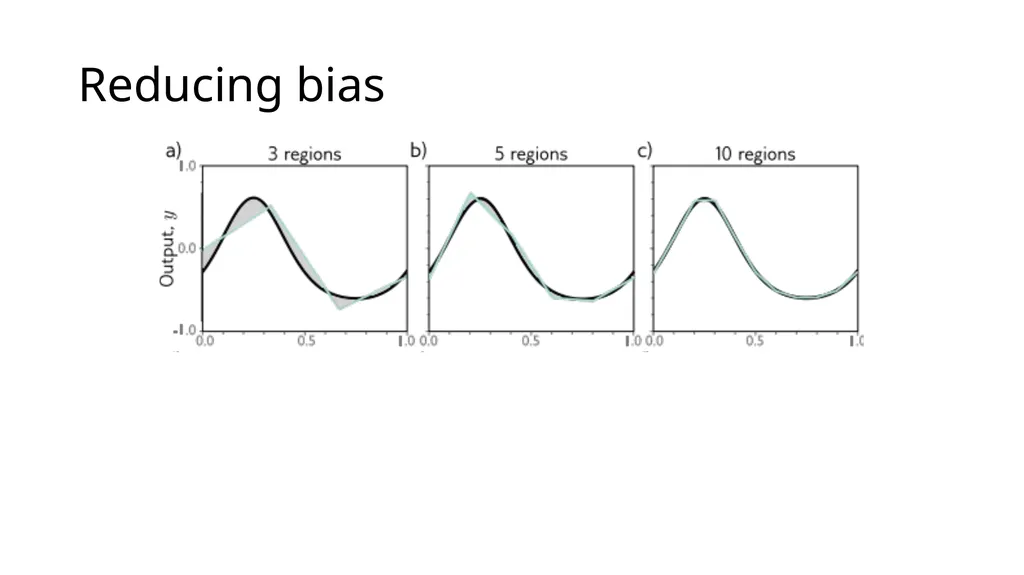
Bias is systematic deviation from the mean of the function we are modeling due to limitations in our model
Noise is inherent uncertainty in the true mapping from input to output<br>
16
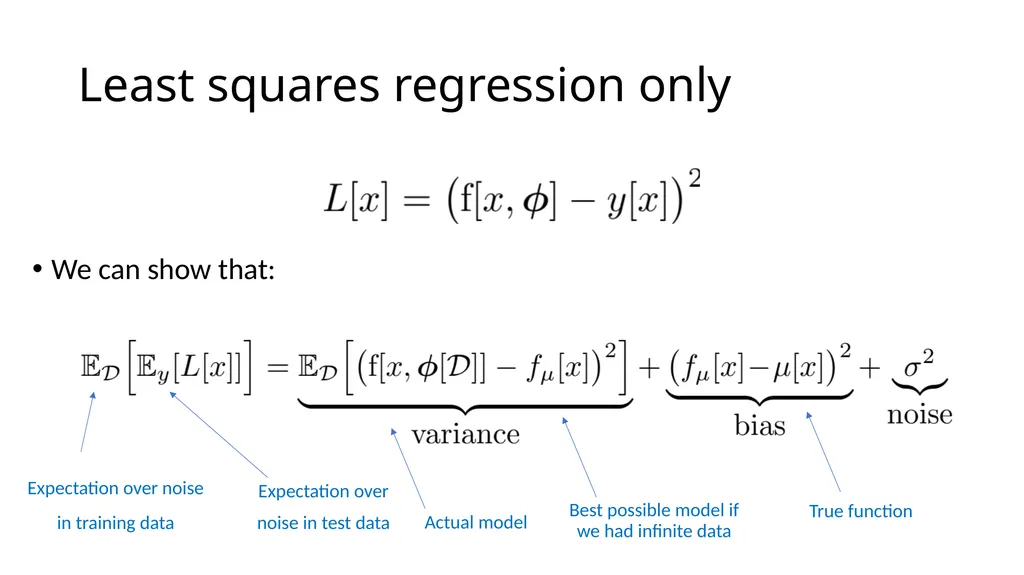
Least squares regression only We can show that: Expectation over noise in training data Expectation over
noise in test data Best possible model if we had infinite data Actual model True function<br>
17
Measuring performance MNIST1D dataset model and performance
Noise, bias, and variance
Reducing variance
Reducing bias & bias-variance trade-off
Double descent
Curse of dimensionality & weird properties of high dimensional space
Choosing hyperparameters<br>
20
Variance Can reduce variance by adding more samples<br>
21
Measuring performance MNIST1D dataset model and performance
Noise, bias, and variance
Reducing variance
Reducing bias & bias-variance trade-off
Double descent
Curse of dimensionality & weird properties of high dimensional space
Choosing hyperparameters<br>
24
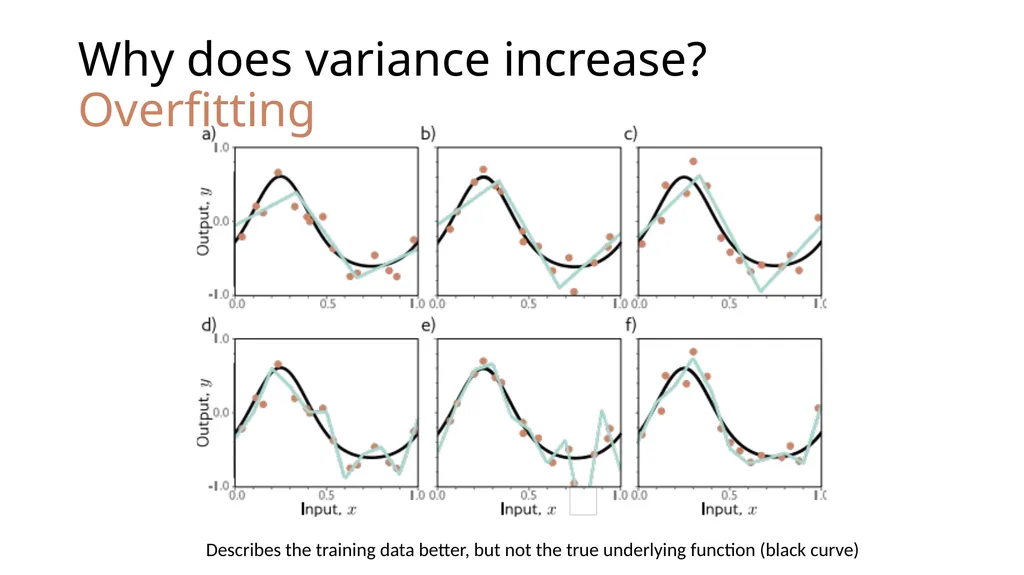
Why does variance increase? Overfitting Describes the training data better, but not the true underlying function (black curve)<br>
25
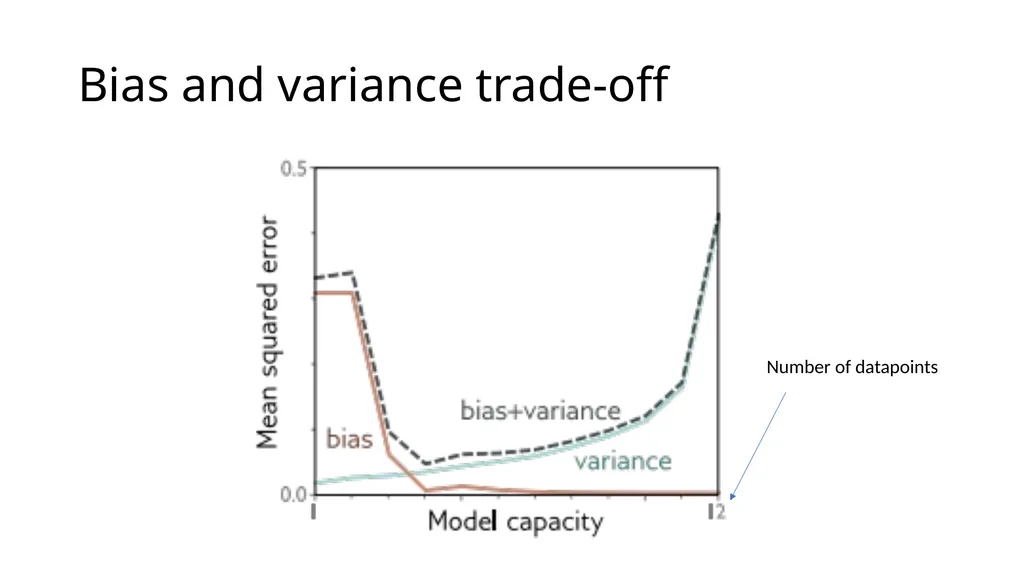
Bias and variance trade-off Number of datapoints<br>
26
Measuring performance MNIST1D dataset model and performance
Noise, bias, and variance
Reducing variance
Reducing bias & bias-variance trade-off
Double descent
Curse of dimensionality & weird properties of high dimensional space
Choosing hyperparameters<br>
27
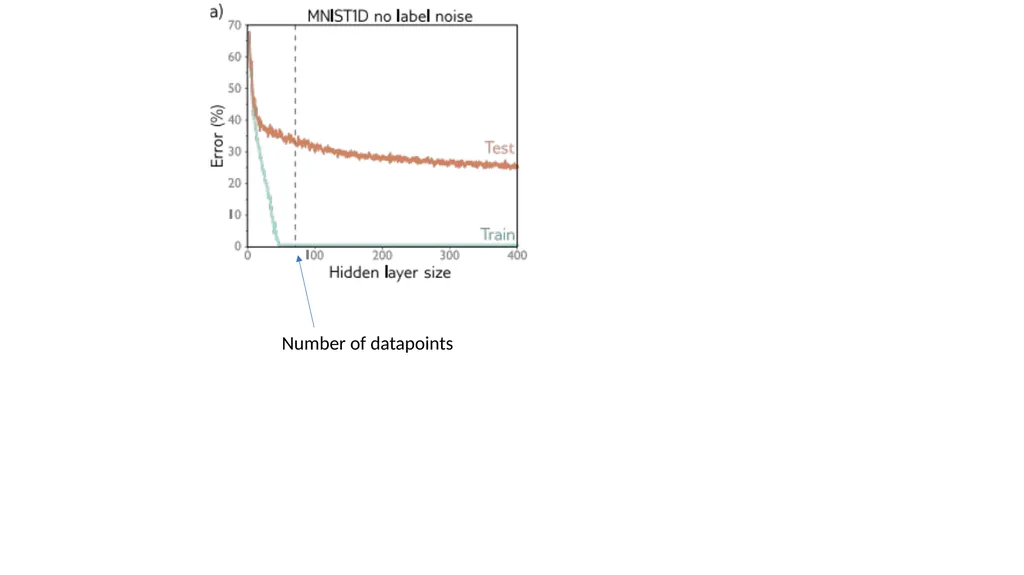
Number of datapoints<br>
29
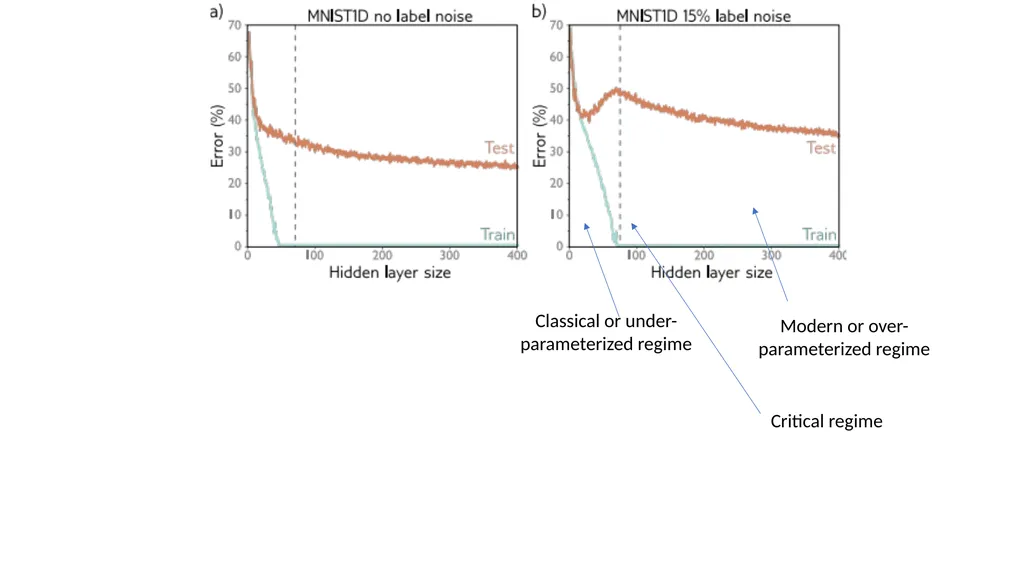
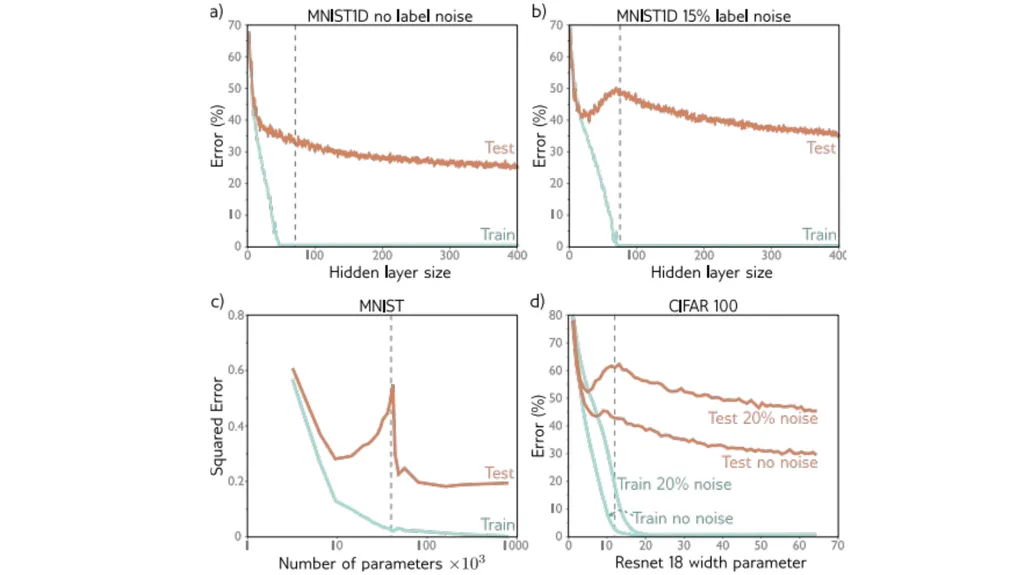
Classical or under-parameterized regime Modern or over-parameterized regime Critical regime<br>
30
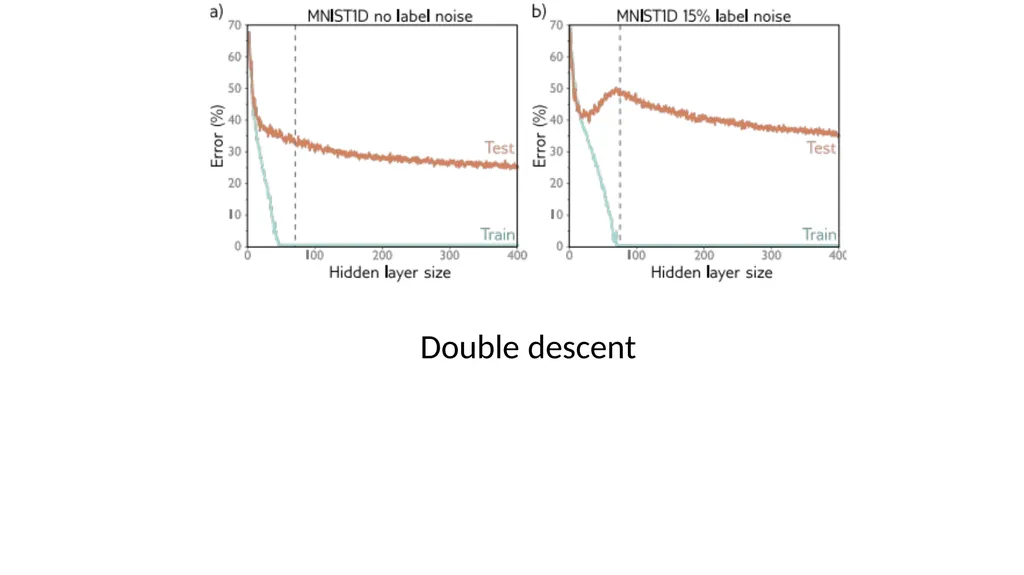
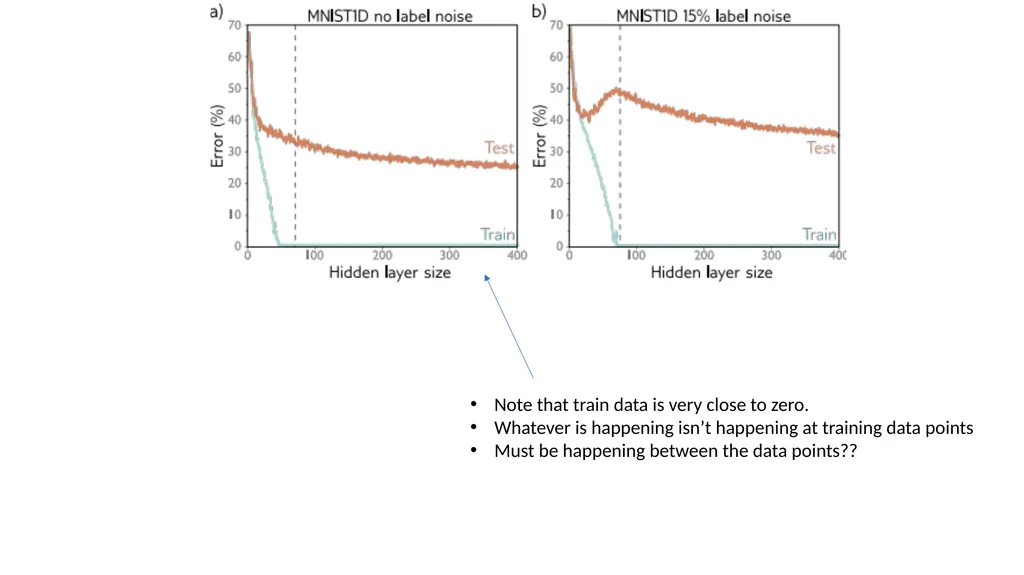
Note that train data is very close to zero.
Whatever is happening isn’t happening at training data points
Must be happening between the data points??<br>
31
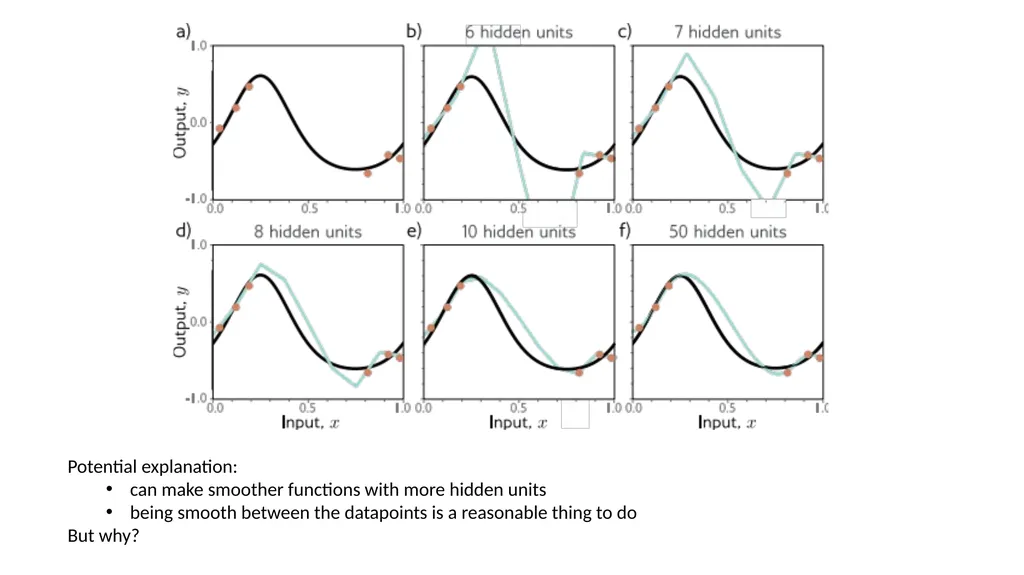
Potential explanation:
can make smoother functions with more hidden units
being smooth between the datapoints is a reasonable thing to do
But why?<br>
32
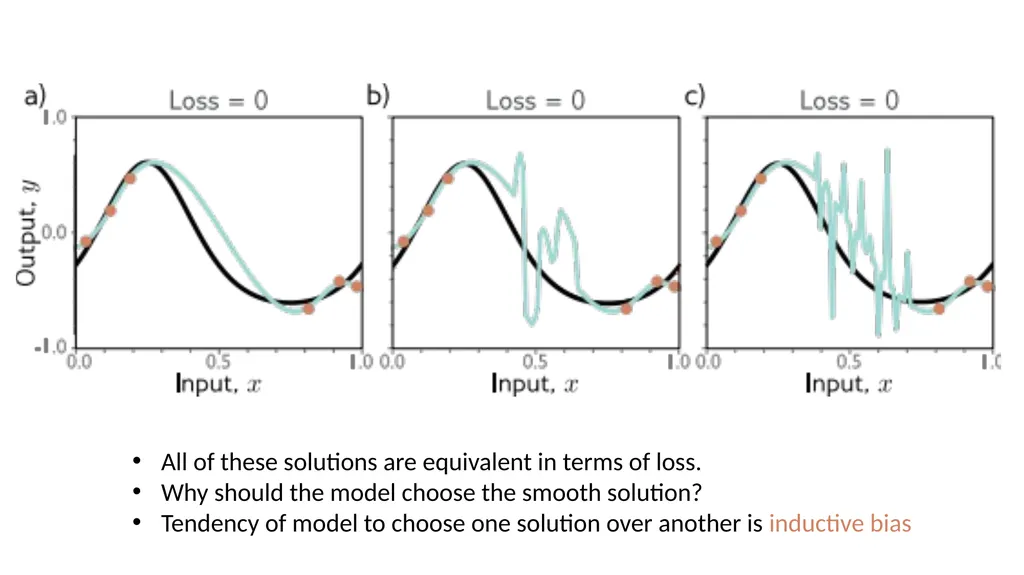
All of these solutions are equivalent in terms of loss.
Why should the model choose the smooth solution?
Tendency of model to choose one solution over another is inductive bias<br>
33
Measuring performance MNIST1D dataset model and performance
Noise, bias, and variance
Reducing variance
Reducing bias & bias-variance trade-off
Double descent
Curse of dimensionality & weird properties of high dimensional space
Choosing hyperparameters<br>
34
Curse of dimensionality<br>
35
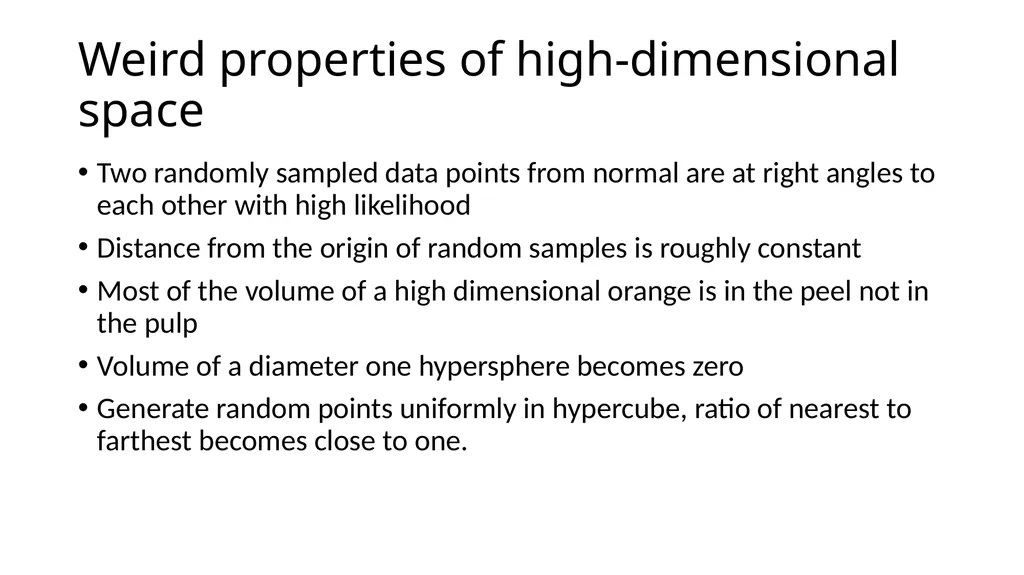
Weird properties of high-dimensional space Two randomly sampled data points from normal are at right angles to each other with high likelihood
Distance from the origin of random samples is roughly constant<br>
36
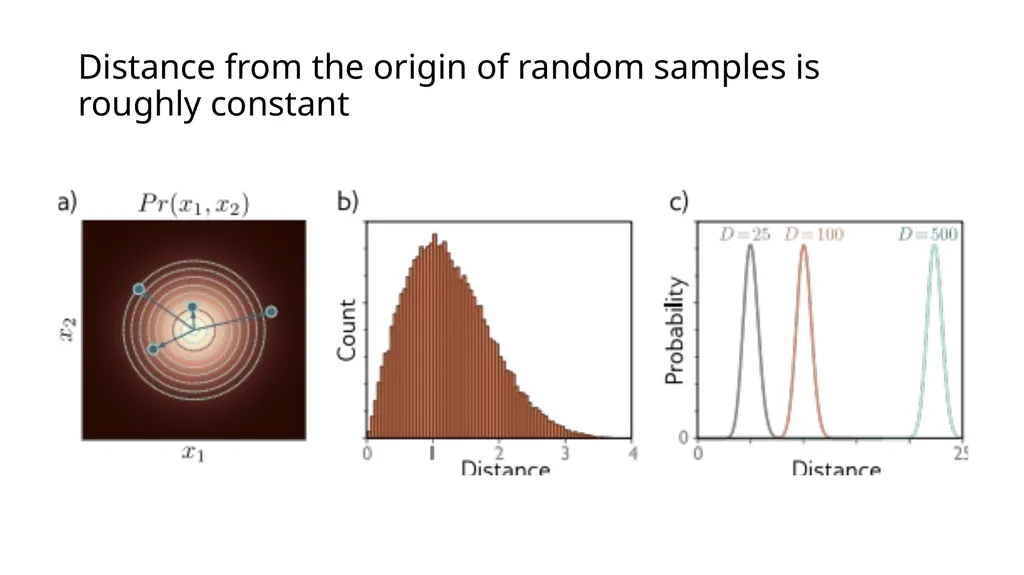
Distance from the origin of random samples is roughly constant<br>
37
Weird properties of high-dimensional space Two randomly sampled data points from normal are at right angles to each other with high likelihood
Distance from the origin of random samples is roughly constant
Most of the volume of a high dimensional orange is in the peel not in the pulp
Volume of a diameter one hypersphere becomes zero
Generate random points uniformly in hypercube, ratio of nearest to farthest becomes close to one.<br>
38
Measuring performance MNIST1D dataset model and performance
Noise, bias, and variance
Reducing variance
Reducing bias & bias-variance trade-off
Double descent
Curse of dimensionality & weird properties of high dimensional space
Choosing hyperparameters<br>
39
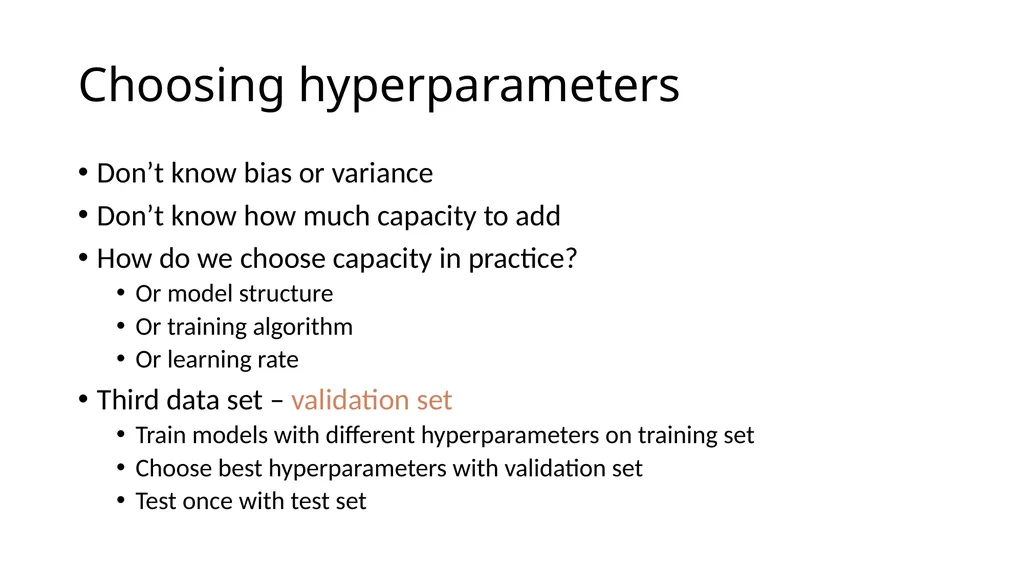
Choosing hyperparameters Don’t know bias or variance
Don’t know how much capacity to add
How do we choose capacity in practice?
Or model structure
Or training algorithm
Or learning rate
Third data set – validation set
Train models with different hyperparameters on training set
Choose best hyperparameters with validation set
Test once with test set<br>