
Coalition Communication Plans, Creative












Description: Coalition Communication Plans, Creative Partnerships Sustainability of Effort Joel Hoepfner, B.S., CPC Building Systems of Prevention Align stakeholders, prevention efforts, ROSC and Integrated Care opportunities Identify opportunities to
Related Topics
Download Presentation
"Coalition Communication Plans, Creative" is the property of its rightful owner. Permission is granted to download and print the materials on this website for personal, non-commercial use only, and to display it on your personal computer provided you do not modify the materials and that you retain all copyright notices contained in the materials. By downloading content from our website, you accept the terms of this agreement.
Presentation Transcript
slide1. Coalition Communication Plans, Creative Partnerships & Sustainability of Effort Joel Hoepfner, B.S., CPC<br>
slide2. Building Systems of Prevention Align stakeholders, prevention efforts, ROSC and Integrated Care opportunities
Identify opportunities to expand and braid funding and resources
Reduced duplication of strategies and services
Advocacy opportunities
Stigma Reduction involving Behavioral Health (SUD & MH)
Federal direction = Prevention Prepared Communities<br>
slide3. Prevention Prepared Communities (PPCs) Creating Communities (or systems) where individuals, families, schools, faith-based organizations, and workplaces take action to promote emotional health and reduce the likelihood of mental illness, substance abuse, and suicide. (SAMHSA)<br>
slide4. Spectrum of Prevention<br>
slide5. Communication Plans<br>
slide6. Do You Have a Communication Plan? Communication Plans Include:
Objectives / Intended Outcomes
Audiences (Providers, Youth, Parents, At-Risk Populations, Businesses, General Public)
Types of Messaging (Access to Services, Resources, Data, Publications, Prevention Tips, etc.)
Delivery Methods / Venues / Mechanisms (Emails, Newsletters, PSAs, Press Releases, Billboards, Facebook, TikTok, media outlets, etc.)
Frequency and Duration
Responsible Parties<br>
slide7. Communication Plan Objectives What would you like to accomplish?
Increased referrals to services / community education / training opportunities
Increased awareness of problem or issue
Increased awareness of community resources or prevention tips
Increase in potential partnerships / coalition membership
What types of messages do you share?
What is your go to delivery method?<br>
slide8. What is a Brand? What is Brand Identity and Why is it Important? A brand is a feature or set of features that distinguish one organization or entity from another. A brand is typically comprised of a name, tagline, logo or symbol, design, brand voice, and more.
A brand identity is made up of what your brand says, what your values are, how you communicate your product, and what you want people to feel when they interact with your company. Essentially, your brand identity is the personality of your business or coalition and a promise to your customers.<br>
slide9. Saturation of Message Brand saturation is a state that is achieved when an agency or company is so effective at generating awareness and conversation around a particular issue or brand, that nearly every person in the target area or market knows, follows, or is engaged by the issue or brand.
Do you know your Brand? What are you known for locally?
Saturation of message is key!<br>
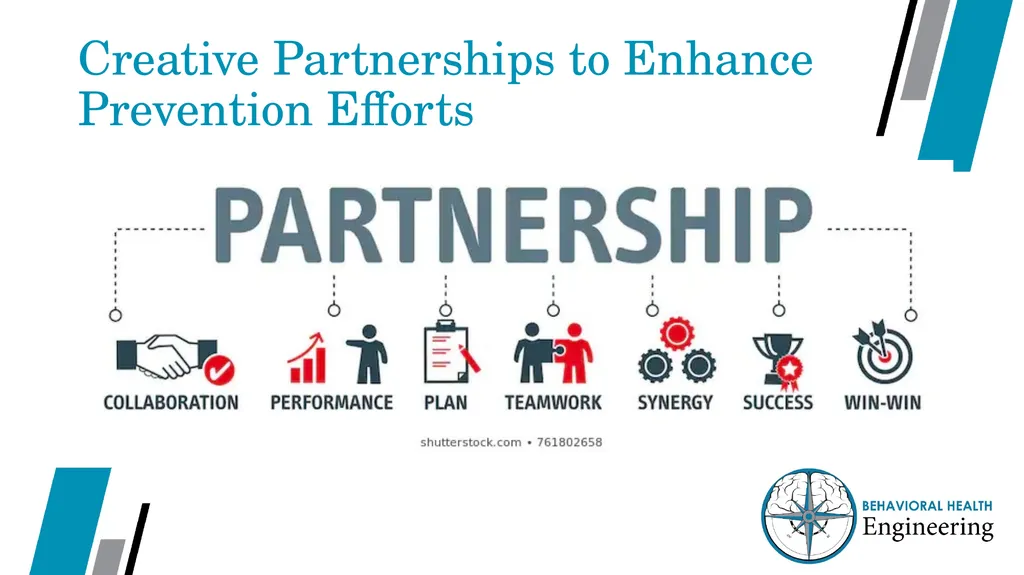
slide10. Creative Partnerships to Enhance Prevention Efforts<br>
slide11. PARTNERSHIPS: Unlimited / Endless / Infinite / Untapped Potential
Act as Change Agents (to drive system change)
Enhance potential funding opportunities, resources, staffing, co-sponsorship and co-branding, promotion of effort and initiatives, etc.
Can include business, industry, hospitals, faith based, regional and statewide associations, coalitions & task forces, boards and health and human service agencies<br>
slide12. Partnerships: Where to Begin? Potential Partners List
1. List potential partner organizations
2. Identify resources they might provide?
3. Ask what’s in it for them? Why they might partner?
4. Who do we know at this organization?
5. Who will contact them?
6. Identify Contact information
7. Know and practice your “Pitch”<br>
slide13. Levels of Collaboration Potential community partners will have varying levels of interest and/or availability to participate in prevention efforts. Some may be willing to help out with specific tasks, while others may be willing to take on leadership roles.
Some participation options for prevention stakeholders are included on the next slide.<br>
slide14. Levels of Collaboration Participation Options
No involvement. Stakeholders engage in separate activities, strategies, and policies. (For example, “You do your thing, we’ll do ours.”)
Networking. Stakeholders share what they are doing during interagency meetings. They talk about community issues in which they all have a stake or communicate about existing programs, activities, or services. (For example, “Let’s talk and share information.”)<br>
slide15. Levels of Collaboration Participation Options (Continued)
Cooperation. Stakeholders publicize one another’s programs in agency newsletters, write letters in support of one another’s grant applications, co-sponsor trainings or professional development activities, and/or exchange such resources as technology expertise or meeting space. (For example, “I’ll support your program, and you’ll support mine.”)
Coordination. Stakeholders serve together on event planning committees and community boards or implement programs and services together. (For example, “Let’s partner on an event.”)<br>
slide16. Levels of Collaboration Participation Options (Continued)
Collaboration. Stakeholders create formal agreements (e.g., memoranda of understanding or contracts). They develop common data collection systems; partner on joint fundraising efforts; pool fiscal or human resources; and create common workforce training systems. (For example, “Let’s work together on a comprehensive plan to address the issue. After all, our missions overlap.”)<br>
slide17. Brainstorm New Partnerships (Activity) In small or as a large group, please compile a list of new potential partners in your area or across the state that can enhance your efforts and provide a mutually exclusive benefit. (10 minutes)<br>
slide18. SOCIAL MEDIA - Amplify Message & Enhance Partnerships Our Facebook Toolkit has been shared and utilized across the state and provides ready made behavioral health prevention related posts and social media content for our partners, networks and community to share. The interest, utility and promotion of this tool continues to grow and expand. Download available at http://ceicmh.org/about-us/publications & scroll down to Facebook Toolkit<br>
slide19. Facebook Toolkit - Purpose The intent is threefold:
1.) Increase awareness of behavioral health issues (SUD & MH)
2.) Promote local resources and community education & training opportunities
3.) Reduce stigma around behavioral health issues
Provides the EASY button for our community networks!<br>
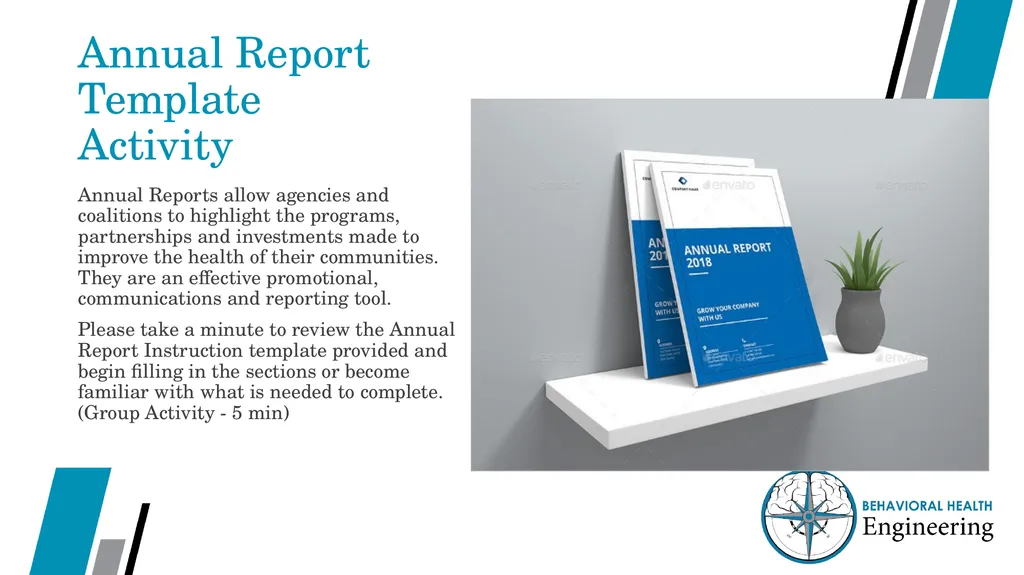
slide20. Annual Report Template Activity Annual Reports allow agencies and coalitions to highlight the programs, partnerships and investments made to improve the health of their communities. They are an effective promotional, communications and reporting tool.
Please take a minute to review the Annual Report Instruction template provided and begin filling in the sections or become familiar with what is needed to complete. (Group Activity - 5 min)<br>
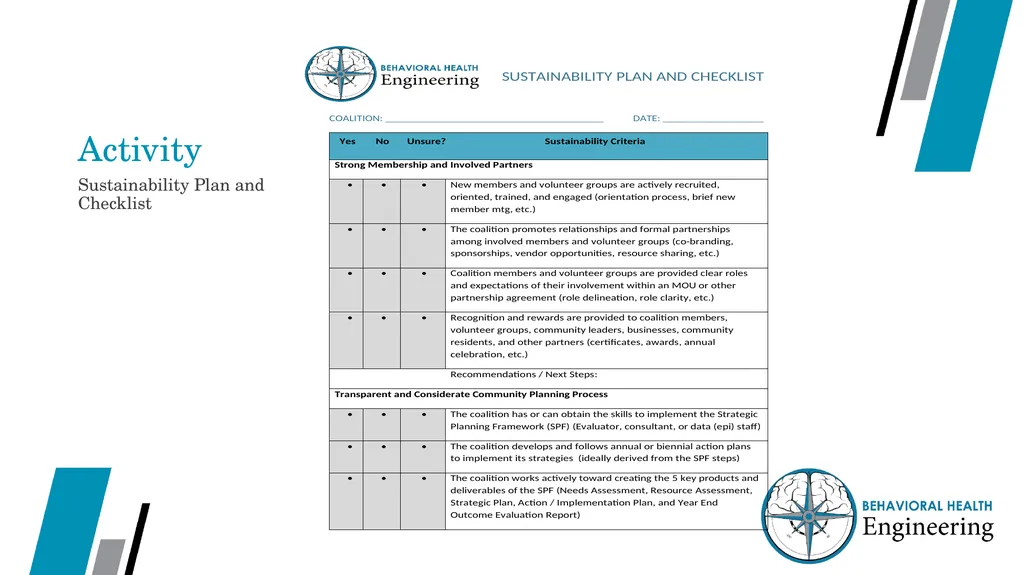
slide22. Sustainability Checklist Individually or in small groups, please work through the Sustainability Checklist and identify recommendations and next steps within each section, 3 priorities going forward and any additional considerations for discussion. (Small Group Activity – 10 minutes)<br>
slide23. Activity Sustainability Plan and Checklist<br>
slide25. Final Thoughts Our collective interest should be:
To build and sustain county systems of SUD/BH prevention that represent and reflect prevention prepared communities
One of SAMHSA’s major goals is to create prevention prepared communities (systems) where individuals, families, schools, workplaces, and the communities in which they live take action to promote emotional health and wellbeing, prevent and reduce mental illness, substance abuse, and suicide across the lifespan.
To also be creative, action oriented, partnership driven, effective and intentional in our work with community coalitions<br>
slide26. Contact Information Joel Hoepfner, CPC
Prevention & Outreach Coordinator
Community Mental Health Authority of Clinton, Eaton, Ingham
812 East Jolly Rd.
Lansing, MI 48911
Office (517) 346-8465 or cell (989) 859-7490
hoepfner@ceicmh.org or joelhoepfner14@gmail.com<br>
slide2. Building Systems of Prevention Align stakeholders, prevention efforts, ROSC and Integrated Care opportunities
Identify opportunities to expand and braid funding and resources
Reduced duplication of strategies and services
Advocacy opportunities
Stigma Reduction involving Behavioral Health (SUD & MH)
Federal direction = Prevention Prepared Communities<br>
slide3. Prevention Prepared Communities (PPCs) Creating Communities (or systems) where individuals, families, schools, faith-based organizations, and workplaces take action to promote emotional health and reduce the likelihood of mental illness, substance abuse, and suicide. (SAMHSA)<br>
slide4. Spectrum of Prevention<br>
slide5. Communication Plans<br>
slide6. Do You Have a Communication Plan? Communication Plans Include:
Objectives / Intended Outcomes
Audiences (Providers, Youth, Parents, At-Risk Populations, Businesses, General Public)
Types of Messaging (Access to Services, Resources, Data, Publications, Prevention Tips, etc.)
Delivery Methods / Venues / Mechanisms (Emails, Newsletters, PSAs, Press Releases, Billboards, Facebook, TikTok, media outlets, etc.)
Frequency and Duration
Responsible Parties<br>
slide7. Communication Plan Objectives What would you like to accomplish?
Increased referrals to services / community education / training opportunities
Increased awareness of problem or issue
Increased awareness of community resources or prevention tips
Increase in potential partnerships / coalition membership
What types of messages do you share?
What is your go to delivery method?<br>
slide8. What is a Brand? What is Brand Identity and Why is it Important? A brand is a feature or set of features that distinguish one organization or entity from another. A brand is typically comprised of a name, tagline, logo or symbol, design, brand voice, and more.
A brand identity is made up of what your brand says, what your values are, how you communicate your product, and what you want people to feel when they interact with your company. Essentially, your brand identity is the personality of your business or coalition and a promise to your customers.<br>
slide9. Saturation of Message Brand saturation is a state that is achieved when an agency or company is so effective at generating awareness and conversation around a particular issue or brand, that nearly every person in the target area or market knows, follows, or is engaged by the issue or brand.
Do you know your Brand? What are you known for locally?
Saturation of message is key!<br>
slide10. Creative Partnerships to Enhance Prevention Efforts<br>
slide11. PARTNERSHIPS: Unlimited / Endless / Infinite / Untapped Potential
Act as Change Agents (to drive system change)
Enhance potential funding opportunities, resources, staffing, co-sponsorship and co-branding, promotion of effort and initiatives, etc.
Can include business, industry, hospitals, faith based, regional and statewide associations, coalitions & task forces, boards and health and human service agencies<br>
slide12. Partnerships: Where to Begin? Potential Partners List
1. List potential partner organizations
2. Identify resources they might provide?
3. Ask what’s in it for them? Why they might partner?
4. Who do we know at this organization?
5. Who will contact them?
6. Identify Contact information
7. Know and practice your “Pitch”<br>
slide13. Levels of Collaboration Potential community partners will have varying levels of interest and/or availability to participate in prevention efforts. Some may be willing to help out with specific tasks, while others may be willing to take on leadership roles.
Some participation options for prevention stakeholders are included on the next slide.<br>
slide14. Levels of Collaboration Participation Options
No involvement. Stakeholders engage in separate activities, strategies, and policies. (For example, “You do your thing, we’ll do ours.”)
Networking. Stakeholders share what they are doing during interagency meetings. They talk about community issues in which they all have a stake or communicate about existing programs, activities, or services. (For example, “Let’s talk and share information.”)<br>
slide15. Levels of Collaboration Participation Options (Continued)
Cooperation. Stakeholders publicize one another’s programs in agency newsletters, write letters in support of one another’s grant applications, co-sponsor trainings or professional development activities, and/or exchange such resources as technology expertise or meeting space. (For example, “I’ll support your program, and you’ll support mine.”)
Coordination. Stakeholders serve together on event planning committees and community boards or implement programs and services together. (For example, “Let’s partner on an event.”)<br>
slide16. Levels of Collaboration Participation Options (Continued)
Collaboration. Stakeholders create formal agreements (e.g., memoranda of understanding or contracts). They develop common data collection systems; partner on joint fundraising efforts; pool fiscal or human resources; and create common workforce training systems. (For example, “Let’s work together on a comprehensive plan to address the issue. After all, our missions overlap.”)<br>
slide17. Brainstorm New Partnerships (Activity) In small or as a large group, please compile a list of new potential partners in your area or across the state that can enhance your efforts and provide a mutually exclusive benefit. (10 minutes)<br>
slide18. SOCIAL MEDIA - Amplify Message & Enhance Partnerships Our Facebook Toolkit has been shared and utilized across the state and provides ready made behavioral health prevention related posts and social media content for our partners, networks and community to share. The interest, utility and promotion of this tool continues to grow and expand. Download available at http://ceicmh.org/about-us/publications & scroll down to Facebook Toolkit<br>
slide19. Facebook Toolkit - Purpose The intent is threefold:
1.) Increase awareness of behavioral health issues (SUD & MH)
2.) Promote local resources and community education & training opportunities
3.) Reduce stigma around behavioral health issues
Provides the EASY button for our community networks!<br>
slide20. Annual Report Template Activity Annual Reports allow agencies and coalitions to highlight the programs, partnerships and investments made to improve the health of their communities. They are an effective promotional, communications and reporting tool.
Please take a minute to review the Annual Report Instruction template provided and begin filling in the sections or become familiar with what is needed to complete. (Group Activity - 5 min)<br>
slide22. Sustainability Checklist Individually or in small groups, please work through the Sustainability Checklist and identify recommendations and next steps within each section, 3 priorities going forward and any additional considerations for discussion. (Small Group Activity – 10 minutes)<br>
slide23. Activity Sustainability Plan and Checklist<br>
slide25. Final Thoughts Our collective interest should be:
To build and sustain county systems of SUD/BH prevention that represent and reflect prevention prepared communities
One of SAMHSA’s major goals is to create prevention prepared communities (systems) where individuals, families, schools, workplaces, and the communities in which they live take action to promote emotional health and wellbeing, prevent and reduce mental illness, substance abuse, and suicide across the lifespan.
To also be creative, action oriented, partnership driven, effective and intentional in our work with community coalitions<br>
slide26. Contact Information Joel Hoepfner, CPC
Prevention & Outreach Coordinator
Community Mental Health Authority of Clinton, Eaton, Ingham
812 East Jolly Rd.
Lansing, MI 48911
Office (517) 346-8465 or cell (989) 859-7490
hoepfner@ceicmh.org or joelhoepfner14@gmail.com<br>