
Coding and Billing in Emergency Medicine: The
CS
Published · 52 slides · 0 views
1 / 1







Description
Coding and Billing in Emergency Medicine: The Basics Kimberly Sokol, MD, MS, MACM(c) Kaweah Delta Department of Emergency Medicine Coding and Billing: The Basics Session Objectives By the end of the didactic session, learners will be able
Related Topics
Share
Embed code
Download this presentation From Below
"Coding and Billing in Emergency Medicine: The" is the property of its rightful owner. Permission is granted to download and print the materials on this website for personal, non-commercial use only, and to display it on your personal computer provided you do not modify the materials and that you retain all copyright notices contained in the materials. By downloading content from our website, you accept the terms of this agreement.
Presentation Transcript
01
Coding and Billing in
Emergency Medicine: The Basics Kimberly Sokol, MD, MS, MACM(c)
Kaweah Delta Department of Emergency Medicine<br>
Kaweah Delta Department of Emergency Medicine<br>
02
Coding and Billing: The Basics<br>
03
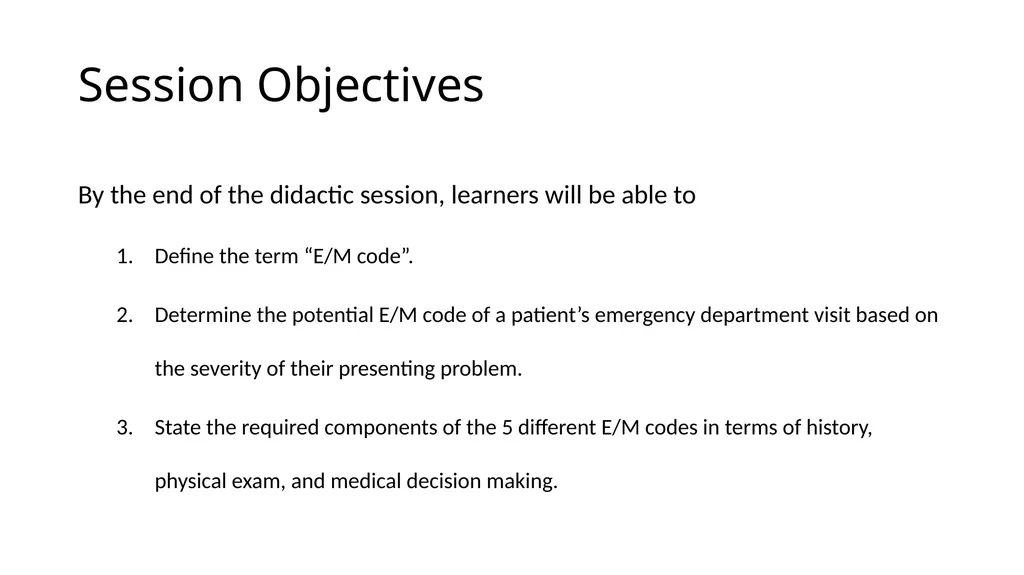
Session Objectives By the end of the didactic session, learners will be able to
Define the term “E/M code”.
Determine the potential E/M code of a patient’s emergency department visit based on the severity of their presenting problem.
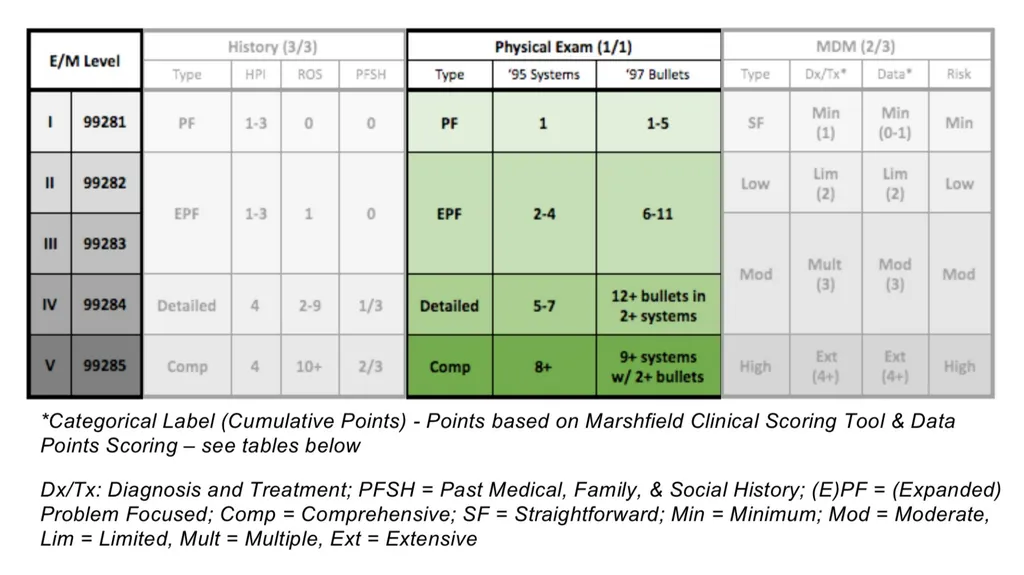
State the required components of the 5 different E/M codes in terms of history, physical exam, and medical decision making.<br>
Define the term “E/M code”.
Determine the potential E/M code of a patient’s emergency department visit based on the severity of their presenting problem.
State the required components of the 5 different E/M codes in terms of history, physical exam, and medical decision making.<br>
04
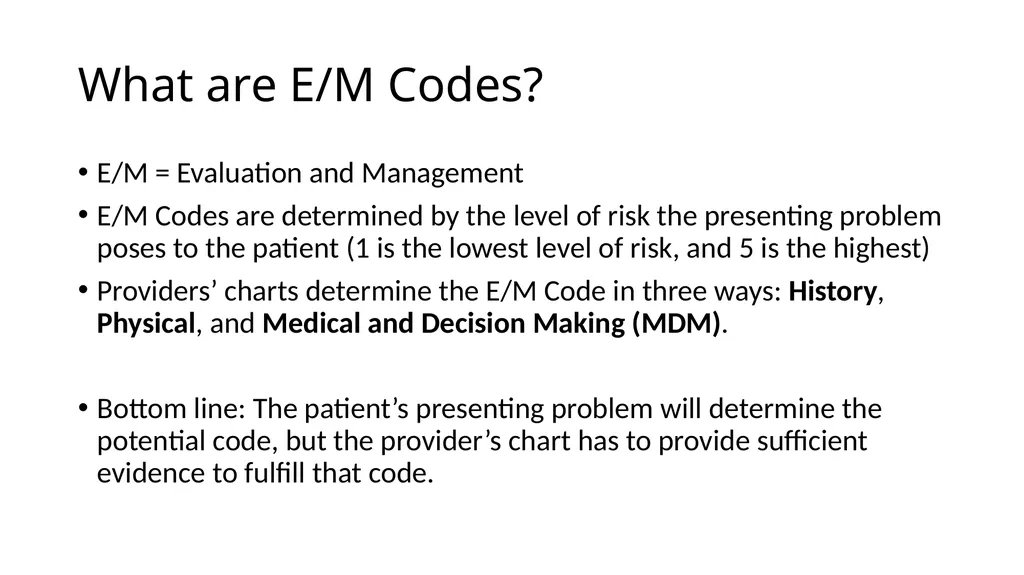
What are E/M Codes? E/M = Evaluation and Management
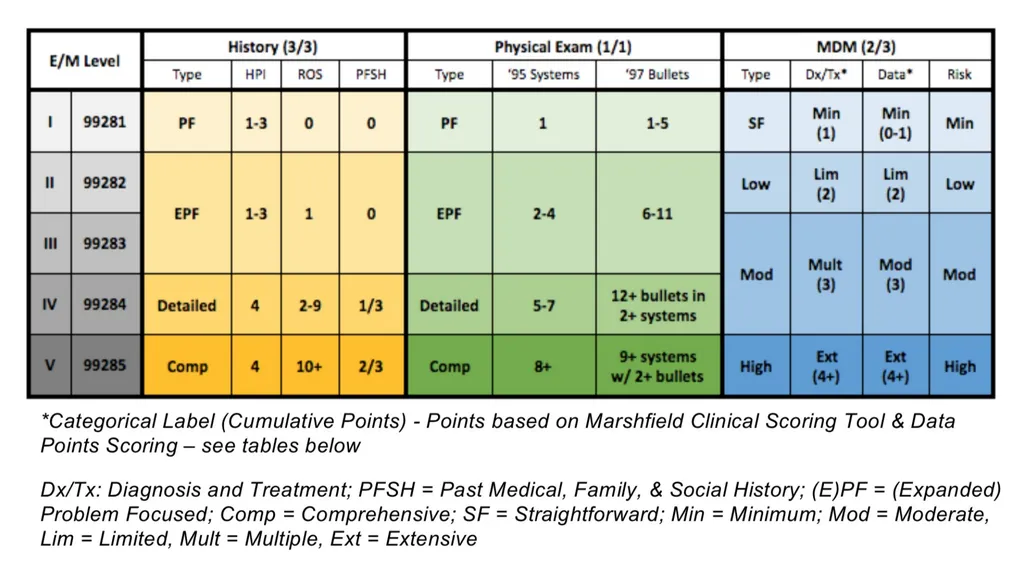
E/M Codes are determined by the level of risk the presenting problem poses to the patient (1 is the lowest level of risk, and 5 is the highest)
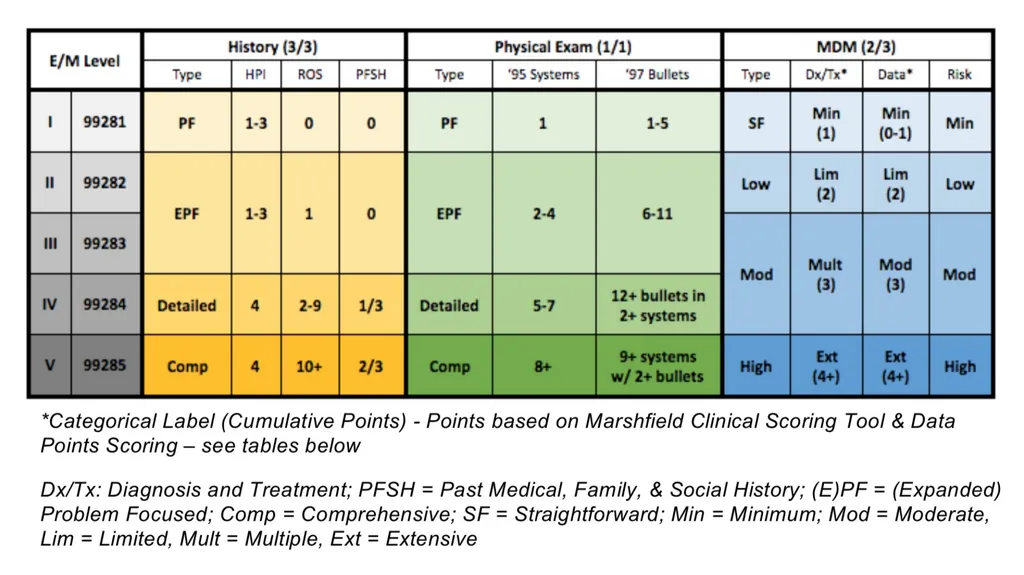
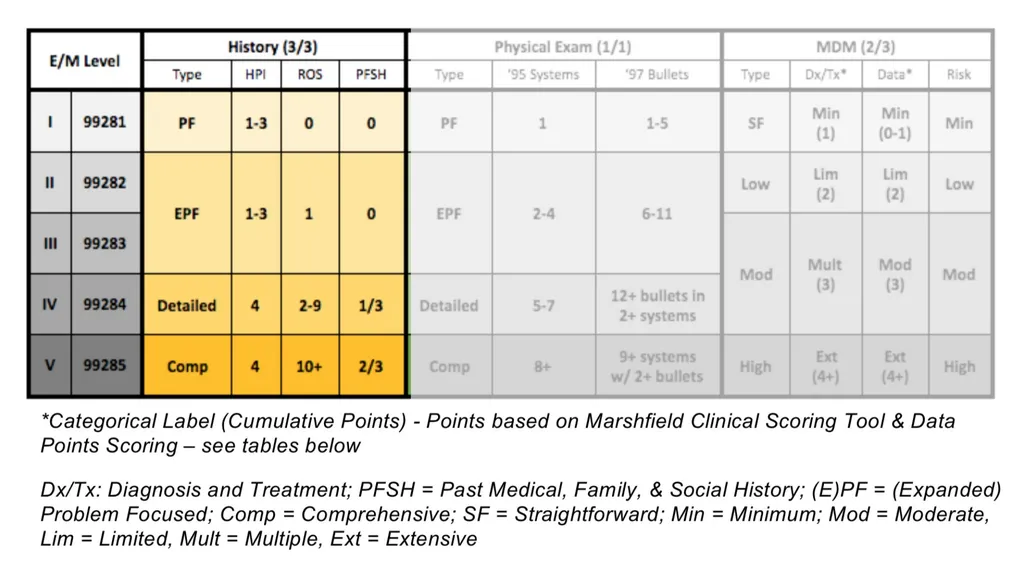
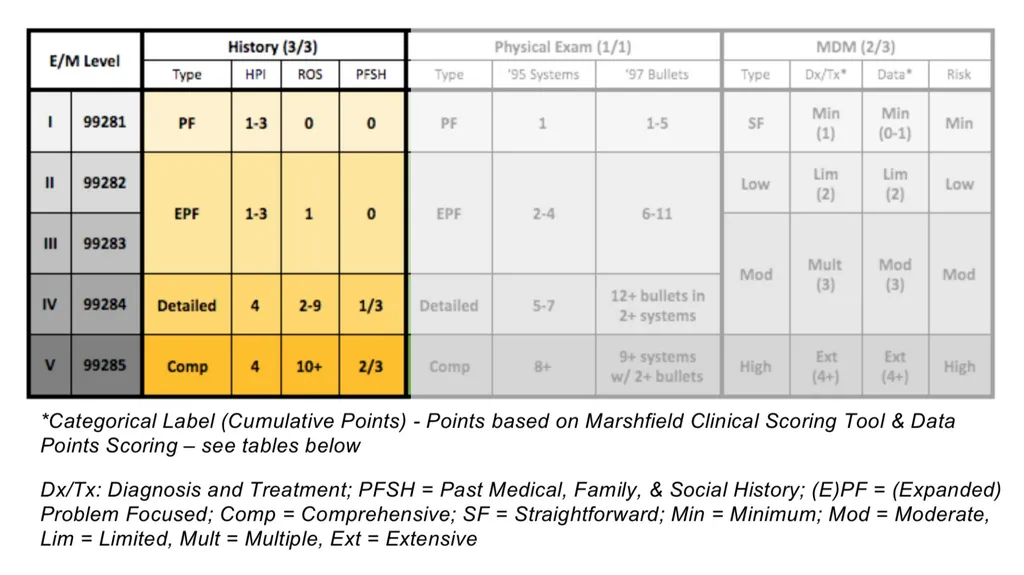
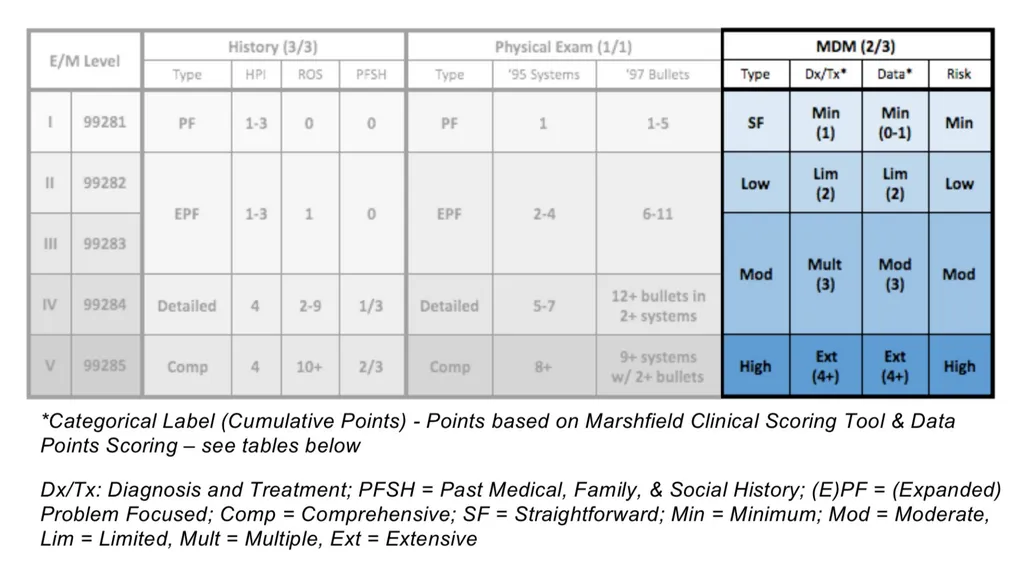
Providers’ charts determine the E/M Code in three ways: History, Physical, and Medical and Decision Making (MDM).
Bottom line: The patient’s presenting problem will determine the potential code, but the provider’s chart has to provide sufficient evidence to fulfill that code.<br>
E/M Codes are determined by the level of risk the presenting problem poses to the patient (1 is the lowest level of risk, and 5 is the highest)
Providers’ charts determine the E/M Code in three ways: History, Physical, and Medical and Decision Making (MDM).
Bottom line: The patient’s presenting problem will determine the potential code, but the provider’s chart has to provide sufficient evidence to fulfill that code.<br>
05
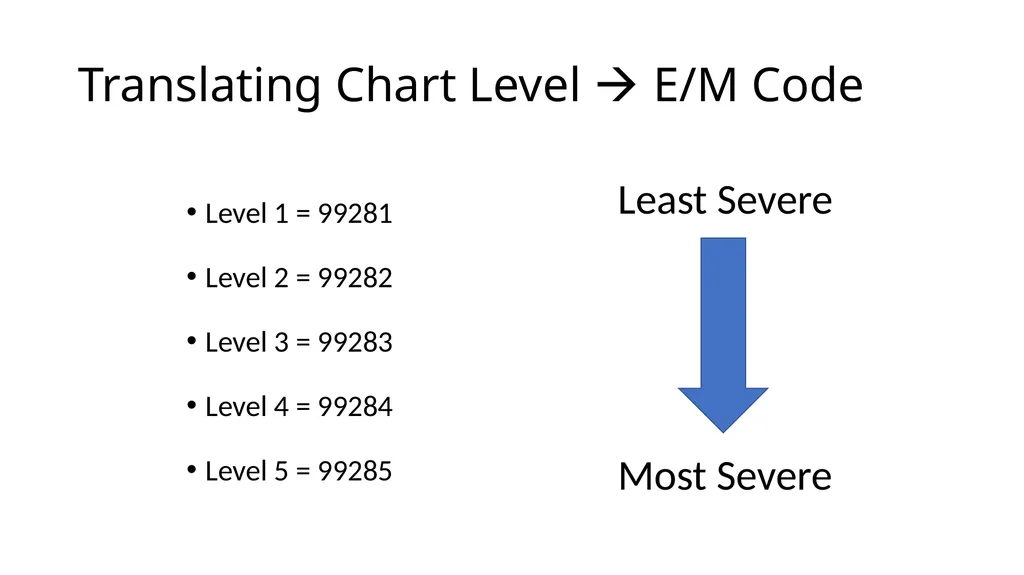
Translating Chart Level E/M Code Level 1 = 99281
Level 2 = 99282
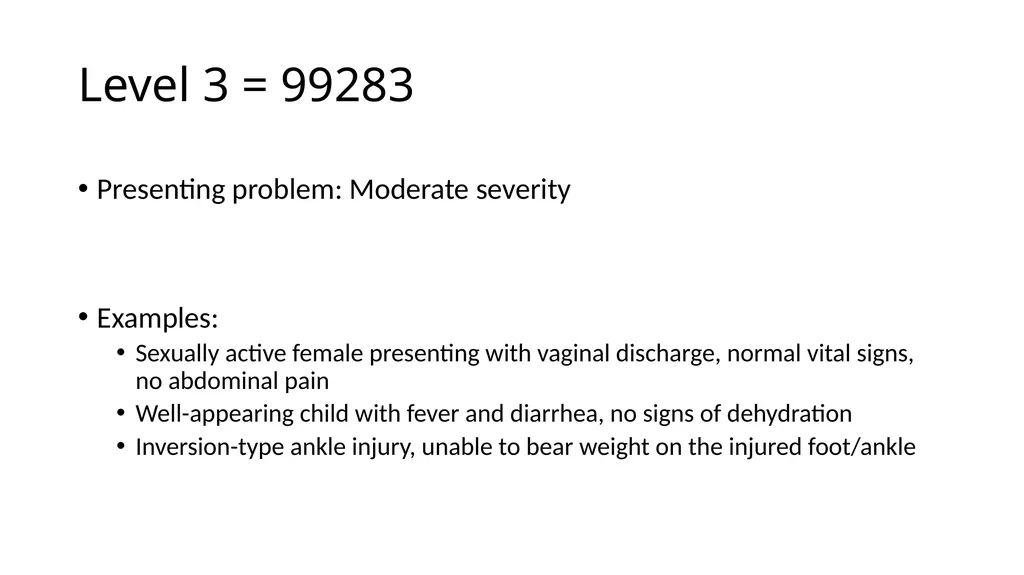
Level 3 = 99283
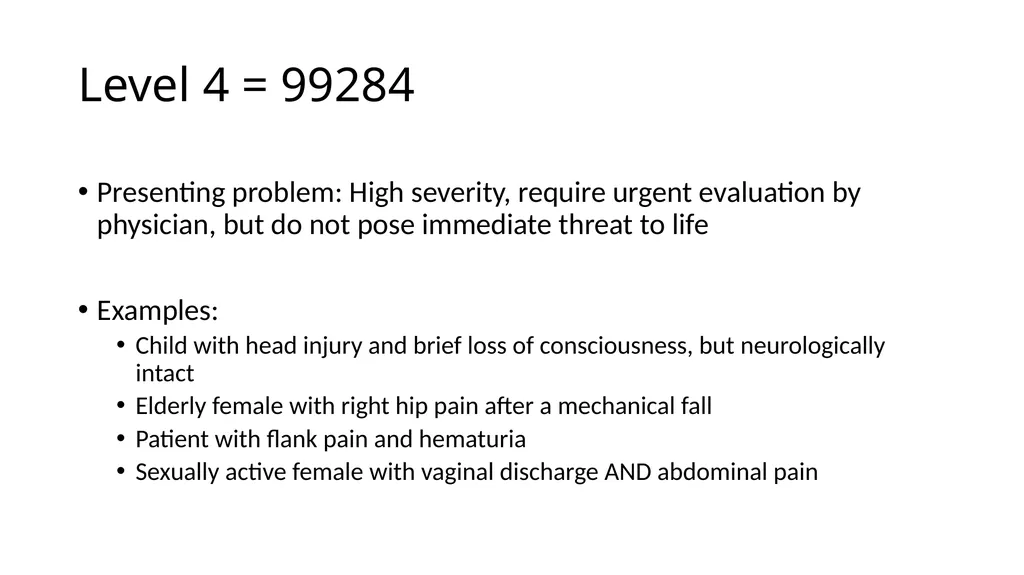
Level 4 = 99284
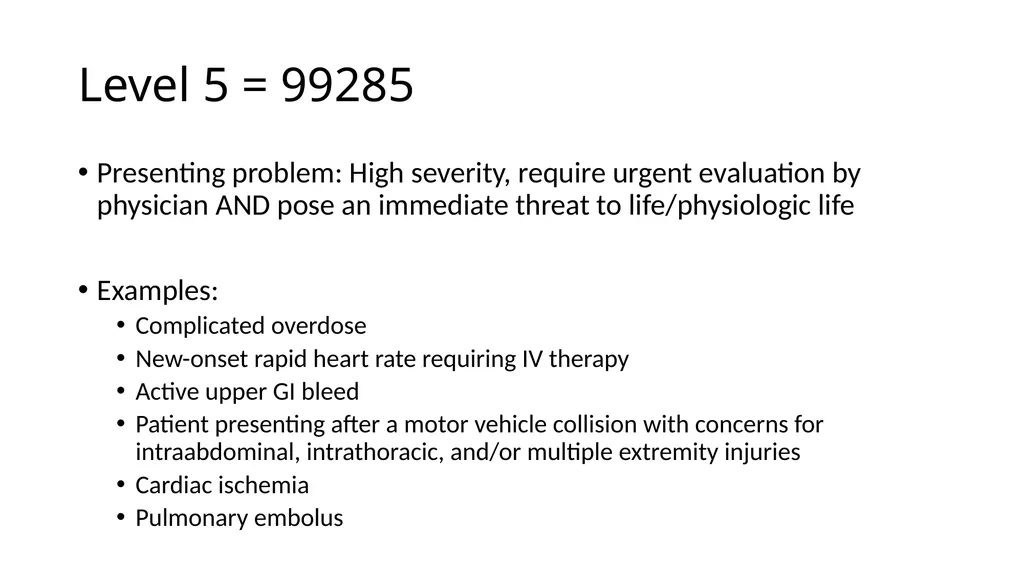
Level 5 = 99285 Least Severe Most Severe<br>
Level 2 = 99282
Level 3 = 99283
Level 4 = 99284
Level 5 = 99285 Least Severe Most Severe<br>
06
Step-Wise Approach to Coding Charts Choose your E/M Code based on your patient’s presenting problem.<br>
07
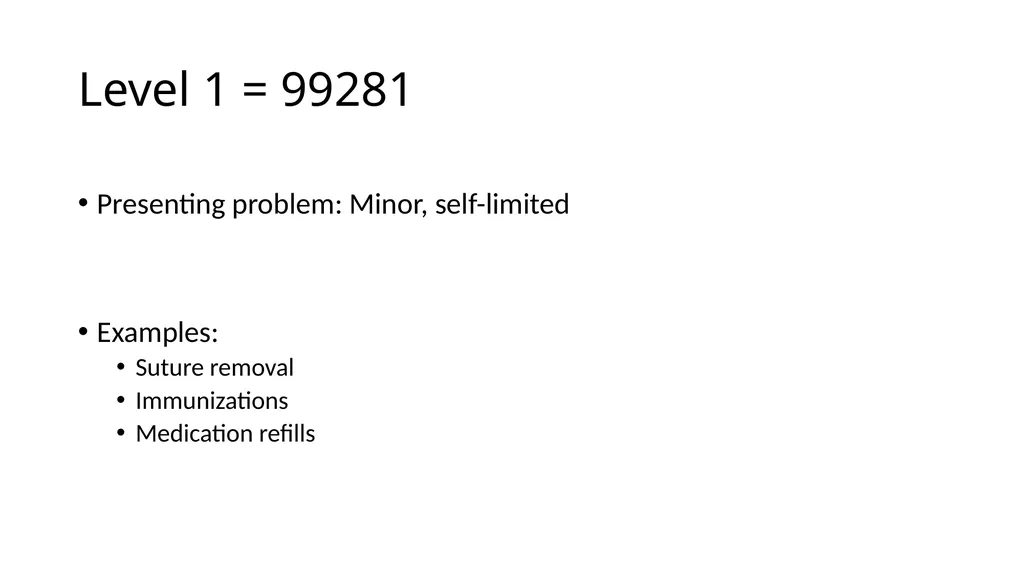
Level 1 = 99281 Presenting problem: Minor, self-limited
Examples:
Suture removal
Immunizations
Medication refills<br>
Examples:
Suture removal
Immunizations
Medication refills<br>
08
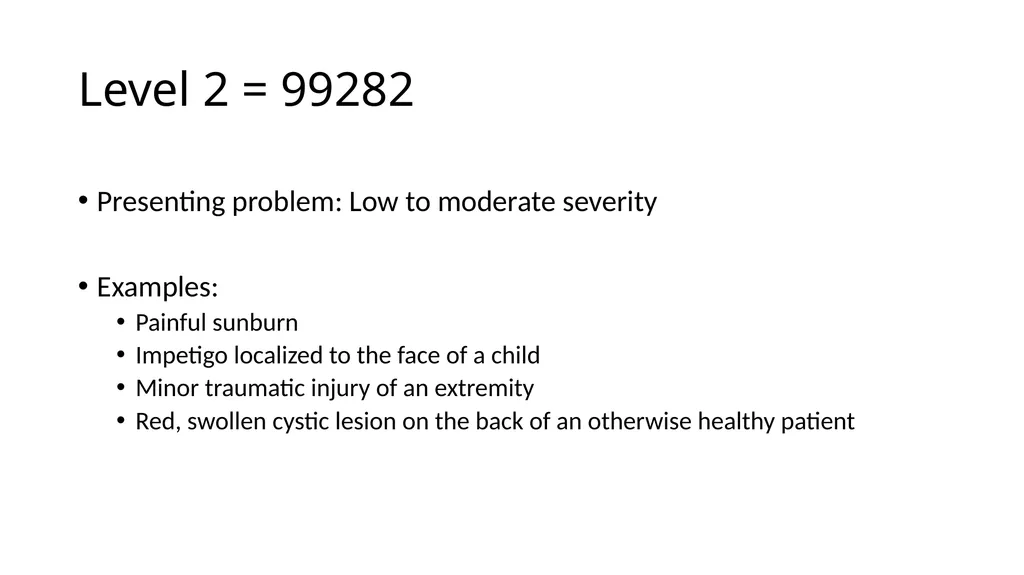
Level 2 = 99282 Presenting problem: Low to moderate severity
Examples:
Painful sunburn
Impetigo localized to the face of a child
Minor traumatic injury of an extremity
Red, swollen cystic lesion on the back of an otherwise healthy patient<br>
Examples:
Painful sunburn
Impetigo localized to the face of a child
Minor traumatic injury of an extremity
Red, swollen cystic lesion on the back of an otherwise healthy patient<br>
09
Level 3 = 99283 Presenting problem: Moderate severity
Examples:
Sexually active female presenting with vaginal discharge, normal vital signs, no abdominal pain
Well-appearing child with fever and diarrhea, no signs of dehydration
Inversion-type ankle injury, unable to bear weight on the injured foot/ankle<br>
Examples:
Sexually active female presenting with vaginal discharge, normal vital signs, no abdominal pain
Well-appearing child with fever and diarrhea, no signs of dehydration
Inversion-type ankle injury, unable to bear weight on the injured foot/ankle<br>
10
Level 4 = 99284 Presenting problem: High severity, require urgent evaluation by physician, but do not pose immediate threat to life
Examples:
Child with head injury and brief loss of consciousness, but neurologically intact
Elderly female with right hip pain after a mechanical fall
Patient with flank pain and hematuria
Sexually active female with vaginal discharge AND abdominal pain<br>
Examples:
Child with head injury and brief loss of consciousness, but neurologically intact
Elderly female with right hip pain after a mechanical fall
Patient with flank pain and hematuria
Sexually active female with vaginal discharge AND abdominal pain<br>
11
Level 5 = 99285 Presenting problem: High severity, require urgent evaluation by physician AND pose an immediate threat to life/physiologic life
Examples:
Complicated overdose
New-onset rapid heart rate requiring IV therapy
Active upper GI bleed
Patient presenting after a motor vehicle collision with concerns for intraabdominal, intrathoracic, and/or multiple extremity injuries
Cardiac ischemia
Pulmonary embolus<br>
Examples:
Complicated overdose
New-onset rapid heart rate requiring IV therapy
Active upper GI bleed
Patient presenting after a motor vehicle collision with concerns for intraabdominal, intrathoracic, and/or multiple extremity injuries
Cardiac ischemia
Pulmonary embolus<br>
12
Step-Wise Approach to Coding Charts Choose your E/M Code based on your patient’s presenting problem.
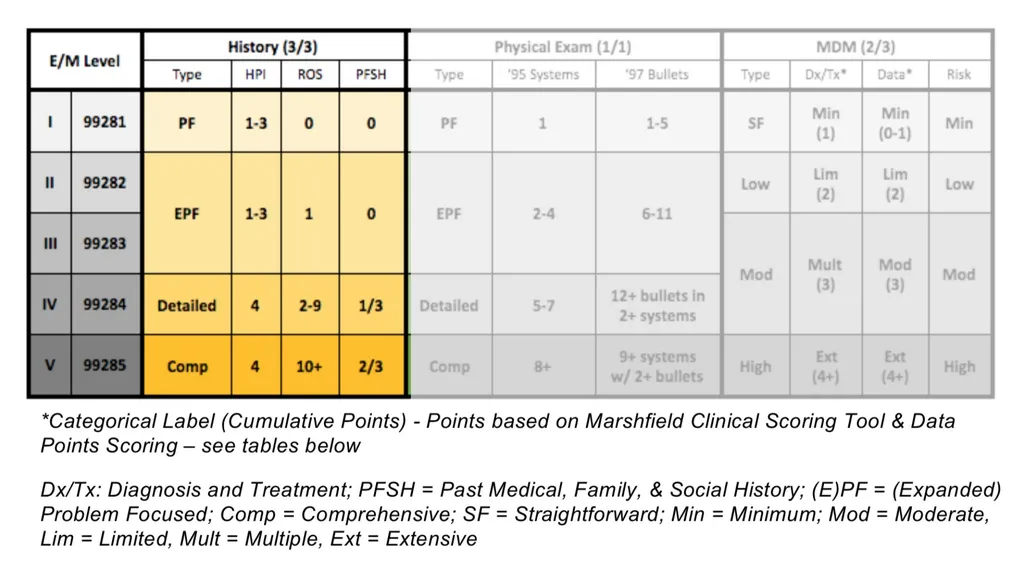
Once you’ve chosen your E/M Code, determine the level of History needed to fulfill the requirements for that code, as determined by Centers for Medicare and Medicaid Services.<br>
Once you’ve chosen your E/M Code, determine the level of History needed to fulfill the requirements for that code, as determined by Centers for Medicare and Medicaid Services.<br>
13
History<br>
14
Chief Complaint Required in all patients, regardless of the level of severity
This is a concise statement that describes the reason for the encounter
Stated in the patient’s own words
Examples:
“My head hurts”
“Chest pain”
“I was in a car accident”<br>
This is a concise statement that describes the reason for the encounter
Stated in the patient’s own words
Examples:
“My head hurts”
“Chest pain”
“I was in a car accident”<br>
15
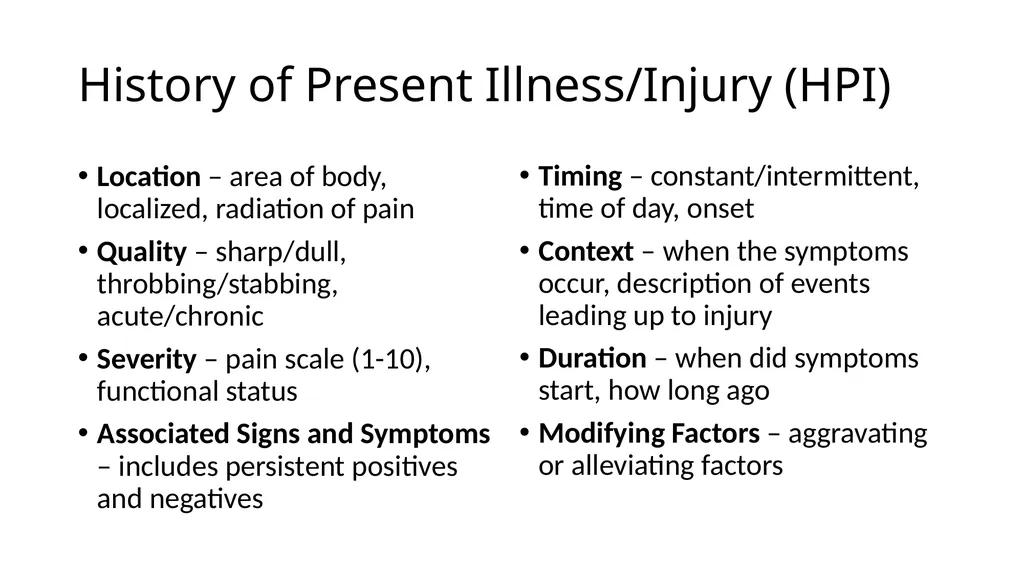
History of Present Illness/Injury (HPI) Location – area of body, localized, radiation of pain
Quality – sharp/dull, throbbing/stabbing, acute/chronic
Severity – pain scale (1-10), functional status
Associated Signs and Symptoms – includes persistent positives and negatives Timing – constant/intermittent, time of day, onset
Context – when the symptoms occur, description of events leading up to injury
Duration – when did symptoms start, how long ago
Modifying Factors – aggravating or alleviating factors<br>
Quality – sharp/dull, throbbing/stabbing, acute/chronic
Severity – pain scale (1-10), functional status
Associated Signs and Symptoms – includes persistent positives and negatives Timing – constant/intermittent, time of day, onset
Context – when the symptoms occur, description of events leading up to injury
Duration – when did symptoms start, how long ago
Modifying Factors – aggravating or alleviating factors<br>
16
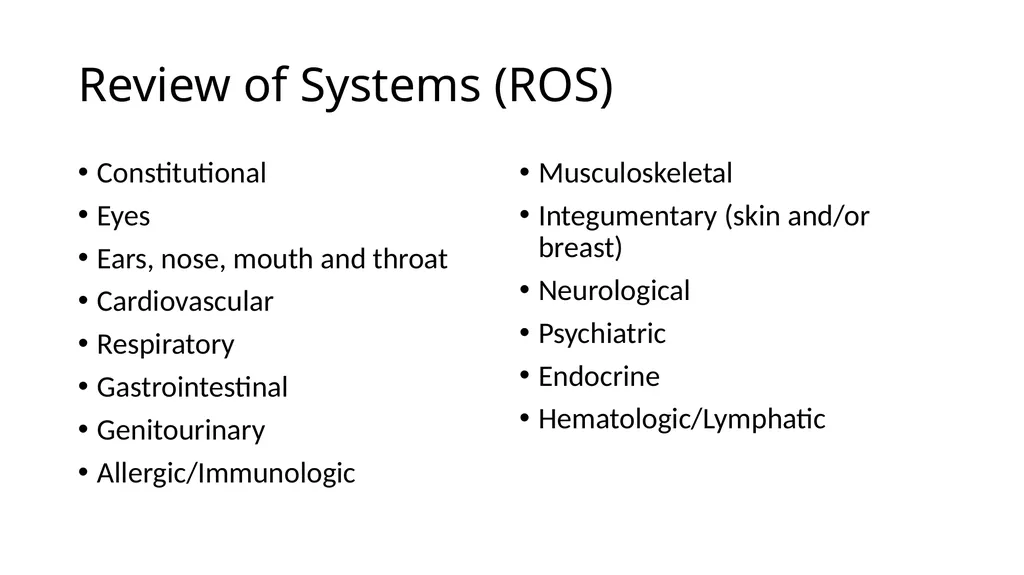
Review of Systems (ROS) Constitutional
Eyes
Ears, nose, mouth and throat
Cardiovascular
Respiratory
Gastrointestinal
Genitourinary
Allergic/Immunologic Musculoskeletal
Integumentary (skin and/or breast)
Neurological
Psychiatric
Endocrine
Hematologic/Lymphatic<br>
Eyes
Ears, nose, mouth and throat
Cardiovascular
Respiratory
Gastrointestinal
Genitourinary
Allergic/Immunologic Musculoskeletal
Integumentary (skin and/or breast)
Neurological
Psychiatric
Endocrine
Hematologic/Lymphatic<br>
17
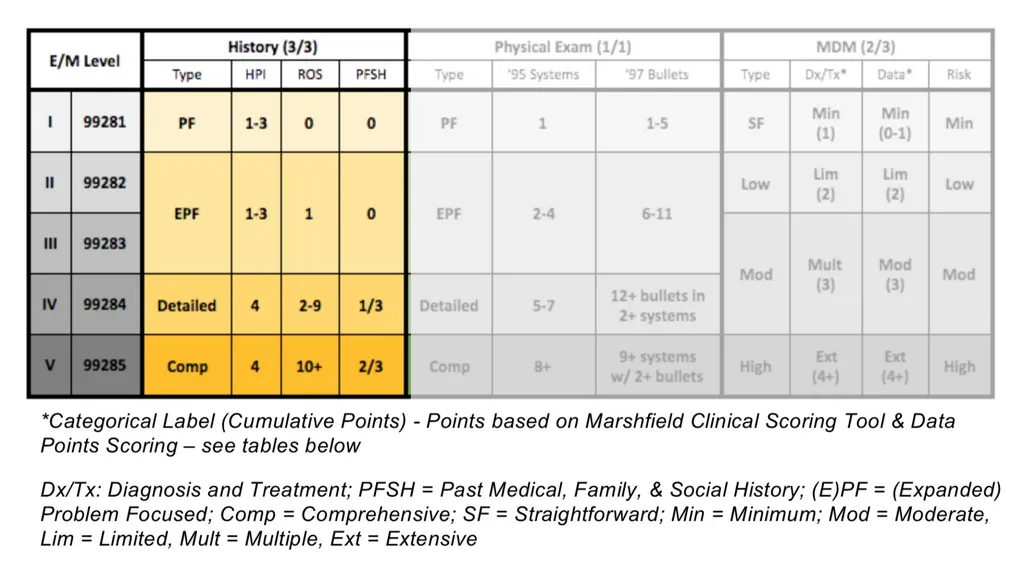
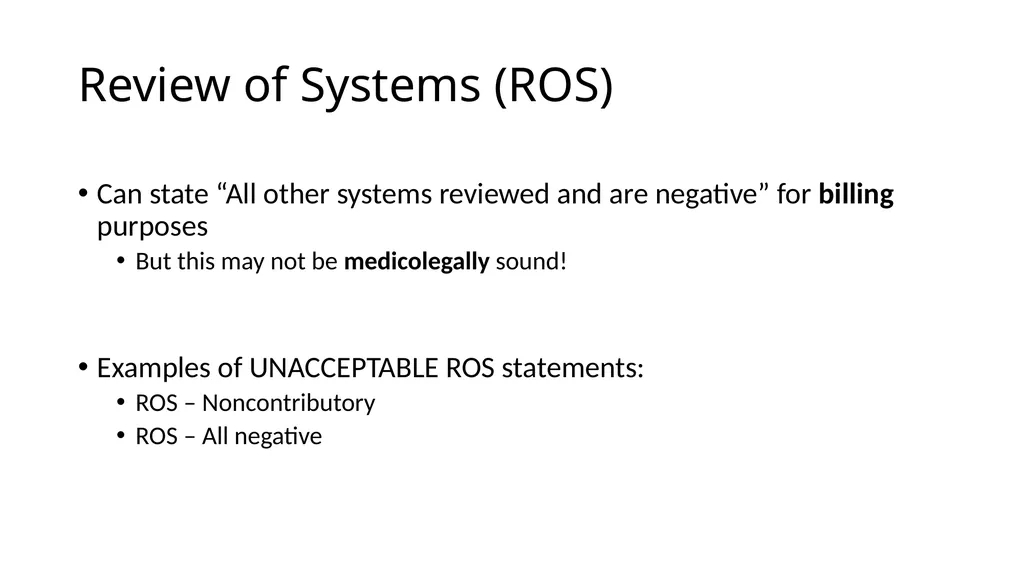
Review of Systems (ROS) Can state “All other systems reviewed and are negative” for billing purposes
But this may not be medicolegally sound!
Examples of UNACCEPTABLE ROS statements:
ROS – Noncontributory
ROS – All negative<br>
But this may not be medicolegally sound!
Examples of UNACCEPTABLE ROS statements:
ROS – Noncontributory
ROS – All negative<br>
18
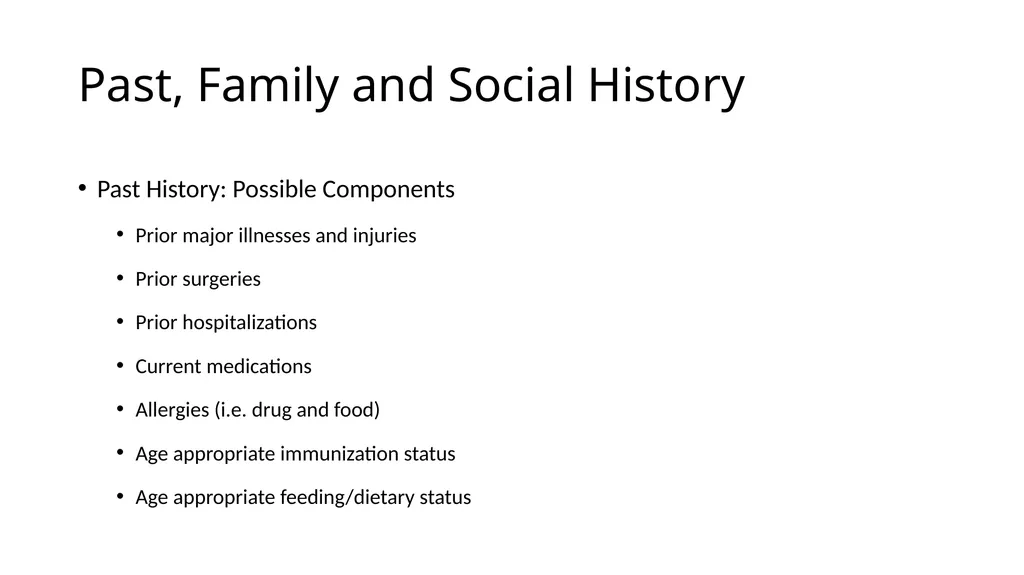
Past, Family and Social History Past History: Possible Components
Prior major illnesses and injuries
Prior surgeries
Prior hospitalizations
Current medications
Allergies (i.e. drug and food)
Age appropriate immunization status
Age appropriate feeding/dietary status<br>
Prior major illnesses and injuries
Prior surgeries
Prior hospitalizations
Current medications
Allergies (i.e. drug and food)
Age appropriate immunization status
Age appropriate feeding/dietary status<br>
19
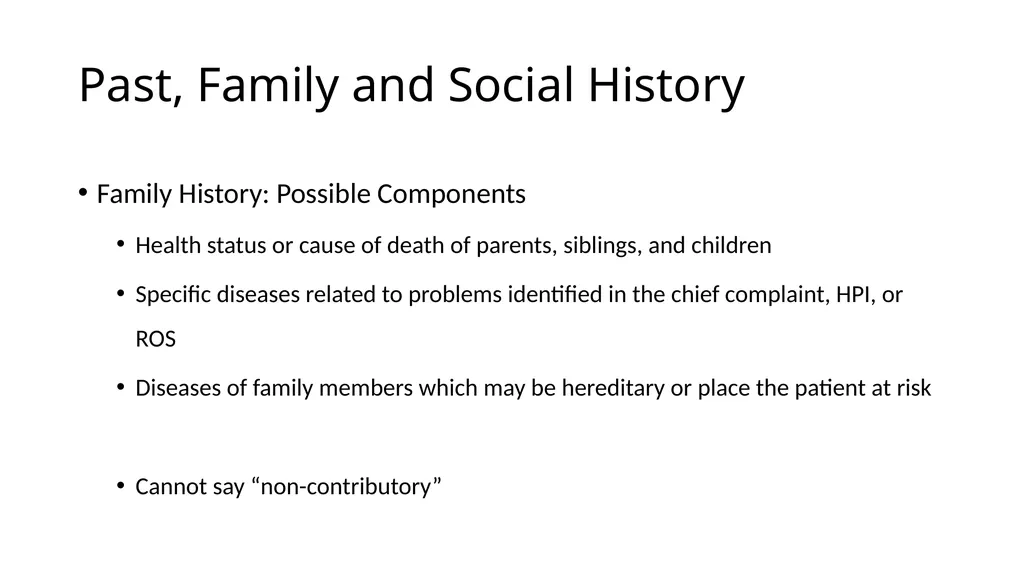
Past, Family and Social History Family History: Possible Components
Health status or cause of death of parents, siblings, and children
Specific diseases related to problems identified in the chief complaint, HPI, or ROS
Diseases of family members which may be hereditary or place the patient at risk
Cannot say “non-contributory”<br>
Health status or cause of death of parents, siblings, and children
Specific diseases related to problems identified in the chief complaint, HPI, or ROS
Diseases of family members which may be hereditary or place the patient at risk
Cannot say “non-contributory”<br>
20
Past, Family, and Social History Social History: Possible Components
Marital status/living arrangements
Current employment
Occupational history
Use of drugs, alcohol and/or tobacco
Level of education
Sexual history
Other relevant social factors<br>
Marital status/living arrangements
Current employment
Occupational history
Use of drugs, alcohol and/or tobacco
Level of education
Sexual history
Other relevant social factors<br>
21
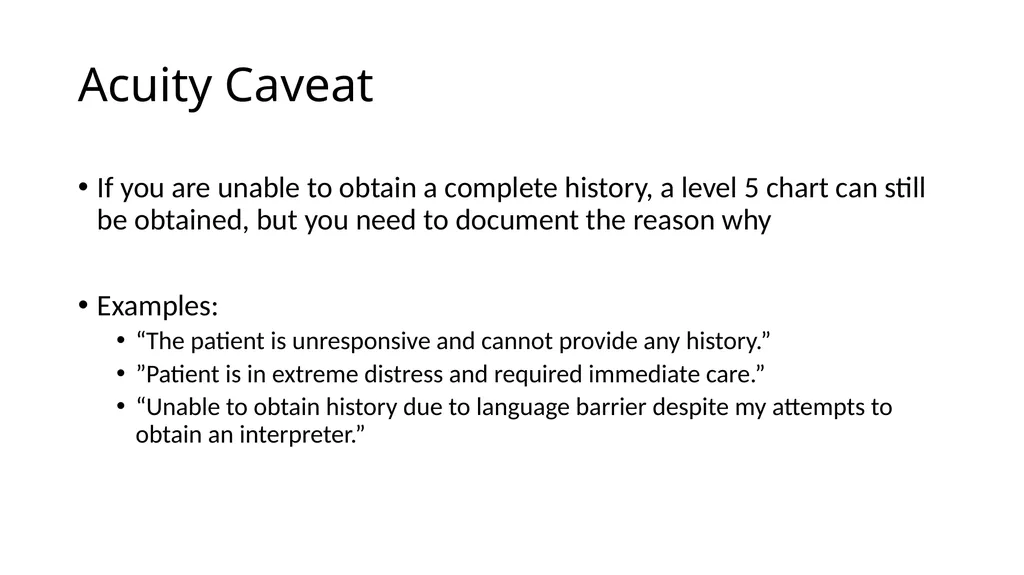
Acuity Caveat If you are unable to obtain a complete history, a level 5 chart can still be obtained, but you need to document the reason why
Examples:
“The patient is unresponsive and cannot provide any history.”
”Patient is in extreme distress and required immediate care.”
“Unable to obtain history due to language barrier despite my attempts to obtain an interpreter.”<br>
Examples:
“The patient is unresponsive and cannot provide any history.”
”Patient is in extreme distress and required immediate care.”
“Unable to obtain history due to language barrier despite my attempts to obtain an interpreter.”<br>
22
Step-Wise Approach to Coding Charts Choose your E/M Code based on your patient’s presenting problem.
Once you’ve chosen your E/M Code, determine the level of History needed to fulfill the requirements for that code, as determined by Centers for Medicare and Medicaid Services.
Now that you have your history level, determine the level of Physical Exam necessary to fulfill the requirements for that code.<br>
Once you’ve chosen your E/M Code, determine the level of History needed to fulfill the requirements for that code, as determined by Centers for Medicare and Medicaid Services.
Now that you have your history level, determine the level of Physical Exam necessary to fulfill the requirements for that code.<br>
23
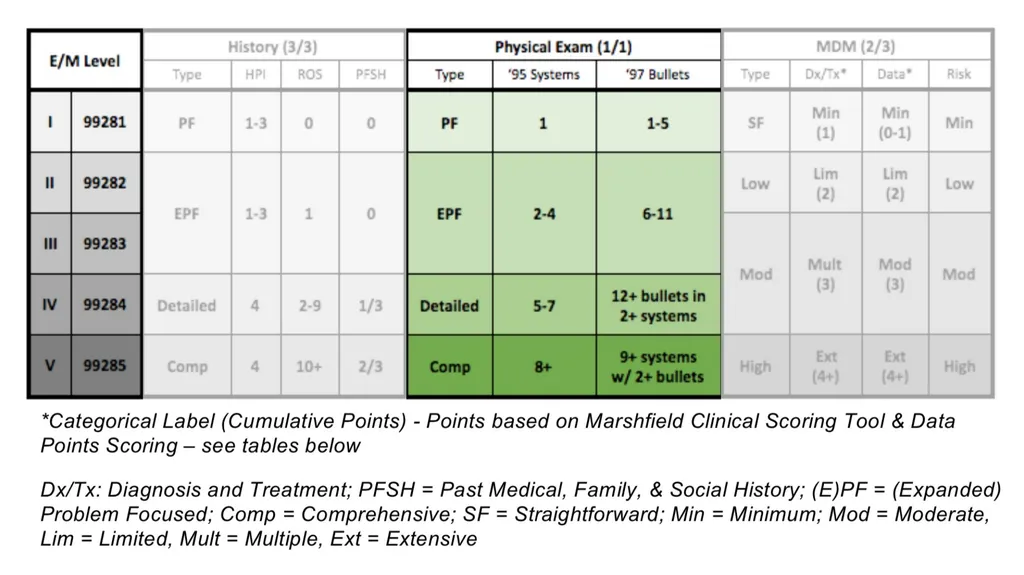
Physical Exam<br>
24
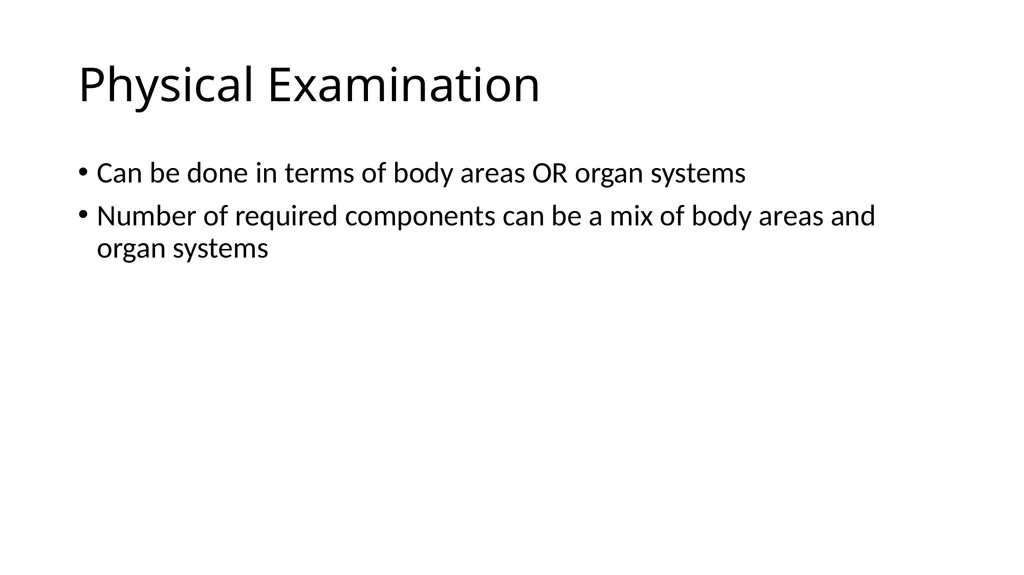
Physical Examination Can be done in terms of body areas OR organ systems
Number of required components can be a mix of body areas and organ systems<br>
Number of required components can be a mix of body areas and organ systems<br>
25
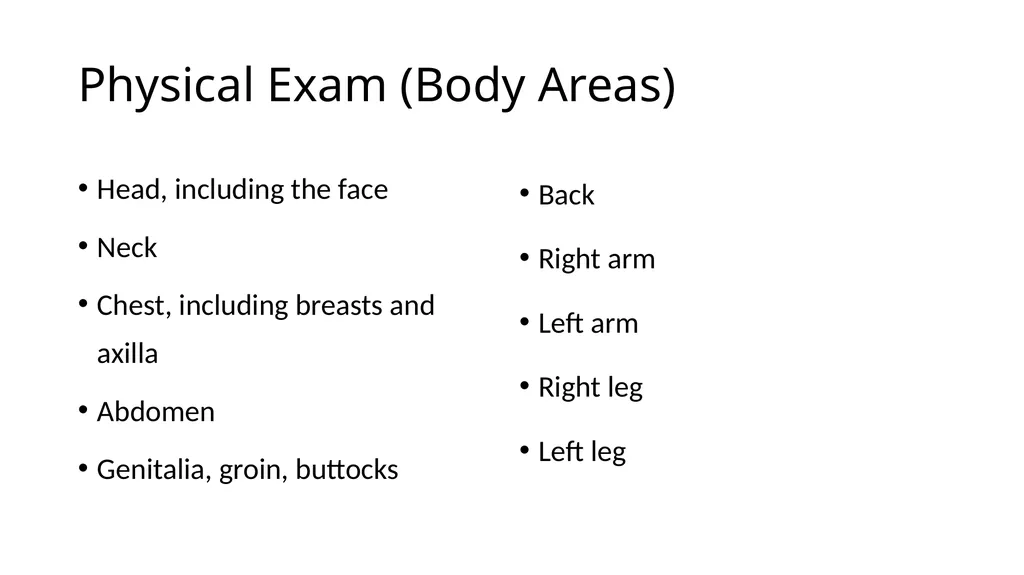
Physical Exam (Body Areas) Head, including the face
Neck
Chest, including breasts and axilla
Abdomen
Genitalia, groin, buttocks Back
Right arm
Left arm
Right leg
Left leg<br>
Neck
Chest, including breasts and axilla
Abdomen
Genitalia, groin, buttocks Back
Right arm
Left arm
Right leg
Left leg<br>
26
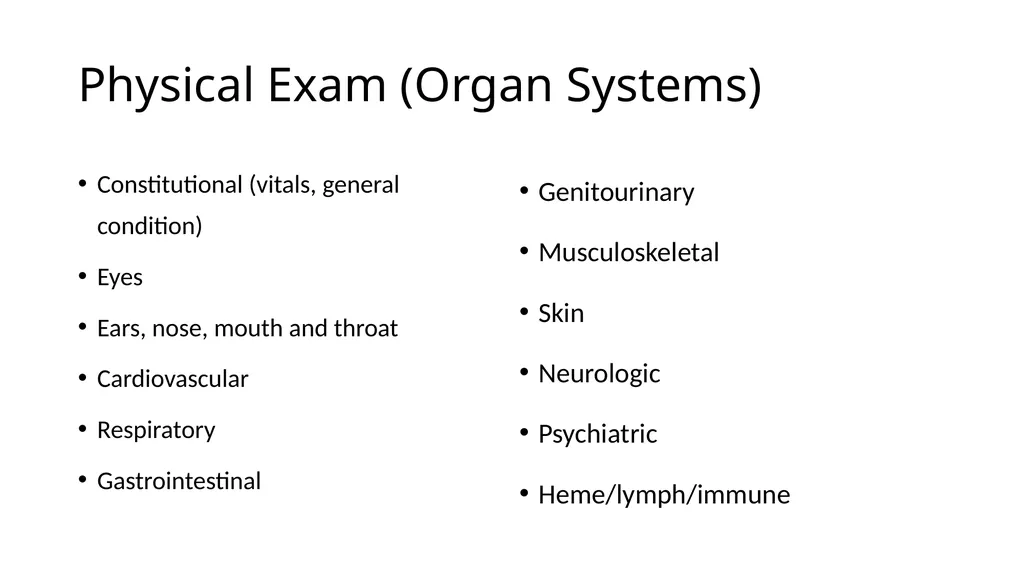
Physical Exam (Organ Systems) Constitutional (vitals, general condition)
Eyes
Ears, nose, mouth and throat
Cardiovascular
Respiratory
Gastrointestinal Genitourinary
Musculoskeletal
Skin
Neurologic
Psychiatric
Heme/lymph/immune<br>
Eyes
Ears, nose, mouth and throat
Cardiovascular
Respiratory
Gastrointestinal Genitourinary
Musculoskeletal
Skin
Neurologic
Psychiatric
Heme/lymph/immune<br>
27
Step-Wise Approach to Coding Charts Choose your E/M Code based on your patient’s presenting problem.
Once you’ve chosen your E/M Code, determine the level of History needed to fulfill the requirements for that code, as determined by Centers for Medicare and Medicaid Services.
Now that you have your history level, determine the level of Physical Exam necessary to fulfill the requirements for that code.
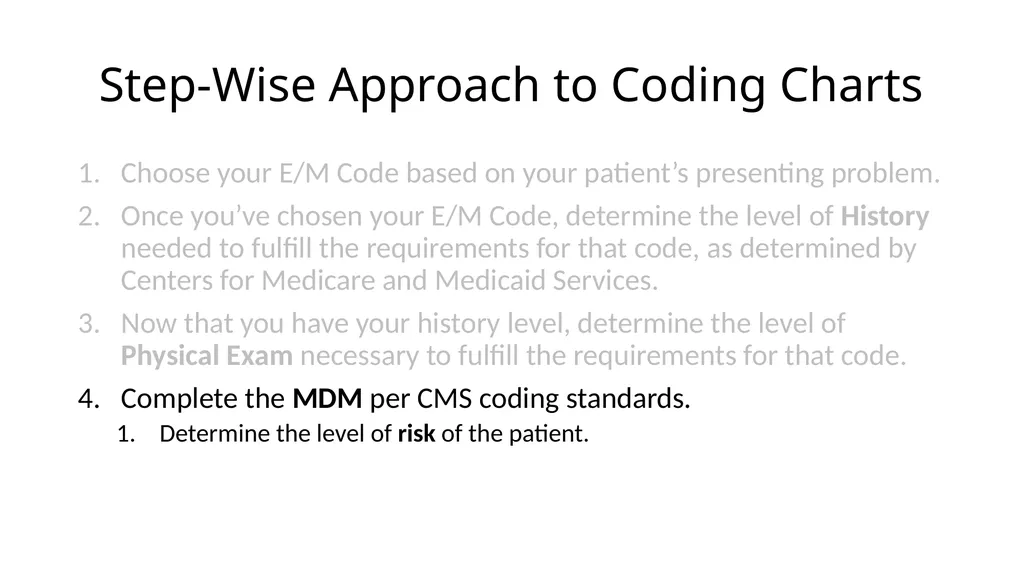
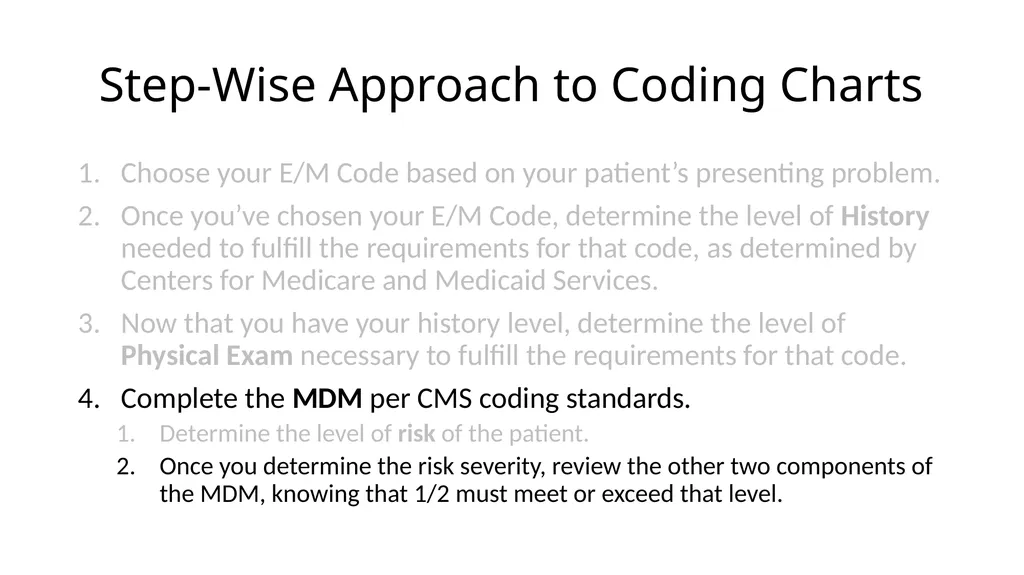
Complete the MDM per CMS coding standards.<br>
Once you’ve chosen your E/M Code, determine the level of History needed to fulfill the requirements for that code, as determined by Centers for Medicare and Medicaid Services.
Now that you have your history level, determine the level of Physical Exam necessary to fulfill the requirements for that code.
Complete the MDM per CMS coding standards.<br>
28
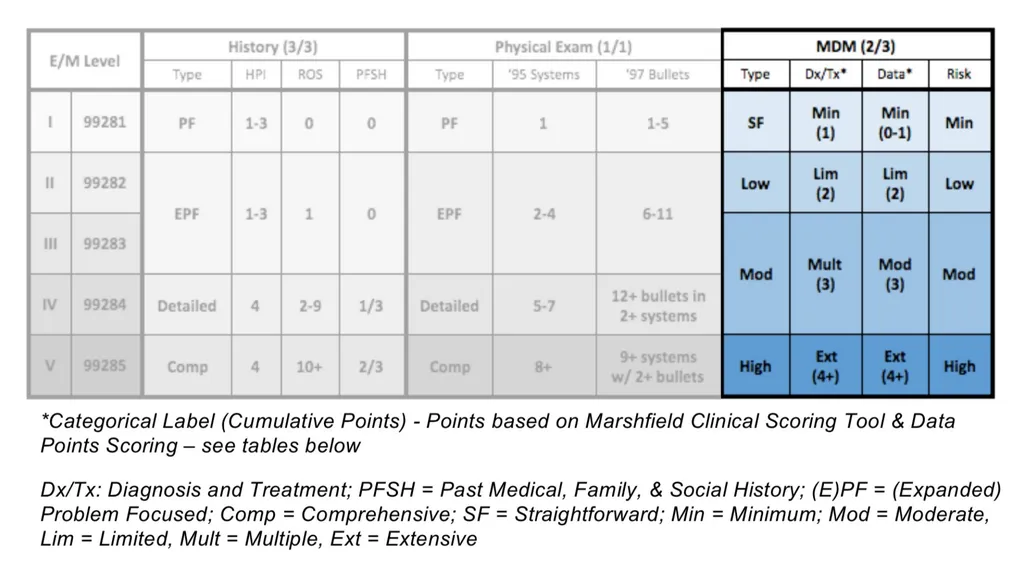
MDM<br>
29
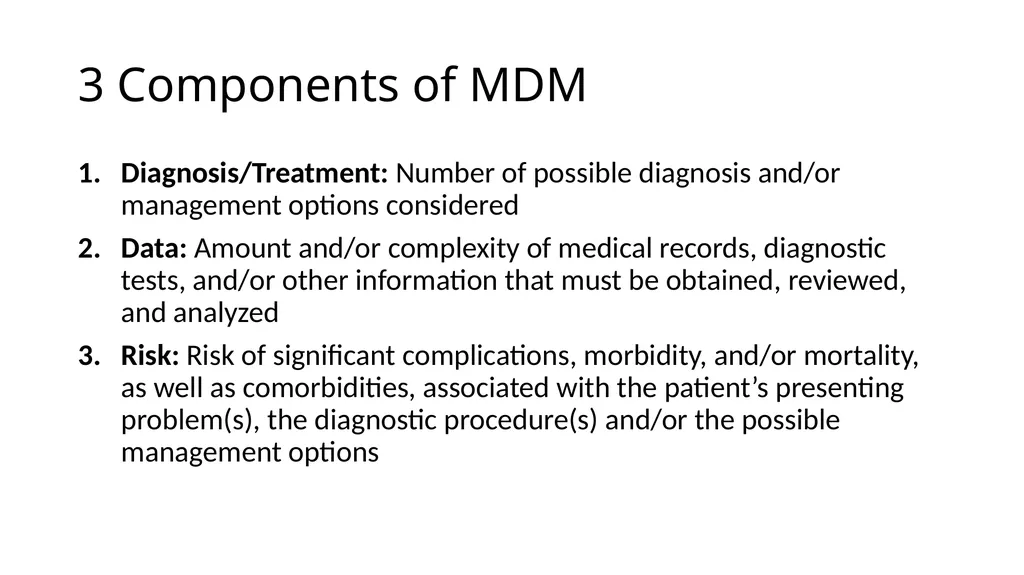
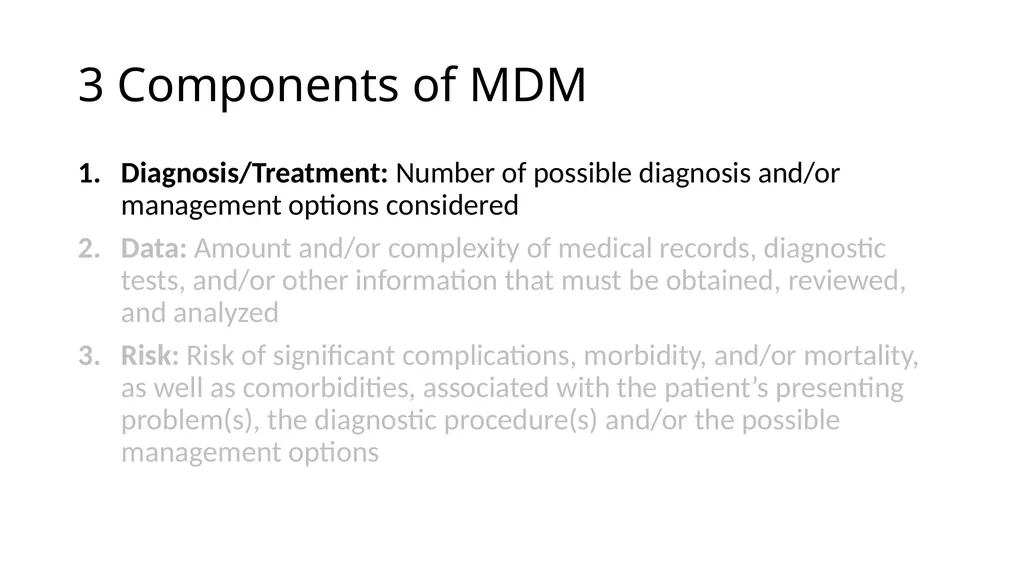
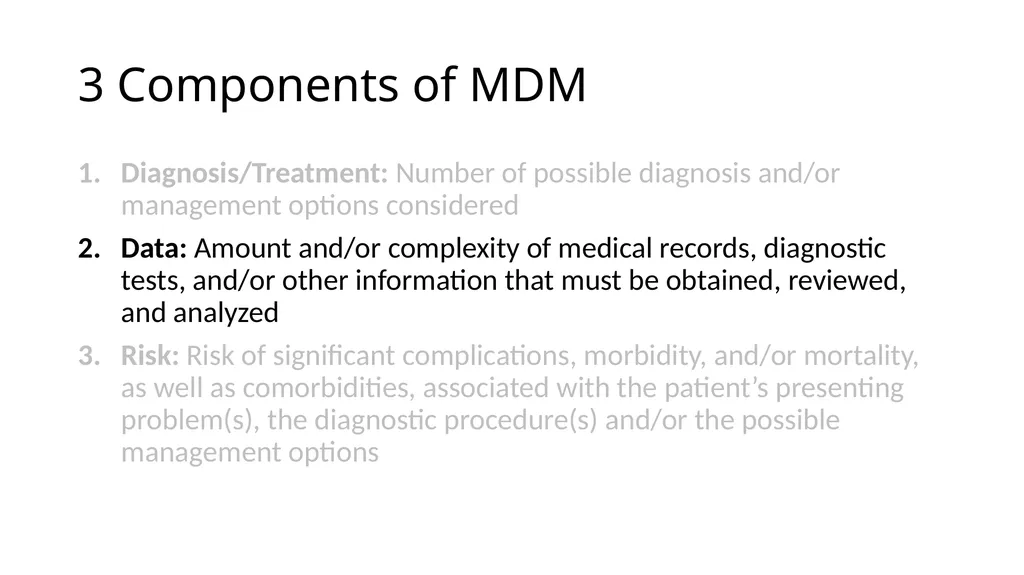
3 Components of MDM Diagnosis/Treatment: Number of possible diagnosis and/or management options considered
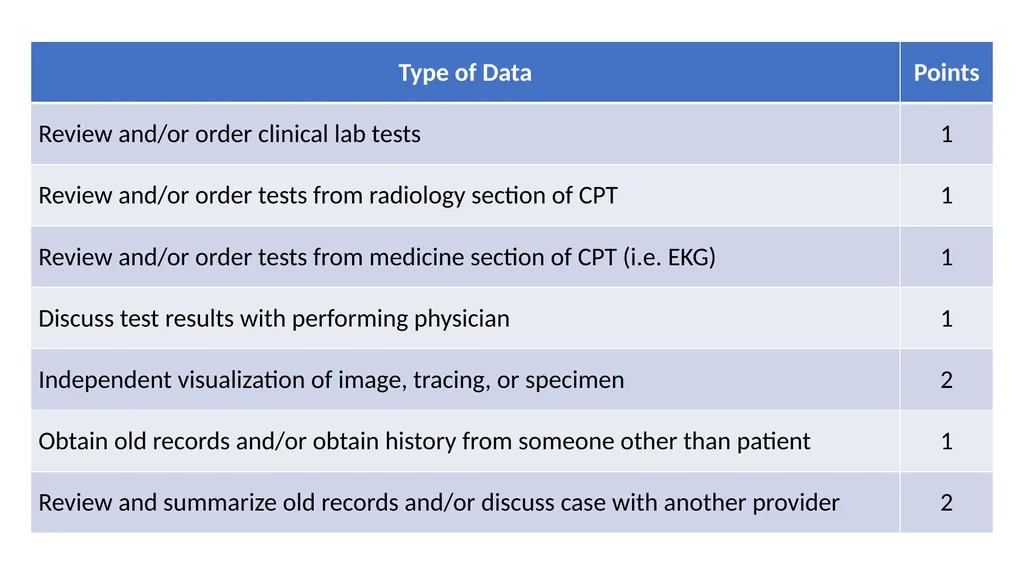
Data: Amount and/or complexity of medical records, diagnostic tests, and/or other information that must be obtained, reviewed, and analyzed
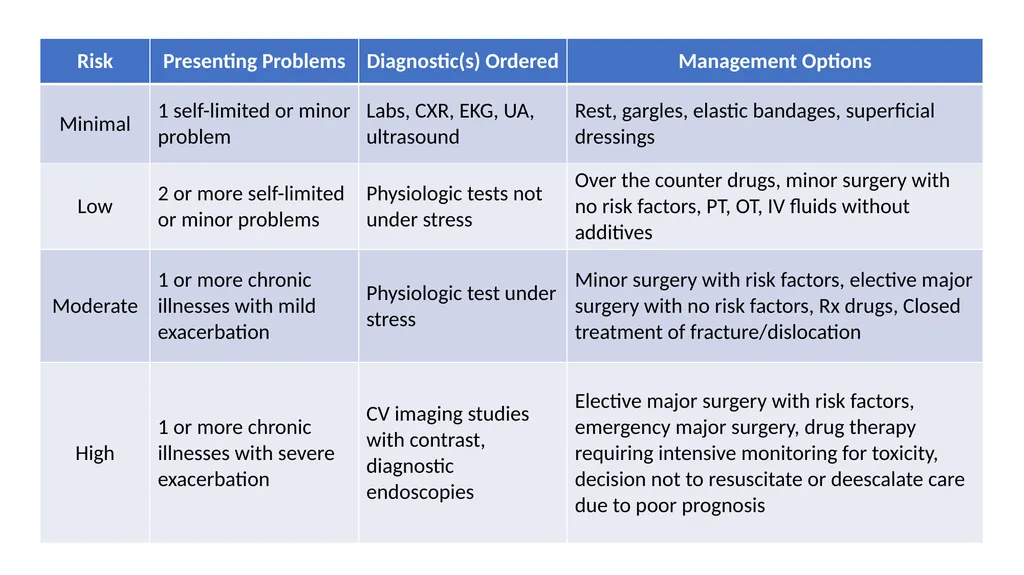
Risk: Risk of significant complications, morbidity, and/or mortality, as well as comorbidities, associated with the patient’s presenting problem(s), the diagnostic procedure(s) and/or the possible management options<br>
Data: Amount and/or complexity of medical records, diagnostic tests, and/or other information that must be obtained, reviewed, and analyzed
Risk: Risk of significant complications, morbidity, and/or mortality, as well as comorbidities, associated with the patient’s presenting problem(s), the diagnostic procedure(s) and/or the possible management options<br>
30
Step-Wise Approach to Coding Charts Choose your E/M Code based on your patient’s presenting problem.
Once you’ve chosen your E/M Code, determine the level of History needed to fulfill the requirements for that code, as determined by Centers for Medicare and Medicaid Services.
Now that you have your history level, determine the level of Physical Exam necessary to fulfill the requirements for that code.
Complete the MDM per CMS coding standards.
Determine the level of risk of the patient.<br>
Once you’ve chosen your E/M Code, determine the level of History needed to fulfill the requirements for that code, as determined by Centers for Medicare and Medicaid Services.
Now that you have your history level, determine the level of Physical Exam necessary to fulfill the requirements for that code.
Complete the MDM per CMS coding standards.
Determine the level of risk of the patient.<br>
31
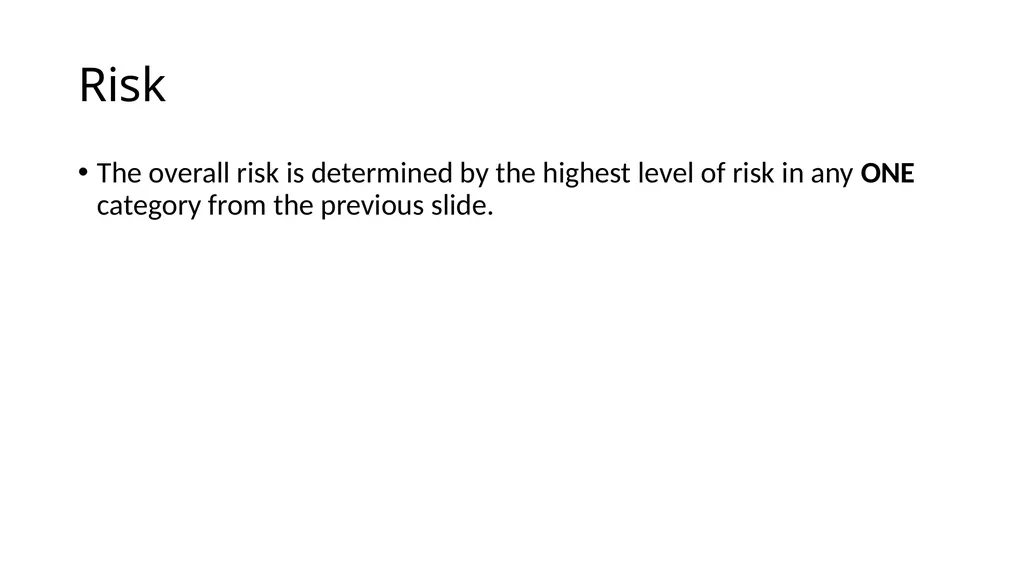
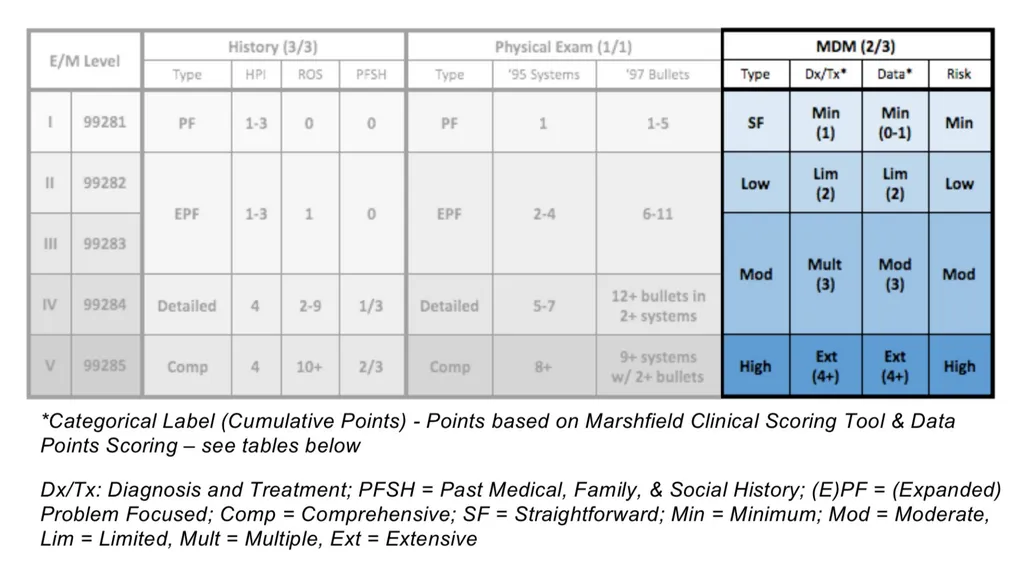
Risk The overall risk is determined by the highest level of risk in any ONE category from the previous slide.<br>
32
Step-Wise Approach to Coding Charts Choose your E/M Code based on your patient’s presenting problem.
Once you’ve chosen your E/M Code, determine the level of History needed to fulfill the requirements for that code, as determined by Centers for Medicare and Medicaid Services.
Now that you have your history level, determine the level of Physical Exam necessary to fulfill the requirements for that code.
Complete the MDM per CMS coding standards.
Determine the level of risk of the patient.
Once you determine the risk severity, review the other two components of the MDM, knowing that 1/2 must meet or exceed that level.<br>
Once you’ve chosen your E/M Code, determine the level of History needed to fulfill the requirements for that code, as determined by Centers for Medicare and Medicaid Services.
Now that you have your history level, determine the level of Physical Exam necessary to fulfill the requirements for that code.
Complete the MDM per CMS coding standards.
Determine the level of risk of the patient.
Once you determine the risk severity, review the other two components of the MDM, knowing that 1/2 must meet or exceed that level.<br>
33
3 Components of MDM Diagnosis/Treatment: Number of possible diagnosis and/or management options considered
Data: Amount and/or complexity of medical records, diagnostic tests, and/or other information that must be obtained, reviewed, and analyzed
Risk: Risk of significant complications, morbidity, and/or mortality, as well as comorbidities, associated with the patient’s presenting problem(s), the diagnostic procedure(s) and/or the possible management options<br>
Data: Amount and/or complexity of medical records, diagnostic tests, and/or other information that must be obtained, reviewed, and analyzed
Risk: Risk of significant complications, morbidity, and/or mortality, as well as comorbidities, associated with the patient’s presenting problem(s), the diagnostic procedure(s) and/or the possible management options<br>
34
3 Components of MDM Diagnosis/Treatment: Number of possible diagnosis and/or management options considered
Data: Amount and/or complexity of medical records, diagnostic tests, and/or other information that must be obtained, reviewed, and analyzed
Risk: Risk of significant complications, morbidity, and/or mortality, as well as comorbidities, associated with the patient’s presenting problem(s), the diagnostic procedure(s) and/or the possible management options<br>
Data: Amount and/or complexity of medical records, diagnostic tests, and/or other information that must be obtained, reviewed, and analyzed
Risk: Risk of significant complications, morbidity, and/or mortality, as well as comorbidities, associated with the patient’s presenting problem(s), the diagnostic procedure(s) and/or the possible management options<br>
35
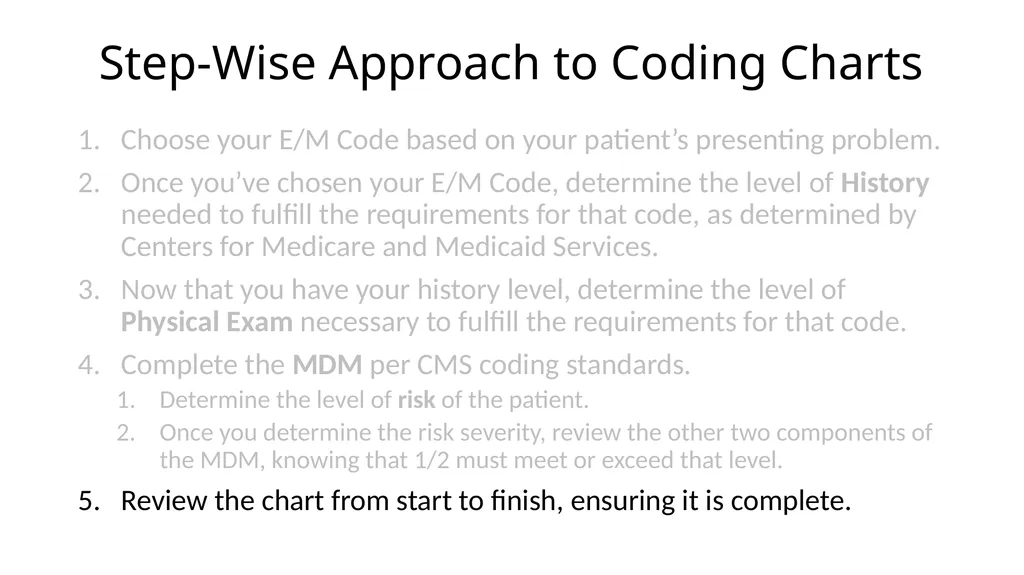
Step-Wise Approach to Coding Charts Choose your E/M Code based on your patient’s presenting problem.
Once you’ve chosen your E/M Code, determine the level of History needed to fulfill the requirements for that code, as determined by Centers for Medicare and Medicaid Services.
Now that you have your history level, determine the level of Physical Exam necessary to fulfill the requirements for that code.
Complete the MDM per CMS coding standards.
Determine the level of risk of the patient.
Once you determine the risk severity, review the other two components of the MDM, knowing that 1/2 must meet or exceed that level.
Review the chart from start to finish, ensuring it is complete.<br>
Once you’ve chosen your E/M Code, determine the level of History needed to fulfill the requirements for that code, as determined by Centers for Medicare and Medicaid Services.
Now that you have your history level, determine the level of Physical Exam necessary to fulfill the requirements for that code.
Complete the MDM per CMS coding standards.
Determine the level of risk of the patient.
Once you determine the risk severity, review the other two components of the MDM, knowing that 1/2 must meet or exceed that level.
Review the chart from start to finish, ensuring it is complete.<br>
36
Questions?<br>
37
References Burkhardt J, Watsjold B, Fan T, Dyer S. Emergency department charting: Evaluation and management (E/M) Levels. https://www.aliem.com/pv-card-ed-charting-and-coding/. Published August 15, 2016. Accessed March 6, 2020.
Carter KA, Dawson BC, Brewer K, Lawson L. RVU ready? Preparing emergency medicine resident physicians in documentation for an incentive-based work environment. Academic Emergency Medicine. 2009 May;16(5):423-8.
Counselman FL, Babu K, Edens MA, Gorgas DL, Hobgood C, Marco CA, Katz E, Rodgers K, Stallings LA, Wadman MC, 2016 EM Model Review Task Force, Beeson MS, Keehbauch JN. The 2016 model of the clinical practice of emergency medicine. Journal of Emergency Medicine. 2017 Jun;52(6):846-849.
Emergency department: Clinician coding and documentation reference. Vituity. https://medamerica.okta.com/. Published 2019. Accessed March 6, 2020.
Evaluation and management services guidelines. Dept of Health and Human Services: Centers for Medicare and Medicaid Services. https://www.cms.gov/Outreach-and-Education/Medicare-Learning-Network-MLN/MLNProducts/Downloads/eval_mgmt_serv_guide-ICN006764TextOnly.pdf. Published August 2017. Accessed March 6, 2020.
Nicks BA, Nelson D. Emergency department operations and management education in emergency medicine training. World J Emerg Med. 2012;3(2):98-101.
Schnapp B, Sanders S, Ford W. Improving emergency medicine documentation training: A needs assessment. West JEM. 2016;July:S58.
Watase T, Yarris LM, Fu R, Handel DA. Educating emergency medicine residents in emergency department administration and pperations: Needs and current practice. J Grad Med Educ. 2014 Dec;6(4):770-3.<br>
Carter KA, Dawson BC, Brewer K, Lawson L. RVU ready? Preparing emergency medicine resident physicians in documentation for an incentive-based work environment. Academic Emergency Medicine. 2009 May;16(5):423-8.
Counselman FL, Babu K, Edens MA, Gorgas DL, Hobgood C, Marco CA, Katz E, Rodgers K, Stallings LA, Wadman MC, 2016 EM Model Review Task Force, Beeson MS, Keehbauch JN. The 2016 model of the clinical practice of emergency medicine. Journal of Emergency Medicine. 2017 Jun;52(6):846-849.
Emergency department: Clinician coding and documentation reference. Vituity. https://medamerica.okta.com/. Published 2019. Accessed March 6, 2020.
Evaluation and management services guidelines. Dept of Health and Human Services: Centers for Medicare and Medicaid Services. https://www.cms.gov/Outreach-and-Education/Medicare-Learning-Network-MLN/MLNProducts/Downloads/eval_mgmt_serv_guide-ICN006764TextOnly.pdf. Published August 2017. Accessed March 6, 2020.
Nicks BA, Nelson D. Emergency department operations and management education in emergency medicine training. World J Emerg Med. 2012;3(2):98-101.
Schnapp B, Sanders S, Ford W. Improving emergency medicine documentation training: A needs assessment. West JEM. 2016;July:S58.
Watase T, Yarris LM, Fu R, Handel DA. Educating emergency medicine residents in emergency department administration and pperations: Needs and current practice. J Grad Med Educ. 2014 Dec;6(4):770-3.<br>