Cold Impacts Preparedness Potential Impacts Frozen pipes could become a significant problem. Dead car batteries could strand people. Any power outages that occur (weather related or not) could leave people without heat. People may
"Cold Impacts & Preparedness Potential Impacts" is the property of its rightful owner. Permission is granted to
download and print the materials on this website for personal, non-commercial use only, and to display it
on your personal computer provided you do not modify the materials and that you retain all copyright
notices contained in the materials. By downloading content from our website, you accept the terms of this
agreement.
Presentation Transcript
01
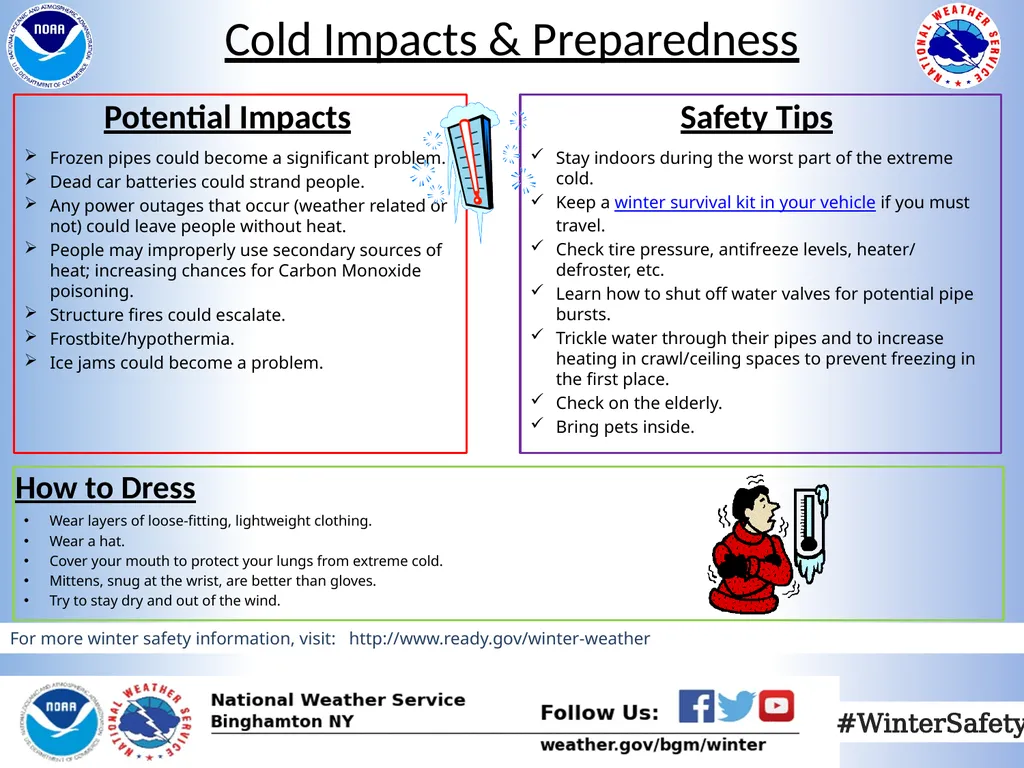
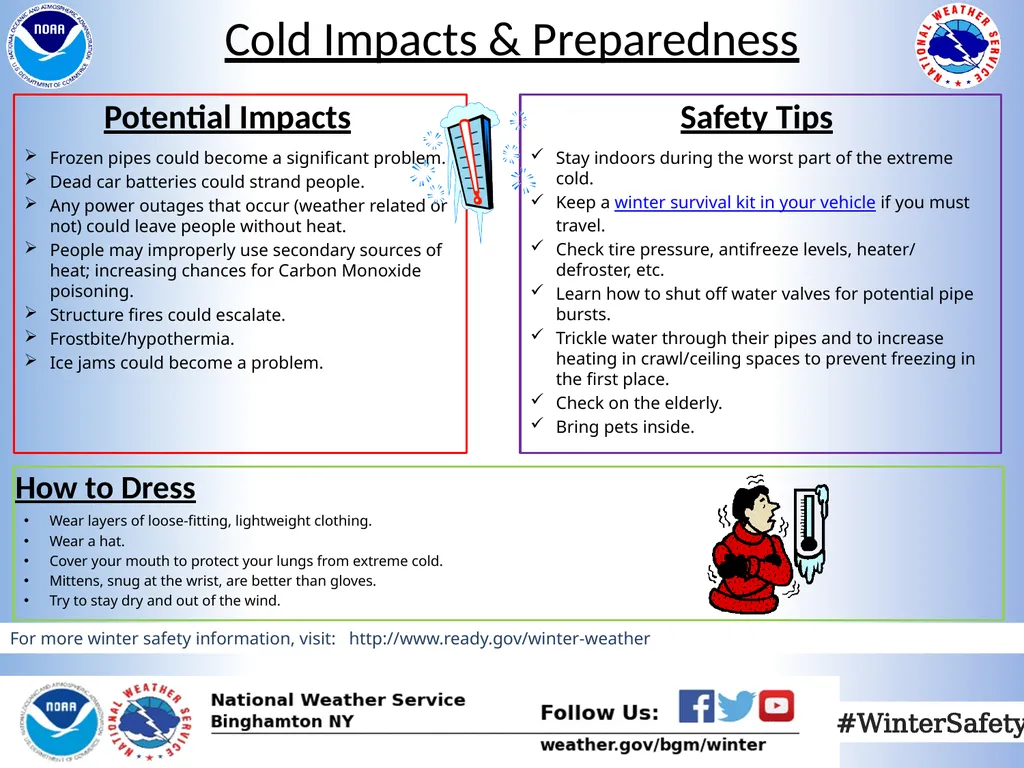
Cold Impacts & Preparedness Potential Impacts Frozen pipes could become a significant problem.
Dead car batteries could strand people.
Any power outages that occur (weather related or not) could leave people without heat.
People may improperly use secondary sources of heat; increasing chances for Carbon Monoxide poisoning.
Structure fires could escalate.
Frostbite/hypothermia.
Ice jams could become a problem. Safety Tips Stay indoors during the worst part of the extreme cold.
Keep a winter survival kit in your vehicle if you must travel.
Check tire pressure, antifreeze levels, heater/ defroster, etc.
Learn how to shut off water valves for potential pipe bursts.
Trickle water through their pipes and to increase heating in crawl/ceiling spaces to prevent freezing in the first place.
Check on the elderly.
Bring pets inside. Wear layers of loose-fitting, lightweight clothing.
Wear a hat.
Cover your mouth to protect your lungs from extreme cold.
Mittens, snug at the wrist, are better than gloves.
Try to stay dry and out of the wind. How to Dress For more winter safety information, visit: http://www.ready.gov/winter-weather #WinterSafety<br>
02
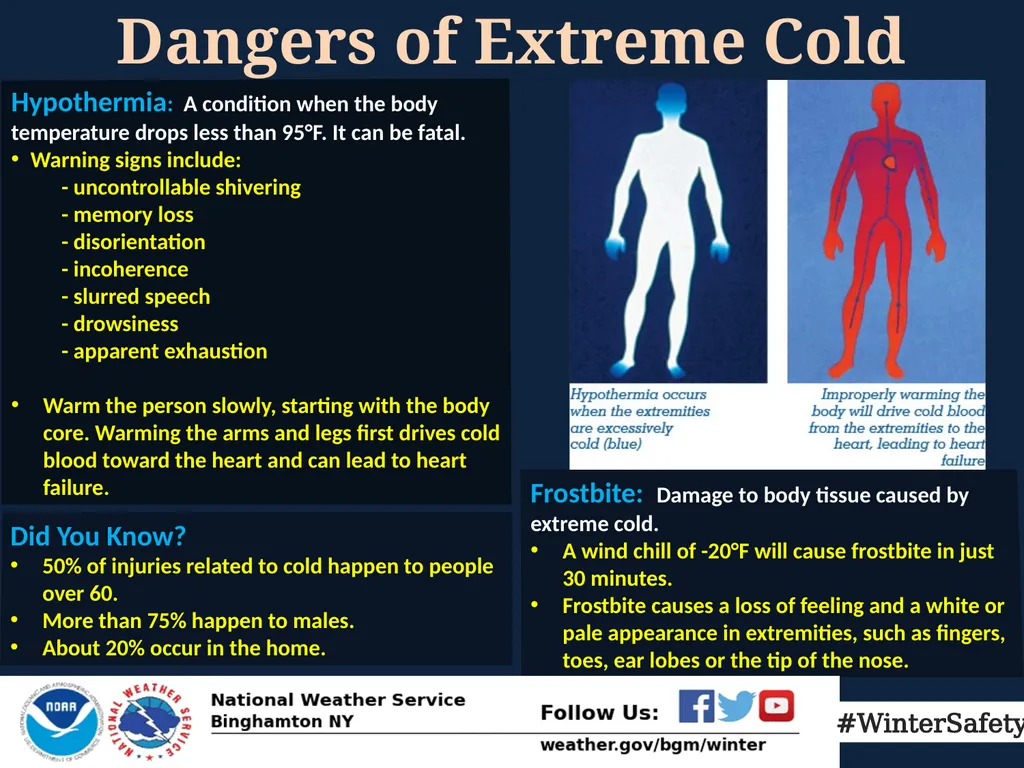
Dangers of Extreme Cold Frostbite: Damage to body tissue caused by extreme cold.
A wind chill of -20°F will cause frostbite in just 30 minutes.
Frostbite causes a loss of feeling and a white or pale appearance in extremities, such as fingers, toes, ear lobes or the tip of the nose. Hypothermia: A condition when the body temperature drops less than 95°F. It can be fatal.
Warning signs include:
- uncontrollable shivering
- memory loss
- disorientation
- incoherence
- slurred speech
- drowsiness
- apparent exhaustion
Warm the person slowly, starting with the body core. Warming the arms and legs first drives cold blood toward the heart and can lead to heart failure. Did You Know?
50% of injuries related to cold happen to people over 60.
More than 75% happen to males.
About 20% occur in the home. #WinterSafety<br>
03
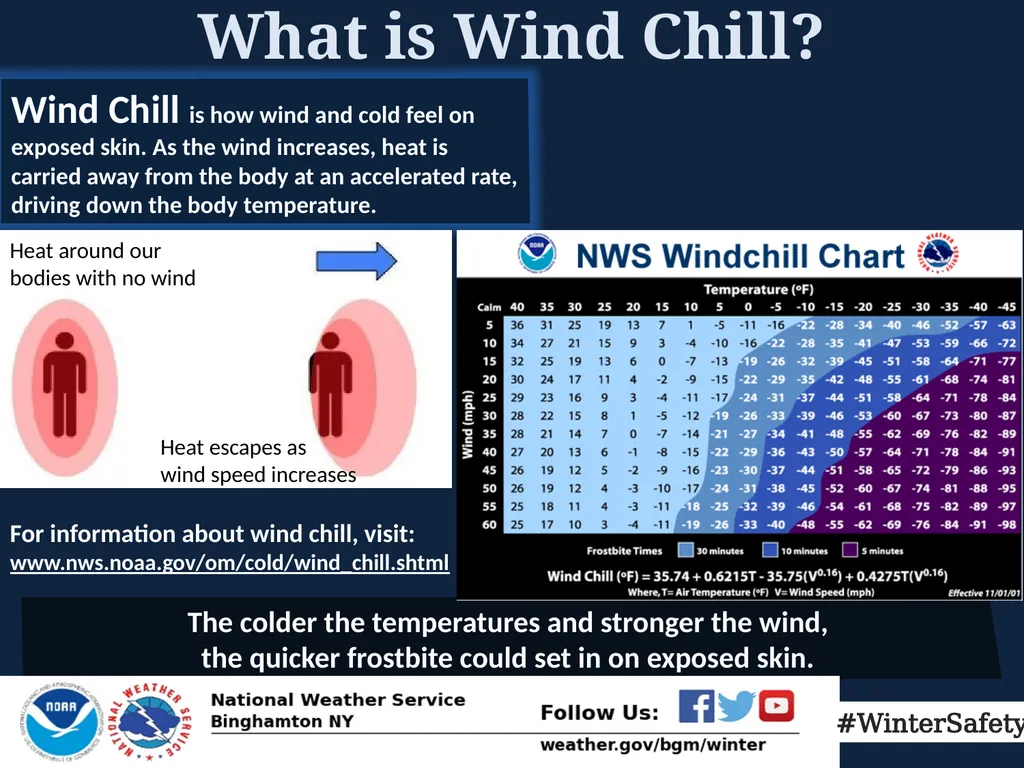
What is Wind Chill? The colder the temperatures and stronger the wind,
the quicker frostbite could set in on exposed skin. Wind Chill is how wind and cold feel on exposed skin. As the wind increases, heat is carried away from the body at an accelerated rate, driving down the body temperature. For information about wind chill, visit: www.nws.noaa.gov/om/cold/wind_chill.shtml #WinterSafety<br>
04
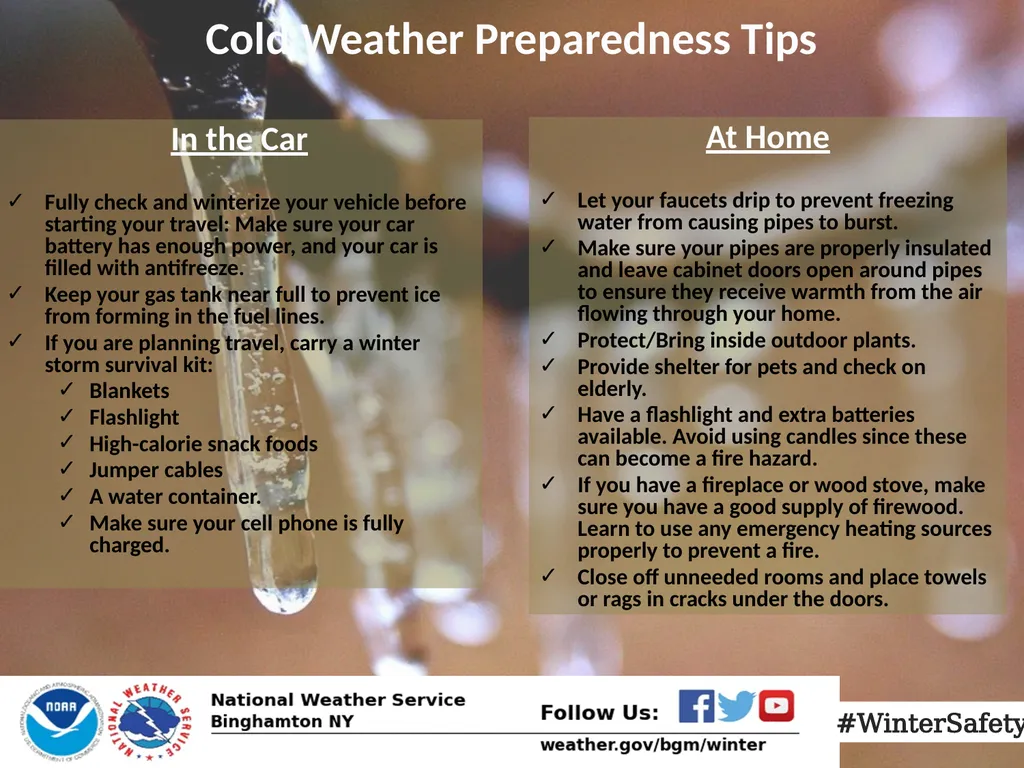
Cold Weather Preparedness Tips In the Car
Fully check and winterize your vehicle before starting your travel: Make sure your car battery has enough power, and your car is filled with antifreeze.
Keep your gas tank near full to prevent ice from forming in the fuel lines.
If you are planning travel, carry a winter storm survival kit:
Blankets
Flashlight
High-calorie snack foods
Jumper cables
A water container.
Make sure your cell phone is fully charged. At Home
Let your faucets drip to prevent freezing water from causing pipes to burst.
Make sure your pipes are properly insulated and leave cabinet doors open around pipes to ensure they receive warmth from the air flowing through your home.
Protect/Bring inside outdoor plants.
Provide shelter for pets and check on elderly.
Have a flashlight and extra batteries available. Avoid using candles since these can become a fire hazard.
If you have a fireplace or wood stove, make sure you have a good supply of firewood. Learn to use any emergency heating sources properly to prevent a fire.
Close off unneeded rooms and place towels or rags in cracks under the doors. #WinterSafety<br>
05
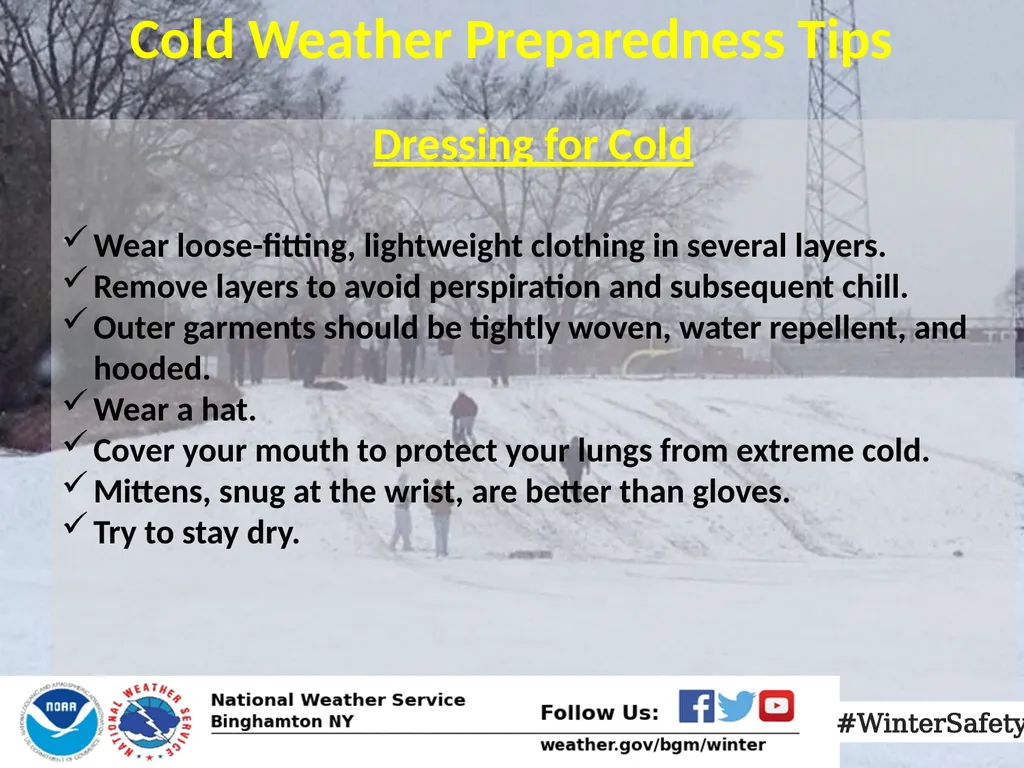
Cold Weather Preparedness Tips Dressing for Cold
Wear loose-fitting, lightweight clothing in several layers.
Remove layers to avoid perspiration and subsequent chill.
Outer garments should be tightly woven, water repellent, and hooded.
Wear a hat.
Cover your mouth to protect your lungs from extreme cold.
Mittens, snug at the wrist, are better than gloves.
Try to stay dry. #WinterSafety<br>
06
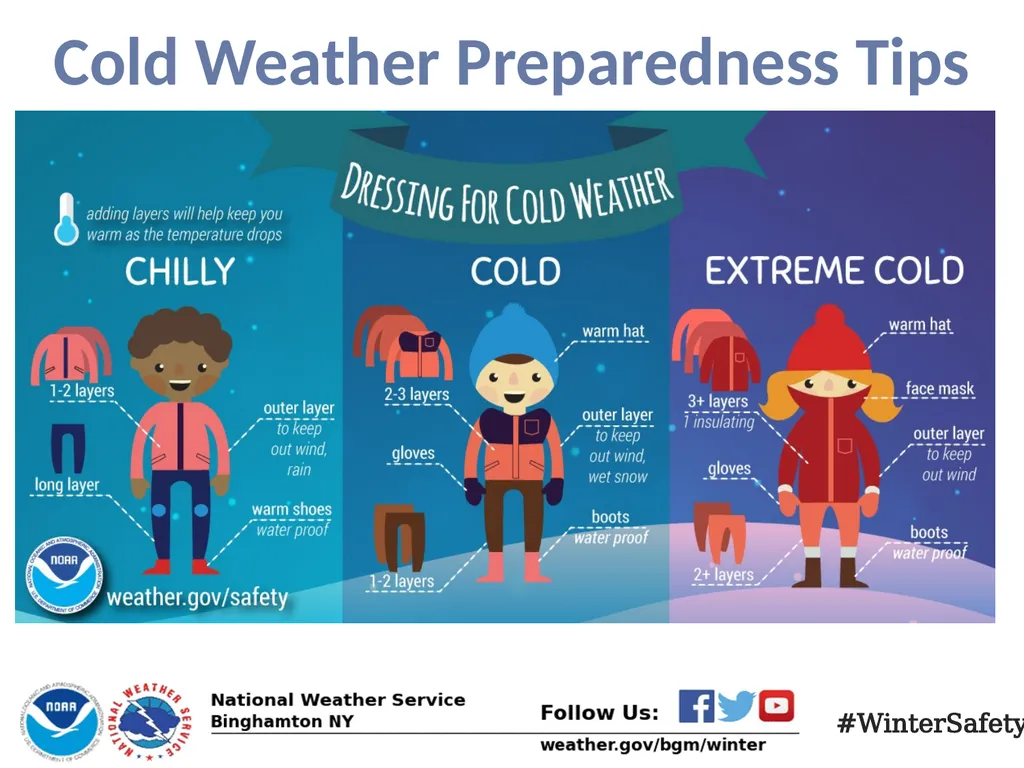
Cold Weather Preparedness Tips #WinterSafety<br>
07
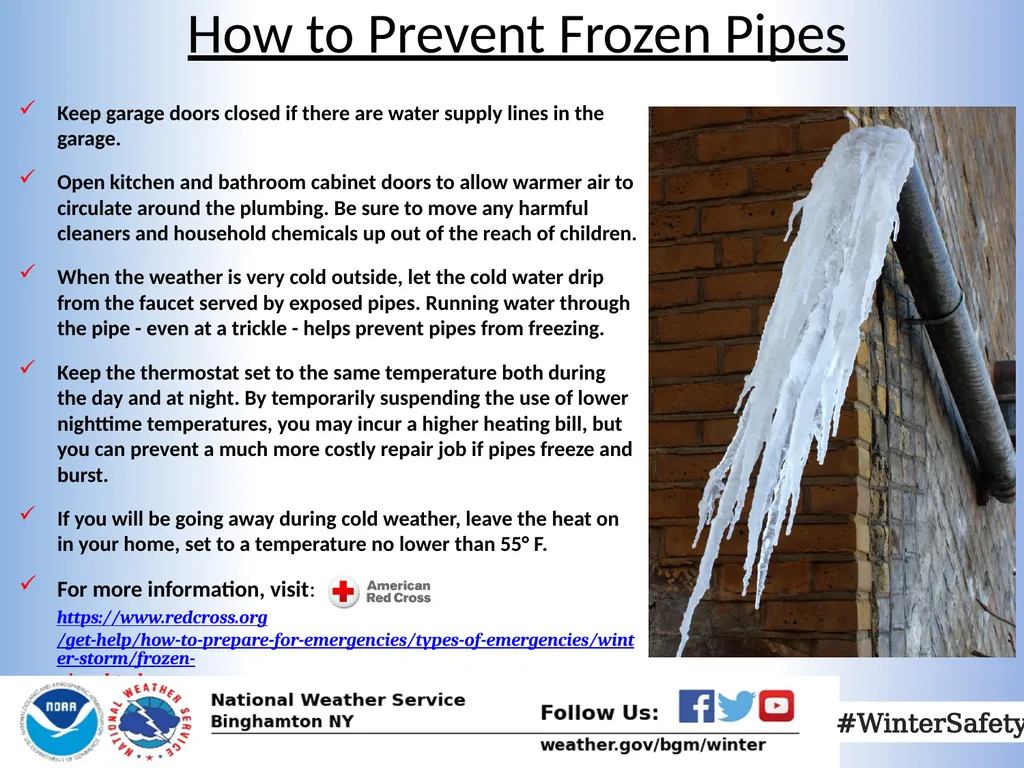
How to Prevent Frozen Pipes Keep garage doors closed if there are water supply lines in the garage.
Open kitchen and bathroom cabinet doors to allow warmer air to circulate around the plumbing. Be sure to move any harmful cleaners and household chemicals up out of the reach of children.
When the weather is very cold outside, let the cold water drip from the faucet served by exposed pipes. Running water through the pipe - even at a trickle - helps prevent pipes from freezing.
Keep the thermostat set to the same temperature both during the day and at night. By temporarily suspending the use of lower nighttime temperatures, you may incur a higher heating bill, but you can prevent a much more costly repair job if pipes freeze and burst.
If you will be going away during cold weather, leave the heat on in your home, set to a temperature no lower than 55° F.
For more information, visit:
https://www.redcross.org/get-help/how-to-prepare-for-emergencies/types-of-emergencies/winter-storm/frozen-pipes.html #WinterSafety<br>