
Colliding Worlds 1400 - 1600 Afro-Eurasia in the





Description: Colliding Worlds 1400 - 1600 Afro-Eurasia in the 1400s Economy revolved around Ming China richest, most powerful, most advanced society in the world All Eurasia sought Chinese goods: silks, spices, ceramics Chinese ships sailed the ocean
Related Topics
Download Presentation
"Colliding Worlds 1400 - 1600 Afro-Eurasia in the" is the property of its rightful owner. Permission is granted to download and print the materials on this website for personal, non-commercial use only, and to display it on your personal computer provided you do not modify the materials and that you retain all copyright notices contained in the materials. By downloading content from our website, you accept the terms of this agreement.
Presentation Transcript
slide1. Colliding Worlds 1400 - 1600<br>
slide2. Afro-Eurasia in the 1400s Economy revolved around Ming China – richest, most powerful, most advanced society in the world
All Eurasia sought Chinese goods: silks, spices, ceramics
Chinese ships sailed the ocean as far as East Africa<br>
slide3. The Voyages of Zheng He (1405 – 1433)<br>
slide4. Afro-Eurasia in the 1400s After the voyages of Zheng He, the Ming ceased funding overseas voyages
Next in importance to China were the Islamic Empires, especially the Ottoman Empire<br>
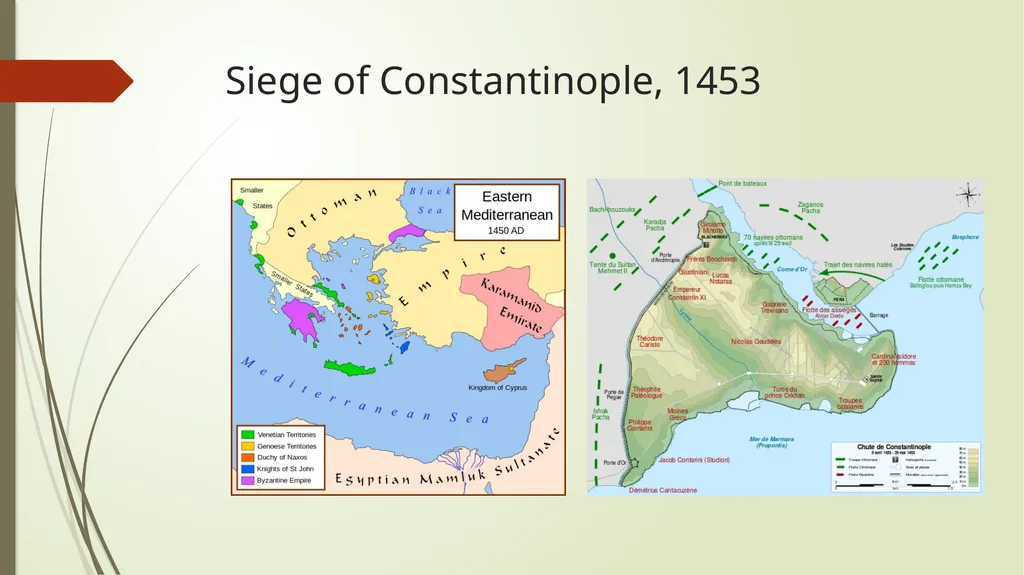
slide5. Siege of Constantinople, 1453<br>
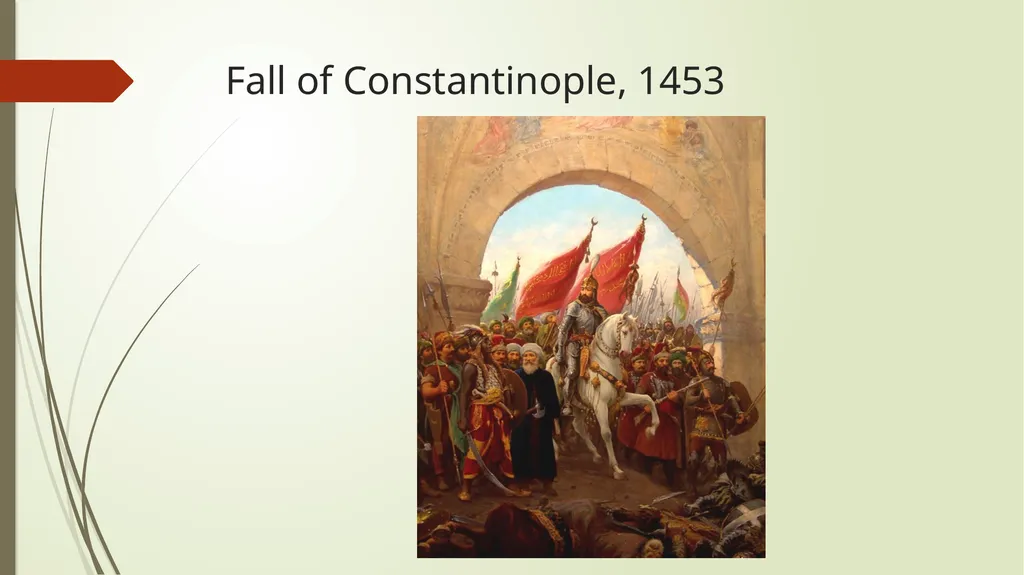
slide6. Fall of Constantinople, 1453<br>
slide7. Europe in the 1400s Europe sat on the fringes of the Afro-Eurasian world
90% of Europe’s population were engaged in subsistence agriculture
Warfare was common, transportation was poor, and food was often in short supply -> life was nasty, brutish, and short<br>
slide8. Europe in the 1400s Europe was also a place of sharp inequality
The nobility and the Church owned the majority of the land, while peasants had a very meager existence
There was no strong, centralized government<br>
slide9. Europe in the 1400s Under the feudal system, kings were weak & warlords ruled over their personal fiefdoms
There was very little stability or security -> homicide, robbery, and rape were common
However, Europe was undergoing changes in the 15th century
One of the most important was an expansion in trade by the 1400s<br>
slide10. Europe in the 1400s The Italian city-states led the way
Wealth flowed into the accounts of merchants and financiers creating a new, powerful class of people (middle class)
They used this capital to invest in further trading ventures<br>
slide11. Europe in the 1400s Furthermore, one also sees the rise of powerful kings in Western Europe
England, France, and Spain emerged as the first modern nation-states
These larger, more centrally organized states were best positioned to establish and maintain overseas colonial outposts<br>
slide12. The Portuguese Phase Even before the fall of Constantinople, European merchants desired direct access to wealthy markets in Asia and Africa
The Portuguese will pave the way for other European exploration<br>
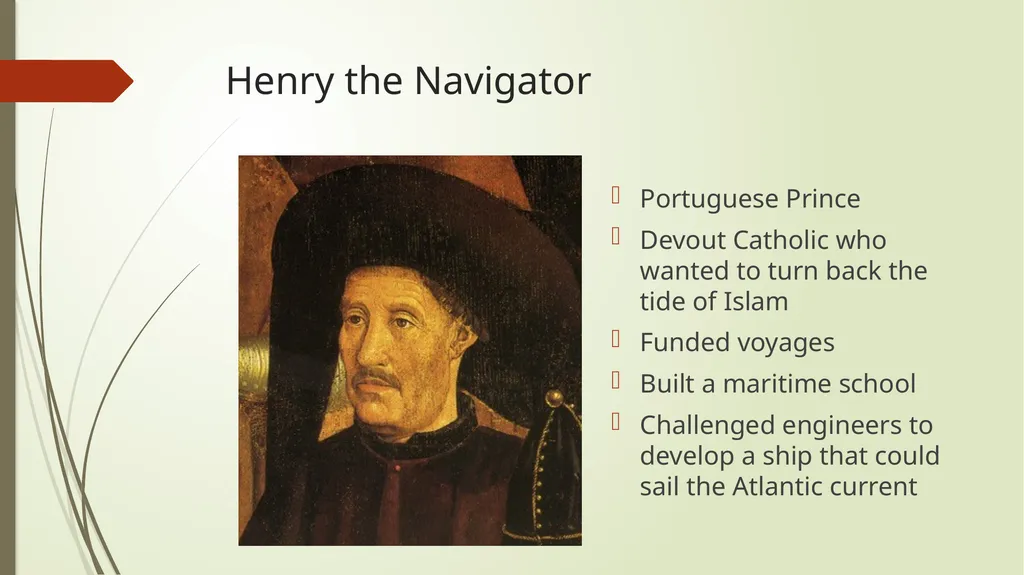
slide13. Henry the Navigator Portuguese Prince
Devout Catholic who wanted to turn back the tide of Islam
Funded voyages
Built a maritime school
Challenged engineers to develop a ship that could sail the Atlantic current<br>
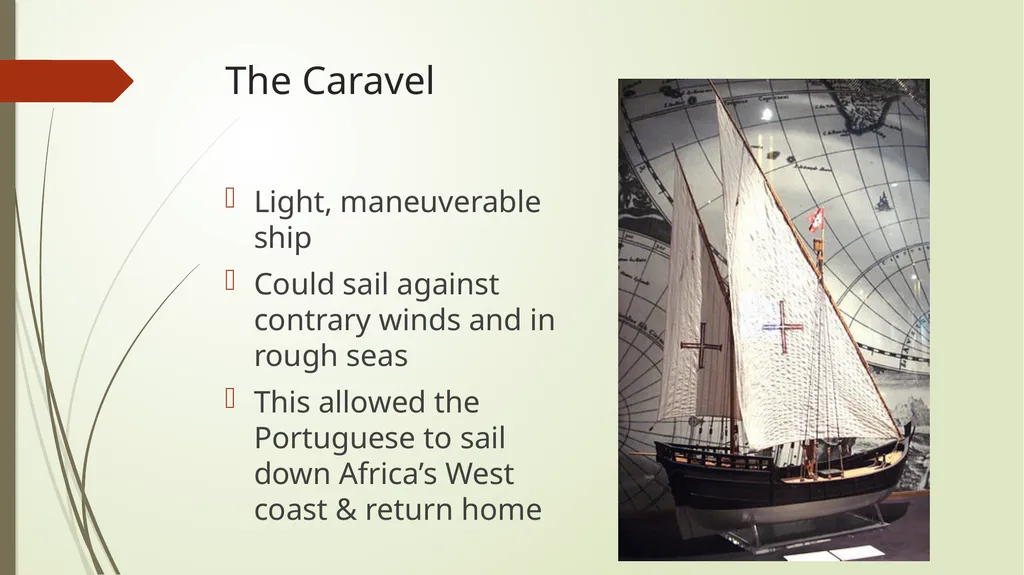
slide14. The Caravel Light, maneuverable ship
Could sail against contrary winds and in rough seas
This allowed the Portuguese to sail down Africa’s West coast & return home<br>
slide15. The Portuguese Phase The Portuguese established forts along the coast but were unable to conquer territory
They paid taxes to local powers in return for trading privileges
Gold, ivory, and pepper were most prized items
Early on, the Portuguese also showed interest in slaves<br>
slide16. The Portuguese Phase Slavery was largely nonexistent in Europe during the Middle Ages
However, sugar was introduced into Europe as a result of the Crusades
Immediately, sugar’s economic potential was recognized<br>
slide17. The Portuguese Phase Sugar is a very labor-intensive crop to produce
It demands a cheap, pliable workforce in order for sugar to be profitable
Europeans will turn to slaves as the labor force<br>
slide18. The Portuguese Phase Sugar also quickly exhaust the soils
Thus, the Portuguese begin to search for new lands where they can grow the crop
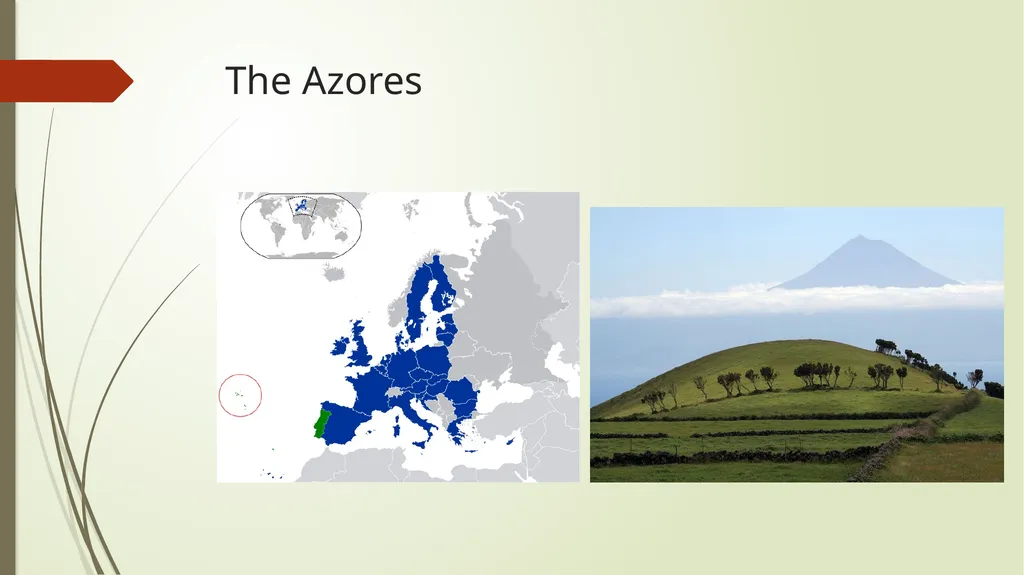
These leads them to islands in the Atlantic: Canaries, Madeira, and the Azores
These islands had rich, volcanic soils ideal for sugarcane<br>
slide19. The Azores<br>
slide20. The Portuguese Phase By the late 15th century, Portugal had become a rich, powerful country
They became convinced they could reach the highly-desired Asian markets
They believed sailing around the southern tip of Africa was the shortest route<br>
slide21. Bartolomeu Dias - 1488<br>
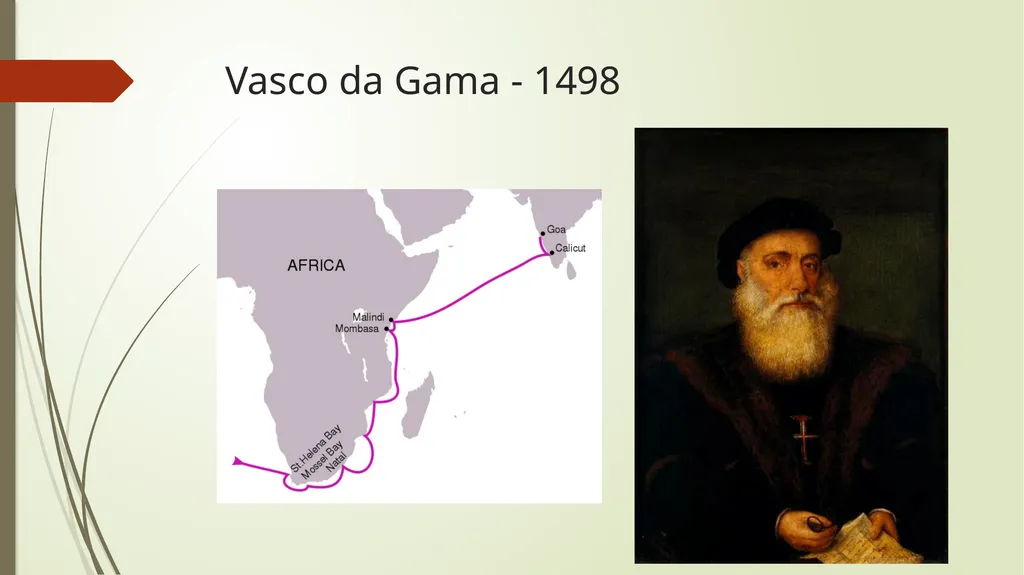
slide22. Vasco da Gama - 1498<br>
slide23. The Spanish Phase Christopher Columbus and 1492<br>
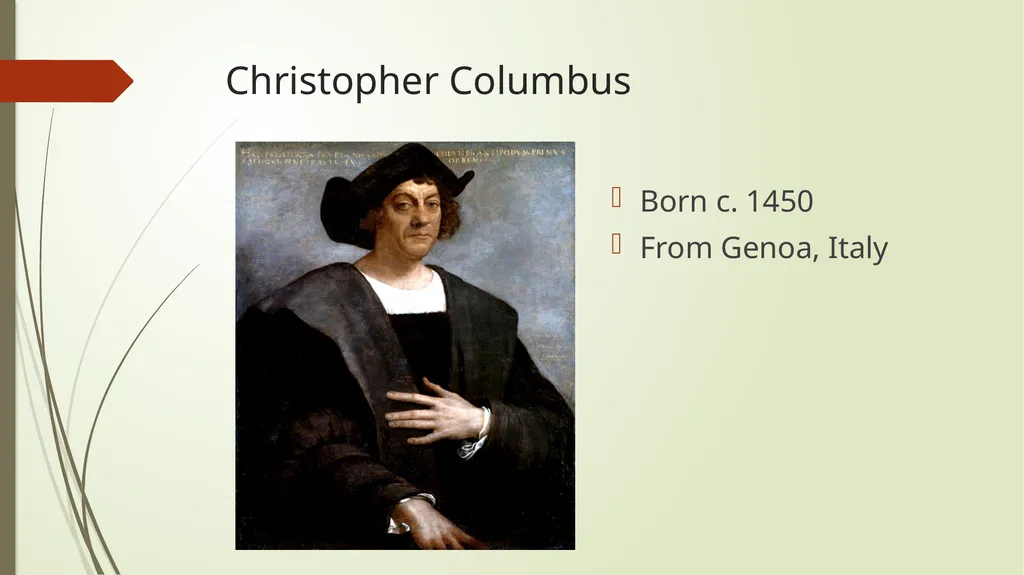
slide24. Christopher Columbus Born c. 1450
From Genoa, Italy<br>
slide25. Christopher Columbus Came to Portugal as a young man to learn from the world’s best mariners
Became convinced it was shorter to sail westward in order to reach Asian markets
Portuguese geographers scoffed at this notion<br>
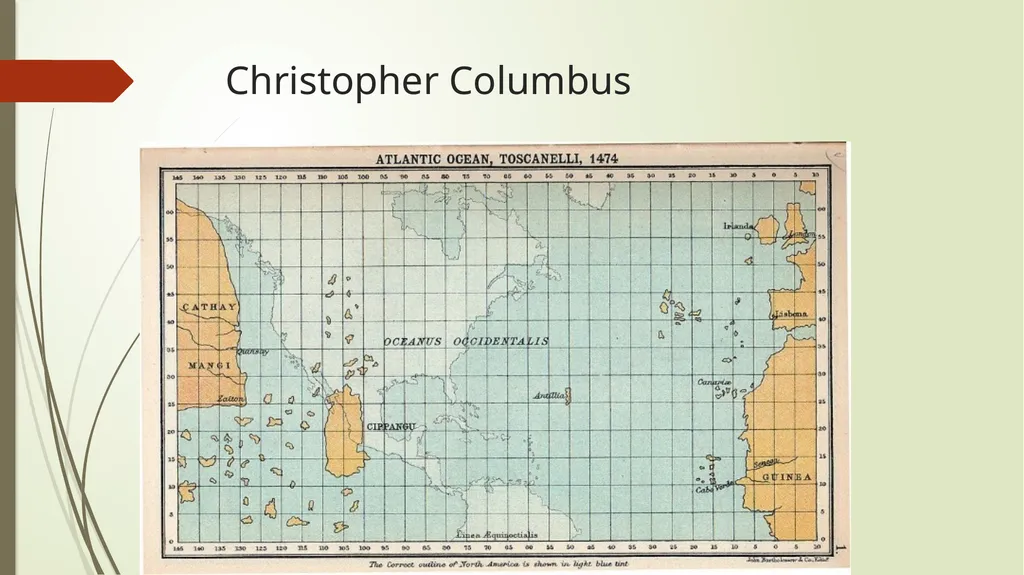
slide26. Christopher Columbus<br>
slide27. Christopher Columbus Unable to find investors, he went to Spain in 1485
At first, Columbus was rejected by Ferdinand and Isabella
At the time, they were focused on completion of the Reconquista<br>
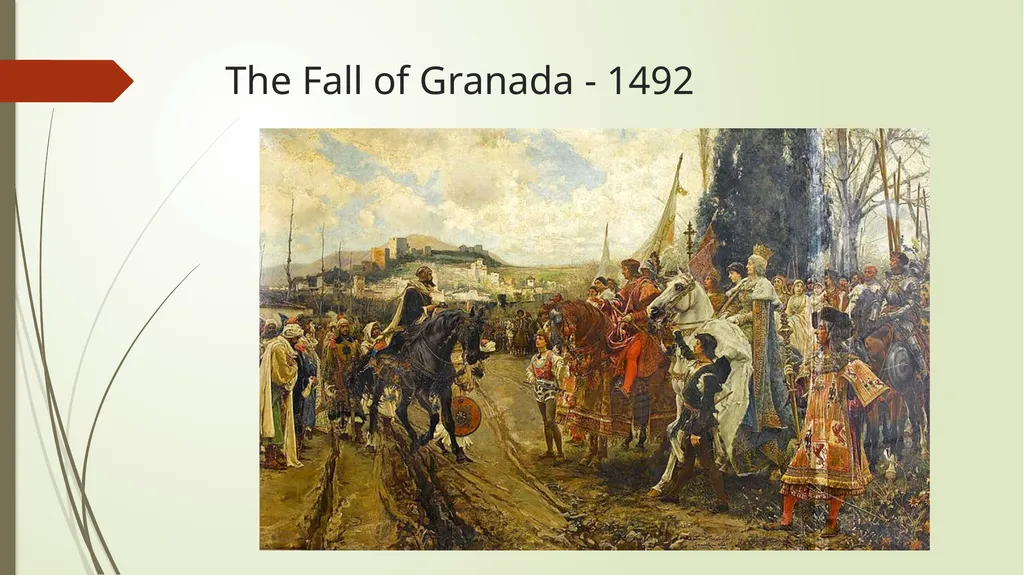
slide28. The Fall of Granada - 1492<br>
slide29. Christopher Columbus After their victory over the Moors, Ferdinand and Isabella agreed to fund Columbus’ westward voyage
Two months after leaving Spain, Columbus spotted branches and leaves floating in the water
On October 12, Columbus set anchor in what is now an island in the Bahamas -> Columbus dubbed it San Salvador<br>
slide30. Christopher Columbus Columbus believed he was on an island in the Indies
Thus, he called the people of the island (Taino) Indios
Columbus refused to believe he had landed anywhere other than the Indies<br>
slide31. Christopher Columbus Eventually, other explorers realized this territory was uncharted land
One of the first was Florentine Amerigo Vespucci
He referred to the Indies as Mundus Novus – “New World”
A German mapmaker named the territory America in his honor, rather than Columbia
His maps became wildly successful, and the name stuck<br>
slide32. Spain in the New World Unlike West Africa, Europeans concluded this territory could be easily conquered
Thus begins the period of the European conquest of the Americas<br>
slide33. Bartolome de las Casas & the “Black Legend”<br>
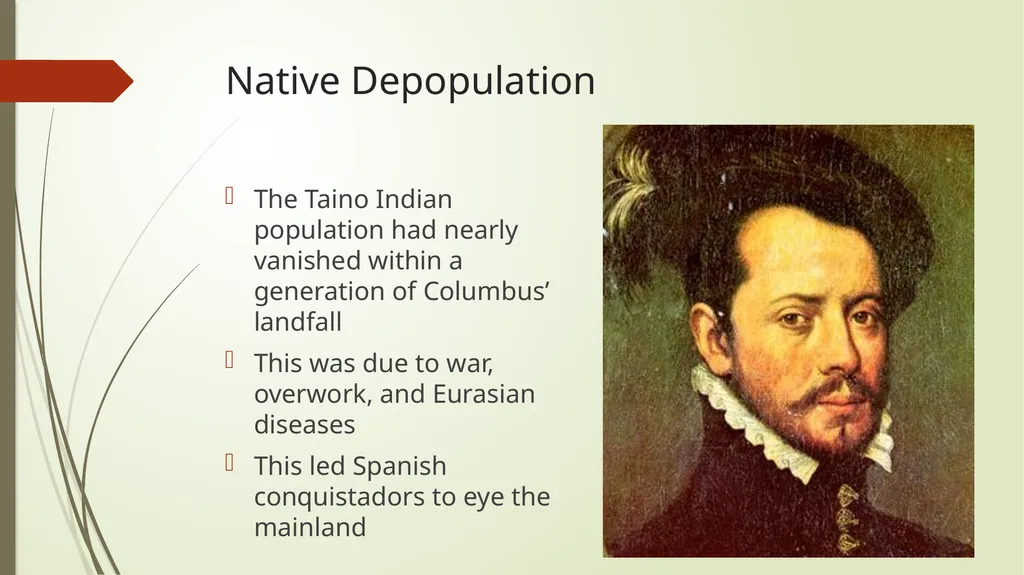
slide34. Native Depopulation The Taino Indian population had nearly vanished within a generation of Columbus’ landfall
This was due to war, overwork, and Eurasian diseases
This led Spanish conquistadors to eye the mainland<br>
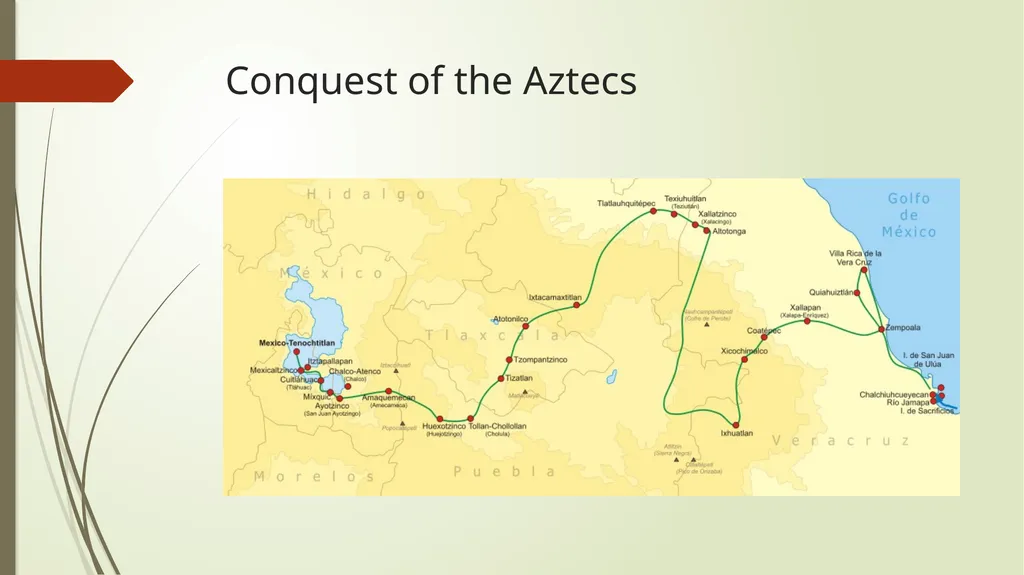
slide35. Conquest of the Aztecs<br>
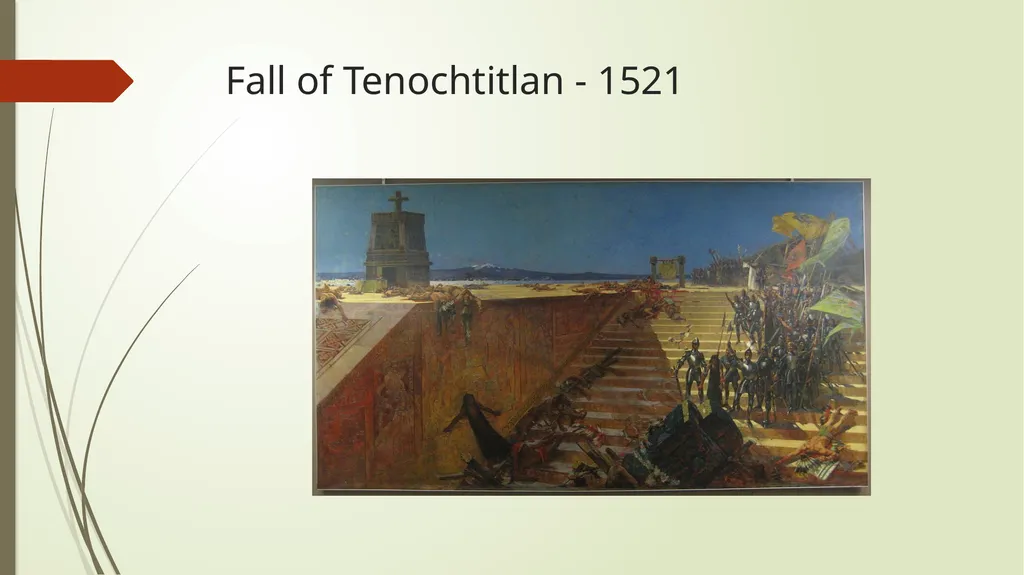
slide36. Fall of Tenochtitlan - 1521<br>
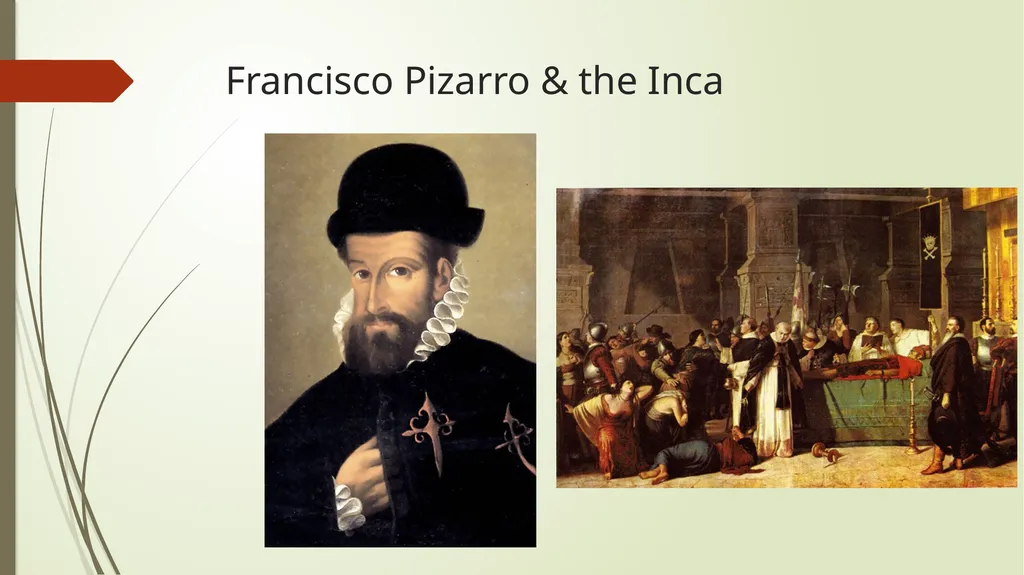
slide37. Francisco Pizarro & the Inca<br>
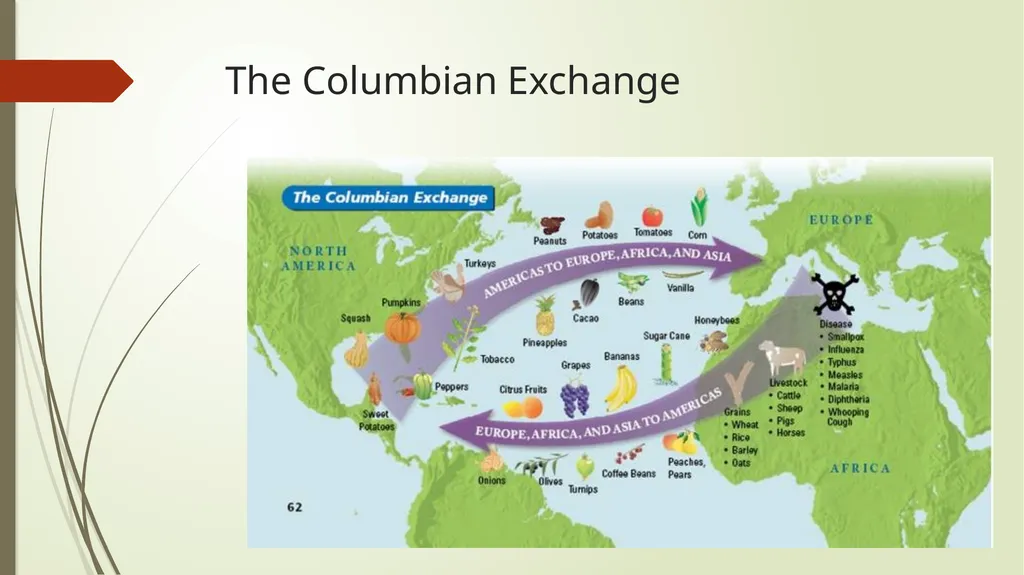
slide38. The Columbian Exchange<br>
slide39. Spanish America Spain’s new colonies came to be heavily regulated by the Crown
Officials appointed by the crown were sent to the colonies to govern
Very few Spaniards came to the colonies -> comprised only about 5% of the population<br>
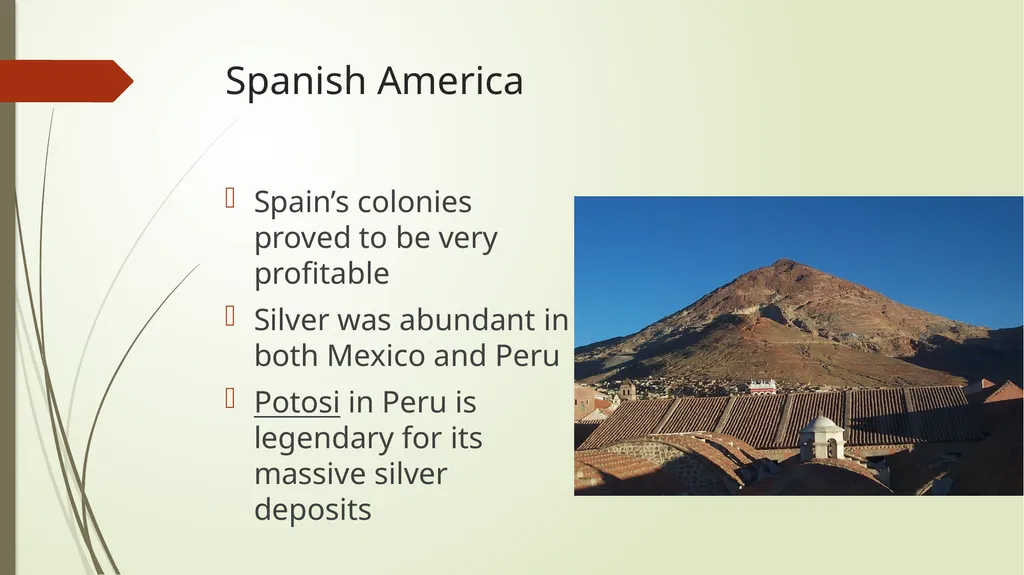
slide40. Spanish America Spain’s colonies proved to be very profitable
Silver was abundant in both Mexico and Peru
Potosi in Peru is legendary for its massive silver deposits<br>
slide41. The Search for North American Empires Spanish success in Mexico and Peru spurred would-be conquistadors to search for rich empires in the north<br>
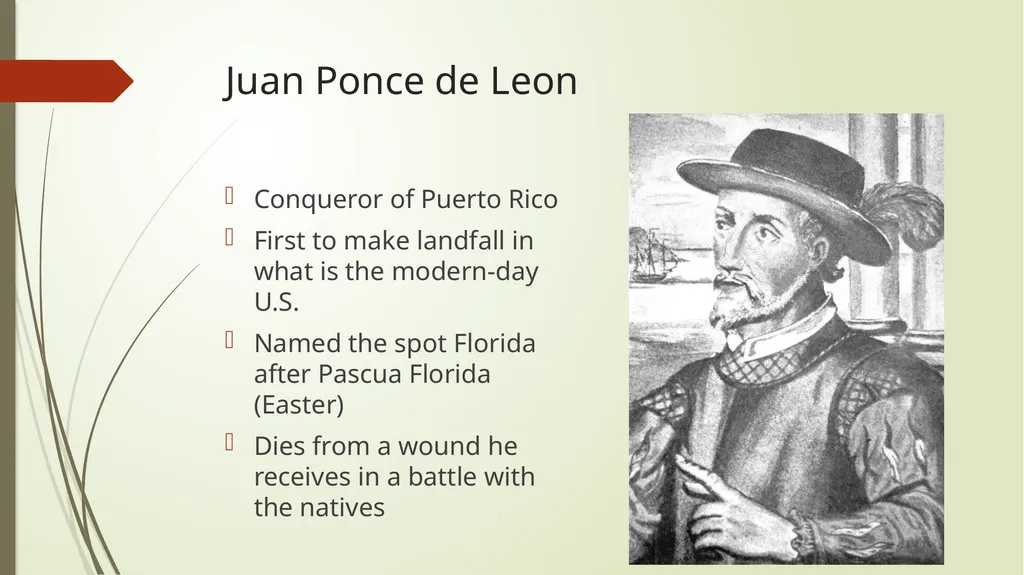
slide42. Juan Ponce de Leon Conqueror of Puerto Rico
First to make landfall in what is the modern-day U.S.
Named the spot Florida after Pascua Florida (Easter)
Dies from a wound he receives in a battle with the natives<br>
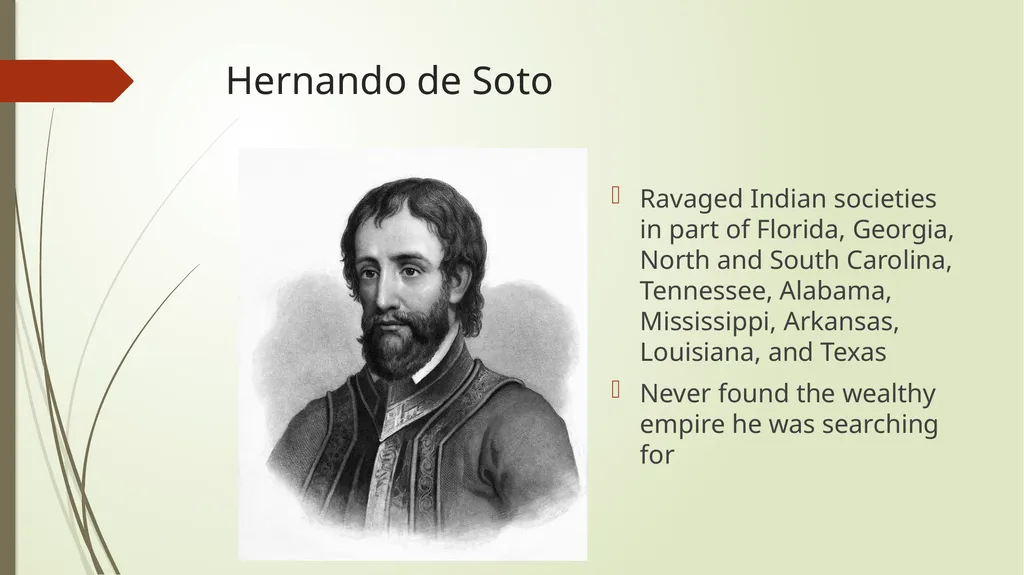
slide43. Hernando de Soto Ravaged Indian societies in part of Florida, Georgia, North and South Carolina, Tennessee, Alabama, Mississippi, Arkansas, Louisiana, and Texas
Never found the wealthy empire he was searching for<br>
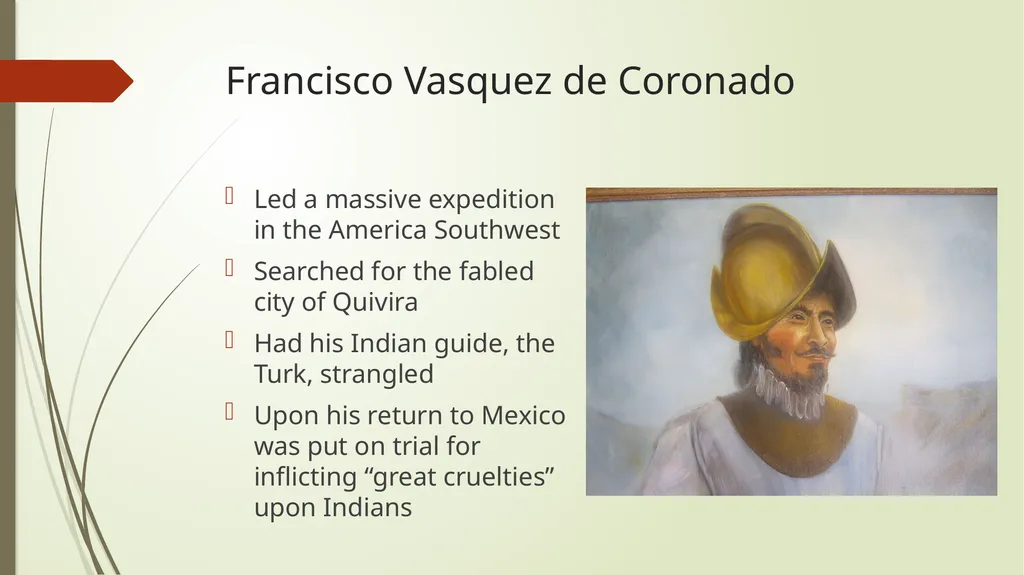
slide44. Francisco Vasquez de Coronado Led a massive expedition in the America Southwest
Searched for the fabled city of Quivira
Had his Indian guide, the Turk, strangled
Upon his return to Mexico was put on trial for inflicting “great cruelties” upon Indians<br>
slide45. Spanish Dominance in the Americas For most of the 1500s, other European countries showed little interest in establishing colonies in the Americas
For most of the century, Spain could consider the Americas its property
This is largely due to a revolution in Christianity that embroiled the continent during this time<br>
slide46. The Protestant Revolution The Roman Catholic Church had dominated European religious life for over a thousand years
The pope was one of the most powerful men in Europe & the Church had grown wealthy from tithes
The Church began to sell indulgences in the 1200s, which was also very profitable
As the Church’s power increased so did its corruption<br>
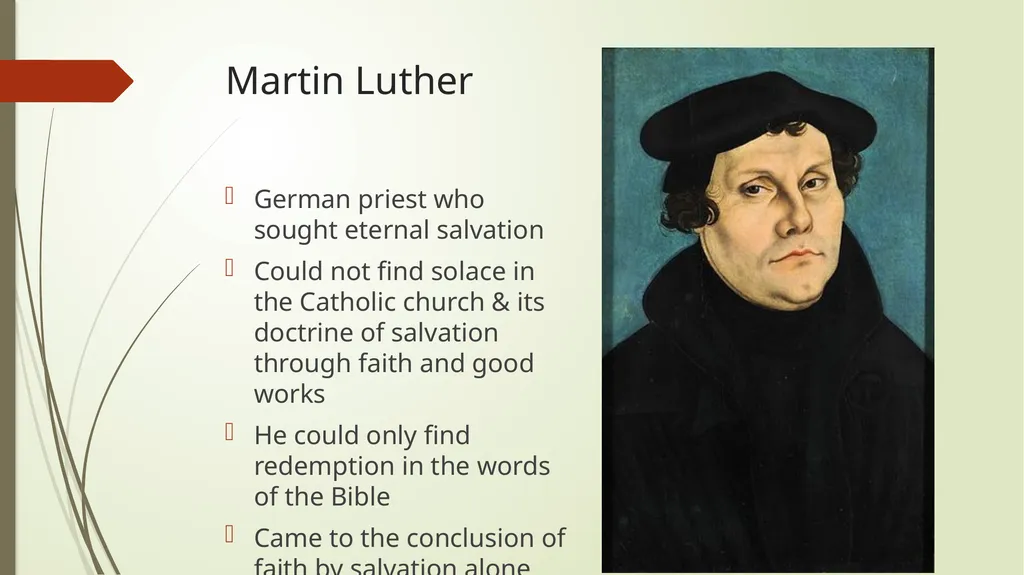
slide47. Martin Luther German priest who sought eternal salvation
Could not find solace in the Catholic church & its doctrine of salvation through faith and good works
He could only find redemption in the words of the Bible
Came to the conclusion of faith by salvation alone<br>
slide48. Martin Luther As a priest in Wittenberg, Germany, Luther became increasingly critical of what he saw as the Church’s corruption
The 95 Theses (October 31, 1517) were a blistering attack on the Church’s practice of selling indulgences
The Church tried to silence Luther and eventually excommunicated him<br>
slide49. Martin Luther However, when the Church pushed Luther, he pushed back even harder
Luther began to attack the priesthood, saying every person had the power claimed by priests
Within a few years, independent Lutheran Churches were springing up all over Germany and beyond<br>
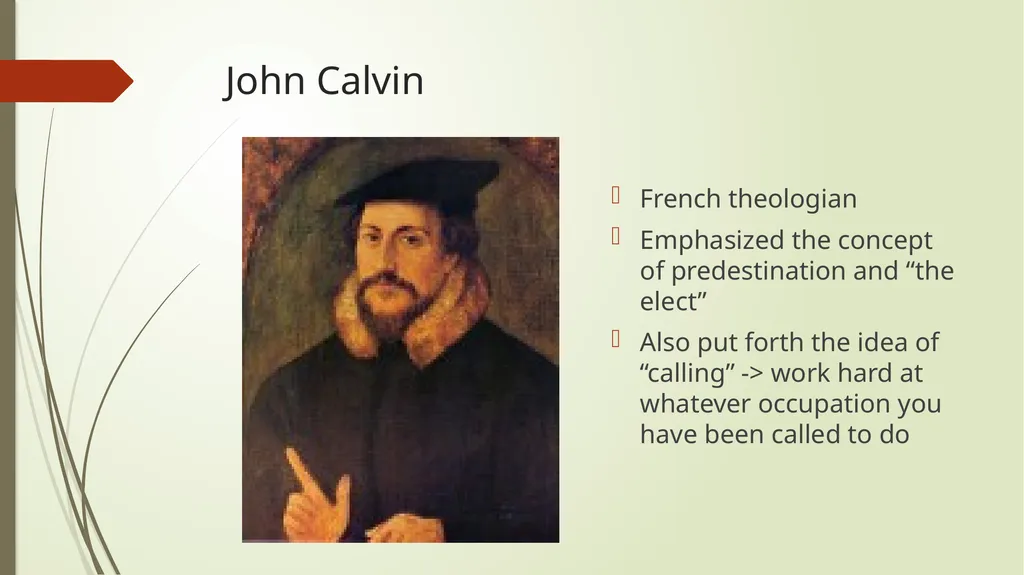
slide50. John Calvin French theologian
Emphasized the concept of predestination and “the elect”
Also put forth the idea of “calling” -> work hard at whatever occupation you have been called to do<br>
slide51. John Calvin Established a theocracy in the city of Geneva
Unlike Luther, who wrote for a German audience, Calvin wrote to Christians throughout Europe
Key work was The Institutes of the Christian Religion (1536)<br>
slide52. The Protestant Reformation The 16th century became a century of religious warfare throughout much of Europe -> France saw some of the worst
French Huguenots sought refuge in the New World
However, their settlement at Fort Caroline in Florida was crushed by Spanish Catholics
This, by and large, ended the Huguenot dream of escaping persecution at home<br>
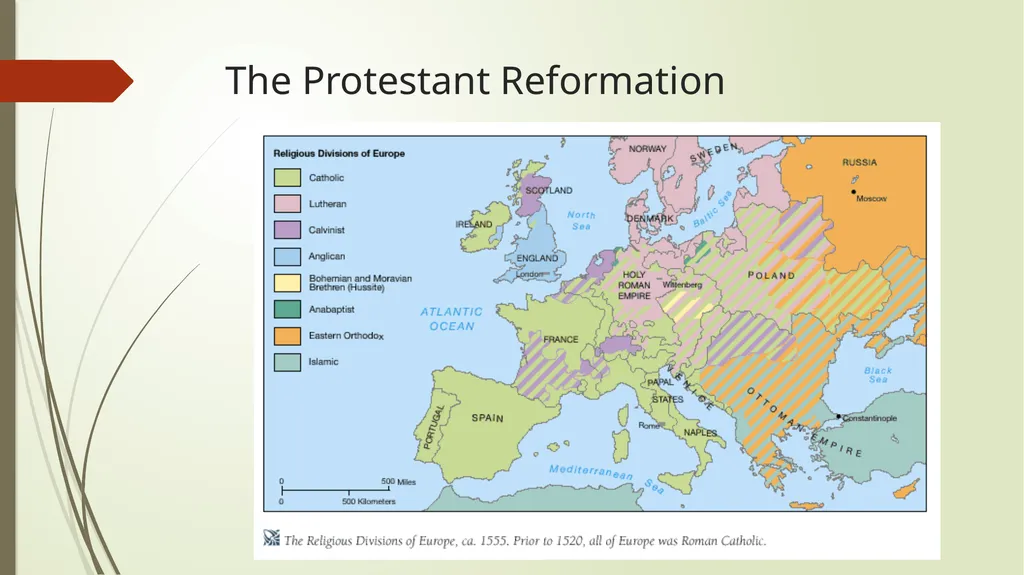
slide53. The Protestant Reformation<br>
slide54. The English Reformation Use other PowerPoint<br>
slide55. English Attempts at Colonization Ireland became a training ground prior to English colonization in the New World
In 1565, Elizabeth I encouraged elite subjects to sponsor private ventures to subdue the Catholic Irish
Humphrey Gilbert and Walter Raleigh were two of these men<br>
slide56. English Attempts at Colonization The English were brutal in their conquest of the Irish
This was a sign of things to come in their dealings with the Natives
However, there was no profit to made in the subjugation of the Irish people
Thus, English entrepreneurs began to eye the New World<br>
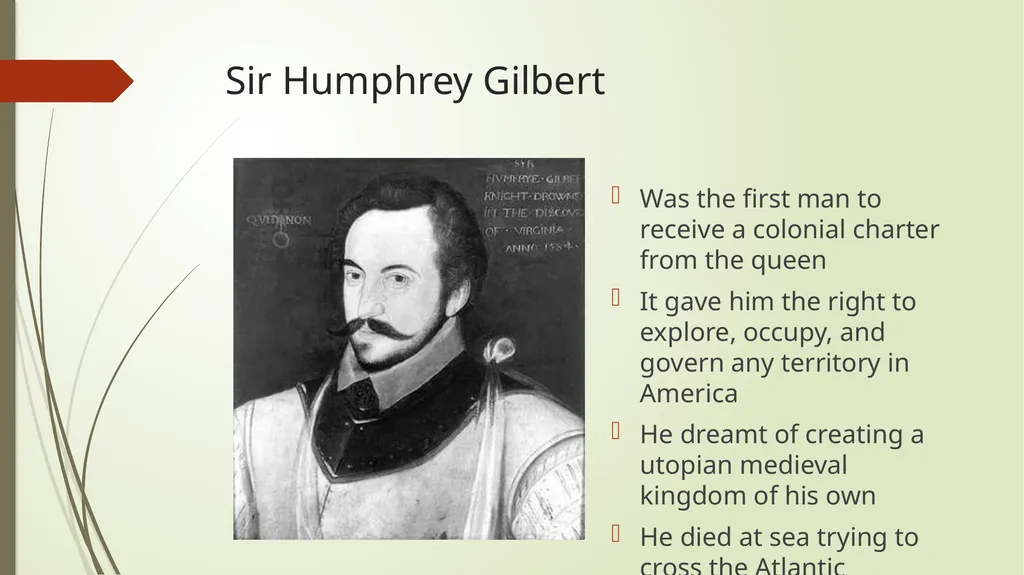
slide57. Sir Humphrey Gilbert Was the first man to receive a colonial charter from the queen
It gave him the right to explore, occupy, and govern any territory in America
He dreamt of creating a utopian medieval kingdom of his own
He died at sea trying to cross the Atlantic<br>
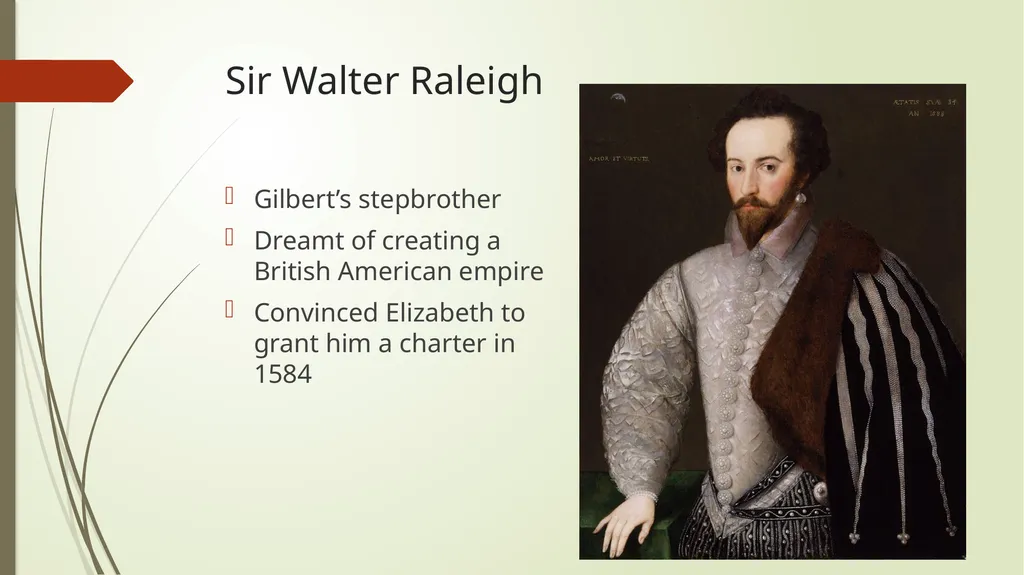
slide58. Sir Walter Raleigh Gilbert’s stepbrother
Dreamt of creating a British American empire
Convinced Elizabeth to grant him a charter in 1584<br>
slide59. Sir Walter Raleigh His first expedition explored what is now the Outer Banks of North Carolina
Made contact with friendly Natives -> encouraged future expeditions
Was knighted by Elizabeth and named the land Virginian in honor of the Virgin Queen<br>
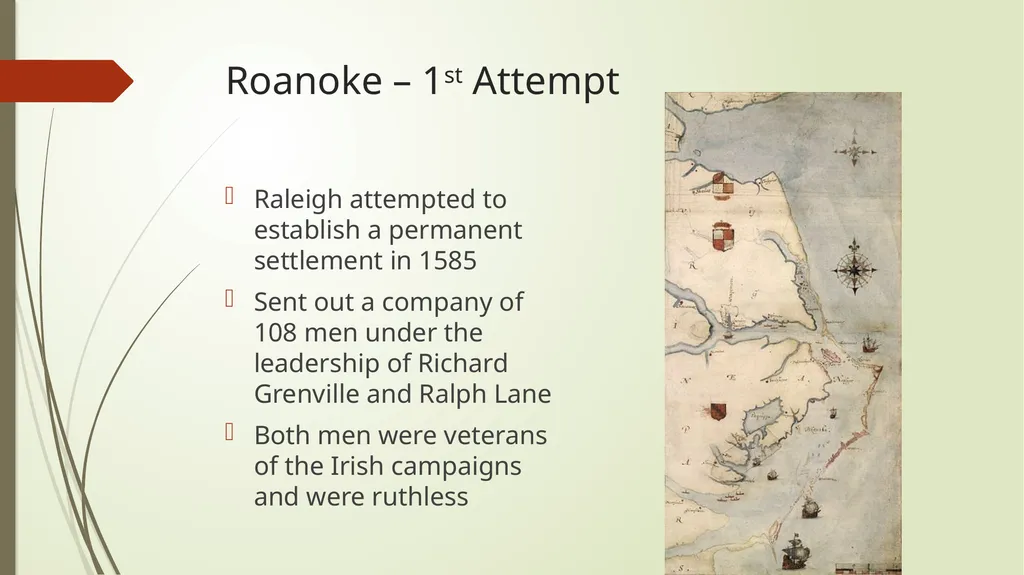
slide60. Roanoke – 1st Attempt Raleigh attempted to establish a permanent settlement in 1585
Sent out a company of 108 men under the leadership of Richard Grenville and Ralph Lane
Both men were veterans of the Irish campaigns and were ruthless<br>
slide61. Roanoke – 1st Attempt Almost instantly, relations with the Natives turned sour
After killing an Indian chief, the company most likely would have been slaughtered by and Indian attack
However, Sir Francis Drake arrived at the last moment and rescued the men<br>
slide62. Roanoke – 2nd Attempt Raleigh quickly assembled another expedition
He recruited 119 men, women, and children granting each person 500 acres of land
John White was selected as the governor<br>
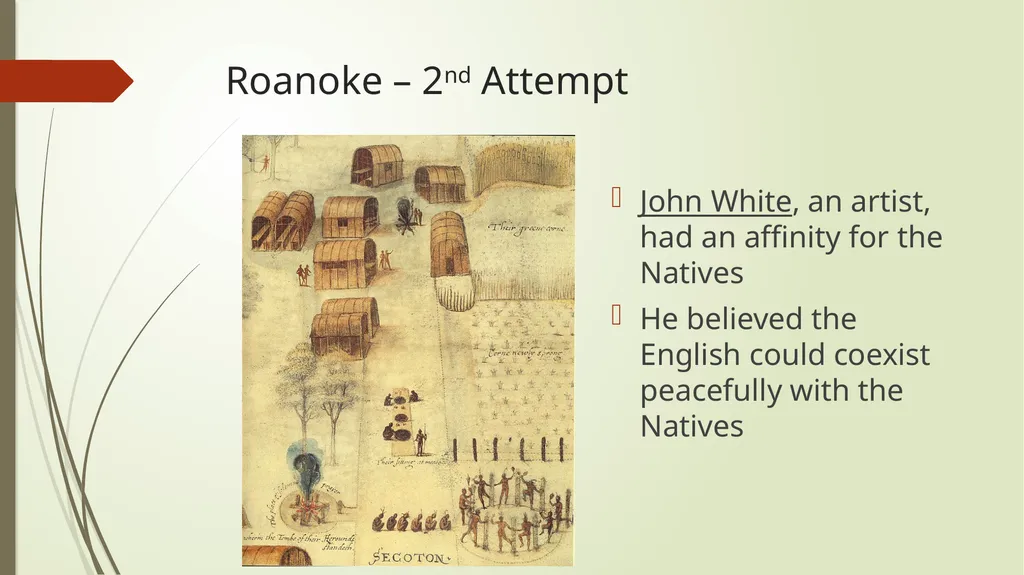
slide63. Roanoke – 2nd Attempt John White, an artist, had an affinity for the Natives
He believed the English could coexist peacefully with the Natives<br>
slide64. Roanoke – 2nd Attempt However, the Natives were not happy to see the English return after what had happened previously
Thus, White was forced to return to England to bring reinforcements
When he returned to England in 1588, he found the massive Spanish armada attempting to invade the country<br>
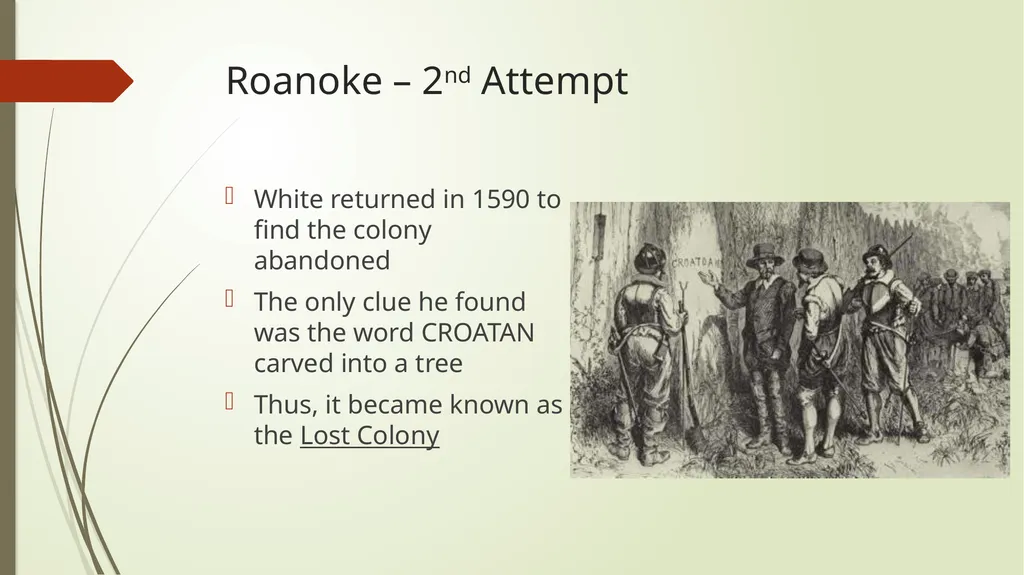
slide65. Roanoke – 2nd Attempt White returned in 1590 to find the colony abandoned
The only clue he found was the word CROATAN carved into a tree
Thus, it became known as the Lost Colony<br>
slide2. Afro-Eurasia in the 1400s Economy revolved around Ming China – richest, most powerful, most advanced society in the world
All Eurasia sought Chinese goods: silks, spices, ceramics
Chinese ships sailed the ocean as far as East Africa<br>
slide3. The Voyages of Zheng He (1405 – 1433)<br>
slide4. Afro-Eurasia in the 1400s After the voyages of Zheng He, the Ming ceased funding overseas voyages
Next in importance to China were the Islamic Empires, especially the Ottoman Empire<br>
slide5. Siege of Constantinople, 1453<br>
slide6. Fall of Constantinople, 1453<br>
slide7. Europe in the 1400s Europe sat on the fringes of the Afro-Eurasian world
90% of Europe’s population were engaged in subsistence agriculture
Warfare was common, transportation was poor, and food was often in short supply -> life was nasty, brutish, and short<br>
slide8. Europe in the 1400s Europe was also a place of sharp inequality
The nobility and the Church owned the majority of the land, while peasants had a very meager existence
There was no strong, centralized government<br>
slide9. Europe in the 1400s Under the feudal system, kings were weak & warlords ruled over their personal fiefdoms
There was very little stability or security -> homicide, robbery, and rape were common
However, Europe was undergoing changes in the 15th century
One of the most important was an expansion in trade by the 1400s<br>
slide10. Europe in the 1400s The Italian city-states led the way
Wealth flowed into the accounts of merchants and financiers creating a new, powerful class of people (middle class)
They used this capital to invest in further trading ventures<br>
slide11. Europe in the 1400s Furthermore, one also sees the rise of powerful kings in Western Europe
England, France, and Spain emerged as the first modern nation-states
These larger, more centrally organized states were best positioned to establish and maintain overseas colonial outposts<br>
slide12. The Portuguese Phase Even before the fall of Constantinople, European merchants desired direct access to wealthy markets in Asia and Africa
The Portuguese will pave the way for other European exploration<br>
slide13. Henry the Navigator Portuguese Prince
Devout Catholic who wanted to turn back the tide of Islam
Funded voyages
Built a maritime school
Challenged engineers to develop a ship that could sail the Atlantic current<br>
slide14. The Caravel Light, maneuverable ship
Could sail against contrary winds and in rough seas
This allowed the Portuguese to sail down Africa’s West coast & return home<br>
slide15. The Portuguese Phase The Portuguese established forts along the coast but were unable to conquer territory
They paid taxes to local powers in return for trading privileges
Gold, ivory, and pepper were most prized items
Early on, the Portuguese also showed interest in slaves<br>
slide16. The Portuguese Phase Slavery was largely nonexistent in Europe during the Middle Ages
However, sugar was introduced into Europe as a result of the Crusades
Immediately, sugar’s economic potential was recognized<br>
slide17. The Portuguese Phase Sugar is a very labor-intensive crop to produce
It demands a cheap, pliable workforce in order for sugar to be profitable
Europeans will turn to slaves as the labor force<br>
slide18. The Portuguese Phase Sugar also quickly exhaust the soils
Thus, the Portuguese begin to search for new lands where they can grow the crop
These leads them to islands in the Atlantic: Canaries, Madeira, and the Azores
These islands had rich, volcanic soils ideal for sugarcane<br>
slide19. The Azores<br>
slide20. The Portuguese Phase By the late 15th century, Portugal had become a rich, powerful country
They became convinced they could reach the highly-desired Asian markets
They believed sailing around the southern tip of Africa was the shortest route<br>
slide21. Bartolomeu Dias - 1488<br>
slide22. Vasco da Gama - 1498<br>
slide23. The Spanish Phase Christopher Columbus and 1492<br>
slide24. Christopher Columbus Born c. 1450
From Genoa, Italy<br>
slide25. Christopher Columbus Came to Portugal as a young man to learn from the world’s best mariners
Became convinced it was shorter to sail westward in order to reach Asian markets
Portuguese geographers scoffed at this notion<br>
slide26. Christopher Columbus<br>
slide27. Christopher Columbus Unable to find investors, he went to Spain in 1485
At first, Columbus was rejected by Ferdinand and Isabella
At the time, they were focused on completion of the Reconquista<br>
slide28. The Fall of Granada - 1492<br>
slide29. Christopher Columbus After their victory over the Moors, Ferdinand and Isabella agreed to fund Columbus’ westward voyage
Two months after leaving Spain, Columbus spotted branches and leaves floating in the water
On October 12, Columbus set anchor in what is now an island in the Bahamas -> Columbus dubbed it San Salvador<br>
slide30. Christopher Columbus Columbus believed he was on an island in the Indies
Thus, he called the people of the island (Taino) Indios
Columbus refused to believe he had landed anywhere other than the Indies<br>
slide31. Christopher Columbus Eventually, other explorers realized this territory was uncharted land
One of the first was Florentine Amerigo Vespucci
He referred to the Indies as Mundus Novus – “New World”
A German mapmaker named the territory America in his honor, rather than Columbia
His maps became wildly successful, and the name stuck<br>
slide32. Spain in the New World Unlike West Africa, Europeans concluded this territory could be easily conquered
Thus begins the period of the European conquest of the Americas<br>
slide33. Bartolome de las Casas & the “Black Legend”<br>
slide34. Native Depopulation The Taino Indian population had nearly vanished within a generation of Columbus’ landfall
This was due to war, overwork, and Eurasian diseases
This led Spanish conquistadors to eye the mainland<br>
slide35. Conquest of the Aztecs<br>
slide36. Fall of Tenochtitlan - 1521<br>
slide37. Francisco Pizarro & the Inca<br>
slide38. The Columbian Exchange<br>
slide39. Spanish America Spain’s new colonies came to be heavily regulated by the Crown
Officials appointed by the crown were sent to the colonies to govern
Very few Spaniards came to the colonies -> comprised only about 5% of the population<br>
slide40. Spanish America Spain’s colonies proved to be very profitable
Silver was abundant in both Mexico and Peru
Potosi in Peru is legendary for its massive silver deposits<br>
slide41. The Search for North American Empires Spanish success in Mexico and Peru spurred would-be conquistadors to search for rich empires in the north<br>
slide42. Juan Ponce de Leon Conqueror of Puerto Rico
First to make landfall in what is the modern-day U.S.
Named the spot Florida after Pascua Florida (Easter)
Dies from a wound he receives in a battle with the natives<br>
slide43. Hernando de Soto Ravaged Indian societies in part of Florida, Georgia, North and South Carolina, Tennessee, Alabama, Mississippi, Arkansas, Louisiana, and Texas
Never found the wealthy empire he was searching for<br>
slide44. Francisco Vasquez de Coronado Led a massive expedition in the America Southwest
Searched for the fabled city of Quivira
Had his Indian guide, the Turk, strangled
Upon his return to Mexico was put on trial for inflicting “great cruelties” upon Indians<br>
slide45. Spanish Dominance in the Americas For most of the 1500s, other European countries showed little interest in establishing colonies in the Americas
For most of the century, Spain could consider the Americas its property
This is largely due to a revolution in Christianity that embroiled the continent during this time<br>
slide46. The Protestant Revolution The Roman Catholic Church had dominated European religious life for over a thousand years
The pope was one of the most powerful men in Europe & the Church had grown wealthy from tithes
The Church began to sell indulgences in the 1200s, which was also very profitable
As the Church’s power increased so did its corruption<br>
slide47. Martin Luther German priest who sought eternal salvation
Could not find solace in the Catholic church & its doctrine of salvation through faith and good works
He could only find redemption in the words of the Bible
Came to the conclusion of faith by salvation alone<br>
slide48. Martin Luther As a priest in Wittenberg, Germany, Luther became increasingly critical of what he saw as the Church’s corruption
The 95 Theses (October 31, 1517) were a blistering attack on the Church’s practice of selling indulgences
The Church tried to silence Luther and eventually excommunicated him<br>
slide49. Martin Luther However, when the Church pushed Luther, he pushed back even harder
Luther began to attack the priesthood, saying every person had the power claimed by priests
Within a few years, independent Lutheran Churches were springing up all over Germany and beyond<br>
slide50. John Calvin French theologian
Emphasized the concept of predestination and “the elect”
Also put forth the idea of “calling” -> work hard at whatever occupation you have been called to do<br>
slide51. John Calvin Established a theocracy in the city of Geneva
Unlike Luther, who wrote for a German audience, Calvin wrote to Christians throughout Europe
Key work was The Institutes of the Christian Religion (1536)<br>
slide52. The Protestant Reformation The 16th century became a century of religious warfare throughout much of Europe -> France saw some of the worst
French Huguenots sought refuge in the New World
However, their settlement at Fort Caroline in Florida was crushed by Spanish Catholics
This, by and large, ended the Huguenot dream of escaping persecution at home<br>
slide53. The Protestant Reformation<br>
slide54. The English Reformation Use other PowerPoint<br>
slide55. English Attempts at Colonization Ireland became a training ground prior to English colonization in the New World
In 1565, Elizabeth I encouraged elite subjects to sponsor private ventures to subdue the Catholic Irish
Humphrey Gilbert and Walter Raleigh were two of these men<br>
slide56. English Attempts at Colonization The English were brutal in their conquest of the Irish
This was a sign of things to come in their dealings with the Natives
However, there was no profit to made in the subjugation of the Irish people
Thus, English entrepreneurs began to eye the New World<br>
slide57. Sir Humphrey Gilbert Was the first man to receive a colonial charter from the queen
It gave him the right to explore, occupy, and govern any territory in America
He dreamt of creating a utopian medieval kingdom of his own
He died at sea trying to cross the Atlantic<br>
slide58. Sir Walter Raleigh Gilbert’s stepbrother
Dreamt of creating a British American empire
Convinced Elizabeth to grant him a charter in 1584<br>
slide59. Sir Walter Raleigh His first expedition explored what is now the Outer Banks of North Carolina
Made contact with friendly Natives -> encouraged future expeditions
Was knighted by Elizabeth and named the land Virginian in honor of the Virgin Queen<br>
slide60. Roanoke – 1st Attempt Raleigh attempted to establish a permanent settlement in 1585
Sent out a company of 108 men under the leadership of Richard Grenville and Ralph Lane
Both men were veterans of the Irish campaigns and were ruthless<br>
slide61. Roanoke – 1st Attempt Almost instantly, relations with the Natives turned sour
After killing an Indian chief, the company most likely would have been slaughtered by and Indian attack
However, Sir Francis Drake arrived at the last moment and rescued the men<br>
slide62. Roanoke – 2nd Attempt Raleigh quickly assembled another expedition
He recruited 119 men, women, and children granting each person 500 acres of land
John White was selected as the governor<br>
slide63. Roanoke – 2nd Attempt John White, an artist, had an affinity for the Natives
He believed the English could coexist peacefully with the Natives<br>
slide64. Roanoke – 2nd Attempt However, the Natives were not happy to see the English return after what had happened previously
Thus, White was forced to return to England to bring reinforcements
When he returned to England in 1588, he found the massive Spanish armada attempting to invade the country<br>
slide65. Roanoke – 2nd Attempt White returned in 1590 to find the colony abandoned
The only clue he found was the word CROATAN carved into a tree
Thus, it became known as the Lost Colony<br>