Comment on Bosssert, DAmbrosio Grenier paper Branko Milanovic, World Bank IHDI general approach Certainly not an ideal solution particularly when 0s are meaningful (as in education). But what should be our ε? Is there any way to choose
"Comment on Bosssert, D’Ambrosio & Grenier paper" is the property of its rightful owner. Permission is granted to
download and print the materials on this website for personal, non-commercial use only, and to display it
on your personal computer provided you do not modify the materials and that you retain all copyright
notices contained in the materials. By downloading content from our website, you accept the terms of this
agreement.
Presentation Transcript
01
Comment on Bosssert, D’Ambrosio & Grenier paper Branko Milanovic,
World Bank<br>
02
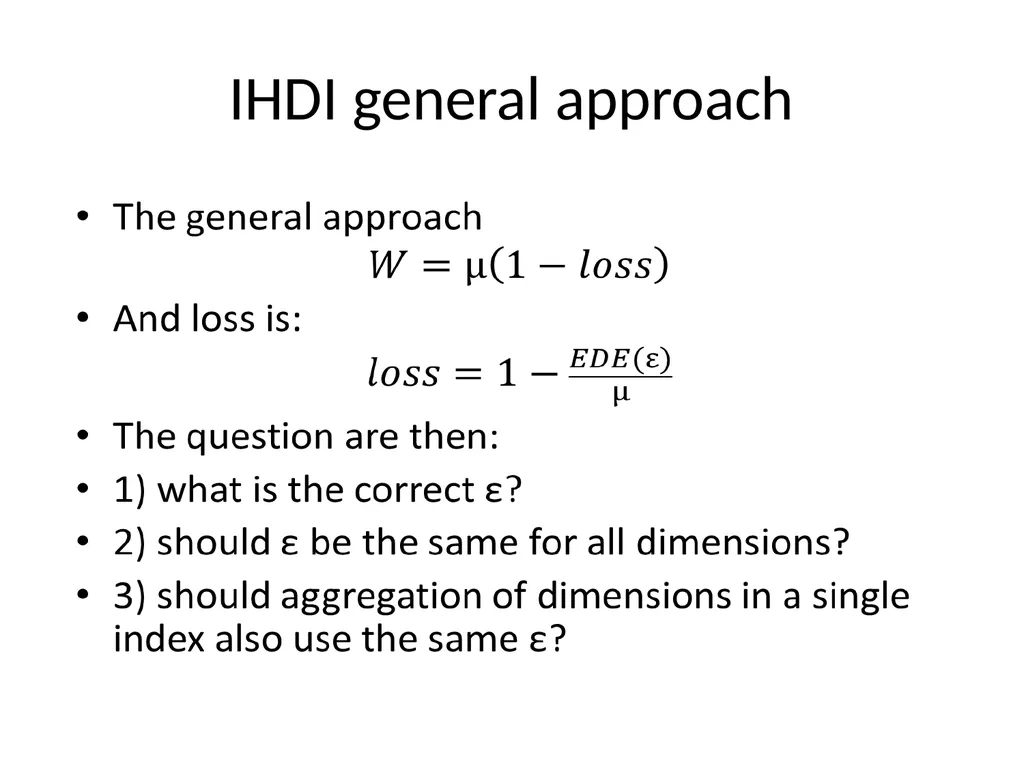
IHDI general approach<br>
03
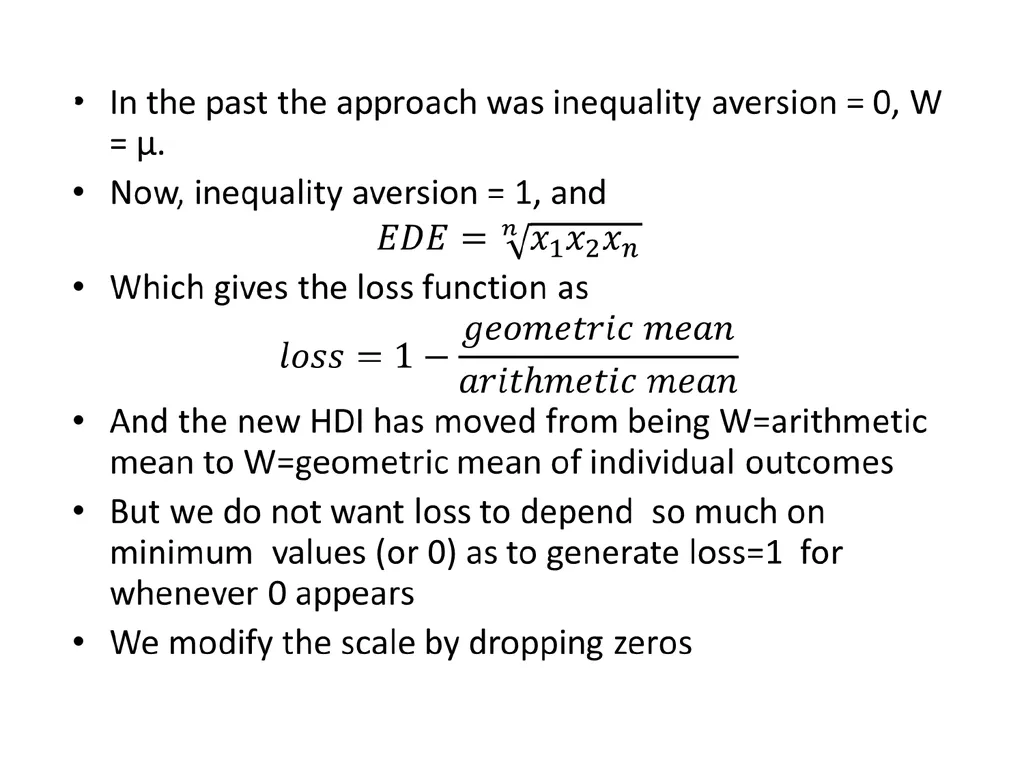
Certainly not an ideal solution particularly when 0s are meaningful (as in education).
But what should be our ε? Is there any way to choose between 0 and 1, or to take an intermediate value?
Do we have any theoretical basis to guide our choice?
Perhaps we do…<br>
04
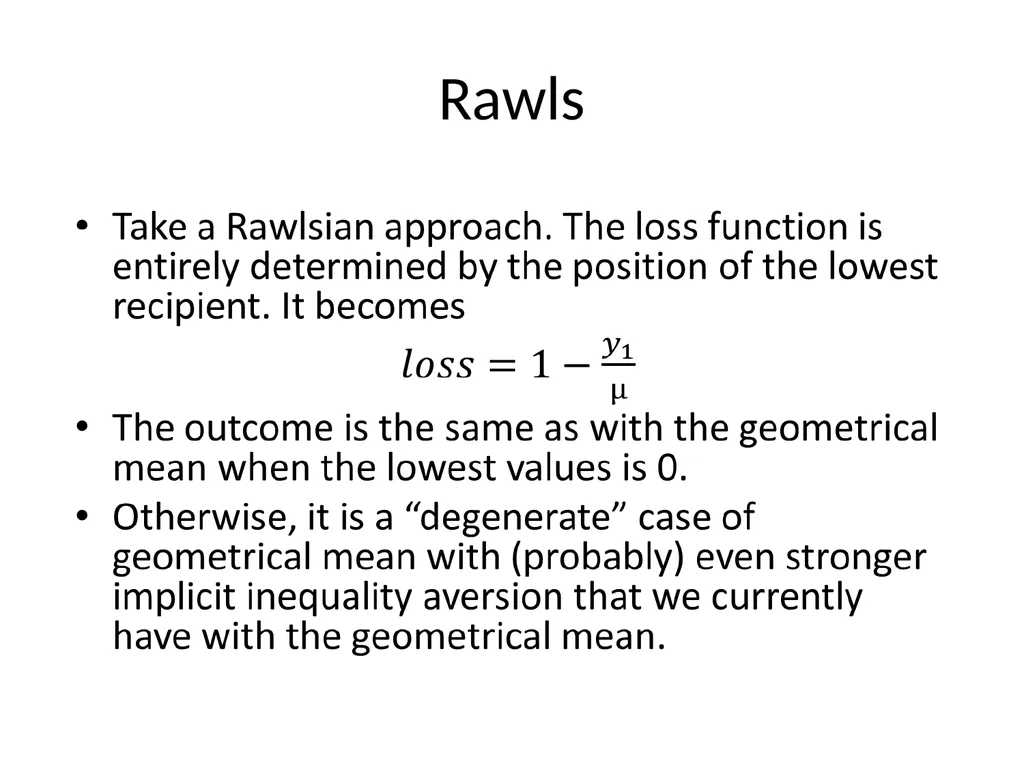
Rawls<br>
05
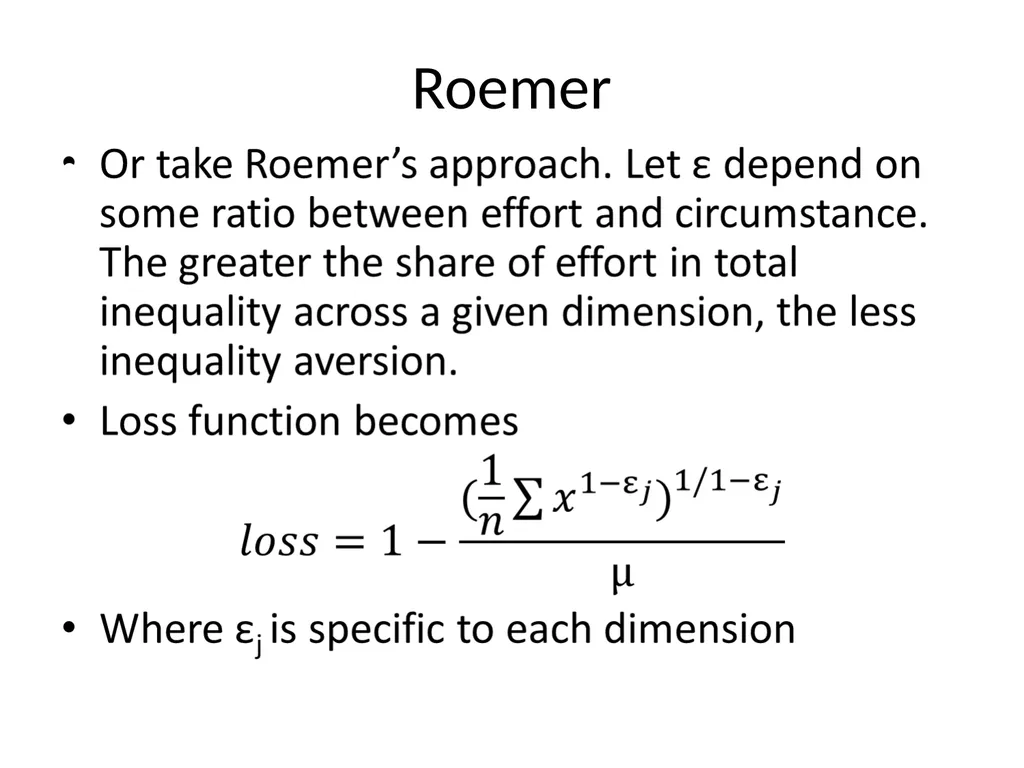
Roemer<br>
06
One may argue that the role of effort in determining income is greater than the role of effort in determining health. That would argue for a lower ε to be attached to inequality in income
Moreover, the ratio between effort and circumstance is not the same for a given dimension in all countries
That means that ε may be both dimension and country specific: 150 countries x 3 dimensions = 450 ε.
The approach would link IHDI to inequality of opportunity literature<br>
07
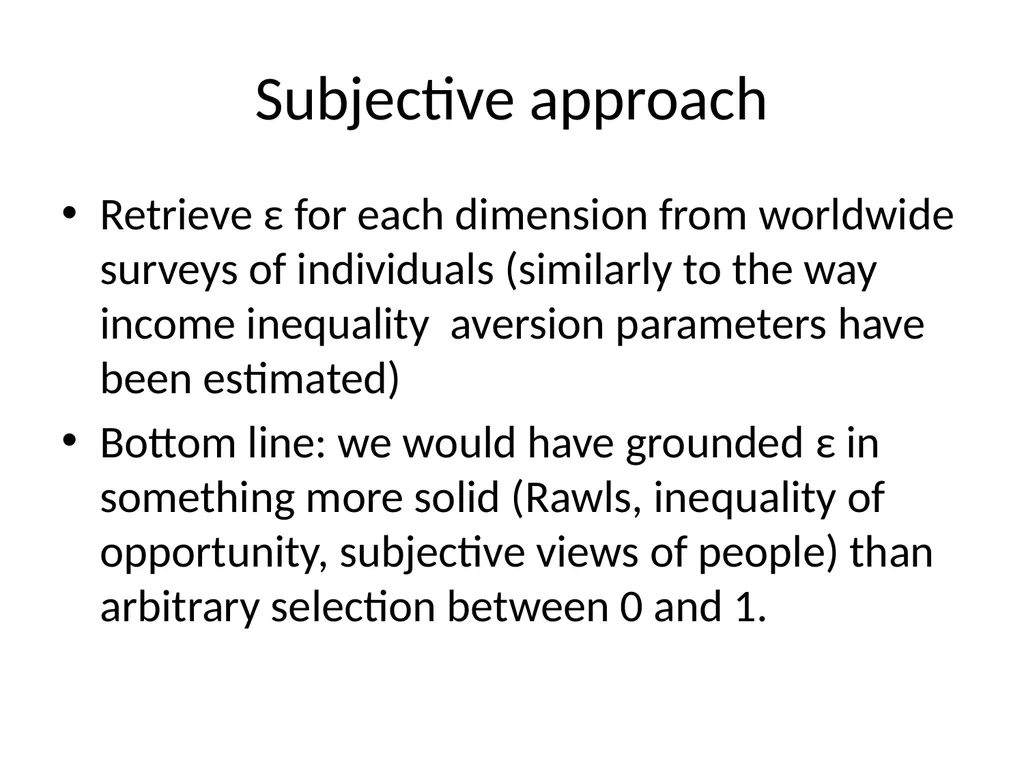
Subjective approach Retrieve ε for each dimension from worldwide surveys of individuals (similarly to the way income inequality aversion parameters have been estimated)
Bottom line: we would have grounded ε in something more solid (Rawls, inequality of opportunity, subjective views of people) than arbitrary selection between 0 and 1.<br>
08
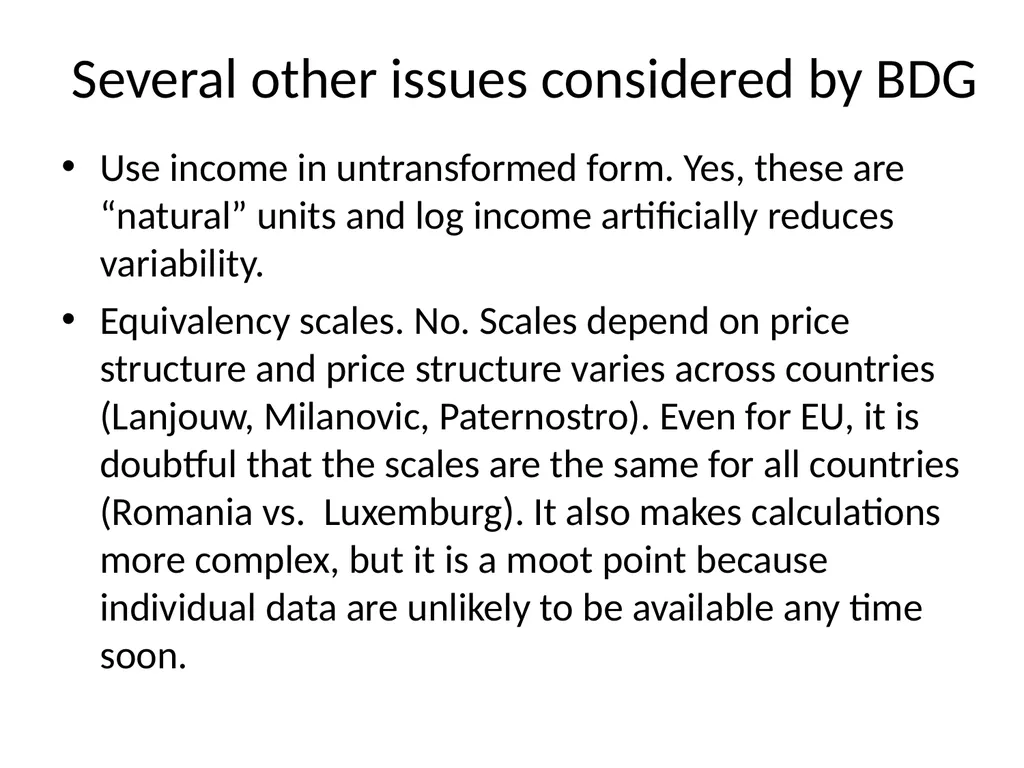
Several other issues considered by BDG Use income in untransformed form. Yes, these are “natural” units and log income artificially reduces variability.
Equivalency scales. No. Scales depend on price structure and price structure varies across countries (Lanjouw, Milanovic, Paternostro). Even for EU, it is doubtful that the scales are the same for all countries (Romania vs. Luxemburg). It also makes calculations more complex, but it is a moot point because individual data are unlikely to be available any time soon.<br>
09
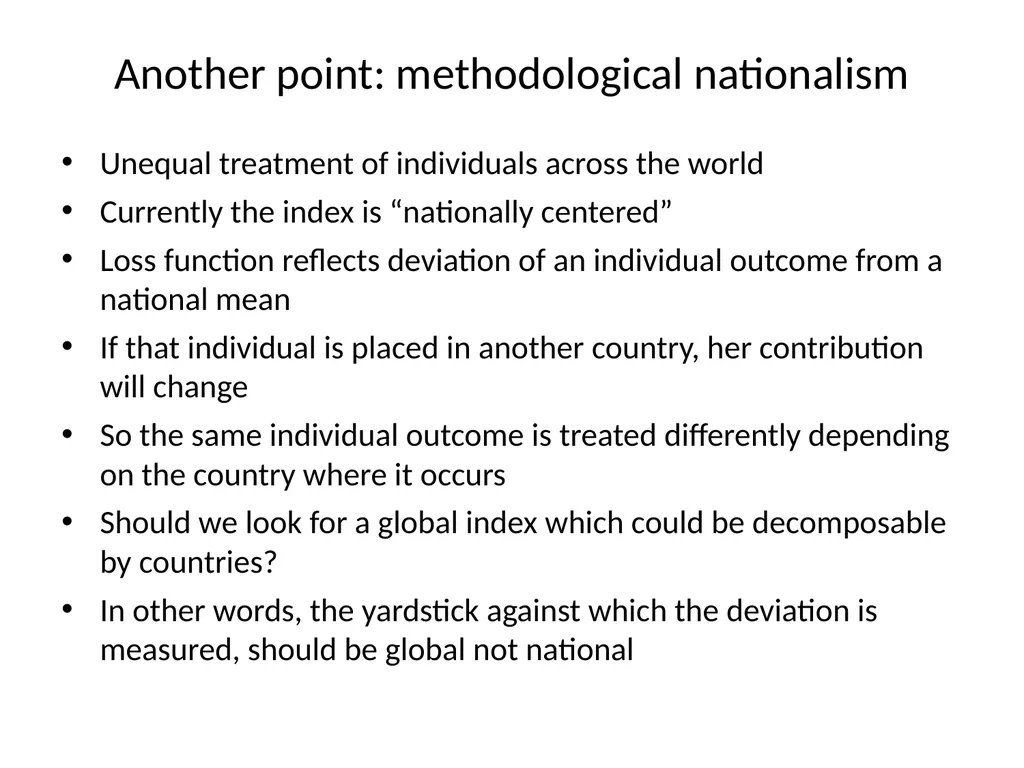
Another point: methodological nationalism Unequal treatment of individuals across the world
Currently the index is “nationally centered”
Loss function reflects deviation of an individual outcome from a national mean
If that individual is placed in another country, her contribution will change
So the same individual outcome is treated differently depending on the country where it occurs
Should we look for a global index which could be decomposable by countries?
In other words, the yardstick against which the deviation is measured, should be global not national<br>
10
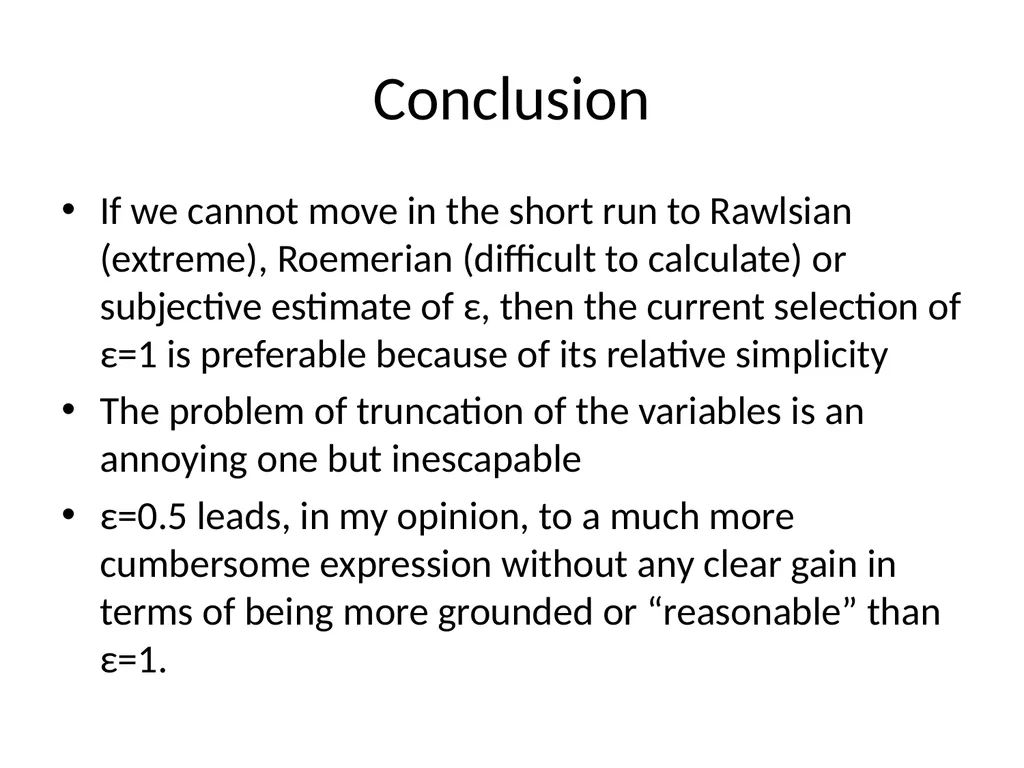
Conclusion If we cannot move in the short run to Rawlsian (extreme), Roemerian (difficult to calculate) or subjective estimate of ε, then the current selection of ε=1 is preferable because of its relative simplicity
The problem of truncation of the variables is an annoying one but inescapable
ε=0.5 leads, in my opinion, to a much more cumbersome expression without any clear gain in terms of being more grounded or “reasonable” than ε=1.<br>