
Common cold Done by: Assist. Lec. Shaymaa Hasan
NS
Published · 58 slides · 0 views

1 / 1









Description
Common cold Done by: Assist. Lec. Shaymaa Hasan Abbas Definition -It is a self-limiting viral infection of the upper respiratory tract. - Different types of viruses (200types) can produce symptom of the common cold such as: rhinoviruses
Related Topics
Share
Embed code
Download this presentation From Below
"Common cold Done by: Assist. Lec. Shaymaa Hasan" is the property of its rightful owner. Permission is granted to download and print the materials on this website for personal, non-commercial use only, and to display it on your personal computer provided you do not modify the materials and that you retain all copyright notices contained in the materials. By downloading content from our website, you accept the terms of this agreement.
Presentation Transcript
01
Common cold Done by:
Assist. Lec. Shaymaa Hasan Abbas<br>
Assist. Lec. Shaymaa Hasan Abbas<br>
02
Definition -It is a self-limiting viral infection of the upper respiratory tract.
- Different types of viruses (200types) can produce symptom of the common cold such as: rhinoviruses (half of the cases), adenoviruses and others.
- Preschool children are more common to suffer from common cold.<br>
- Different types of viruses (200types) can produce symptom of the common cold such as: rhinoviruses (half of the cases), adenoviruses and others.
- Preschool children are more common to suffer from common cold.<br>
03
Symptoms Fever and malaise
Rhinorrhea
Nasal congestion
Sore throat
cough<br>
Rhinorrhea
Nasal congestion
Sore throat
cough<br>
04
Differential diagnosis Differential diagnosis:
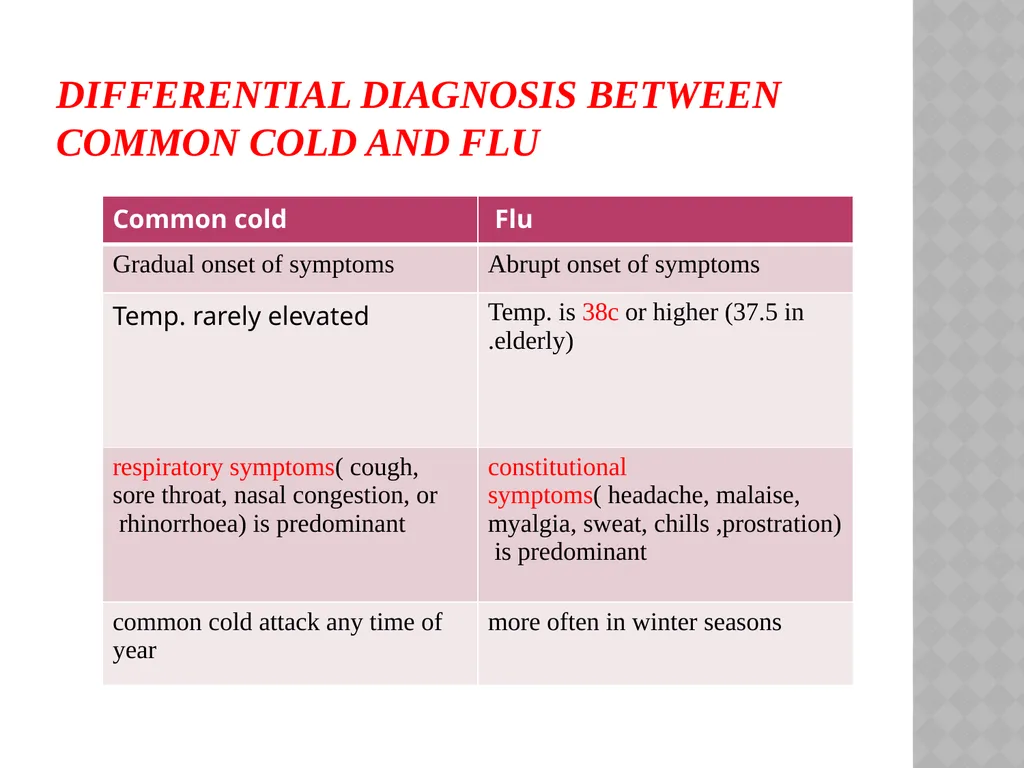
The pharmacist must try to differentiate between viral infection and conditions that present with similar symptoms ( e.g.; flu, sinusitis, allergic & chronic rhinitis), as well as the complications associated with the common cold.
Differentiating between colds and flu( which required referral for further investigations'^) is needed. Patients often use the word "flu" when describing a common cold.<br>
The pharmacist must try to differentiate between viral infection and conditions that present with similar symptoms ( e.g.; flu, sinusitis, allergic & chronic rhinitis), as well as the complications associated with the common cold.
Differentiating between colds and flu( which required referral for further investigations'^) is needed. Patients often use the word "flu" when describing a common cold.<br>
05
Differential diagnosis between common cold and flu<br>
06
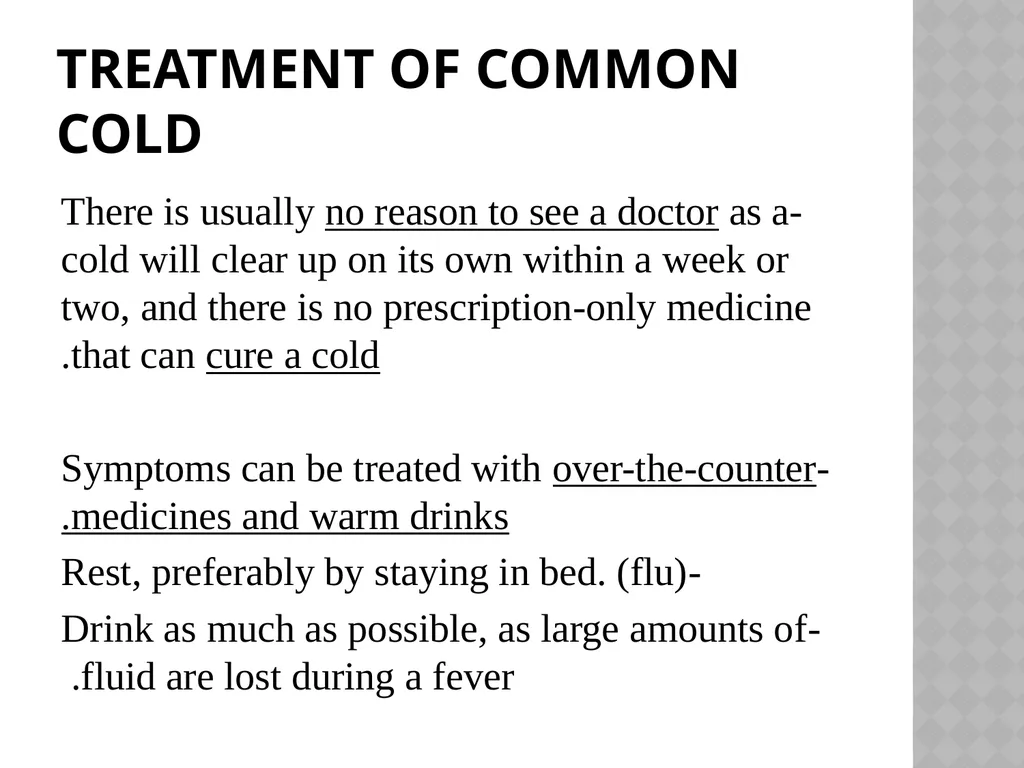
Treatment of common cold -There is usually no reason to see a doctor as a cold will clear up on its own within a week or two, and there is no prescription-only medicine that can cure a cold.
-Symptoms can be treated with over-the-counter medicines and warm drinks.
-Rest, preferably by staying in bed. (flu)
-Drink as much as possible, as large amounts of fluid are lost during a fever.<br>
-Symptoms can be treated with over-the-counter medicines and warm drinks.
-Rest, preferably by staying in bed. (flu)
-Drink as much as possible, as large amounts of fluid are lost during a fever.<br>
07
Treatment
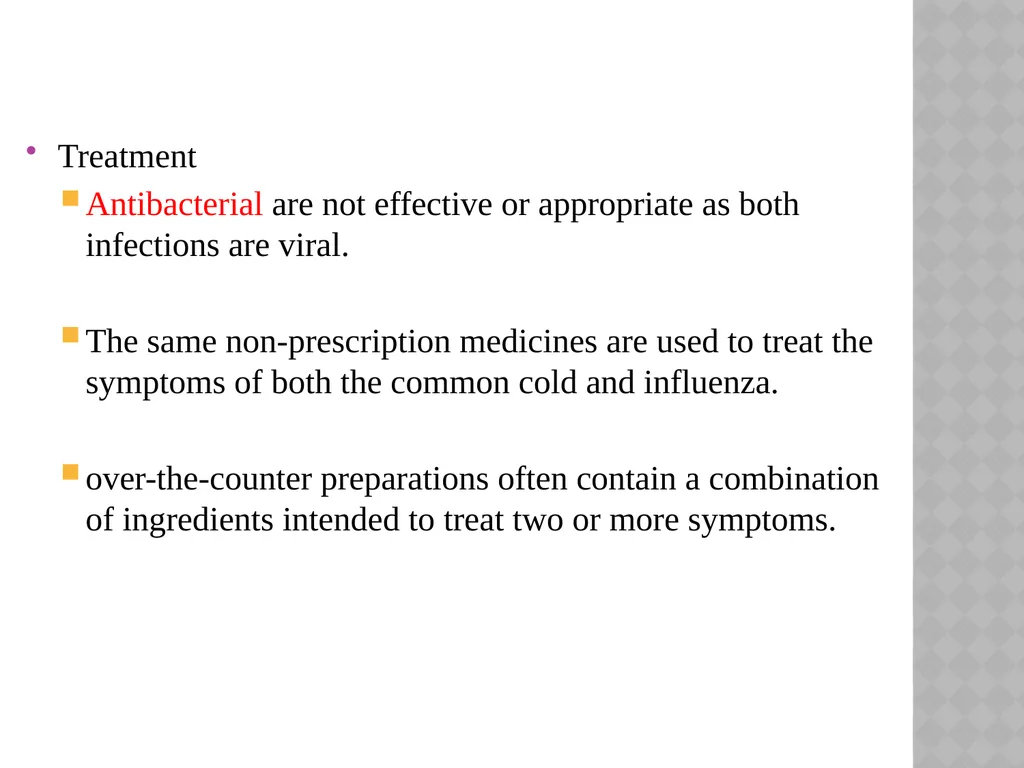
Antibacterial are not effective or appropriate as both infections are viral.
The same non-prescription medicines are used to treat the symptoms of both the common cold and influenza.
over-the-counter preparations often contain a combination of ingredients intended to treat two or more symptoms.<br>
Antibacterial are not effective or appropriate as both infections are viral.
The same non-prescription medicines are used to treat the symptoms of both the common cold and influenza.
over-the-counter preparations often contain a combination of ingredients intended to treat two or more symptoms.<br>
08
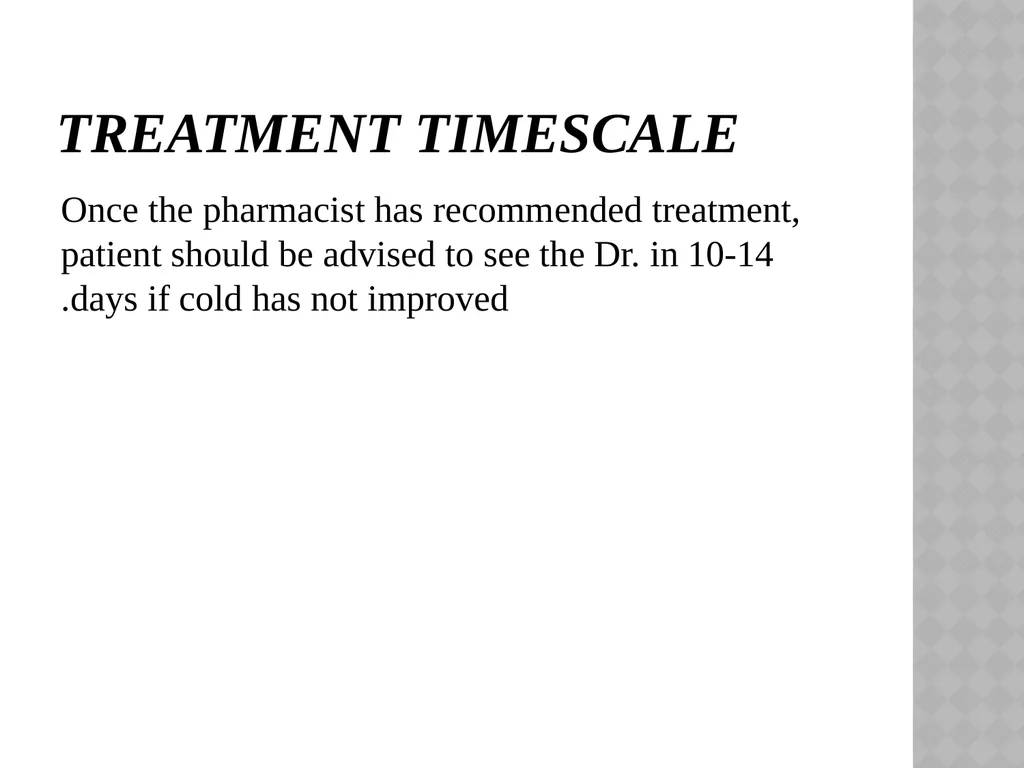
Treatment timescale Once the pharmacist has recommended treatment, patient should be advised to see the Dr. in 10-14 days if cold has not improved.<br>
09
A-Non pharmacological measures: Non -drug therapy include:
1-increased fluid intake which may loosen the mucus and promote drainage.
2-getting adequate rest may help to recover quickly.
3-adequate nutrition.
4-saline solution can soothe the irritated nasal tissue and moisturized nasal mucosa, and it can be given to all age group and during pregnancy.<br>
1-increased fluid intake which may loosen the mucus and promote drainage.
2-getting adequate rest may help to recover quickly.
3-adequate nutrition.
4-saline solution can soothe the irritated nasal tissue and moisturized nasal mucosa, and it can be given to all age group and during pregnancy.<br>
10
Fever and malaise Paracetamol, aspirin and ibuprofen
Aspirin is restricted in its use by its pronounced side-effect profile.<br>
Aspirin is restricted in its use by its pronounced side-effect profile.<br>
11
rhinorrhoea
(runny nose) Antihistamines could theoretically reduce some of the symptoms of a cold:
runny nose (rhinorrhoea) and sneezing. These effects are due to the anticholin-ergic action of antihistamines.
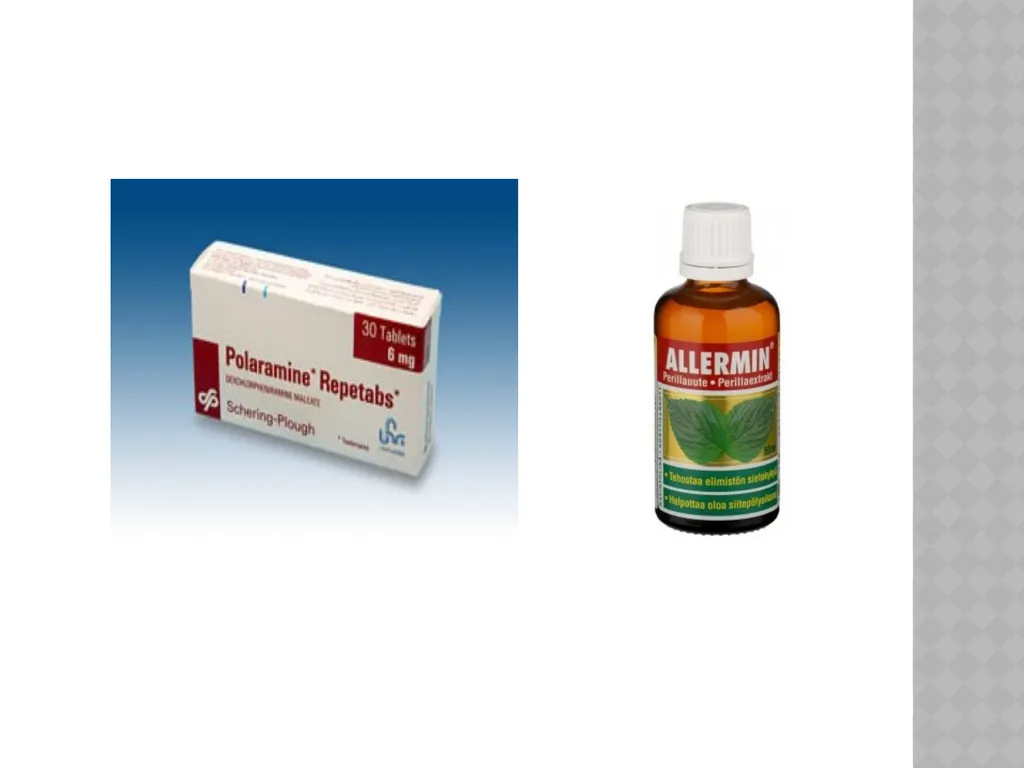
The older drugs (e.g. chlorphenamine (chlor-pheniramine), promethazine) have more pronounced anticholinergic actions than the non-sedating antihistamines (e.g. loratadine, cetirizine, acrivastine).<br>
runny nose (rhinorrhoea) and sneezing. These effects are due to the anticholin-ergic action of antihistamines.
The older drugs (e.g. chlorphenamine (chlor-pheniramine), promethazine) have more pronounced anticholinergic actions than the non-sedating antihistamines (e.g. loratadine, cetirizine, acrivastine).<br>
12
Nasal congestion and rhinorrhoea
(runny nose) Sedating antihistamines
They are usually co-formulated with sympathomimetics to counteract the congestion and the sedation that they tend to cause.<br>
They are usually co-formulated with sympathomimetics to counteract the congestion and the sedation that they tend to cause.<br>
13
Cautions and contra-indications
caution in prostatic hypertrophy, urinary retention, susceptibility to angle closure glaucoma, and pyloroduodenal obstruction.
Caution may be required in epilepsy.
Children and the elderly are more susceptible to side-effects.
Hepatic impairment
Sedating antihistamines should be avoided in severe liver disease—increased risk of coma.<br>
caution in prostatic hypertrophy, urinary retention, susceptibility to angle closure glaucoma, and pyloroduodenal obstruction.
Caution may be required in epilepsy.
Children and the elderly are more susceptible to side-effects.
Hepatic impairment
Sedating antihistamines should be avoided in severe liver disease—increased risk of coma.<br>
14
Side-effects
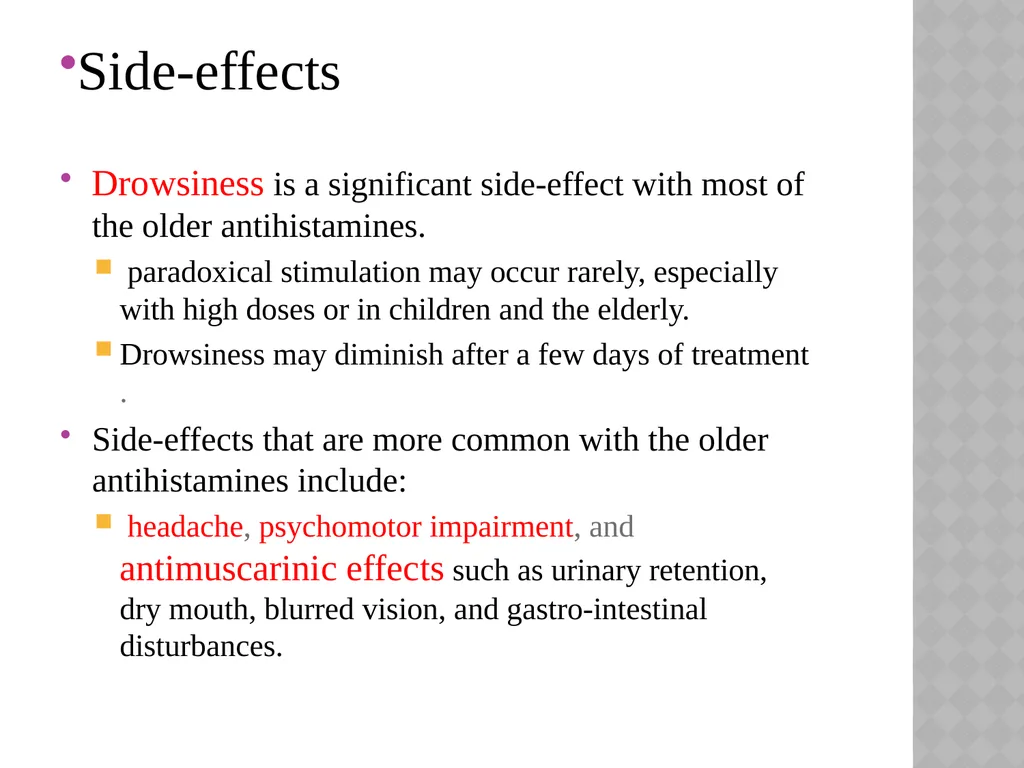
Drowsiness is a significant side-effect with most of the older antihistamines.
paradoxical stimulation may occur rarely, especially with high doses or in children and the elderly.
Drowsiness may diminish after a few days of treatment .
Side-effects that are more common with the older antihistamines include:
headache, psychomotor impairment, and antimuscarinic effects such as urinary retention, dry mouth, blurred vision, and gastro-intestinal disturbances.<br>
Drowsiness is a significant side-effect with most of the older antihistamines.
paradoxical stimulation may occur rarely, especially with high doses or in children and the elderly.
Drowsiness may diminish after a few days of treatment .
Side-effects that are more common with the older antihistamines include:
headache, psychomotor impairment, and antimuscarinic effects such as urinary retention, dry mouth, blurred vision, and gastro-intestinal disturbances.<br>
15
Non-sedating antihistamines
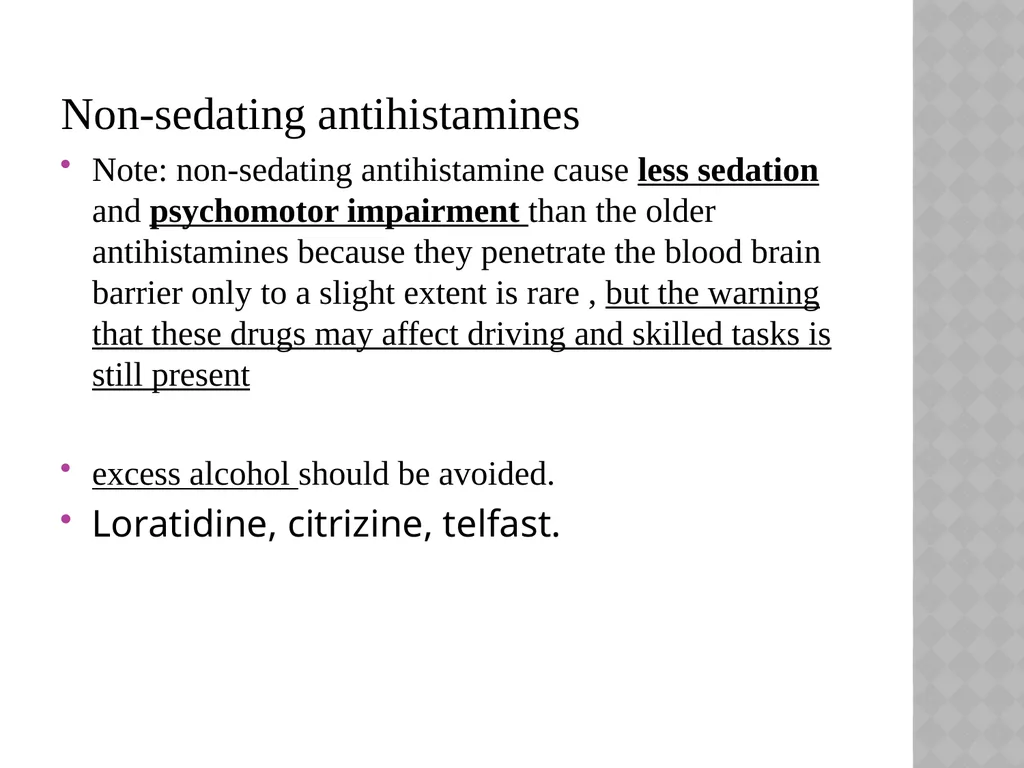
Note: non-sedating antihistamine cause less sedation and psychomotor impairment than the older antihistamines because they penetrate the blood brain barrier only to a slight extent is rare , but the warning that these drugs may affect driving and skilled tasks is still present
excess alcohol should be avoided.
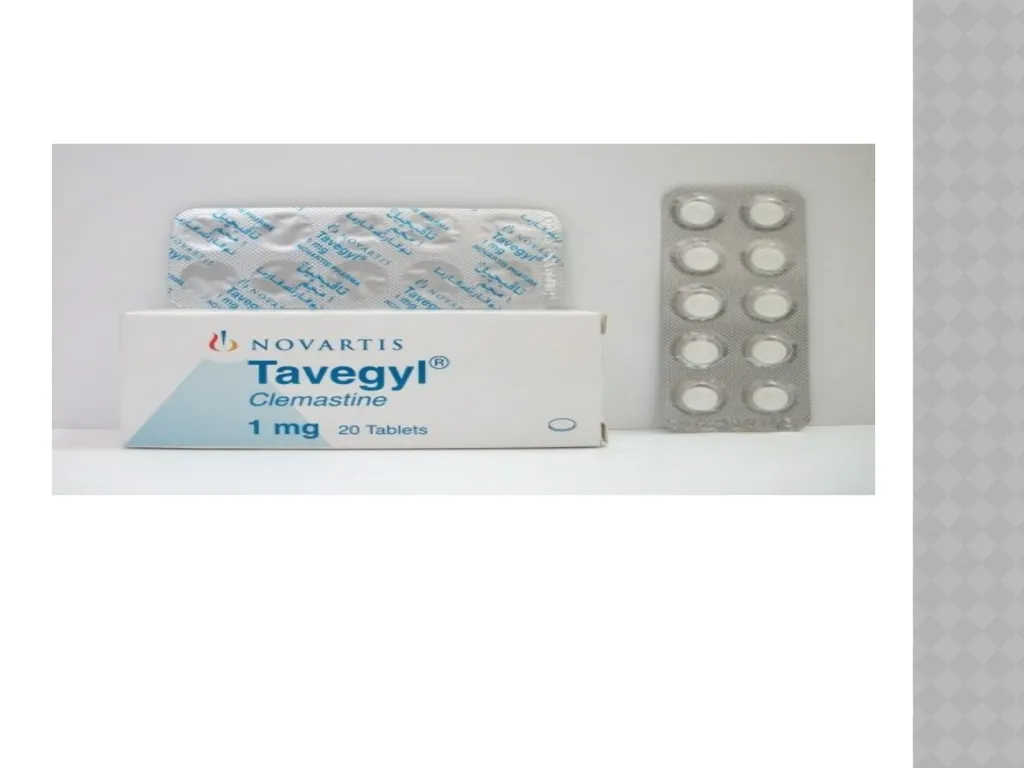
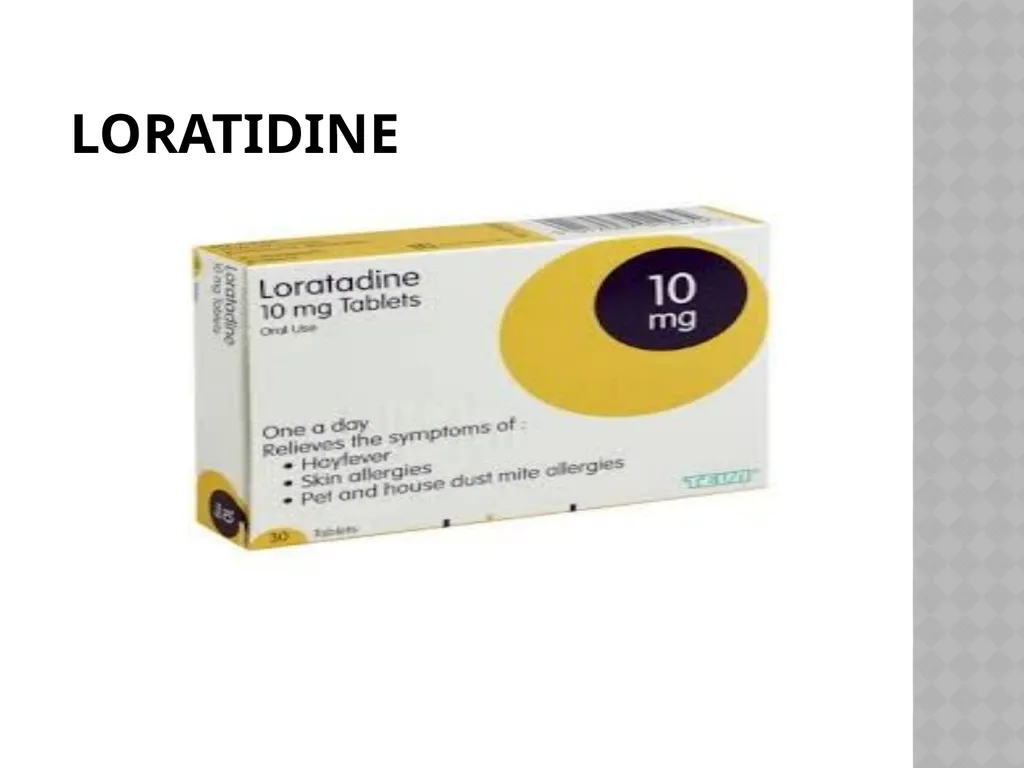
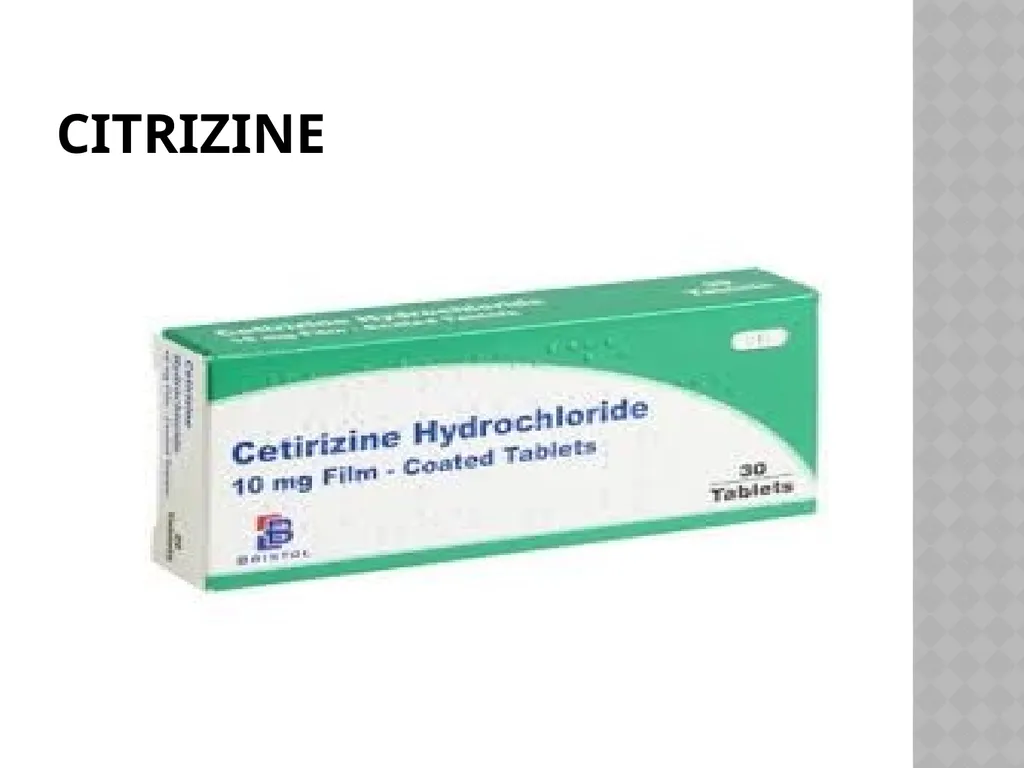
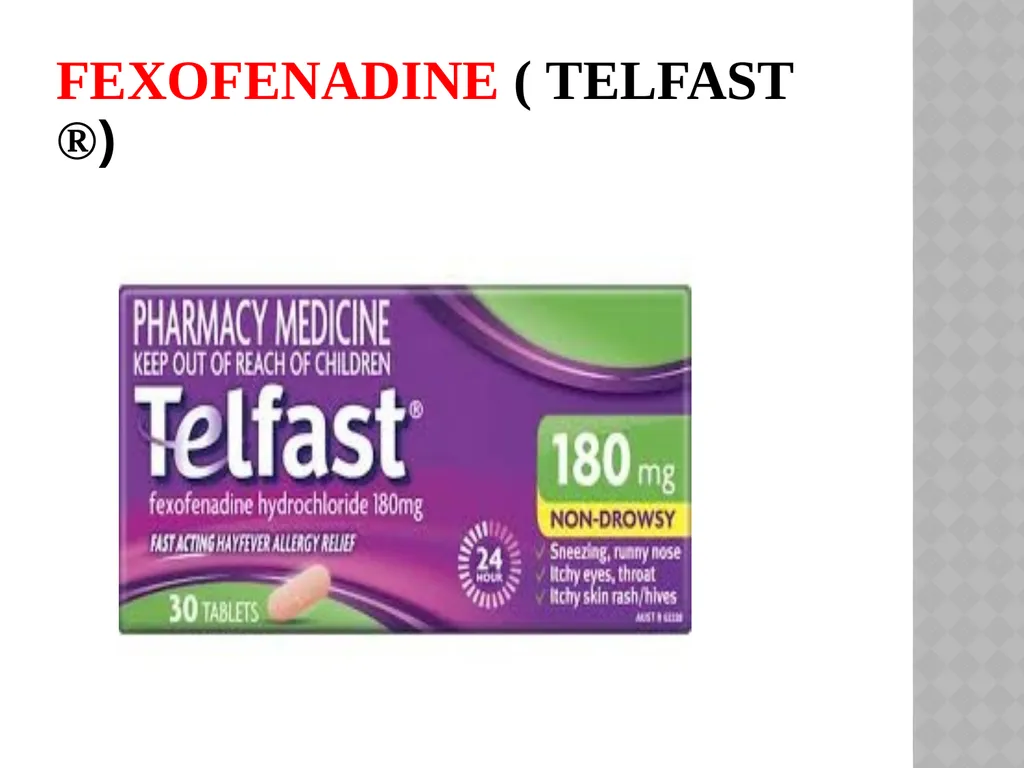
Loratidine, citrizine, telfast.<br>
Note: non-sedating antihistamine cause less sedation and psychomotor impairment than the older antihistamines because they penetrate the blood brain barrier only to a slight extent is rare , but the warning that these drugs may affect driving and skilled tasks is still present
excess alcohol should be avoided.
Loratidine, citrizine, telfast.<br>
16
Pregnancy
Most manufacturers of antihistamines advise avoiding their use during pregnancy; however,
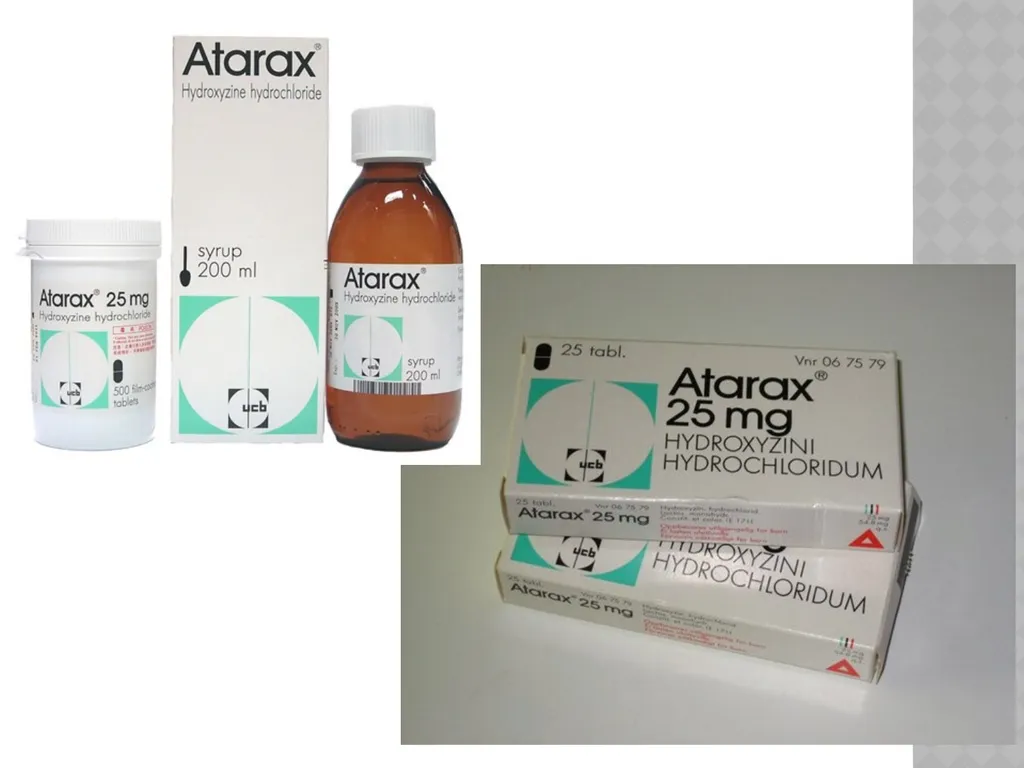
there is no evidence of teratogenicity except for hydroxyzine.
The use of sedating antihistamines in the latter part of the third trimester may cause adverse effects in neonates such as irritability, paradoxical excitability, and tremor.<br>
Most manufacturers of antihistamines advise avoiding their use during pregnancy; however,
there is no evidence of teratogenicity except for hydroxyzine.
The use of sedating antihistamines in the latter part of the third trimester may cause adverse effects in neonates such as irritability, paradoxical excitability, and tremor.<br>
17
Loratidine<br>
18
citrizine<br>
19
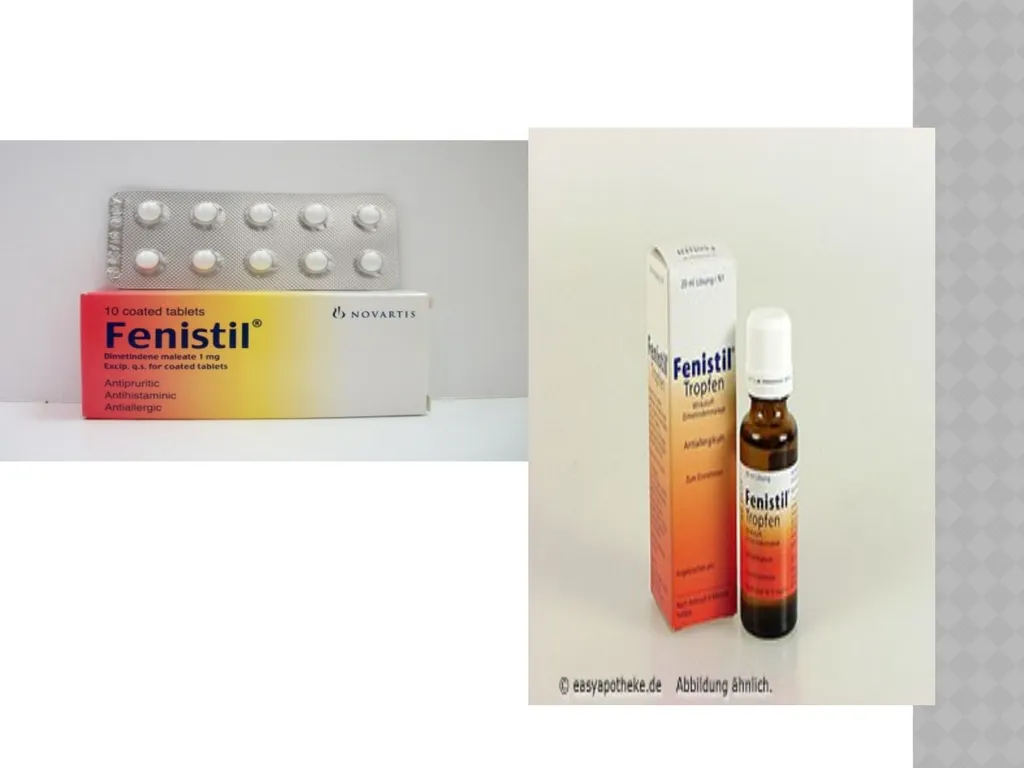
Fexofenadine ( Telfast ®)<br>
20
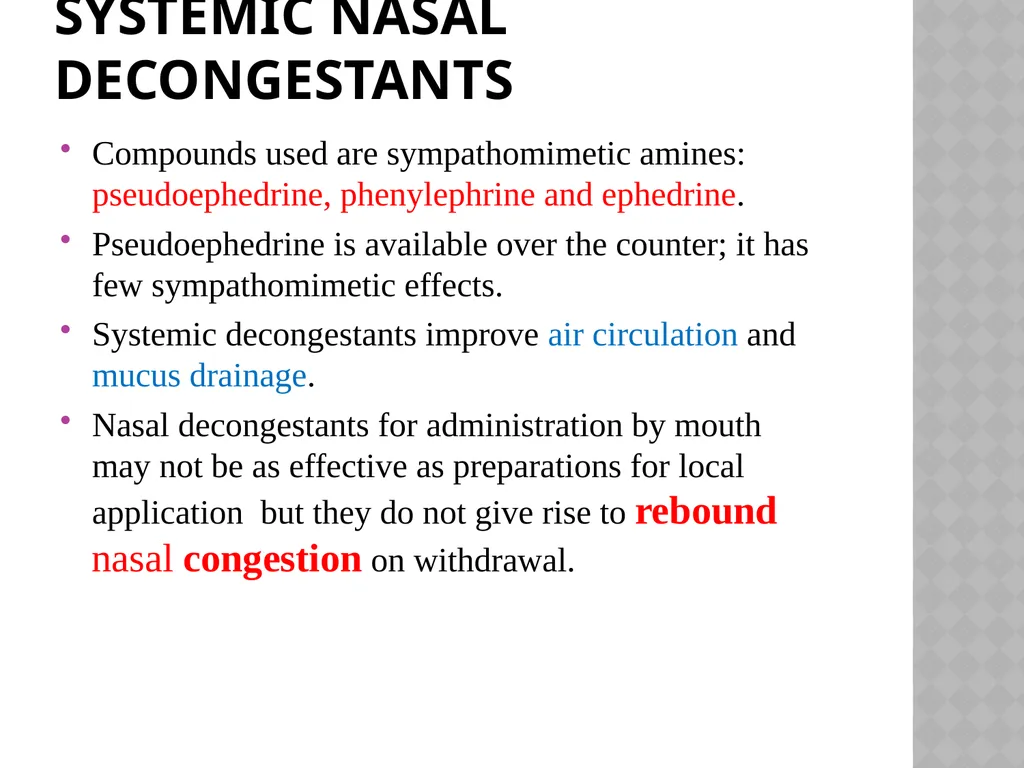
Systemic nasal decongestants Compounds used are sympathomimetic amines: pseudoephedrine, phenylephrine and ephedrine.
Pseudoephedrine is available over the counter; it has few sympathomimetic effects.
Systemic decongestants improve air circulation and mucus drainage.
Nasal decongestants for administration by mouth may not be as effective as preparations for local application but they do not give rise to rebound nasal congestion on withdrawal.<br>
Pseudoephedrine is available over the counter; it has few sympathomimetic effects.
Systemic decongestants improve air circulation and mucus drainage.
Nasal decongestants for administration by mouth may not be as effective as preparations for local application but they do not give rise to rebound nasal congestion on withdrawal.<br>
21
Pseudoephedrine hydrochloride IMPORTANT SAFETY INFORMATION
MHRA/CHM ADVICE (MARCH 2008 AND FEBRUARY 2009): overthe- counter cough and cold medicines for children
Children under 6 years should not be given over-the counter cough and cold medicines containing
pseudoephedrine.<br>
MHRA/CHM ADVICE (MARCH 2008 AND FEBRUARY 2009): overthe- counter cough and cold medicines for children
Children under 6 years should not be given over-the counter cough and cold medicines containing
pseudoephedrine.<br>
22
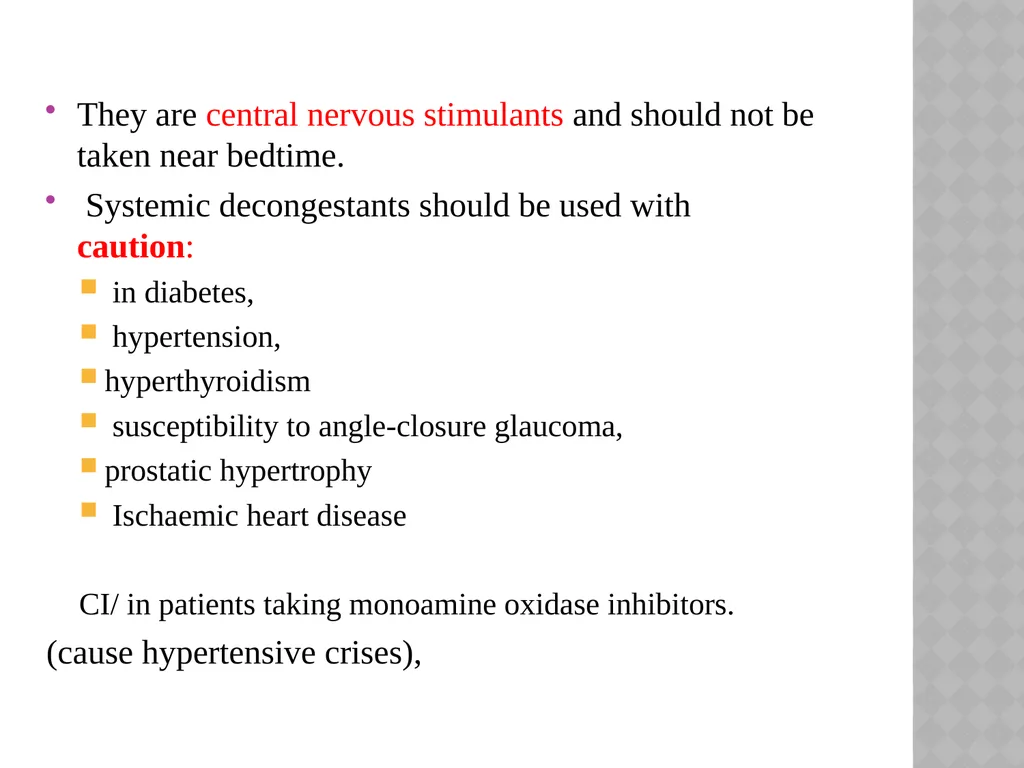
They are central nervous stimulants and should not be taken near bedtime.
Systemic decongestants should be used with caution:
in diabetes,
hypertension,
hyperthyroidism
susceptibility to angle-closure glaucoma,
prostatic hypertrophy
Ischaemic heart disease
CI/ in patients taking monoamine oxidase inhibitors.
(cause hypertensive crises),<br>
Systemic decongestants should be used with caution:
in diabetes,
hypertension,
hyperthyroidism
susceptibility to angle-closure glaucoma,
prostatic hypertrophy
Ischaemic heart disease
CI/ in patients taking monoamine oxidase inhibitors.
(cause hypertensive crises),<br>
23
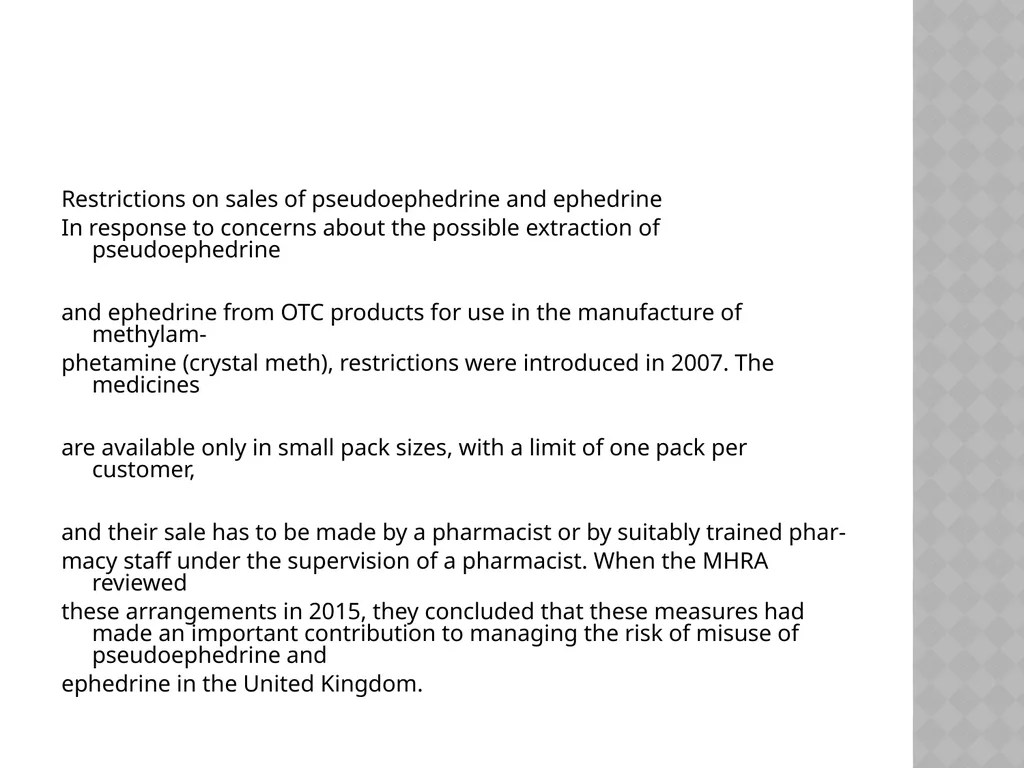
Restrictions on sales of pseudoephedrine and ephedrine
In response to concerns about the possible extraction of pseudoephedrine
and ephedrine from OTC products for use in the manufacture of methylam-
phetamine (crystal meth), restrictions were introduced in 2007. The medicines
are available only in small pack sizes, with a limit of one pack per customer,
and their sale has to be made by a pharmacist or by suitably trained phar-
macy staff under the supervision of a pharmacist. When the MHRA reviewed
these arrangements in 2015, they concluded that these measures had made an important contribution to managing the risk of misuse of pseudoephedrine and
ephedrine in the United Kingdom.<br>
In response to concerns about the possible extraction of pseudoephedrine
and ephedrine from OTC products for use in the manufacture of methylam-
phetamine (crystal meth), restrictions were introduced in 2007. The medicines
are available only in small pack sizes, with a limit of one pack per customer,
and their sale has to be made by a pharmacist or by suitably trained phar-
macy staff under the supervision of a pharmacist. When the MHRA reviewed
these arrangements in 2015, they concluded that these measures had made an important contribution to managing the risk of misuse of pseudoephedrine and
ephedrine in the United Kingdom.<br>
24
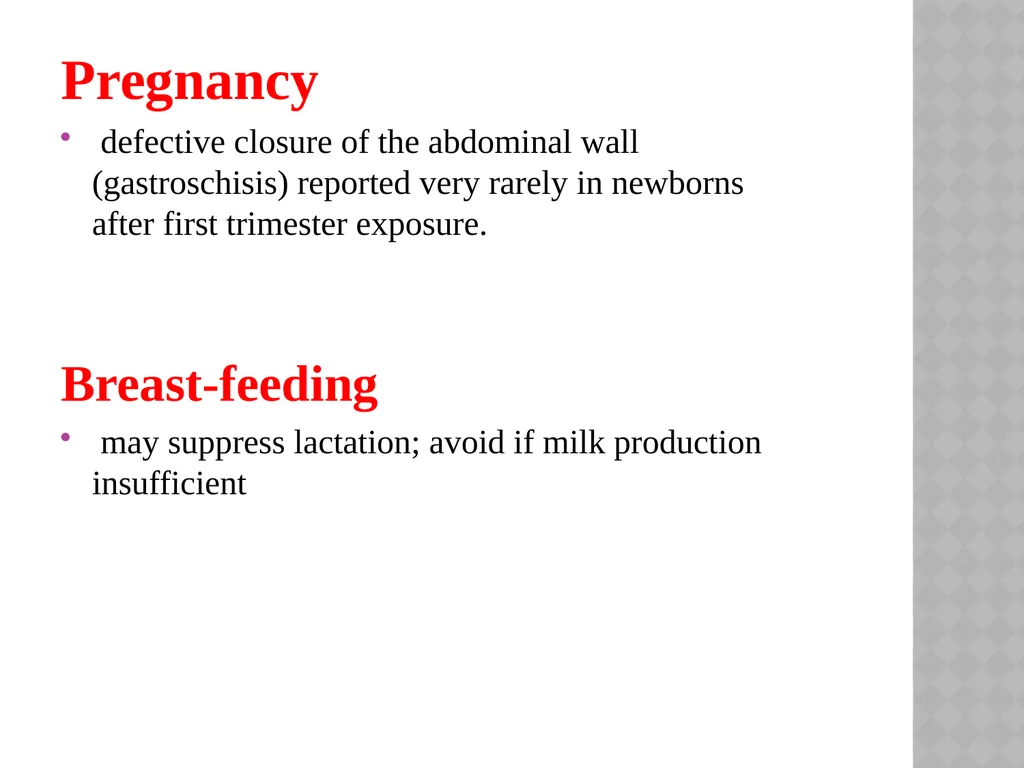
Pregnancy
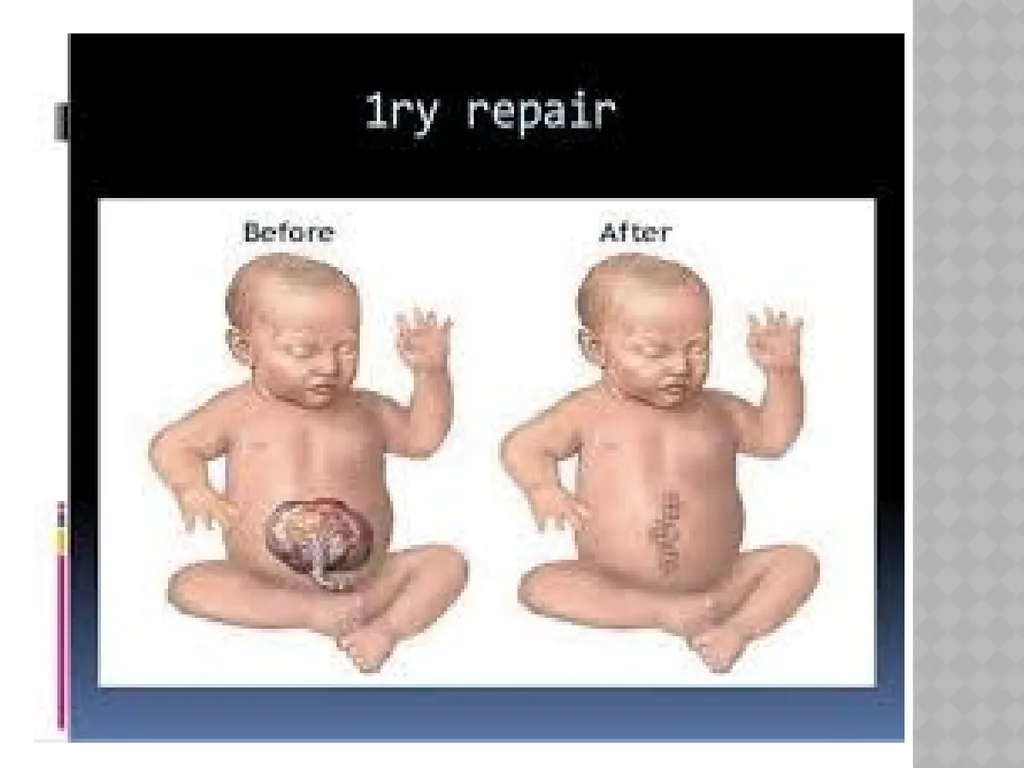
defective closure of the abdominal wall (gastroschisis) reported very rarely in newborns after first trimester exposure.
Breast-feeding
may suppress lactation; avoid if milk production insufficient<br>
defective closure of the abdominal wall (gastroschisis) reported very rarely in newborns after first trimester exposure.
Breast-feeding
may suppress lactation; avoid if milk production insufficient<br>
25
Hepatic impairment
manufacturer advises use with caution in severe impairment.
Renal impairment
use with caution in mild to moderate impairment; manufacturer advises avoid in severe impairment.
Side-effects
nausea, vomiting,
hypertension, tachycardia,
headache, anxiety, restlessness, insomnia; rarely hallucinations, rash;
very rarely angle-closure glaucoma; urinary retention also reported.<br>
manufacturer advises use with caution in severe impairment.
Renal impairment
use with caution in mild to moderate impairment; manufacturer advises avoid in severe impairment.
Side-effects
nausea, vomiting,
hypertension, tachycardia,
headache, anxiety, restlessness, insomnia; rarely hallucinations, rash;
very rarely angle-closure glaucoma; urinary retention also reported.<br>
26
Topical nasal decongestants Inhalation of warm moist air is useful in the treatment of symptoms of acute infective conditions.
The addition of volatile substances such as menthol and eucalyptus may encourage the use of warm moist air<br>
The addition of volatile substances such as menthol and eucalyptus may encourage the use of warm moist air<br>
27
Local decongestants Sympathomimetic amines exert a rapid and potent vasoconstricting effect, confined to the area of application, when applied directly into the nose in the form of drops or spays.
Compounds used are oxymetazoline, xylometazoline, ephedrine and phenylephrine.<br>
Compounds used are oxymetazoline, xylometazoline, ephedrine and phenylephrine.<br>
28
Ephedrine hydrochloride nasal
drops is the safest sympathomimetic preparation and can give relief for several hours.
The more potent sympathomimetic drugs oxymetazoline and xylometazoline hydrochloride are more likely to cause a rebound effect.<br>
drops is the safest sympathomimetic preparation and can give relief for several hours.
The more potent sympathomimetic drugs oxymetazoline and xylometazoline hydrochloride are more likely to cause a rebound effect.<br>
29
They can be used by patients for whom systemic decongestants are contraindicated, but should be avoided by patients taking monoamine oxidase inhibitors.
If used for prolonged periods they can cause a rebound effect, with congestion often returning worse than before, and should therefore not be used for more than about 5–7 days.<br>
If used for prolonged periods they can cause a rebound effect, with congestion often returning worse than before, and should therefore not be used for more than about 5–7 days.<br>
30
Xylometazoline hydrochloride MPORTANT SAFETY INFORMATION
The CHM/MHRA has stated that
non-prescription cough and cold medicines containing oxymetazoline or xylometazoline can be considered for up to 5 days’ treatment in children aged 6–12 years after basic principles of best care have been tried; these medicines
should not be used in children under 6 years of age.<br>
The CHM/MHRA has stated that
non-prescription cough and cold medicines containing oxymetazoline or xylometazoline can be considered for up to 5 days’ treatment in children aged 6–12 years after basic principles of best care have been tried; these medicines
should not be used in children under 6 years of age.<br>
31
Children under 6 years old
In March 2009, an important statement was issued by the Medicines and Healthcare products Regulatory Agency (MHRA), which says:
The new advice is that parents and carers should no longer use over-the-counter (OTC) cough and cold medicines in children under 6.
There is no evidence that they work and they can cause side-effects, such as allergic reactions, effects on sleep or hallucinations.
The risks of side-effects are reduced in older children. This is because they weigh more, get fewer colds and can say if the medicine is doing any good.<br>
In March 2009, an important statement was issued by the Medicines and Healthcare products Regulatory Agency (MHRA), which says:
The new advice is that parents and carers should no longer use over-the-counter (OTC) cough and cold medicines in children under 6.
There is no evidence that they work and they can cause side-effects, such as allergic reactions, effects on sleep or hallucinations.
The risks of side-effects are reduced in older children. This is because they weigh more, get fewer colds and can say if the medicine is doing any good.<br>
32
Alternatives to cough and cold medicines for infants
Saline nose drops or spray keep nasal passages moist and helps avoid stuffiness.
Acetaminophen or ibuprofen can be used to reduce fever, aches and pains. Parents should carefully read and follow the product’s instructions for use label.
Drinking plenty of liquids will help the child stay well hydrated.<br>
Saline nose drops or spray keep nasal passages moist and helps avoid stuffiness.
Acetaminophen or ibuprofen can be used to reduce fever, aches and pains. Parents should carefully read and follow the product’s instructions for use label.
Drinking plenty of liquids will help the child stay well hydrated.<br>
33
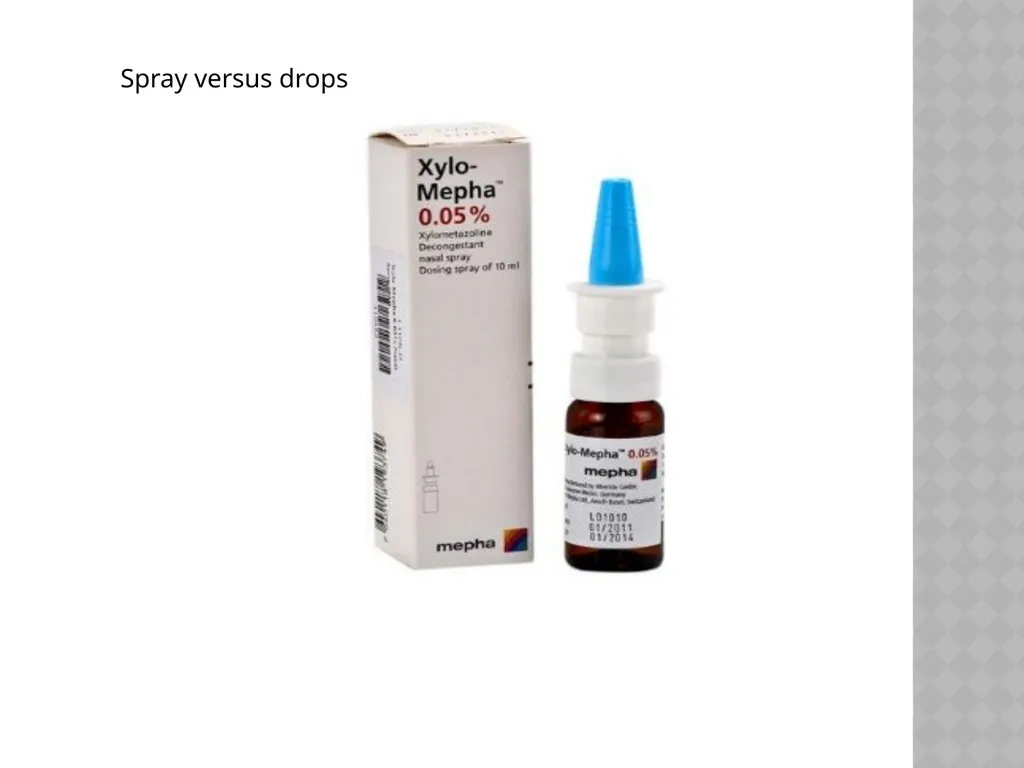
Spray versus drops<br>
34
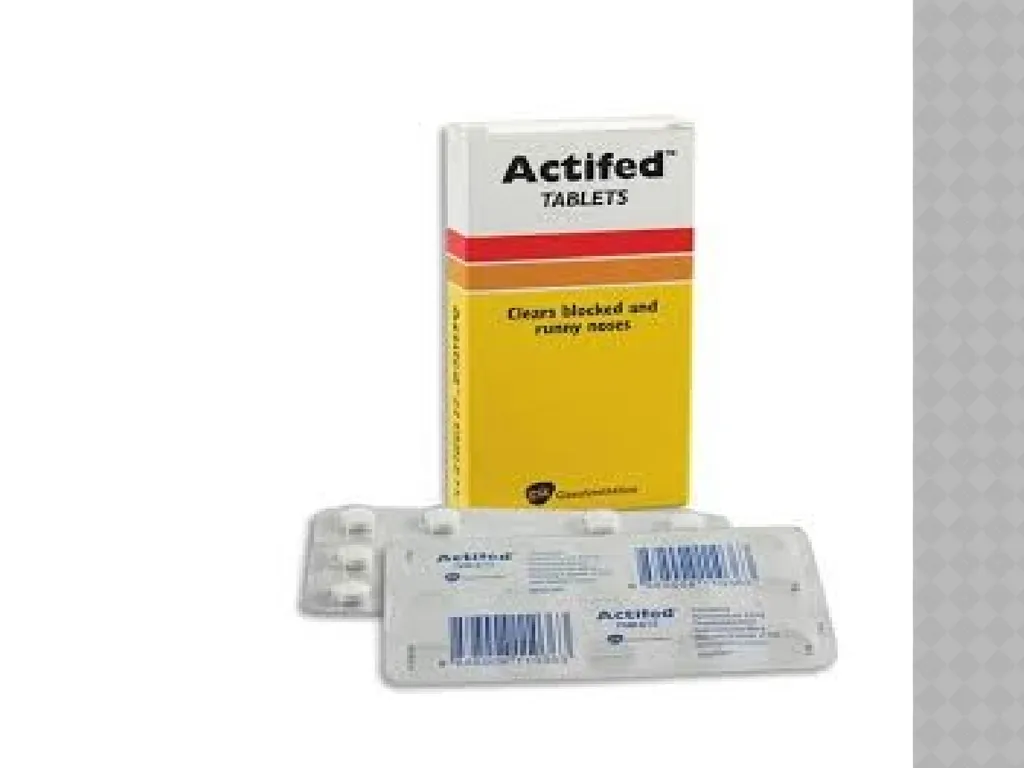
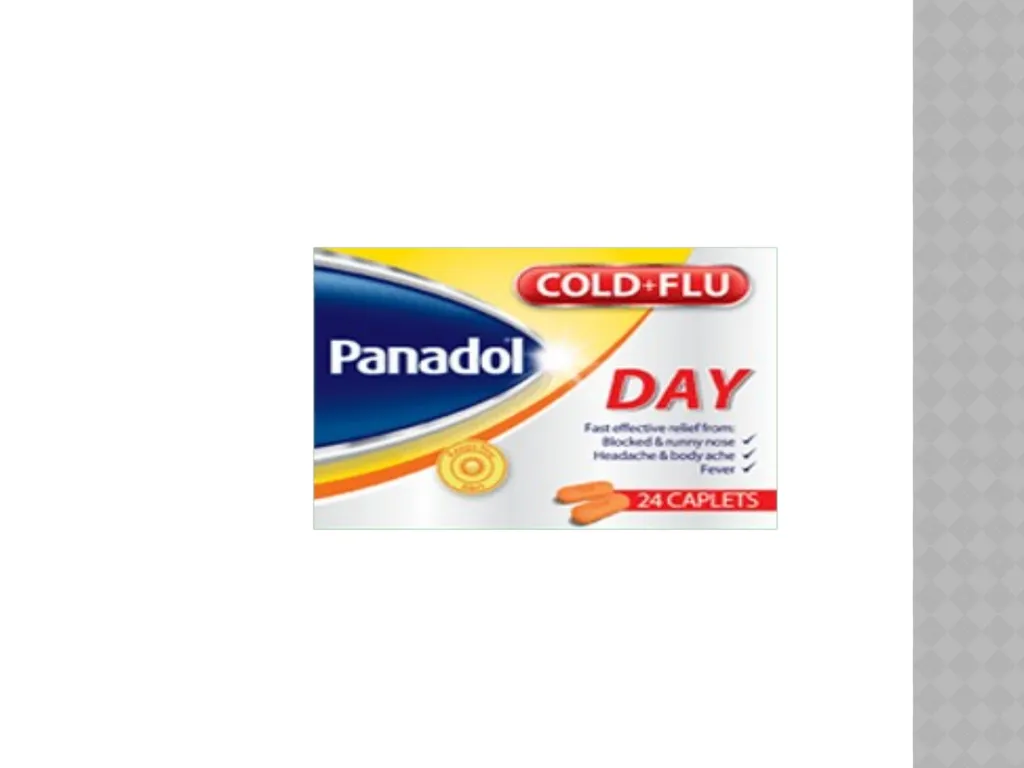
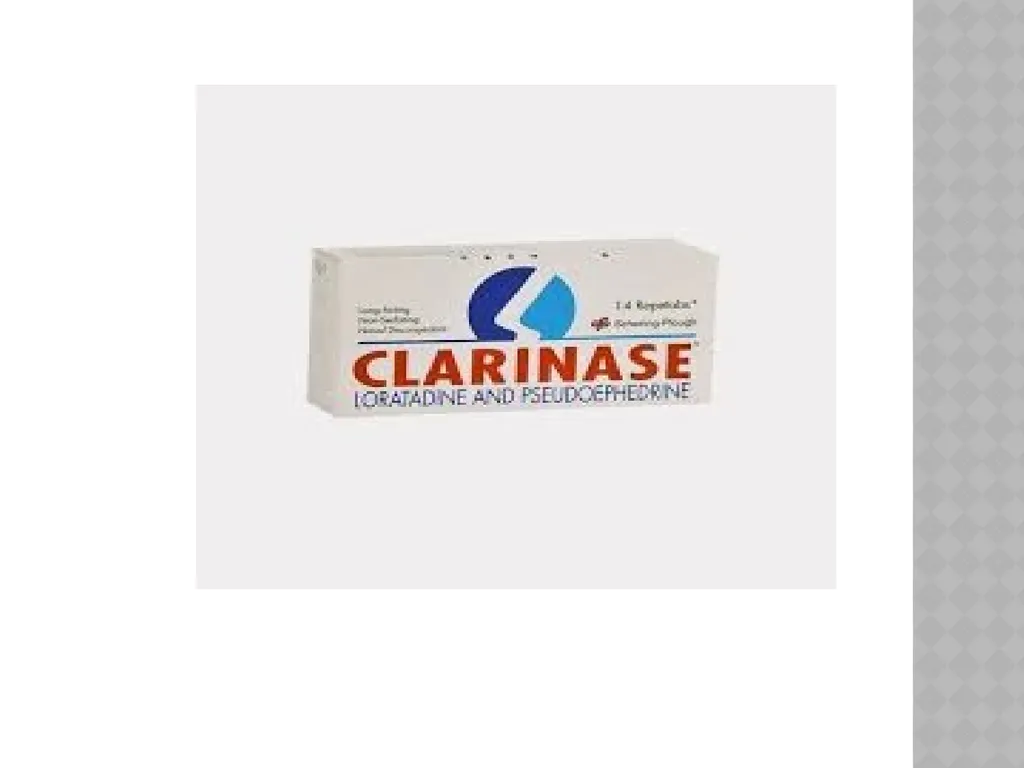
Combination products 3-Combination products :sympathomimetics (for congestion) + Antihistamine( for rhinorrhoea and sneezing):
Example of Combination products is :
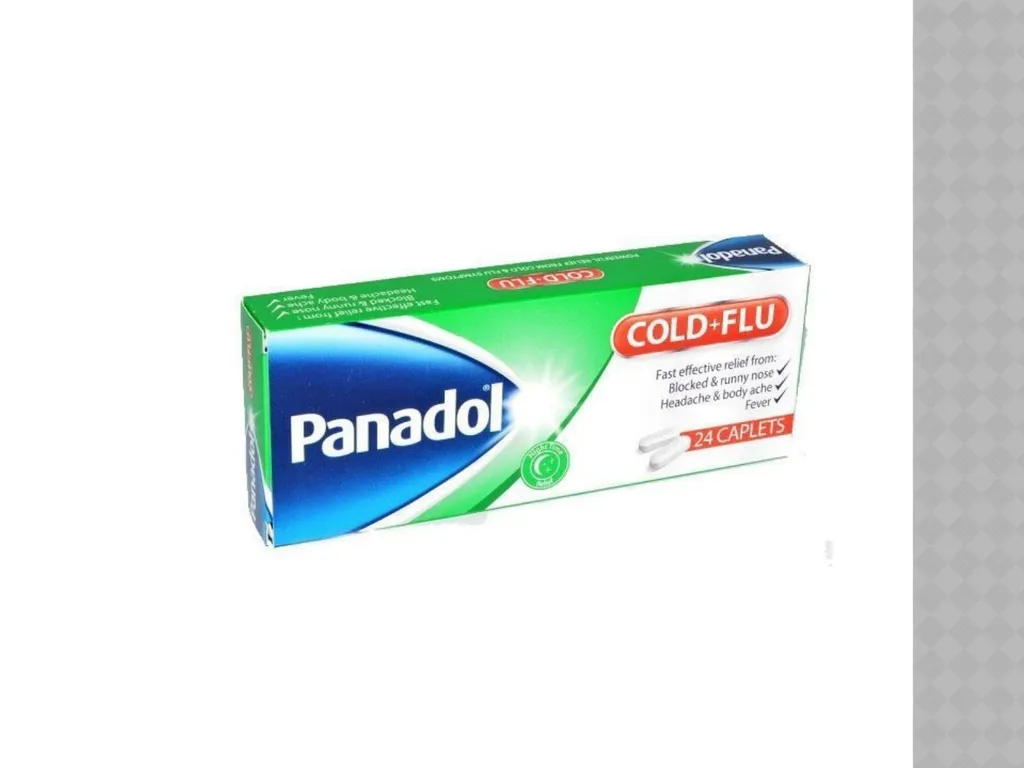
Actifid® tablet and syrup: which composed of Triprolidine ( sedating antihistamine) and Pseudoephedrine (sympathomimetics). Clarinase (pseduephedrin and loratidin), Panadol cold and flu (night or day)<br>
Example of Combination products is :
Actifid® tablet and syrup: which composed of Triprolidine ( sedating antihistamine) and Pseudoephedrine (sympathomimetics). Clarinase (pseduephedrin and loratidin), Panadol cold and flu (night or day)<br>
35
Sore throat Demulcents
Sucking anything produces saliva, lubricating and soothing inflamed tissues and washing infecting organisms off them.
Any lozenge or pastille, regardless of ingredients, will do this.<br>
Sucking anything produces saliva, lubricating and soothing inflamed tissues and washing infecting organisms off them.
Any lozenge or pastille, regardless of ingredients, will do this.<br>
36
glycerin, lemon and honey pastilles may be effective for soothing a sore throat.
Because they contain no medicament they can be used as often as necessary to stop the throat feeling dry, thereby relieving discomfort.
Some products contain ingredients with volatile constituents, e.g. eucalyptus oil and menthol, which produce a sensation of clearing blocked nasal and upper respiratory passages and can be useful in relieving other symptoms of colds.
The main disadvantage of most demulcent throat lozenges and pastilles is their high sugar content.<br>
Because they contain no medicament they can be used as often as necessary to stop the throat feeling dry, thereby relieving discomfort.
Some products contain ingredients with volatile constituents, e.g. eucalyptus oil and menthol, which produce a sensation of clearing blocked nasal and upper respiratory passages and can be useful in relieving other symptoms of colds.
The main disadvantage of most demulcent throat lozenges and pastilles is their high sugar content.<br>
37
Antibacterials The antibacterial compounds used in sore-throat lozenges are unlikely to be effective against the rhinoviruses that are largely responsible for the common cold.
A sore throat complicated by a secondary bacterial infection, such as tonsillitis, would normally be treated with a systemic antibiotic.<br>
A sore throat complicated by a secondary bacterial infection, such as tonsillitis, would normally be treated with a systemic antibiotic.<br>
38
Local anaesthetics Benzocaine is the only local anaesthetic included in sore-throat lozenges;
benzocaine and lidocaine are used in sore-throat sprays.
A local anaesthetic may be helpful if swallowing is uncomfortable.
Local anaesthetics can cause sensitisation in some individuals with prolonged use, so usage should be limited to 5 days.<br>
benzocaine and lidocaine are used in sore-throat sprays.
A local anaesthetic may be helpful if swallowing is uncomfortable.
Local anaesthetics can cause sensitisation in some individuals with prolonged use, so usage should be limited to 5 days.<br>
39
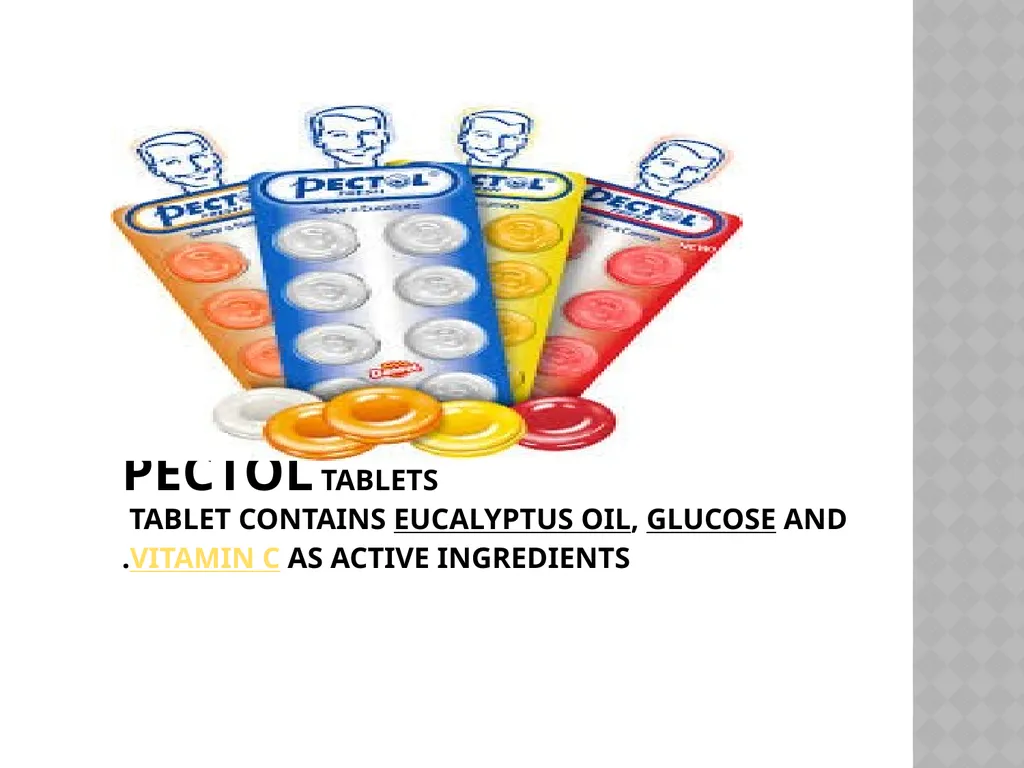
Pectol tablets
Tablet contains Eucalyptus Oil, Glucose and Vitamin C as active ingredients.<br>
40
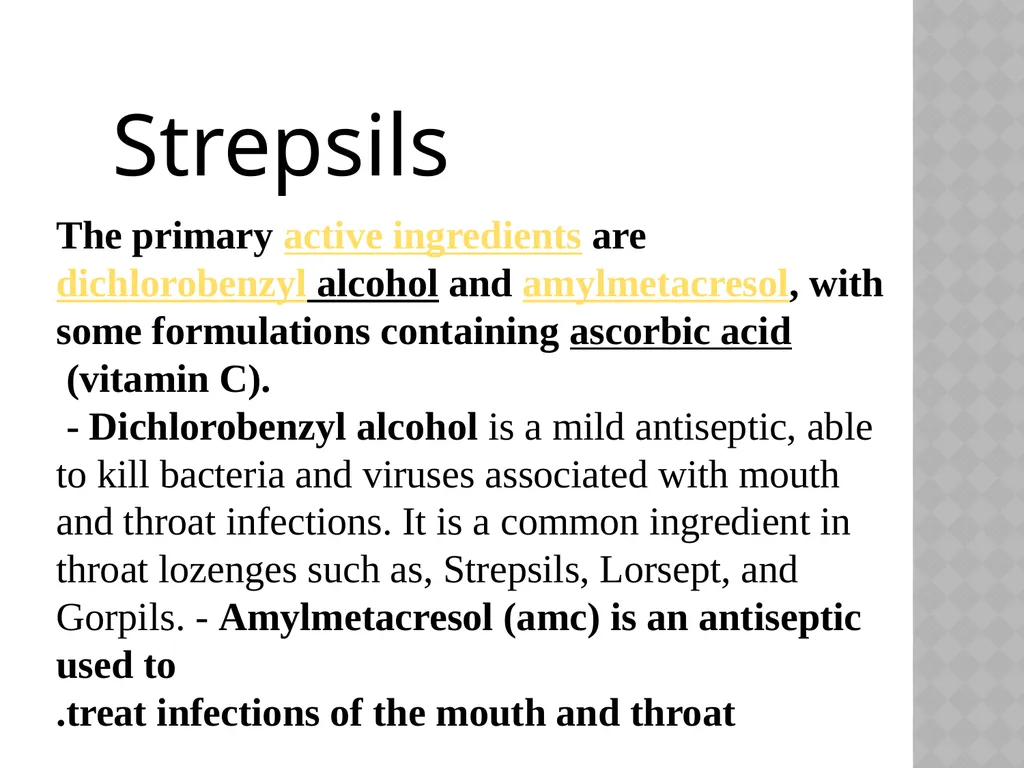
The primary active ingredients are dichlorobenzyl alcohol and amylmetacresol, with some formulations containing ascorbic acid (vitamin C).
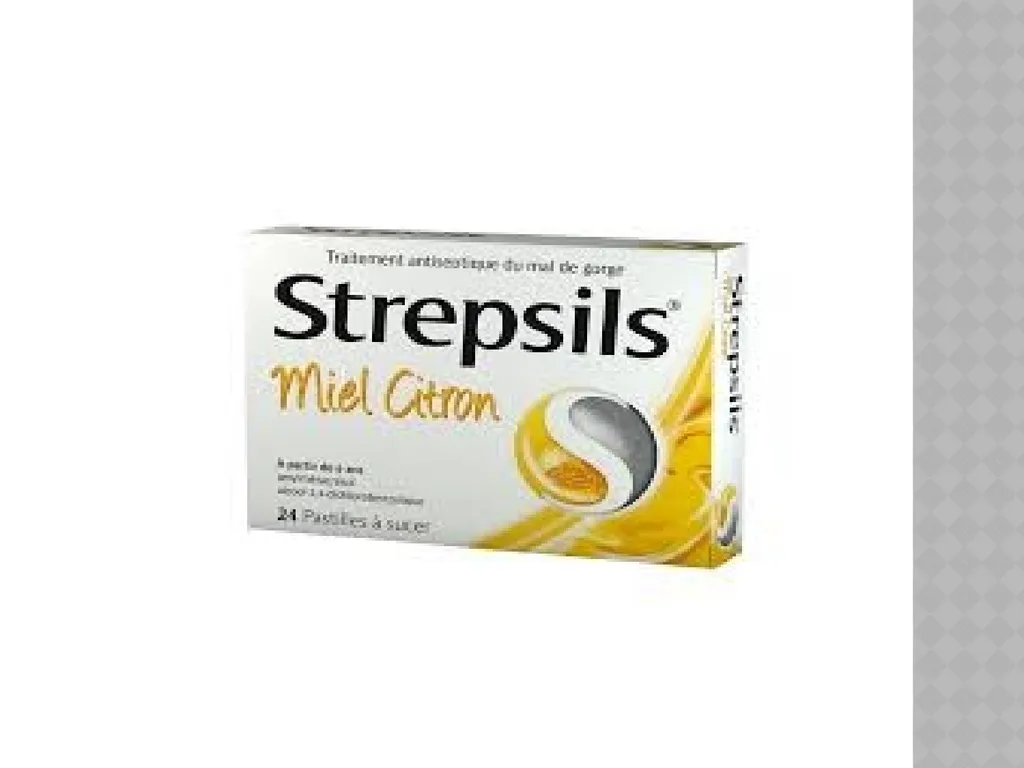
- Dichlorobenzyl alcohol is a mild antiseptic, able to kill bacteria and viruses associated with mouth and throat infections. It is a common ingredient in throat lozenges such as, Strepsils, Lorsept, and Gorpils. - Amylmetacresol (amc) is an antiseptic used to
treat infections of the mouth and throat. Strepsils<br>
41
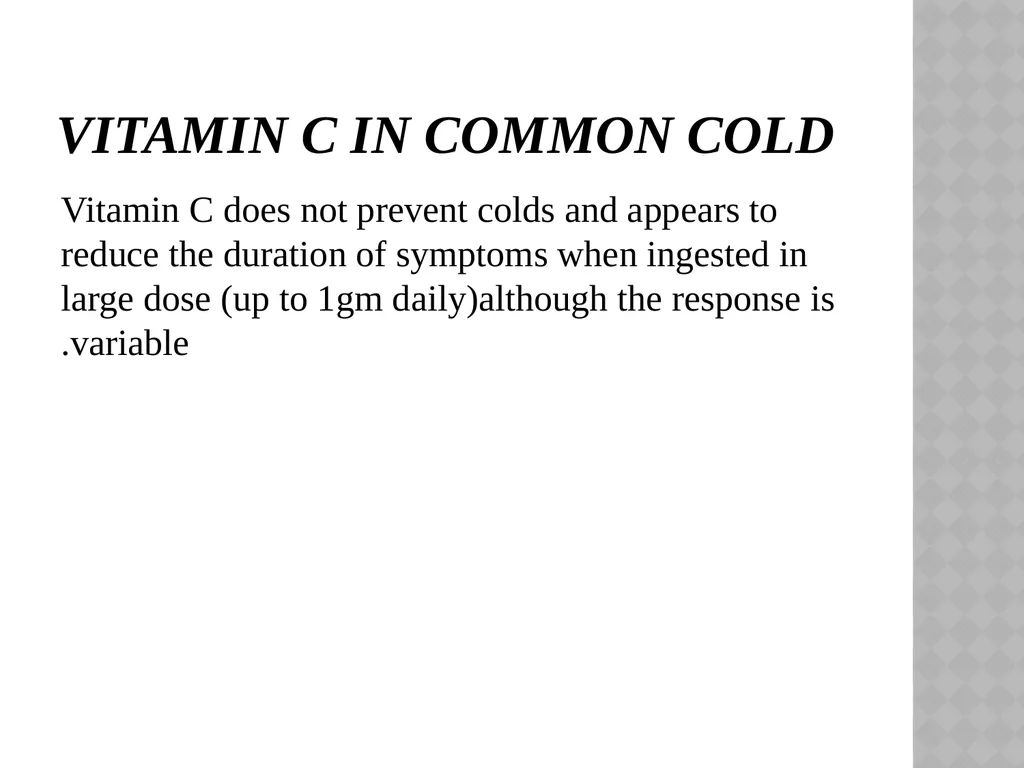
Vitamin C in common cold Vitamin C does not prevent colds and appears to reduce the duration of symptoms when ingested in large dose (up to 1gm daily)although the response is variable.<br>
42
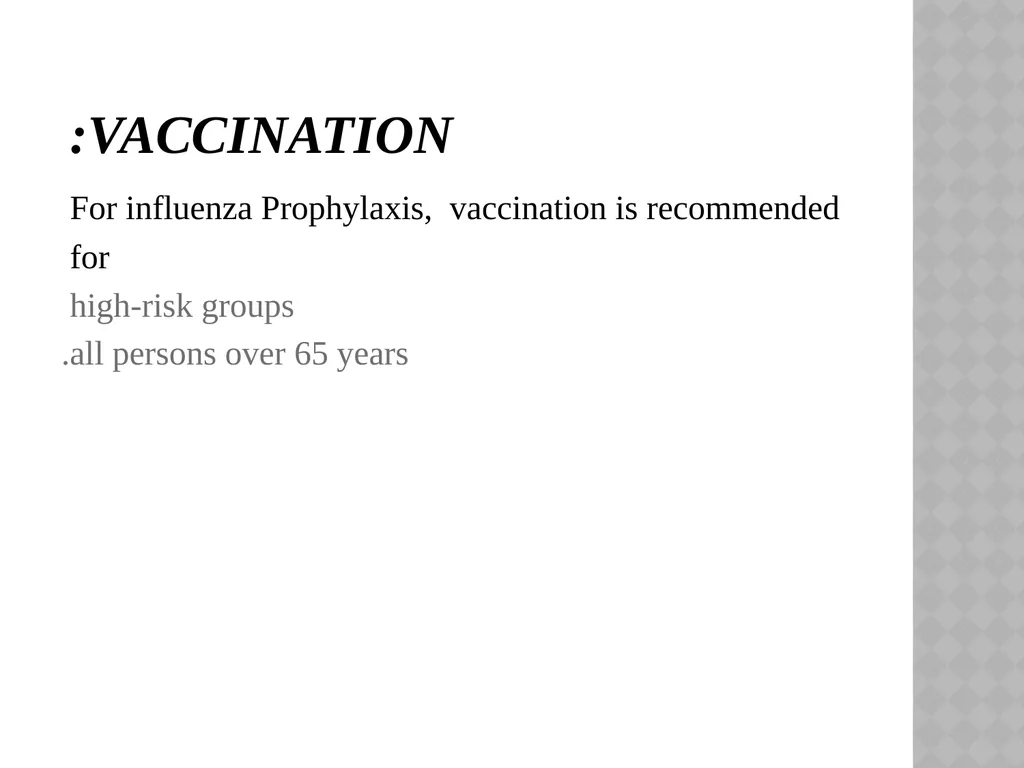
Vaccination: For influenza Prophylaxis, vaccination is recommended
for
high-risk groups
all persons over 65 years.<br>
for
high-risk groups
all persons over 65 years.<br>