04
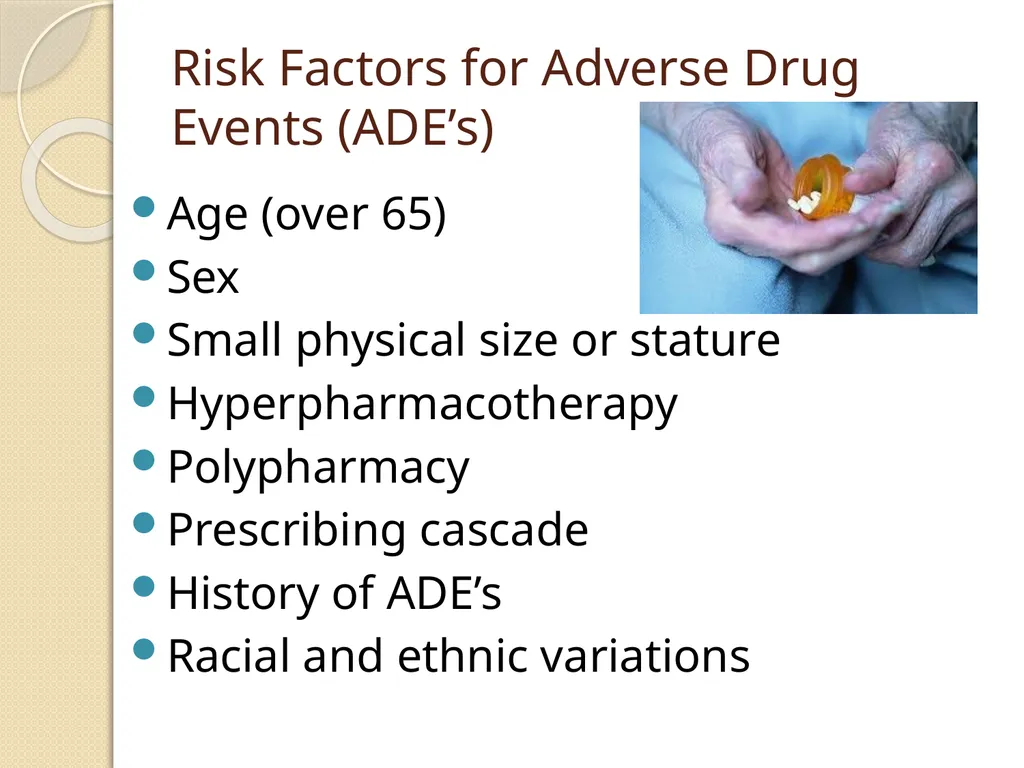
Risk Factors for Adverse Drug Events (ADE’s) Age (over 65)
Sex
Small physical size or stature
Hyperpharmacotherapy
Polypharmacy
Prescribing cascade
History of ADE’s
Racial and ethnic variations<br>
05
Potential Drug Side Effects1: Side effects: predictable pharmacologic effects that occur within therapeutic dose ranges and are undesirable in the given therapeutic situation.
Most common SE’s: constipation or diarrhea, nausea, abdominal pain and sedation
More severe SE’s: confusion, drowsiness, weakness, and loss of coordination
Adverse events: falls, anorexia, fatigue, cognitive impairment, urinary incontinence and constipation.<br>
06
Medicines and Falls in the Hospital Mechanisms leading to a fall is one or more of:
Sedation
Hypotension
Bradycardia, tachycardia or periods of asystole<br>
07
So let’s talk about specific medications and drug categories…..<br>
08
Drugs acting of the heart & circulation: Maintaining consciousness and an upright posture requires adequate blood flow to the brain.
Requires a pulse and blood pressure
BP of 110mmHg or below in older adults<br>
09
Anti-hypertensive drugs: Beta Blockers:
High BP
-olol (Atenolol, sotalol, bisoprolol, timolol)
SE’s: Bradycardia, hypotension, orthostatic hypotension, vasovagal syndrome
ACE Inhibitors
High BP and CHF
-pril (lisopril, enalapril, etc.)
-SE’s: low BP, dizziness, headache, drowsiness, weakness4<br>
10
Digoxin Antidysrhrthmic drug used to treat CHF and atrial fibrillation.
Oral or injection drug
May cause bradycardia and other arrhythmias2 , visual disturbances4
SE’s: are dose dependent
The usual starting dose is 0.0625-0.25 mg daily depending on age and kidney function.<br>
11
Non-Steroidal Anti-inflammatory Drugs (NSAIDs) Purpose: to treat inflammation; analgesics
SE’s: stomach upset and pain
Among surgical pts can cause postoperative complications, such as wound hematoma, upper GI tract bleeding, hypotension, and impaired bone or tendon healing.1<br>
12
NSAIDS continued…. May cause increased blood pressure and peripheral edema
Renal complications
Myocardial event
Confusion and memory loss in the older adult<br>
13
Acetaminophen Uses: Pain reliever, fever reducer
SE’s: not common,4 most severe is liver damage
Dosing: for adults is 325 to 650 mg every 4 hours or 500 mg every 8 hours when using immediate release formulations.
Max daily dose of 4 grams.<br>
14
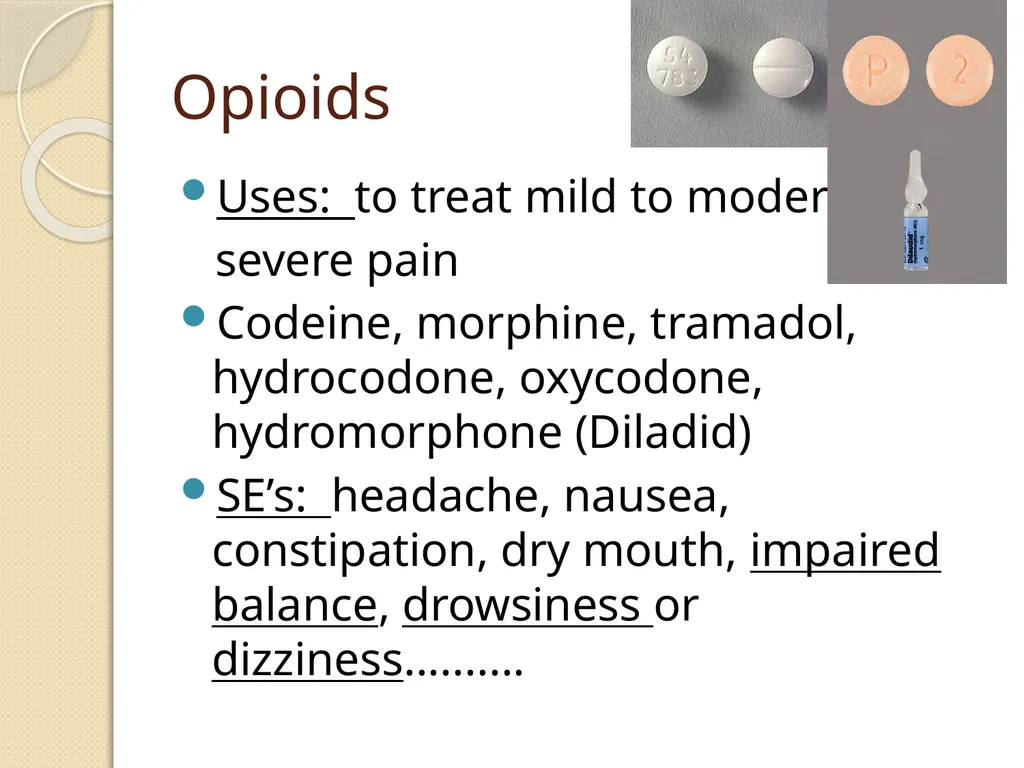
Opioids Uses: to treat mild to moderately
severe pain
Codeine, morphine, tramadol, hydrocodone, oxycodone, hydromorphone (Diladid)
SE’s: headache, nausea, constipation, dry mouth, impaired balance, drowsiness or dizziness..........<br>
15
Opioids continued…. Sedation, slow reactions, impaired balance, delirium.2
Adverse Events: increase the risk of falls.
High risk: can commonly cause falls alone or in combination<br>
16
Coumadin (Warfarin)4 Warfarin is an oral anticoagulant, a drug that inhibits the clotting of blood.
Uses: DVT, post-MI, TKA/THA, reduce risk of PE and stroke.
Dosing: starts at 2-5mg 1x/daily and adjusted based on INR.
SE’s: The two most serious side effects are bleeding and necrosis (gangrene) of the skin (bleeding can occur in any organ or tissue).<br>
17
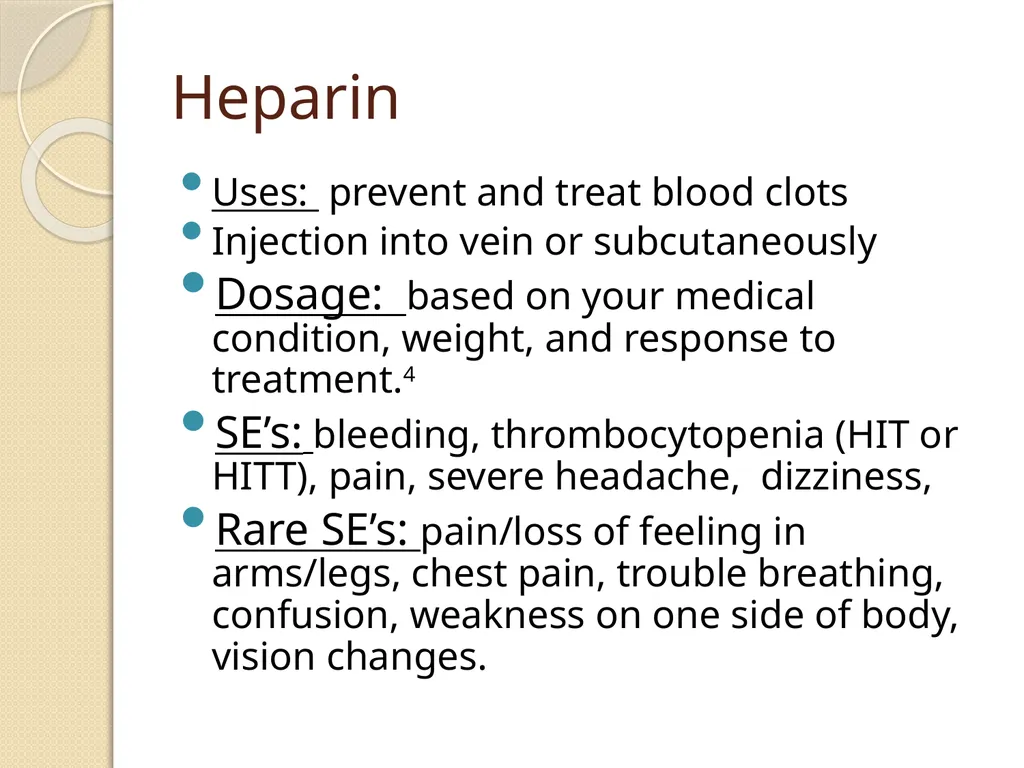
Heparin Uses: prevent and treat blood clots
Injection into vein or subcutaneously
Dosage: based on your medical condition, weight, and response to treatment.4
SE’s: bleeding, thrombocytopenia (HIT or HITT), pain, severe headache, dizziness,
Rare SE’s: pain/loss of feeling in arms/legs, chest pain, trouble breathing, confusion, weakness on one side of body, vision changes.<br>
18
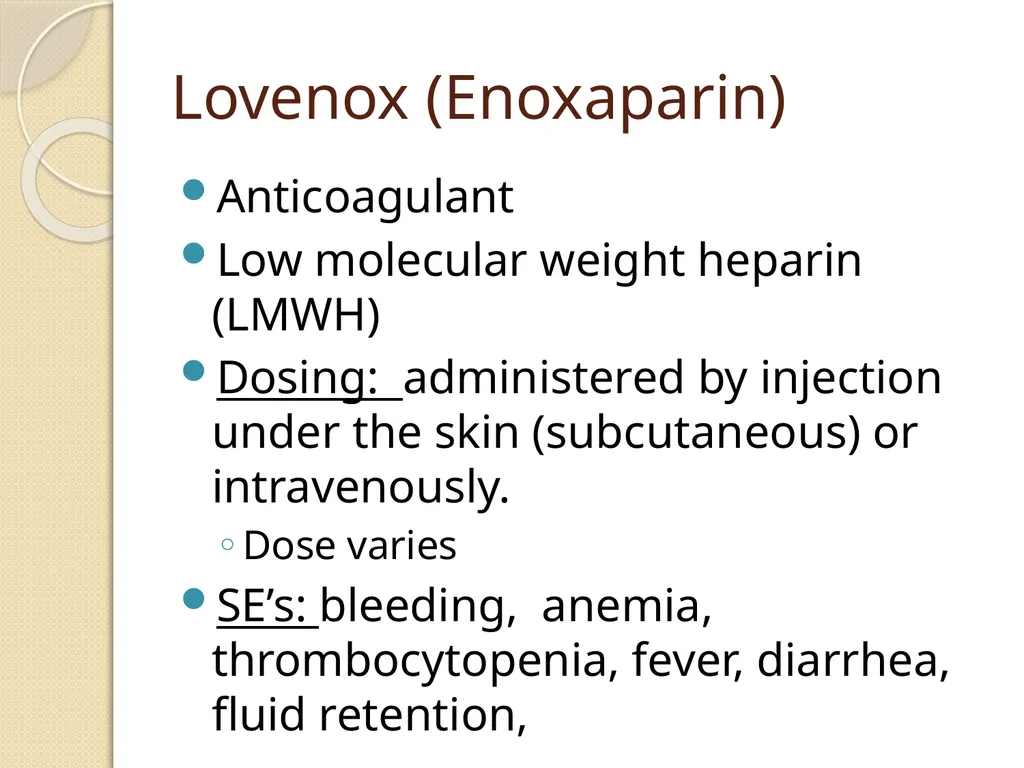
Lovenox (Enoxaparin) Anticoagulant
Low molecular weight heparin (LMWH)
Dosing: administered by injection under the skin (subcutaneous) or intravenously.
Dose varies
SE’s: bleeding, anemia, thrombocytopenia, fever, diarrhea, fluid retention,<br>
19
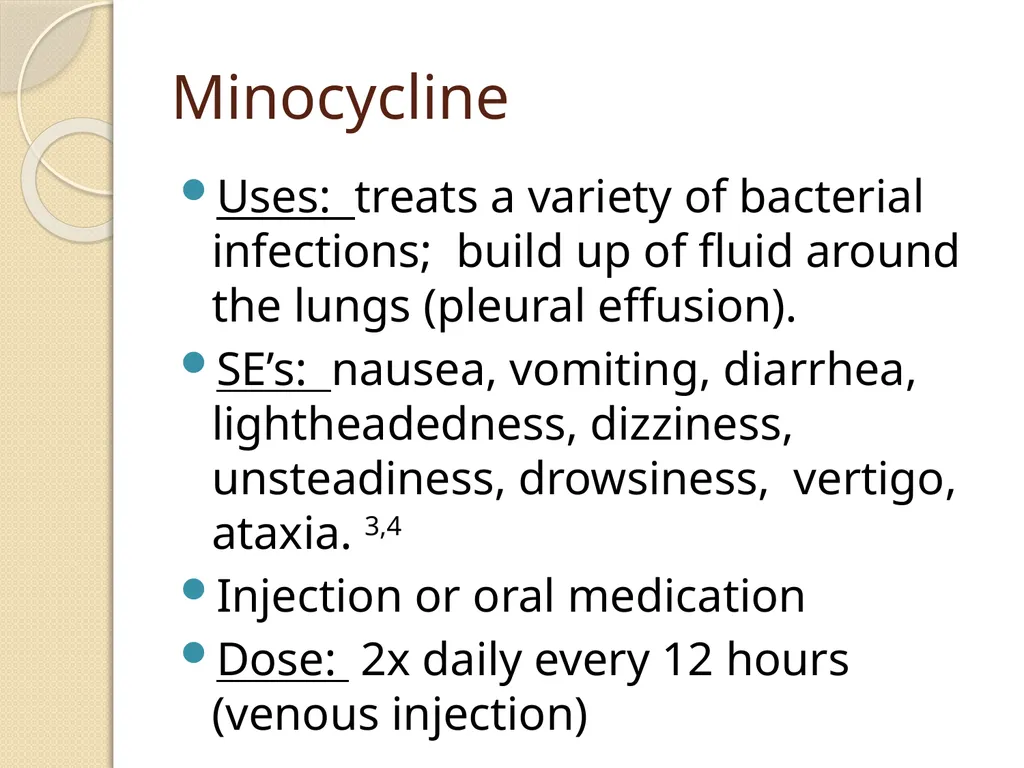
Minocycline Uses: treats a variety of bacterial infections; build up of fluid around the lungs (pleural effusion).
SE’s: nausea, vomiting, diarrhea, lightheadedness, dizziness, unsteadiness, drowsiness, vertigo, ataxia. 3,4
Injection or oral medication
Dose: 2x daily every 12 hours (venous injection)<br>
20
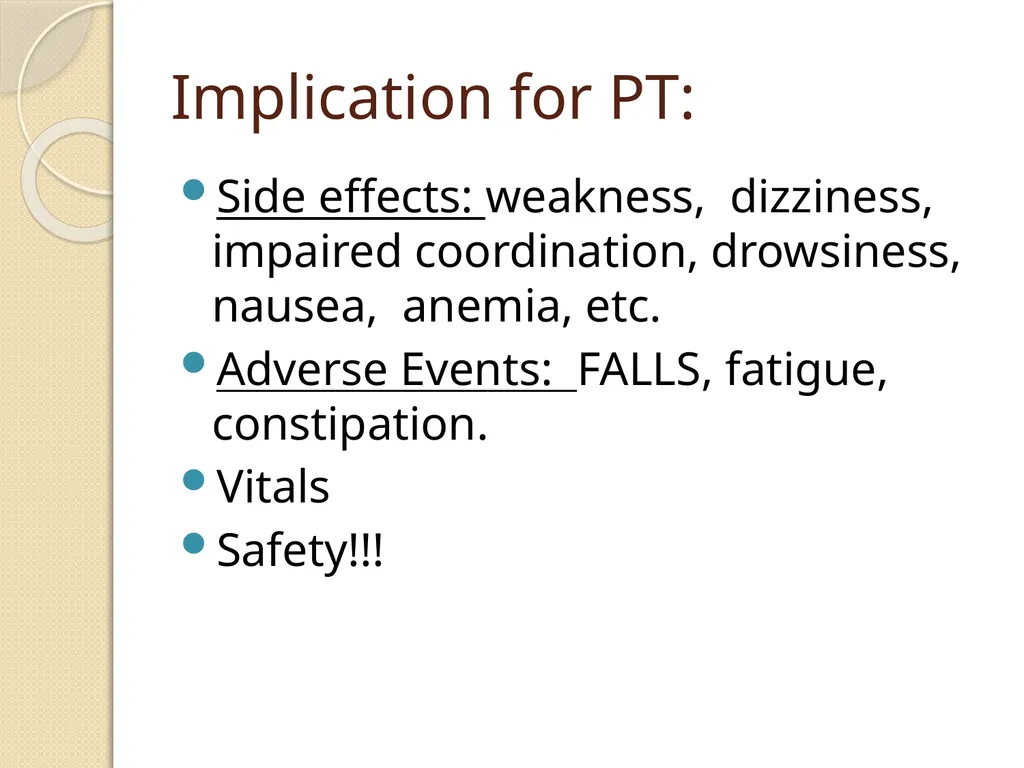
Implication for PT: Side effects: weakness, dizziness, impaired coordination, drowsiness, nausea, anemia, etc.
Adverse Events: FALLS, fatigue, constipation.
Vitals
Safety!!!<br>
21
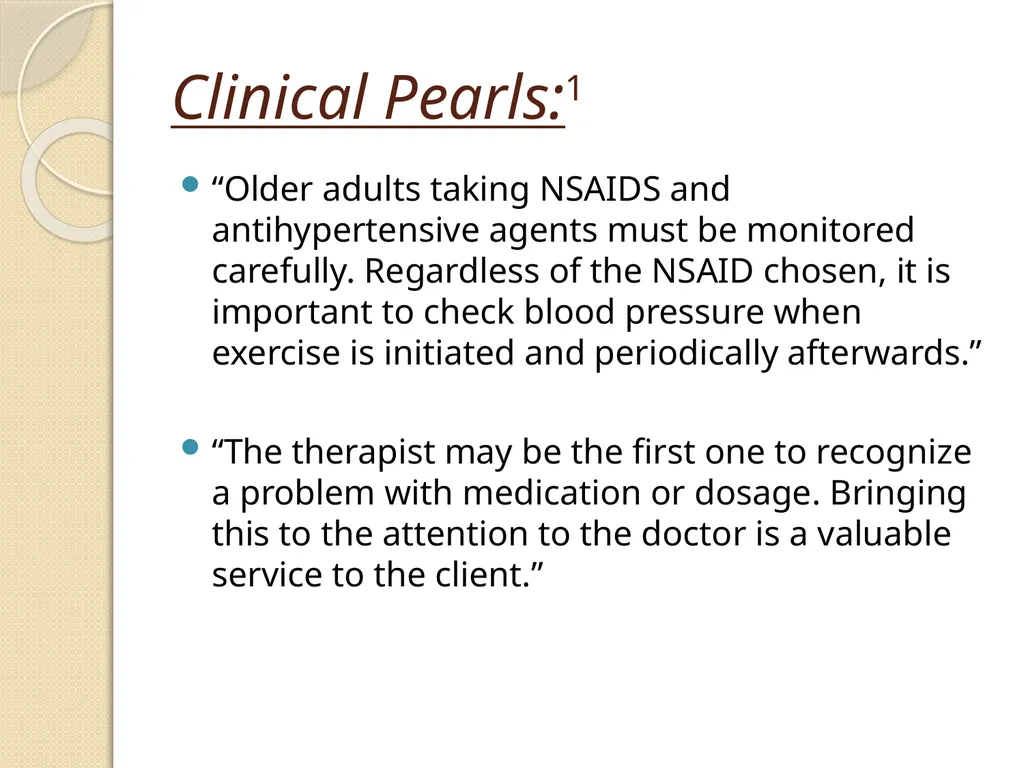
Clinical Pearls:1 “Older adults taking NSAIDS and antihypertensive agents must be monitored carefully. Regardless of the NSAID chosen, it is important to check blood pressure when exercise is initiated and periodically afterwards.”
“The therapist may be the first one to recognize a problem with medication or dosage. Bringing this to the attention to the doctor is a valuable service to the client.”<br>
22
Resources: Epocrates online
MedicineNet
Medscape<br>
23
References Goodman, C., and T. Snyder. "Differential diagnosis for physical therapists."Screening for referral. Missouri: Saunders Elsevier (2007).
Dwight, Jeremy. "Medicines and Falls in Hospital: Guidance Sheet.“
Epocrates Online: An Athenahealth Company. Available at: https://online.epocrates.com/noFrame/. Accessed April 16, 2013.
MedicineNet: We Bring Doctor’s Knowledge to You. Available at: http://www.medicinenet.com/script/main/hp.asp. Accessed April 16, 2013.<br>