Community Based Service Delivery Model Lasha Goguadze ART 2016, Jakarta HIV at Glance, Global (2015) 36.7 millions are living with HIV While 2.1 millions become newly infected 1.1 million died from HIV related diseases 5700 new infection
"Community Based Service Delivery Model Lasha" is the property of its rightful owner. Permission is granted to
download and print the materials on this website for personal, non-commercial use only, and to display it
on your personal computer provided you do not modify the materials and that you retain all copyright
notices contained in the materials. By downloading content from our website, you accept the terms of this
agreement.
Presentation Transcript
01
Community Based Service Delivery Model Lasha Goguadze
ART 2016, Jakarta<br>
02
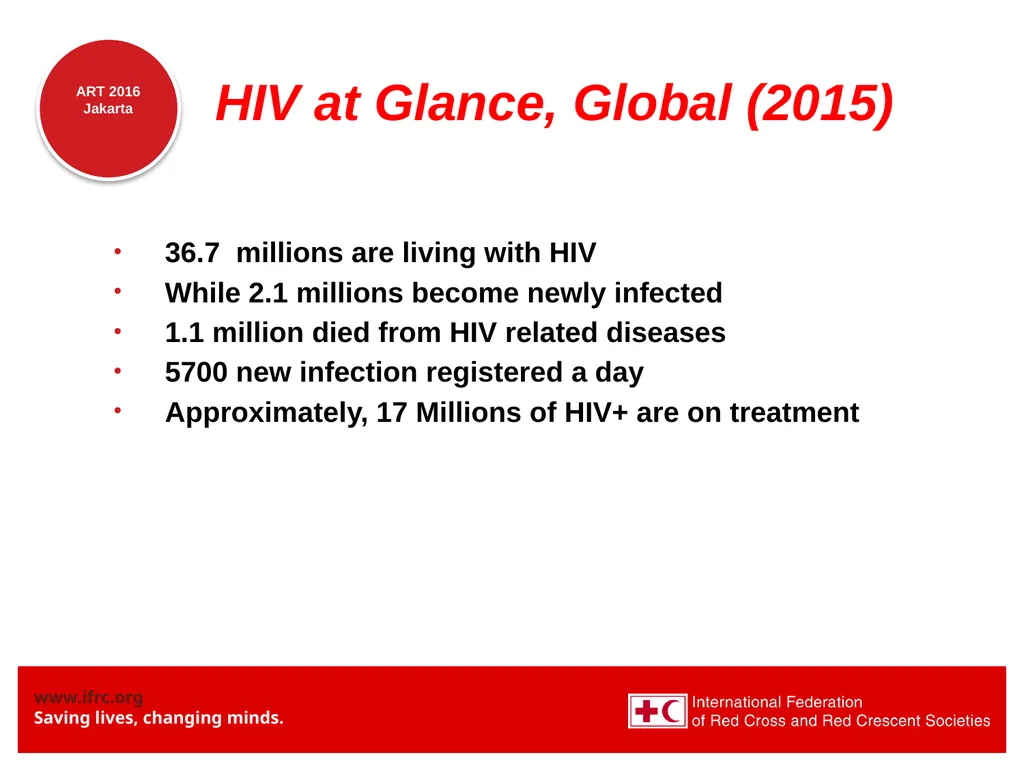
HIV at Glance, Global (2015) 36.7 millions are living with HIV
While 2.1 millions become newly infected
1.1 million died from HIV related diseases
5700 new infection registered a day
Approximately, 17 Millions of HIV+ are on treatment<br>
03
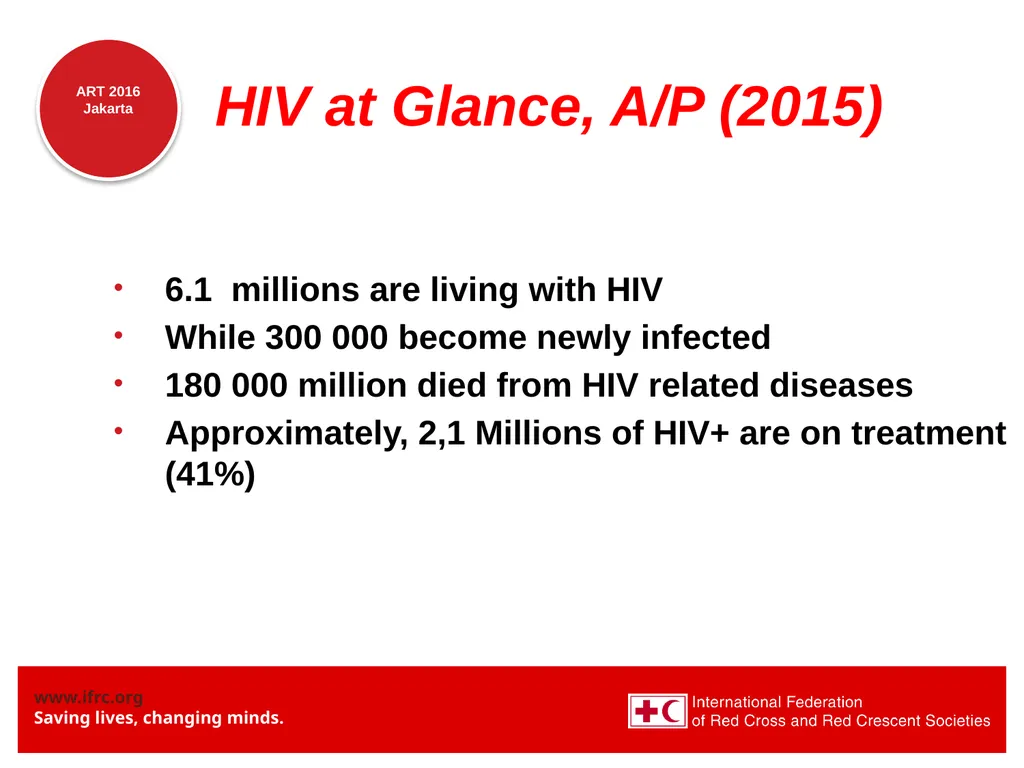
HIV at Glance, A/P (2015) 6.1 millions are living with HIV
While 300 000 become newly infected
180 000 million died from HIV related diseases
Approximately, 2,1 Millions of HIV+ are on treatment (41%)<br>
04
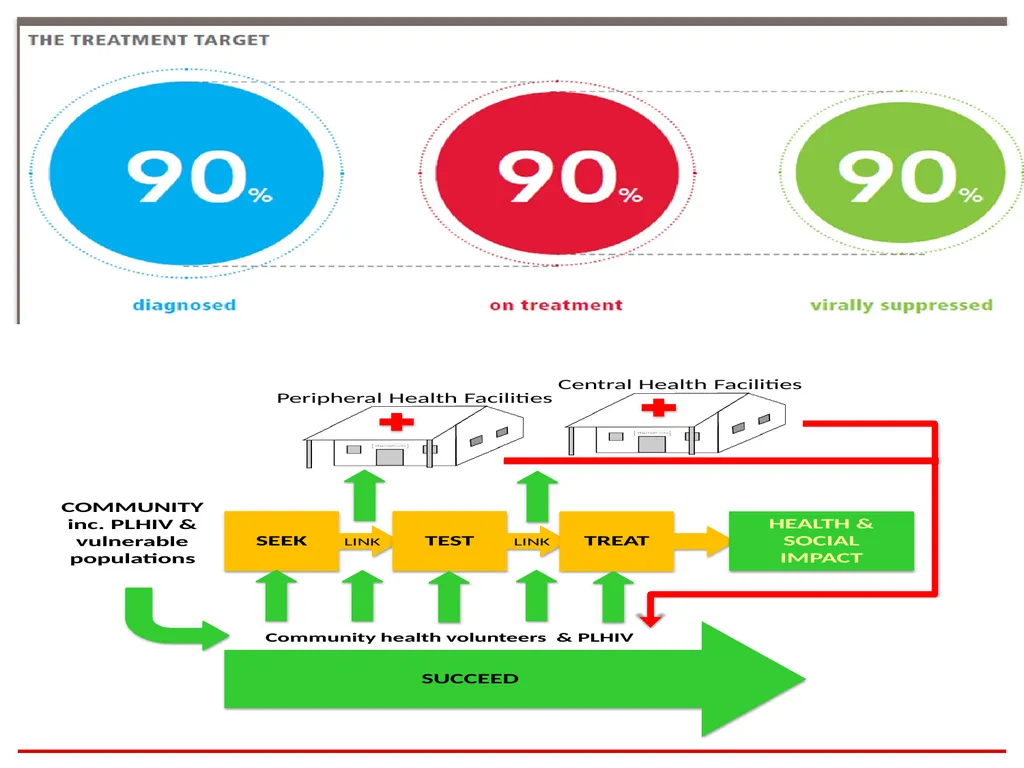
Global Targets In order to speed up the HIV response and end HIV by 2030, the International Community led by UNAIDS adopted a new set of targets (Fast-Track Strategy, 2013)
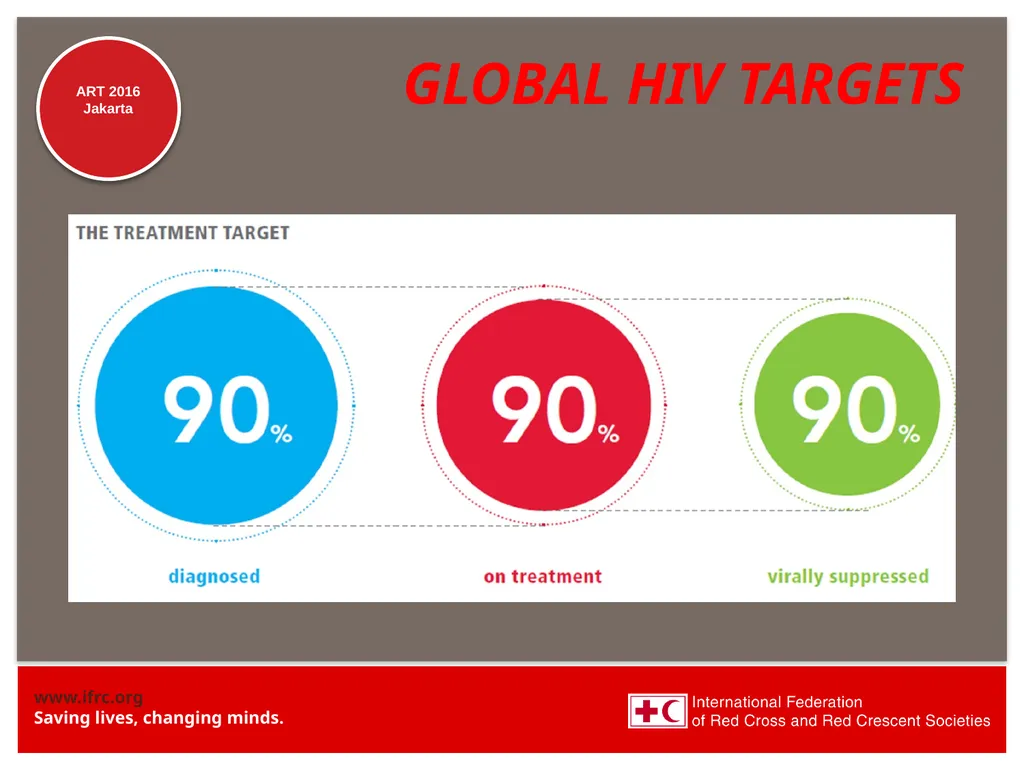
90 % of all people living with HIV and Aids will know their HIV status.
90 % of all people diagnosed HIV infection will receive sustained ARV treatment.
90 % of all people receiving ART will have viral suppressed
This is the New Global Challenge regarding HIV, that brings the Vision of the Fight<br>
05
By 2020 By 2030
90-90-90 95-95-95
Treatment treatment
500 000 200 000
New HIV infections in adults New HIV infections in adult
Zero Discrimination Zero Discrimination<br>
06
GLOBAL HIV TARGETS<br>
07
Gap to reach the 90-90-90 90-90-90 53.6 41 32<br>
08
Red Cross Red Crescent: Goal and Approach Operational Goal: Improving access to HIV prevention, Testing, Treatment, Care and Support
Technical Approach: The Community-Based Service Delivery Model (CBSM)<br>
09
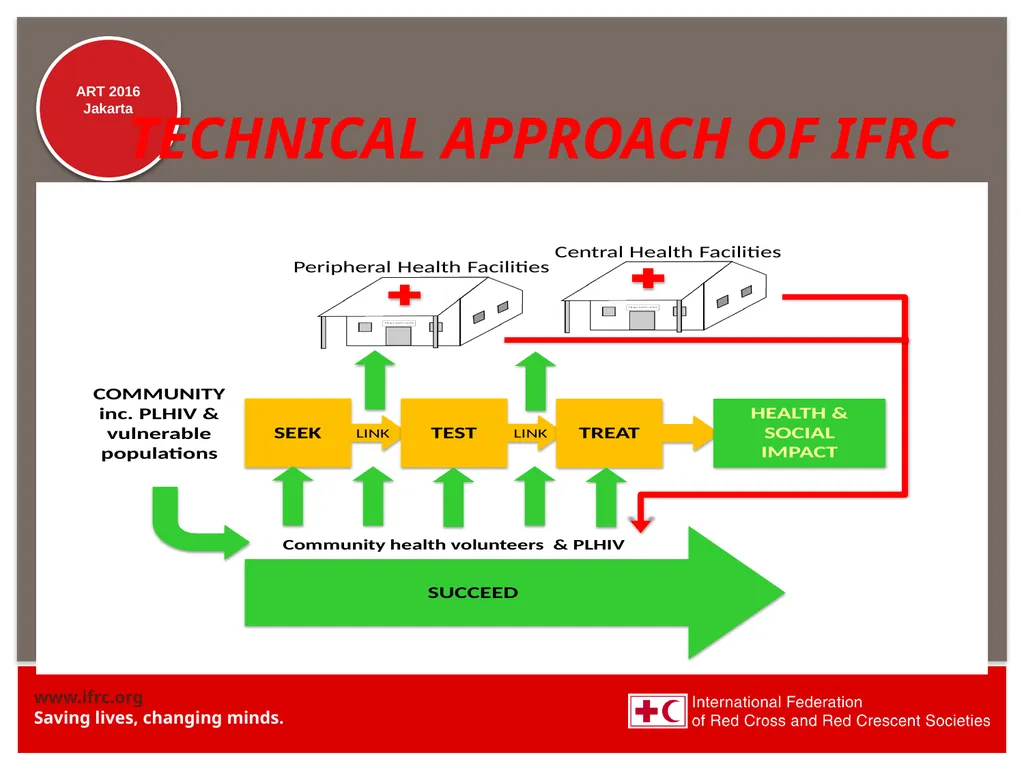
TECHNICAL APPROACH OF IFRC<br>
10
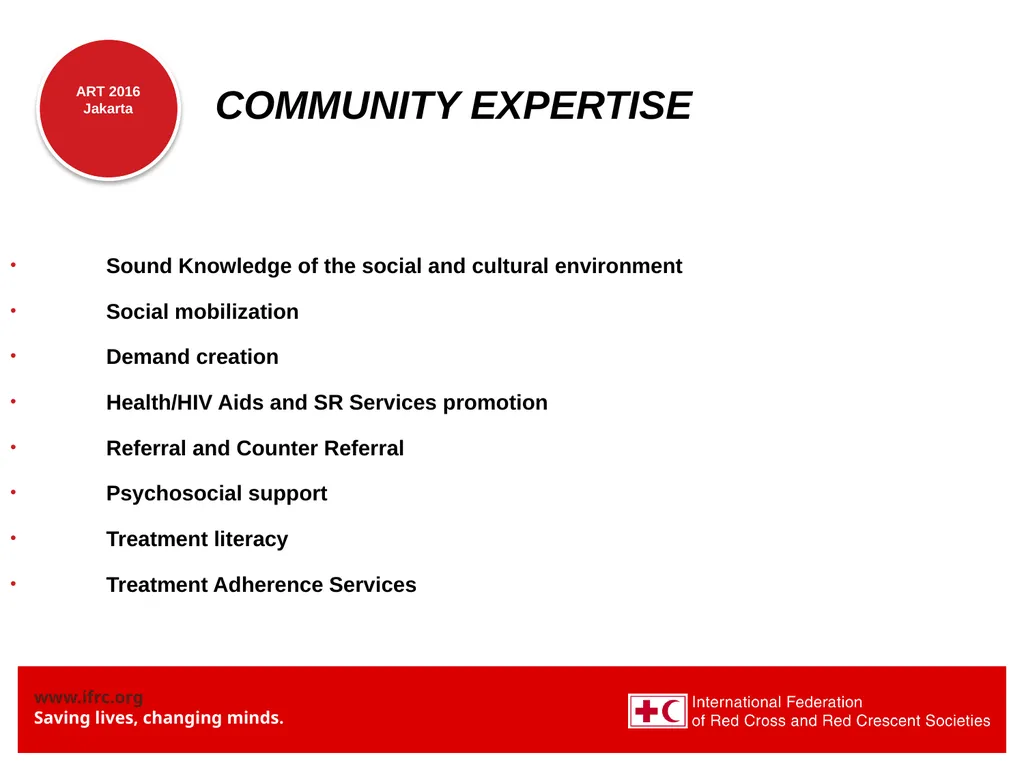
COMMUNITY EXPERTISE Sound Knowledge of the social and cultural environment
Social mobilization
Demand creation
Health/HIV Aids and SR Services promotion
Referral and Counter Referral
Psychosocial support
Treatment literacy
Treatment Adherence Services<br>
11
Red Cross Red Crescent Statements at Global HIV Forums<br>
12
“We must not waver in our pursuit of the most vulnerable, including groups that are highly stigmatized and can fall too easily out of view. Men who have sex with men, injecting drug users, commercial sex workers: we cannot forget the commitments we have made to them, and the necessity of delivering on these commitments”
IFRC intervention
UN GA on HIV, 2016, NY<br>
13
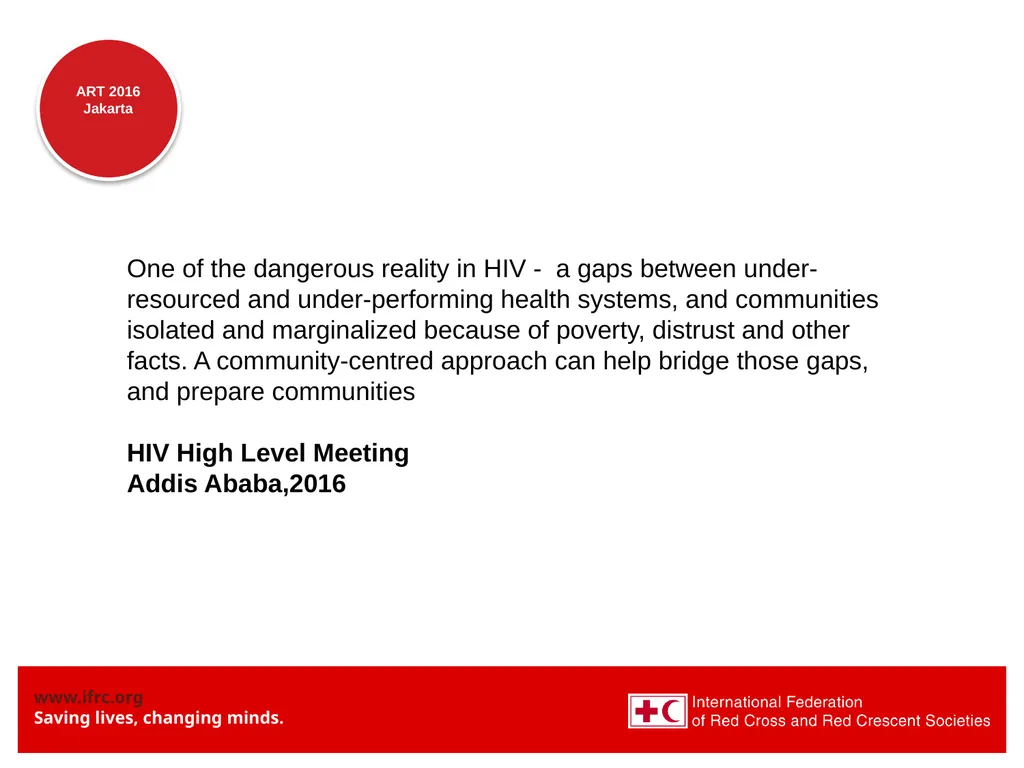
One of the dangerous reality in HIV - a gaps between under-resourced and under-performing health systems, and communities isolated and marginalized because of poverty, distrust and other facts. A community-centred approach can help bridge those gaps, and prepare communities
HIV High Level Meeting
Addis Ababa,2016<br>
14
“The offer of HIV screening must be brought out of the hospitals, clinics and formal centres and onto the streets,” need to effectively “identify, reach, test and treat” key population who might be reluctant to approach the official health care system because of the stigma and discrimination associated with the disease”
IFRC intervention, HIV Regional Conference, Moscow,2016<br>
15
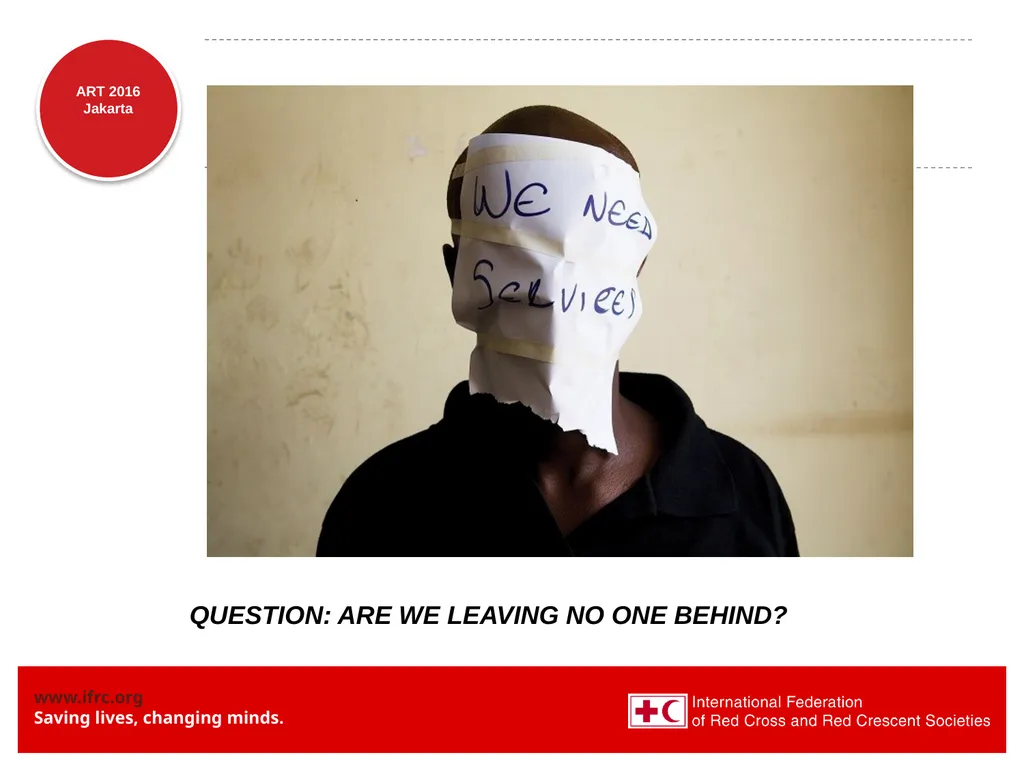
QUESTION: ARE WE LEAVING NO ONE BEHIND?<br>
16
What do we mean with key populations that are at risk and neglected from HIV in Red Cross Red Crescent life
Different ways to engage key population in our work at every level Discussion<br>