Comparison of Peak-Trough vs Trough-Only Vancomycin Monitoring Missy Sweeney 2022 PharmD Candidate Ohio State University Al-Sulaiti FK, Nader AM, Saad MO, et al.; Clinical and Pharmacokinetic Outcomes of Peak-Trough Based Versus
"Comparison of Peak-Trough vs Trough-Only" is the property of its rightful owner. Permission is granted to
download and print the materials on this website for personal, non-commercial use only, and to display it
on your personal computer provided you do not modify the materials and that you retain all copyright
notices contained in the materials. By downloading content from our website, you accept the terms of this
agreement.
Presentation Transcript
01
Comparison of Peak-Trough vs Trough-Only Vancomycin Monitoring Missy Sweeney 2022 PharmD Candidate Ohio State University Al-Sulaiti FK, Nader AM, Saad MO, et al.; Clinical and Pharmacokinetic Outcomes of Peak-Trough Based Versus Trough-Based Vancomycin Therapeutic Drug Monitoring Approaches: A Pragmatic Randomized Controlled Trial. European Journal of Drug Metabolism and Pharmacokinetics. 2019; 44:639-652. Doi:10.1007<br>
02
Background and Overview Vancomycin is an antibiotic used frequently in hospitals. It requires close monitoring to ensure clinical efficacy and prevent potential adverse effects.
Trough monitoring is the current standard but current data is re-evaluating this practice.
Researchers in Qatar conducted a trial to compare patient outcomes when monitoring vancomycin via trough-only values vs trough-and-peak values
Trial was funded by Qatar University Intern Research Grant
This trial was published in the European Journal of Drug Metabolism and Pharmacokinetics in March 2019.
Impact Factor: 1.913
The goal of the study was to compare clinical and pharmacokinetic outcomes and to determine the relationship between vancomycin AUC24/MIC and cure rates.
The authors of the article claimed no head-to-head randomized controlled trial comparisons were conducted prior to this study.<br>
03
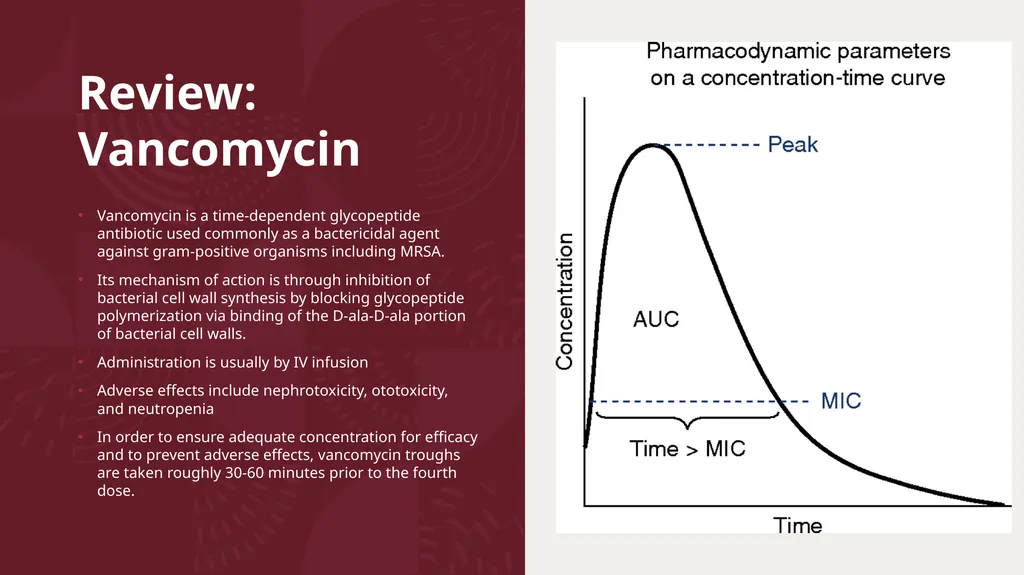
Review: Vancomycin Vancomycin is a time-dependent glycopeptide antibiotic used commonly as a bactericidal agent against gram-positive organisms including MRSA.
Its mechanism of action is through inhibition of bacterial cell wall synthesis by blocking glycopeptide polymerization via binding of the D-ala-D-ala portion of bacterial cell walls.
Administration is usually by IV infusion
Adverse effects include nephrotoxicity, ototoxicity, and neutropenia
In order to ensure adequate concentration for efficacy and to prevent adverse effects, vancomycin troughs are taken roughly 30-60 minutes prior to the fourth dose.<br>
04
Study Design Type of study: Pragmatic randomized un-blinded controlled trial
Study location: 3 tertiary care hospitals in Qatar
Timeline: Clinical efficacy was determined at 5 days
Intervention: Vancomycin was started for patient for either empiric or targeted treatment
Control arm monitored trough levels. Trough was taken 30 minutes prior to 4th dose. Dose adjustments were based solely on trough concentrations.
Intervention arm monitored both peak and trough levels. Peak was taken 1-2 hours post 4th dose infusion, trough was taken 30 minutes prior to 5th dose, and 2 concentrations were taken between peak and trough. Dose adjustments were based on both peak and trough concentrations and whether they reached their targeted values. Safety and Efficacy
Primary endpoints
Vancomycin AUC24/MIC cure breakpoint
Therapeutic cure
Therapeutic failure
Secondary endpoints
LOS
Number of dose adjustments required
Cumulative vancomycin doses received
Duration of vancomycin treatment
Safety
Creatinine clearance (CrCl) was calculated using Cockcroft-Gault equation to estimate and monitor renal function
Target trough values were followed per HMC institutional guidelines and clinical practice guidelines<br>
05
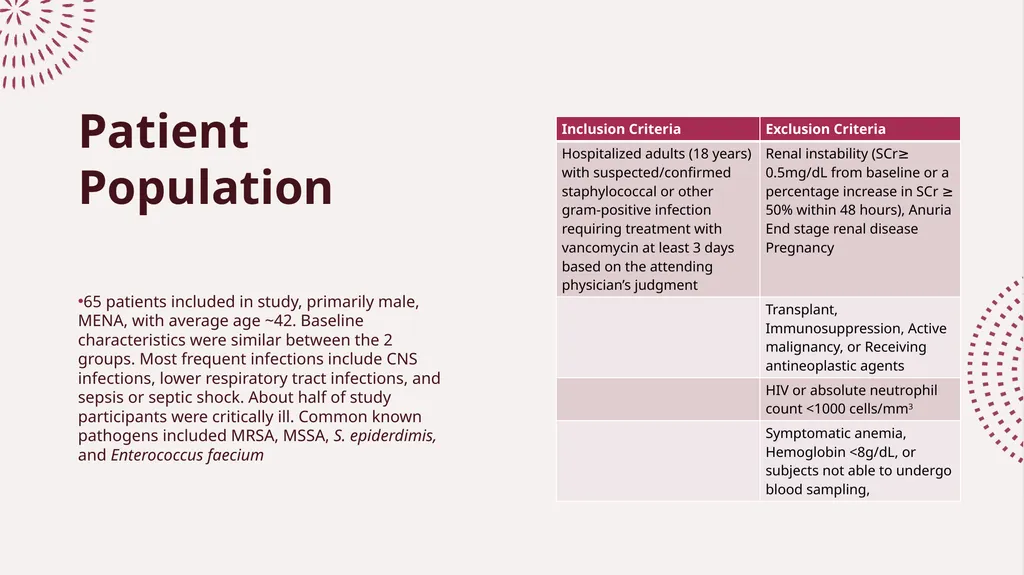
Patient Population 65 patients included in study, primarily male, MENA, with average age ~42. Baseline characteristics were similar between the 2 groups. Most frequent infections include CNS infections, lower respiratory tract infections, and sepsis or septic shock. About half of study participants were critically ill. Common known pathogens included MRSA, MSSA, S. epiderdimis, and Enterococcus faecium<br>
06
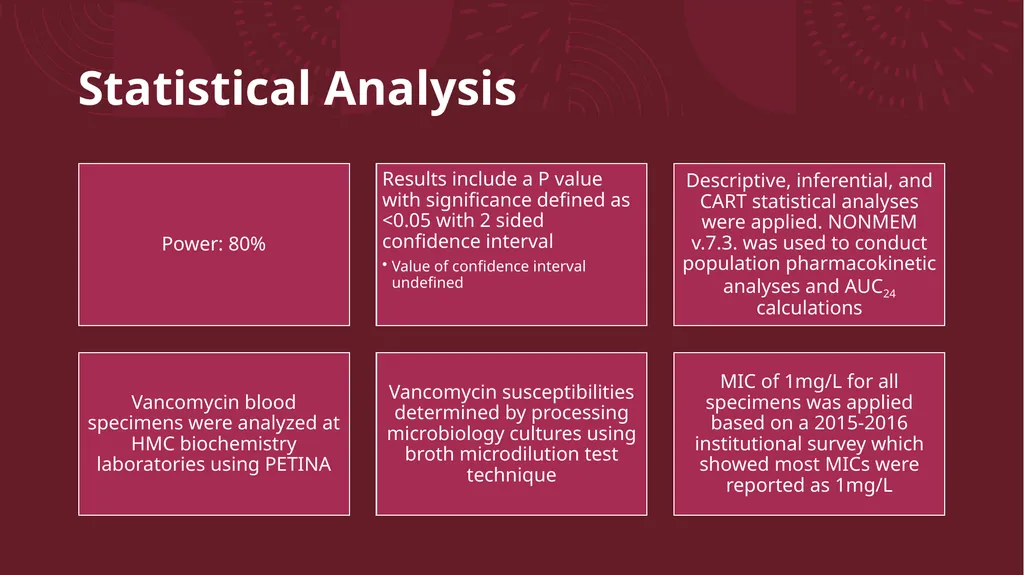
Statistical Analysis<br>
07
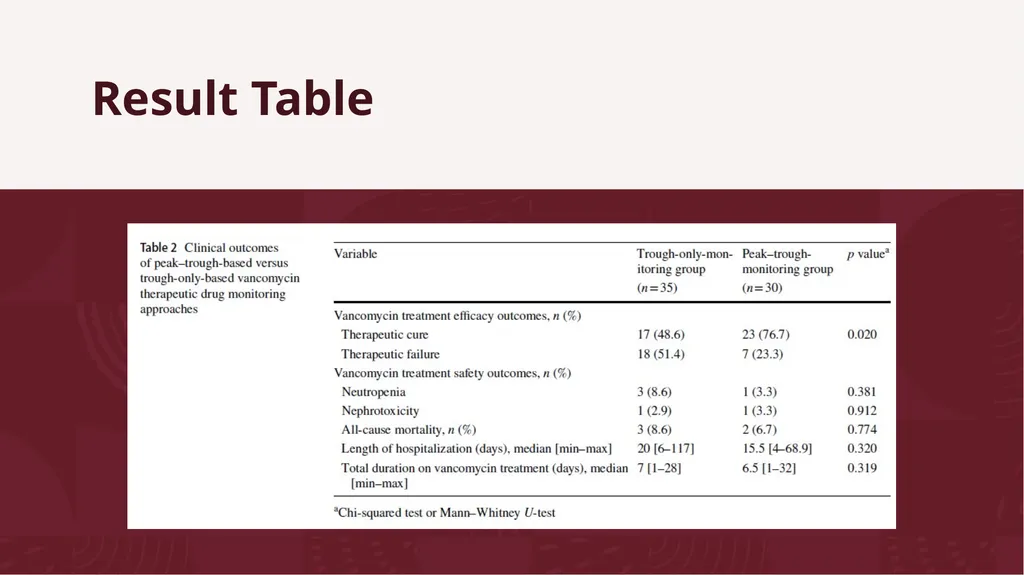
Result Table<br>
08
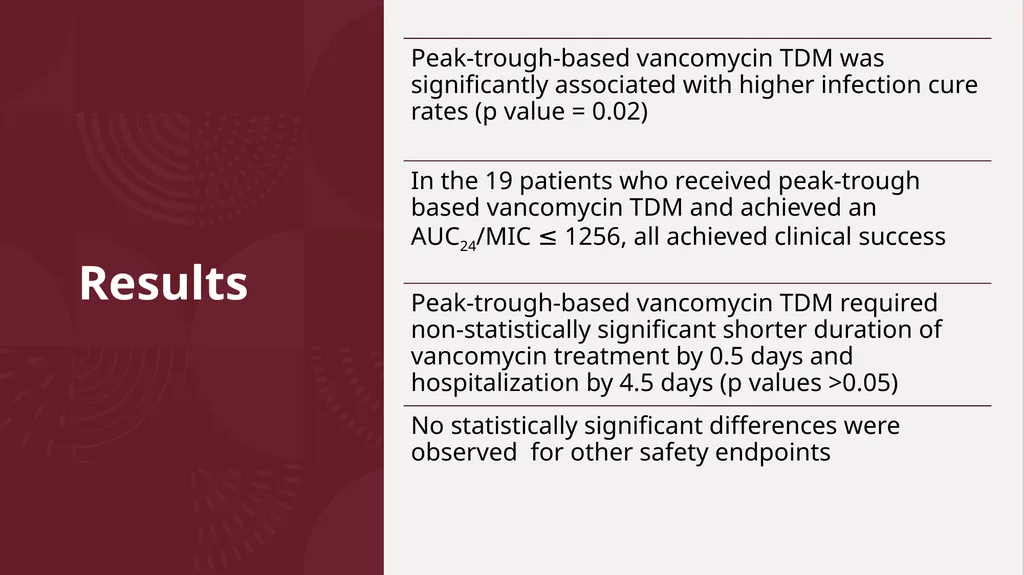
Results<br>
09
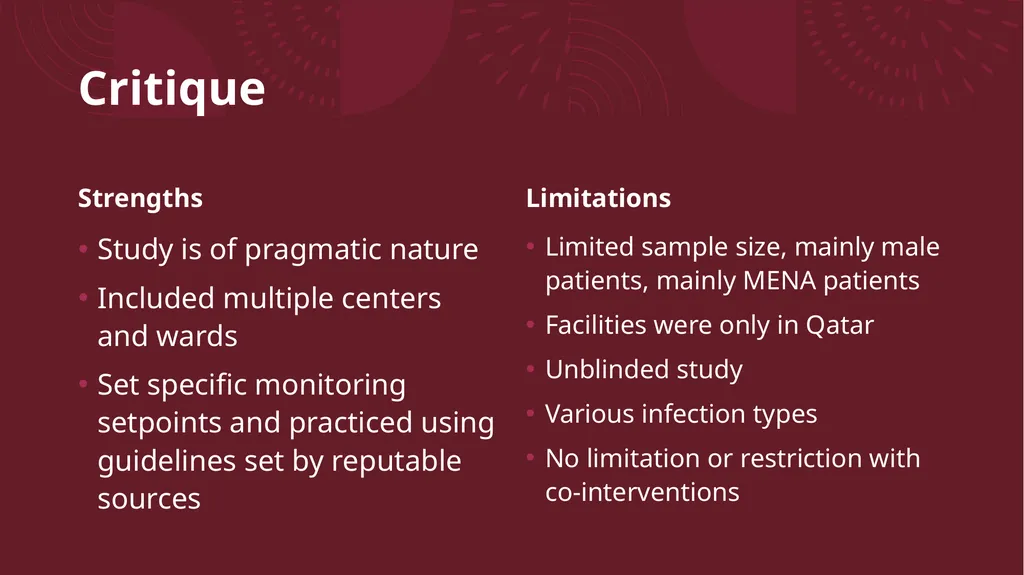
Critique Strengths Study is of pragmatic nature
Included multiple centers and wards
Set specific monitoring setpoints and practiced using guidelines set by reputable sources Limitations Limited sample size, mainly male patients, mainly MENA patients
Facilities were only in Qatar
Unblinded study
Various infection types
No limitation or restriction with co-interventions<br>
10
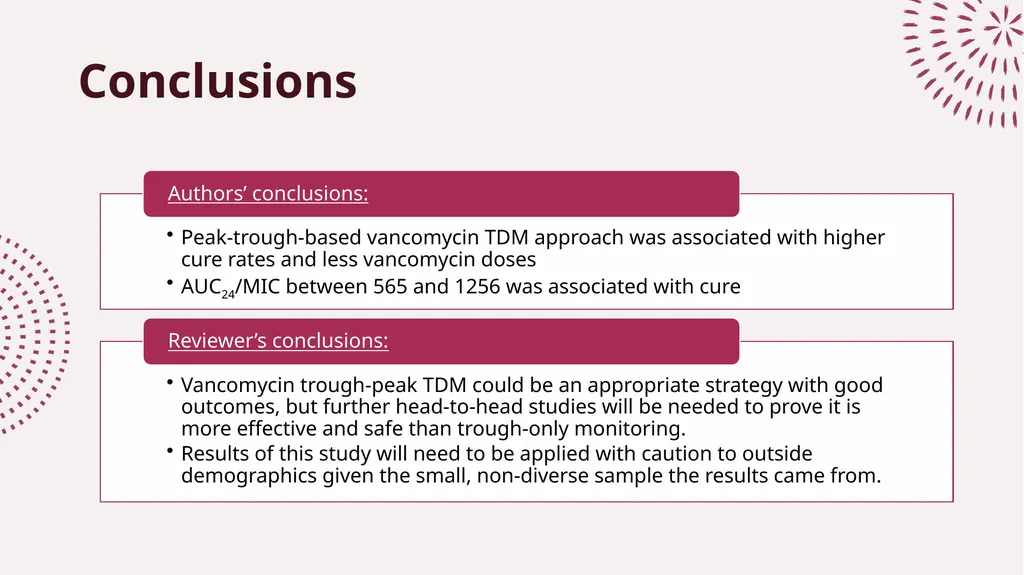
Conclusions<br>
11
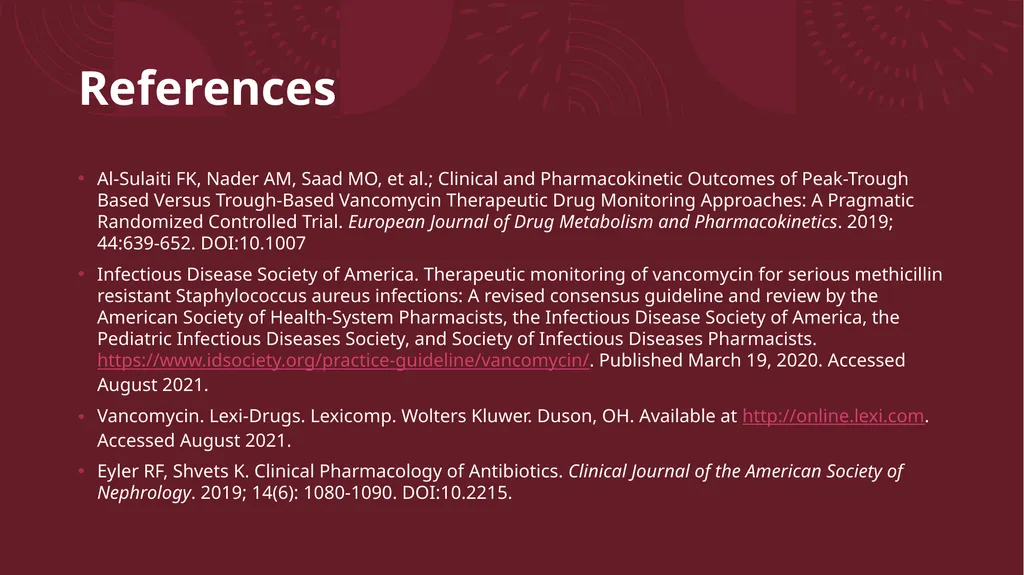
References Al-Sulaiti FK, Nader AM, Saad MO, et al.; Clinical and Pharmacokinetic Outcomes of Peak-Trough Based Versus Trough-Based Vancomycin Therapeutic Drug Monitoring Approaches: A Pragmatic Randomized Controlled Trial. European Journal of Drug Metabolism and Pharmacokinetics. 2019; 44:639-652. DOI:10.1007
Infectious Disease Society of America. Therapeutic monitoring of vancomycin for serious methicillin resistant Staphylococcus aureus infections: A revised consensus guideline and review by the American Society of Health-System Pharmacists, the Infectious Disease Society of America, the Pediatric Infectious Diseases Society, and Society of Infectious Diseases Pharmacists. https://www.idsociety.org/practice-guideline/vancomycin/. Published March 19, 2020. Accessed August 2021.
Vancomycin. Lexi-Drugs. Lexicomp. Wolters Kluwer. Duson, OH. Available at http://online.lexi.com. Accessed August 2021.
Eyler RF, Shvets K. Clinical Pharmacology of Antibiotics. Clinical Journal of the American Society of Nephrology. 2019; 14(6): 1080-1090. DOI:10.2215.<br>