04
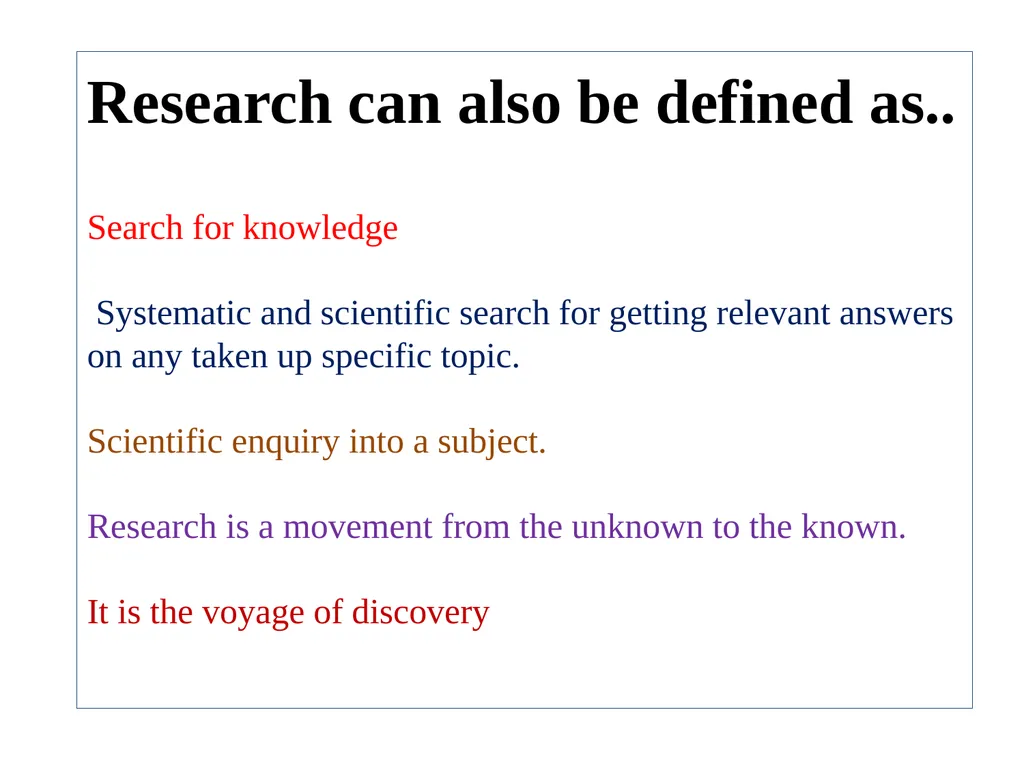
Research can also be defined as..��Search for knowledge�� Systematic and scientific search for getting relevant answers on any taken up specific topic. ��Scientific enquiry into a subject. ��Research is a movement from the unknown to the known. ��It is the voyage of discovery<br>
05
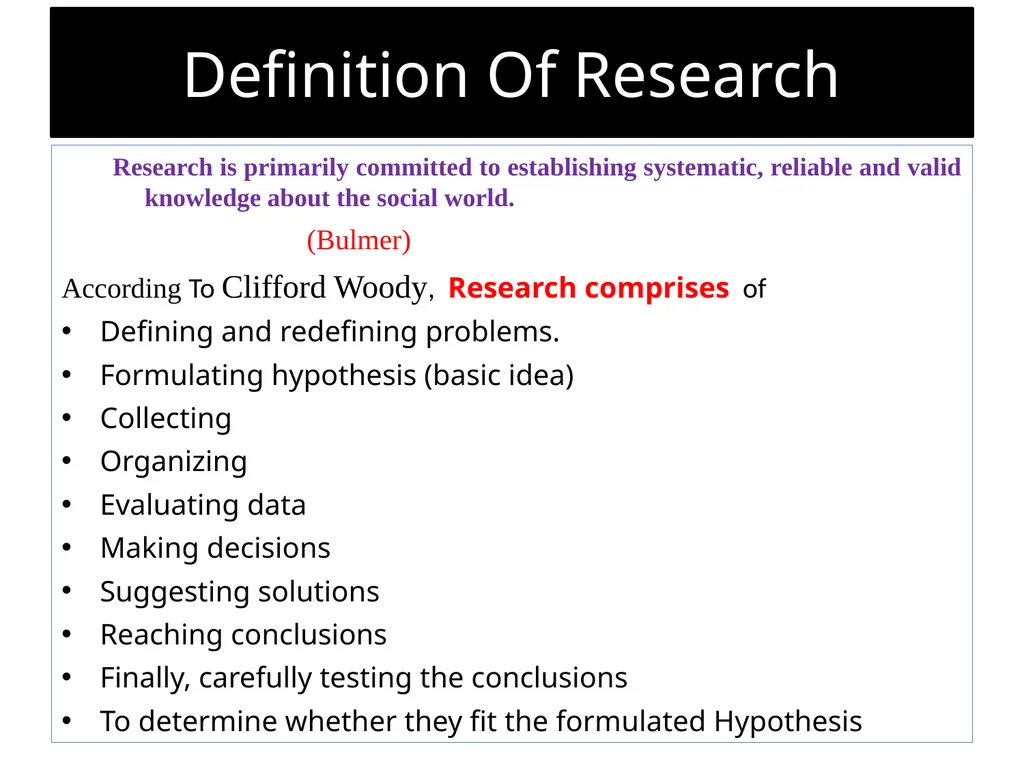
Definition Of Research Research is primarily committed to establishing systematic, reliable and valid knowledge about the social world.
(Bulmer)
According To Clifford Woody, Research comprises of
Defining and redefining problems.
Formulating hypothesis (basic idea)
Collecting
Organizing
Evaluating data
Making decisions
Suggesting solutions
Reaching conclusions
Finally, carefully testing the conclusions
To determine whether they fit the formulated Hypothesis<br>
06
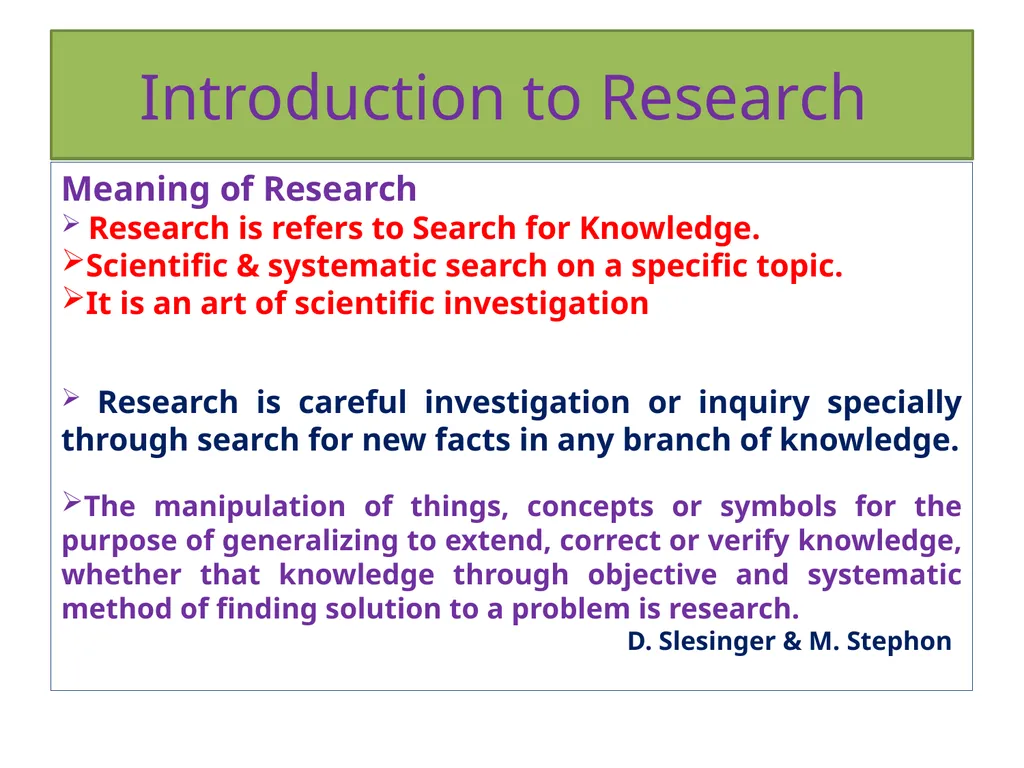
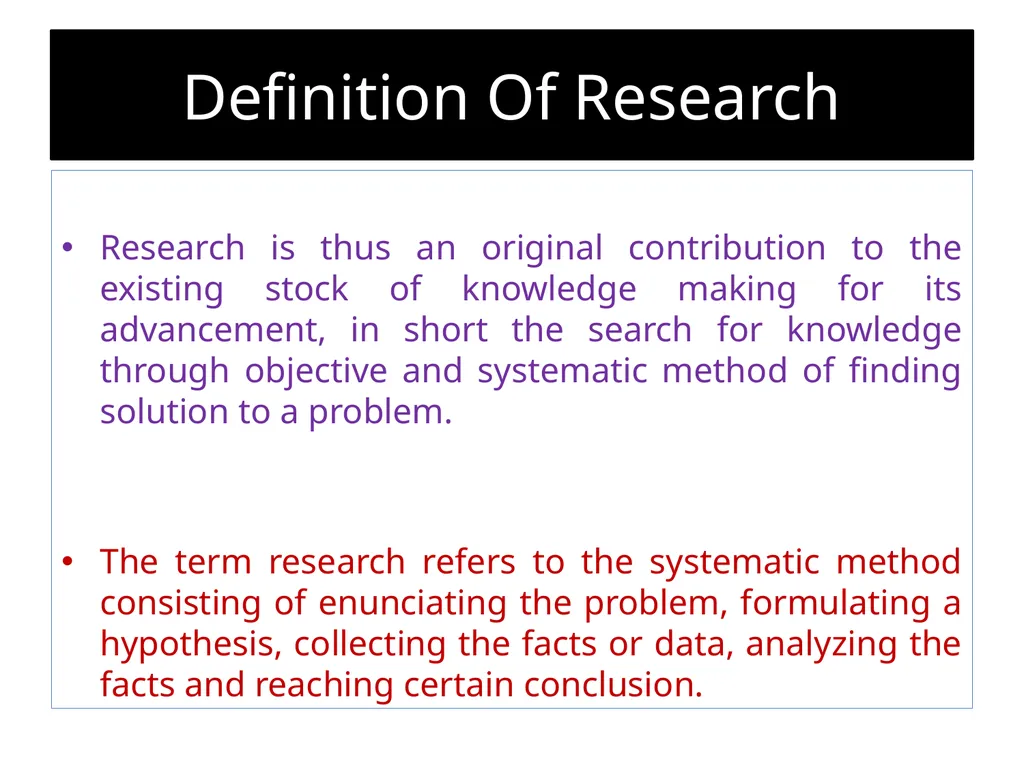
Research is thus an original contribution to the existing stock of knowledge making for its advancement, in short the search for knowledge through objective and systematic method of finding solution to a problem.
The term research refers to the systematic method consisting of enunciating the problem, formulating a hypothesis, collecting the facts or data, analyzing the facts and reaching certain conclusion. Definition Of Research<br>
07
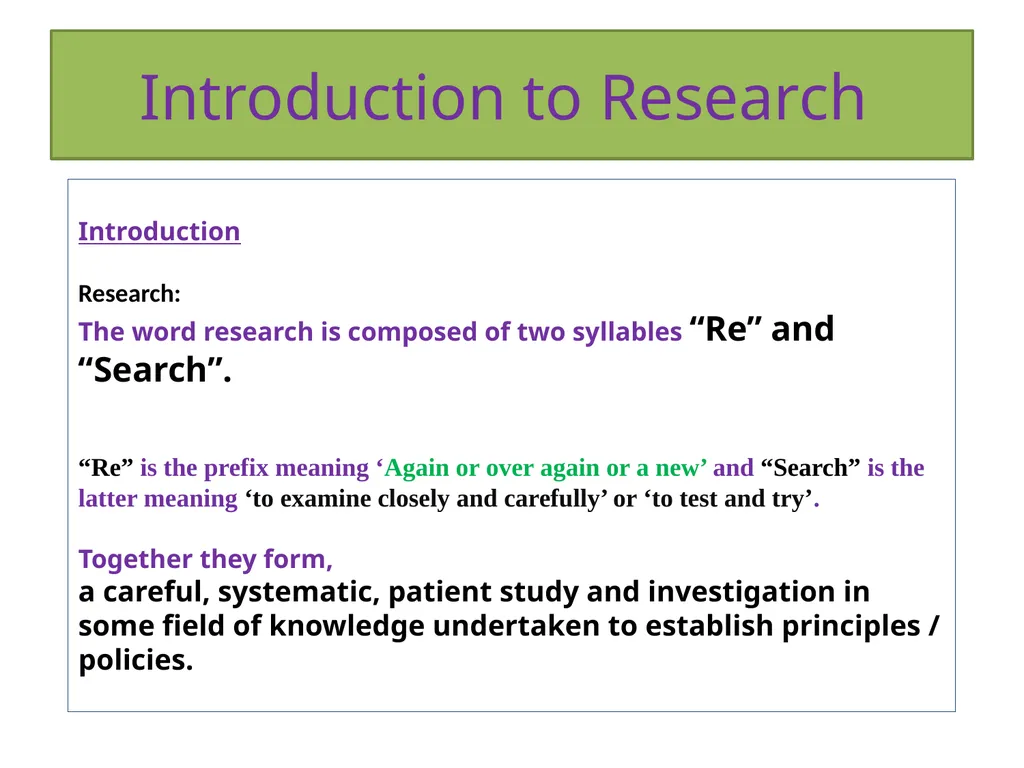
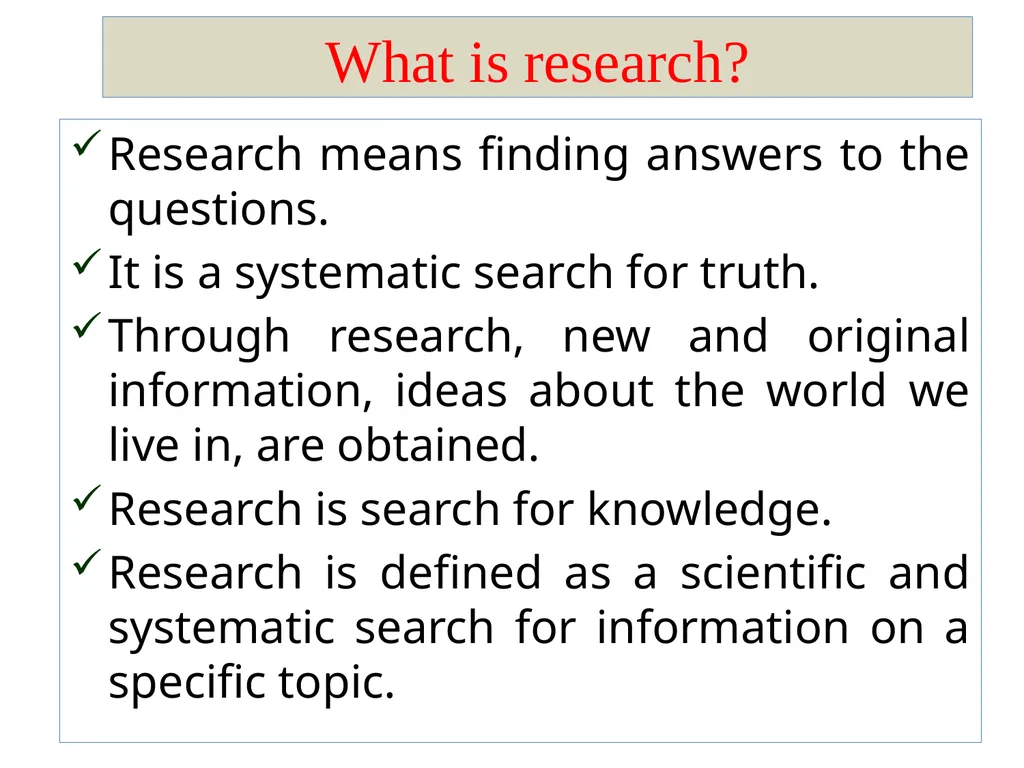
What is research? Research means finding answers to the questions.
It is a systematic search for truth.
Through research, new and original information, ideas about the world we live in, are obtained.
Research is search for knowledge.
Research is defined as a scientific and systematic search for information on a specific topic.<br>
08
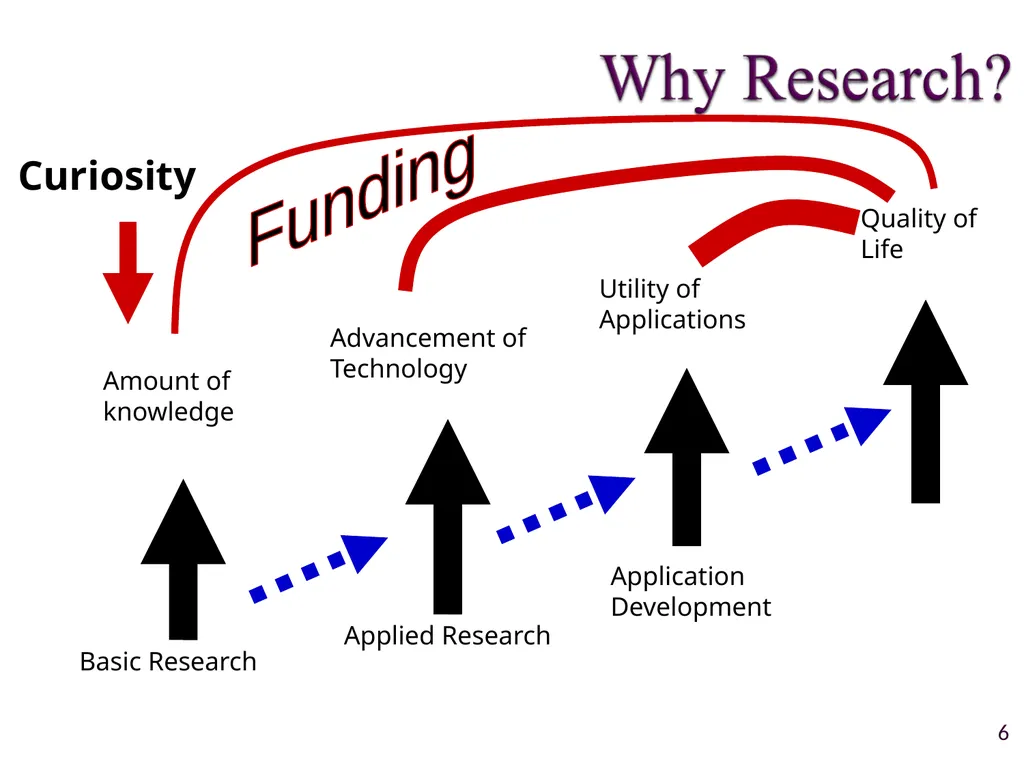
6 Amount of
knowledge Advancement of
Technology Utility of
Applications Quality of
Life Basic Research Applied Research Application
Development<br>
09
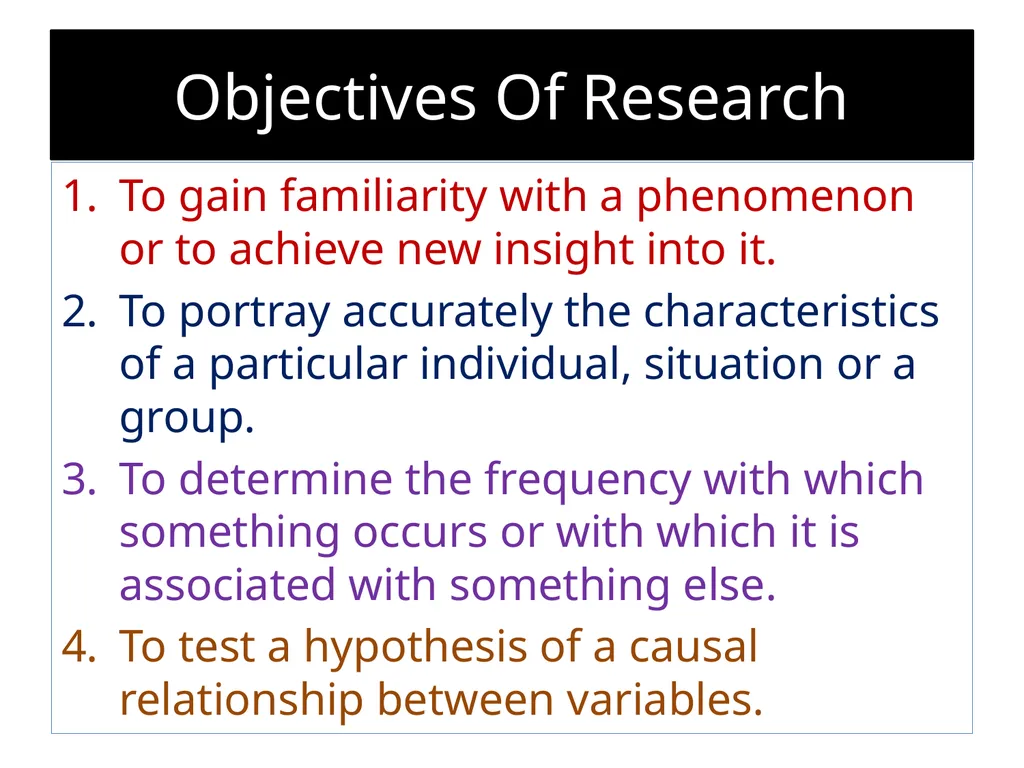
To gain familiarity with a phenomenon or to achieve new insight into it.
To portray accurately the characteristics of a particular individual, situation or a group.
To determine the frequency with which something occurs or with which it is associated with something else.
To test a hypothesis of a causal relationship between variables. Objectives Of Research<br>
11
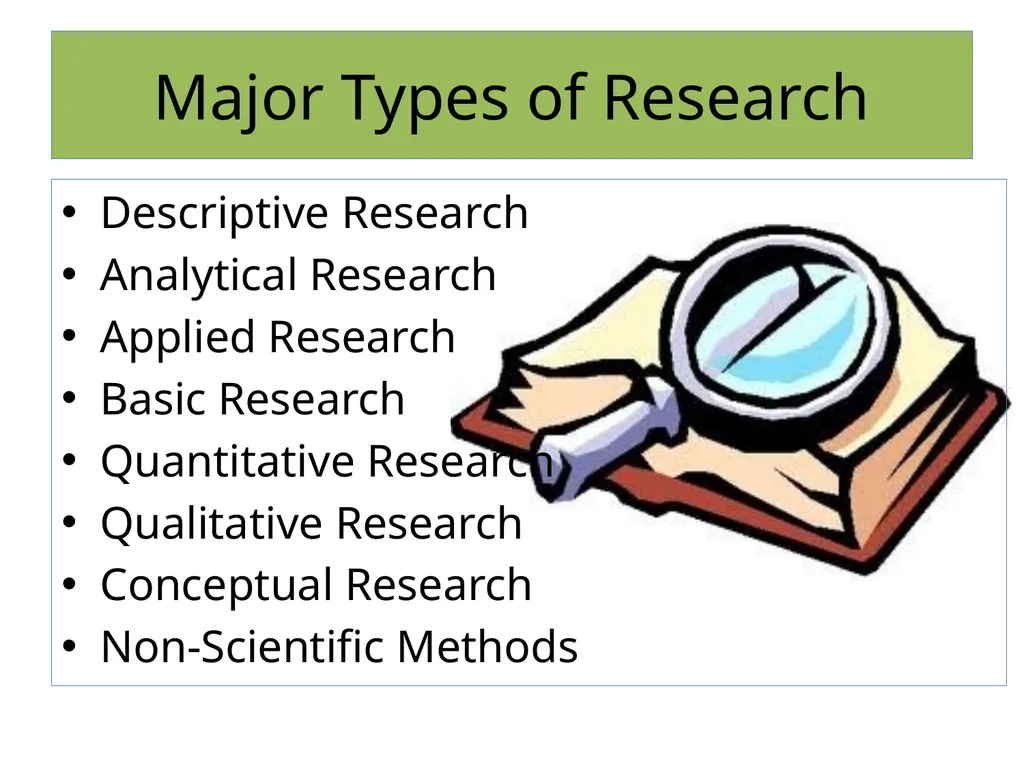
Major Types of Research Descriptive Research
Analytical Research
Applied Research
Basic Research
Quantitative Research
Qualitative Research
Conceptual Research
Non-Scientific Methods<br>
12
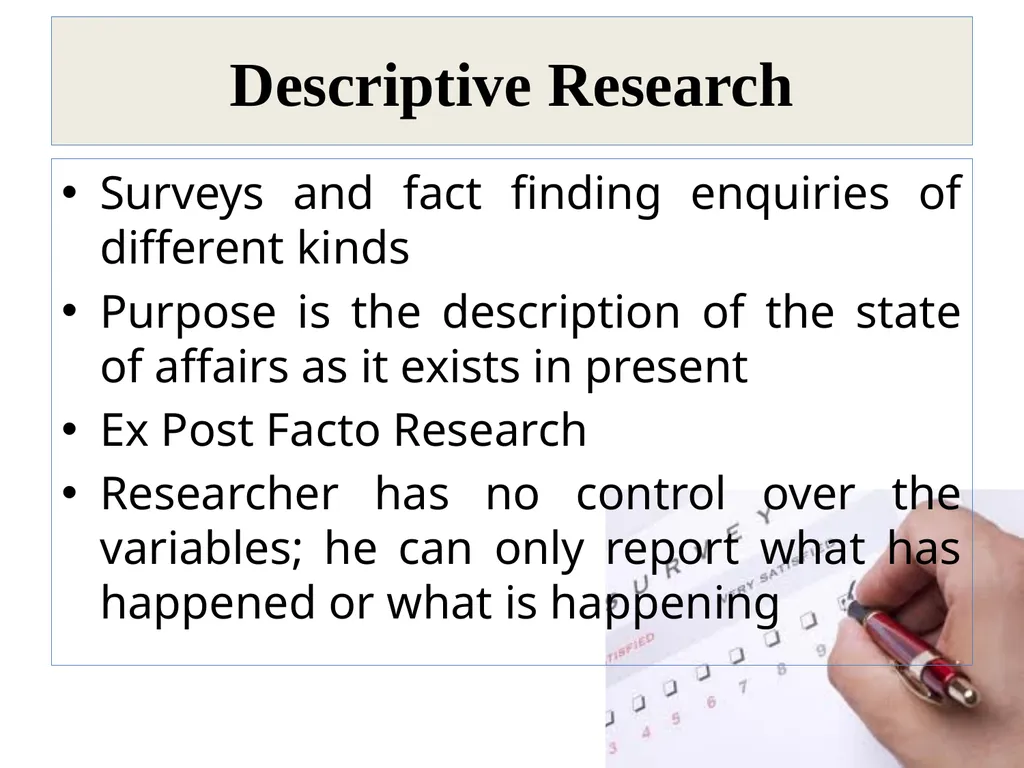
Descriptive Research Surveys and fact finding enquiries of different kinds
Purpose is the description of the state of affairs as it exists in present
Ex Post Facto Research
Researcher has no control over the variables; he can only report what has happened or what is happening<br>
13
Subdivisions of Descriptive Research Survey Research
The Case Study
Correlational Study
Comparative Study<br>
14
Analytical Research Involves in-depth study and evaluation of available information in an attempt to explain complex phenomenon
The researcher has to use facts or information already available and analyze these to make a critical evaluation of the material<br>
15
Subdivisions of Analytical Research Historical Research
Philosophical Research
Review
Research synthesis (meta analysis i.e. analysis of the review already published)<br>
16
Applied / Action Research Finding a solution to an immediate problem
Research aimed to find social or political trends that may affect a particular institution is an example of applied research
Subtypes
Marketing Research
Evaluation Research<br>
17
Basic / Pure / Fundamental Research Concerned with generalizations and with the formulations of a theory
Natural phenomenon and mathematics are examples of basic research
Finding information that has a broad base of application<br>
18
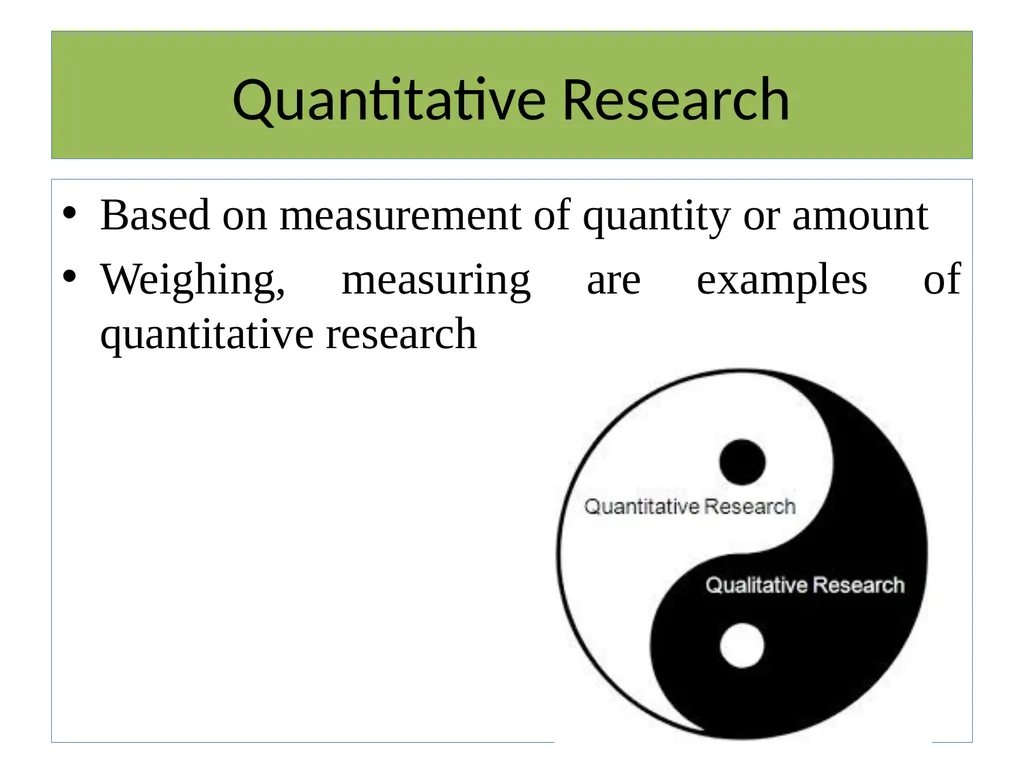
Quantitative Research Based on measurement of quantity or amount
Weighing, measuring are examples of quantitative research<br>
19
Qualitative Research Phenomena relating to quality or kind
Character, personality and mankind are examples of variables used to measure qualitative research
Word association test, sentence completion test<br>
20
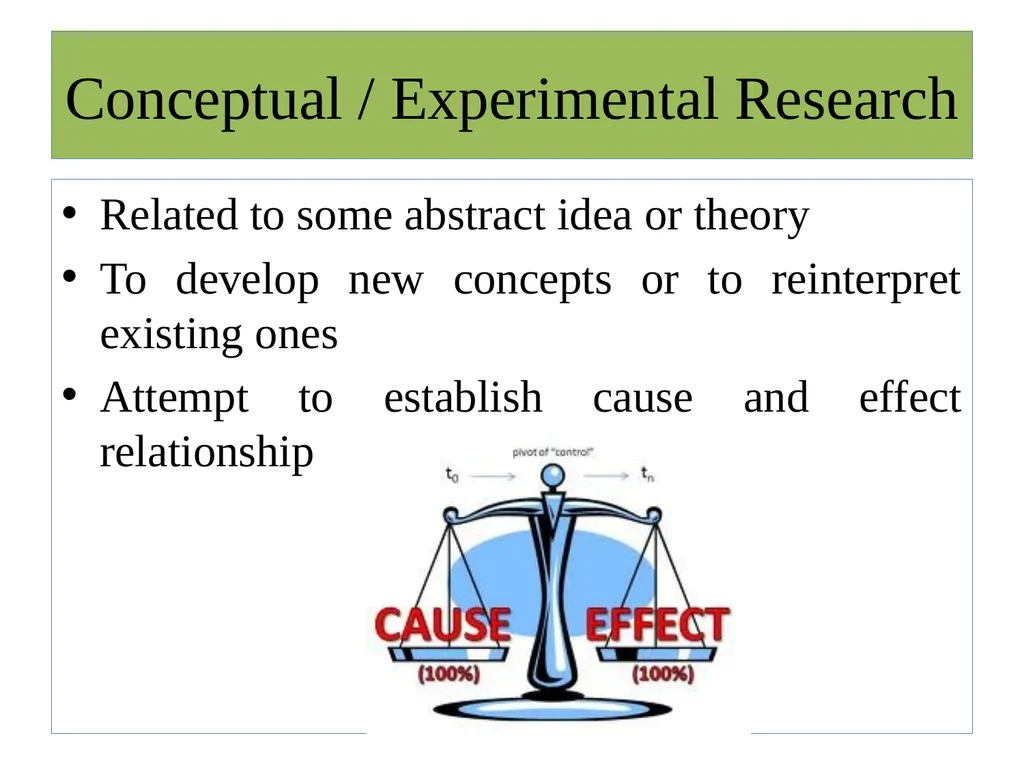
Conceptual / Experimental Research Related to some abstract idea or theory
To develop new concepts or to reinterpret existing ones
Attempt to establish cause and effect relationship<br>
21
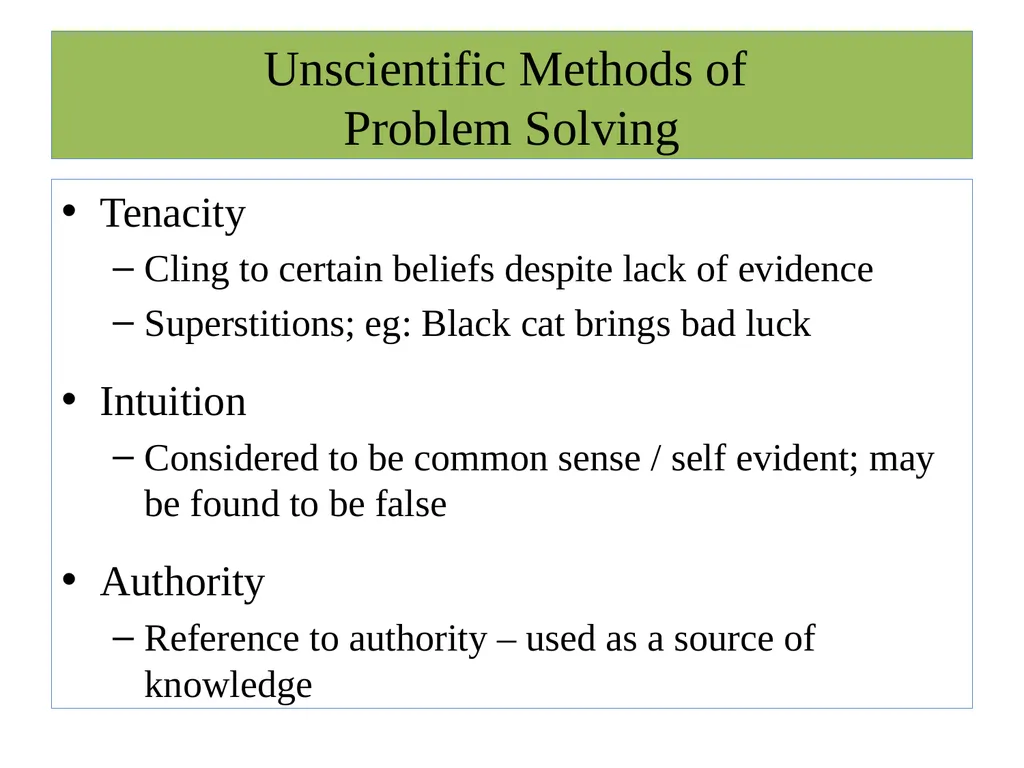
Unscientific Methods of �Problem Solving Tenacity
Cling to certain beliefs despite lack of evidence
Superstitions; eg: Black cat brings bad luck
Intuition
Considered to be common sense / self evident; may be found to be false
Authority
Reference to authority – used as a source of knowledge<br>
22
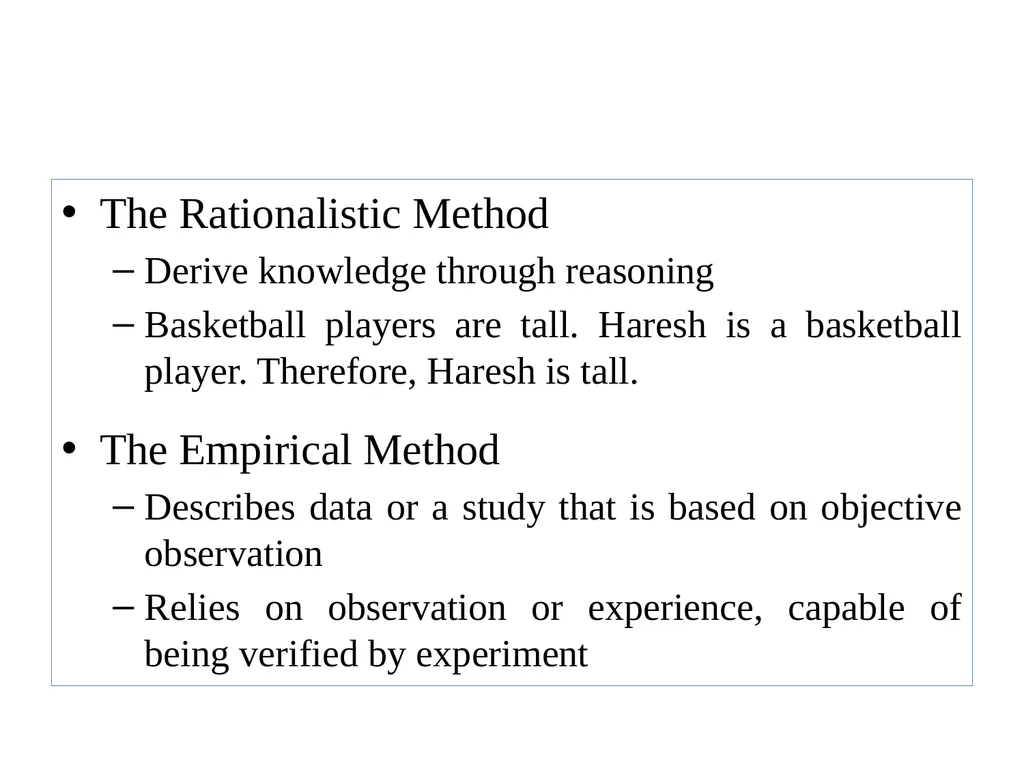
The Rationalistic Method
Derive knowledge through reasoning
Basketball players are tall. Haresh is a basketball player. Therefore, Haresh is tall.
The Empirical Method
Describes data or a study that is based on objective observation
Relies on observation or experience, capable of being verified by experiment<br>
23
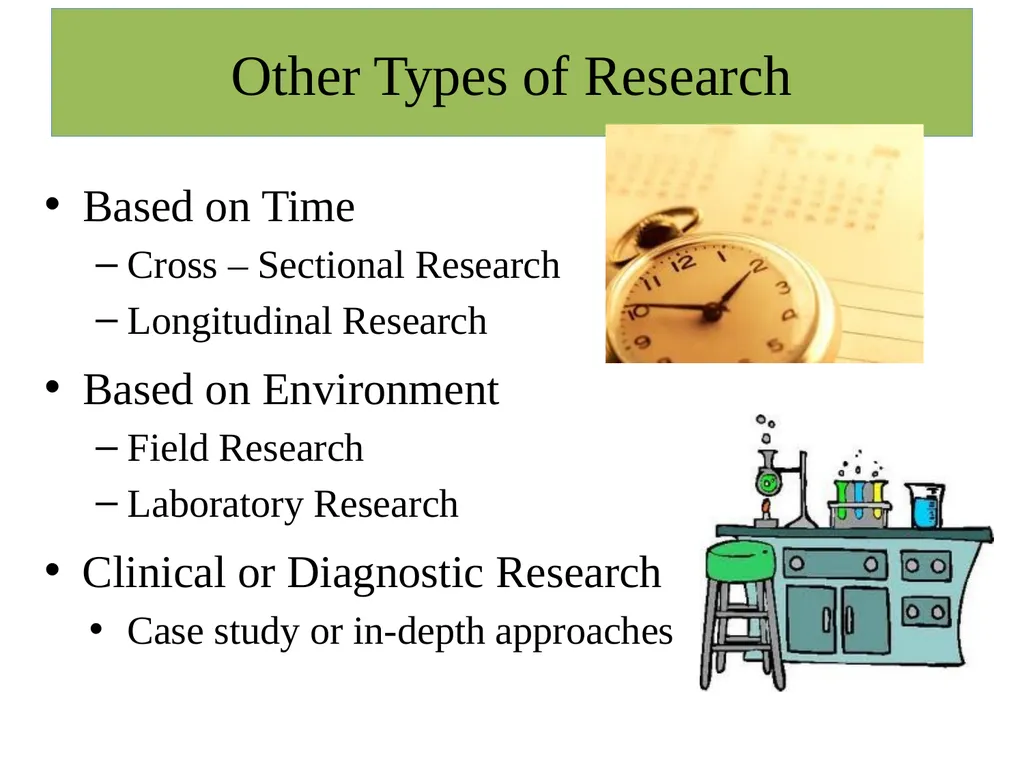
Other Types of Research Based on Time
Cross – Sectional Research
Longitudinal Research
Based on Environment
Field Research
Laboratory Research
Clinical or Diagnostic Research
Case study or in-depth approaches<br>
24
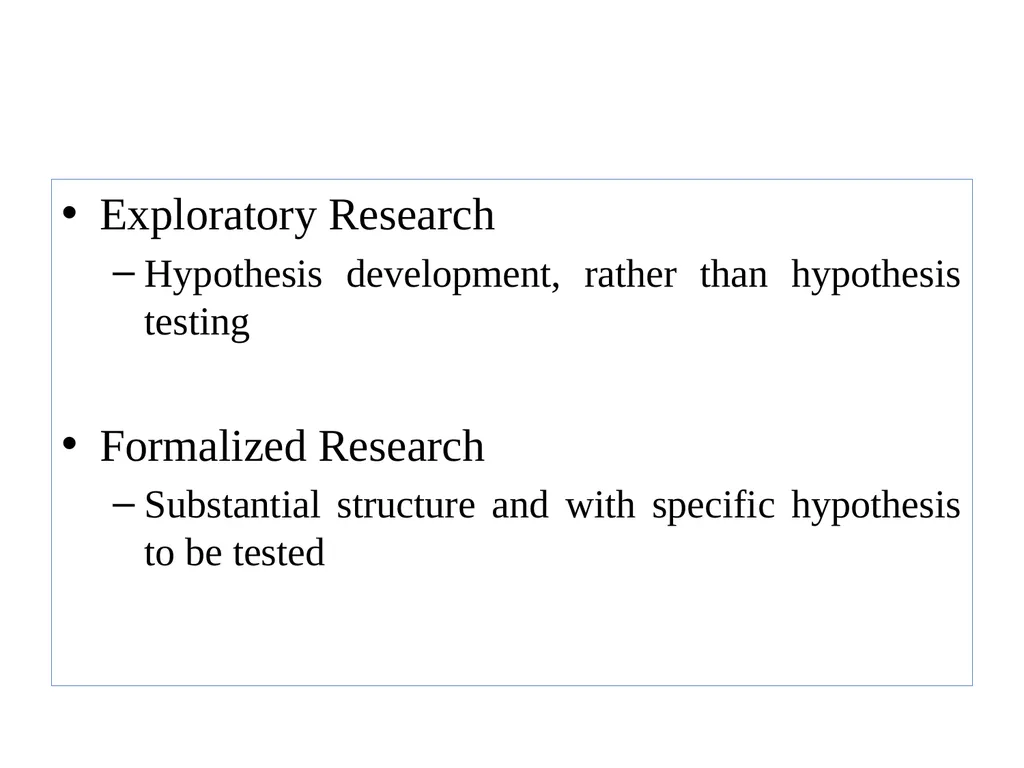
Exploratory Research
Hypothesis development, rather than hypothesis testing
Formalized Research
Substantial structure and with specific hypothesis to be tested<br>
25
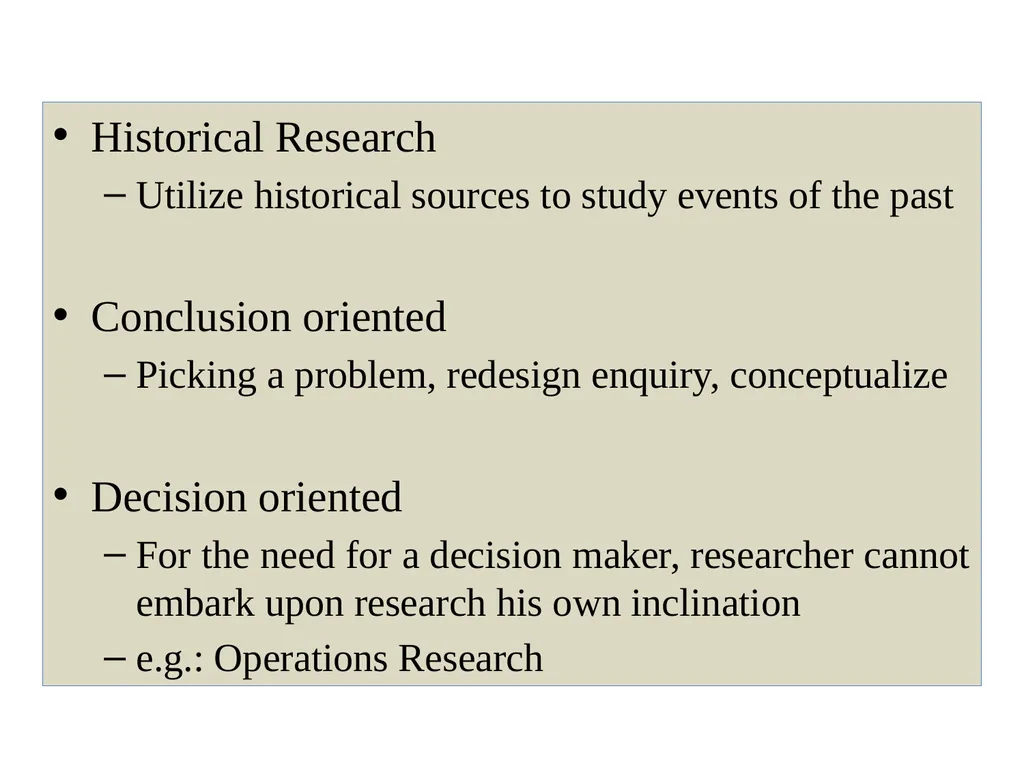
Historical Research
Utilize historical sources to study events of the past
Conclusion oriented
Picking a problem, redesign enquiry, conceptualize
Decision oriented
For the need for a decision maker, researcher cannot embark upon research his own inclination
e.g.: Operations Research<br>
26
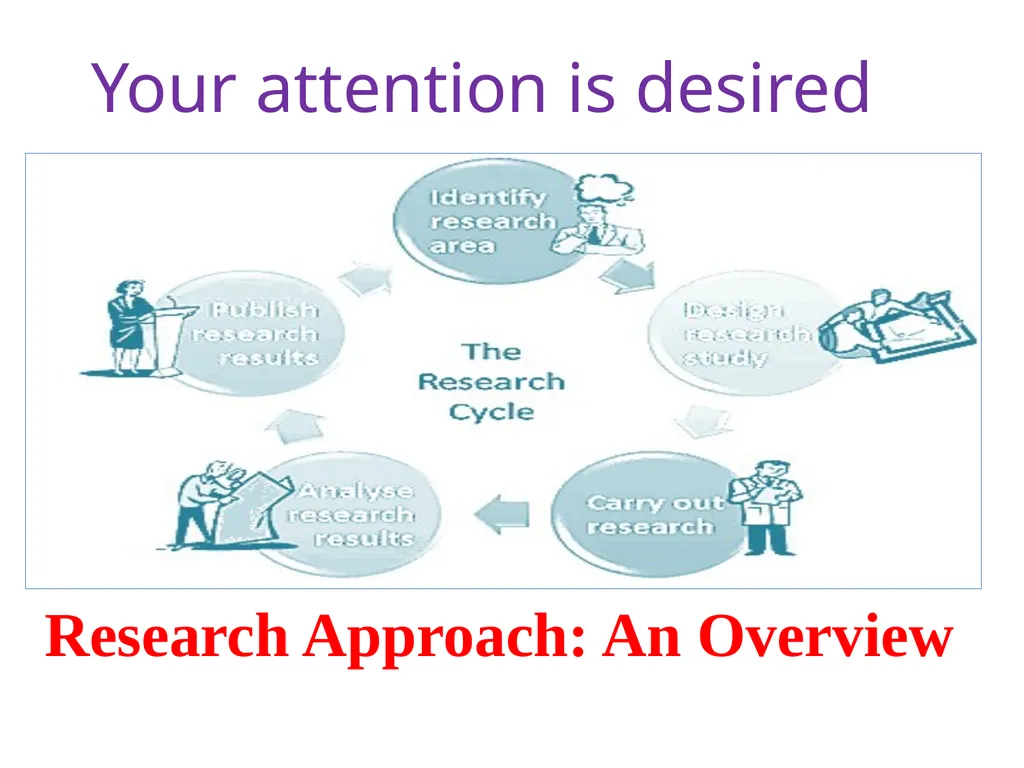
Your attention is desired Research Approach: An Overview<br>
27
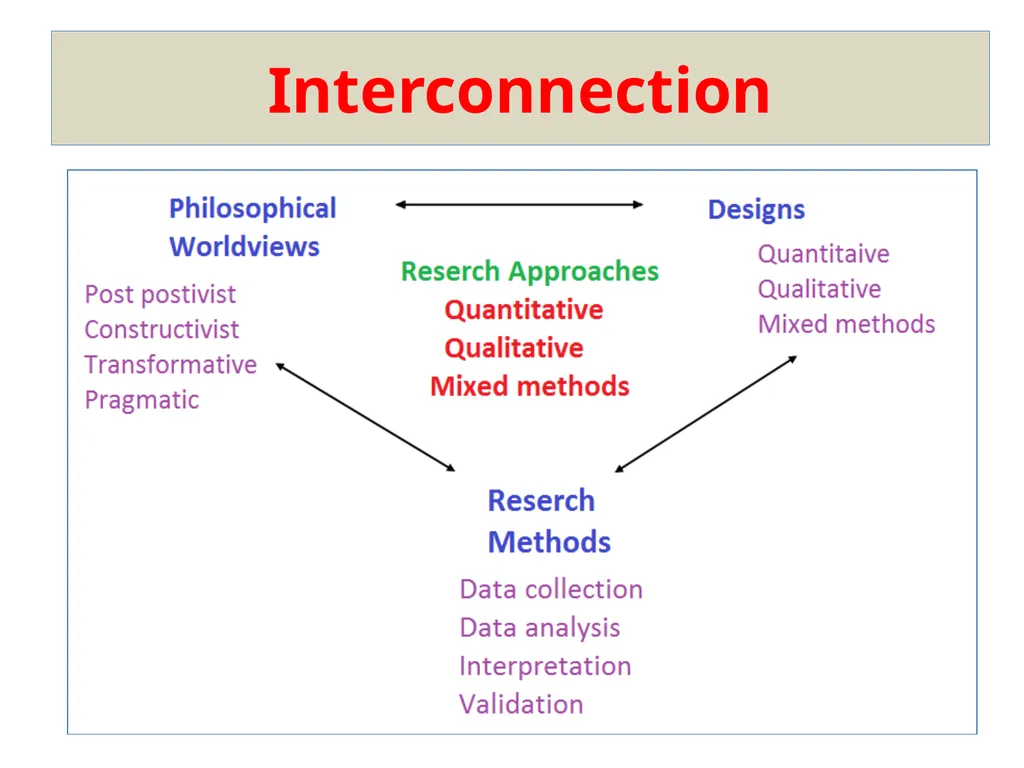
Research Approach: Concept Plans and the procedure for research that span the steps from broad assumptions to detailed methods of data collection, analysis, and interpretation.
The overall decision involves which approach should be used to study a topic. Informing this decision should be the philosophical assumptions the researcher brings to the study; procedures of inquiry (called research designs); and specific research methods of data collection, analysis, and interpretation.<br>
28
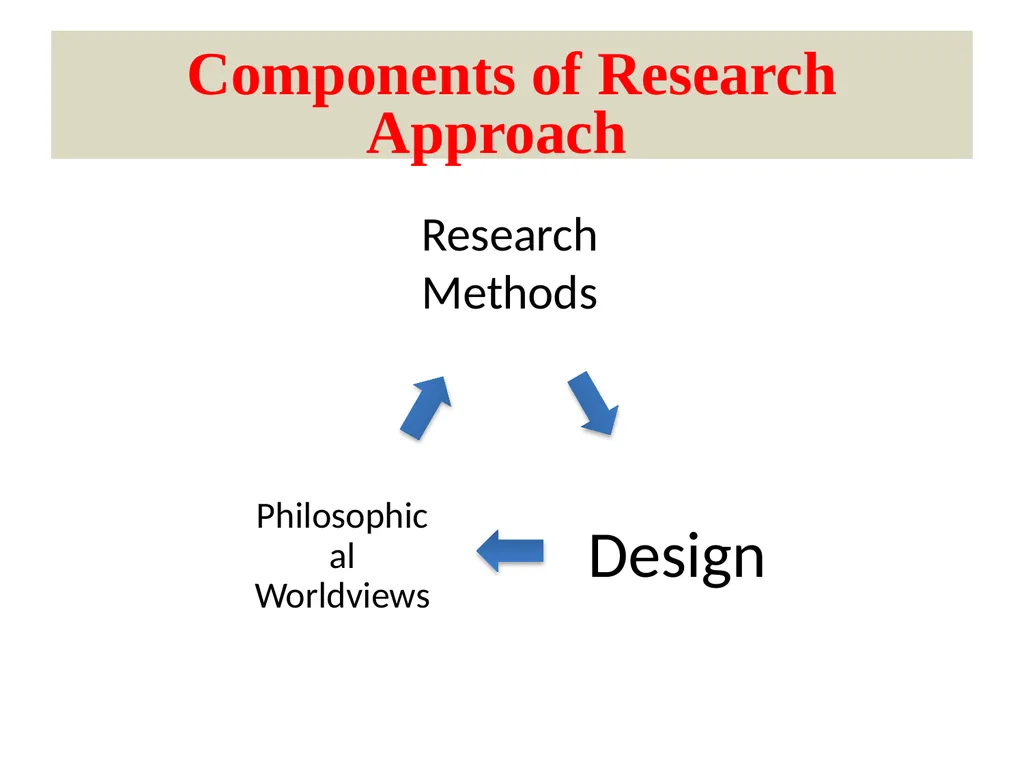
Components of Research Approach<br>
30
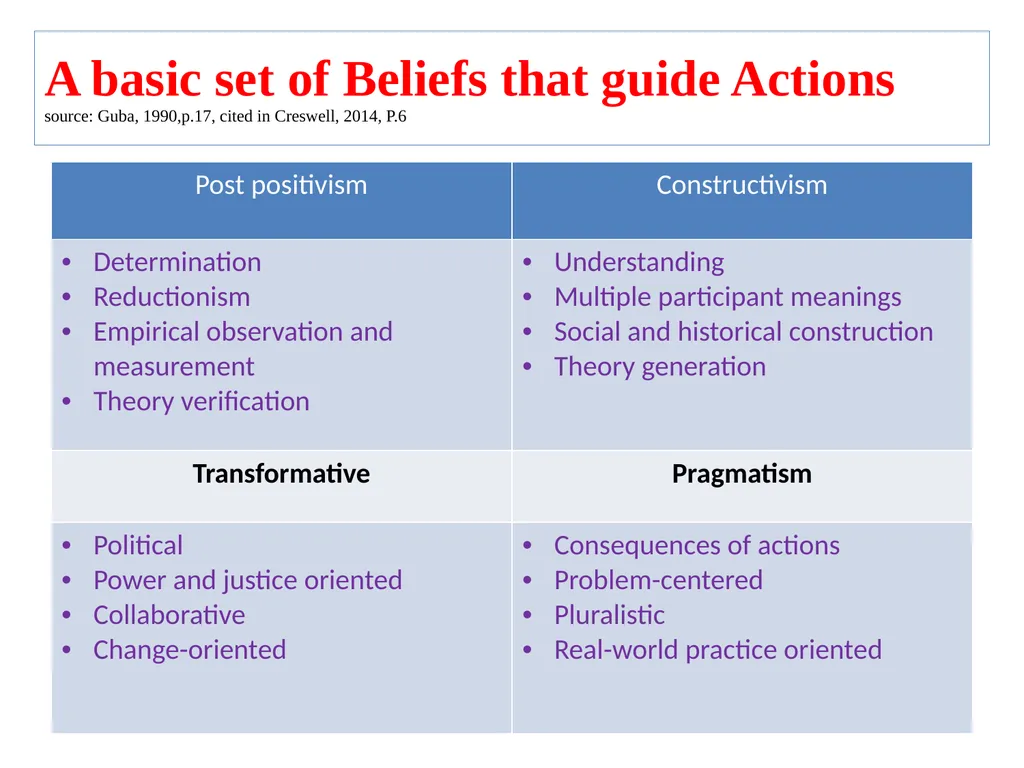
A basic set of Beliefs that guide Actions�source: Guba, 1990,p.17, cited in Creswell, 2014, P.6<br>
31
Quantitative
and
Quantitative Research<br>
32
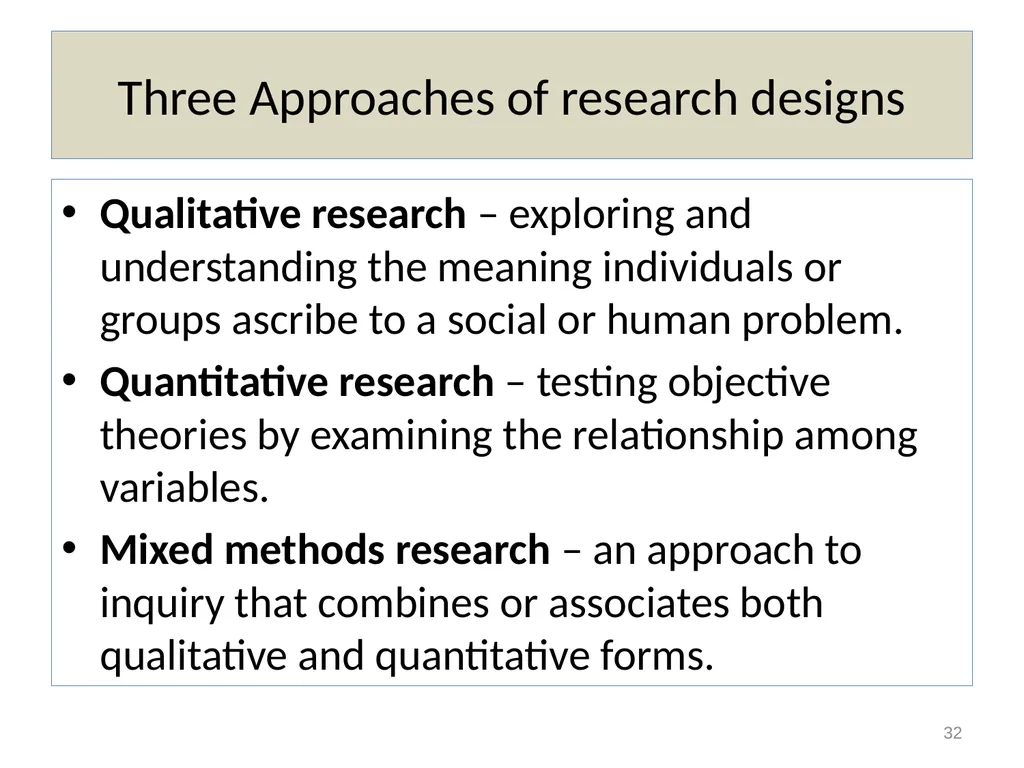
Three Approaches of research designs Qualitative research – exploring and understanding the meaning individuals or groups ascribe to a social or human problem.
Quantitative research – testing objective theories by examining the relationship among variables.
Mixed methods research – an approach to inquiry that combines or associates both qualitative and quantitative forms. 32<br>
33
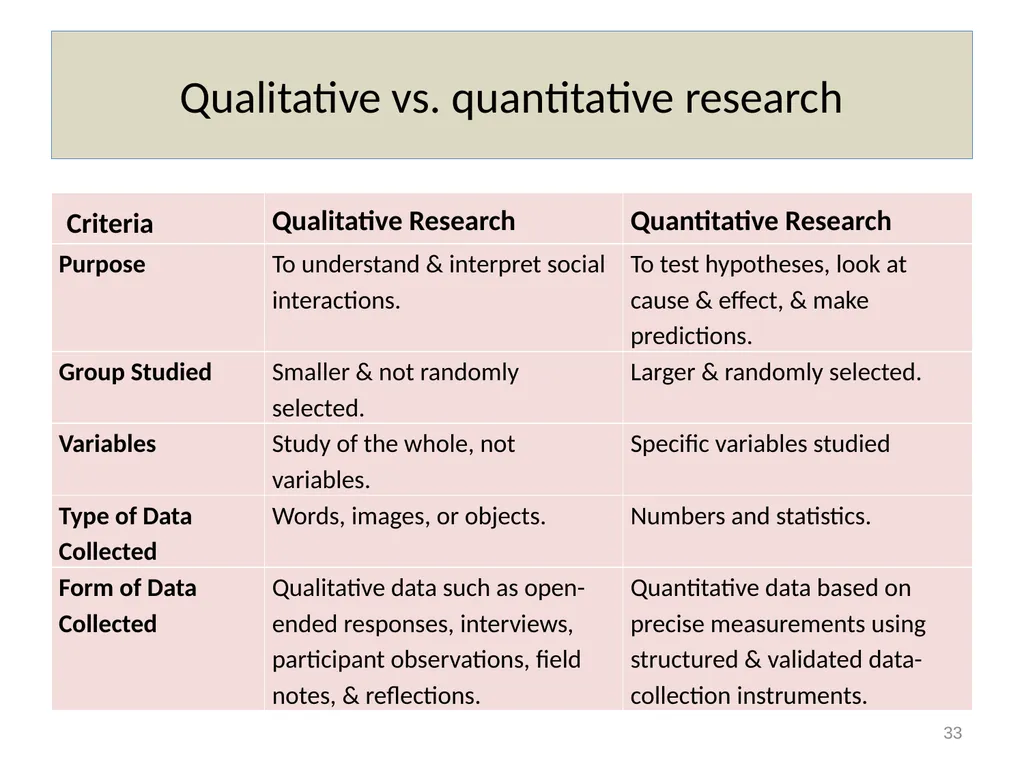
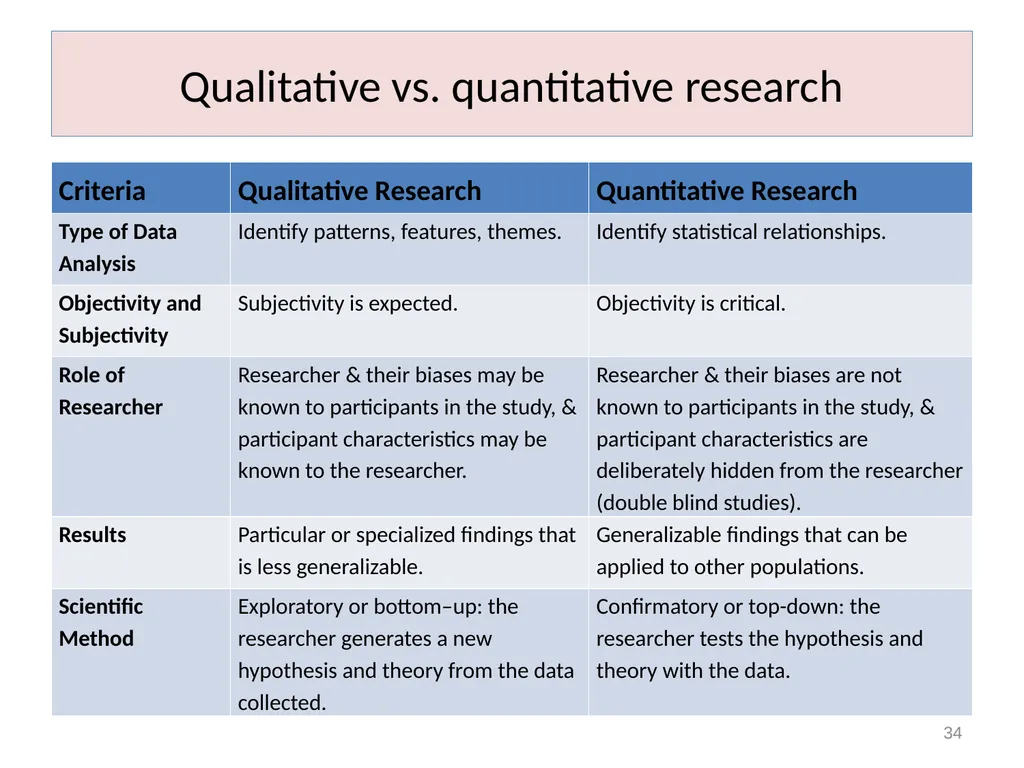
Qualitative vs. quantitative research 33<br>
34
34 Qualitative vs. quantitative research<br>
35
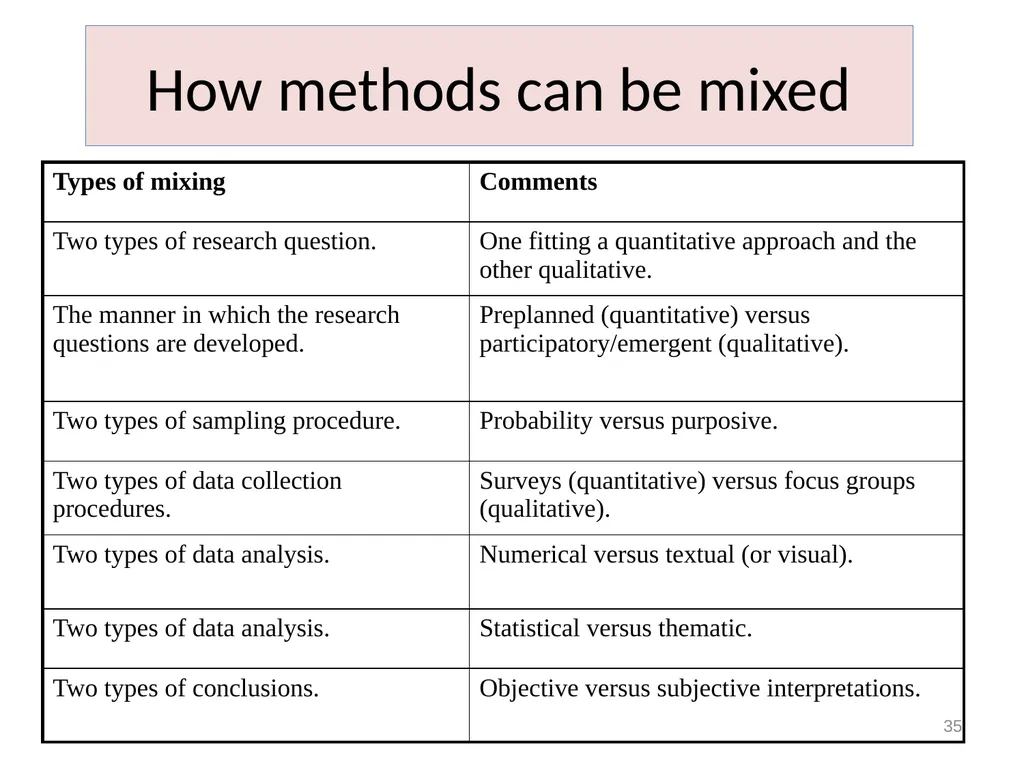
How methods can be mixed 35<br>
36
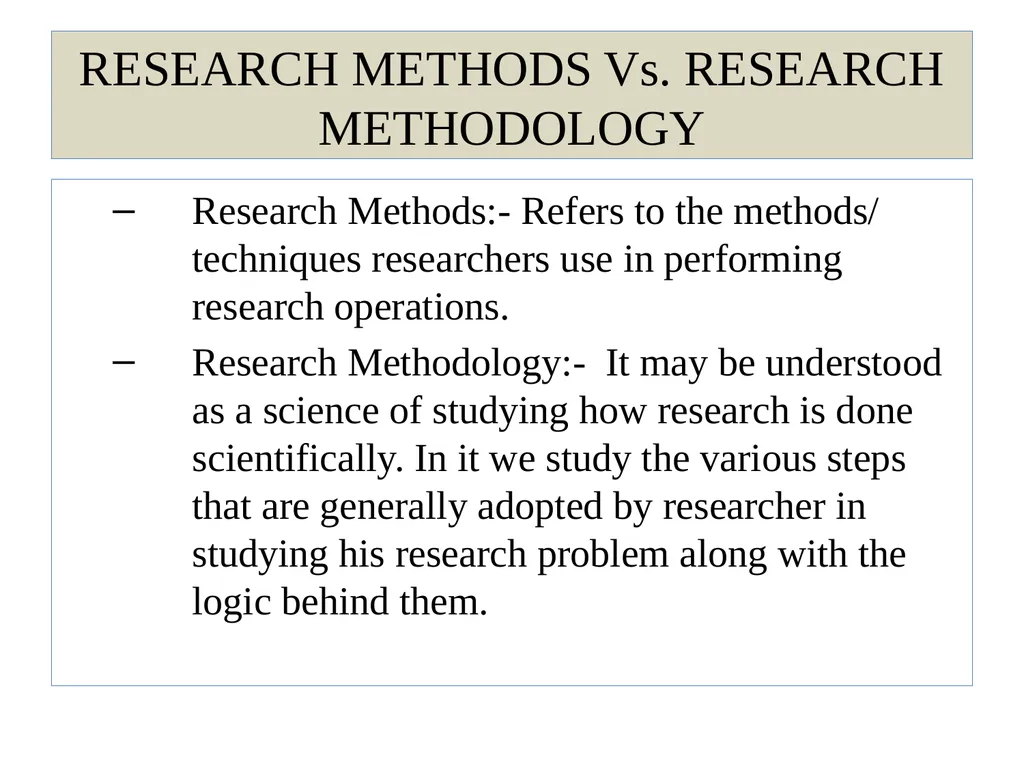
RESEARCH METHODS Vs. RESEARCH METHODOLOGY Research Methods:- Refers to the methods/ techniques researchers use in performing research operations.
Research Methodology:- It may be understood as a science of studying how research is done scientifically. In it we study the various steps that are generally adopted by researcher in studying his research problem along with the logic behind them.<br>
37
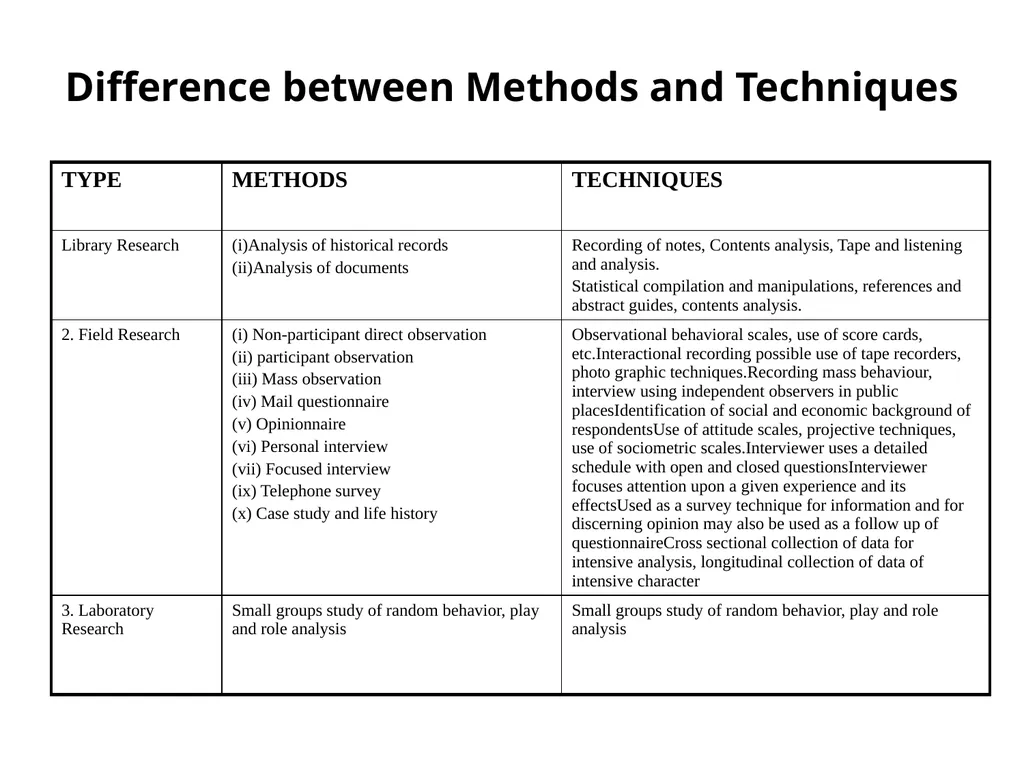
Difference between Methods and Techniques<br>