04
TRACHEIDS AND VESSELS<br>
05
Based on origin,xylem can be classified into Primary xylem and Secondary xylem.
The primary xylem from procambium during primary growth .
The secondary xylem develops from vascular cambium during secondary growth.<br>
06
Xylem is composed of four kinds of cells.
1.Tracheids
2.Vessels
3.Xylem parenchyma.
4.Xylem fibres.<br>
07
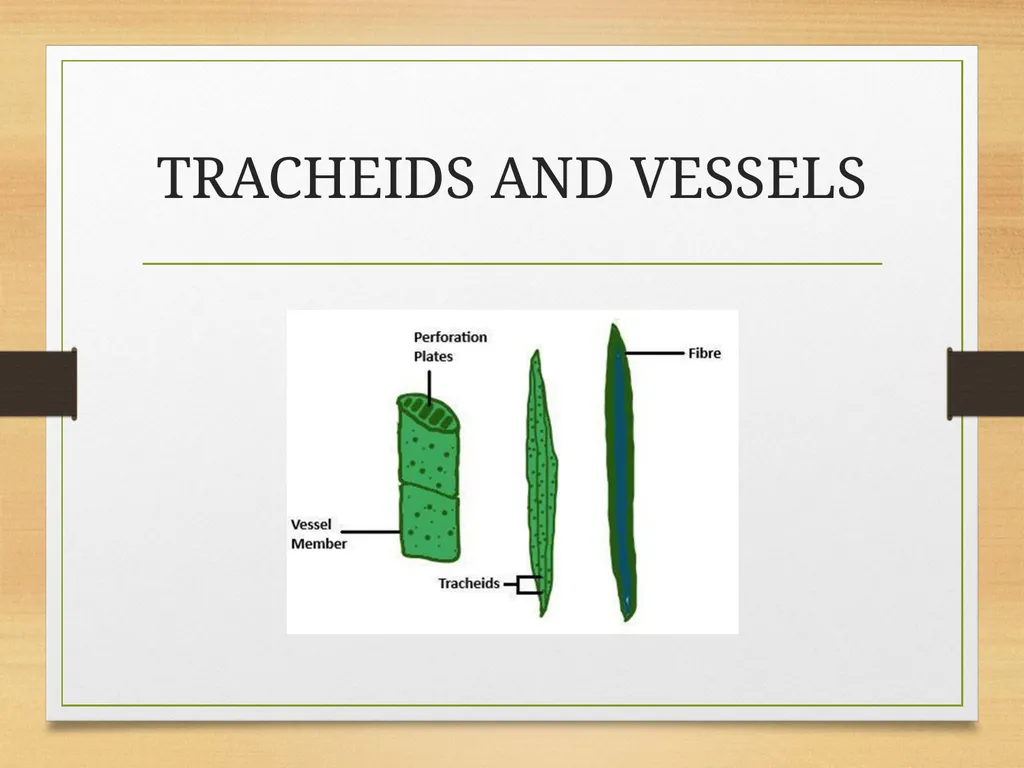
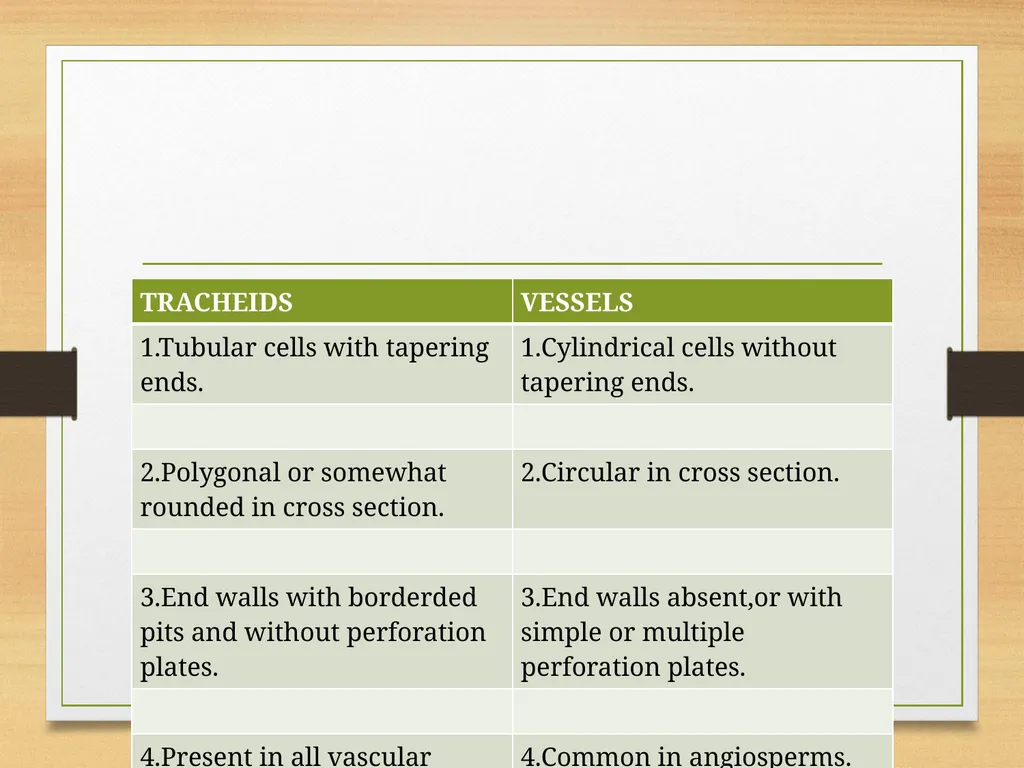
TRACHEIDS Tracheids are elongated and tube like dead cells,with tapering ends.
They are having oval or rounded ends and hard and thick walls and without protoplast at maturity.
Their walls are thick hard,and lignified and the lumen is large and empty.
The end walls are provided with bordered pits through which water and dissolved substances pass from one cell to the next.<br>
08
In Gymnosperms (except Gnetales)and some angiosperms, which do not have vessels, tracheids are the only water conducting cells.
Tracheids of primary xylem develop from procambium.
Tracheids of secondary xylem develop from vascular cambium.<br>
09
Initially ,tracheids possess protoplasm, but due to lignification,and deposition of thickening materials on the walls they become dead at maturity.
Tracheids exhibit different patterns of wall thickenings such as annular,spiral.scalariform,reticulate and pitted.<br>
10
FUNCTIONS OF TRACHEIDS 1.Upward conduction of water and minerals.
2.Provide mechanical support by virtue of their hard and firm secondary walls.<br>
11
VESSELS(TRACHEAE) Xylem vessels are long and cylindrical conducting tubes.
Their end walls are either perforated or dissolved.
Cells appear circular in their cross section.
They lose their protoplast and become dead due to the deposition of lignin on their secondary wall.<br>
12
Vessels of primary xylem develop from procambium.
Vessels of secondary xylem develop from vascular cambium.
Vessels may reach upto 10 cm in length,but in some cases they may reach upto 2m.
A vessel is formed of longitudinal rows of elongated and cylindrical tracheary or conducting cells called vessel members.<br>
13
They have thick and and lignified walls and large lumen.
They are joined end to end vertically forming continuous conducting tubes.
The end wall between two successive vessel members is called perforation plate.<br>
14
PERFORATION PLATE. Perforation plate is the platelike and porous endwall between adjacent vessel members in a xylem vessel.
It is common in some ferns,some gymnosperms,and most angiosperms.
Perforation plate may be simole or multiple.
In simple perforation plate,the endwalls gets almost completely dissolved,leaving a large single opening.<br>
15
In multiple perforation plate,there are several small openings.
Simple perforation plate is characteristic of angiosperms.
Xylem vessels differ from tracheids in having perforation plate.<br>
16
CELL WALL THICKENING IN TRACHEARY ELEMENTS OR VESSEL ELEMENTS The walls of xylem vessel elements undergo secondary thickening by the deposition of lignin in definite patterns.
1.Annular thickening-Concentric or ring like thickening on the cell wall by the deposition of lignin in the form of isolated rings.
Each ring is a little away from the neighbouring ones.<br>
17
2.Spiral or helical thickening.
The thickening material is deposited in the form of spiral or helical bands.
There may be one or more helical thickenings in each element.
3.Reticulate thickening-The thickening material is deposited in the form of a network.<br>
18
Scalariform Thickening-Ladder like thickening.The thickening material is deposited in the form of transverse bands, similar to the rungs of a ladder.
Pitted thickening-Irregularly scattered and discontinuous with thickened and unthickened areas.
The unthickened areas are called pits.<br>
19
Vessels are common among angiosperms,but generally absent in Pteridophytes and Gymnosperms.
In Gymnosperms,the wood is generally called non-porous due to the absence of vessels .
In Angiosperms,the wood is called porous due to the presence of vessels.<br>
20
FUNCTIONS OF VESSELS 1.Vessels are the chief conducting elements of vascular plants,particularly in angiosperms.
They conduct water and dissolved mineral nutrients.
2.They provide mechanical support to the plants.<br>
21
XYLEM FIBRES Xylem fibres are the sclerenchyma fibres,seen in association with xylem.
Hence they are called wood fibres.
They are elongated terminally tapering and thickwalled deadcells,with lignified secondary wall narrow lumen and bordered pits.<br>
22
There are two kind of xylem fibres.
1.Fibre Tracheids-They are neither true fibres nor true tracheids but are intermediate between them.
They usually develop from tracheids by increasing the thickness of wall and decreasing the lumen diameter and cell length.<br>
23
Libriform Fibres-They are true fibres which show all characteristics of sclerenchymatous fibres.
They provide mechanical strength to the plant body.<br>
24
XYLEM PARENCHYMA. This is the parenchyma present in the primary as well as secondary xylem.
Cells are thinwalled and nonlignified in primary xylem,but slightly lignified in secondary xylem.
In the secondary xylem of angiosperms,parenchyma cells are radially arranged forming the medullary rays or radial Parenchyma.<br>
25
Radial Parenchyma helps in the radial conduction of water and solutes.
Xylem parenchyma is concerned with the upward conduction of water and minerals and also with the storage of reserve food.
The parenchyma present in the secondary xylem is of two types.
Wood Parenchyma.
Ray Parenchyma.<br>
26
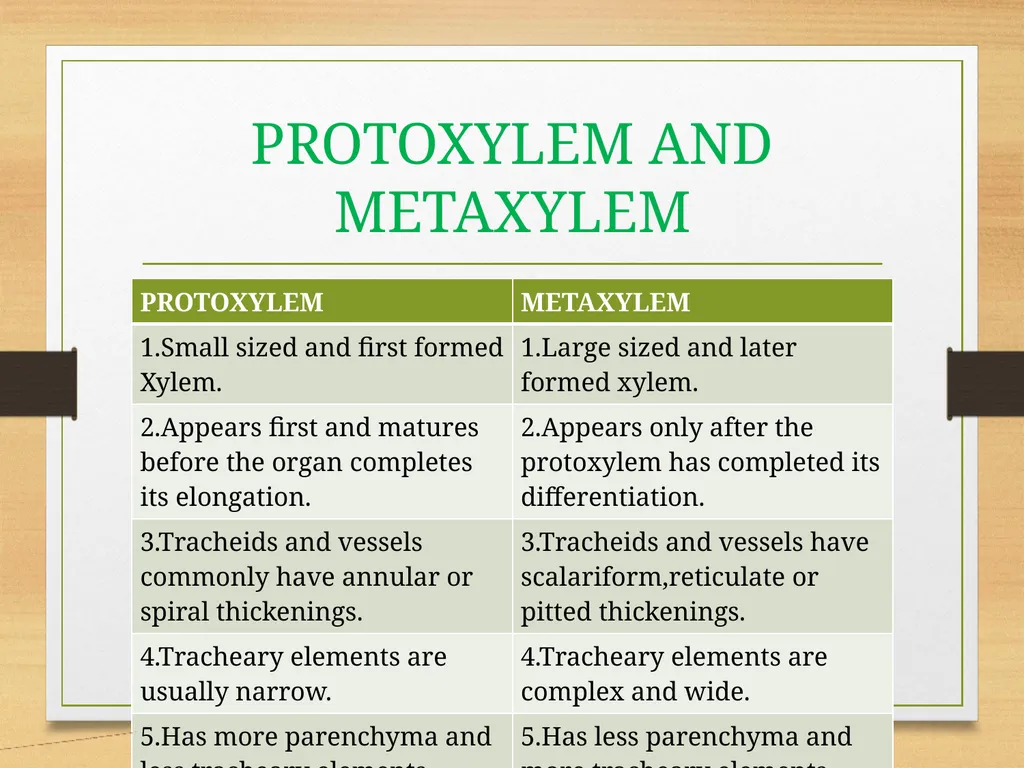
PROTOXYLEM AND METAXYLEM. Primary xylem is of two kinds,Protoxylem and Metaxylem.
Protoxylem is the first formed primary xylem.
It is smaller in size and has more parenchyma and lesser conducting tissue.
Metaxylem is the later formed xylem.
It is larger in size and has more tracheary elements and fewer parenchyma.<br>
27
XYLEM ARRANGEMENT There are three kinds of xylem arrangement.
Endarch
Exarch
Mesarch.<br>
28
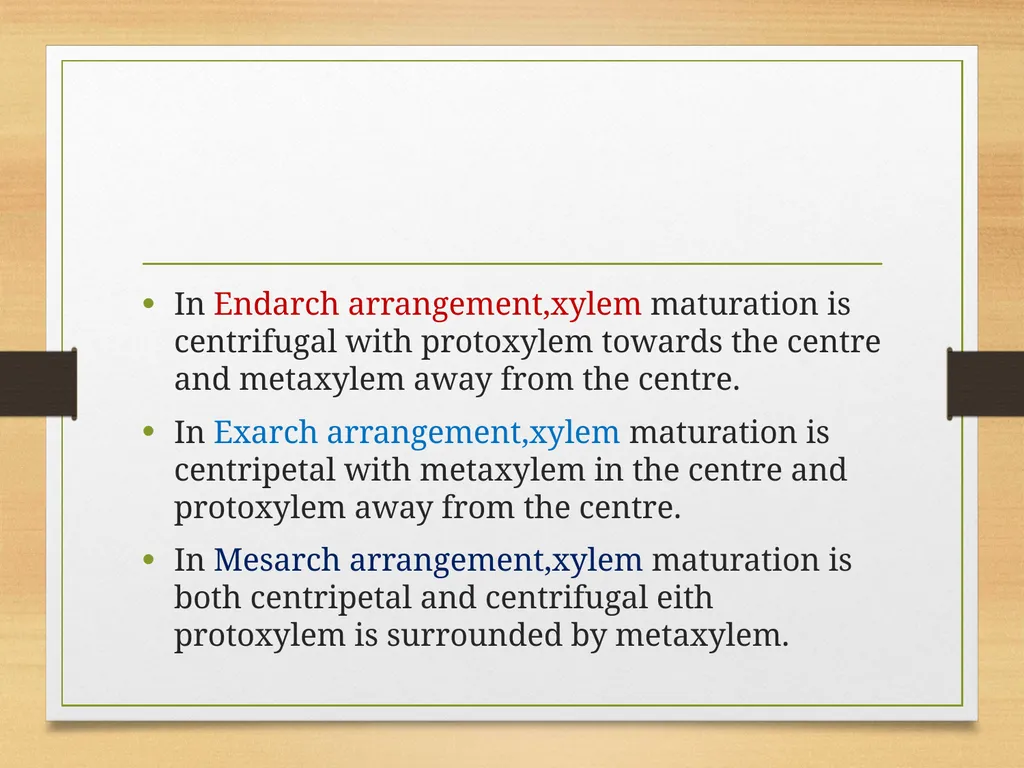
In Endarch arrangement,xylem maturation is centrifugal with protoxylem towards the centre and metaxylem away from the centre.
In Exarch arrangement,xylem maturation is centripetal with metaxylem in the centre and protoxylem away from the centre.
In Mesarch arrangement,xylem maturation is both centripetal and centrifugal eith protoxylem is surrounded by metaxylem.<br>
29
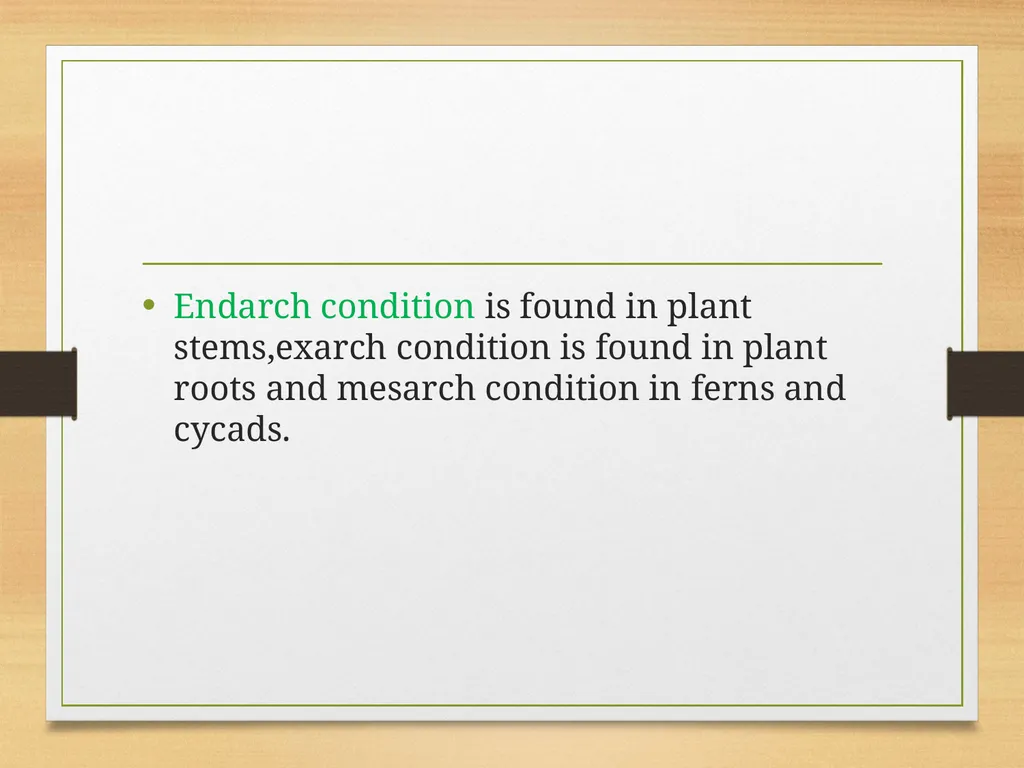
Endarch condition is found in plant stems,exarch condition is found in plant roots and mesarch condition in ferns and cycads.<br>
30
PROTOXYLEM AND METAXYLEM<br>
31
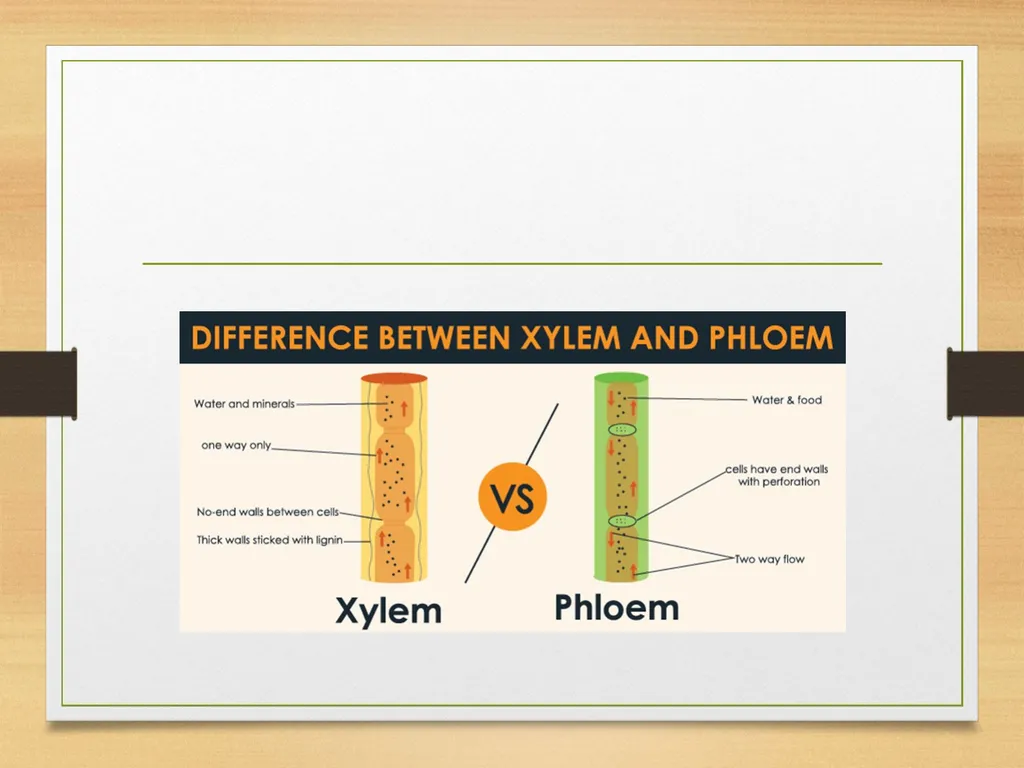
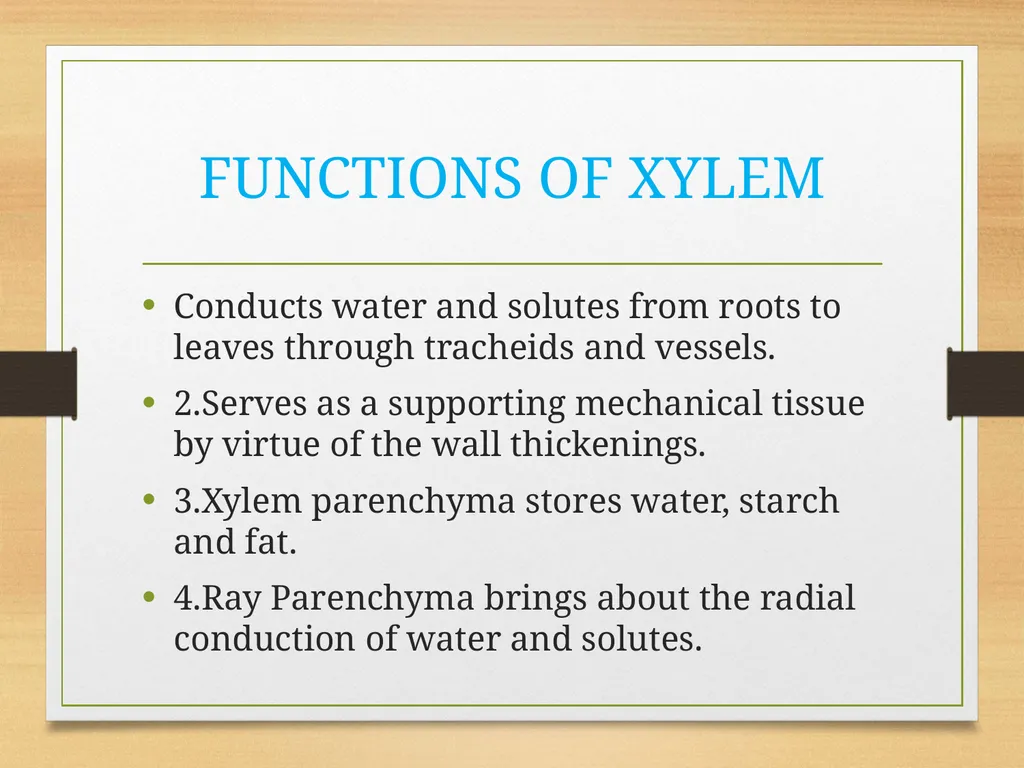
FUNCTIONS OF XYLEM Conducts water and solutes from roots to leaves through tracheids and vessels.
2.Serves as a supporting mechanical tissue by virtue of the wall thickenings.
3.Xylem parenchyma stores water, starch and fat.
4.Ray Parenchyma brings about the radial conduction of water and solutes.<br>