Computational Differential Privacy Ilya Mironov (MICROSOFT) Omkant Pandey (UCLA) Omer Reingold (MICROSOFT) Salil Vadhan (HARVARD) Focus of the Talk Relaxations of differential privacy for computational adversaries How they relate to one
"Computational Differential Privacy Ilya Mironov" is the property of its rightful owner. Permission is granted to
download and print the materials on this website for personal, non-commercial use only, and to display it
on your personal computer provided you do not modify the materials and that you retain all copyright
notices contained in the materials. By downloading content from our website, you accept the terms of this
agreement.
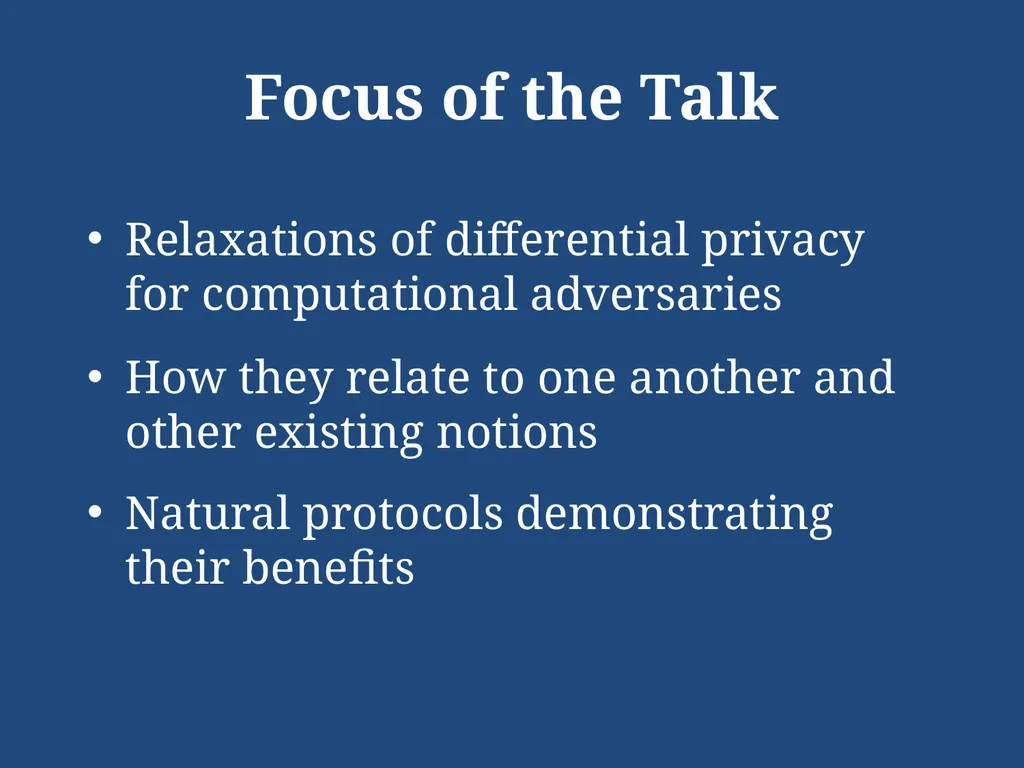
Focus of the Talk Relaxations of differential privacy for computational adversaries
How they relate to one another and other existing notions
Natural protocols demonstrating their benefits<br>
03
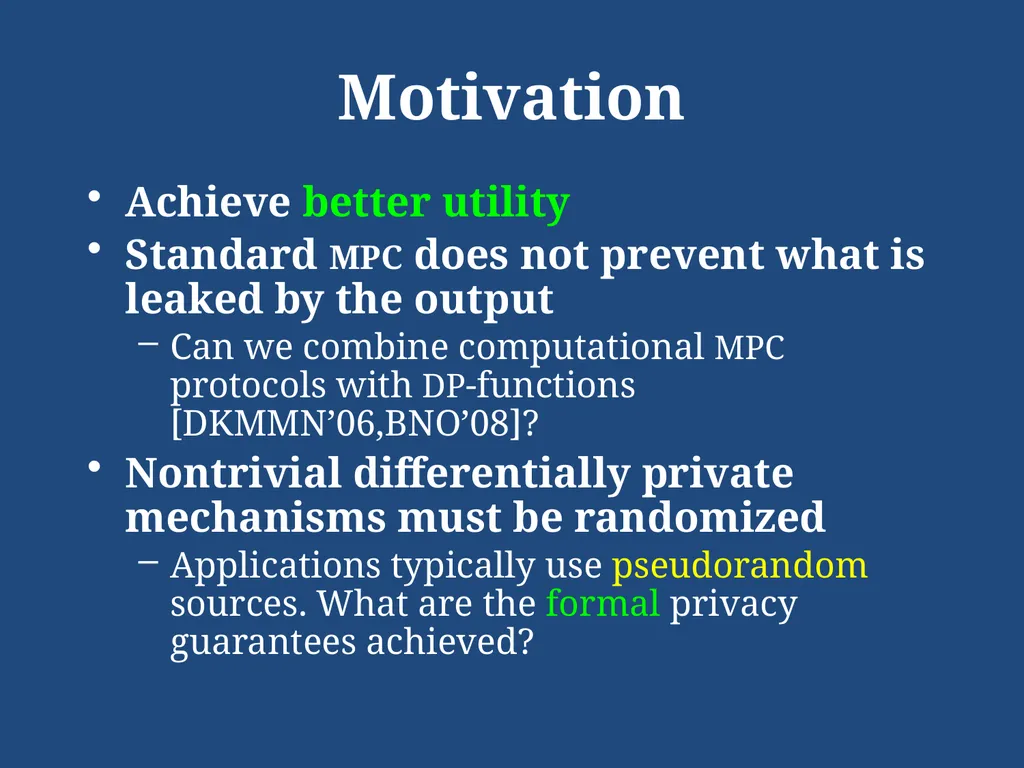
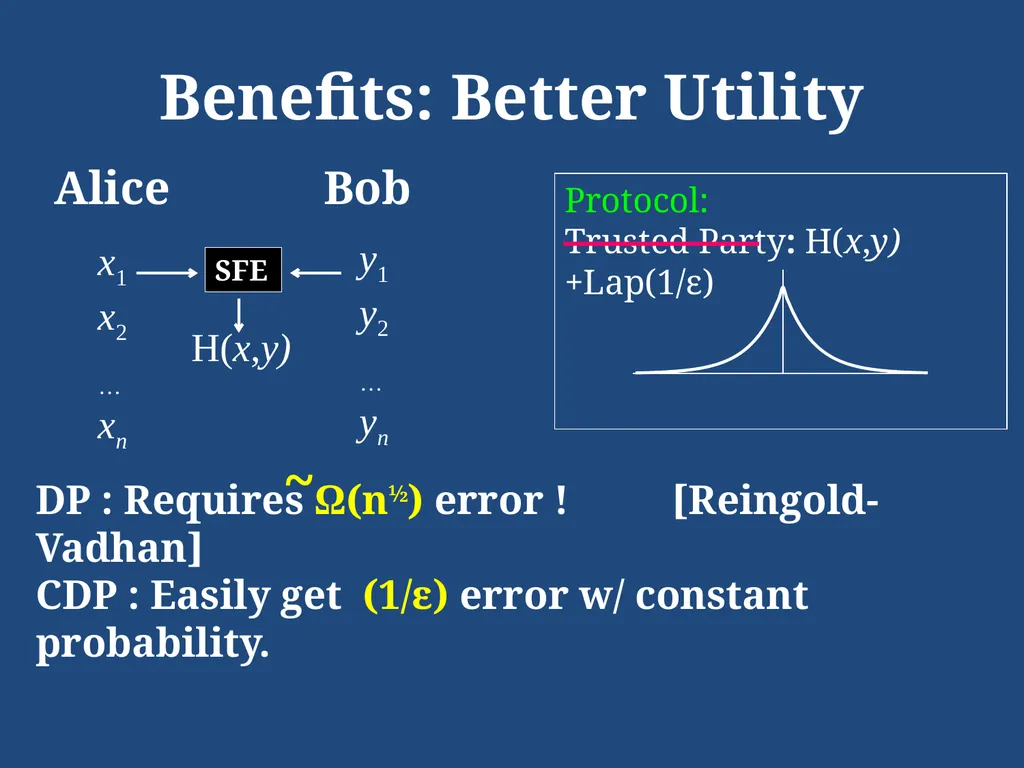
Motivation Achieve better utility
Standard MPC does not prevent what is leaked by the output
Can we combine computational MPC protocols with DP-functions [DKMMN’06,BNO’08]?
Nontrivial differentially private mechanisms must be randomized
Applications typically use pseudorandom sources. What are the formal privacy guarantees achieved?<br>
04
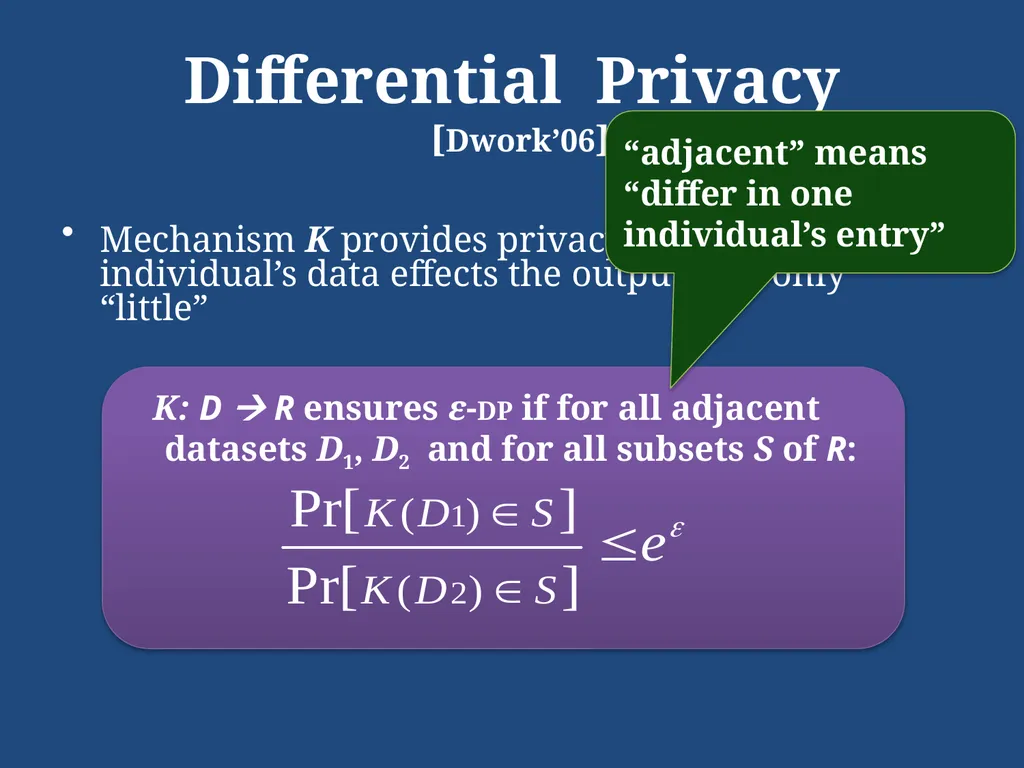
Differential Privacy [Dwork’06] Mechanism K provides privacy to an individual, if individual’s data effects the output of K only “little” “adjacent” means “differ in one individual’s entry”<br>
05
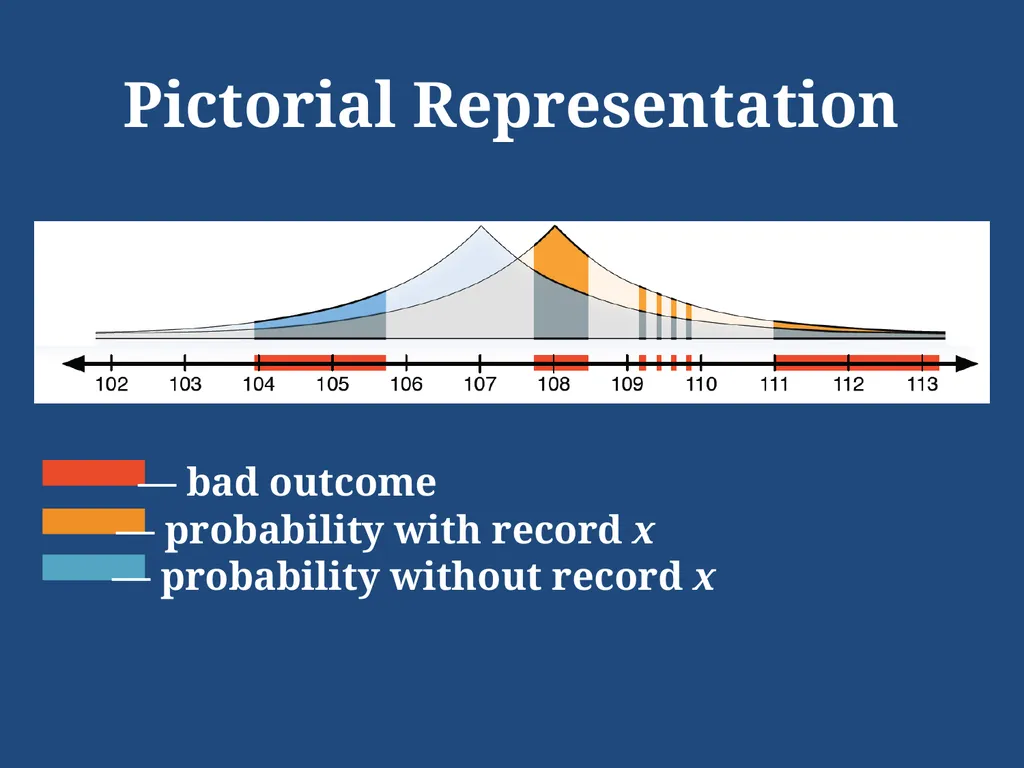
Pictorial Representation — bad outcome — probability with record x — probability without record x<br>
06
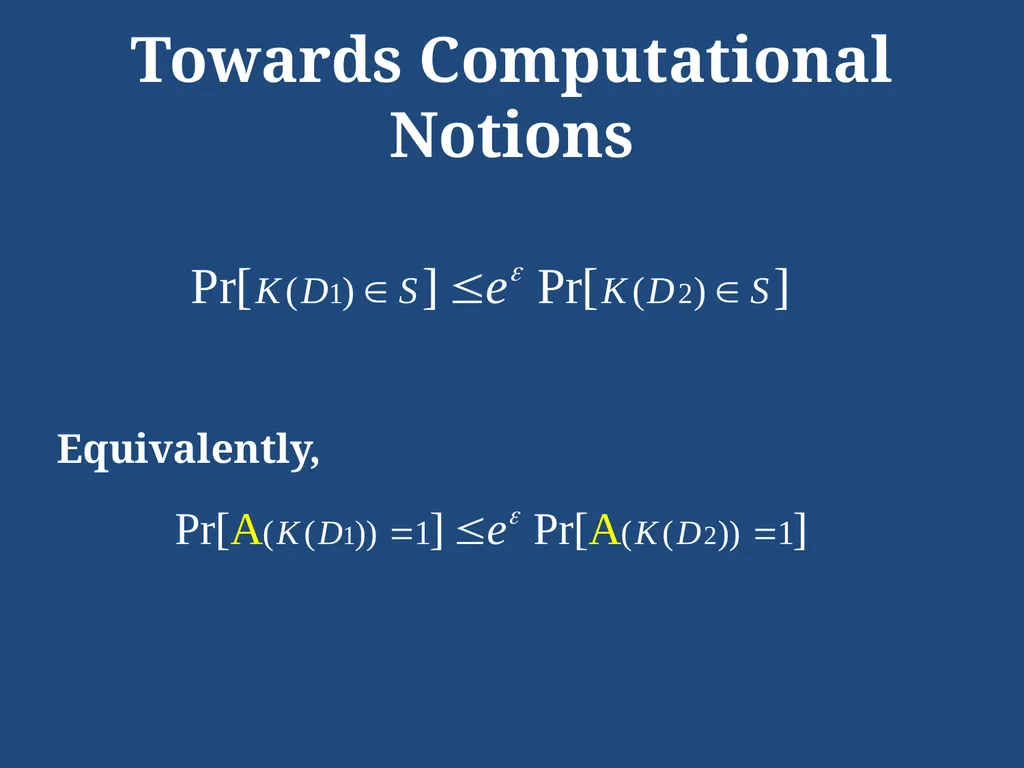
Towards Computational Notions Equivalently,<br>
07
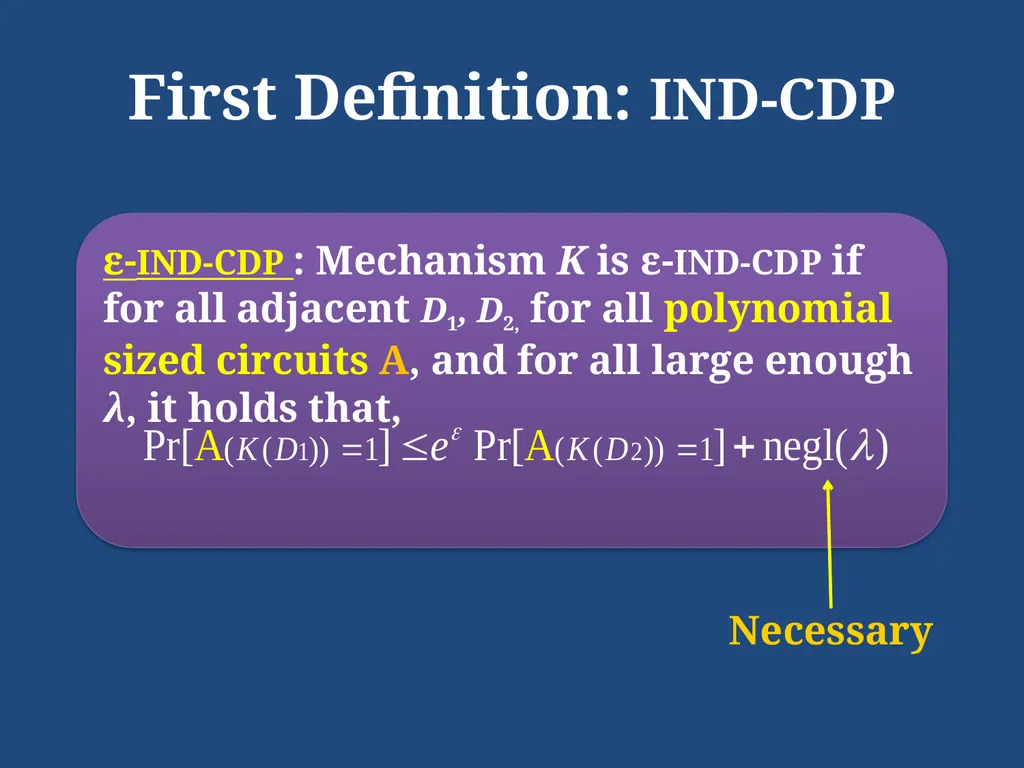
First Definition: IND-CDP<br>
08
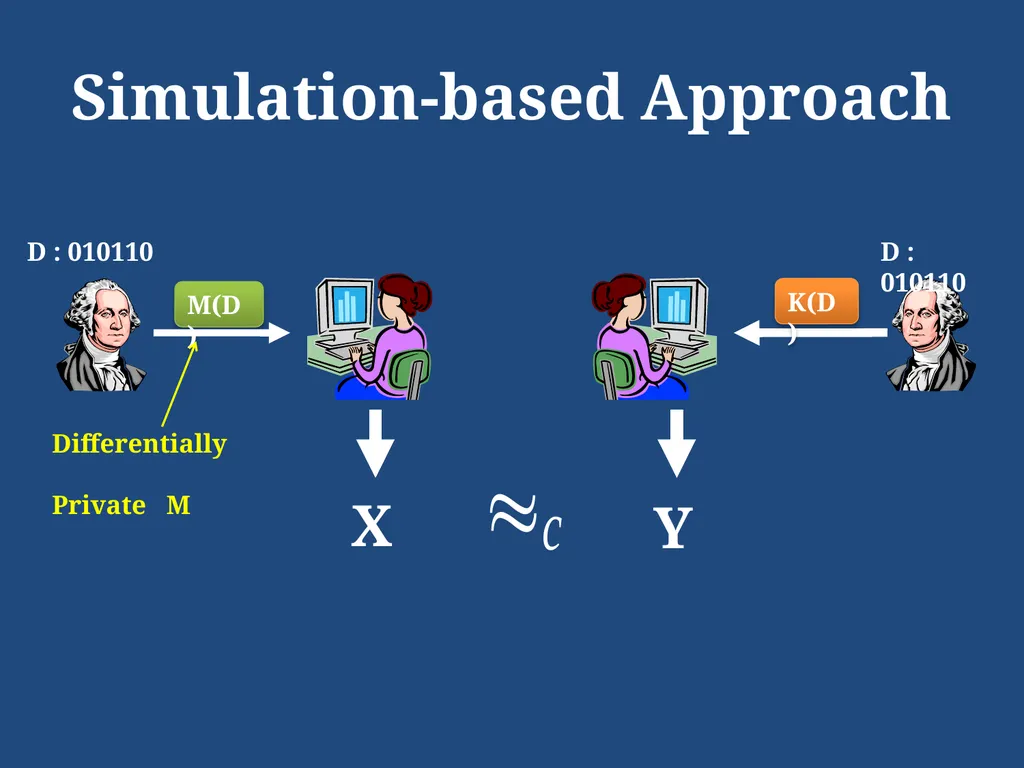
Simulation-based Approach K(D)<br>
09
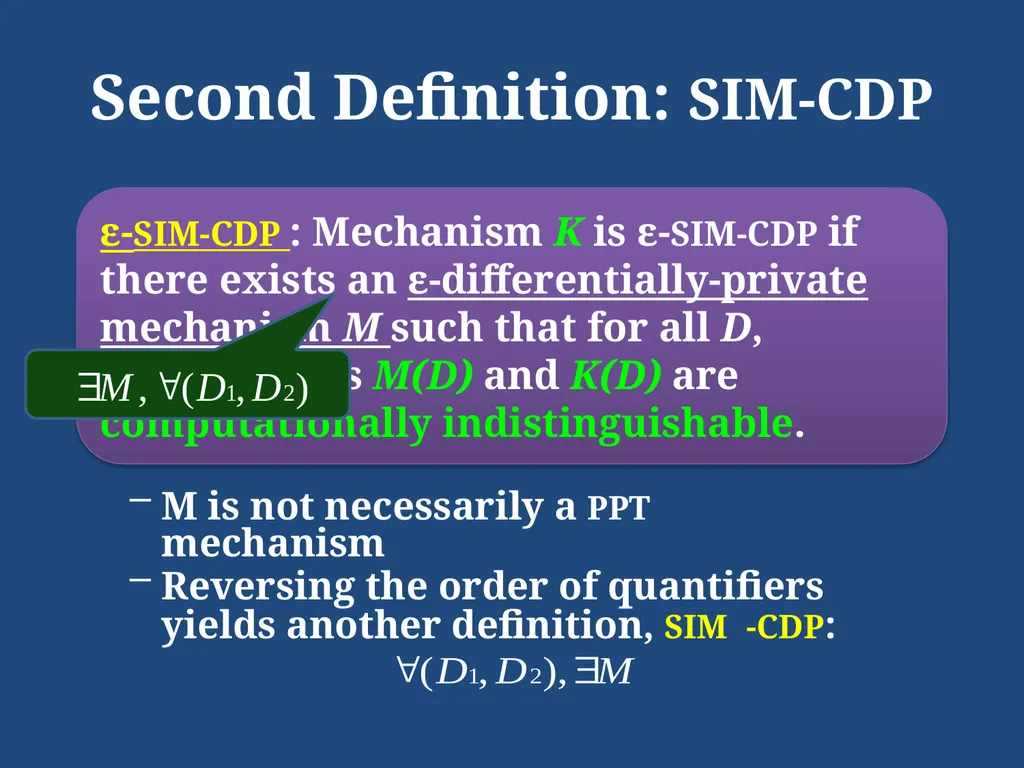
Second Definition: SIM-CDP ε-SIM-CDP : Mechanism K is ε-SIM-CDP if there exists an ε-differentially-private mechanism M such that for all D, distributions M(D) and K(D) are computationally indistinguishable.<br>
10
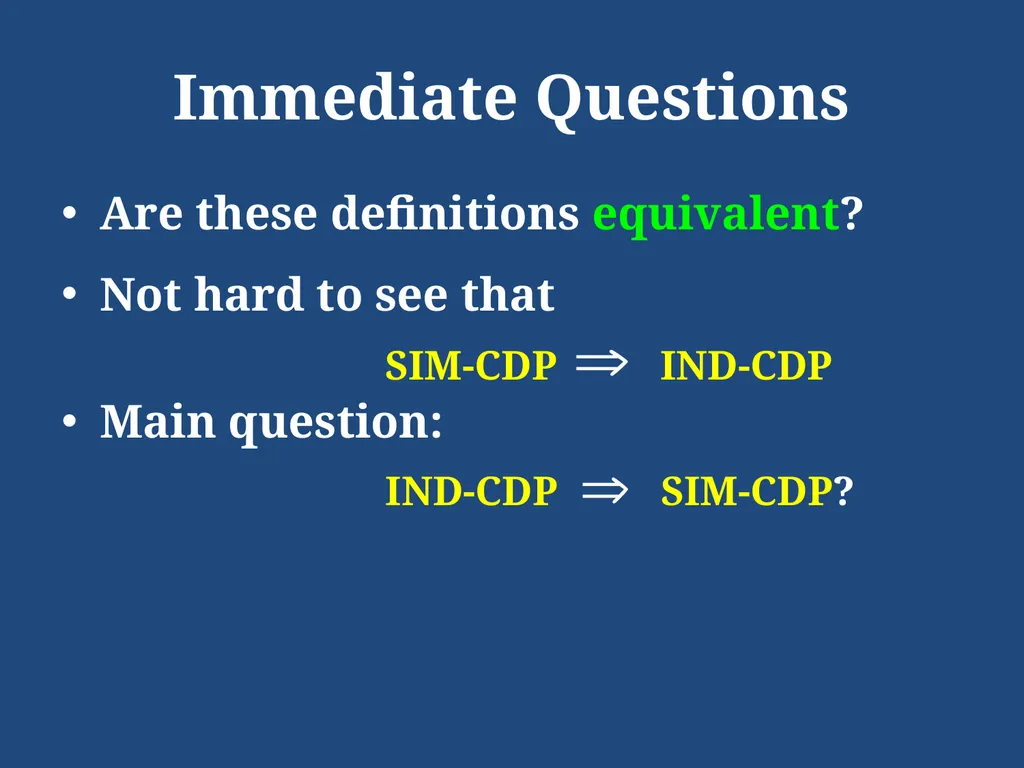
Immediate Questions Are these definitions equivalent?
Not hard to see that
Main question:<br>
11
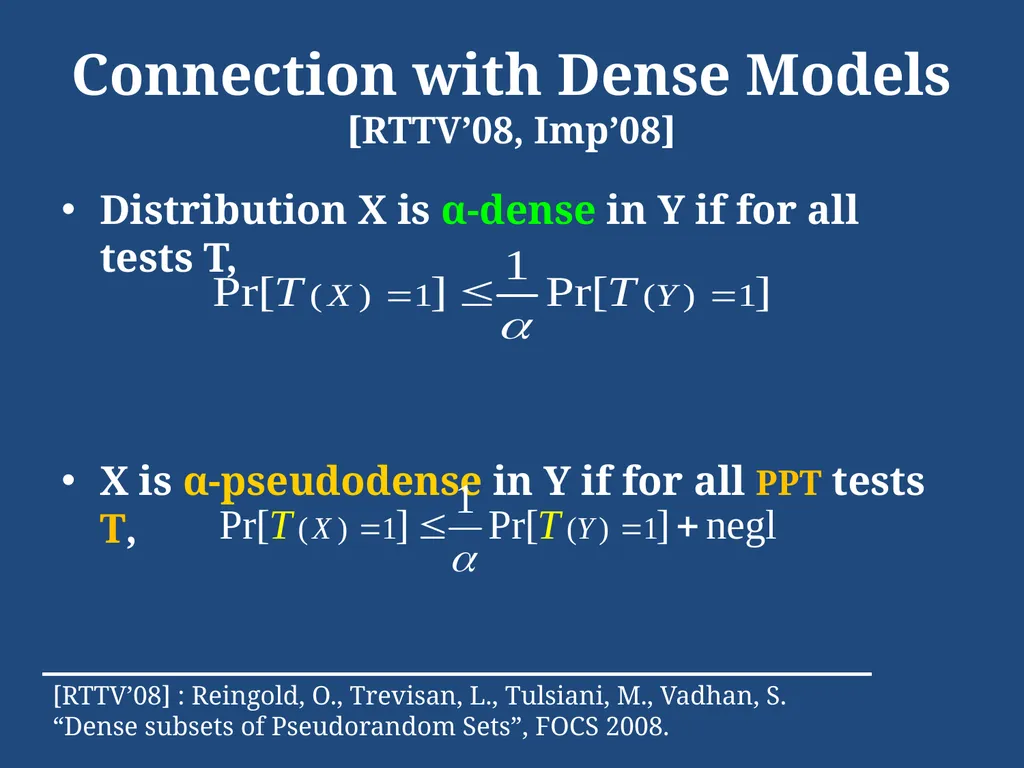
Connection with Dense Models [RTTV’08, Imp’08] Distribution X is α-dense in Y if for all tests T,
X is α-pseudodense in Y if for all PPT tests T, [RTTV’08] : Reingold, O., Trevisan, L., Tulsiani, M., Vadhan, S.
“Dense subsets of Pseudorandom Sets”, FOCS 2008.<br>
12
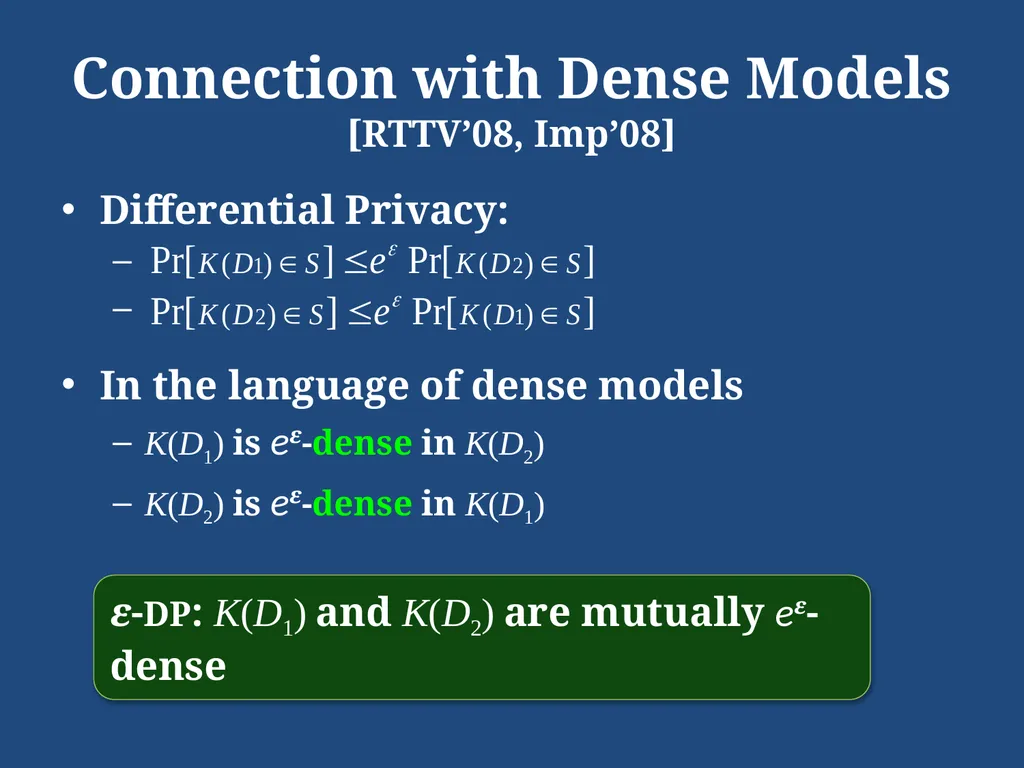
Connection with Dense Models [RTTV’08, Imp’08] Differential Privacy:
In the language of dense models
K(D1) is eε-dense in K(D2)
K(D2) is eε-dense in K(D1) ε-DP: K(D1) and K(D2) are mutually eε-dense<br>
13
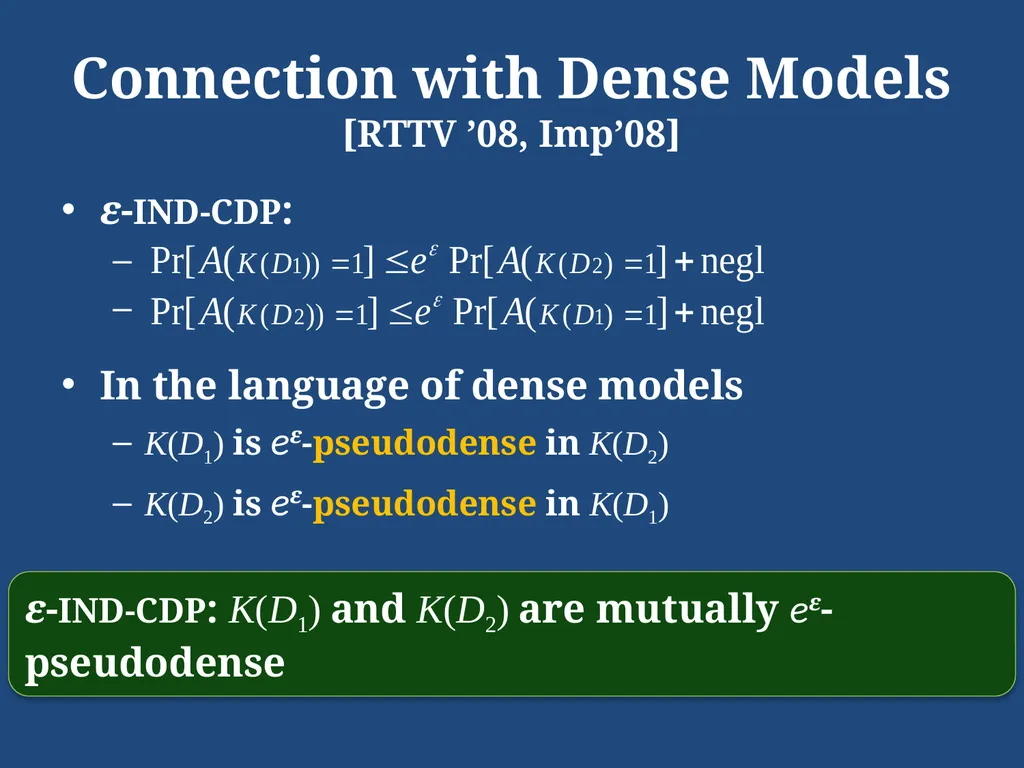
Connection with Dense Models [RTTV ’08, Imp’08] ε-IND-CDP:
In the language of dense models
K(D1) is eε-pseudodense in K(D2)
K(D2) is eε-pseudodense in K(D1) ε-IND-CDP: K(D1) and K(D2) are mutually eε-pseudodense<br>
14
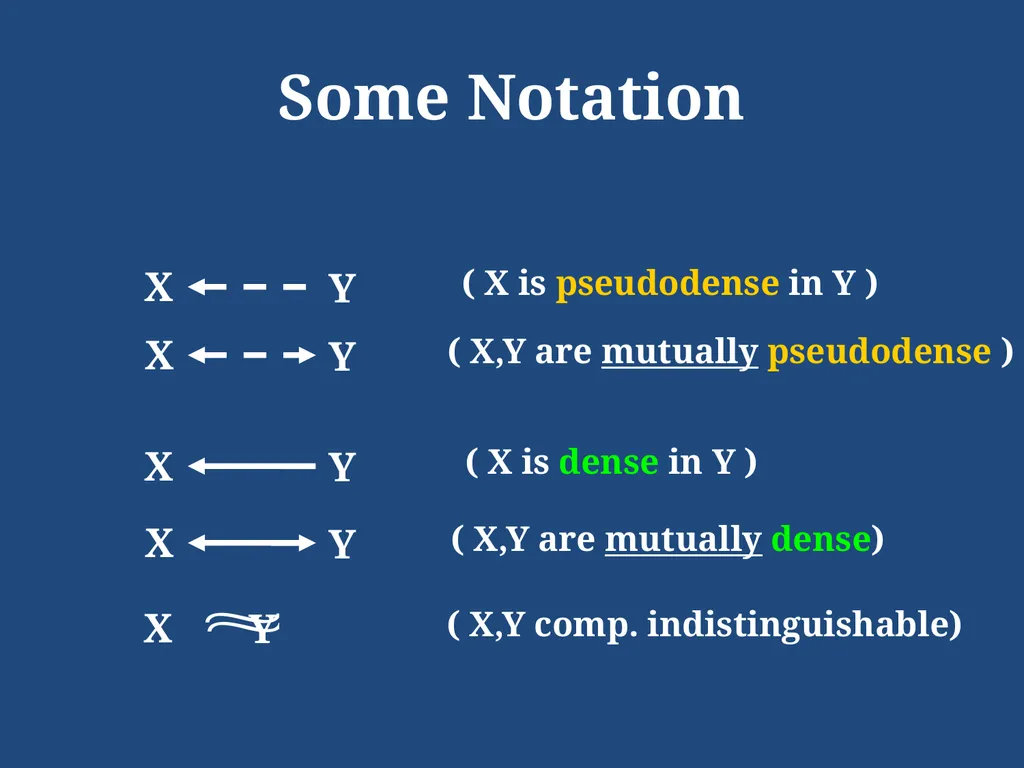
Some Notation<br>
15
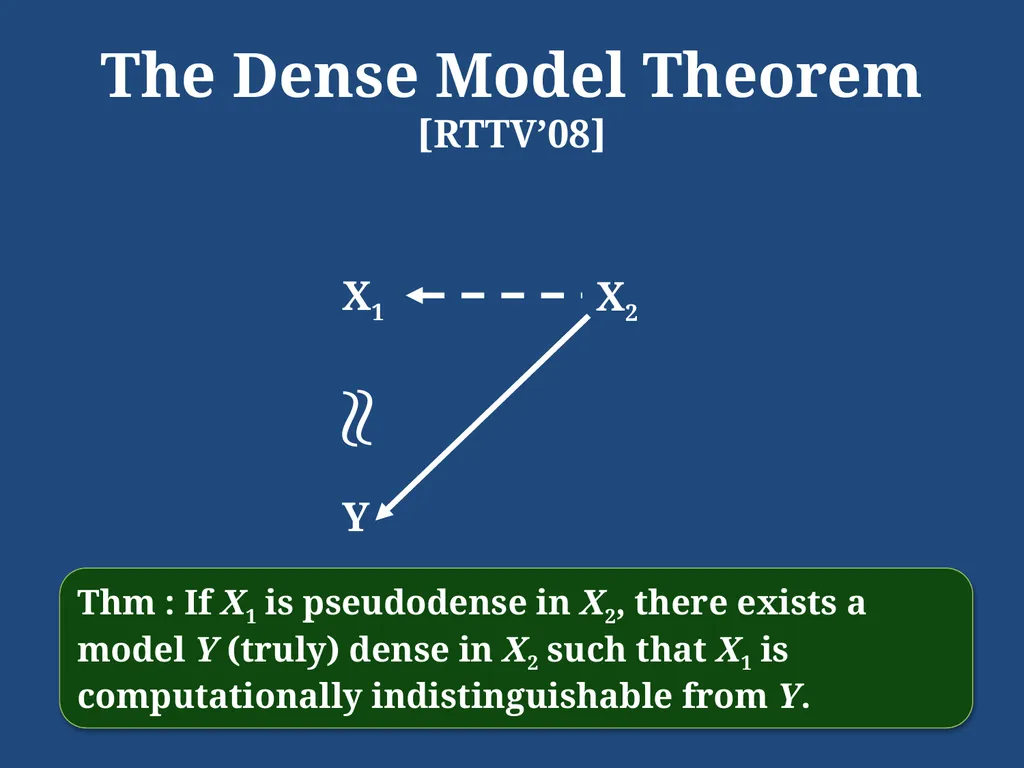
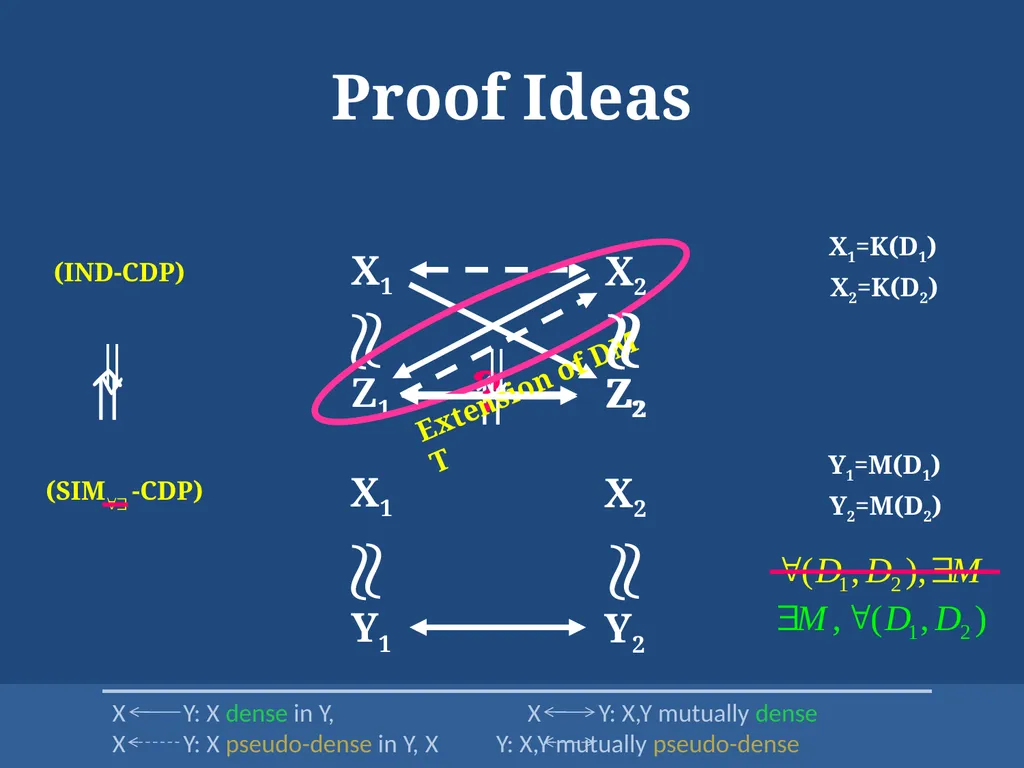
The Dense Model Theorem [RTTV’08] Thm : If X1 is pseudodense in X2, there exists a model Y (truly) dense in X2 such that X1 is computationally indistinguishable from Y.<br>
16
(IND-CDP) Y1 Y2 ? Proof Ideas Extension of DM T<br>
17
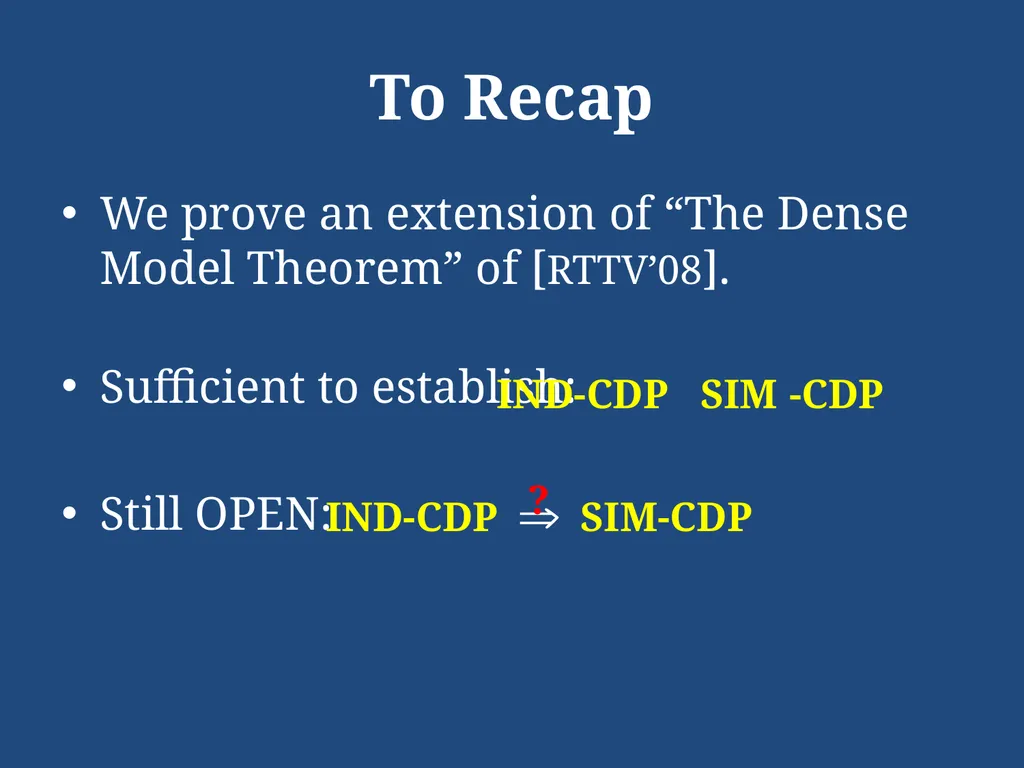
To Recap We prove an extension of “The Dense Model Theorem” of [RTTV’08].
Sufficient to establish:
Other Results A new protocol for Hamming Distance:
Differentially private (standard)
Constant multiplicative error
Differentially Private Two-Party Computation<br>