Concussions: From the Field to the Classroom Robert Jones, M.D. Medical Director UNC Charlotte Student Health Center Objectives Identify common signs and symptoms of concussion Become familiar with the potential impact of concussion on
"Concussions: From the Field to the Classroom" is the property of its rightful owner. Permission is granted to
download and print the materials on this website for personal, non-commercial use only, and to display it
on your personal computer provided you do not modify the materials and that you retain all copyright
notices contained in the materials. By downloading content from our website, you accept the terms of this
agreement.
Presentation Transcript
01
Concussions:
From the Field to the Classroom Robert Jones, M.D.
Medical Director
UNC Charlotte Student Health Center<br>
02
Objectives Identify common signs and symptoms of concussion
Become familiar with the potential impact of concussion on cognitive activity
Become familiar with the possible accommodations necessary for students to return to the classroom<br>
03
My Child Doesn’t Have a Brain Injury, He Only Has a Concussion DeMatteo CA, et al. Pediatrics. 2010;125(2):327-34.<br>
04
Definition A complex pathophysiologic process affecting the brain, induced by biomechanical forces<br>
05
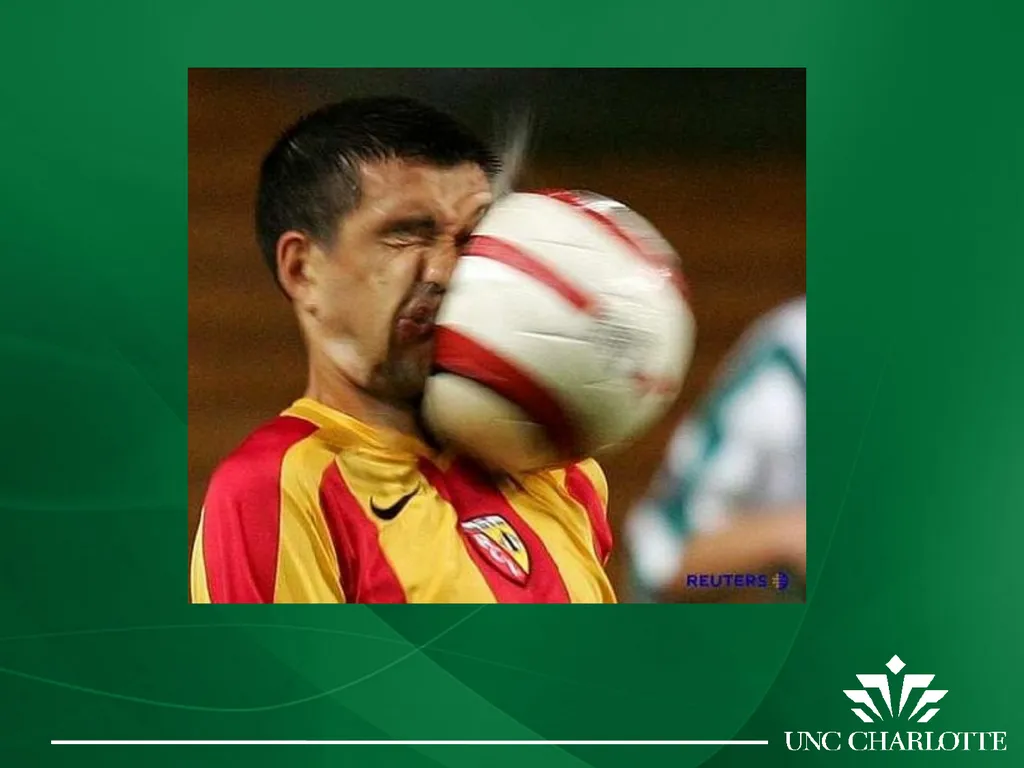
Definition (cont) May be caused by either a direct blow to the head, face, neck, or body with an “impulsive” force transmitted to the head<br>
06
Definition (cont) Rapid onset of short-lived impairment of neurological function that resolves spontaneously
Mostly a functional disturbance rather than a structural injury<br>
07
Definition (cont) Graded set of clinical symptoms that may or may not involve loss of consciousness.
Resolution of the clinical cognitive symptoms typically follow a sequential course.<br>
08
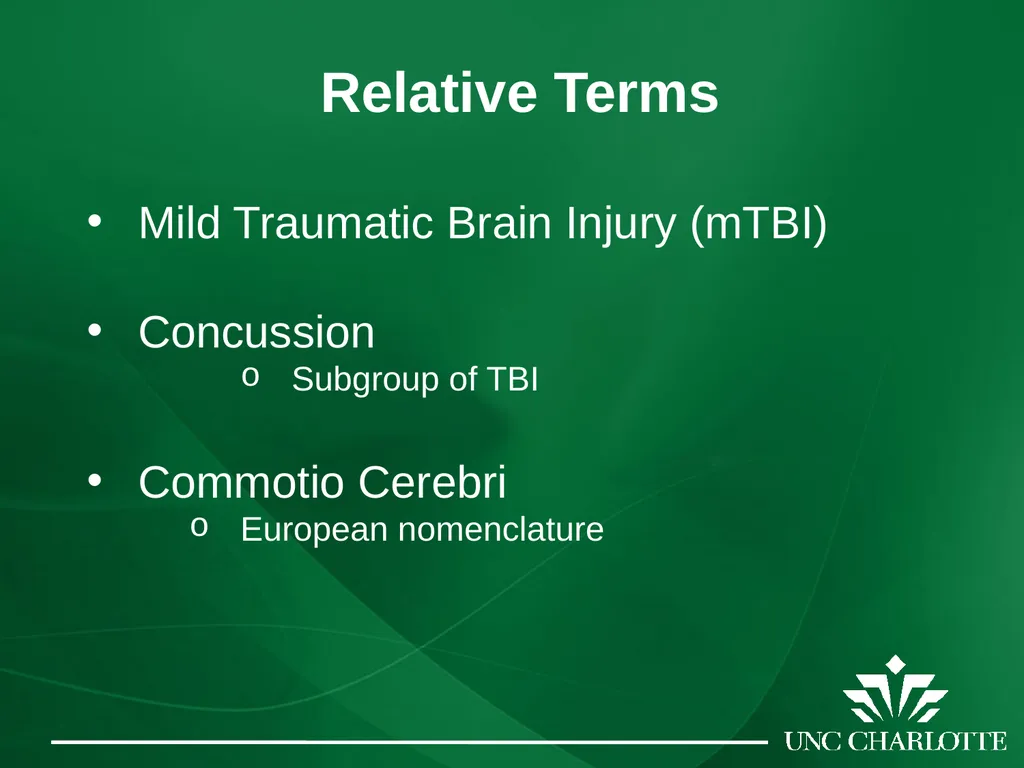
Relative Terms Mild Traumatic Brain Injury (mTBI)
Concussion
Subgroup of TBI
Commotio Cerebri
European nomenclature<br>
09
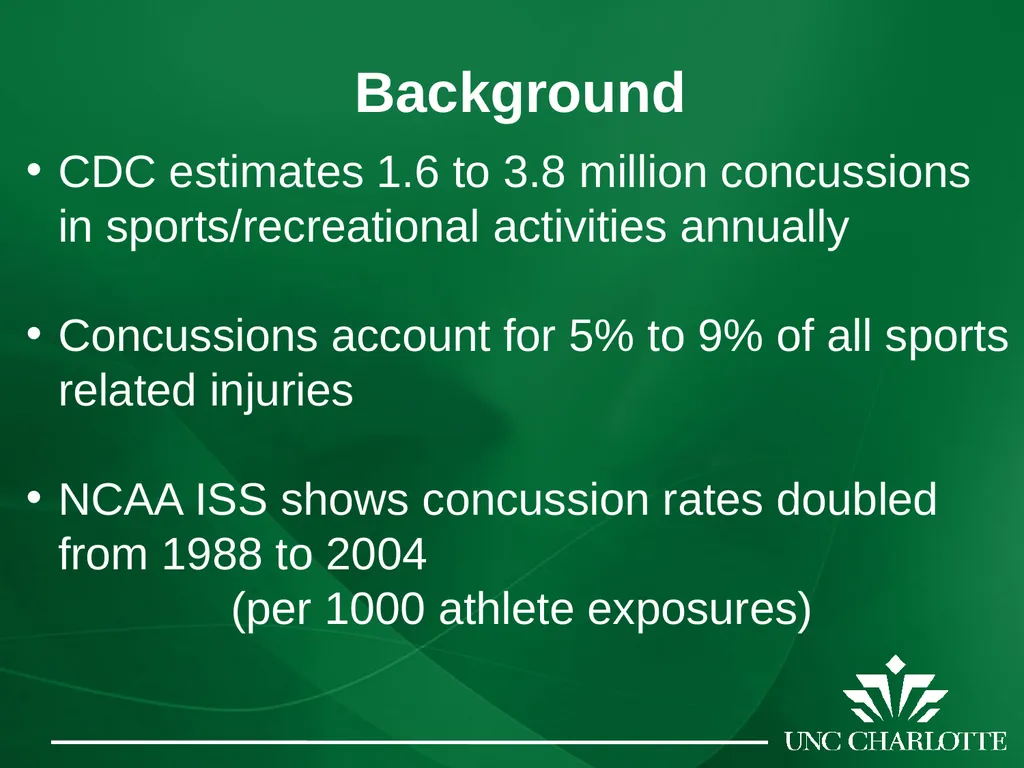
Background CDC estimates 1.6 to 3.8 million concussions in sports/recreational activities annually
Concussions account for 5% to 9% of all sports related injuries
NCAA ISS shows concussion rates doubled from 1988 to 2004
(per 1000 athlete exposures)<br>
10
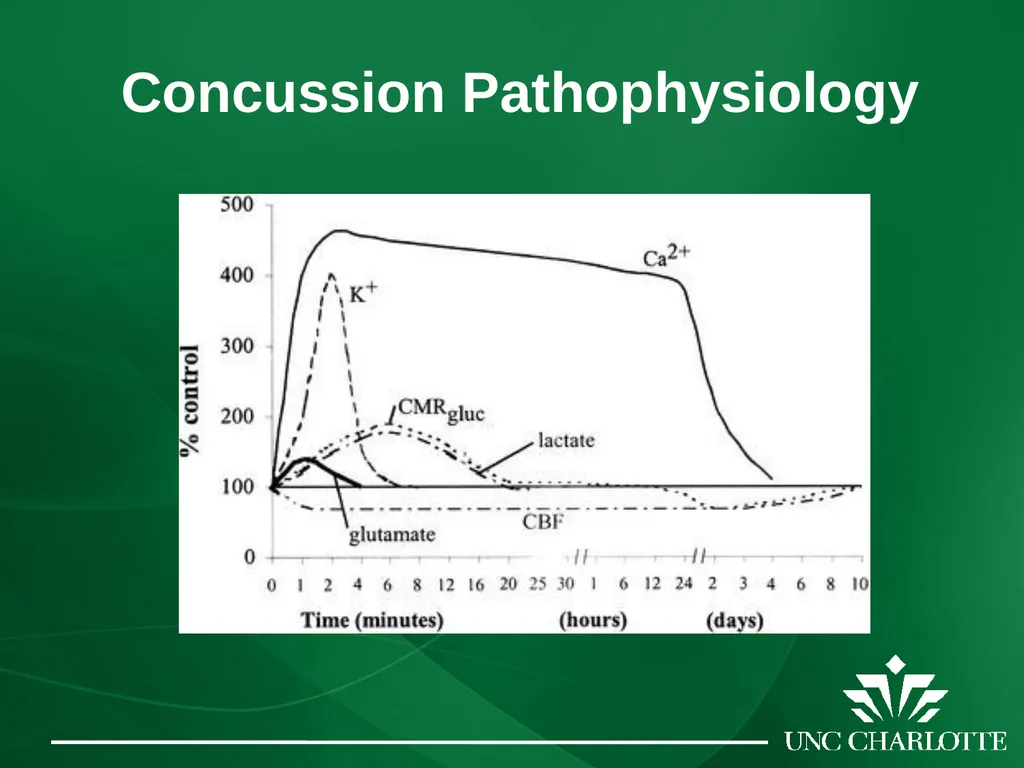
Concussion Pathophysiology<br>
11
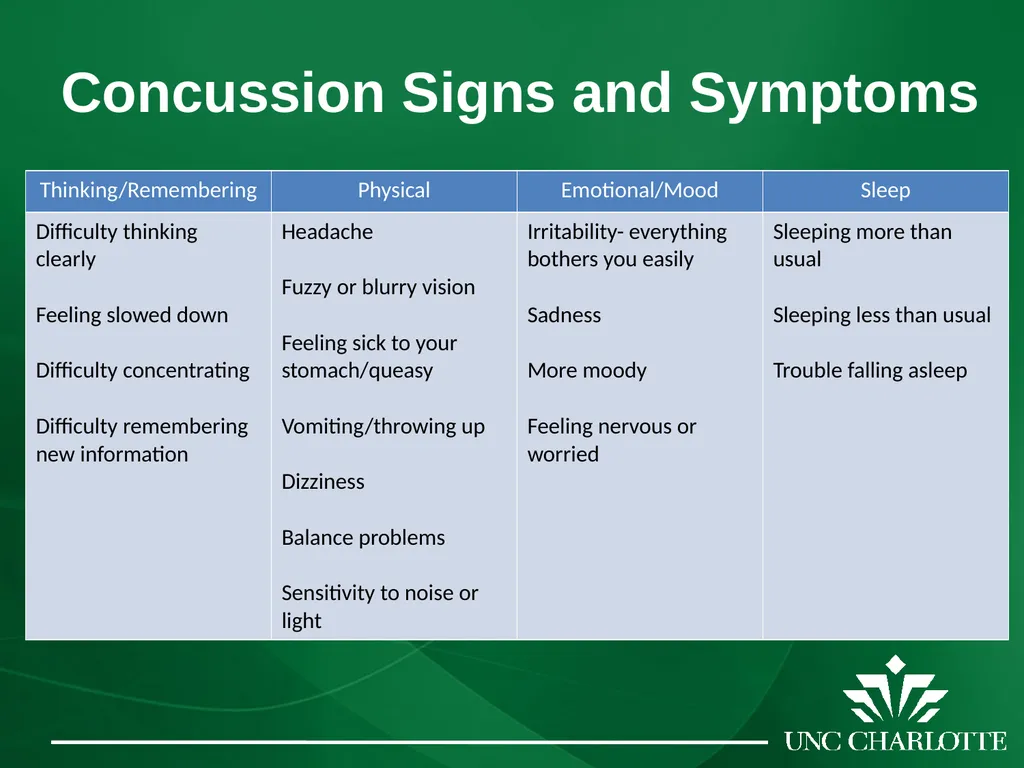
Concussion Signs and Symptoms<br>
12
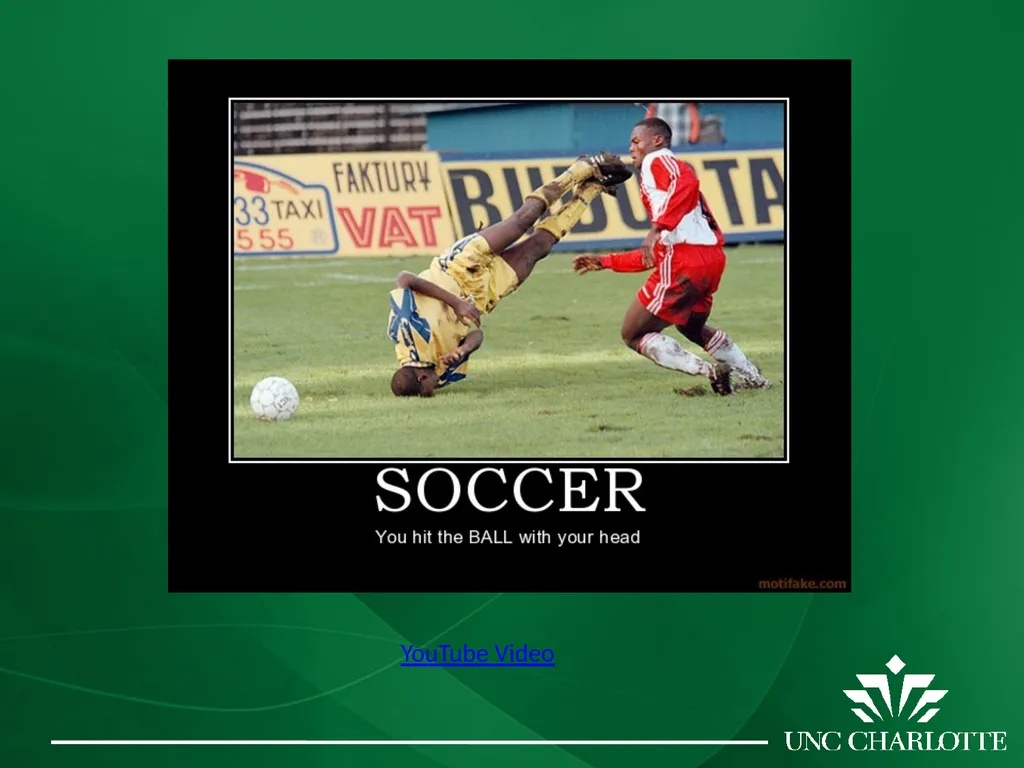
YouTube Video<br>
13
Concussion Management Most concussions resolve in about 7 to 10 days
Physical and cognitive rest until symptoms abate
Once symptoms resolve, begin graded progression of exertion
Upon completion of activity progression the patient can be cleared to return to play<br>
14
What is Physical and Cognitive Rest? Sitting/lying in an area with low stimulus- try to increase sleeping
No physical exertion
No visually stimulating activities:
Watching TV
Using Computers
Texting
Reading
Video Games
Sometimes involves missing class<br>
15
Potential Accommodations Brief absence from classes
Rest periods during the day
Extension of deadlines
Postponement/ Adjustment of tests<br>
16
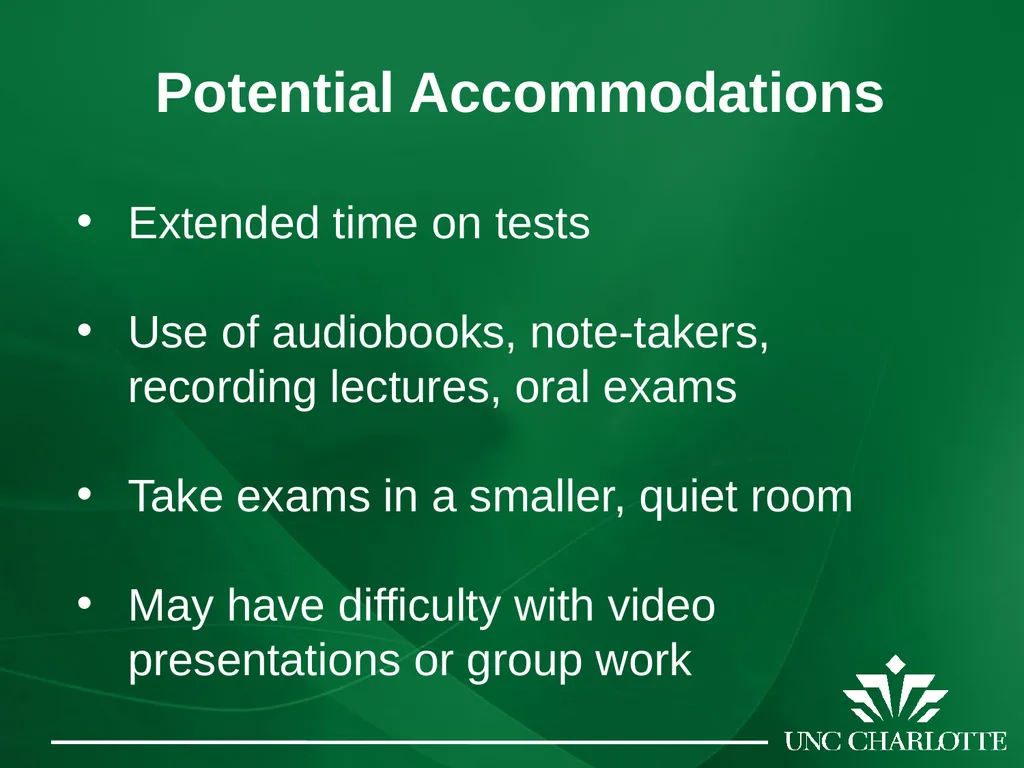
Potential Accommodations Extended time on tests
Use of audiobooks, note-takers, recording lectures, oral exams
Take exams in a smaller, quiet room
May have difficulty with video presentations or group work<br>