
Connection and Consequences: opioid use, overdose

Description: Connection and Consequences: opioid use, overdose and Traumatic and Acquired Brain Injury MARYLAND DEPARTMENT OF HEALTH Anastasia Edmonston M.S., C.R.C., TBI Partner Project Coordinator, Behavioral Health Administration and Mary Pat
Related Topics
Download Presentation
"Connection and Consequences: opioid use, overdose" is the property of its rightful owner. Permission is granted to download and print the materials on this website for personal, non-commercial use only, and to display it on your personal computer provided you do not modify the materials and that you retain all copyright notices contained in the materials. By downloading content from our website, you accept the terms of this agreement.
Presentation Transcript
slide1. Connection and Consequences: opioid use, overdose and Traumatic and Acquired Brain Injury MARYLAND DEPARTMENT OF HEALTH Anastasia Edmonston M.S., C.R.C., TBI Partner Project Coordinator, Behavioral Health Administration
and
Mary Pat Collins, Family Member and Advocate May 2019<br>
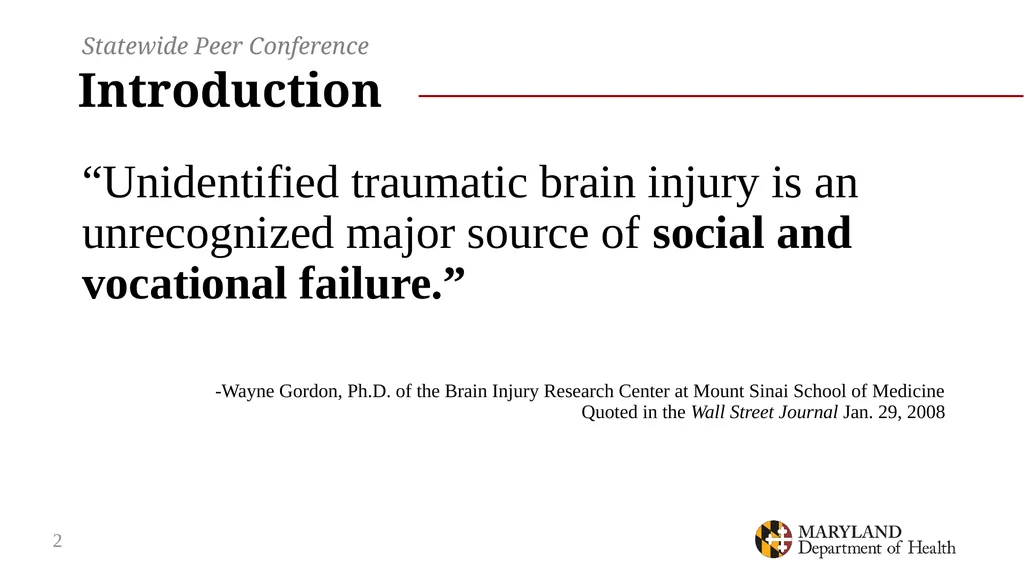
slide2. Introduction “Unidentified traumatic brain injury is an unrecognized major source of social and vocational failure.”
-Wayne Gordon, Ph.D. of the Brain Injury Research Center at Mount Sinai School of Medicine Quoted in the Wall Street Journal Jan. 29, 2008 2 Statewide Peer Conference<br>
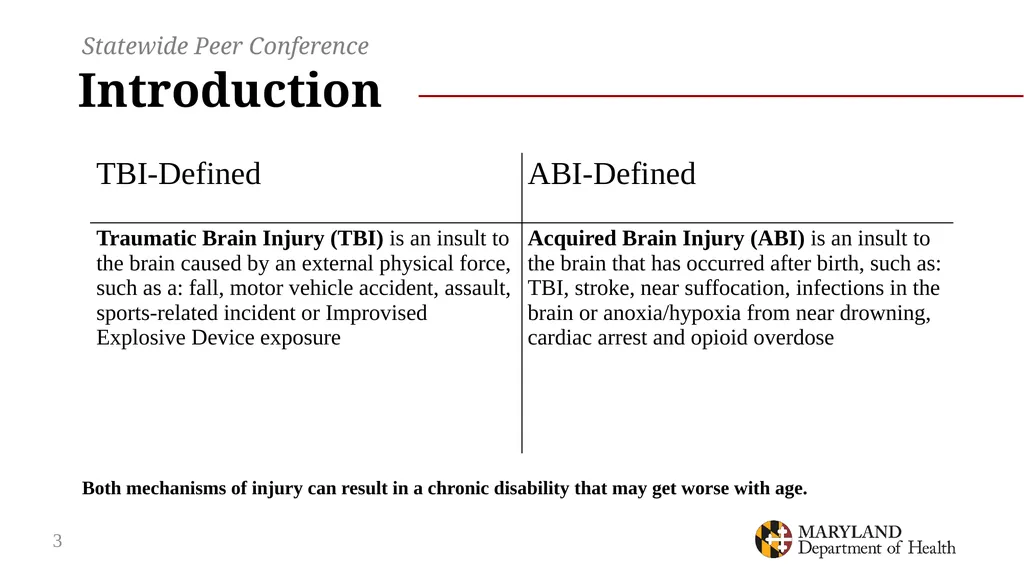
slide3. Introduction 3 Statewide Peer Conference Both mechanisms of injury can result in a chronic disability that may get worse with age.<br>
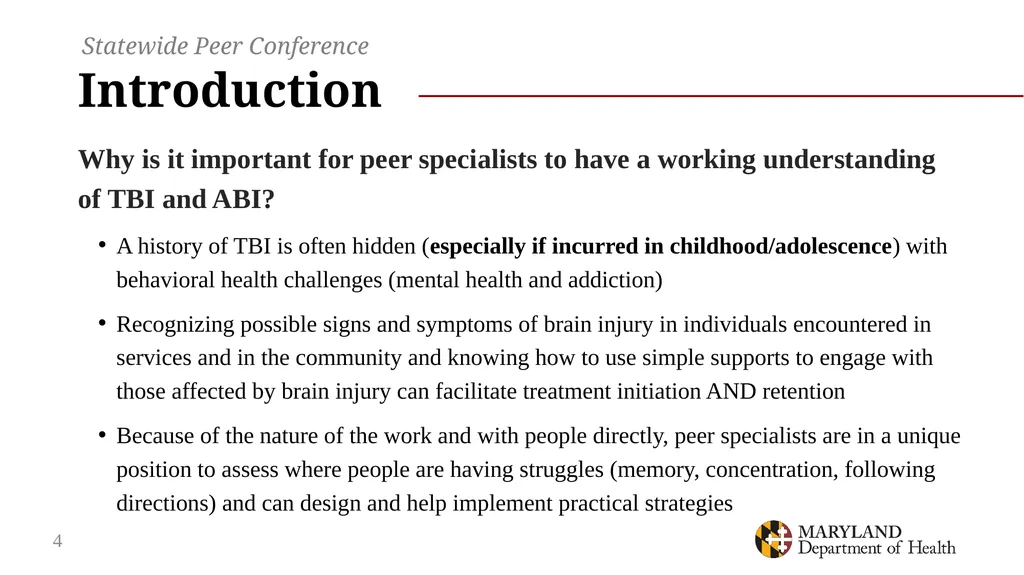
slide4. Introduction Why is it important for peer specialists to have a working understanding of TBI and ABI?
A history of TBI is often hidden (especially if incurred in childhood/adolescence) with behavioral health challenges (mental health and addiction)
Recognizing possible signs and symptoms of brain injury in individuals encountered in services and in the community and knowing how to use simple supports to engage with those affected by brain injury can facilitate treatment initiation AND retention
Because of the nature of the work and with people directly, peer specialists are in a unique position to assess where people are having struggles (memory, concentration, following directions) and can design and help implement practical strategies 4 Statewide Peer Conference<br>
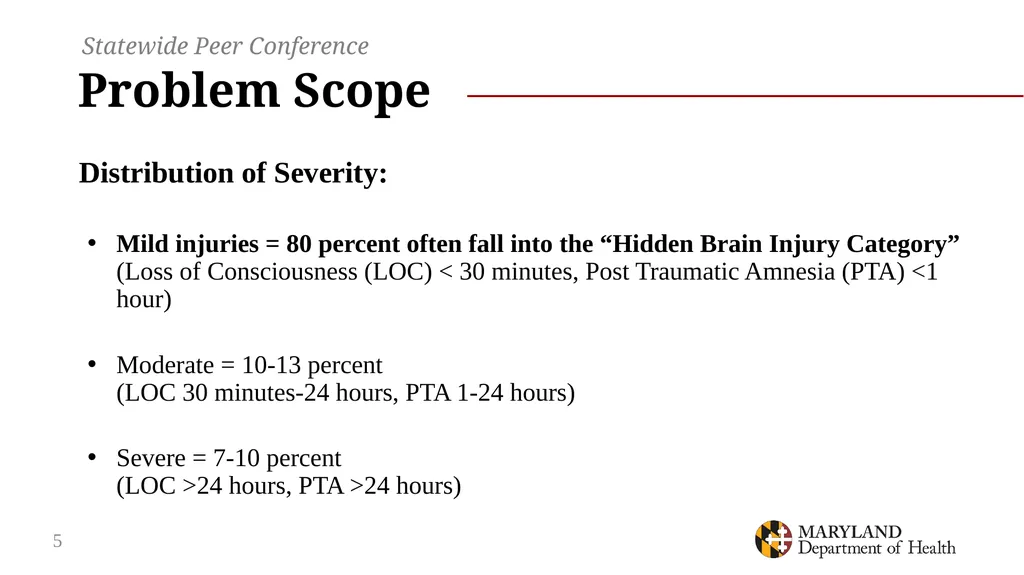
slide5. Problem Scope Distribution of Severity:
Mild injuries = 80 percent often fall into the “Hidden Brain Injury Category” (Loss of Consciousness (LOC) < 30 minutes, Post Traumatic Amnesia (PTA) <1 hour)
Moderate = 10-13 percent (LOC 30 minutes-24 hours, PTA 1-24 hours)
Severe = 7-10 percent (LOC >24 hours, PTA >24 hours) 5 Statewide Peer Conference<br>
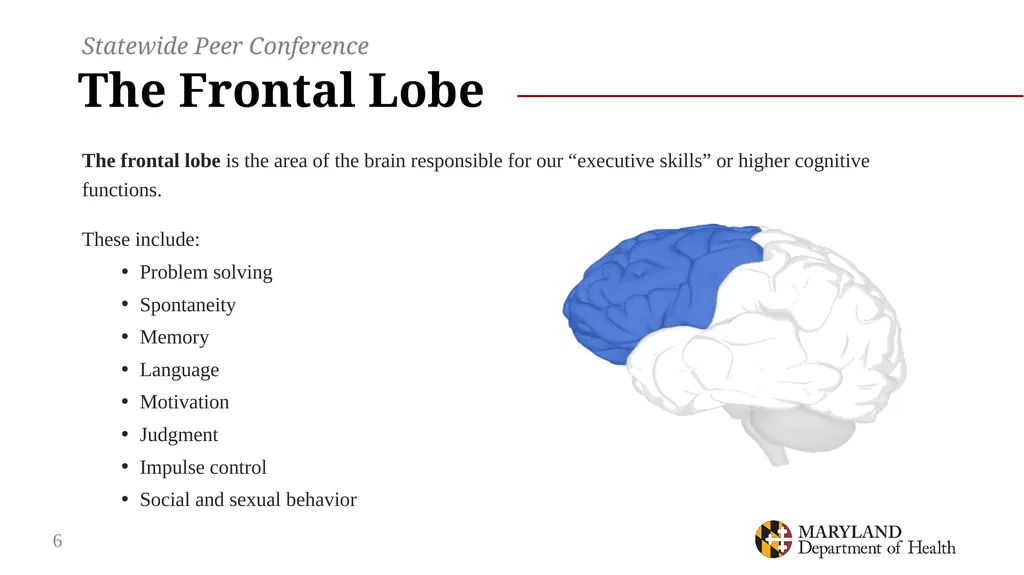
slide6. The Frontal Lobe 6 Statewide Peer Conference The frontal lobe is the area of the brain responsible for our “executive skills” or higher cognitive functions.
These include:
Problem solving
Spontaneity
Memory
Language
Motivation
Judgment
Impulse control
Social and sexual behavior<br>
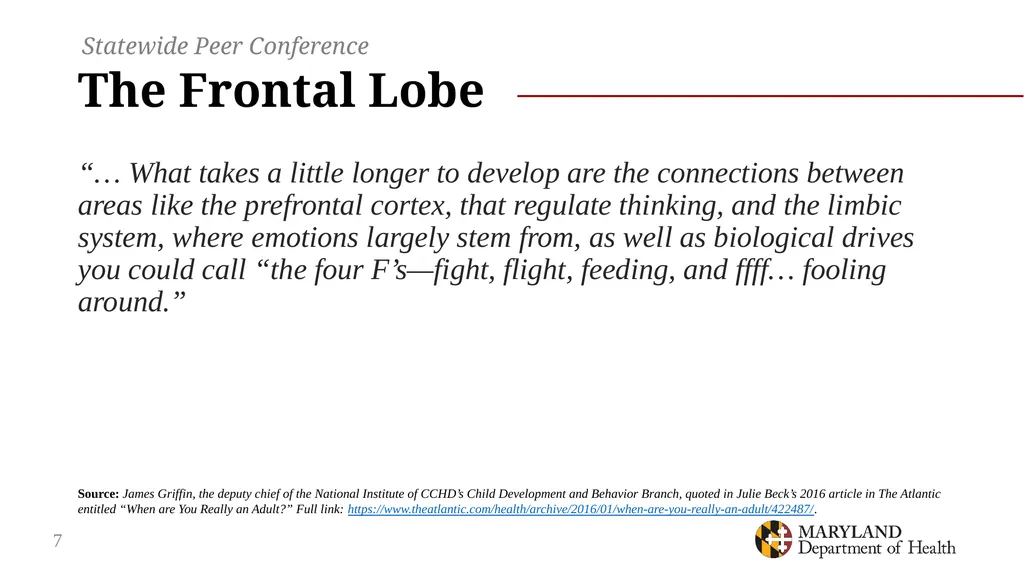
slide7. The Frontal Lobe “… What takes a little longer to develop are the connections between areas like the prefrontal cortex, that regulate thinking, and the limbic system, where emotions largely stem from, as well as biological drives you could call “the four F’s—fight, flight, feeding, and ffff… fooling around.” 7 Statewide Peer Conference Source: James Griffin, the deputy chief of the National Institute of CCHD’s Child Development and Behavior Branch, quoted in Julie Beck’s 2016 article in The Atlantic entitled “When are You Really an Adult?” Full link: https://www.theatlantic.com/health/archive/2016/01/when-are-you-really-an-adult/422487/.<br>
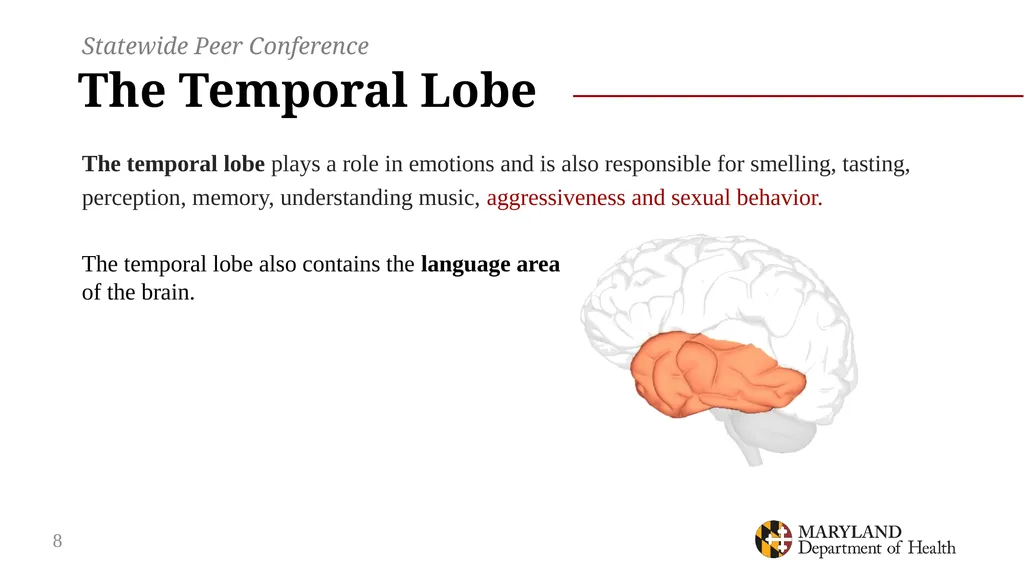
slide8. The Temporal Lobe 8 Statewide Peer Conference The temporal lobe plays a role in emotions and is also responsible for smelling, tasting, perception, memory, understanding music, aggressiveness and sexual behavior. The temporal lobe also contains the language area of the brain.<br>
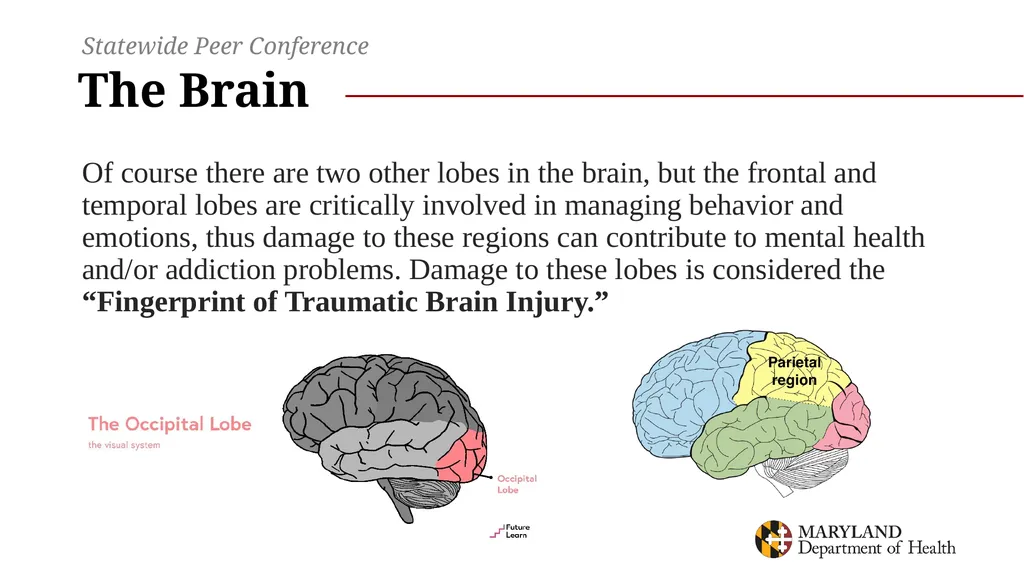
slide9. The Brain Of course there are two other lobes in the brain, but the frontal and temporal lobes are critically involved in managing behavior and emotions, thus damage to these regions can contribute to mental health and/or addiction problems. Damage to these lobes is considered the “Fingerprint of Traumatic Brain Injury.” 9 Statewide Peer Conference<br>
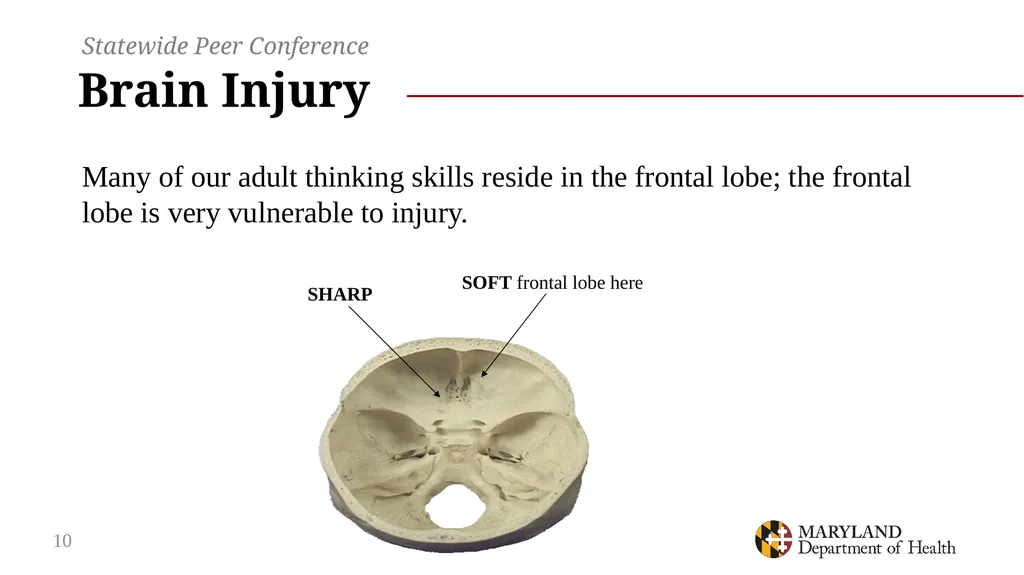
slide10. Brain Injury Many of our adult thinking skills reside in the frontal lobe; the frontal lobe is very vulnerable to injury. 10 Statewide Peer Conference SOFT frontal lobe here SHARP<br>
slide11. Fast Facts In 2013, 2.8 million Americans were treated in emergency departments (ED), hospitalized or died as a result of a TBI
The brain reaches its adult weight of 3 pounds by the age of 12
The adult brain reaches cognitive maturity by the mid-20’s
The last part of the brain to develop is the frontal lobe 11 Statewide Peer Conference Source: CDC 2017<br>
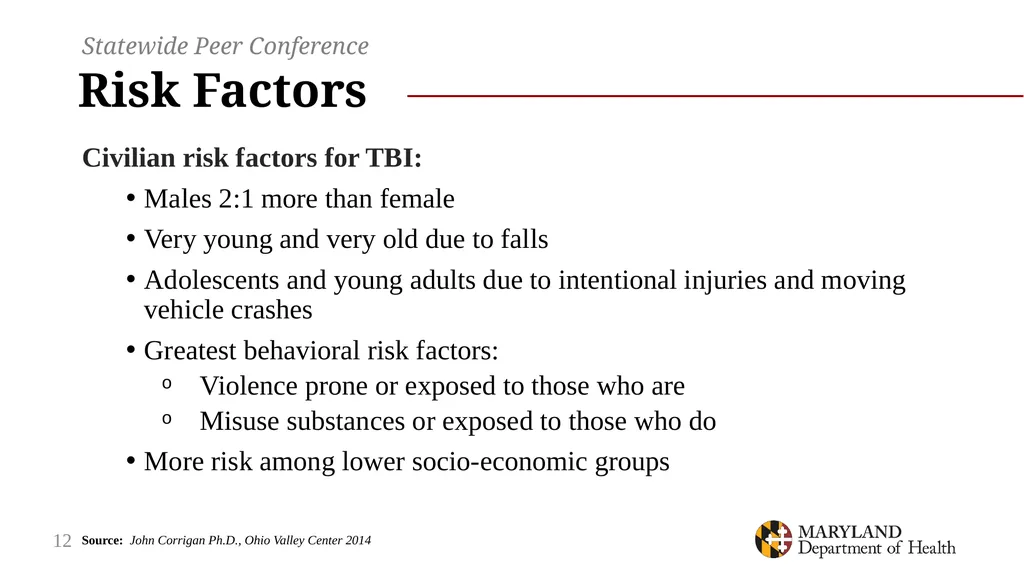
slide12. Risk Factors Civilian risk factors for TBI:
Males 2:1 more than female
Very young and very old due to falls
Adolescents and young adults due to intentional injuries and moving vehicle crashes
Greatest behavioral risk factors:
Violence prone or exposed to those who are
Misuse substances or exposed to those who do
More risk among lower socio-economic groups 12 Statewide Peer Conference Source: John Corrigan Ph.D., Ohio Valley Center 2014<br>
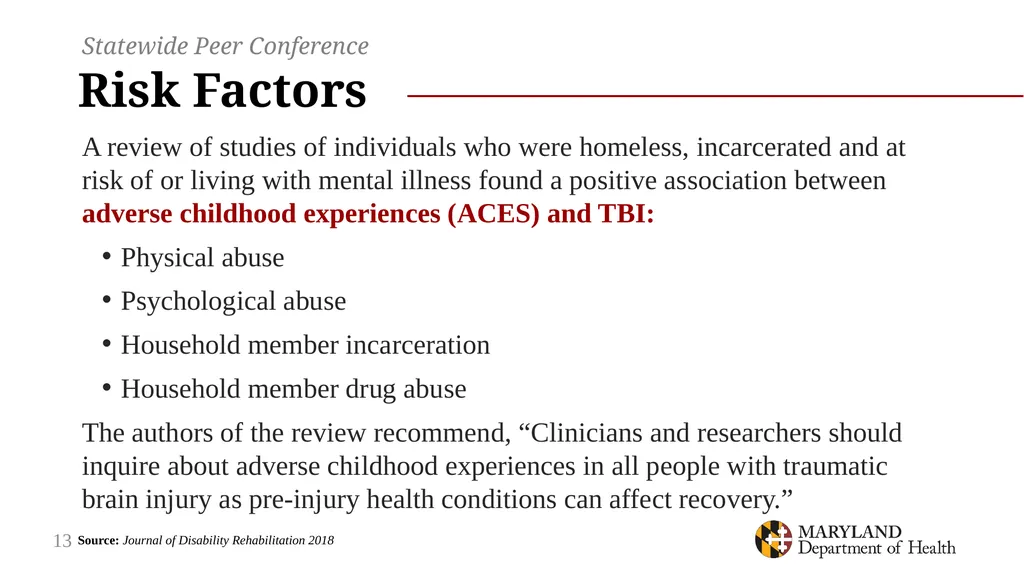
slide13. Risk Factors A review of studies of individuals who were homeless, incarcerated and at risk of or living with mental illness found a positive association between adverse childhood experiences (ACES) and TBI:
Physical abuse
Psychological abuse
Household member incarceration
Household member drug abuse
The authors of the review recommend, “Clinicians and researchers should inquire about adverse childhood experiences in all people with traumatic brain injury as pre-injury health conditions can affect recovery.” 13 Statewide Peer Conference Source: Journal of Disability Rehabilitation 2018<br>
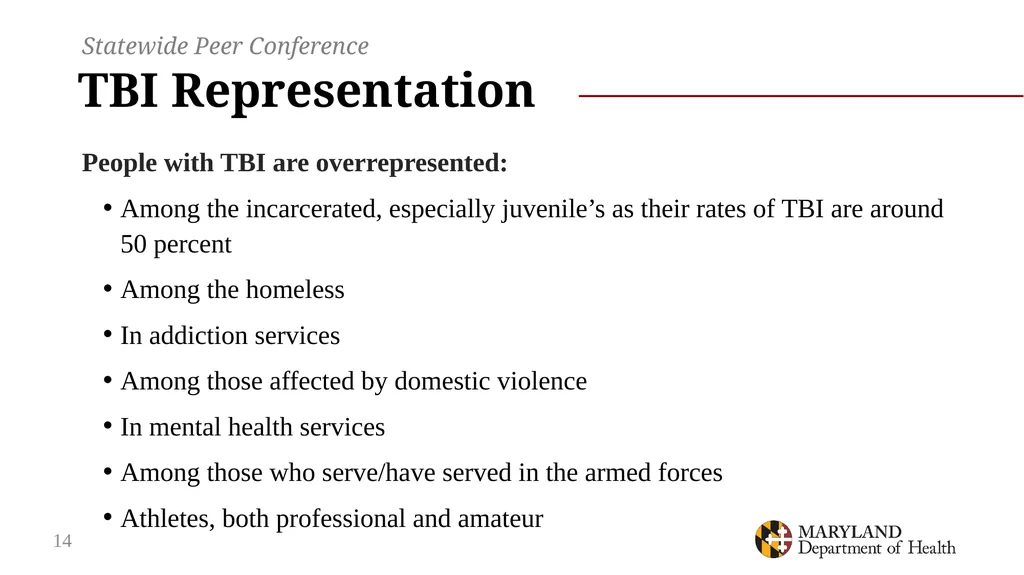
slide14. TBI Representation People with TBI are overrepresented:
Among the incarcerated, especially juvenile’s as their rates of TBI are around 50 percent
Among the homeless
In addiction services
Among those affected by domestic violence
In mental health services
Among those who serve/have served in the armed forces
Athletes, both professional and amateur 14 Statewide Peer Conference<br>
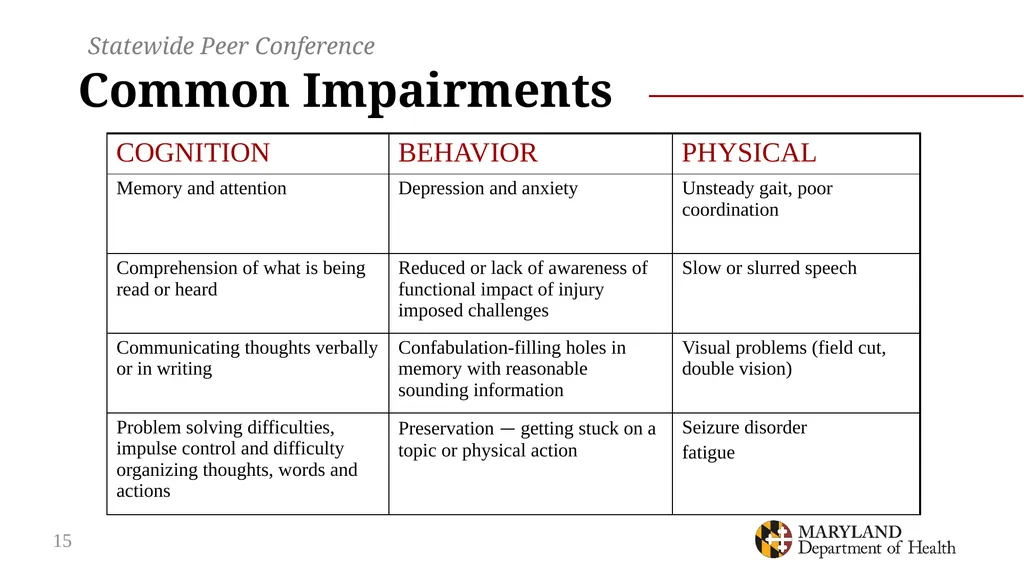
slide15. Common Impairments 15 Statewide Peer Conference<br>
slide16. Other Clues You may observe scars on an individual’s forehead, neck, face
The individual is using a cane, walker or wheelchair
The individual has a limp or appears to drag one foot when walking 16 Statewide Peer Conference<br>
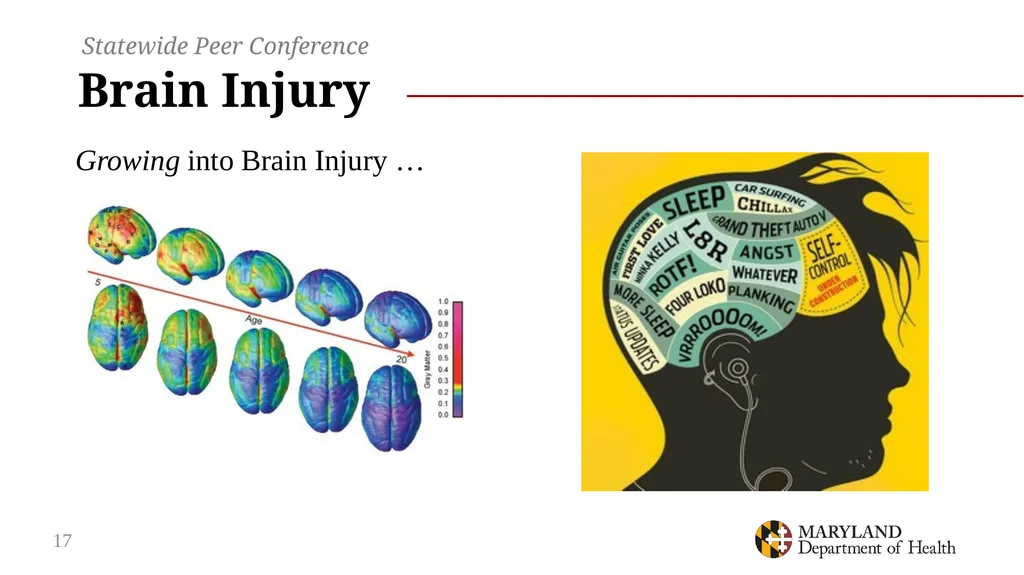
slide17. Brain Injury 17 Statewide Peer Conference Growing into Brain Injury …<br>
slide18. “Growing” Into Brain Injury 18 Statewide Peer Conference Without proper supports, brain injury can lead to mental health and addiction issues that bring people living with “hidden” TBI into the public behavioral health system.
Appropriately, structure offered by school, parents and community fall away as children go through adolescence into adulthood. A TBI that incurred at age seven may not be fully “unmasked” functionally or behaviorally until age 11, 12 or 13 with the challenges of middle school/puberty.
The frontal lobe and temporal tips injured earlier are unable to adequately respond to the expectations of behavioral regulation and executive skill functioning<br>
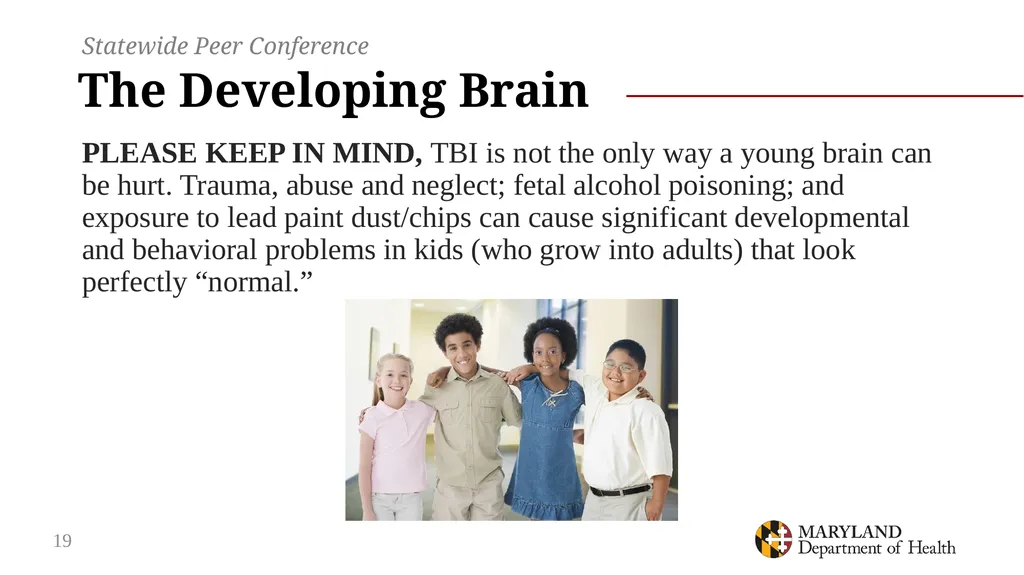
slide19. The Developing Brain PLEASE KEEP IN MIND, TBI is not the only way a young brain can be hurt. Trauma, abuse and neglect; fetal alcohol poisoning; and exposure to lead paint dust/chips can cause significant developmental and behavioral problems in kids (who grow into adults) that look perfectly “normal.” 19 Statewide Peer Conference<br>
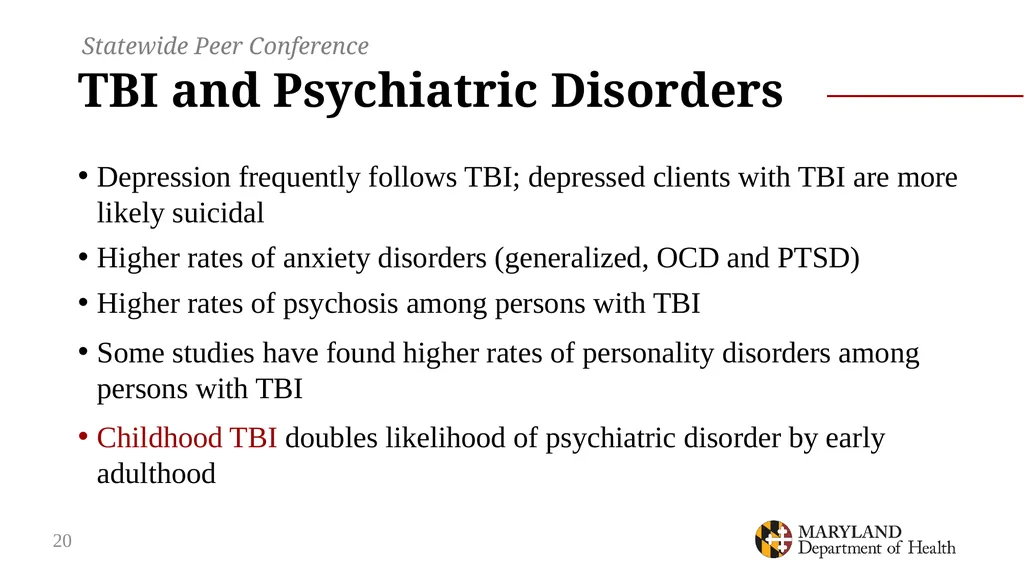
slide20. TBI and Psychiatric Disorders 20 Statewide Peer Conference Depression frequently follows TBI; depressed clients with TBI are more likely suicidal
Higher rates of anxiety disorders (generalized, OCD and PTSD)
Higher rates of psychosis among persons with TBI
Some studies have found higher rates of personality disorders among persons with TBI
Childhood TBI doubles likelihood of psychiatric disorder by early adulthood<br>
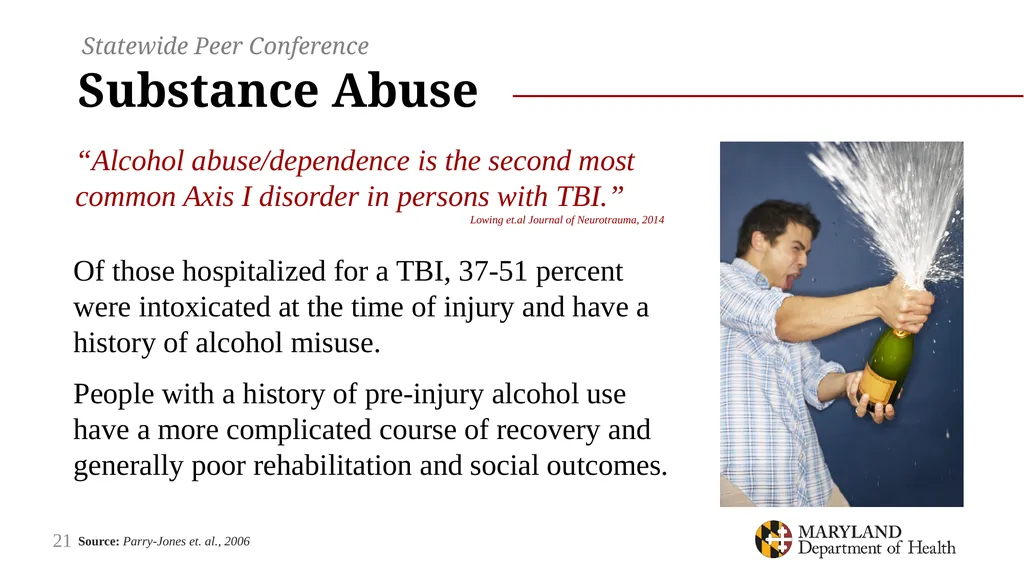
slide21. Substance Abuse 21 Statewide Peer Conference Of those hospitalized for a TBI, 37-51 percent were intoxicated at the time of injury and have a history of alcohol misuse.
People with a history of pre-injury alcohol use have a more complicated course of recovery and generally poor rehabilitation and social outcomes. “Alcohol abuse/dependence is the second most common Axis I disorder in persons with TBI.”
Lowing et.al Journal of Neurotrauma, 2014 Source: Parry-Jones et. al., 2006<br>
slide22. Substance Abuse “Studies of both brain structure and function indicate that substance misuse and TBI interact in an additive way, specifically their co-occurrence results in more impairment than either one alone”
“Substance misuse also limits outcomes from TBI by undermining environmental supports such as familial care or access to services”
Data from a Finnish birth cohort study have “reported multiple risk factors associated with incurring a TBI, including that if parents misused alcohol, there was a two-fold greater chance of childhood TBI” (possible reasons why??) 22 Statewide Peer Conference Source: Corrigan and Mysiw, “Substance Abuse Among Person’s with Traumatic Brain Injury” Brain Injury Medicine, 2nd Edition 2012<br>
slide23. Substance Abuse Treatment in clients with TBI:
First used at a younger age
Have more severe SUD (worse use and more prior treatments)
Have more co-occurring mental health problems
Have poorer prognosis for successful treatment outcome (more so earlier the age at first TBI?) 23 Statewide Peer Conference Source: Corrigan and Mysiw, “Substance Abuse Among Person’s with Traumatic Brain Injury” Brain Injury Medicine, 2nd Edition 2012<br>
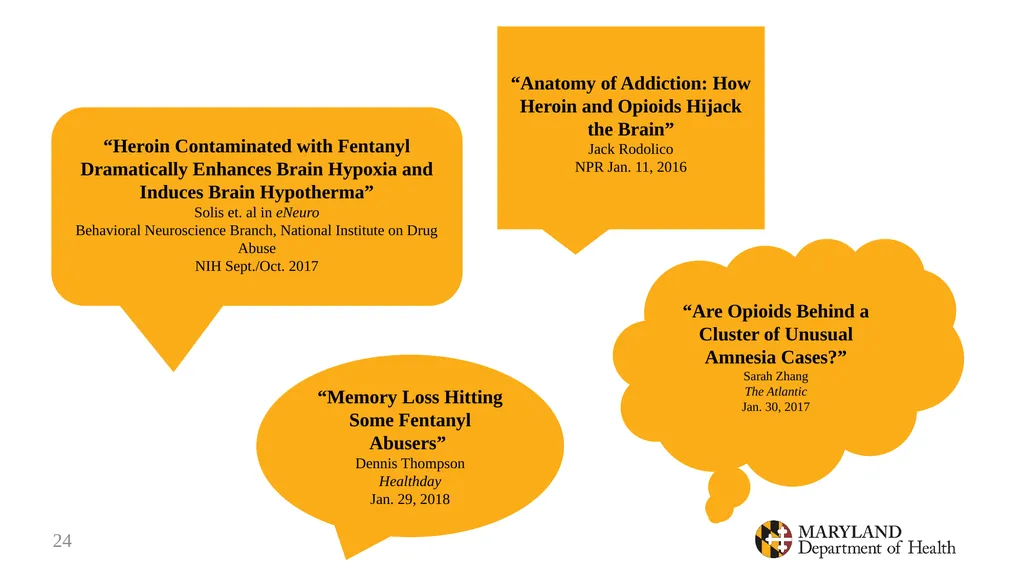
slide24. 24 “Memory Loss Hitting Some Fentanyl Abusers”
Dennis Thompson
Healthday
Jan. 29, 2018 “Anatomy of Addiction: How Heroin and Opioids Hijack the Brain”
Jack Rodolico
NPR Jan. 11, 2016 “Are Opioids Behind a Cluster of Unusual Amnesia Cases?”
Sarah Zhang
The Atlantic
Jan. 30, 2017 “Heroin Contaminated with Fentanyl Dramatically Enhances Brain Hypoxia and Induces Brain Hypotherma”
Solis et. al in eNeuro
Behavioral Neuroscience Branch, National Institute on Drug Abuse
NIH Sept./Oct. 2017<br>
slide25. Observations 25 Statewide Peer Conference “One way to think about this would be that an overdose is like a concussion, where you have a traumatic brain injury to the brain … if the person doesn’t die, the brain recovers, but they may be, like with a concussion, more susceptible to a future event. And then there also may be cumulative damage that occurs.”
-Dr. Alex Walley
Associated Professor of Medicine, Boston University School of Medicine
Source: https://www.npr.org/sections/health-shots/2017/04/13/523452905/what-doesnt-kill-you-can-maim-unexpected-injuries-from-opioids<br>
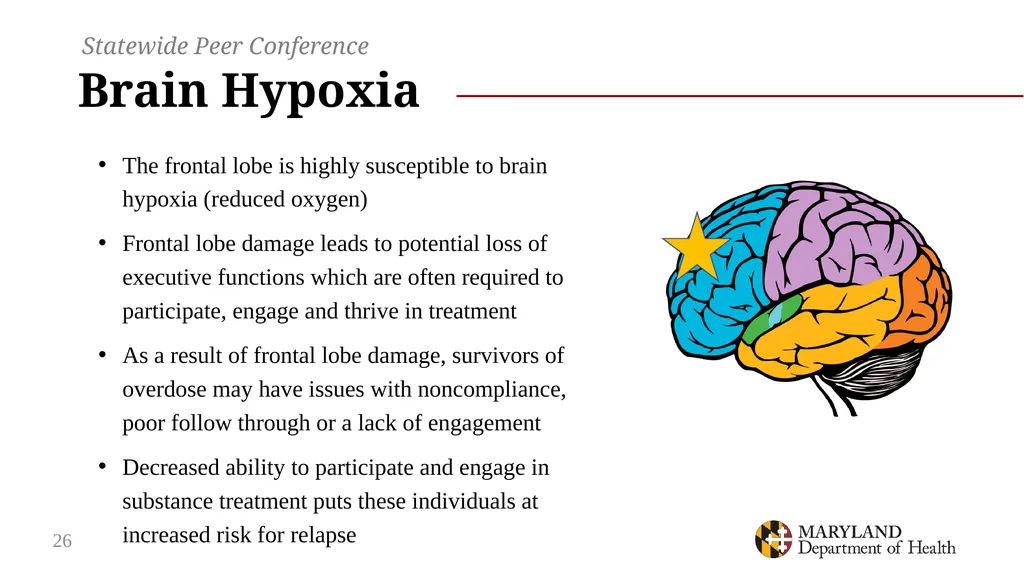
slide26. Brain Hypoxia 26 Statewide Peer Conference The frontal lobe is highly susceptible to brain hypoxia (reduced oxygen)
Frontal lobe damage leads to potential loss of executive functions which are often required to participate, engage and thrive in treatment
As a result of frontal lobe damage, survivors of overdose may have issues with noncompliance, poor follow through or a lack of engagement
Decreased ability to participate and engage in substance treatment puts these individuals at increased risk for relapse<br>
slide27. TBI and Opioid Use Those who experience a serious traumatic injury such as TBI may be at greater risk of opioid misuse and unintentional death due to opioid poisoning due to long-term disability with multiple secondary health conditions frequently treated with opioids such as headache and orthopedic injury
Challenges common post TBI including cognitive impairment, impulsivity and co-occurring mood disorders that may increase the risk of inadvertent overuse (e.g. forgetting when prescribed dose was last taken) 27 Statewide Peer Conference Source: Summary of Responses to RFO: People with Disabilities and Opioid Use Disorder, National Institute on Disability, Independent Living, and Rehabilitation Research retrieved on 8.1.18 https://www.acl.gov/sites/default/files/news%202018-05/20180502NIDILRROpioidRFIFindings.pdf<br>
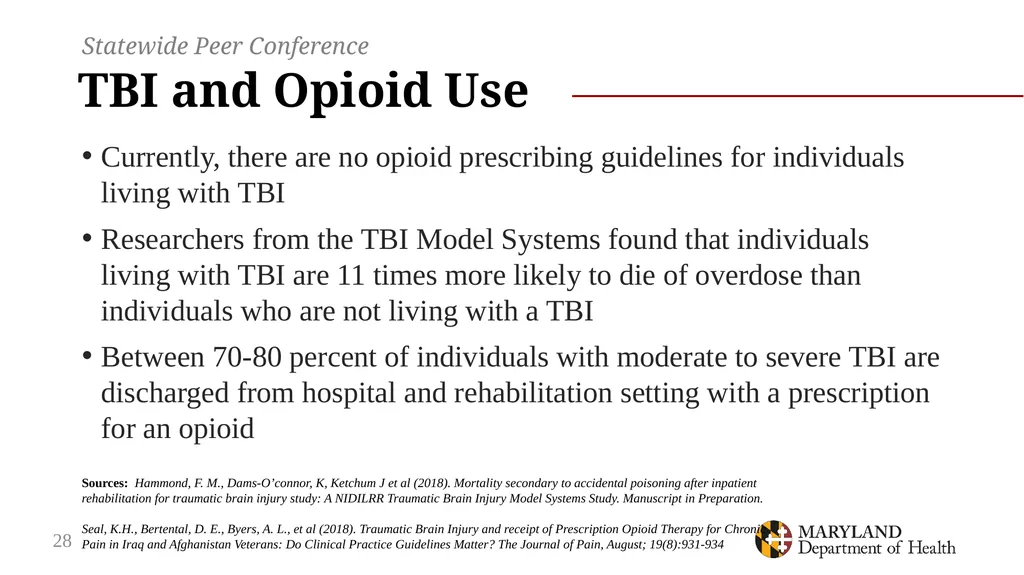
slide28. TBI and Opioid Use Currently, there are no opioid prescribing guidelines for individuals living with TBI
Researchers from the TBI Model Systems found that individuals living with TBI are 11 times more likely to die of overdose than individuals who are not living with a TBI
Between 70-80 percent of individuals with moderate to severe TBI are discharged from hospital and rehabilitation setting with a prescription for an opioid 28 Statewide Peer Conference Sources: Hammond, F. M., Dams-O’connor, K, Ketchum J et al (2018). Mortality secondary to accidental poisoning after inpatient rehabilitation for traumatic brain injury study: A NIDILRR Traumatic Brain Injury Model Systems Study. Manuscript in Preparation.
Seal, K.H., Bertental, D. E., Byers, A. L., et al (2018). Traumatic Brain Injury and receipt of Prescription Opioid Therapy for Chronic Pain in Iraq and Afghanistan Veterans: Do Clinical Practice Guidelines Matter? The Journal of Pain, August; 19(8):931-934<br>
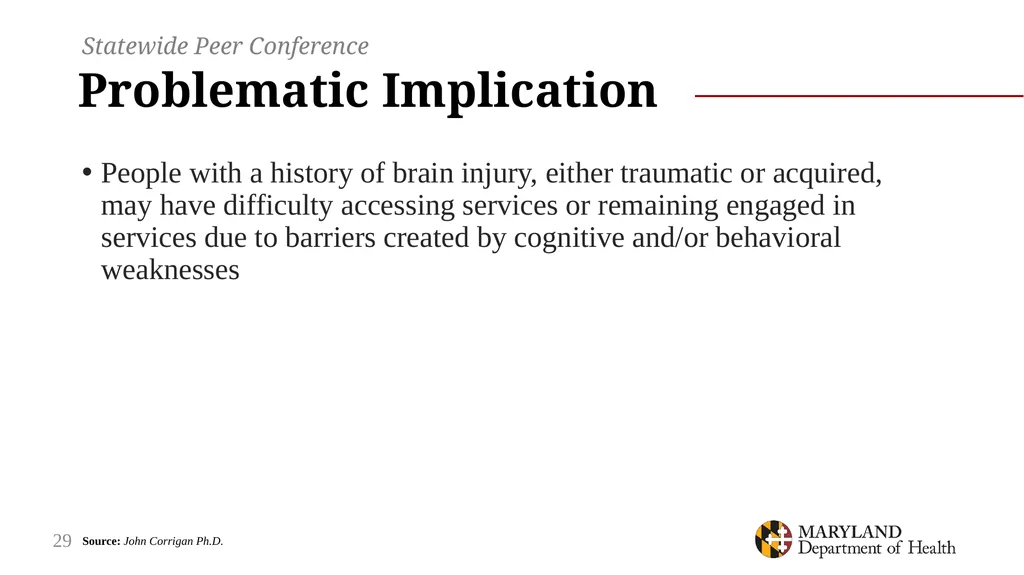
slide29. Problematic Implication People with a history of brain injury, either traumatic or acquired, may have difficulty accessing services or remaining engaged in services due to barriers created by cognitive and/or behavioral weaknesses 29 Statewide Peer Conference Source: John Corrigan Ph.D.<br>
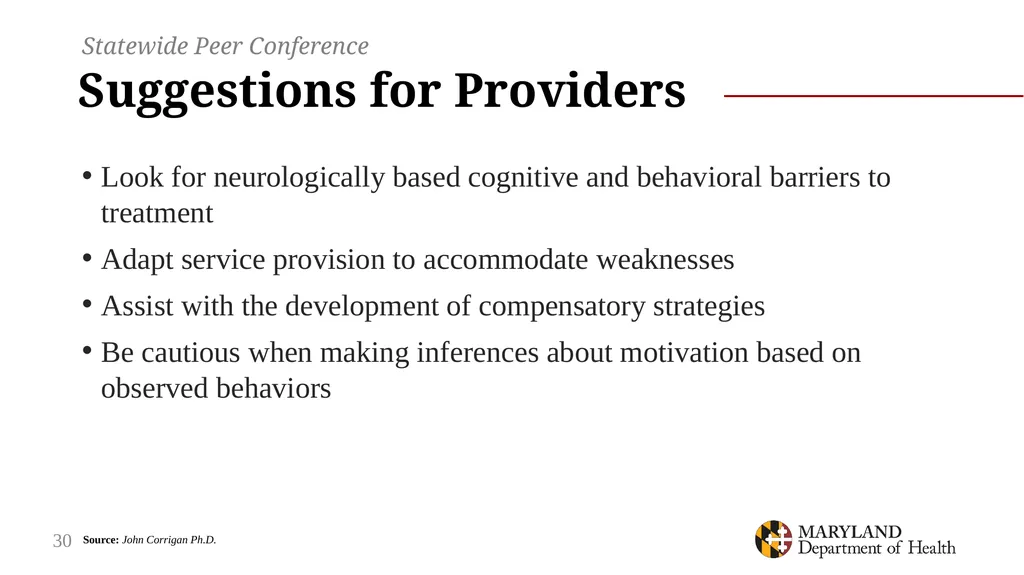
slide30. Suggestions for Providers Look for neurologically based cognitive and behavioral barriers to treatment
Adapt service provision to accommodate weaknesses
Assist with the development of compensatory strategies
Be cautious when making inferences about motivation based on observed behaviors 30 Statewide Peer Conference Source: John Corrigan Ph.D.<br>
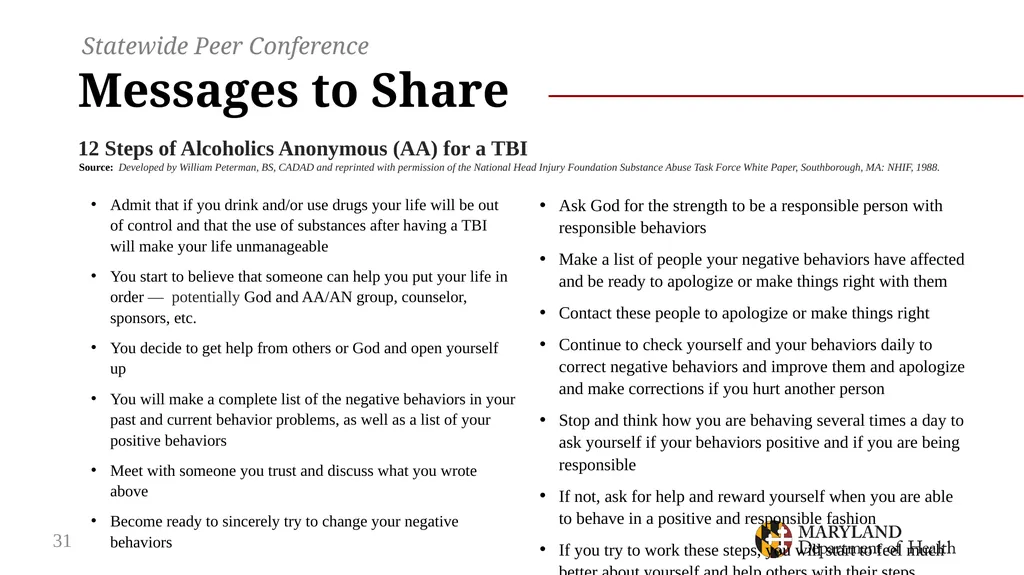
slide31. Messages to Share 12 Steps of Alcoholics Anonymous (AA) for a TBI
Source: Developed by William Peterman, BS, CADAD and reprinted with permission of the National Head Injury Foundation Substance Abuse Task Force White Paper, Southborough, MA: NHIF, 1988. 31 Statewide Peer Conference Admit that if you drink and/or use drugs your life will be out of control and that the use of substances after having a TBI will make your life unmanageable
You start to believe that someone can help you put your life in order — potentially God and AA/AN group, counselor, sponsors, etc.
You decide to get help from others or God and open yourself up
You will make a complete list of the negative behaviors in your past and current behavior problems, as well as a list of your positive behaviors
Meet with someone you trust and discuss what you wrote above
Become ready to sincerely try to change your negative behaviors Ask God for the strength to be a responsible person with responsible behaviors
Make a list of people your negative behaviors have affected and be ready to apologize or make things right with them
Contact these people to apologize or make things right
Continue to check yourself and your behaviors daily to correct negative behaviors and improve them and apologize and make corrections if you hurt another person
Stop and think how you are behaving several times a day to ask yourself if your behaviors positive and if you are being responsible
If not, ask for help and reward yourself when you are able to behave in a positive and responsible fashion
If you try to work these steps, you will start to feel much better about yourself and help others with their steps<br>
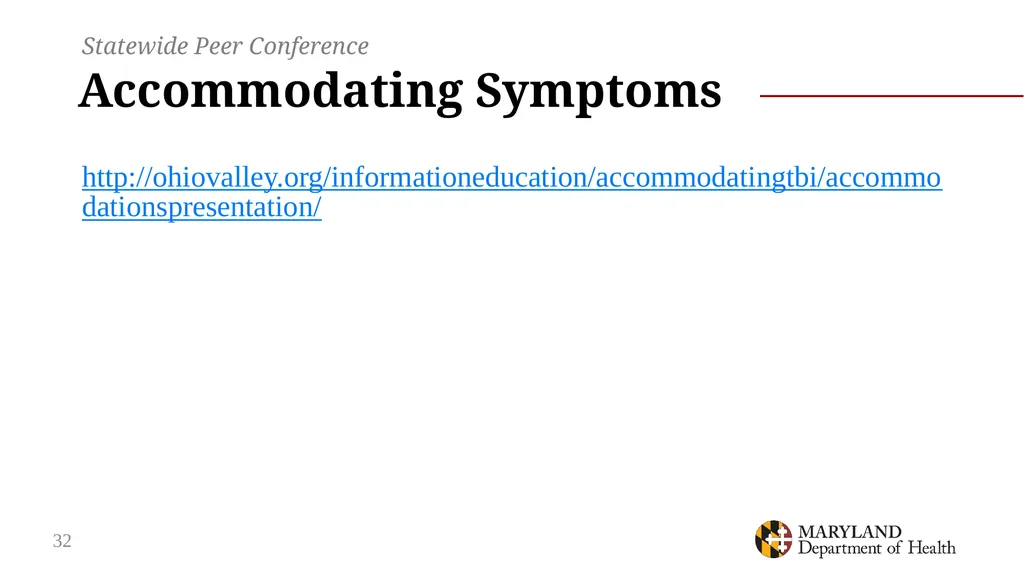
slide32. Accommodating Symptoms http://ohiovalley.org/informationeducation/accommodatingtbi/accommodationspresentation/ 32 Statewide Peer Conference<br>
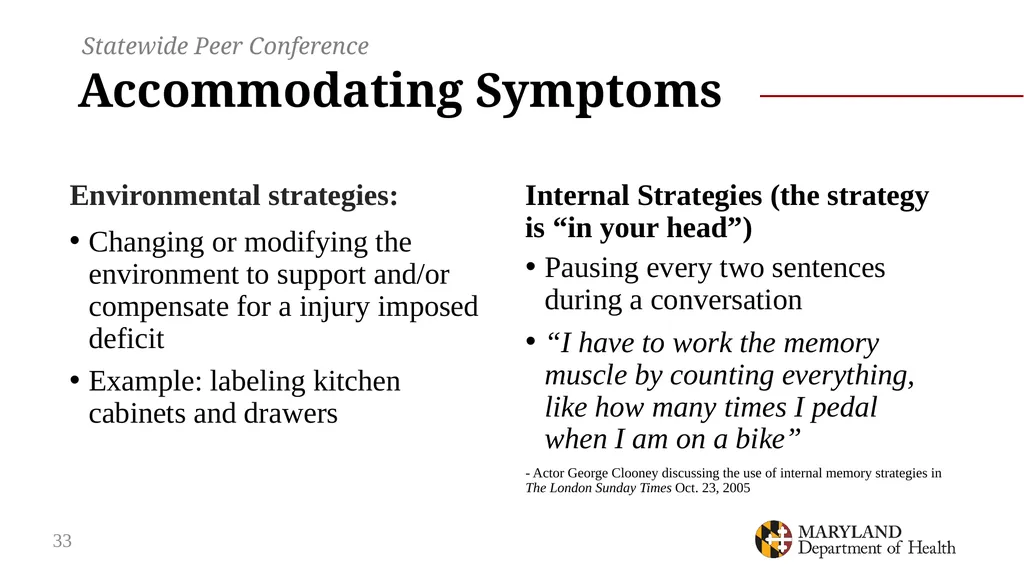
slide33. Accommodating Symptoms 33 Statewide Peer Conference Environmental strategies: Changing or modifying the environment to support and/or compensate for a injury imposed deficit
Example: labeling kitchen cabinets and drawers Internal Strategies (the strategy is “in your head”) Pausing every two sentences during a conversation
“I have to work the memory muscle by counting everything, like how many times I pedal when I am on a bike”
- Actor George Clooney discussing the use of internal memory strategies in The London Sunday Times Oct. 23, 2005<br>
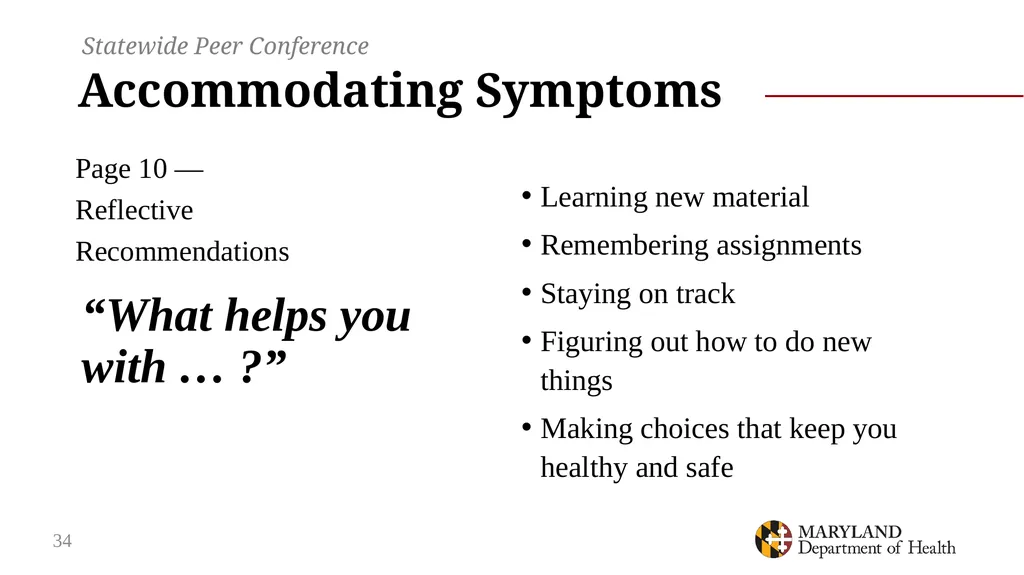
slide34. Accommodating Symptoms 34 Statewide Peer Conference Page 10 —
Reflective Recommendations Learning new material
Remembering assignments
Staying on track
Figuring out how to do new things
Making choices that keep you healthy and safe “What helps you with … ?”<br>
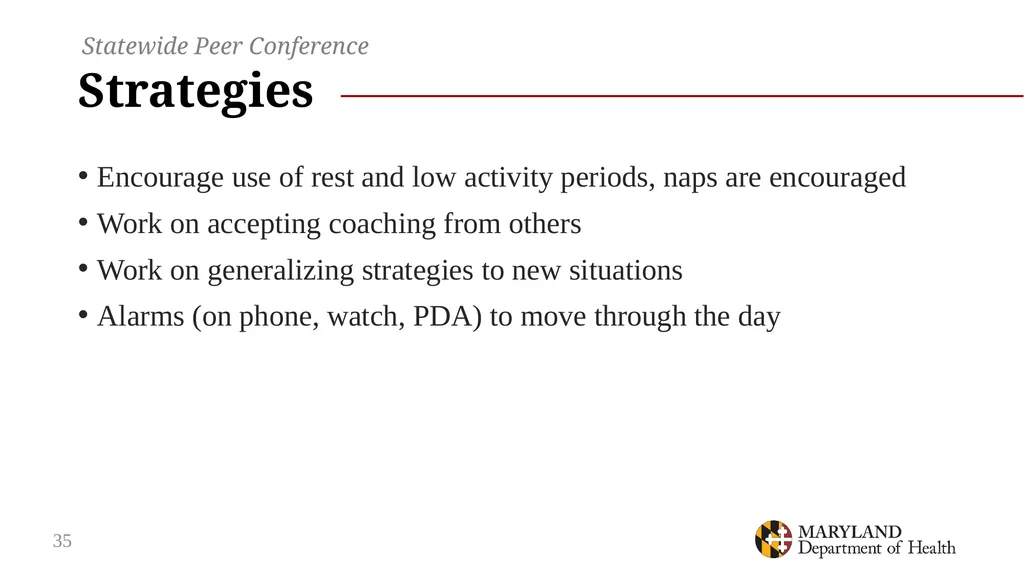
slide35. Strategies Encourage use of rest and low activity periods, naps are encouraged
Work on accepting coaching from others
Work on generalizing strategies to new situations
Alarms (on phone, watch, PDA) to move through the day 35 Statewide Peer Conference<br>
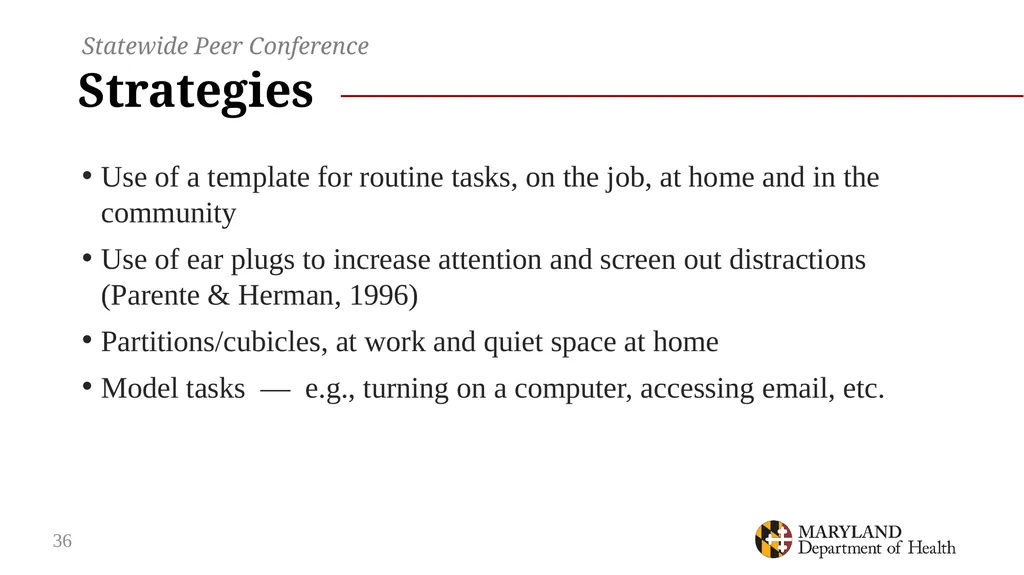
slide36. Strategies Use of a template for routine tasks, on the job, at home and in the community
Use of ear plugs to increase attention and screen out distractions (Parente & Herman, 1996)
Partitions/cubicles, at work and quiet space at home
Model tasks — e.g., turning on a computer, accessing email, etc. 36 Statewide Peer Conference<br>
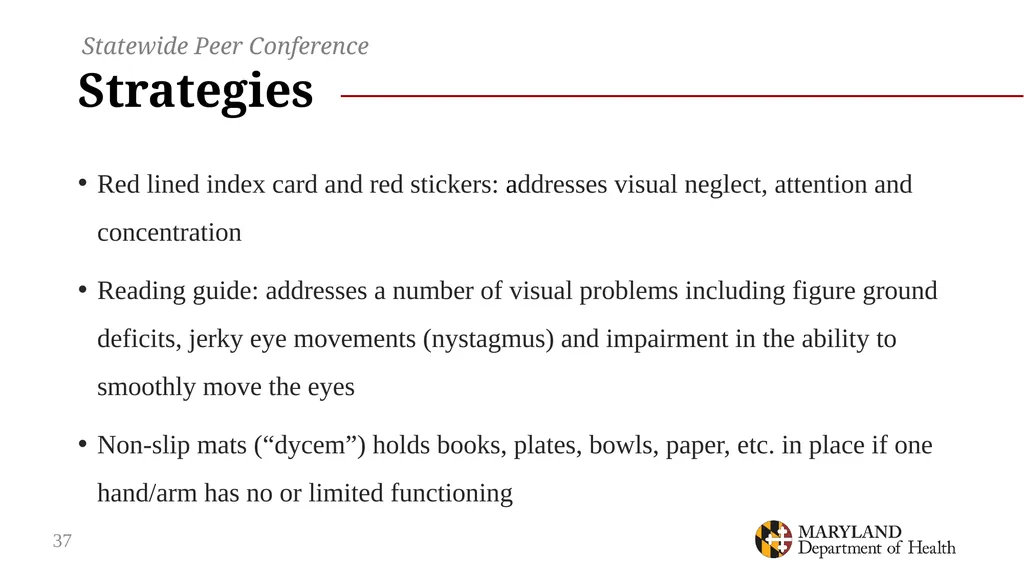
slide37. Strategies Red lined index card and red stickers: addresses visual neglect, attention and concentration
Reading guide: addresses a number of visual problems including figure ground deficits, jerky eye movements (nystagmus) and impairment in the ability to smoothly move the eyes
Non-slip mats (“dycem”) holds books, plates, bowls, paper, etc. in place if one hand/arm has no or limited functioning 37 Statewide Peer Conference<br>
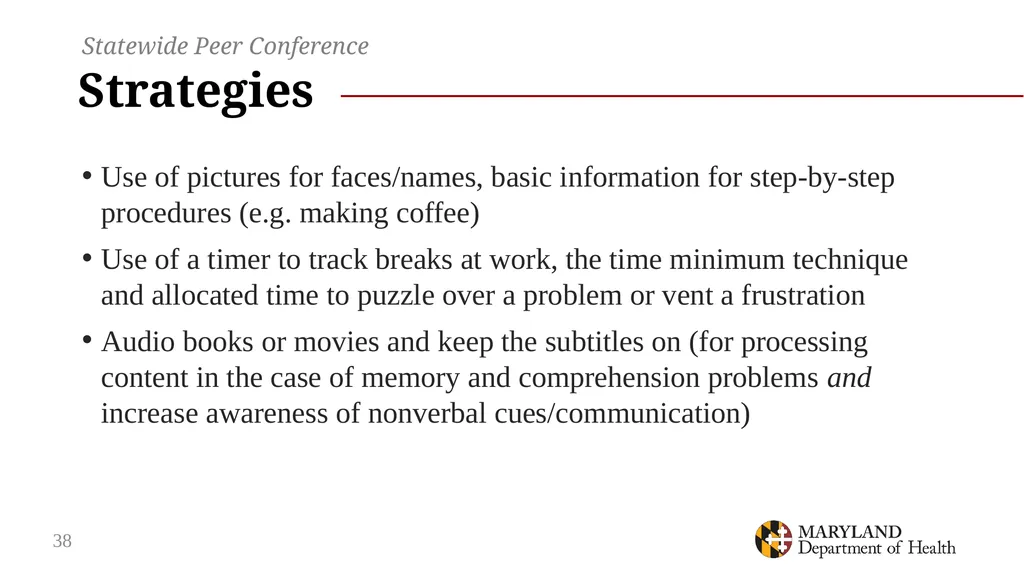
slide38. Strategies Use of pictures for faces/names, basic information for step-by-step procedures (e.g. making coffee)
Use of a timer to track breaks at work, the time minimum technique and allocated time to puzzle over a problem or vent a frustration
Audio books or movies and keep the subtitles on (for processing content in the case of memory and comprehension problems and increase awareness of nonverbal cues/communication) 38 Statewide Peer Conference<br>
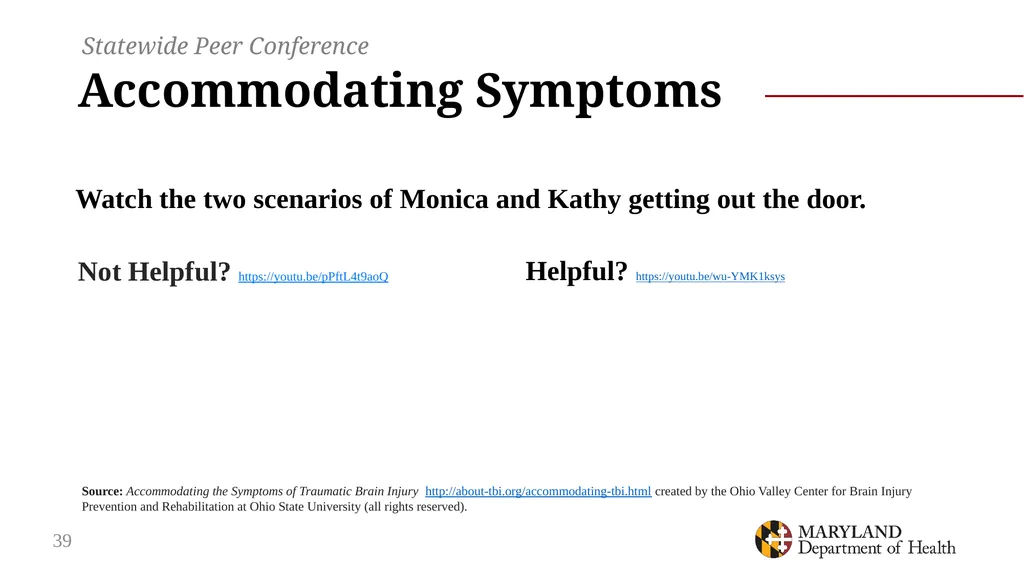
slide39. Accommodating Symptoms 39 Statewide Peer Conference Not Helpful? https://youtu.be/pPftL4t9aoQ Helpful? https://youtu.be/wu-YMK1ksys Watch the two scenarios of Monica and Kathy getting out the door. Source: Accommodating the Symptoms of Traumatic Brain Injury http://about-tbi.org/accommodating-tbi.html created by the Ohio Valley Center for Brain Injury Prevention and Rehabilitation at Ohio State University (all rights reserved).<br>
slide40. One Family’s Story Mary Pat Collins
Before
During
After-what are the strategies and supports that matter 40 Statewide Peer Conference<br>
slide41. Statewide Peer Conference Questions<br>
slide42. Resources Ohio Valley Center for Brain Injury Prevention and Rehabilitation, 614-293-3802, www.ohiovalley.org
Brainline, www.brainline.org, website funded through the Defense and Veterans Brain Injury Center offers civilians, returning service members with brain injury, families and professionals a variety of information and resources regarding life after brain injury 42 Statewide Peer Conference<br>
slide43. 43 Resources and Supports
410-448-2924
www.biamd.org<br>
slide44. Thank you
Anastasia Edmonston anastasia.edmonston@maryland.gov “This project was supported, in part by grant number 90TBSG0027-01-00 from the U.S. Administration for Community Living, Department of Health and Human Services, Washington, D.C. 20201. Grantees undertaking projects with government sponsorship are encouraged to express freely their findings and conclusions. Points of view or opinions do not, therefore, necessarily represent official ACL policy
2019<br>
and
Mary Pat Collins, Family Member and Advocate May 2019<br>
slide2. Introduction “Unidentified traumatic brain injury is an unrecognized major source of social and vocational failure.”
-Wayne Gordon, Ph.D. of the Brain Injury Research Center at Mount Sinai School of Medicine Quoted in the Wall Street Journal Jan. 29, 2008 2 Statewide Peer Conference<br>
slide3. Introduction 3 Statewide Peer Conference Both mechanisms of injury can result in a chronic disability that may get worse with age.<br>
slide4. Introduction Why is it important for peer specialists to have a working understanding of TBI and ABI?
A history of TBI is often hidden (especially if incurred in childhood/adolescence) with behavioral health challenges (mental health and addiction)
Recognizing possible signs and symptoms of brain injury in individuals encountered in services and in the community and knowing how to use simple supports to engage with those affected by brain injury can facilitate treatment initiation AND retention
Because of the nature of the work and with people directly, peer specialists are in a unique position to assess where people are having struggles (memory, concentration, following directions) and can design and help implement practical strategies 4 Statewide Peer Conference<br>
slide5. Problem Scope Distribution of Severity:
Mild injuries = 80 percent often fall into the “Hidden Brain Injury Category” (Loss of Consciousness (LOC) < 30 minutes, Post Traumatic Amnesia (PTA) <1 hour)
Moderate = 10-13 percent (LOC 30 minutes-24 hours, PTA 1-24 hours)
Severe = 7-10 percent (LOC >24 hours, PTA >24 hours) 5 Statewide Peer Conference<br>
slide6. The Frontal Lobe 6 Statewide Peer Conference The frontal lobe is the area of the brain responsible for our “executive skills” or higher cognitive functions.
These include:
Problem solving
Spontaneity
Memory
Language
Motivation
Judgment
Impulse control
Social and sexual behavior<br>
slide7. The Frontal Lobe “… What takes a little longer to develop are the connections between areas like the prefrontal cortex, that regulate thinking, and the limbic system, where emotions largely stem from, as well as biological drives you could call “the four F’s—fight, flight, feeding, and ffff… fooling around.” 7 Statewide Peer Conference Source: James Griffin, the deputy chief of the National Institute of CCHD’s Child Development and Behavior Branch, quoted in Julie Beck’s 2016 article in The Atlantic entitled “When are You Really an Adult?” Full link: https://www.theatlantic.com/health/archive/2016/01/when-are-you-really-an-adult/422487/.<br>
slide8. The Temporal Lobe 8 Statewide Peer Conference The temporal lobe plays a role in emotions and is also responsible for smelling, tasting, perception, memory, understanding music, aggressiveness and sexual behavior. The temporal lobe also contains the language area of the brain.<br>
slide9. The Brain Of course there are two other lobes in the brain, but the frontal and temporal lobes are critically involved in managing behavior and emotions, thus damage to these regions can contribute to mental health and/or addiction problems. Damage to these lobes is considered the “Fingerprint of Traumatic Brain Injury.” 9 Statewide Peer Conference<br>
slide10. Brain Injury Many of our adult thinking skills reside in the frontal lobe; the frontal lobe is very vulnerable to injury. 10 Statewide Peer Conference SOFT frontal lobe here SHARP<br>
slide11. Fast Facts In 2013, 2.8 million Americans were treated in emergency departments (ED), hospitalized or died as a result of a TBI
The brain reaches its adult weight of 3 pounds by the age of 12
The adult brain reaches cognitive maturity by the mid-20’s
The last part of the brain to develop is the frontal lobe 11 Statewide Peer Conference Source: CDC 2017<br>
slide12. Risk Factors Civilian risk factors for TBI:
Males 2:1 more than female
Very young and very old due to falls
Adolescents and young adults due to intentional injuries and moving vehicle crashes
Greatest behavioral risk factors:
Violence prone or exposed to those who are
Misuse substances or exposed to those who do
More risk among lower socio-economic groups 12 Statewide Peer Conference Source: John Corrigan Ph.D., Ohio Valley Center 2014<br>
slide13. Risk Factors A review of studies of individuals who were homeless, incarcerated and at risk of or living with mental illness found a positive association between adverse childhood experiences (ACES) and TBI:
Physical abuse
Psychological abuse
Household member incarceration
Household member drug abuse
The authors of the review recommend, “Clinicians and researchers should inquire about adverse childhood experiences in all people with traumatic brain injury as pre-injury health conditions can affect recovery.” 13 Statewide Peer Conference Source: Journal of Disability Rehabilitation 2018<br>
slide14. TBI Representation People with TBI are overrepresented:
Among the incarcerated, especially juvenile’s as their rates of TBI are around 50 percent
Among the homeless
In addiction services
Among those affected by domestic violence
In mental health services
Among those who serve/have served in the armed forces
Athletes, both professional and amateur 14 Statewide Peer Conference<br>
slide15. Common Impairments 15 Statewide Peer Conference<br>
slide16. Other Clues You may observe scars on an individual’s forehead, neck, face
The individual is using a cane, walker or wheelchair
The individual has a limp or appears to drag one foot when walking 16 Statewide Peer Conference<br>
slide17. Brain Injury 17 Statewide Peer Conference Growing into Brain Injury …<br>
slide18. “Growing” Into Brain Injury 18 Statewide Peer Conference Without proper supports, brain injury can lead to mental health and addiction issues that bring people living with “hidden” TBI into the public behavioral health system.
Appropriately, structure offered by school, parents and community fall away as children go through adolescence into adulthood. A TBI that incurred at age seven may not be fully “unmasked” functionally or behaviorally until age 11, 12 or 13 with the challenges of middle school/puberty.
The frontal lobe and temporal tips injured earlier are unable to adequately respond to the expectations of behavioral regulation and executive skill functioning<br>
slide19. The Developing Brain PLEASE KEEP IN MIND, TBI is not the only way a young brain can be hurt. Trauma, abuse and neglect; fetal alcohol poisoning; and exposure to lead paint dust/chips can cause significant developmental and behavioral problems in kids (who grow into adults) that look perfectly “normal.” 19 Statewide Peer Conference<br>
slide20. TBI and Psychiatric Disorders 20 Statewide Peer Conference Depression frequently follows TBI; depressed clients with TBI are more likely suicidal
Higher rates of anxiety disorders (generalized, OCD and PTSD)
Higher rates of psychosis among persons with TBI
Some studies have found higher rates of personality disorders among persons with TBI
Childhood TBI doubles likelihood of psychiatric disorder by early adulthood<br>
slide21. Substance Abuse 21 Statewide Peer Conference Of those hospitalized for a TBI, 37-51 percent were intoxicated at the time of injury and have a history of alcohol misuse.
People with a history of pre-injury alcohol use have a more complicated course of recovery and generally poor rehabilitation and social outcomes. “Alcohol abuse/dependence is the second most common Axis I disorder in persons with TBI.”
Lowing et.al Journal of Neurotrauma, 2014 Source: Parry-Jones et. al., 2006<br>
slide22. Substance Abuse “Studies of both brain structure and function indicate that substance misuse and TBI interact in an additive way, specifically their co-occurrence results in more impairment than either one alone”
“Substance misuse also limits outcomes from TBI by undermining environmental supports such as familial care or access to services”
Data from a Finnish birth cohort study have “reported multiple risk factors associated with incurring a TBI, including that if parents misused alcohol, there was a two-fold greater chance of childhood TBI” (possible reasons why??) 22 Statewide Peer Conference Source: Corrigan and Mysiw, “Substance Abuse Among Person’s with Traumatic Brain Injury” Brain Injury Medicine, 2nd Edition 2012<br>
slide23. Substance Abuse Treatment in clients with TBI:
First used at a younger age
Have more severe SUD (worse use and more prior treatments)
Have more co-occurring mental health problems
Have poorer prognosis for successful treatment outcome (more so earlier the age at first TBI?) 23 Statewide Peer Conference Source: Corrigan and Mysiw, “Substance Abuse Among Person’s with Traumatic Brain Injury” Brain Injury Medicine, 2nd Edition 2012<br>
slide24. 24 “Memory Loss Hitting Some Fentanyl Abusers”
Dennis Thompson
Healthday
Jan. 29, 2018 “Anatomy of Addiction: How Heroin and Opioids Hijack the Brain”
Jack Rodolico
NPR Jan. 11, 2016 “Are Opioids Behind a Cluster of Unusual Amnesia Cases?”
Sarah Zhang
The Atlantic
Jan. 30, 2017 “Heroin Contaminated with Fentanyl Dramatically Enhances Brain Hypoxia and Induces Brain Hypotherma”
Solis et. al in eNeuro
Behavioral Neuroscience Branch, National Institute on Drug Abuse
NIH Sept./Oct. 2017<br>
slide25. Observations 25 Statewide Peer Conference “One way to think about this would be that an overdose is like a concussion, where you have a traumatic brain injury to the brain … if the person doesn’t die, the brain recovers, but they may be, like with a concussion, more susceptible to a future event. And then there also may be cumulative damage that occurs.”
-Dr. Alex Walley
Associated Professor of Medicine, Boston University School of Medicine
Source: https://www.npr.org/sections/health-shots/2017/04/13/523452905/what-doesnt-kill-you-can-maim-unexpected-injuries-from-opioids<br>
slide26. Brain Hypoxia 26 Statewide Peer Conference The frontal lobe is highly susceptible to brain hypoxia (reduced oxygen)
Frontal lobe damage leads to potential loss of executive functions which are often required to participate, engage and thrive in treatment
As a result of frontal lobe damage, survivors of overdose may have issues with noncompliance, poor follow through or a lack of engagement
Decreased ability to participate and engage in substance treatment puts these individuals at increased risk for relapse<br>
slide27. TBI and Opioid Use Those who experience a serious traumatic injury such as TBI may be at greater risk of opioid misuse and unintentional death due to opioid poisoning due to long-term disability with multiple secondary health conditions frequently treated with opioids such as headache and orthopedic injury
Challenges common post TBI including cognitive impairment, impulsivity and co-occurring mood disorders that may increase the risk of inadvertent overuse (e.g. forgetting when prescribed dose was last taken) 27 Statewide Peer Conference Source: Summary of Responses to RFO: People with Disabilities and Opioid Use Disorder, National Institute on Disability, Independent Living, and Rehabilitation Research retrieved on 8.1.18 https://www.acl.gov/sites/default/files/news%202018-05/20180502NIDILRROpioidRFIFindings.pdf<br>
slide28. TBI and Opioid Use Currently, there are no opioid prescribing guidelines for individuals living with TBI
Researchers from the TBI Model Systems found that individuals living with TBI are 11 times more likely to die of overdose than individuals who are not living with a TBI
Between 70-80 percent of individuals with moderate to severe TBI are discharged from hospital and rehabilitation setting with a prescription for an opioid 28 Statewide Peer Conference Sources: Hammond, F. M., Dams-O’connor, K, Ketchum J et al (2018). Mortality secondary to accidental poisoning after inpatient rehabilitation for traumatic brain injury study: A NIDILRR Traumatic Brain Injury Model Systems Study. Manuscript in Preparation.
Seal, K.H., Bertental, D. E., Byers, A. L., et al (2018). Traumatic Brain Injury and receipt of Prescription Opioid Therapy for Chronic Pain in Iraq and Afghanistan Veterans: Do Clinical Practice Guidelines Matter? The Journal of Pain, August; 19(8):931-934<br>
slide29. Problematic Implication People with a history of brain injury, either traumatic or acquired, may have difficulty accessing services or remaining engaged in services due to barriers created by cognitive and/or behavioral weaknesses 29 Statewide Peer Conference Source: John Corrigan Ph.D.<br>
slide30. Suggestions for Providers Look for neurologically based cognitive and behavioral barriers to treatment
Adapt service provision to accommodate weaknesses
Assist with the development of compensatory strategies
Be cautious when making inferences about motivation based on observed behaviors 30 Statewide Peer Conference Source: John Corrigan Ph.D.<br>
slide31. Messages to Share 12 Steps of Alcoholics Anonymous (AA) for a TBI
Source: Developed by William Peterman, BS, CADAD and reprinted with permission of the National Head Injury Foundation Substance Abuse Task Force White Paper, Southborough, MA: NHIF, 1988. 31 Statewide Peer Conference Admit that if you drink and/or use drugs your life will be out of control and that the use of substances after having a TBI will make your life unmanageable
You start to believe that someone can help you put your life in order — potentially God and AA/AN group, counselor, sponsors, etc.
You decide to get help from others or God and open yourself up
You will make a complete list of the negative behaviors in your past and current behavior problems, as well as a list of your positive behaviors
Meet with someone you trust and discuss what you wrote above
Become ready to sincerely try to change your negative behaviors Ask God for the strength to be a responsible person with responsible behaviors
Make a list of people your negative behaviors have affected and be ready to apologize or make things right with them
Contact these people to apologize or make things right
Continue to check yourself and your behaviors daily to correct negative behaviors and improve them and apologize and make corrections if you hurt another person
Stop and think how you are behaving several times a day to ask yourself if your behaviors positive and if you are being responsible
If not, ask for help and reward yourself when you are able to behave in a positive and responsible fashion
If you try to work these steps, you will start to feel much better about yourself and help others with their steps<br>
slide32. Accommodating Symptoms http://ohiovalley.org/informationeducation/accommodatingtbi/accommodationspresentation/ 32 Statewide Peer Conference<br>
slide33. Accommodating Symptoms 33 Statewide Peer Conference Environmental strategies: Changing or modifying the environment to support and/or compensate for a injury imposed deficit
Example: labeling kitchen cabinets and drawers Internal Strategies (the strategy is “in your head”) Pausing every two sentences during a conversation
“I have to work the memory muscle by counting everything, like how many times I pedal when I am on a bike”
- Actor George Clooney discussing the use of internal memory strategies in The London Sunday Times Oct. 23, 2005<br>
slide34. Accommodating Symptoms 34 Statewide Peer Conference Page 10 —
Reflective Recommendations Learning new material
Remembering assignments
Staying on track
Figuring out how to do new things
Making choices that keep you healthy and safe “What helps you with … ?”<br>
slide35. Strategies Encourage use of rest and low activity periods, naps are encouraged
Work on accepting coaching from others
Work on generalizing strategies to new situations
Alarms (on phone, watch, PDA) to move through the day 35 Statewide Peer Conference<br>
slide36. Strategies Use of a template for routine tasks, on the job, at home and in the community
Use of ear plugs to increase attention and screen out distractions (Parente & Herman, 1996)
Partitions/cubicles, at work and quiet space at home
Model tasks — e.g., turning on a computer, accessing email, etc. 36 Statewide Peer Conference<br>
slide37. Strategies Red lined index card and red stickers: addresses visual neglect, attention and concentration
Reading guide: addresses a number of visual problems including figure ground deficits, jerky eye movements (nystagmus) and impairment in the ability to smoothly move the eyes
Non-slip mats (“dycem”) holds books, plates, bowls, paper, etc. in place if one hand/arm has no or limited functioning 37 Statewide Peer Conference<br>
slide38. Strategies Use of pictures for faces/names, basic information for step-by-step procedures (e.g. making coffee)
Use of a timer to track breaks at work, the time minimum technique and allocated time to puzzle over a problem or vent a frustration
Audio books or movies and keep the subtitles on (for processing content in the case of memory and comprehension problems and increase awareness of nonverbal cues/communication) 38 Statewide Peer Conference<br>
slide39. Accommodating Symptoms 39 Statewide Peer Conference Not Helpful? https://youtu.be/pPftL4t9aoQ Helpful? https://youtu.be/wu-YMK1ksys Watch the two scenarios of Monica and Kathy getting out the door. Source: Accommodating the Symptoms of Traumatic Brain Injury http://about-tbi.org/accommodating-tbi.html created by the Ohio Valley Center for Brain Injury Prevention and Rehabilitation at Ohio State University (all rights reserved).<br>
slide40. One Family’s Story Mary Pat Collins
Before
During
After-what are the strategies and supports that matter 40 Statewide Peer Conference<br>
slide41. Statewide Peer Conference Questions<br>
slide42. Resources Ohio Valley Center for Brain Injury Prevention and Rehabilitation, 614-293-3802, www.ohiovalley.org
Brainline, www.brainline.org, website funded through the Defense and Veterans Brain Injury Center offers civilians, returning service members with brain injury, families and professionals a variety of information and resources regarding life after brain injury 42 Statewide Peer Conference<br>
slide43. 43 Resources and Supports
410-448-2924
www.biamd.org<br>
slide44. Thank you
Anastasia Edmonston anastasia.edmonston@maryland.gov “This project was supported, in part by grant number 90TBSG0027-01-00 from the U.S. Administration for Community Living, Department of Health and Human Services, Washington, D.C. 20201. Grantees undertaking projects with government sponsorship are encouraged to express freely their findings and conclusions. Points of view or opinions do not, therefore, necessarily represent official ACL policy
2019<br>