
Constipation in children Dr C Macaulay Dr C Lemer

Description: Constipation in children Dr C Macaulay Dr C Lemer Dr R Bhatt Incidence Common; 5-30 of child population Affects all age groups Can be under diagnosed Common reason for referral to secondary care Can be related to behavioral difficulties
Related Topics
Download Presentation
"Constipation in children Dr C Macaulay Dr C Lemer" is the property of its rightful owner. Permission is granted to download and print the materials on this website for personal, non-commercial use only, and to display it on your personal computer provided you do not modify the materials and that you retain all copyright notices contained in the materials. By downloading content from our website, you accept the terms of this agreement.
Presentation Transcript
slide1. Constipation in children Dr C Macaulay
Dr C Lemer
Dr R Bhatt<br>
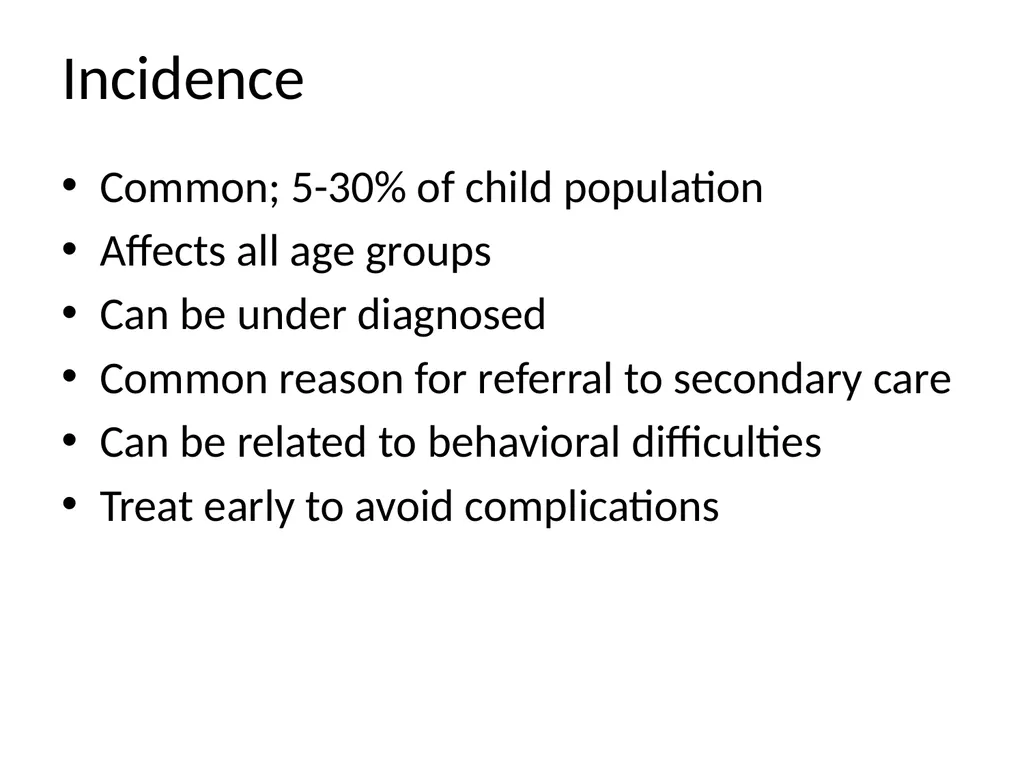
slide2. Incidence Common; 5-30% of child population
Affects all age groups
Can be under diagnosed
Common reason for referral to secondary care
Can be related to behavioral difficulties
Treat early to avoid complications<br>
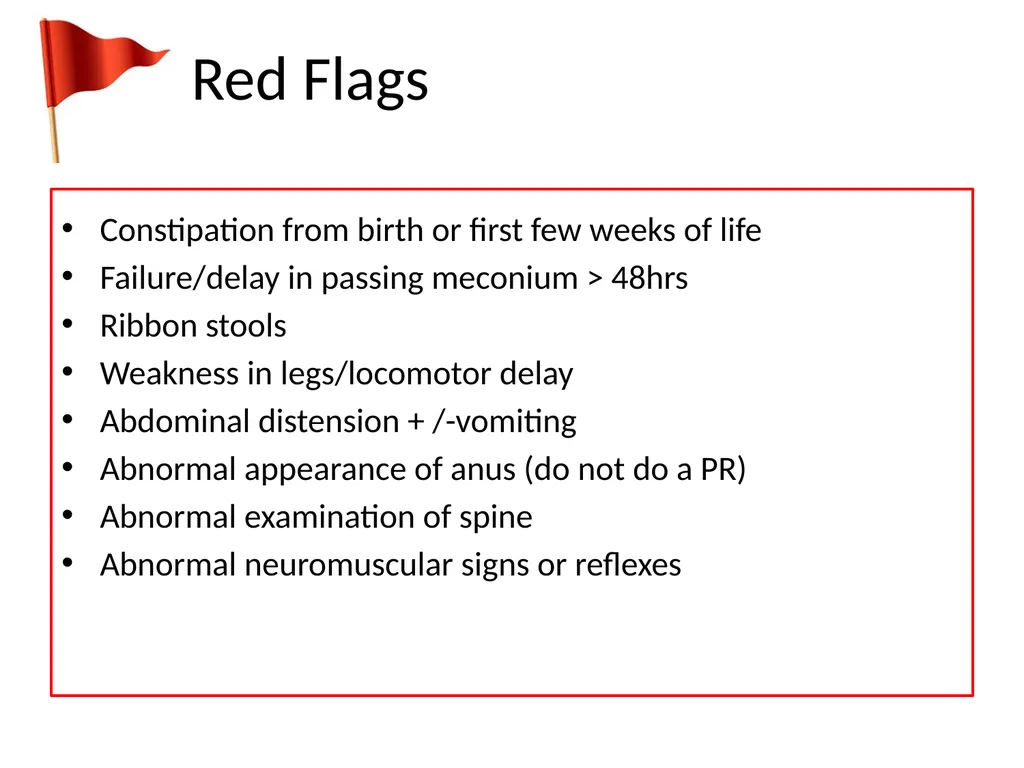
slide3. Red Flags Constipation from birth or first few weeks of life
Failure/delay in passing meconium > 48hrs
Ribbon stools
Weakness in legs/locomotor delay
Abdominal distension + /-vomiting
Abnormal appearance of anus (do not do a PR)
Abnormal examination of spine
Abnormal neuromuscular signs or reflexes<br>
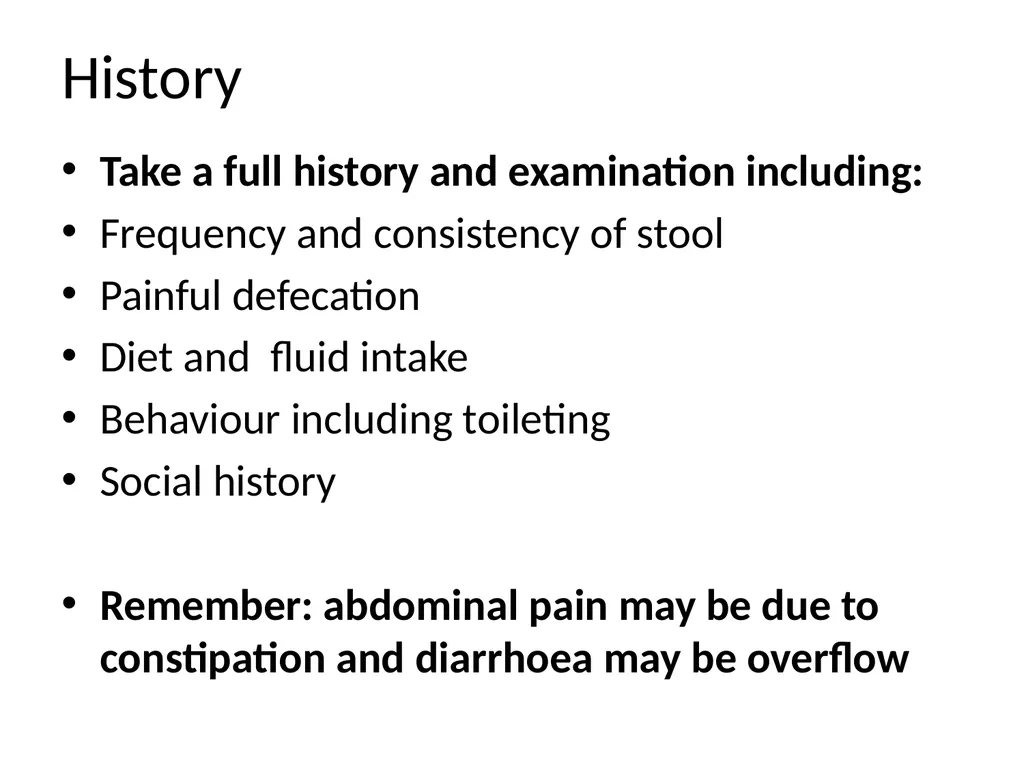
slide4. History Take a full history and examination including:
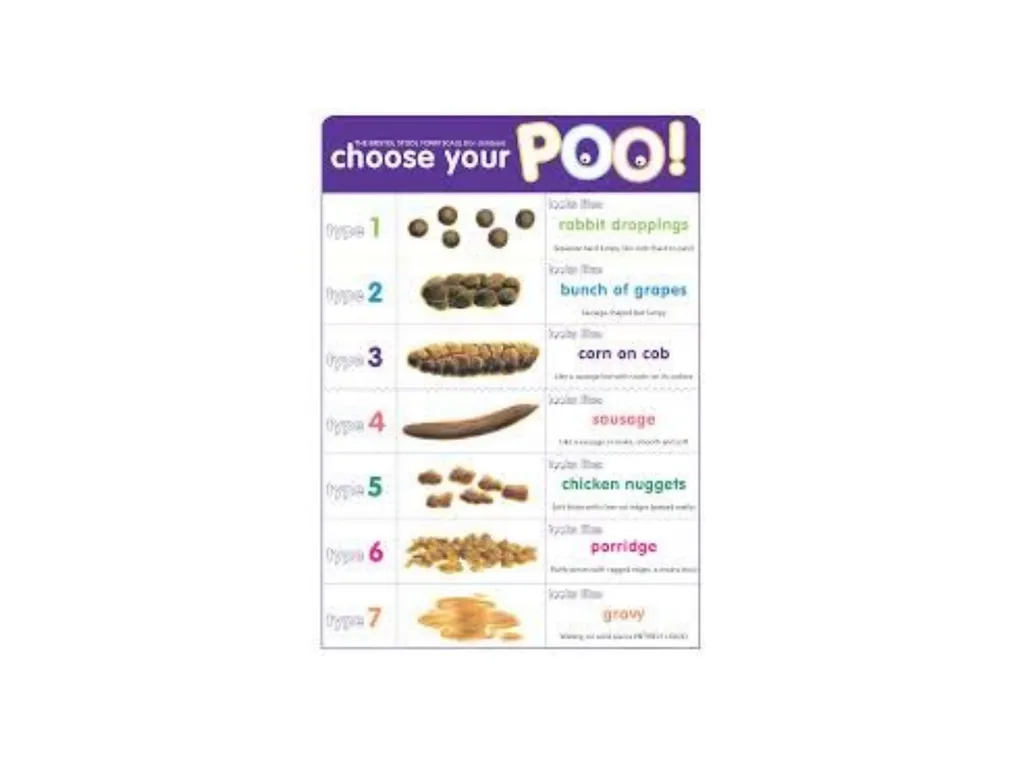
Frequency and consistency of stool
Painful defecation
Diet and fluid intake
Behaviour including toileting
Social history
Remember: abdominal pain may be due to constipation and diarrhoea may be overflow<br>
slide6. Examination Is there evidence of faecal impaction, with either of the following:
Large palpable stool in lower abdomen
Soiling associated with faecal overflow<br>
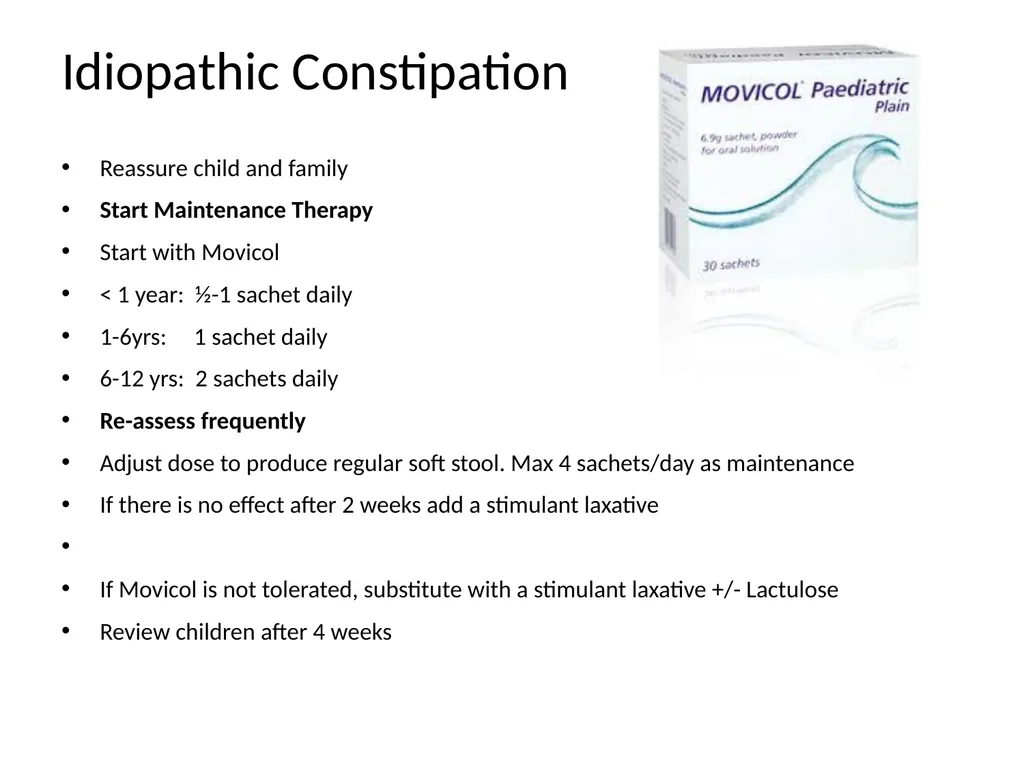
slide7. Idiopathic Constipation Reassure child and family
Start Maintenance Therapy
Start with Movicol
< 1 year: ½-1 sachet daily
1-6yrs: 1 sachet daily
6-12 yrs: 2 sachets daily
Re-assess frequently
Adjust dose to produce regular soft stool. Max 4 sachets/day as maintenance
If there is no effect after 2 weeks add a stimulant laxative
If Movicol is not tolerated, substitute with a stimulant laxative +/- Lactulose
Review children after 4 weeks<br>
slide8. Faecal impaction Start Disimpaction Therapy
Start with Movicol
< 1 yr: ½-1 sachet daily
1-5yrs: 2 sachets day 1, increase by 2 sachets/48hrs to max 8
5-12 yrs: 4 sachets day 1, increase by 2 sachets/day to max 12
Review within 1 week
If there is no effect after 2 weeks add a stimulant laxative e.g. senna
If Movicol not tolerated, substitute with a stimulant laxative +/- Lactulose
Warn parents that disimpaction may initially increase the symptoms of soiling and abdominal pain<br>
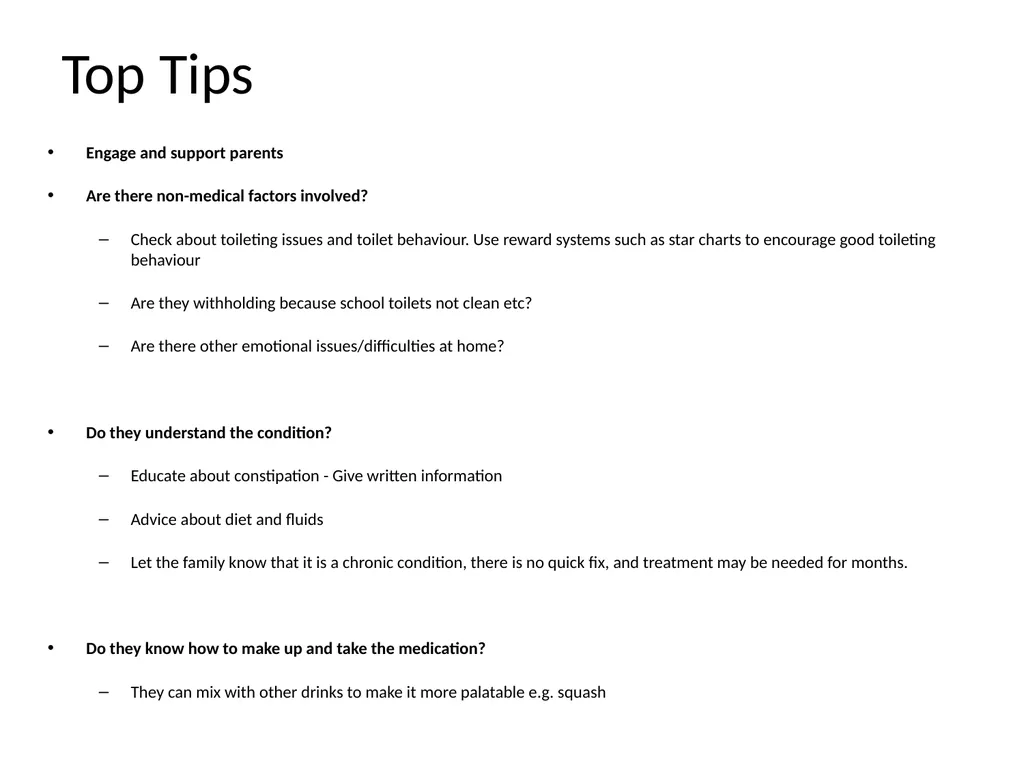
slide9. Top Tips Engage and support parents
Are there non-medical factors involved?
Check about toileting issues and toilet behaviour. Use reward systems such as star charts to encourage good toileting behaviour
Are they withholding because school toilets not clean etc?
Are there other emotional issues/difficulties at home?
Do they understand the condition?
Educate about constipation - Give written information
Advice about diet and fluids
Let the family know that it is a chronic condition, there is no quick fix, and treatment may be needed for months.
Do they know how to make up and take the medication?
They can mix with other drinks to make it more palatable e.g. squash<br>
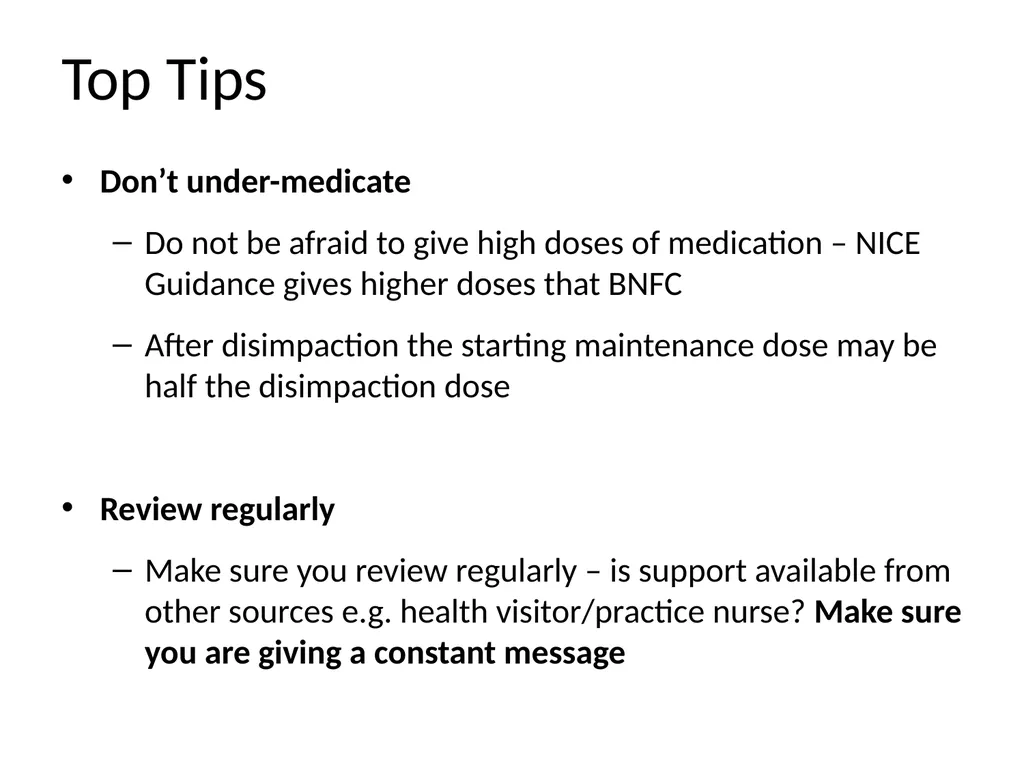
slide10. Top Tips Don’t under-medicate
Do not be afraid to give high doses of medication – NICE Guidance gives higher doses that BNFC
After disimpaction the starting maintenance dose may be half the disimpaction dose
Review regularly
Make sure you review regularly – is support available from other sources e.g. health visitor/practice nurse? Make sure you are giving a constant message<br>
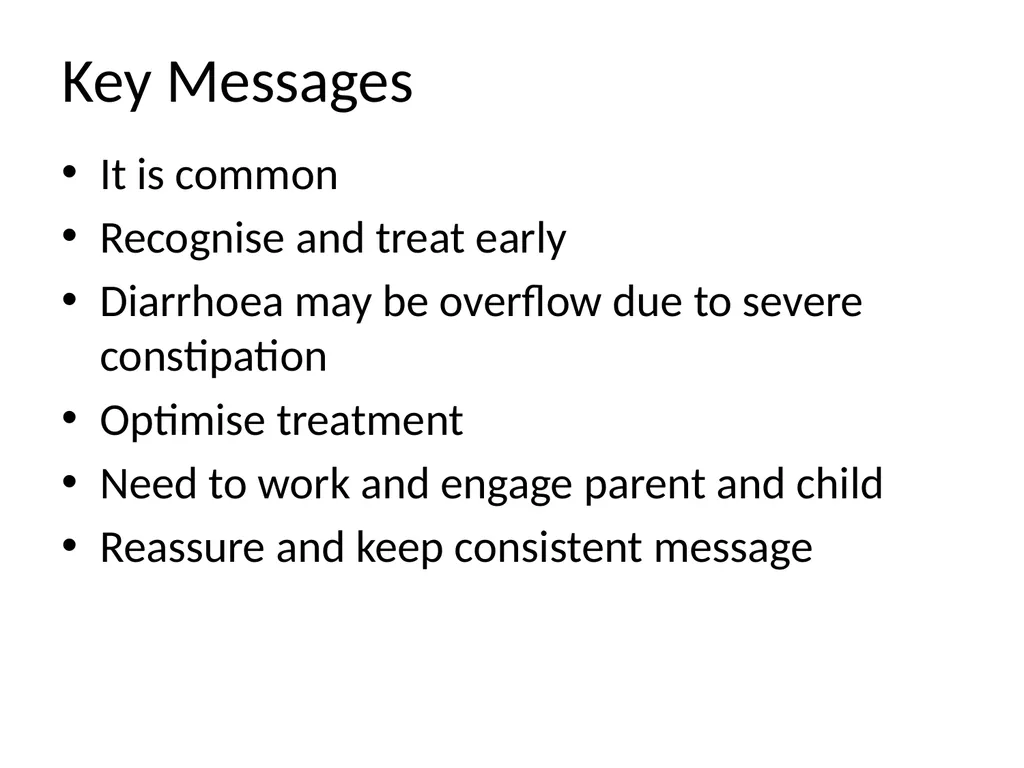
slide11. Key Messages It is common
Recognise and treat early
Diarrhoea may be overflow due to severe constipation
Optimise treatment
Need to work and engage parent and child
Reassure and keep consistent message<br>
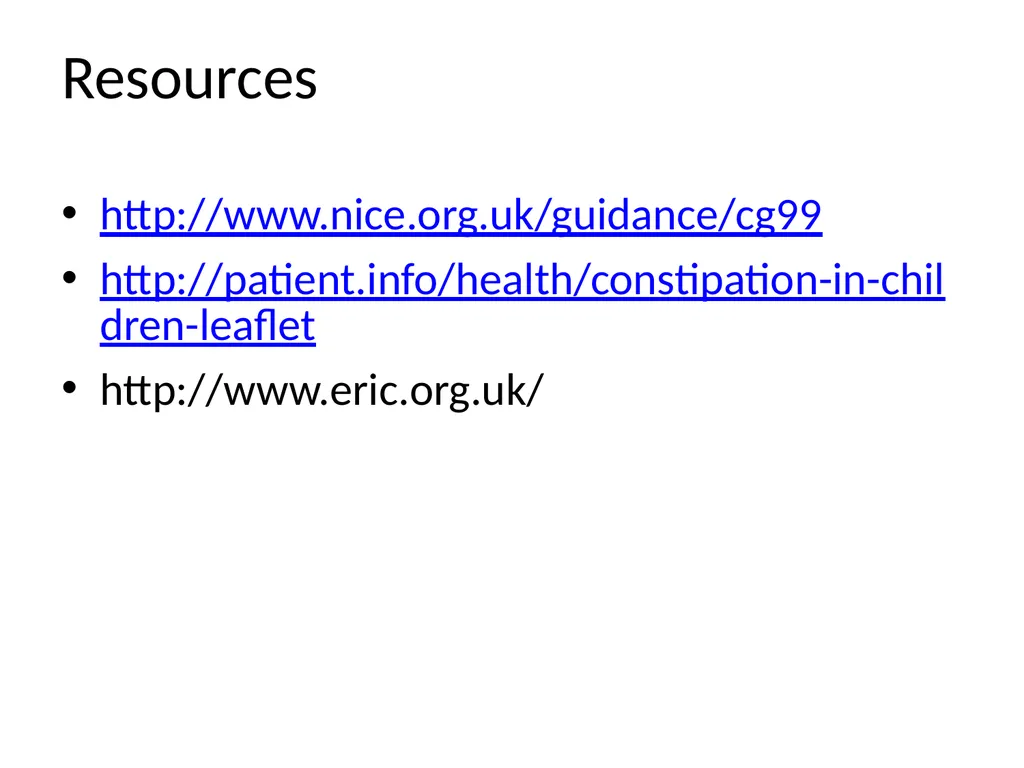
slide12. Resources http://www.nice.org.uk/guidance/cg99
http://patient.info/health/constipation-in-children-leaflet
http://www.eric.org.uk/<br>
Dr C Lemer
Dr R Bhatt<br>
slide2. Incidence Common; 5-30% of child population
Affects all age groups
Can be under diagnosed
Common reason for referral to secondary care
Can be related to behavioral difficulties
Treat early to avoid complications<br>
slide3. Red Flags Constipation from birth or first few weeks of life
Failure/delay in passing meconium > 48hrs
Ribbon stools
Weakness in legs/locomotor delay
Abdominal distension + /-vomiting
Abnormal appearance of anus (do not do a PR)
Abnormal examination of spine
Abnormal neuromuscular signs or reflexes<br>
slide4. History Take a full history and examination including:
Frequency and consistency of stool
Painful defecation
Diet and fluid intake
Behaviour including toileting
Social history
Remember: abdominal pain may be due to constipation and diarrhoea may be overflow<br>
slide6. Examination Is there evidence of faecal impaction, with either of the following:
Large palpable stool in lower abdomen
Soiling associated with faecal overflow<br>
slide7. Idiopathic Constipation Reassure child and family
Start Maintenance Therapy
Start with Movicol
< 1 year: ½-1 sachet daily
1-6yrs: 1 sachet daily
6-12 yrs: 2 sachets daily
Re-assess frequently
Adjust dose to produce regular soft stool. Max 4 sachets/day as maintenance
If there is no effect after 2 weeks add a stimulant laxative
If Movicol is not tolerated, substitute with a stimulant laxative +/- Lactulose
Review children after 4 weeks<br>
slide8. Faecal impaction Start Disimpaction Therapy
Start with Movicol
< 1 yr: ½-1 sachet daily
1-5yrs: 2 sachets day 1, increase by 2 sachets/48hrs to max 8
5-12 yrs: 4 sachets day 1, increase by 2 sachets/day to max 12
Review within 1 week
If there is no effect after 2 weeks add a stimulant laxative e.g. senna
If Movicol not tolerated, substitute with a stimulant laxative +/- Lactulose
Warn parents that disimpaction may initially increase the symptoms of soiling and abdominal pain<br>
slide9. Top Tips Engage and support parents
Are there non-medical factors involved?
Check about toileting issues and toilet behaviour. Use reward systems such as star charts to encourage good toileting behaviour
Are they withholding because school toilets not clean etc?
Are there other emotional issues/difficulties at home?
Do they understand the condition?
Educate about constipation - Give written information
Advice about diet and fluids
Let the family know that it is a chronic condition, there is no quick fix, and treatment may be needed for months.
Do they know how to make up and take the medication?
They can mix with other drinks to make it more palatable e.g. squash<br>
slide10. Top Tips Don’t under-medicate
Do not be afraid to give high doses of medication – NICE Guidance gives higher doses that BNFC
After disimpaction the starting maintenance dose may be half the disimpaction dose
Review regularly
Make sure you review regularly – is support available from other sources e.g. health visitor/practice nurse? Make sure you are giving a constant message<br>
slide11. Key Messages It is common
Recognise and treat early
Diarrhoea may be overflow due to severe constipation
Optimise treatment
Need to work and engage parent and child
Reassure and keep consistent message<br>
slide12. Resources http://www.nice.org.uk/guidance/cg99
http://patient.info/health/constipation-in-children-leaflet
http://www.eric.org.uk/<br>