CountrySTAT FENIX Overview of the Coding System in the new CountrySTAT platform TRAINING OF FOCAL POINTS ON THE CountrySTATFENIX SYSTEM Overview Work flow Coding System: Central Product Classification Coding System: Harmonized Commodity
"CountrySTAT / FENIX Overview of the Coding System" is the property of its rightful owner. Permission is granted to
download and print the materials on this website for personal, non-commercial use only, and to display it
on your personal computer provided you do not modify the materials and that you retain all copyright
notices contained in the materials. By downloading content from our website, you accept the terms of this
agreement.
Presentation Transcript
01
CountrySTAT / FENIX Overview of the Coding System in the new CountrySTAT platform
TRAINING OF FOCAL POINTS ON THE CountrySTAT/FENIX SYSTEM<br>
02
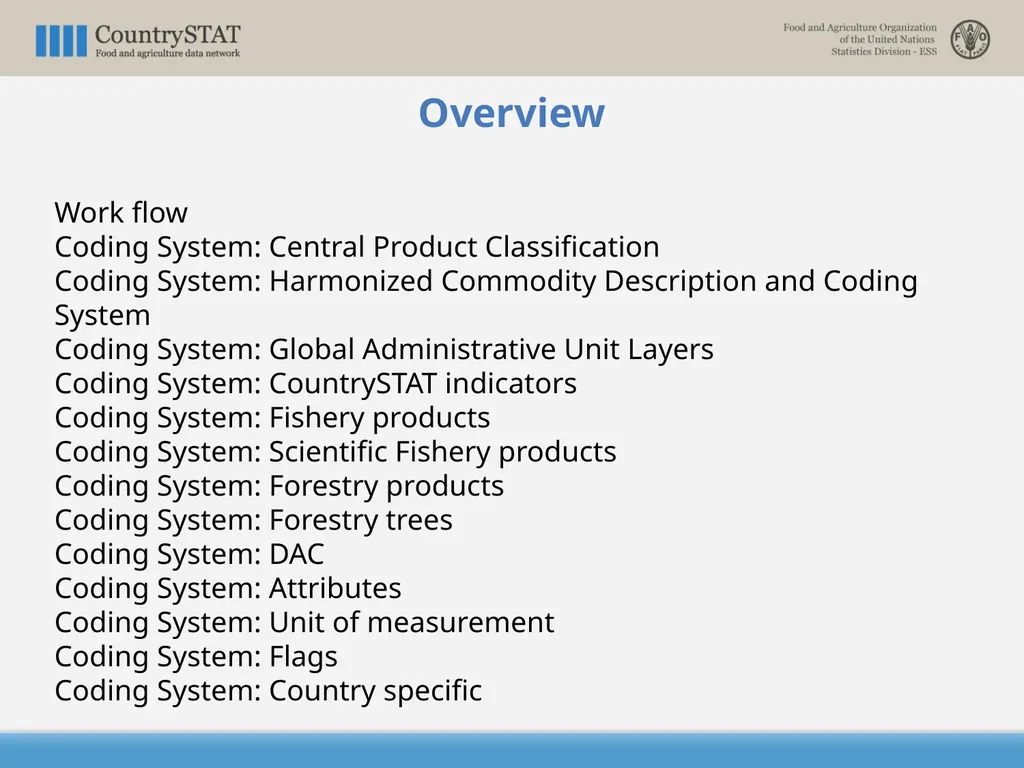
Overview Work flow
Coding System: Central Product Classification
Coding System: Harmonized Commodity Description and Coding System
Coding System: Global Administrative Unit Layers
Coding System: CountrySTAT indicators
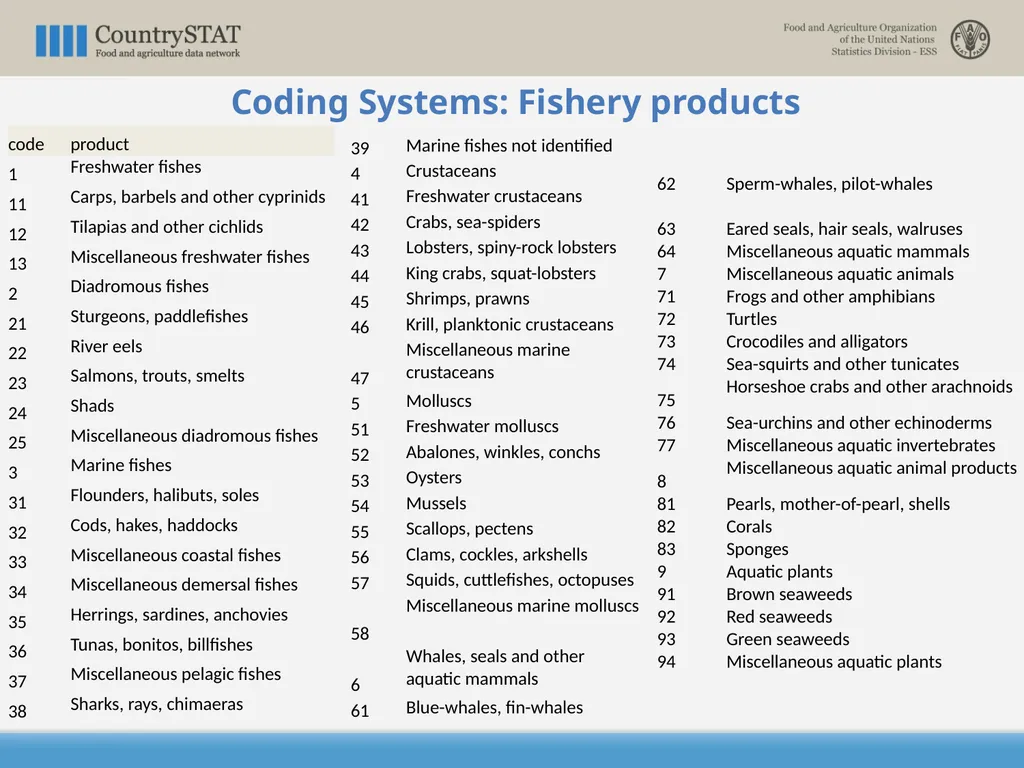
Coding System: Fishery products
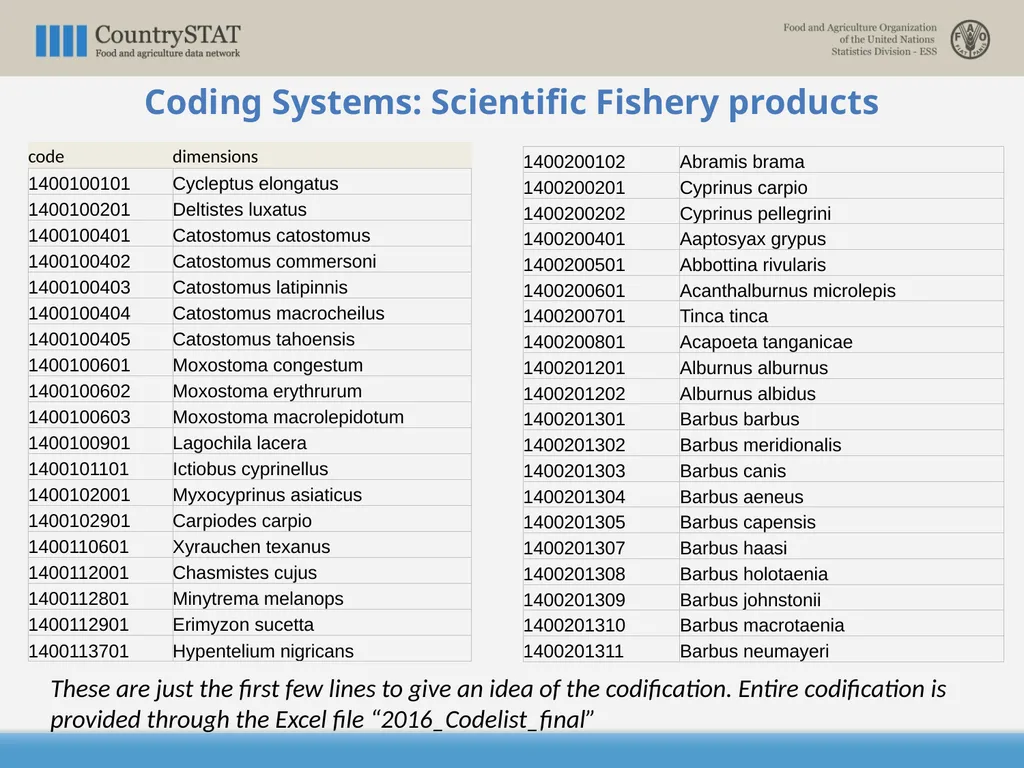
Coding System: Scientific Fishery products
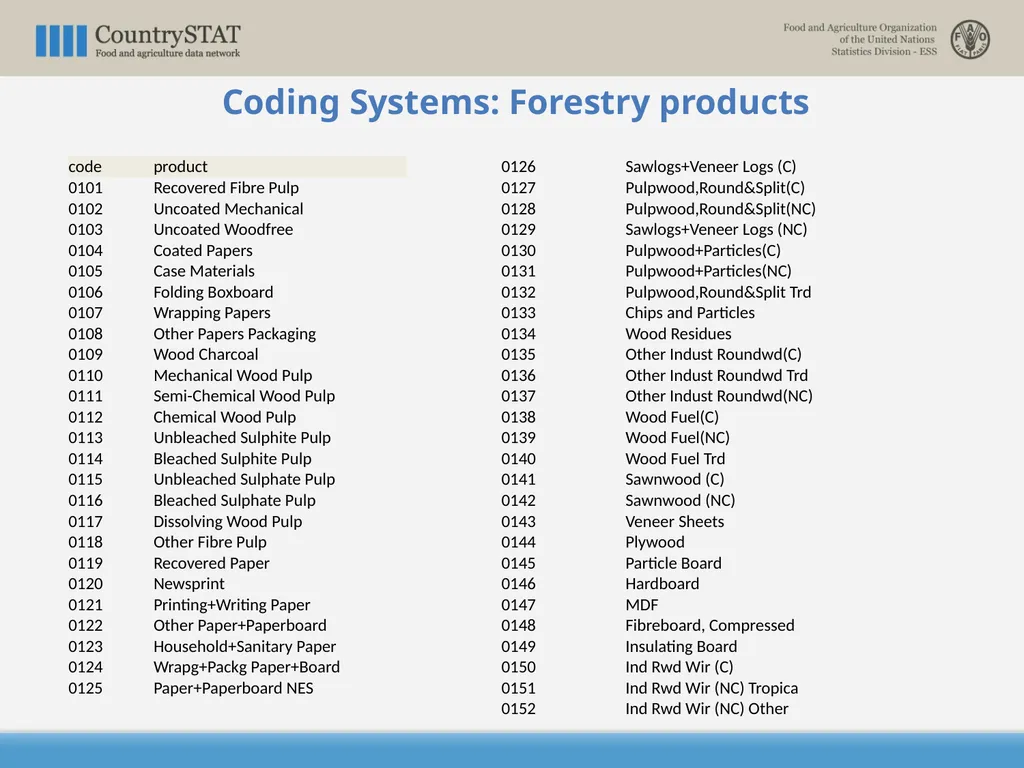
Coding System: Forestry products
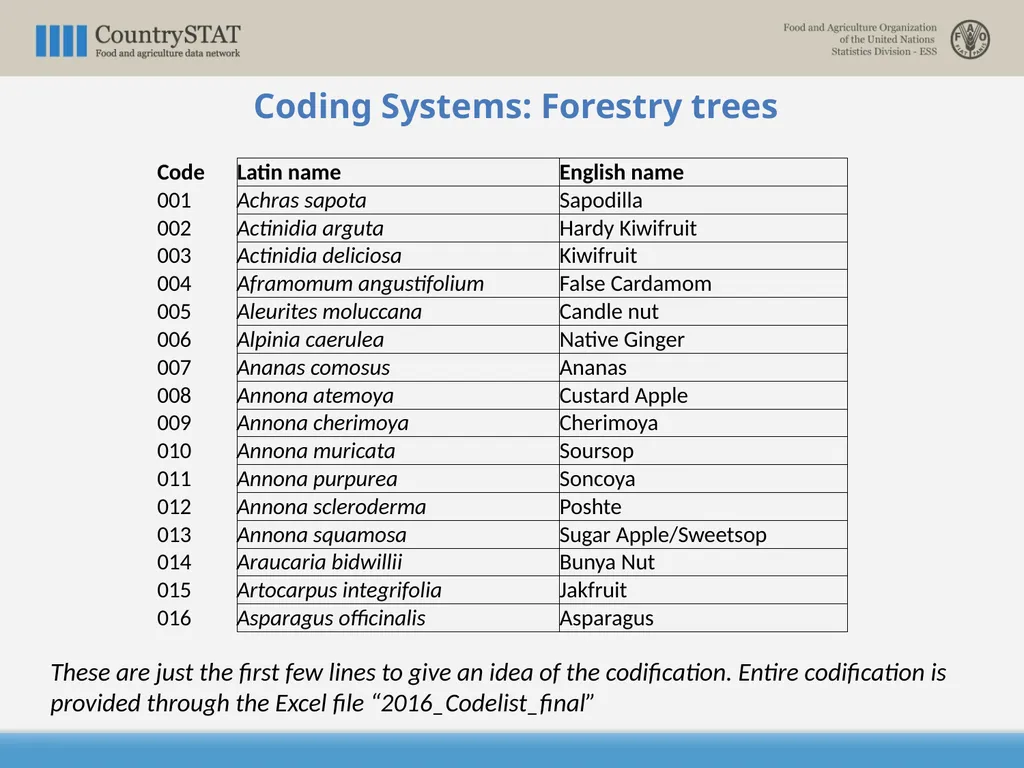
Coding System: Forestry trees
Coding System: DAC
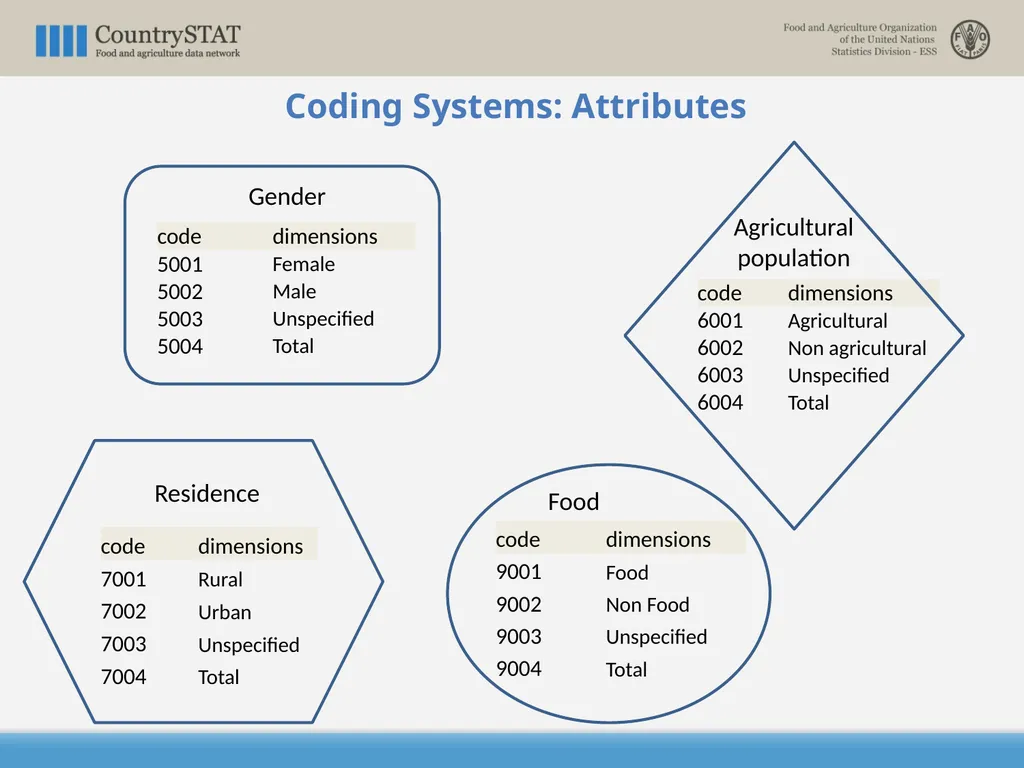
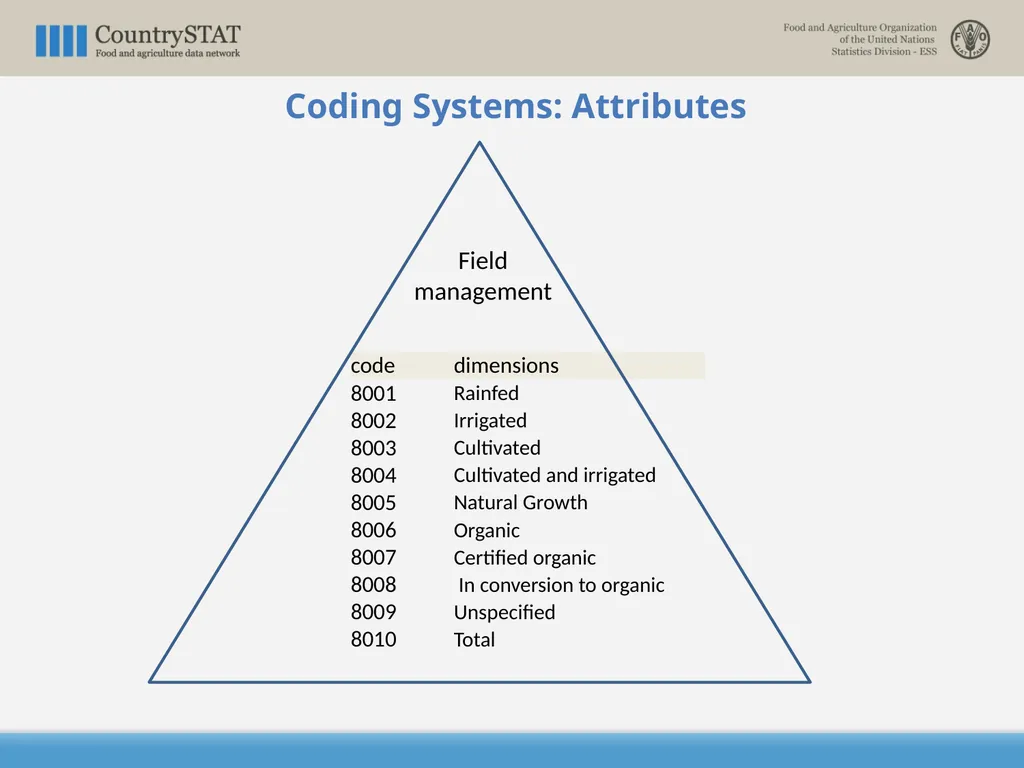
Coding System: Attributes
Coding System: Unit of measurement
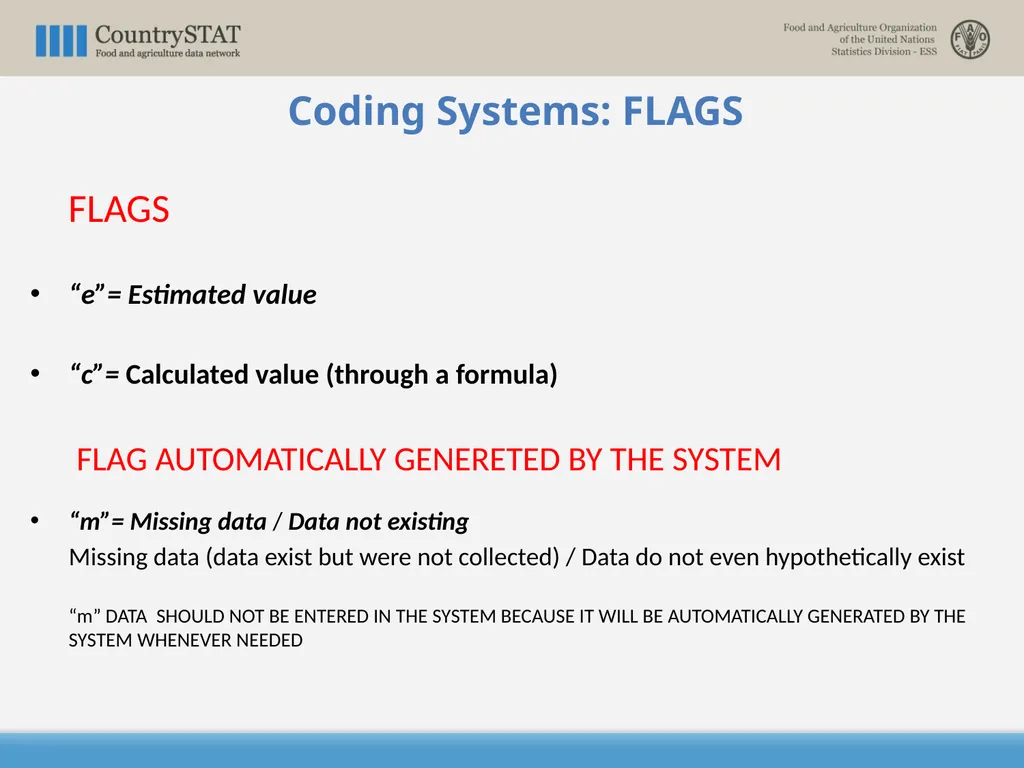
Coding System: Flags
Coding System: Country specific<br>
03
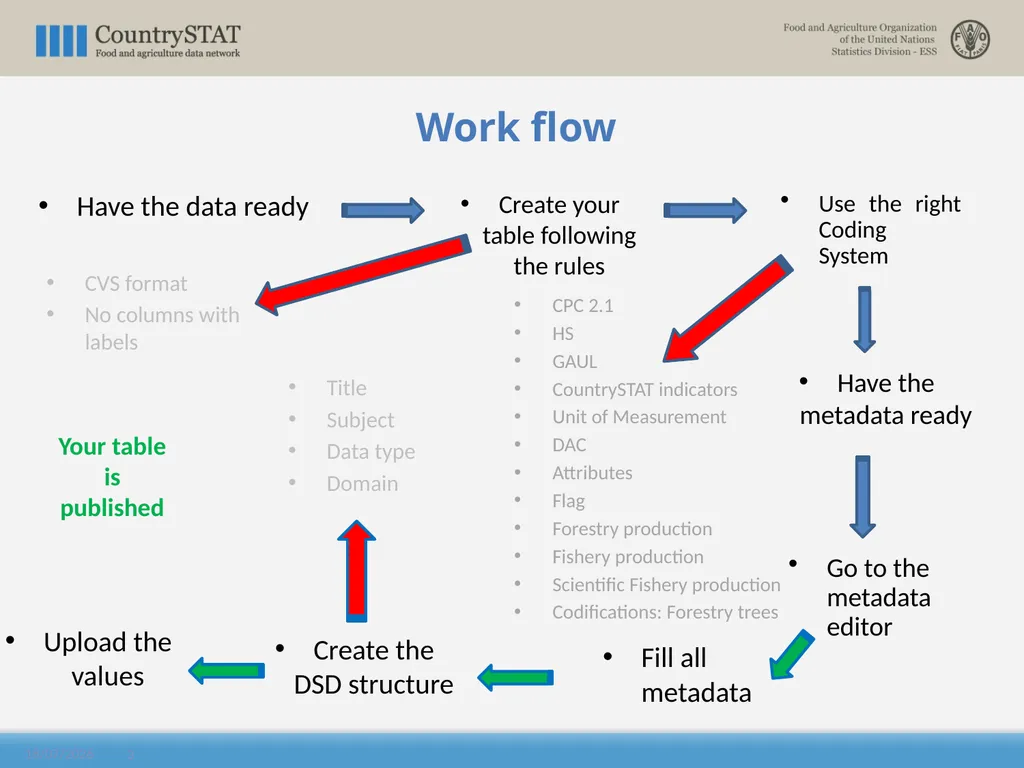
Have the data ready 07/11/2016 3 Work flow Create your table following the rules Have the metadata ready Use the right Coding System Fill all metadata Create the DSD structure CVS format
No columns with labels Upload the values Go to the metadata editor Title
Subject
Data type
Domain Your table is published CPC 2.1
HS
GAUL
CountrySTAT indicators
Unit of Measurement
DAC
Attributes
Flag
Forestry production
Fishery production
Scientific Fishery production
Codifications: Forestry trees<br>
04
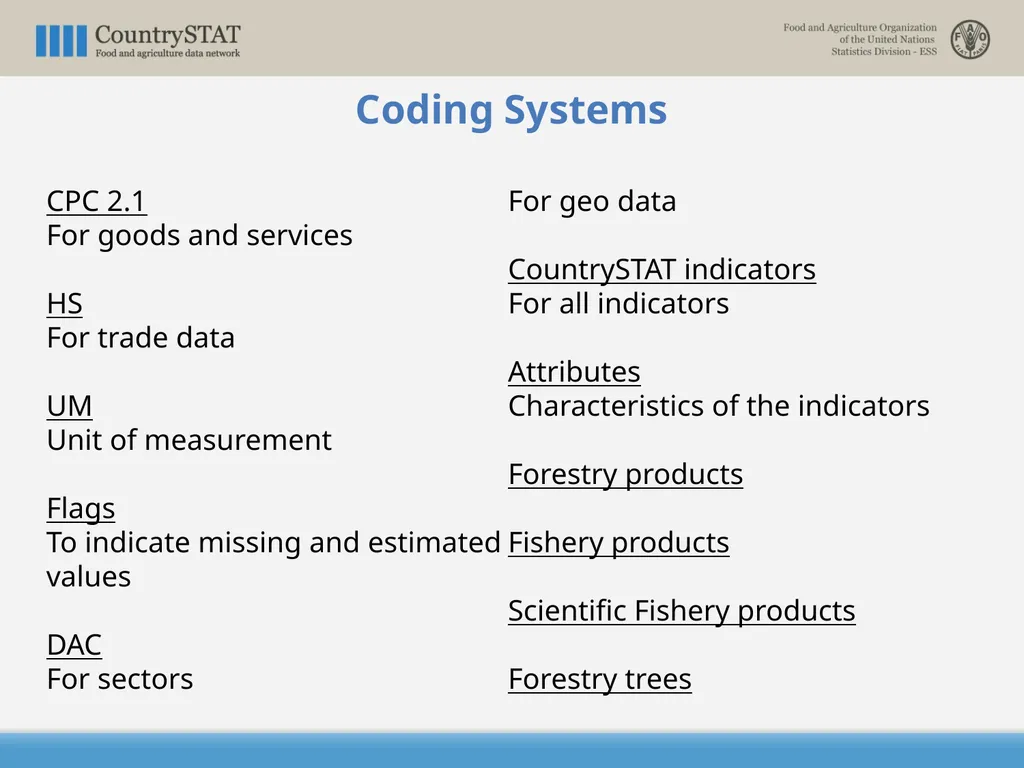
Coding Systems CPC 2.1
For goods and services
HS
For trade data
UM
Unit of measurement
Flags
To indicate missing and estimated values
DAC
For sectors
GAUL
GAUL For geo data
CountrySTAT indicators
For all indicators
Attributes
Characteristics of the indicators
Forestry products
Fishery products
Scientific Fishery products
Forestry trees<br>
05
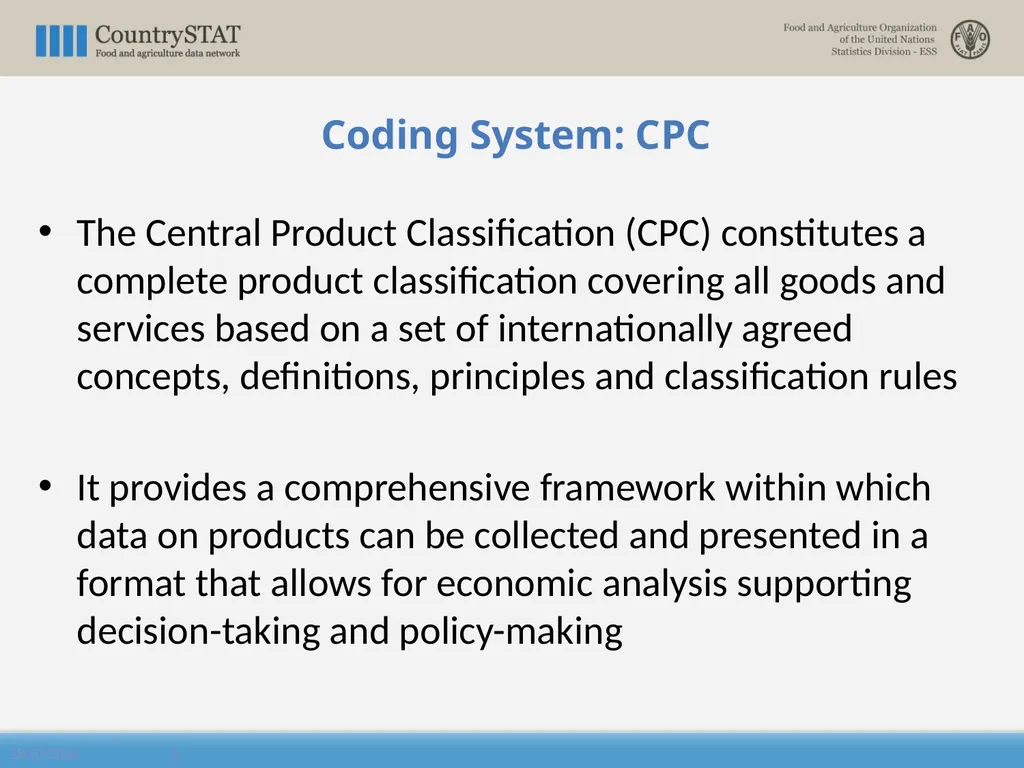
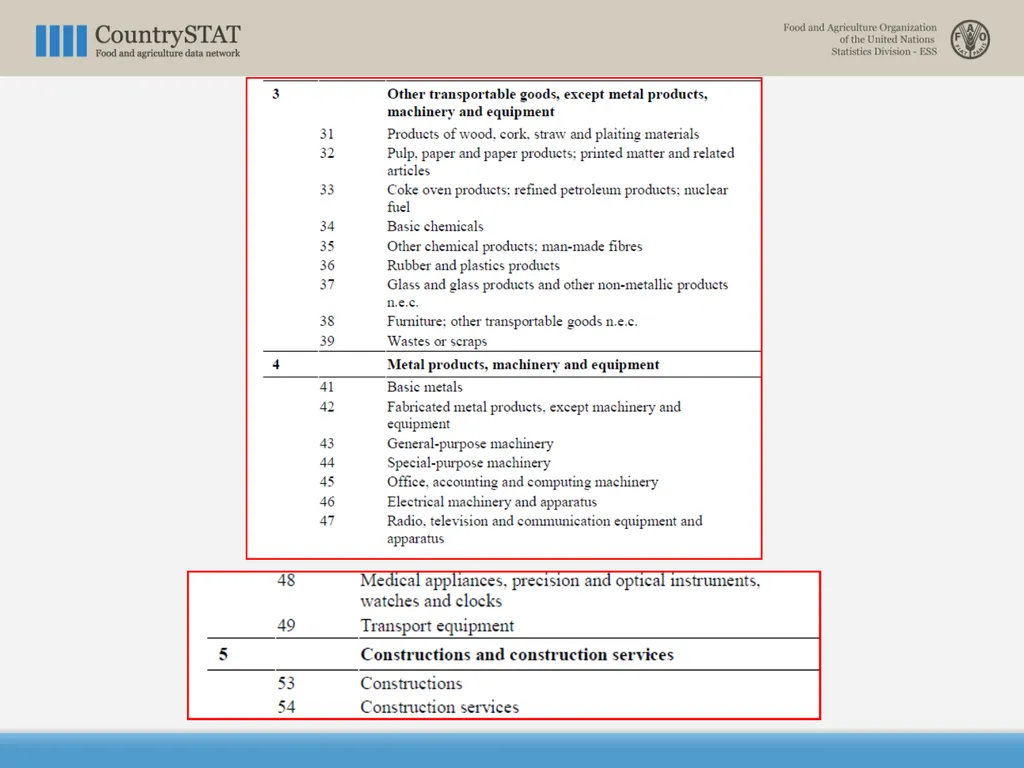
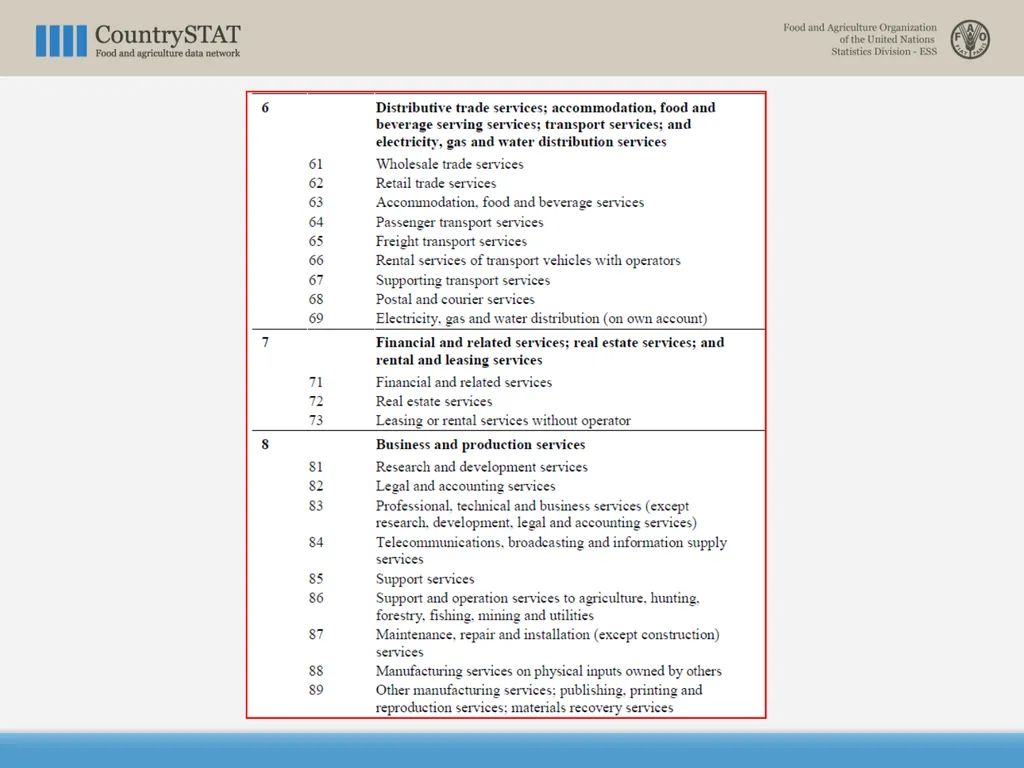
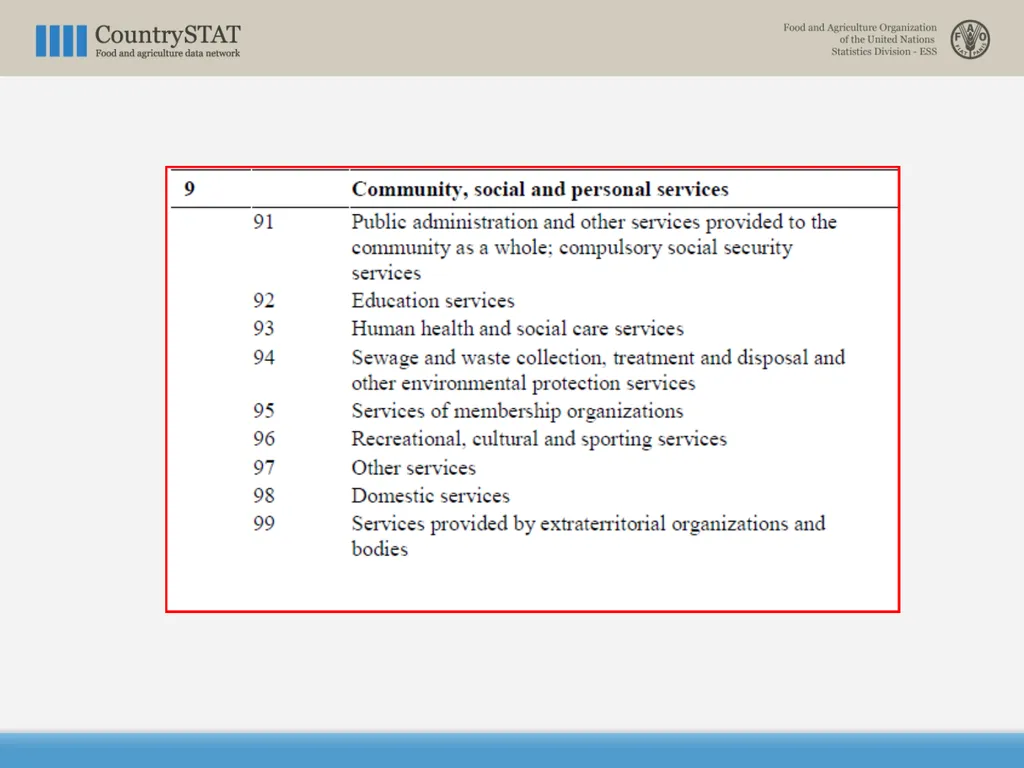
The Central Product Classification (CPC) constitutes a complete product classification covering all goods and services based on a set of internationally agreed concepts, definitions, principles and classification rules
It provides a comprehensive framework within which data on products can be collected and presented in a format that allows for economic analysis supporting decision-taking and policy-making 07/11/2016 5 Coding System: CPC<br>
06
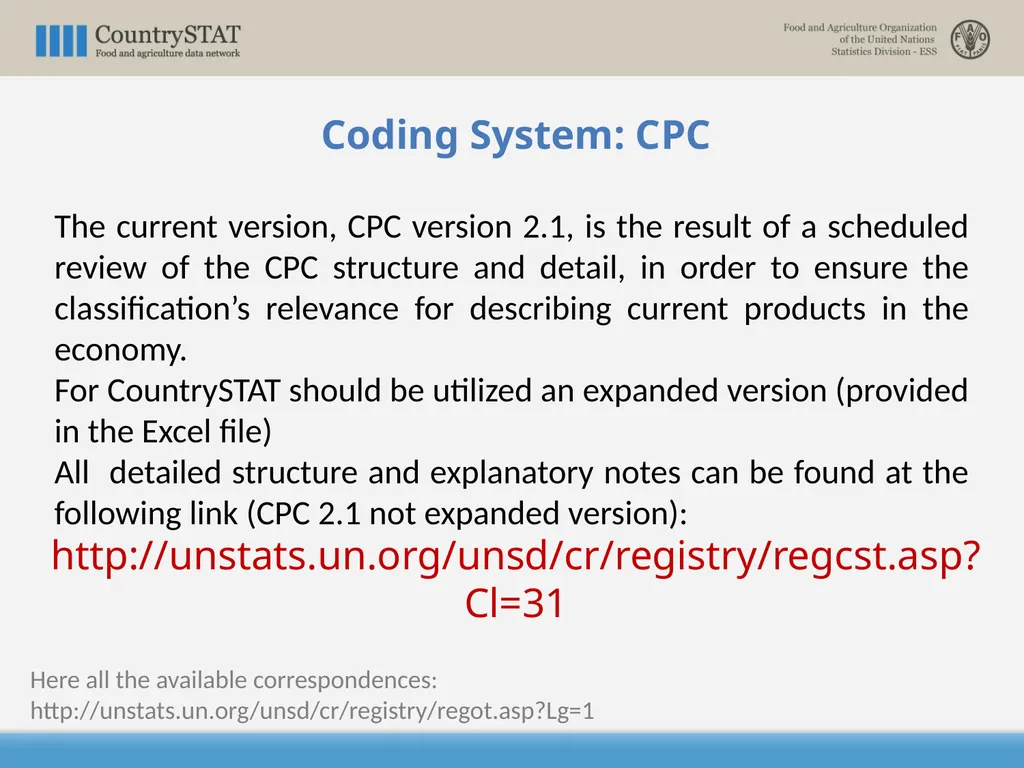
The current version, CPC version 2.1, is the result of a scheduled review of the CPC structure and detail, in order to ensure the classification’s relevance for describing current products in the economy.
For CountrySTAT should be utilized an expanded version (provided in the Excel file)
All detailed structure and explanatory notes can be found at the following link (CPC 2.1 not expanded version): http://unstats.un.org/unsd/cr/registry/regcst.asp?Cl=31 Coding System: CPC Here all the available correspondences:
http://unstats.un.org/unsd/cr/registry/regot.asp?Lg=1<br>
07
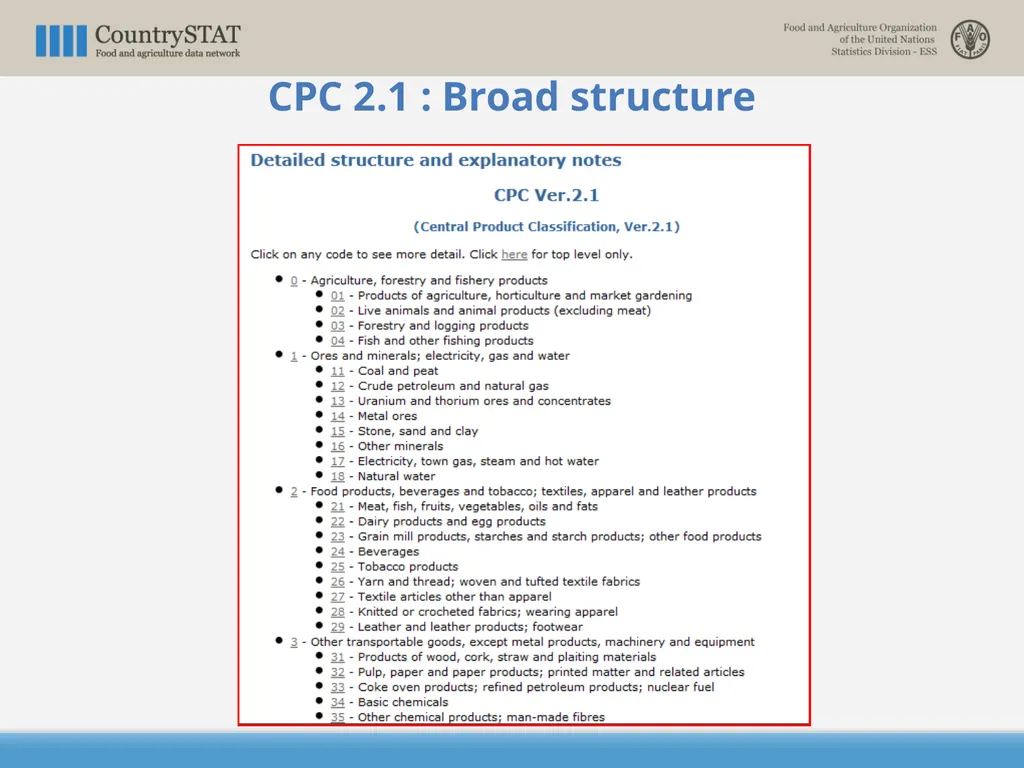
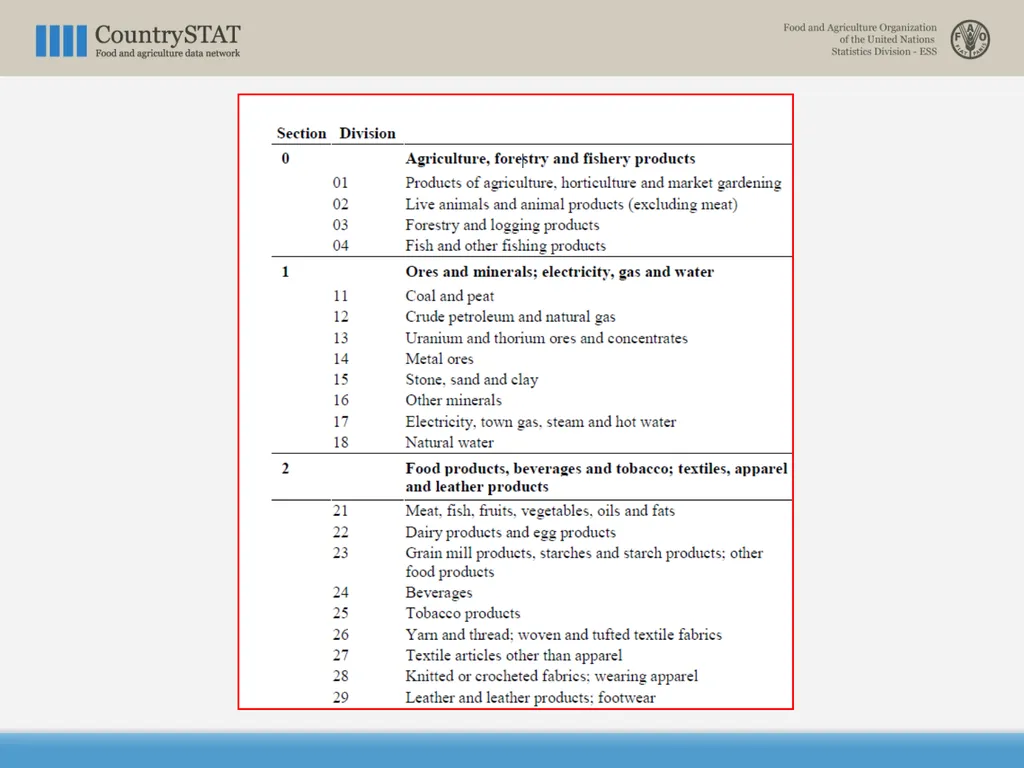
CPC 2.1 : Broad structure<br>
08
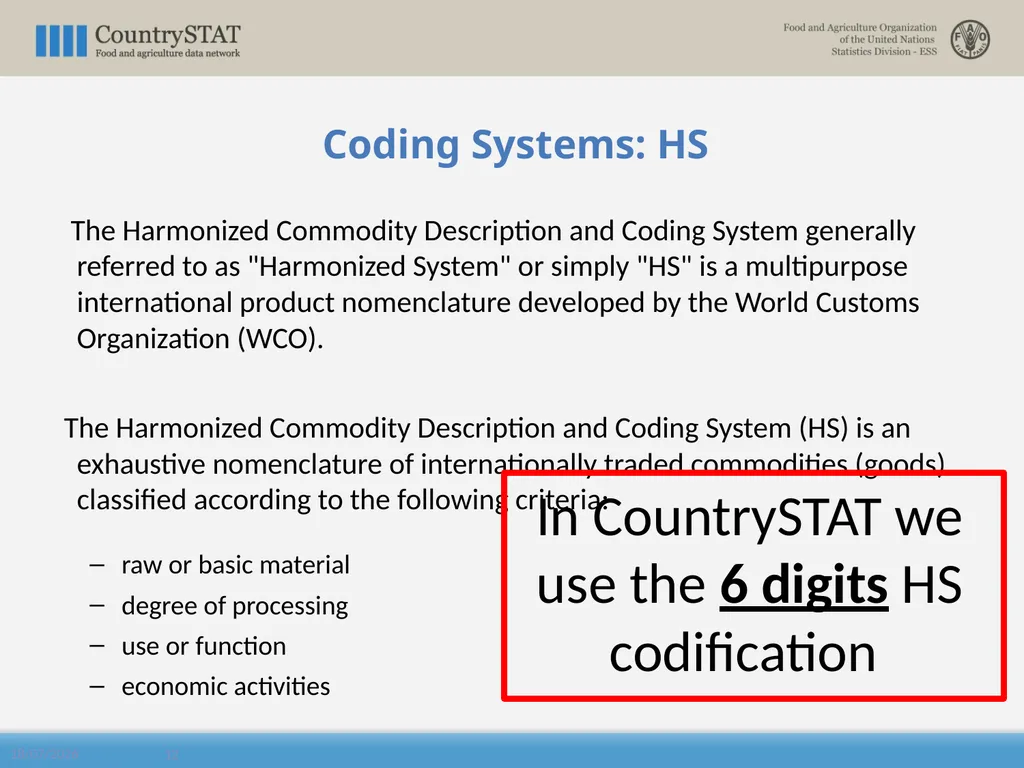
The Harmonized Commodity Description and Coding System generally referred to as "Harmonized System" or simply "HS" is a multipurpose international product nomenclature developed by the World Customs Organization (WCO).
The Harmonized Commodity Description and Coding System (HS) is an exhaustive nomenclature of internationally traded commodities (goods) classified according to the following criteria:
raw or basic material
degree of processing
use or function
economic activities 07/11/2016 12 Coding Systems: HS In CountrySTAT we use the 6 digits HS codification<br>
09
Coding Systems: GAUL The Global Administrative Unit Layers (GAUL) is an initiative implemented by FAO within the Bill & Melinda Gates Foundation, Agricultural Market Information System (AMIS) and AfricaFertilizer.org projects.
The GAUL compiles and disseminates the best available information on administrative units for all the countries in the world, providing a contribution to the standardization of the spatial dataset representing administrative units. The GAUL always maintains global layers with a unified coding system at country, first (e.g. departments) and second administrative levels (e.g. districts). Where data is available, it provides layers on a country by country basis down to third, fourth and lowers levels<br>
10
Coding Systems: GAUL The overall methodology consists in
collecting the best available data from most reliable sources
establishing validation periods of the geographic features (when possible)
adding selected data to the global layer based on the last country boundaries map provided by the UN Cartographic Unit (UNCS)
generating codes using GAUL Coding System
distribute data to the users<br>
11
Coding Systems: GAUL Because GAUL works at global level, unsettled territories are reported. The approach of GAUL is to deal with these areas in such a way to preserve national integrity for all disputing countries .
GAUL is released once a year and the target beneficiary of GAUL data is the UN community and other authorized international and national partners. Data might not be officially validated by authoritative national sources and cannot be distributed to the general public. A disclaimer should always accompany any use of GAUL data.
GAUL keeps track of administrative units that has been changed, added or dismissed in the past for political causes. Changes implemented in different years are recorded in GAUL on different layers. For this reason the GAUL product is not a single layer but a group of layers, named "GAUL Set" .<br>
12
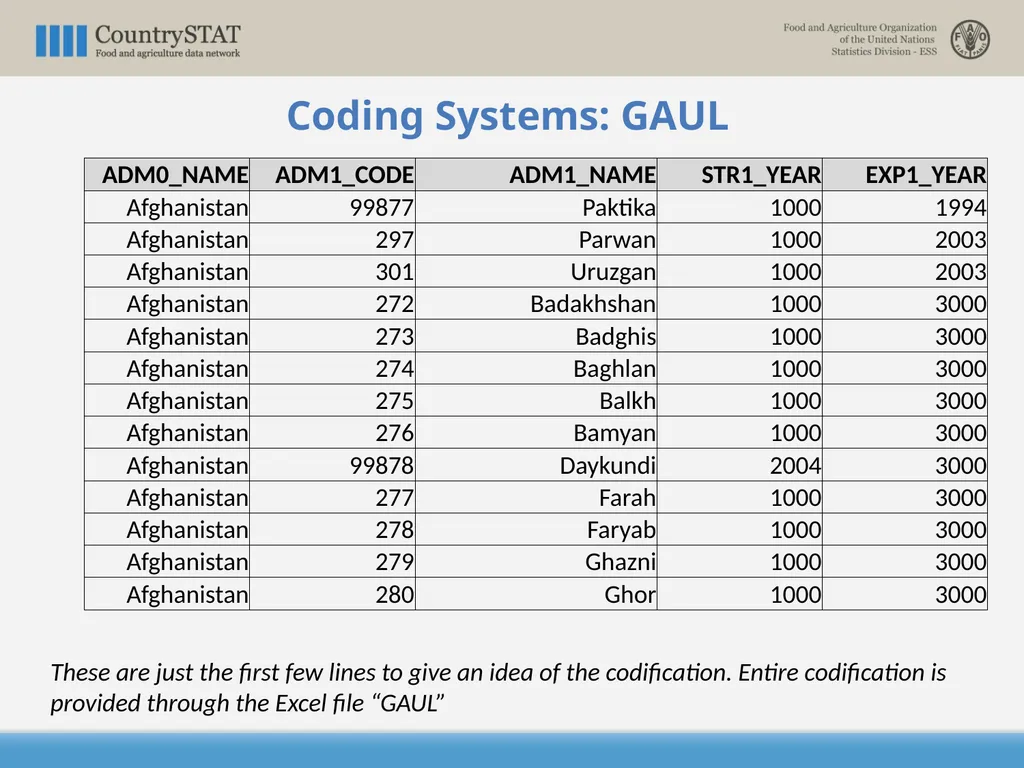
Coding Systems: GAUL These are just the first few lines to give an idea of the codification. Entire codification is provided through the Excel file “GAUL”<br>
13
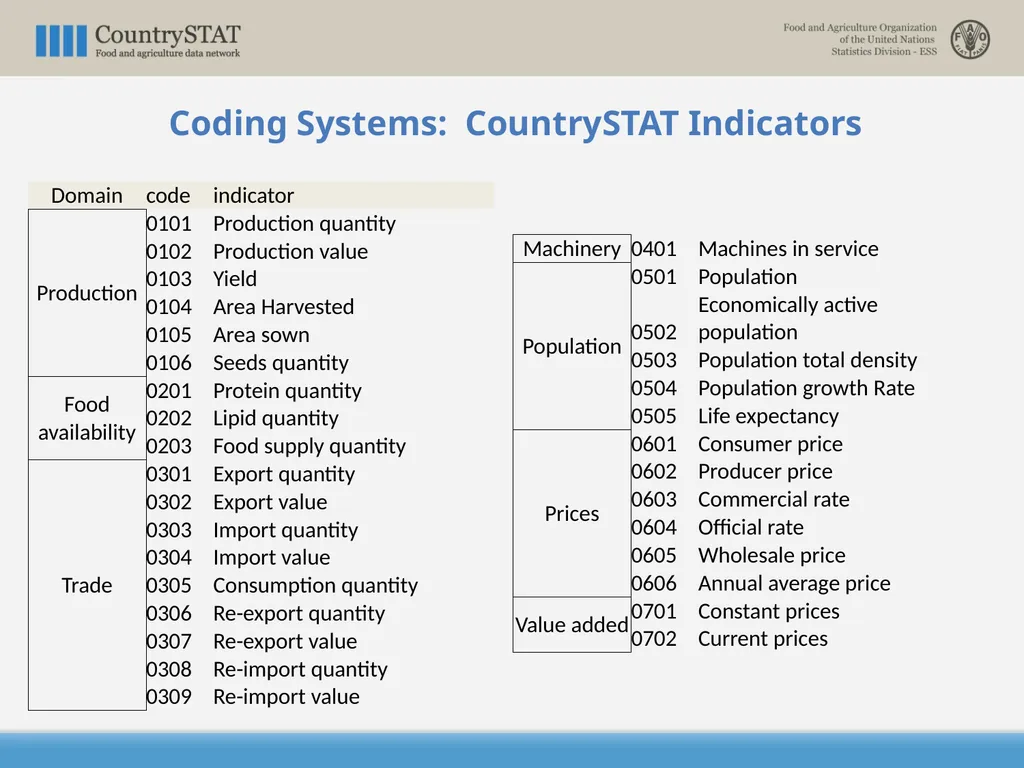
Coding Systems: CountrySTAT Indicators<br>
14
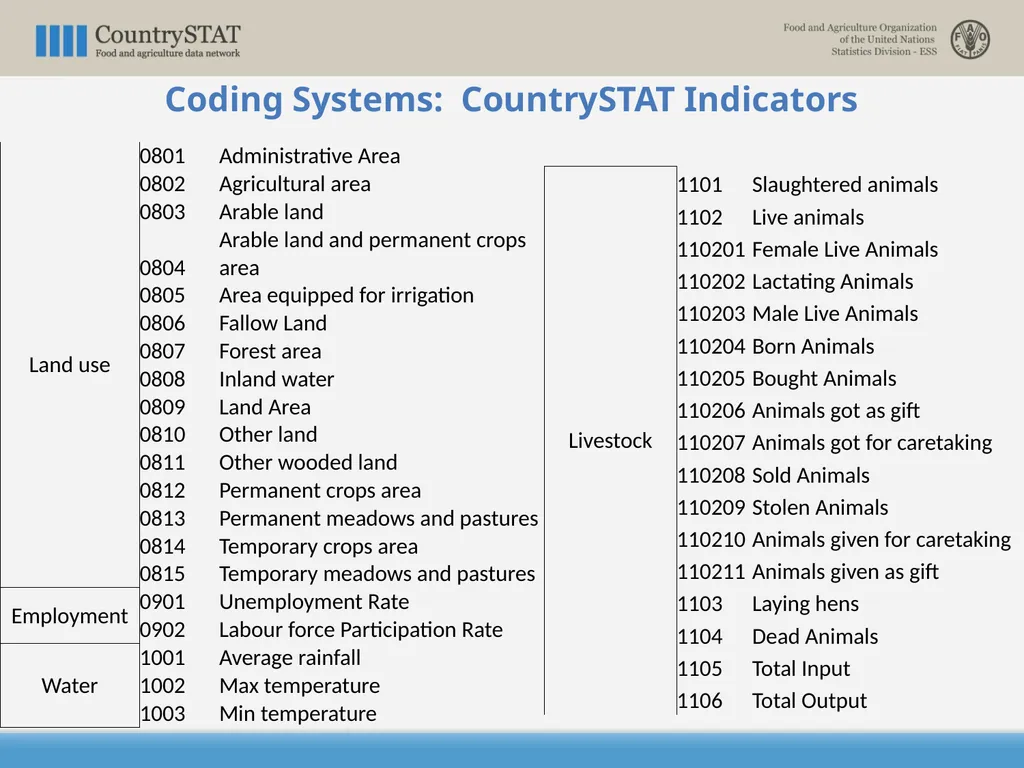
Coding Systems: CountrySTAT Indicators<br>
15
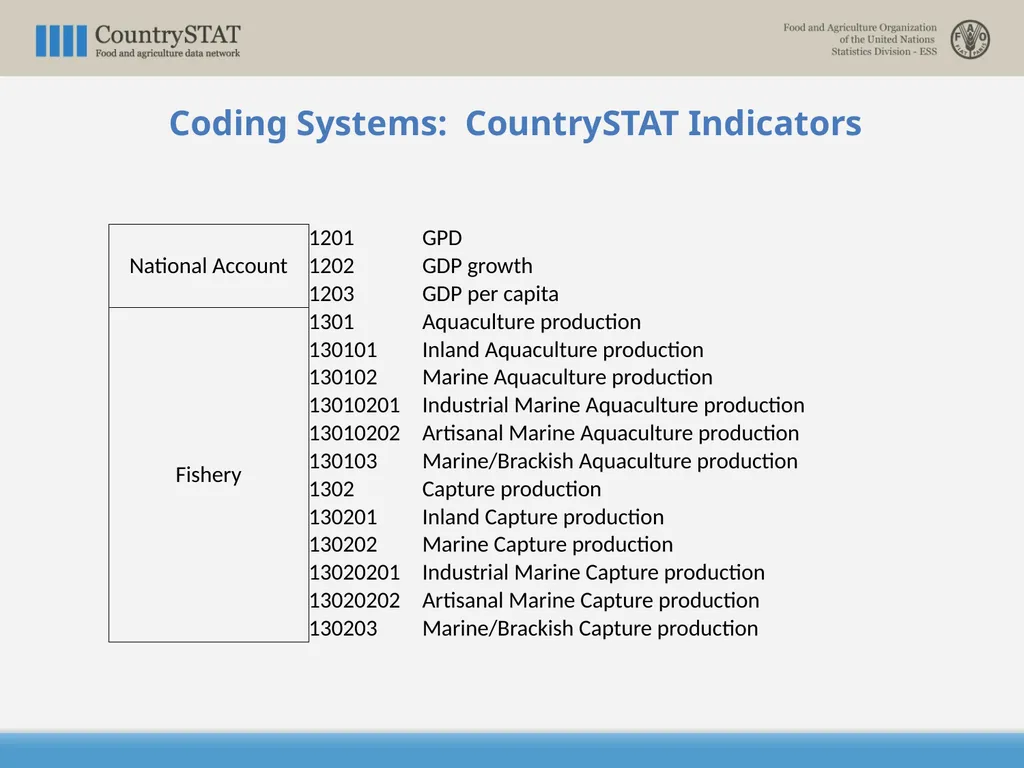
Coding Systems: CountrySTAT Indicators<br>
16
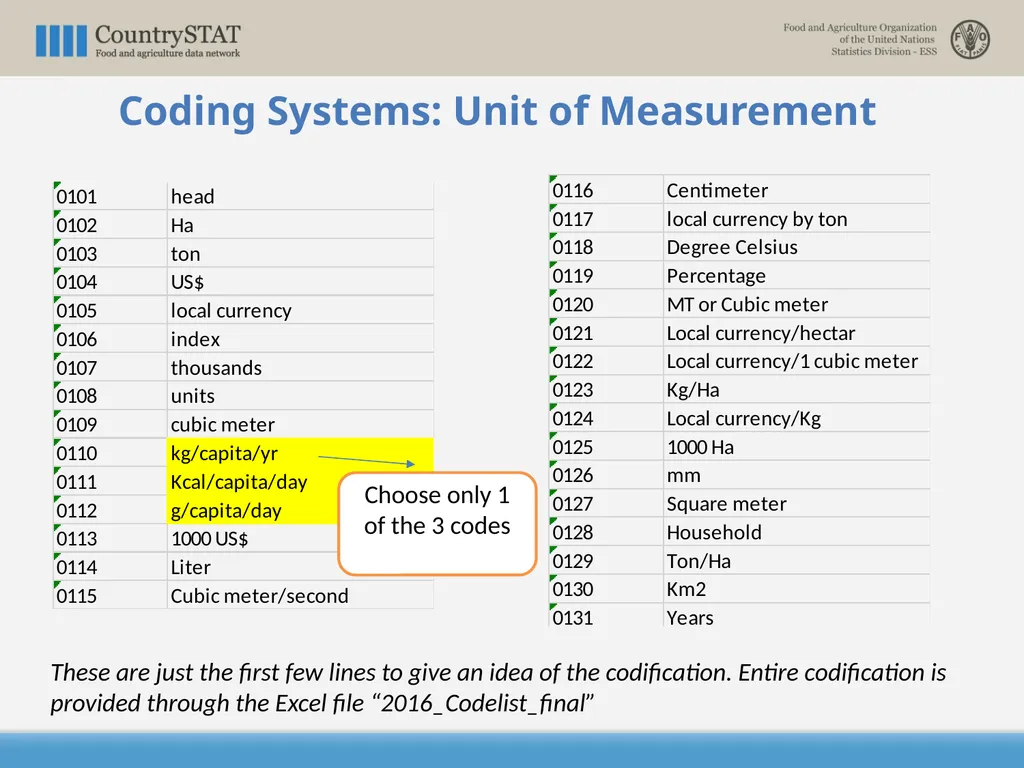
Coding Systems: Unit of Measurement Choose only 1 of the 3 codes These are just the first few lines to give an idea of the codification. Entire codification is provided through the Excel file “2016_Codelist_final”<br>
17
Coding Systems: Fishery products<br>
18
Coding Systems: Scientific Fishery products These are just the first few lines to give an idea of the codification. Entire codification is provided through the Excel file “2016_Codelist_final”<br>
19
Coding Systems: Forestry products<br>
20
Coding Systems: Forestry trees These are just the first few lines to give an idea of the codification. Entire codification is provided through the Excel file “2016_Codelist_final”<br>
21
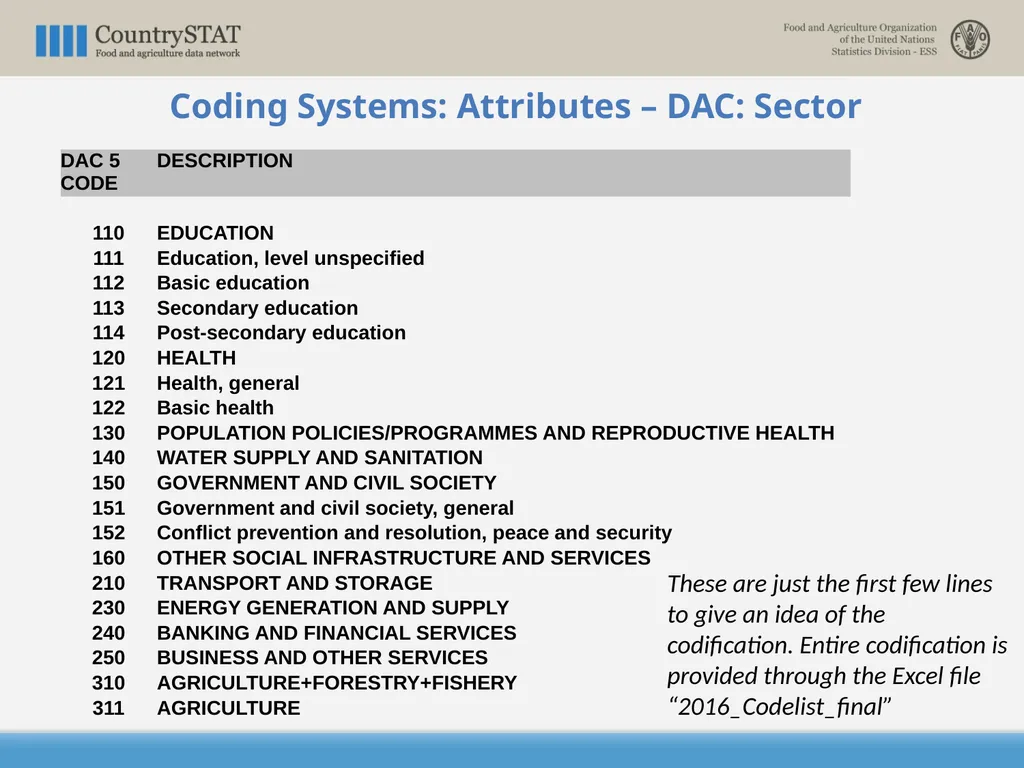
Coding Systems: Attributes – DAC: Sector These are just the first few lines to give an idea of the codification. Entire codification is provided through the Excel file “2016_Codelist_final”<br>