COURSE NAME: PHYSICAL GEOGRAPHY (Climatology and Oceanography) COURSE CODE: EDU146 DEPARTMENT OF EDUCATION (GEOGRAPHY) ATMOSPHERIC MOISTURE Moisture in the atmosphere, in the form of water vapor, liquid water, and ice, controls most aspects
"COURSE NAME: PHYSICAL GEOGRAPHY (Climatology and" is the property of its rightful owner. Permission is granted to
download and print the materials on this website for personal, non-commercial use only, and to display it
on your personal computer provided you do not modify the materials and that you retain all copyright
notices contained in the materials. By downloading content from our website, you accept the terms of this
agreement.
Presentation Transcript
01
COURSE NAME: PHYSICAL GEOGRAPHY (Climatology and Oceanography)
COURSE CODE: EDU146
DEPARTMENT OF EDUCATION (GEOGRAPHY)<br>
02
ATMOSPHERIC MOISTURE Moisture in the atmosphere, in the form of water vapor, liquid water, and ice, controls most aspects of our weather and climate. Atmospheric moisture is expressed as clouds, precipitation, storms, weather fronts, and other phenomena.
Humidity of the air refers to the content of water vapour present in the air at a particular time and place.
On the other hand, water vapour is the gaseous form of water.
Water vapour represents 2 per cent of the total composition of the atmosphere but this percentage varies both spatially and temporally as it ranges from zero to 5 per cent.<br>
03
Continued Nearly 50 per cent of the total atmospheric vapour is concentrated in the lower atmosphere upto the height of 2000 meters.
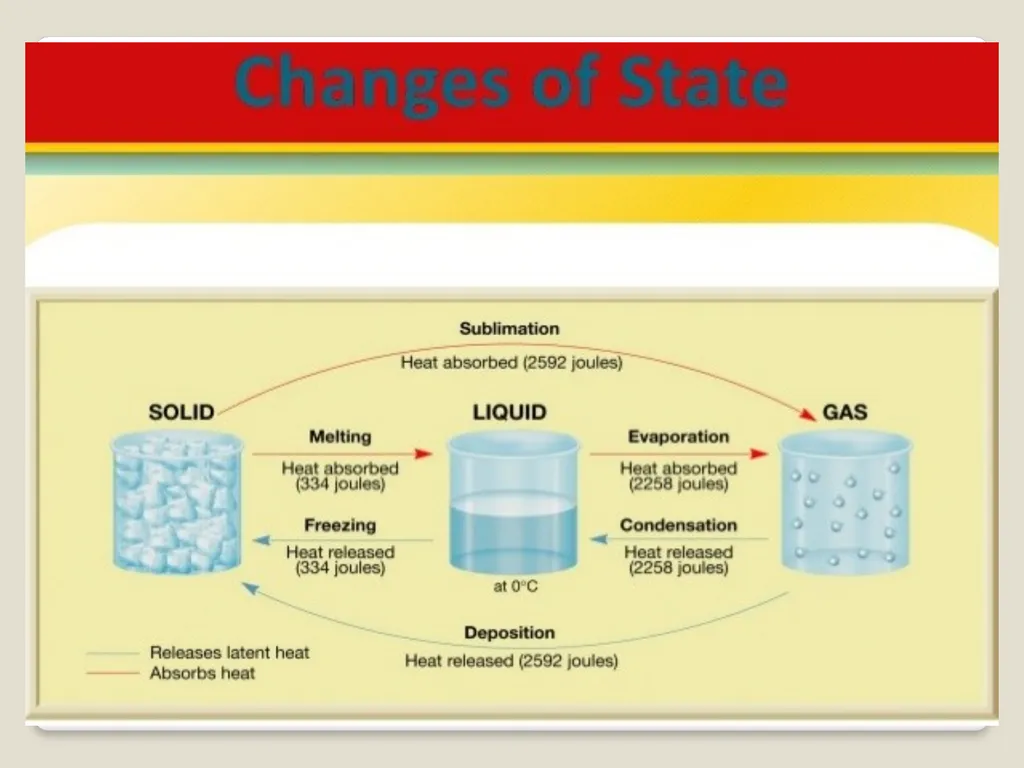
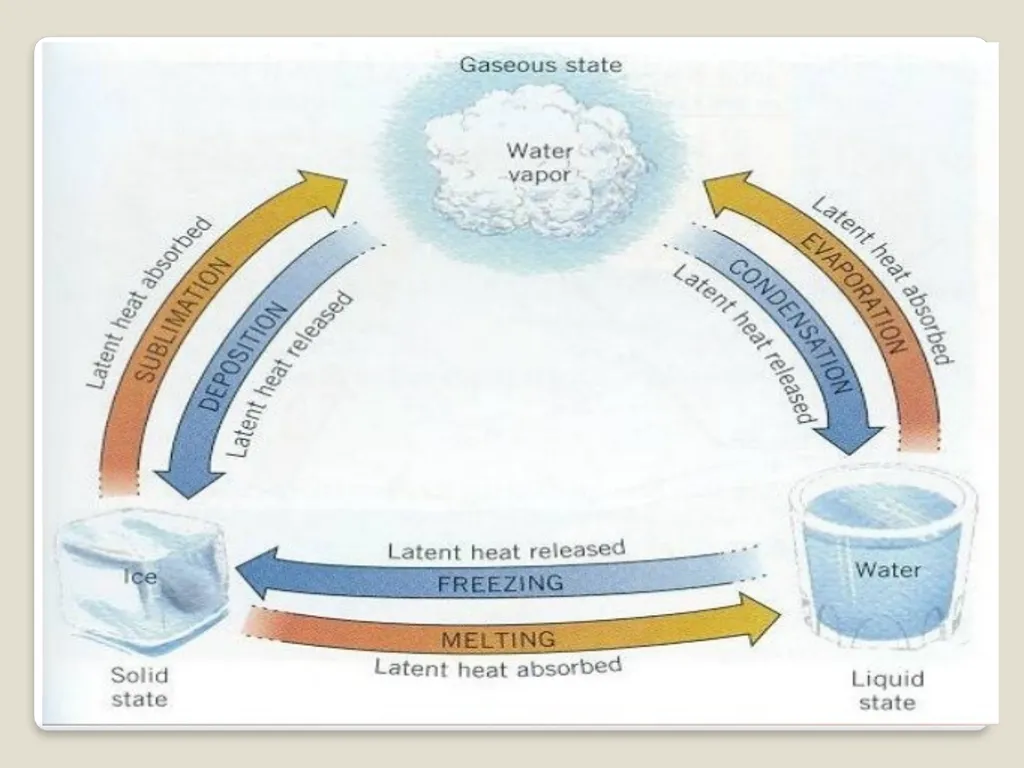
It may be mentioned that water occurs in three states like as solid (e.g. ice, snow and frost), as liquid (e.g. water), as gaseous from (e.g. vapour).
The presence of water vapour in the atmosphere is a vital factor for weather conditions of a particular region.
The nature and amount of a precipitation, the amount of loss of heat through radiation from the earth surface, surface temperature, latent heat of the atmosphere, stability and instability of air masses etc. depend on the amount of water vapour present in the atmosphere.
The atmospheric water is derived through evaporation of water from oceans and seas, terrestrial lakes, land water bodies, river etc.<br>
04
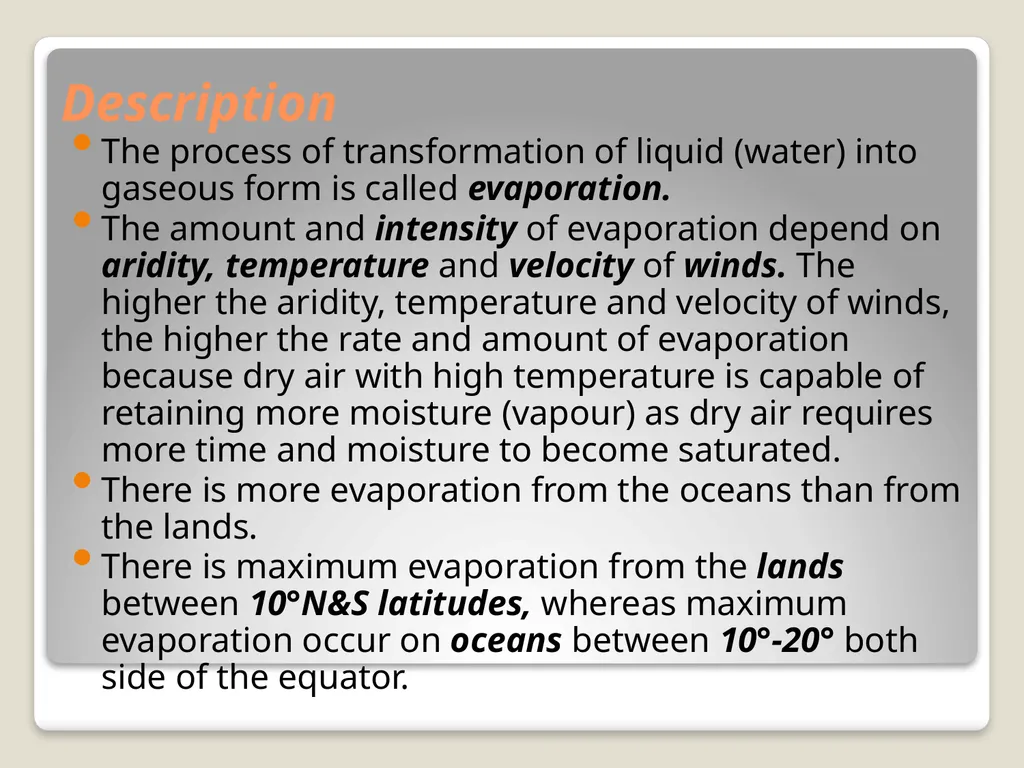
Description The process of transformation of liquid (water) into gaseous form is called evaporation.
The amount and intensity of evaporation depend on aridity, temperature and velocity of winds. The higher the aridity, temperature and velocity of winds, the higher the rate and amount of evaporation because dry air with high temperature is capable of retaining more moisture (vapour) as dry air requires more time and moisture to become saturated.
There is more evaporation from the oceans than from the lands.
There is maximum evaporation from the lands between 10°N&S latitudes, whereas maximum evaporation occur on oceans between 10°-20° both side of the equator.<br>