COVID-19 Infection in Persons with Underlying Chronic Viral Hepatitis Brian J McMahon MD Liver Disease and Hepatitis Program Alaska Native Tribal Health Consortium Elevated Liver Function Tests in Patients with COVID-19 Liver injury in mild
"COVID-19 Infection in Persons with Underlying" is the property of its rightful owner. Permission is granted to
download and print the materials on this website for personal, non-commercial use only, and to display it
on your personal computer provided you do not modify the materials and that you retain all copyright
notices contained in the materials. By downloading content from our website, you accept the terms of this
agreement.
Presentation Transcript
01
COVID-19 Infection in Persons with Underlying Chronic Viral Hepatitis Brian J McMahon MD Liver Disease and Hepatitis Program
Alaska Native Tribal Health Consortium<br>
02
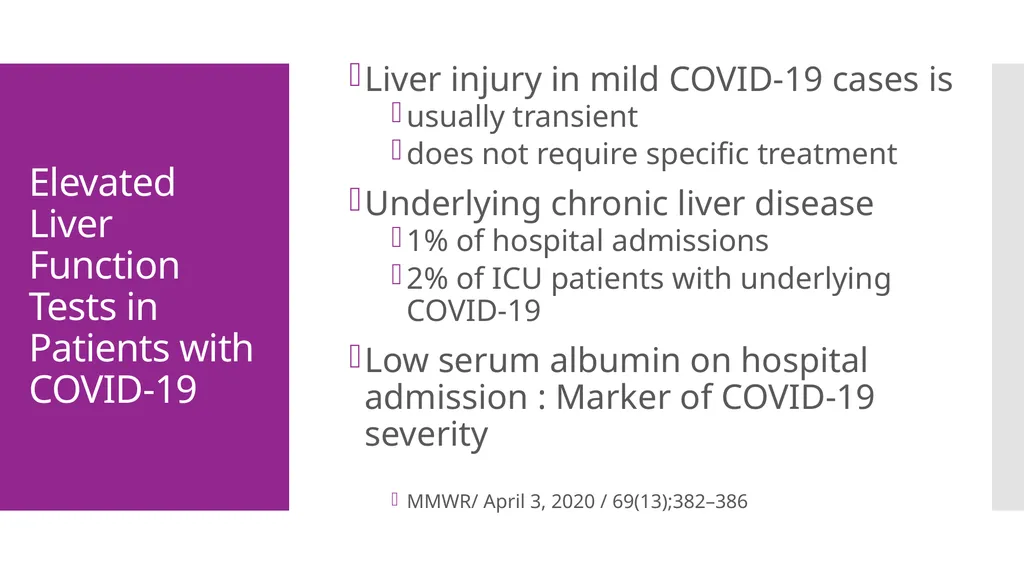
Elevated Liver Function Tests in Patients with COVID-19 Liver injury in mild COVID-19 cases is
usually transient
does not require specific treatment
Underlying chronic liver disease
1% of hospital admissions
2% of ICU patients with underlying COVID-19
Low serum albumin on hospital admission : Marker of COVID-19 severity
MMWR/ April 3, 2020 / 69(13);382–386<br>
03
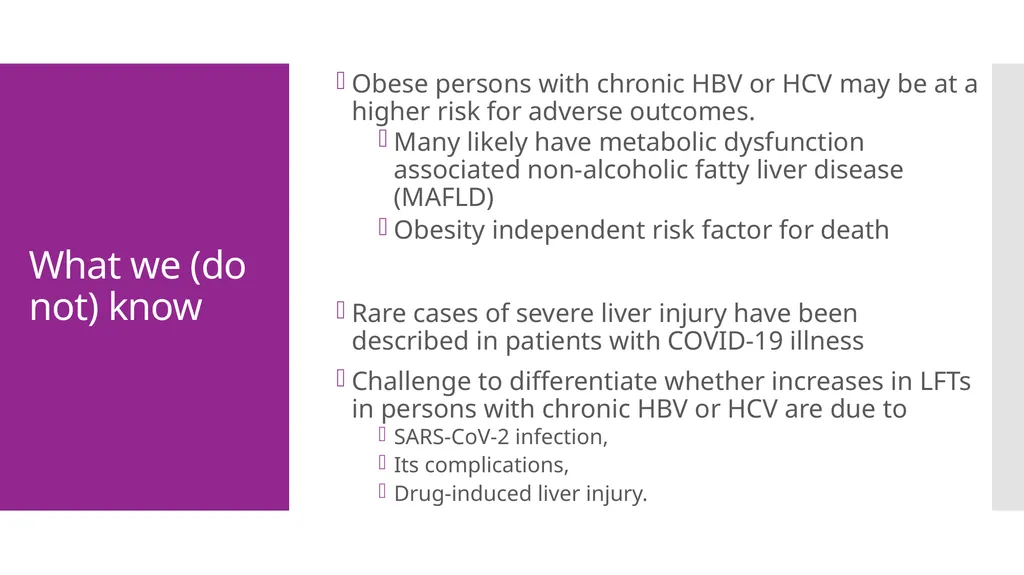
What we (do not) know Obese persons with chronic HBV or HCV may be at a higher risk for adverse outcomes.
Many likely have metabolic dysfunction associated non-alcoholic fatty liver disease (MAFLD)
Obesity independent risk factor for death
Rare cases of severe liver injury have been described in patients with COVID-19 illness
Challenge to differentiate whether increases in LFTs in persons with chronic HBV or HCV are due to
SARS-CoV-2 infection,
Its complications,
Drug-induced liver injury.<br>
04
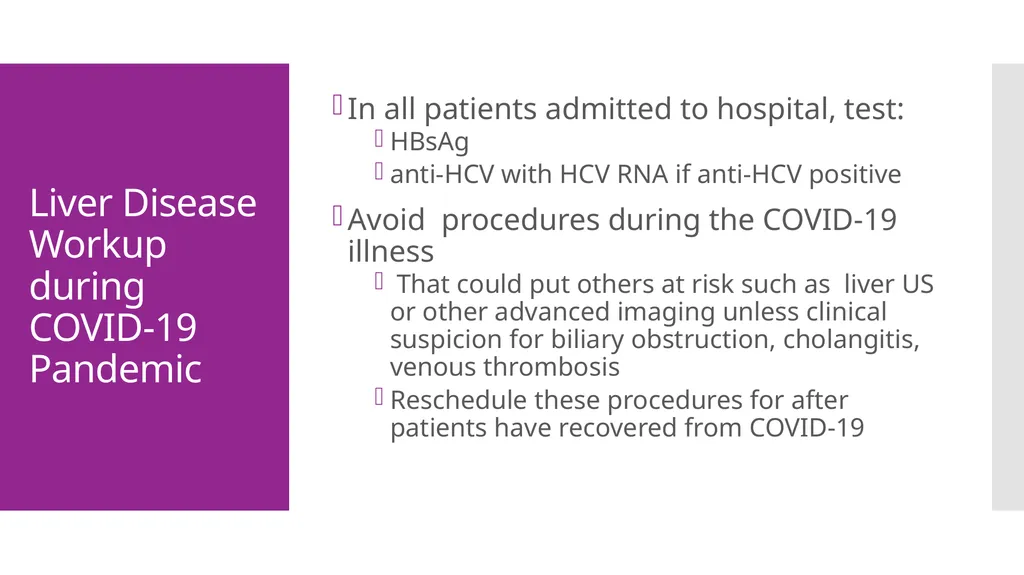
Liver Disease Workup during COVID-19 Pandemic In all patients admitted to hospital, test:
HBsAg
anti-HCV with HCV RNA if anti-HCV positive
Avoid procedures during the COVID-19 illness
That could put others at risk such as liver US or other advanced imaging unless clinical suspicion for biliary obstruction, cholangitis, venous thrombosis
Reschedule these procedures for after patients have recovered from COVID-19<br>
05
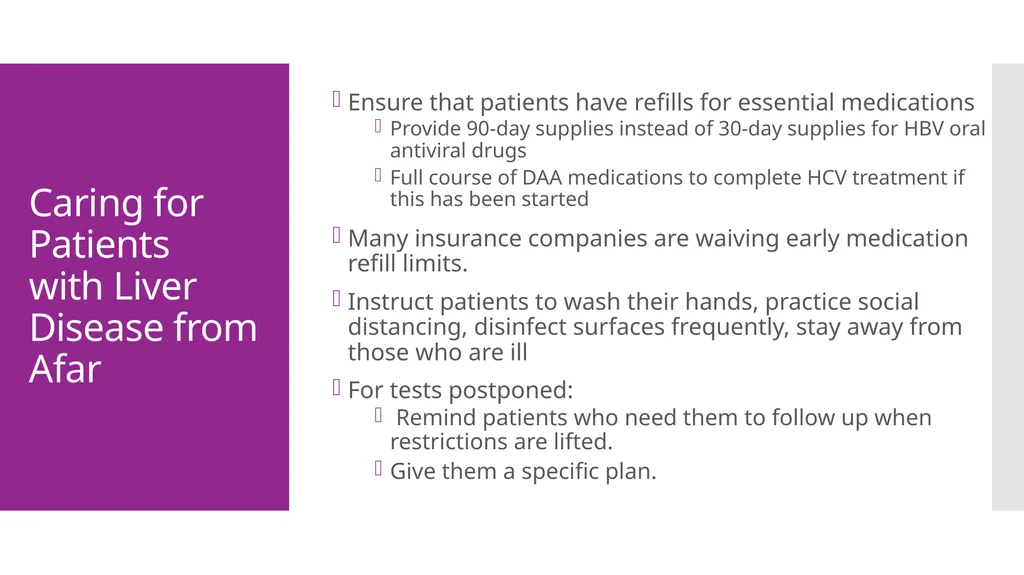
Caring for Patients with Liver Disease from Afar Ensure that patients have refills for essential medications
Provide 90-day supplies instead of 30-day supplies for HBV oral antiviral drugs
Full course of DAA medications to complete HCV treatment if this has been started
Many insurance companies are waiving early medication refill limits.
Instruct patients to wash their hands, practice social distancing, disinfect surfaces frequently, stay away from those who are ill
For tests postponed:
Remind patients who need them to follow up when restrictions are lifted.
Give them a specific plan.<br>
06
COVID-19 in Patients with HBV or HCV It is not known whether patients with chronic HCV or HBV infection have a greater risk or not of severe disease after acquiring COVID-19
Unknown whether patients on antiviral drugs for HCV or HBV are at less of a risk of severe outcomes after acquiring COVID-19
Do not stop antiviral meds for HBV or HCV in patients who present with COVID-19<br>
07
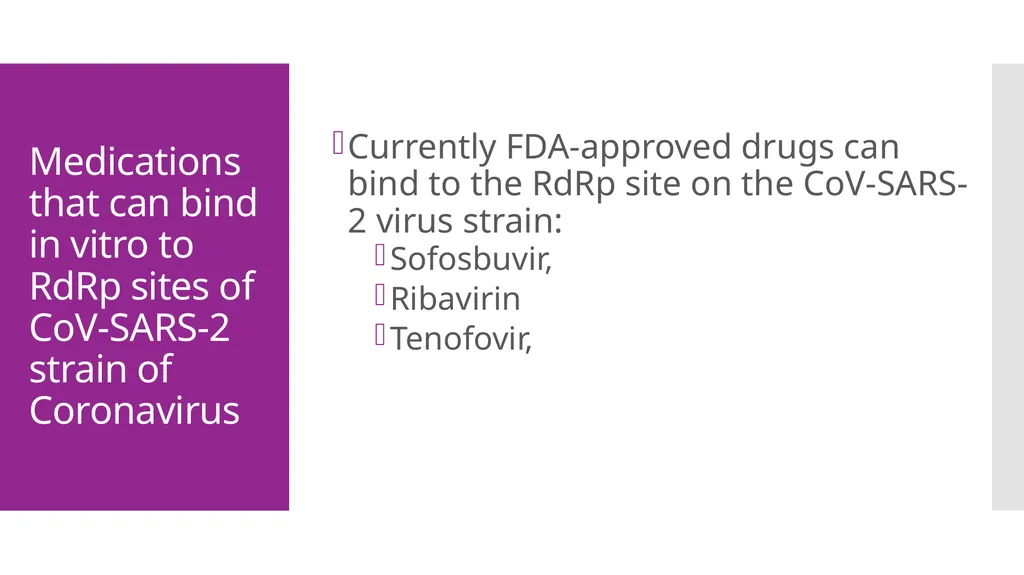
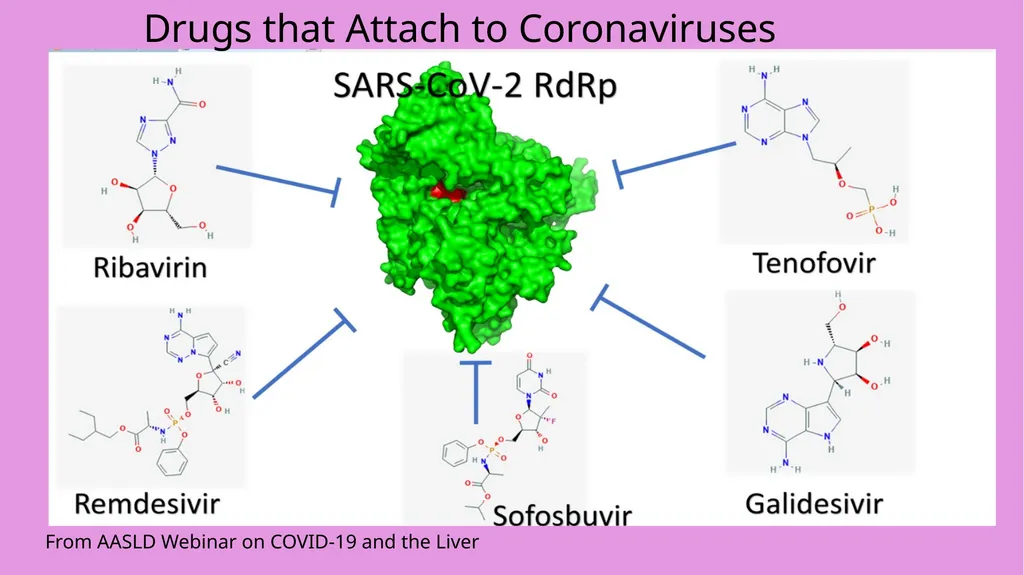
Medications that can bind in vitro to RdRp sites of CoV-SARS-2 strain of Coronavirus Currently FDA-approved drugs can bind to the RdRp site on the CoV-SARS-2 virus strain:
Sofosbuvir,
Ribavirin
Tenofovir,<br>
08
Drugs that Attach to Coronaviruses From AASLD Webinar on COVID-19 and the Liver<br>
09
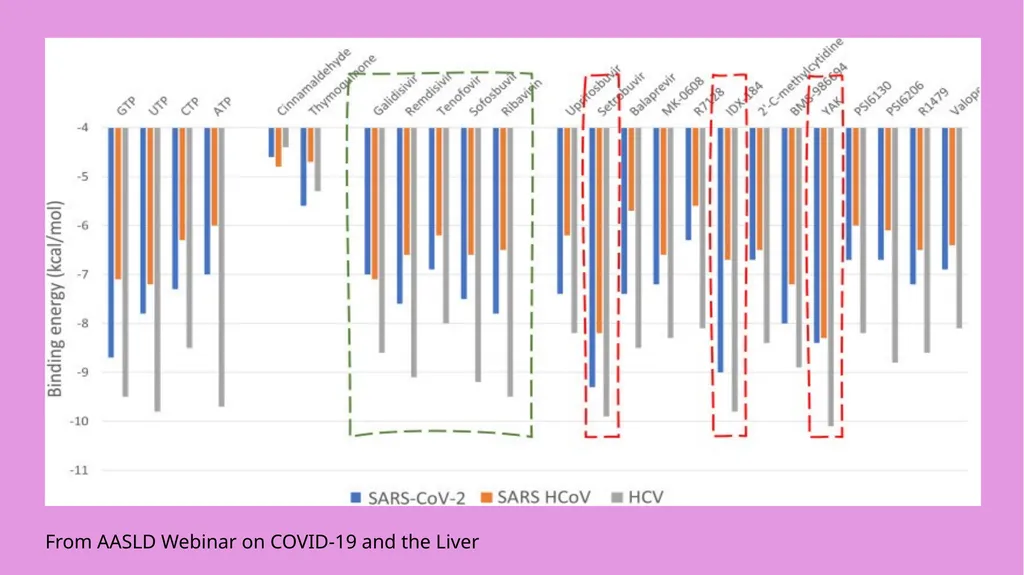
From AASLD Webinar on COVID-19 and the Liver<br>
10
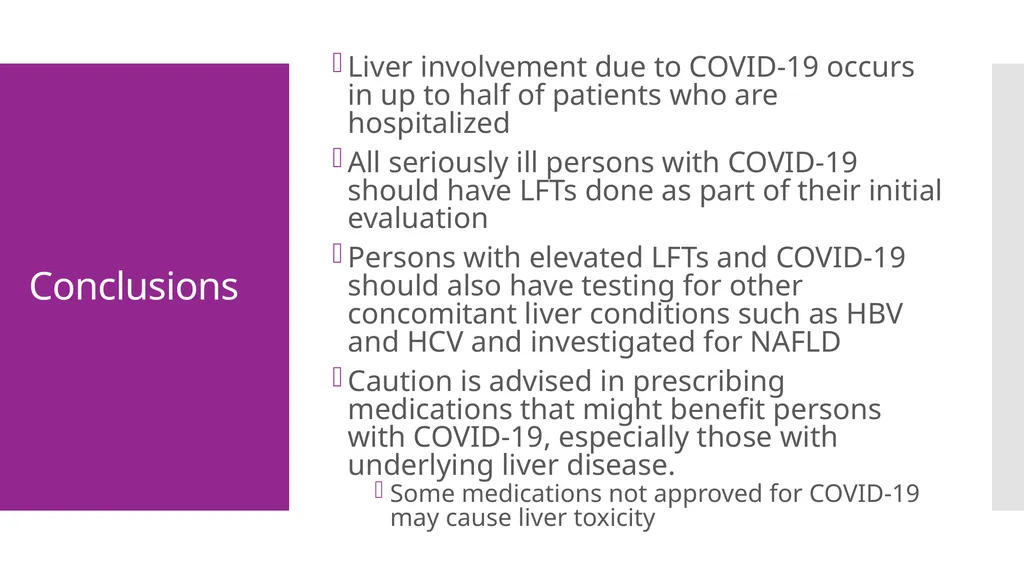
Conclusions Liver involvement due to COVID-19 occurs in up to half of patients who are hospitalized
All seriously ill persons with COVID-19 should have LFTs done as part of their initial evaluation
Persons with elevated LFTs and COVID-19 should also have testing for other concomitant liver conditions such as HBV and HCV and investigated for NAFLD
Caution is advised in prescribing medications that might benefit persons with COVID-19, especially those with underlying liver disease.
Some medications not approved for COVID-19 may cause liver toxicity<br>
11
References Clinical Insights for Hepatology and Liver Transplant Providers During the COVID-19 Pandemic, AASLD, updated 4/7/20. Available at www.aasld.org
Elfiky, A. Ribavirin, remdesivir, sofosbuvir, galidesivir, and tenofovir against SARS-CoV-2 RNA dependent RNA polymerase (RdRp): A molecular docking study, Life Sciences, online 3/25/20 in press pre-proof; https://doi.org/10.1016/j.lfs.2020.117592
Zhang C, Shi L, Wang F. Liver injury in COVID-19: management and challenges. The Lancet. 3/4/20. DOI: https://doi.org/10.1016.S2468-1253(20)30057-1
Guan WJ, Zhong NS. Clinical Characteristics of Covid-19 in China. Reply. N Engl J Med 2020;382.
Preliminary Estimates of the Prevalence of Selected Underlying Health Conditions Among Patients with Coronavirus Disease 2019 - United States, February 12-March 28, 2020. MMWR Morb Mortal Wkly Rep 2020;69:382-386.<br>