
COVID-19 vaccine post-introduction evaluation
JO
Published · 39 slides · 0 views
1 / 1





Description
COVID-19 vaccine post-introduction evaluation (cPIE) Web Annex C. cPIE country presentation template 25 August 2021 World Health Organization 2021. Some rights reserved. This work is available under the CC BY-NC-SA 3.0 IGO licence. WHO
Related Topics
Share
Embed code
Download this presentation From Below
"COVID-19 vaccine post-introduction evaluation" is the property of its rightful owner. Permission is granted to download and print the materials on this website for personal, non-commercial use only, and to display it on your personal computer provided you do not modify the materials and that you retain all copyright notices contained in the materials. By downloading content from our website, you accept the terms of this agreement.
Presentation Transcript
01
COVID-19 vaccine post-introduction evaluation (cPIE)
Web Annex C. cPIE country presentation template
25 August 2021 © World Health Organization 2021. Some rights reserved. This work is available under the CC BY-NC-SA 3.0 IGO licence.
WHO Reference number: WHO/2019-nCoV/CPIE/Web_Annex_C/2021.1<br>
Web Annex C. cPIE country presentation template
25 August 2021 © World Health Organization 2021. Some rights reserved. This work is available under the CC BY-NC-SA 3.0 IGO licence.
WHO Reference number: WHO/2019-nCoV/CPIE/Web_Annex_C/2021.1<br>
02
Findings from the COVID-19 Vaccine Post-Introduction Evaluation Country
Date<br>
Date<br>
03
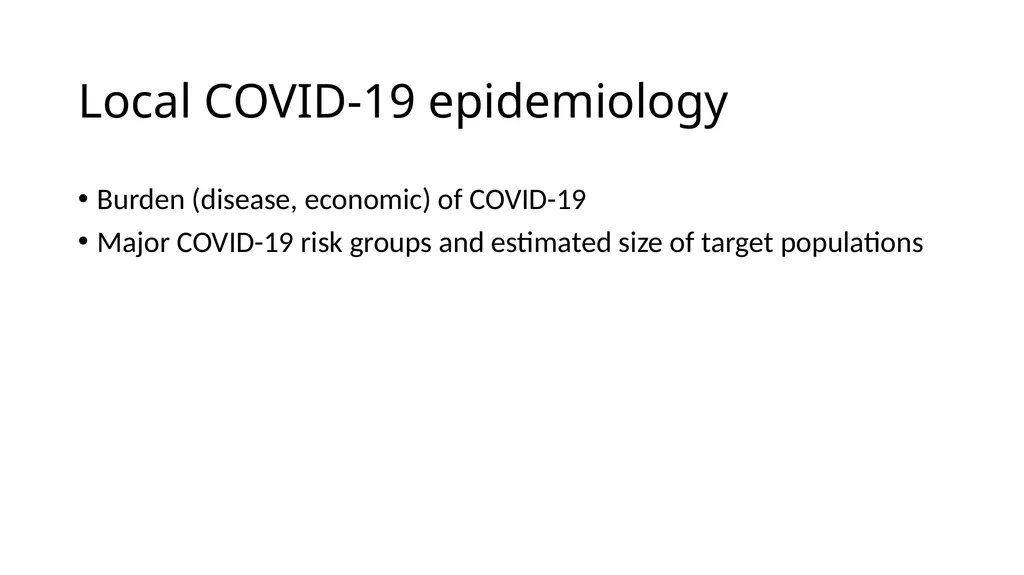
Local COVID-19 epidemiology Burden (disease, economic) of COVID-19
Major COVID-19 risk groups and estimated size of target populations<br>
Major COVID-19 risk groups and estimated size of target populations<br>
04
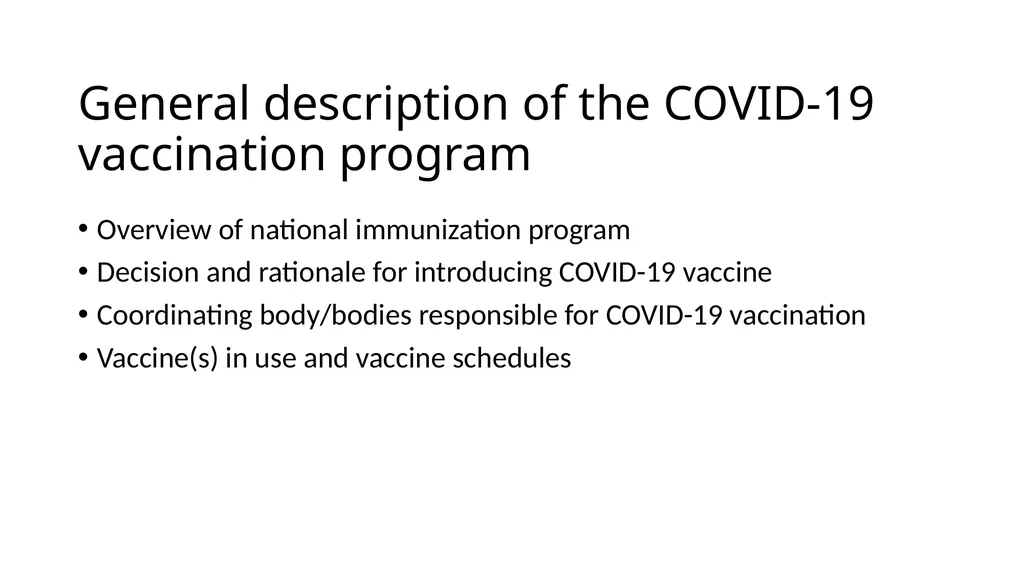
General description of the COVID-19 vaccination program Overview of national immunization program
Decision and rationale for introducing COVID-19 vaccine
Coordinating body/bodies responsible for COVID-19 vaccination
Vaccine(s) in use and vaccine schedules<br>
Decision and rationale for introducing COVID-19 vaccine
Coordinating body/bodies responsible for COVID-19 vaccination
Vaccine(s) in use and vaccine schedules<br>
05
Rationale for COVID-19 PIE (cPIE) WHO recommends countries conduct a cPIE 6-18 months after the introduction of COVID-19 vaccine to:
To identify problems needing corrective action
To inform recommendations to improve roll-out of COVID-19 vaccines, especially in terms of vaccination of subsequent target groups and strategies for booster vaccination
To highlight lessons from the COVID-19 vaccine deployment to strengthen the overall national immunization system and services, specifically related to health workers, older adults, essential workers or persons with co-morbidities.
To provide lessons for other countries for their own COVID-19 vaccine deployment and for future pandemic vaccine deployments.<br>
To identify problems needing corrective action
To inform recommendations to improve roll-out of COVID-19 vaccines, especially in terms of vaccination of subsequent target groups and strategies for booster vaccination
To highlight lessons from the COVID-19 vaccine deployment to strengthen the overall national immunization system and services, specifically related to health workers, older adults, essential workers or persons with co-morbidities.
To provide lessons for other countries for their own COVID-19 vaccine deployment and for future pandemic vaccine deployments.<br>
06
Methodology From [date-date], we conducted a COVID-19 post-introduction evaluation (cPIE) using the standardized WHO protocol
Locations were selected with consideration for the following criteria:
Types of sites providing vaccination to priority groups
Predicted or estimated performance based on prior immunization coverage rates or other appropriate measures;
Priority population(s) served;
Sociodemographic groups particularly at risk and diversity in ethnic minorities, when appropriate
Estimated disease burden;
A range in size of the catchment population;
Urban, peri-urban or rural location;
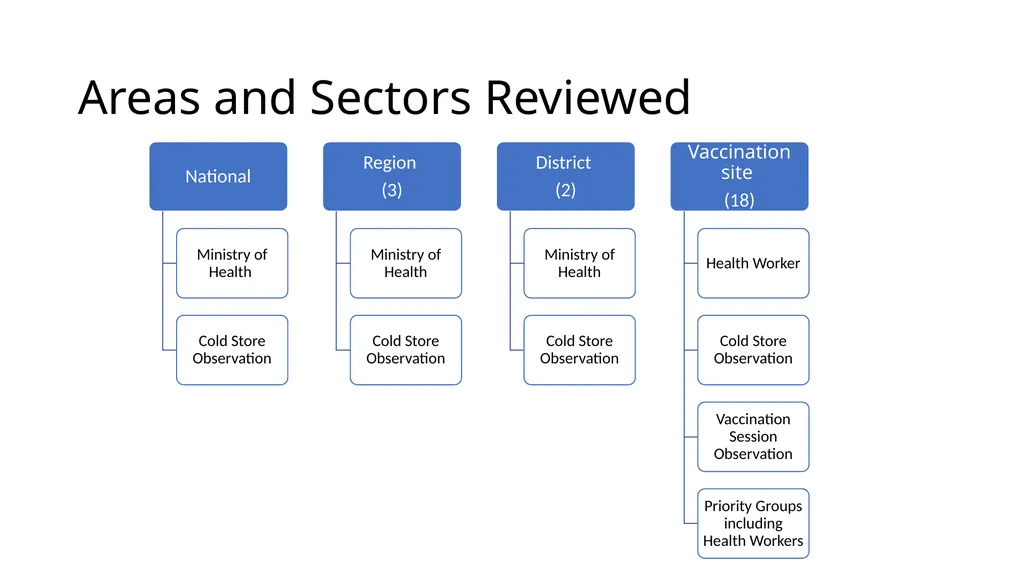
Interviews were conducted at the following levels:
1 national-level evaluation was conducted
6-12 districts in 3-6 regions were selected for the evaluation
A total of 18-36 health facilities were evaluated<br>
Locations were selected with consideration for the following criteria:
Types of sites providing vaccination to priority groups
Predicted or estimated performance based on prior immunization coverage rates or other appropriate measures;
Priority population(s) served;
Sociodemographic groups particularly at risk and diversity in ethnic minorities, when appropriate
Estimated disease burden;
A range in size of the catchment population;
Urban, peri-urban or rural location;
Interviews were conducted at the following levels:
1 national-level evaluation was conducted
6-12 districts in 3-6 regions were selected for the evaluation
A total of 18-36 health facilities were evaluated<br>
07
Methodology Review and adaptation of tools (National, Provincial, District, Health facility/site, priority groups)
Standardized structured questionnaires covering 9 programmatic areas
Observation checklists for vaccination session and cold stores
Data input tools and tools to summarize data collected
Conduct site visits
Interview health staff
Conduct post-vaccination interviews of priority groups and health workers
Observe immunization practices and cold stores
Compile and analyse data
Document strengths and challenges
Propose recommendations and areas for further discussion<br>
Standardized structured questionnaires covering 9 programmatic areas
Observation checklists for vaccination session and cold stores
Data input tools and tools to summarize data collected
Conduct site visits
Interview health staff
Conduct post-vaccination interviews of priority groups and health workers
Observe immunization practices and cold stores
Compile and analyse data
Document strengths and challenges
Propose recommendations and areas for further discussion<br>
08
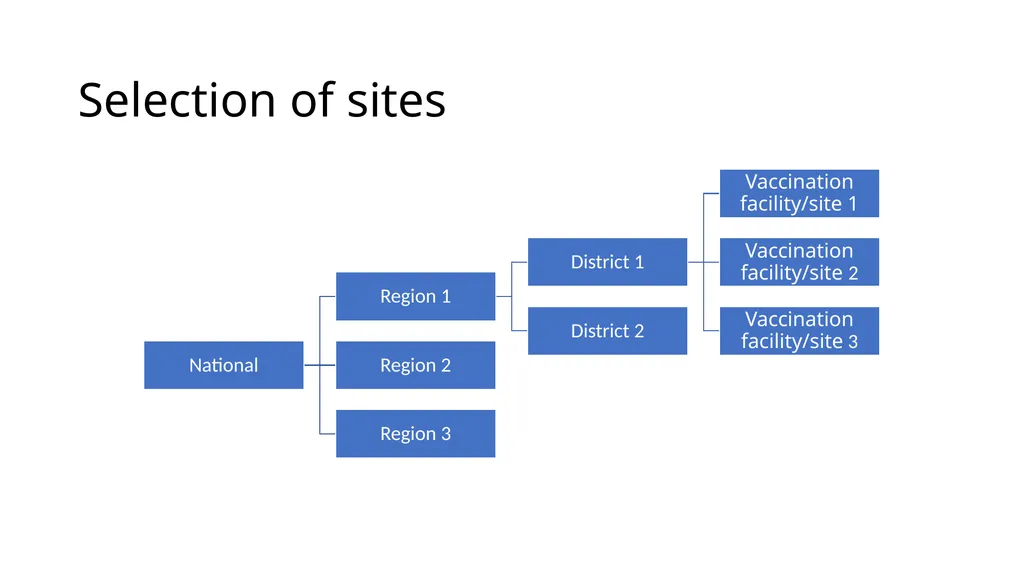
Selection of sites<br>
09
Areas and Sectors Reviewed<br>
10
Findings<br>
11
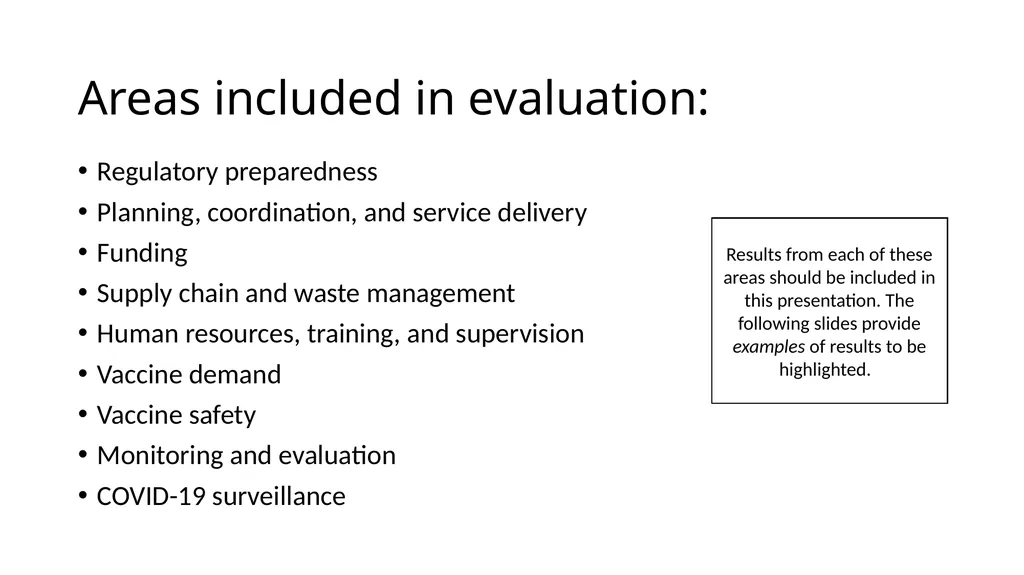
Areas included in evaluation: Regulatory preparedness
Planning, coordination, and service delivery
Funding
Supply chain and waste management
Human resources, training, and supervision
Vaccine demand
Vaccine safety
Monitoring and evaluation
COVID-19 surveillance Results from each of these areas should be included in this presentation. The following slides provide examples of results to be highlighted.<br>
Planning, coordination, and service delivery
Funding
Supply chain and waste management
Human resources, training, and supervision
Vaccine demand
Vaccine safety
Monitoring and evaluation
COVID-19 surveillance Results from each of these areas should be included in this presentation. The following slides provide examples of results to be highlighted.<br>
12
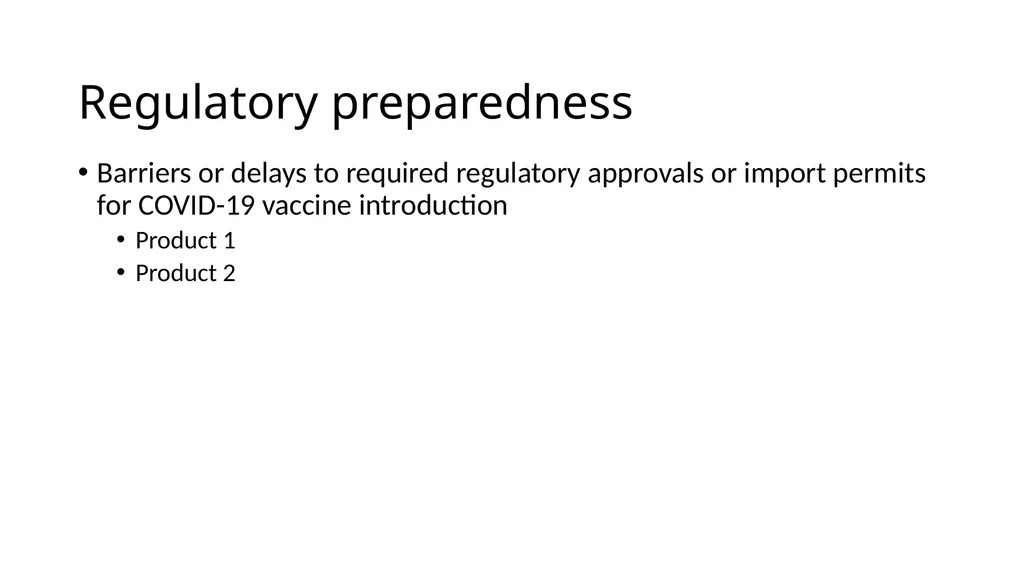
Regulatory preparedness Barriers or delays to required regulatory approvals or import permits for COVID-19 vaccine introduction
Product 1
Product 2<br>
Product 1
Product 2<br>
13
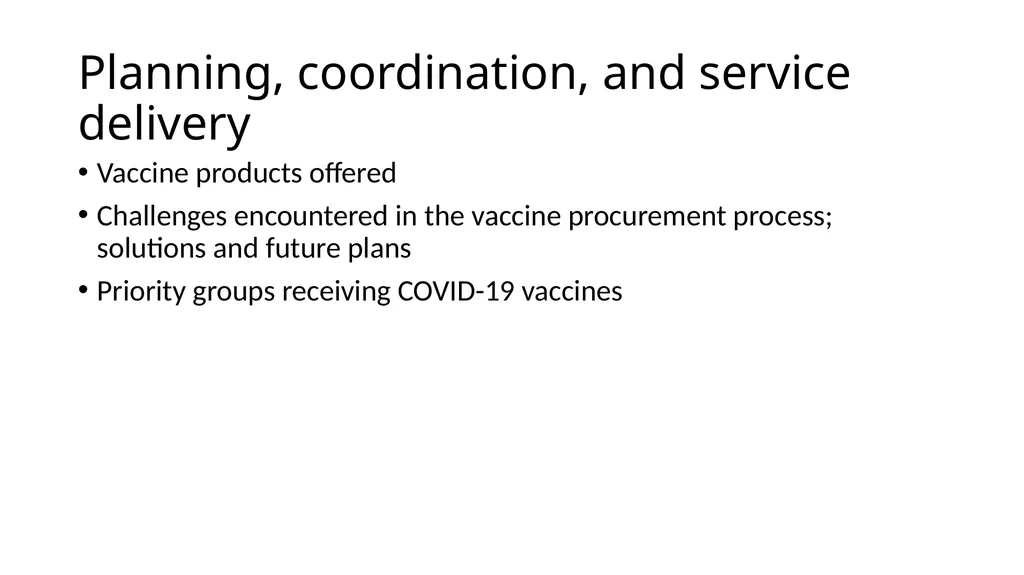
Planning, coordination, and service delivery Vaccine products offered
Challenges encountered in the vaccine procurement process; solutions and future plans
Priority groups receiving COVID-19 vaccines<br>
Challenges encountered in the vaccine procurement process; solutions and future plans
Priority groups receiving COVID-19 vaccines<br>
14
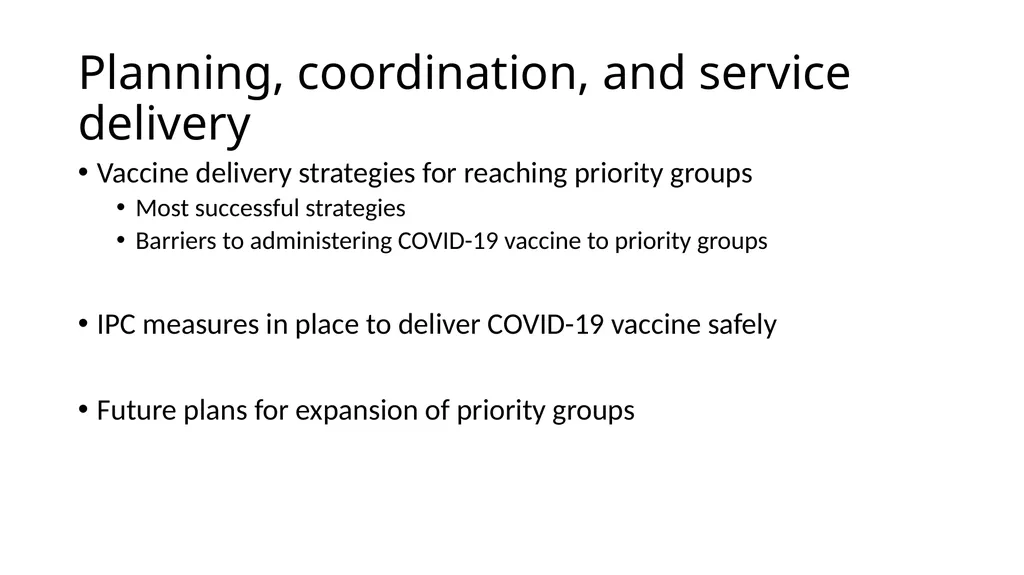
Planning, coordination, and service delivery Vaccine delivery strategies for reaching priority groups
Most successful strategies
Barriers to administering COVID-19 vaccine to priority groups
IPC measures in place to deliver COVID-19 vaccine safely
Future plans for expansion of priority groups<br>
Most successful strategies
Barriers to administering COVID-19 vaccine to priority groups
IPC measures in place to deliver COVID-19 vaccine safely
Future plans for expansion of priority groups<br>
15
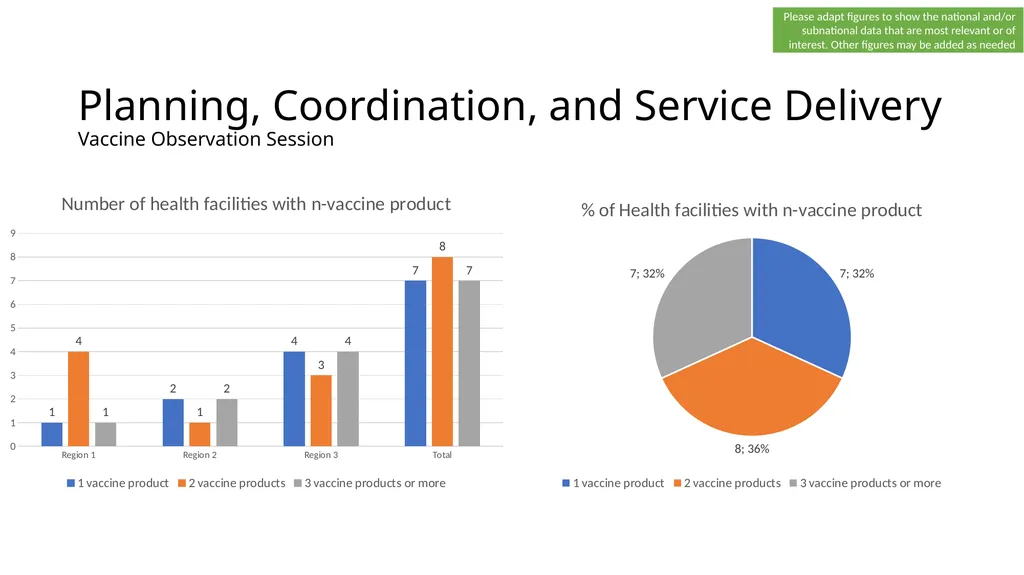
Planning, Coordination, and Service Delivery
Vaccine Observation Session Please adapt figures to show the national and/or subnational data that are most relevant or of interest. Other figures may be added as needed<br>
16
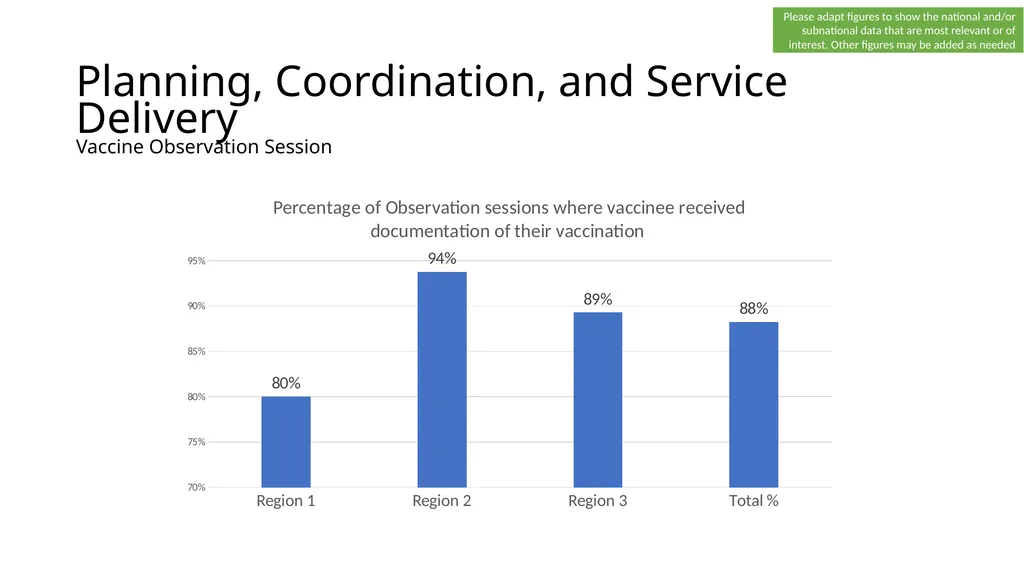
Planning, Coordination, and Service Delivery
Vaccine Observation Session Please adapt figures to show the national and/or subnational data that are most relevant or of interest. Other figures may be added as needed<br>
17
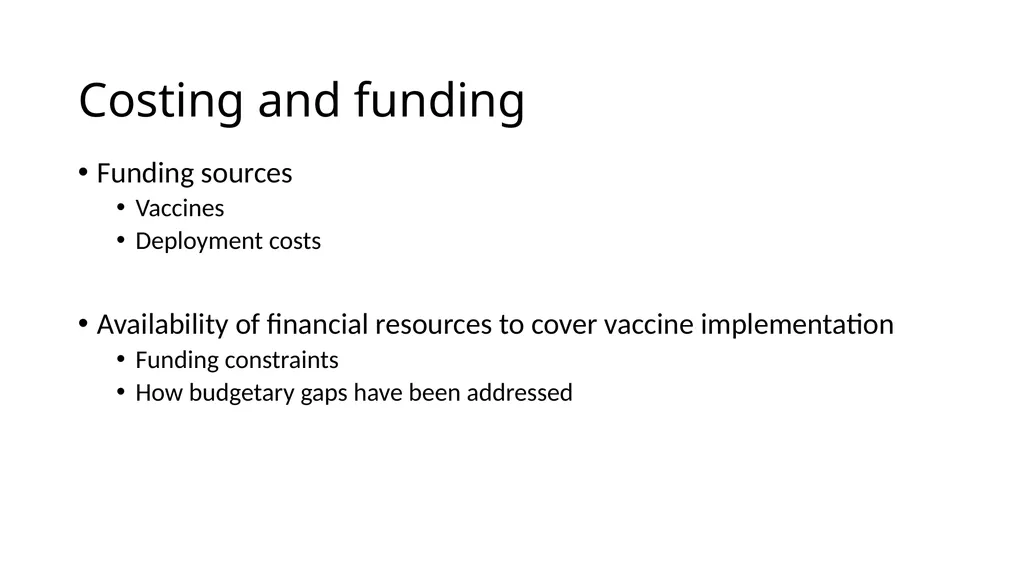
Costing and funding Funding sources
Vaccines
Deployment costs
Availability of financial resources to cover vaccine implementation
Funding constraints
How budgetary gaps have been addressed<br>
Vaccines
Deployment costs
Availability of financial resources to cover vaccine implementation
Funding constraints
How budgetary gaps have been addressed<br>
18
Costing and Funding
Vaccine implementation financing Please adapt figures to show the national and/or subnational data that are most relevant or of interest. Other figures may be added as needed<br>
19
Supply chain and waste management Bottlenecks/challenges for vaccine handling within the supply chain
Cold chain equipment
Human resources for cold chain management
Distribution and logistics
Bottlenecks/challenges for vaccine handling at vaccination facilities/sites
Cold chain equipment
Human resources for cold chain management
Distribution and logistics
Cold chain adaptations needed for COVID-19 vaccines<br>
Cold chain equipment
Human resources for cold chain management
Distribution and logistics
Bottlenecks/challenges for vaccine handling at vaccination facilities/sites
Cold chain equipment
Human resources for cold chain management
Distribution and logistics
Cold chain adaptations needed for COVID-19 vaccines<br>
20
Supply chain and waste management Vaccine doses compromised
Open and closed vial wastage rates
Multi-dose vial policy adherence and challenges
Description of challenges related to delivery or collection of vaccines at vaccination facilities/sites.
Adaptations to waste management policy for COVID-19 vaccines<br>
Open and closed vial wastage rates
Multi-dose vial policy adherence and challenges
Description of challenges related to delivery or collection of vaccines at vaccination facilities/sites.
Adaptations to waste management policy for COVID-19 vaccines<br>
21
Supply chain and waste management
Problems with cold chain since new vaccine introduction Please adapt figures to show the national and/or subnational data that are most relevant or of interest. Other figures may be added as needed<br>
22
Supply chain and waste management
Problems with cold chain since new vaccine introduction Please adapt figures to show the national and/or subnational data that are most relevant or of interest. Other figures may be added as needed<br>
23
Human resource management and training Strategies used to overcome staff shortages
Staff categories recruited and trained to prepare for COVID-19 vaccine introduction<br>
Staff categories recruited and trained to prepare for COVID-19 vaccine introduction<br>
24
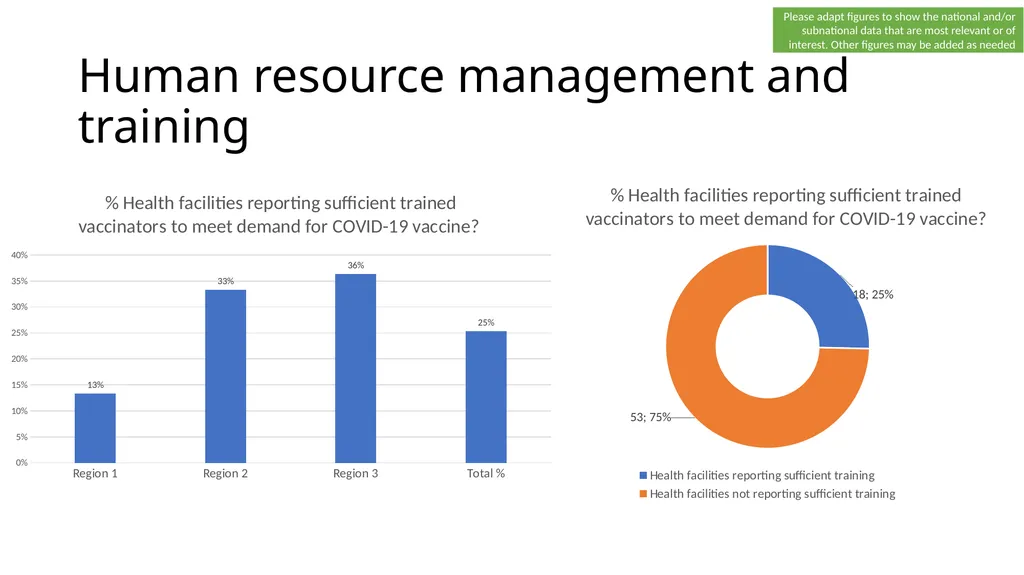
Human resource management and training Please adapt figures to show the national and/or subnational data that are most relevant or of interest. Other figures may be added as needed<br>
25
Human resource management and training Trainings conducted specific to COVID-19 vaccine at each level
Strengths/gaps in training format, topics covered, audience, etc.
Supervisory visits to each level<br>
Strengths/gaps in training format, topics covered, audience, etc.
Supervisory visits to each level<br>
26
Vaccine demand Measures to raise awareness of COVID-19 vaccination
Approaches used (e.g. political advocacy, use of mass media, information sheets, etc.)
Target audiences
Vaccine acceptance or reasons for hesitancy
% health facilities reporting negative information/rumors about the COVID-19 vaccine
% individuals in priority groups reporting to have declined COVID-19 vaccine
Misinformation and rumours about COVID-19 vaccines that have been addressed
Strategies for increasing confidence in COVID-19 vaccines<br>
Approaches used (e.g. political advocacy, use of mass media, information sheets, etc.)
Target audiences
Vaccine acceptance or reasons for hesitancy
% health facilities reporting negative information/rumors about the COVID-19 vaccine
% individuals in priority groups reporting to have declined COVID-19 vaccine
Misinformation and rumours about COVID-19 vaccines that have been addressed
Strategies for increasing confidence in COVID-19 vaccines<br>
27
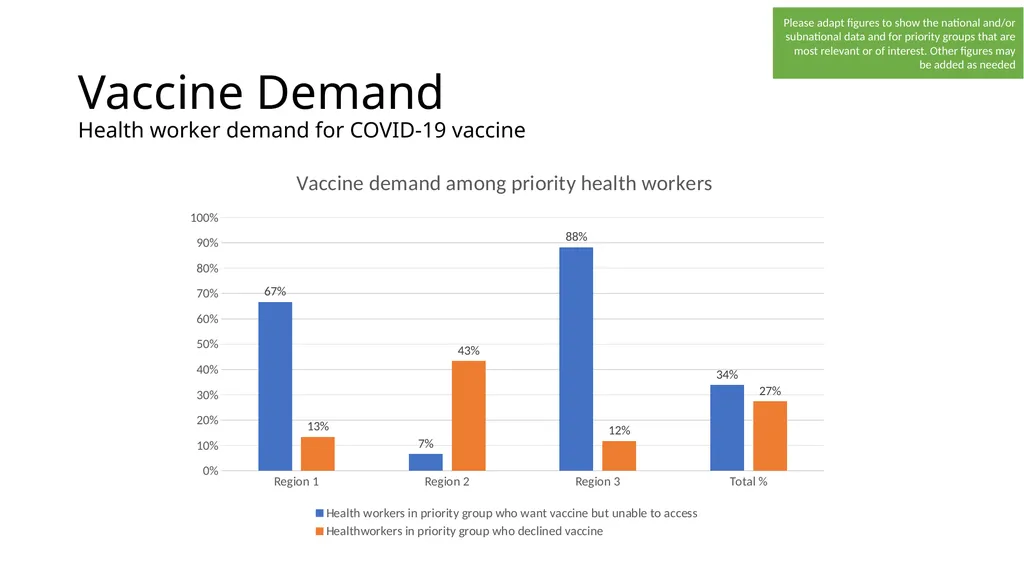
Vaccine Demand
Health worker demand for COVID-19 vaccine Please adapt figures to show the national and/or subnational data and for priority groups that are most relevant or of interest. Other figures may be added as needed<br>
28
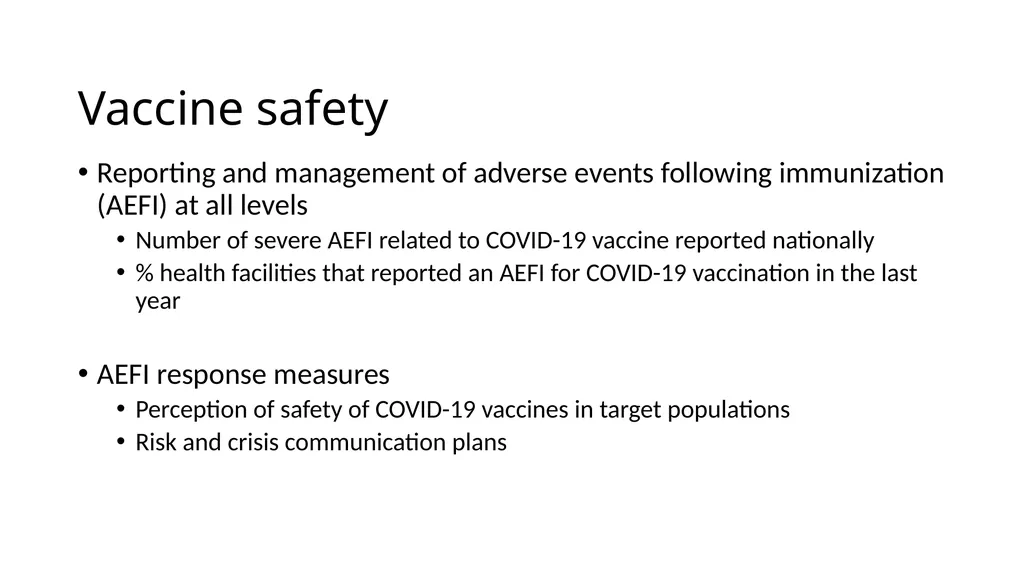
Vaccine safety Reporting and management of adverse events following immunization (AEFI) at all levels
Number of severe AEFI related to COVID-19 vaccine reported nationally
% health facilities that reported an AEFI for COVID-19 vaccination in the last year
AEFI response measures
Perception of safety of COVID-19 vaccines in target populations
Risk and crisis communication plans<br>
Number of severe AEFI related to COVID-19 vaccine reported nationally
% health facilities that reported an AEFI for COVID-19 vaccination in the last year
AEFI response measures
Perception of safety of COVID-19 vaccines in target populations
Risk and crisis communication plans<br>
29
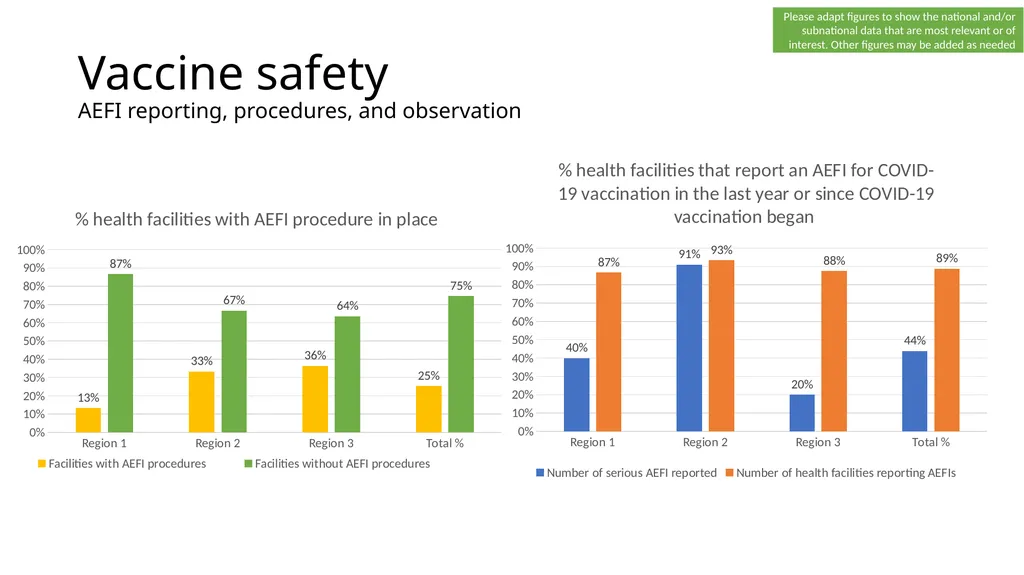
Vaccine safety
AEFI reporting, procedures, and observation Please adapt figures to show the national and/or subnational data that are most relevant or of interest. Other figures may be added as needed<br>
30
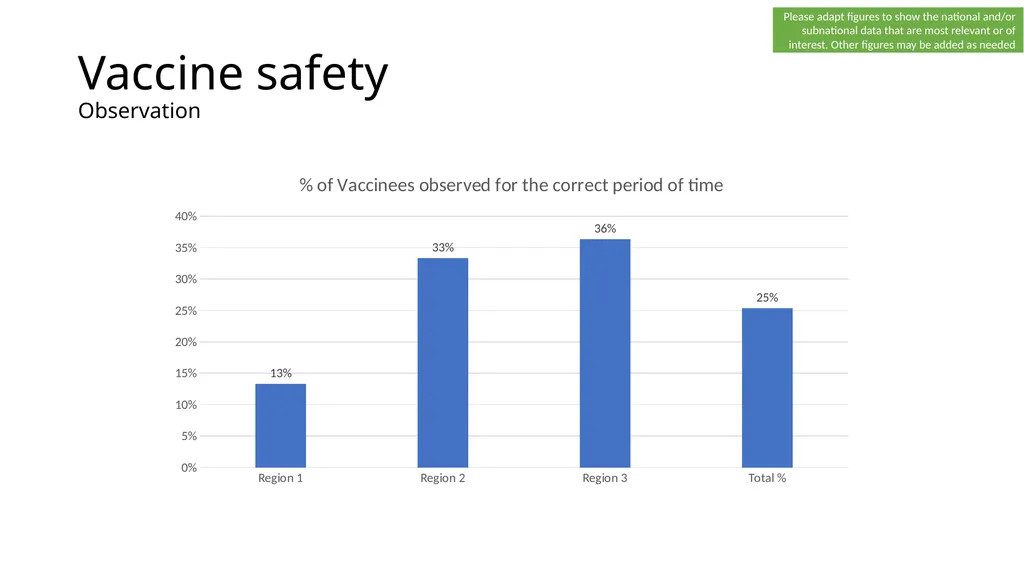
Vaccine safety
Observation Please adapt figures to show the national and/or subnational data that are most relevant or of interest. Other figures may be added as needed<br>
31
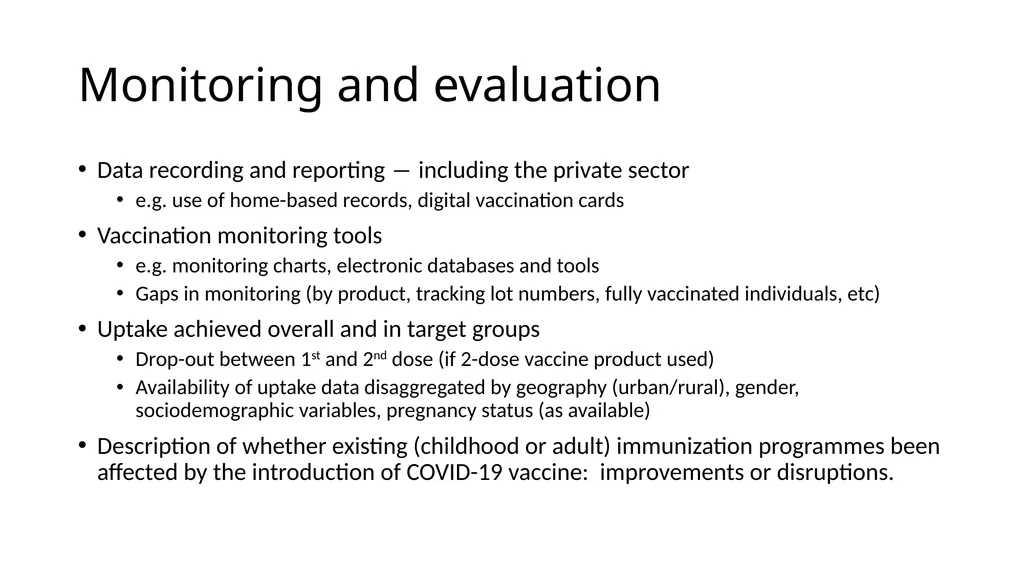
Monitoring and evaluation Data recording and reporting ― including the private sector
e.g. use of home-based records, digital vaccination cards
Vaccination monitoring tools
e.g. monitoring charts, electronic databases and tools
Gaps in monitoring (by product, tracking lot numbers, fully vaccinated individuals, etc)
Uptake achieved overall and in target groups
Drop-out between 1st and 2nd dose (if 2-dose vaccine product used)
Availability of uptake data disaggregated by geography (urban/rural), gender, sociodemographic variables, pregnancy status (as available)
Description of whether existing (childhood or adult) immunization programmes been affected by the introduction of COVID-19 vaccine: improvements or disruptions.<br>
e.g. use of home-based records, digital vaccination cards
Vaccination monitoring tools
e.g. monitoring charts, electronic databases and tools
Gaps in monitoring (by product, tracking lot numbers, fully vaccinated individuals, etc)
Uptake achieved overall and in target groups
Drop-out between 1st and 2nd dose (if 2-dose vaccine product used)
Availability of uptake data disaggregated by geography (urban/rural), gender, sociodemographic variables, pregnancy status (as available)
Description of whether existing (childhood or adult) immunization programmes been affected by the introduction of COVID-19 vaccine: improvements or disruptions.<br>
32
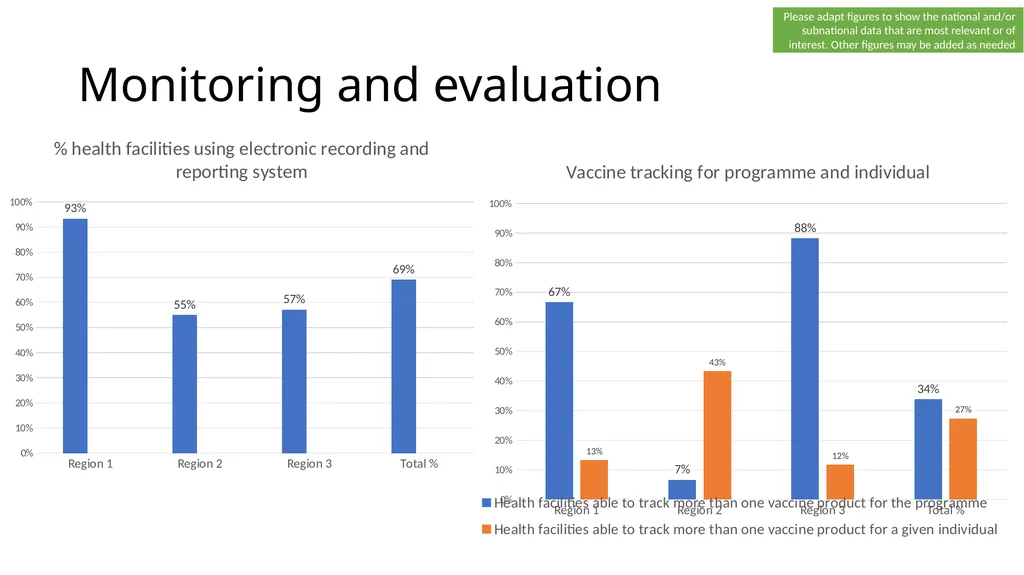
Monitoring and evaluation Please adapt figures to show the national and/or subnational data that are most relevant or of interest. Other figures may be added as needed<br>
33
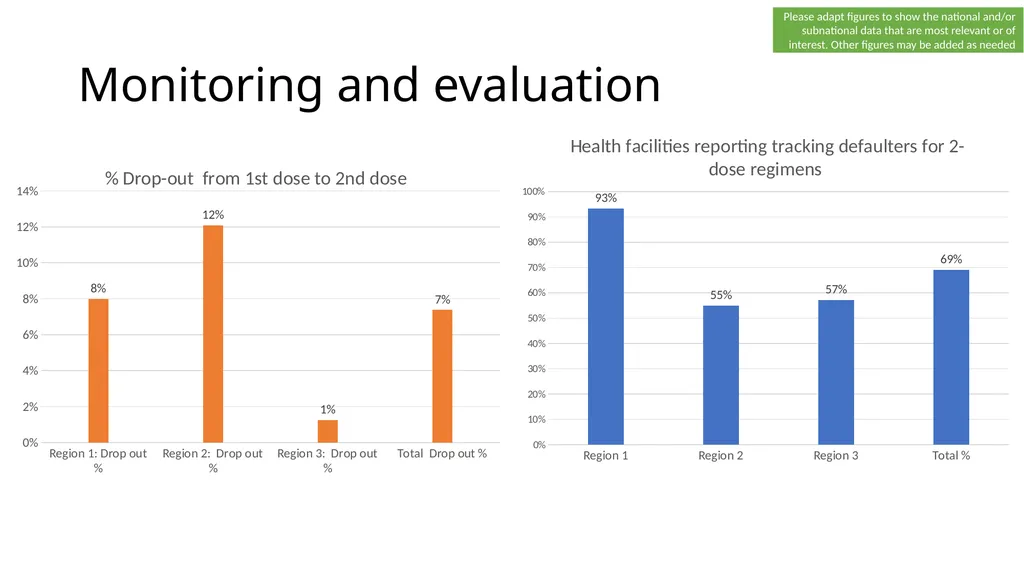
Monitoring and evaluation Please adapt figures to show the national and/or subnational data that are most relevant or of interest. Other figures may be added as needed<br>
34
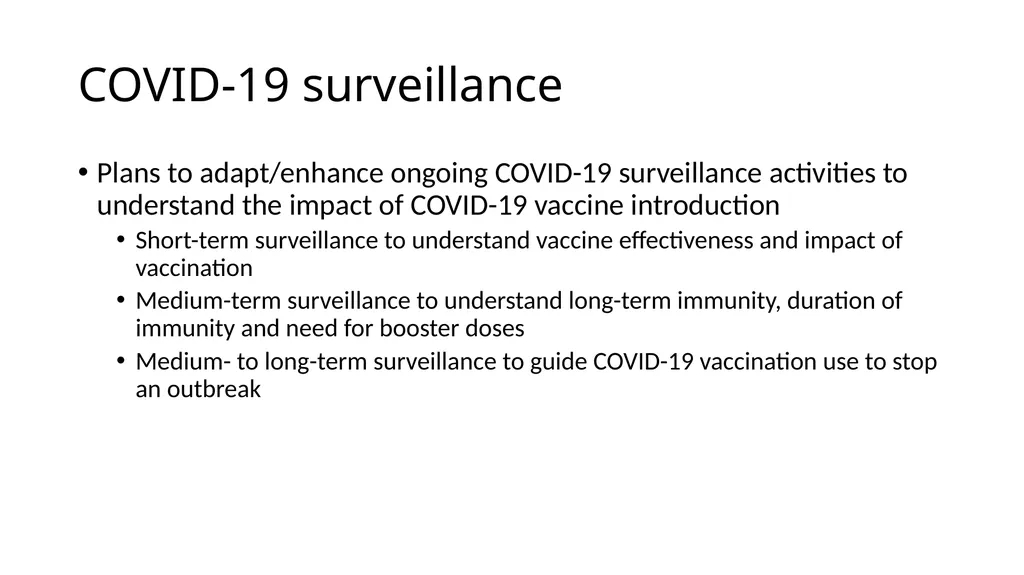
COVID-19 surveillance Plans to adapt/enhance ongoing COVID-19 surveillance activities to understand the impact of COVID-19 vaccine introduction
Short-term surveillance to understand vaccine effectiveness and impact of vaccination
Medium-term surveillance to understand long-term immunity, duration of immunity and need for booster doses
Medium- to long-term surveillance to guide COVID-19 vaccination use to stop an outbreak<br>
Short-term surveillance to understand vaccine effectiveness and impact of vaccination
Medium-term surveillance to understand long-term immunity, duration of immunity and need for booster doses
Medium- to long-term surveillance to guide COVID-19 vaccination use to stop an outbreak<br>
35
Summary responses from specific target groups Health workers
Other priority groups<br>
Other priority groups<br>
36
General impressions and conclusions Main barriers (if any) to COVID-19 vaccine implementation
“Essentials” deemed critical for the successful implementation of the COVID-19 program<br>
“Essentials” deemed critical for the successful implementation of the COVID-19 program<br>
37
Recommendations<br>
38
Action Plan<br>
39
Acknowledgements For example
COVID-19 Task Force
Ministry of Health
Health Offices
Health workers
Partners: WHO, UNICEF, etc.<br>
COVID-19 Task Force
Ministry of Health
Health Offices
Health workers
Partners: WHO, UNICEF, etc.<br>