CS 302 Data Structures C++ Interlude 1 C++ Classes

Published  . 0 views
↓ Download
CS 302 Data Structures C++ Interlude 1 C++ Classes
1 / 1
CS 302 Data Structures C++ Interlude 1 C++ Classes - slide 1 of 13 CS 302 Data Structures C++ Interlude 1 C++ Classes - slide 2 of 13 CS 302 Data Structures C++ Interlude 1 C++ Classes - slide 3 of 13 CS 302 Data Structures C++ Interlude 1 C++ Classes - slide 4 of 13 CS 302 Data Structures C++ Interlude 1 C++ Classes - slide 5 of 13 CS 302 Data Structures C++ Interlude 1 C++ Classes - slide 6 of 13 CS 302 Data Structures C++ Interlude 1 C++ Classes - slide 7 of 13 CS 302 Data Structures C++ Interlude 1 C++ Classes - slide 8 of 13 CS 302 Data Structures C++ Interlude 1 C++ Classes - slide 9 of 13 CS 302 Data Structures C++ Interlude 1 C++ Classes - slide 10 of 13 CS 302 Data Structures C++ Interlude 1 C++ Classes - slide 11 of 13 CS 302 Data Structures C++ Interlude 1 C++ Classes - slide 12 of 13 CS 302 Data Structures C++ Interlude 1 C++ Classes - slide 13 of 13
Description: CS 302 Data Structures C Interlude 1 C Classes Classes file PlainBox.h ifndef PLAINBOX define PLAINBOX Set the type of data stored in the box typedef double ItemType; Declaration for the class PlainBox class PlainBox

Related Topics

Download Presentation

"CS 302 Data Structures C++ Interlude 1 C++ Classes" is the property of its rightful owner. Permission is granted to download and print the materials on this website for personal, non-commercial use only, and to display it on your personal computer provided you do not modify the materials and that you retain all copyright notices contained in the materials. By downloading content from our website, you accept the terms of this agreement.

Presentation Transcript

slide1. CS 302 Data Structures C++ Interlude 1
C++ Classes<br>
slide2. Classes<br>
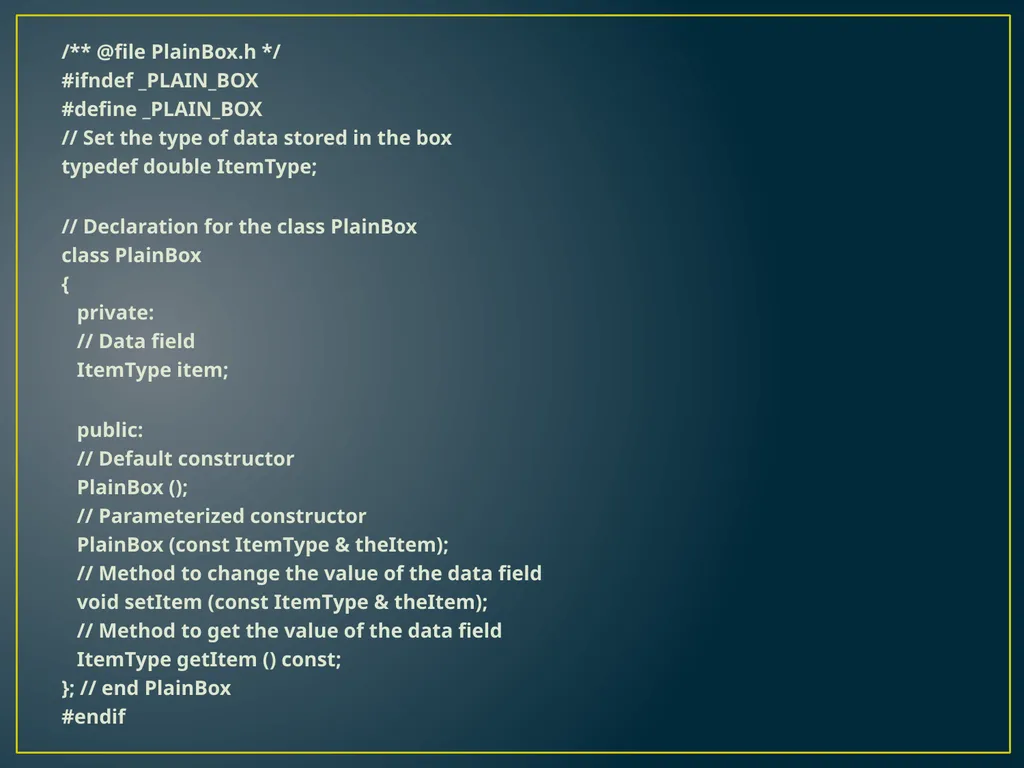
slide3. /** @file PlainBox.h */
#ifndef _PLAIN_BOX
#define _PLAIN_BOX
// Set the type of data stored in the box
typedef double ItemType;

// Declaration for the class PlainBox
class PlainBox
{
private:
// Data field
ItemType item;

public:
// Default constructor
PlainBox ();
// Parameterized constructor
PlainBox (const ItemType & theItem);
// Method to change the value of the data field
void setItem (const ItemType & theItem);
// Method to get the value of the data field
ItemType getItem () const;
}; // end PlainBox
#endif<br>
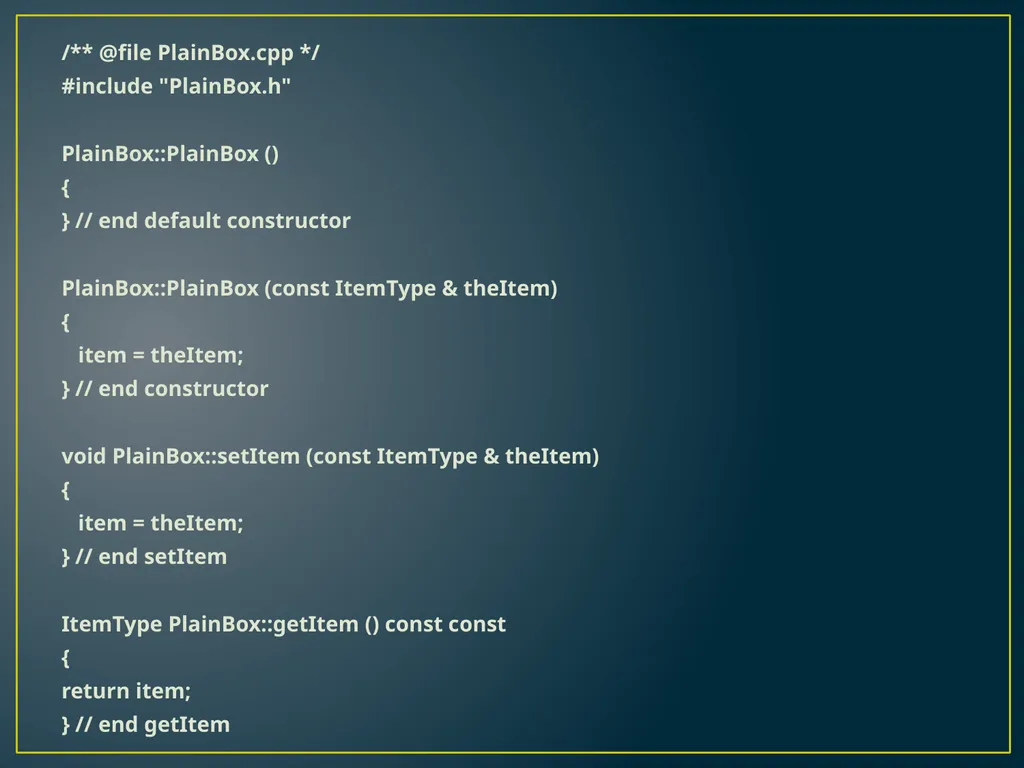
slide4. /** @file PlainBox.cpp */
#include "PlainBox.h"

PlainBox::PlainBox ()
{
} // end default constructor

PlainBox::PlainBox (const ItemType & theItem)
{
item = theItem;
} // end constructor

void PlainBox::setItem (const ItemType & theItem)
{
item = theItem;
} // end setItem

ItemType PlainBox::getItem () const const
{
return item;
} // end getItem<br>
slide5. Templates<br>
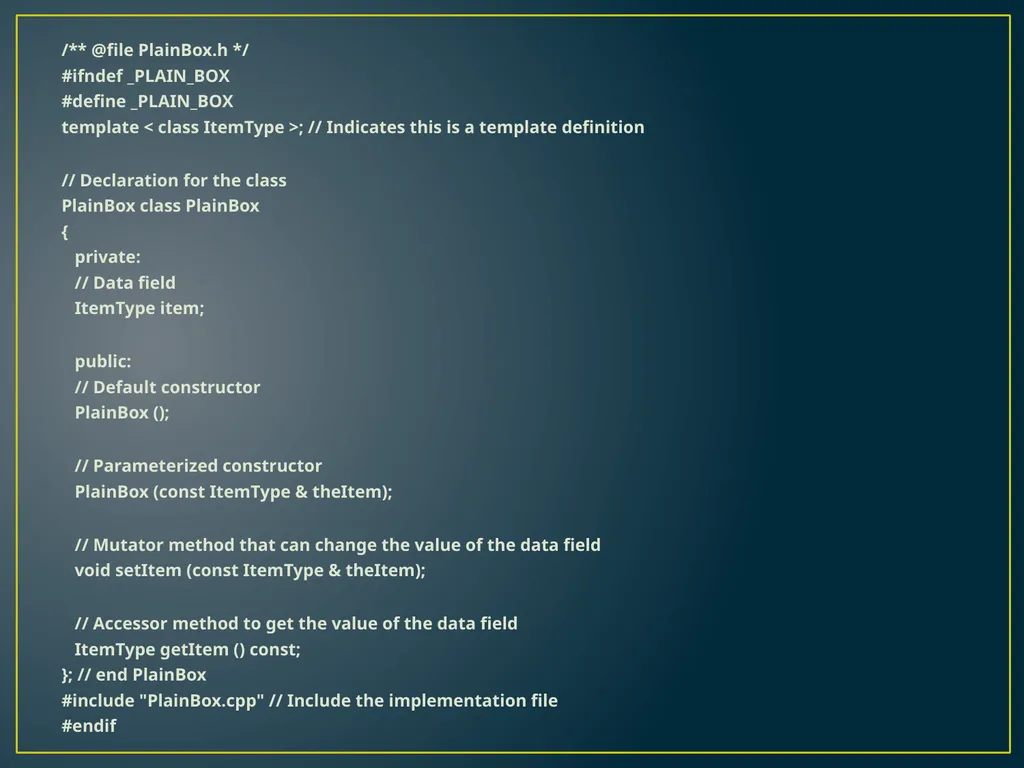
slide6. /** @file PlainBox.h */
#ifndef _PLAIN_BOX
#define _PLAIN_BOX
template < class ItemType >; // Indicates this is a template definition

// Declaration for the class
PlainBox class PlainBox
{
private:
// Data field
ItemType item;

public:
// Default constructor
PlainBox ();

// Parameterized constructor
PlainBox (const ItemType & theItem);

// Mutator method that can change the value of the data field
void setItem (const ItemType & theItem);

// Accessor method to get the value of the data field
ItemType getItem () const;
}; // end PlainBox
#include "PlainBox.cpp" // Include the implementation file
#endif<br>
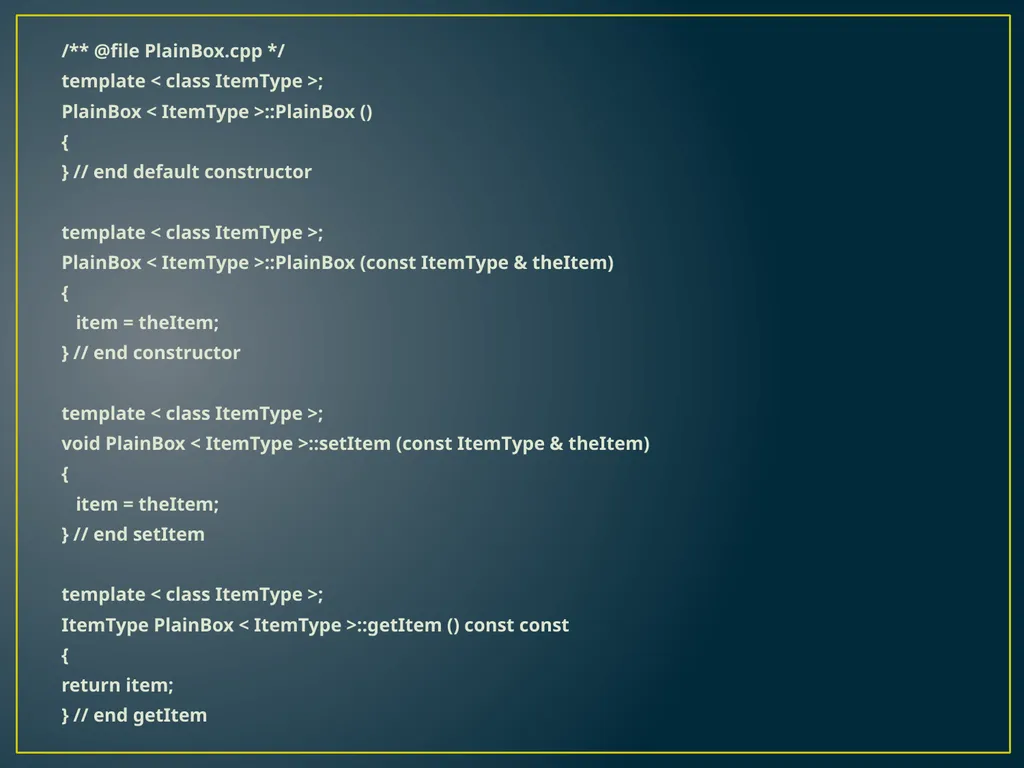
slide7. /** @file PlainBox.cpp */
template < class ItemType >;
PlainBox < ItemType >::PlainBox ()
{
} // end default constructor

template < class ItemType >;
PlainBox < ItemType >::PlainBox (const ItemType & theItem)
{
item = theItem;
} // end constructor

template < class ItemType >;
void PlainBox < ItemType >::setItem (const ItemType & theItem)
{
item = theItem;
} // end setItem

template < class ItemType >;
ItemType PlainBox < ItemType >::getItem () const const
{
return item;
} // end getItem<br>
slide8. Inheritance<br>
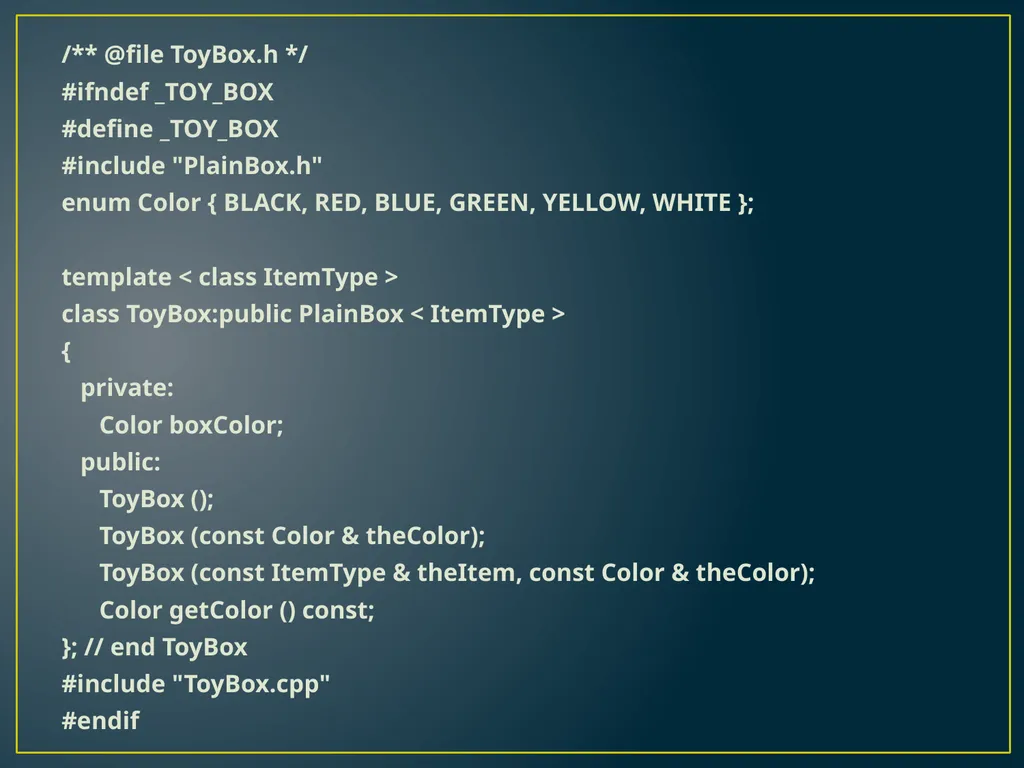
slide9. /** @file ToyBox.h */
#ifndef _TOY_BOX
#define _TOY_BOX
#include "PlainBox.h"
enum Color { BLACK, RED, BLUE, GREEN, YELLOW, WHITE };

template < class ItemType >
class ToyBox:public PlainBox < ItemType >
{
private:
Color boxColor;
public:
ToyBox ();
ToyBox (const Color & theColor);
ToyBox (const ItemType & theItem, const Color & theColor);
Color getColor () const;
}; // end ToyBox
#include "ToyBox.cpp"
#endif<br>
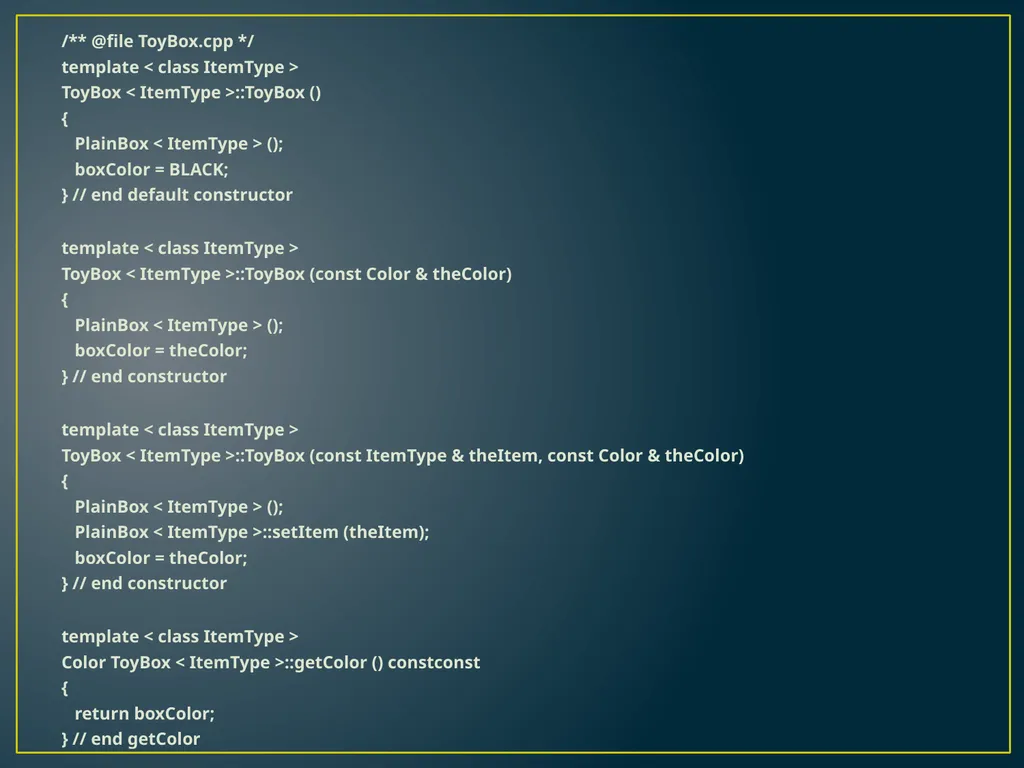
slide10. /** @file ToyBox.cpp */
template < class ItemType >
ToyBox < ItemType >::ToyBox ()
{
PlainBox < ItemType > ();
boxColor = BLACK;
} // end default constructor
template < class ItemType >
ToyBox < ItemType >::ToyBox (const Color & theColor)
{
PlainBox < ItemType > ();
boxColor = theColor;
} // end constructor

template < class ItemType >
ToyBox < ItemType >::ToyBox (const ItemType & theItem, const Color & theColor)
{
PlainBox < ItemType > ();
PlainBox < ItemType >::setItem (theItem);
boxColor = theColor;
} // end constructor

template < class ItemType >
Color ToyBox < ItemType >::getColor () constconst
{
return boxColor;
} // end getColor<br>
slide11. Abstract Classes<br>
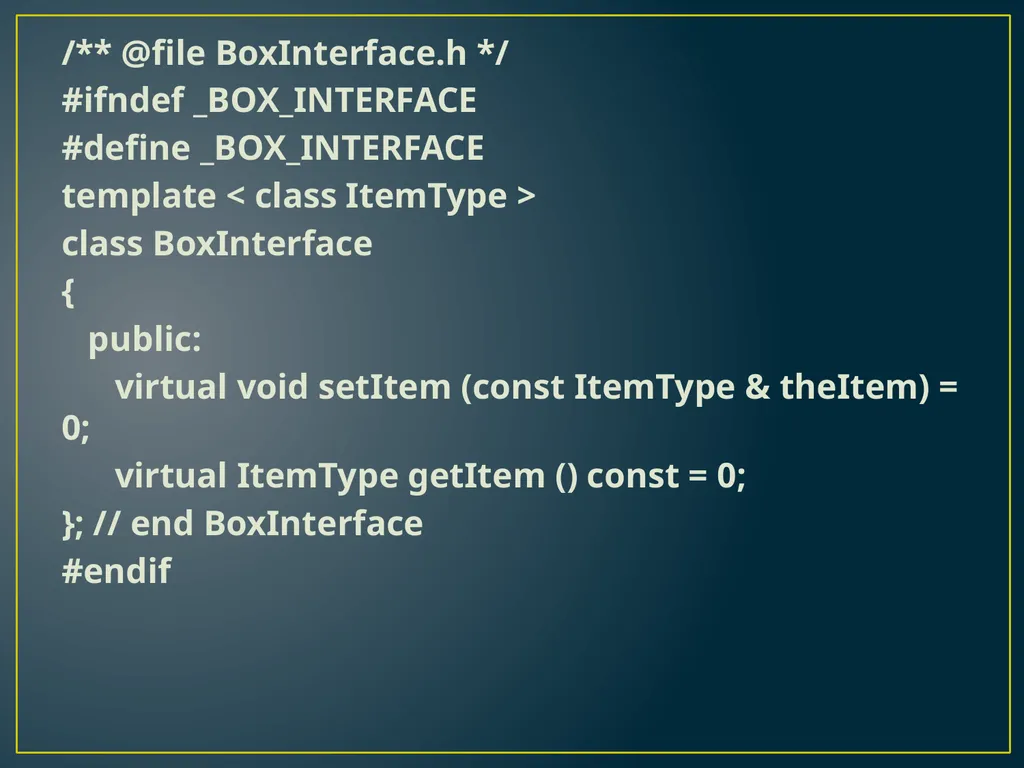
slide12. /** @file BoxInterface.h */
#ifndef _BOX_INTERFACE
#define _BOX_INTERFACE
template < class ItemType >
class BoxInterface
{
public:
virtual void setItem (const ItemType & theItem) = 0;
virtual ItemType getItem () const = 0;
}; // end BoxInterface
#endif<br>
slide13. End of C++ Interlude 1<br>